16 Living Room Decor Ideas That Instantly Elevate Any Space
 By zarcoyt2025
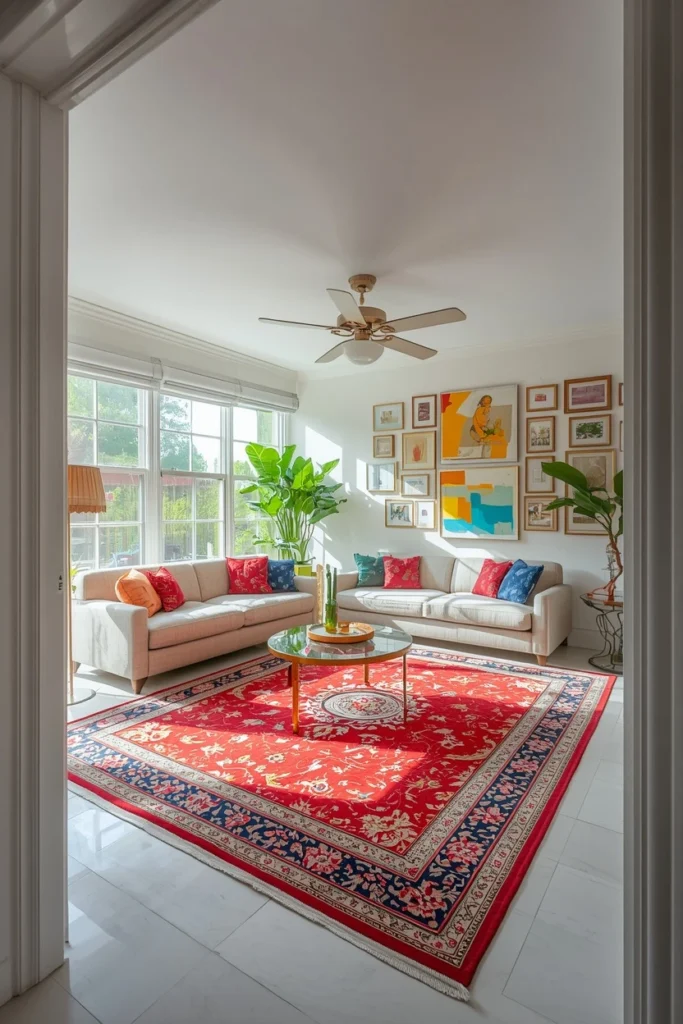
Table of Contents
- Quick Reference: Idea, Best Fit, Cost, and Effort
- 1. Anchor the Room With One Statement Rug
- 2. Layer Lighting Instead of Relying on One Overhead Fixture
- 3. Create a Gallery Wall With a Consistent Frame Finish
- 4. Mix Textures on the Sofa Rather Than Just Colors
- 5. Add a Console or Sofa Table Behind the Sofa
- 6. Bring in Live or High-Quality Faux Plants at Varying Heights
- 7. Swap in a Few Seasonal or Rotating Throw Pillows
- 8. Float Furniture Away From the Walls
- 9. Choose One Piece to Function as a Focal Point
- 10. Add a Coffee Table Tray for Styled, Contained Decor
- 11. Use Curtains Hung Higher and Wider Than the Window Frame
- 12. Introduce One Bold Color Through a Single Accent Piece
- 13. Use a Large Mirror to Bounce Light Across the Room
- 14. Build Height With a Tall Bookcase or Leaning Shelf
- 15. Define the Media Area With Its Own Considered Layout
- 16. Add a Scented Candle or Diffuser as a Finishing Sensory Layer
- Where I’d Start If I Only Did Three Things
- FAQ
- Conclusion
A living room rarely needs new furniture to feel considerably more elevated — it usually needs a handful of layout and styling decisions applied with a bit more intention. A properly sized rug, layered lighting instead of one overhead fixture, and furniture floated away from the walls consistently do more for how a room feels than any single new purchase.
These sixteen ideas range from free rearrangements to moderate-cost additions, and each one is something you can realistically do in a weekend without a full renovation. Below is a quick reference list noting who each idea suits best, along with its typical cost and effort level.
Quick Reference: Idea, Best Fit, Cost, and Effort
– Statement area rug: best for any living room style; cost: moderate; effort: low.
– Layered lighting scheme: best for evening ambiance and function; cost: low to moderate; effort: low.
– Consistent-frame gallery wall: best for personalizing a blank wall; cost: moderate; effort: moderate.
– Mixed-texture sofa styling: best for depth without extra color; cost: low to moderate; effort: low.
– Sofa-back console table: best for open floor plans; cost: moderate; effort: low.
– Varied-height plants: best for natural texture and life; cost: low to moderate; effort: low.
– Rotating accent pillows: best for year-round flexibility; cost: low; effort: low.
– Floated furniture layout: best for conversation-focused seating; cost: free; effort: low.
– Single room focal point: best for layout clarity and purpose; cost: free to moderate; effort: low.
– Coffee table styling tray: best for contained, photo-ready styling; cost: low; effort: low.
– High-and-wide curtain hanging: best for taller-feeling rooms; cost: low to moderate; effort: low.
– Single bold accent piece: best for personality without commitment; cost: moderate; effort: low.
– Oversized reflective mirror: best for darker rooms needing light; cost: moderate; effort: low.
– Tall bookcase or shelf: best for underused vertical space; cost: moderate; effort: low.
– Styled, cable-managed media area: best for rooms centered on a TV; cost: low to moderate; effort: moderate.
– Scented candle or diffuser: best for finishing sensory touch; cost: low; effort: low.
1. Anchor the Room With One Statement Rug
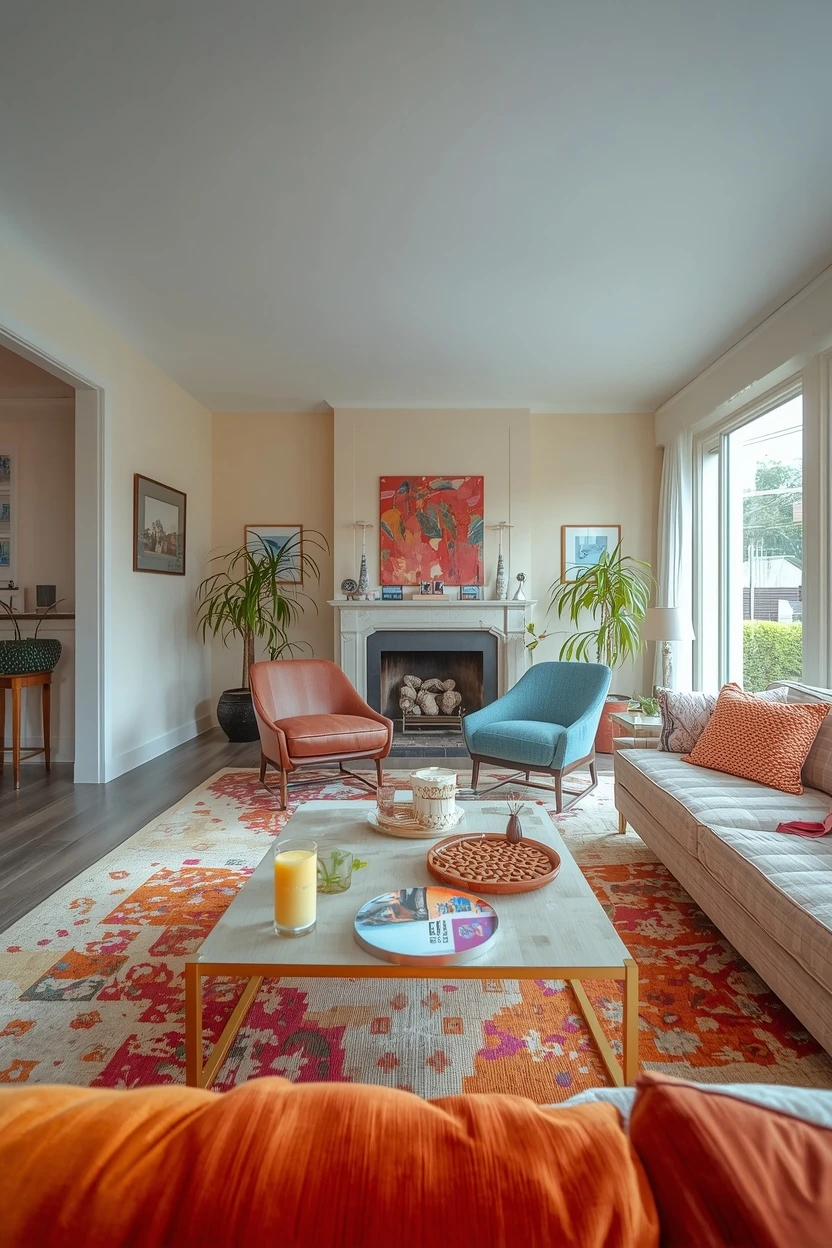
A rug sized large enough that at least the front legs of every major piece of furniture rest on it visually ties the seating area together, rather than letting furniture float disconnected on bare floor. Choose a size that extends a few inches beyond the sofa on each side rather than a small, centered mat. This single decision affects how grounded and intentional the whole room feels more than almost any other single purchase.
2. Layer Lighting Instead of Relying on One Overhead Fixture
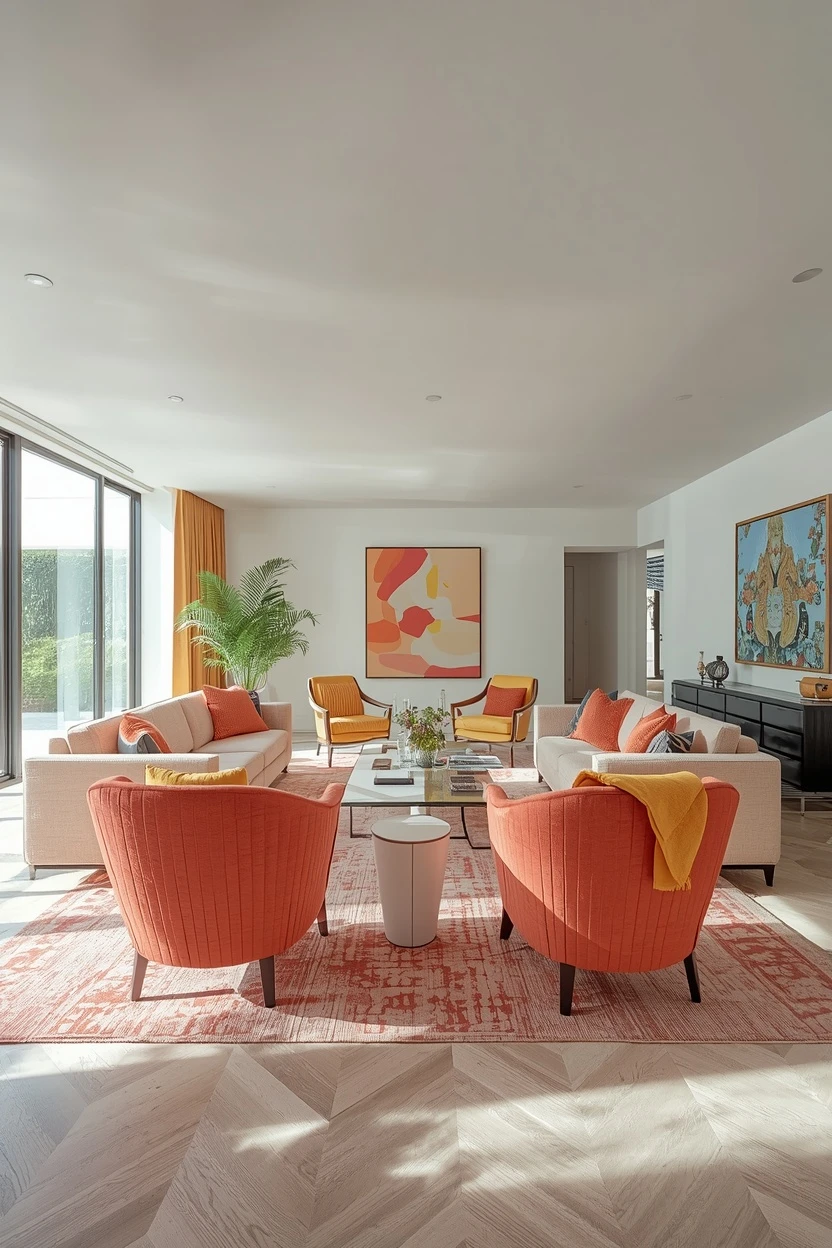
Combining a floor lamp, a table lamp, and accent lighting with the room’s existing overhead fixture creates the layered glow found in professionally designed spaces, rather than the flat, single-source light most living rooms default to. Put at least one source on a dimmer so the room can shift from bright and functional to relaxed in the evening. This is one of the most reliably high-impact changes relative to its cost.
3. Create a Gallery Wall With a Consistent Frame Finish
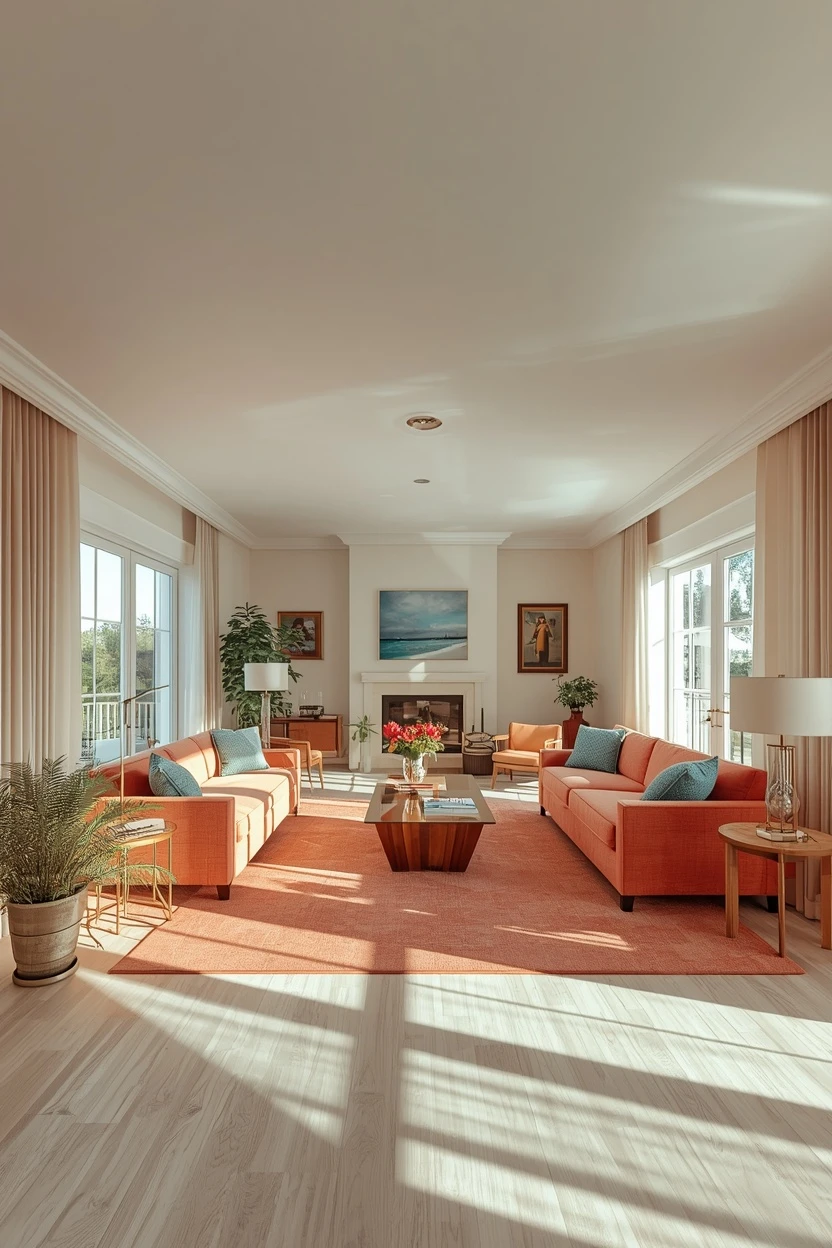
A cluster of five to nine frames, all in the same finish even if the art inside varies, reads as an intentional gallery rather than a mismatched collection of leftover prints. Lay the arrangement out on the floor first and photograph it before hammering a single nail. Leave two to three inches of breathing room between frames so the wall doesn’t feel crowded.
4. Mix Textures on the Sofa Rather Than Just Colors
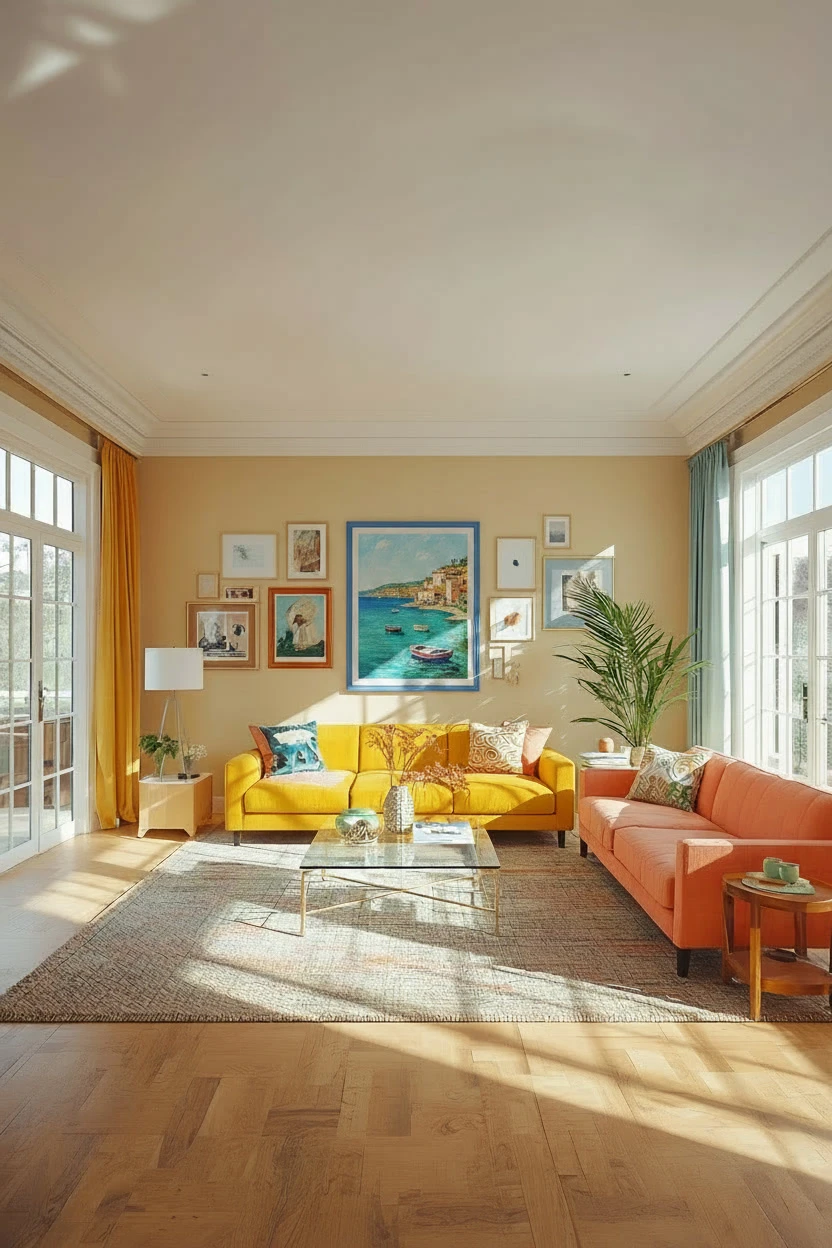
Combining a few different pillow and throw textures — a woven linen, a chunky knit, a smooth velvet — within a limited color palette gives the sofa depth that color alone can’t achieve. Keep the palette to two or three tones so the added textures don’t compete visually. This is a low-cost styling habit that separates a considered room from one that’s simply matched.
5. Add a Console or Sofa Table Behind the Sofa
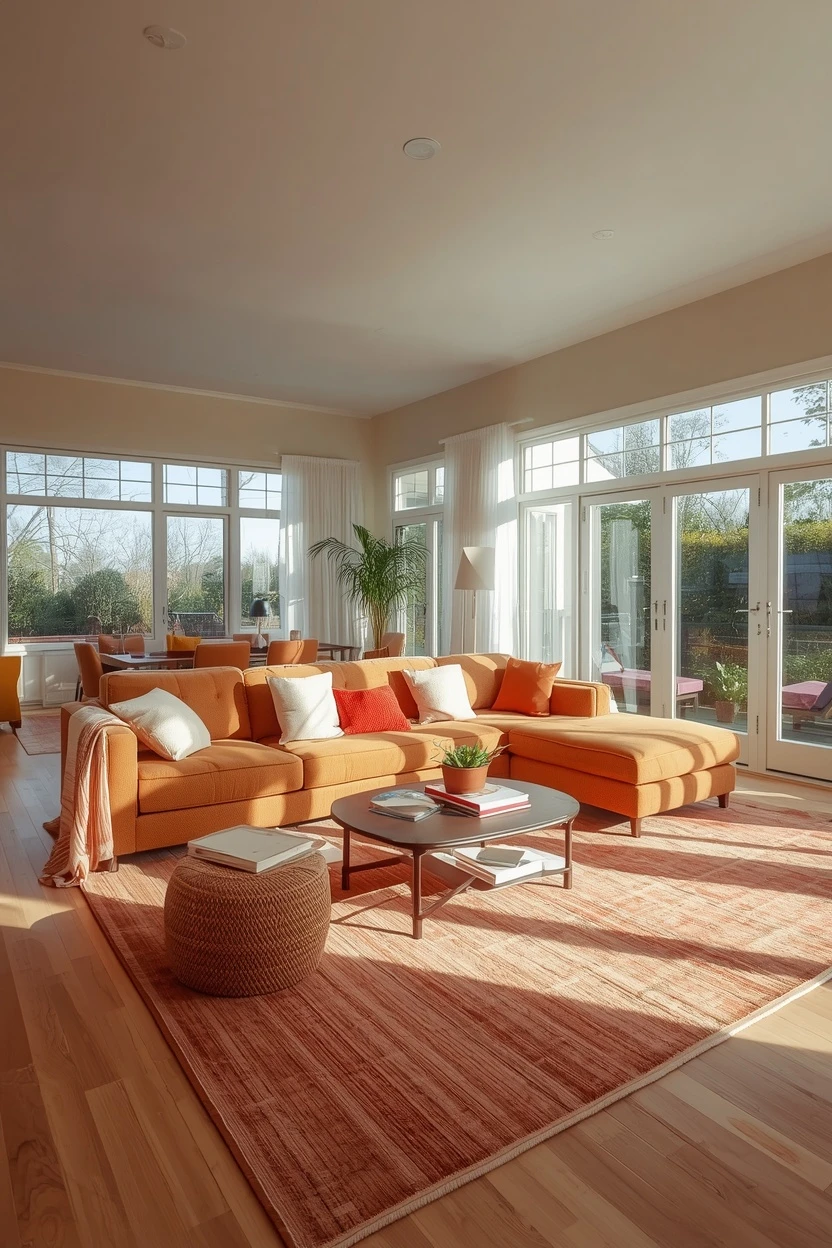
If the back of the sofa faces an open walkway, a slim console or sofa table fills that transitional space with a useful surface for a lamp, a small tray, or decor, rather than leaving it visually empty and undefined. Choose a table roughly two-thirds the length of the sofa for the most proportional look. This detail helps define the room’s flow, especially in an open-plan layout.
6. Bring in Live or High-Quality Faux Plants at Varying Heights
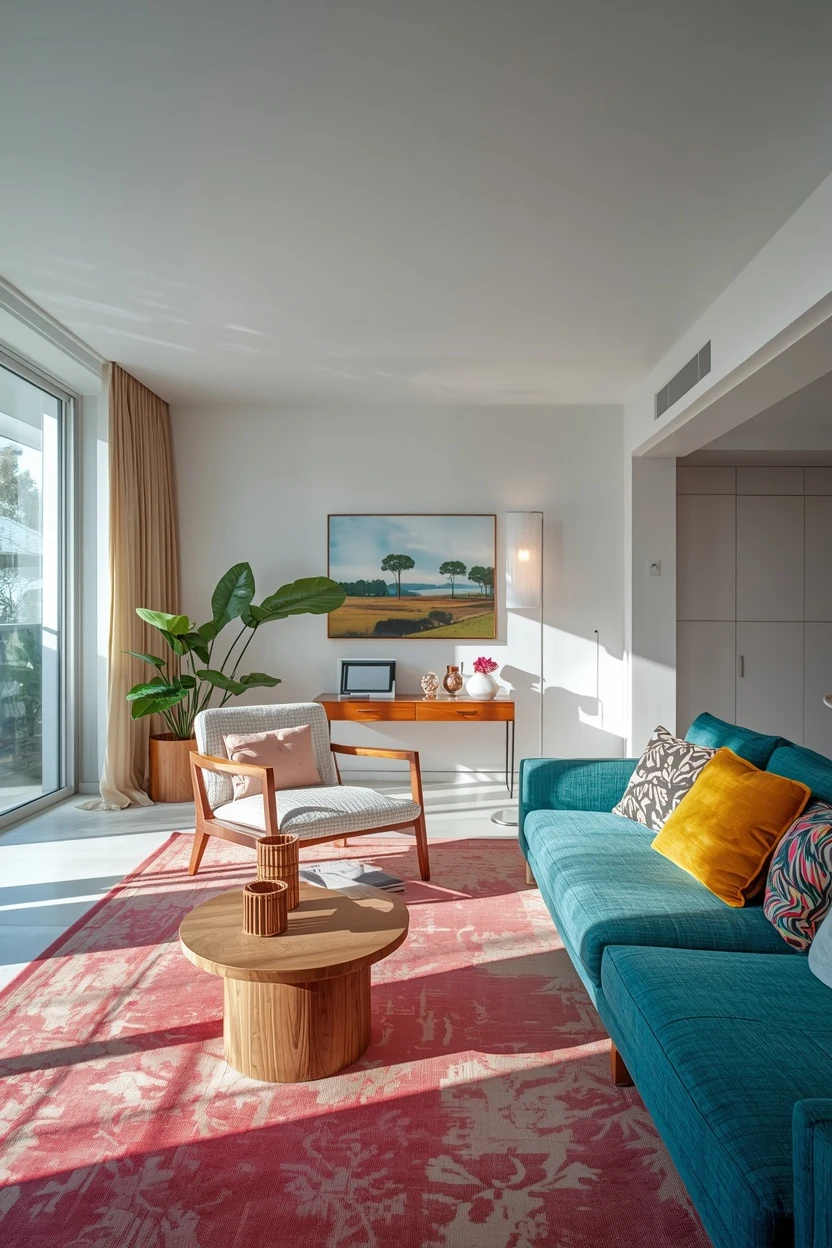
A few plants at different heights — a tall floor plant in a corner, a smaller one on a shelf, a trailing variety on a bookcase — add life and natural texture that static decor alone doesn’t provide. Choose varieties suited to your room’s actual light conditions rather than ones that will struggle and need frequent replacing. This is one of the most affordable ways to make a room feel considerably more finished.
7. Swap in a Few Seasonal or Rotating Throw Pillows
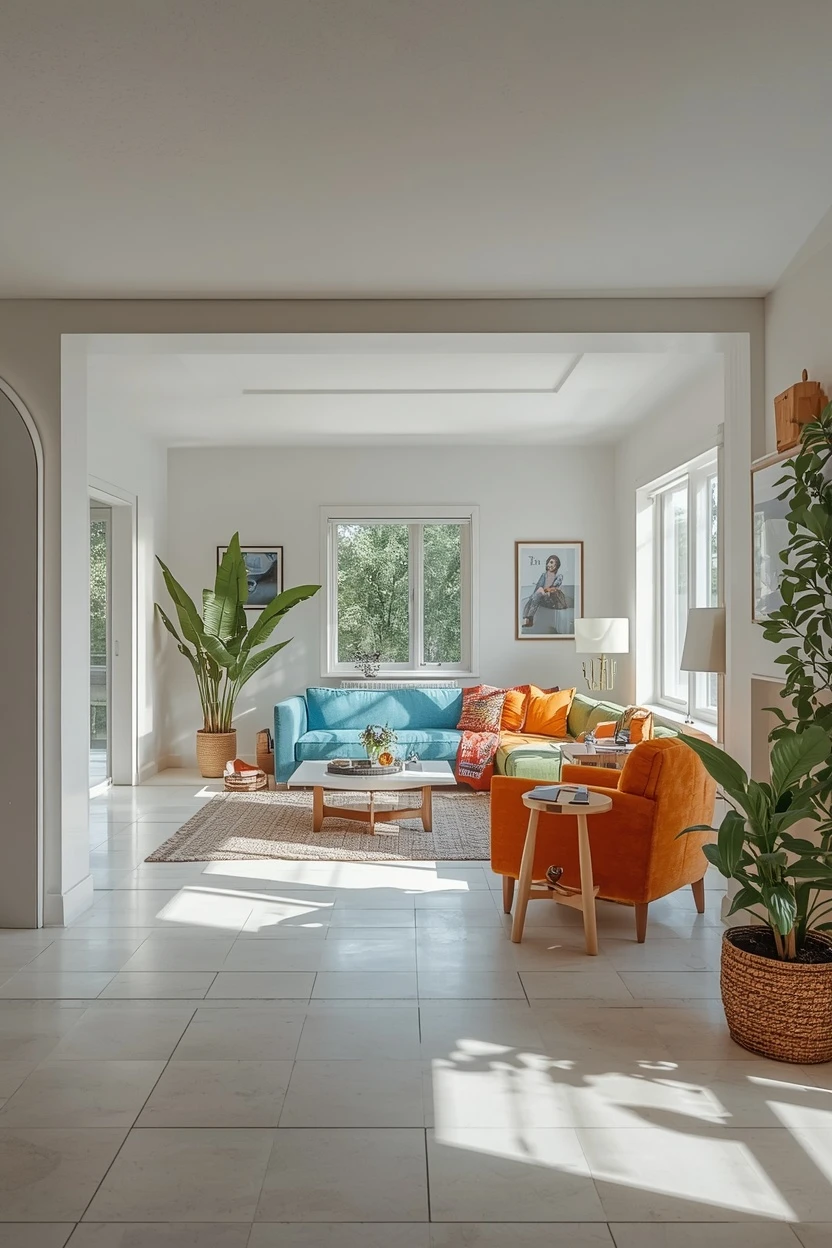
Keeping two or three core pillows in a neutral, year-round tone while rotating in a couple of seasonal or trend-driven accent pillows lets the sofa feel refreshed throughout the year without a full furniture change. Vary the pattern scale — one larger print, one smaller texture — rather than repeating the same scale across every pillow. This is one of the lowest-cost ways to keep a living room feeling current.
8. Float Furniture Away From the Walls
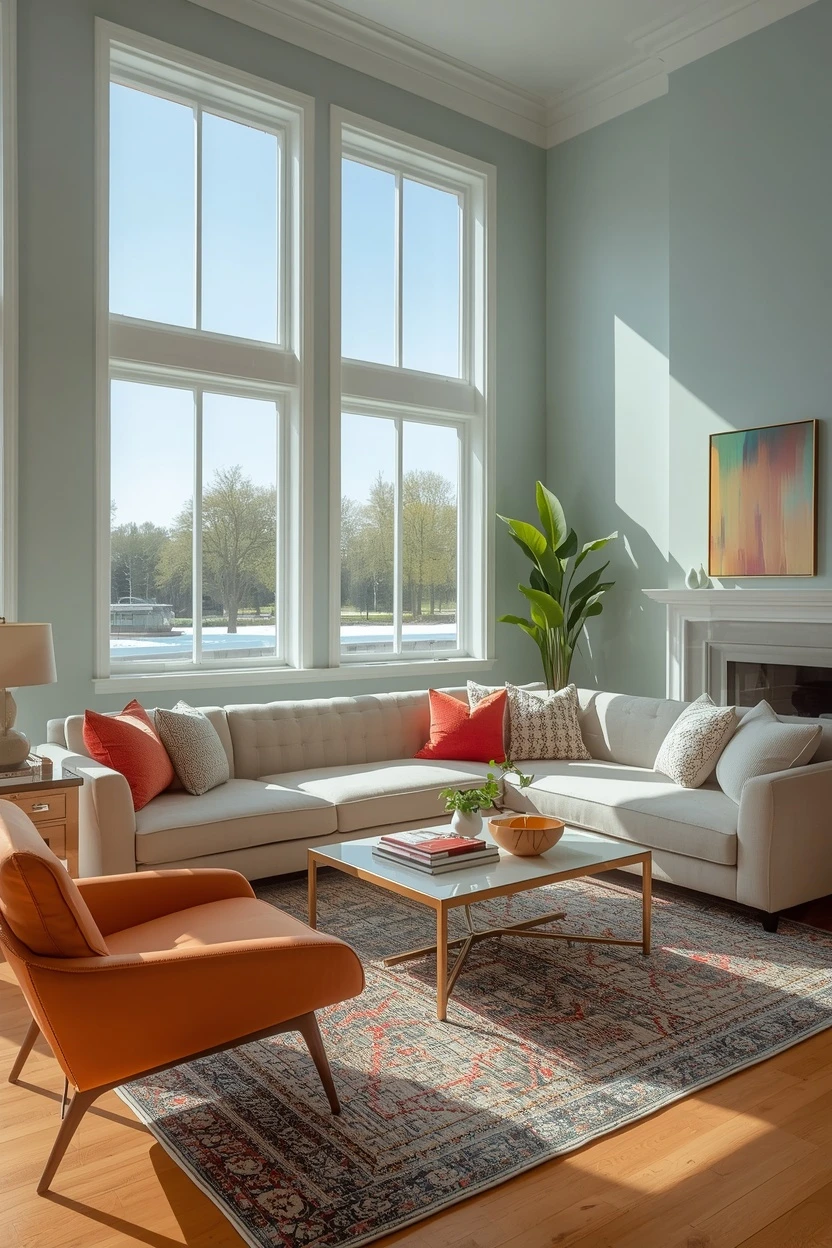
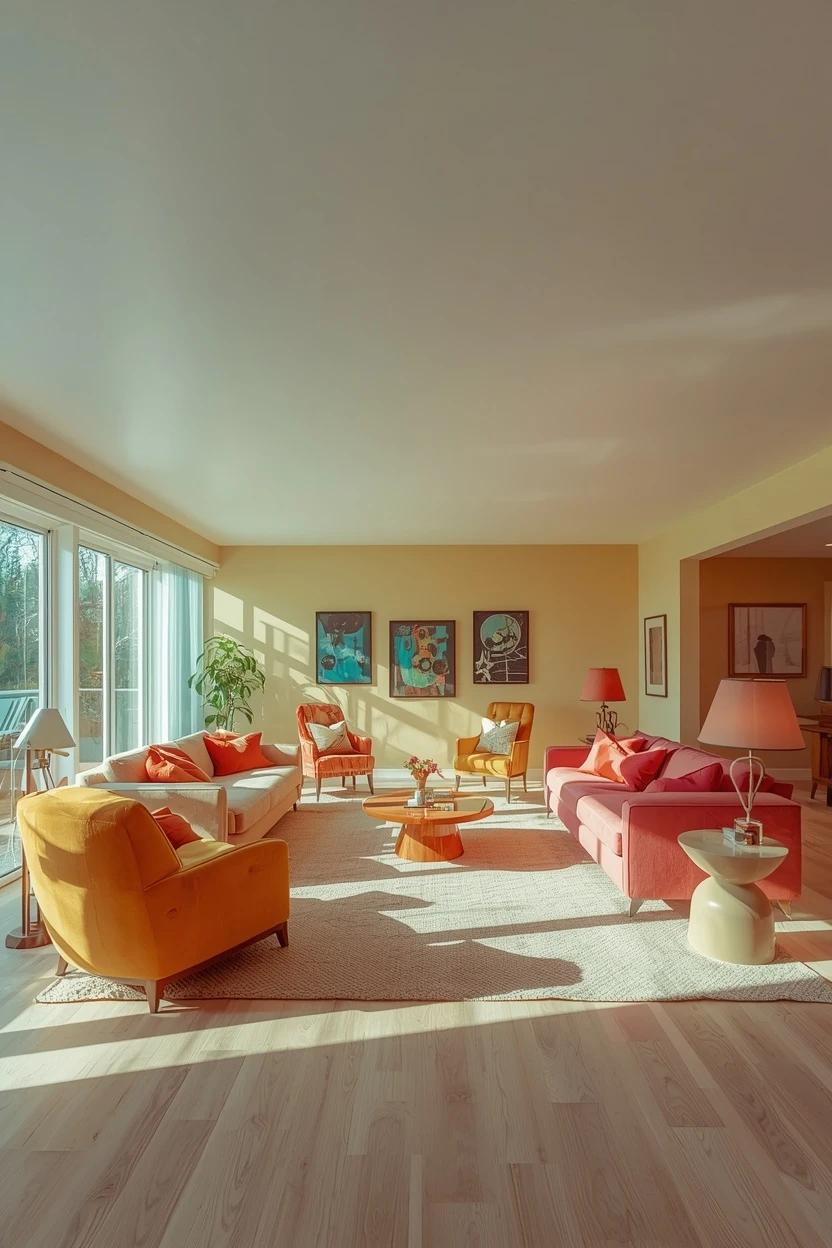
Pulling the sofa and chairs a few inches or even a couple of feet away from the walls, rather than pushing every piece flush against them, creates a more intentional, conversation-focused layout that professional designers use consistently. This works even in a smaller room, since a floating arrangement often makes better use of the space than a rigid perimeter layout. It’s a free rearrangement that can transform how the whole room feels to sit in.
9. Choose One Piece to Function as a Focal Point
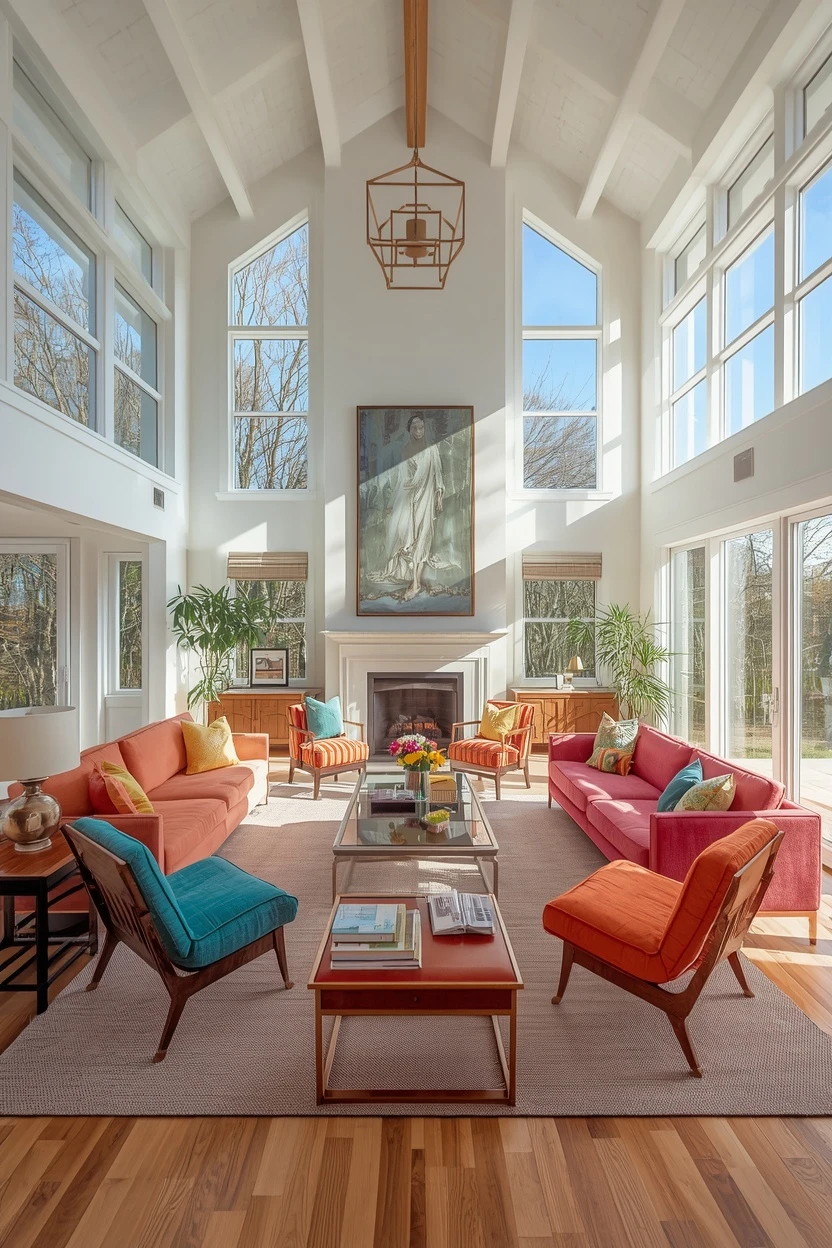
Whether it’s a piece of art, a striking mirror, or the fireplace itself, arranging the room so that one clear element serves as the visual anchor gives the space a sense of purpose that a room with several competing focal points lacks. Position the main seating to relate to that focal point rather than facing away from it. This is a layout principle rather than a purchase, so it costs nothing beyond thoughtful furniture placement.
10. Add a Coffee Table Tray for Styled, Contained Decor
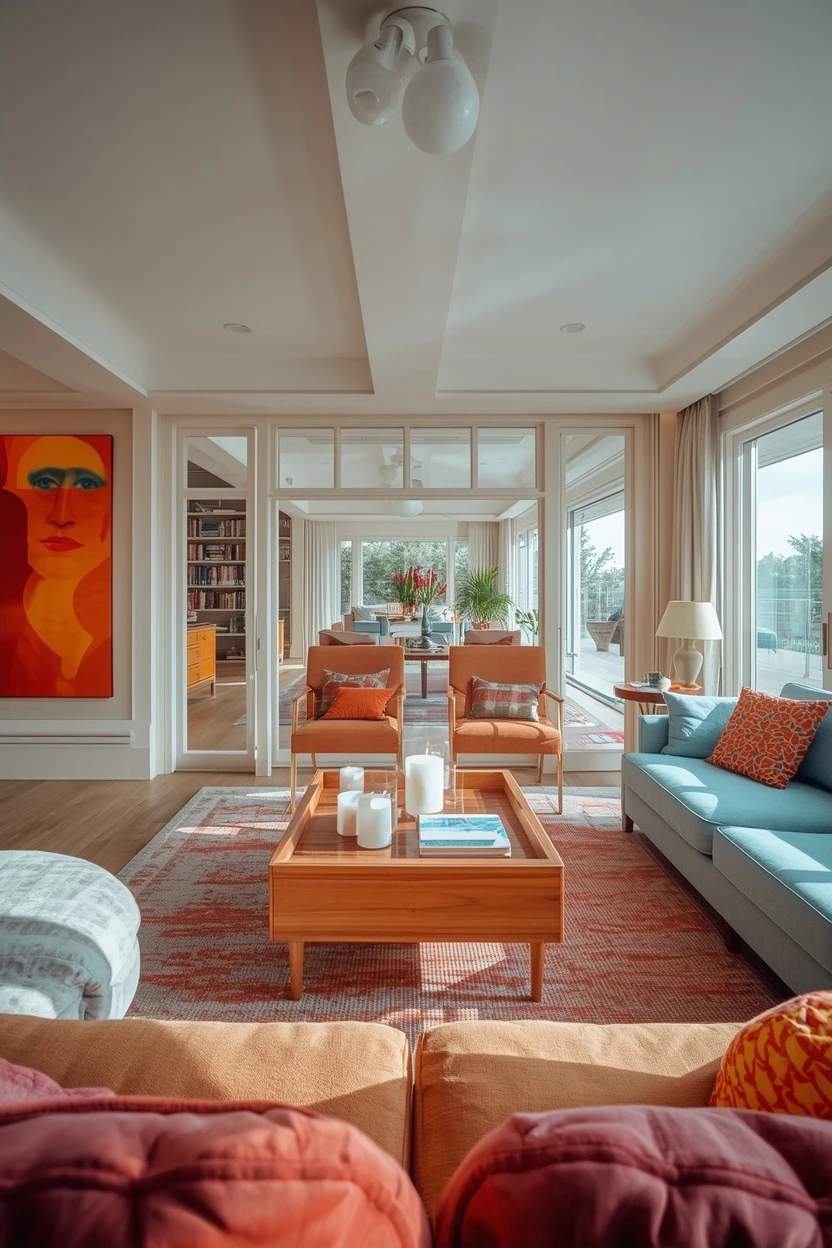
A simple tray on the coffee table gives candles, books, or small objects a defined boundary, which keeps the surface looking styled and intentional rather than cluttered with loose items. Choose a material — wood, marble, or metal — that complements the room’s existing finishes. This is a small, inexpensive detail that consistently photographs well and reads as considered.
11. Use Curtains Hung Higher and Wider Than the Window Frame
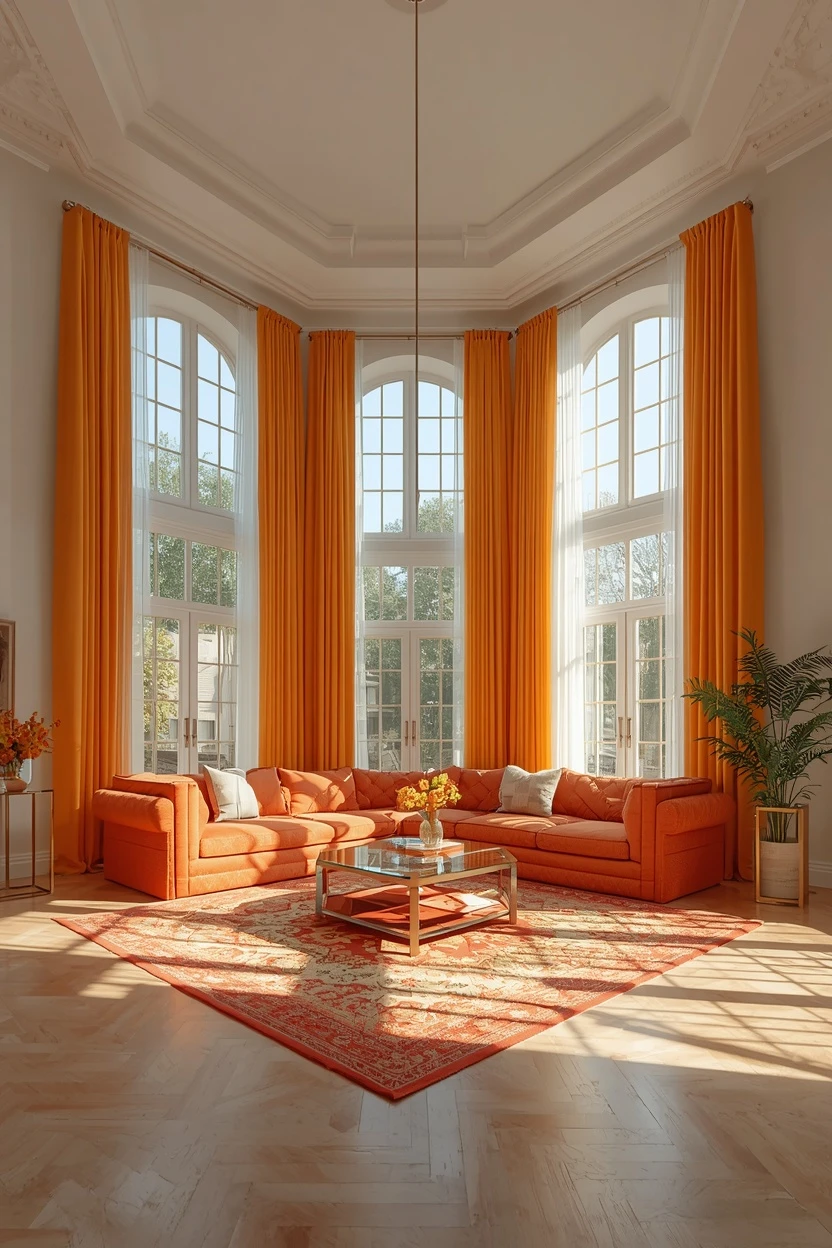
Mounting curtain rods close to the ceiling and a few inches beyond the window frame on each side makes windows appear taller and the whole room feel more spacious, a trick used consistently in professionally styled spaces. Choose curtain panels long enough to just graze or slightly pool at the floor rather than stopping short. This is a simple hardware adjustment that dramatically changes the room’s proportions.
12. Introduce One Bold Color Through a Single Accent Piece
Rather than repainting the whole room, introducing one confident color through a single accent chair, a piece of art, or a set of pillows gives the space personality without a major commitment. Keep the rest of the room’s palette neutral so that one bold choice reads as a deliberate statement rather than a competing element. This approach also makes the accent easy to swap out later if your taste changes.
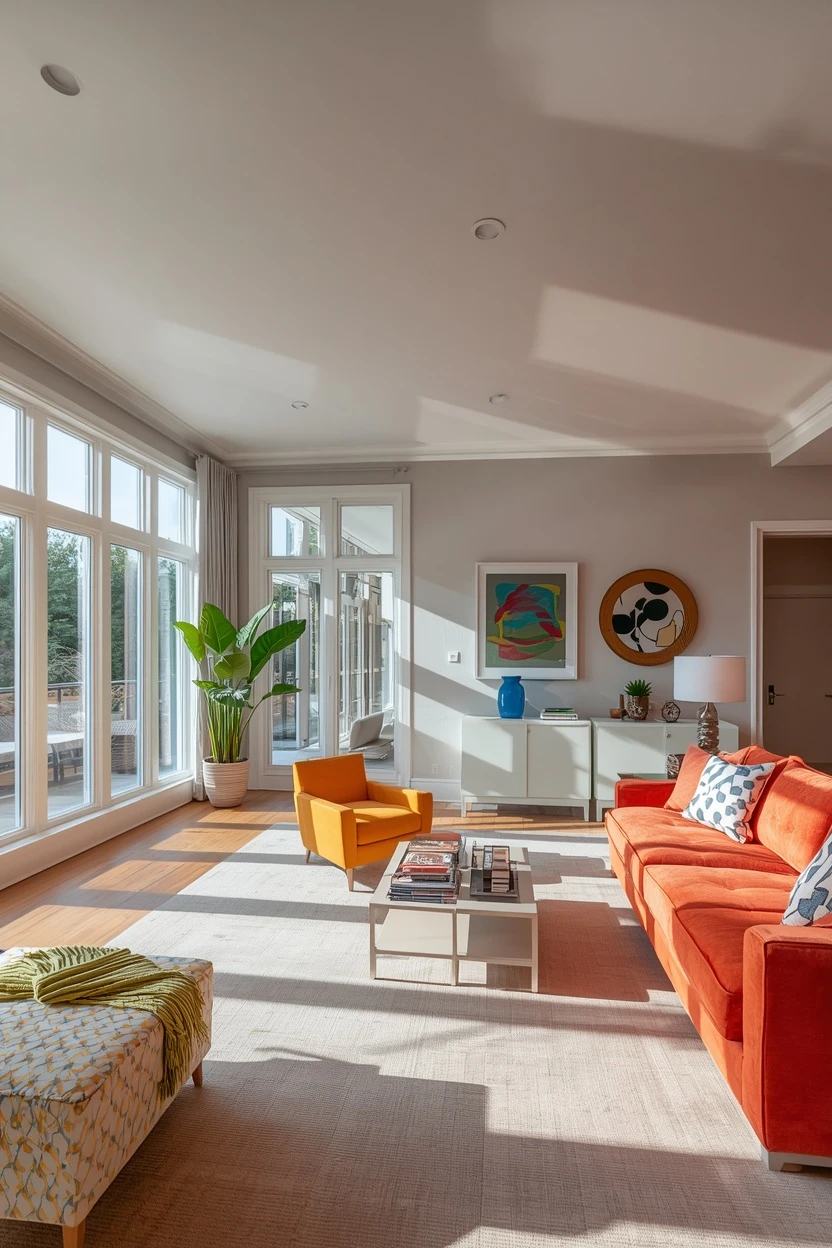
13. Use a Large Mirror to Bounce Light Across the Room
An oversized mirror positioned to reflect a window or a lamp bounces additional natural or warm light across the room, making the space feel brighter and larger without adding a single new light fixture. Choose a frame finish that complements your existing hardware and metal accents. This works especially well in a room with limited natural light or a darker corner that needs a lift.
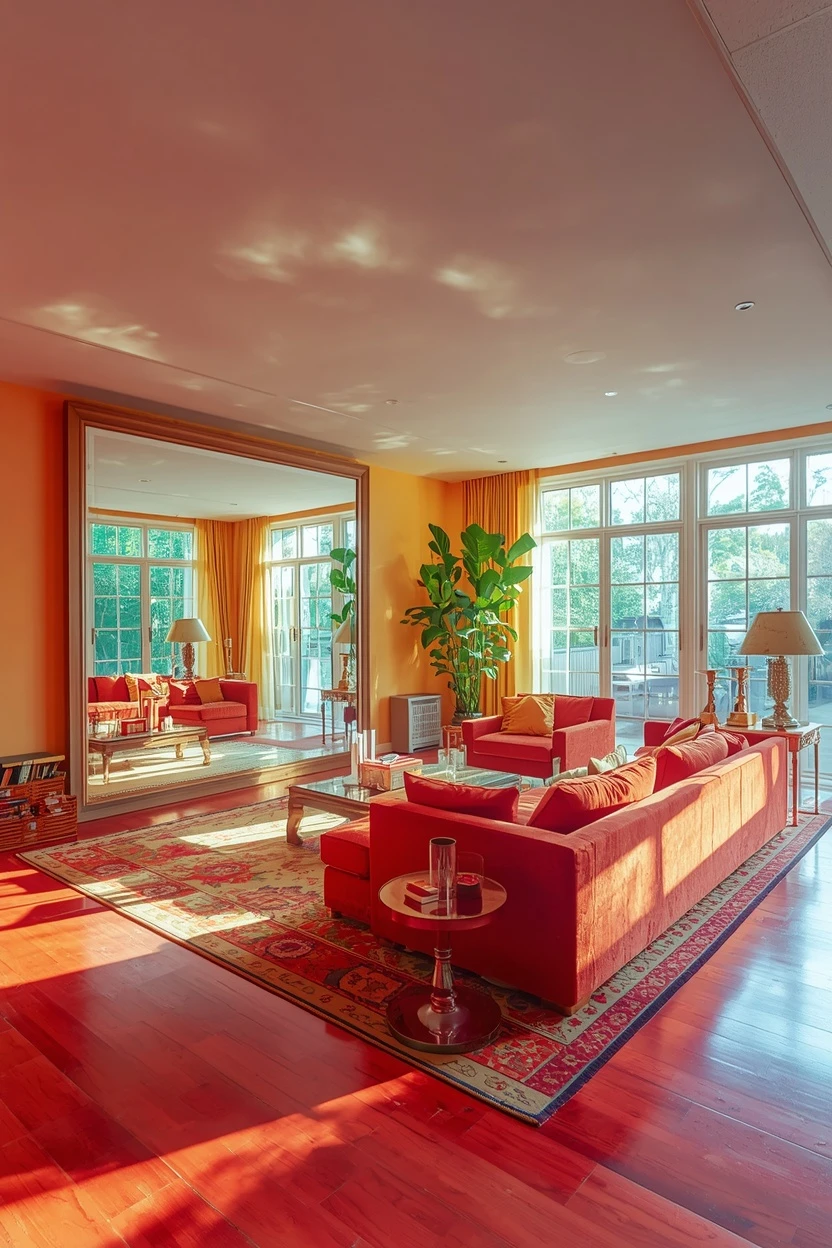
14. Build Height With a Tall Bookcase or Leaning Shelf
A tall bookcase or a leaning ladder shelf draws the eye upward and makes use of vertical space that a room full of only low furniture often leaves empty. Style the shelves with a mix of books, small objects, and a bit of negative space rather than filling every inch. This adds both storage and visual interest to a wall that might otherwise stay bare.
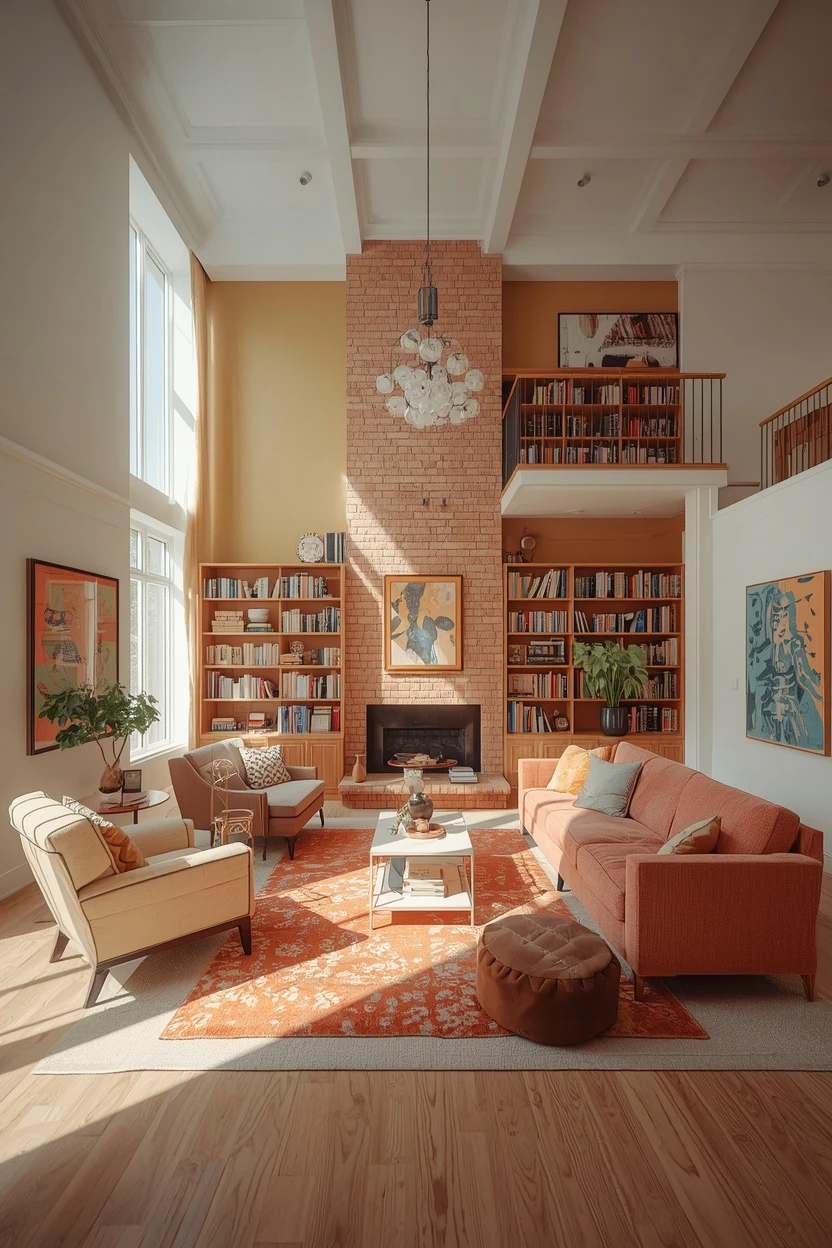
15. Define the Media Area With Its Own Considered Layout
Rather than letting the TV and its cables dominate the room’s visual attention, a media console sized appropriately to the wall, with cables tucked away and a few styled objects alongside the screen, keeps the media area feeling like an intentional part of the room rather than an afterthought. Route cables through a cable box or behind furniture wherever possible. A well-styled media console can look as considered as any other part of the room.
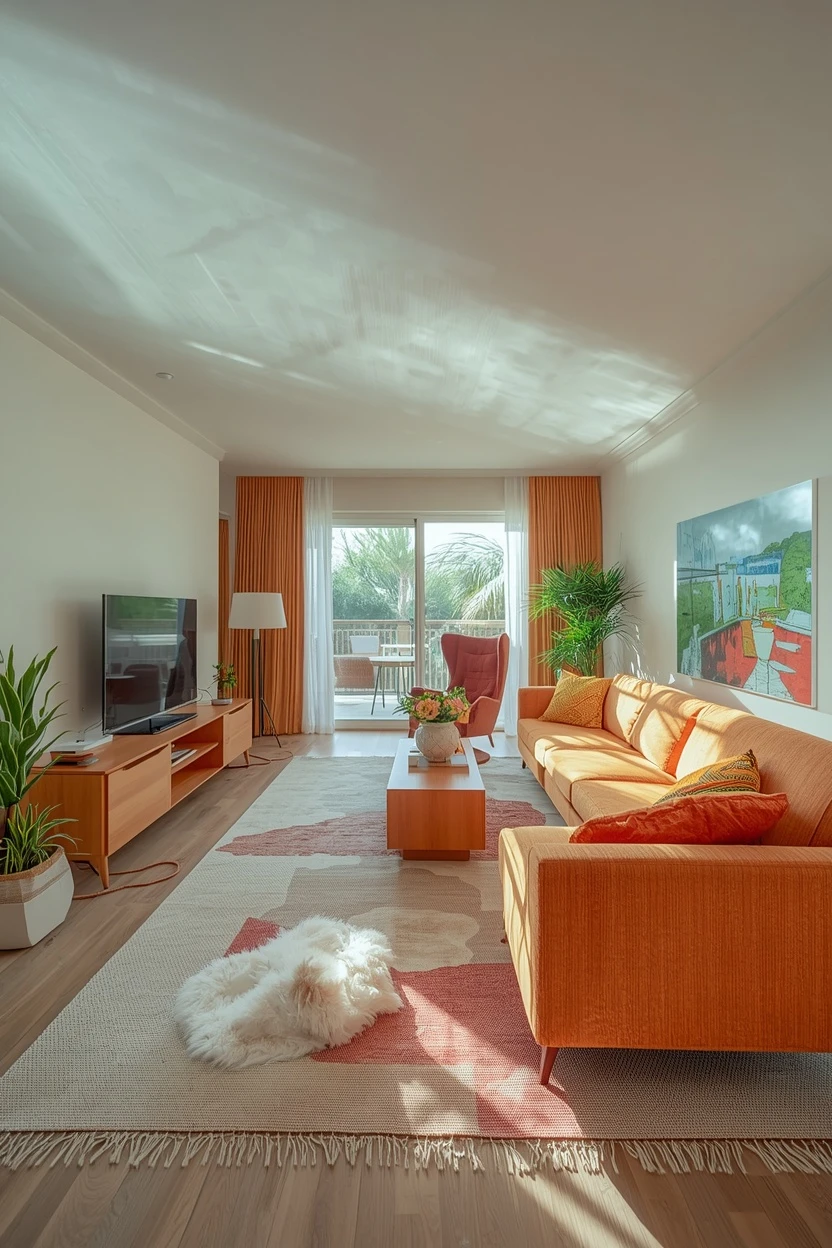
16. Add a Scented Candle or Diffuser as a Finishing Sensory Layer
A quality candle or reed diffuser in a subtle, complementary scent adds a sensory layer to the room that purely visual decor can’t achieve, and it’s often the detail that makes a space feel fully finished rather than simply decorated. Keep the scent light and consistent with the rest of the home rather than overpowering. This is one of the lowest-cost ideas on this entire list, best added once the rest of the room’s styling is in place.
Where I’d Start If I Only Did Three Things
If I only had a weekend, I’d start with floating the furniture away from the walls from idea eight, since it’s completely free and can transform how the whole room feels to sit in. Second, I’d add layered lighting with a floor and table lamp from idea two, because that shift away from a single overhead fixture is one of the most reliably high-impact, low-cost changes available. Third, I’d invest in a properly sized statement rug from idea one, since it visually anchors every other decision in the room.
FAQ
What’s the single most impactful living room decor change for the least money?
Floating the furniture away from the walls costs nothing and often has the most noticeable effect on how the room feels, since it creates a more intentional, conversation-focused layout. Layered lighting is a close second, and it’s still relatively inexpensive if you already own a floor or table lamp to add.
How big should my living room rug actually be?
As a general rule, a rug large enough that at least the front legs of every major piece of seating furniture rest on it looks more grounded and intentional than a smaller rug floating in the center of the room. When in doubt, sizing up is almost always the better choice for a more finished look.
Do I need to repaint my living room to make it feel more stylish?
Not necessarily — introducing one bold color through a single accent piece, like a chair or a set of pillows, often delivers much of the visual impact of a full repaint without the commitment or cost. This approach is also easier to update later if your taste changes.
How do I keep a living room feeling cohesive if I add several of these ideas at once?
Keeping a consistent frame finish on any gallery wall and a limited two-to-three-tone color palette across pillows, throws, and accents are the two habits that most reliably tie multiple changes together into one cohesive look. Without at least one of these unifying choices, several individually nice ideas can start to feel scattered.
Conclusion
An elevated living room comes down to a handful of intentional layout and styling decisions — a properly sized rug, layered lighting, and furniture arranged for conversation rather than pushed against the walls — more than it depends on buying new furniture. Start with the free and low-cost changes, layer in one or two styled details, and the room will feel noticeably more considered by the end of a single weekend.

zarcoyt2025
Khawar Iqbal is the founder and editor of Cozy Homes Hub. He writes about cozy, livable home decor — from small-apartment layouts to room-by-room styling guides — with a focus on warm palettes, layered lighting, and budget-friendly ideas that actually work in real homes.
Related Articles
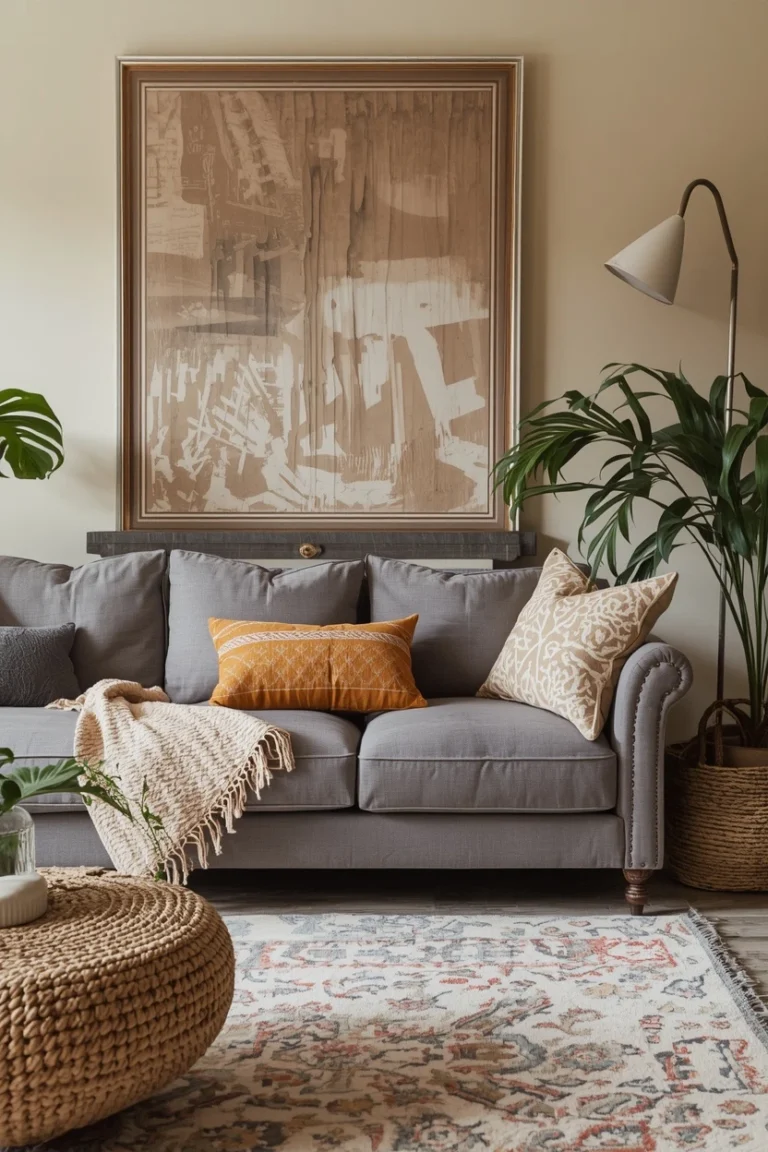
14 Grey Settee Living Room Ideas to Warm Up a Neutral Sofa
A grey settee is the most versatile thing you can put in a living room — and, if you're not careful, the…
Read more →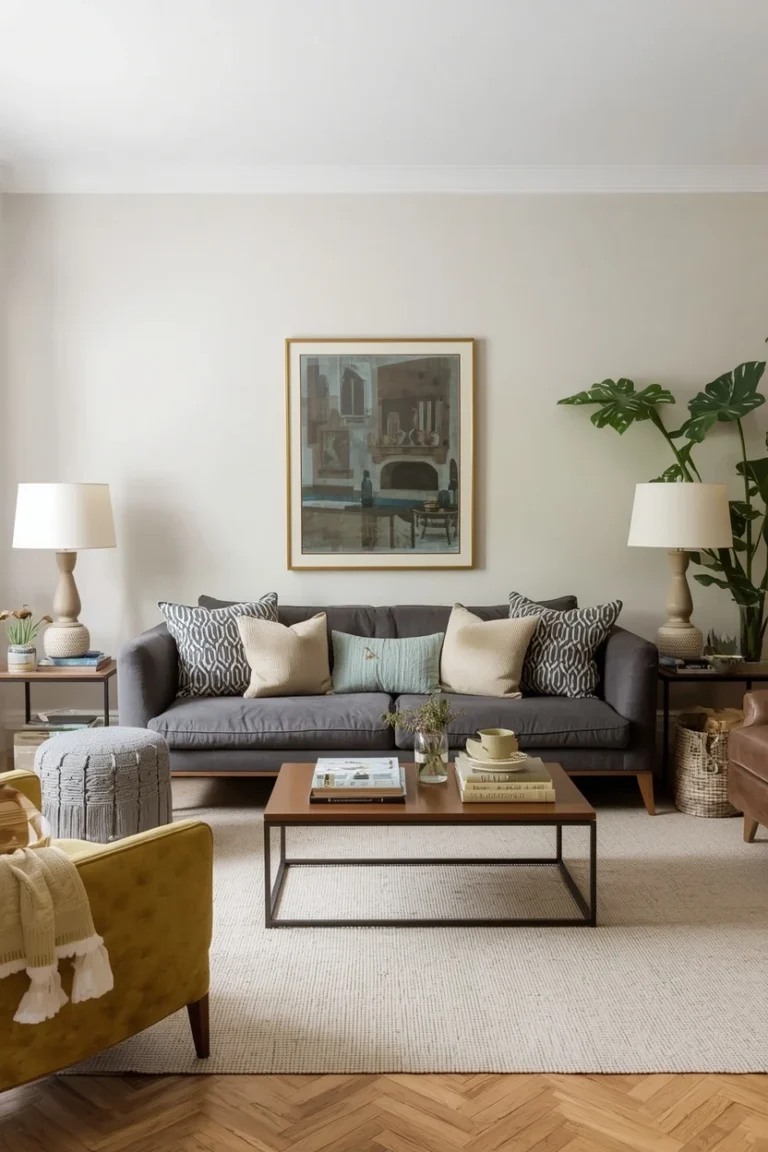
12 Living Room Arrangement Ideas for a Warm, Balanced Space
There's a difference between a room that's furnished and a room that's arranged. Furnished just means the pieces are in there; arranged…
Read more →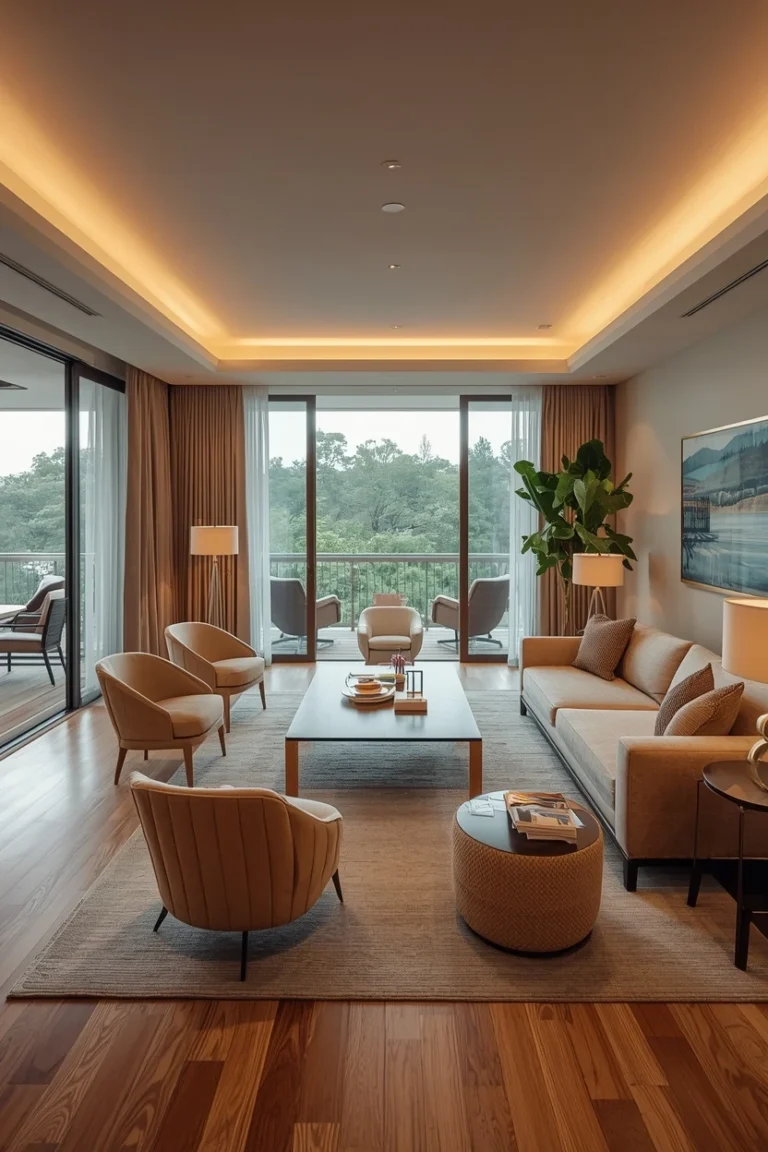
16 Living Room Layout Ideas to Make Any Space Work Harder
Before a single cushion or paint colour comes into it, a room lives or dies by its plan. The best living room…
Read more →