18 Tiny Very Small Bedroom Ideas to Maximize Every Inch
 By zarcoyt2025
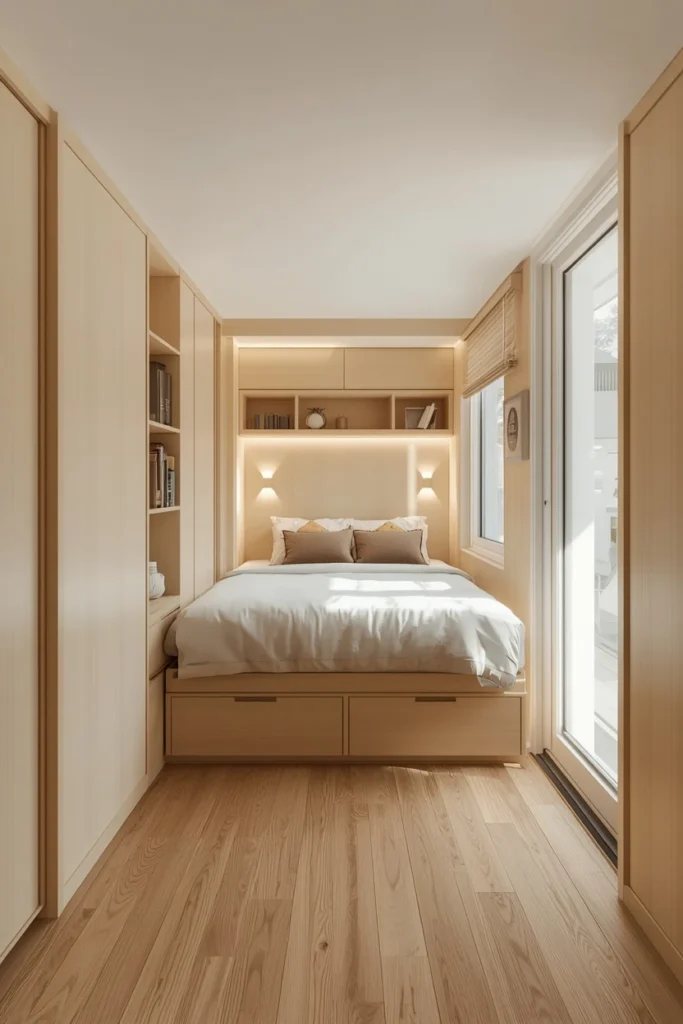
Table of Contents
- 1. A Light and Bright Palette
- 2. A Storage Bed
- 3. Vertical Storage to the Ceiling
- 4. Floating Furniture
- 5. A Large Mirror
- 6. A Fold-Down or Murphy Bed
- 7. A Loft or Raised Bed
- 8. Built-In Storage Around the Bed
- 9. Slimline Multi-Use Furniture
- 10. Wall-Mounted Bedside Lighting
- 11. A Clutter-Free Minimalist Scheme
- 12. Behind-the-Door Storage
- 13. Sheer Curtains and Maximized Light
- 14. A Corner Wardrobe or Nook Fit-Out
- 15. Vertical Stripes or Tall Details
- 16. A Compact Daybed Layout
- 17. Under-Window and Sill Storage
- 18. The Complete Maximized Tiny Bedroom
- Where I’d Start if I Only Did Three Things
- Frequently Asked Questions
- How do I make a small bedroom looks bigger?
- What is the best bed for a tiny bedroom?
- How can I add storage to a very small bedroom?
- What colors are best for a small bedroom?
- Final Thoughts
A tiny bedroom can be every bit as beautiful, restful, and functional as a large one — it just takes clever design to make every inch count. With smart space-saving furniture, vertical storage, light-reflecting colors, and a considered layout, even the smallest room can feel calm, uncluttered, and surprisingly spacious. These small bedroom ideas show how to maximize a very compact space, with practical, stylish solutions that store more, waste no space, and trick the eye into seeing a bigger, brighter room. However snug your space, there’s a strategy here to transform it.
Each idea below is a complete, practical solution, with honest notes on what works for the tightest footprints, how to balance storage with a calm feel, and where to spend for the biggest impact. Some are simple visual tricks; others are smart furniture and layout moves. Whether your bedroom is a boxroom, a studio corner, or just genuinely tiny, there’s a direction here to make it look bigger, work harder, and rest beautifully.
1. A Light and Bright Palette
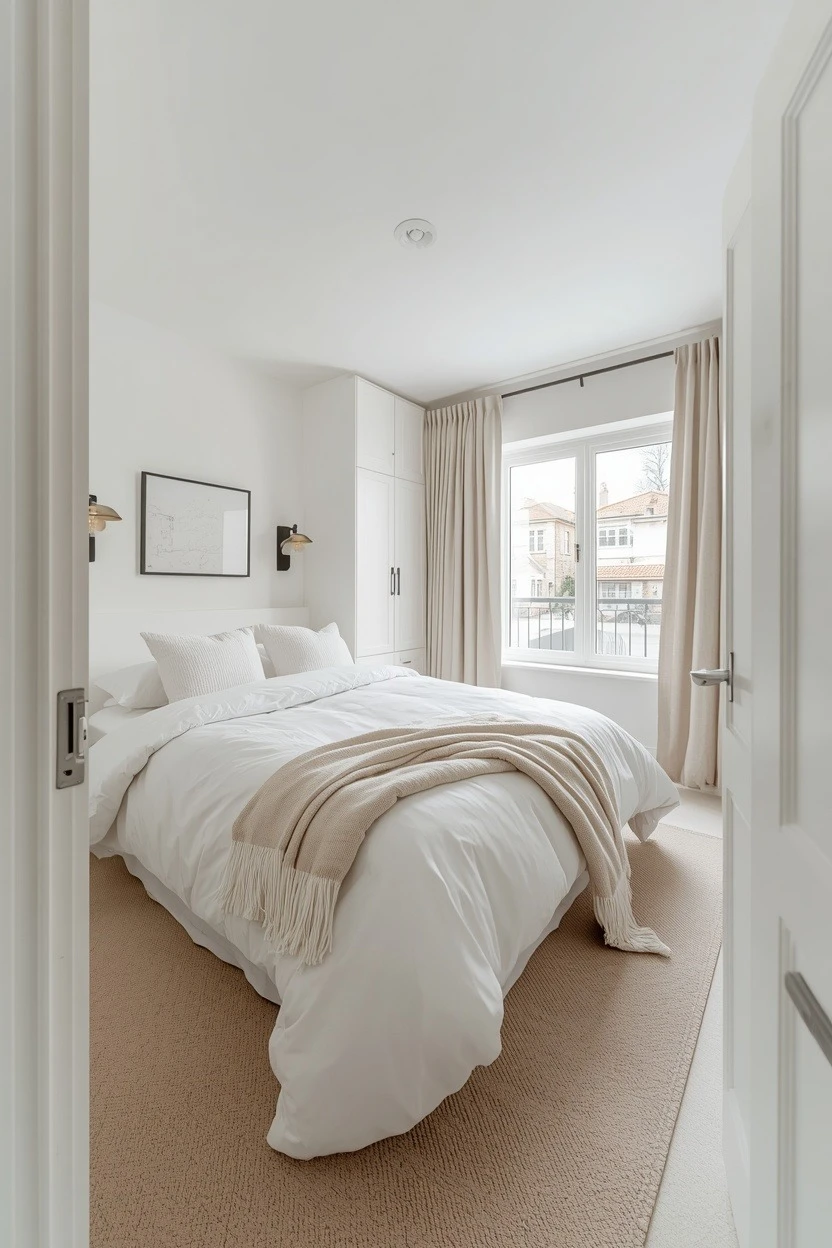
The simplest way to make a tiny bedroom look bigger is a light, bright palette that reflects rather than absorbs light. Soft whites, pale neutrals, and gentle pastels on the walls, bedding, and floor bounce daylight around and blur the room’s edges, making it read airy and open. Keep the scheme tonal and calm so nothing crowds the eye. Add warmth through texture rather than dark color. A light and bright palette is the most effective small bedroom idea, using pale, reflective tones to visually expand the space and create a calm, airy openness that makes even the tiniest room breathe.
2. A Storage Bed
In a tiny bedroom, the bed’s footprint is your biggest storage opportunity, so an ottoman or drawer bed reclaims all that wasted space beneath. A gas-lift ottoman base or built-in drawers swallow bedding, clothes, and clutter without adding a single piece of furniture to the room. This is often the single most valuable move in a small space.
Choose a low-profile frame to keep the room feeling open. A storage bed is one of the smartest small bedroom ideas, turning the space under the bed into generous hidden storage that clears clutter and frees up the rest of the room, doing the work of a whole dresser invisibly.
3. Vertical Storage to the Ceiling
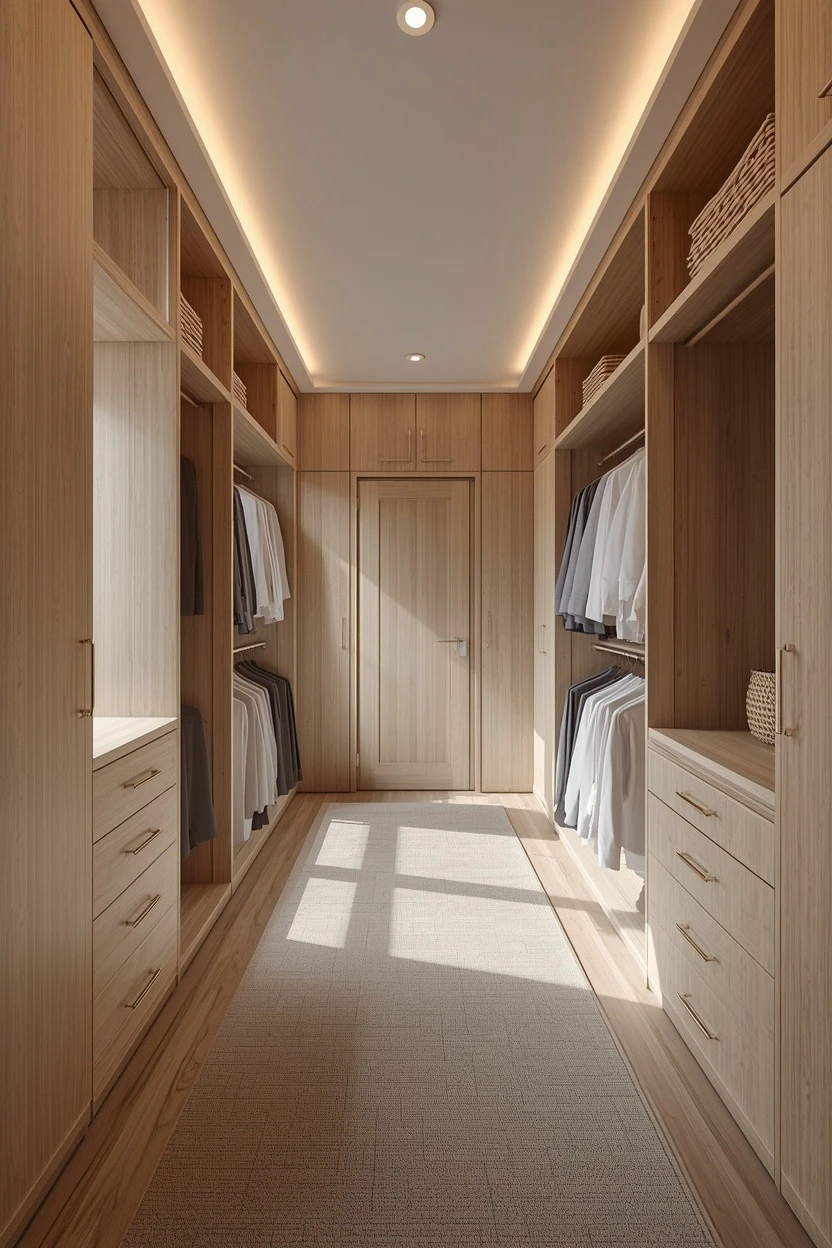
When floor space is scarce, the answer is to build up, so taking storage all the way to the ceiling uses the room’s full height. Tall wardrobes, floor-to-ceiling shelving, and high shelves above the door capture vertical space that usually goes to waste, drawing the eye up to make the room look taller. Keep the tall units light-colored to blend in. Store rarely-used items up high. Vertical storage to the ceiling is one of the most valuable small bedroom ideas, exploiting the room’s full height to hold far more without eating floor space, while the upward lines make a tiny room look taller and airier.
4. Floating Furniture
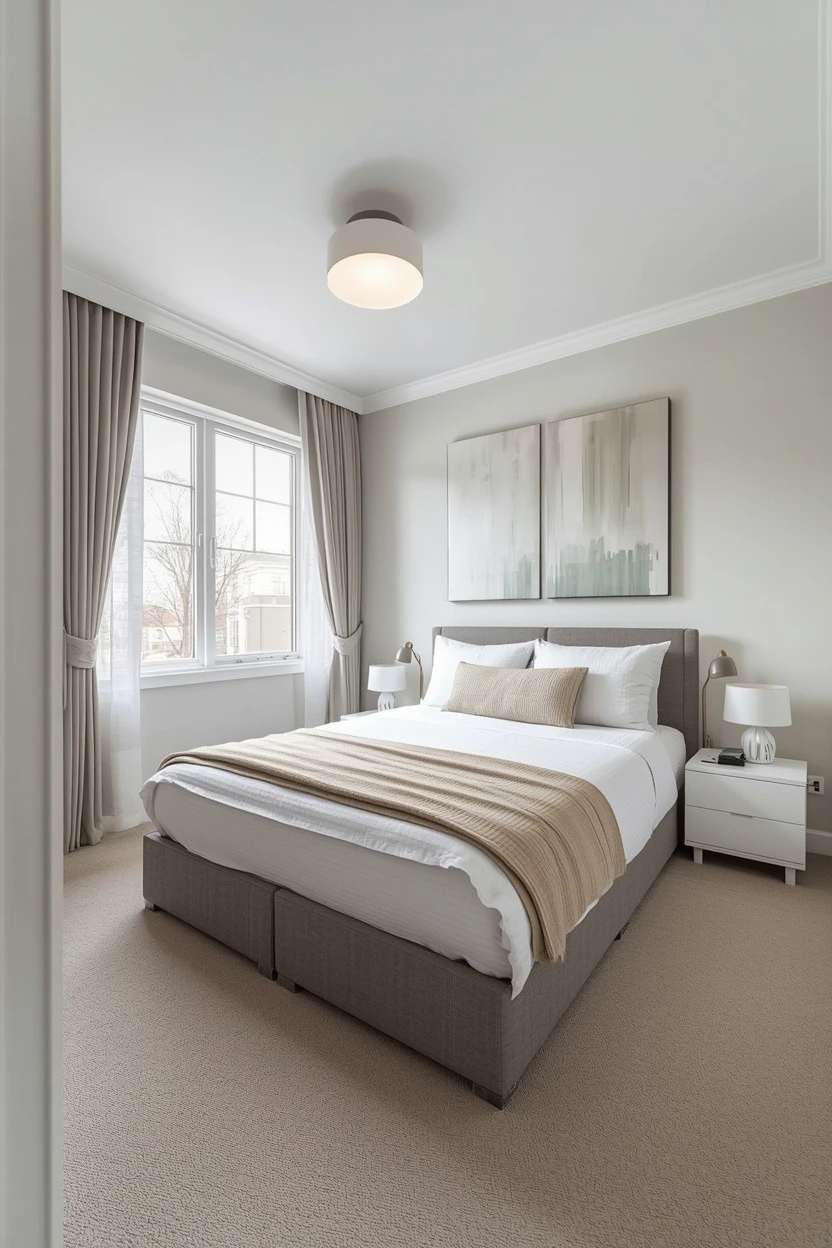
Wall-mounted, floating furniture keeps the floor visible in a tiny bedroom, which tricks the eye into reading more space. Floating nightstands, a wall-mounted shelf instead of a desk, and a floating dresser reveal the floor beneath them, making the room reads lighter and less crowded. The exposed floor also makes cleaning easier.
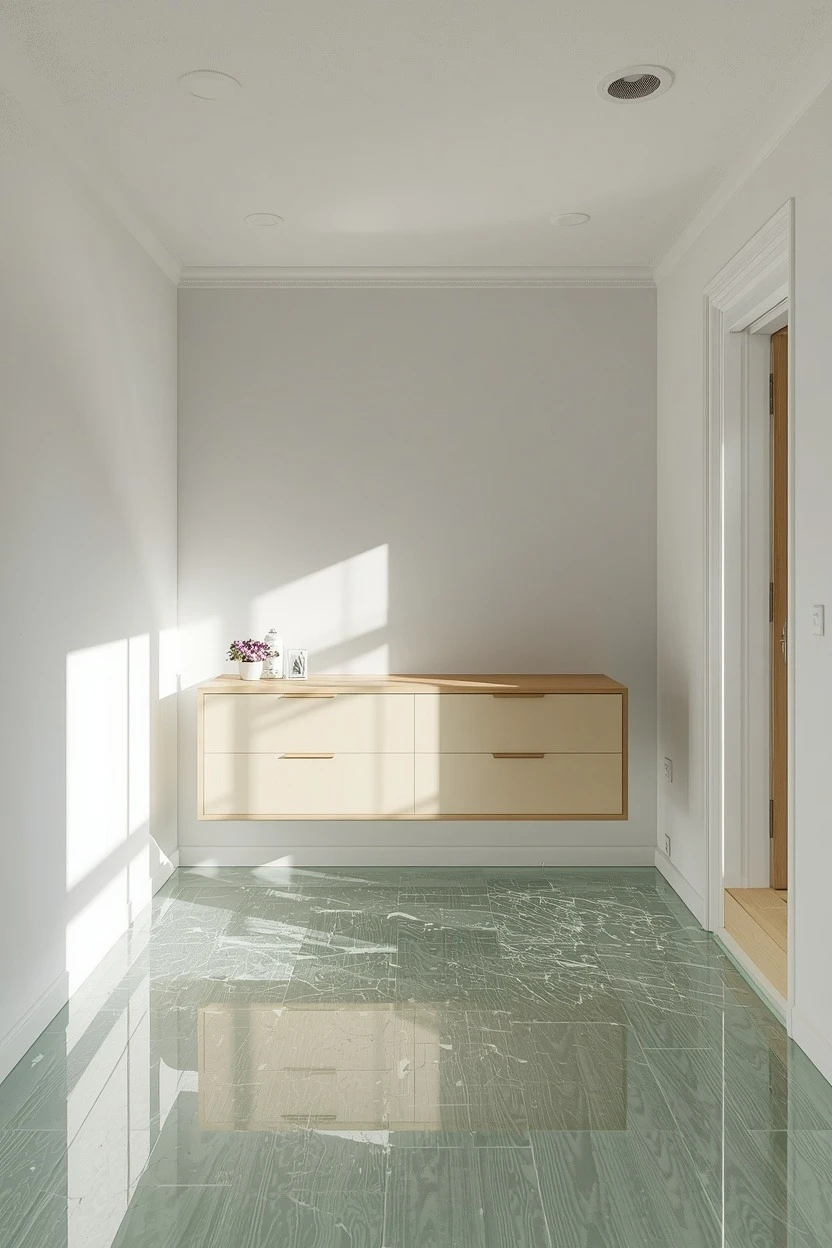
Keep the floating pieces slim and simple. Floating furniture is one of the cleverest small bedroom ideas, using wall-mounted pieces to keep the floor clear and visible so a tight room looks more open and airy, adding function without adding visual bulk.
5. A Large Mirror
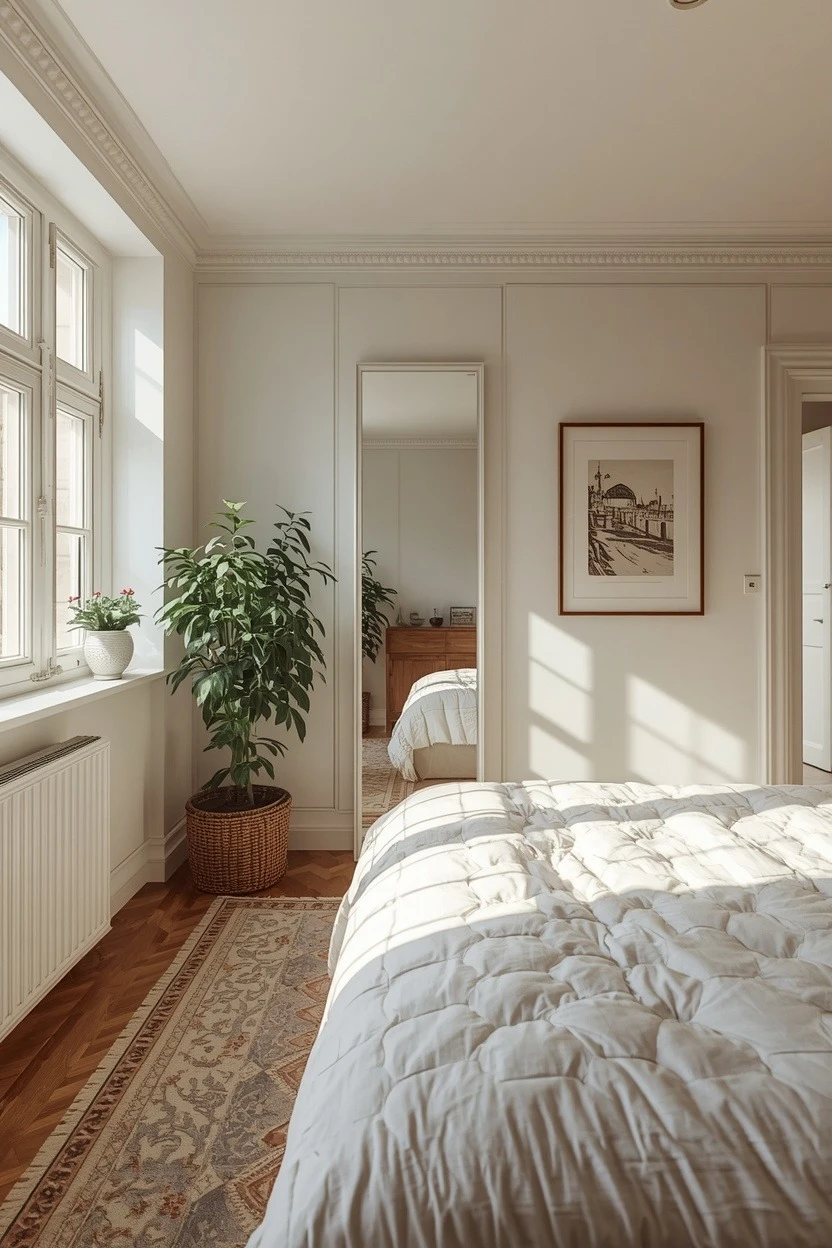
A large mirror is a tiny bedroom’s best friend, visually doubling the space and bouncing light around the room. A full-length or oversized mirror, ideally opposite or beside a window, reflects daylight and the room itself to create an instant sense of depth and openness. A mirrored wardrobe door does the same job while earning its keep. Position it to reflect the brightest view. A large mirror is one of the most powerful small bedroom ideas, using reflection to make a compact room look dramatically larger and brighter, adding a sense of space and light that no other single piece can match.
6. A Fold-Down or Murphy Bed
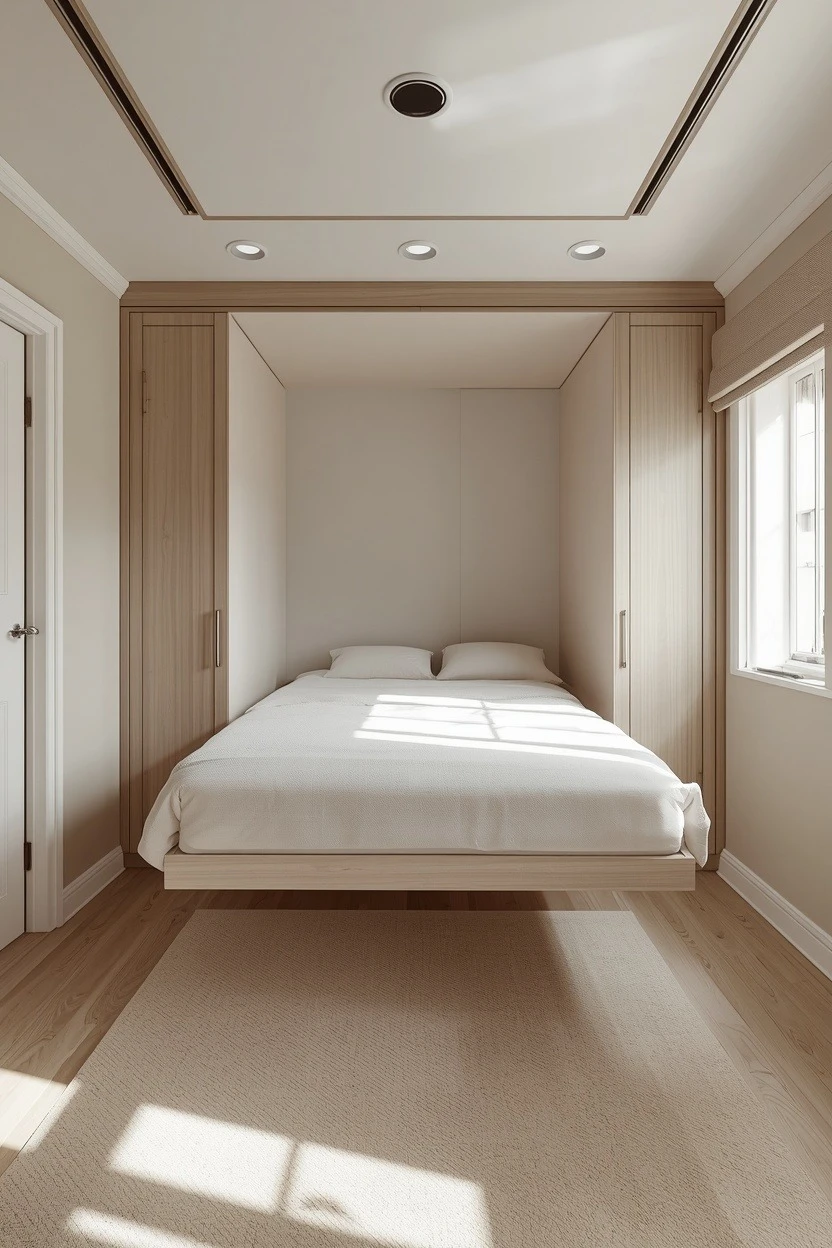
For the very tightest rooms or a bedroom that doubles as another space, a fold-down Murphy bed frees the floor entirely by day. A wall bed that folds up into a cabinet, sometimes with an integrated desk or sofa, reclaims the whole footprint when the bed isn’t in use, transforming a boxroom into a usable day space. Modern mechanisms are smooth and easy. This is the ultimate space-saver for multi-use rooms. A fold-down or Murphy bed is one of the most transformative small-space ideas, freeing the entire floor by day so a tiny room can work as an office, gym, or living space and still sleep beautifully at night.
7. A Loft or Raised Bed
Raising the bed up high creates valuable usable space underneath, ideal for tight rooms with decent ceiling height. A loft bed frees the area below for a desk, wardrobe, seating, or storage, effectively doubling the room’s functional footprint. This works brilliantly in kids’ rooms, studios, and box rooms.
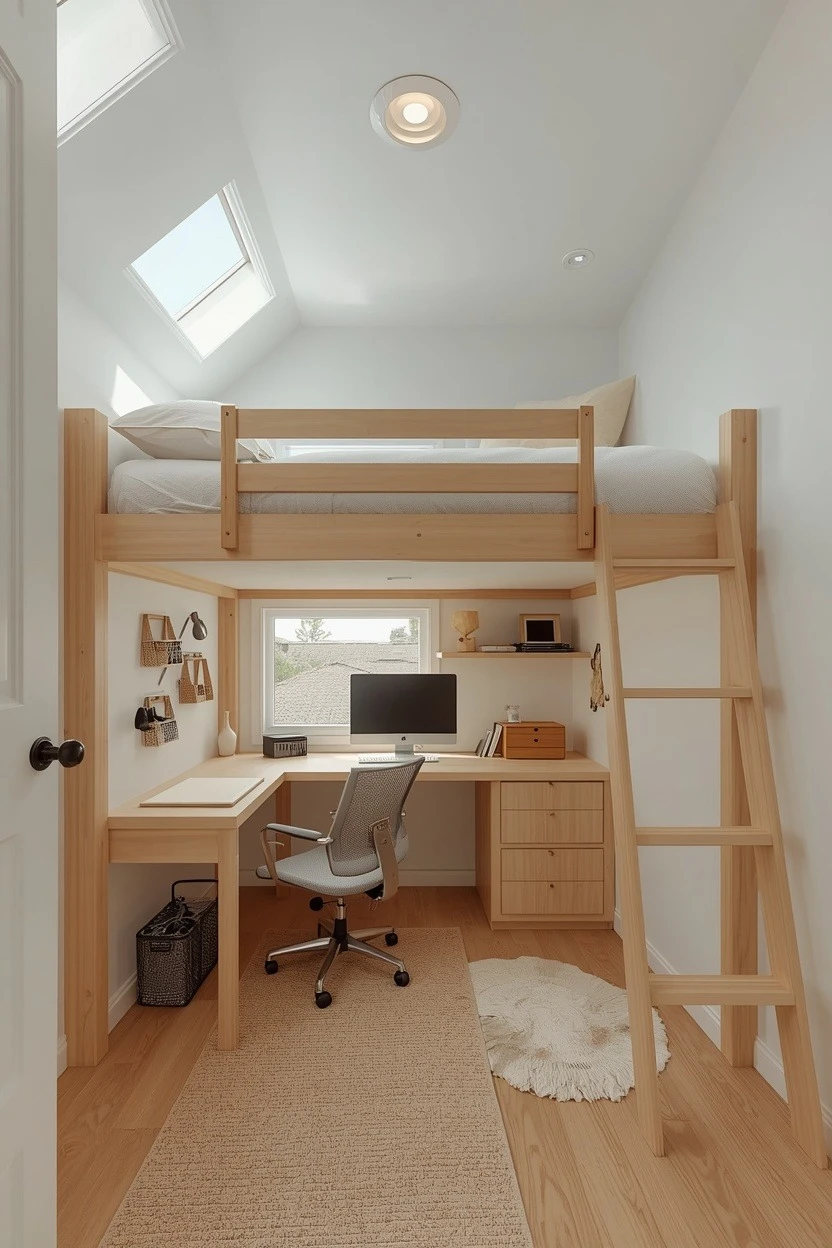
Ensure safe height clearance and sturdy construction. A loft or raised bed is one of the most space-multiplying small-space ideas, lifting the bed to create a whole extra zone beneath it, so a tiny room gains a desk, storage, or lounge area without sacrificing a comfortable place to sleep.
8. Built-In Storage Around the Bed
Custom built-ins that wrap around and over the bed use every awkward inch a tiny room offers. Overhead cabinets, bedside cubbies, and shelving built around the headboard turn dead wall space into integrated storage that frames the bed neatly. Bespoke or clever flat-pack solutions both work.
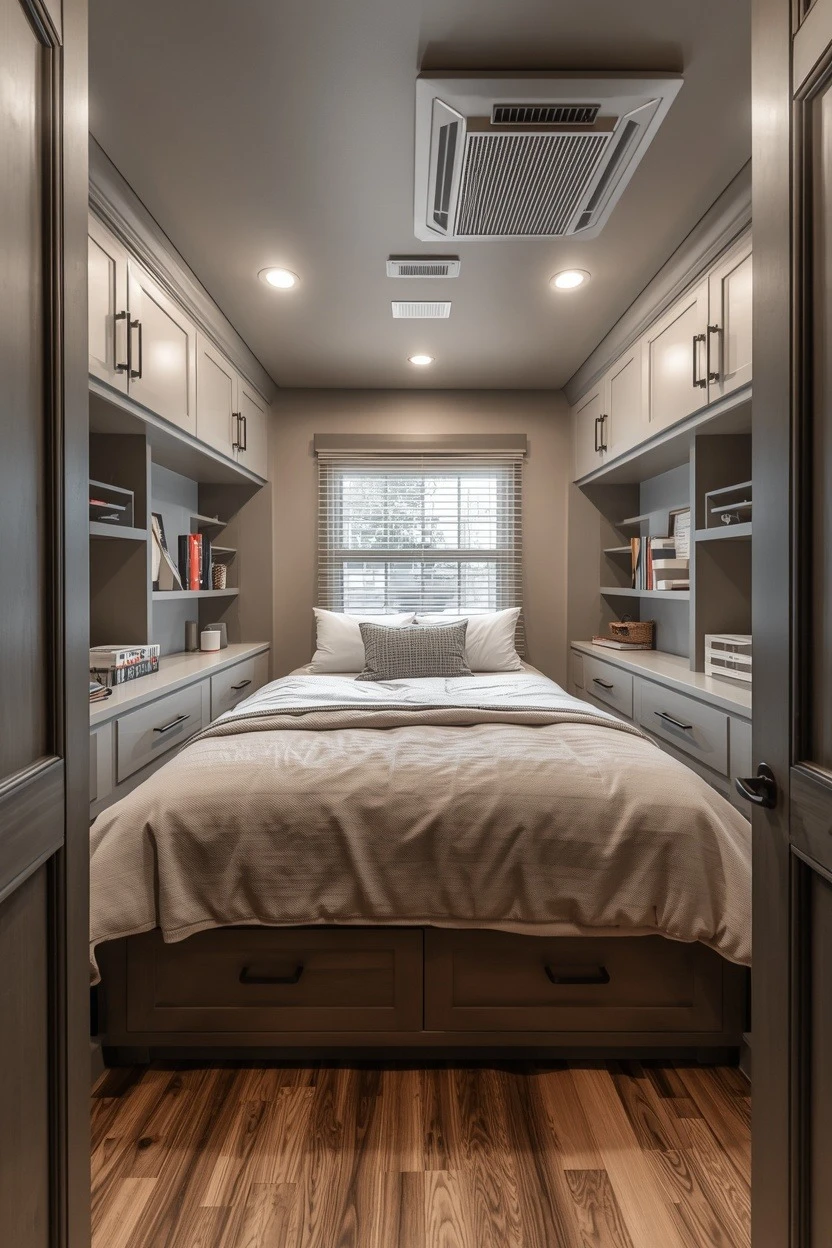
Painting them to match the walls keeps the look seamless. Built-in storage around the bed is one of the most efficient small-space ideas, wrapping the bed in tailored storage that captures every spare inch of wall and overhead space, giving a tiny room a wardrobe’s worth of storage in the footprint it already has.
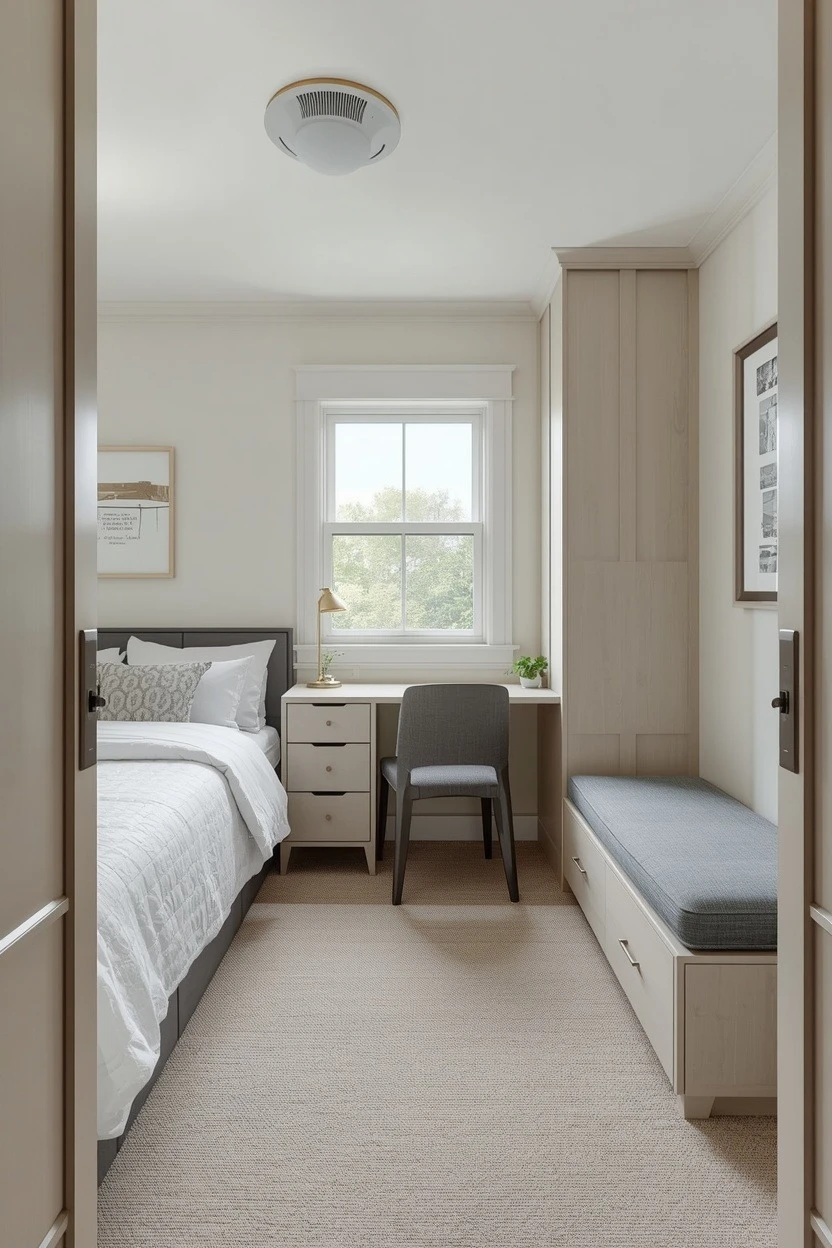
9. Slimline Multi-Use Furniture
Every piece in a tiny bedroom should earn its place, so slim, multi-tasking furniture beats bulky single-use pieces. A narrow nightstand with drawers, a slim desk that doubles as a dressing table, a storage bench at the foot of the bed, and nesting tables pack function into a small footprint. Choose leggy, slim-profile pieces that seems light. Multi-use items cut the total furniture count. Slimline multi-use furniture is one of the most practical small-space ideas, choosing slim, hardworking, dual-purpose pieces that deliver maximum function in minimum space, keeping a tiny room both fully equipped and visually uncluttered.
10. Wall-Mounted Bedside Lighting
Freeing up the nightstand and floor, wall-mounted and pendant lighting saves precious surface space in a tiny bedroom. Wall sconces or hanging pendants either side of the bed replace bulky table lamps, clearing the nightstands and adding a designer touch. This leaves the small surfaces for essentials only.
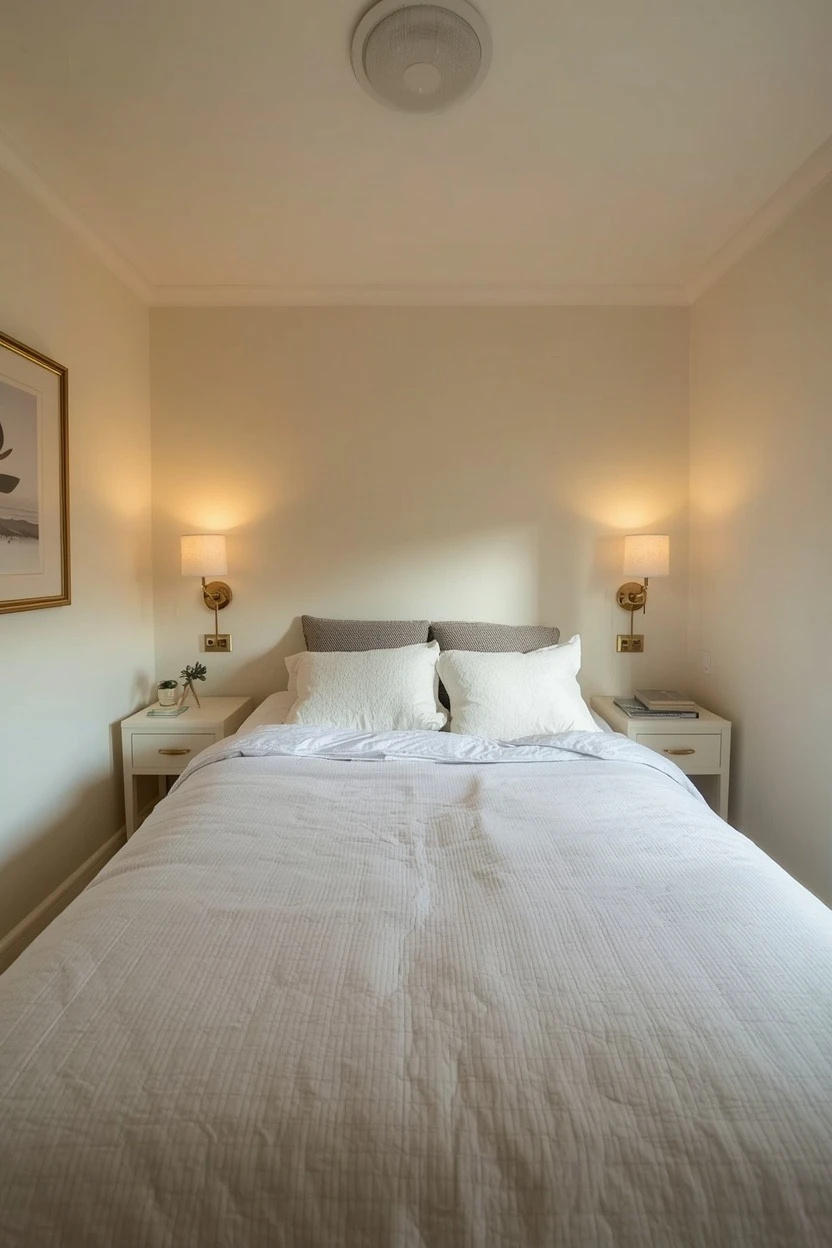
Choose plug-in sconces to avoid rewiring. Wall-mounted bedside lighting is one of the smartest small-space ideas, lifting the lights off the nightstands and onto the wall to reclaim surface and floor space, keeping a tiny room clutter-free while adding a stylish, hotel-like lighting scheme.
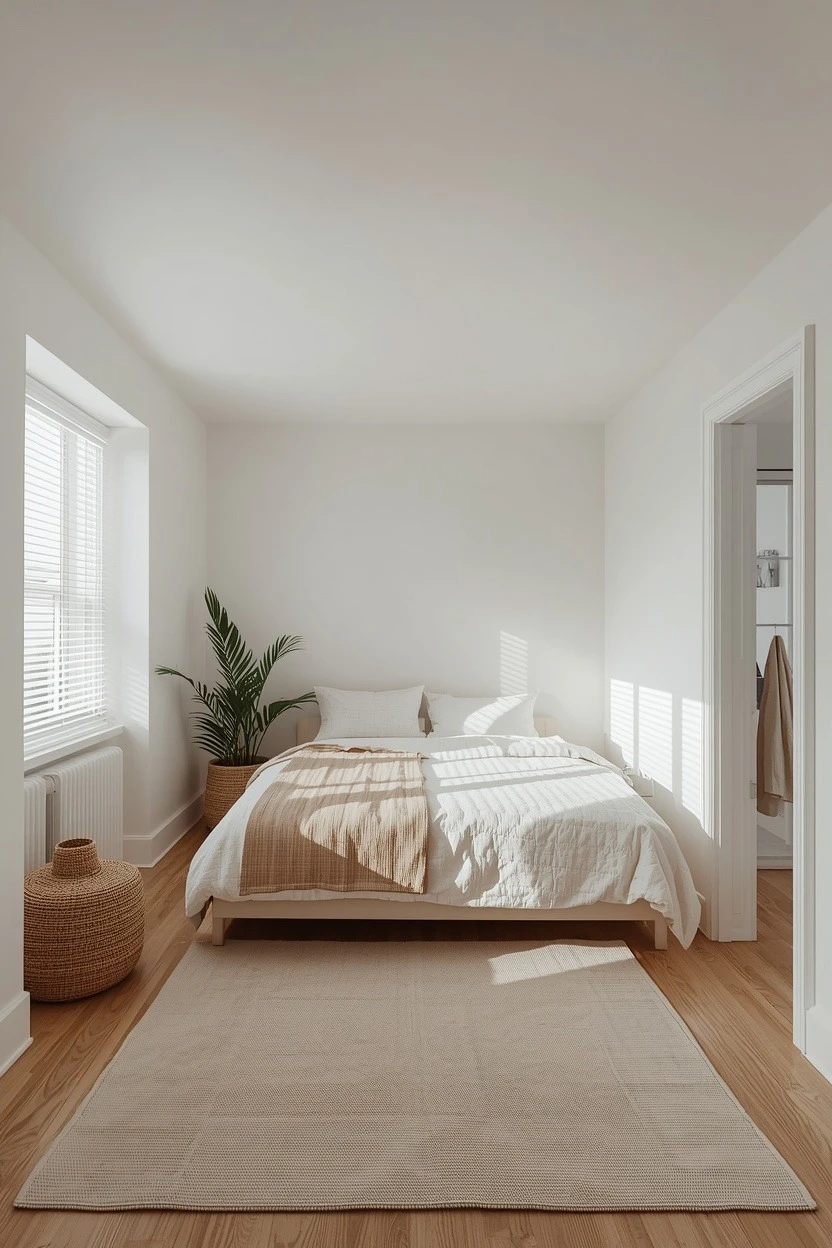
11. A Clutter-Free Minimalist Scheme
In a tiny bedroom, less truly is more, so a pared-back minimalist approach keeps the room calm and spacious. Owning less, keeping surfaces clear, and choosing a few well-loved pieces over lots of small clutter lets the small space breathe. Hidden storage keeps necessities out of sight. A restrained palette and clear floor reinforce the calm. A clutter-free minimalist scheme is one of the most impactful small-space ideas, using restraint and clear surfaces to make a tiny room look serene and open, proving that editing your belongings is often the most powerful space-saver of all.
12. Behind-the-Door Storage
The back of the door is prime unused real estate in a tiny bedroom, so hanging storage there captures easy extra space. Over-the-door hooks, organizers, and racks hold bags, robes, jewelry, shoes, or accessories on a surface that otherwise does nothing. This frees up the wardrobe and drawers for the essentials.
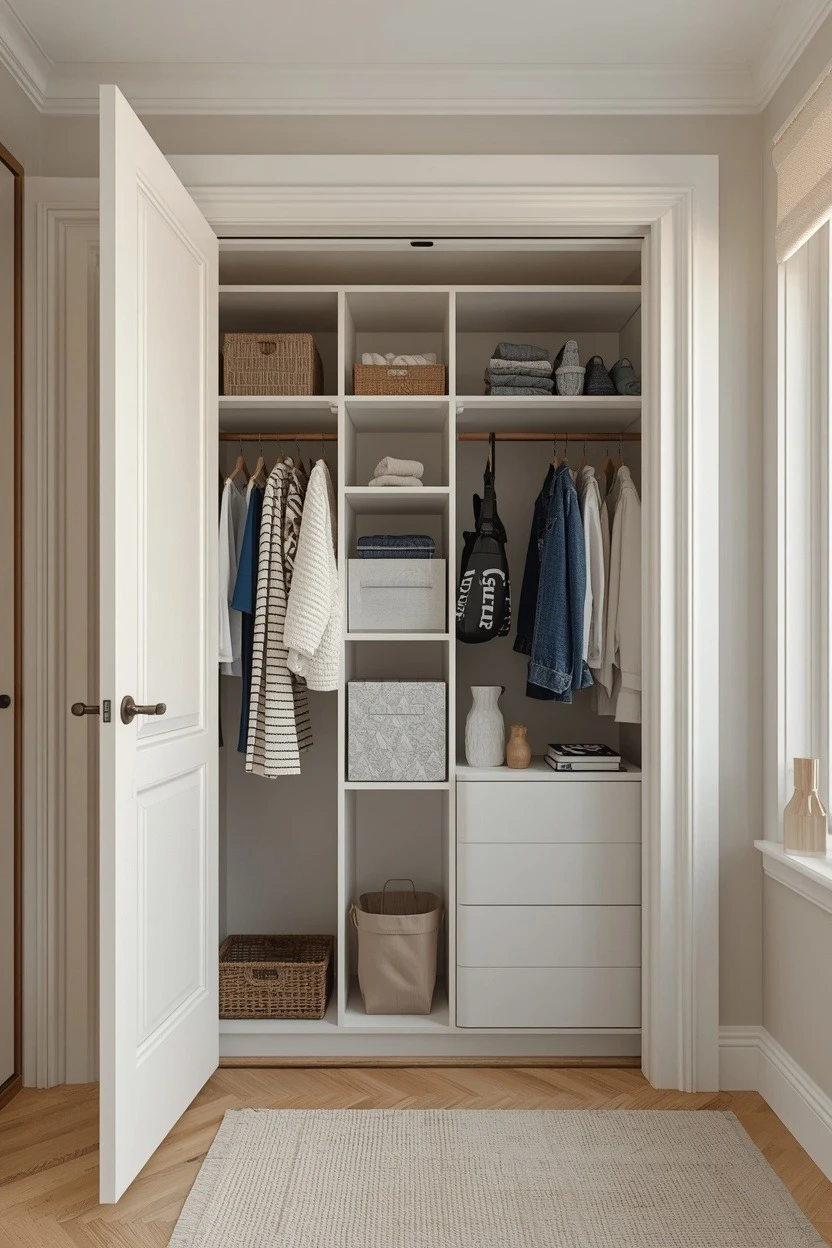
Keep it tidy so it stays hidden when the door is open. Behind-the-door storage is one of the most overlooked small-space ideas, using the back of the door as bonus storage for everyday items, reclaiming a whole extra surface in a tiny room without taking up any floor or wall space at all.
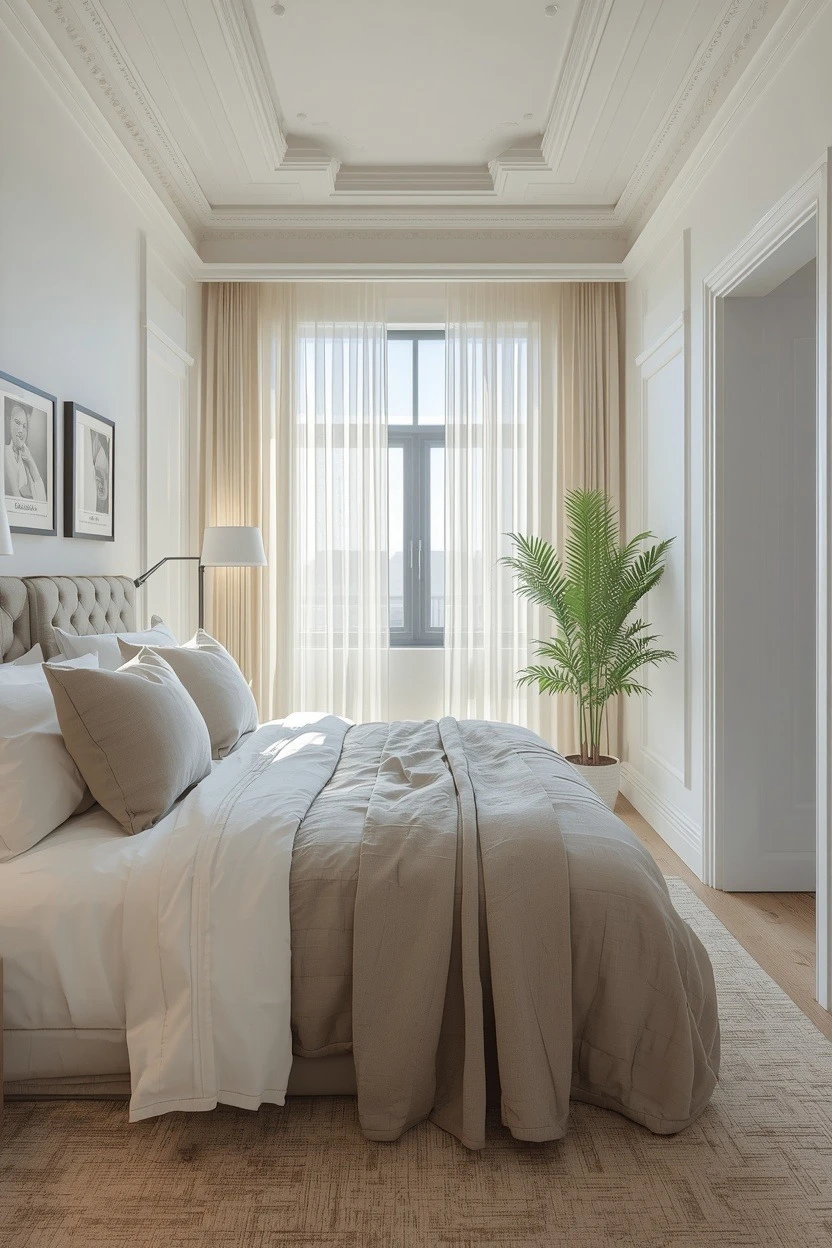
13. Sheer Curtains and Maximized Light
Maximizing natural light makes a tiny bedroom look far larger, so keeping windows clear and using sheer treatments floods the room with brightness. Sheer or light Roman blinds let daylight pour in, while hanging curtains high and wide makes the window — and room — seem bigger. Avoid heavy, dark drapes that shrink the space. Keep sills clear. Sheer curtains and maximized light are one of the most transformative small-space ideas, letting daylight flood a compact room to make it look bright, open, and larger, since a light-filled tiny room always reads more spacious than a dim one.
14. A Corner Wardrobe or Nook Fit-Out
Awkward corners and alcoves are storage gold in a tiny bedroom, so fitting them out captures otherwise-dead space. A corner wardrobe, an alcove shelved out floor-to-ceiling, or a fitted unit in a recess turns an unusable angle into valuable, tailored storage. Custom or clever off-the-shelf both work.
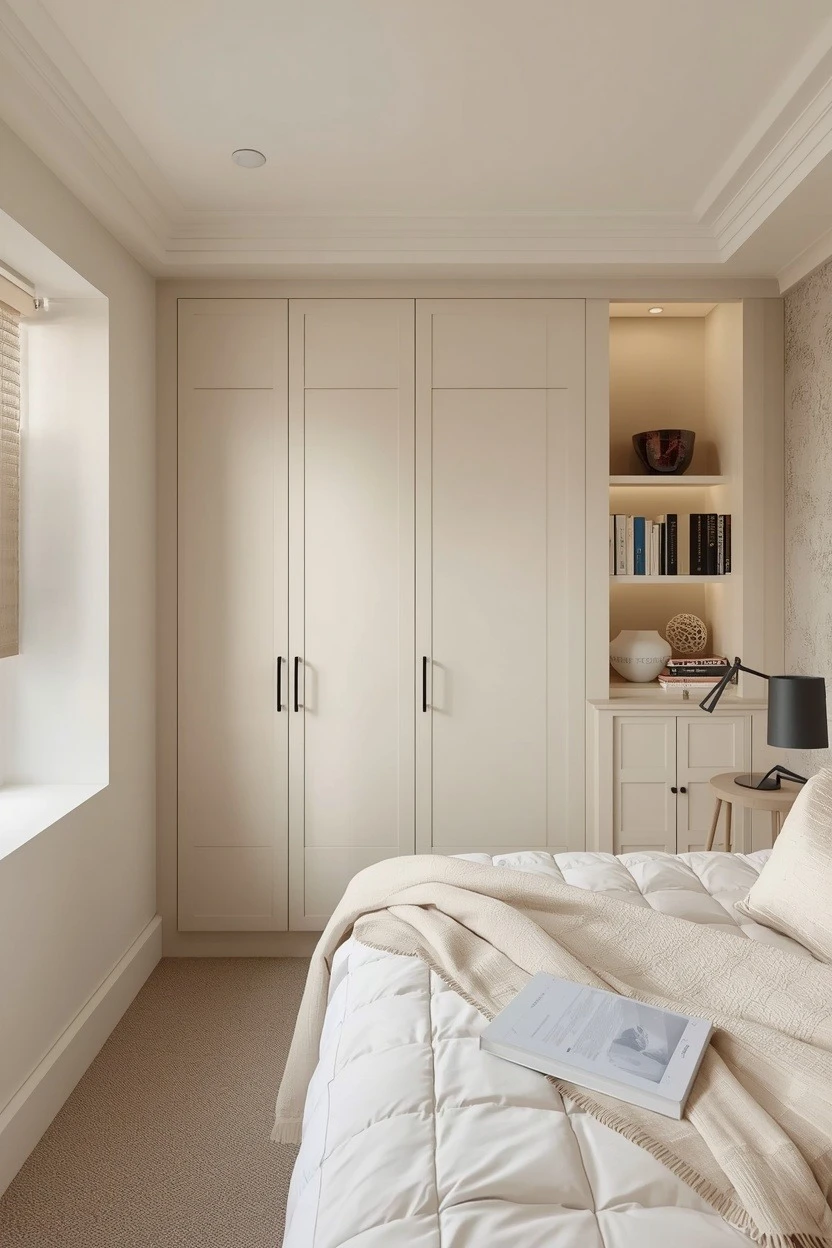
Matching it to the walls keeps it discreet. A corner wardrobe or nook fit-out is one of the most space-smart small-space ideas, transforming awkward corners and alcoves into fitted storage that uses every last inch, giving a tiny room extra capacity exactly where space would otherwise be wasted.
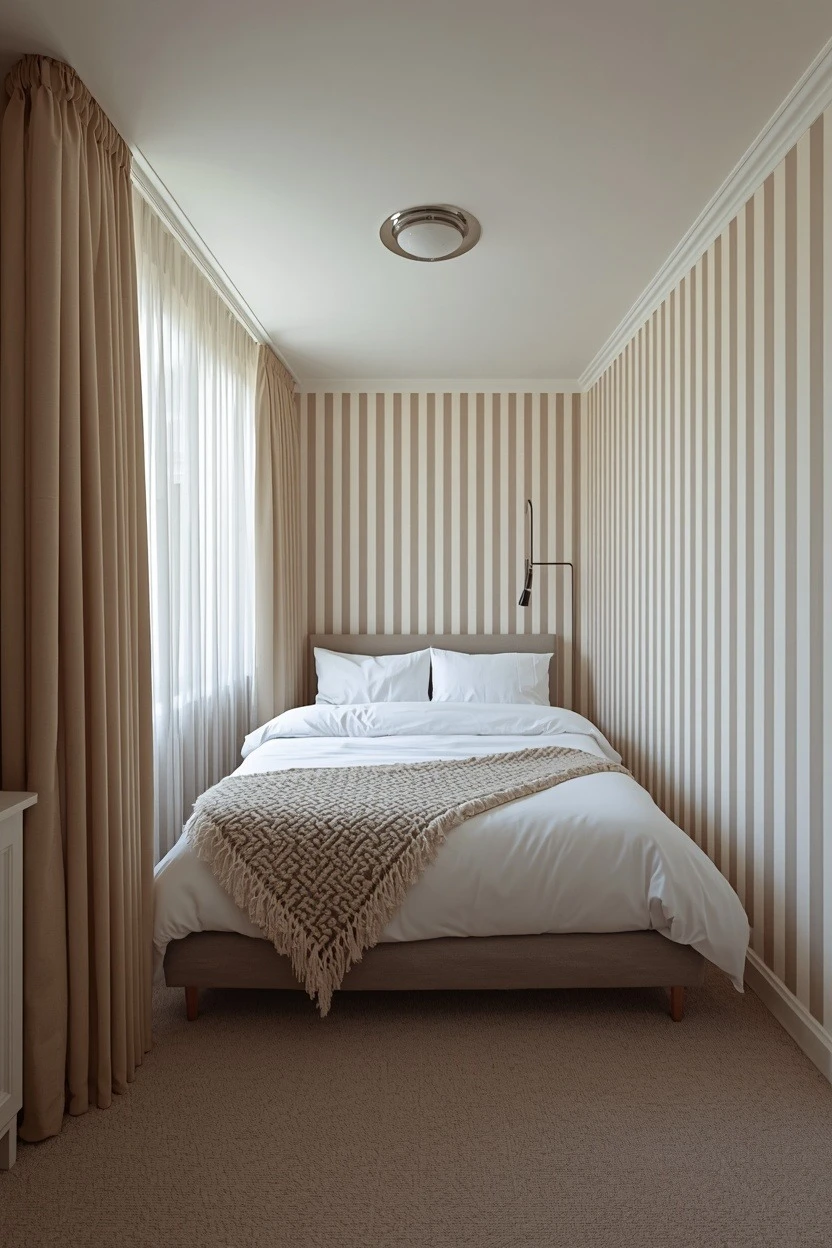
15. Vertical Stripes or Tall Details
Drawing the eye upward makes a tiny bedroom look taller and more spacious, so vertical detailing adds height. Vertical striped wallpaper, tall slatted paneling, or floor-to-ceiling curtains lead the eye up and stretch the room’s proportions. Full-height curtains especially exaggerate ceiling height. Keep the details tonal and light. Vertical stripes or tall details are one of the cleverest small-space ideas, using upward lines to make a compact room look taller and airier, counteracting a low or boxy looks and adding an elegant sense of stretched, generous proportions.
16. A Compact Daybed Layout
Pushing a bed lengthways against the wall as a daybed reclaims floor space and adds seating, ideal for very small or multi-use rooms. Styled with cushions against the wall, the bed doubles as a sofa by day, opening the room up and making it appears less bedroom-dominated. This reads beautifully in studios and box rooms.
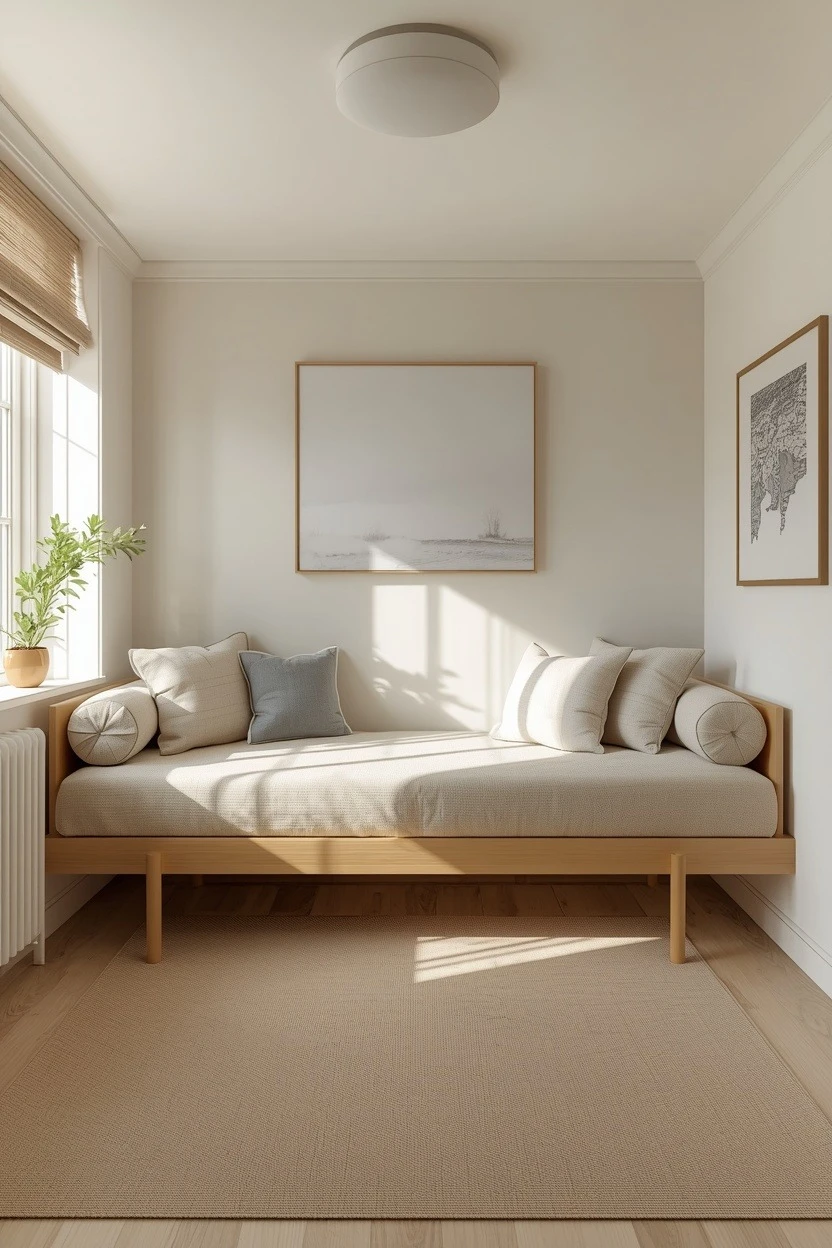
Bolsters and cushions complete the sofa look. A compact daybed layout is one of the smartest small-space ideas, positioning the bed as a daybed to free floor space and add daytime seating, so a tiny room seems roomier, more versatile, and less crowded by the bed.
17. Under-Window and Sill Storage
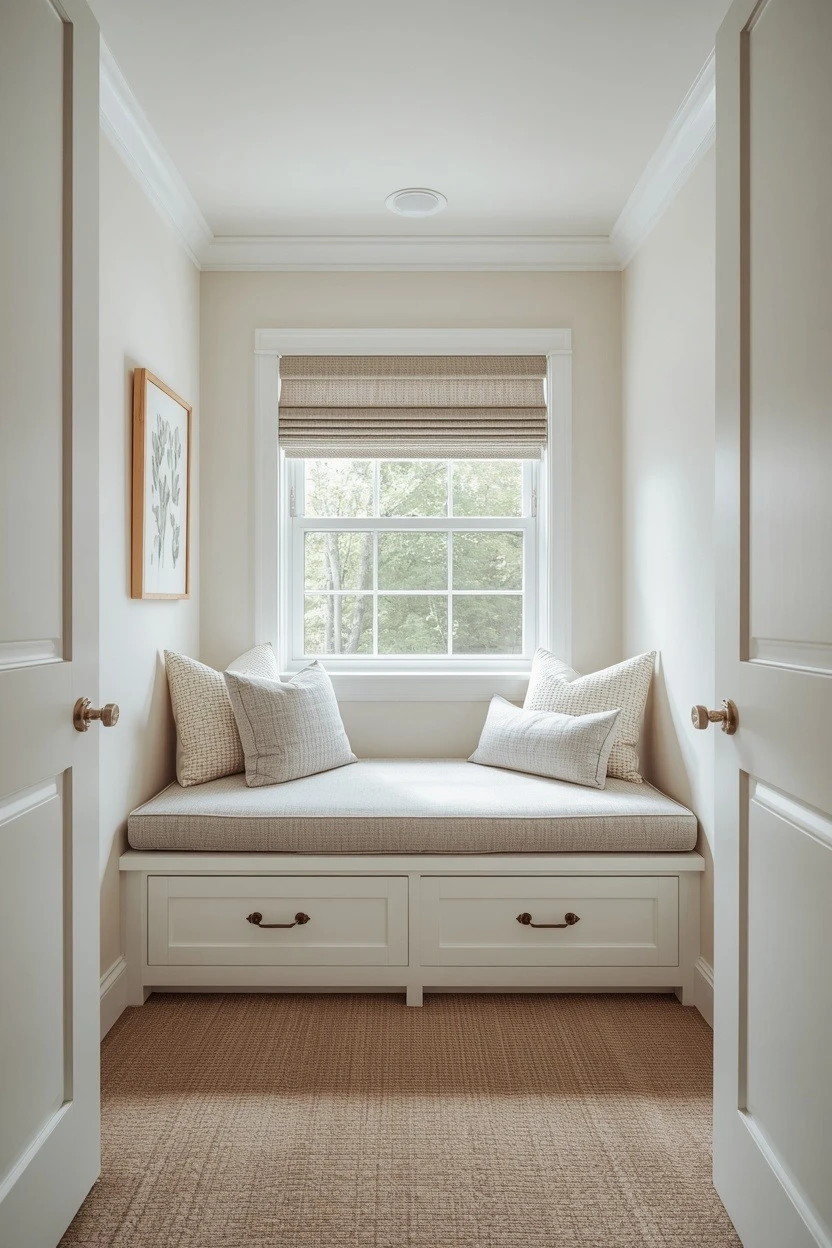
The space beneath a window is often wasted, so a low storage unit or window seat there adds function without blocking light. A low bench with drawers or baskets under the window provides storage and a spot to sit or perch, keeping everything below sightline so the room stays open. A cushioned top adds a reading nook. Under-window and sill storage is one of the most resourceful small-space ideas, using the low space beneath a window for storage and seating without obstructing daylight, adding useful capacity and a charming perch while keeping a tiny room bright and open.
18. The Complete Maximized Tiny Bedroom
Brought together, the best tiny bedroom combines a light, reflective palette with a storage bed, vertical and built-in storage, floating furniture, a large mirror, and maximized natural light. The principles that make it work are light, verticality, and multi-function: keep colors pale and surfaces clear, build storage upward and into the bed and corners, float furniture to reveal the floor, and flood the room with daylight while a big mirror doubles it.
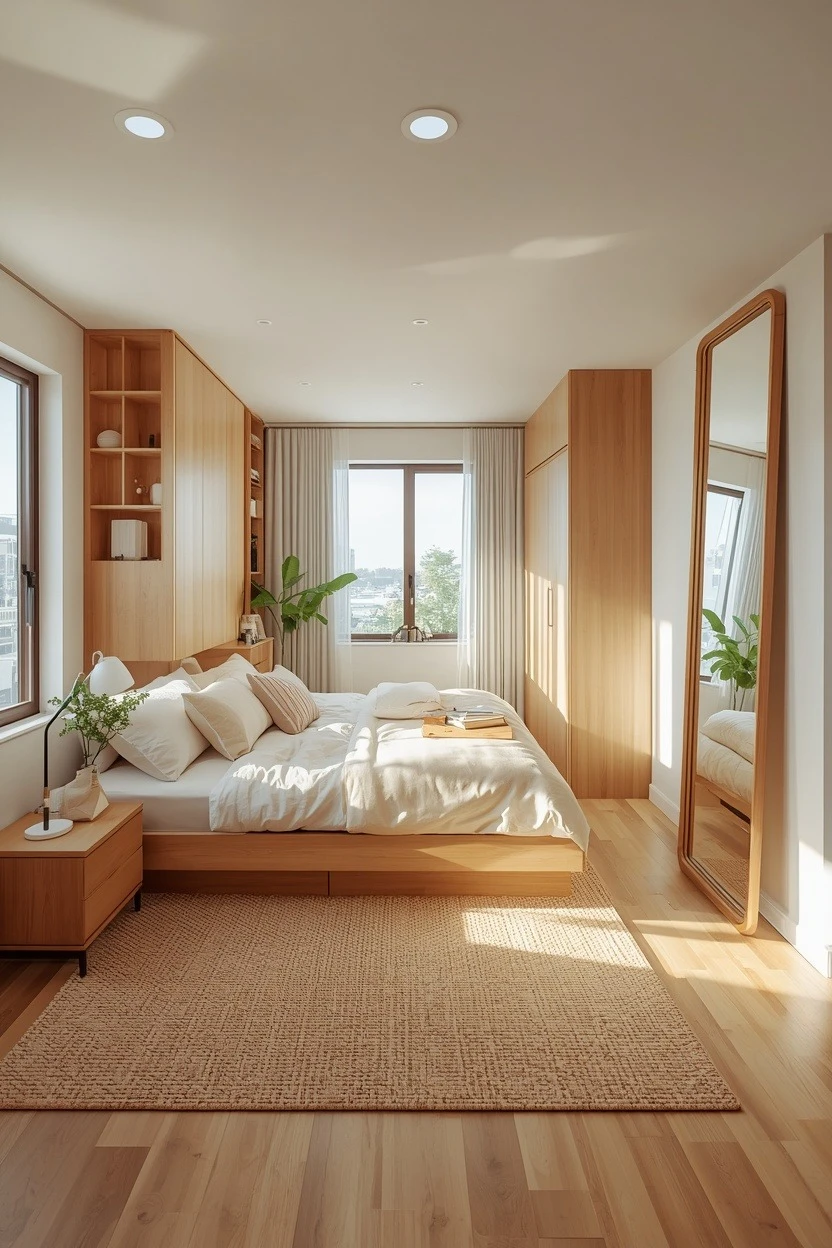
Edit your belongings ruthlessly. Combine the ideas that suit your space, and even the tiniest room becomes a calm, bright, surprisingly spacious retreat that stores everything you need and rests beautifully.
Where I’d Start if I Only Did Three Things
If I only did three things to maximize a tiny bedroom, I’d start with a storage bed, since reclaiming the whole footprint under the bed is usually the single biggest storage win in a small room. Next, I’d keep the palette light and bright and add a large mirror opposite the window, because pale, reflective surfaces and reflection make a compact room look dramatically larger and airier. Third, I’d build storage upward to the ceiling and float what furniture I could, to capture height while keeping the floor visible and open. A storage bed, a light-and-mirrored scheme, and vertical storage do the most.
Frequently Asked Questions
How do I make a small bedroom looks bigger?
Making a small bedroom appears bigger relies on a handful of proven tricks that manipulate light and sightlines. Start with a light, bright palette — soft whites and pale neutrals on the walls, bedding, and floor reflect light and blur the room’s boundaries, making it read airy and open. Add a large mirror, ideally opposite or beside a window, to bounce daylight and visually double the space. Maximize natural light by keeping windows clear and using sheer treatments, and hang curtains high and wide to make the window and room seem larger. Use floating, wall-mounted furniture to keep the floor visible, which tricks the eye into seeing more space. Draw the eye upward with vertical details and floor-to-ceiling storage to exaggerate height. Above all, keep the room clutter-free — clear surfaces and hidden storage make the biggest difference of all. Combining pale colors, mirrors, light, floating pieces, and a clutter-free scheme makes even a very small bedroom seems noticeably larger and calmer.
What is the best bed for a tiny bedroom?
The best bed for a tiny bedroom depends on how you use the room, but the top choices all reclaim space. An ottoman or drawer storage bed is the most universally useful — it turns the entire area under the mattress into generous hidden storage, often doing the work of a whole dresser without adding any furniture. For the very tightest rooms or a room that doubles as an office or living space, a fold-down Murphy wall bed frees the whole floor by day. If ceiling height allows, a loft or raised bed creates a valuable zone beneath it for a desk, wardrobe, or seating, effectively doubling the room’s function. For narrow or multi-use rooms, positioning the bed lengthways as a daybed against the wall reclaims floor space and adds daytime seating. Whichever you choose, a low-profile frame keeps the room feeling more open. Match the bed type to your space and how you need the room to work, and prioritize built-in storage wherever possible.
How can I add storage to a very small bedroom?
Adding storage to a very small bedroom is all about using space that usually goes to waste — under the bed, up high, and into awkward corners. Start with a storage bed to capture the large area beneath the mattress. Build storage vertically all the way to the ceiling with tall wardrobes and floor-to-ceiling shelving, storing rarely-used items up high. Fit out awkward corners and alcoves with custom or clever built-in units. Wrap tailored storage around and over the bed with overhead cabinets and bedside cubbies. Use the back of the door for hanging organizers, and add a low storage bench or drawers under the window. Choose slim, multi-use furniture that combines functions, and use wall-mounted lighting to free up surfaces. The key is to think in three dimensions — up, under, and into every recess — rather than adding freestanding furniture that eats precious floor space. This way a tiny room can hold surprisingly much while still feeling open.
What colors are best for a small bedroom?
The best colors for a small bedroom are light, soft, and reflective, since pale tones bounce daylight around and make the room look more open and airy. Soft whites, warm off-whites, and pale neutrals like greige, soft grey, and gentle beige are the safest, most space-enhancing choices, keeping the room bright and calm. Gentle pastels — pale blue, soft sage, or blush — also work beautifully while adding a touch of color. Keeping the walls, bedding, and even the floor in a similar light tone blurs the room’s edges and makes it look larger, as strong contrast tends to chop up and shrink a small space. For a cozier small bedroom, a soft, warm mid-tone used throughout (rather than as a contrasting accent) can enveloping and still appears spacious. If you love darker, moody color, use it in a small room deliberately and all over, with plenty of warm light, rather than as a single dark wall. Generally, though, light and tonal is the reliable route to a small bedroom that seems bright and bigger.
Final Thoughts
A tiny bedroom is no barrier to a beautiful, restful, hardworking room — it just calls for clever, space-smart design. These small-space ideas span every strategy — light bright palettes and large mirrors, storage beds and Murphy beds, loft beds and built-ins, vertical and corner storage, floating and multi-use furniture, wall-mounted lighting and maximized daylight, and clutter-free minimalist schemes. The principles that tie them together are light, verticality, and multi-function: keep colors pale and reflective, build storage upward and into every recess, float furniture to reveal the floor, flood the room with light, and edit your belongings so the space can breathe. Choose the ideas that suit your room, and even the smallest bedroom becomes a calm, bright, surprisingly spacious retreat that makes the very most of every single inch.

zarcoyt2025
Khawar Iqbal is the founder and editor of Cozy Homes Hub. He writes about cozy, livable home decor — from small-apartment layouts to room-by-room styling guides — with a focus on warm palettes, layered lighting, and budget-friendly ideas that actually work in real homes.
Related Articles
15 Neutral Bedroom Ideas for a Calm Layered Room That Never Reads Flat
Most neutral bedroom ideas fail for one reason: people match every tone so closely that the room turns into a beige blur…
Read more →
14 Bedroom Couple Decorating Ideas for a Shared Retreat You Both Love
Good bedroom couple decorating ideas are really about diplomacy: two people, two tastes, and one room that has to read as calm…
Read more →
13 Princess Bedroom Art Idea Themes for a Complete Dreamy Room
A princess bedroom art idea only lands when the artwork drives the whole room instead of floating on one wall as an…
Read more →