19 Living Room Window Treatment Ideas to Dress Your Windows Stylishly
 By zarcoyt2025
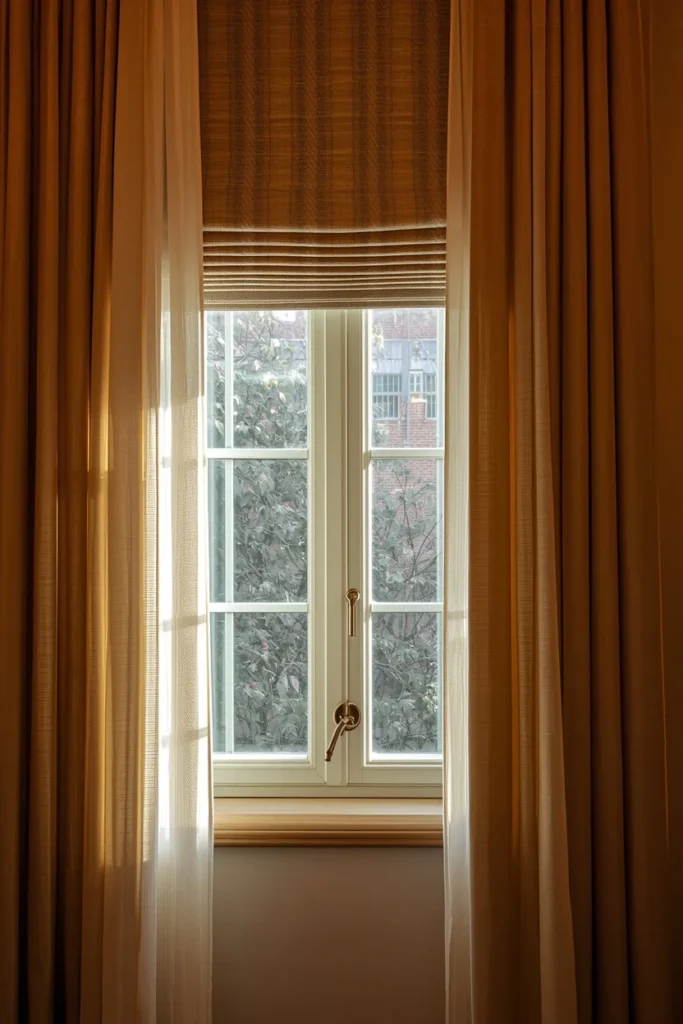
Table of Contents
- 1. The Floor-Length Drapes Living Room
- 2. The Roman Blind Living Room
- 3. The Shutter-Dressed Living Room
- 4. The Layered Treatment Living Room
- 5. The Sheer Softness Living Room
- 6. The Roller Blind Living Room
- 7. The Woven Natural Living Room
- 8. The Café-Style Living Room
- 9. The Statement Color Living Room
- 10. The Minimalist Living Room
- 11. The Floor-to-Ceiling Living Room
- 12. The Bay Window Living Room
- 13. The Blackout Function Living Room
- 14. The Patterned Blind Living Room
- 15. The Tier-on-Tier Shutter Living Room
- 16. The Valance-Topped Living Room
- 17. The Light-Filtering Shade Living Room
- 18. The Drapery-and-Shutter Living Room
- 19. The Complete Window Treatment Living Room
- Where I’d Start if I Only Did Three Things
- FAQs
- Final Thoughts
Window treatments are one of the most impactful — and most overlooked — decisions in a living room, shaping the light, the privacy, the warmth, and the entire finished feel of the space. With so many options, from flowing drapes to crisp blinds, elegant shutters to layered combinations, the secret to getting them right lies in matching the treatment to your windows, your light, and the style and function you need.
Each of these 19 living room window treatment ideas is a complete look you can recreate, a whole approach to dressing your windows built around one clear style or solution rather than a single product. Find the version that suits your space, your light, and your needs, and use it as a blueprint for window treatments that frame the light beautifully, balance style with function, and give your living room a polished, finished feel.
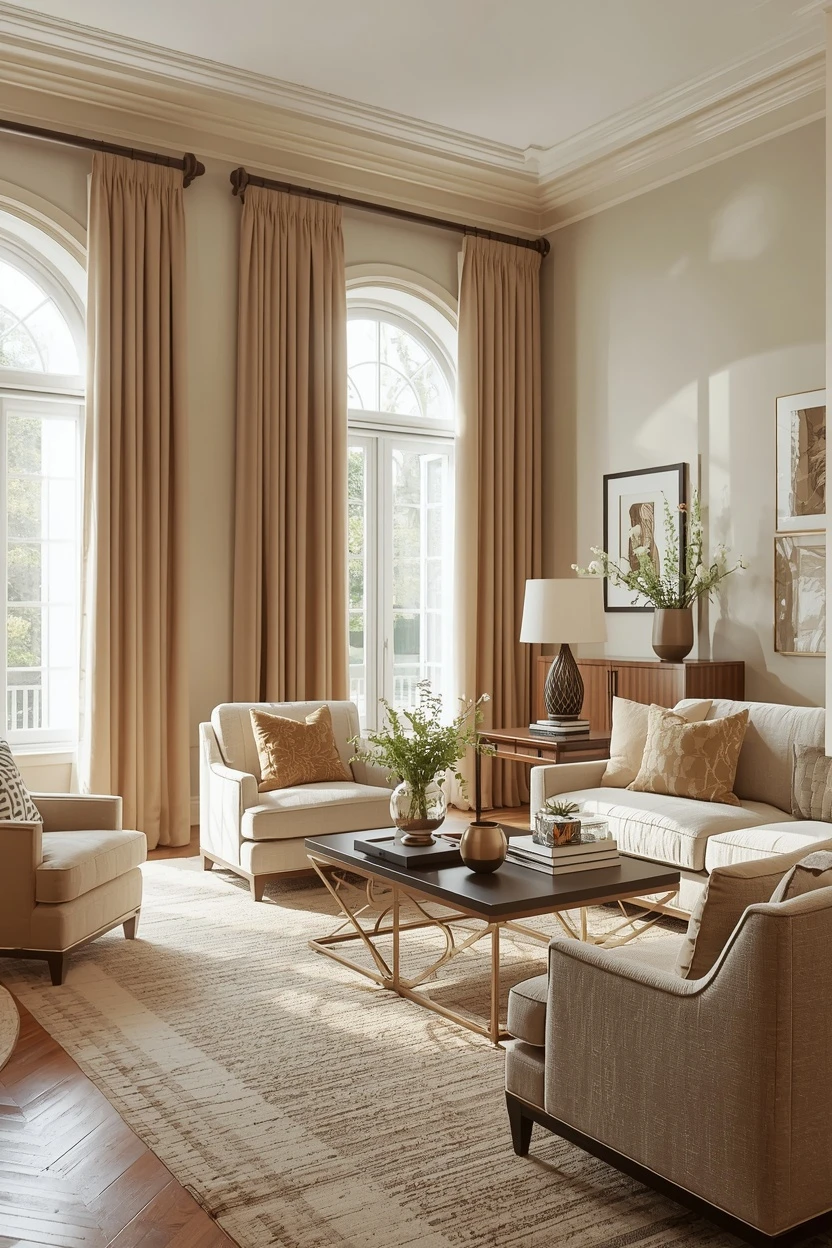
1. The Floor-Length Drapes Living Room
Flowing floor-length drapes are the most elegant, classic window treatment, softening the window, adding height, and framing the light beautifully. Hang them high and wide so they graze the floor and frame rather than cover the glass, choosing a fabric that suits the room. The drapes read refined and finished. It suits almost any living room, since floor-length drapes are a timeless window treatment that instantly makes a room feel softer, taller, and more complete.
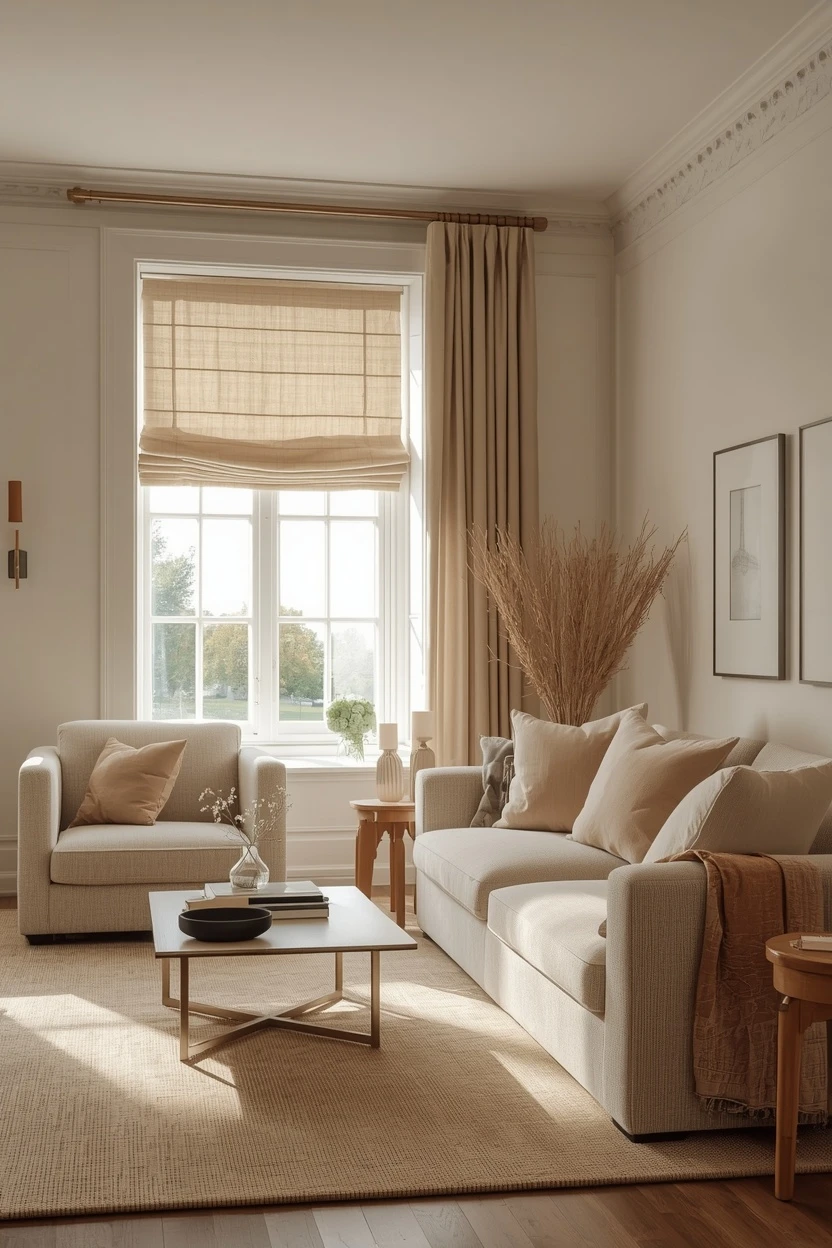
2. The Roman Blind Living Room
Roman blinds offer a tailored, elegant window treatment that folds up into neat horizontal pleats, combining the softness of fabric with the crispness of a blind. They suit living rooms that want a clean look with a touch of softness, and pair beautifully under drapes. Choose a fabric to suit the scheme. The blind reads neat and refined. It suits modern and classic rooms alike, since Roman blinds are a versatile, stylish window treatment that balances fabric softness with a tidy, tailored finish.
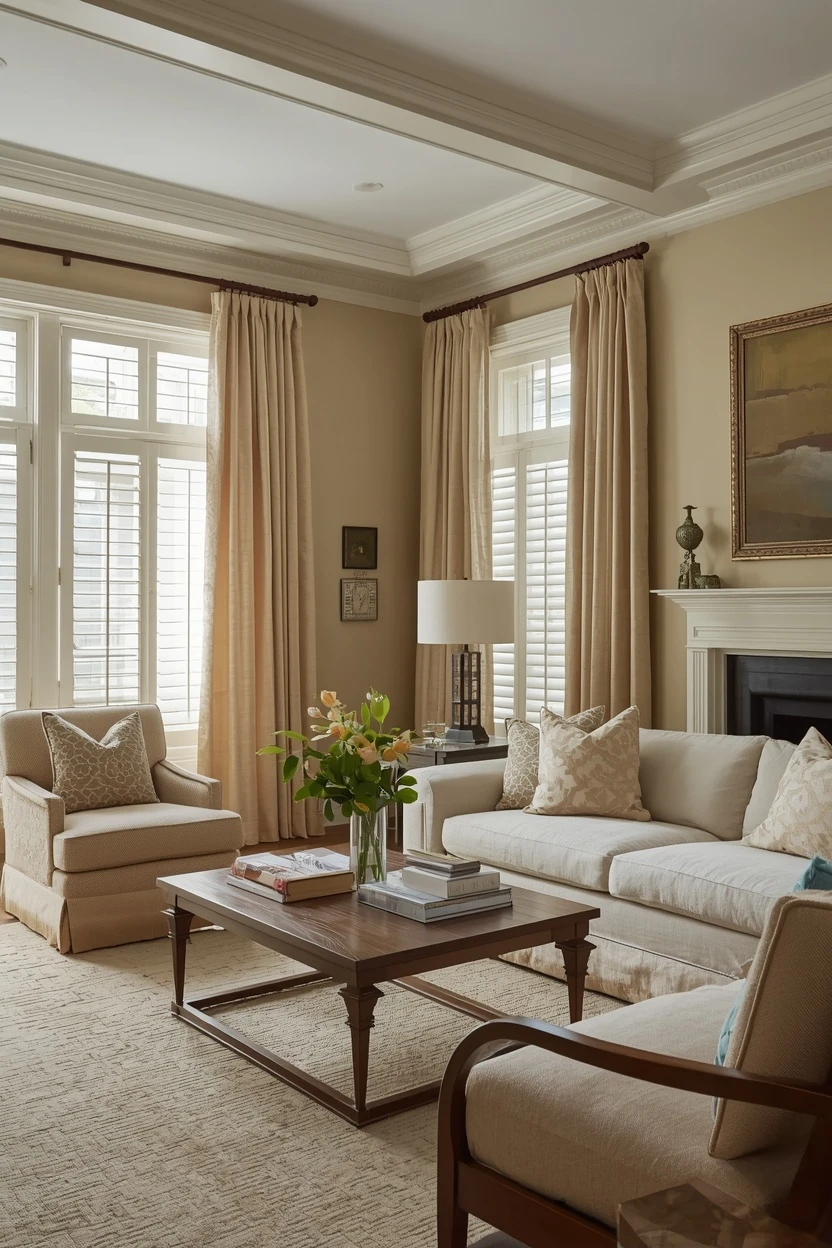
3. The Shutter-Dressed Living Room
Plantation shutters are a timeless, architectural window treatment, with their adjustable louvres offering precise control over light and privacy and a crisp, built-in look. The shutters frame the window neatly and suit period and contemporary rooms alike, often paired with drapes for softness. They read elegant and permanent. It suits anyone wanting a clean, classic finish, since shutters are a sophisticated window treatment that adds architectural character and excellent light control to a living room.
4. The Layered Treatment Living Room
Layering window treatments — sheers with drapes, or a blind behind curtains — gives a living room both flexibility and a rich, finished look. The layers let you control light and privacy throughout the day while adding depth and softness. Combine a practical layer with a decorative one for the best of both. The combination reads luxurious and considered. It suits any living room, since layered window treatments are one of the most elegant and practical approaches, offering control, depth, and a custom feel.
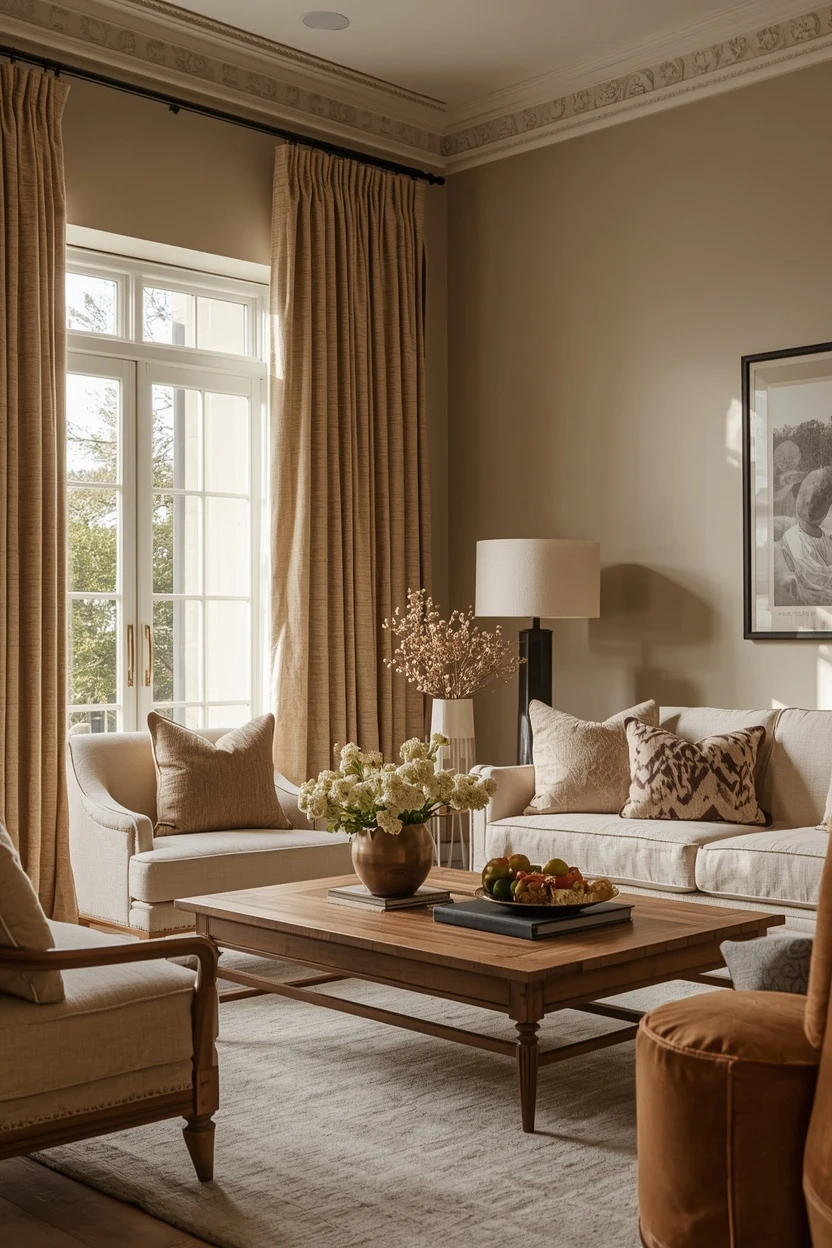
5. The Sheer Softness Living Room
Sheer curtains or shades filter the light softly, offering daytime privacy and a breezy, elegant feel while keeping the room bright. The translucent fabric diffuses the daylight beautifully and softens the window without darkening the room. Use alone for an airy look or layer under drapes. The sheers read light and graceful. It suits light-filled rooms, since sheer window treatments are a lovely way to soften a living room window and gain privacy while preserving the precious natural light.
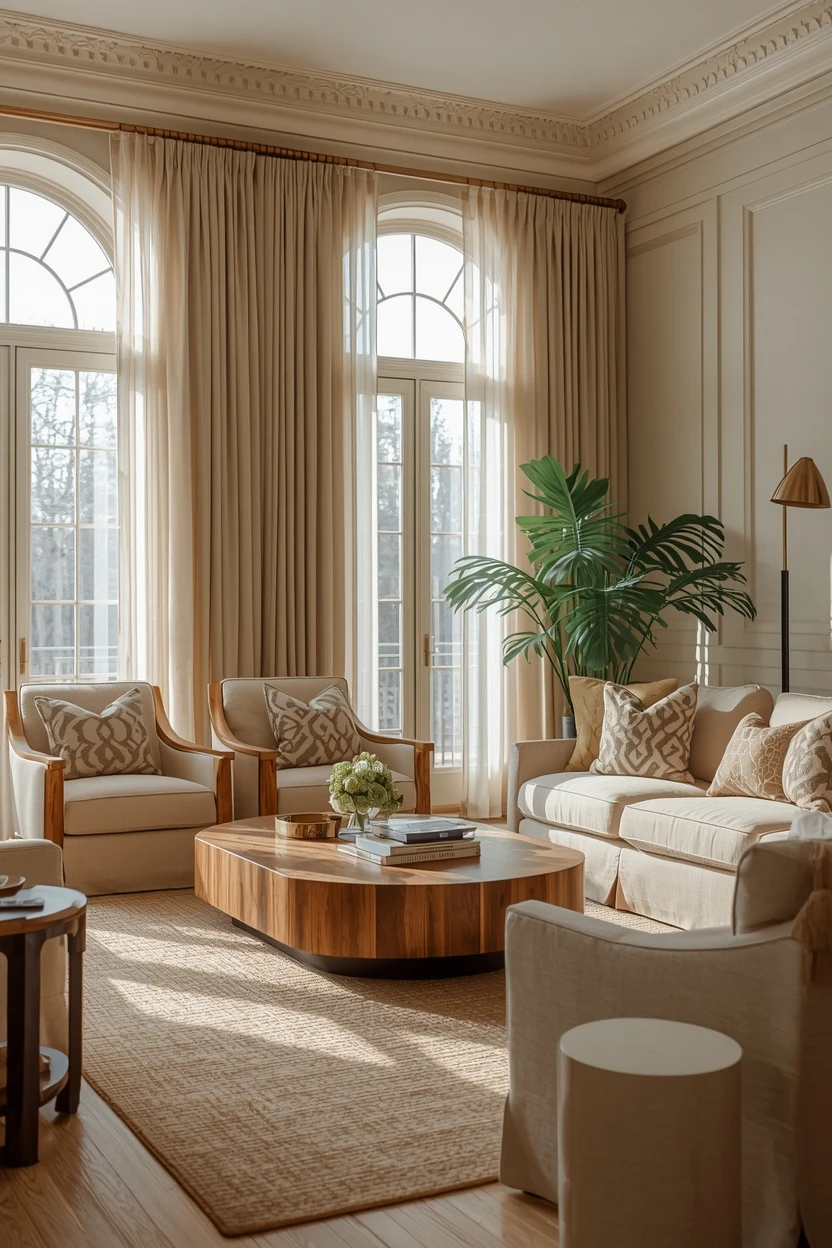
6. The Roller Blind Living Room
Roller blinds are a clean, simple, space-saving window treatment that rolls neatly out of sight, suiting modern living rooms or layering under drapes. They offer practical light control in a minimal form and come in countless fabrics and opacities. Choose blackout or light-filtering to suit your needs. The blind reads tidy and unobtrusive. It suits contemporary rooms, since roller blinds are a practical, streamlined window treatment that handles light and privacy without visual clutter.
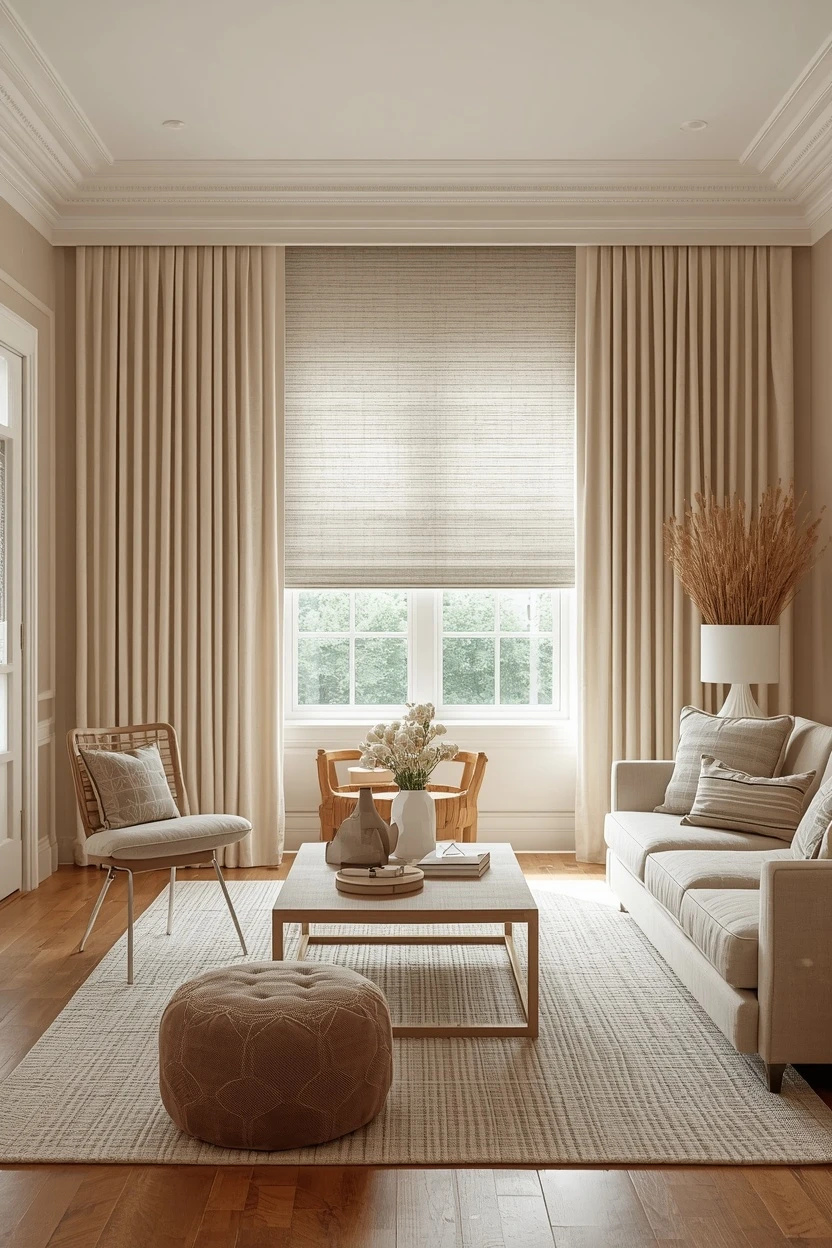
7. The Woven Natural Living Room
Woven wood or natural-fiber blinds and shades — in bamboo, jute, or grasscloth — bring warmth, texture, and an organic, relaxed feel to a living room window. The natural material filters light with a warm glow and adds tactile interest. Pair with linen drapes for a layered natural look. The treatment reads warm and earthy. It suits coastal, boho, and natural rooms, since woven natural window treatments add organic texture and a relaxed warmth that softens a living room beautifully.
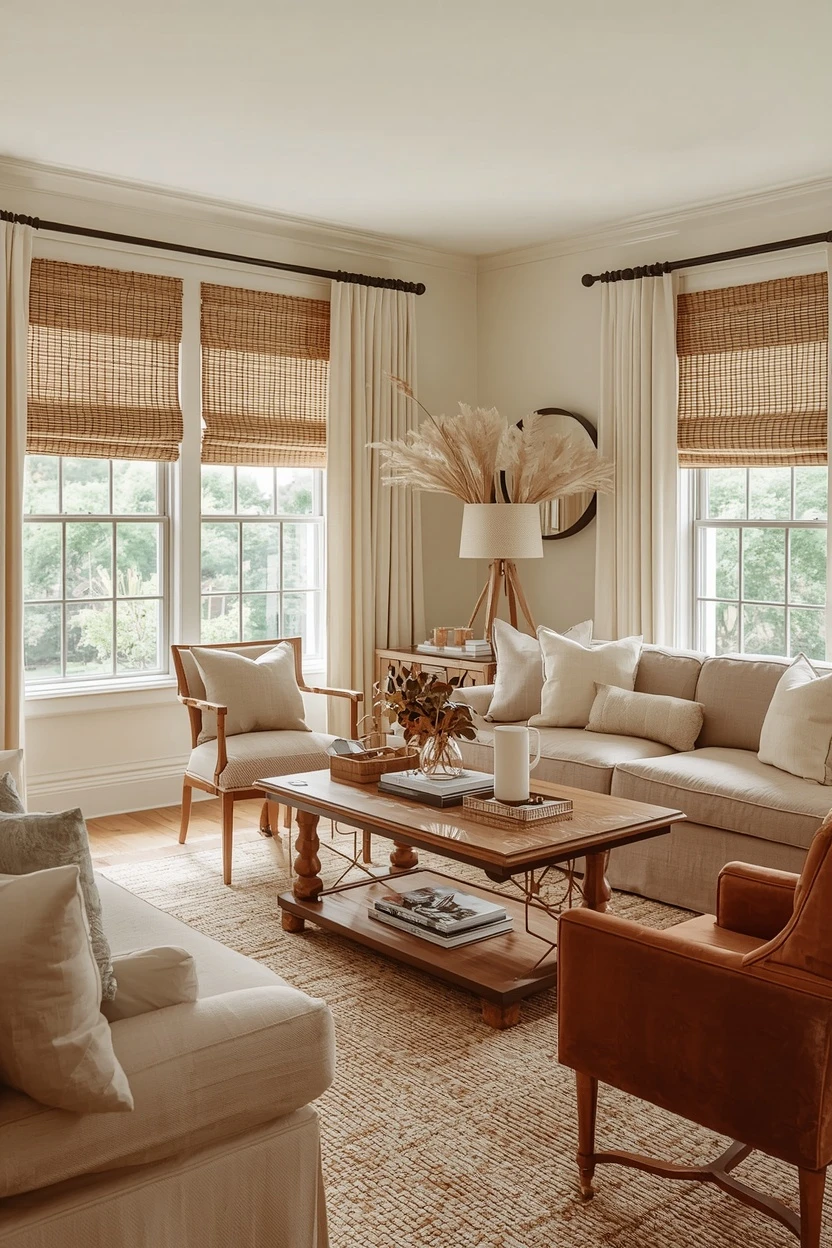
8. The Café-Style Living Room
Café curtains, covering only the lower half of the window, offer privacy while letting light flood in through the top — a charming, characterful treatment for street-facing living rooms. The half-height curtains read cottage-like and informal, leaving the upper window open and bright. Pair with a valance or leave the top bare. The treatment reads charming and practical. It suits cottage and traditional rooms, since café curtains are a sweet, light-friendly window treatment that balances privacy with brightness.
9. The Statement Color Living Room
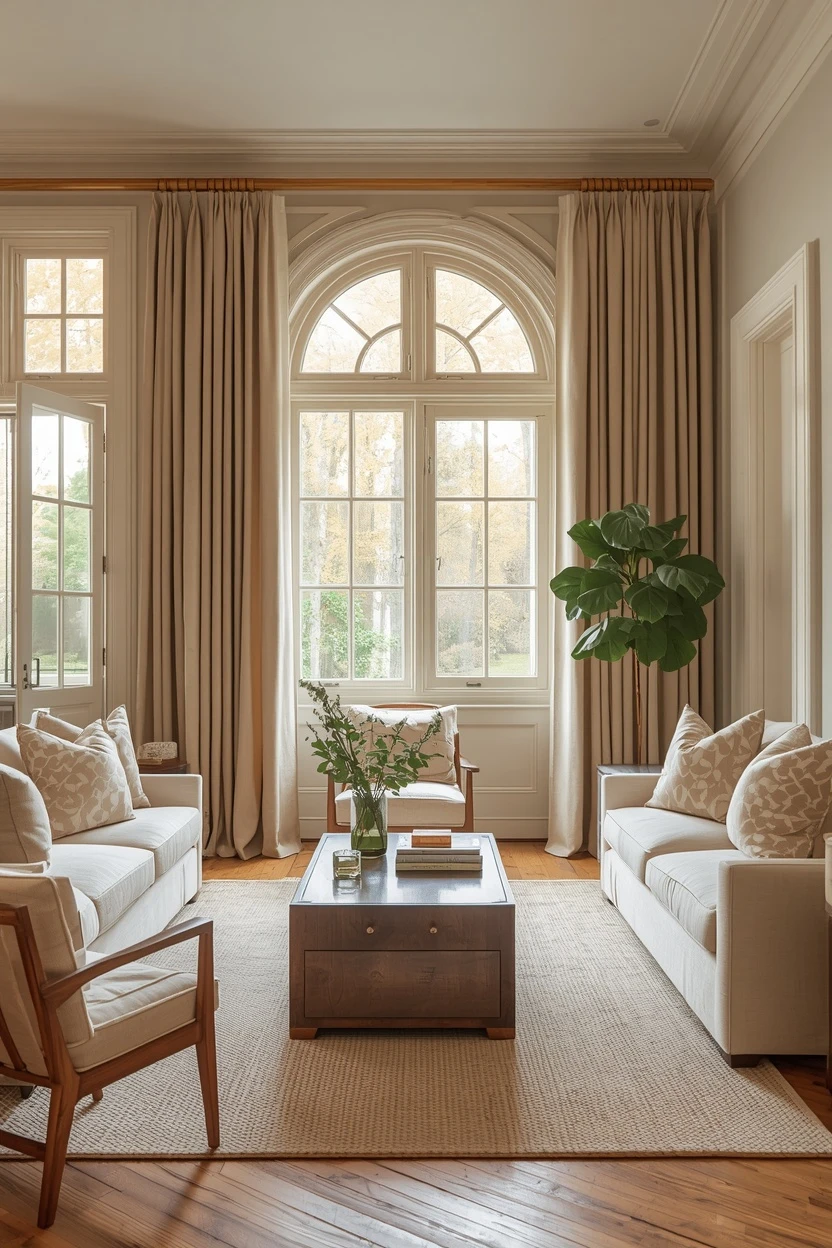
A window treatment in a bold or rich color makes a striking feature of the windows and adds personality to a living room. Choose drapes or a blind in a strong hue that complements the scheme and let the treatment become a focal point. Floor-length panels in a bold color frame the window dramatically. The color adds character. It suits anyone who wants impact, since a statement-color window treatment is a confident way to bring drama and a focal point to a living room through the windows.
10. The Minimalist Living Room
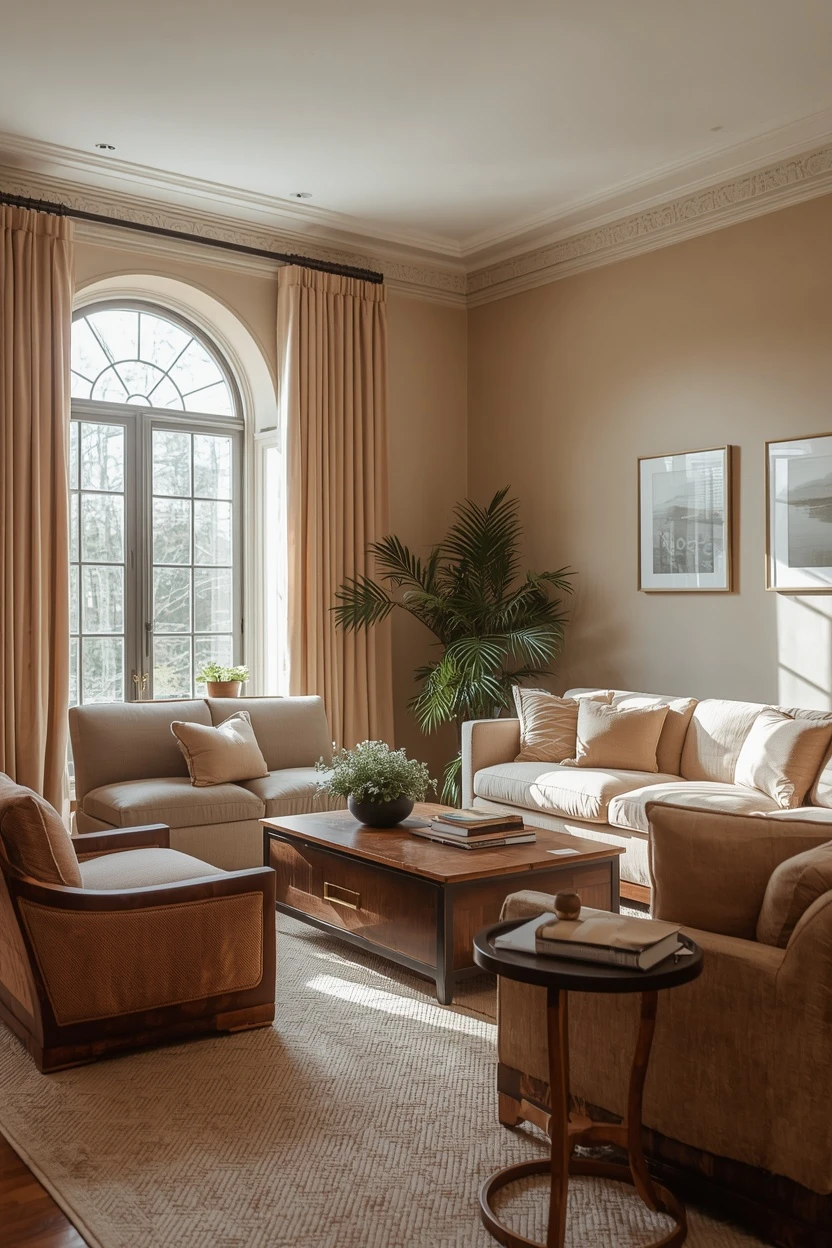
A minimalist window treatment — a simple roller blind, a discreet track of plain drapes, or bare shutters — keeps the windows clean and unfussy, suiting a modern, pared-back living room. The restraint lets the architecture and light lead, with the treatment doing its job quietly. Choose clean lines and a calm color. The treatment reads sleek and intentional. It suits contemporary rooms, since a minimalist window treatment offers function and style without visual clutter, keeping a living room calm and modern.
11. The Floor-to-Ceiling Living Room
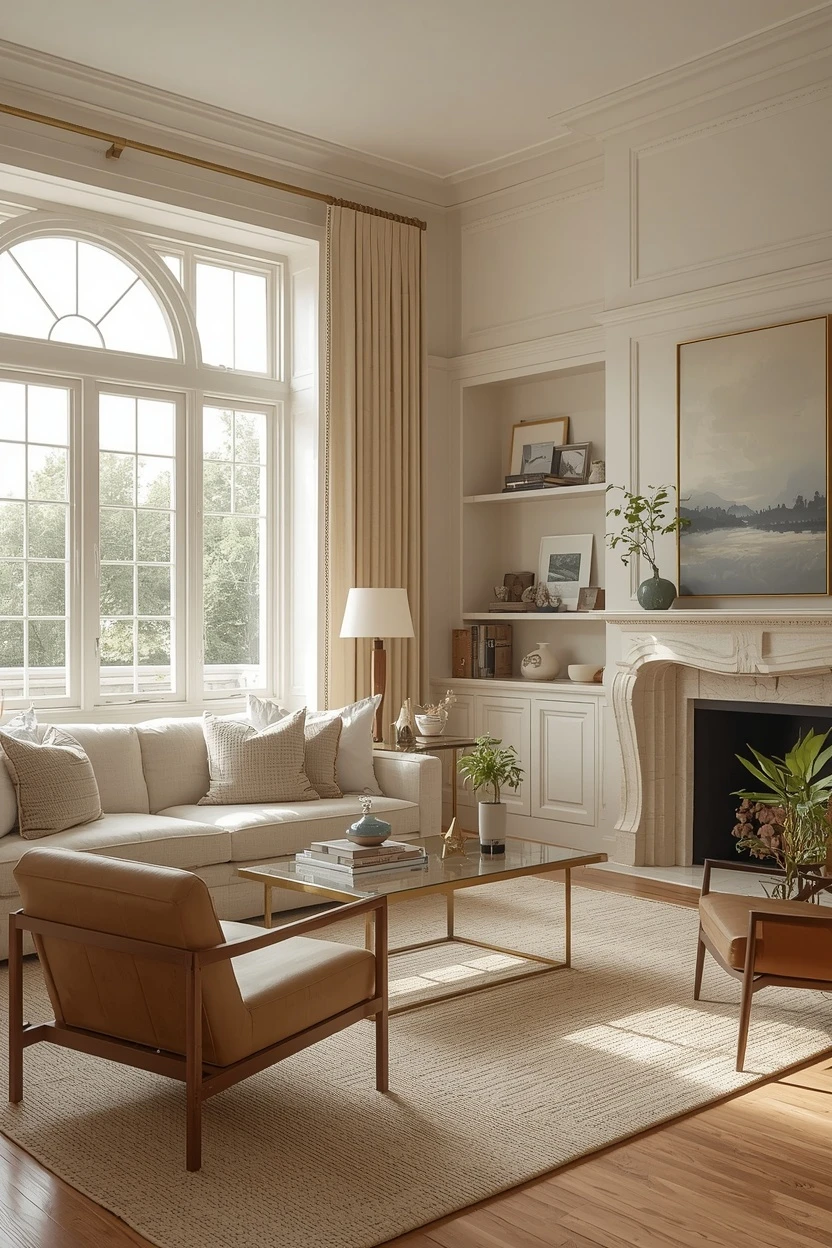
For large windows, a floor-to-ceiling treatment — full-height drapes or panels running the whole wall — makes a living room feel grand and the windows expansive. Mount the treatment at the ceiling and let it fall to the floor for maximum height and drama. The full-height dressing reads luxurious and architectural. It suits rooms with big windows or high ceilings, since a floor-to-ceiling window treatment is a striking way to emphasize height and frame large windows beautifully in a living room.
12. The Bay Window Living Room
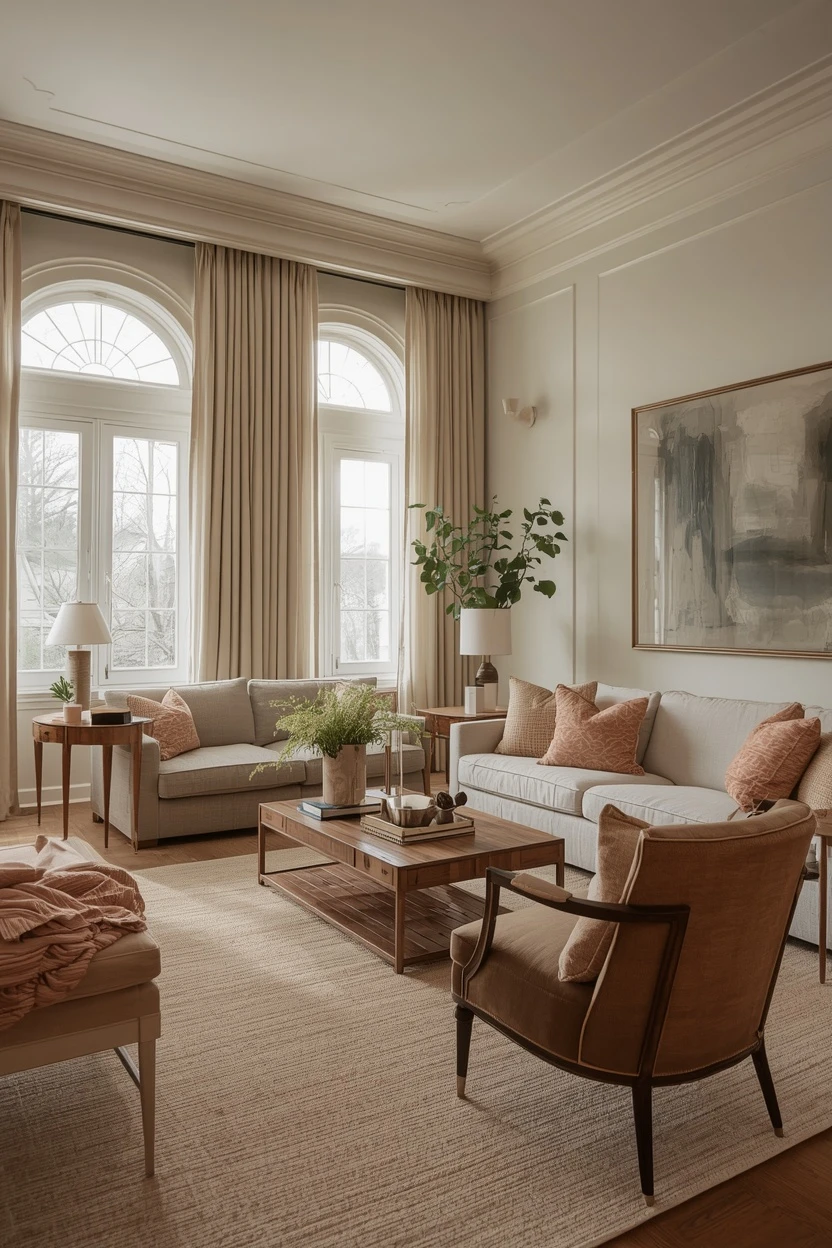
A bay window deserves a treatment that follows its shape — drapes on a bent track, individual blinds in each section, or shutters fitted to the angles — to frame the feature beautifully. The fitted treatment celebrates the bay’s architecture and maximizes its light. Choose an approach that suits the bay’s proportions. The treatment reads tailored and considered. It suits rooms with a bay, since a well-chosen bay window treatment frames one of a living room’s best features and makes the most of its light and space.
13. The Blackout Function Living Room
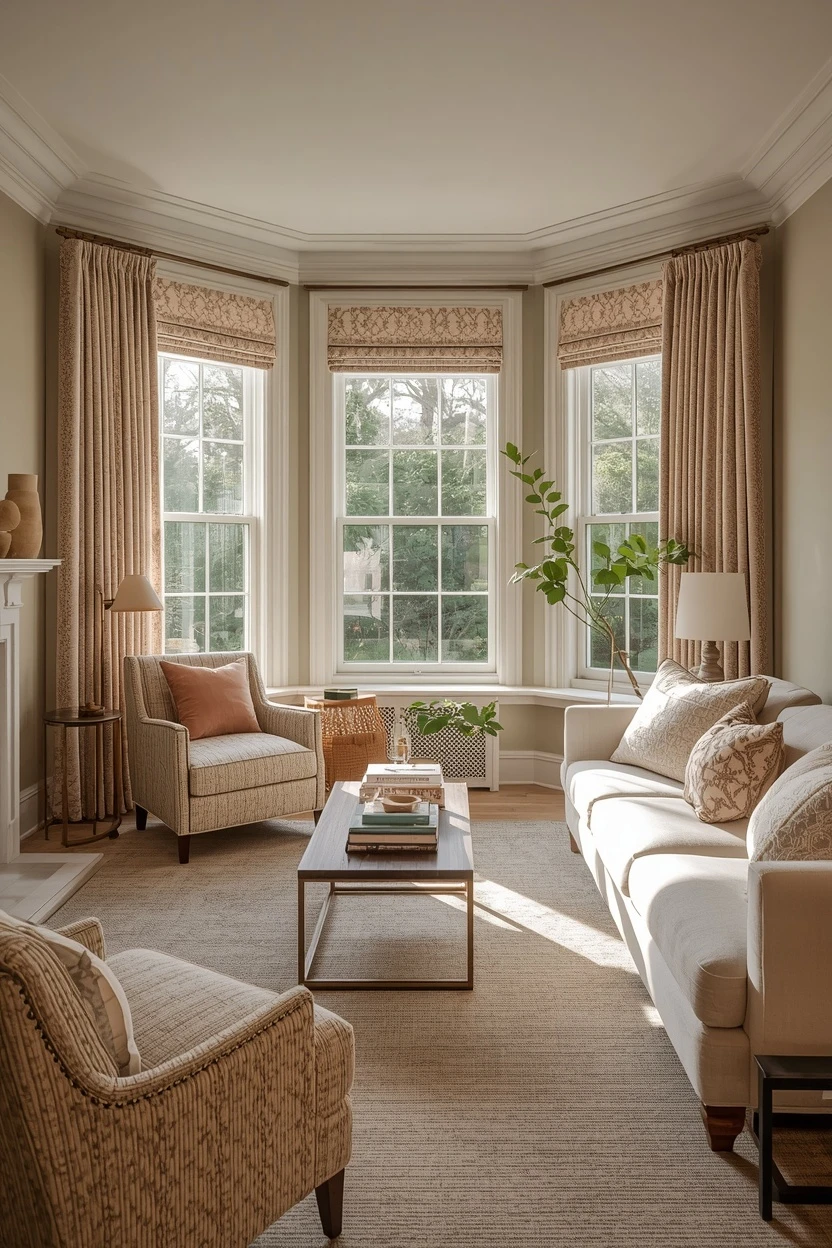
A blackout window treatment — lined drapes, a blackout roller, or a fitted shade — combines style with the function of blocking light, ideal for media rooms or sunny living rooms. The blackout layer keeps the room glare-free and cozy for screen time while still looking elegant. Layer it under decorative drapes for the best look. The treatment reads practical and refined. It suits media and bright rooms, since a blackout window treatment lets a living room enjoy beautiful dressing alongside real light control.
14. The Patterned Blind Living Room
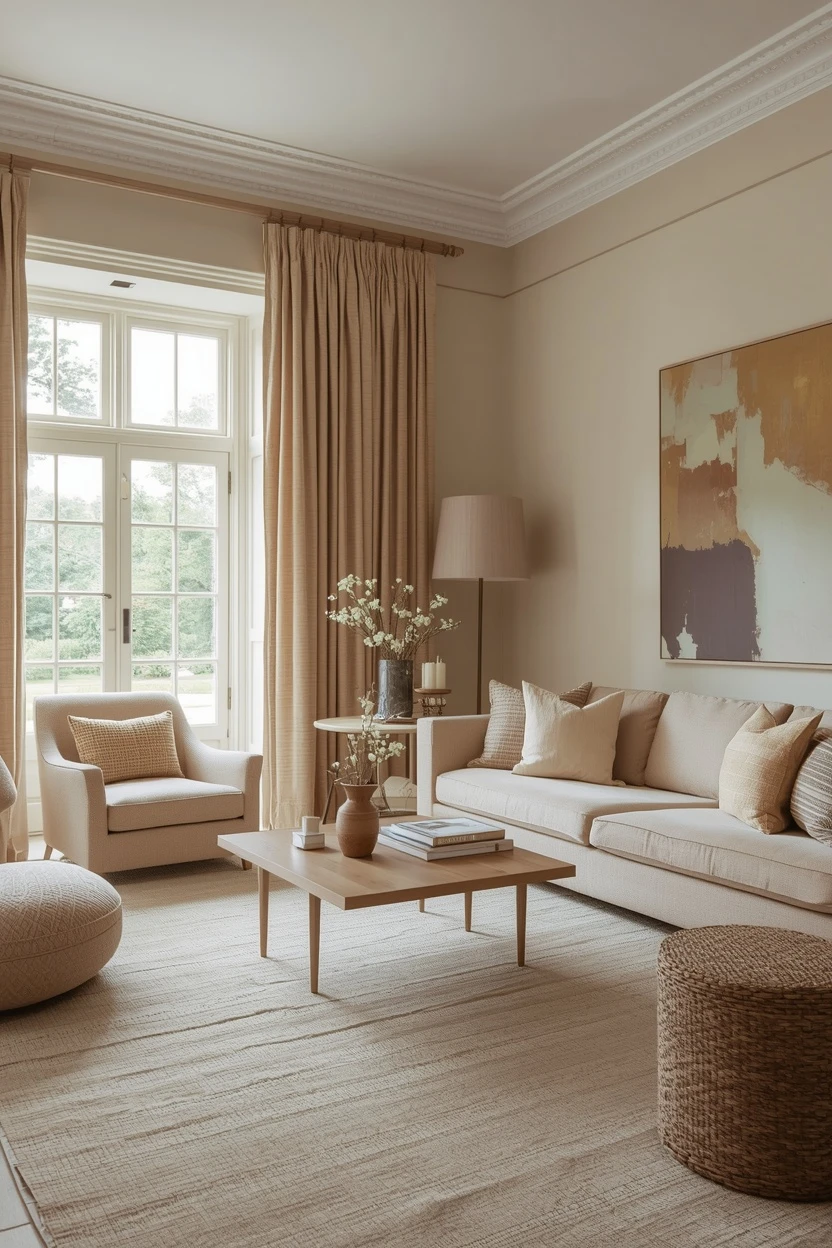
A patterned blind — a Roman or roller in a print, geometric, or textured design — adds interest and personality to a living room window in a tidy, tailored form. The pattern brings color and character without the volume of curtains. Tie the print to the room’s palette for cohesion. The blind reads characterful and neat. It suits anyone who wants pattern in a compact form, since a patterned blind is a lovely way to add interest to a living room window while keeping the treatment crisp and space-saving.
15. The Tier-on-Tier Shutter Living Room
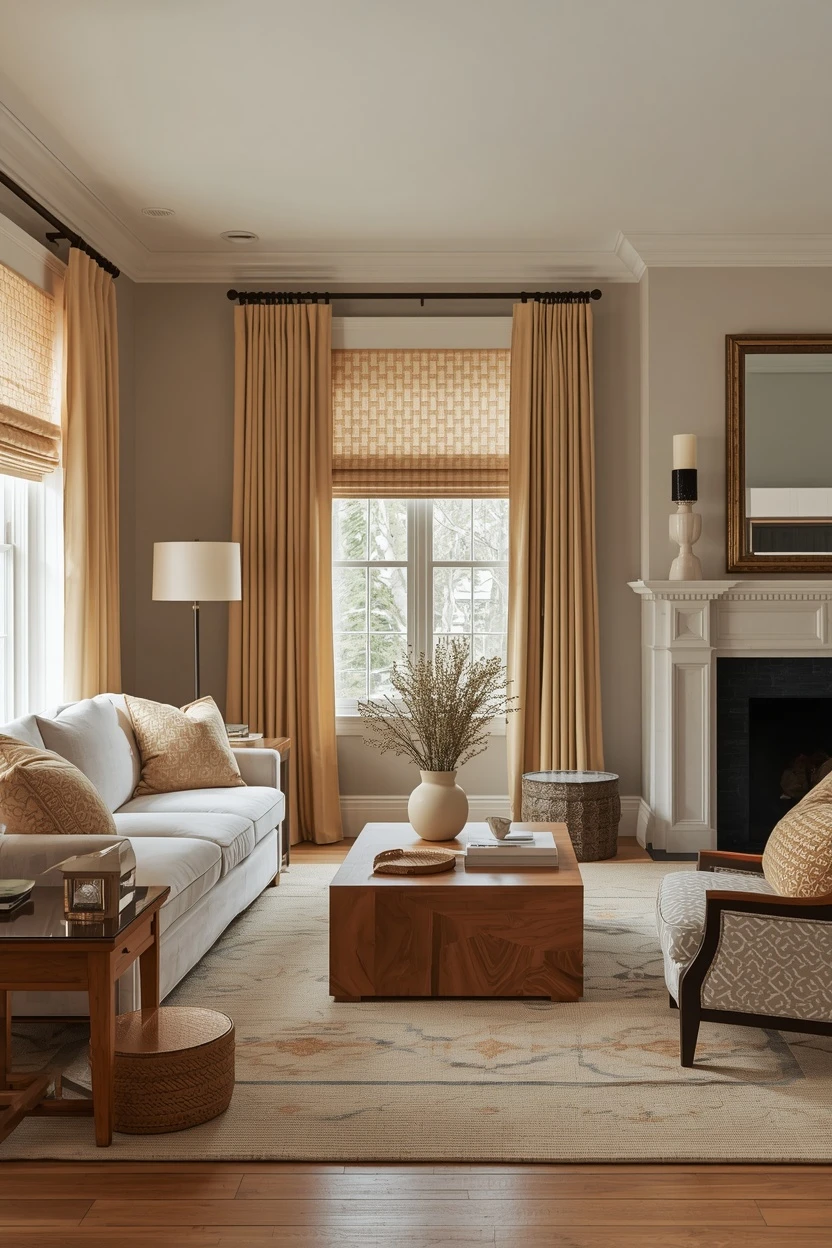
Tier-on-tier shutters, with separately operating upper and lower panels, offer the ultimate flexibility — open the top for light while keeping the bottom closed for privacy. The versatile shutters suit street-facing living rooms and add a crisp, characterful, architectural look. They read elegant and practical. It suits anyone wanting maximum control, since tier-on-tier shutters are a sophisticated window treatment that balances light and privacy beautifully while framing a living room window with classic style.
16. The Valance-Topped Living Room
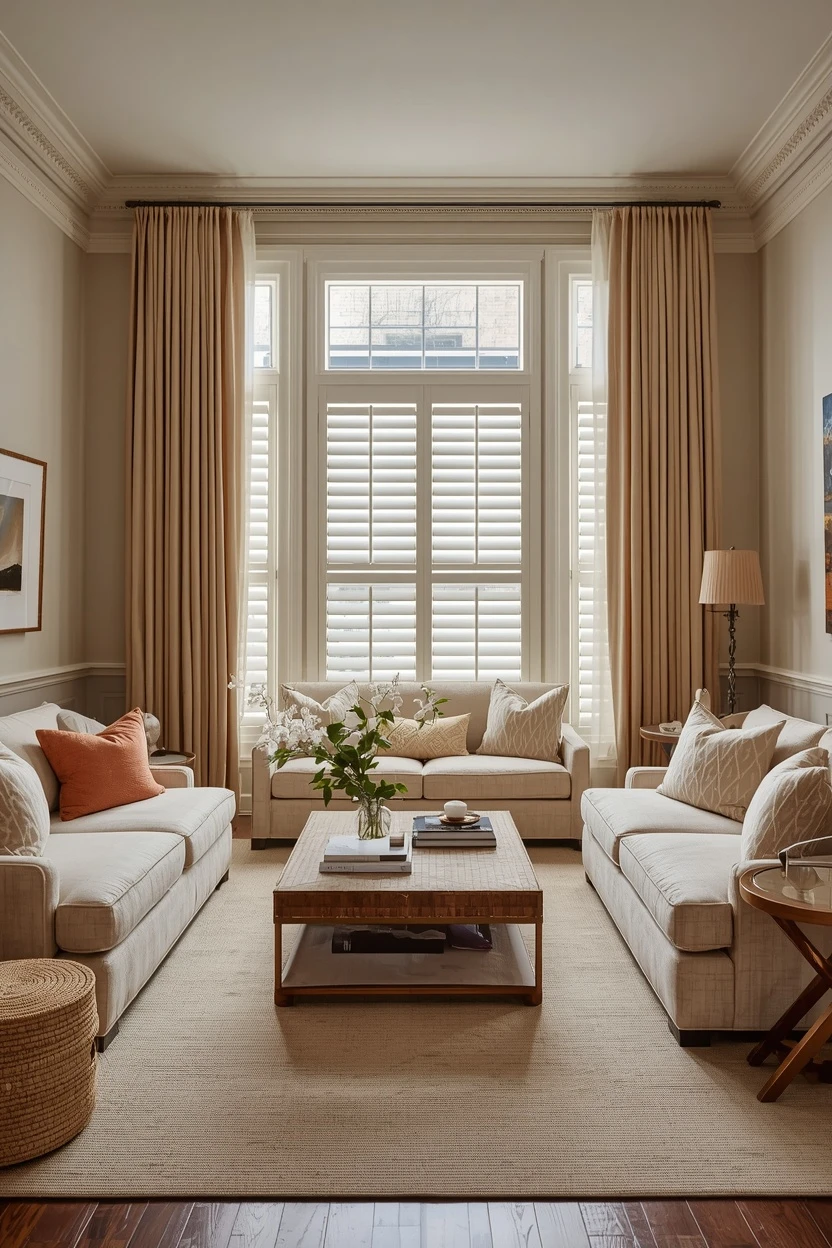
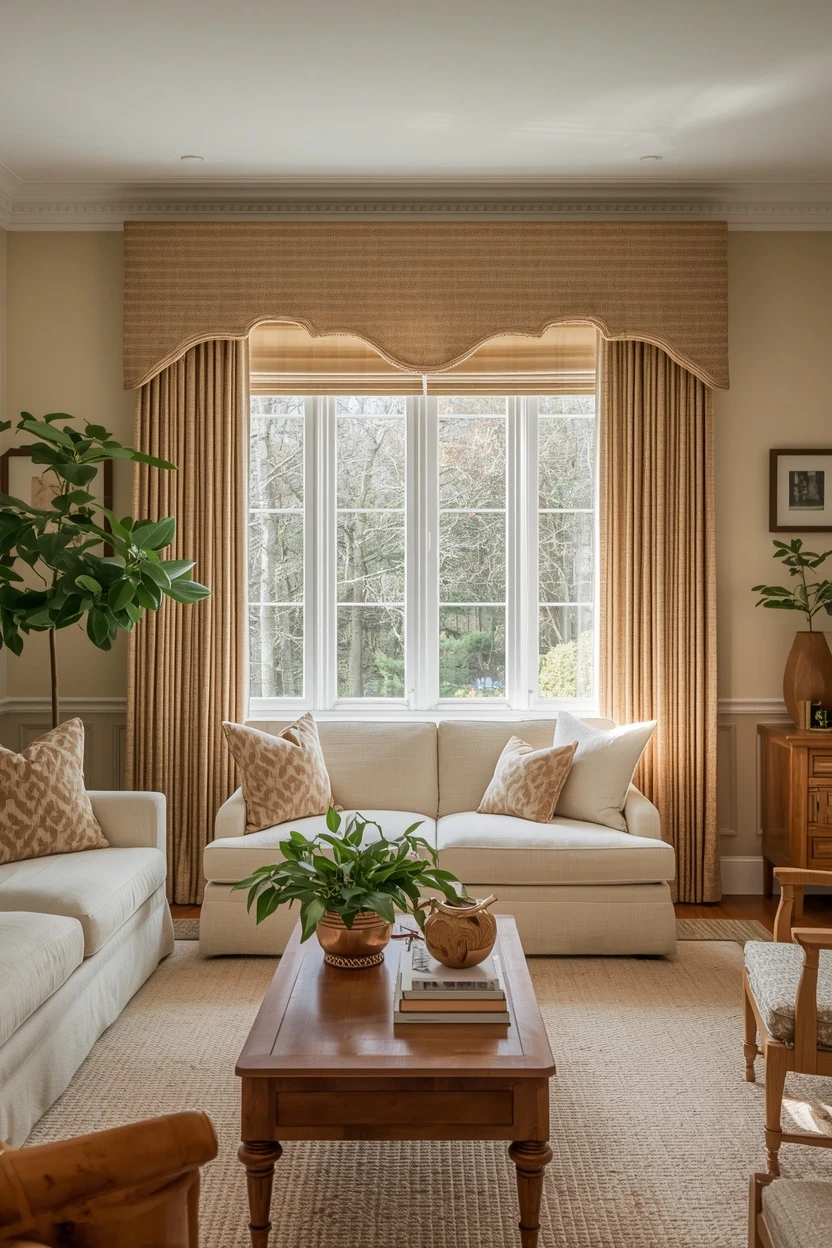
Adding a valance or pelmet across the top of a window treatment gives a living room a polished, finished, traditional look while concealing the hardware. The top treatment frames the window and adds a tailored, decorative detail above drapes or blinds. Choose a style to suit the room’s formality. The valance reads gracious and complete. It suits traditional rooms, since a valance-topped treatment adds an elegant finishing detail that makes a living room window dressing look custom and refined.
17. The Light-Filtering Shade Living Room
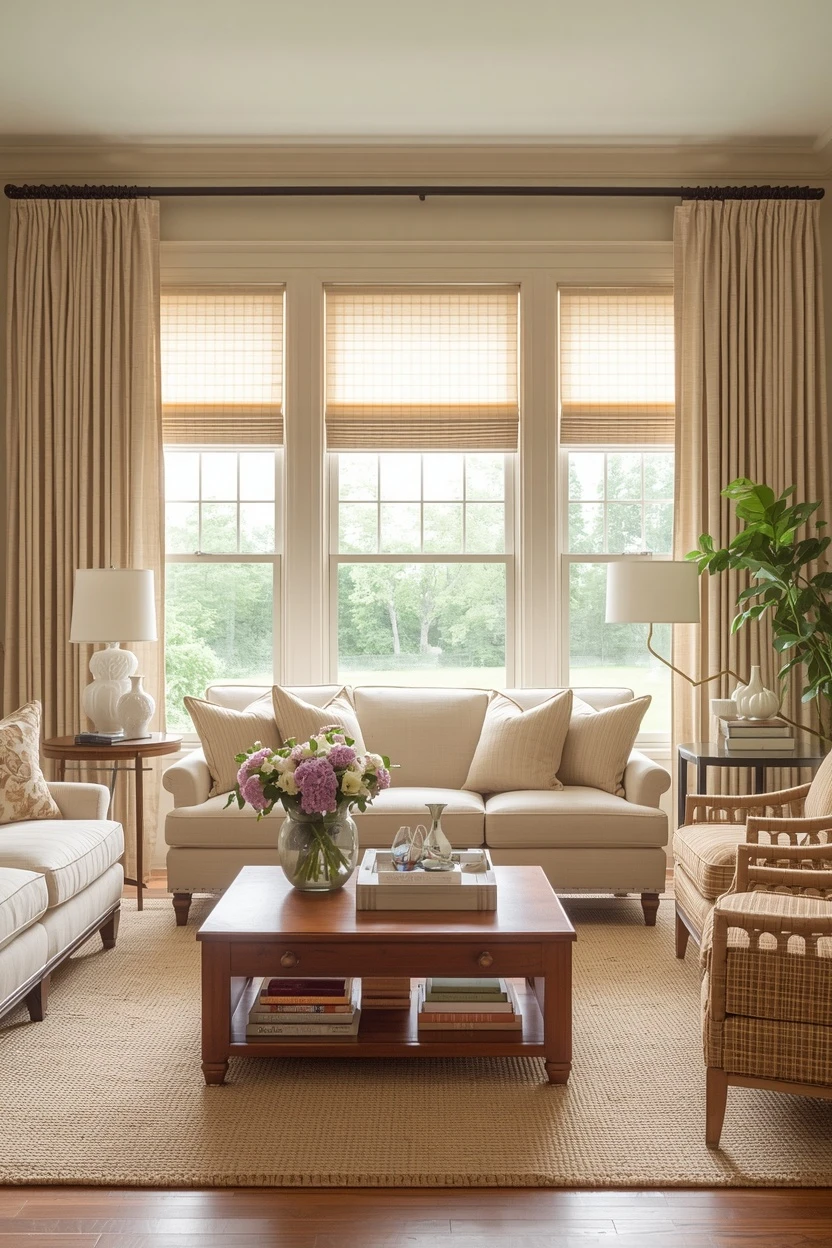
A light-filtering shade — a cellular, pleated, or solar shade — softens and diffuses the daylight while offering privacy, in a clean, modern form. The shade keeps the room bright but glare-free and adds insulation, suiting contemporary living rooms. Choose an opacity to suit your light and privacy needs. The shade reads sleek and practical. It suits modern rooms, since a light-filtering shade is an efficient, streamlined window treatment that balances brightness, privacy, and comfort in a living room.
18. The Drapery-and-Shutter Living Room
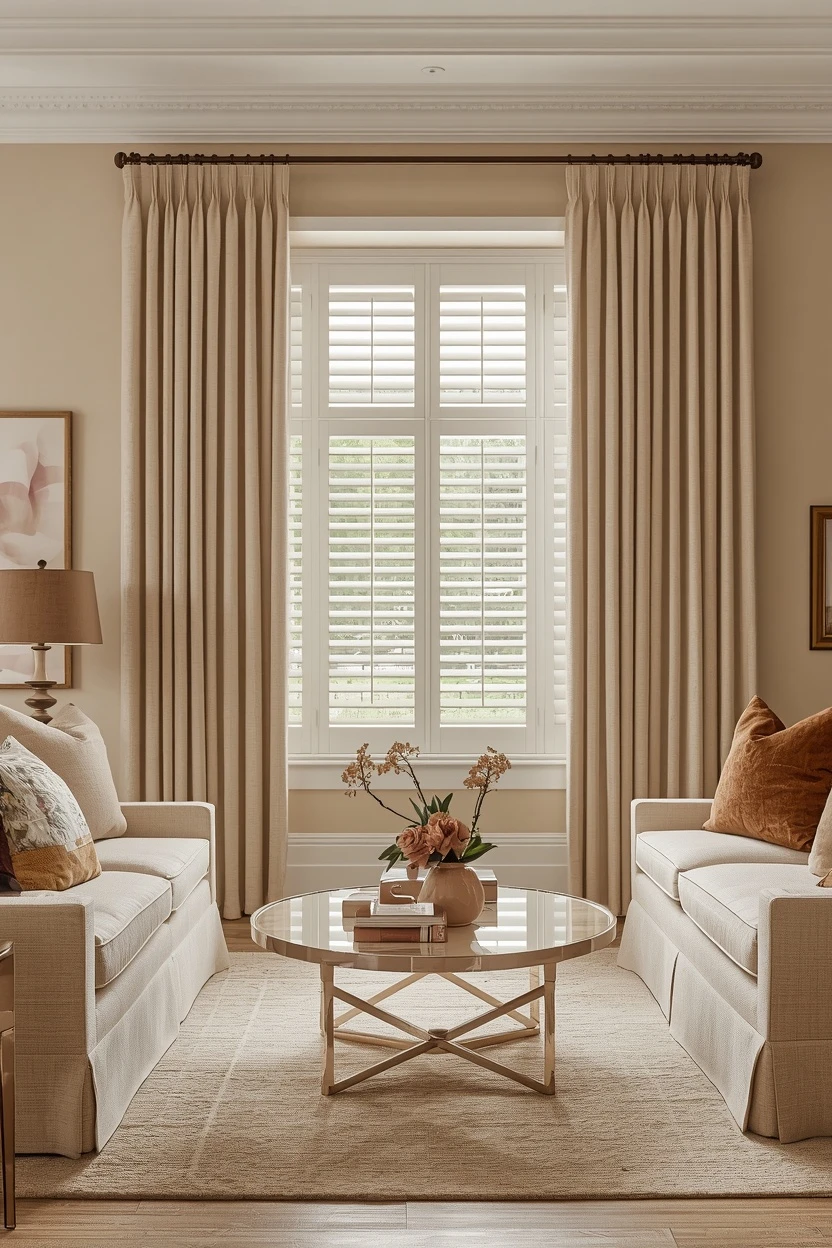
Combining shutters with soft drapes gives a living room the best of both — the crisp light control and architecture of shutters with the warmth and softness of fabric. The layered treatment reads rich, finished, and highly functional. Hang floor-length drapes either side of fitted shutters. The combination reads elegant and complete. It suits anyone wanting both function and softness, since pairing shutters with drapery is a sophisticated window treatment that frames a living room window with warmth and precise control.
19. The Complete Window Treatment Living Room
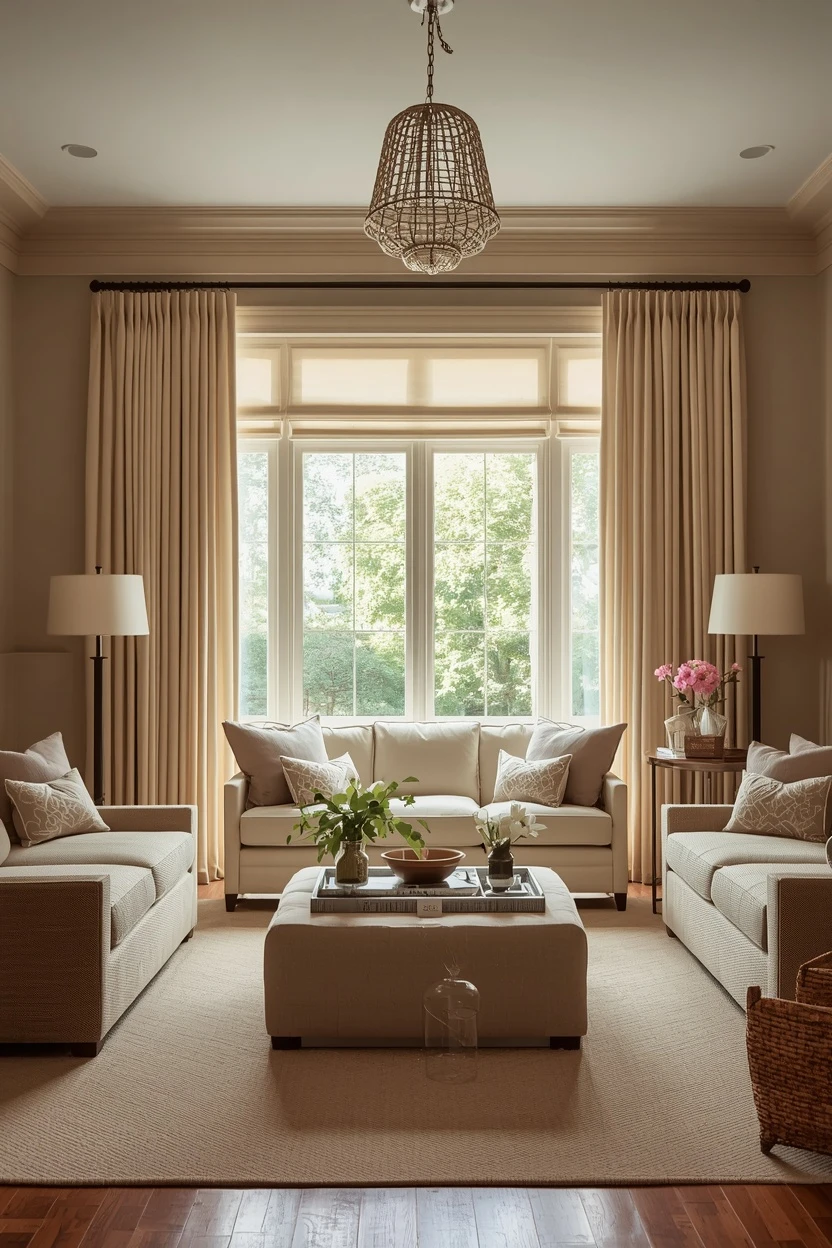
Bringing the principles together, a fully realized window treatment layers a practical element like a blind or shutter with soft floor-length drapes hung high and wide, in fabrics and colors that suit the scheme, finished with beautiful hardware. Each element does a job: the blind or shutter controls light and privacy, the drapes add softness and height, the styling refines it. The discipline is matching the treatment to the window, the light, and the function needed. The result is a window treatment that frames the light beautifully, balances style with practicality, and gives the living room a polished, finished feel.
Where I’d Start if I Only Did Three Things
If I were choosing living room window treatments from scratch, I would start by matching the treatment to my windows, light, and needs, because the right choice depends entirely on these: shutters or blinds for precise light control and a crisp look, drapes for softness and height, sheers or woven shades to filter bright light, and blackout layers for sunny or media rooms. Next, I would consider layering, since combining a practical element like a blind or shutter with soft drapes gives both flexibility and a rich, finished look, letting me control light and privacy throughout the day. Third, I would get the styling right, hanging any drapes floor-length, high, and wide, and finishing with good hardware so the treatment looks custom rather than an afterthought. Match the treatment to the window, layer for function and depth, and style it well: that trio gives you window treatments that are both beautiful and practical.
FAQs
What are the best window treatments for a living room?
The best window treatments depend on your windows, light, and needs. Floor-length drapes add softness, height, and elegance and suit almost any room; Roman blinds and roller blinds offer a tidy, tailored look with good light control; and plantation shutters provide crisp, architectural light control and privacy. For bright rooms, sheers and woven natural shades filter the light beautifully, while blackout-lined options suit media rooms and sunny spaces. Many of the most elegant living rooms layer treatments — a blind or shutter for function with soft drapes for warmth. Choose based on the light control, privacy, and style you need, and consider layering for the best of both.
How do I choose window treatments for my living room?
Start by assessing your windows, the light, and your needs. Consider how much light control and privacy you want, whether the room faces the street, how much daylight you want to keep, and the style of the room. Bright rooms benefit from light-filtering sheers or shades, media rooms from blackout options, and street-facing rooms from shutters or café curtains. Then choose a treatment that suits both the function and the look: drapes for softness, blinds or shutters for crispness, or a layered combination for flexibility and richness. Finally, match the fabric, color, and style to your scheme, and hang any drapes floor-length, high, and wide for the most polished result.
Should I layer window treatments in a living room?
Layering is one of the most elegant and practical approaches, though not essential. Combining a functional layer — like a blind, shade, or shutter — with soft drapes gives you full control over light and privacy throughout the day while adding depth, softness, and a rich, custom look. Layering sheers behind heavier drapes is another lovely option, filtering daylight while the drapes add richness and block light when drawn. Layering suits rooms where you want both flexibility and a finished, luxurious feel. If you prefer a simpler look, a single well-chosen treatment works beautifully too, but layering offers the best balance of style and function.
How do I make my living room windows look bigger?
Several treatment tricks help. Hang drapes high — near the ceiling — and wide, extending the rod well past the window frame, so the panels frame the glass and draw the eye up, making the window and ceilings feel taller. Choose floor-length drapes that graze the floor, and consider a floor-to-ceiling treatment for large windows to emphasize height. Keep the treatment light in color to maintain brightness, and pull drapes fully clear of the glass when open so they don’t cover the window. Sheers and light-filtering shades preserve daylight, which also makes a window feel larger. Hanging high and wide is the single most effective way to make living room windows look bigger.
Final Thoughts
Window treatments are one of the most impactful decisions in a living room, shaping the light, privacy, warmth, and finished feel of the whole space. Whether you choose flowing drapes, crisp blinds, elegant shutters, or a layered combination, the same principles apply: match the treatment to your windows, light, and needs, consider layering a practical element with soft drapes for flexibility and richness, and style any drapes floor-length, high, and wide for a custom look. Treat your windows as a key part of the design rather than an afterthought, balance style with the function you need, and you will have window treatments that frame the light beautifully and give your living room a polished, complete, and welcoming feel.

zarcoyt2025
Khawar Iqbal is the founder and editor of Cozy Homes Hub. He writes about cozy, livable home decor — from small-apartment layouts to room-by-room styling guides — with a focus on warm palettes, layered lighting, and budget-friendly ideas that actually work in real homes.
Related Articles
16 Living Room Decor Ideas That Instantly Elevate Any Space
A living room rarely needs new furniture to feel considerably more elevated — it usually needs a handful of layout and styling…
Read more →
14 Grey Settee Living Room Ideas to Warm Up a Neutral Sofa
A grey settee is the most versatile thing you can put in a living room — and, if you're not careful, the…
Read more →
12 Living Room Arrangement Ideas for a Warm, Balanced Space
There's a difference between a room that's furnished and a room that's arranged. Furnished just means the pieces are in there; arranged…
Read more →