13 Living Room Drapes and Curtains Ideas to Transform Any Window
 By zarcoyt2025

Table of Contents
- 1. Hang the Pole High and Wide
- 2. Choose the Heading Style Deliberately
- 3. Get the Length Exactly Right
- 4. Be Generous with Fullness
- 5. Choose Fabric by How It Drapes
- 6. Layer Sheers Behind Your Main Curtains
- 7. Line and Interline for Body and Blackout
- 8. Take Them Floor-to-Ceiling for Height
- 9. Decide Your Colour Strategy: Blend or Contrast
- 10. Use Velvet for Cosy Depth
- 11. Weigh a Statement Pole Against a Discreet Track
- 12. Dress the Folds and Style the Tie-Backs
- 13. Pull It Together into One Complete Curtain Scheme
- The Three Curtain Moves Worth Doing First
- Frequently Asked Questions
- How high should I hang curtains in a living room?
- What kind of curtains are best for a living room?
- Should living room curtains touch the floor?
- How do I make cheap curtains look expensive?
- Final Thoughts
Few things change a living room as fast as the way its windows are dressed. Curtains set the apparent height of the walls, soften every hard edge, temper the light, and often carry the room’s single biggest dose of colour and texture. The living room drapes and curtains ideas that actually work tend to hinge on four quiet decisions people rush: how high you hang, how much fabric you gather, which cloth you choose, and where the hem lands. Nail those and even a plain window starts to look tall, generous, and properly tailored. What follows walks through the details behind good window curtain ideas for living room windows — headings, fabrics, sheers, colour, length — so yours read as made-to-measure, not bought-in-a-hurry.
Treat each idea as a standalone decision you can lift into your own space. I’ve kept the measurements and the honest trade-offs in, because those are what separate a confident window from a fussy one. Some notes are about the mechanics of hanging; others are about cloth, colour, and layering for light. Pick the handful that fit your window, your aspect, and the mood you’re after.
1. Hang the Pole High and Wide
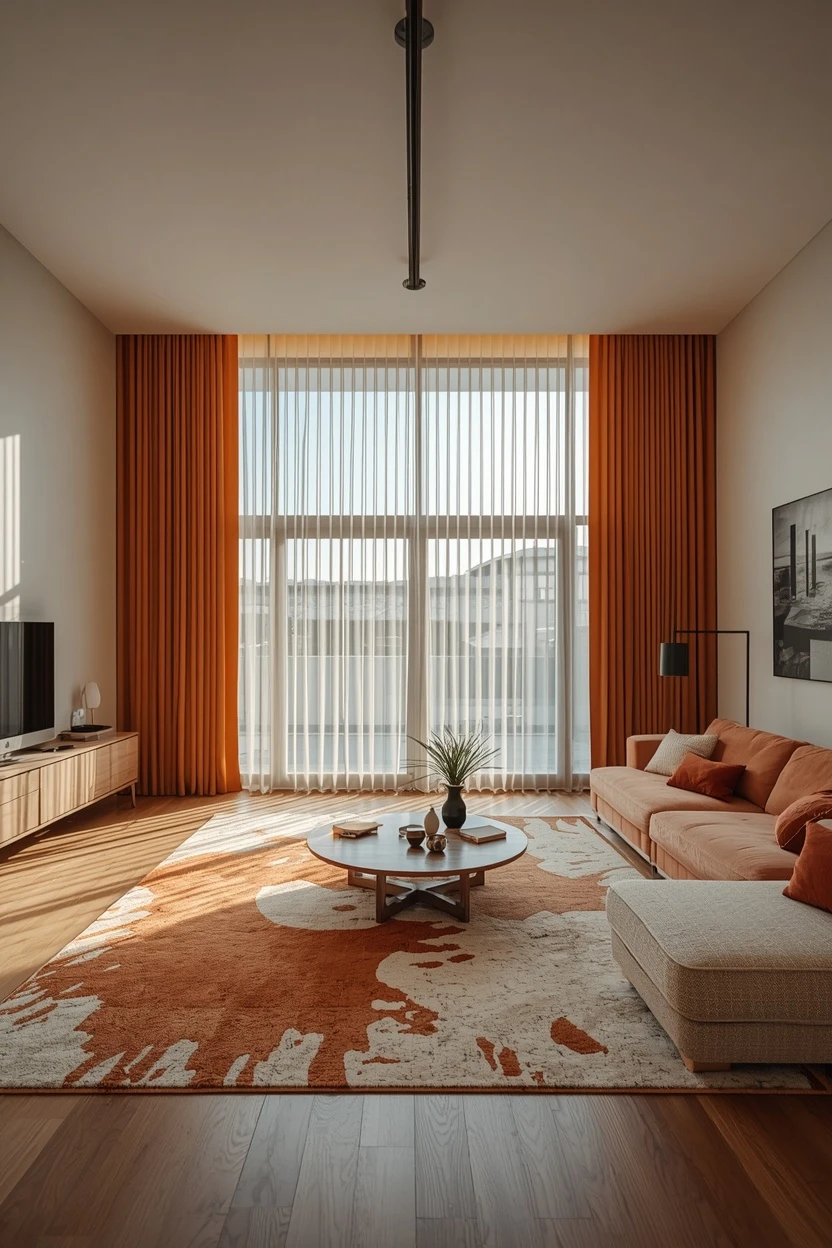
The quickest way to make a window look bigger is to stop hanging the curtains on it. Fix the pole or track about 15cm above the frame at a minimum, and ideally take it close to the ceiling, then run it 15–25cm past the frame on each side. Now the fabric stacks back onto the wall rather than the glass, daylight floods in, and the window suddenly reads far taller and broader than it measures. It’s the cheapest trick here and the one I’d never skip.
2. Choose the Heading Style Deliberately
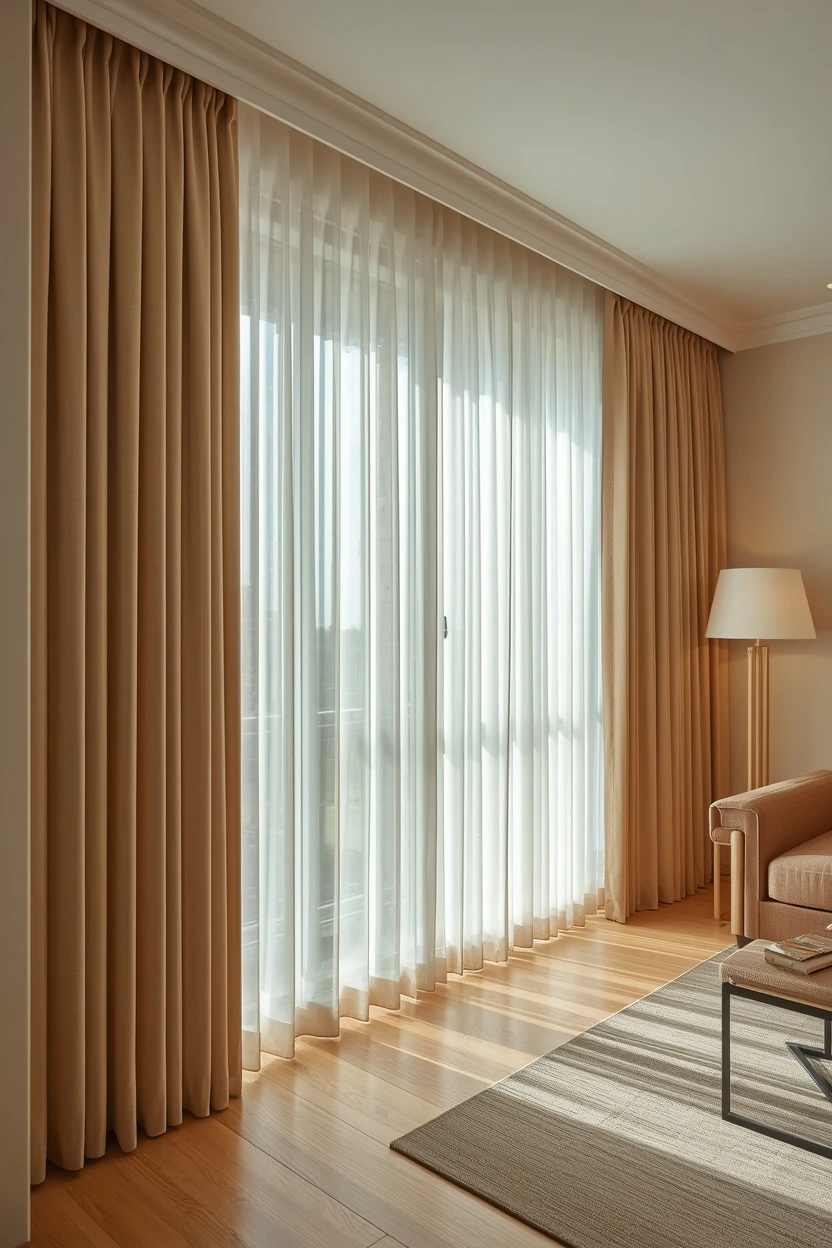
The heading — how the fabric pleats at the top — quietly sets the whole tone. A pinch or French pleat looks tailored and traditional; a wave (ripple-fold) heading is crisp and contemporary and glides beautifully on a track; a pencil pleat is the do-anything option; eyelets read casual but only belong on a pole. For a main living room I’ll almost always steer you toward pinch or wave, simply because they hold an even, disciplined fold year after year. Match the heading to the room and the curtains instantly look intentional.
3. Get the Length Exactly Right
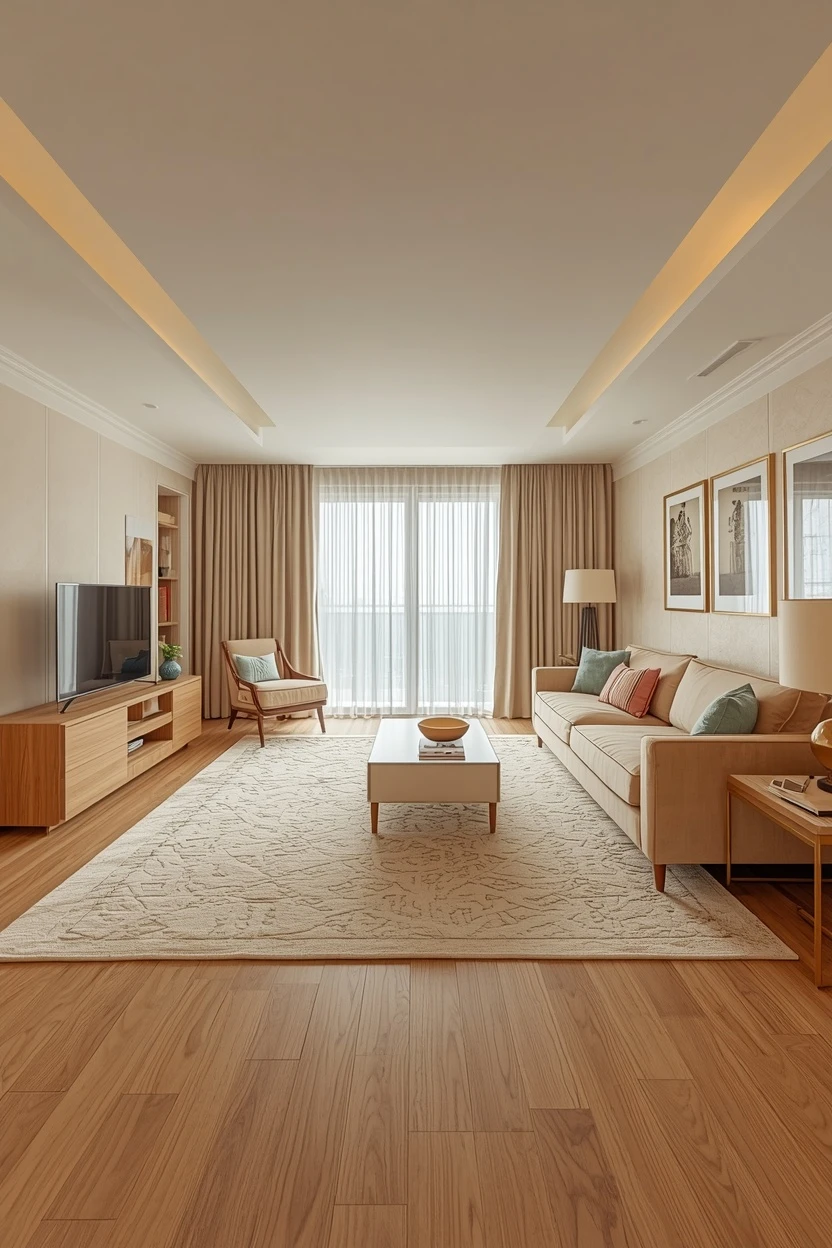
Hem height is where good intentions go wrong. There are three finishes worth having: a float, sitting a centimetre clear of the floor for a crisp everyday look; a kiss, just brushing the boards for something softer; or a puddle, with 10–20cm pooling for period drama. The trap is the accidental middle — a hem hovering at shin height, which reads like trousers that don’t fit. Measure to the finished drop you actually want, because a centimetre or two is the whole difference between sharp and sloppy.
4. Be Generous with Fullness
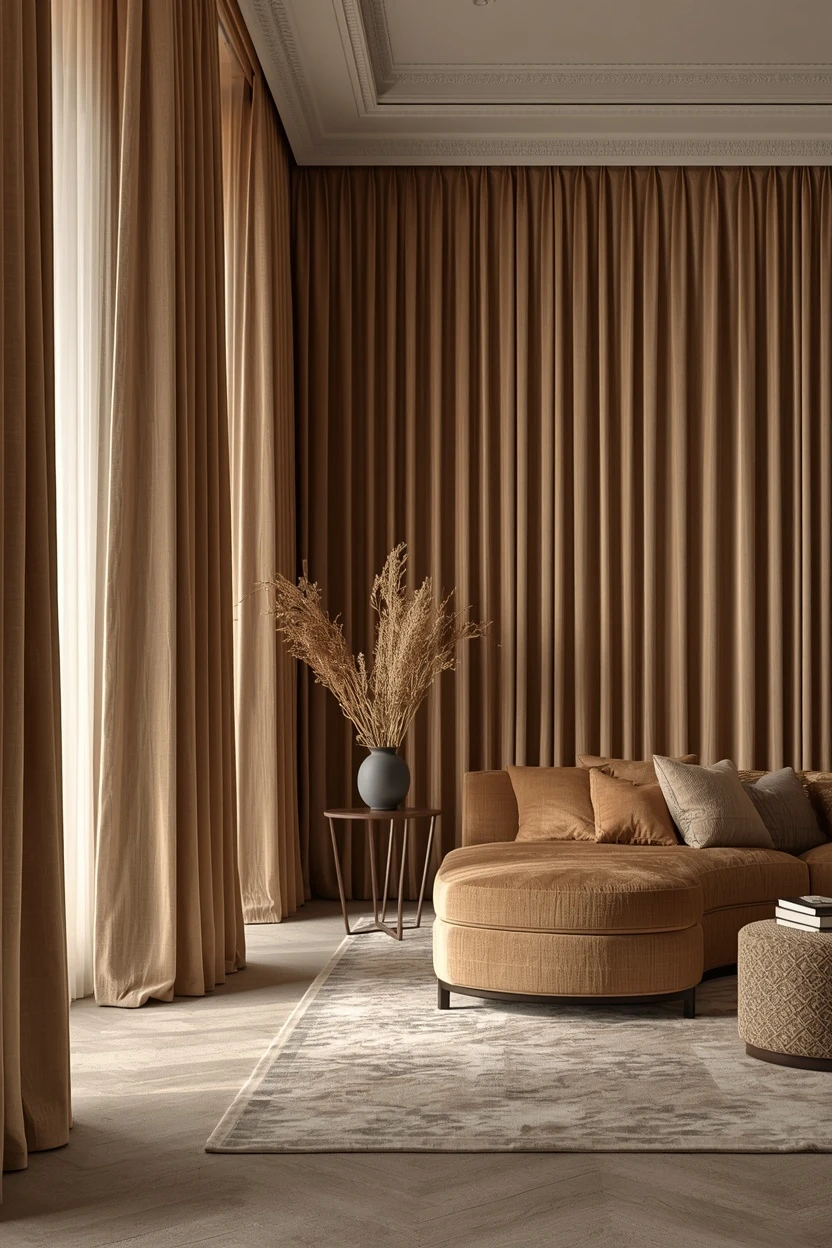
Thin, flat curtains are the giveaway of a cut corner. For real body, the flat width of fabric wants to be at least twice your track or pole length — closer to two and a half times for sheers and floaty linens. That surplus is exactly what folds into those deep, even waves when the curtains are open; skimp on it and you get a mean, board-flat panel instead. If there’s one place in the whole scheme not to economise, it’s here.
5. Choose Fabric by How It Drapes
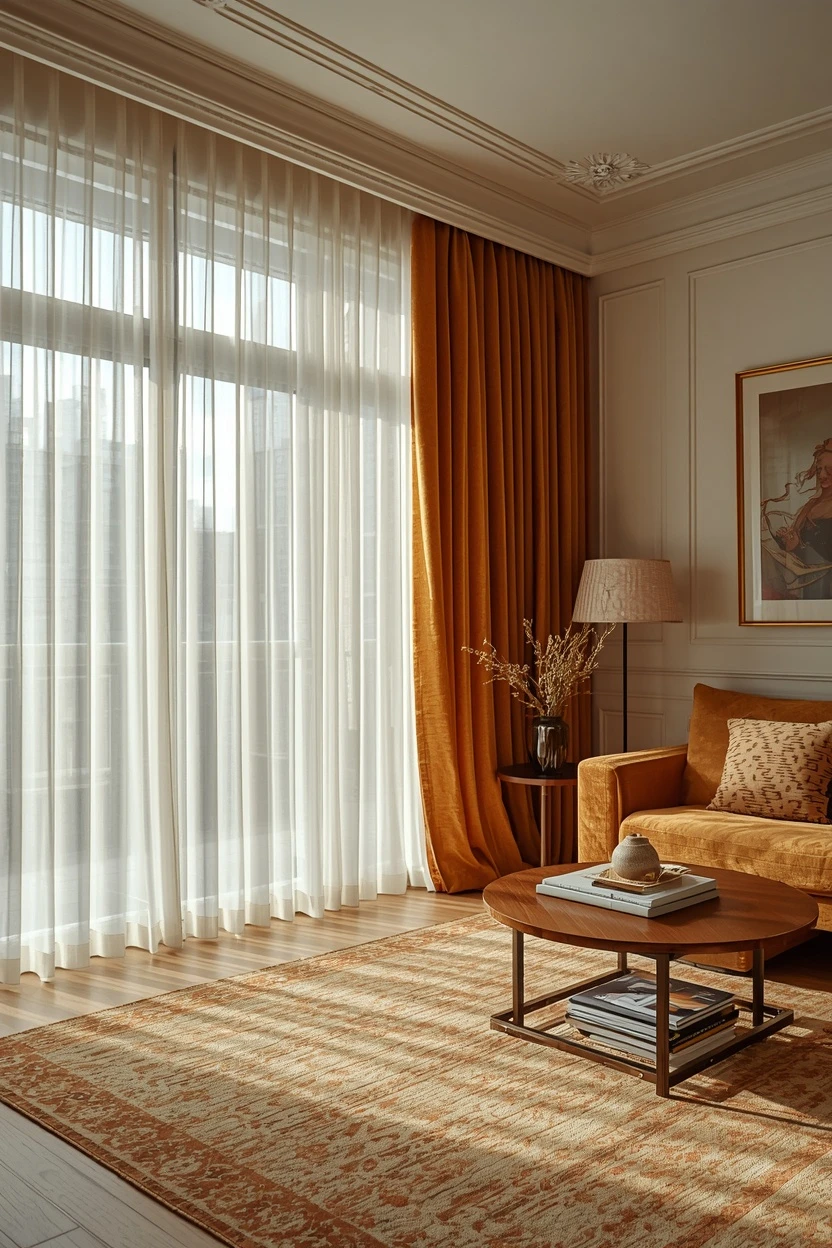
Cloth is a decision about weight and fall, not just colour. Linen tumbles softly with a relaxed, faintly crumpled character; cotton is crisp and fuss-free; velvet hangs heavy with real depth and blocks the light; wool and thicker weaves bring structure and warmth. Get a large sample and pin it up at the actual window before you commit — a fabric that looks perfect flat on a counter can behave completely differently once it’s gathered into folds and lit from behind.
6. Layer Sheers Behind Your Main Curtains
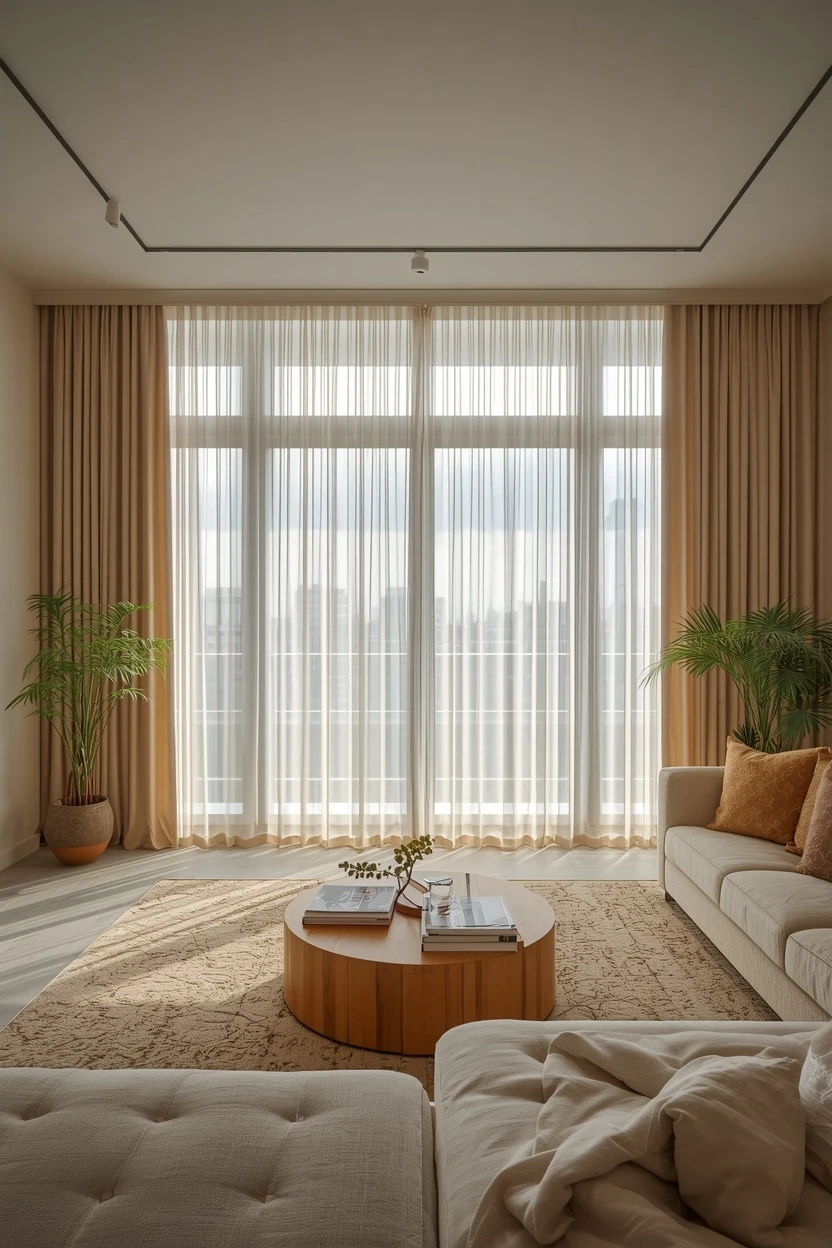
Running two layers is what makes a living room work from breakfast to bedtime. Hang a sheer linen or voile on an inner track against the glass, with your main curtains in front on a pole or outer track. The sheers filter hard daylight and screen the room without shutting it in; the heavier pair draws across for warmth and blackout after dark. It’s the most versatile of all living room drapes and curtains ideas precisely because you’re no longer stuck choosing between fully open and fully shut.
7. Line and Interline for Body and Blackout
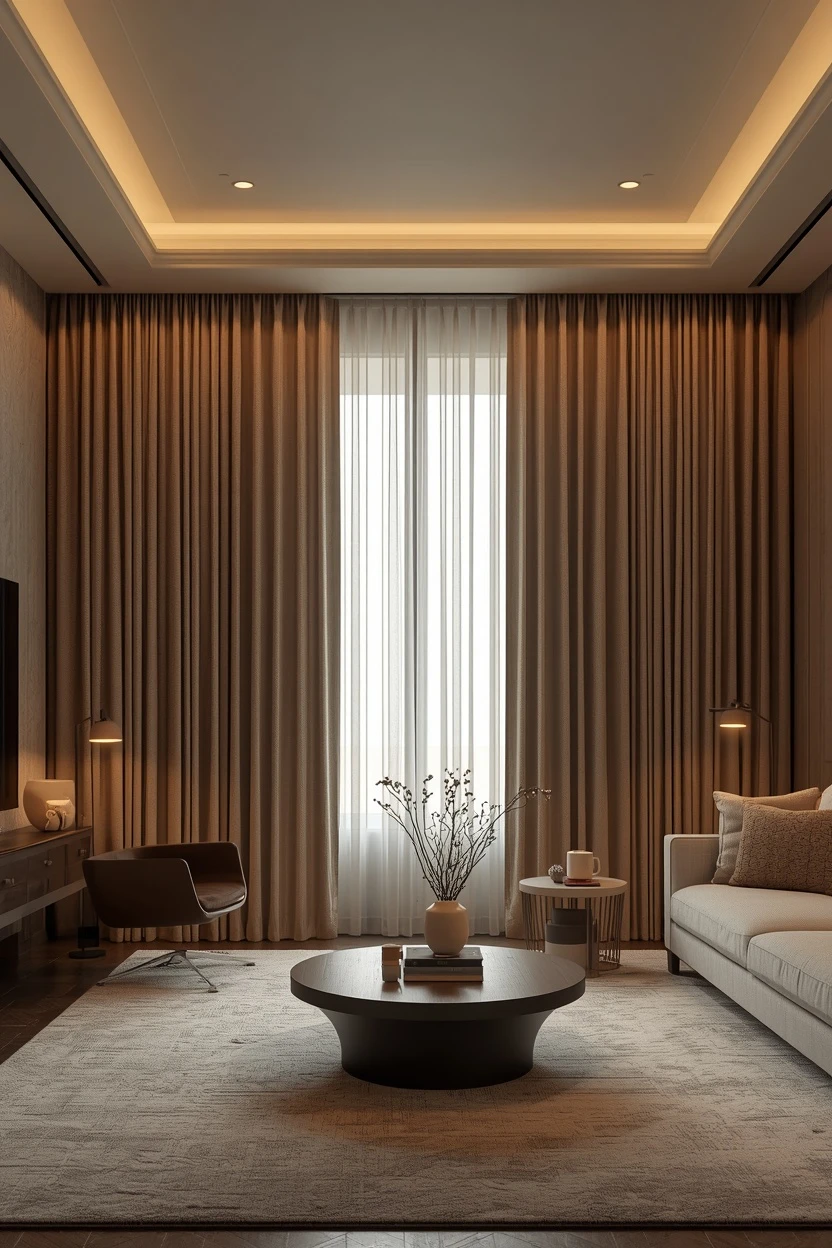
Lining is the invisible bit that separates hotel curtains from flimsy ones. A plain cotton lining protects the face fabric and improves the hang; a thermal or blackout lining keeps heat in and light out, which earns its place if the room doubles as a cinema; and interlining — a soft blanket layer sewn inside — gives that plush, weighty fall you feel in grand houses. The happy secret is that even a budget face fabric starts to look expensive the moment it’s lined properly.
8. Take Them Floor-to-Ceiling for Height
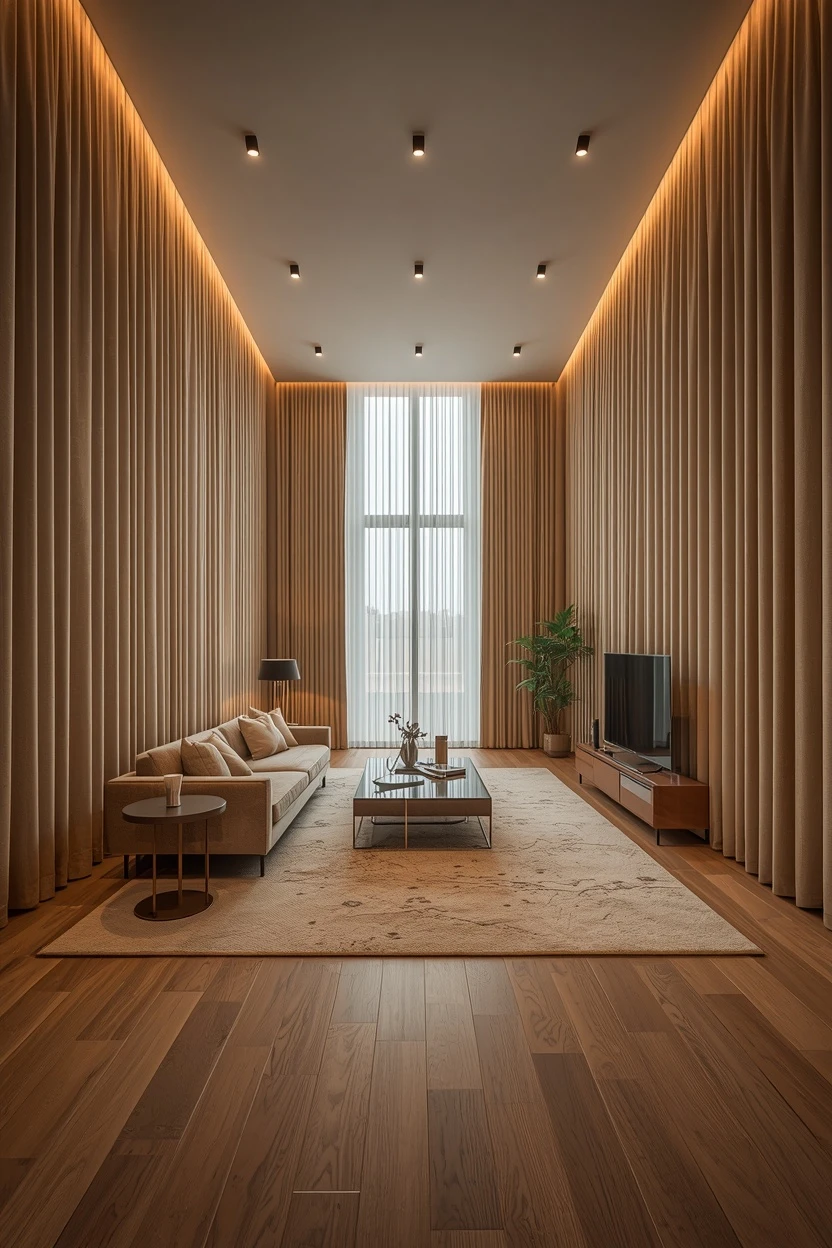
Where a ceiling is low or simply ordinary, floor-to-ceiling curtains pull the eye upward and lend a bit of grandeur. Mount the track right at the ceiling line — or tuck it behind a plaster pelmet or into a shadow gap — and let one unbroken run of fabric fall all the way to the skirting. That single vertical sweep, with nothing to interrupt it, is what makes the walls feel taller and the window more architectural than it really is.
9. Decide Your Colour Strategy: Blend or Contrast
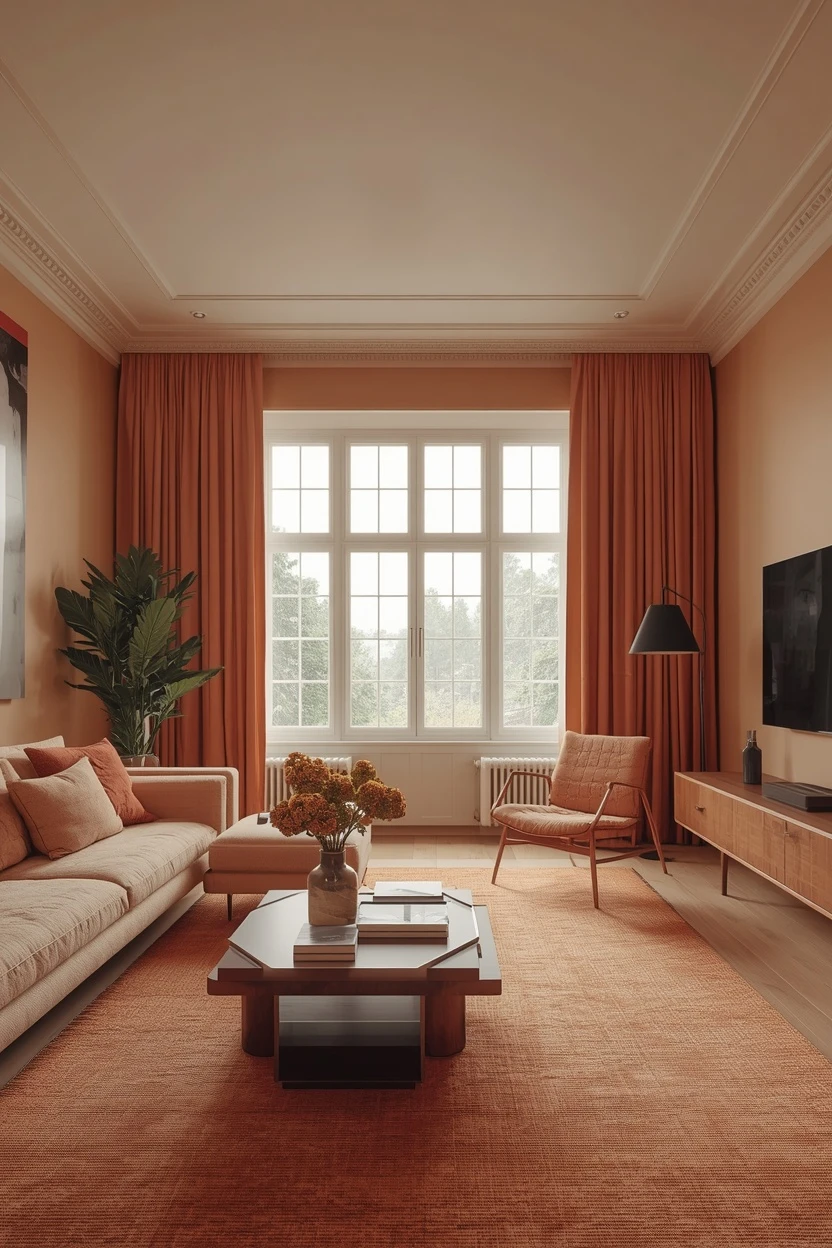
Curtain colour pulls in one of two directions, so commit to one. Match the curtains closely to the wall and the window melts away, leaving the room calm, seamless, and visually larger — my instinct for small or busy spaces. Push instead to a contrasting or deeper shade and the curtains become a deliberate feature that frames the glass with confidence. The only genuine mistake is the almost-match: a colour a shade or two off the wall, which always looks like an accident rather than a choice.
10. Use Velvet for Cosy Depth
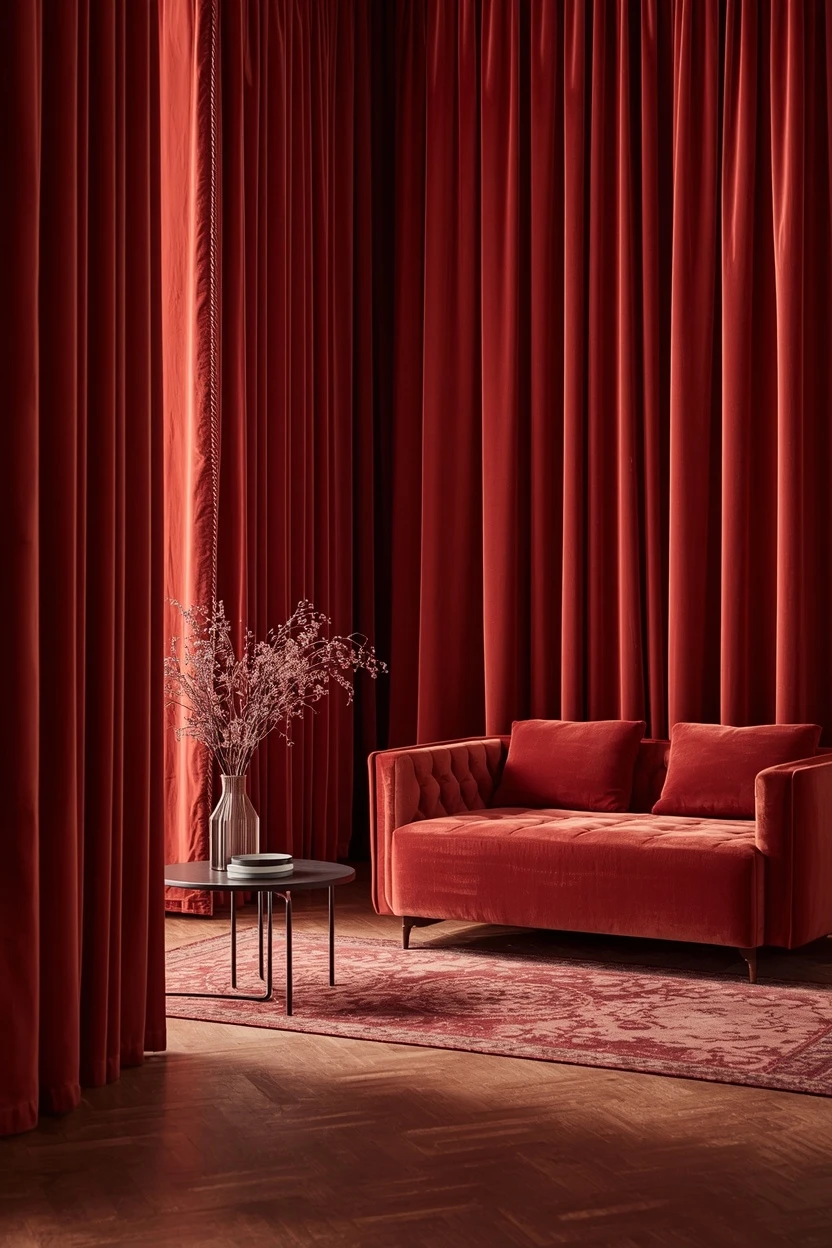
When you want a room to feel rich and wrapped-around, velvet has no real rival. Its pile catches and shifts the light as you move past, giving a depth flat weaves can’t touch, and the weight makes it fall in gorgeous heavy folds while sealing out draughts and glare. Linen-blend velvets keep things relaxed; a dense cotton velvet feels the most sumptuous. In a north-facing or period living room, a pair of velvet drapes is often the single thing that finally makes the space feel cosy.
11. Weigh a Statement Pole Against a Discreet Track
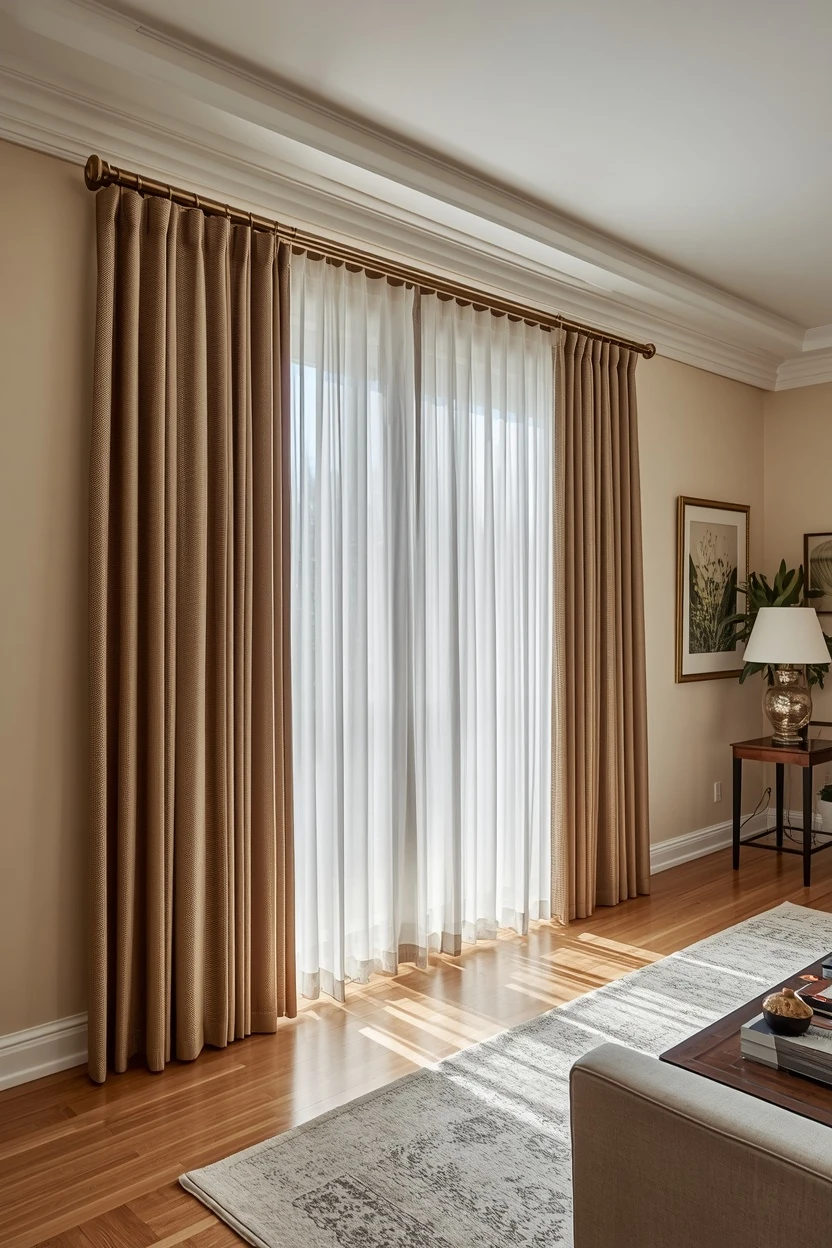
Your hanging hardware is a design choice in its own right, not an afterthought. A good pole — brass, blackened steel, or turned timber with a proper finial — is meant to be seen and adds a decorative, characterful line above the window. A ceiling-fixed or recessed track does the opposite, vanishing so the fabric appears to float for a clean, modern effect. Neither wins outright; it depends entirely on whether you want the fixing to speak or to disappear.
12. Dress the Folds and Style the Tie-Backs
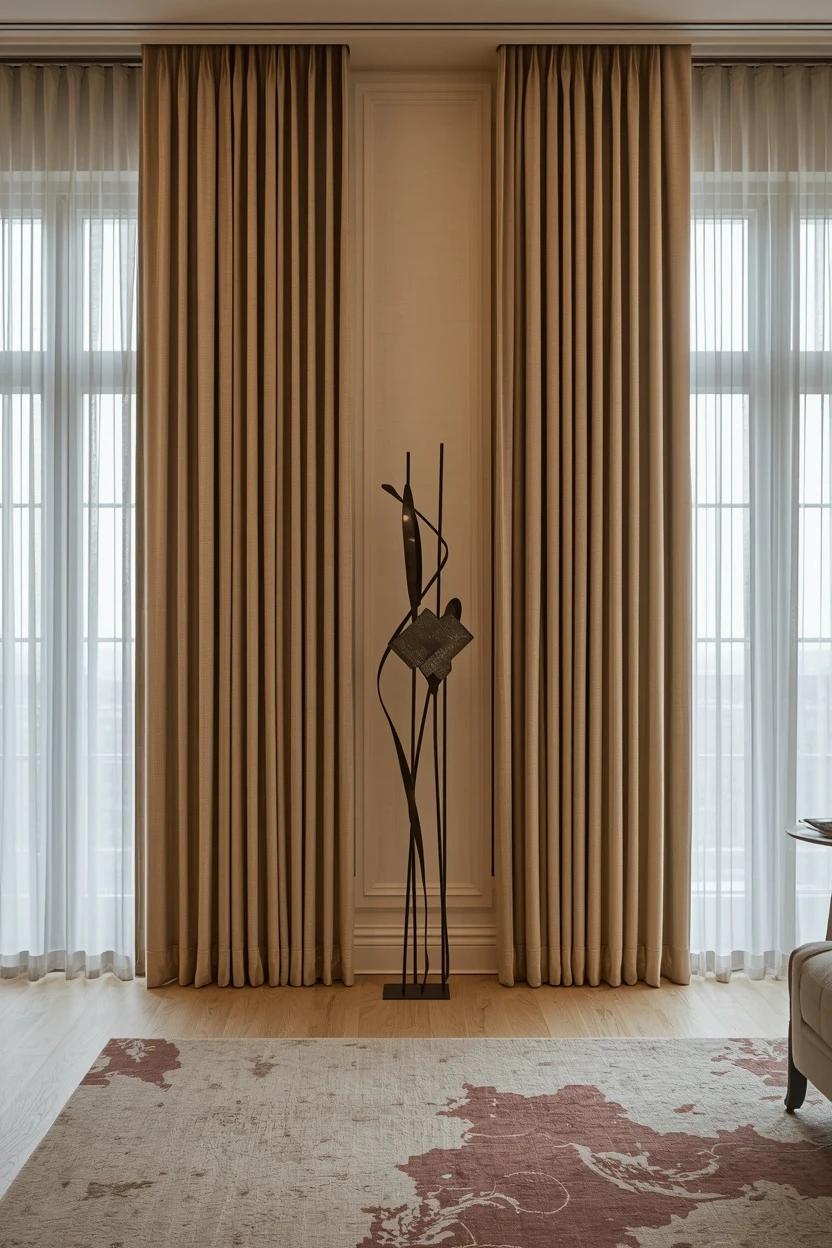
Even beautiful curtains need a little training to look their best. When they first go up, gather them into even concertina folds and tie them loosely for a few days so the fabric learns to hang in neat pleats rather than random bunches. To hold them open, a soft fabric tie-back gives a traditional swag while a wall-fixed metal holdback creates a cleaner, more sculptural sweep. It’s a five-minute job that quietly decides whether the finished window looks styled or merely hung.
13. Pull It Together into One Complete Curtain Scheme

Put the pieces in conversation and a living room window comes fully to life: a pole hung high and wide, a considered heading, plenty of fabric, the right cloth cut to the right length, a sheer layer behind and a proper lining within. Height, fullness, and fabric do the heavy lifting — lift the eye, gather generously, and pick a cloth that falls well — while colour and a dressed hem finish the job. Assemble the details that suit your own window and these living room drapes and curtains ideas stop being a checklist and become curtains that genuinely look made-to-measure.
The Three Curtain Moves Worth Doing First
Pressed to pick only three, I’d begin with hanging height — pole near the ceiling, well past the frame — because nothing else buys you as much apparent size and light for so little money. Next I’d spend on fabric quantity and lining before anything decorative, since twice the track width in cloth, properly lined, is what produces that rich, even fall people read as expensive. Last, I’d add a sheer behind the mains so the room flexes through the day instead of flipping between glare and gloom. Height, generous lined fabric, and a sheer layer will out-perform any amount of costly cloth hung badly.
Frequently Asked Questions
How high should I hang curtains in a living room?
Higher than feels natural — that instinct to fix the pole just above the frame is exactly what keeps windows looking squat. Set the track at least 15cm above the frame, and for real drama take it close to the ceiling or roughly 30cm up, then extend it 15–25cm beyond the frame on either side so the curtains stack onto the wall rather than the glass. Two things happen: the window looks taller and wider, and you claw back daylight because the open curtains no longer cover part of the pane. Just check the drop still reaches the floor from the higher fixing. If you take only one idea from this whole list, make it this one.
What kind of curtains are best for a living room?
It depends on your light and how you live, but the reliable formula is full-length curtains in a decent-quality cloth, a pinch-pleat or wave heading, hung generously and lined. Linen suits a relaxed, contemporary room; velvet is the champion for cosy or period spaces; cotton is the easy all-rounder in between. If the room bakes in sun or faces the street, add sheers behind for daytime privacy and softened light; if it doubles as a film room, specify a blackout or thermal lining. There’s no universal “best” — the strongest window curtain ideas for living room windows start from your aspect, the window’s size, and the atmosphere you want, then choose cloth and heading to suit.
Should living room curtains touch the floor?
In a living room, almost always yes — short curtains tend to look dated and unfinished. Choose one of three deliberate finishes: a float about a centimetre off the floor for a crisp, practical look that clears radiators; a kiss just grazing the boards for something softer; or a generous puddle for period romance. What to avoid is the vague hem that stops halfway down the wall, which instantly reads as ill-fitting. Sill-length only really makes sense where a radiator or deep sill physically blocks a full drop, and even then it should land precisely rather than approximately. Measure to your chosen finished length carefully — this is a job where a stray centimetre shows.
How do I make cheap curtains look expensive?
The luxury look lives in the hanging and the fullness, not the price tag. Hang high and wide first, so the curtains read as generous and architectural. Then chase fabric quantity — at least twice the track width — because thin panels are the clearest tell of a cheap job; adding a second inexpensive panel for bulk helps enormously. Line them, since even modest cloth hangs and insulates like something far dearer once it’s lined, and interlining adds real heft. Train the folds when you hang them so they fall in neat pleats, and finish on a good pole or a cleanly hidden track. If money’s tight, a plain heavier fabric beats a thin printed one every time — weight is what your eye reads as quality.
Final Thoughts
Dress a window well and you change the whole room, and the truth is it owes far more to technique than to budget. Everything above circles the same few fundamentals: hang high and wide to lift and widen the window; gather enough fabric that it falls in rich, even folds; choose cloth for the way it drapes and line it properly; then finish with the right length and a heading that suits the room. Add a sheer layer for all-day light control, commit to a clear colour strategy, and take five minutes to dress the folds. Whether you land on relaxed linen, deep velvet, or something bolder, the mechanics don’t change — and getting them right is what turns any of these window curtain ideas for living room windows into a window that looks tailored rather than simply covered.

zarcoyt2025
Khawar Iqbal is the founder and editor of Cozy Homes Hub. He writes about cozy, livable home decor — from small-apartment layouts to room-by-room styling guides — with a focus on warm palettes, layered lighting, and budget-friendly ideas that actually work in real homes.
Related Articles
16 Living Room Decor Ideas That Instantly Elevate Any Space
A living room rarely needs new furniture to feel considerably more elevated — it usually needs a handful of layout and styling…
Read more →
14 Grey Settee Living Room Ideas to Warm Up a Neutral Sofa
A grey settee is the most versatile thing you can put in a living room — and, if you're not careful, the…
Read more →
12 Living Room Arrangement Ideas for a Warm, Balanced Space
There's a difference between a room that's furnished and a room that's arranged. Furnished just means the pieces are in there; arranged…
Read more →