15 Lounge Bar Decorating Ideas to Elevate Your Living Room
 By zarcoyt2025
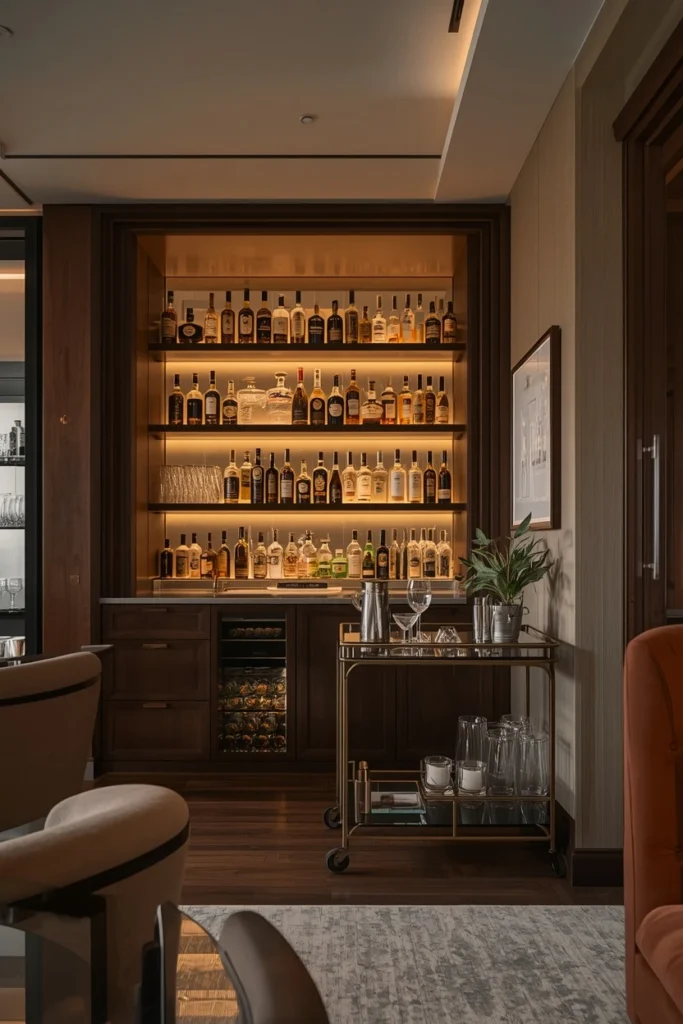
Table of Contents
- 1. Pick the Right Footprint Before Anything Else
- 2. Anchor It on a Console or Sideboard
- 3. Go Vertical with a Backlit Bar Wall
- 4. Choose a Statement Bar Cart on Castors
- 5. Light It from Within
- 6. Add a Mirrored or Antiqued-Glass Backdrop
- 7. Treat Glassware as the Display
- 8. Show the Bottles, Hide the Clutter
- 9. Commit to a Cabinet or Drinks Armoire
- 10. Zone the Bar with a Rug and a Pendant
- 11. Add Seating You’d Actually Perch On
- 12. Build a Proper Prep and Ice Station
- 13. Work in a Wine Fridge or Drinks Cooler
- 14. Give It Personality with Art and a Little Neon
- 15. Pull It All Together into One Complete Lounge Bar
- Where I’d Start if I Only Did Three Things
- Frequently Asked Questions
- How do I set up a small bar in my living room?
- What do you need for a home lounge bar?
- How can I make a cheap home bar look expensive?
- Where should a bar go in an open-plan living room?
- Final Thoughts
A home bar is the one piece of decorating that instantly makes a living room feel grown-up, generous, and ready for company. The best lounge bar decorating ideas aren’t about scale or budget — a slim cart in a corner can carry as much personality as a full built-in wall — but about styling drinks, glassware, and light so the whole corner reads as a considered, cocktail-hour moment. Get the footprint, the backdrop, and the glow right, and even a rented flat can feel like a proper little bar. These living room bar ideas cover carts, cabinets, backlit shelving, and the finishing touches that separate a cluttered shelf from a genuine lounge bar.
Every idea below is a complete, self-contained move you can lift straight into your own space, with honest notes on measurements, placement, and the trade-offs I’ve learned to watch for. Some suit a tight corner and a modest budget; others are for the person ready to commit a whole wall. Mix the ones that fit your room, your storage, and how you actually entertain, and you’ll end up with a bar that looks deliberate rather than dumped.
1. Pick the Right Footprint Before Anything Else
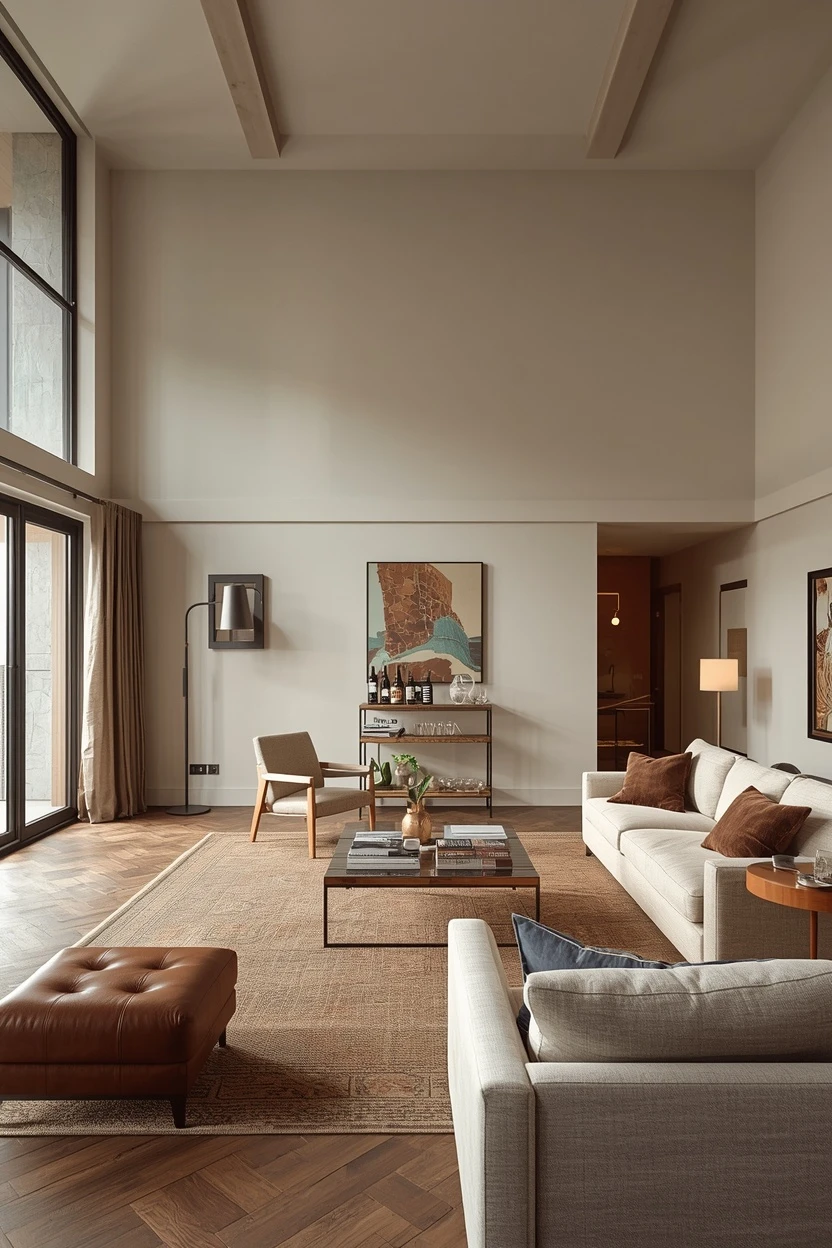
Decide honestly how much floor and wall you can give a bar before you buy a thing. A rolling cart wants roughly 50–60cm square and lives happily in a dead corner; a console-style bar needs a clear 100–120cm run of wall; a full built-in swallows a whole 200cm-plus alcove. I always tape the footprint out on the floor and live with it for a few days — a bar that blocks a walkway or a radiator gets resented fast. Matching the format to the space you genuinely have is the single decision that makes every later choice easier.
2. Anchor It on a Console or Sideboard
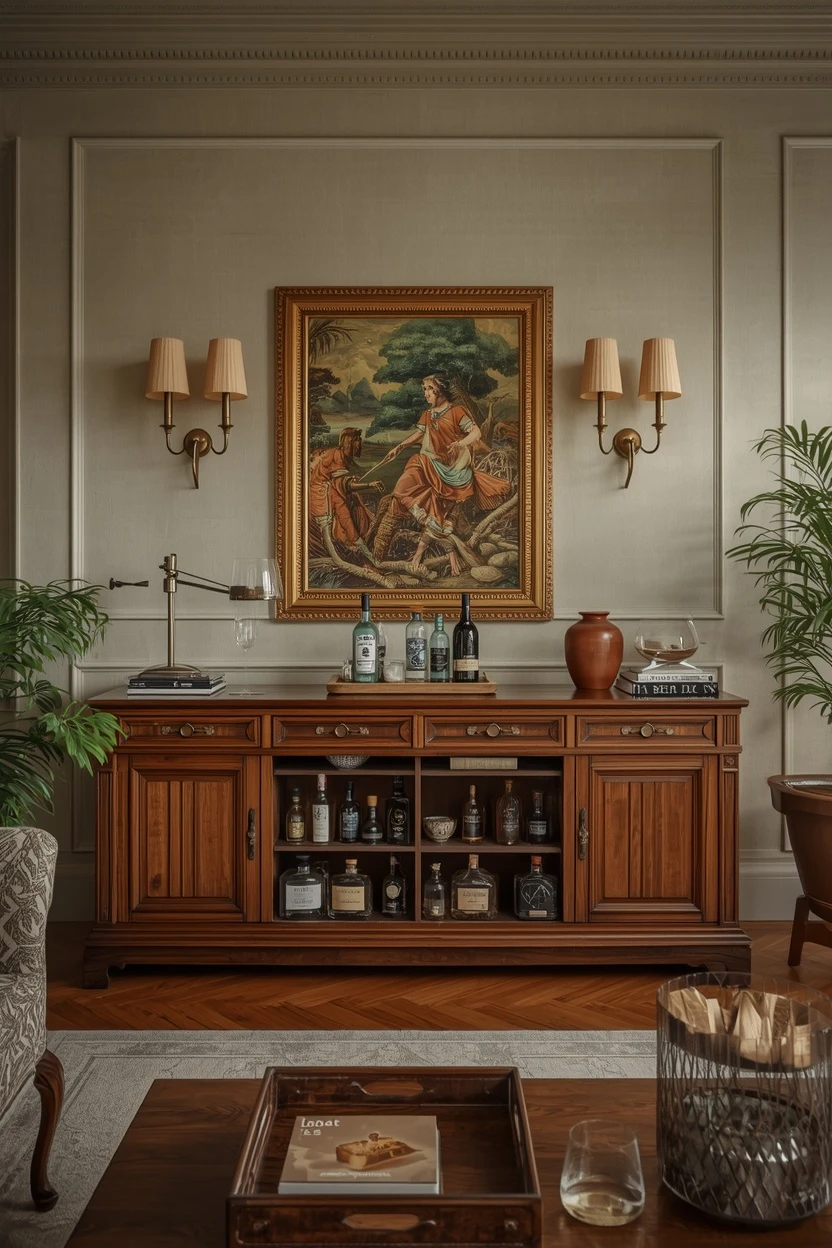
If you want more presence than a cart but can’t lose an alcove to joinery, a console or low sideboard is the sweet spot. Aim for something 80–90cm high so it works as a standing prep surface, and give the top a tray to corral bottles so spills stay contained. Store the heavy, unlovely stock — mixers, spare glasses, the soda stream — behind the doors, and keep only your best six or seven bottles on show. A sideboard bar earns its keep because it doubles as everyday storage the other 51 weeks of the year.
3. Go Vertical with a Backlit Bar Wall
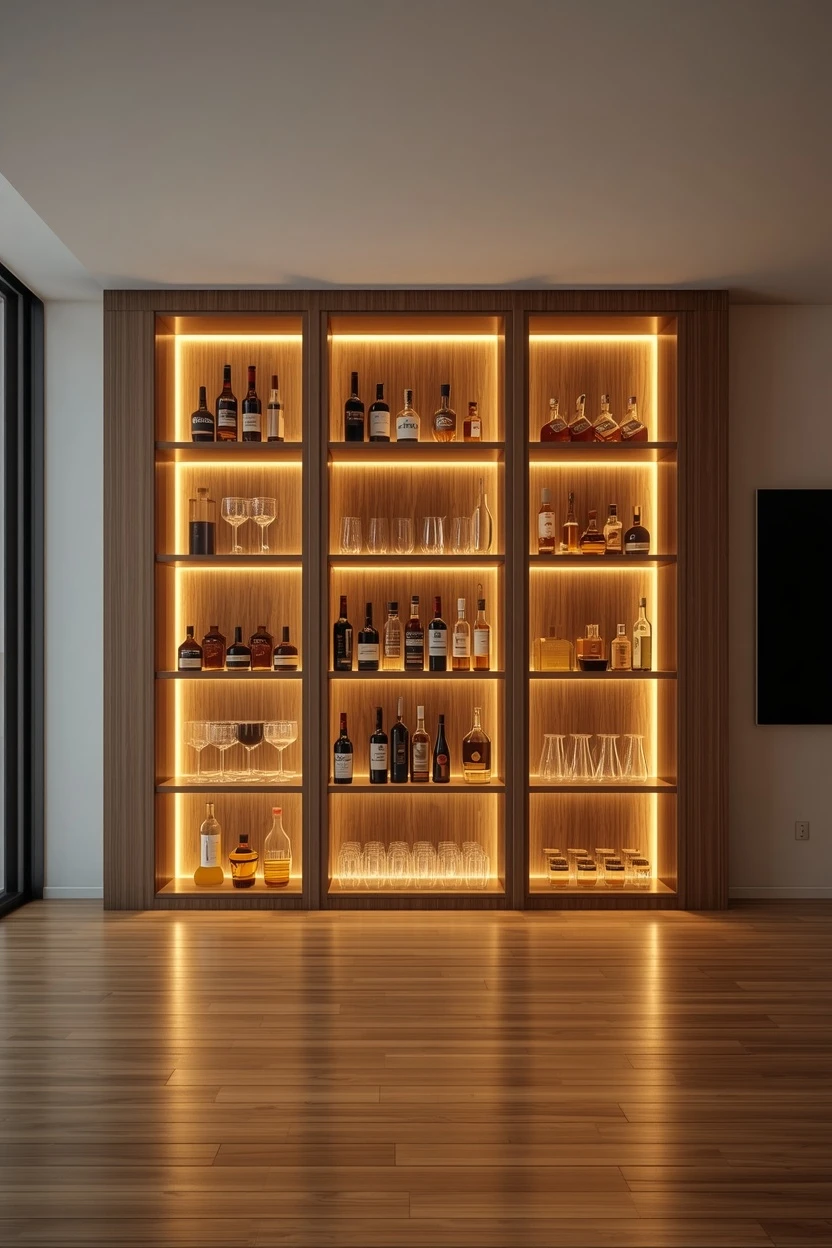
When floor space is tight, build upward. A run of floating shelves — I like three, spaced about 30cm apart, in oak or smoked glass — turns a slice of wall into a bar that takes almost no footprint. Fix them into studs or use proper heavy-duty fixings, because loaded bottles and decanters are heavier than they look. This is one of my favourite living room bar ideas for small flats: it reads as a designed feature, not a compromise, and draws the eye up so the room feels taller.
4. Choose a Statement Bar Cart on Castors
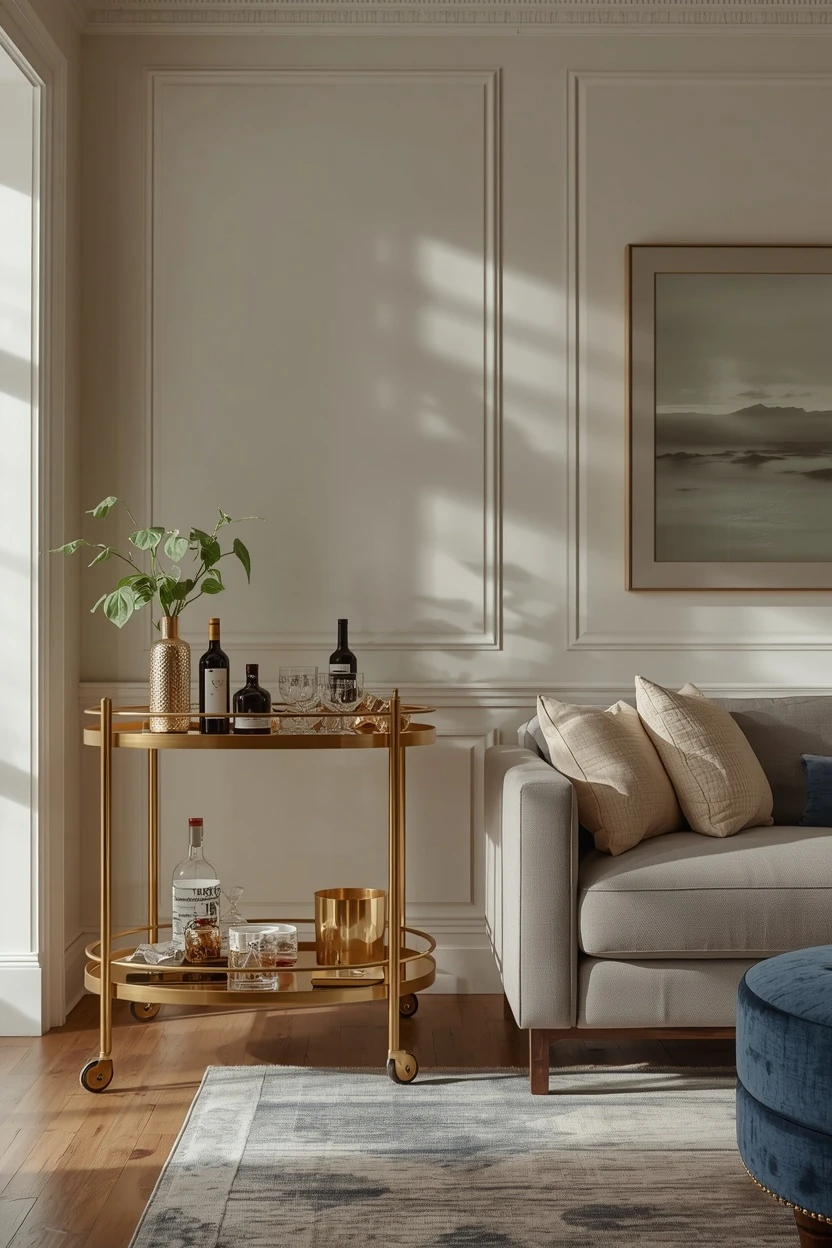
The humble cart is still the most flexible bar there is, and the right one is a piece of furniture in its own right. Look for lockable brass or matte-black castors, two tiers with a lip so nothing rolls off, and a frame in brass, chrome, or powder-coated steel rather than flimsy wire. Style the lower shelf with bottles and a bucket, the top with glassware and a small tray for making drinks. A cart wins because you can wheel it beside the sofa for a party and tuck it away by Monday.
5. Light It from Within
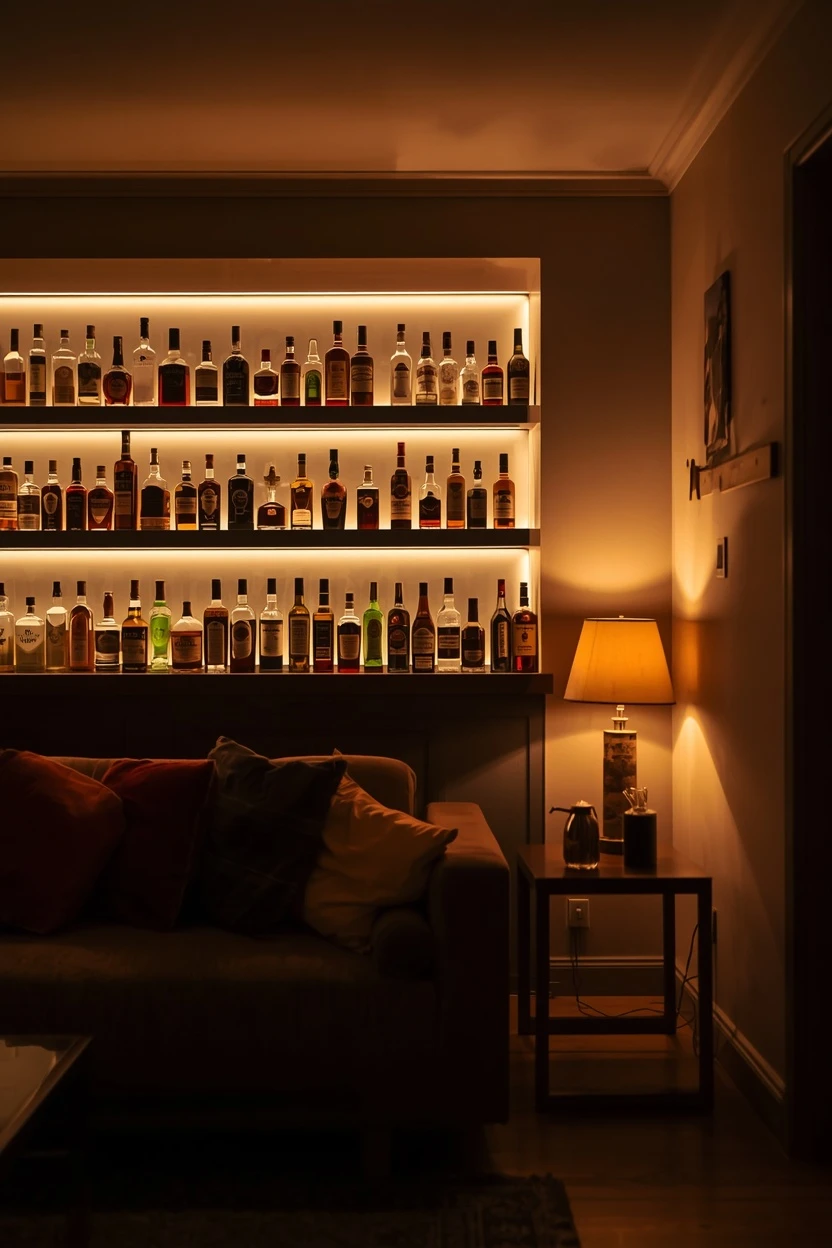
Nothing separates a real lounge bar from a shelf of booze like considered lighting. Run warm-white LED strip (aim for 2700K, never cold blue) under a shelf lip or behind a bottle row, add a small dimmable lamp, and put the whole zone on its own switch or a smart plug. Backlighting catches the glass and the liquid and makes cheap bottles look expensive. Layered, warm, low light is the cheapest upgrade on this list and the one guests always notice first.
6. Add a Mirrored or Antiqued-Glass Backdrop
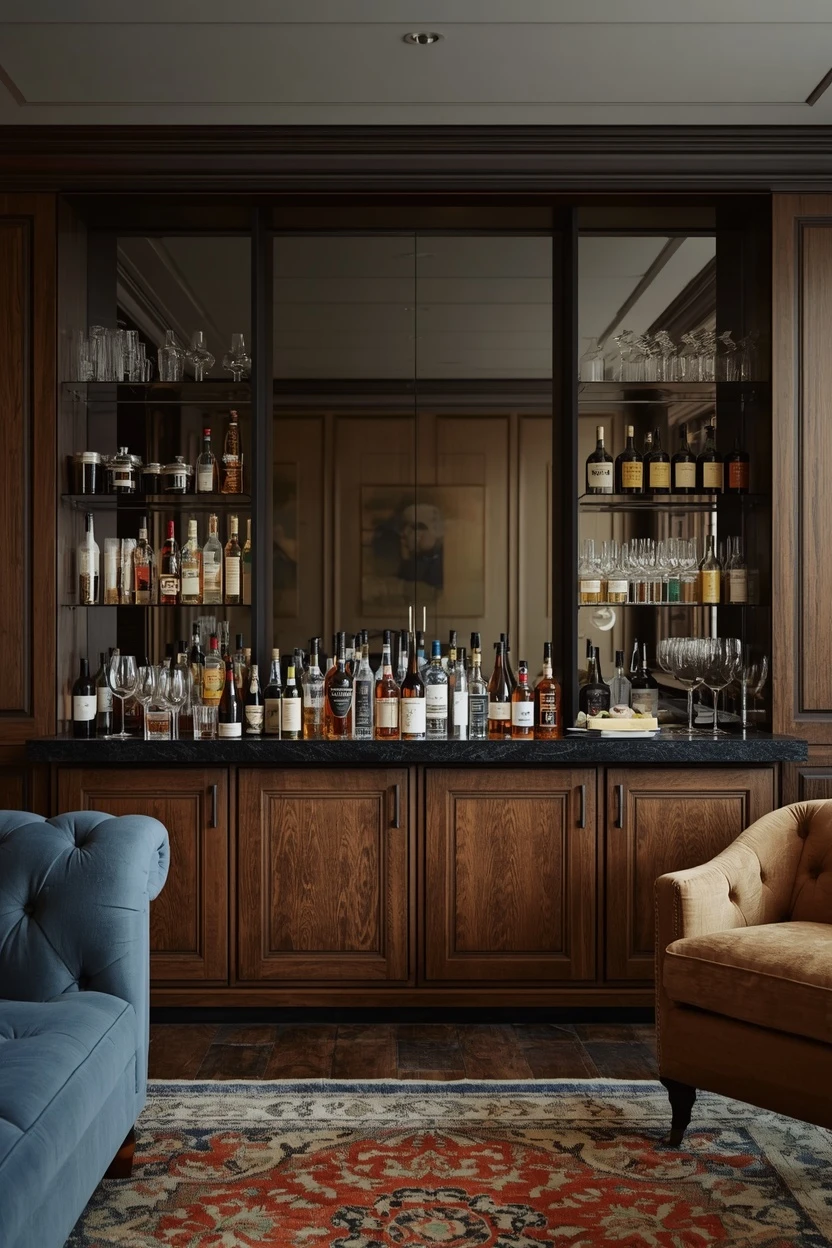
Borrow the oldest trick in the bar trade and put a mirror behind the bottles. A panel of antiqued or smoked mirror — even a 60x90cm sheet fixed to the wall — doubles your glassware, bounces the lighting, and gives real depth to a shallow shelf. Antiqued glass hides fingerprints and water spots far better than clear mirror, which is why every good cocktail bar uses it. A mirrored backdrop makes a modest collection look twice the size and lends instant old-school glamour.
7. Treat Glassware as the Display
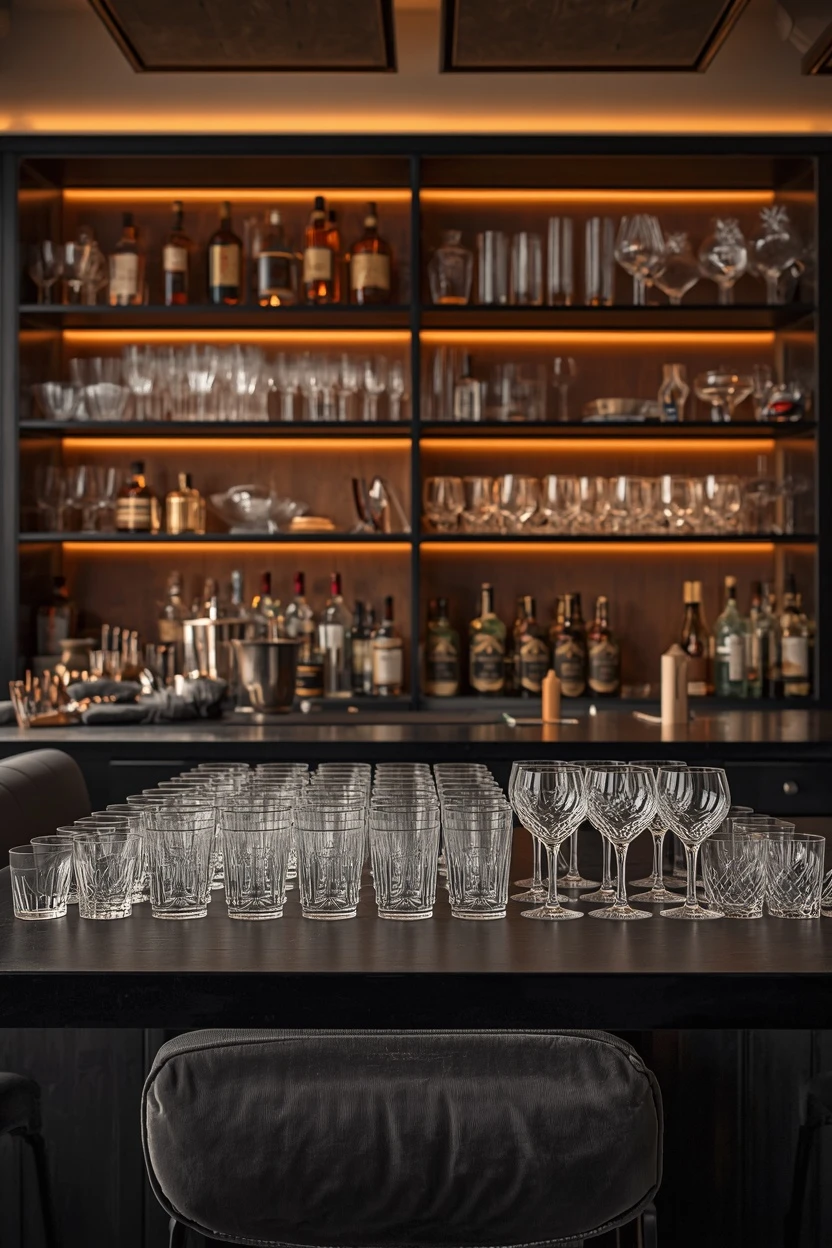
Your glasses are decoration, so buy fewer and better and let them show. A tight edit — coupes, rocks glasses, highballs, and a couple of wine glasses — lined up or hung by the stem reads as intentional; a jumble of mismatched freebies reads as chaos. Keep everyday tumblers in the kitchen and reserve the bar for the good stuff. Curated glassware is one of the cheapest lounge bar decorating ideas that instantly lifts the whole vignette, because repetition of a beautiful shape always looks designed.
8. Show the Bottles, Hide the Clutter
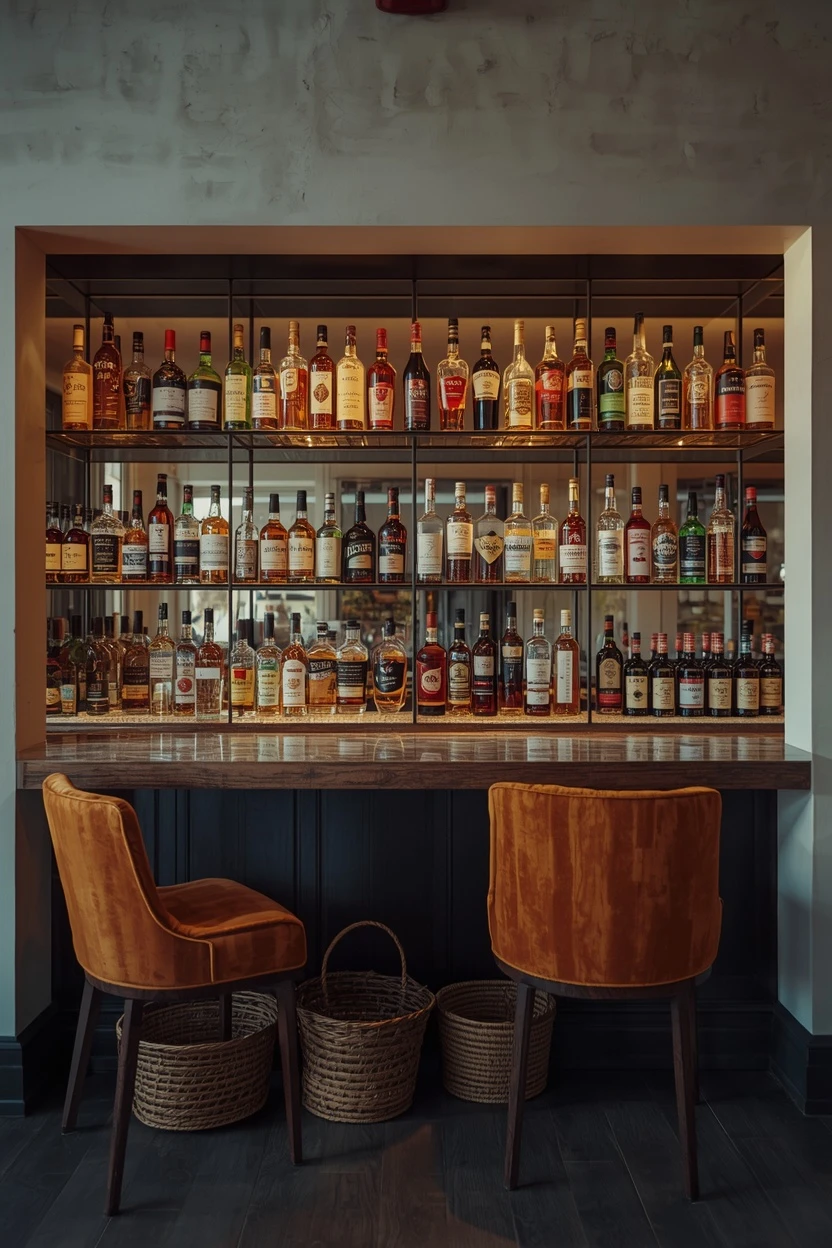
The styling rule I live by: display the beautiful bottles, hide everything functional. Gin, amaro, and a good whisky earn a spot on the open shelf; the plastic mixer bottles, the spare kitchen roll, and the box of straws go behind a door or in a basket. Group standing bottles in odd numbers and vary the heights so the line-up has rhythm. Editing what’s on show is what keeps a home bar looking like a bar and not a recycling station.
9. Commit to a Cabinet or Drinks Armoire
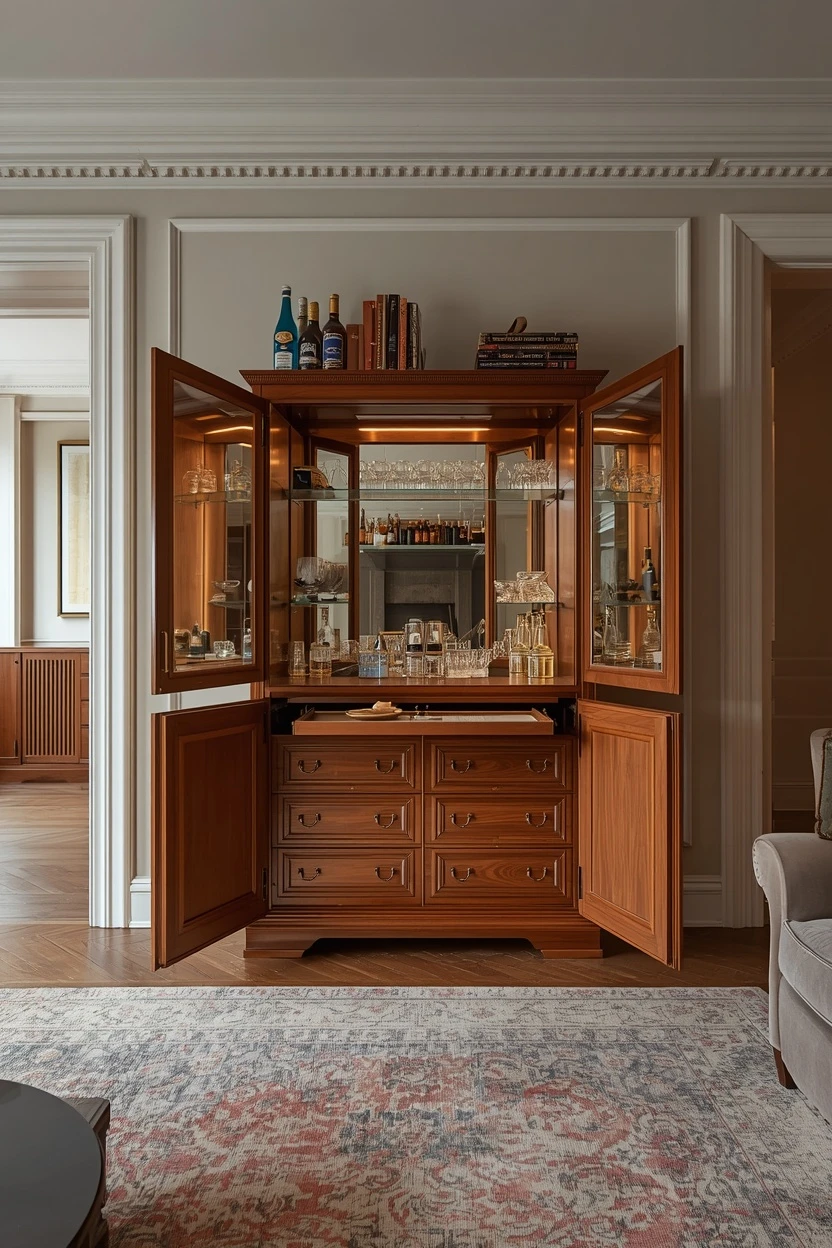
For anyone who wants the bar to disappear when it’s not in use, a proper drinks cabinet or armoire is the elegant answer. Look for one with a drop-front or bi-fold doors, an interior you can line in a bold paper or mirror, and a pull-out shelf at around 90cm for mixing. Closed up, it’s a handsome piece of furniture; open, it’s a fully kitted bar with everything to hand. A cabinet suits open-plan rooms where you’d rather not look at bottles during a quiet weeknight.
10. Zone the Bar with a Rug and a Pendant
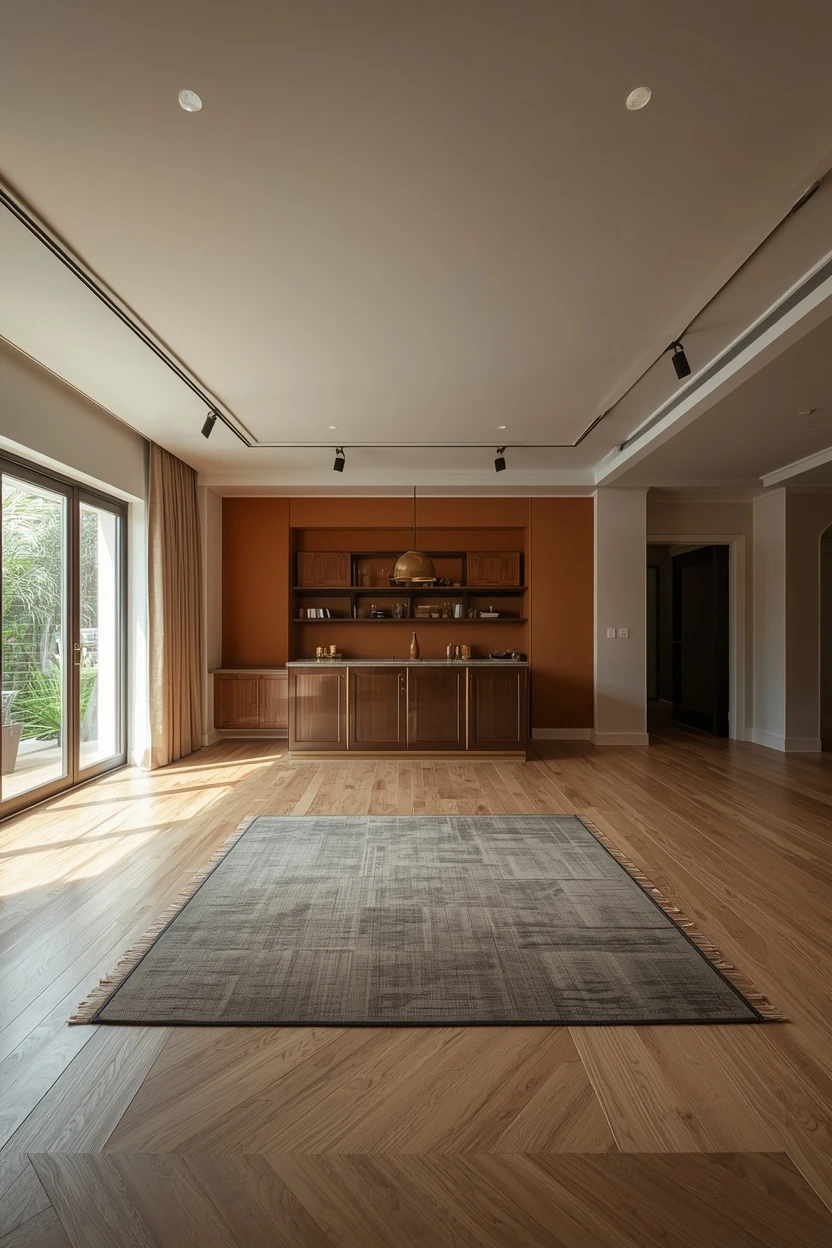
A bar feels like a destination when it’s visually separated from the rest of the lounge. Float a small rug under a cart, drop a pendant or wall light over a console, or simply paint the alcove a deeper shade than the surrounding walls to draw a boundary around the zone. These cues tell the eye “this is the bar” without a single wall being built. Zoning is one of the most underused living room bar ideas, and it’s what makes a corner feel purposeful rather than accidental.
11. Add Seating You’d Actually Perch On
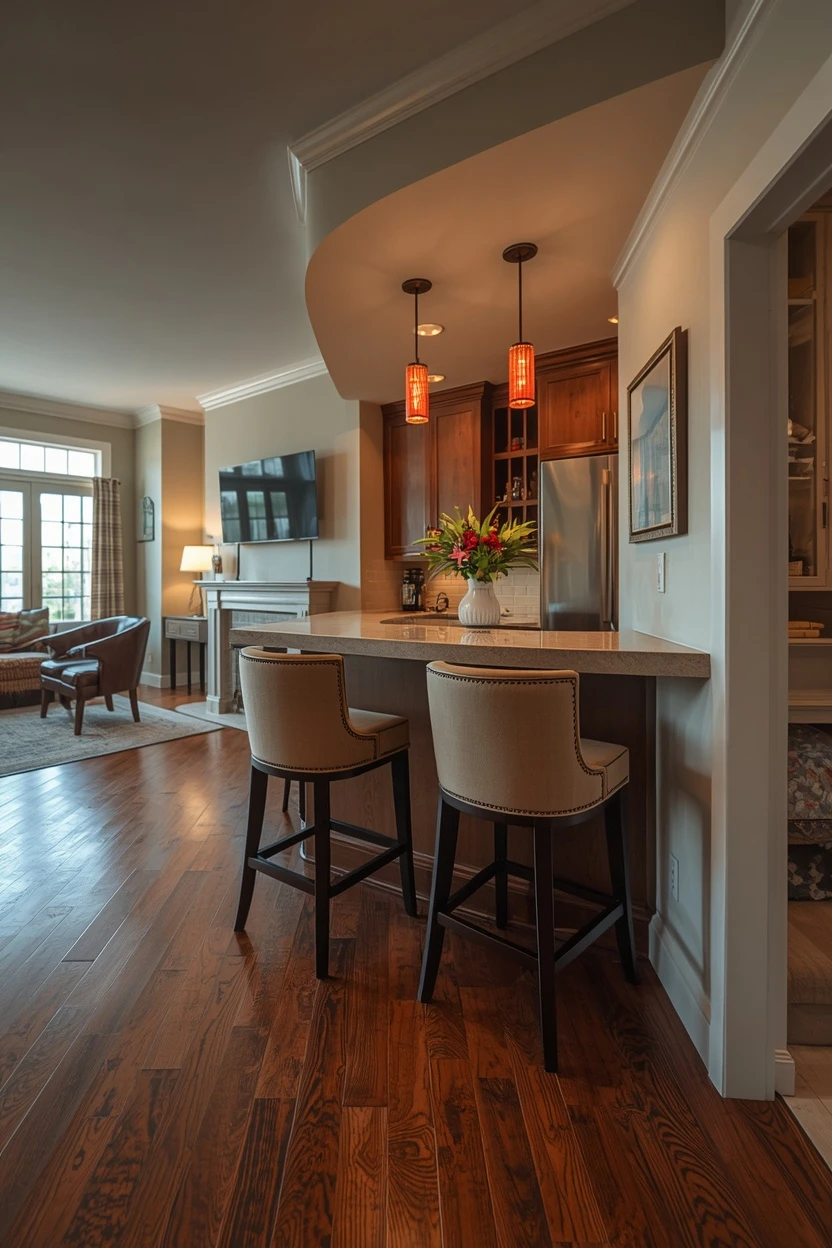
If there’s room, a stool or two turns a bar from a service station into a spot people gather at. A counter needs stools around 65–75cm seat height; a taller bar-height top wants 75–85cm, with roughly 25–30cm between the seat and the underside of the counter so knees fit. Even a single upholstered stool tucked beside a console invites someone to sit and keep the host company. Seating is what tips a bar from decorative to genuinely sociable.
12. Build a Proper Prep and Ice Station
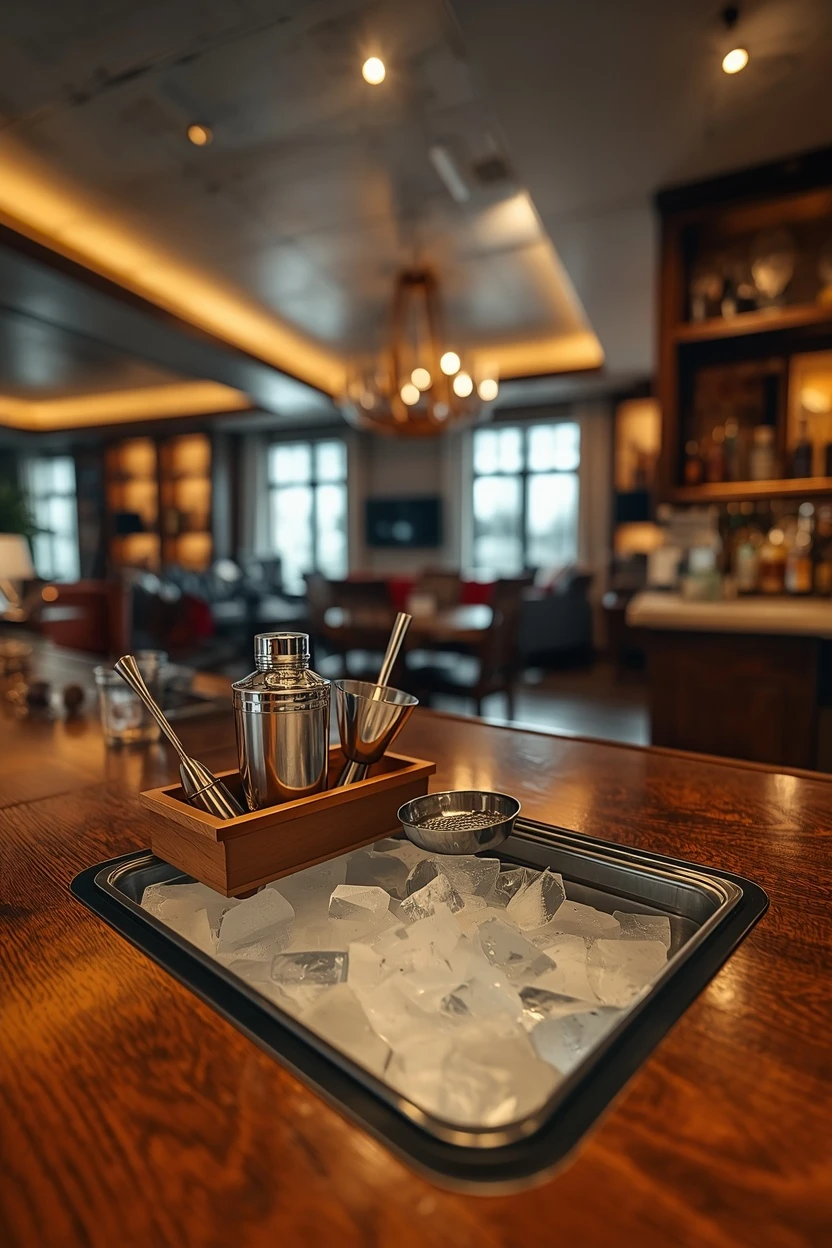
The detail that makes a home bar feel real is a working prep zone. Keep a jigger, a bar spoon, a strainer, and a good shaker in a small caddy or crock, and give ice a home — an insulated bucket with tongs beats trekking to the kitchen mid-round. Leave a clear 40cm of surface for actually building a drink; a bar you can’t work at is just a shelf. Function is decoration here: the tools look handsome and they mean you’ll actually use the bar.
13. Work in a Wine Fridge or Drinks Cooler
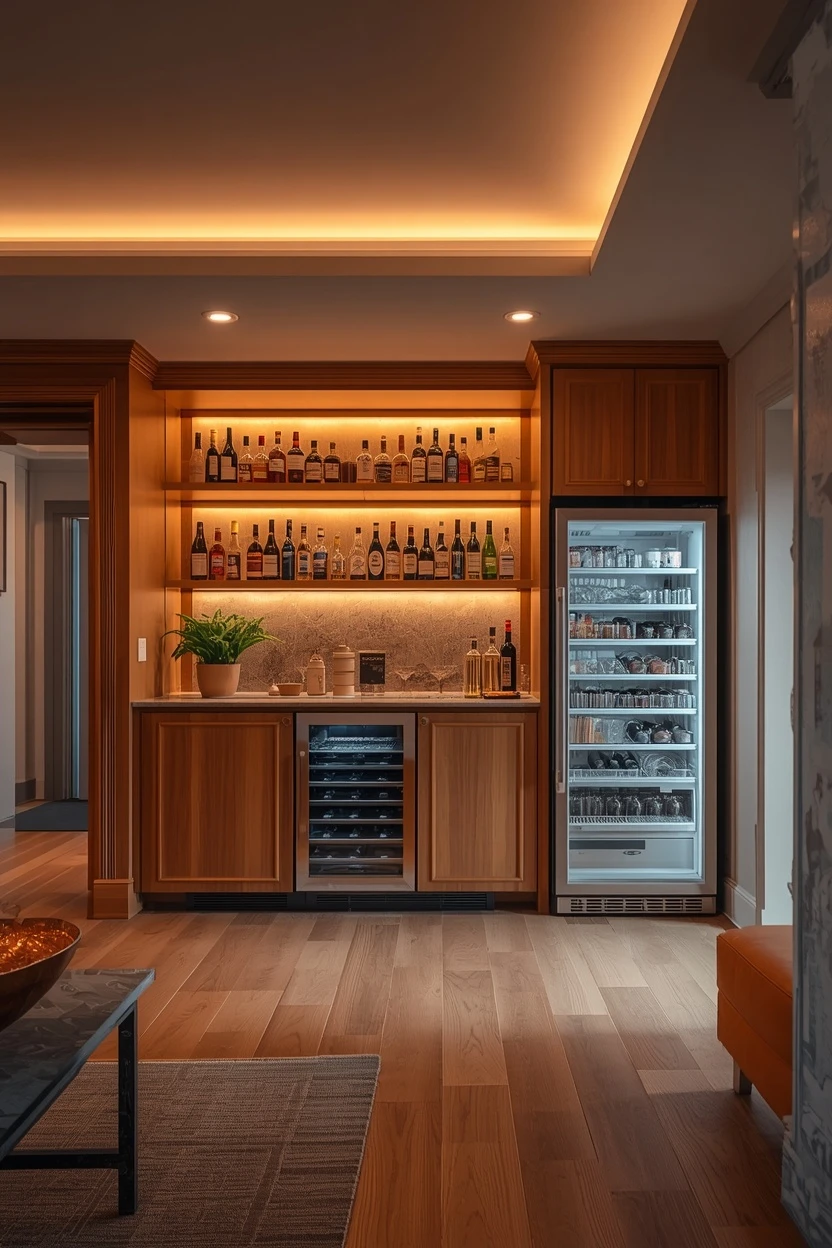
Chilled storage quietly elevates a lounge bar from decorative to properly functional. A slimline undercounter wine cooler (many are just 15cm wide) slots beside a cabinet, or a small glass-fronted drinks fridge can sit on a sturdy lower shelf. Keep it stocked with a few whites, some mixers, and a bottle of fizz so a drink is always ready. It’s a genuine convenience that means guests aren’t waiting on warm wine — and a glass-fronted model doubles as backlit display.
14. Give It Personality with Art and a Little Neon
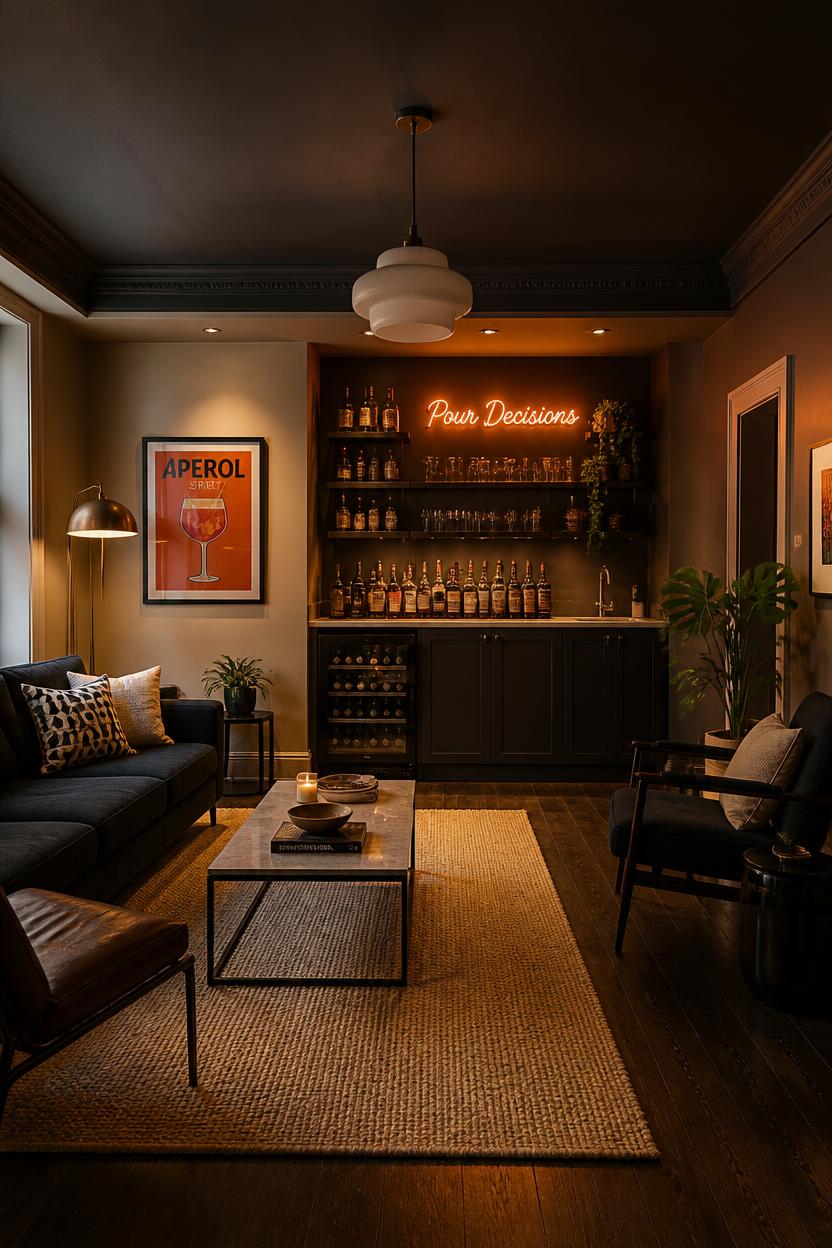
A bar is the one place in the house where you’re allowed to have fun, so let it show your taste. Lean a framed print, hang a small vintage sign, or add a discreet neon or a single bold cocktail poster above the bottles. Keep it to one or two pieces so the wall doesn’t compete with the glassware, and echo a colour from the art in your accessories. Personality is what makes a home bar feel like yours rather than a showroom.
15. Pull It All Together into One Complete Lounge Bar
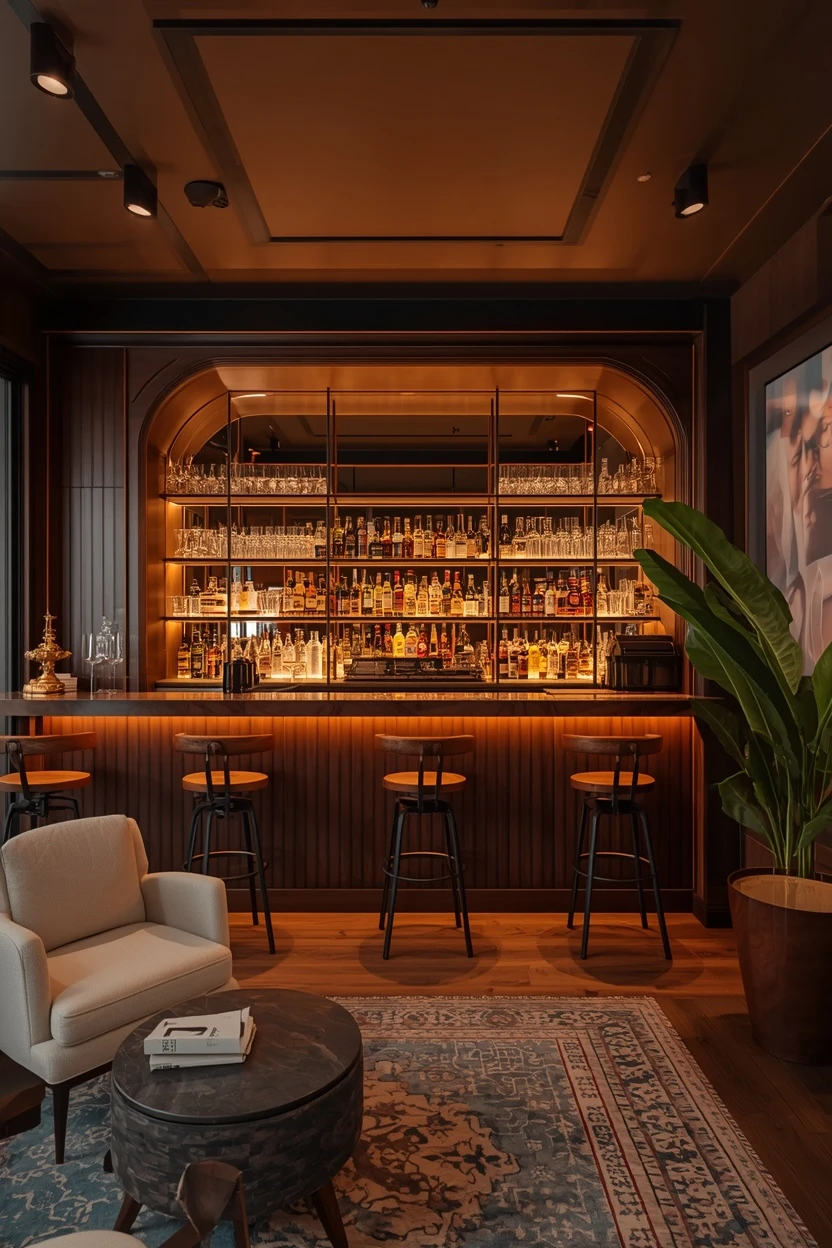
Brought together, a great lounge bar layers a well-chosen footprint, a mirrored or backlit backdrop, curated glassware and bottles, warm light, a working prep zone, and one hit of personality. The principles that make it sing are edit, light, and zone: show less but better, light it warmly from within, and mark the corner out as its own space. Add chilled storage and a stool if you have room, and you have a bar that looks designed and actually works. This is where all the lounge bar decorating ideas above converge into one confident, cohesive corner.
Where I’d Start if I Only Did Three Things
If I could only make three moves, I’d start with lighting, because a strip of warm 2700K LED behind the bottles and a small dimmable lamp transform any shelf into a bar for the price of a takeaway. Second, I’d edit ruthlessly — put the ugly mixers and mismatched glasses away, and let six good bottles and a set of coupes carry the whole display, since restraint is what reads as expensive. Third, I’d zone the corner with a rug, a pendant, or a darker wall colour so the bar feels like a deliberate destination rather than a bookcase that happens to hold gin. Warm light, a tight edit, and a defined zone do more than any expensive cabinet.
Frequently Asked Questions
How do I set up a small bar in my living room?
Start with the smallest format that suits how you entertain: a rolling cart or a console rather than built-in joinery, so you keep your floor space flexible. Position it in a dead corner or against a stretch of wall away from walkways and radiators, and tape out the footprint first to be sure it doesn’t crowd the room. Then layer the three things that make a bar read as a bar — warm 2700K lighting under a shelf or from a small lamp, a mirrored or painted backdrop for depth, and a tight edit of good bottles and glassware on show with the functional clutter hidden behind. Add a tray as a prep surface, a small ice bucket, and a stool if there’s room. These living room bar ideas scale right down: even a 50cm cart, lit and styled well, can feel like a proper little lounge bar without any building work at all.
What do you need for a home lounge bar?
At its core, a lounge bar needs a surface to work on, storage for bottles and glasses, and a few good tools. Practically, that means a cart, console, or cabinet at a comfortable 80–90cm working height; a curated set of glassware (coupes, rocks glasses, and highballs will cover most drinks); and a small kit of a shaker, jigger, bar spoon, and strainer. Give ice a proper home with an insulated bucket and tongs, and keep a stock of your core spirits plus a couple of mixers and a bottle of fizz. From there, the decorating layer — warm lighting, a mirrored backdrop, a tray, and one piece of art — is what turns the functional pieces into a bar with atmosphere. You don’t need everything at once; build it up as you find pieces you love.
How can I make a cheap home bar look expensive?
The look of expense comes almost entirely from light and editing, not spend. Run a warm-white LED strip behind the bottles and add a dimmer so the corner glows rather than glares — this single move makes supermarket spirits look like a hotel bar. Then edit hard: three or five beautiful bottles grouped by height read as luxurious, while a crowded shelf of everything you own reads as cheap, so hide the mixers and mismatched glasses. A panel of antiqued mirror behind the display doubles the glassware and adds instant old-school glamour for very little money. Finish with one good tray and a set of matching glasses, and the whole bar lifts. Restraint, warm light, and a mirror are the three cheapest lounge bar decorating ideas that punch far above their cost.
Where should a bar go in an open-plan living room?
In open-plan spaces, put the bar where it can be a social anchor without blocking flow — often on a length of wall between the living and dining zones, or in an alcove just off the main seating area. You want it close enough to where people gather that pouring a drink keeps you in the conversation, but out of the main traffic route between sofa, kitchen, and door. A cabinet or armoire works especially well here because it closes up and reads as furniture during quiet evenings, then opens into a full bar for guests. Use a rug, a pendant, or a shift in wall colour to mark the bar as its own zone, since open-plan rooms need those visual cues to stop everything blurring into one. That bit of definition is what makes the bar feel intentional rather than parked.
Final Thoughts
A living room bar proves that a small, well-styled corner can carry as much character as an entire room of furniture. These lounge bar decorating ideas all come back to the same handful of principles: choose a footprint that genuinely fits your space, light the zone warmly from within, edit what’s on show so good bottles and glassware do the talking, and mark the corner out as its own destination with a rug, a backdrop, or a pendant. Whether you start with a fifty-quid cart or commit a whole alcove to built-in joinery, the moves are the same — edit, light, and zone — and they scale to any budget. Pick the living room bar ideas that suit how you actually live and entertain, layer them slowly, and you’ll build a bar that looks deliberate, works properly, and makes every gathering feel a little more special.

zarcoyt2025
Khawar Iqbal is the founder and editor of Cozy Homes Hub. He writes about cozy, livable home decor — from small-apartment layouts to room-by-room styling guides — with a focus on warm palettes, layered lighting, and budget-friendly ideas that actually work in real homes.
Related Articles
16 Living Room Decor Ideas That Instantly Elevate Any Space
A living room rarely needs new furniture to feel considerably more elevated — it usually needs a handful of layout and styling…
Read more →
14 Grey Settee Living Room Ideas to Warm Up a Neutral Sofa
A grey settee is the most versatile thing you can put in a living room — and, if you're not careful, the…
Read more →
12 Living Room Arrangement Ideas for a Warm, Balanced Space
There's a difference between a room that's furnished and a room that's arranged. Furnished just means the pieces are in there; arranged…
Read more →