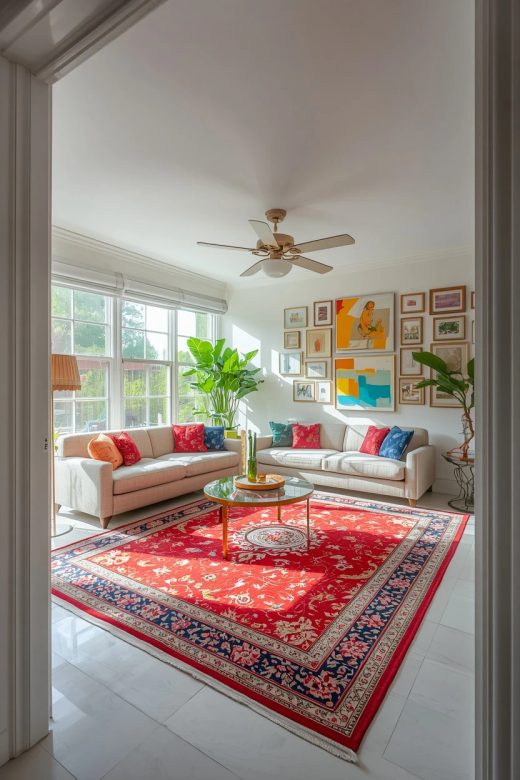
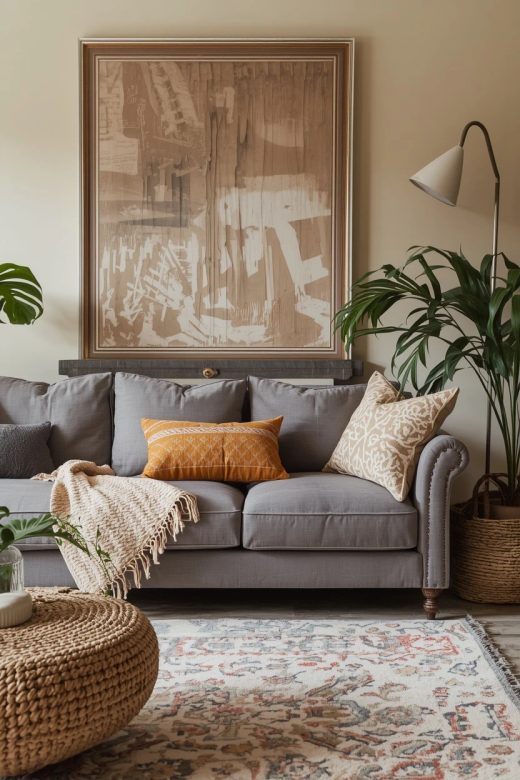
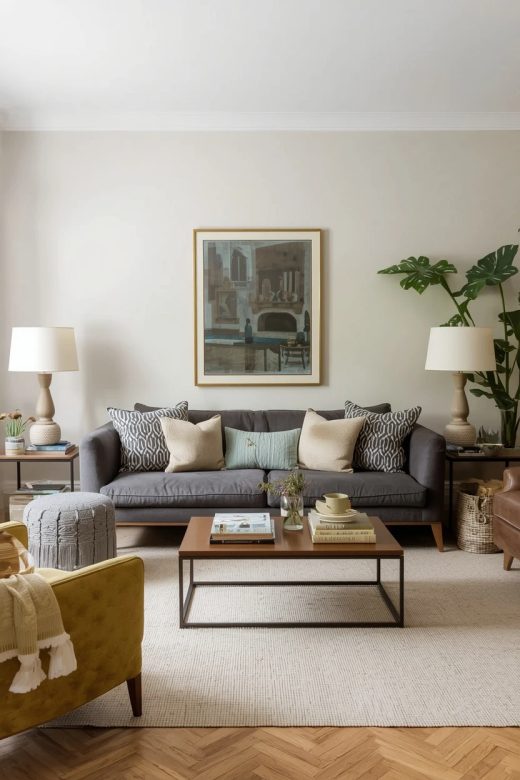
13 Long Lounge Decorating Ideas to Transform a Narrow Living Room
July 5, 2026 · 12 min read
 By Khawar Iqbal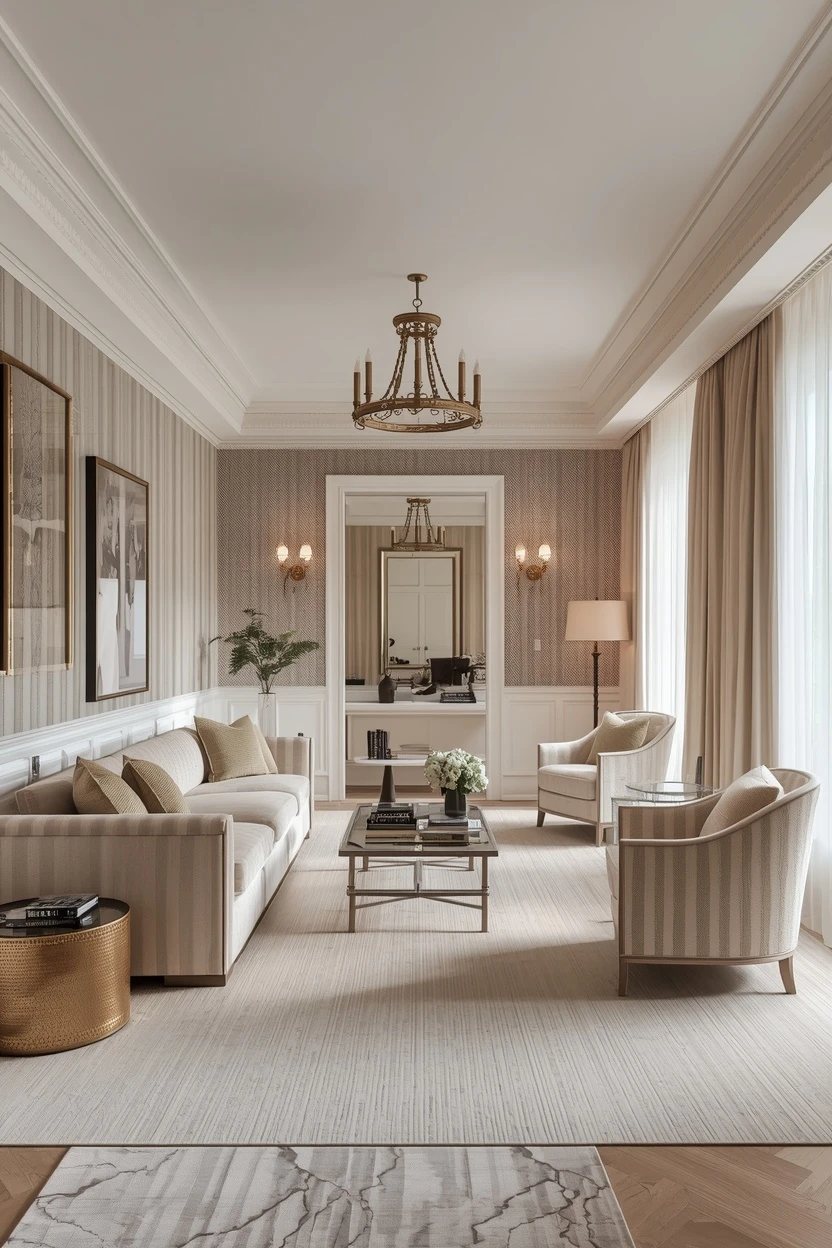
A long, narrow living room is one of the most common and most challenging layouts in British homes, and the instinctive response — lining the walls with furniture and hoping for the best — is almost never the right one. These long lounge decorating ideas address the real problem directly: how to make a long, narrow room read balanced, warm, and purposefully designed rather than like a corridor with sofas.
Each idea below is a practical, distinct design move for a long living room, with notes on proportion and placement so you can apply them to your own dimensions. The long living room rewards thoughtful zoning, deliberate placement of mirrors and verticals, and a willingness to break the length rather than simply furnish it, and the ideas below show exactly what that looks like.
1. Two Separate Seating Groups to Break the Length
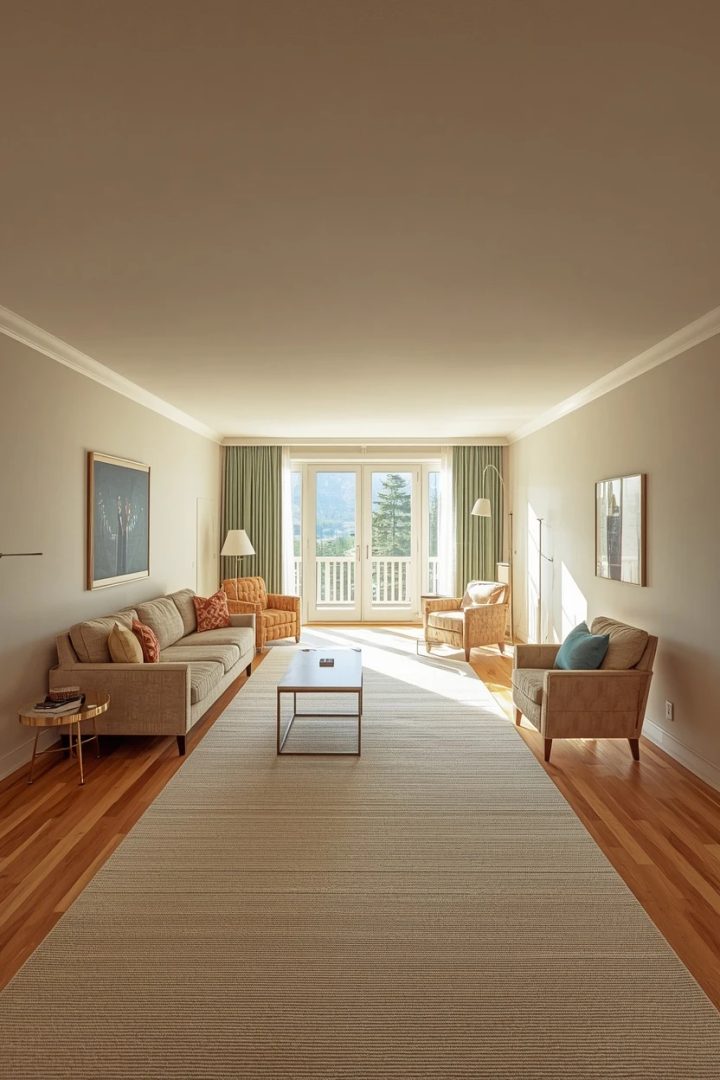
The single most effective of all long-room moves is to create two distinct seating groups in the room rather than one long arrangement, because two groups immediately break the room's length into two readable, human-scaled areas. Position the main seating group — a sofa, coffee table, and armchairs — at one end of the room facing a focal point like a fireplace or TV, and position a second, smaller group — two chairs and a side table — at the other end.
Connect the two zones with a consistent rug, palette, and floor material so they read as part of the same room rather than two separate spaces.
2. Mirrors on the Short End Walls
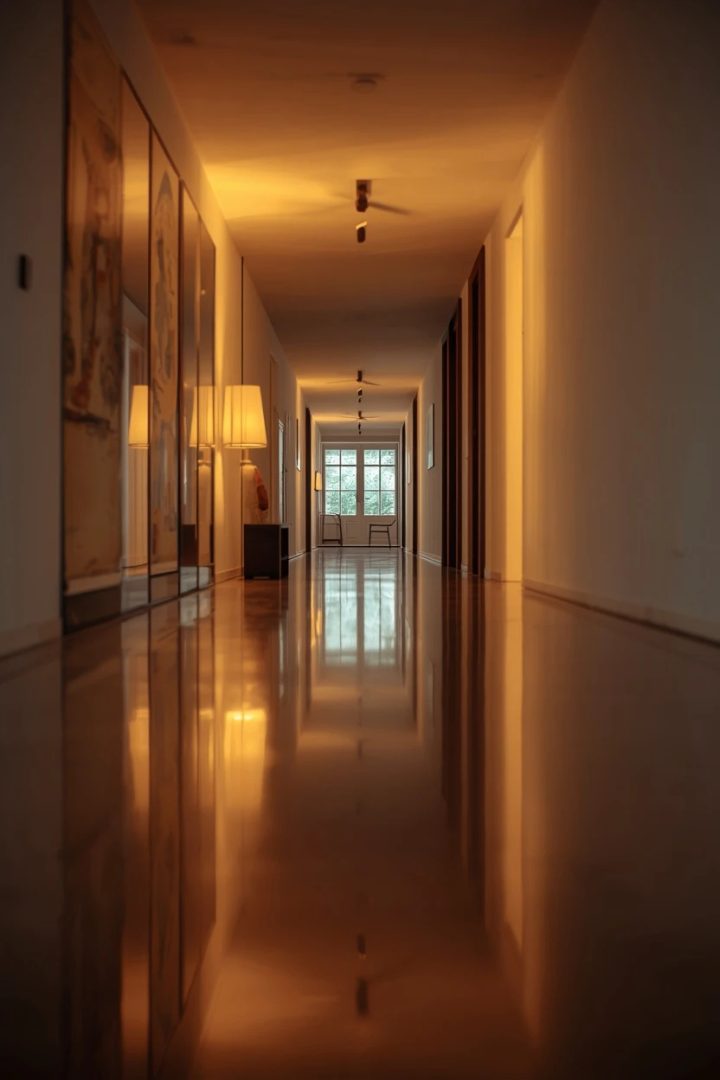
Placing a large mirror — or a mirror-panel arrangement — on one or both short walls of a long room is the most effective visual trick for making a narrow room read wider, the reflection deepening the short dimension and creating the impression of a wall that continues beyond where it actually ends. Choose a mirror that fills most of the short wall rather than a small decorative piece, since a large mirror reads as an architectural feature while a small one simply reads as a wall ornament.
Position it to reflect the most open and light-filled part of the room, which maximises both the illusion of depth and the actual amount of reflected light.
3. Vertical Stripes on the Short Walls
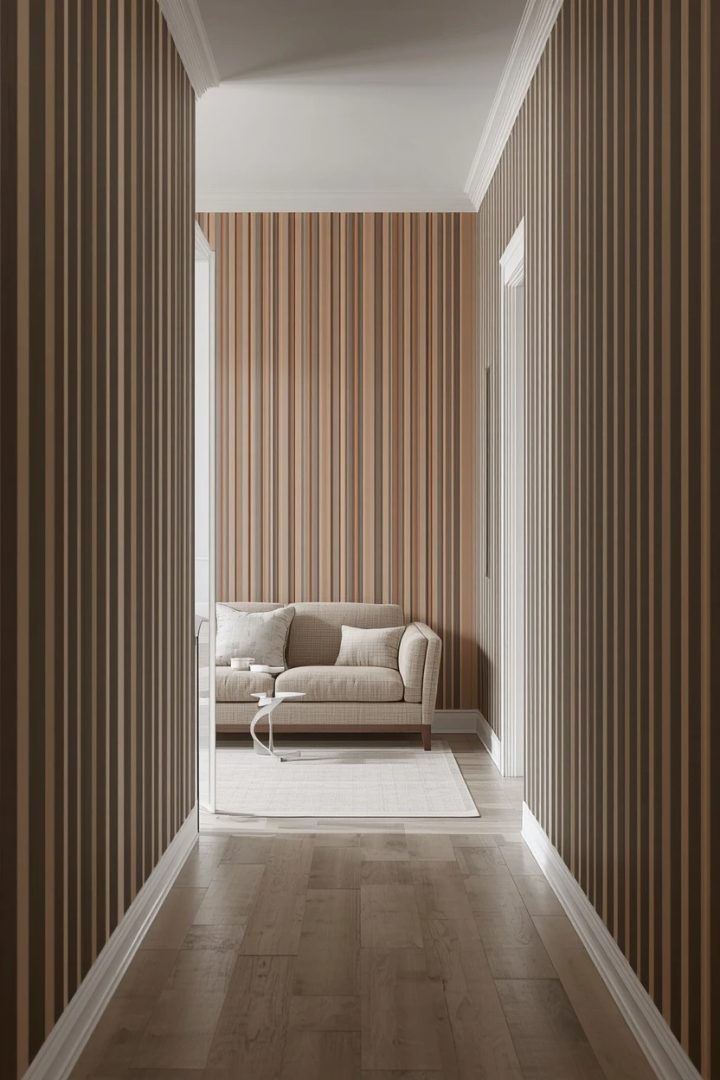
Adding vertical stripes — through wallpaper, panelling, or a painted stripe — on the short end walls of a long room draws the eye upward and makes the ceiling read higher, which indirectly makes the room feel less tunnel-like by improving its proportional balance between height and length. Vertical lines on the short wall specifically — rather than the long walls, where they would simply emphasise the room's length — create a focal point at each end that encourages the eye to stop and rest rather than being drawn straight down the room's full length. Choose a stripe that is bold enough to read from the far end.
4. A Bookcase or Shelving Divider
A freestanding bookcase, a shelving unit open on both sides, or a partial-height divider positioned across the width of the room creates a natural break in a long living room, separating it into two distinct zones without closing either off entirely. An open, double-sided shelving unit or a low bookcase allows light to pass through and maintains a visual connection between the two zones while clearly defining them as separate spaces.
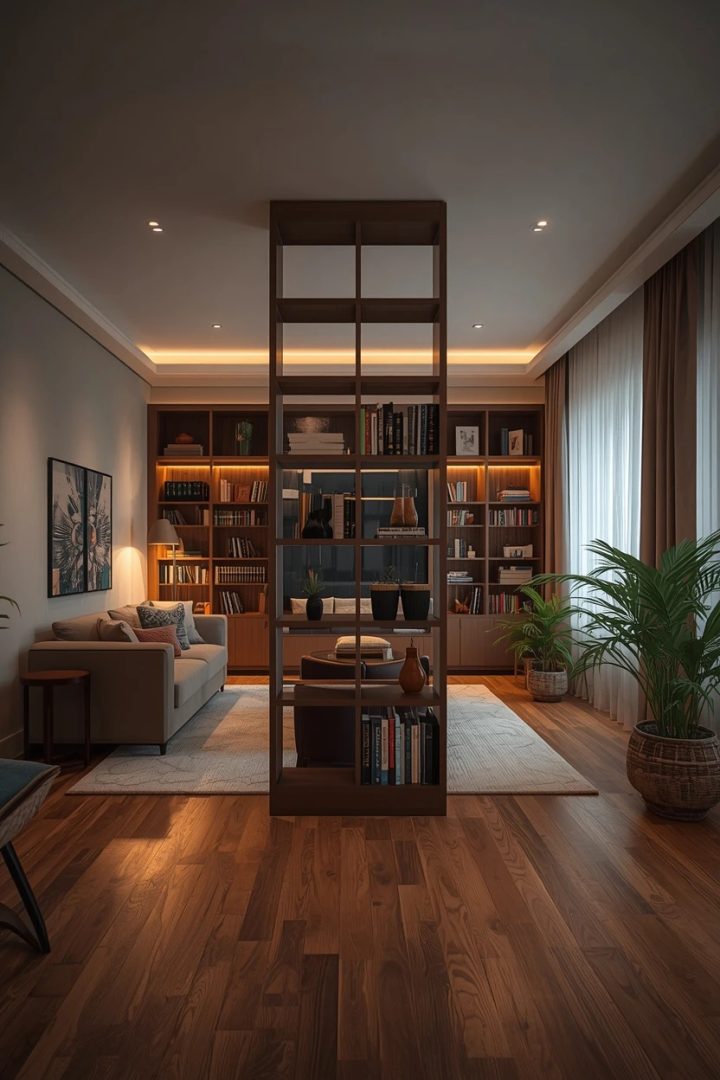
The divider also adds storage and display on both faces, making it a genuinely dual-purpose piece in a room where every item must earn its place.
5. Angled Furniture Placement
Placing a sofa or armchairs at a slight angle to the walls — at 30 to 45 degrees to the long walls — immediately breaks the tunnel-like visual effect of a long room and creates a sense of dynamism and purposeful arrangement rather than furniture simply lined up along the walls. An angled sofa creates a natural conversation corner and leaves interesting floor space in the corner behind it that can be used for a floor lamp, a plant, or a small side table.
Pair the angled sofa with a rug positioned on the same angle and the whole furniture group reads as a deliberate, coherent zone.
6. Colour Blocking to Break the Length
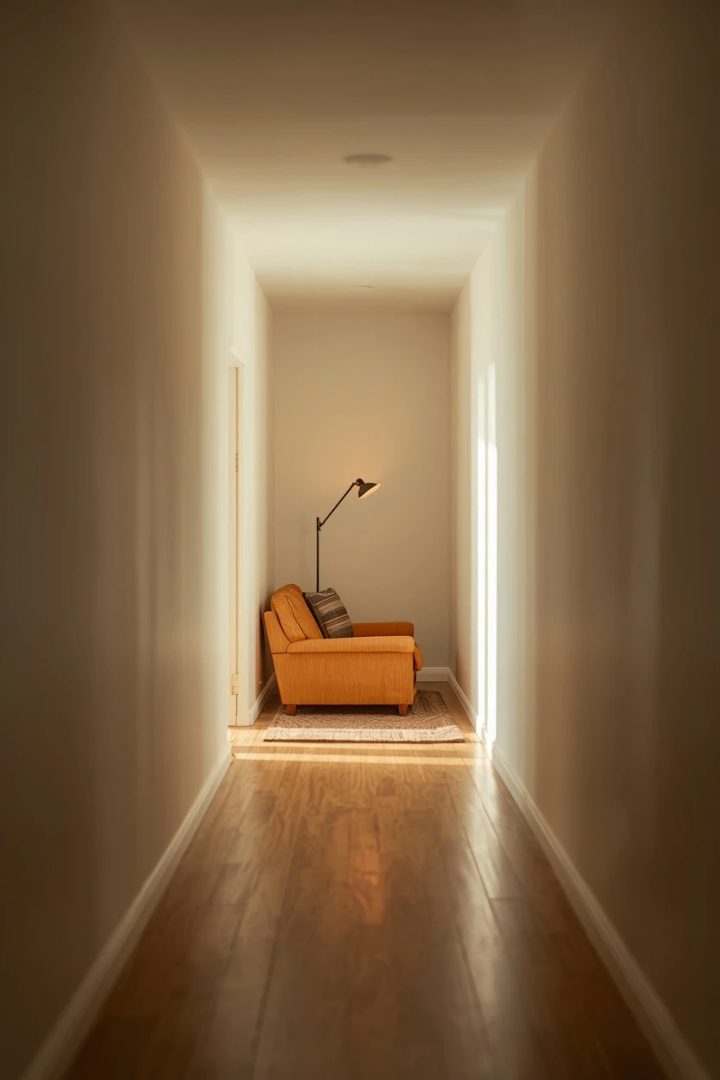
Painting the two short end walls in a deeper or contrasting colour while keeping the long walls in a lighter neutral creates two visual anchors at each end of the room and makes the length read less dominant. The eye is drawn to the colour at each end and reads the room as a series of points rather than a continuous tunnel. Choose a colour for the short walls that relates to the room's palette — a deeper shade of the same neutral, or a confident accent colour that already appears in the cushions or rug — so the colour change reads deliberate rather than arbitrary.
7. A Long Narrow Room Zoned by a Runner Rug
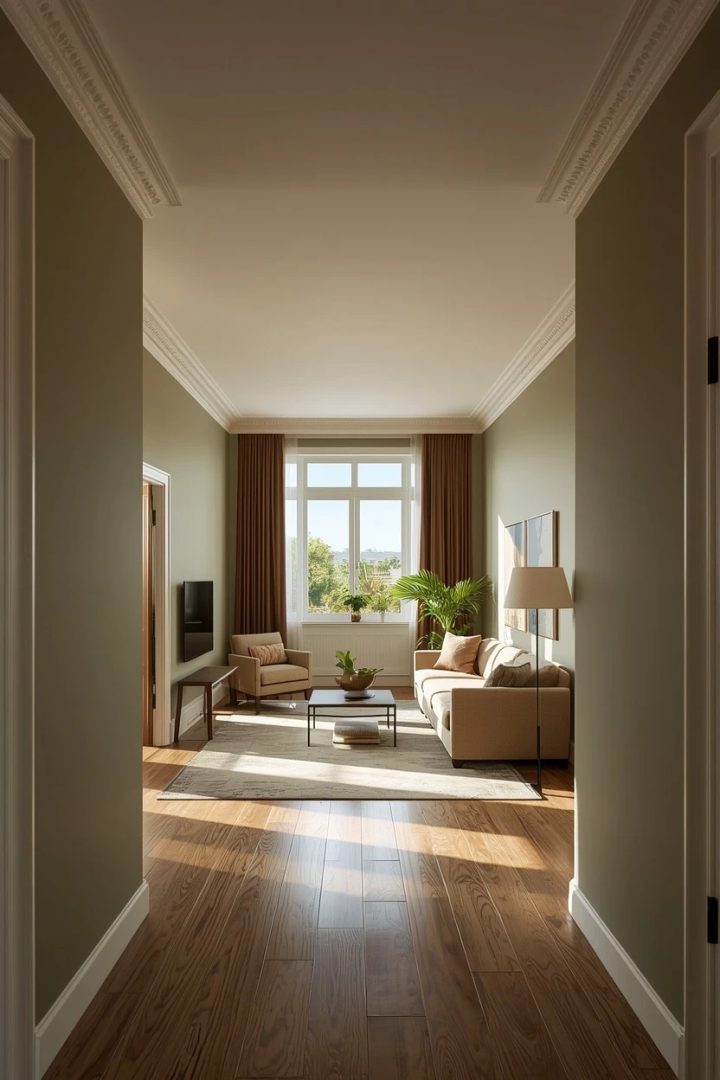
A long runner rug — or two rugs laid end to end — down the length of a long lounge decorating challenge provides continuity and warmth along the floor while allowing the spaces above and beside it to read as distinct zones depending on the furniture. A runner that runs from the main sofa zone to the secondary seating group connects the two areas without merging them, creating a continuous warm line that the eye follows rather than being pulled straight to the far wall.
Choose a pattern or texture with enough interest to read from above and a length that reaches well into both zones.
8. A Sofa Along the Long Wall
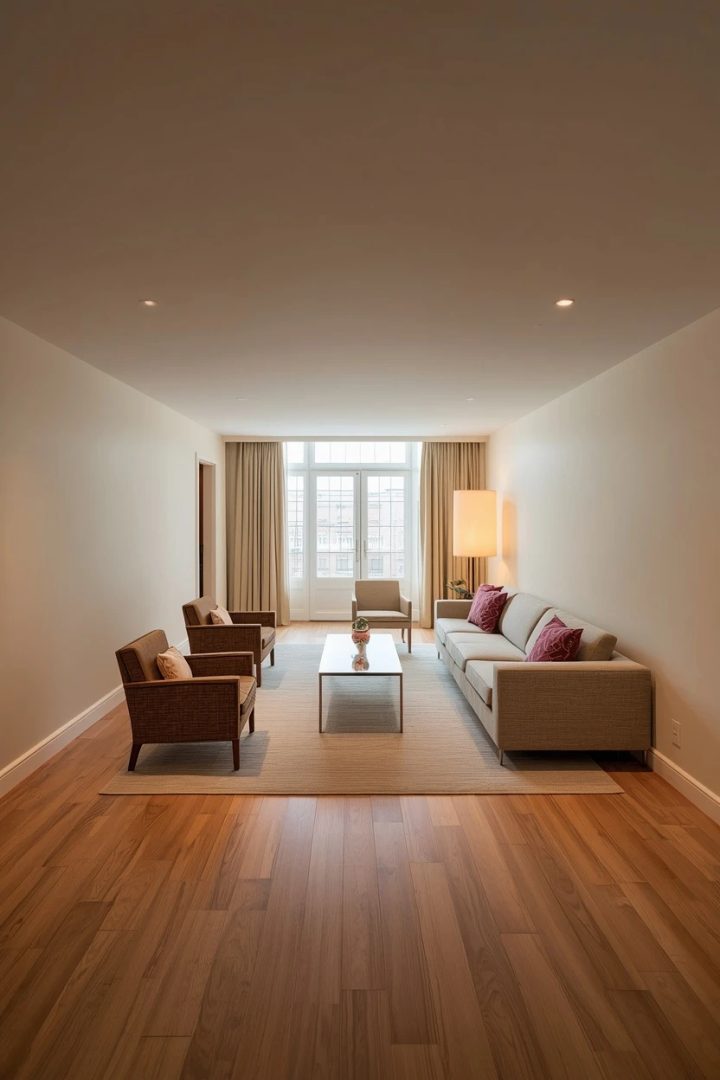
In a very narrow long room, placing a long sofa along one of the long walls and facing it with a pair of armchairs or a window bench on the opposite side creates the most efficient use of the floor width and allows maximum circulation space down the centre. Keep the sofa free of clutter and style it with cushions that relate to the accent colour at each end so the long sofa reads as the connecting piece of the whole room rather than simply a wall treatment.
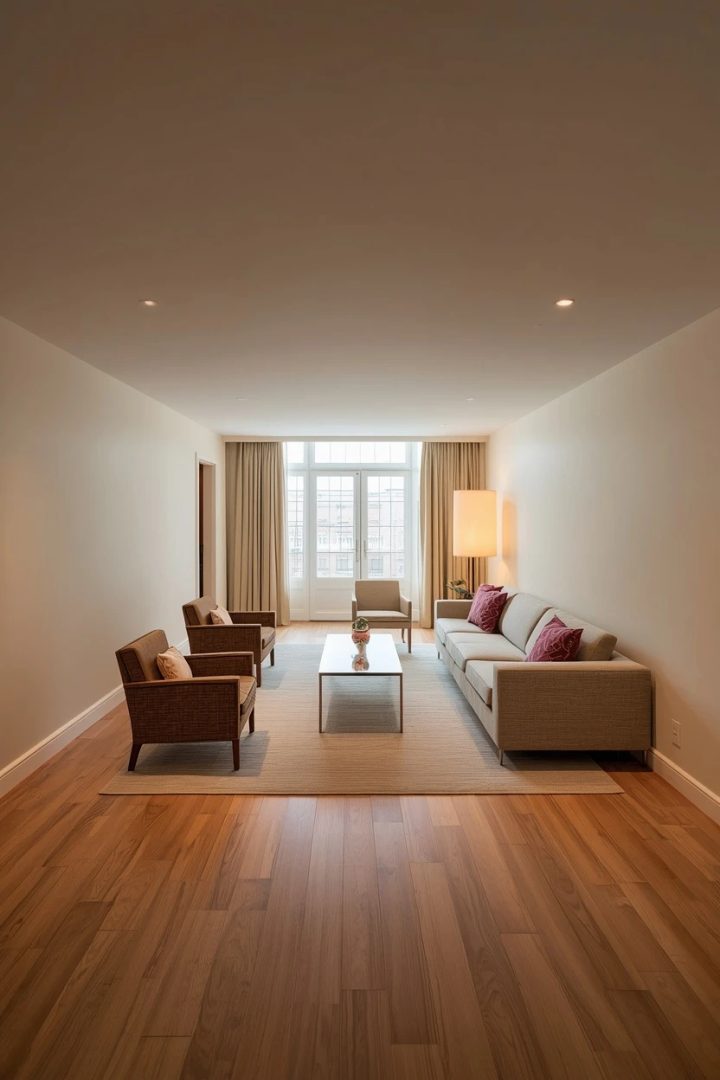
Add a low coffee table rather than a high one so the sightlines across the room stay open.
9. Statement Lighting at Two Points
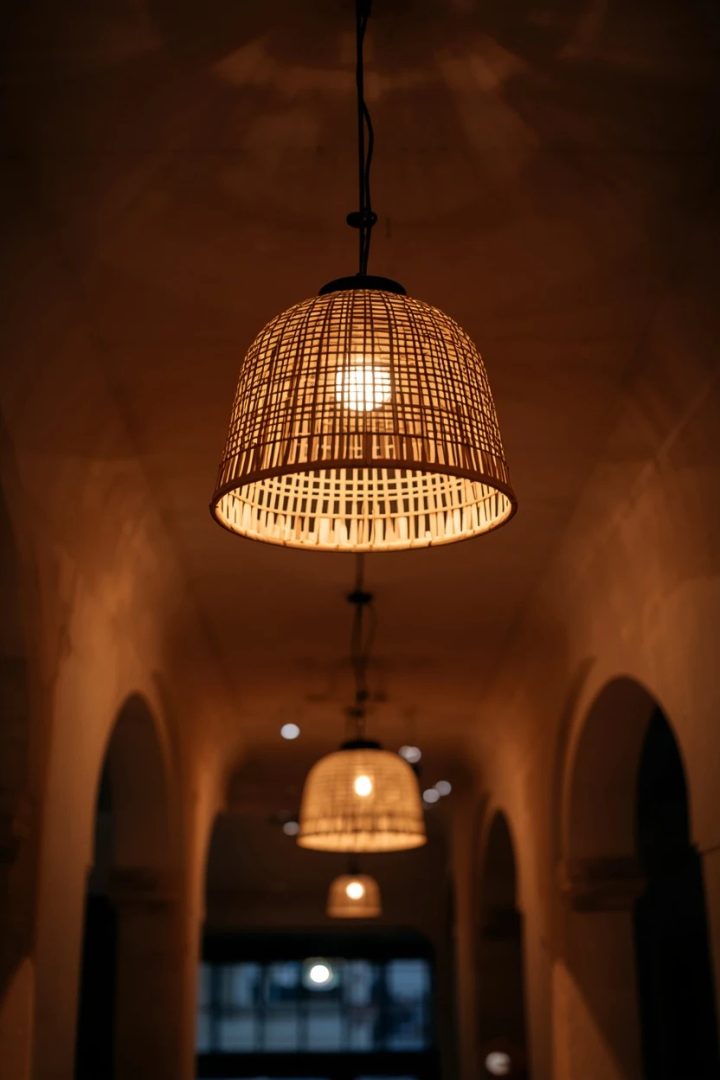
Hanging two pendant lights or placing two statement floor lamps at equal intervals along the length of a long room — one above each seating zone — creates two distinct pools of light that reinforce the room's zoning and stop the room reading as one undifferentiated length. Two pendants above two rugs, each marking a zone, is one of the most architecturally effective of all the long living room ideas because the lighting and the rugs together do the zoning work that furniture alone cannot always achieve.
Choose pendants in the same style but allow one to hang at a different height if the zones are different in purpose.
10. A Fireplace on a Short End Wall
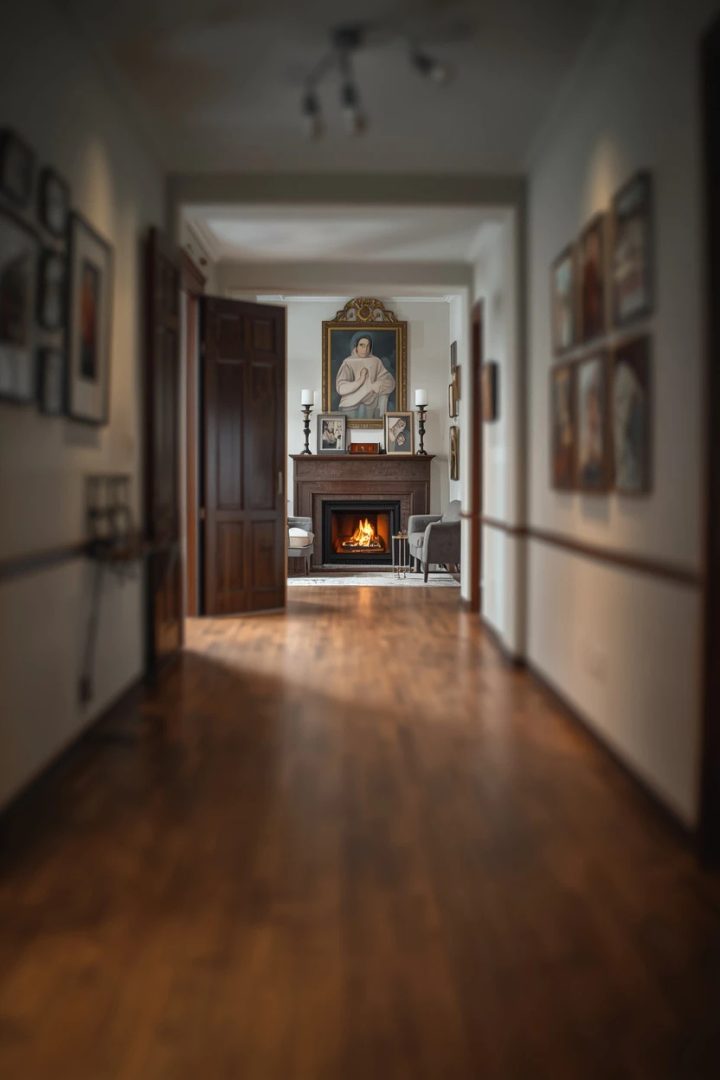
Where the fireplace is on a short end wall, it is already doing the correct job of providing a focal point that draws the eye to one end and anchors the main seating group facing it. The challenge is the other short end wall, which can read as an empty backdrop.
Position a second, smaller piece of furniture — a console table, a pair of chairs, a gallery wall, or a large plant — against the far short wall so it has its own identity and the two ends of the room read as two deliberate destinations rather than one active end and one forgotten end.
11. Integrated Dining at One End
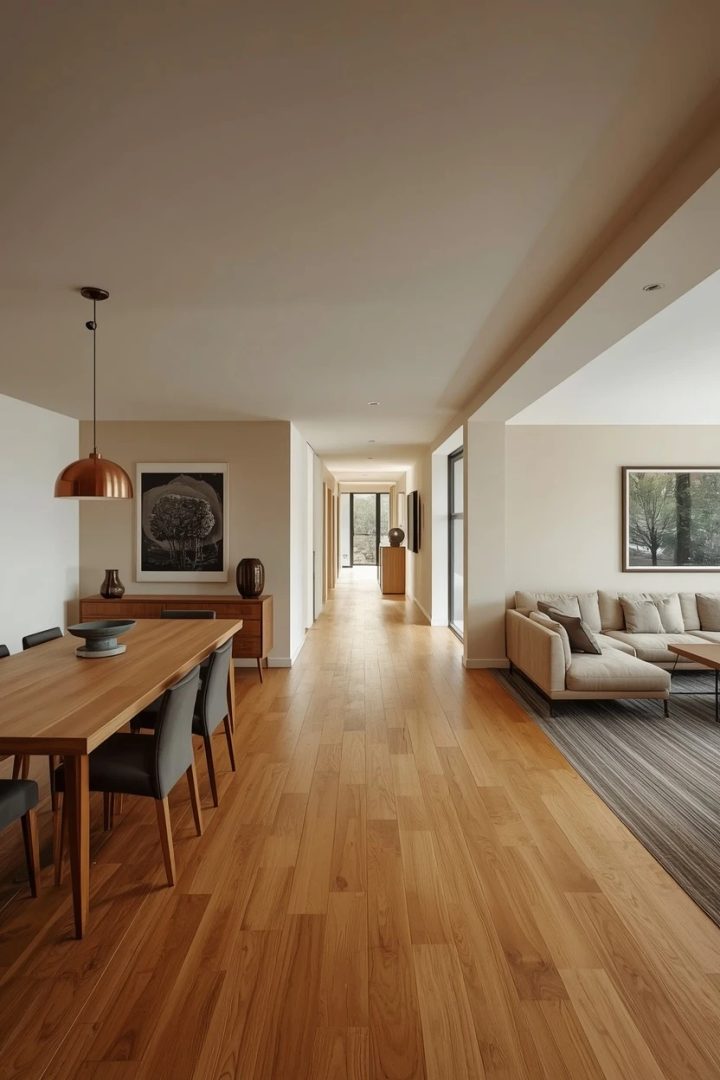
In a long open-plan living and dining room, positioning the dining table at one end and the living seating at the other turns the room's length into an asset rather than a problem, since the two functions give each end a clear purpose and the length provides the comfortable separation between eating and relaxing that a square room cannot easily deliver. Hang a statement pendant directly above the dining table to give it its own light identity, use consistent flooring throughout to connect the two zones visually, and choose furniture in the same palette so the two ends read as parts of the same designed scheme.
12. Bold Floor Tiles or Parquet Across the Width
A floor tile or parquet pattern laid across the width of a long room — in herringbone running across rather than along, or a large square tile with grout lines running short-wall to short-wall — encourages the eye to read the room's width rather than its length, countering the tunnel effect of a room where all the visual lines run toward the far wall. This is most effective with a bold herringbone parquet or a large-format tile where the direction of the pattern is unmistakable.

The floor is the largest surface in the room and a directional pattern on it is one of the most powerful tools for changing how the proportions read.
13. The Complete Long Living Room
Brought together, the best of these approaches tackle the length at every layer: two seating groups zoned by rugs and lighting break the floor plan, mirrors and vertical elements on the short walls address the proportions, a directional floor pattern and angled furniture resist the tunnel effect, and colour blocking at each end creates two anchoring destinations. No single move solves a long room in isolation, but two or three of these combined — two zones, end-wall mirrors, and an angled sofa, for example — transform a space that reads like a corridor into one that reads warm, purposeful, and beautifully designed.
Where I'd Start if I Only Did Three Things
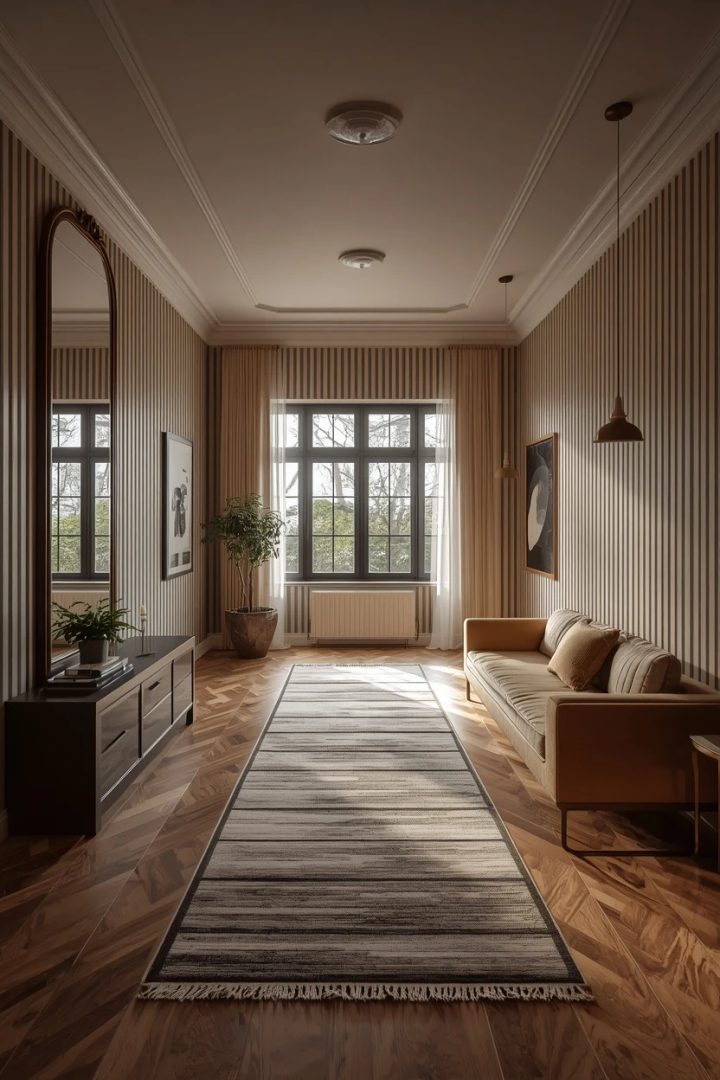
If I only did three things for a long narrow living room, I'd start by creating two distinct seating zones — placing a second pair of chairs or a reading nook at the far end from the main sofa so the room has two destinations rather than one conversation group rattling in a long space. Next, I'd place a large mirror on at least one of the short end walls to create the impression of depth and make the short dimension read wider. Third, I'd lay a long runner rug that reaches into both zones, creating a warm, connected floor thread between the two groupings. Two zones, an end-wall mirror, and a runner rug — those three moves change a narrow room from a problem into a plan.
Frequently Asked Questions
What are the best long lounge decorating ideas for a narrow room?
The best approach addresses the room's length directly rather than ignoring it. Create two seating groups with a clear space between them so the room reads as two zones rather than one unbroken length. Place a large mirror on a short end wall to create visual depth. Use vertical stripes or a strong colour on the short walls to pull the eye toward the ends rather than down the sides. A runner rug connecting the two zones and pendant lights above each zone reinforce the zoning at floor and ceiling level. Colour blocking on the short walls, angled furniture placement, and a directional floor pattern all help resist the tunnel effect.
How do you arrange furniture in a long narrow living room?
Avoid the two most common mistakes: pushing all furniture against the long walls, which creates a corridor down the middle, and cramming everything into one zone, which leaves the rest of the room empty and useless. Instead, float the main sofa group in the first third or half of the room facing a focal point like a fireplace or TV, and create a second, smaller seating group or reading zone in the remaining space. Angle one group slightly if the room is very narrow. Use a large rug to anchor each group and create visual boundaries. The goal is two purposeful destinations that turn the room's length into a sequence of spaces rather than an undifferentiated tunnel.
How do I make a long living room look wider?
Mirrors on the short end walls create the strongest widening illusion by reflecting depth across the room's shorter dimension. Keeping the long walls in a light, pale tone prevents them from closing in. Avoid patterns or furniture that run along the length of the room, since these emphasise the tunnel quality. Instead, lay flooring across the width in herringbone or a pattern with strong transverse lines. Place curtains on the long wall windows at full ceiling height so the vertical emphasis helps the room read taller and therefore less tunnel-like. A bold colour or focal point at each short end pulls the eye toward the ends and creates a sense of width.
What size sofa works best in a long narrow living room?
In a long narrow living room, avoid a sofa so wide that it leaves very little circulation space on either side, since this creates the most extreme corridor effect. A two-seat sofa or a compact three-seater with clear walkways on both sides reads better proportionally than a sprawling four-seater that reduces the floor width to a narrow path. If the room is wide enough for a sectional or L-shape, angle it across the corner so it takes width from both directions rather than running straight along one wall. Pair any sofa with a rug sized to include the front legs and at least one armchair so the seating group reads as a zone rather than a single piece of furniture.
Final Thoughts
A long, narrow living room is a design challenge that becomes a genuine opportunity once you understand what it needs: deliberate zoning, visual tricks on the short walls, and a willingness to break the length into purposeful areas rather than simply furnishing it as one continuous room. These long lounge decorating ideas give you the moves to do exactly that — two seating groups, end-wall mirrors, vertical emphasis, a runner rug, directional flooring, and a focal point at each end. Apply two or three of these consistently and the long living room stops being a problem and becomes one of the most interesting and characterful rooms in the home.