18 Long Lounge Decorating Ideas to Balance a Narrow Living Room
 By zarcoyt2025
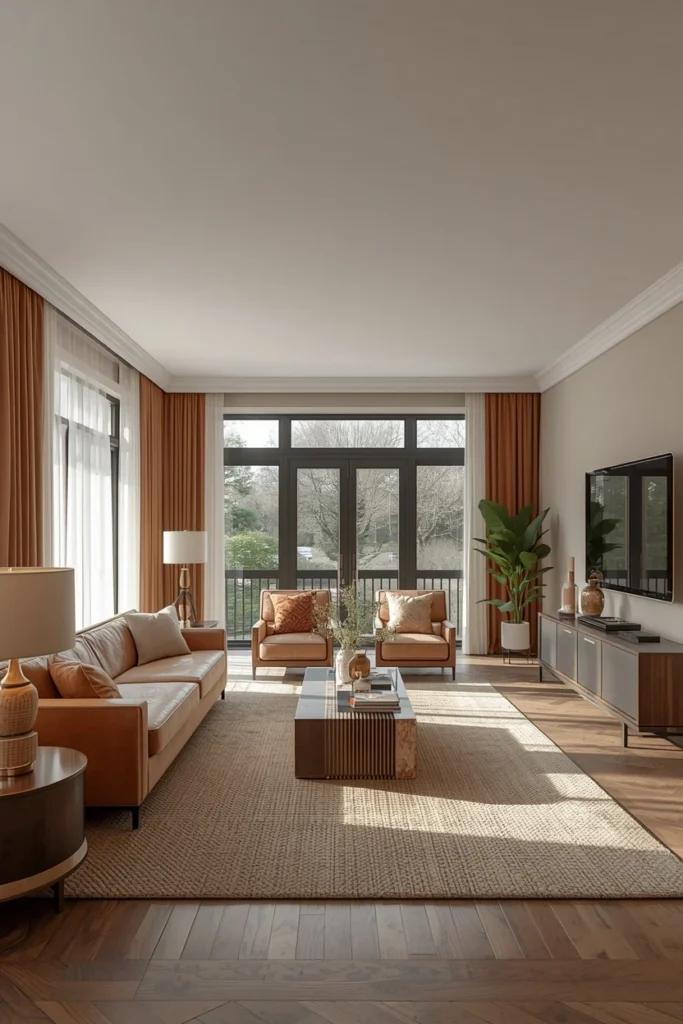
Table of Contents
- 1. The Two-Zone Long Living Room
- 2. The Sofa-Across-the-Width Long Living Room
- 3. The Avoid-the-Wall-Lining Long Living Room
- 4. The Wide Rug Long Living Room
- 5. The Symmetrical Balance Long Living Room
- 6. The Focal-Point-on-the-Long-Wall Living Room
- 7. The Dining Zone Long Living Room
- 8. The Visual-Width Color Long Living Room
- 9. The Reading Nook Long Living Room
- 10. The Console-Divider Long Living Room
- 11. The Layered Lighting Long Living Room
- 12. The Crosswise Seating Group Long Living Room
- 13. The Mirror-Widening Long Living Room
- 14. The Statement at the Far End Long Living Room
- 15. The Multi-Functional Long Living Room
- 16. The Cozy Width-Building Long Living Room
- 17. The Banquette-End Long Living Room
- 18. The Complete Long Living Room
- Where I’d Start if I Only Did Three Things
- FAQs
- Final Thoughts
A long, narrow lounge is one of the trickiest rooms to decorate — left unplanned it can feel like a corridor, with furniture lined awkwardly along the walls and a tunnel-like sense of length. But with a few clever decisions the very same proportions become an asset, and the secret lies in breaking up the length, creating zones, and using furniture and color to visually widen the space.
Each of these 18 long lounge decorating ideas is a complete approach you can apply, a way of balancing a narrow living room built around one clear principle rather than a single piece of furniture. Find the version that suits your space and how you live, and use it as a blueprint for a long living room that feels balanced, broken-up, and beautifully proportioned — a room that turns its awkward length into an elegant, purposeful advantage.
1. The Two-Zone Long Living Room
The most effective way to tackle a long lounge is to divide it into two zones — typically a main seating area and a second function like a dining spot, reading corner, or office. Use rugs, furniture, and lighting to define each zone so the length reads as two purposeful spaces rather than one tunnel. The zoning transforms the proportions. It suits any long room, since splitting a narrow living room into two defined areas is the single best way to break up the length and turn awkward proportions into a balanced advantage.
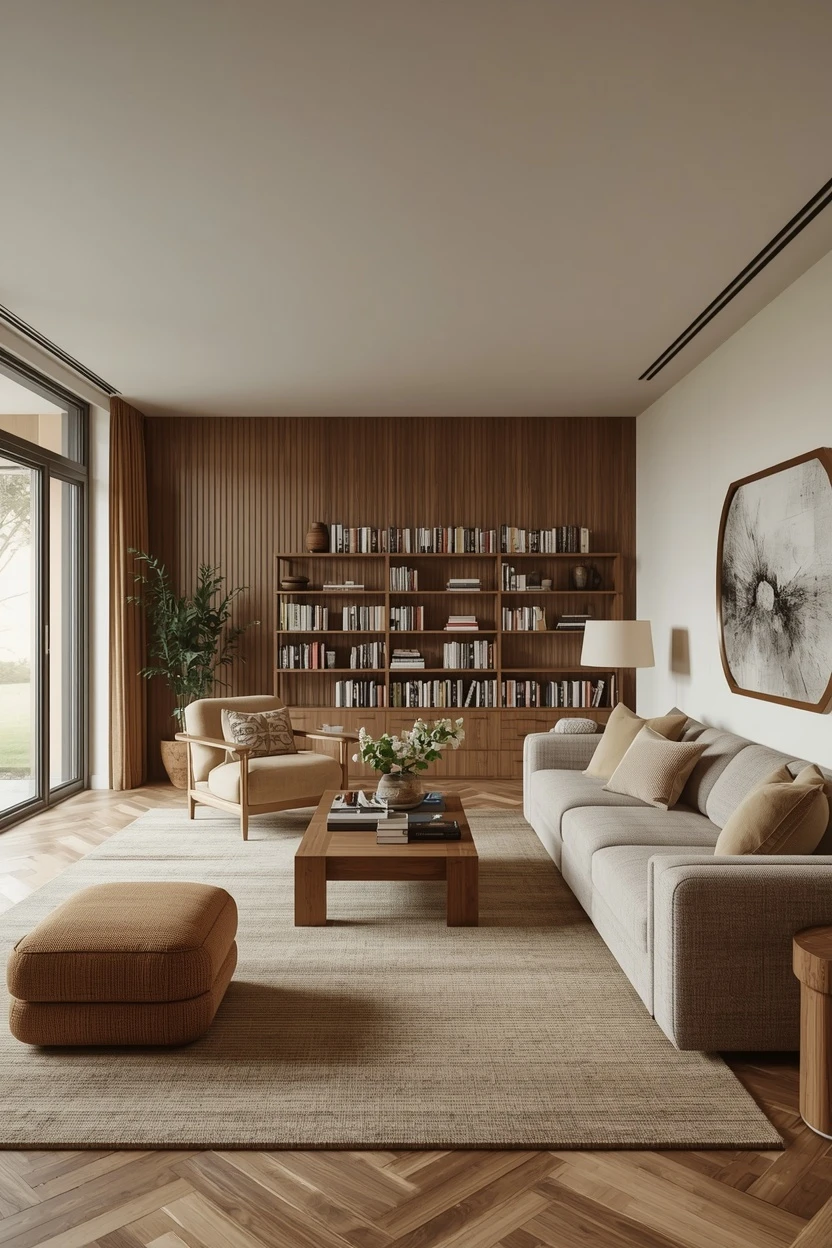
2. The Sofa-Across-the-Width Long Living Room
Placing a sofa across the width of a long lounge — rather than along its length — visually breaks the tunnel and helps define a zone. A sofa set perpendicular to the long walls interrupts the corridor feel and creates a natural boundary. Anchor it with a rug to mark the seating zone. The crosswise placement balances the room. It suits narrow living rooms, since positioning a sofa across the width is a simple, powerful way to break up the length and stop a long room feeling like a passage.
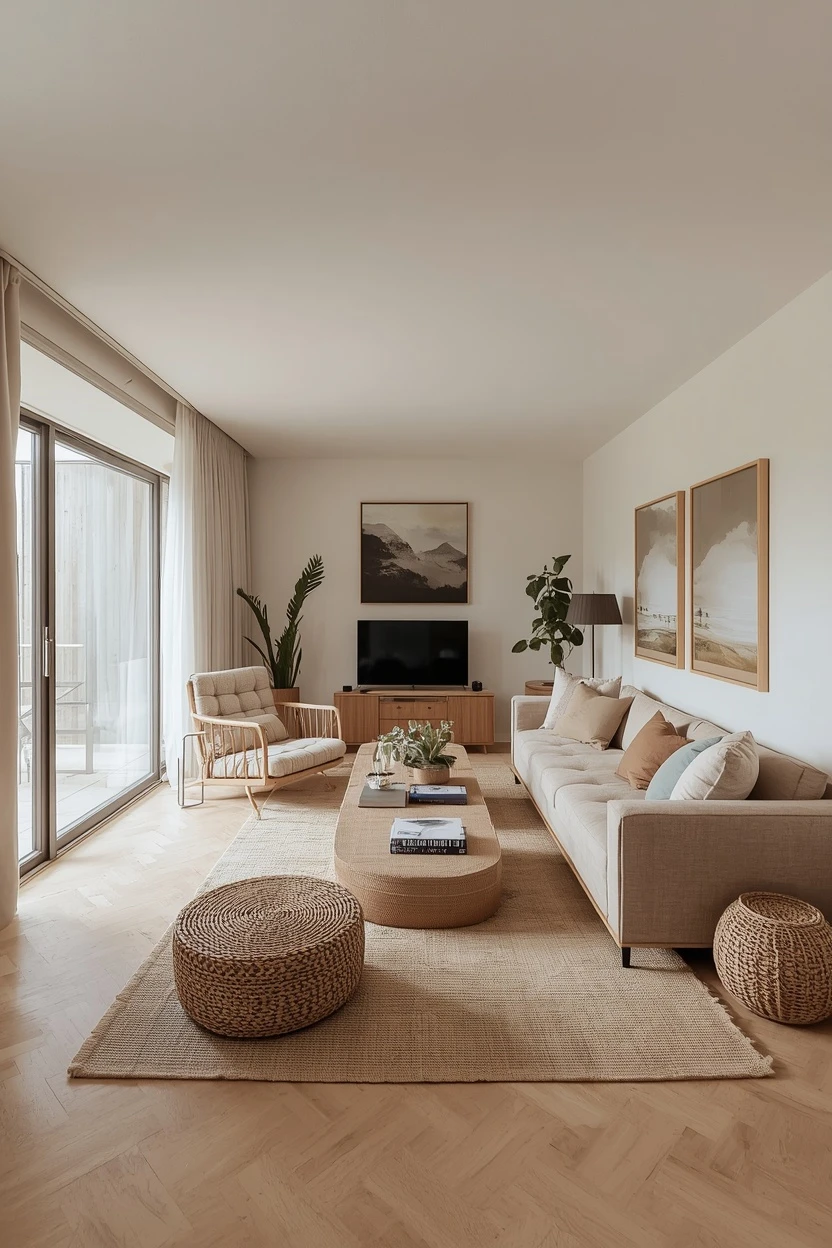
3. The Avoid-the-Wall-Lining Long Living Room
The instinct to push all the furniture against the long walls exaggerates the narrowness, so floating furniture into the space and angling or grouping it instead creates balance. Pull seating into inward-facing groups and use pieces to break up the long expanse rather than lining it. The arrangement defeats the corridor effect. It suits any long room, since avoiding the wall-hugging layout is one of the most important moves for making a narrow living room feel like a room rather than a hallway.
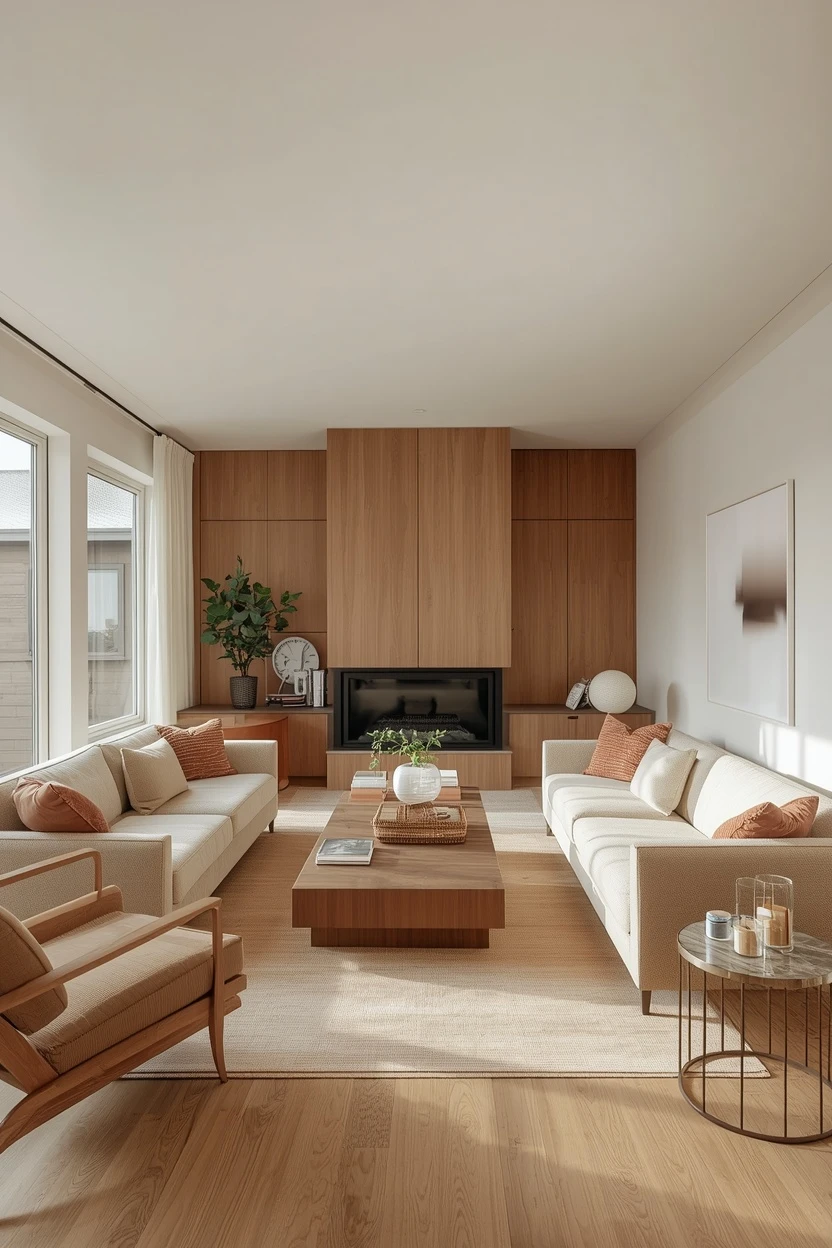
4. The Wide Rug Long Living Room
A rug that runs across the width — or a couple of rugs marking separate zones — visually widens a long lounge and breaks up the length of the floor. Choose a rug oriented to emphasize width rather than a long runner that reinforces the tunnel. The rug balances the proportions underfoot. It suits narrow rooms, since a well-chosen, width-oriented rug is a simple way to counter the length of a long living room and define its zones with warmth.
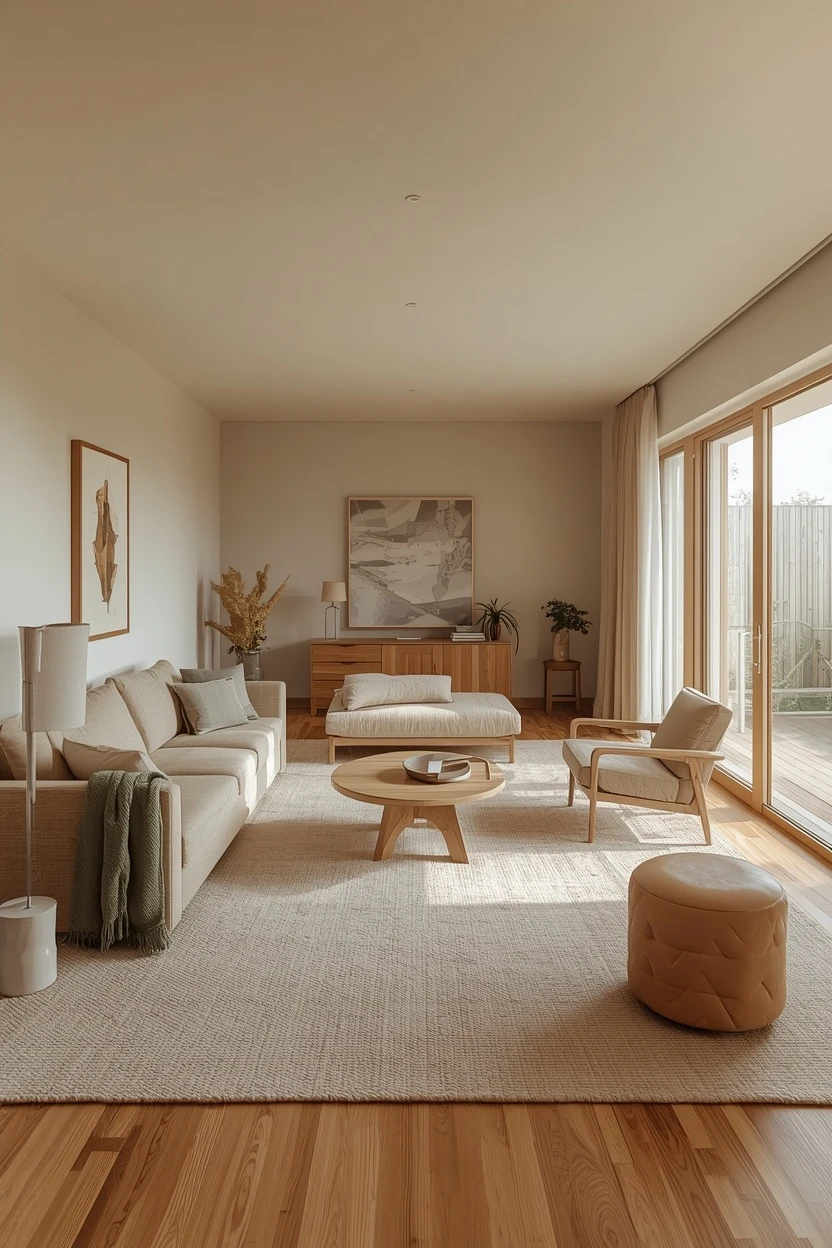
5. The Symmetrical Balance Long Living Room
Using symmetry across the width — paired chairs, matched lamps, or balanced furniture on either side — draws the eye across rather than down the long room. The crosswise symmetry counters the length and brings calm order. Center the arrangement on a focal point on a long wall. The balance widens the feel. It suits any long lounge, since symmetrical, width-emphasizing arrangements help a narrow living room feel more balanced and less like a one-directional corridor.
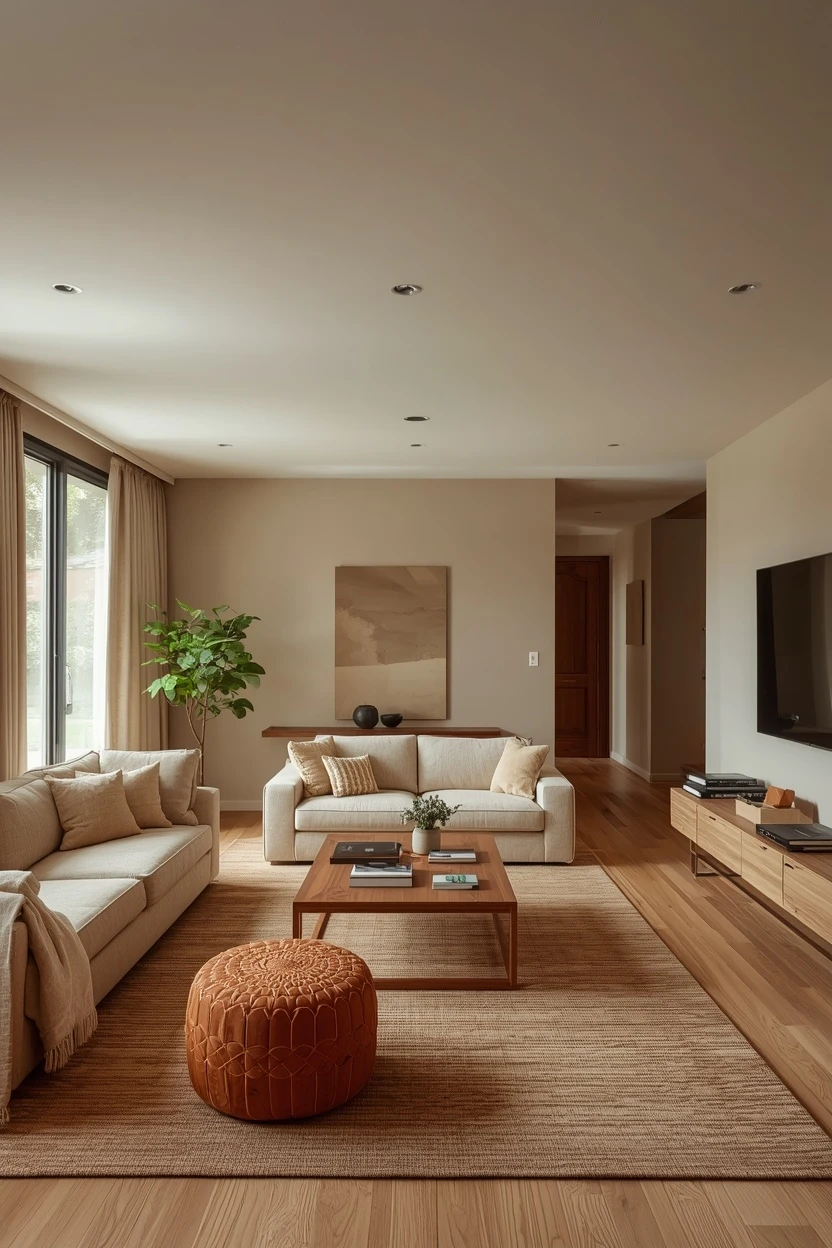
6. The Focal-Point-on-the-Long-Wall Living Room
Creating a strong focal point on one of the long walls — a fireplace, media unit, large artwork, or feature — draws the eye sideways and breaks the length. Arrange the main seating to face this long-wall focal point so attention moves across the room. The focal point reorients the space. It suits narrow rooms, since a bold feature on a long wall is an effective way to counter the tunnel effect and give a long living room a balanced, sideways sense of direction.
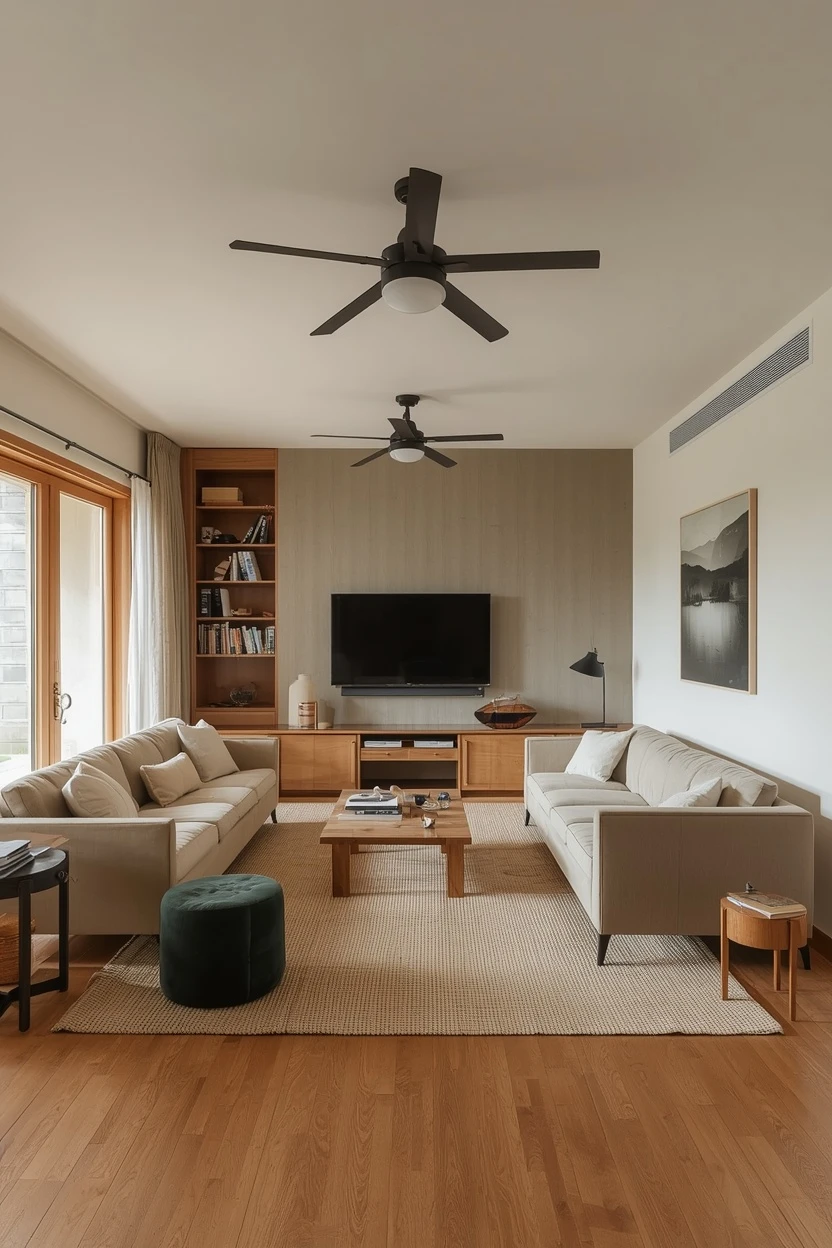
7. The Dining Zone Long Living Room
A long lounge often has room for a dining zone at one end, which uses the length purposefully and naturally divides the room. Place a table and chairs at one end and the seating at the other, marking each with a rug. The two functions balance the proportions. It suits long rooms that need to dine, since adding a dining zone at one end is a practical, attractive way to break up a narrow living room and make full, balanced use of its length.
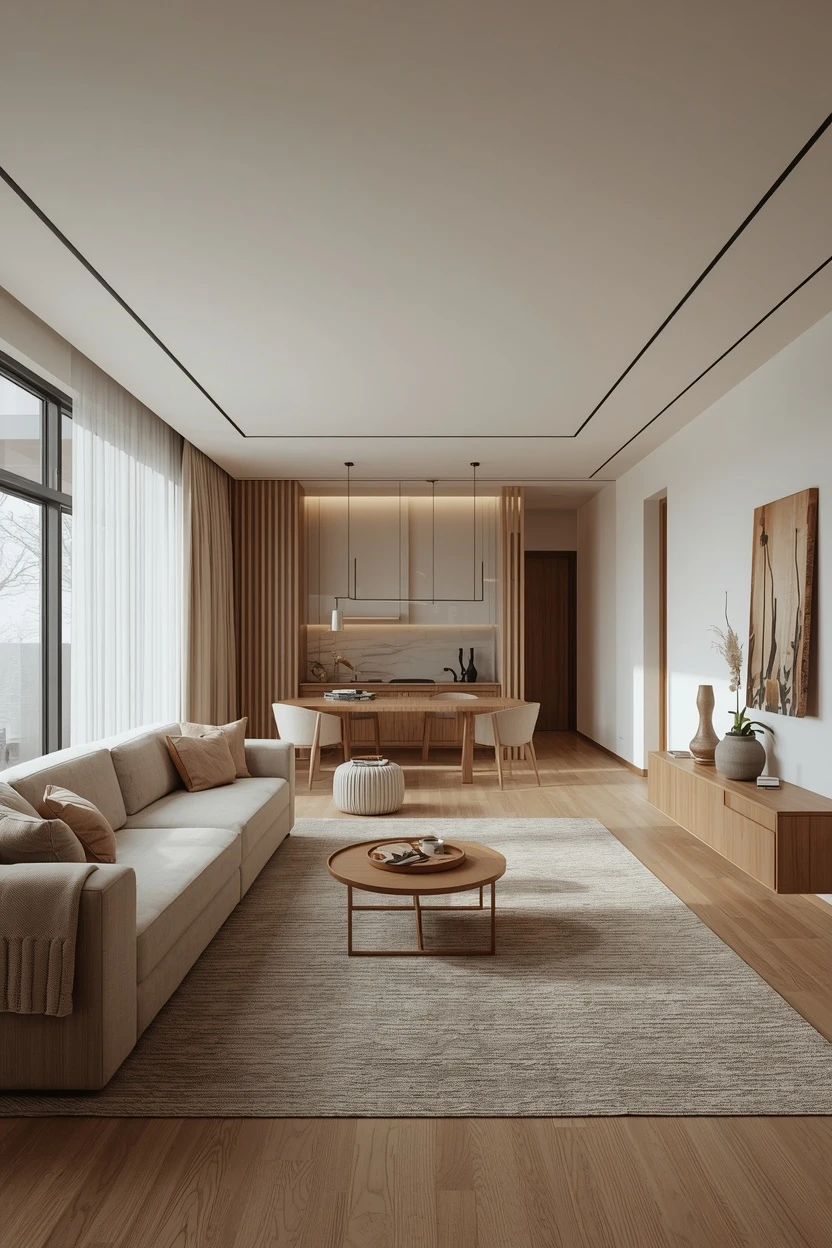
8. The Visual-Width Color Long Living Room
Using color to widen a long lounge — painting the short end walls a slightly deeper or warmer tone than the long walls — visually pulls the ends inward and balances the proportions. The darker short walls appear closer, shortening the tunnel. Keep the long walls light to maintain width. The color trick rebalances the room. It suits any long space, since a considered paint approach is a clever, low-cost way to counter the length of a narrow living room and make it feel more square.
9. The Reading Nook Long Living Room
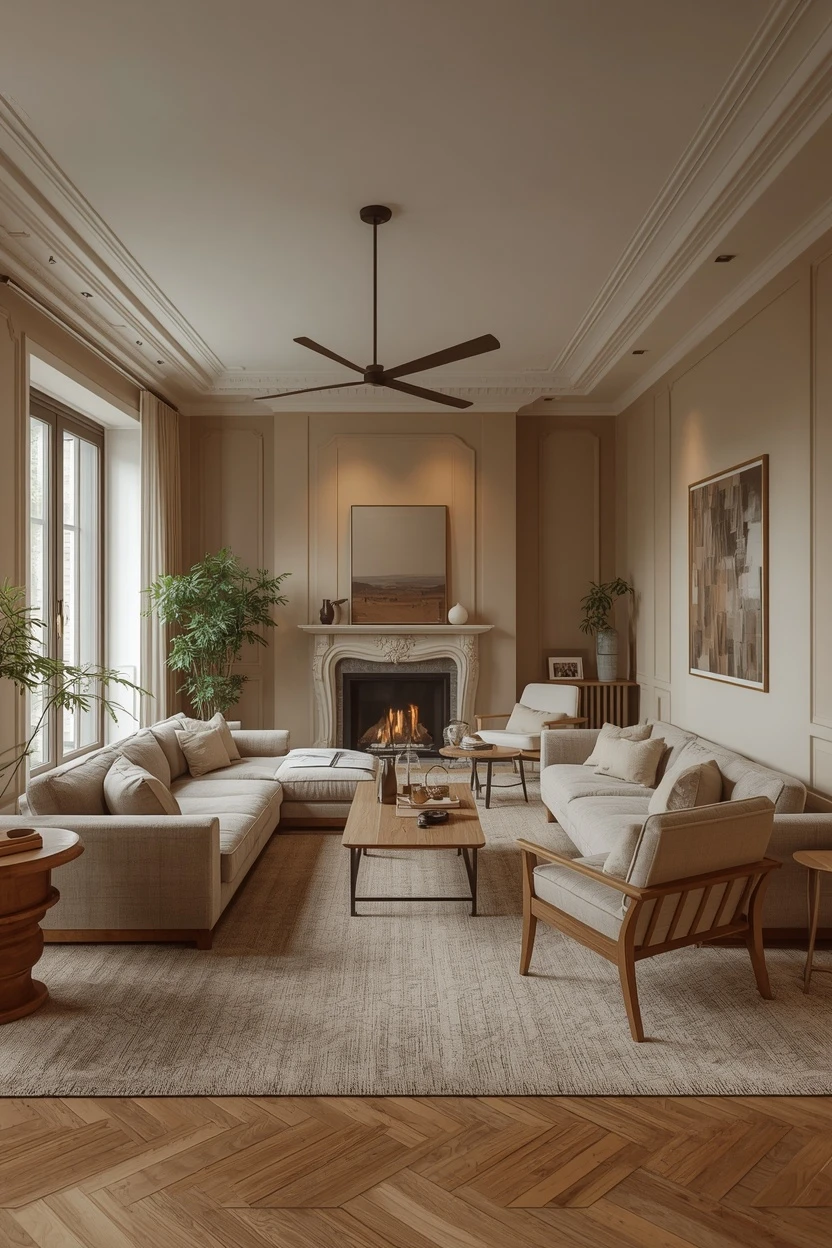
Tucking a reading nook into one end of a long lounge — an armchair, lamp, and small bookshelf — uses the length and creates a defined second zone. The nook fills the far end purposefully and adds an intimate spot. Anchor it with a small rug to mark the zone. The nook balances the long proportions. It suits narrow rooms, since a reading nook at one end is a lovely way to break up the length of a long living room and add a cozy, purposeful corner.
10. The Console-Divider Long Living Room
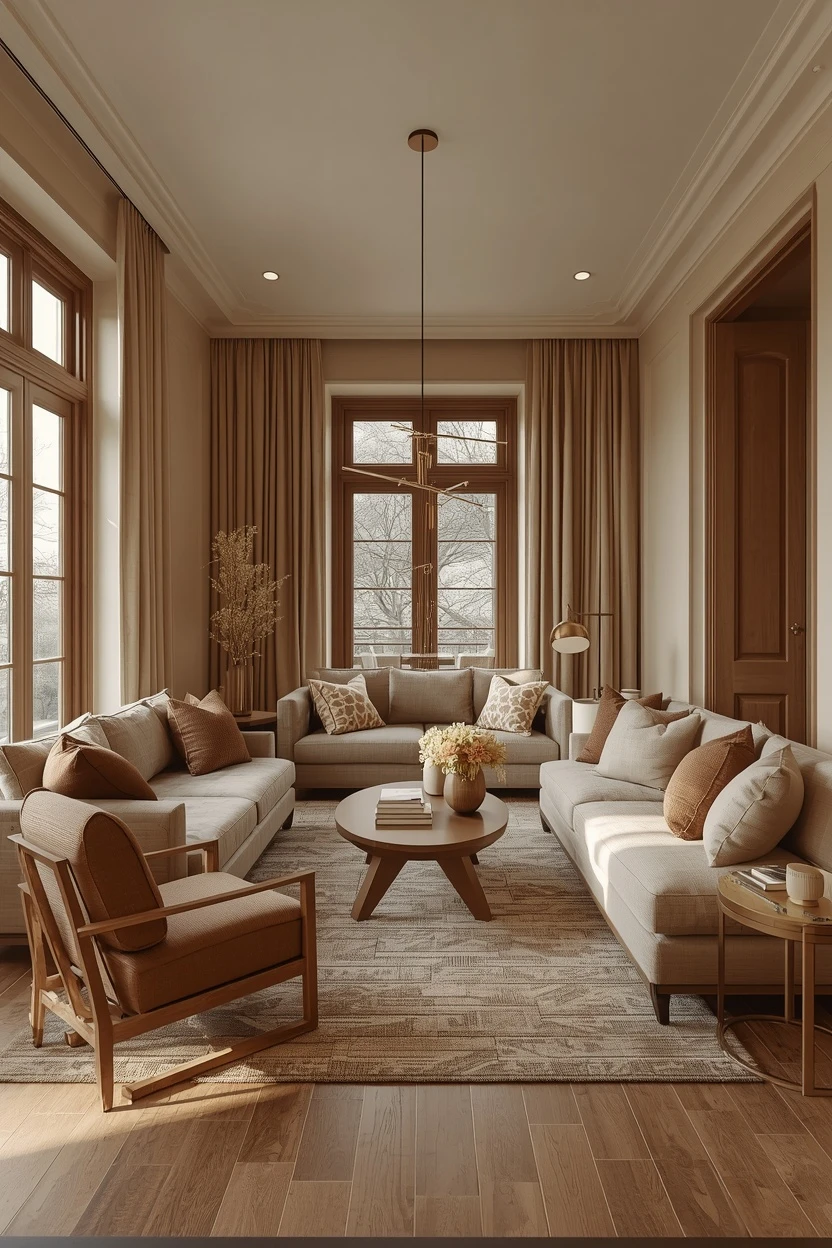
Using a console table or a low piece of furniture to mark the boundary between two zones helps break up a long lounge without blocking light or flow. Place a console behind a sofa or between areas to create a subtle divide. The piece defines the zones and adds function. The divider balances the room. It suits long spaces, since a console or low divider is a clever way to separate the zones of a narrow living room while keeping it open and breaking up the length.
11. The Layered Lighting Long Living Room
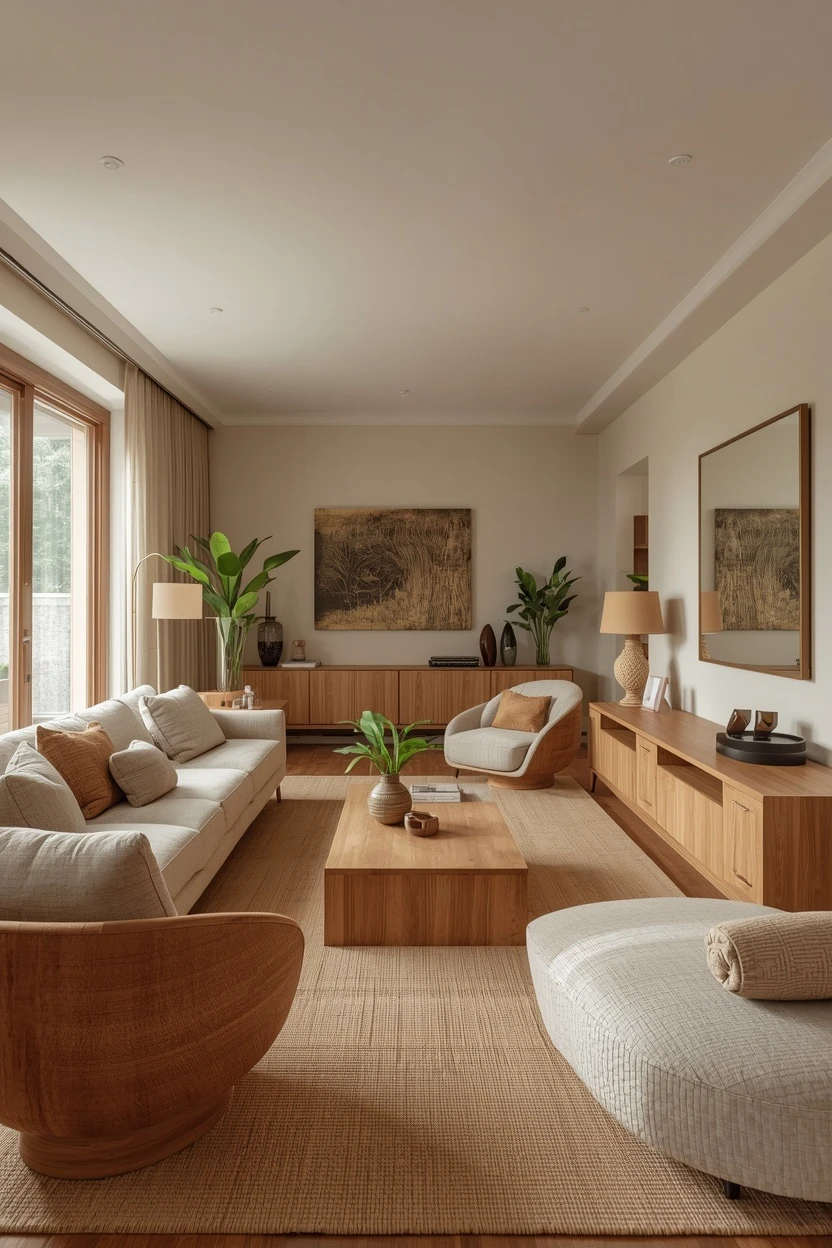
Lighting each zone of a long lounge separately — distinct lighting for the seating area and the second zone — reinforces the division and stops the room reading as one long space. Use lamps and fixtures to pool warm light in each area rather than a single central light. The zoned lighting balances the length. It suits any long room, since lighting the zones of a narrow living room separately is both practical and an effective way to break up the corridor feel with warmth.
12. The Crosswise Seating Group Long Living Room
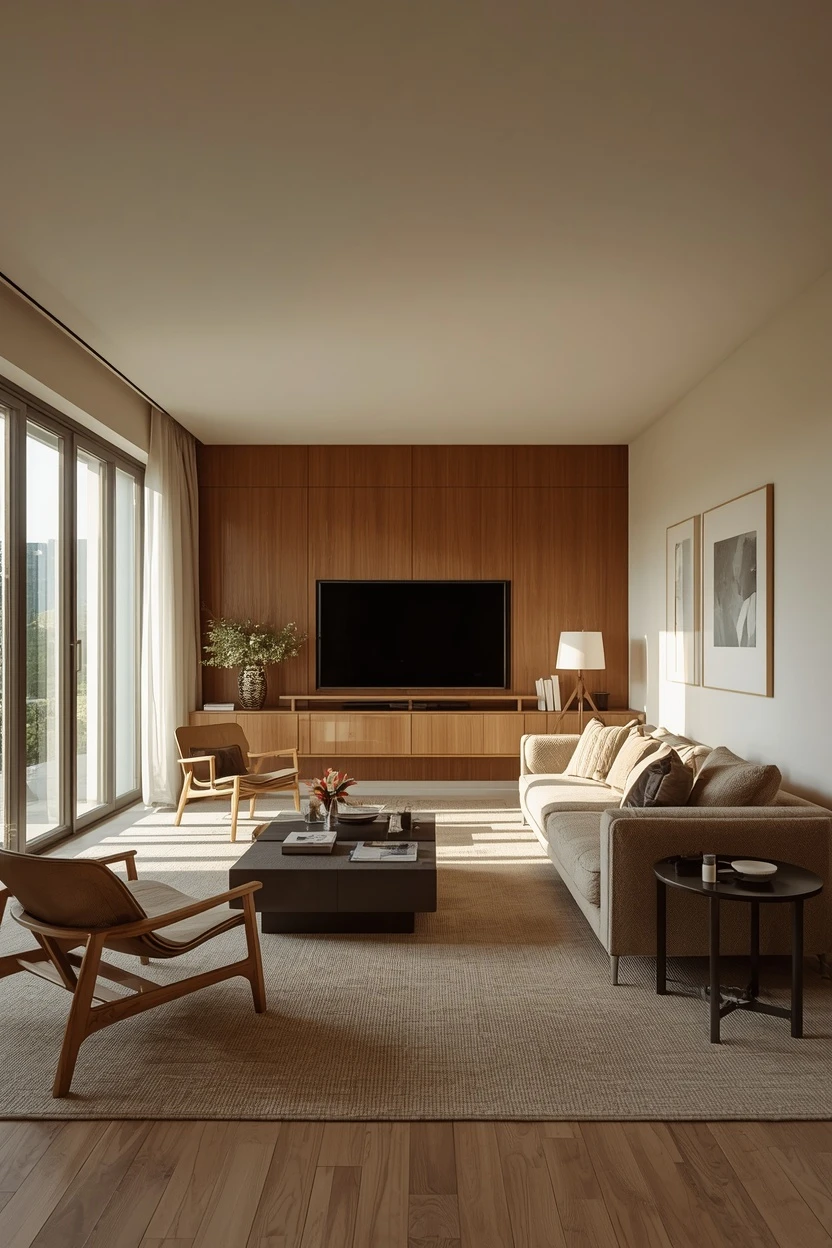
Arranging a seating group that sits across the width — sofa and chairs facing each other perpendicular to the long walls — creates an inward-facing zone that interrupts the length. The crosswise conversation group draws focus across the room. Anchor it with a rug and central table. The arrangement defeats the tunnel. It suits narrow rooms, since a crosswise seating group is one of the best ways to break up the length of a long living room and create an intimate, balanced gathering spot.
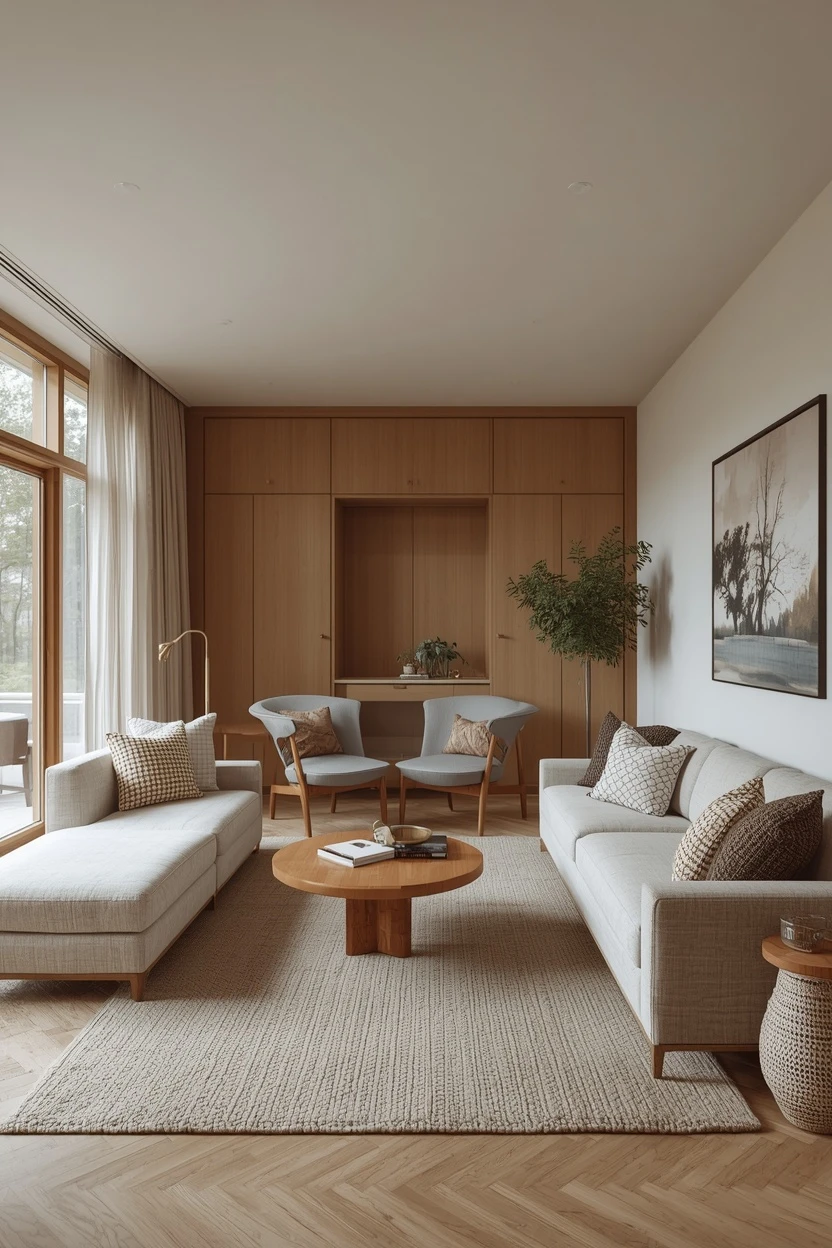
13. The Mirror-Widening Long Living Room
Hanging a large mirror on a long wall bounces light and visually widens a long lounge, while a mirror on a short wall would only lengthen it further. Place the mirror to reflect light across the width and add a sense of openness. The mirror balances the proportions. It suits narrow rooms, since a well-placed mirror on the long wall is a simple, effective trick to make a long living room feel wider, brighter, and less corridor-like.
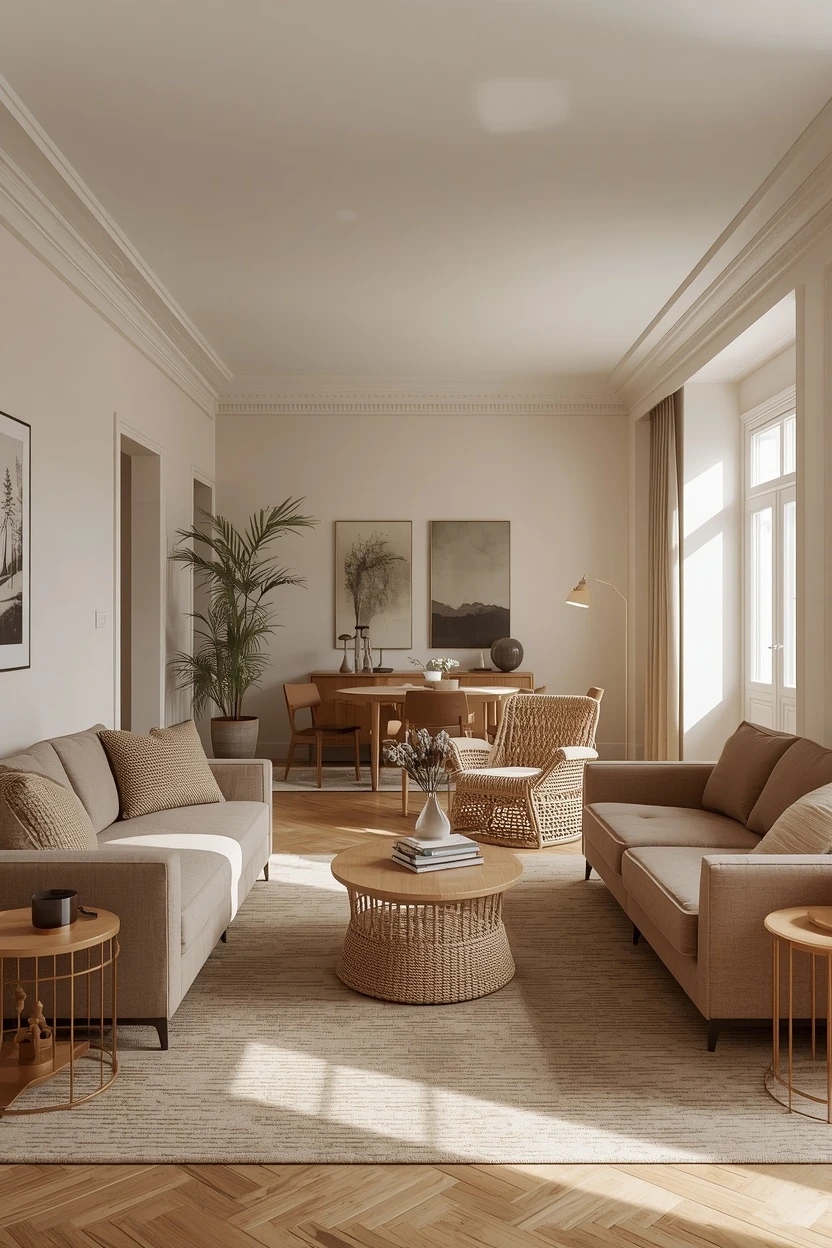
14. The Statement at the Far End Long Living Room
Placing a striking feature at the far end of a long lounge — a bold artwork, a painted wall, or a statement piece — draws the eye to a destination and visually shortens the length. The far-end focal point gives the long view a satisfying endpoint. Keep it bold enough to register from across the room. The statement balances the proportions. It suits long spaces, since a strong feature at the far end is a clever way to counter the tunnel effect and give a narrow living room a sense of arrival.
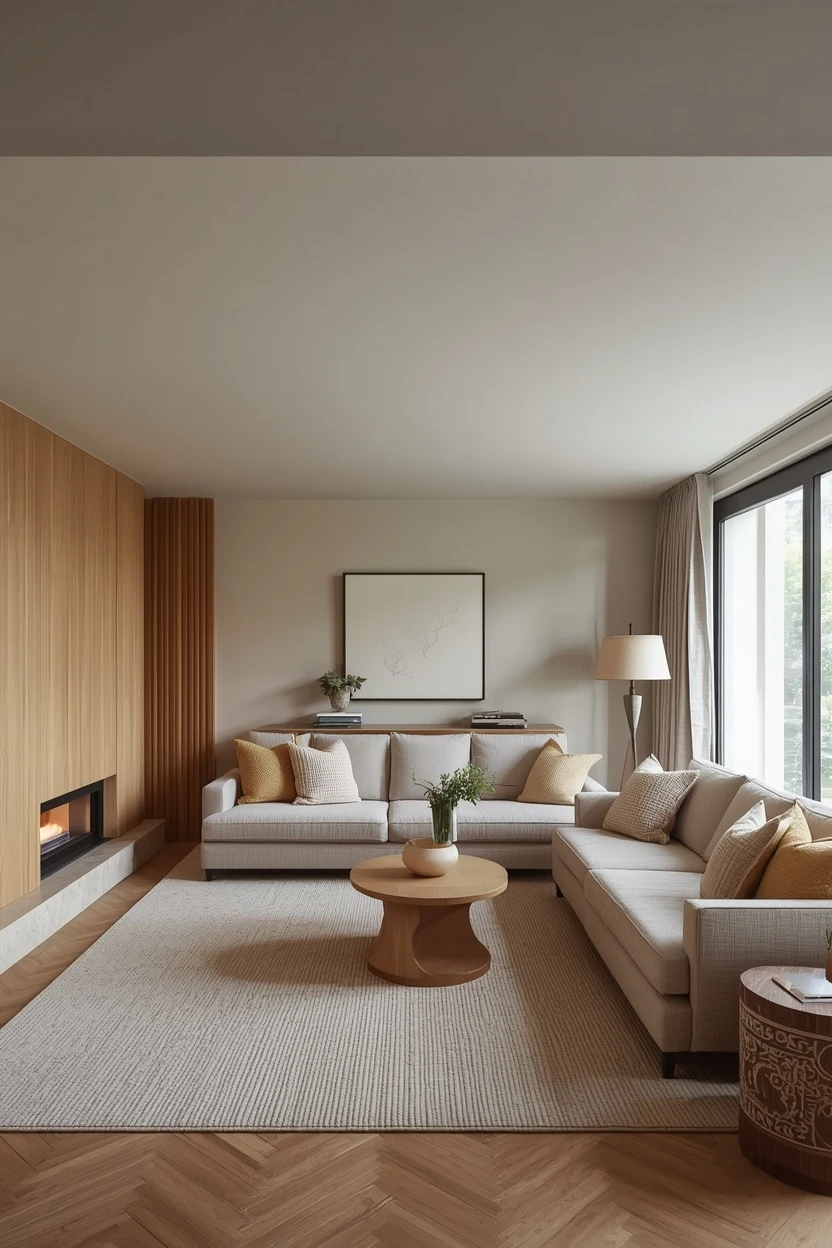
15. The Multi-Functional Long Living Room
A long lounge can hold several functions along its length — seating, dining, and a work or play zone — so decorating it as a multi-zone space makes full, balanced use of the proportions. Define each zone clearly with rugs and furniture, and keep a clear path linking them. The functions justify the length. It suits busy households, since a multi-functional layout turns the awkward length of a narrow living room into a genuine advantage with room for several purposeful areas.
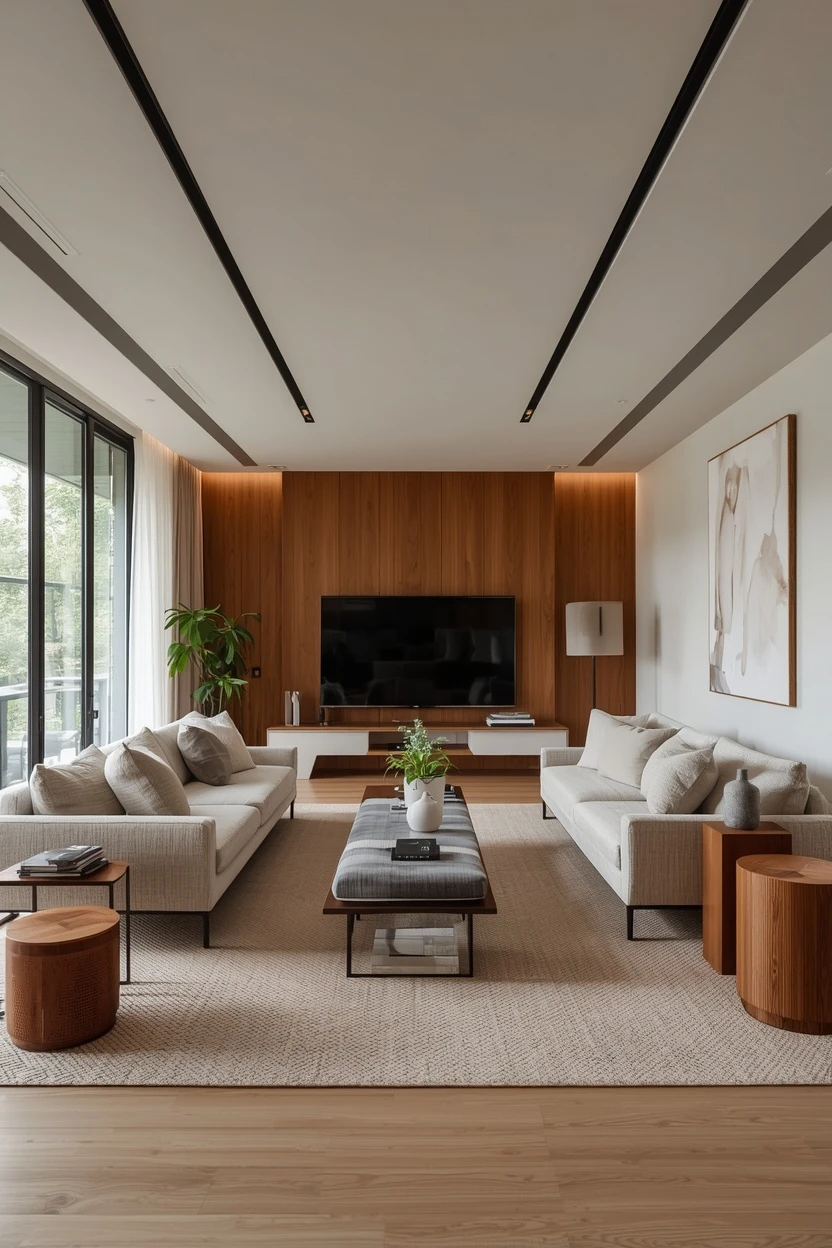
16. The Cozy Width-Building Long Living Room
Building width with layered texture, generous furniture, and warmth across the room — rather than slim pieces lined up lengthwise — makes a long lounge feel fuller and more balanced. Deeper furniture and rich texture add visual heft that counters the narrowness. The fullness balances the proportions. It suits any long room, since building width and warmth with generous, textured furniture helps a narrow living room feel cozy and balanced rather than thin and corridor-like.
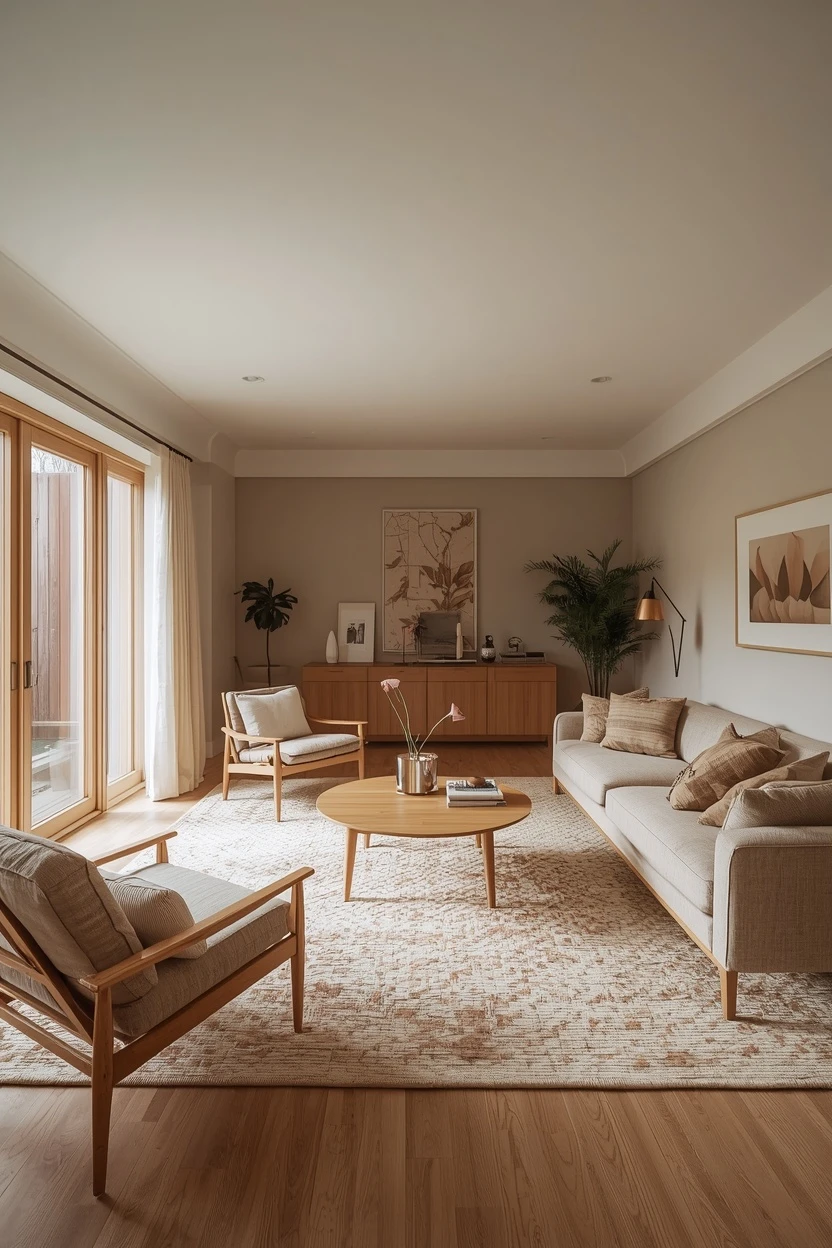
17. The Banquette-End Long Living Room
A built-in banquette or window seat at one end of a long lounge fills the far end beautifully, adds seating, and creates a defined zone. The bench anchors the end of the room and uses the length purposefully, doubling as a cozy nook or casual dining spot. The banquette balances the proportions. It suits long rooms, since a banquette at one end is a charming, space-smart way to fill and define the far end of a narrow living room.
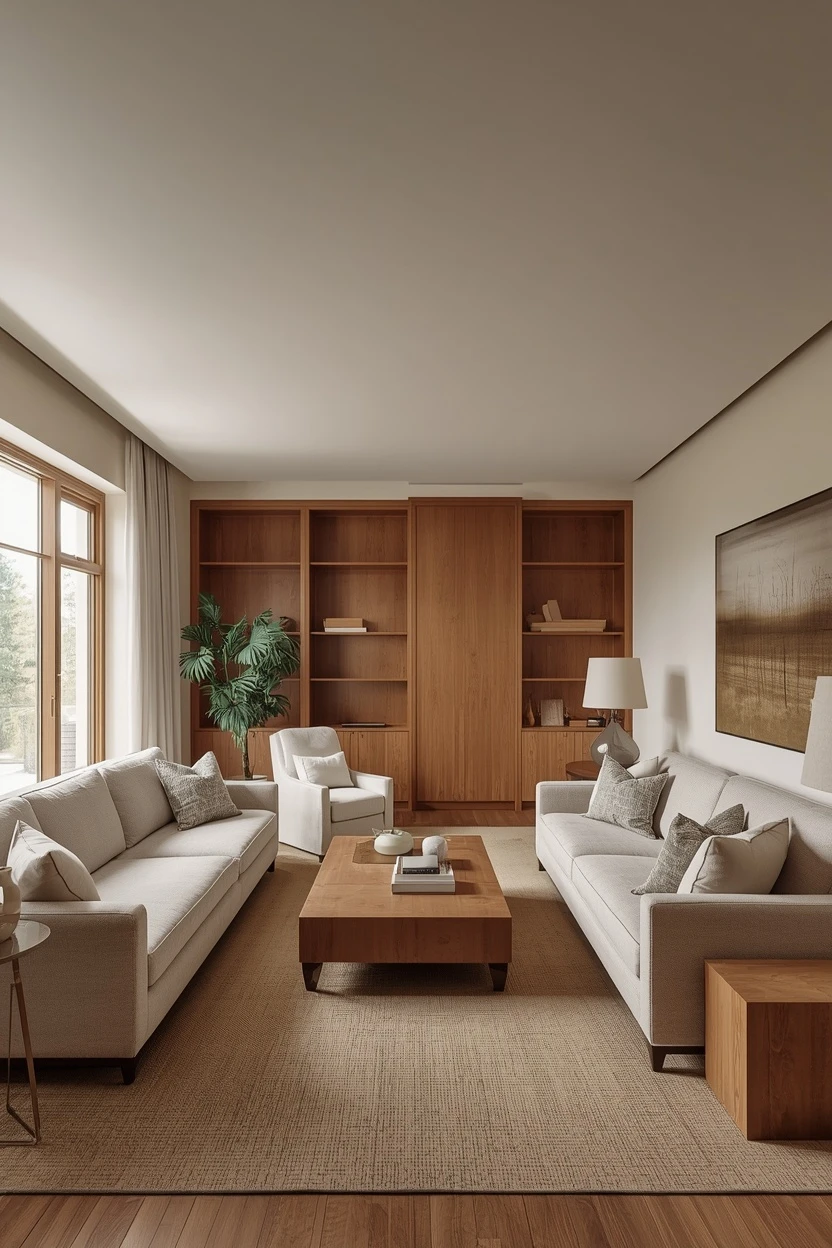
18. The Complete Long Living Room
Bringing the principles together, a fully realized long lounge divides the space into two purposeful zones, places a sofa across the width, floats furniture into inward-facing groups, lays a width-oriented rug, and uses color, mirrors, and a far-end focal point to balance the proportions. Each move counters the corridor feel: the zones add purpose, the crosswise placement breaks the length, the color and mirrors widen the space. The discipline is breaking up the length and emphasizing width at every turn. The result is a long living room that feels balanced, broken-up, and beautifully proportioned rather than tunnel-like.
Where I’d Start if I Only Did Three Things
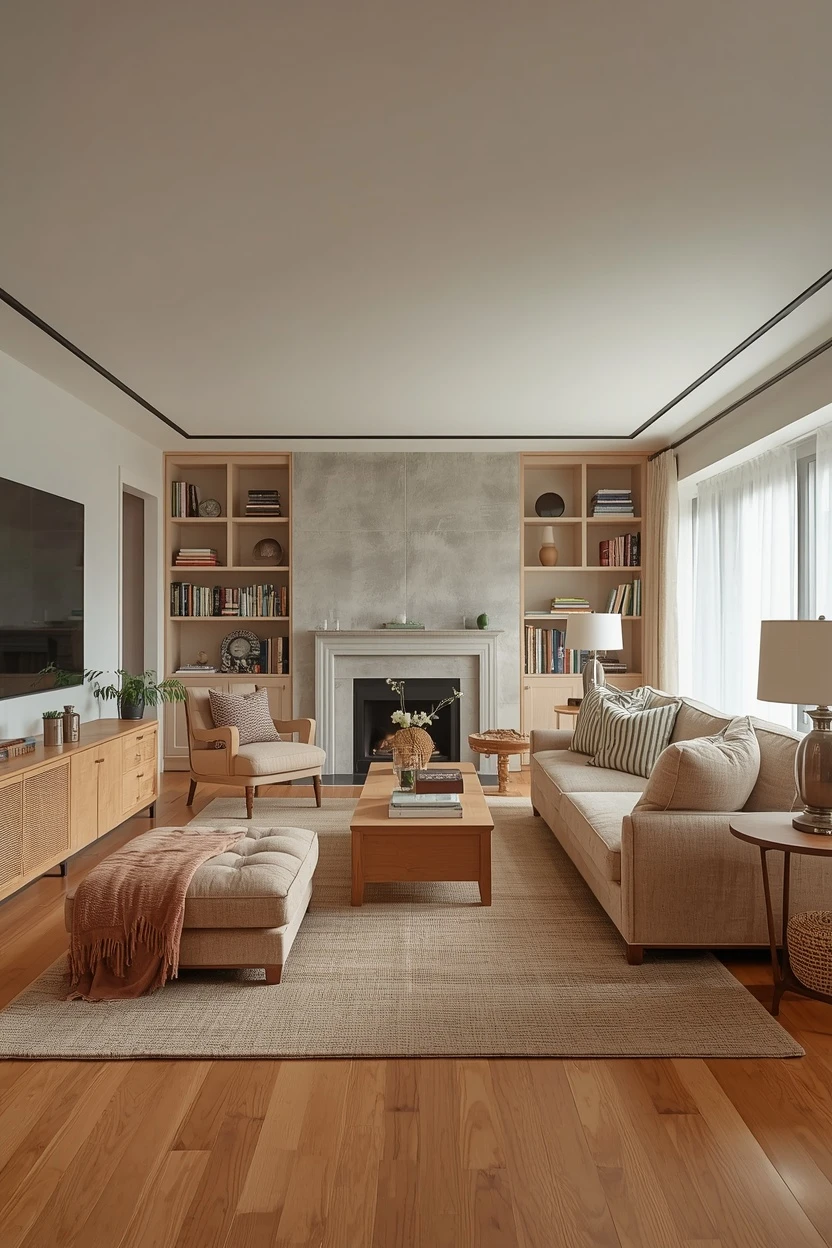
If I were decorating a long, narrow lounge from scratch, I would start by dividing it into two zones — a main seating area and a second function like dining or a reading nook — because splitting the room is the single best way to break up the length and stop it feeling like a corridor. Next, I would arrange the furniture to break up and widen the space, placing a sofa across the width, floating pieces into inward-facing groups rather than lining the long walls, and laying a width-oriented rug. Third, I would use color, mirrors, and a far-end focal point to visually balance the proportions, painting the short walls a touch deeper, hanging a mirror on a long wall, and giving the long view a destination. Two zones, width-emphasizing arrangement, and balancing color and focal points: that trio turns the awkward length of a narrow living room into an elegant, purposeful advantage.
FAQs
How do I decorate a long, narrow living room?
The key is to break up the length and emphasize width. Divide the room into two purposeful zones — a main seating area and a second function like dining, a reading nook, or an office — and define each with rugs, furniture, and separate lighting. Place a sofa across the width rather than along the length, float furniture into inward-facing groups instead of lining the long walls, and lay a width-oriented rug. Then use color, mirrors, and a far-end focal point to visually balance the proportions. Breaking up the length and drawing the eye across rather than down is what turns a corridor-like room into a balanced, purposeful living room.
How do I make a long living room look wider?
Several tricks help. Paint the short end walls a slightly deeper or warmer tone than the long walls so the ends appear closer and the room feels more square, and keep the long walls light to maintain width. Hang a large mirror on a long wall to bounce light and visually widen the space, and choose a rug oriented across the width rather than a long runner. Arrange furniture across the width and in inward-facing groups rather than lining the long walls, and use symmetry across the width to draw the eye sideways. Together, these moves make a long, narrow living room feel noticeably wider and less corridor-like.
How should I arrange furniture in a long living room?
Avoid pushing all the furniture against the long walls, which exaggerates the narrowness and creates a corridor. Instead, divide the room into zones and float the furniture into inward-facing groups: place a sofa across the width to break up the length, arrange a crosswise seating group around a central table and rug, and use a console or low piece to mark the boundary between zones. Create a focal point on a long wall and orient the seating toward it so the eye moves across the room. Arranging a long living room into defined, width-emphasizing zones is what makes it feel balanced and roomlike rather than tunnel-like.
What can I do with the extra length in a long living room?
Use it for a purposeful second zone. The far end of a long living room is ideal for a dining area, a reading nook with an armchair and bookshelf, a home office, or a built-in banquette or window seat. Defining this second zone with its own rug and lighting breaks up the length and makes the proportions an advantage rather than a problem. A multi-functional approach — seating at one end and dining, working, or relaxing at the other — turns the awkward length into genuine usable space, giving you several balanced, defined areas within one long room.
Final Thoughts
A long, narrow lounge can be one of the trickiest rooms to get right, but the very proportions that feel awkward become an asset once you decorate with intention. Whether you split the room into seating and dining zones, place a sofa across the width, or use color and mirrors to widen the space, the same principles apply: break up the length, create purposeful zones, and draw the eye across rather than down the room. Avoid lining the long walls, emphasize width at every turn, and give the long view a destination, and you will have a long living room that feels balanced, broken-up, and beautifully proportioned — a space that turns its length into an elegant, purposeful advantage.

zarcoyt2025
Khawar Iqbal is the founder and editor of Cozy Homes Hub. He writes about cozy, livable home decor — from small-apartment layouts to room-by-room styling guides — with a focus on warm palettes, layered lighting, and budget-friendly ideas that actually work in real homes.
Related Articles
16 Living Room Decor Ideas That Instantly Elevate Any Space
A living room rarely needs new furniture to feel considerably more elevated — it usually needs a handful of layout and styling…
Read more →
14 Grey Settee Living Room Ideas to Warm Up a Neutral Sofa
A grey settee is the most versatile thing you can put in a living room — and, if you're not careful, the…
Read more →
12 Living Room Arrangement Ideas for a Warm, Balanced Space
There's a difference between a room that's furnished and a room that's arranged. Furnished just means the pieces are in there; arranged…
Read more →