14 Bathroom Backsplash Ideas That Add Instant Style
July 11, 2026 · 11 min read
 By Khawar Iqbal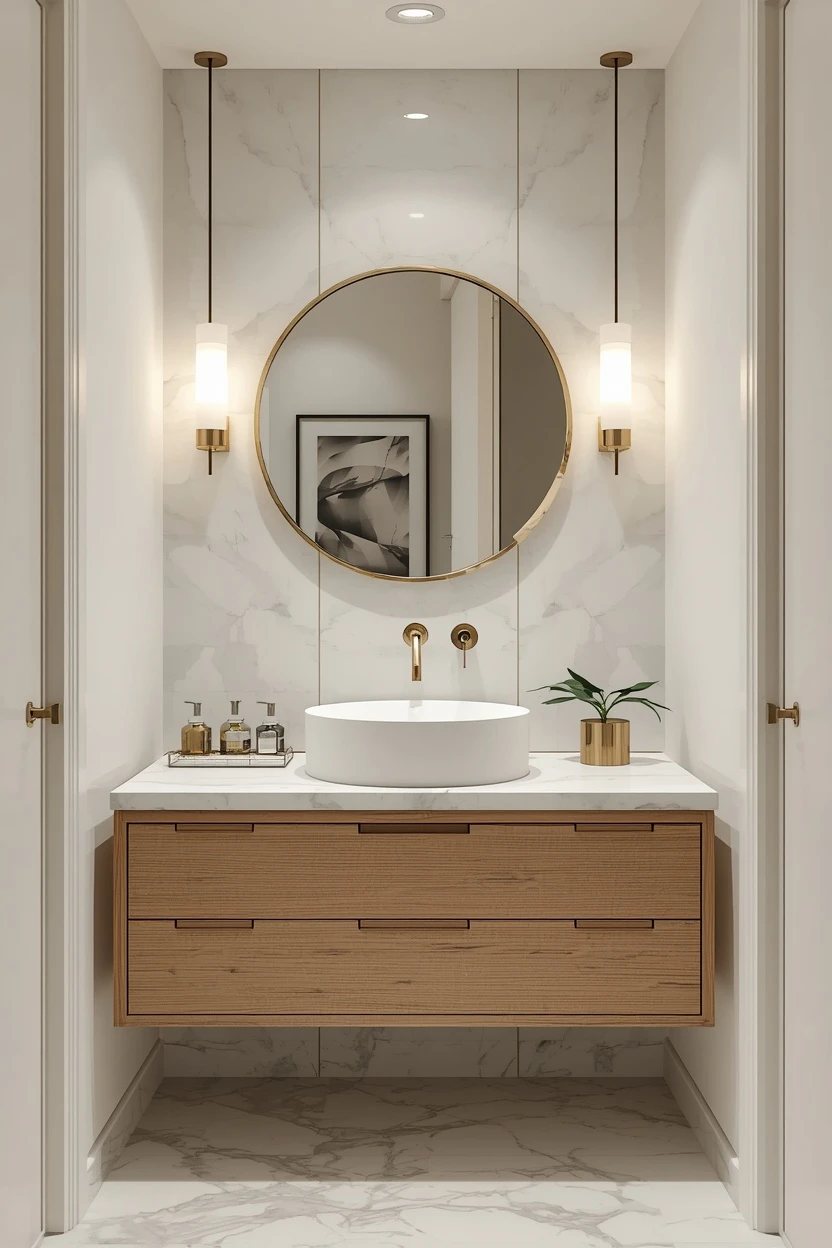
The backsplash — the section of wall directly behind the basin and vanity — is a small area that punches well above its size, protecting the wall from splashes while offering one of the easiest opportunities to add real character to a bathroom. The best bathroom backsplash ideas turn a purely practical zone into a genuine design feature, and because the area is compact, you can afford a more special material than a whole wall would allow.
Each idea below is a distinct backsplash design, with honest notes on material, height, and how it pairs with the vanity and tap. Whether you want a subtle protective strip or a full-height statement, there is a backsplash direction here to lift your vanity zone and tie the whole bathroom together.
1. Classic Subway Tile Backsplash
A white subway tile backsplash behind the vanity is the most classic and affordable option, clean and bright and impossible to date. A few rows laid in the traditional brick bond protect the wall from splashes and read timeless; carry it higher to the mirror or ceiling and it becomes a feature.
As with any subway tile, the grout is the design lever — matching white for seamless calm, or dark for a graphic grid.
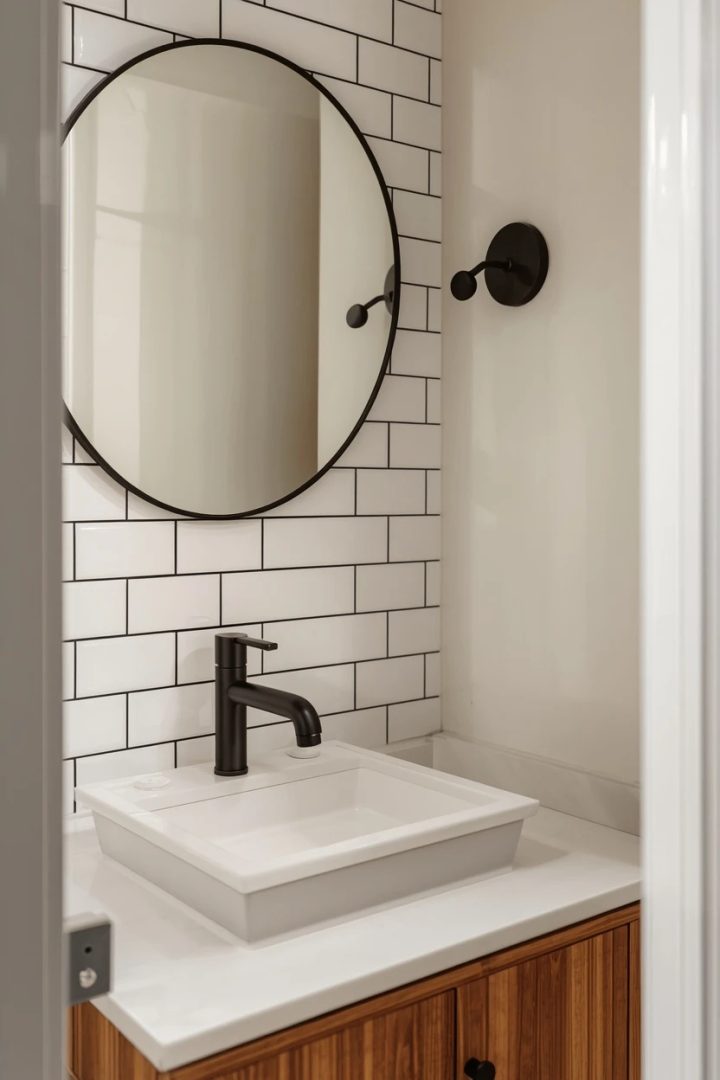
It is the safest, cheapest place to start and pairs happily with almost any vanity, tap, and mirror.
2. A Full-Height Marble Slab Backsplash
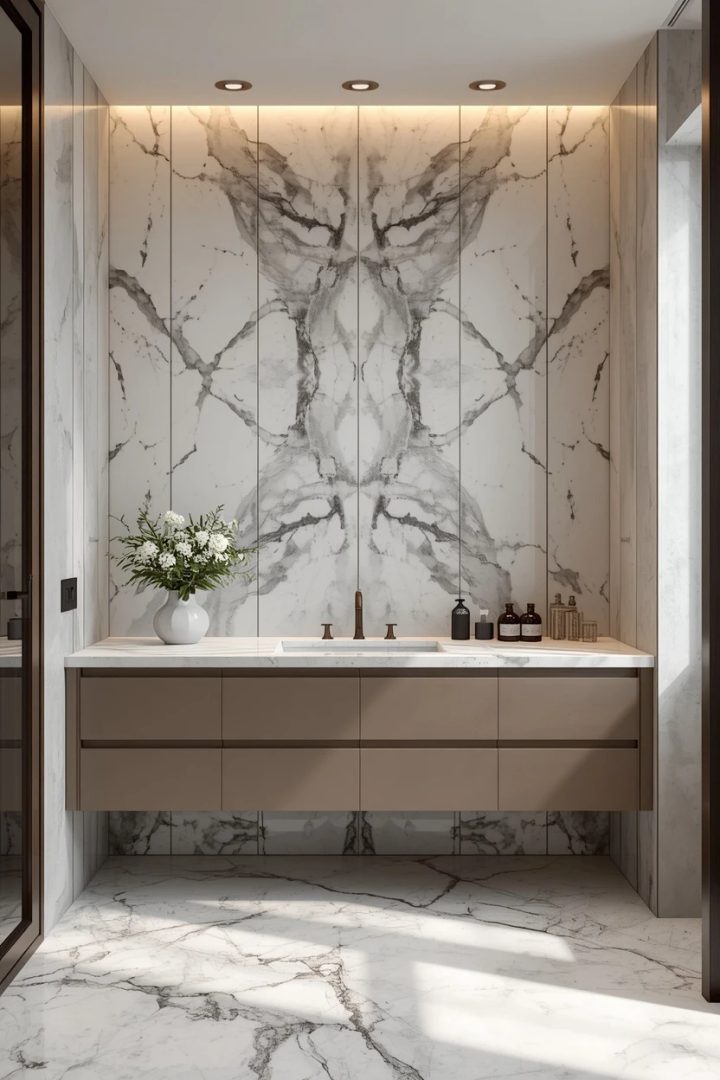
Running a single marble or marble-effect slab from the vanity top all the way up behind the mirror creates one of the most luxurious backsplash statements available. The unbroken slab — with no grout lines — reads seamless and expensive, and the veining becomes the room's focal artwork. Genuine marble needs sealing and careful maintenance in a splash zone, so a large-format marble-effect porcelain panel is the more practical choice for most bathrooms, giving the same drama with none of the porosity. Book-match a pair of panels for the mirrored-vein look of a genuine stone slab and the effect is genuinely spectacular.
3. A Mosaic Tile Backsplash
A mosaic backsplash — small tiles on mesh sheets in glass, stone, or ceramic — adds intricate detail and a touch of sparkle to the vanity zone that larger tiles cannot. Mosaic suits the backsplash area especially well because the small scale reads as a jewel-like accent rather than a busy expanse. A metallic, mother-of-pearl, or glass mosaic catches the light beautifully behind a basin.
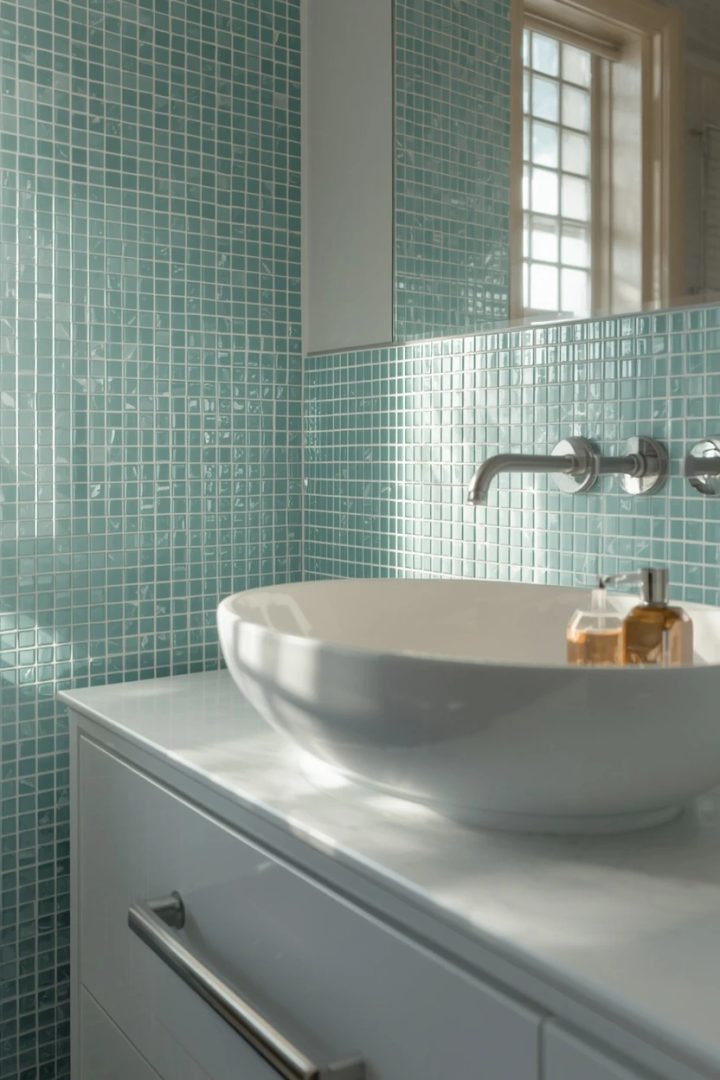
Because mosaic comes on sheets, it is more forgiving to fit than it looks, though the many grout lines need sealing to stay clean in a splash zone. Keep it to the backsplash alone so the detail reads as a deliberate accent.
4. A Zellige Tile Backsplash
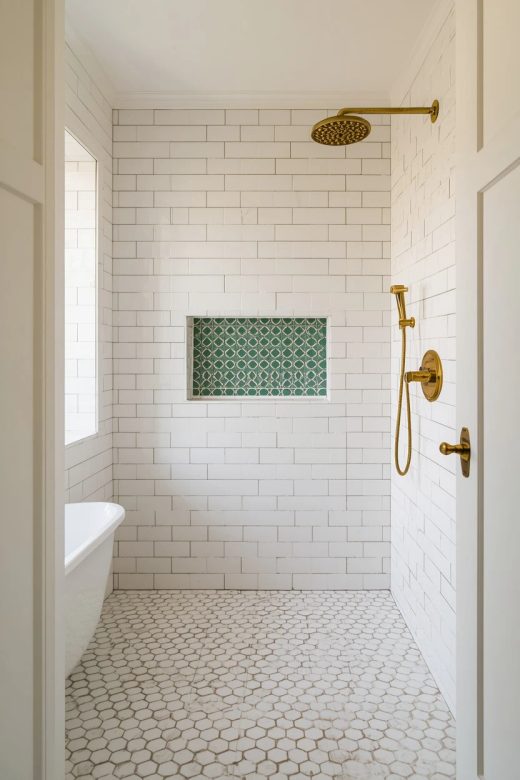
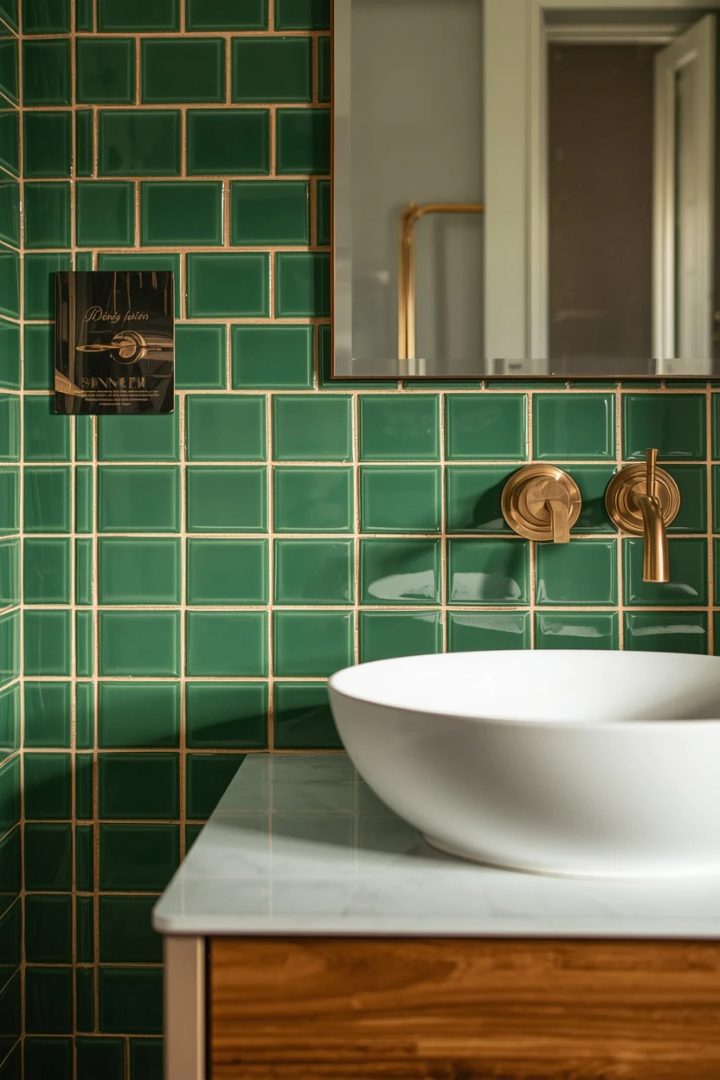
A zellige backsplash brings handmade, artisan character to the vanity zone, the irregular glaze and subtle tonal variation of Moroccan zellige catching the light in a way no machine tile can. Because the backsplash is a small area, it is the perfect place to invest in a more expensive handmade tile without a large outlay. In a soft green, a warm white, or a deep blue, a zellige backsplash reads tactile and special behind a simple basin.
The uneven edges need a tiler comfortable with the material, but the result is a vanity zone with genuine artisan depth and warmth.
5. A Mirror Backsplash
Extending a mirror right down to the vanity top — so the mirror itself becomes the backsplash — is a clever trick that doubles the visual space, bounces light around, and removes the need for a separate splashback material entirely. It reads sleek and modern and makes a small bathroom feel considerably larger.
The catch is upkeep: a mirror backsplash shows every water spot and toothpaste splash, so it needs a quick daily wipe to stay pristine.
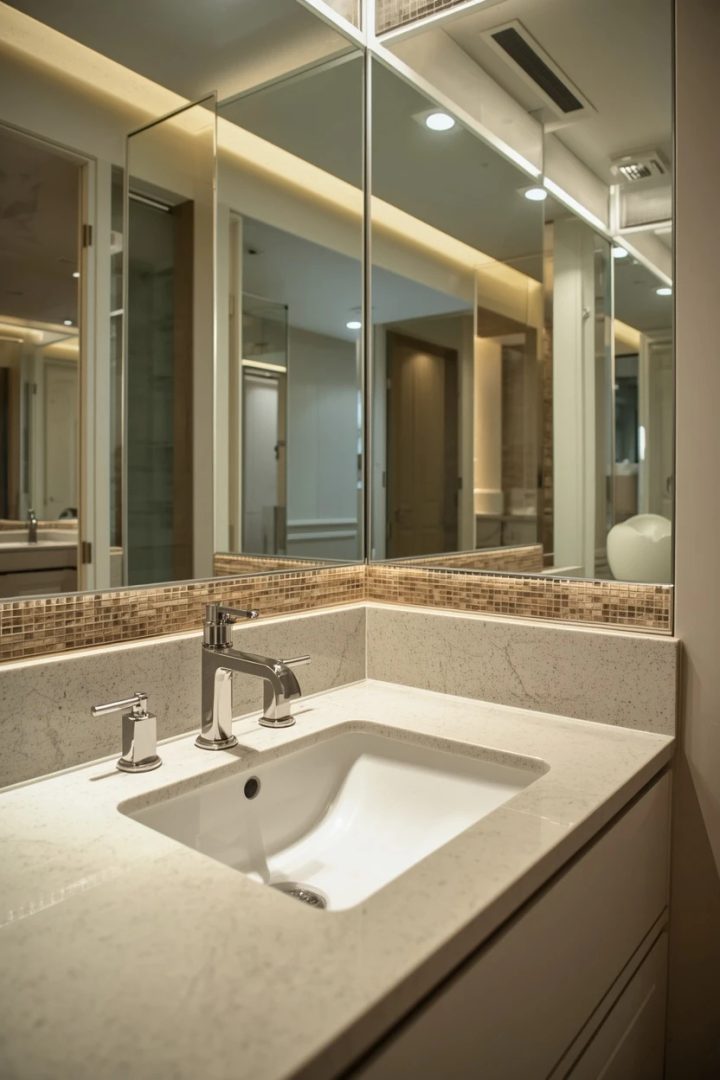
Use a single large piece of mirror rather than tiles for a seamless look, and seal the join to the vanity top carefully against water ingress.
6. A Bold Patterned Tile Backsplash
A bold patterned tile — geometric, floral, or Moroccan-inspired — confined to the backsplash area lets you introduce serious pattern and colour without committing a whole room to it. The compact zone contains the pattern so it reads as a deliberate jewel-box accent rather than an overwhelming expanse. Keep the surrounding walls plain and let the patterned backsplash lead.
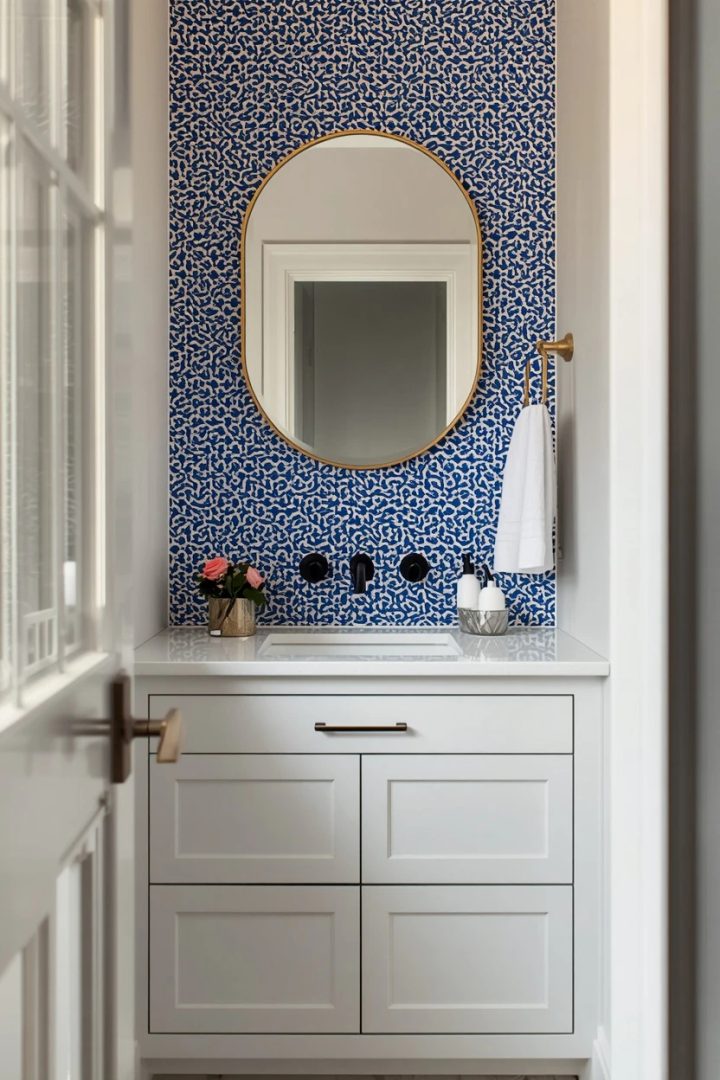
This is one of the most budget-friendly ways to add personality, since you need only enough tile for a small area, which means you can choose a genuinely special patterned tile that a full wall would make unaffordable.
7. A Continuous Countertop-to-Wall Backsplash
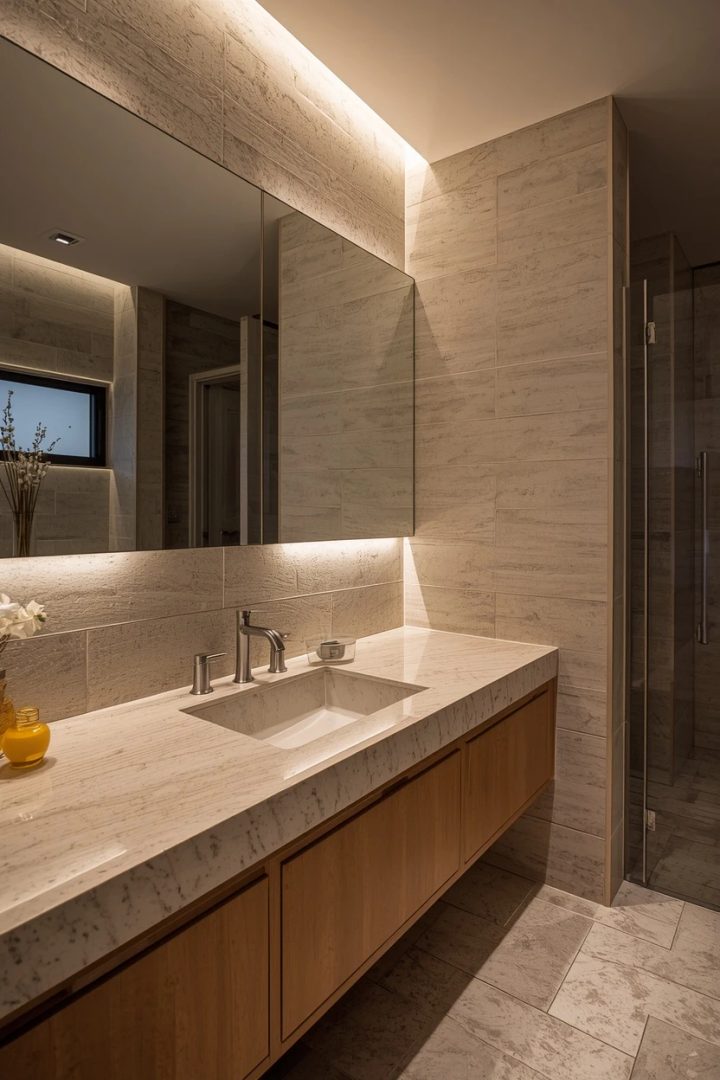
Running the same material as the vanity countertop up the wall as the backsplash — whether stone, porcelain, or a solid surface — creates a seamless, integrated look that reads high-end and is supremely practical, with no join or grout line for water to penetrate where the counter meets the wall. This continuous approach is one of the cleanest approaches, particularly with a solid surface or large-format porcelain where the counter and splashback can be cut from the same slab. The unbroken material reads deliberate and calm, and it wipes clean in a single sweep with nothing to scrub around.
8. A Metallic or Penny Tile Backsplash
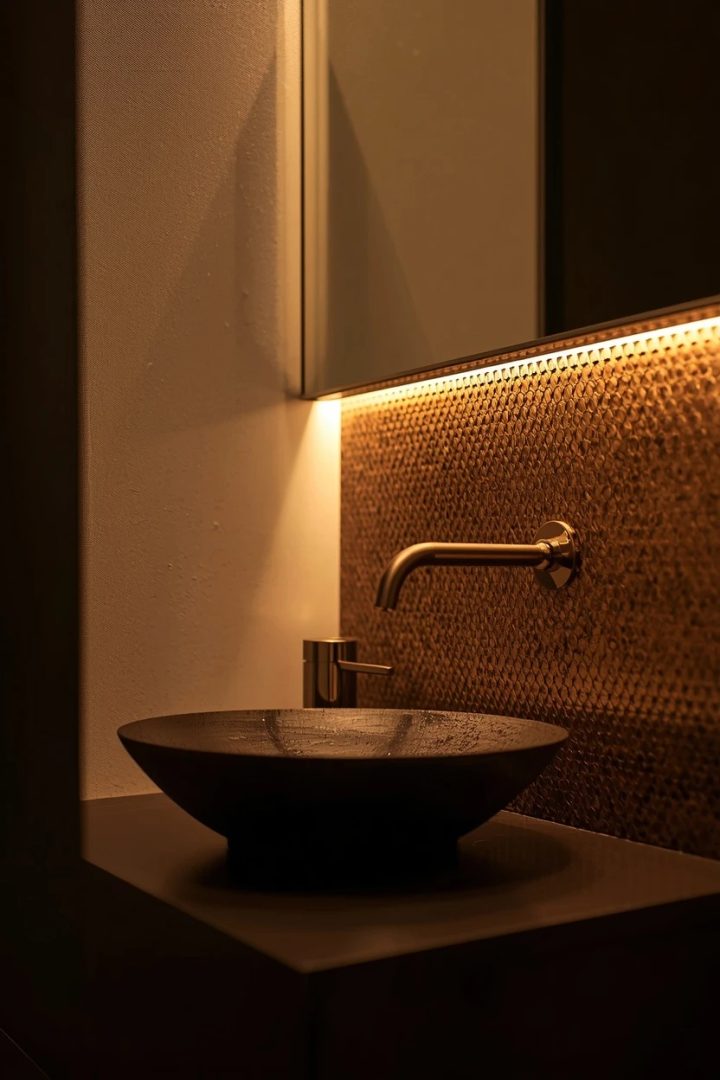
A metallic-glazed or penny-round tile backsplash adds warmth, shine, and vintage character behind a basin, the small circular tiles or metallic glaze catching and scattering light beautifully. A brushed-brass-toned or copper metallic mosaic reads warm and a little glamorous, especially against a dark vanity, while a penny-round backsplash reads charming and period-appropriate. The many grout lines of a penny or mosaic backsplash need sealing to stay clean in a splash zone, but the small area makes this a manageable maintenance task.
Pair the metallic tone with matching brass or copper taps and hardware to tie the scheme together.
9. A Natural Stone Backsplash
A natural stone backsplash — travertine, limestone, slate, or marble — brings genuine material richness and a tactile, organic quality that manufactured tile cannot fully replicate, each piece unique in its veining and tone. Stone reads warm and grounding behind a basin and pairs beautifully with timber and brass. The essential caveat is sealing: all natural stone is porous and must be sealed before use and resealed periodically, and acidic products must be kept off it, particularly marble and limestone.
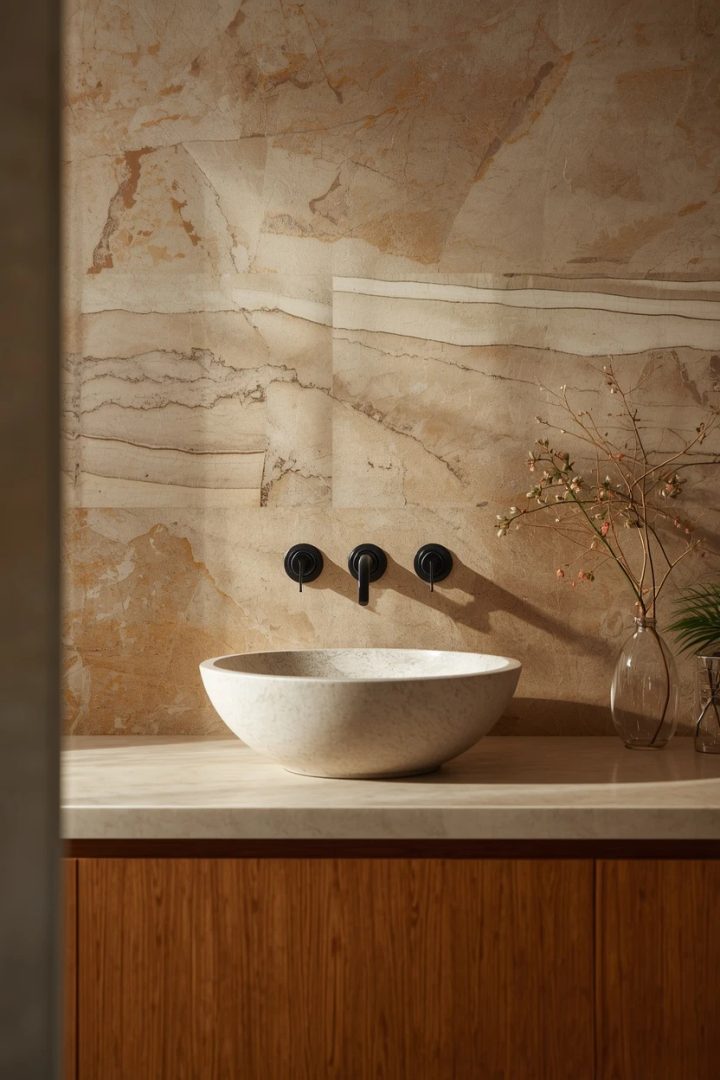
In the compact backsplash zone the maintenance is manageable, and the reward is a vanity area with genuine natural character and depth.
10. A Vertical Tile Backsplash
Laying the backsplash tile vertically — or choosing a tall, narrow tile — draws the eye upward and adds a sense of height to the vanity zone, a subtle trick that reads modern and deliberate. Vertical stacked tile behind a basin, especially with a contrasting grout to emphasise the lines, feels crisp and contemporary.
It pairs well with a tall mirror above to reinforce the vertical emphasis.
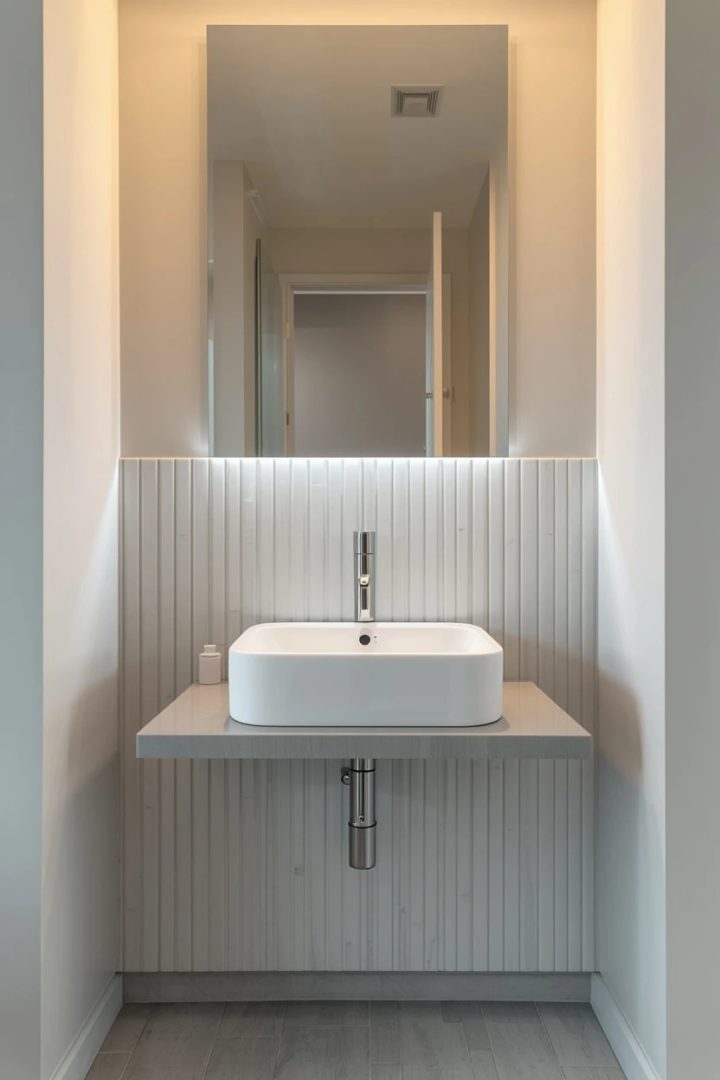
Because the vertical alignment is exposed, it wants a careful tiler to keep the lines true, but the payoff is a backsplash that makes the whole vanity wall read taller and more considered.
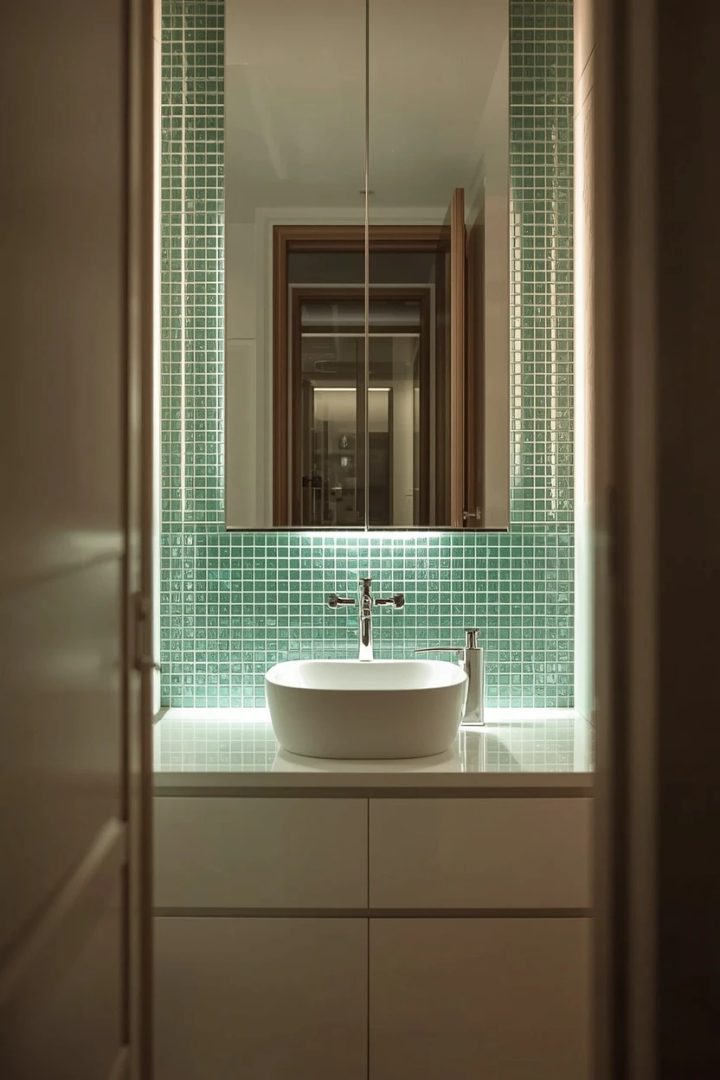
11. A Glass Tile Backsplash
A glass tile backsplash brings a glossy, light-reflecting, easy-clean surface to the vanity zone, the smooth glass catching light and adding a subtle luminous quality behind the basin. Glass tile comes in clear, frosted, and coloured versions, and a soft sea-glass green or blue reads fresh and coastal. The smooth, non-porous surface is genuinely practical — it wipes clean in a moment and resists staining better than most materials. Glass tile can be laid in sheets or as larger individual tiles, and its reflective quality makes it particularly effective in a bathroom that is short on natural light.
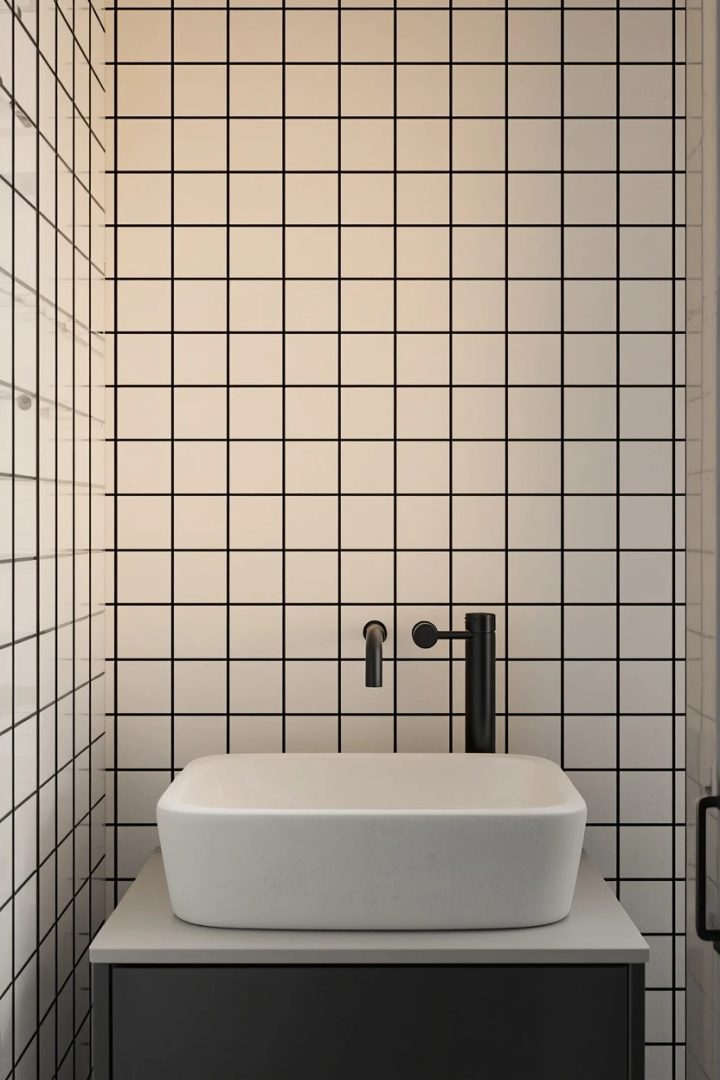
12. A Contrast Grout Backsplash
Sometimes the simplest backsplash idea is the most effective: a plain white tile paired with a bold dark grout draws a crisp graphic grid behind the basin and turns the cheapest tile into a designer feature. The dark grout also hides splashes and toothpaste far better than white, which is a real practical bonus right where the mess happens. The effect reads strongest with a clean square or metro tile in a simple bond where the grid is clear.
Seal a porous pale tile or use a grout release first, since dark grout can stain the face of an unglazed tile during application.
13. A Half-Wall Tile Backsplash
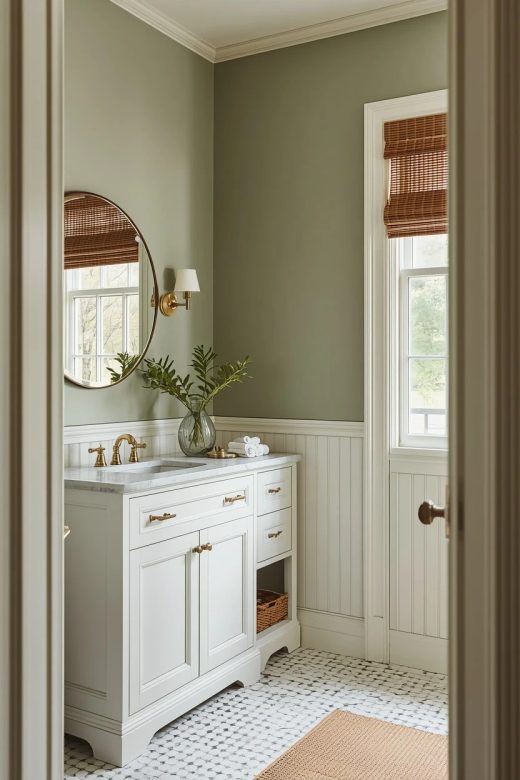
Taking the backsplash tile up to a half-wall height — to a dado line or the top of the mirror — rather than just a few rows creates a more substantial, protected, and considered vanity zone, and it reads more deliberate than a thin protective strip. The half-wall of tile protects a larger splash area, gives a natural line to work to, and lets you pair a tiled lower section with a painted upper wall for a two-tone effect.
Choose a tile that coordinates with the rest of the bathroom and finish the top edge neatly with a trim or a bullnose tile so the transition to paint reads clean.
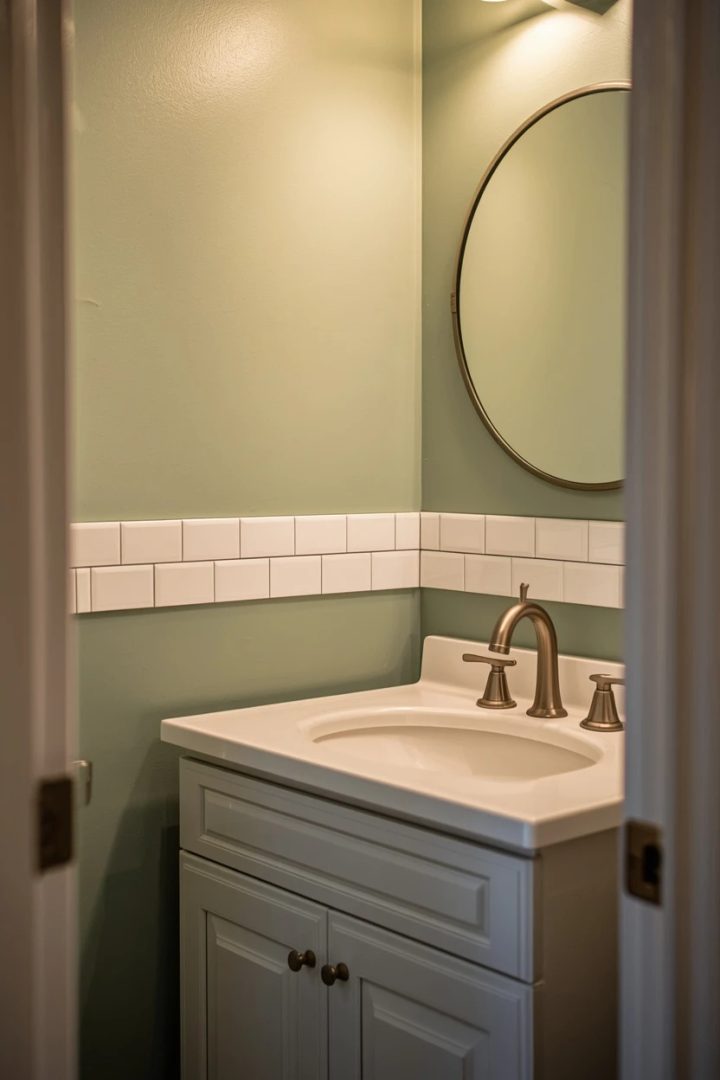
14. The Complete Bathroom Backsplash
Brought together, the best backsplash choices match the material and height to the room's style and the vanity below. A subtle protective strip suits a calm, minimal scheme; a full-height marble slab or bold patterned tile makes the vanity the room's focal point; and a continuous counter-to-wall material reads seamless and practical. The compact size of the backsplash is its great advantage — it lets you invest in a genuinely special material without a large spend. Choose a backsplash that coordinates with your tap and hardware metal, protects the wall properly, and gives the vanity zone the character it deserves.
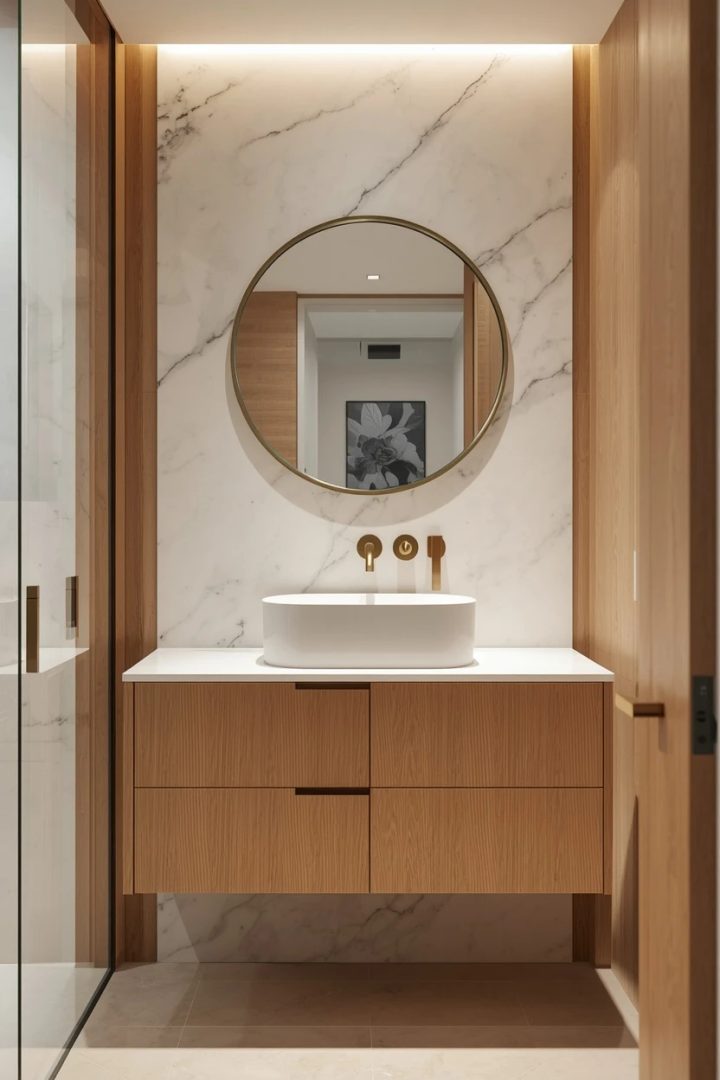
Where I'd Start if I Only Did Three Things
If I only made three decisions about a bathroom backsplash, I'd start with the height — deciding whether it is a subtle protective strip, a half-wall, or a full-height statement, since that single choice shapes the whole vanity zone. Next, I'd choose the material to coordinate with the tap and hardware metal, so a brass tap sits against a warm-toned backsplash rather than fighting it. Third, I'd remember that because the area is small, I can afford something genuinely special — a zellige, a marble slab, a bold pattern — that a whole wall would make unaffordable. Height, coordinated material, and one special choice make the backsplash punch well above its size.
Frequently Asked Questions
What are the best bathroom backsplash ideas for a vanity?
The best backsplash options match the material and height to your style and vanity. A white subway tile strip is the timeless, affordable classic. A full-height marble or marble-effect slab reads luxurious and makes the vanity a focal point. A bold patterned or zellige tile adds character in a compact, budget-friendly area. Running the countertop material up the wall creates a seamless, practical look. A mirror backsplash doubles the light and space. Because the backsplash area is small, it is the perfect place to invest in a special material — just coordinate it with your tap and hardware metal so the whole vanity zone reads pulled-together.
How high should a bathroom backsplash be?
Backsplash height depends on the look and the level of protection you want. A minimal protective strip of around 10 to 15cm above the counter suits a calm, understated scheme and simply guards against everyday splashes. A mid-height backsplash to the bottom of the mirror gives more protection and reads more substantial. A full-height backsplash running all the way to the ceiling or up behind the mirror makes the biggest statement and protects the largest area, reading luxurious and seamless. There is no single correct height — a taller backsplash protects more wall and reads bolder, while a shorter one is subtler and cheaper. Match it to your style and how much splashing the basin actually produces.
Do you need a backsplash in a bathroom?
A backsplash is not strictly essential, but it is highly recommended behind any basin, since the wall directly behind a tap takes constant splashing that will damage paint and plaster over time. Even a modest tiled strip protects the wall and is far easier to wipe clean than painted plasterboard. In a wet, hardworking family bathroom a backsplash is close to essential; in a lightly used guest cloakroom you might get away with a wipeable paint, though a splashback still reads more finished. Beyond the practical protection, a backsplash is one of the easiest and most affordable ways to add real style and character to the vanity zone.
What backsplash material is easiest to clean?
Large-format tile, a solid stone or porcelain slab, glass tile, and a mirror backsplash are all easy to keep clean because they have few or no grout lines for grime to collect in, and they wipe down in a single sweep. A continuous counter-to-wall slab is the easiest of all, with no join to scrub. Glass tile is smooth and non-porous and resists staining well. Mosaic, penny round, and zellige backsplashes are beautiful but have many grout lines that need sealing and regular cleaning. Whatever you choose, sealing porous grout and natural stone, and favouring a mid-tone grout over stark white, keeps the backsplash low-maintenance in the splash zone.
Final Thoughts
The backsplash is a small area with an outsized influence on how a bathroom reads, protecting the wall where it matters most while offering one of the easiest opportunities to add genuine style. These bathroom backsplash ideas span the full range from a timeless subway strip to a full-height marble statement, and the compact size of the zone is the great advantage — it lets you invest in a genuinely special material for a modest spend. Choose the height and material to suit your style, coordinate it with your tap and hardware, and the backsplash will lift the whole vanity zone and tie your bathroom together beautifully.