15 Under Stairs Storage Ideas to Use Every Inch of Space
July 9, 2026 · 12 min read
 By Khawar Iqbal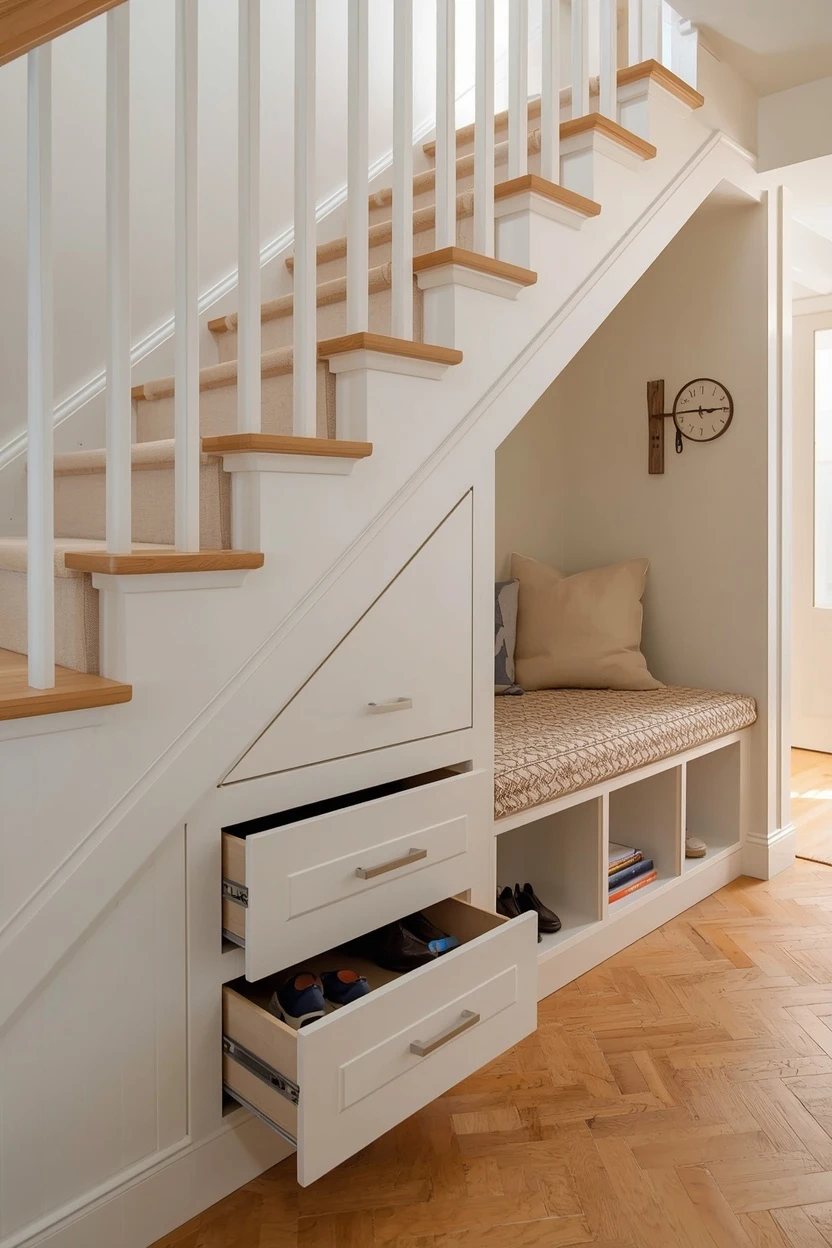
The space beneath a staircase is one of the most wasted areas in almost every home, usually left as an awkward, dusty void or a chaotic dumping ground. The best under stairs storage ideas reclaim every inch of that odd triangular space, turning it into pull-out drawers, hidden cupboards, a compact office, a shoe store, or even a cosy reading nook. With a little planning, dead space becomes some of the hardest-working storage in the house.
Each idea below is a distinct, practical way to use the under-stairs void, with honest notes on what suits the shape, the budget, and the level of build involved. Some are joinery projects; others are simple additions. Whatever the size and pitch of your staircase, there is a solution here to stop that awkward triangle going to waste and put it genuinely to work.
1. Pull-Out Drawers Built into the Staircase
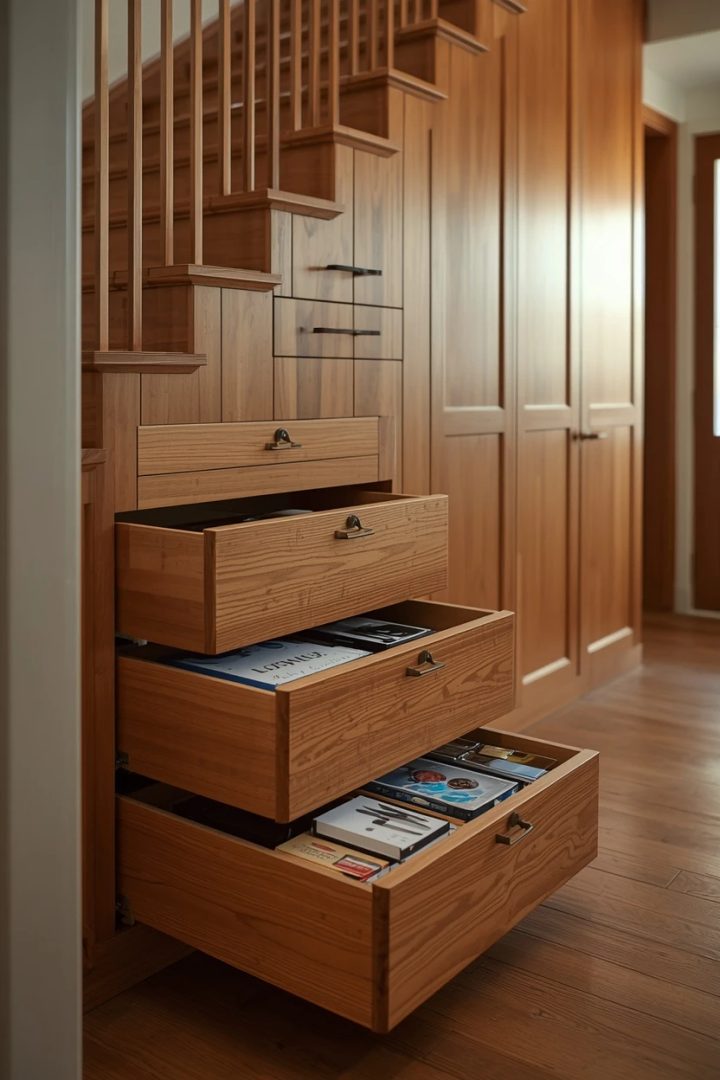
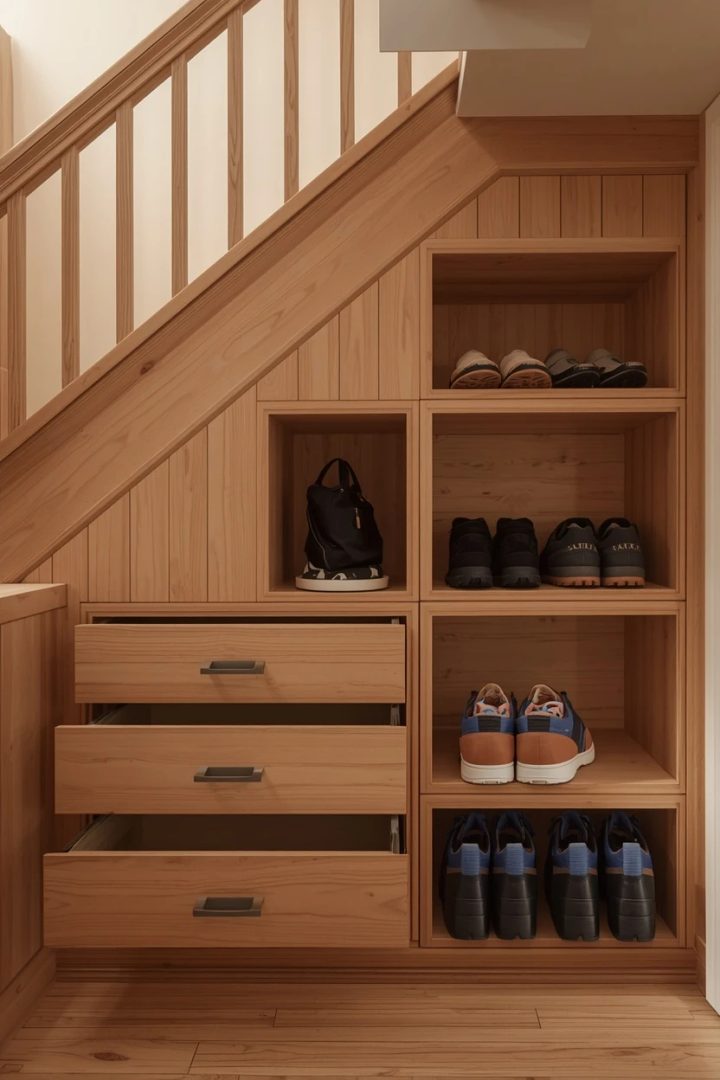
The cleverest option is a bank of large pull-out drawers built into the side of the staircase itself, which reaches deep into the awkward void that a hinged door can never fully access. Each drawer glides out to reveal its entire contents, so nothing gets lost in the dark depths at the back. Graduated drawer heights follow the slope of the stairs, using the full triangular shape.
This is a joinery project and worth budgeting for a professional, since the runners must carry real weight on a slope, but the result is the most efficient use of the under-stairs space by a distance.
2. A Built-In Bookshelf
Fitting open shelving into the under-stairs void turns wasted space into a characterful library that puts books, baskets, and objects on display while following the staircase's diagonal line. Graduated shelves that step down with the slope make a striking architectural feature, and the open front means everything stays visible and reachable.
Style the shelves with a mix of books, plants, baskets to hide clutter, and a few objects for a curated look.
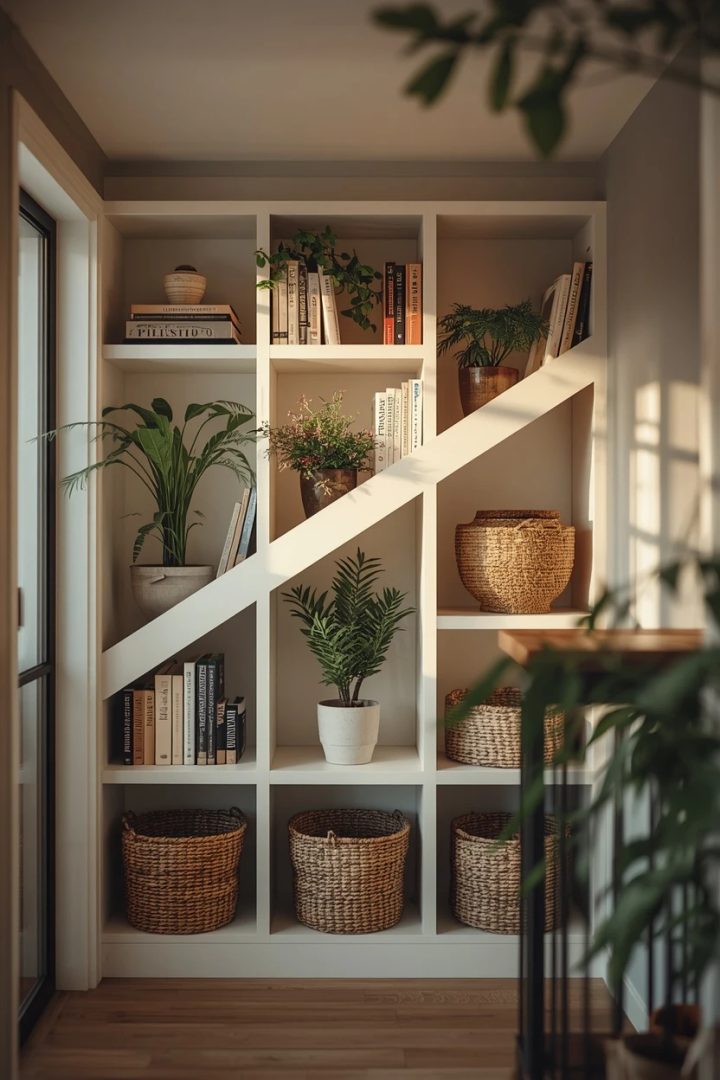
A built-in bookshelf under the stairs is one of the most attractive storage solutions, doubling as display and turning an awkward corner into a focal point.
3. A Hidden Home Office Nook
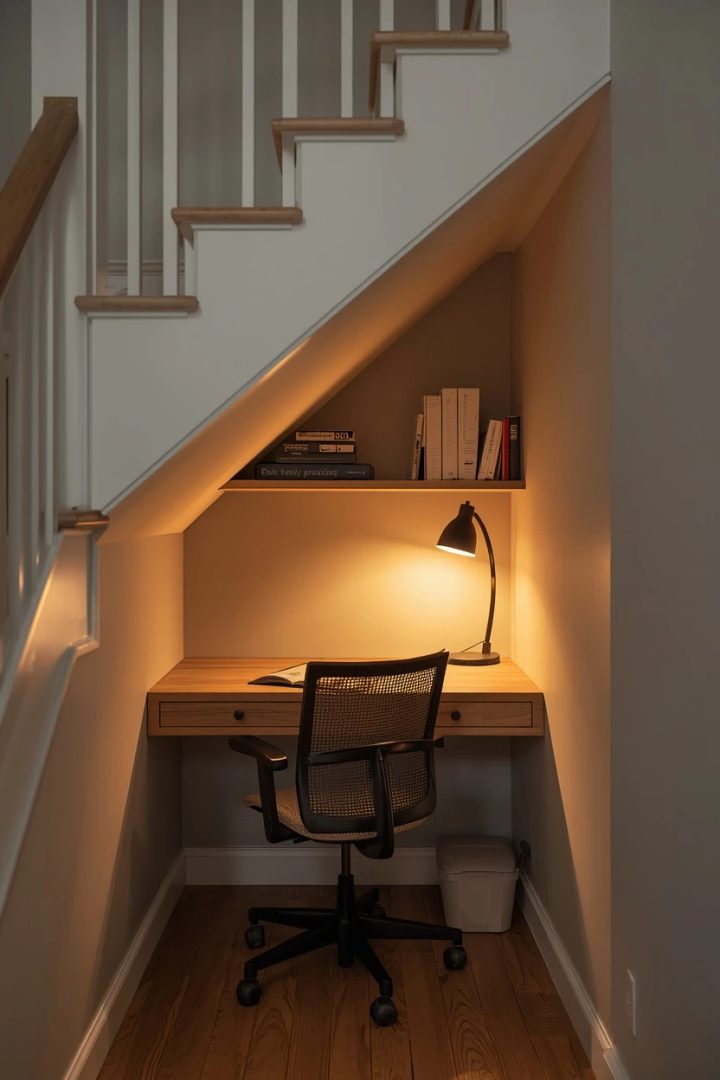
The under-stairs void is the perfect size for a compact home office, tucking a desk, a chair, and shelving into a footprint that would otherwise sit empty. A fitted desk across the widest part of the space, shelves above for files and books, and good task lighting create a genuine working spot that closes away or blends into the hall when not in use. Add a power supply and reliable light, since the void is usually dark, and choose a compact chair that tucks fully under the desk. An under-stairs office is one of the smartest ways to add a workspace to a home with no spare room.
4. Dedicated Shoe Storage
Positioned near the front door, the under-stairs space is ideally located for a dedicated shoe store that keeps the family's footwear organized and off the hall floor. Angled shelves, pull-out shoe racks, or cubbies fitted into the void hold a surprising number of pairs in what was dead space. Slanted shelves that follow the stair pitch use the awkward shape efficiently, and keeping shoes here right at the entry stops them migrating through the house.
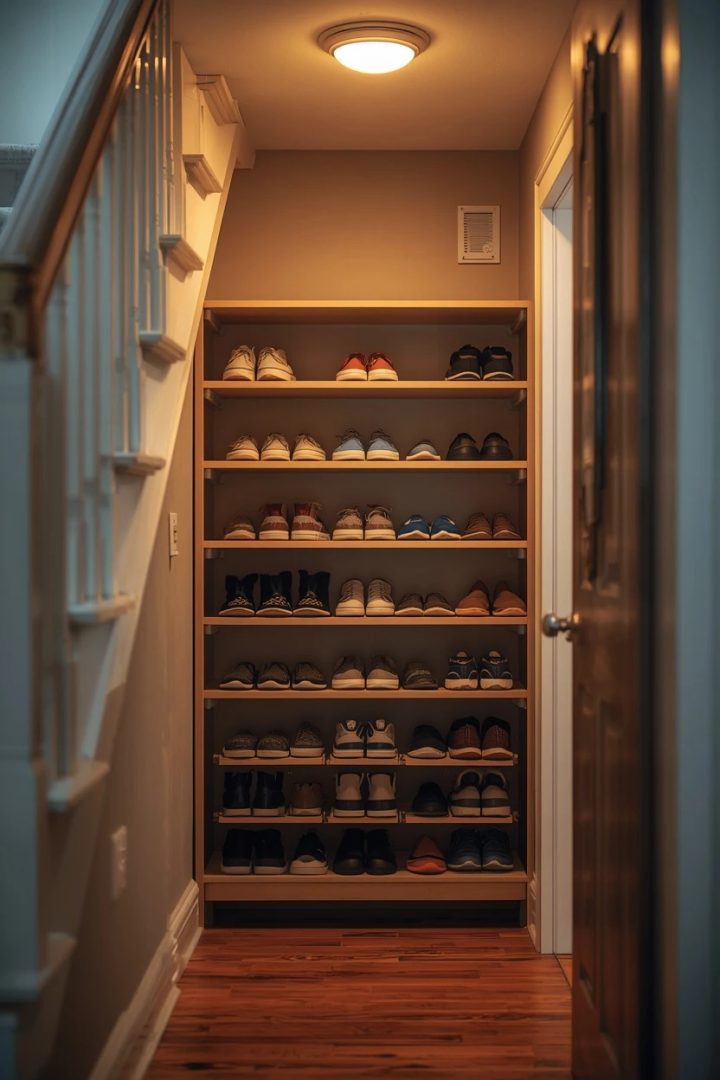
Add a small bench nearby for pulling shoes on and off, and the under-stairs area becomes a compact, practical shoe and boot store exactly where it is needed.
5. A Wine Rack or Wine Store
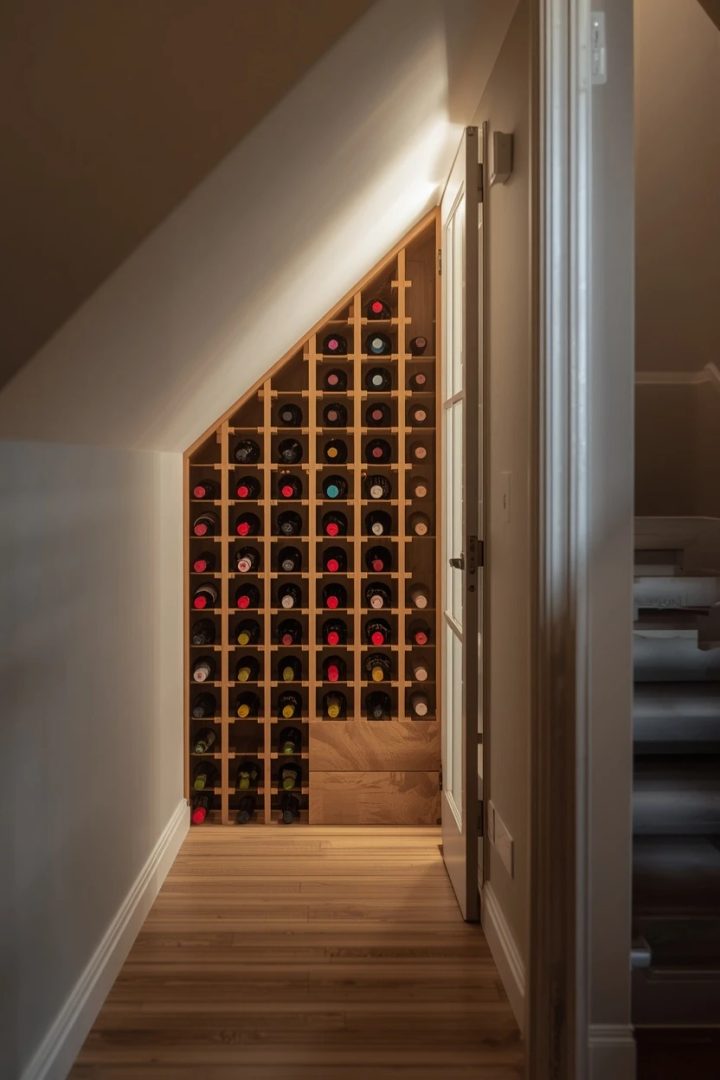
The under-stairs void is naturally cool, dark, and tucked away, which makes it a surprisingly good spot for a wine rack or a small wine store. Fitted wine racking that follows the slope holds bottles neatly on their sides, and a glazed door or open display turns the collection into a feature. For a serious wine store, the shaded, stable-temperature position beneath the stairs suits bottles well, though a proper wine cabinet gives temperature control for long-term storage.
Even a simple run of wine racking under the stairs makes elegant use of the space and keeps the bottles organized and on show.
6. A Cosy Reading Nook
Rather than storage, the under-stairs void can become a cosy reading nook — a padded bench or a built-in daybed tucked into the space with cushions, a shelf of books, and a reading light. Lined with a comfortable seat and soft textiles, the enclosed, sheltered feel of the space under the stairs reads intimate and inviting, the kind of spot children and adults alike gravitate to.
Add a small wall light or a plug-in sconce for reading, a few cushions, and a shelf within reach for books and a drink.
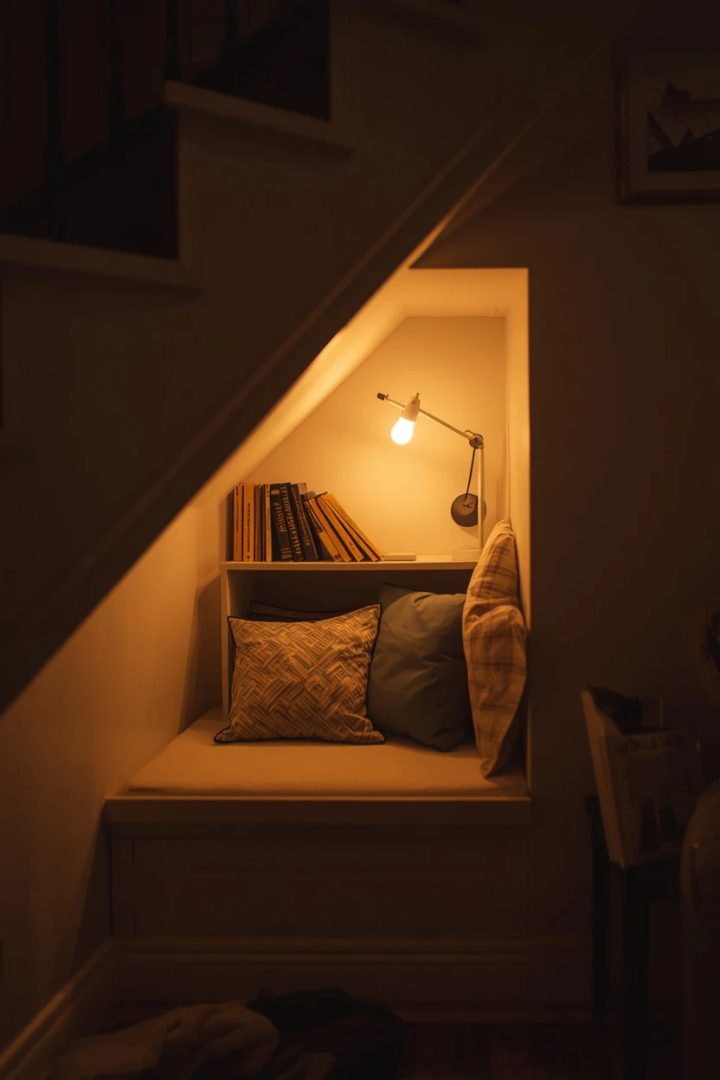
A reading nook turns dead space into one of the most-loved corners of the home.
7. A Pet Bed and Feeding Nook
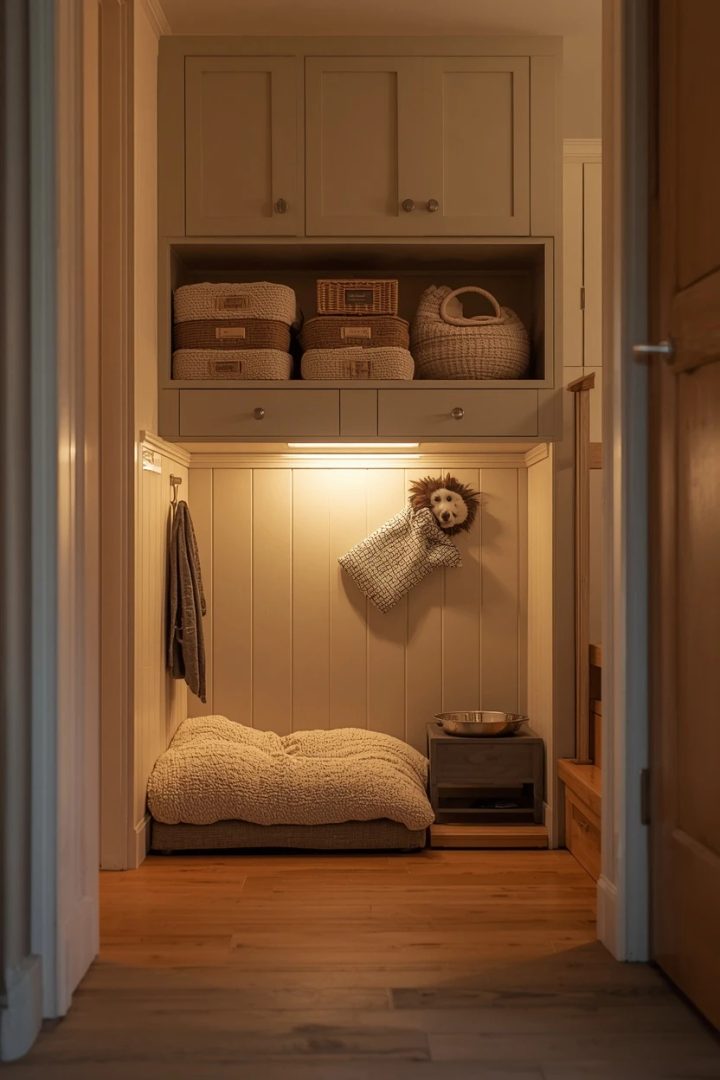
For pet owners, the sheltered under-stairs void makes a perfect den for a dog or cat, giving the animal a cosy, tucked-away spot of its own. A built-in pet bed set into the space, with a feeding station beside it and storage above for food, leads, and toys, turns the void into a dedicated pet zone that keeps the animal's kit out of the way. Line it with a comfortable bed and choose wipeable surfaces for easy cleaning. An under-stairs pet den is a charming, space-smart solution that gives the family pet a snug retreat while keeping the hallway clear.
8. A Downstairs Cloakroom Under the Stairs
One of the most valuable uses of the space is not storage at all — fitting a compact downstairs cloakroom or WC into the void adds a genuinely useful extra toilet to the home. The space is often just large enough for a small toilet and a corner basin, and its position near the hall usually suits the plumbing runs.
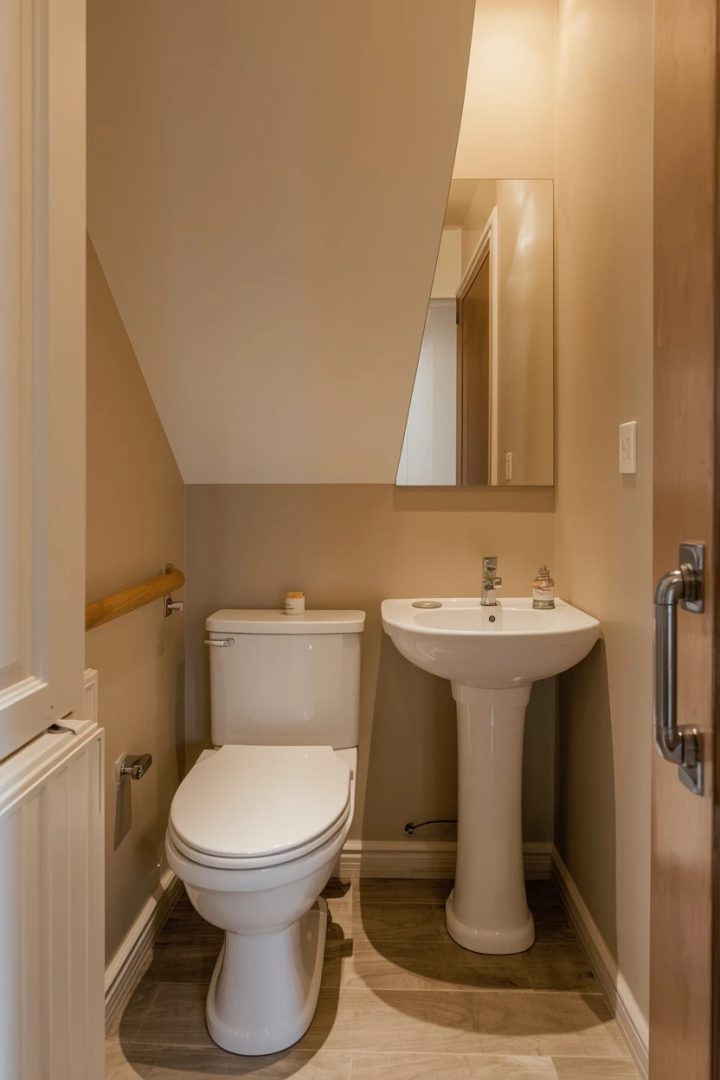
This is a bigger project needing plumbing, ventilation, and building consideration, so it warrants professional input, but adding a downstairs loo is one of the highest-value uses of the under-stairs space and adds real convenience and appeal to a home.
9. Open Cubby Shelving
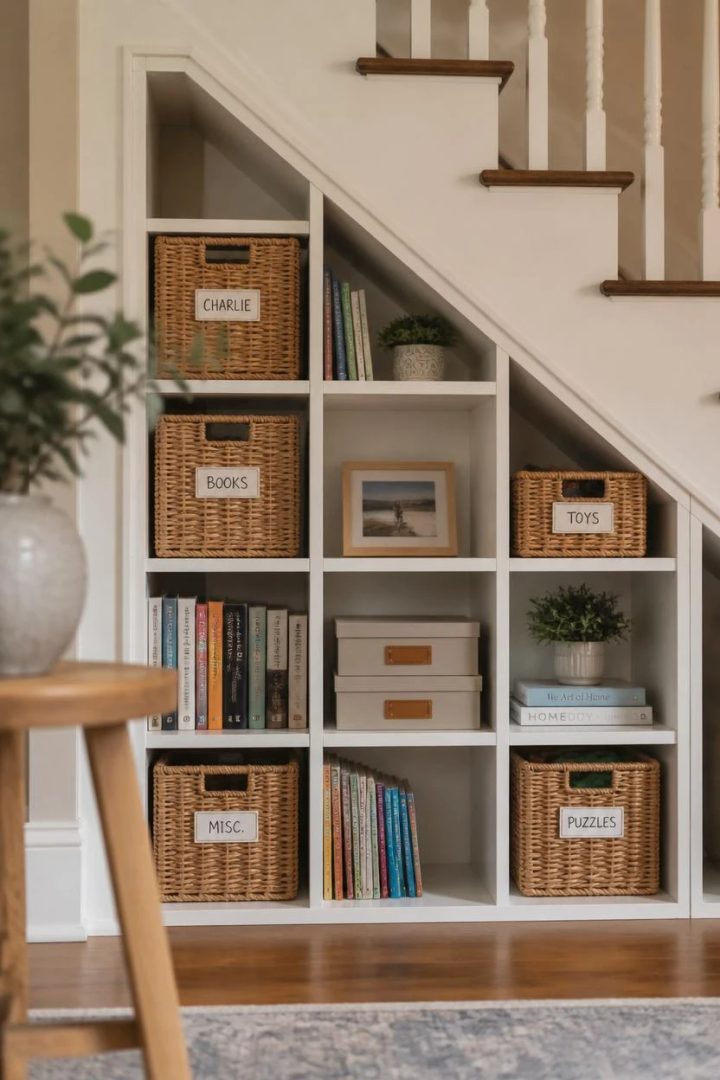
For a simpler, budget-friendly approach, a grid of open cubbies fitted into the under-stairs void provides flexible, accessible storage for baskets, boxes, books, and everyday items. The open cubby structure follows the slope and lets you drop labelled baskets into each compartment to corral loose items neatly. It reads tidy and organized while being far cheaper and simpler than fitted drawers. Mix open display with basket-hidden storage for a balance of style and practicality.
Cubby shelving is one of the most accessible under-stairs solutions, adaptable to whatever you need to store and easy to reconfigure over time.
10. A Coat and Mudroom Zone
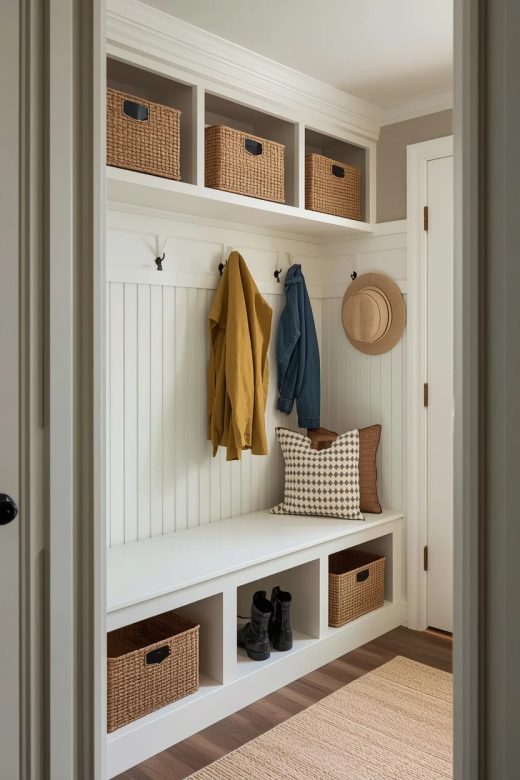
Positioned by the entrance, the under-stairs space makes an ideal compact mudroom or coat zone, catching the coats, bags, and daily clutter right at the door. A run of hooks along the wall, a bench with shoe storage beneath, and a few baskets turn the void into an organized drop zone that keeps the entryway tidy.
Use the taller part of the space for full-length coats and the lower slope for shoes and baskets.
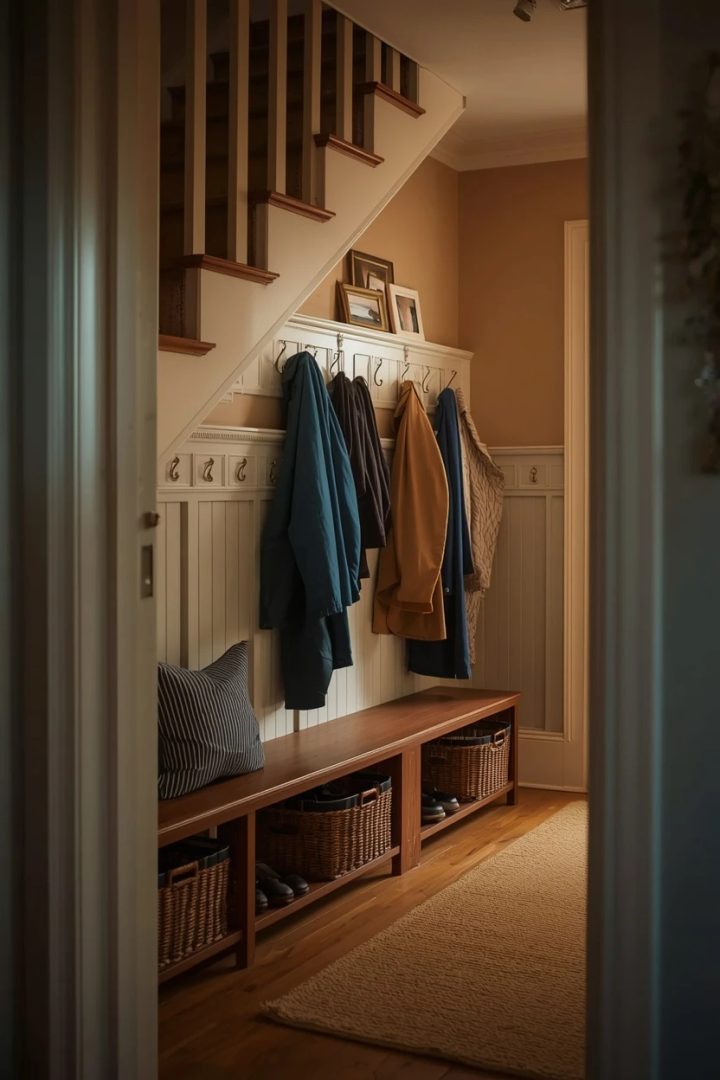
An under-stairs coat zone is a clever way to add mudroom function to a home without a dedicated room, using space that would otherwise be wasted right where it is most useful.
11. A Pull-Out Pantry
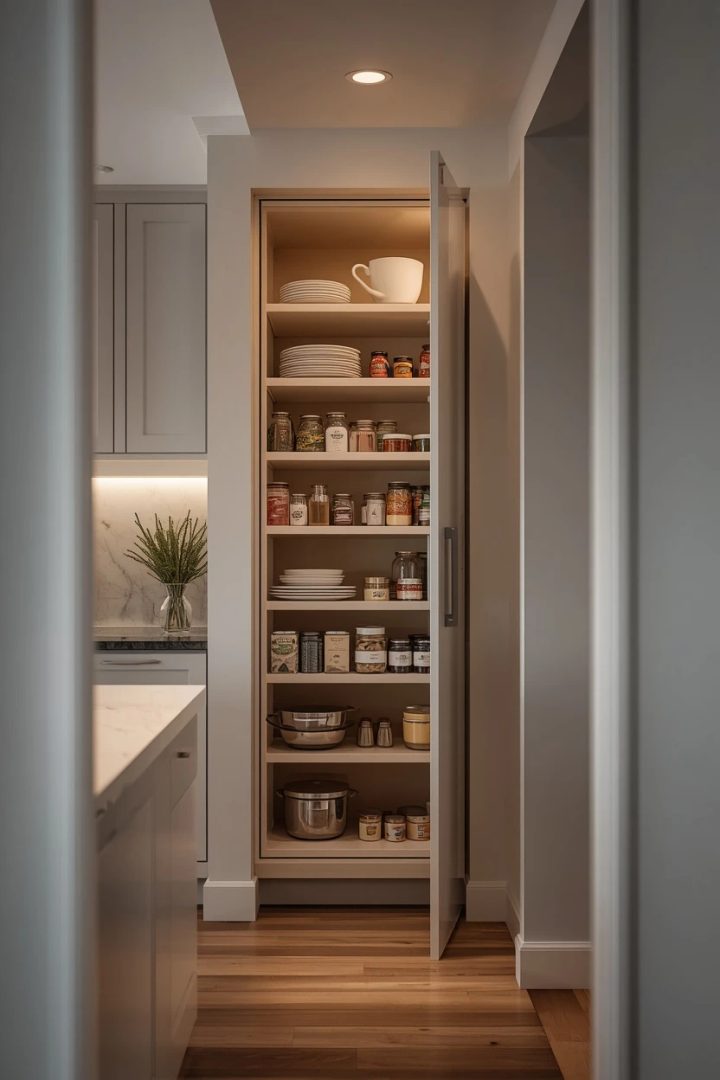
Where the staircase backs onto or sits near the kitchen, the under-stairs void can become a valuable pull-out pantry, adding generous food storage to a kitchen that is short on cupboards. Tall pull-out pantry units glide out to reveal shelves of provisions accessible from both sides, reaching into the deep space efficiently. Fitted shelving behind a door works too, though pull-outs access the awkward depth far better. An under-stairs pantry is a genuinely practical use of the space for keen cooks, effectively adding a walk-in-style larder's worth of storage to a kitchen without taking any of the kitchen's own footprint.
12. Toy Storage for Family Homes
In a family home, the under-stairs void is a brilliant spot for toy storage, keeping the inevitable tide of children's things contained and close to where they play. Low open shelves, labelled bins, and pull-out drawers at child height let children reach and, ideally, tidy away their own toys. Keeping the storage low and accessible encourages children to use it themselves, while a mix of open and closed storage hides the clutter while keeping favourites reachable.
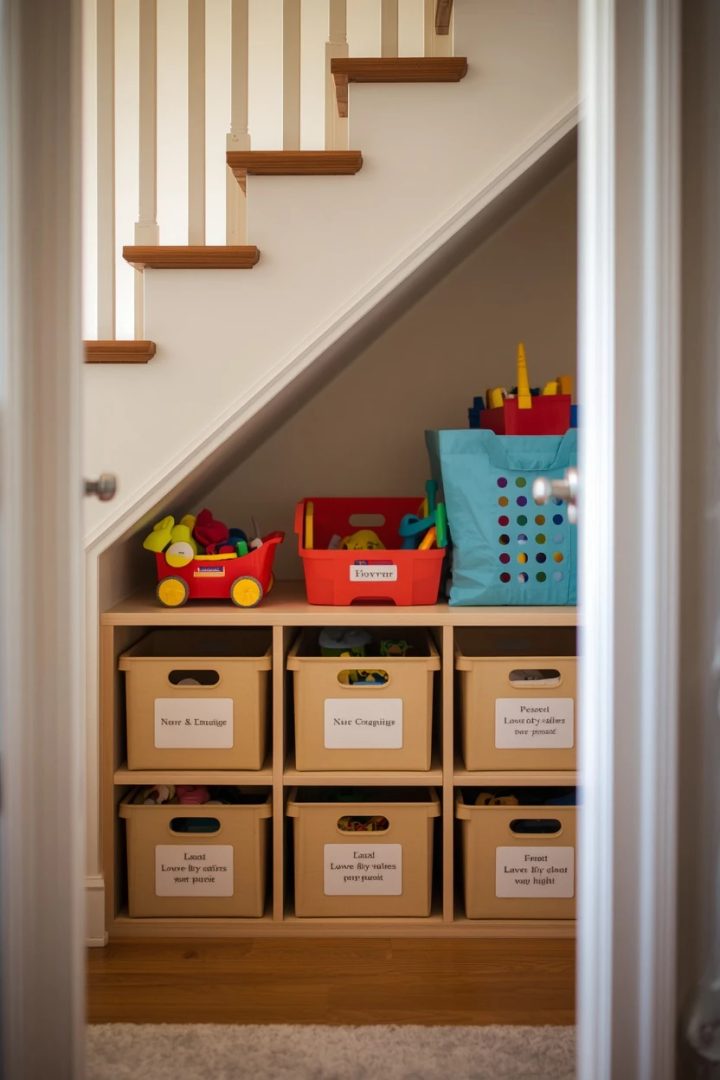
An under-stairs toy store keeps the playthings organized and out of the main living space, and its low position suits small hands perfectly.
13. A Display Cabinet or Feature Zone
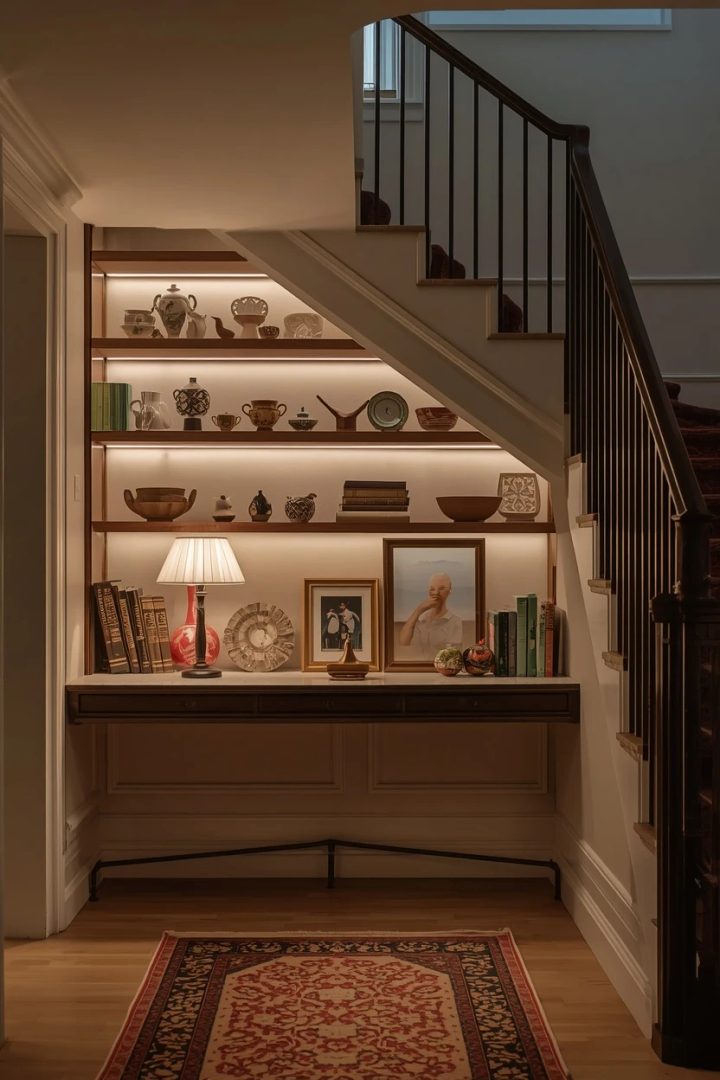
Not every use of the under-stairs space has to be practical storage — turning the void into a styled display cabinet or a feature zone makes it a decorative moment in the home. A glazed display cabinet, lit shelving showing off ceramics or books, or a console table with art and a lamp turns the awkward space into a curated vignette. Add lighting to make the display glow, since the void is usually dark.
A display feature under the stairs proves the space can be beautiful as well as useful, giving a hallway a focal point where there was once just an empty triangle.
14. Concealed Cabinet Doors
For the tidiest, most streamlined look, fitting flush concealed doors across the under-stairs void hides all the storage behind a clean, seamless face that blends into the wall. Push-to-open or handleless doors, panelled to match the surrounding wall or the staircase, conceal drawers, shelves, and clutter completely, so the hallway reads calm and uninterrupted.
This suits an entrance hall on show, where visible storage would read cluttered. Behind the clean doors, fit whatever storage suits — shelves, drawers, or hanging space.
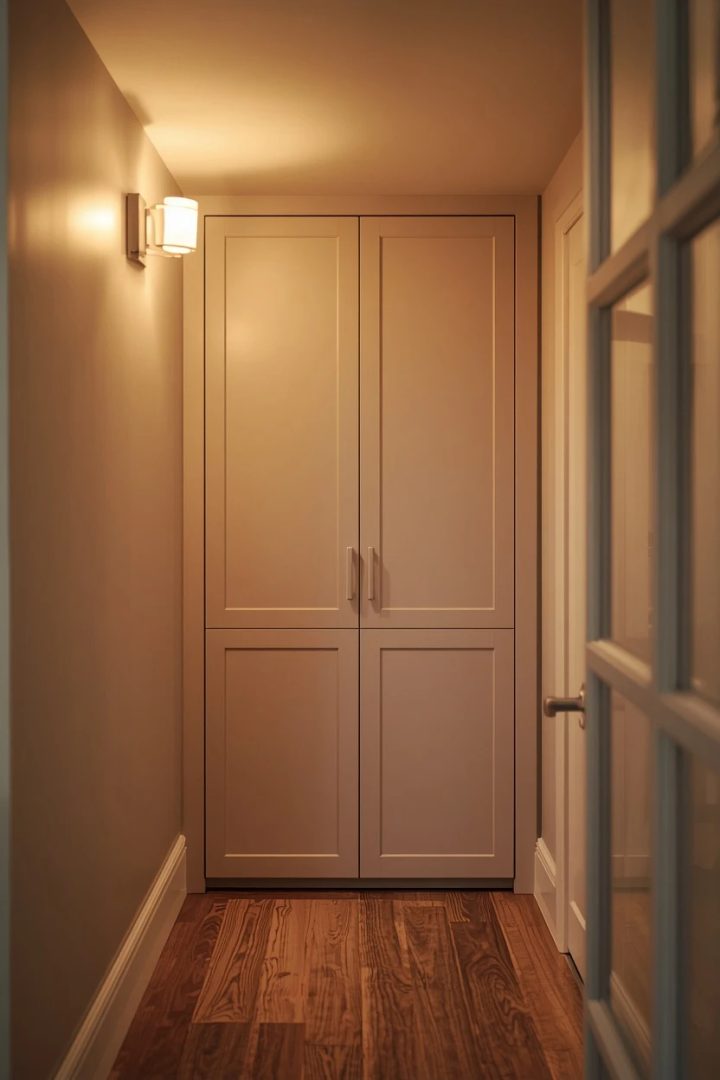
Concealed cabinetry is the most discreet of all under-stairs solutions, hiding a large amount of storage behind a smooth, architectural face.
15. The Complete Under Stairs Solution
Brought together, the best under-stairs solutions match to the space to the space, the location, and how you live — pull-out drawers and cubbies for maximum storage, a compact office or reading nook for function and comfort, a cloakroom or pantry for genuine added value, and concealed doors or open display depending on whether you want it hidden or on show. The guiding principle is that no under-stairs void should be left as wasted space, since with a little planning it becomes some of the hardest-working square footage in the home. Assess the shape, the position, and your household's needs, and turn that awkward triangle into a genuine asset.
Where I'd Start if I Only Did Three Things
If I only did three things with an under-stairs void, I'd start by assessing the shape and position honestly — whether it backs onto the kitchen, sits by the front door, or opens into a living space — since location determines the best use. Next, for pure storage I'd choose pull-out drawers over a hinged cupboard, because drawers reach the deep, awkward back of the void that a door can never access. Third, I'd add lighting and a power point, since the space is always dark and most uses need both. Assess the position, choose pull-outs over doors, and wire it for light and power — those three decisions unlock the space.
Frequently Asked Questions
What are the best under stairs storage ideas?
The best under-stairs solutions depend on the space and how you live. Pull-out drawers built into the staircase side are the most efficient for pure storage, reaching deep into the awkward void a hinged door cannot access. Built-in shelving and open cubbies suit books, baskets, and display. For added function, a compact home office, a shoe store, a pull-out pantry, or a cosy reading nook all use the space well. For genuine added value, fitting a downstairs cloakroom is one of the highest-return uses. Concealed doors hide everything for a streamlined look, while open shelving or a display cabinet makes the space a feature. Match the solution to the position and your needs.
How much does under stairs storage cost?
The cost of under stairs storage varies enormously with the solution. Simple additions like freestanding shelving, baskets, or a shoe rack cost very little and can be done yourself. Fitted open shelving or cubbies fall in the mid-range depending on materials and whether you build or commission them. Bespoke joinery — pull-out drawers, a fitted office, or concealed cabinetry — is the most expensive, since it involves a professional and custom work on a sloped, awkward space, but it delivers the most efficient use. A downstairs cloakroom is the biggest investment of all, needing plumbing and ventilation. Set a budget, decide between DIY and bespoke, and choose the solution that fits both.
Can you fit a toilet under the stairs?
Yes, fitting a compact downstairs cloakroom or WC under the stairs is one of the most valuable uses of the space, and it is very common in homes that need an extra toilet. The void is often just large enough for a small toilet and a corner basin, and its position near the hall usually suits the existing plumbing runs. You will need adequate head height at the point where the toilet sits, proper ventilation, and to meet building requirements, so it is a project that warrants professional input for the plumbing and any structural or ventilation work. Where it fits, an under-stairs loo adds real everyday convenience and appeal to a home.
How do I make the most of an awkward under stairs space?
The key to an awkward under-stairs space is working with its triangular shape rather than against it. Use graduated storage — drawers, shelves, or cubbies that step down with the slope — to fill the full height efficiently. Choose pull-out solutions over hinged doors so you can reach the deep, low back of the void. Reserve the tallest part of the space for the things that need height, like coats or a desk chair, and use the low slope for shoes, drawers, or baskets. Add lighting and power, since the void is always dark. With a considered plan that follows the slope, even the most awkward under-stairs space becomes genuinely useful.
Final Thoughts
The space beneath the stairs is one of the most wasted areas in the home, yet these under stairs storage ideas show how much potential that awkward triangle holds — from efficient pull-out drawers and built-in shelving to a hidden office, a cosy reading nook, a pull-out pantry, or even a downstairs cloakroom. The guiding principle is simple: no under-stairs void should be left as dead space. Assess its shape and position, work with the slope rather than against it, choose pull-outs over hinged doors for deep storage, and wire it for light and power. Do that, and that neglected corner becomes some of the hardest-working space in the whole house.