19 Drapery Ideas for a Living Room That Feels Polished and Complete
 By zarcoyt2025
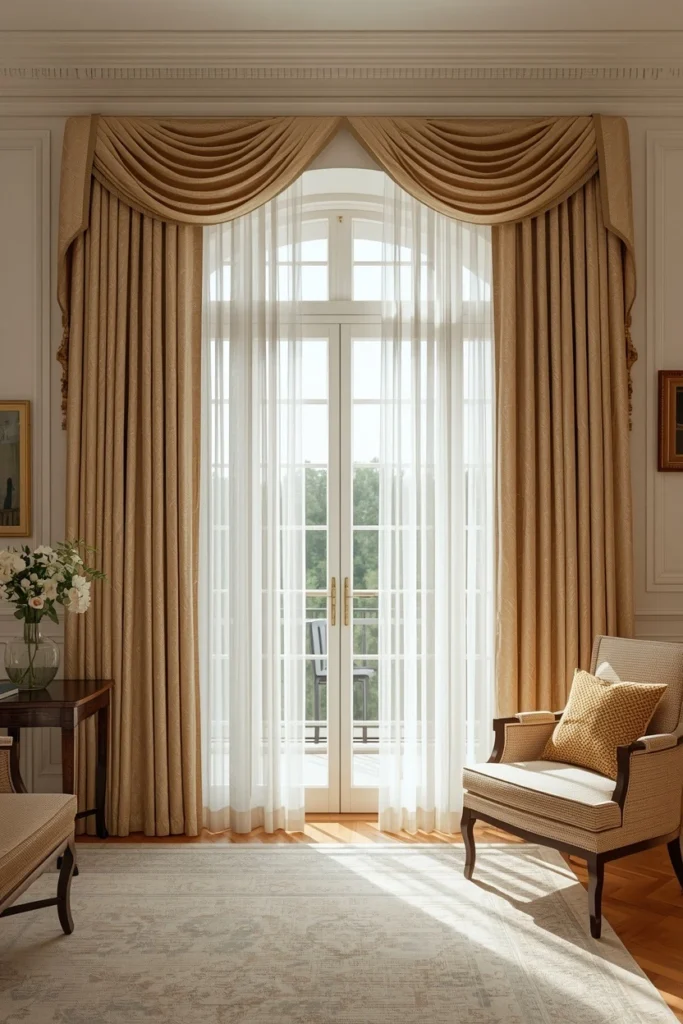
Table of Contents
- 1. The Floor-Length Drapery Living Room
- 2. The Hung-High-and-Wide Drapery Living Room
- 3. The Pinch-Pleat Drapery Living Room
- 4. The Layered Sheer-and-Drape Living Room
- 5. The Valance-Topped Drapery Living Room
- 6. The Rich Fabric Drapery Living Room
- 7. The Full-and-Generous Drapery Living Room
- 8. The Neutral Linen Drapery Living Room
- 9. The Bold Patterned Drapery Living Room
- 10. The Pooling Drapery Living Room
- 11. The Wave-Heading Drapery Living Room
- 12. The Drapery-and-Blind Living Room
- 13. The Statement Hardware Drapery Living Room
- 14. The Velvet Drapery Living Room
- 15. The Color-Matched Drapery Living Room
- 16. The Tieback Drapery Living Room
- 17. The Floor-to-Ceiling Drama Living Room
- 18. The Minimalist Drapery Living Room
- 19. The Complete Drapery Living Room
- Where I’d Start if I Only Did Three Things
- FAQs
- Final Thoughts
Drapery is the finishing touch that makes a living room feel polished and complete — the soft, full fabric that frames the windows, softens hard architecture, adds warmth, and quietly elevates the whole room. The difference between drapery that looks bespoke and drapery that looks like an afterthought comes down to a few key decisions: the fabric, how high and full you hang it, the heading style, and the way you layer and finish it.
Each of these 19 drapery ideas for a living room is a complete look you can recreate, a whole approach to dressing your windows beautifully rather than a single panel. Find the version that suits your space, your windows, and how formal you want the room to feel, and use it as a blueprint for drapery that frames the room, softens the light, and makes the whole living room feel finished, gracious, and complete.
1. The Floor-Length Drapery Living Room
The foundation of beautiful living room drapery is length — floor-length panels that just kiss or lightly break on the floor look elegant and intentional, while short, sill-length panels read dated and skimpy. Hang the drapery to graze the floor or pool slightly for a luxurious touch. The length alone transforms the look. It suits any living room, since floor-length drapery is the single most important decision for windows that look polished, gracious, and properly dressed rather than awkward and unfinished.
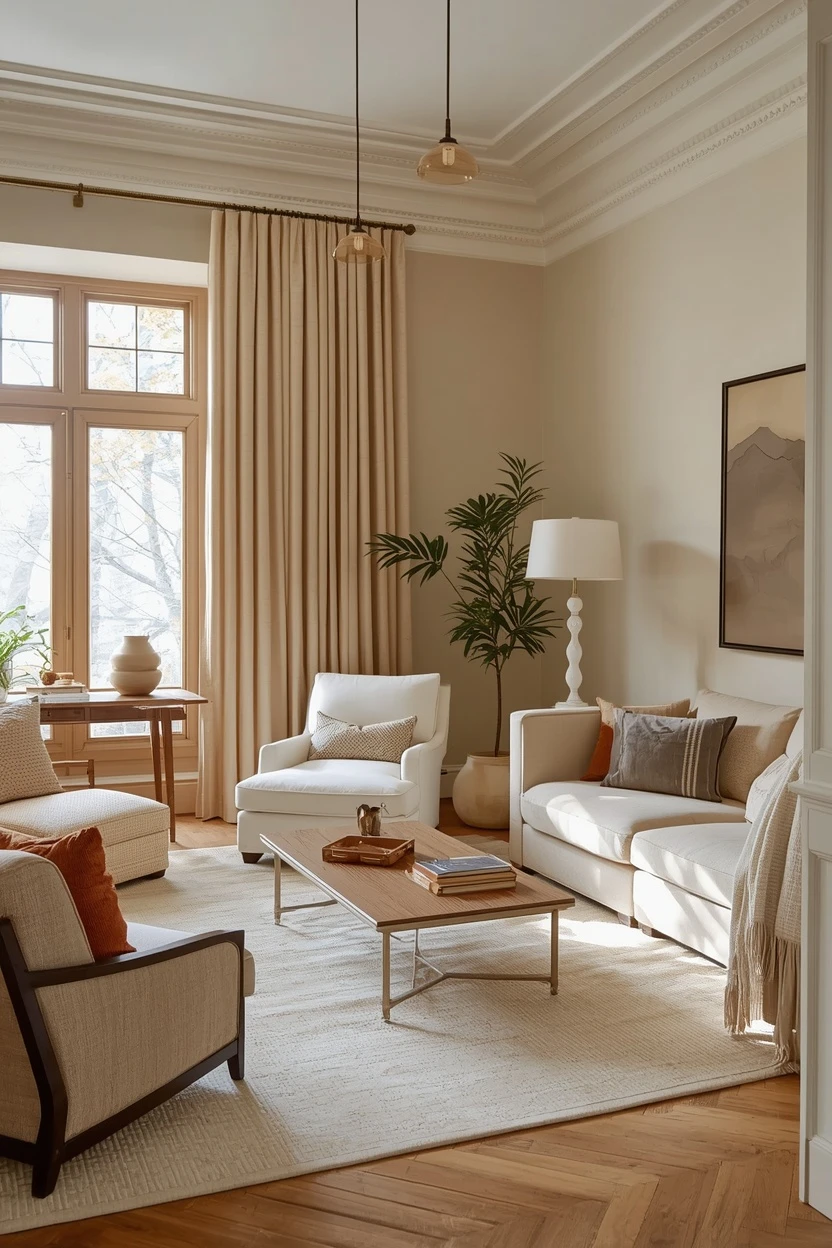
2. The Hung-High-and-Wide Drapery Living Room
Where you mount the drapery matters as much as the fabric, so hanging the rod high — close to the ceiling — and wide, extending past the window frame, makes the windows look taller, grander, and the room more spacious. The drapery should frame the glass, not cover it, when open. The placement adds height and drama. It suits any living room, since hanging drapery high and wide is a designer trick that instantly makes windows and the whole room feel larger and more elegant.
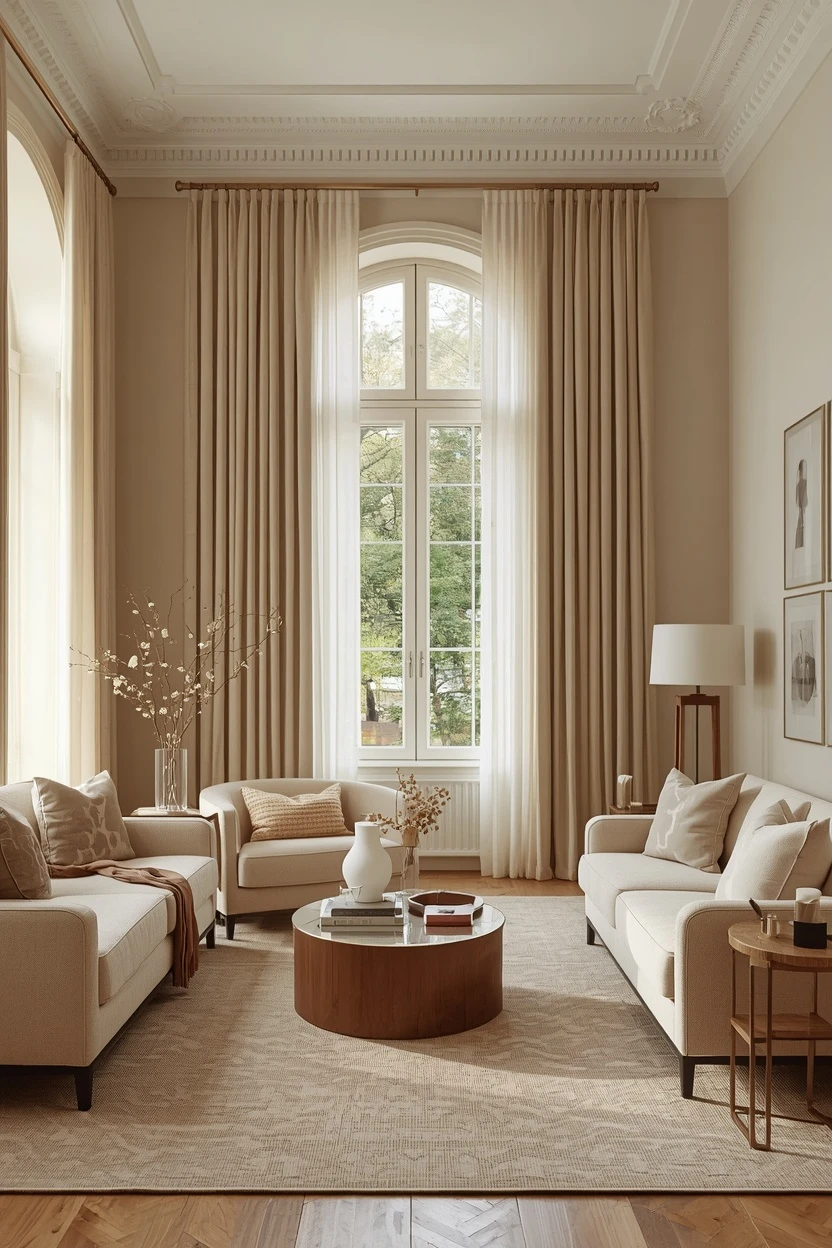
3. The Pinch-Pleat Drapery Living Room
A tailored pinch-pleat heading gives living room drapery a crisp, structured, formal look, with the neat folds hanging beautifully and reading distinctly upscale. The pleats create even, gracious folds from top to bottom for a bespoke feel. The heading sets the tone of the whole drape. It suits formal and traditional living rooms, since pinch-pleat drapery is one of the most classic, elegant heading styles and gives windows a tailored, custom-made quality.
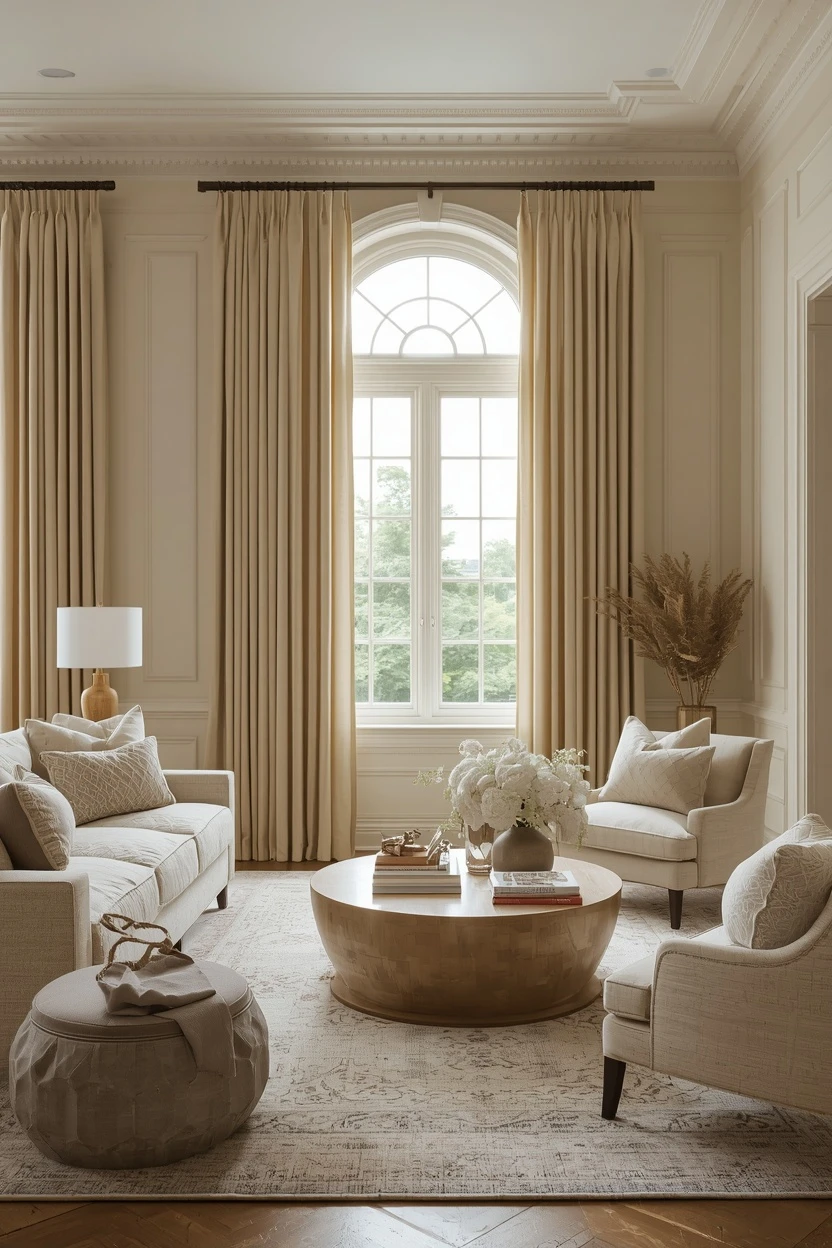
4. The Layered Sheer-and-Drape Living Room
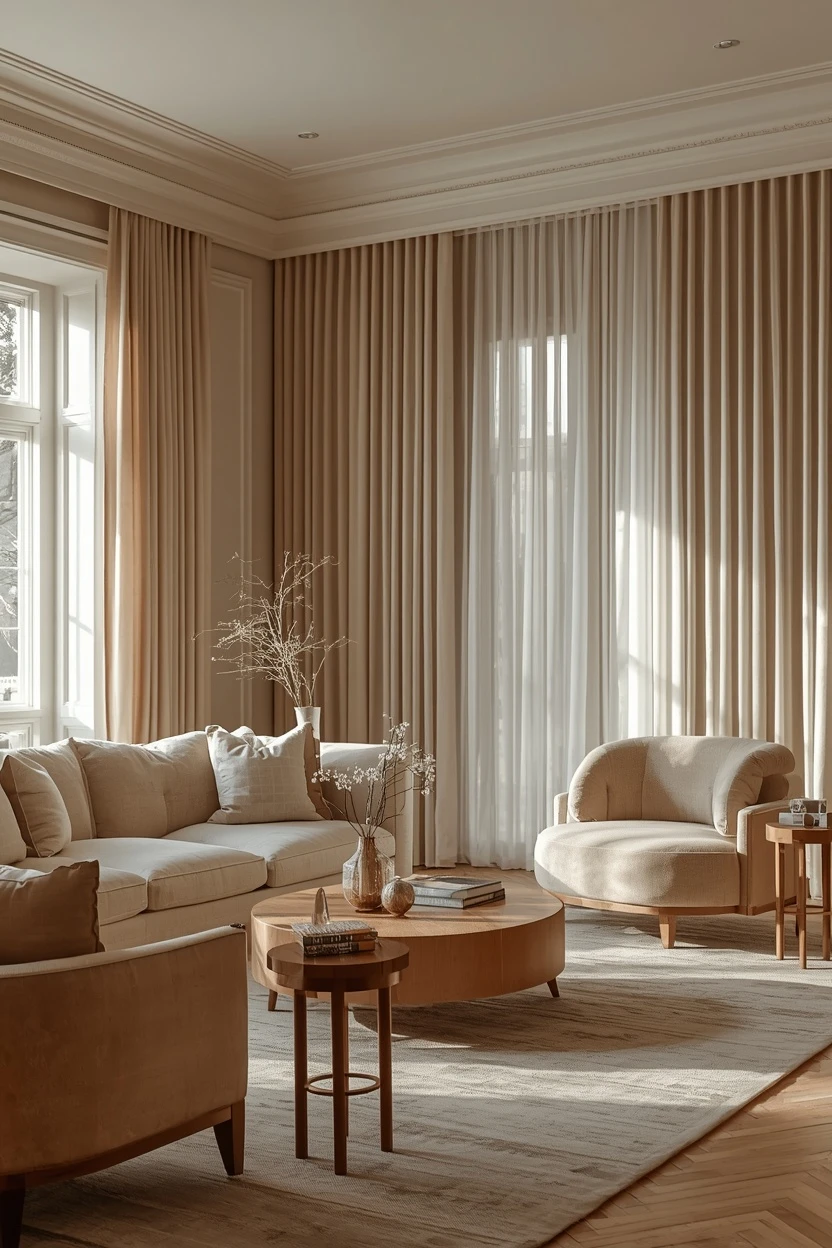
Layering sheer panels behind heavier drapery gives a living room flexible light control and a rich, finished look — sheers filter daylight and add softness by day, while the drapes provide privacy and warmth by night. The double layer reads luxurious and considered. The combination offers the best of both. It suits any living room, since layering sheers with drapery is a sophisticated way to control light beautifully while adding depth and a polished, hotel-like quality to the windows.
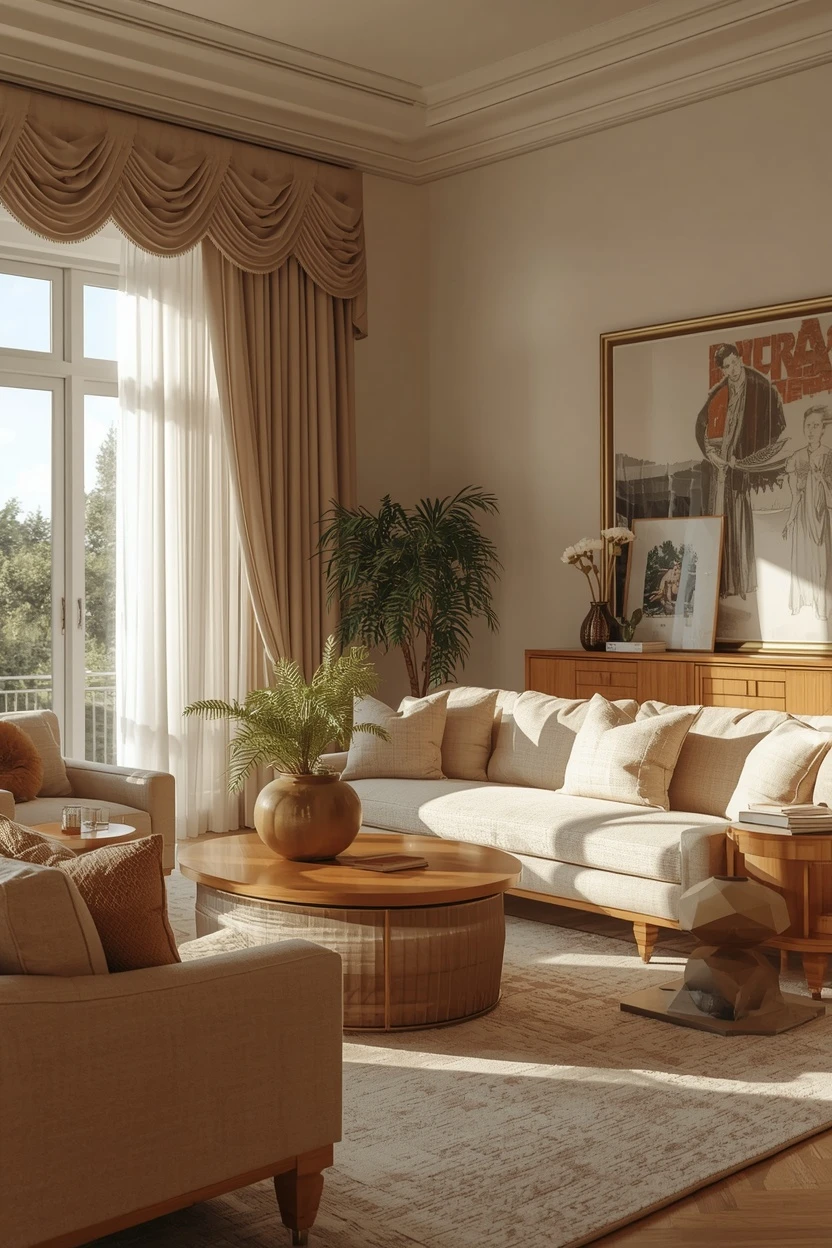
5. The Valance-Topped Drapery Living Room
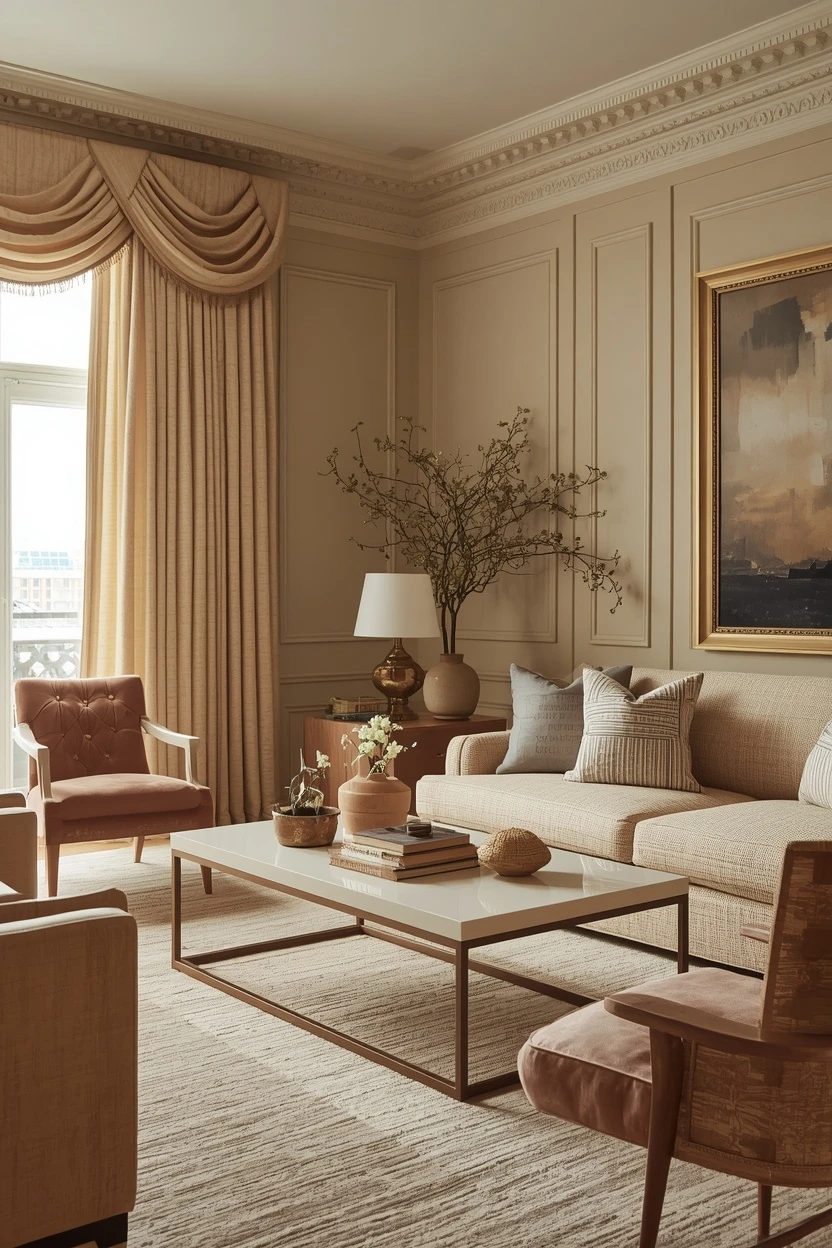
Adding a valance — a short fabric topper across the top of the window — gives living room drapery a traditional, finished crown that conceals the hardware and adds a layer of elegance. Choose a soft gathered or tailored valance that coordinates with the panels for a classic look. The valance completes the dressing. It suits traditional living rooms, since a window valance is a timeless way to top drapery with a polished, gracious finish, and valance ideas for the living room remain a classic decorating staple.
6. The Rich Fabric Drapery Living Room
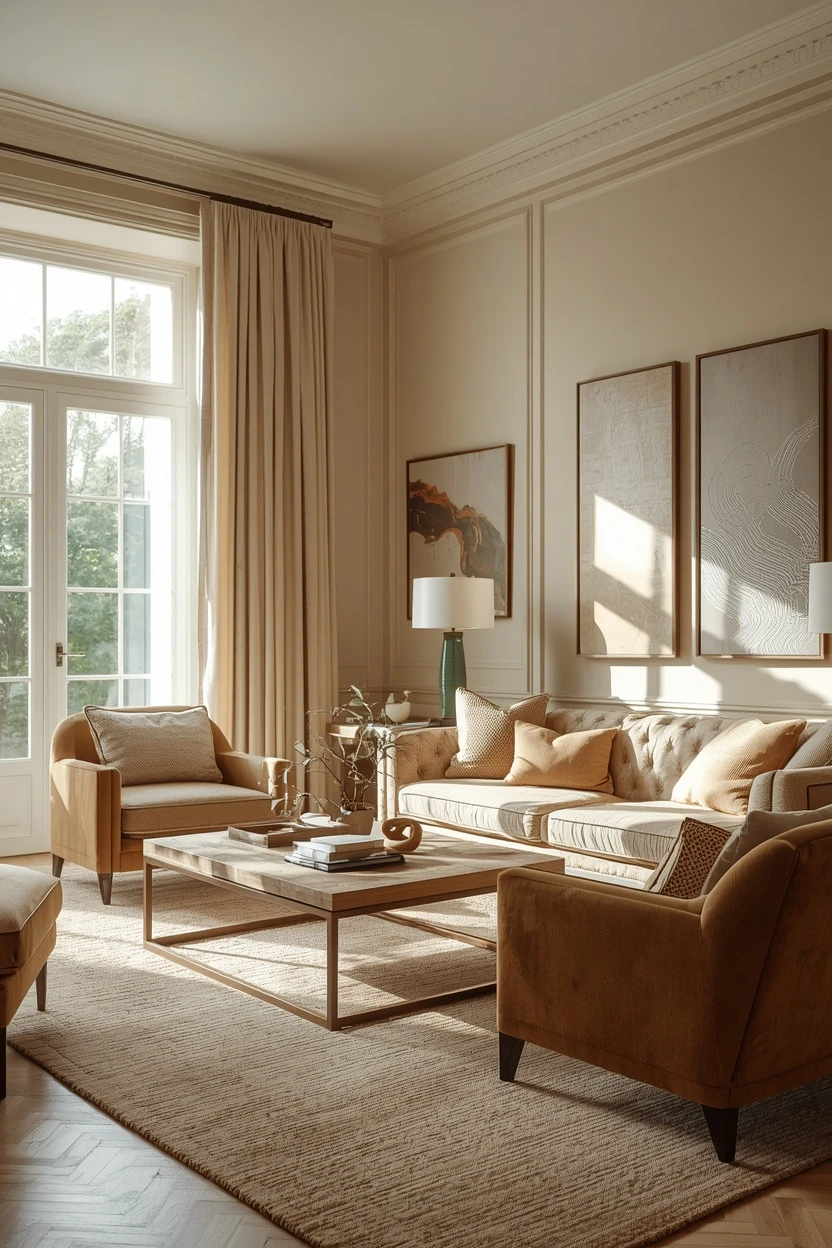
The fabric makes the drapery, so choosing a quality, weighty material — velvet, linen, or a lined cotton blend — gives the panels a luxurious drape and a finished hang that thin fabrics cannot match. Heavier, lined fabrics fall beautifully and read expensive. The material is what elevates the whole look. It suits any living room wanting elegance, since rich, well-lined drapery fabric is the difference between windows that look bespoke and ones that look flimsy and unfinished.
7. The Full-and-Generous Drapery Living Room
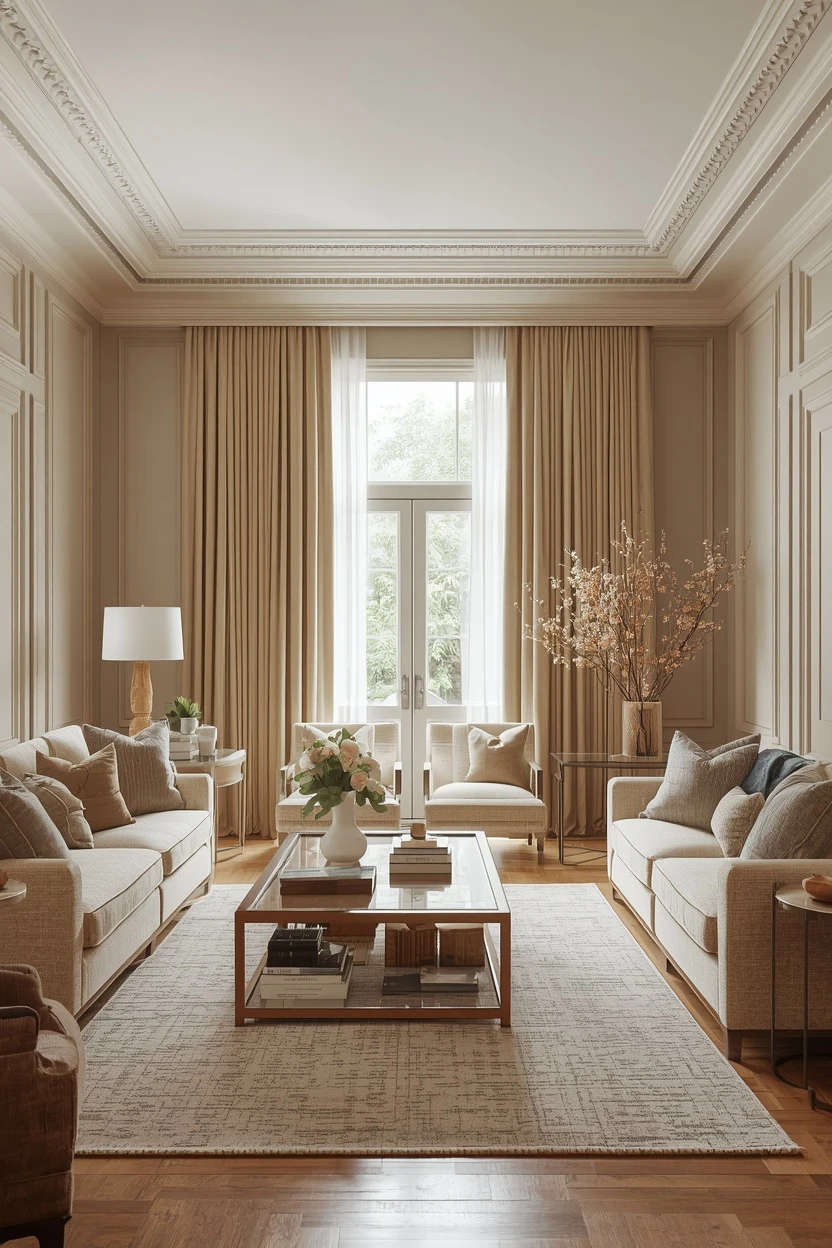
Fullness is the secret to luxurious drapery, so using panels wide enough to look generous and gathered — ideally two to three times the window width in total fabric — gives a rich, full hang rather than a flat, stretched look. Generous fabric folds beautifully and reads upscale. The fullness signals quality. It suits any living room, since generously full drapery is one of the clearest markers of well-dressed windows, making even simple panels look gracious and expensive.
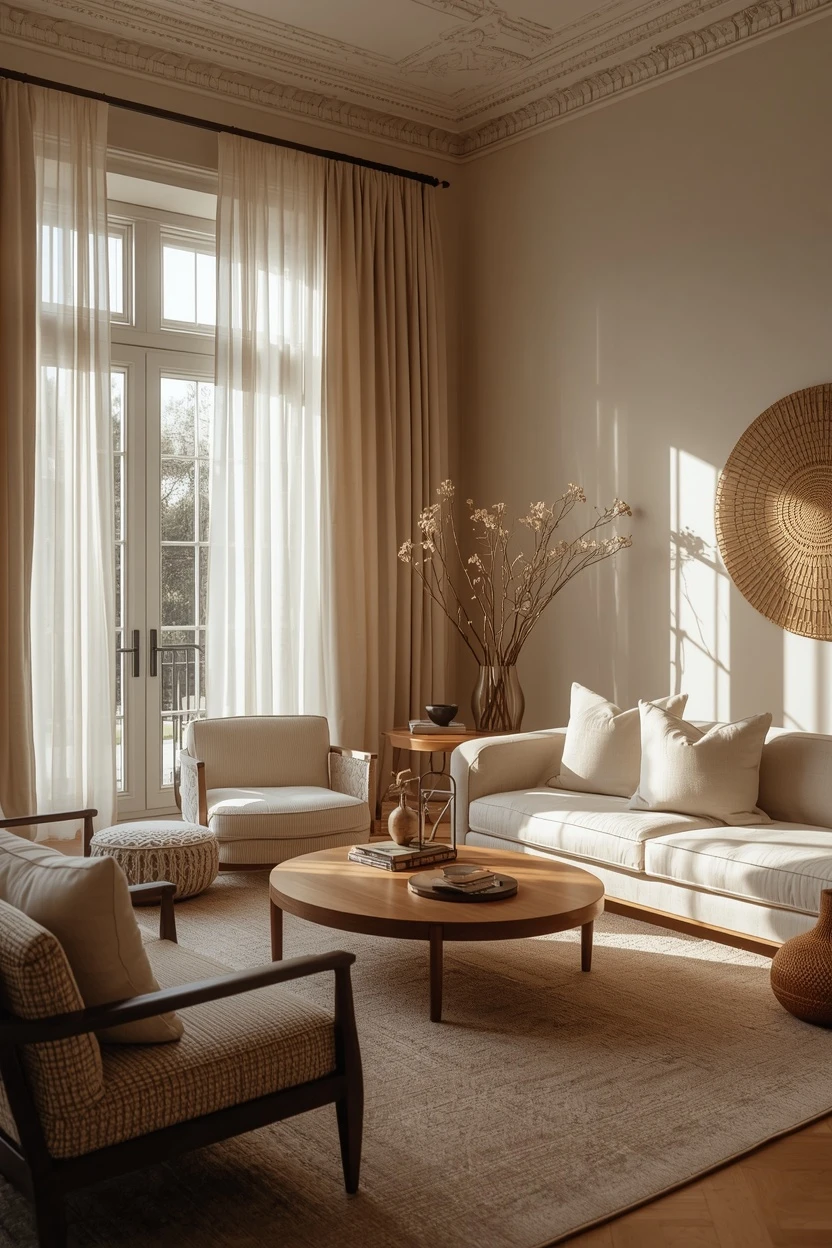
8. The Neutral Linen Drapery Living Room
Soft, neutral linen drapery gives a living room a relaxed, elegant, timeless look that suits almost any scheme. The natural texture and gentle drape of linen read effortlessly chic, filtering light softly and adding warmth without fuss. The neutral tone keeps it versatile. It suits modern, coastal, and casual living rooms, since neutral linen drapery is one of the most versatile, easygoing, and enduring ways to dress windows beautifully while keeping the room light and calm.
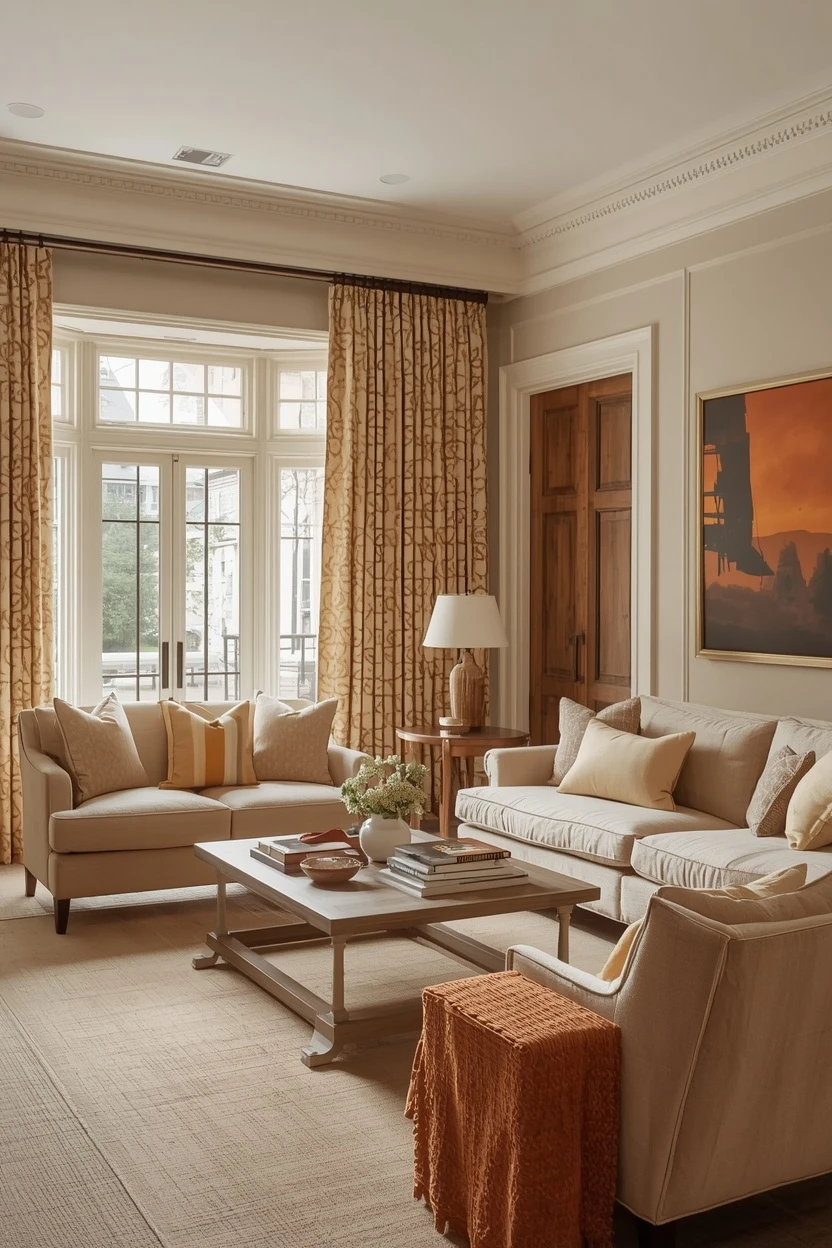
9. The Bold Patterned Drapery Living Room
Patterned drapery — florals, geometrics, or stripes — turns the windows into a statement and injects color and personality into a living room. Choose a pattern that ties into the scheme, and let the drapery become a key decorative feature. The pattern adds character and draws the eye. It suits anyone who wants their windows to make a statement, since bold patterned drapery is a striking way to add color, interest, and a designed focal point to a living room.
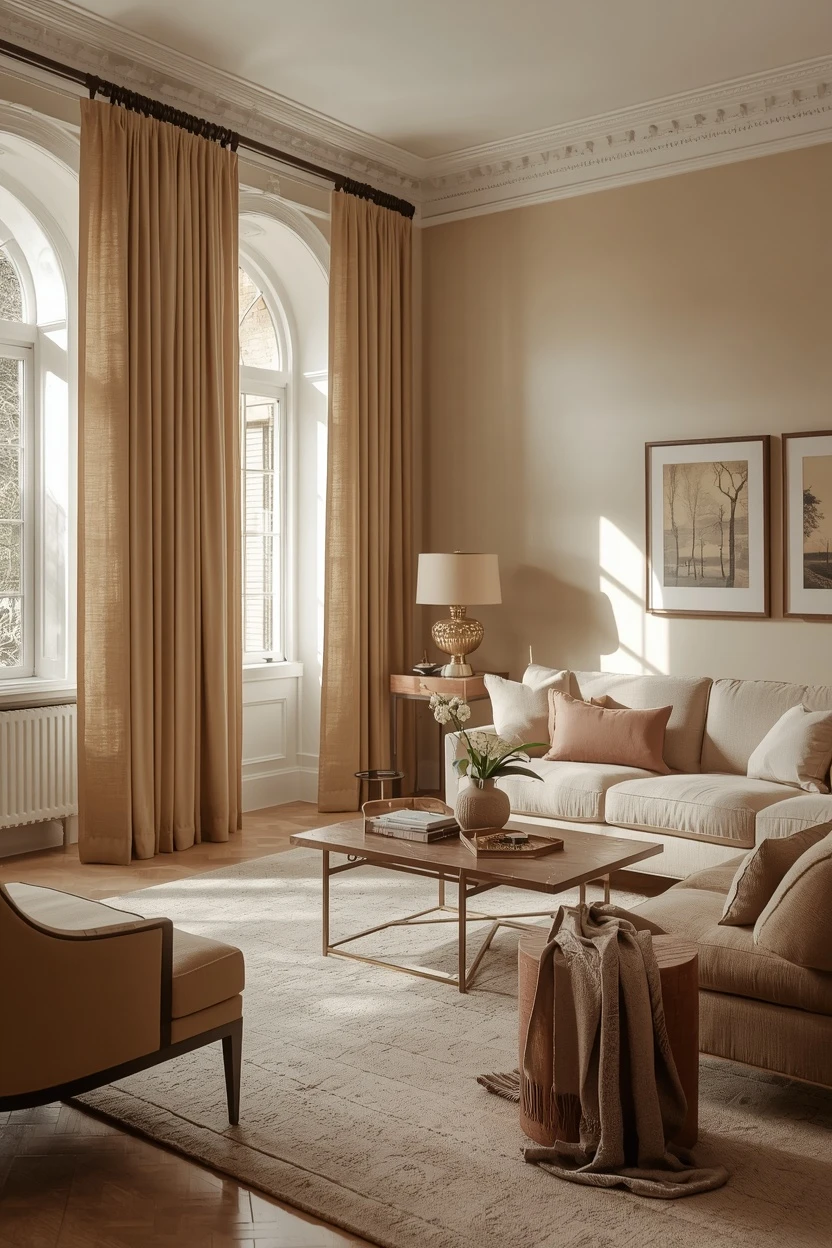
10. The Pooling Drapery Living Room
For a romantic, luxurious look, letting the drapery pool — with extra length gathering softly on the floor — adds drama and an opulent, gathered elegance. Allow a few inches of extra fabric to puddle gracefully for a relaxed, sumptuous feel. The pooling reads indulgent and soft. It suits formal and romantic living rooms, since pooling drapery is a classic way to add a touch of luxury and softness to windows, though it suits low-traffic, more formal rooms best.
11. The Wave-Heading Drapery Living Room
A wave or ripple-fold heading gives drapery a clean, contemporary look, with the fabric falling in soft, even S-curves from a discreet track. The uniform waves read modern, sleek, and effortlessly elegant. The heading suits a current, pared-back aesthetic. It suits modern living rooms, since wave-heading drapery is one of the most contemporary, streamlined ways to hang panels, giving windows a smooth, sophisticated finish without the formality of traditional pleats.
12. The Drapery-and-Blind Living Room
Combining drapery with a blind or shade — a roman blind or roller for practical light control, framed by soft drapery panels — gives a living room both function and a finished, layered look. The blind handles privacy and daylight while the drapery softens and frames. The pairing is practical and polished. It suits any living room, since layering drapery over a blind is a smart way to combine real light control with the warmth and elegance of soft fabric at the window.
13. The Statement Hardware Drapery Living Room
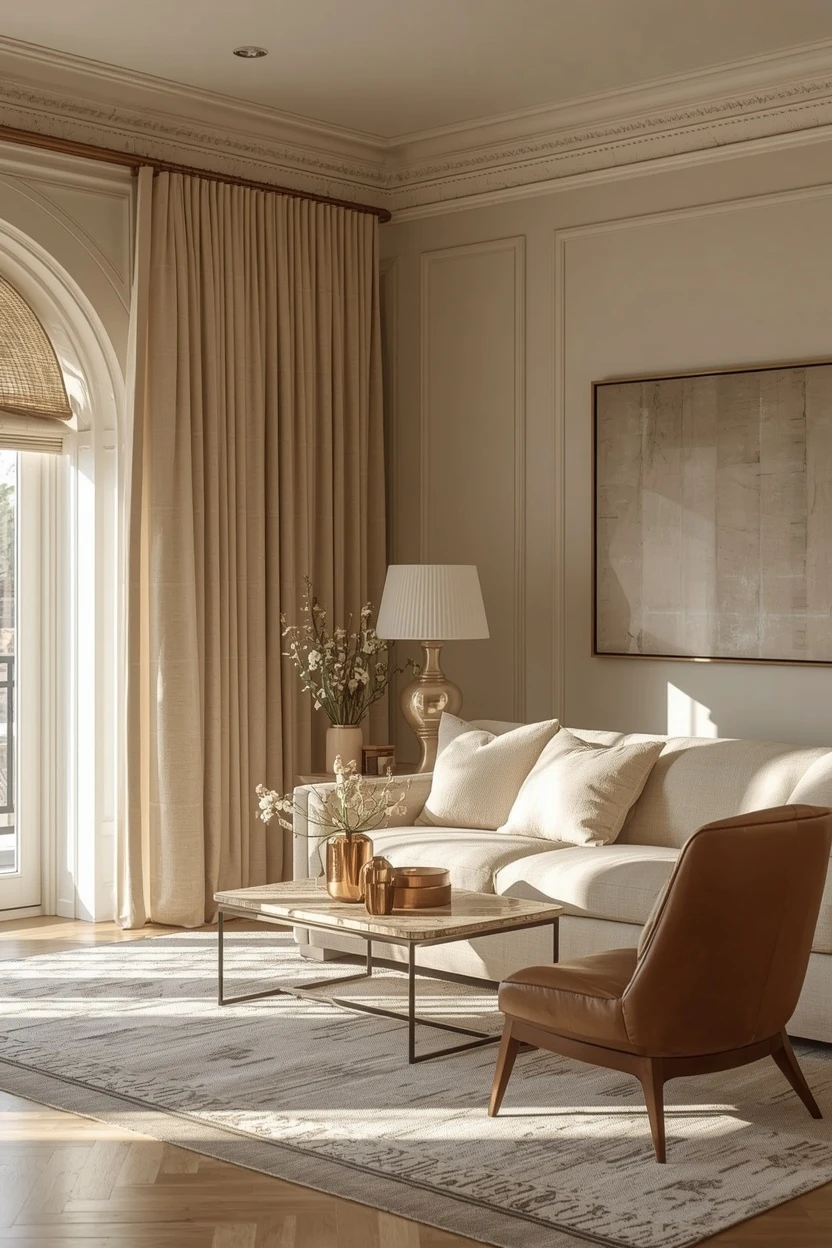
The rod, finials, and rings are part of the look, so choosing beautiful drapery hardware — an aged-brass rod, decorative finials, or matte-black fittings — adds a finishing detail that elevates the whole window. Coordinate the hardware with the room’s metals and style. The hardware frames and completes the drapery. It suits any living room, since well-chosen drapery hardware is a small detail that makes a big difference, giving the windows a considered, custom finish.
14. The Velvet Drapery Living Room
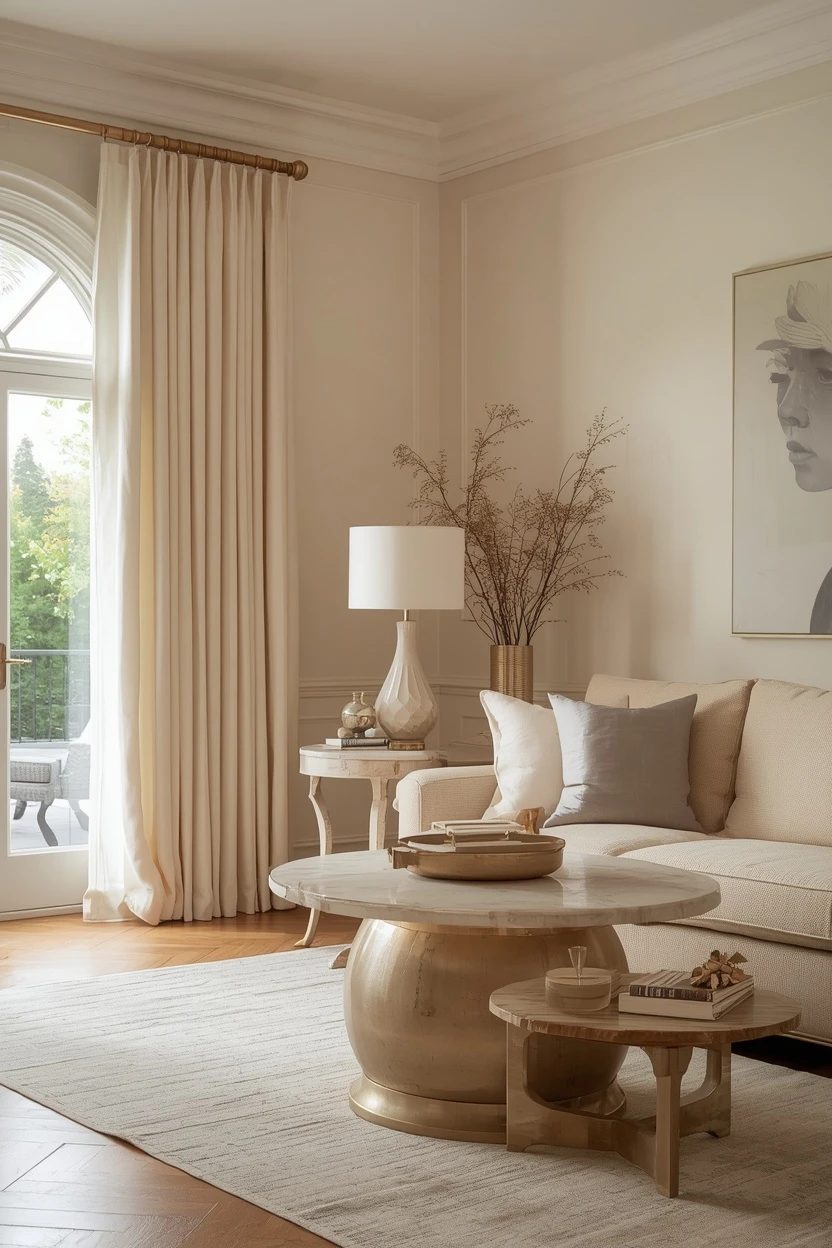
Velvet drapery brings unmatched richness, warmth, and a luxurious sheen to a living room, with the heavy fabric draping beautifully and adding instant opulence. Choose a deep or jewel tone for drama, or a soft neutral for understated luxury. The velvet reads sumptuous and cozy. It suits formal and characterful living rooms, since velvet drapery is one of the most luxurious ways to dress windows, adding warmth, depth, and a sense of occasion to the room.
15. The Color-Matched Drapery Living Room
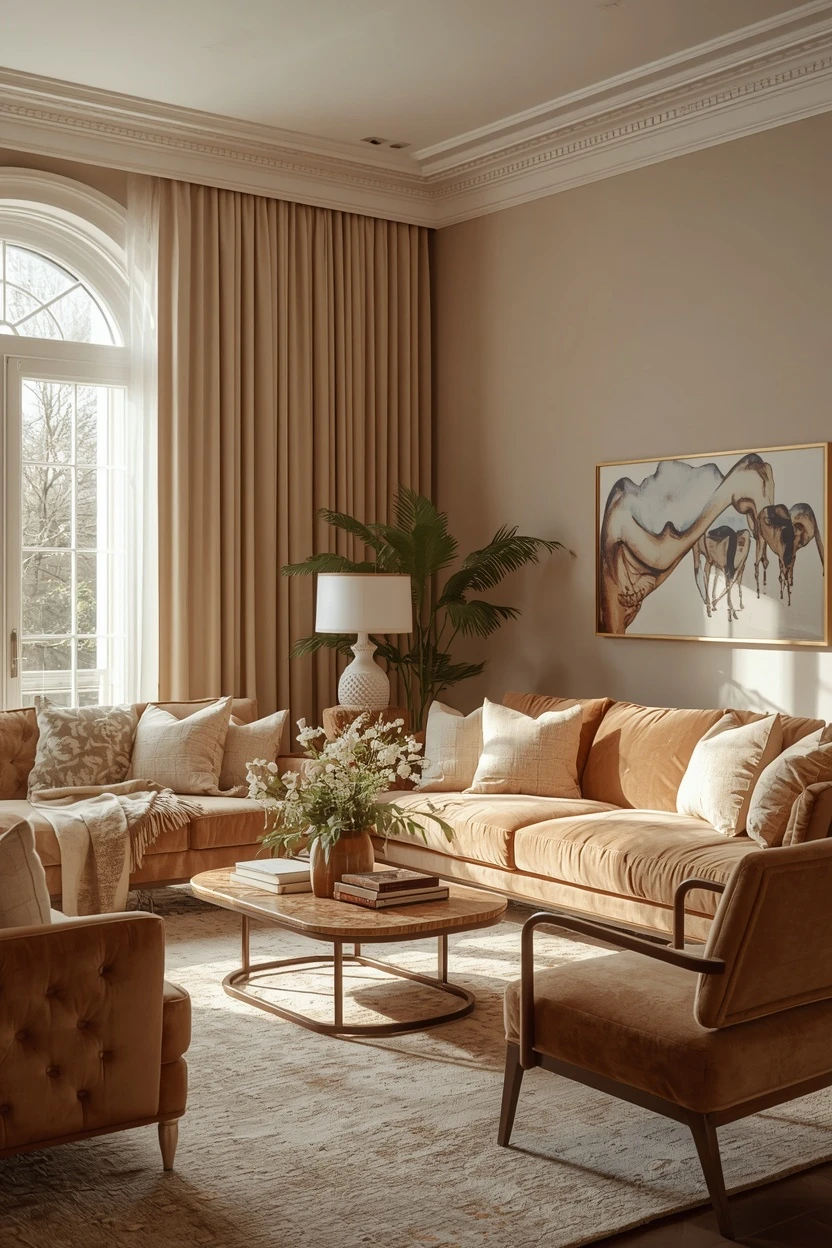
Choosing drapery in a tone close to the wall color creates a seamless, sophisticated look that lets the windows blend elegantly into the room and makes the space feel larger and more cohesive. The tonal match reads calm and refined. The subtlety elevates the whole scheme. It suits modern and minimalist living rooms, since color-matched drapery is an elegant, understated approach that adds softness and warmth at the window without drawing attention or breaking up the room visually.
16. The Tieback Drapery Living Room
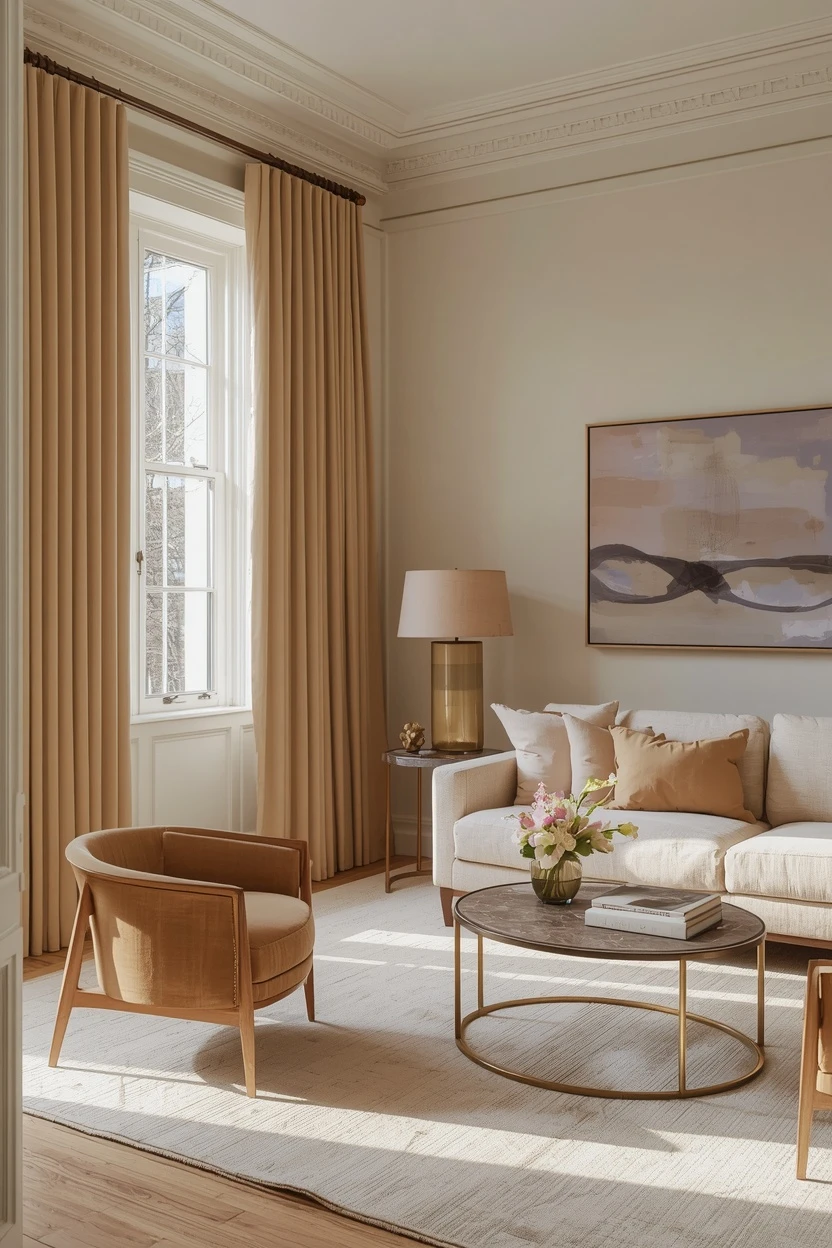
Adding tiebacks or holdbacks — sweeping the drapery to the sides during the day — creates a classic, gracious shape, lets in maximum light, and adds a traditional decorative touch. Choose fabric ties, tasseled cords, or metal holdbacks to suit the style. The tiebacks shape and soften the window. It suits traditional living rooms, since tieback drapery is a timeless way to frame the window elegantly, creating a soft, swept silhouette that reads classic and welcoming.
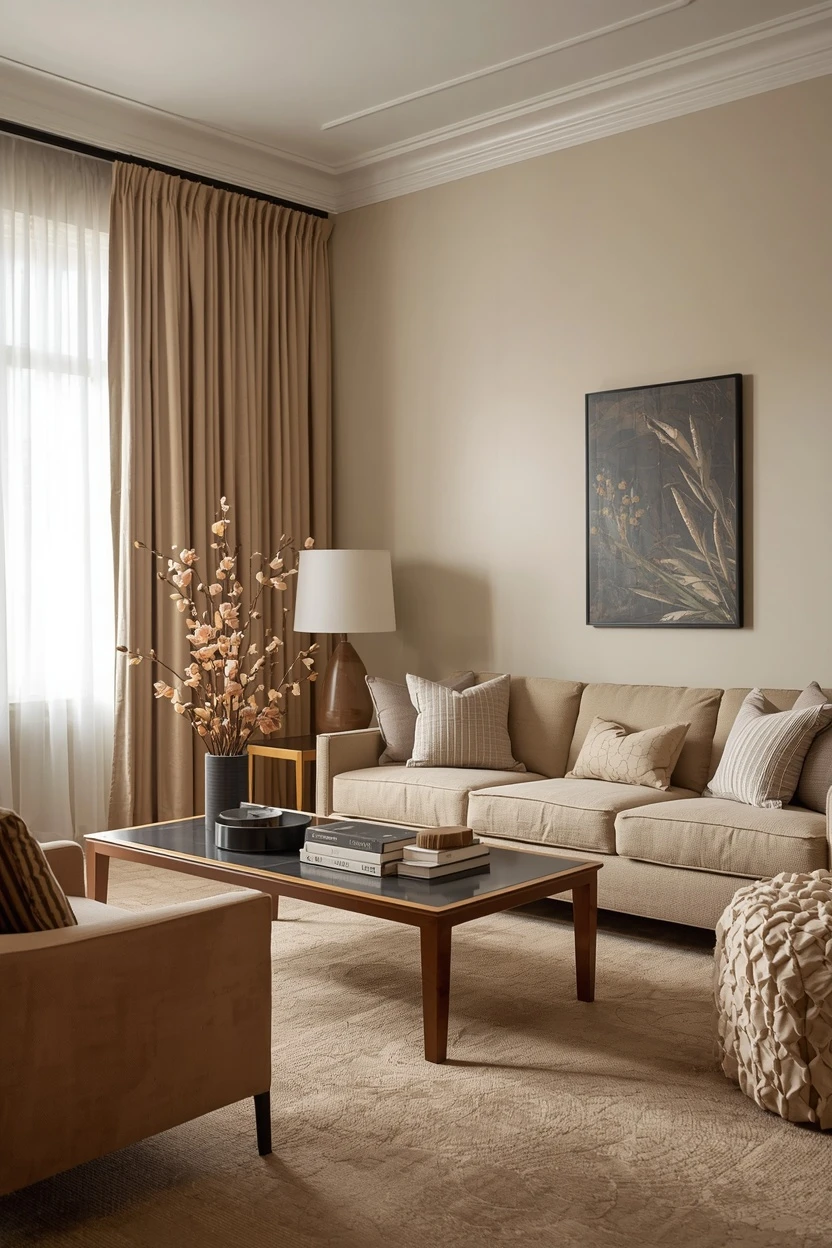
17. The Floor-to-Ceiling Drama Living Room
For large windows or a bold statement, floor-to-ceiling drapery spanning an entire wall creates drama, softens the architecture, and adds a luxurious, enveloping quality. Run the panels the full height and width for maximum impact, ideal behind a seating area or across a feature wall. The sweep reads grand and soft. It suits large living rooms, since floor-to-ceiling drapery is a striking way to dress big windows or whole walls, adding softness, warmth, and a sense of grandeur.
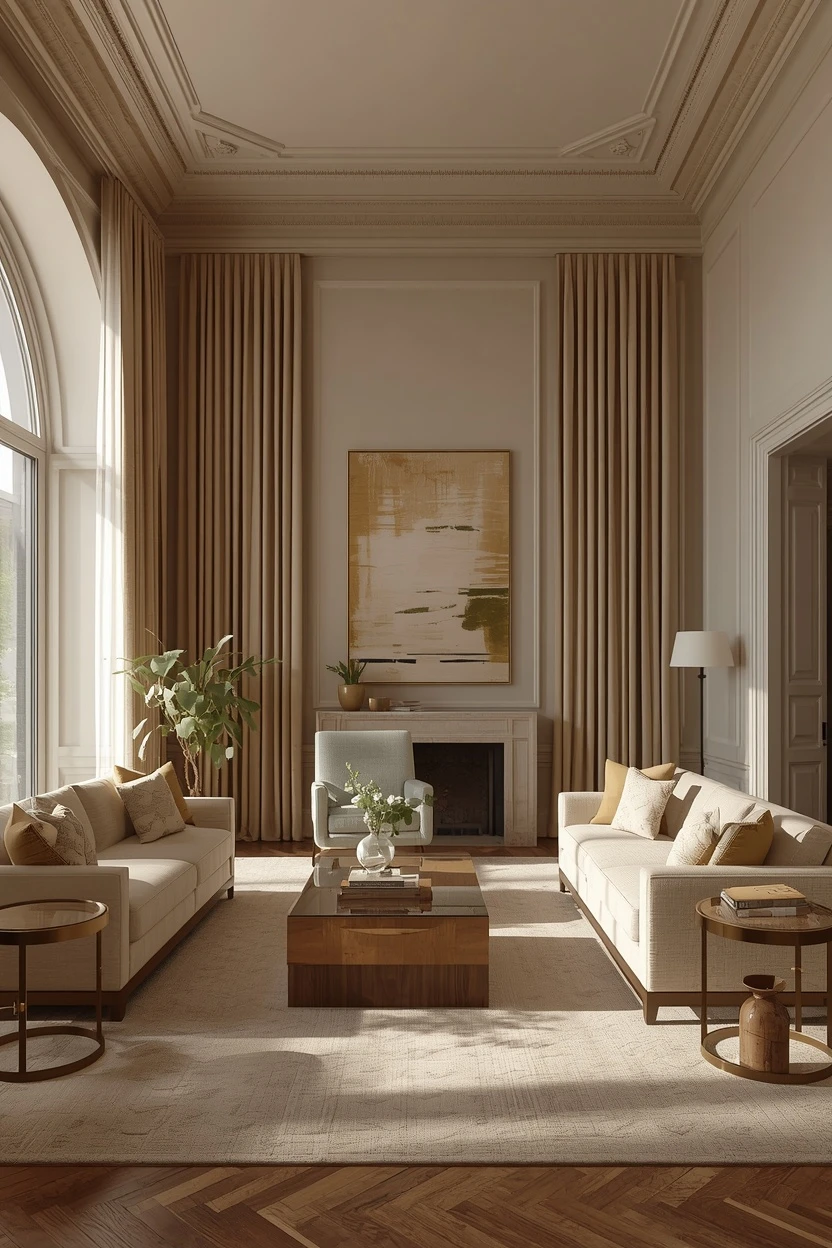
18. The Minimalist Drapery Living Room
A pared-back approach keeps the drapery simple — clean panels in a neutral tone on a discreet track or slim rod, hung high and full but without fuss — for an understated, elegant look. The restraint suits a modern room and lets the fabric and hang do the talking. The simplicity reads refined. It suits contemporary living rooms, since minimalist drapery proves that beautifully hung, generously full panels need no elaborate detailing to look polished, gracious, and complete.
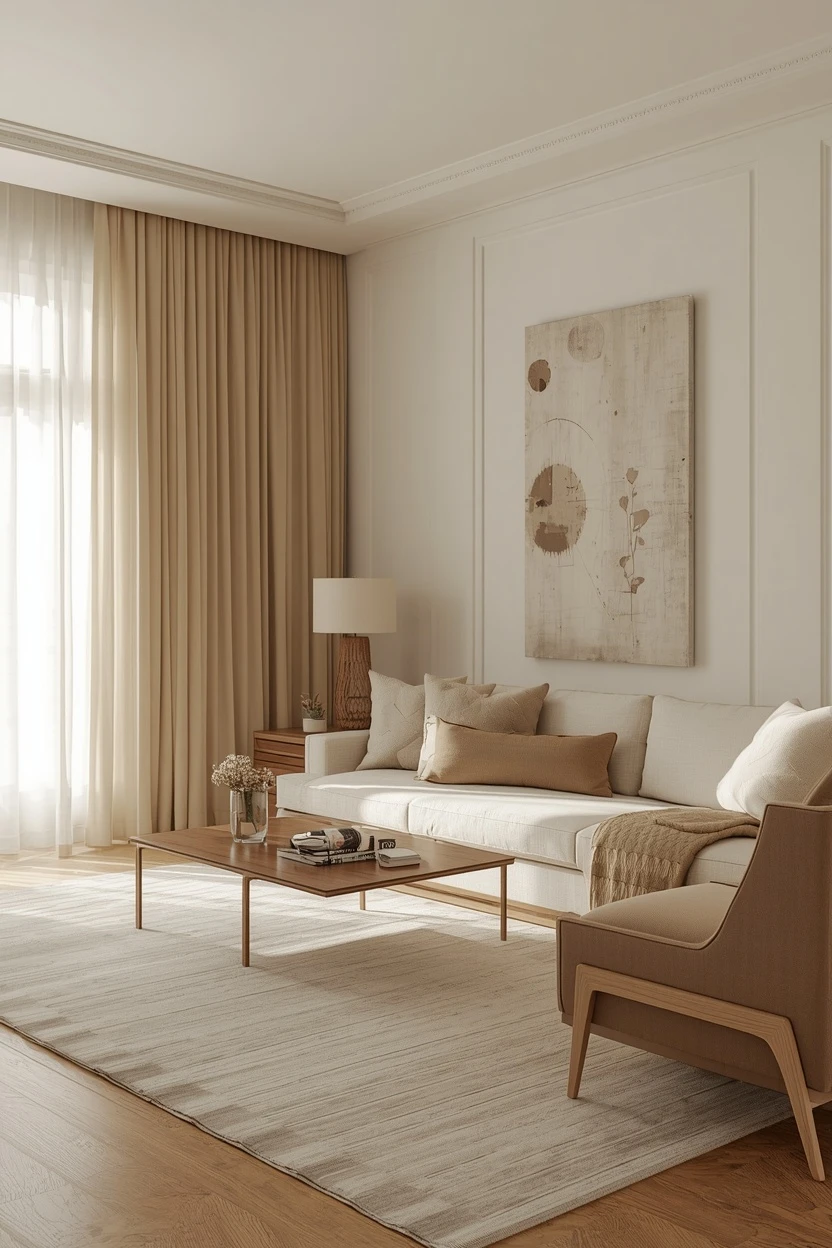
19. The Complete Drapery Living Room
Bringing the principles together, fully realized living room drapery combines floor-length, generously full panels in a rich fabric, hung high and wide on beautiful hardware, layered with sheers or a blind, and finished with a valance or tiebacks where the style calls for it. Each decision elevates the window: the length and fullness read luxurious, the high-wide hang adds height, the layering adds function, the hardware completes it. The discipline is generous fabric hung well, so the drapery frames the room beautifully. The result is drapery that makes the whole living room feel polished, gracious, and complete.
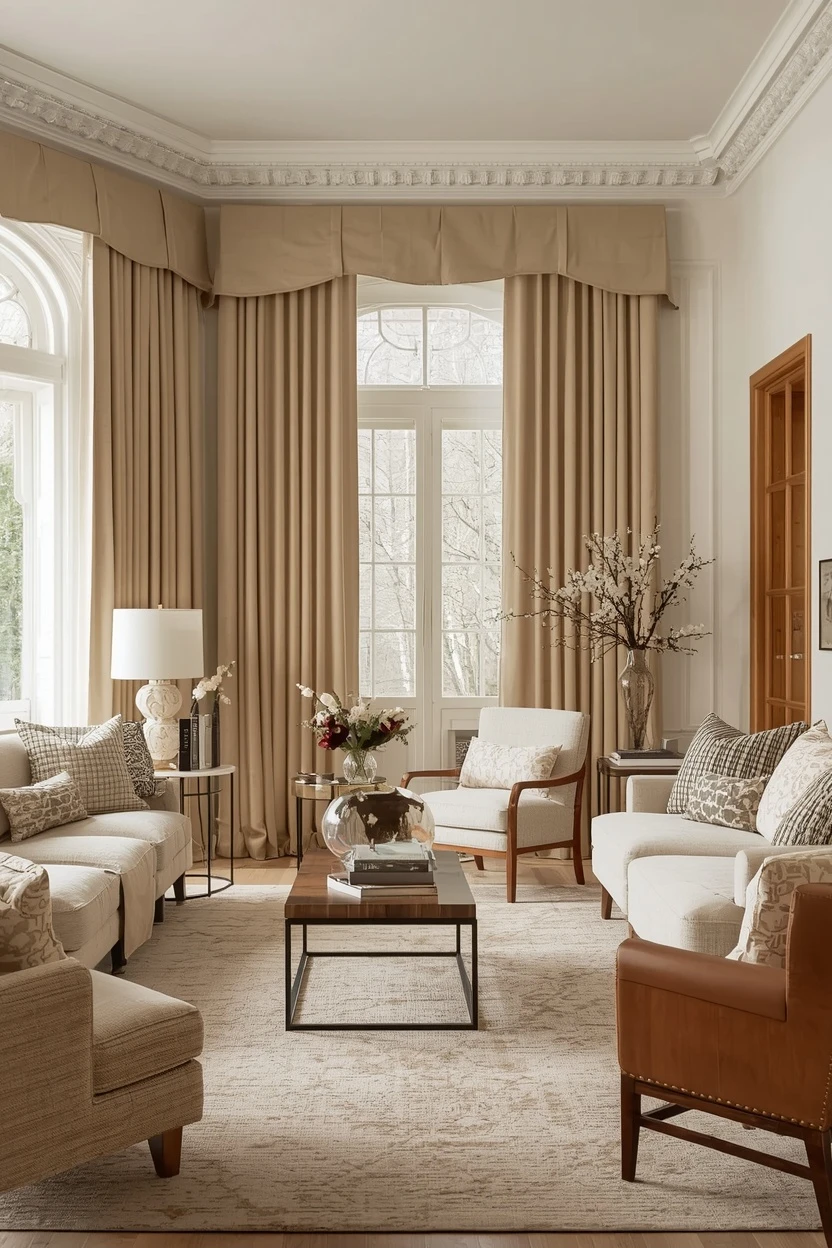
Where I’d Start if I Only Did Three Things
If I were choosing drapery for a living room from scratch, I would start with length and placement, hanging floor-length panels high near the ceiling and wide past the window frame, because this single combination makes windows look taller and grander and is the biggest difference between drapery that looks bespoke and drapery that looks like an afterthought. Next, I would invest in fabric and fullness, choosing a quality lined material like linen or velvet and using generous panels two to three times the window width, since rich, full fabric is what reads luxurious and hangs beautifully. Third, I would layer and finish it — adding sheers or a blind for light control and beautiful hardware, a valance, or tiebacks to complete the look — because the layering and finishing details are what make the windows feel truly polished. Length and placement, fabric and fullness, and layered finishing: that trio gives you drapery that makes a living room feel gracious and complete.
FAQs
How high should I hang living room drapery?
Hang it high — ideally close to the ceiling, or at least two-thirds of the way up the wall between the window frame and the ceiling, rather than just above the window. Mounting the rod high draws the eye upward and makes the windows look taller and the room more spacious. Extend the rod wide too, past the window frame on each side, so the open drapery frames the glass rather than covering it and lets in maximum light. Hanging drapery high and wide is one of the simplest, most effective ways to make windows and the whole living room feel grander and more elegant.
How long should living room drapery be?
Floor-length, almost always. Drapery should at minimum just kiss the floor, with the panels grazing it or lightly breaking for a tailored look, or pooling a few inches for a more luxurious, romantic effect. Short, sill-length panels in a living room tend to read dated and skimpy. The exception is over a radiator or a deep obstruction, where ending just below the sill may be necessary, but as a rule, floor-length drapery is what looks intentional and gracious. Getting the length right is the single most important factor in well-dressed living room windows.
What is the difference between drapery and curtains?
The terms overlap, but drapery usually refers to heavier, lined, more formal fabric panels, often pleated and floor-length, designed to add elegance and structure as much as function. Curtains tend to be lighter, more casual, and sometimes shorter or unlined. In practice, both dress the window with fabric, and the words are often used interchangeably. If you want a polished, formal, tailored look, drapery — generous, lined, beautifully hung panels, perhaps with a pinch-pleat heading or a valance — is the term and the style to reach for in a living room.
Should living room drapery match the wall color?
It depends on the look you want. Drapery in a tone close to the wall color creates a seamless, sophisticated effect that makes the room feel larger and more cohesive and lets the windows blend elegantly into the scheme — ideal for modern and minimalist rooms. Alternatively, patterned or contrasting drapery turns the windows into a statement and adds color and personality. Both work beautifully; it simply comes down to whether you want the drapery to recede quietly or stand out as a feature. Neutral linen is a versatile middle ground that suits almost any living room.
Final Thoughts
Drapery is the finishing touch that makes a living room feel polished and complete, framing the windows, softening the architecture, and quietly elevating the whole space. Whether you choose tailored pinch-pleat panels, relaxed neutral linen, luxurious velvet, or a layered sheer-and-drape combination, the same principles apply: hang it floor-length, high, and wide; choose a quality fabric with generous fullness; and layer and finish it with sheers, a blind, beautiful hardware, a valance, or tiebacks to suit your style. Treat the drapery as a real design decision rather than an afterthought, get the length, fabric, and hang right, and you will have windows that frame the room beautifully and make the whole living room feel gracious, warm, and complete.

zarcoyt2025
Khawar Iqbal is the founder and editor of Cozy Homes Hub. He writes about cozy, livable home decor — from small-apartment layouts to room-by-room styling guides — with a focus on warm palettes, layered lighting, and budget-friendly ideas that actually work in real homes.
Related Articles
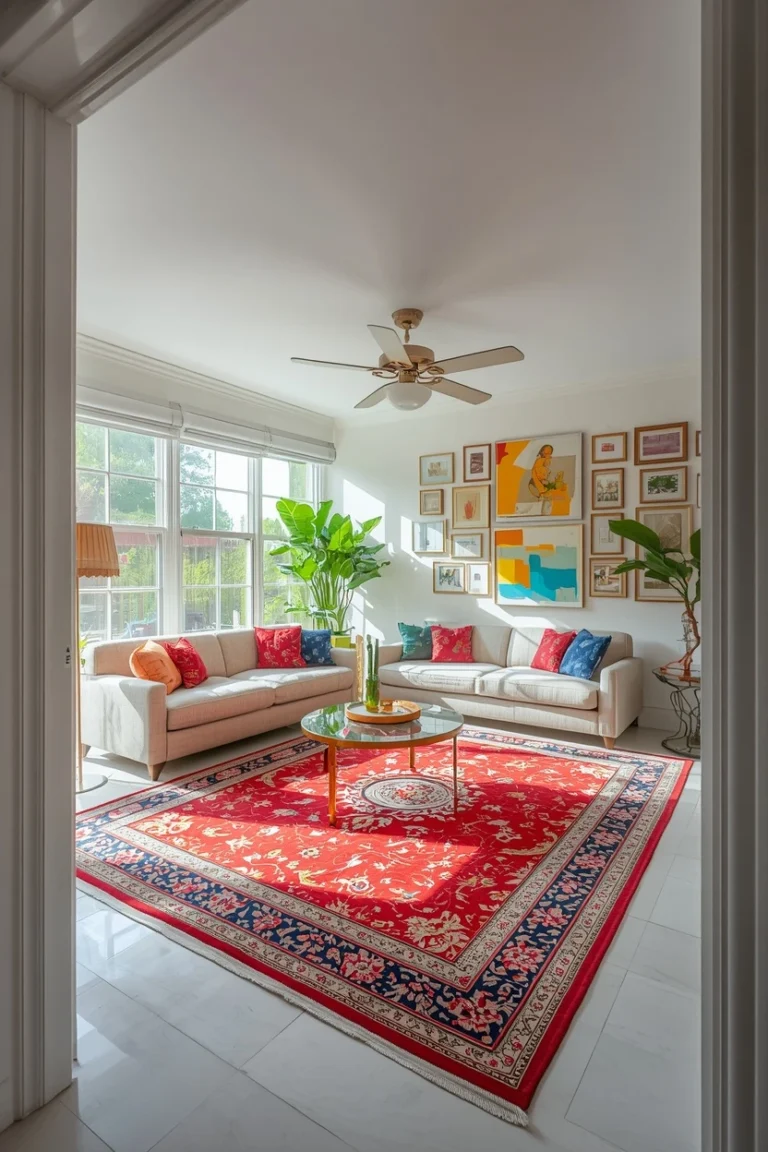
16 Living Room Decor Ideas That Instantly Elevate Any Space
A living room rarely needs new furniture to feel considerably more elevated — it usually needs a handful of layout and styling…
Read more →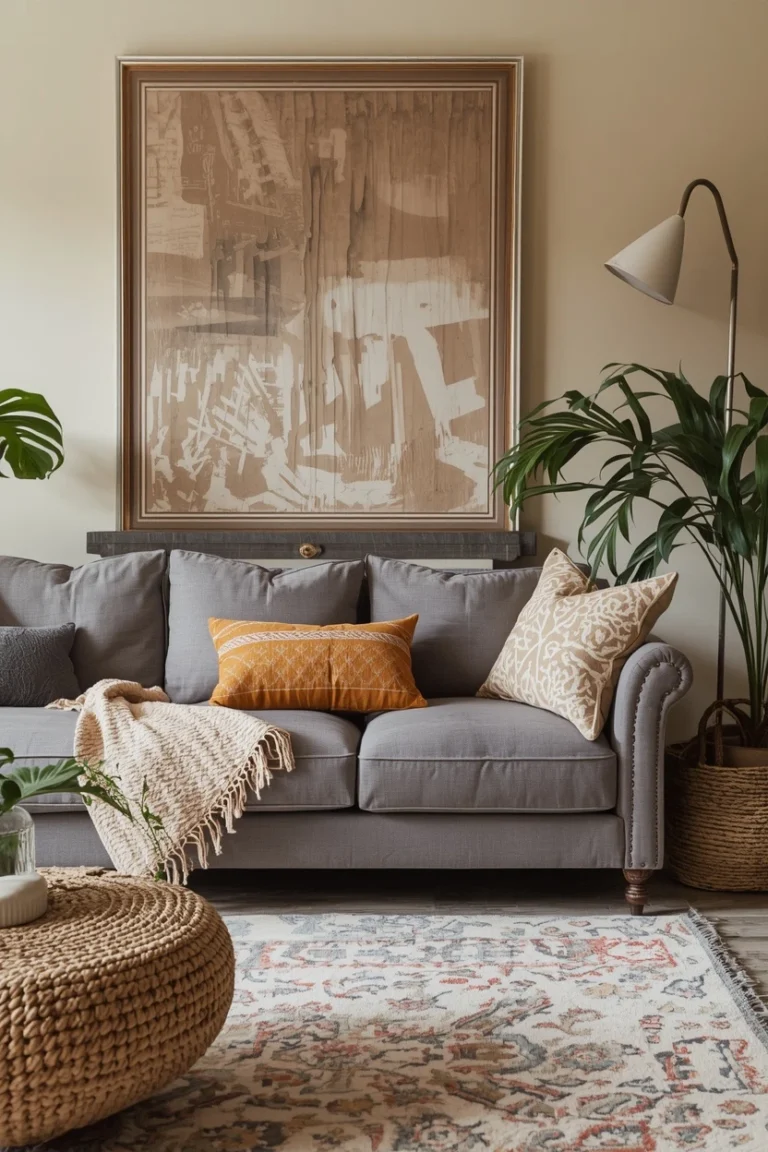
14 Grey Settee Living Room Ideas to Warm Up a Neutral Sofa
A grey settee is the most versatile thing you can put in a living room — and, if you're not careful, the…
Read more →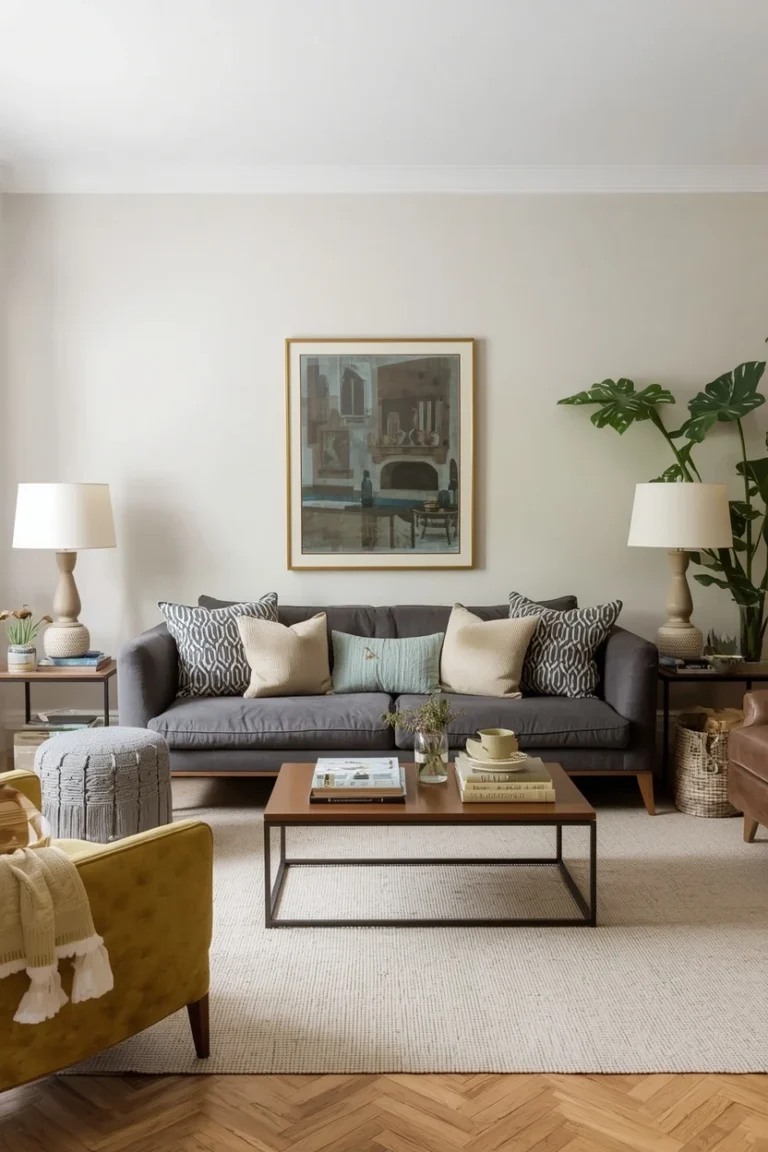
12 Living Room Arrangement Ideas for a Warm, Balanced Space
There's a difference between a room that's furnished and a room that's arranged. Furnished just means the pieces are in there; arranged…
Read more →