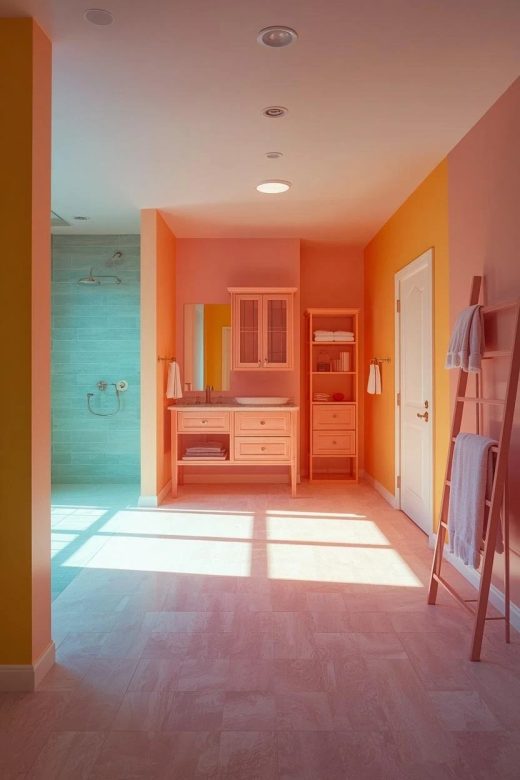
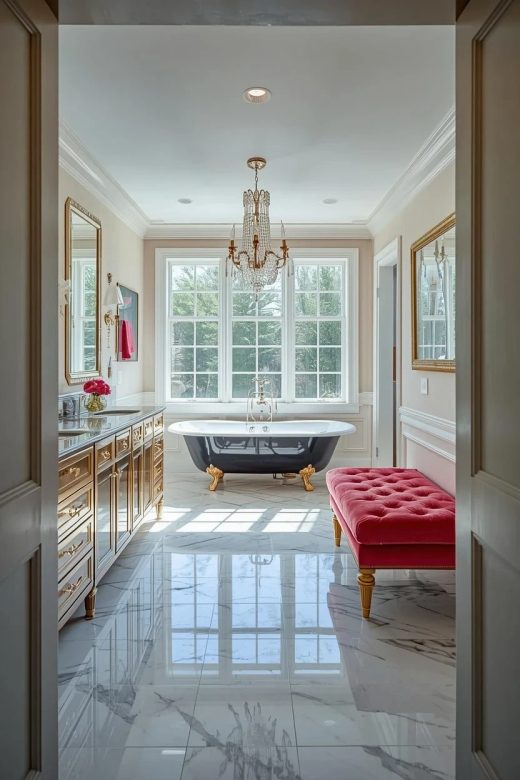
18 Bathroom Tile Ideas for Every Style and Budget
July 12, 2026 · 13 min read
 By Khawar Iqbal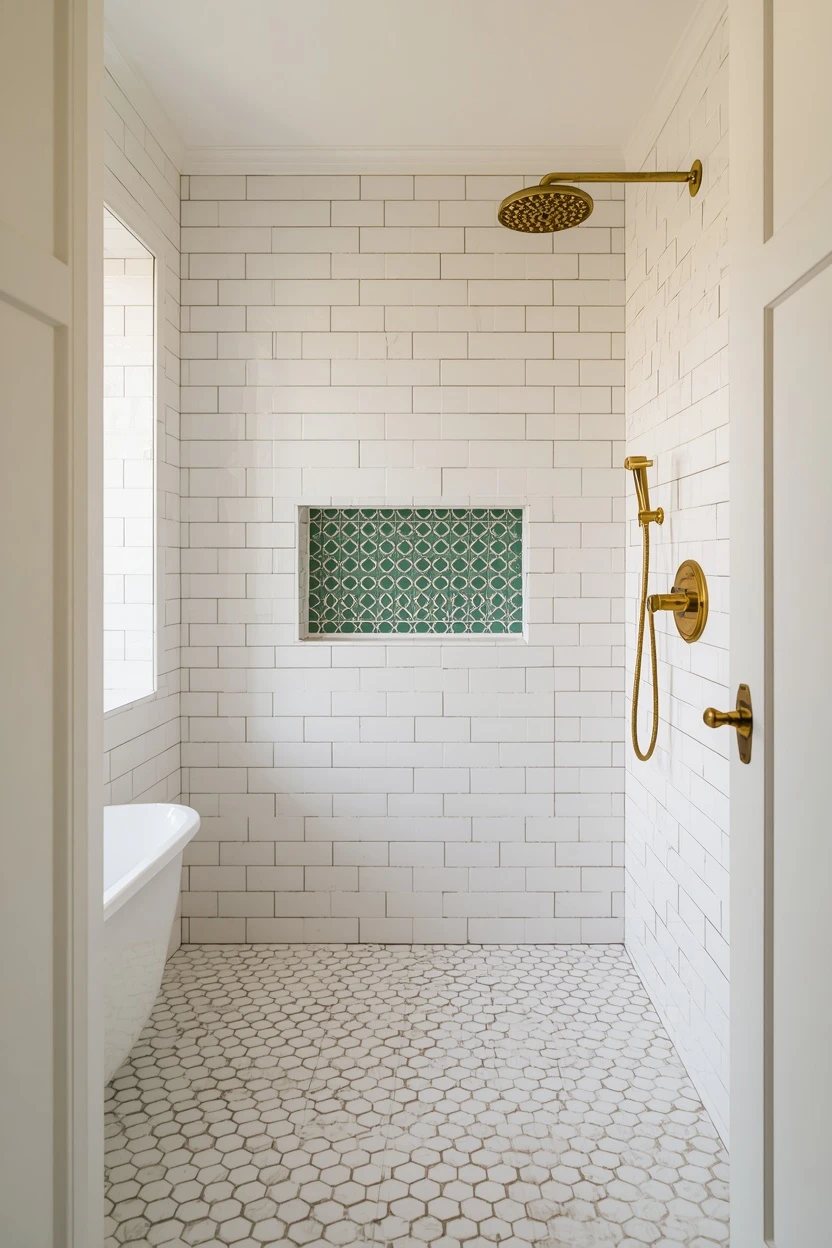
Tile is the single biggest surface decision in a bathroom, and it does more than any other element to set the room's whole character. The best bathroom tile ideas balance looks with practicality — how the tile handles water, how easy it is to clean, and how the layout and grout choice read once it is on the wall. Get the tile right and everything else follows.
Each idea below is a distinct tile design, spanning classic to bold and budget to investment, with honest notes on where each works best, how to lay it, and what to watch out for. Whether you want a calm, timeless scheme or a statement that stops people in their tracks, there is a tile direction here to suit your room, your style, and your budget.
1. Classic White Subway Tile
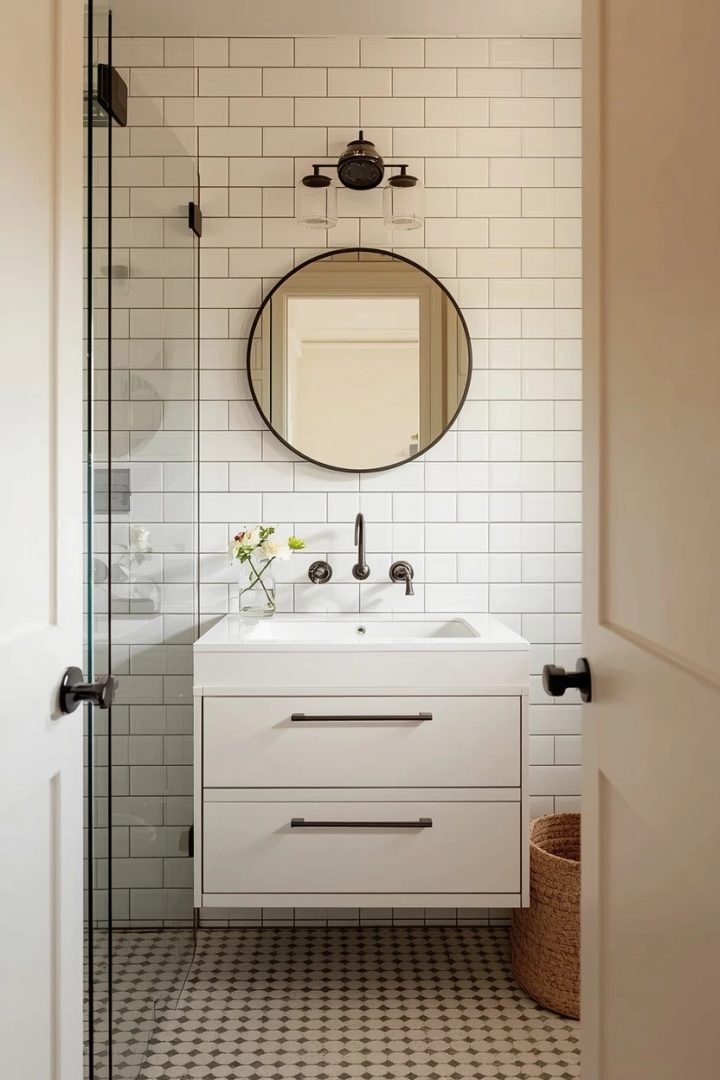
There is a reason subway tile has endured for over a century: white metro tile is clean, bright, endlessly adaptable, and one of the most affordable tile choices. Laid in the traditional half-offset brick bond it reads timeless; stacked vertically it reads modern; in a herringbone it reads considered. The real design lever is the grout — a matching white grout keeps it seamless and soft, while a dark grout turns the same cheap tile into a bold graphic grid.
It is the safest starting point for any bathroom and a genuinely hard tile to get wrong.
2. Large-Format Porcelain Tile
Big tiles mean fewer grout lines, and fewer grout lines mean a calmer look and less scrubbing — which is why large-format porcelain has become the default for modern bathrooms. A 60 by 60cm or 60 by 120cm tile on the floor and walls reads sleek, seamless, and contemporary, and porcelain is dense, hardwearing, and almost impervious to water.
The trade-off is that large tiles demand a perfectly flat substrate, since any unevenness shows as lippage where the edges do not sit level.
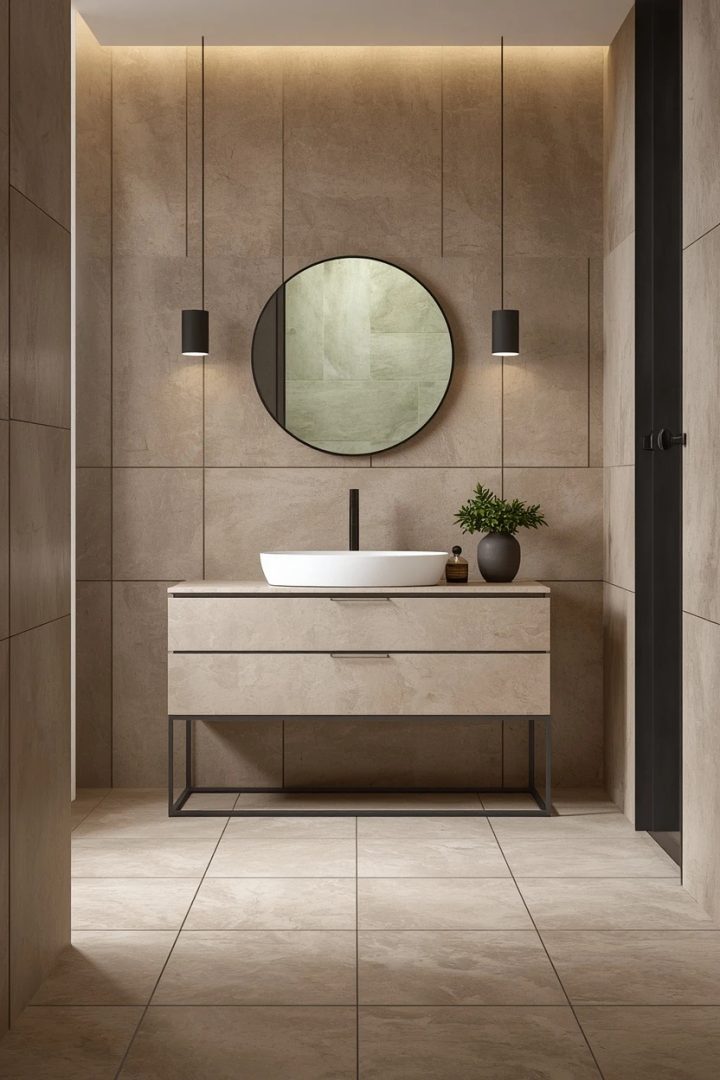
Good wall preparation is the whole battle with large formats, so it is not the tile to attempt on a wavy old wall without levelling it first.
3. Marble-Effect Porcelain Tile
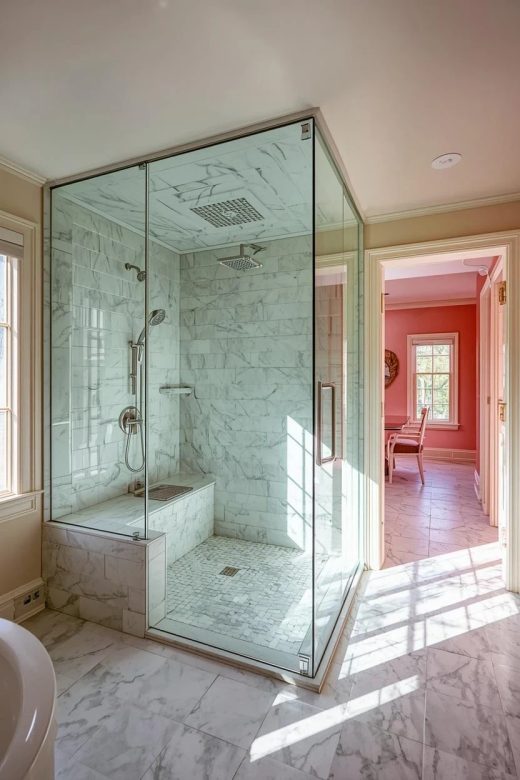
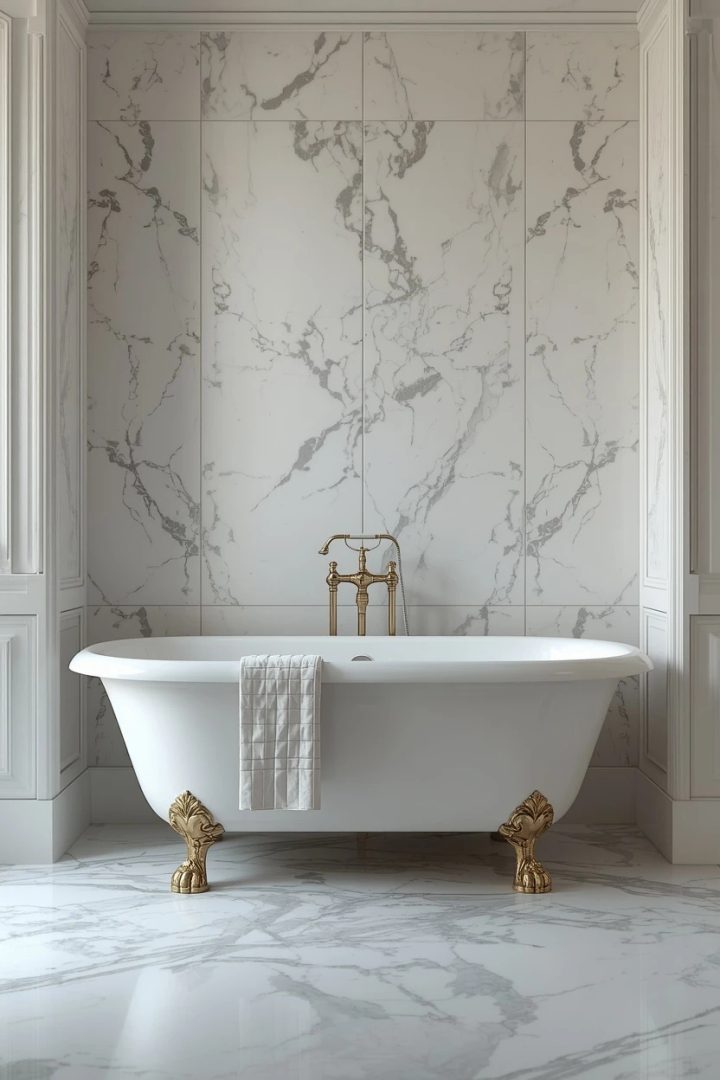
Marble-effect porcelain gives you the drama of veined natural marble without the cost, the porosity, or the constant sealing that real stone demands. Modern printed porcelain reproduces Carrara, Calacatta, and dark Marquina marble convincingly, and because it is porcelain it shrugs off water and stains that would mark real marble. Use it on a feature wall or floor and keep the veining consistent in direction for the most natural read. Choose a book-matched pair for a large wall if you want the mirrored-vein look of a genuine stone slab, and few people will ever know it is not the real thing.
4. Hexagon Floor Tile
Hexagon tile brings geometric character to a bathroom floor that a plain square never can, the honeycomb shape reading modern and considered while the small format grips underfoot for good slip resistance. Black, white, terrazzo-look, and marble-effect hexagons all read differently, from graphic to soft. On a small bathroom floor the pattern adds interest without demanding a big spend, since a tiny footprint means a small tile order.
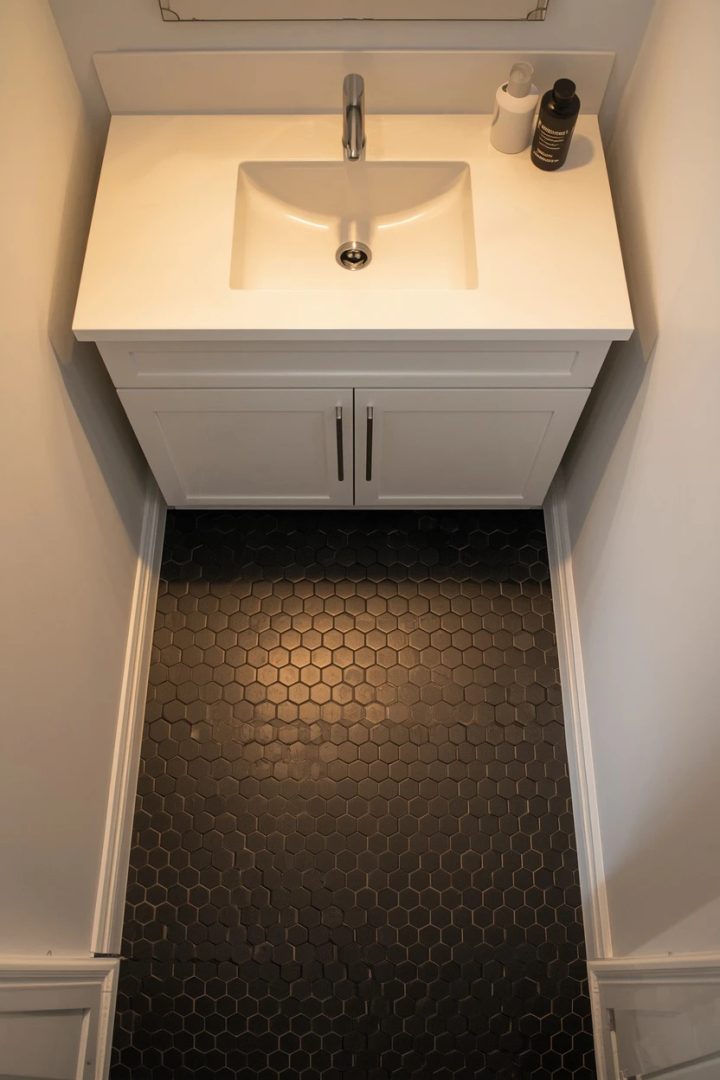
Pair a patterned or dark hex floor with plain walls so the floor leads, and choose a matte finish over gloss for a floor, since matte grips better and hides watermarks.
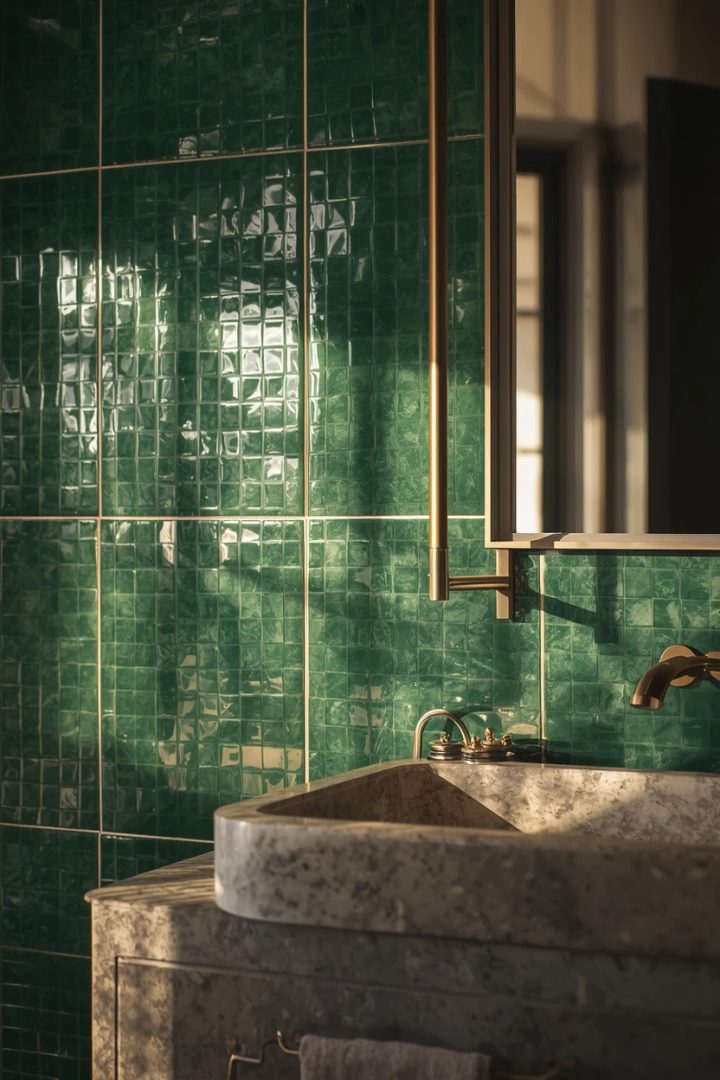
5. Zellige Handmade Tile
Zellige — the handmade, glazed terracotta tile of Moroccan tradition — has become one of the most sought-after tiles for a reason: no two tiles are identical, and the slight variations in glaze, tone, and surface catch the light in a way no machine-made tile can replicate. The subtle imperfection is the whole point and the source of its beauty. Zellige is more expensive and needs a tiler comfortable with its irregularity, since the uneven edges require a different approach to spacing and grouting.
In a soft green, a warm white, or a deep blue, a zellige wall reads artisan, tactile, and genuinely special.
6. Bold Patterned Encaustic Tile
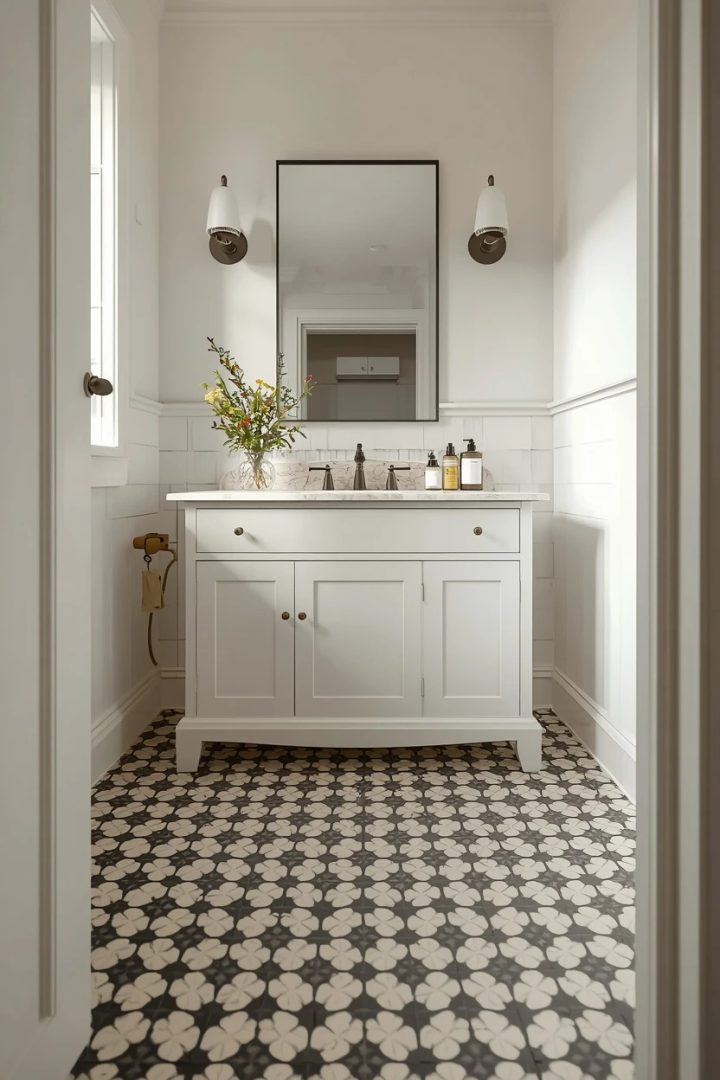
For maximum character, a bold patterned encaustic-style tile — in a geometric, floral, or Moroccan motif — turns a bathroom floor into the star of the room. A small bathroom is the ideal place to be brave with pattern, since the small footprint keeps the cost down while the impact stays high.
Keep the walls plain and calm so the patterned floor leads rather than fights, and choose an encaustic-look porcelain over genuine cement encaustic for a bathroom, since true cement tiles are porous and need sealing, while porcelain versions give the same pattern with none of the maintenance.
7. Vertical Stacked Tile
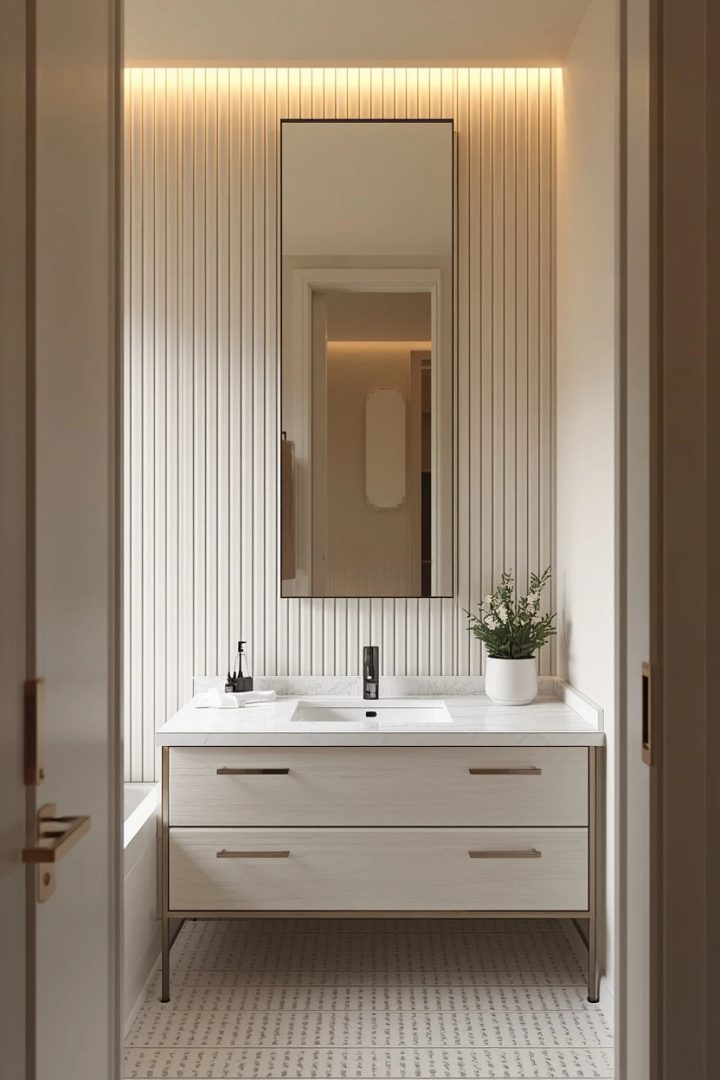
Laying rectangular tile vertically in a stacked bond — rather than the usual horizontal brick bond — draws the eye upward and makes a low-ceilinged bathroom read taller. It is a simple, free trick that changes how the room's proportions read, and the crisp vertical lines feel modern and deliberate. Vertical stacked tile suits a feature wall behind the vanity or in the shower especially well, and it pairs beautifully with a contrasting grout to emphasise the vertical rhythm. Because the alignment is exposed in a stacked bond, it demands a careful tiler, since any drift in the vertical lines is immediately visible.
8. Herringbone Layout
The herringbone layout takes a simple rectangular tile and arranges it into a rich, dynamic zigzag that reads far more expensive than the tile itself. It works on floors, walls, and shower niches, and it suits everything from a plain white metro to a wood-effect plank. The diagonal energy of herringbone adds movement to a room without adding colour or pattern, making it a favourite for those who want interest within a neutral scheme.
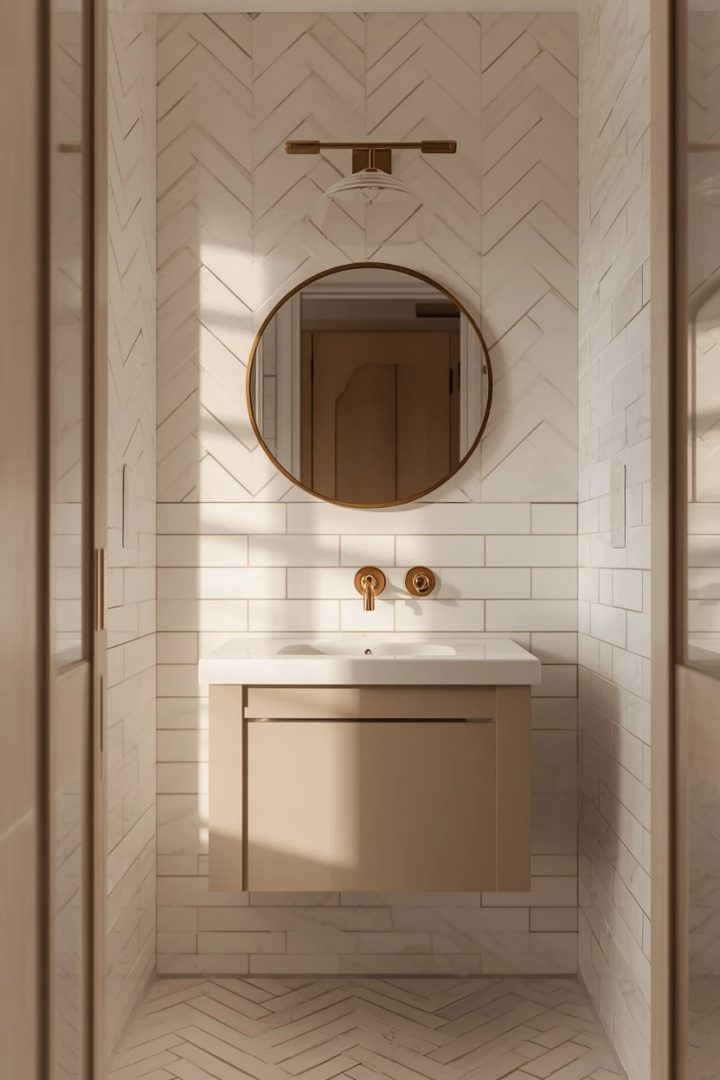
It uses more tile and more labour than a straight lay because of the cuts at the edges, so budget for both, but the result reads considered and characterful in a way a straight bond cannot.
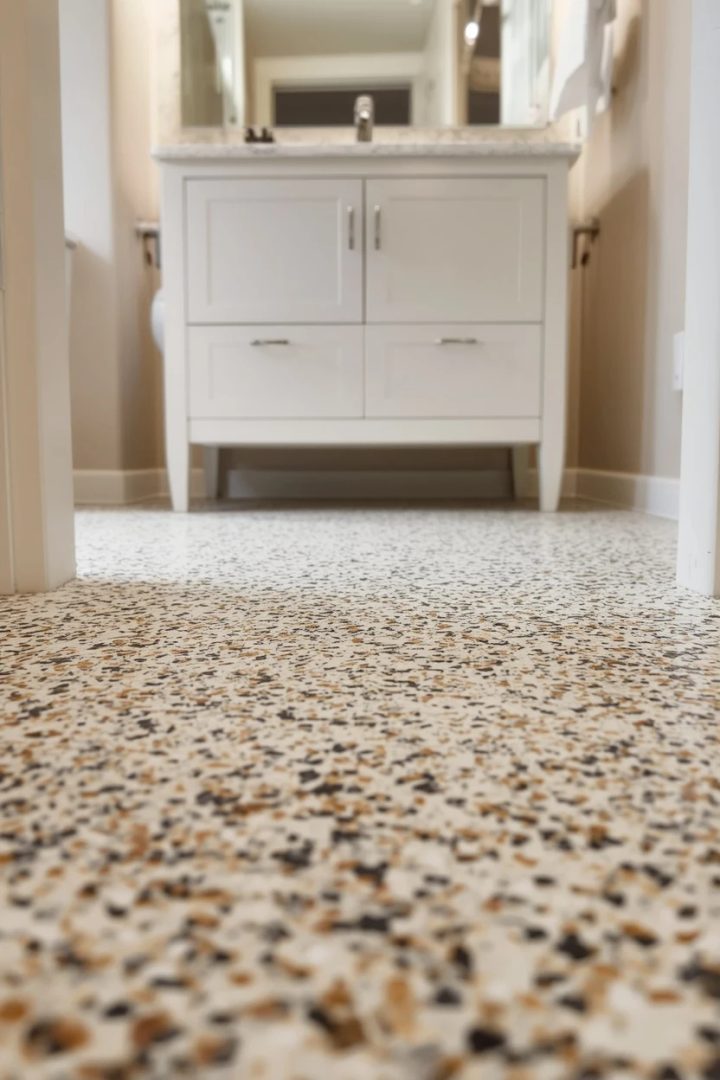
9. Terrazzo Tile for a Playful Bathroom Look
Terrazzo — the speckled composite of stone and glass chips set in a base — is one of the most joyful tiles, its scattered flecks of colour adding subtle pattern and personality without a bold motif. A large-format terrazzo tile on the floor reads soft and playful, while a fine-flecked terrazzo in neutral tones reads calm and contemporary. Because the pattern is random and busy, terrazzo hides everyday marks and grime well, which is a genuine practical bonus in a bathroom floor.
Pair it with plain walls and one accent colour drawn from the flecks for a coordinated, cheerful scheme.
10. Fish Scale or Fan Tile
Fish scale tile — also called scallop, mermaid, or fan tile — brings a soft, curved, decorative quality to a bathroom that rectangular tile cannot, the overlapping rounded shapes reading playful and elegant at once. In a soft green, a pale pink, or a glossy white, a fish scale feature wall or shower recess reads distinctly and beautifully.
The curved shape suits a smaller feature area rather than a whole room, where the busy pattern could overwhelm, so use it on one wall, in a niche, or as a border.
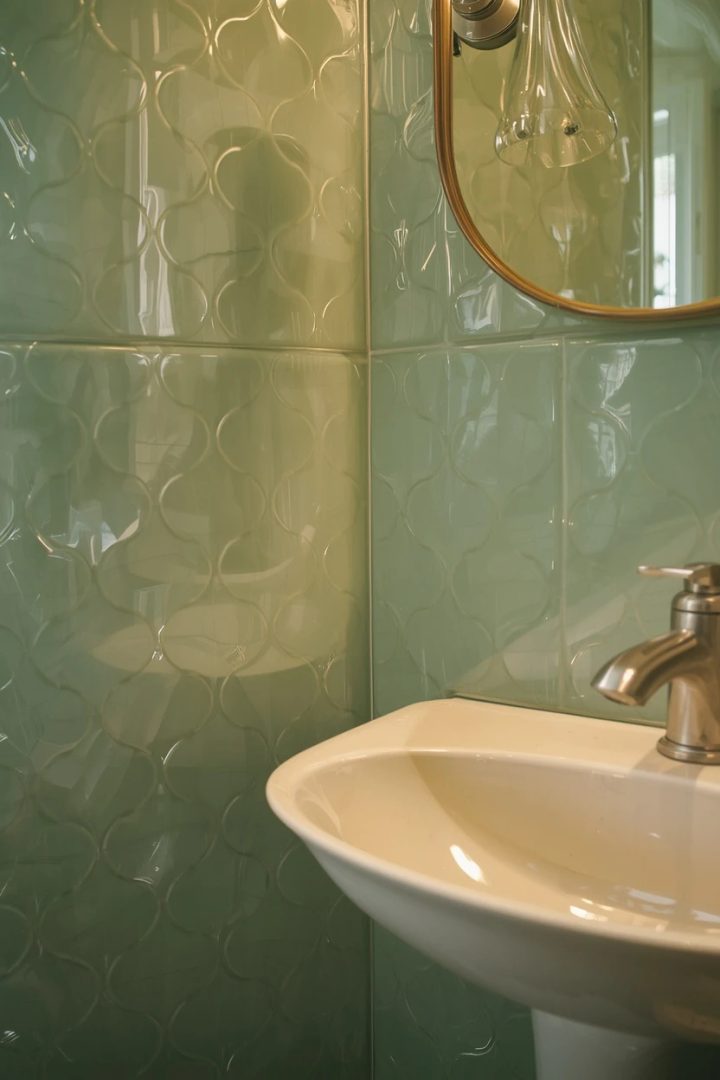
A glossy glaze catches the light across the curved surfaces and amplifies the decorative effect.
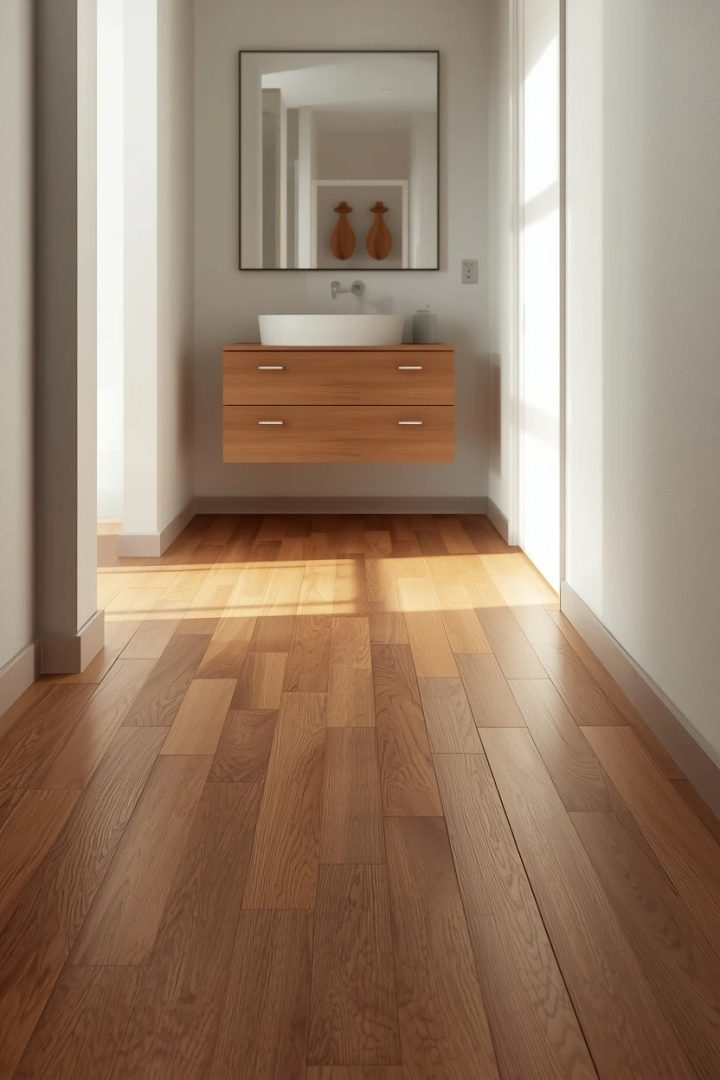
11. Wood-Effect Porcelain Plank
Wood-effect porcelain planks give a bathroom the warmth and grain of timber with none of the water problems that real wood brings to a wet room. Modern printed porcelain reproduces oak, walnut, and weathered driftwood convincingly, right down to the texture underfoot, and it is fully waterproof and hardwearing. Laid in a plank format on the floor — or even run up a wall — it warms a hard, cool bathroom beautifully and pairs naturally with stone-effect and plain tiles. Choose a matte finish for slip resistance on a floor, and lay the planks in a brick or herringbone bond for the most convincing timber read.
12. Penny Round Mosaic
Penny round mosaic — small circular tiles usually supplied on mesh sheets — brings vintage charm and excellent grip to a bathroom floor, the many grout lines between the little circles providing serious slip resistance underfoot. It reads retro and characterful in a white or a two-tone pattern and suits a period-style bathroom especially well. The many grout lines are both its strength and its maintenance catch: they grip beautifully but need sealing and regular cleaning to stay looking fresh.
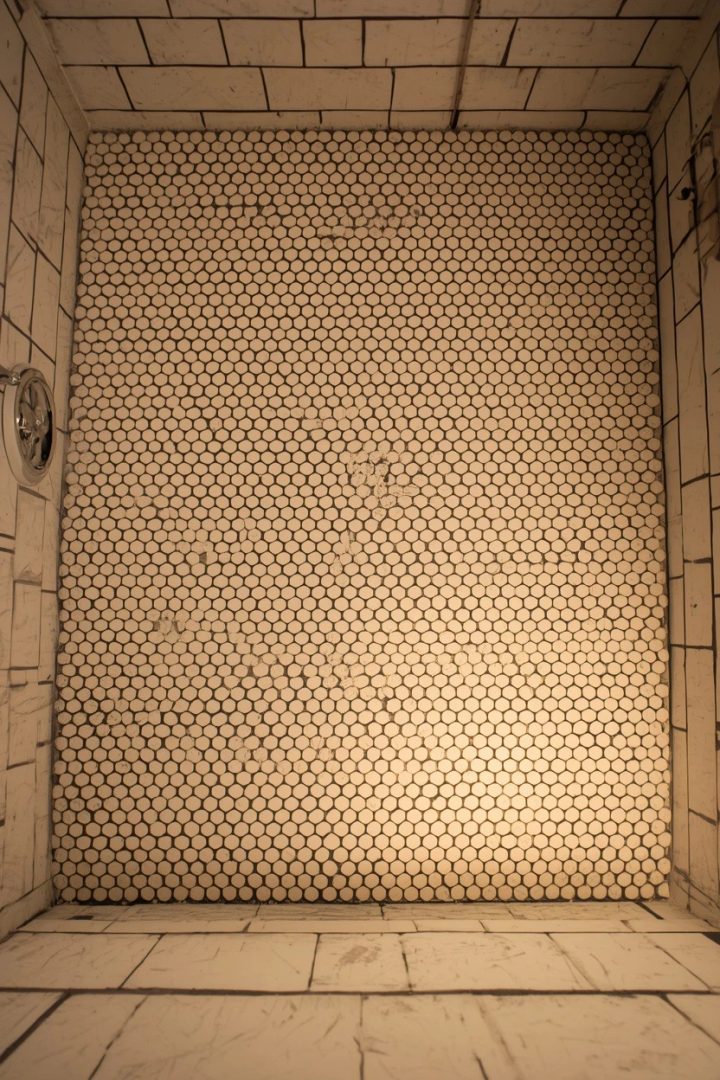
A darker grout hides everyday grime and defines the circles crisply, and penny round on a shower floor moulds neatly to the fall toward the drain.
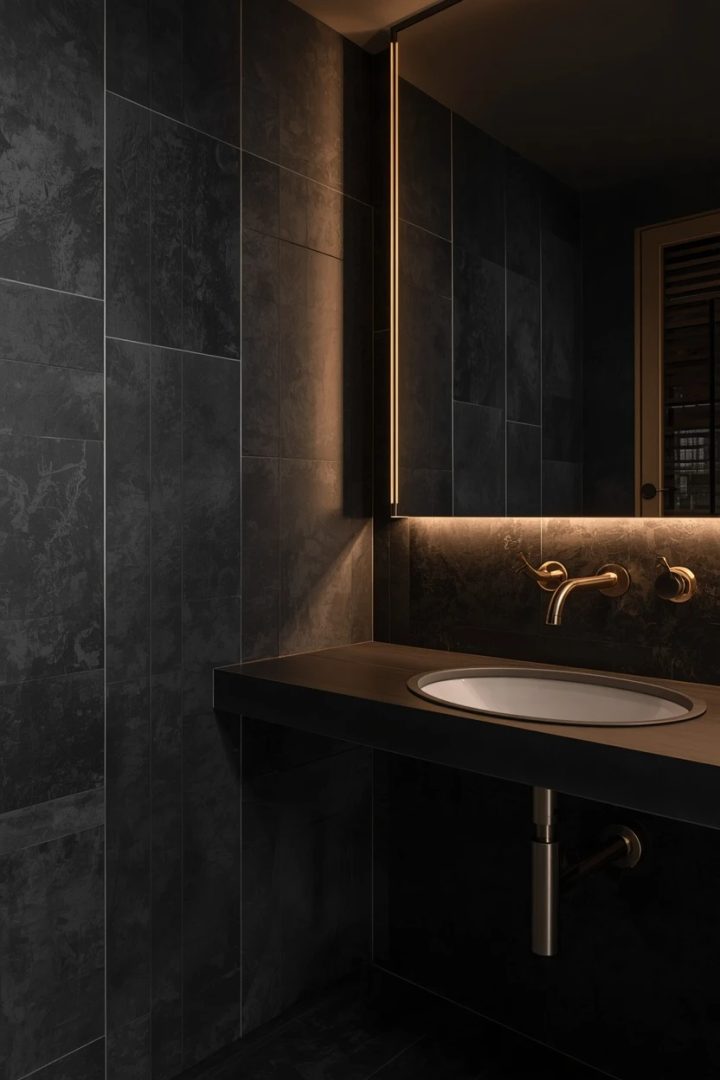
13. Dark Moody Tile
A dark tile — charcoal, forest green, deep navy, or near-black — creates a moody, dramatic, spa-like bathroom that reads intimate and sophisticated. Dark tile hides watermarks and soap residue far better than white, which is a genuine practical advantage in a shower. The key to stopping a dark-tiled room reading like a cave is light: layer warm lighting generously, add a large mirror to bounce it around, and bring in warm timber and brass to soften the dark surface.
A fully dark bathroom suits a room with some natural light, while a dark feature wall or shower works in any room.
14. Textured 3D Tile
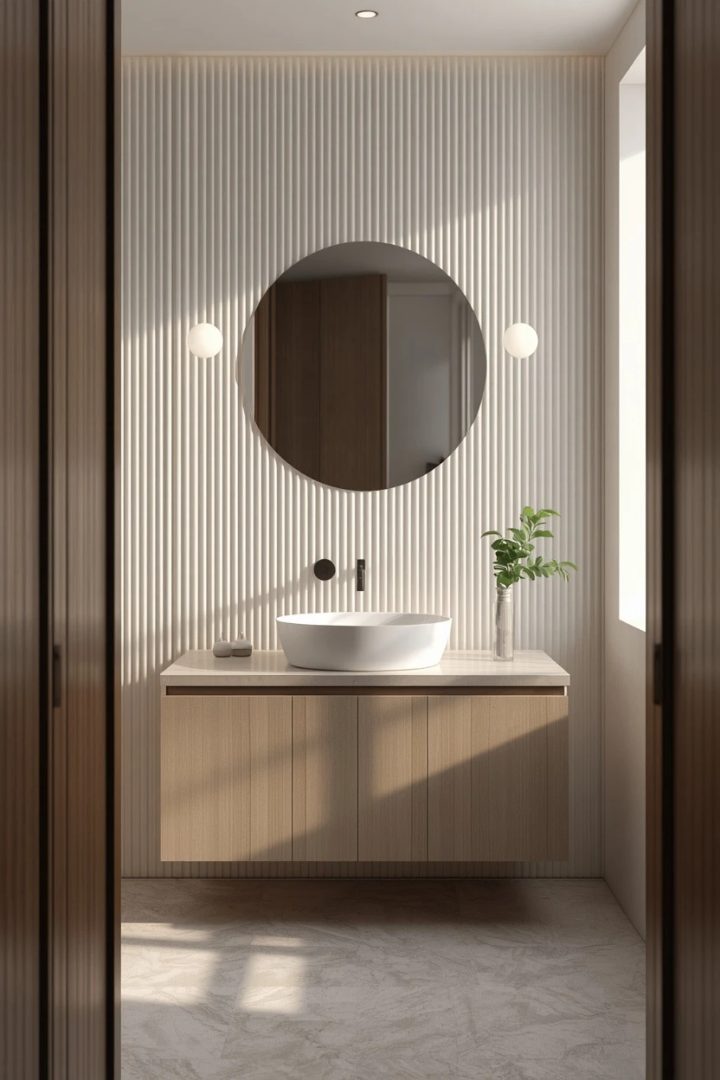
A textured or three-dimensional tile — fluted, ribbed, waved, or geometric relief — adds depth and shadow to a bathroom wall that a flat tile cannot, the raised surface catching light differently through the day. A fluted or ribbed tile behind the vanity or in the shower reads tactile and current, and the play of light and shadow across the relief gives the wall a living quality.
Keep the rest of the room simple so the textured wall leads, and consider that deeply textured tile has more surface to clean, so it suits a feature area rather than a whole wet shower where soap residue would collect in the grooves.
15. Contrast Grout for Graphic Impact
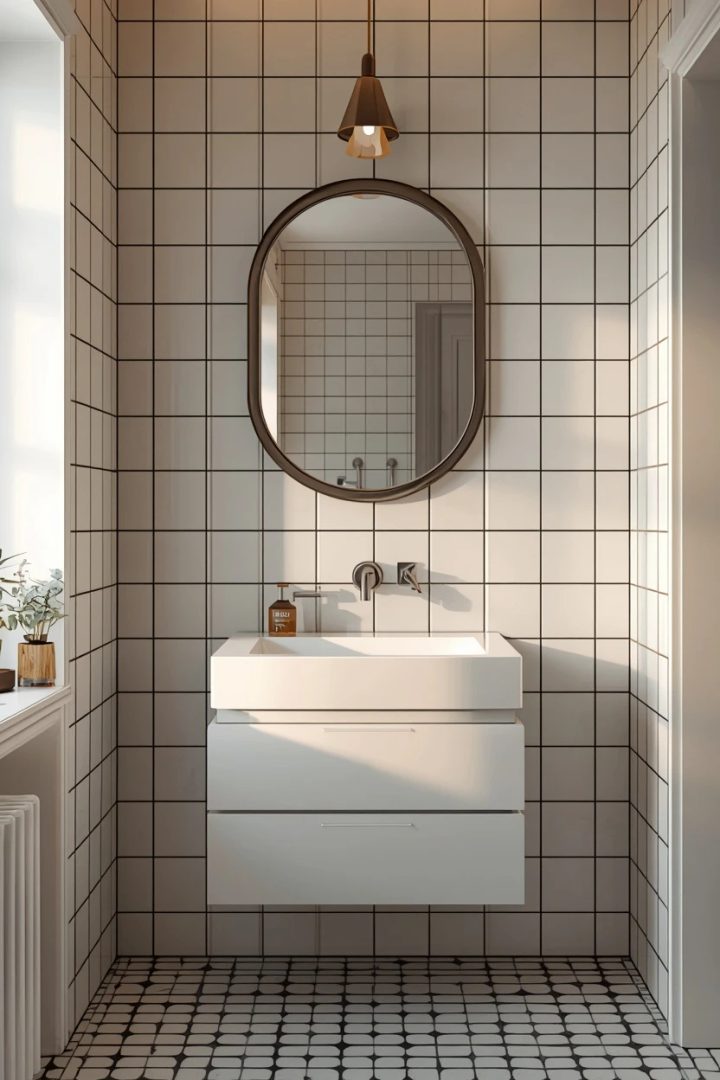
Sometimes the tile is not the story — the grout is. Pairing a plain white or pale tile with a bold dark grout draws a crisp graphic grid across the wall and turns the cheapest tile into a designer feature for the price of a different bag of grout. Dark grout also hides everyday grime far better than white, staying looking clean far longer. The effect is strongest with a simple square or metro tile laid in a clean bond where the grid reads clearly. Be sure the tiler uses a grout release or seals porous tile first, since dark grout can stain the face of an unglazed pale tile.
16. A Single Tiled Feature Wall
If tiling the whole room is beyond the budget or the appetite, concentrating a beautiful, more expensive tile on a single feature wall delivers huge impact for a contained cost. A zellige, a bold pattern, a fluted texture, or a marble-effect tile behind the bath or vanity draws the eye, and because you are buying enough for one wall rather than four, you can afford something special. Paint the surrounding walls in a coordinating moisture-resistant colour and the room reads designed and considered.
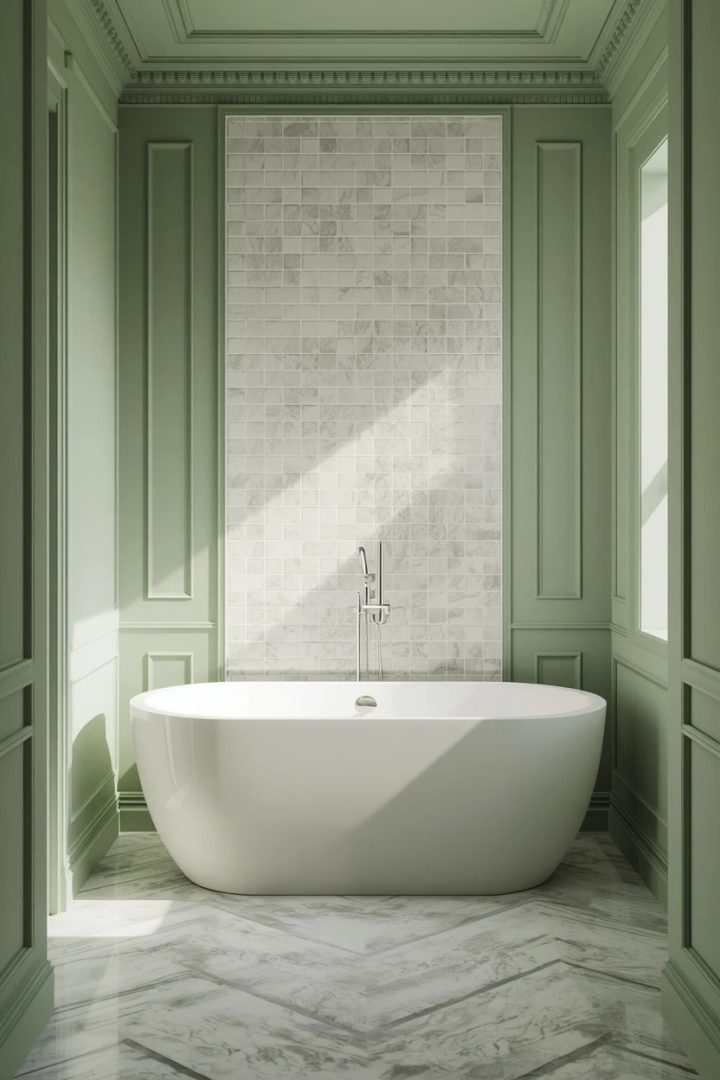
This is the smartest way to get a showstopping tile into a bathroom on a real-world budget.
17. Floor-to-Ceiling Tile
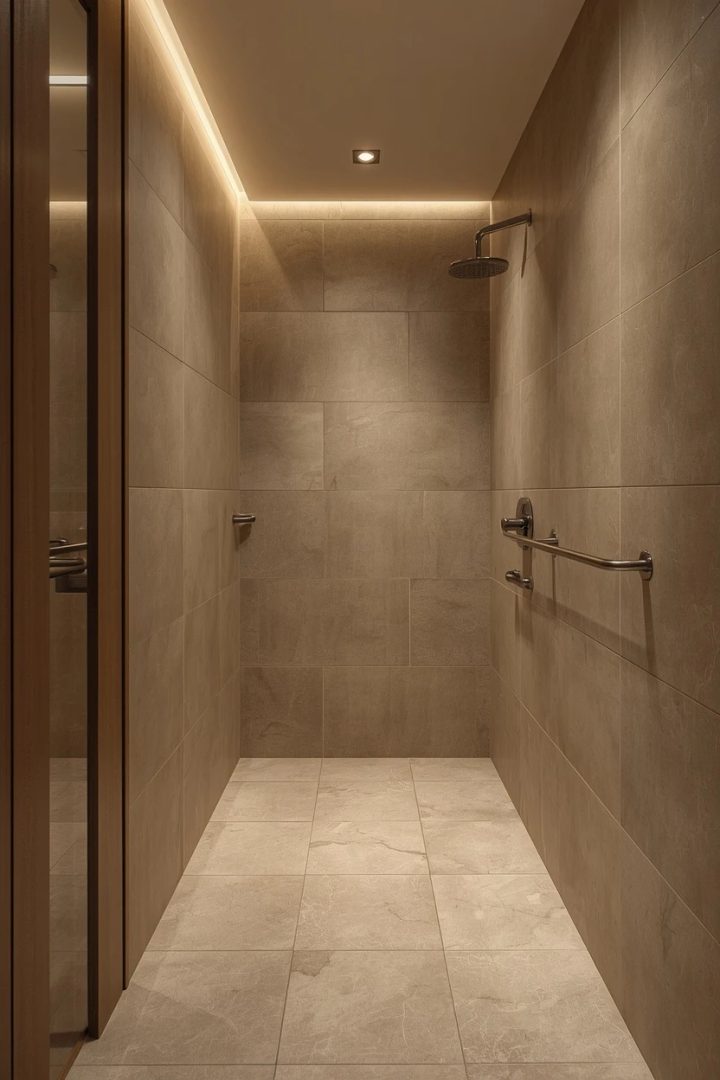
Running tile from floor to ceiling on every wall creates a seamless, hotel-like, fully waterproof bathroom that reads luxurious and is supremely practical. There is no painted wall to scuff, no line where tile meets paint, and no part of the room that cannot handle water and steam. It is a bigger tile order and a bigger job, so it suits a full renovation, and it reads best with a large-format or calm tile where the sheer expanse of tile does not become busy.
Continuous floor-to-ceiling tile in a warm neutral makes a small bathroom read larger by removing every visual break.
18. The Complete Bathroom Tile Scheme
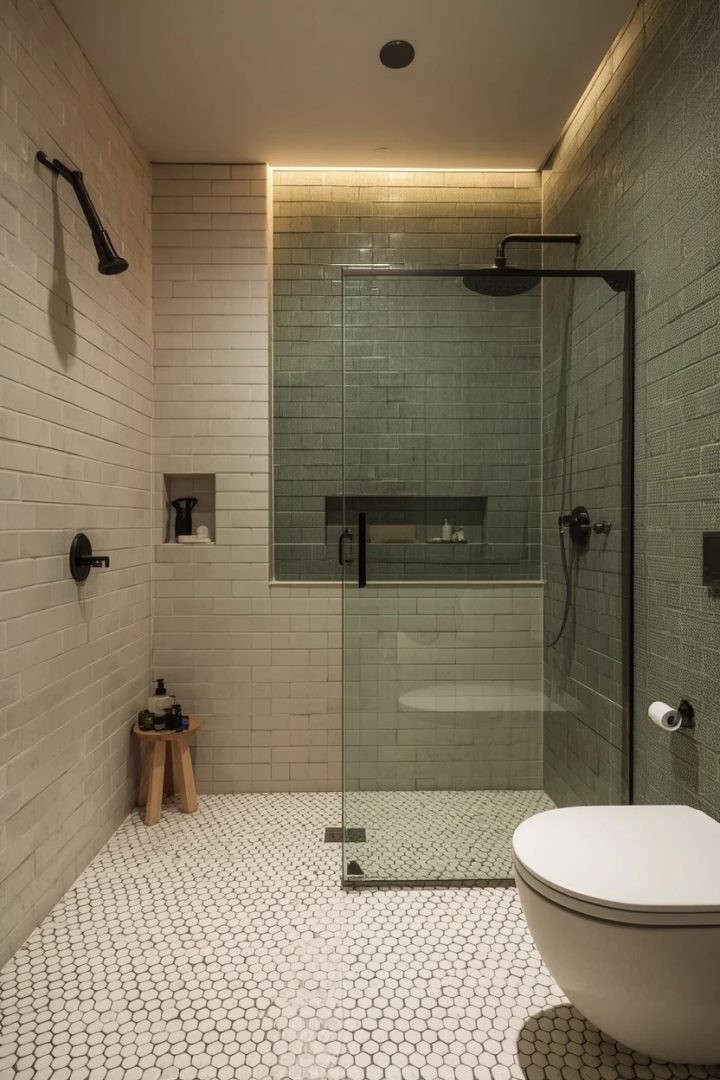
Brought together, a successful bathroom tile scheme usually pairs a calm, practical tile on the large surfaces — large-format porcelain or plain metro on the main walls and a slip-resistant tile on the floor — with one characterful tile on a feature wall or shower for personality. The most common mistake is using too many bold tiles at once, which leaves the eye nowhere to rest; the fix is to let one tile be the star and keep the rest quiet.
Choose practical tiles for the wet, hardworking areas and save the drama for a single feature, and the bathroom reads both beautiful and genuinely liveable.
Where I'd Start if I Only Did Three Things
If I only made three tile decisions for a bathroom, I'd start with a calm, practical tile for the big surfaces — a large-format porcelain or plain white metro that handles water well and reads timeless. Next, I'd choose the grout deliberately, since a matching grout keeps things soft and seamless while a contrast grout turns cheap tile into a graphic feature; the grout is a design decision, not an afterthought. Third, I'd spend the character budget on one feature wall — a zellige, a bold pattern, or a texture — and keep everything else quiet. Practical big surfaces, a deliberate grout, and one star feature deliver the most style for the money.
Frequently Asked Questions
What are the best bathroom tile ideas for a small bathroom?
For a small bathroom, the best options make the space read larger and brighter. Large-format tile with matched grout minimises busy grout lines and reads calm and expansive. Light, warm tones bounce the available light around. Running the same tile floor to ceiling, and even into a curbless shower, removes the visual breaks that shrink a room. A small bathroom is also the ideal place to be bold with one patterned or characterful feature — a bold floor or a zellige wall — since the tiny footprint keeps the cost down while the impact stays high. Vertical tile draws the eye up and makes a low room read taller.
What tile is easiest to keep clean in a bathroom?
Large-format porcelain tile is the easiest to keep clean because it has the fewest grout lines, and grout is what collects grime in a bathroom. Porcelain itself is dense and almost impervious to water and stains. Mosaic and penny round tiles grip well underfoot but have many grout lines that need sealing and regular cleaning. Dark tile and dark or mid-grey grout both hide everyday marks and soap residue far better than white, staying looking clean longer. Whatever tile you choose, sealing porous grout and any natural stone, and choosing a mid-tone grout over stark white, makes the whole scheme far lower-maintenance.
Should bathroom wall and floor tiles match?
They do not need to match, and often the most considered bathrooms deliberately contrast them. A common and successful approach is a calm, plain tile on the walls with a more characterful tile on the floor — a patterned, hexagon, or terrazzo floor under plain white walls, for instance. Alternatively, run one tile everywhere for a seamless, expansive look that suits small bathrooms. The key is balance: if the floor is bold and patterned, keep the walls quiet, and vice versa. Matching the tiles exactly can read flat, while thoughtfully contrasting them — within a coordinated palette — reads designed and layered.
What is the most timeless bathroom tile?
White subway tile is the most timeless bathroom tile, having endured for over a century precisely because it is clean, bright, adaptable, and hard to date. Large-format tile in warm neutral tones is similarly enduring and reads calm and contemporary without chasing a trend. Marble and marble-effect tile has been a classic for generations. To keep any tile timeless, favour neutral colours and classic layouts for the large permanent surfaces, and confine bolder, more of-the-moment patterns and colours to a single feature wall or an easily changed accent, so the room can be updated later without a full retile.
Final Thoughts
Tile shapes a bathroom more than any other single element, and these bathroom tile ideas span the full range from timeless white subway and practical large-format porcelain to artisan zellige, bold pattern, and moody dark schemes. The principle that ties the best schemes together is balance: choose a calm, practical, hardworking tile for the large wet surfaces, make the grout a deliberate decision, and save the drama for one feature wall or floor. Do that, and your bathroom tile will read both beautiful and genuinely liveable — the kind of scheme that still looks considered years after the tiler packs up.