18 Lounge Dining Room Decorating Ideas for a Cohesive, Open-Plan Space
 By zarcoyt2025
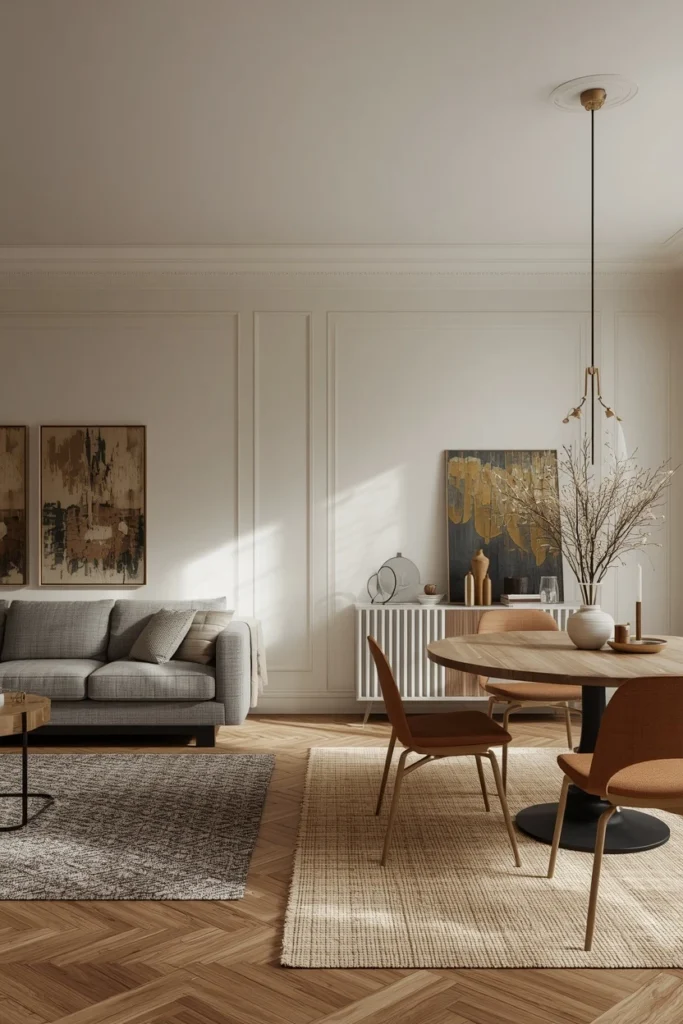
Table of Contents
- 1. The Cohesive Palette Living Dining Room
- 2. The Zoned Rug Living Dining Room
- 3. The Layout-and-Flow Living Dining Room
- 4. The Sofa-as-Divider Living Dining Room
- 5. The Layered Lighting Living Dining Room
- 6. The Coordinated Furniture Living Dining Room
- 7. The Open and Airy Living Dining Room
- 8. The Statement Dining Zone Living Dining Room
- 9. The Continuous Flooring Living Dining Room
- 10. The Accent Color Thread Living Dining Room
- 11. The Multi-Functional Living Dining Room
- 12. The Sightline-and-Focal Living Dining Room
- 13. The Cozy Lounge Zone Living Dining Room
- 14. The Symmetry-and-Balance Living Dining Room
- 15. The Greenery-Linked Living Dining Room
- 16. The Gallery-and-Art Living Dining Room
- 17. The Small-Space Living Dining Room
- 18. The Entertaining-Ready Living Dining Room
- 19. The Complete Living Dining Room
- Where I’d Start if I Only Did Three Things
- FAQs
- Final Thoughts
A combined lounge and dining room offers wonderful, flexible living space — but it only works beautifully when the two areas feel like one cohesive room rather than two functions awkwardly sharing the floor. The most successful open-plan spaces come from a few clear decorating decisions: a shared palette, thoughtful zoning, considered lighting, and a layout that lets each area do its job while flowing naturally into the other.
Each of these 18 lounge dining room decorating ideas is a complete approach you can apply, a way of decorating the whole open-plan space around one clear principle rather than a single piece of furniture. Find the version that suits your room’s size, shape, and how you live, and use it as a blueprint for a living and dining space that feels unified, balanced, and genuinely cohesive from one end to the other.
1. The Cohesive Palette Living Dining Room
The single most important decorating decision in a combined space is a shared color palette that runs through both the lounge and dining areas, tying them into one cohesive room. Choose a base of two or three colors and repeat them in the upholstery, dining chairs, art, and accessories across both zones. The continuity reads calm and intentional. It is the foundation of any open-plan design, since a unified palette is what makes a living and dining room feel like a single considered space rather than two.
2. The Zoned Rug Living Dining Room
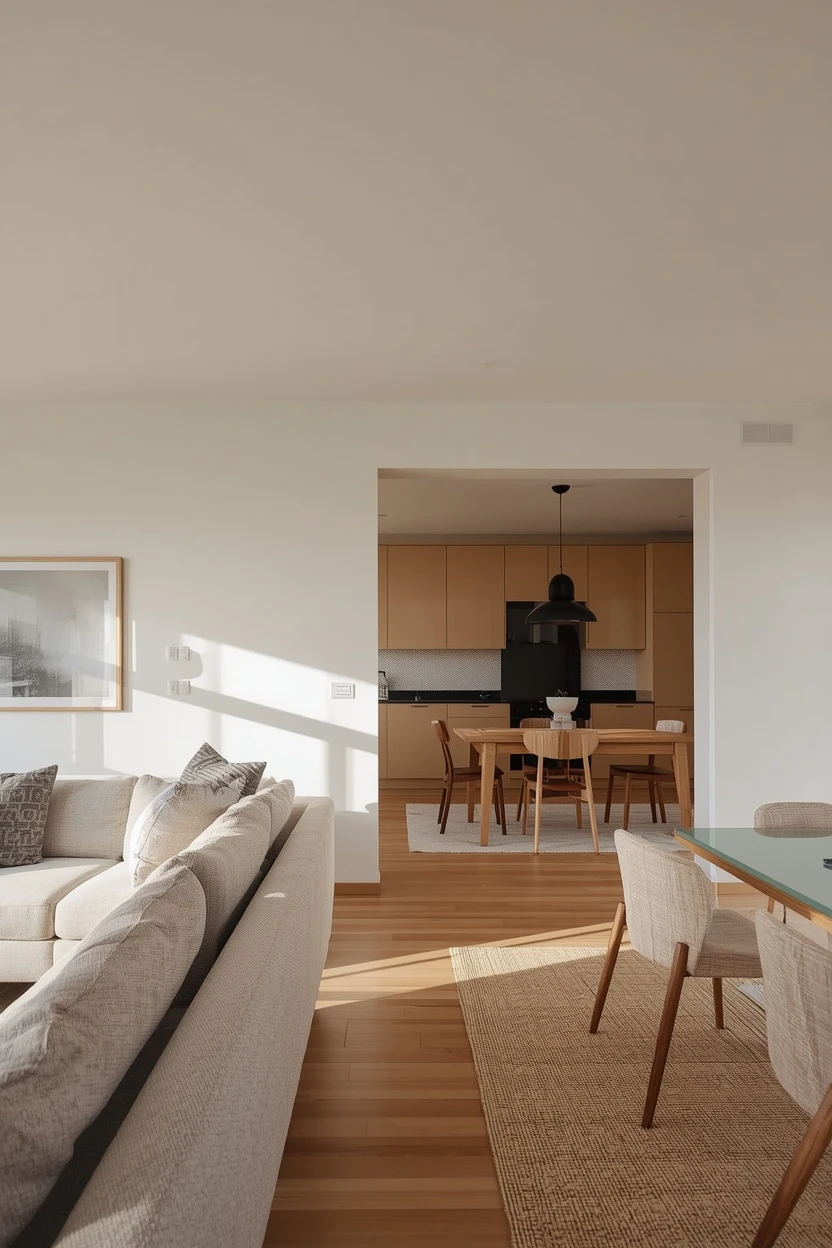
Using rugs to define each zone is one of the clearest ways to organize an open-plan lounge and dining room, anchoring the seating area and the dining table as distinct spaces within the whole. Choose rugs that coordinate in tone but suit each function, sizing the dining rug to hold the table and chairs. The zoning reads ordered and deliberate. It suits any combined room, since well-placed rugs are the simplest tool for giving each area its own identity while keeping the overall space cohesive.
3. The Layout-and-Flow Living Dining Room
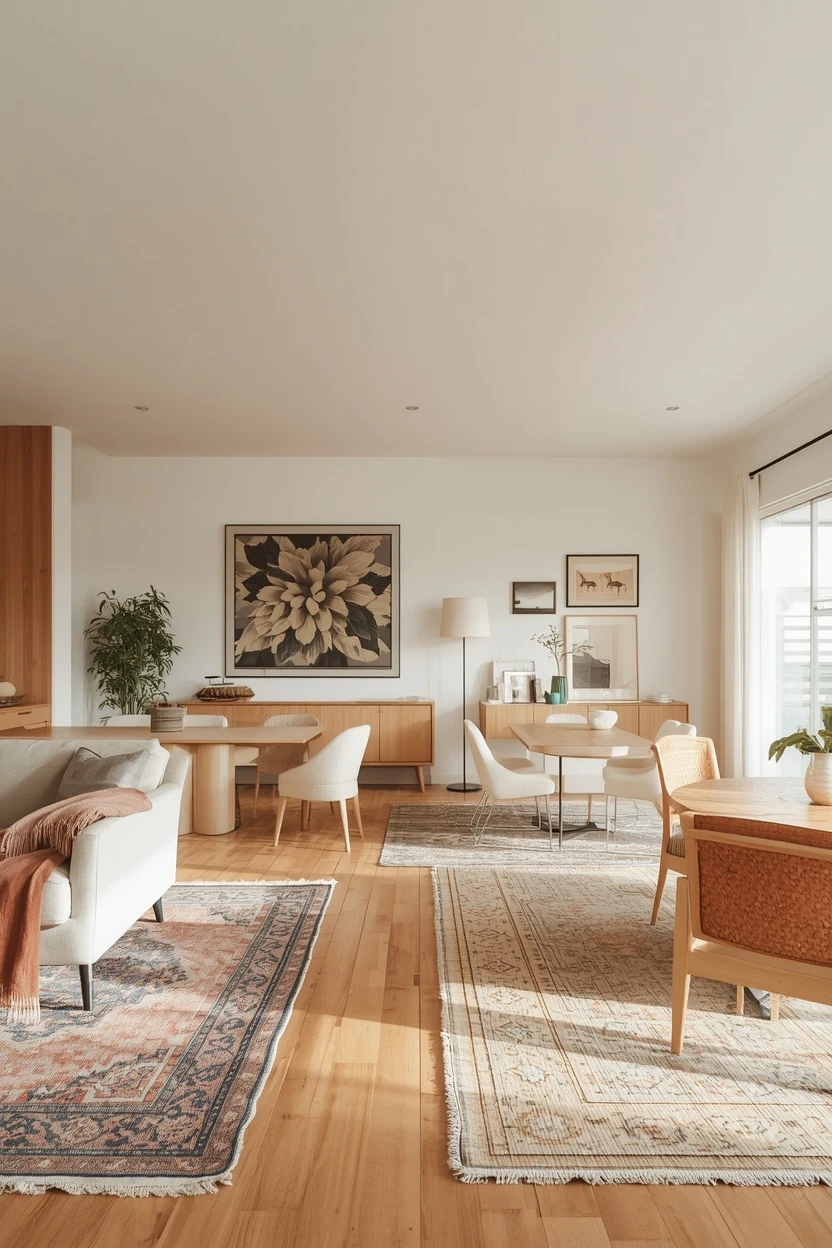
A good open-plan layout positions the lounge and dining zones so each has clear function and the space flows naturally between them, with the sofa often helping to divide the areas. Map the circulation first, keep walkways clear, and orient each zone to its focal point. The flow makes the room livable. It suits every combined space, since a thoughtful layout — deciding where each zone sits and how you move between them — is the practical groundwork that all the decorating builds on.
4. The Sofa-as-Divider Living Dining Room
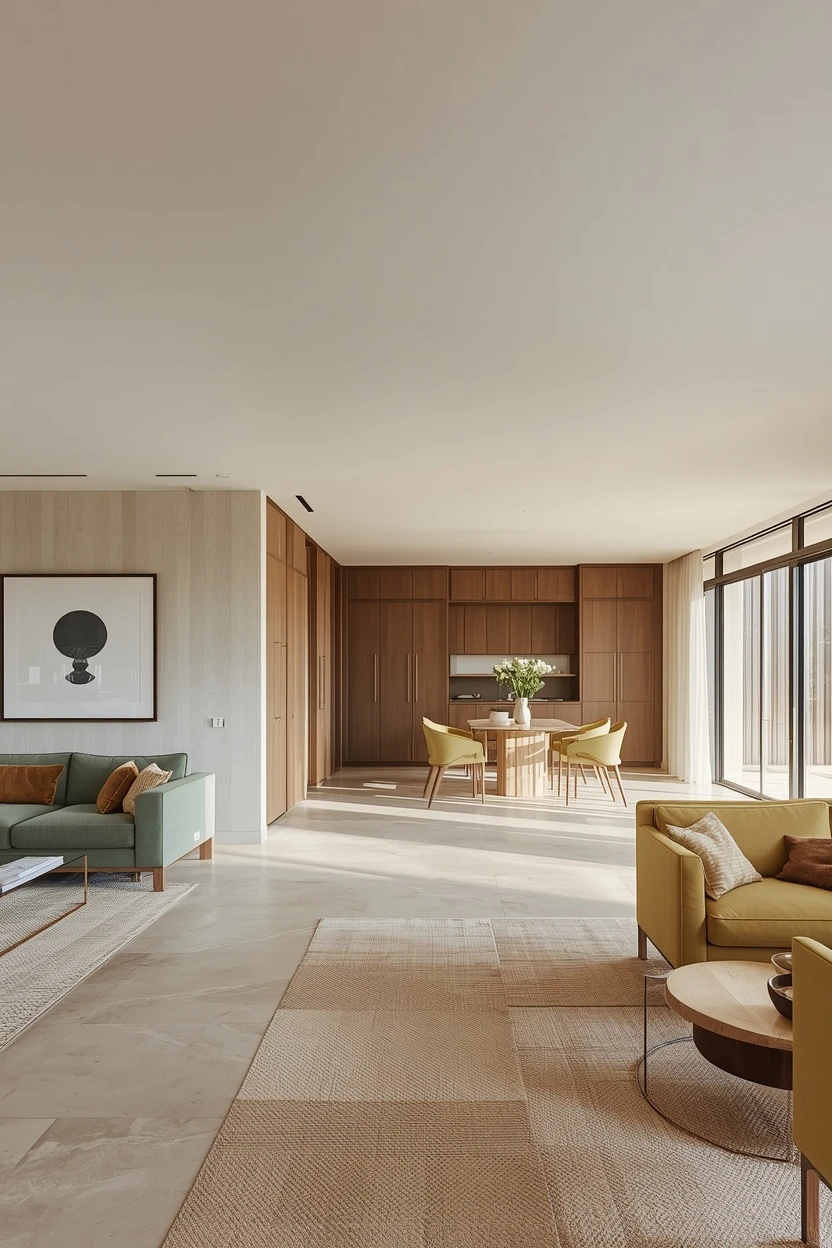
Positioning the back of the sofa to face the dining area is a classic, effective way to divide an open-plan room into a lounge zone and a dining zone without any walls. A console table behind the sofa reinforces the boundary and adds useful surface. The divide reads natural and purposeful. It suits open-plan rooms of most sizes, since using the sofa as a soft divider is one of the most reliable design ideas for a living room and dining room that need to feel like distinct yet connected areas.
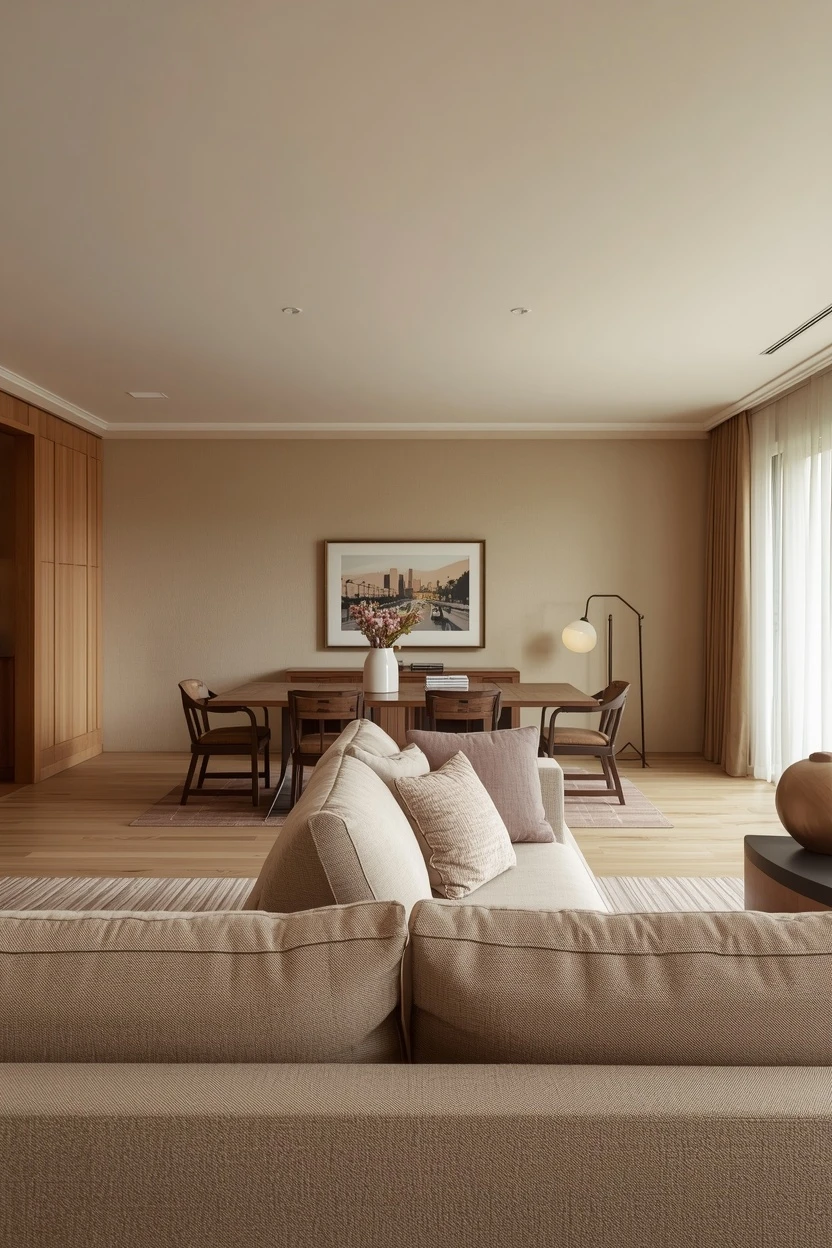
5. The Layered Lighting Living Dining Room
Lighting each zone for its purpose — a pendant or chandelier over the dining table, lamps and ambient light in the lounge — defines the areas and lets each function well. Put both on dimmers so the dining zone can be bright for meals and soft for evenings, and keep the fixtures coordinated in style. The layered light reads considered. It suits any combined room, since separate, well-chosen lighting for the lounge and dining zones is both practical and one of the clearest ways to distinguish the two areas.
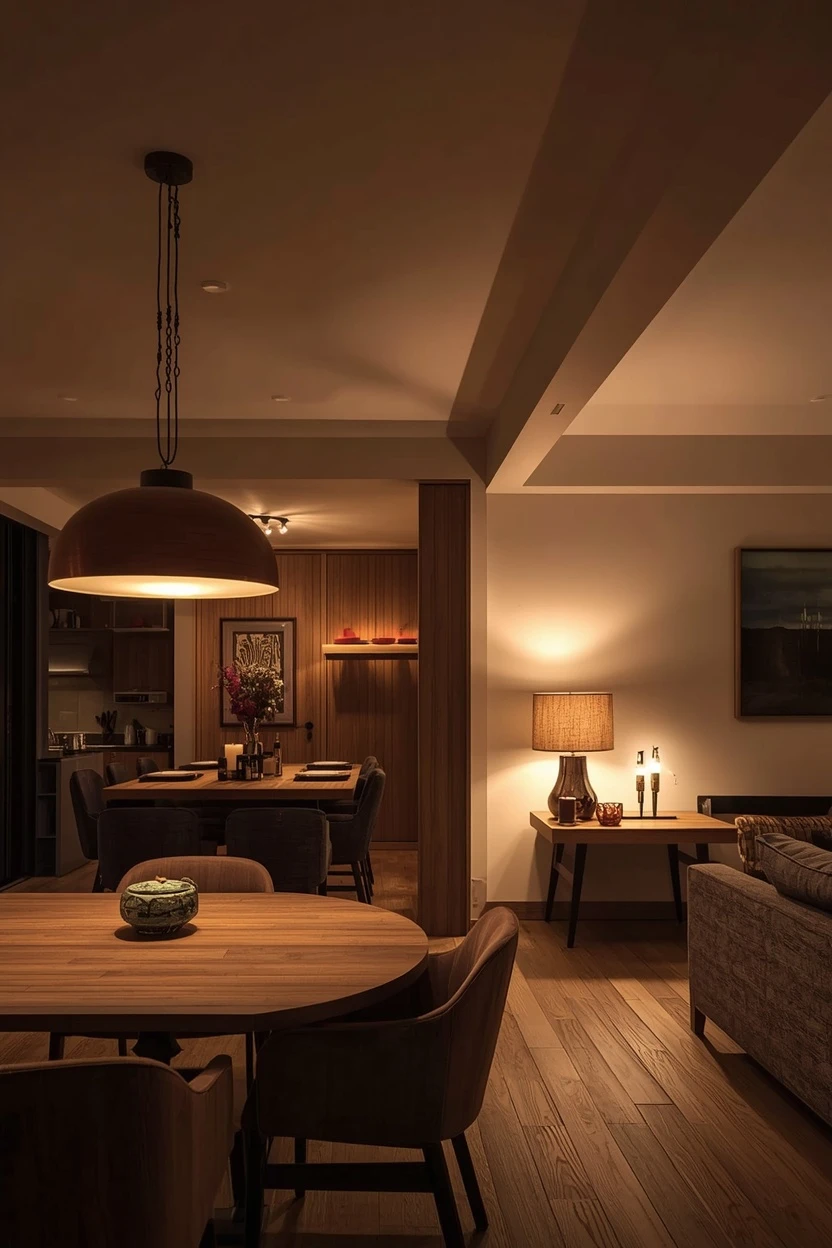
6. The Coordinated Furniture Living Dining Room
Choosing lounge and dining furniture that coordinates in style, tone, or material — without being identical — ties the two zones together into one cohesive room. Echo a wood tone, a metal finish, or an upholstery color across both areas so they clearly belong to the same space. The coordination reads harmonious. It suits any open-plan room, since furniture that shares a visual thread is essential to making a living and dining space feel unified rather than like two separately furnished areas sharing a floor.
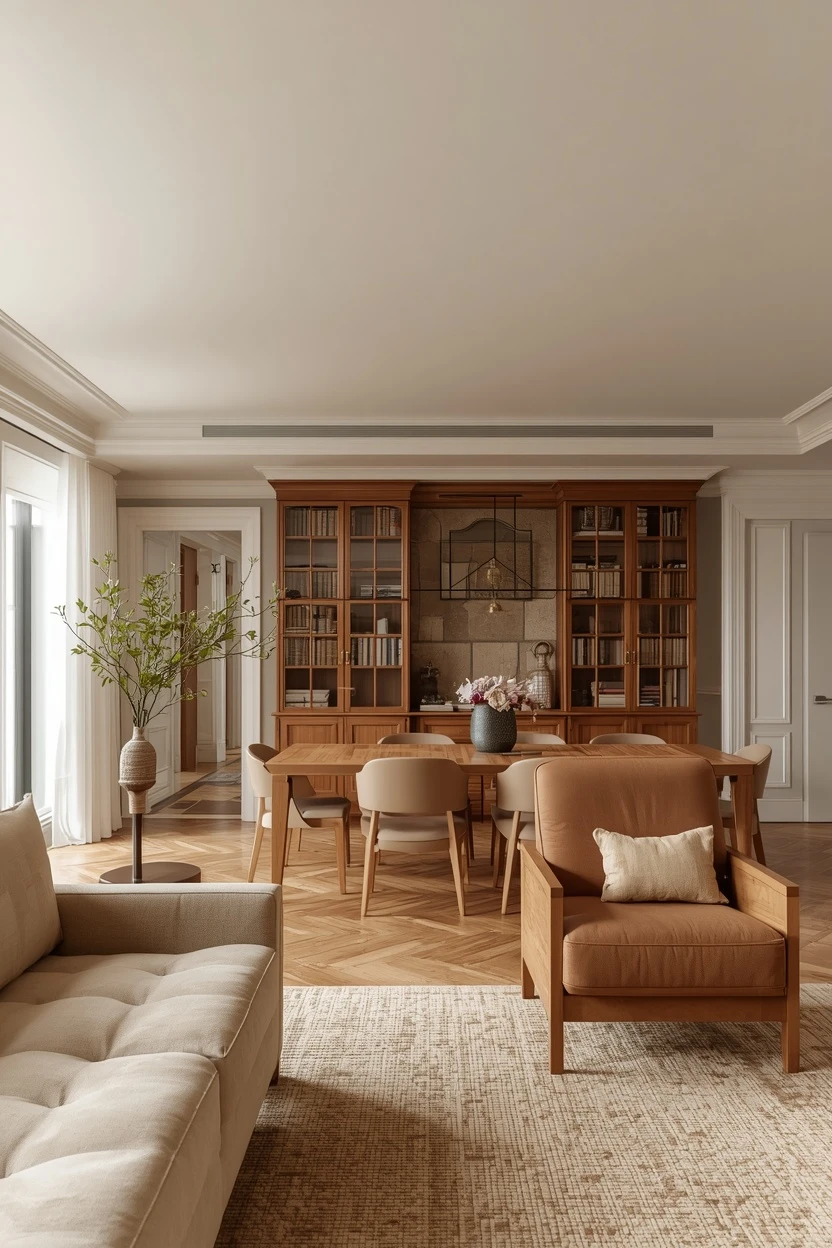
7. The Open and Airy Living Dining Room
Keeping an open-plan space feeling spacious means choosing appropriately scaled furniture, leaving clear sightlines between zones, and not overcrowding either area. Favor a few well-sized pieces over many small ones, and keep the floor and pathways clear so the eye travels through the whole room. The openness is the point. It suits combined rooms of any size, since one of the great pleasures of open-plan living is the sense of space, and a restrained, well-scaled approach is what preserves it.
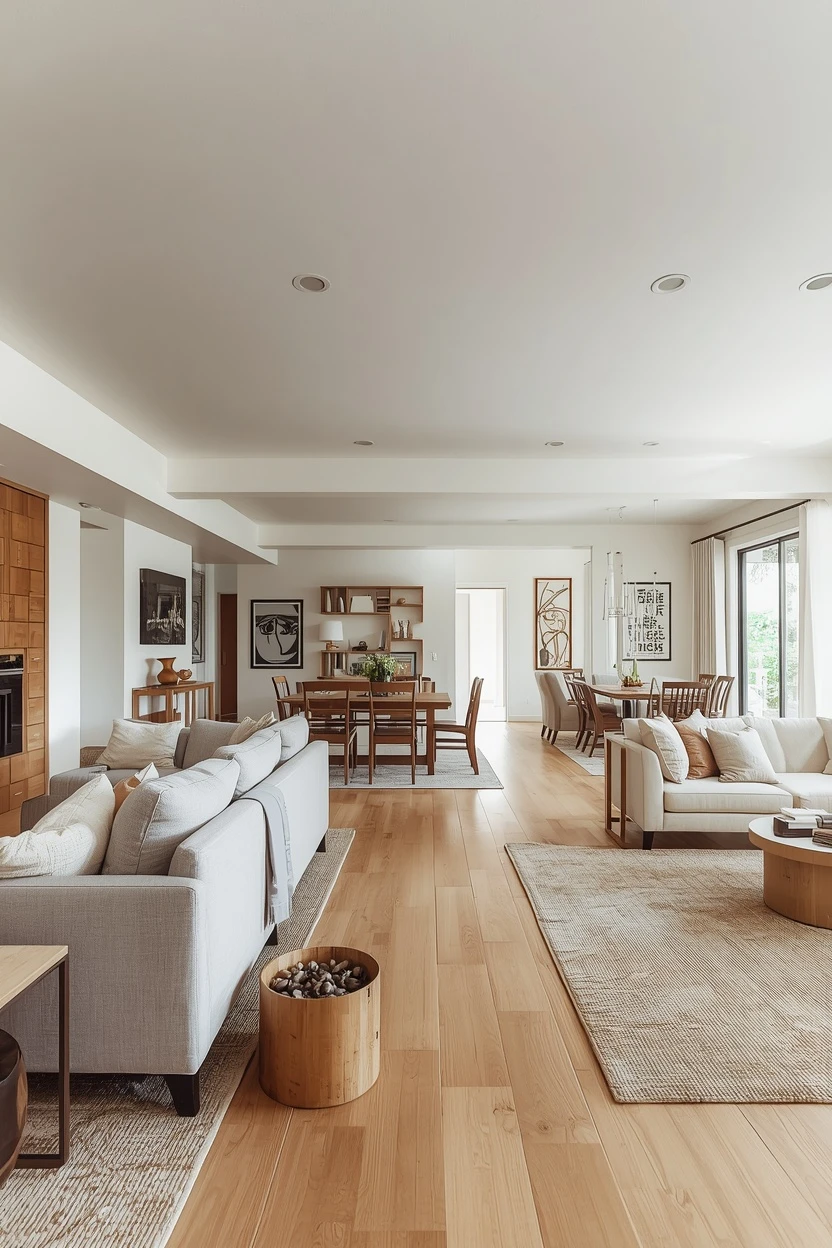
8. The Statement Dining Zone Living Dining Room
Giving the dining area a strong identity — a beautiful table, a statement pendant above it, and a feature wall or art behind — makes it a confident half of the open-plan room rather than an afterthought. Anchor the zone with a generous rug and let the pendant draw the eye. The dining area earns its place. It suits any combined space, since a well-defined, attractively styled dining zone balances the lounge and gives the design ideas for the living room and dining room a sense of equal weight.
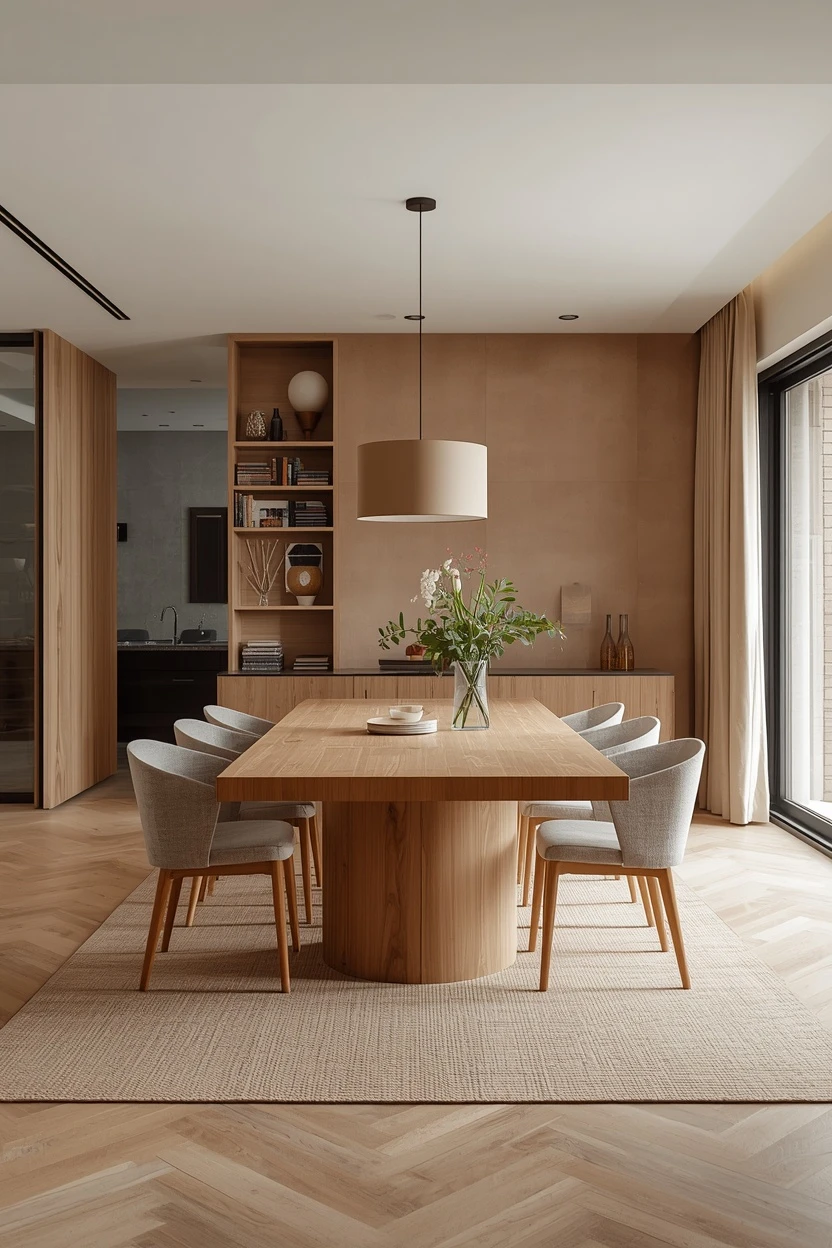
9. The Continuous Flooring Living Dining Room
Running the same flooring throughout an open-plan space visually unites the lounge and dining zones into one cohesive room, with rugs then layered on top to define each area. The unbroken floor makes the space feel larger and more deliberate than a change of flooring between zones. The continuity reads seamless. It suits any combined room, since consistent flooring is a simple structural decision that does a great deal to make a living and dining space feel like one unified, considered whole.
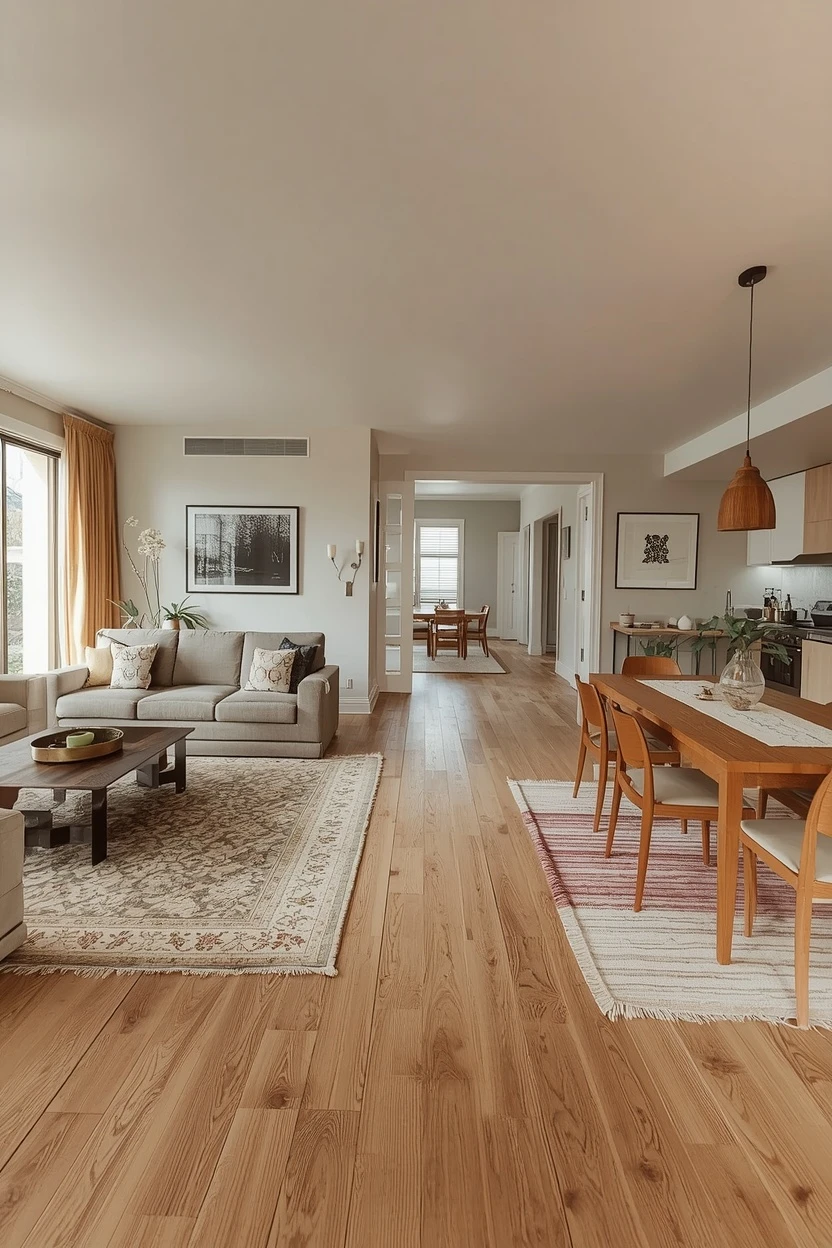
10. The Accent Color Thread Living Dining Room
Carrying a single accent color through both zones — a teal repeated in cushions and dining chairs, or a mustard in art and accessories — stitches the open-plan room together with a clear visual thread. Use the accent in at least two or three spots across both areas so the connection reads intentional. The repetition unifies the space. It suits any combined room, since a thread of accent color is an easy, affordable way to make a lounge and dining room feel cohesive even if the larger furniture differs.
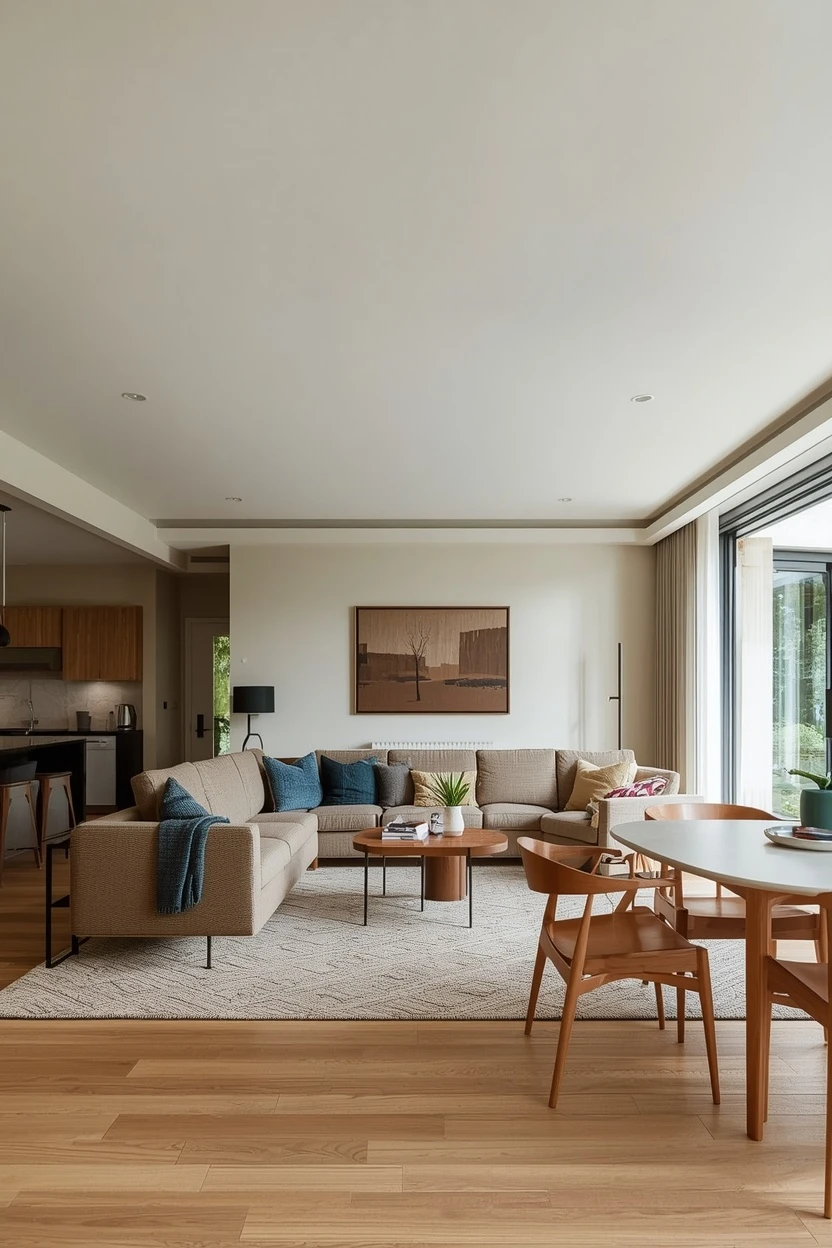
11. The Multi-Functional Living Dining Room
In a space that has to work hard, choosing multi-functional pieces — an extending dining table, a storage console, a dining bench that tucks away — keeps the open-plan room flexible and uncluttered. Pick pieces that adapt to everyday life and entertaining alike, and store what is not in use. The flexibility reads practical and calm. It suits busy households and smaller combined rooms, since hardworking, adaptable furniture lets a living and dining space serve meals, relaxing, work, and guests without feeling crowded.
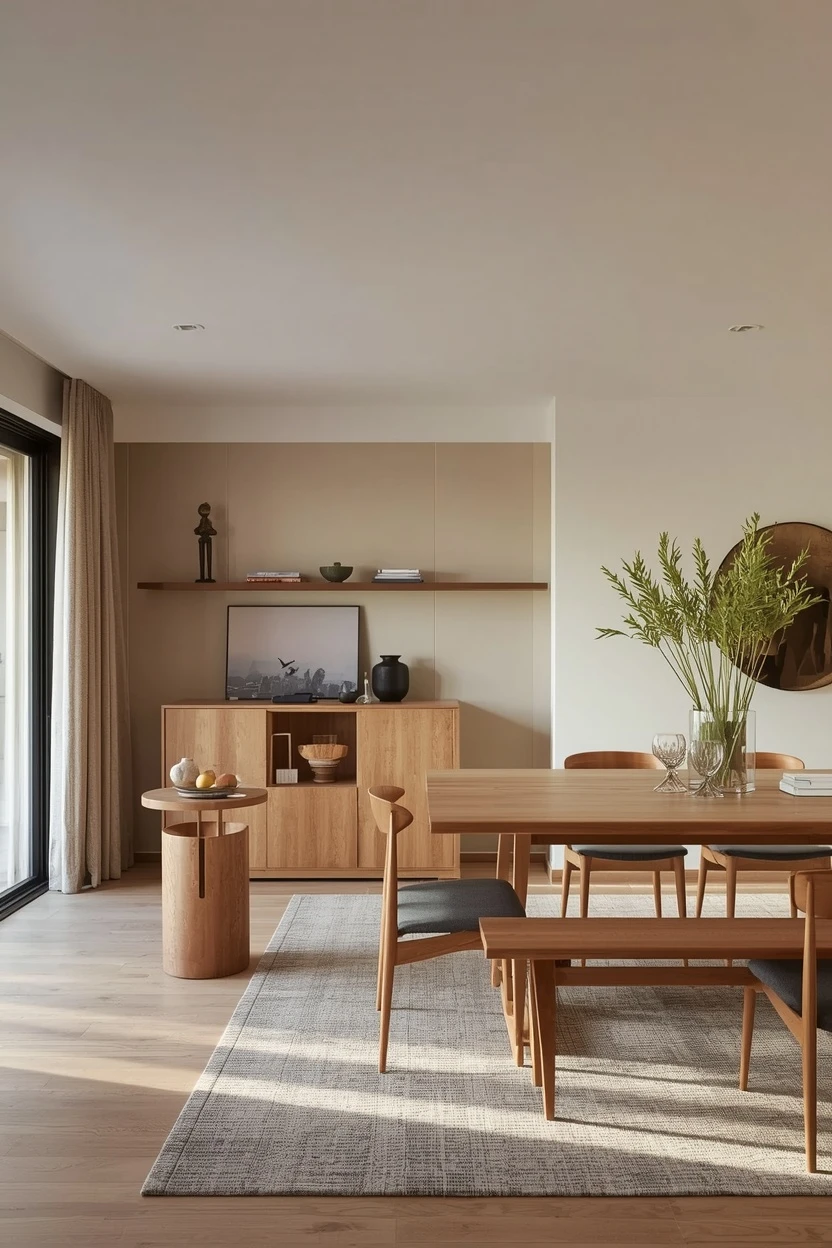
12. The Sightline-and-Focal Living Dining Room
Arranging each zone around its own focal point — the lounge toward a fireplace or TV, the dining area toward a window or feature wall — gives the open-plan room order and lets both areas feel purposeful. Keep the sightlines between zones open so the room reads as one. The dual focal points organize the space. It suits any combined room, since giving each zone a clear anchor while maintaining open sightlines is what makes a living and dining space feel both structured and connected.
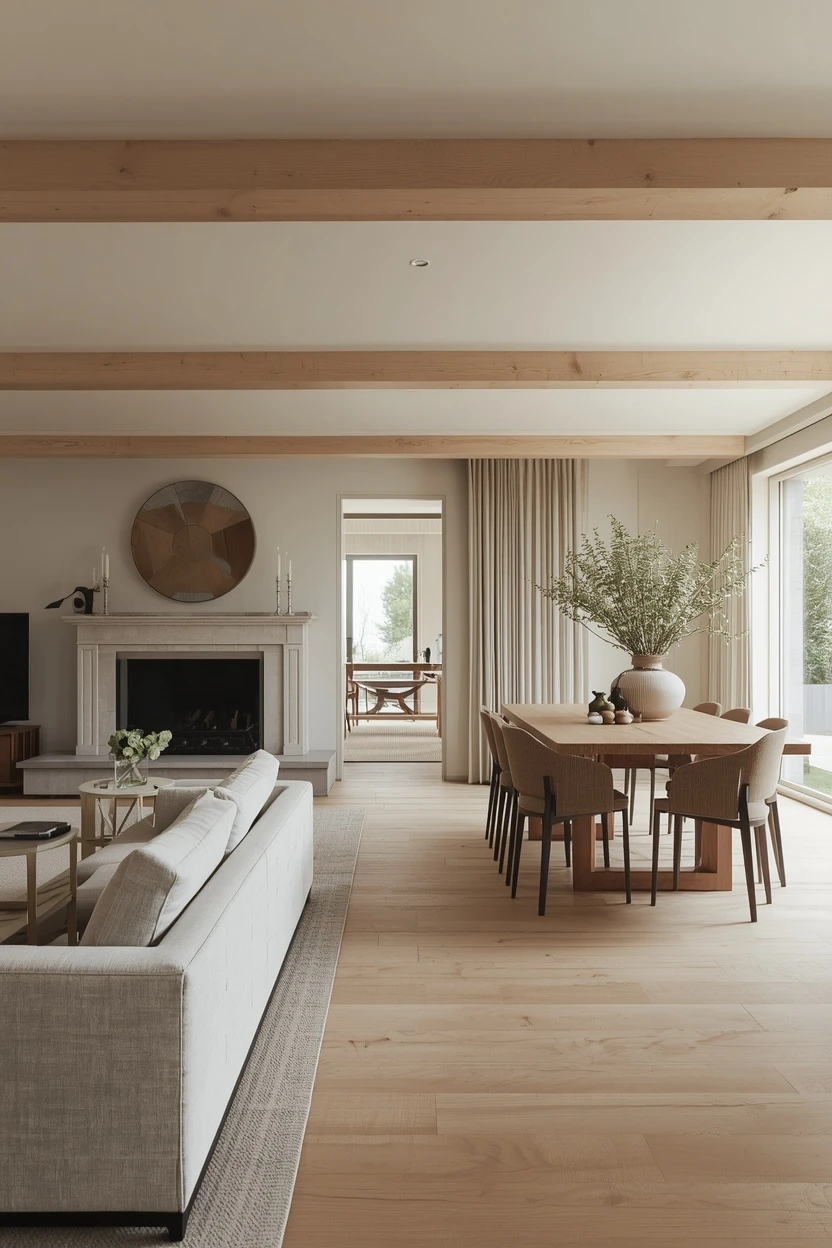
13. The Cozy Lounge Zone Living Dining Room
Making the lounge half genuinely cozy — a comfortable sofa, layered cushions and throws, a rug, and warm lighting — gives the open-plan room a clear, inviting place to relax that contrasts gently with the more formal dining zone. Keep the palette tied to the dining area so the comfort still feels cohesive. The snug zone draws everyone in. It suits any combined space, since a warm, well-defined lounge area is the heart of the room and balances the function of the dining zone beautifully.
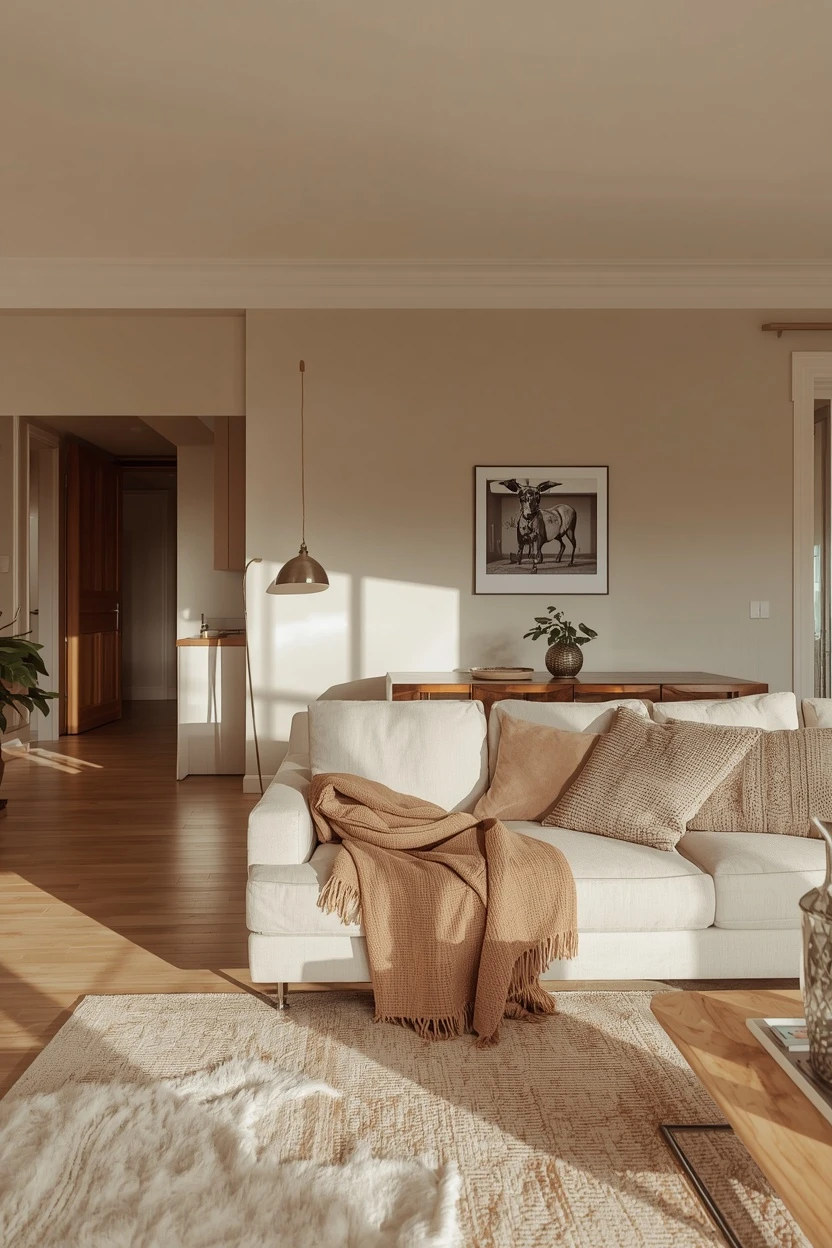
14. The Symmetry-and-Balance Living Dining Room
Balancing the visual weight of the two zones — so neither the lounge nor the dining area dominates — gives an open-plan room a calm, harmonious feel. Match the scale and presence of the furniture and styling across both ends, and distribute color and pattern evenly. The balance reads restful. It suits any combined room, since a living and dining space feels most cohesive and considered when both halves carry similar visual weight rather than one end feeling full and the other sparse.
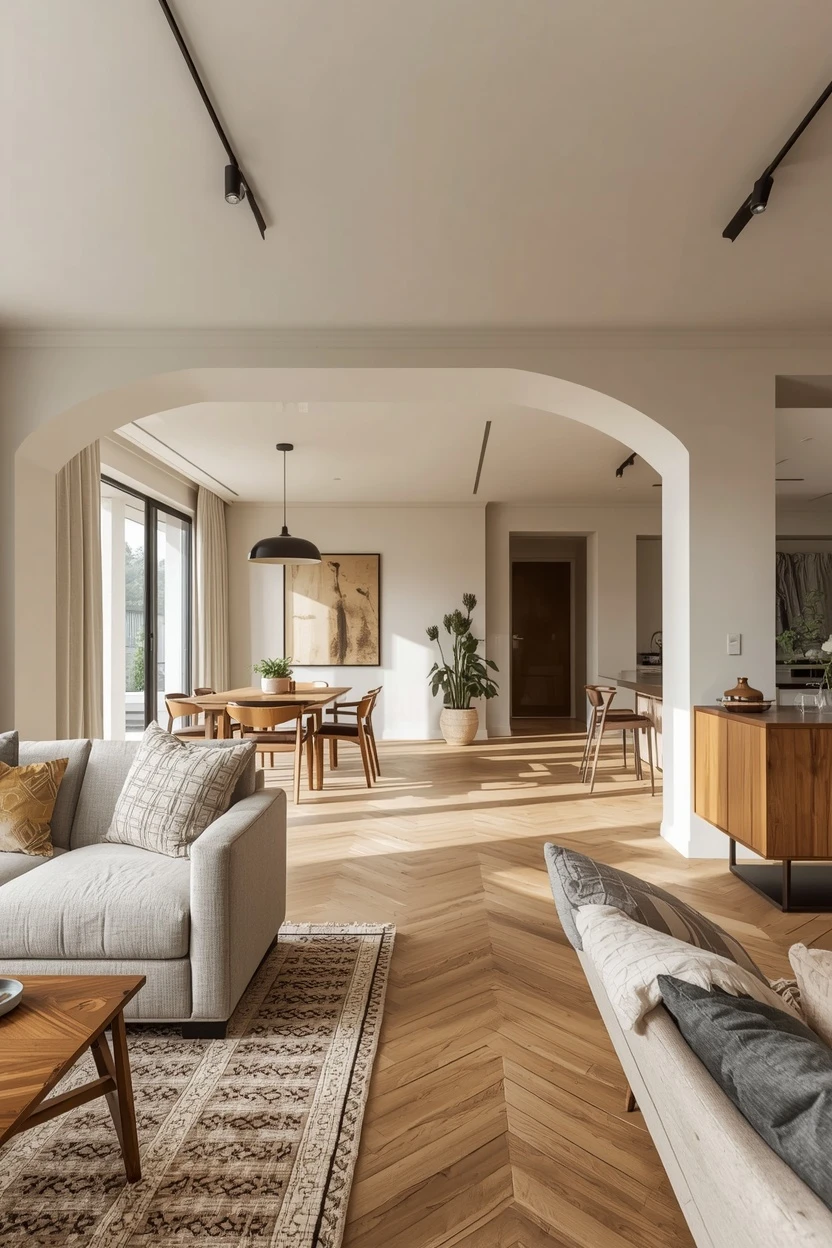
15. The Greenery-Linked Living Dining Room
Threading greenery through both zones — a tall plant in the lounge, a smaller arrangement on the dining table, and trailing plants on a shelf between — adds life and a natural, unifying link across the open-plan room. Repeat the planters or plant types so the greenery reads as one decorating thread. The plants soften and connect the space. It suits any combined room, since greenery is an easy, affordable way to add freshness while visually tying the lounge and dining areas together.
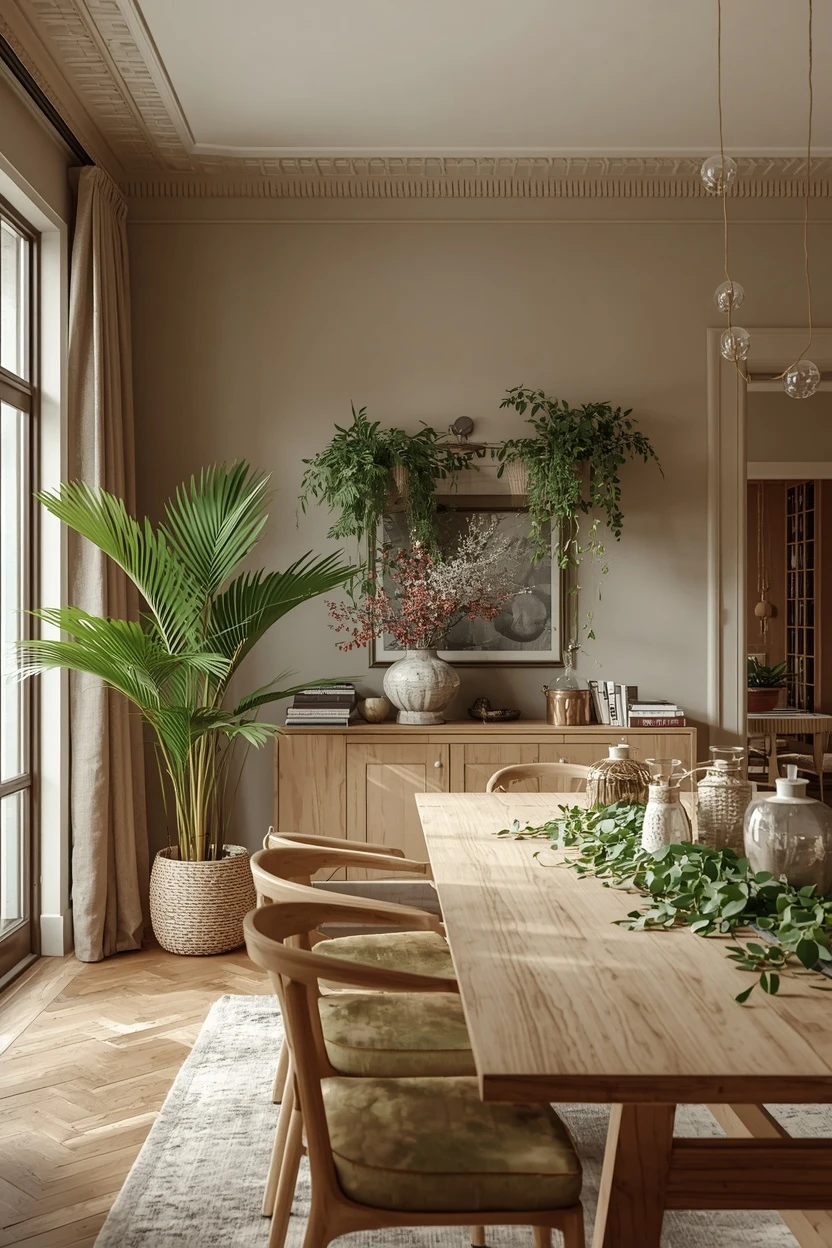
16. The Gallery-and-Art Living Dining Room
Using art to connect the zones — a cohesive style or palette of pieces across both the lounge and dining walls — gives the open-plan room a curated, unified feel. Keep the framing or the artistic theme consistent so the art reads as one collection spanning the space. The continuity reads designed. It suits any combined room, since a coordinated approach to artwork across both areas is a stylish way to reinforce the shared palette and make the whole living and dining space feel intentional.
17. The Small-Space Living Dining Room
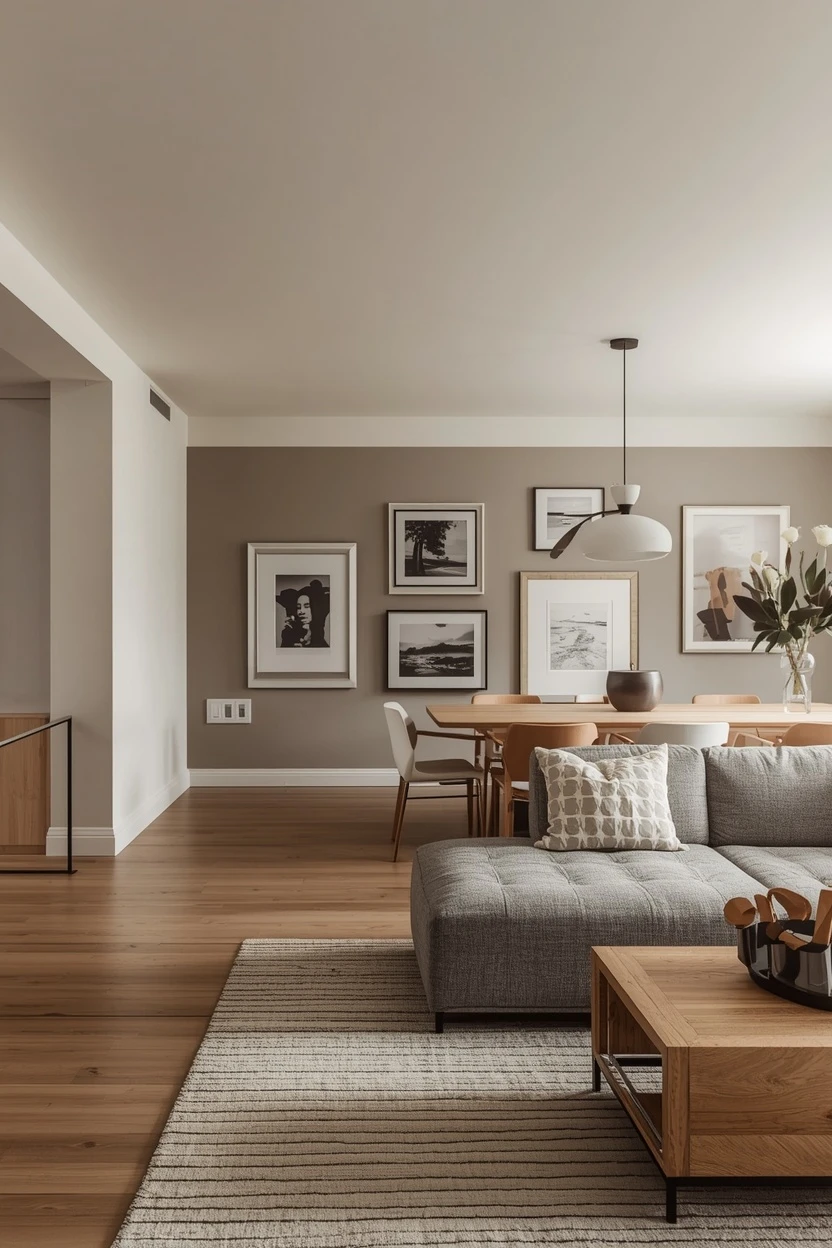
In a compact combined room, the priority is making the space work without crowding — a slim dining set, a compact sofa, multi-use pieces, and a light, cohesive palette to keep it open. Push furniture to the edges where possible, use a round table to ease tight circulation, and keep both zones uncluttered. The restraint keeps it livable. It suits small open-plan rooms, since careful scaling and a unified light palette let a small living and dining space feel both functional and surprisingly spacious.
18. The Entertaining-Ready Living Dining Room
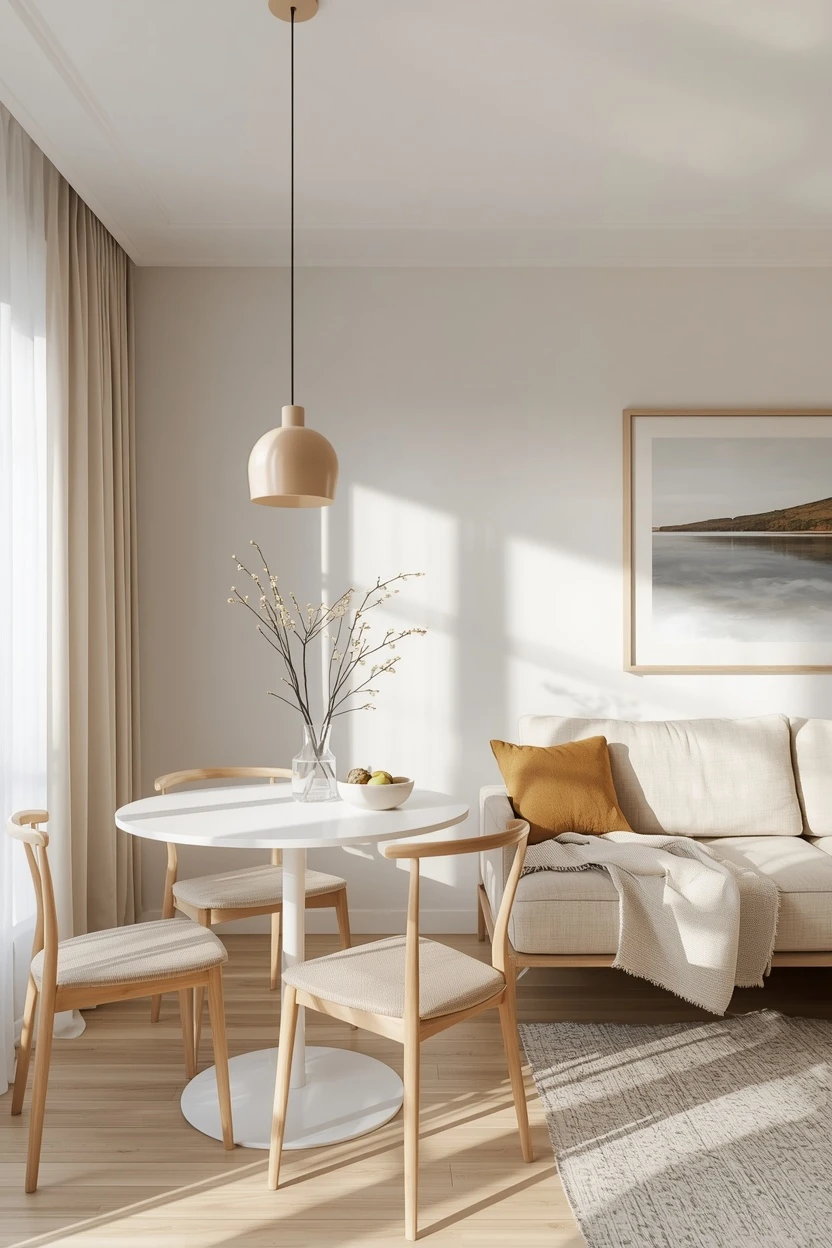
Decorating with hosting in mind makes an open-plan lounge and dining room ideal for gatherings — a generous dining table, plenty of comfortable lounge seating, flexible lighting, and clear flow between the zones. Arrange the space so guests can move easily between dining and relaxing, and keep surfaces ready for drinks and food. The room welcomes everyone. It suits anyone who entertains, since a combined space designed for flow and comfort is one of the great advantages of open-plan living for hosting.
19. The Complete Living Dining Room
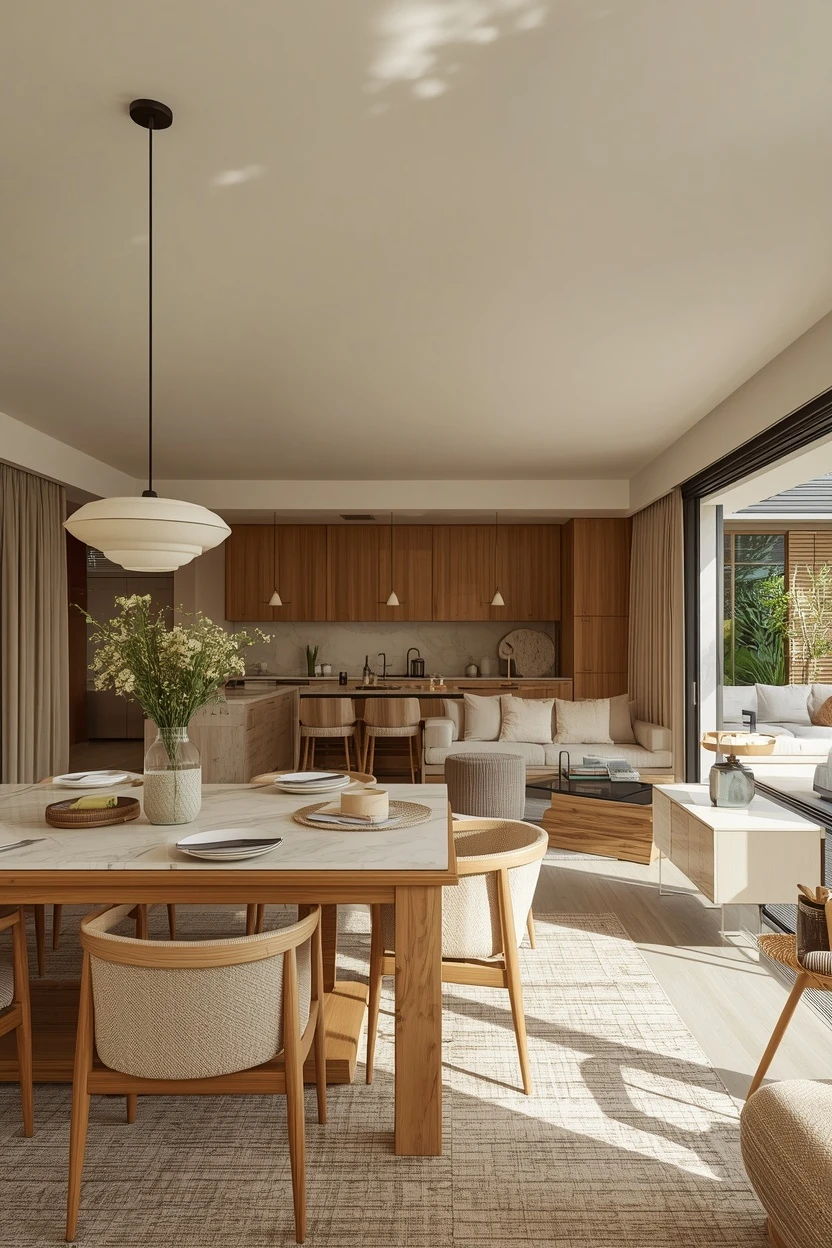
Bringing the principles together, a fully realized open-plan space unites a shared palette, zoned rugs, a sofa divider, coordinated furniture, and layered zone lighting into one cohesive living and dining room. Each decision supports the others: the palette ties it together, the rugs and sofa define the zones, the lighting and furniture coordinate the whole. The discipline is unity through a shared palette and balance through considered zoning, so the two functions feel like one room. The result is a living and dining space that flows beautifully, balances both zones, and feels genuinely cohesive end to end.
Where I’d Start if I Only Did Three Things
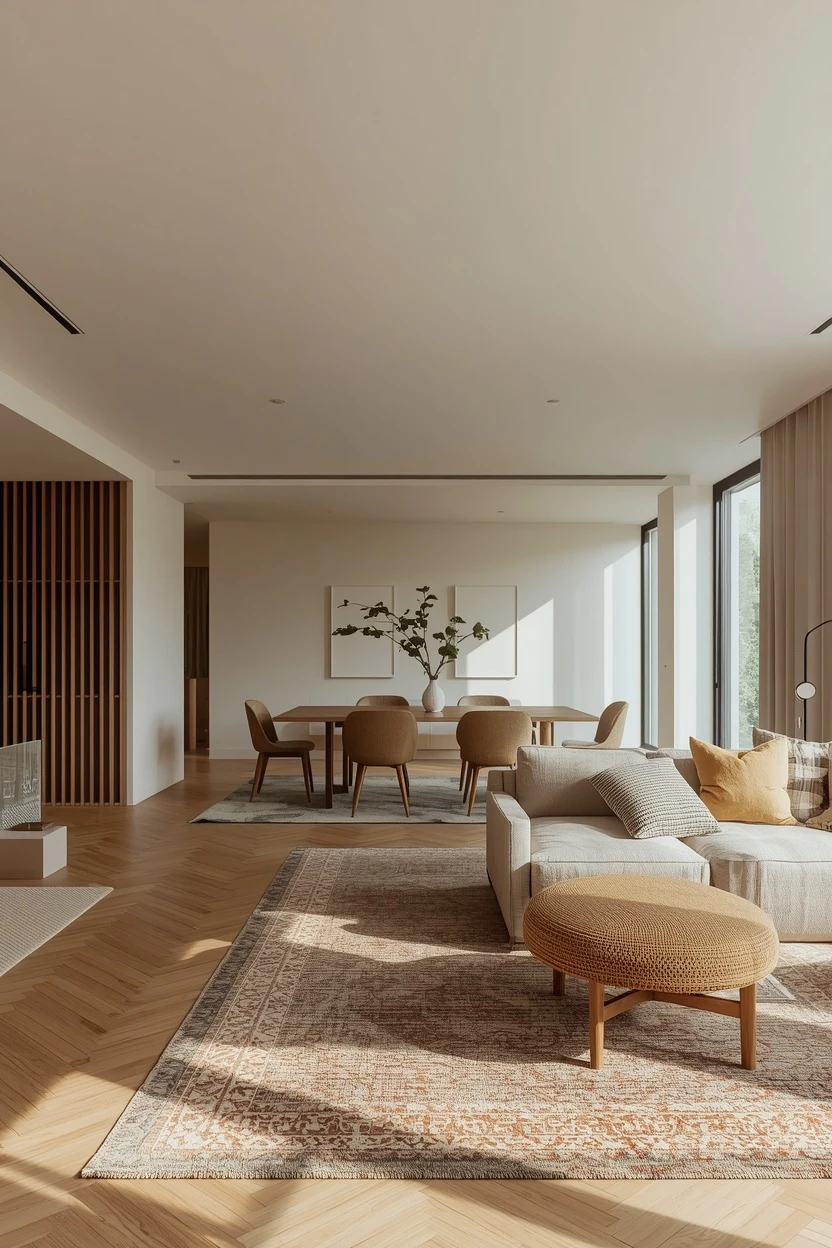
If I were decorating a combined lounge and dining room from scratch, I would start with one shared palette running through both zones, because a unified color scheme is the single most important thing that makes the two areas read as one cohesive room rather than two. Next, I would zone the space with rugs and the placement of the sofa, anchoring the lounge and dining areas as distinct but connected, since clear zoning is what gives an open-plan room its order. Third, I would light each zone for its purpose — a pendant over the table, lamps in the lounge, all on dimmers — so both areas function well and feel defined. A shared palette, rug-and-sofa zoning, and zone-specific lighting: that trio gives you a living and dining room that feels unified, balanced, and beautifully open-plan.
FAQs
How do I make a combined living and dining room feel cohesive?
Start with one shared color palette that runs through both zones — repeat two or three colors in the upholstery, dining chairs, art, and accessories across the whole space — since a unified palette is what ties the areas into one room. Coordinate the furniture in style, tone, or material without matching it exactly, run continuous flooring throughout, and thread an accent color, greenery, or a consistent art style across both zones. Then define each area with rugs and zone-specific lighting. Unity through a shared palette and coordinated pieces, combined with clear zoning, is what makes a living and dining room feel cohesive rather than like two separate spaces.
How do I separate the living and dining zones in an open-plan room?
Use soft, visual dividers rather than walls. Rugs are the clearest tool — one anchoring the seating area and one sized to hold the dining table and chairs — and positioning the back of the sofa to face the dining area creates a natural boundary, especially with a console table behind it. Zone-specific lighting, like a pendant over the table and lamps in the lounge, reinforces the divide, as does giving each area its own focal point. The goal is to define each zone clearly while keeping sightlines open, so the room reads as connected areas rather than one undivided space.
How do I lay out a small living dining room?
Prioritize flow and scale. Choose a slim or round dining set — a round table eases circulation in tight spaces — and a compact sofa, favor multi-functional pieces like an extending table or a storage console, and keep a light, cohesive palette to maximize the sense of space. Push furniture toward the edges where you can, keep walkways clear between the zones, and use rugs to define each area without crowding. Continuous flooring and a unified palette make the small space feel larger and more deliberate. Careful scaling and restraint let a compact living and dining room feel both functional and surprisingly open.
Should the living and dining areas match in an open-plan space?
They should coordinate rather than match exactly. Furniture and styling that share a visual thread — a repeated wood tone, metal finish, accent color, or palette — tie the two zones into one cohesive room, while still letting each area suit its own function. Identical matching can feel flat, whereas coordinated-but-distinct pieces read more designed and intentional. Aim to balance the visual weight of the two zones so neither dominates, repeat colors and materials across both, and let the shared palette do the unifying. The result is a living and dining space that clearly belongs together without feeling like a showroom set.
Final Thoughts
A combined lounge and dining room is one of the most flexible, sociable spaces in a home, but it works best when the two areas feel like one cohesive room rather than two functions sharing a floor. Whether your space is generous or compact, the same principles apply: unite it with a shared palette and coordinated furniture, define each zone with rugs and the placement of the sofa, light each area for its purpose, and balance the visual weight of the two halves. Decide where each zone sits and how you move between them, thread color, greenery, or art across both, and you will have a living and dining space that flows beautifully, balances both functions, and feels genuinely unified and considered from one end to the other.

zarcoyt2025
Khawar Iqbal is the founder and editor of Cozy Homes Hub. He writes about cozy, livable home decor — from small-apartment layouts to room-by-room styling guides — with a focus on warm palettes, layered lighting, and budget-friendly ideas that actually work in real homes.
Related Articles
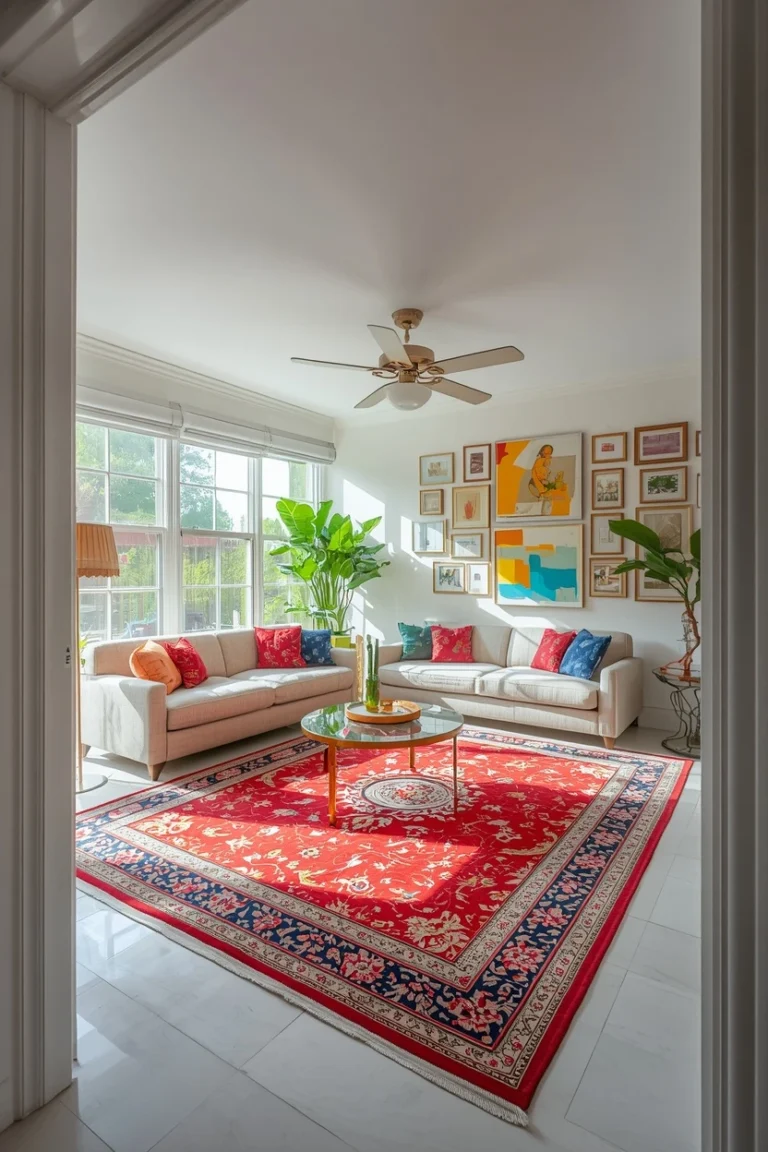
16 Living Room Decor Ideas That Instantly Elevate Any Space
A living room rarely needs new furniture to feel considerably more elevated — it usually needs a handful of layout and styling…
Read more →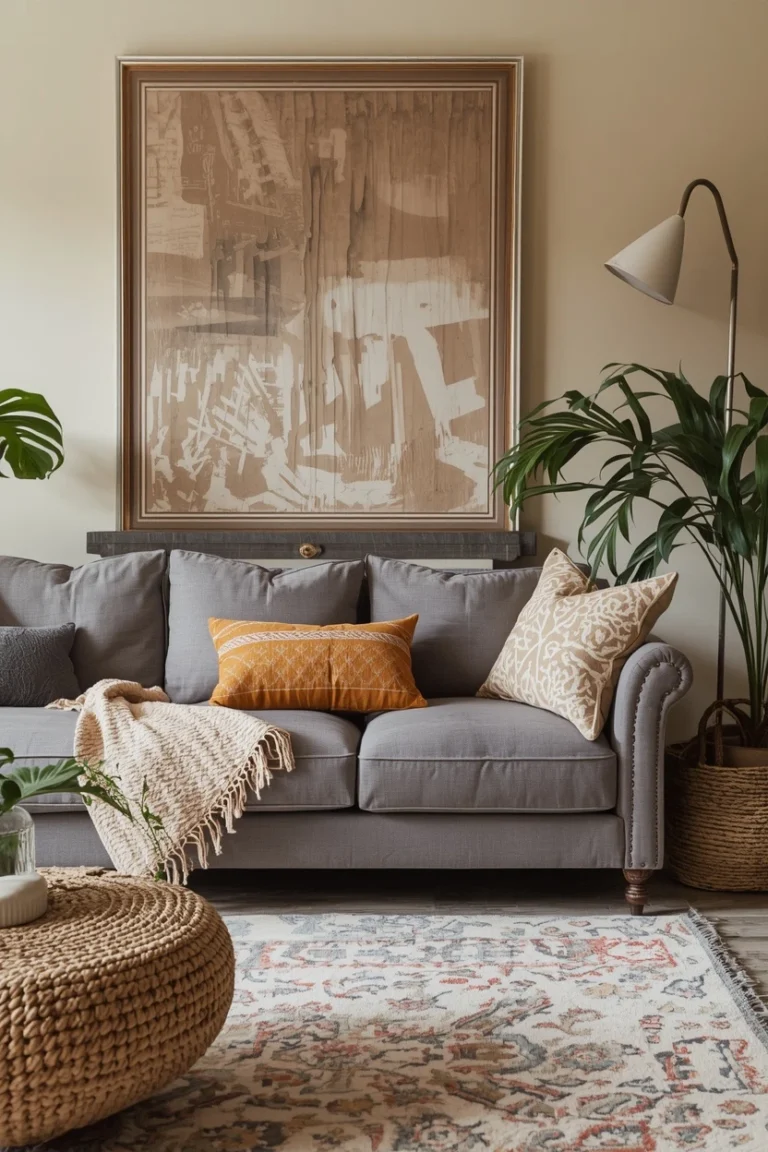
14 Grey Settee Living Room Ideas to Warm Up a Neutral Sofa
A grey settee is the most versatile thing you can put in a living room — and, if you're not careful, the…
Read more →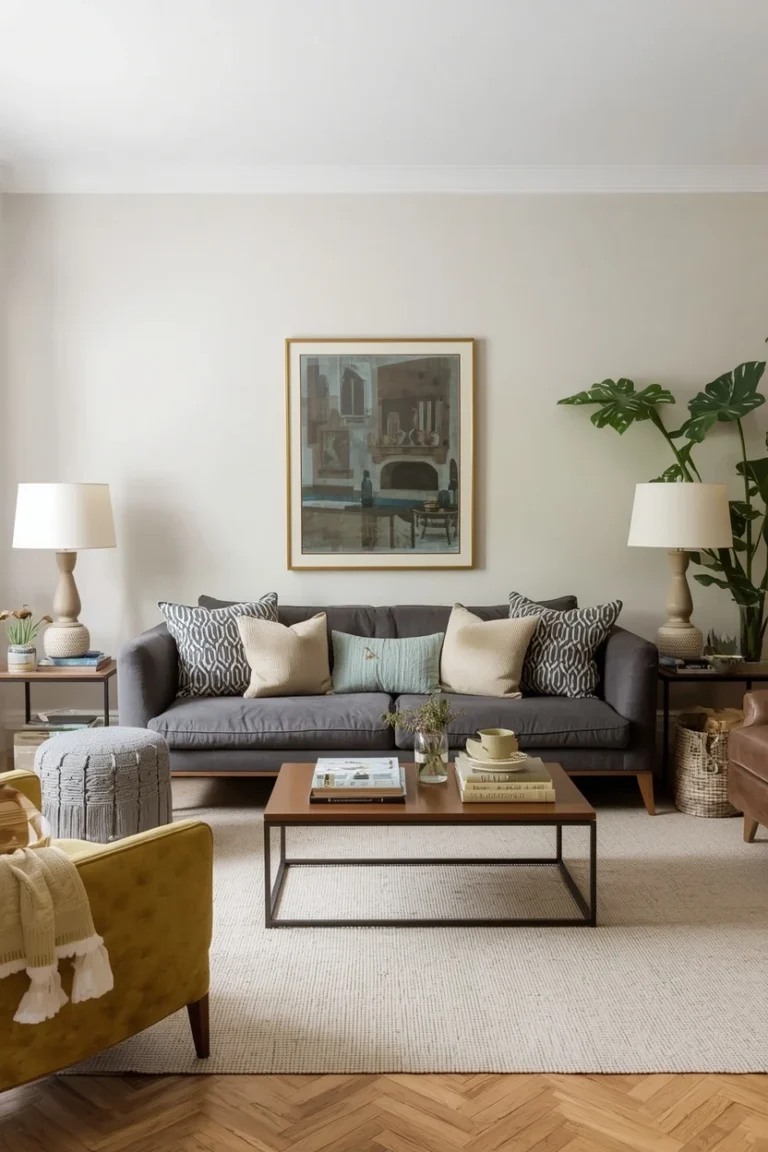
12 Living Room Arrangement Ideas for a Warm, Balanced Space
There's a difference between a room that's furnished and a room that's arranged. Furnished just means the pieces are in there; arranged…
Read more →