How Blush Pink and Cream Wall Decor Ideas For Living Room Create Fresh Natural Style
June 5, 2026 · 13 min read
 By Khawar Iqbal
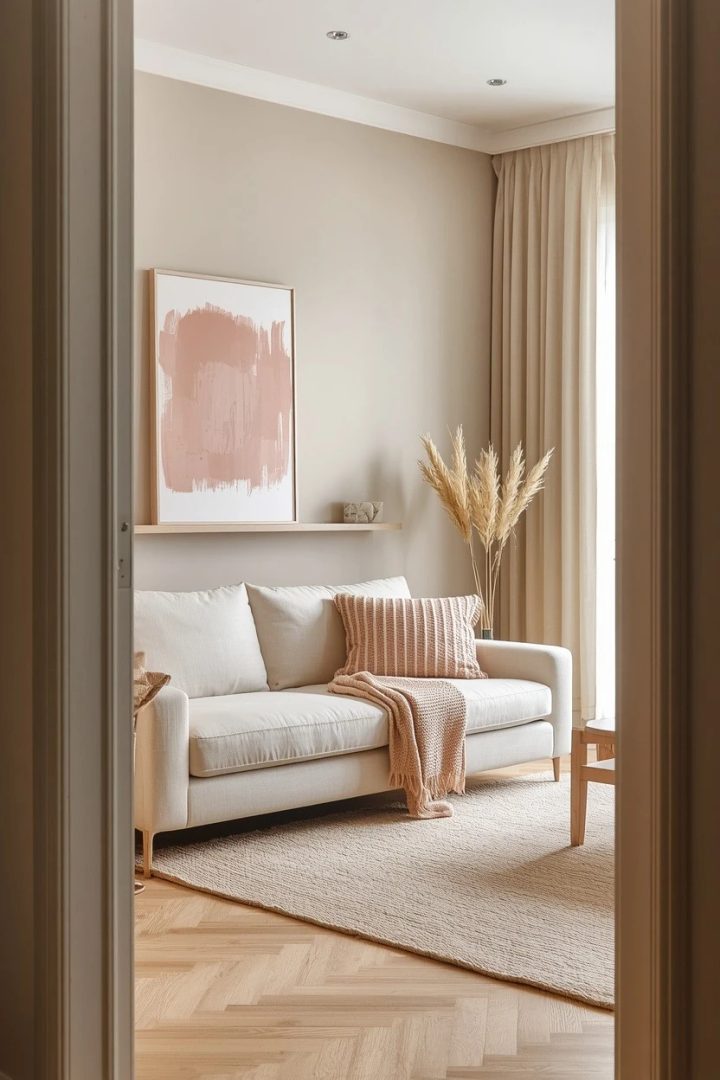
Blush pink scares people off. They picture a nursery, or something too sweet to live with past spring. The trick almost nobody tells you: pair a dusty, greyed-down blush with a warm cream instead of white, and the pink stops reading as girly and starts reading as natural—closer to the inside of a shell than to cotton candy.
This is a run of 18 wall decor ideas for living room walls built around that exact pairing. Some are a single afternoon's work. A couple need a drill. All of them are written so you can copy the colors, the spacing, and the textures without buying any one specific thing. Pick the three that match your wall and your patience.
1. Anchor the sofa wall with one oversized blush canvas
Here's where most people go wrong: they hang three small frames where one big piece belongs. A sofa is a wide, heavy shape. A scatter of postcard-sized art floating above it looks lost.
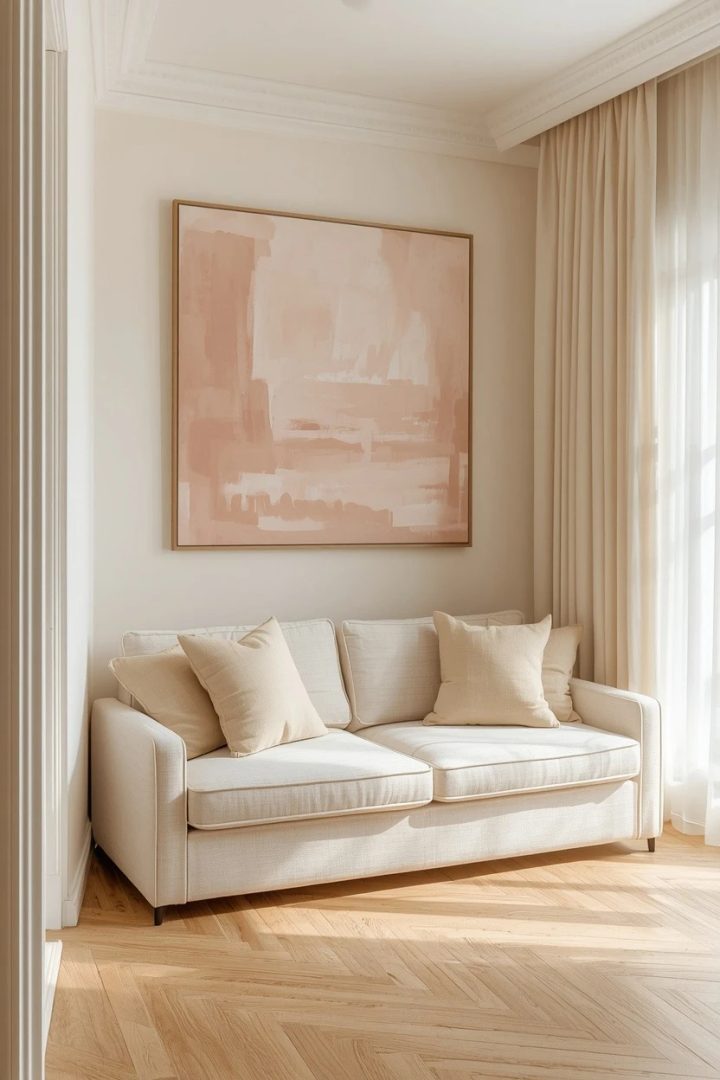
Go big instead. One canvas roughly two-thirds the width of your sofa, in a soft dusty blush that leans grey rather than peach, hung so its center lands 57–60 inches from the floor. An abstract with loose brushwork and visible texture beats a flat print—the ridges catch lamplight at night and the whole thing reads warmer after dark. Keep the frame thin and in pale oak or unfinished wood so the natural tone does the talking.
2. Limewash one wall in warm cream for quiet depth
Flat cream paint is fine. Limewash is better. It dries in soft, cloudy variations—paler in some spots, deeper in others—so the wall has movement even with nothing hung on it.
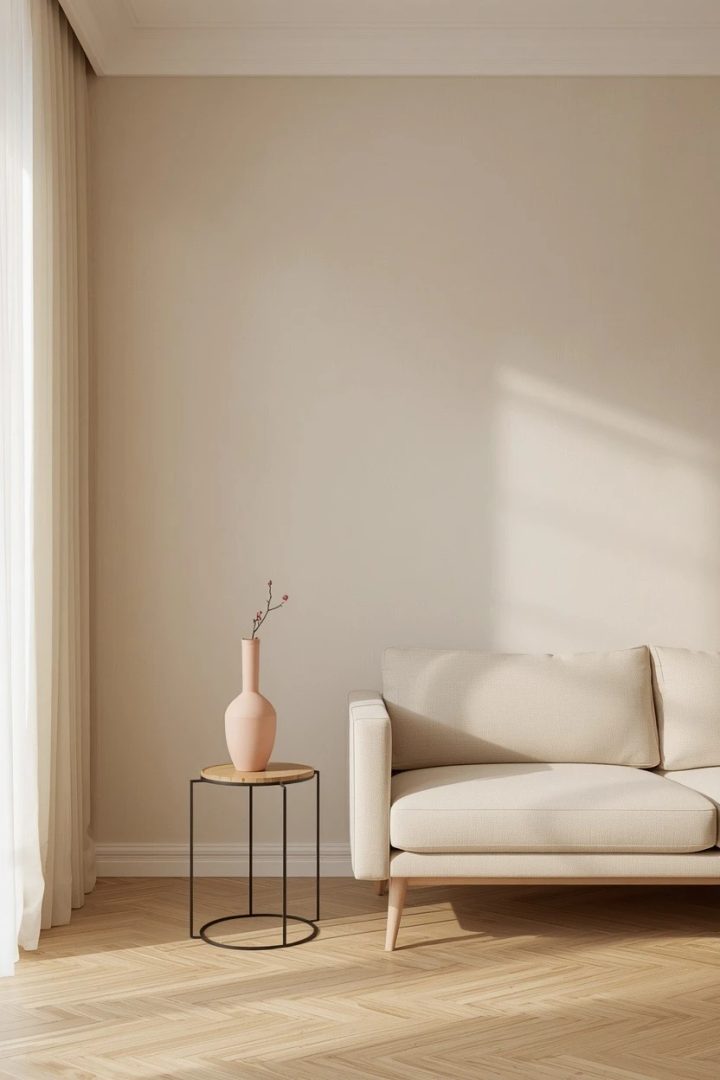
Choose a warm cream with a faint yellow or greige base, never a blue-white. Under daylight it stays soft and chalky; under a 2700K bulb at night it warms toward oat. Do a single accent wall (usually the one behind the sofa or the TV) rather than the whole room, and brush it on in loose, overlapping cross-hatch strokes so the texture stays organic. One real caution: limewash chalks slightly when new, so let it cure a full week before you lean anything against it.
3. Build a salon-style gallery wall in two tones only
Gallery walls go muddy when there are too many colors fighting. Limit yourself to two: blush and cream. That single rule does the heavy lifting.
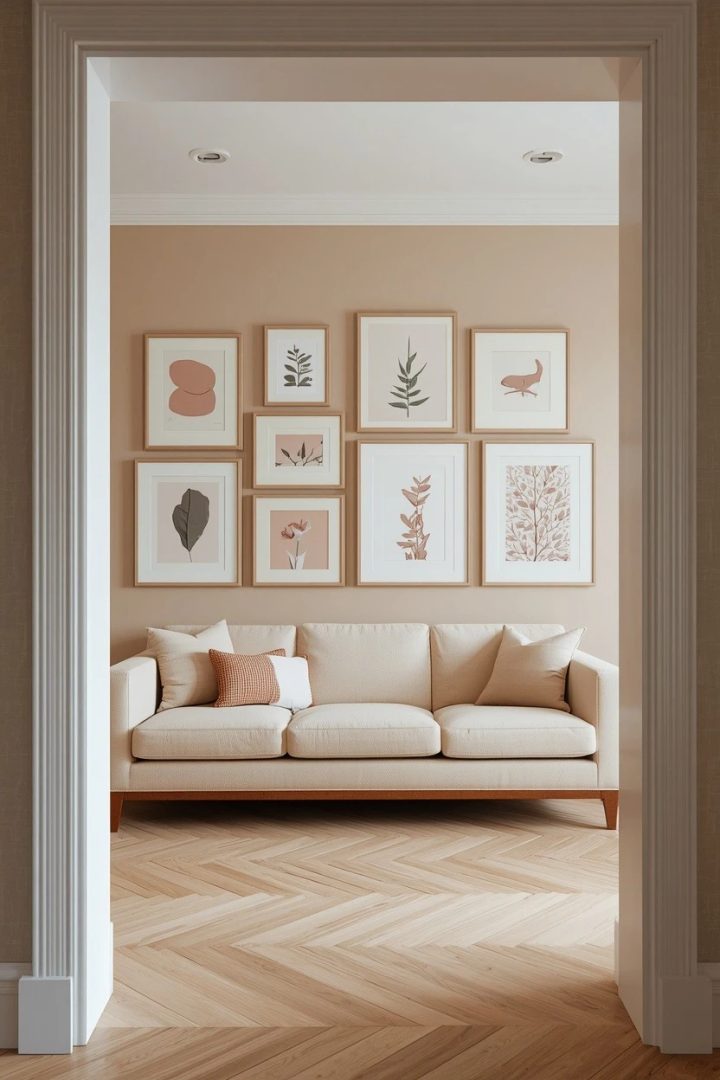
Mix frame sizes but keep every mat and every frame in either soft cream or pale natural wood, and let the art inside carry the blush—a dusty rose abstract here, a cream-and-pink line drawing there, one pressed flower in a blush tone. Lay it all on the floor first. Keep 2–3 inches between frames, treat the whole cluster as one rectangle, and center that rectangle at 57–60 inches. Renters: this is where removable adhesive strips earn their keep, no holes required.
4. Hang a woven wall piece for the texture paint can't give
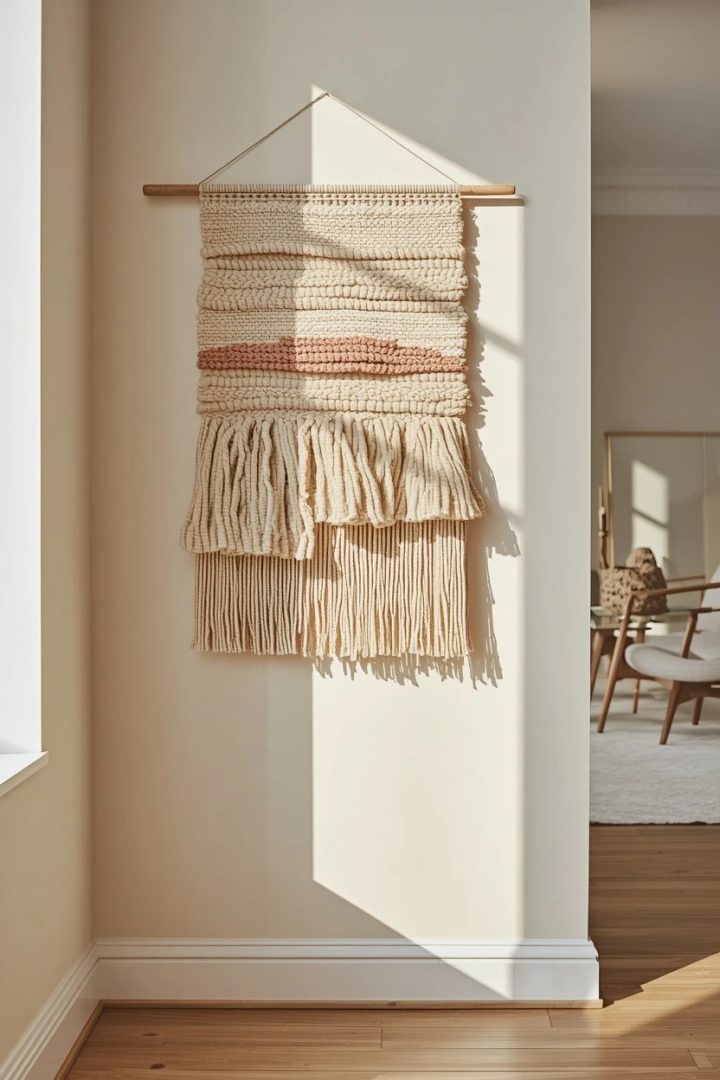
Picture the corner of a flat, painted room. Now add one hand-woven hanging in undyed wool and jute—long fringe, a little irregular, a few rows of blush thread running through the cream. Suddenly the whole corner has something to catch the light.
That's the job natural fiber does. It softens hard plaster and reflects almost no glare, so the wall goes quiet in the best way. Hang it on a slim wooden dowel, ideally on a bare stretch of wall where it can throw a soft shadow. Aim for a piece at least 24 inches wide so it holds its own rather than looking like an afterthought.
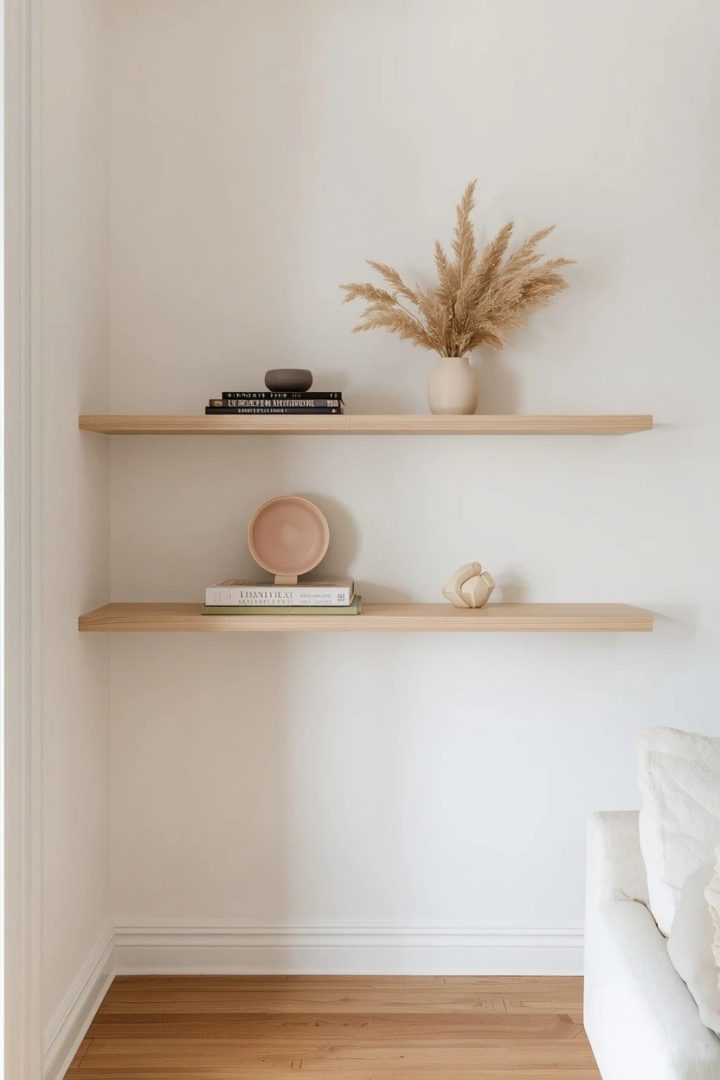
5. Float two cream oak shelves and style them in odd numbers
Floating shelves give you wall decor that changes whenever you want it to. Mount two slim shelves in pale oak, spaced 10–12 inches apart vertically, slightly off-center from the sofa rather than dead in the middle.
Then style by the rule of threes and varied heights: a small stack of two books laid flat with a blush ceramic dish on top, a short dried-grass arrangement, one cream sculptural object. Leave real gaps—negative space is what stops a shelf from looking crowded. Don't line everything up like soldiers; let one object sit a little forward of the others.
6. Lean on a round rattan mirror to bounce light around
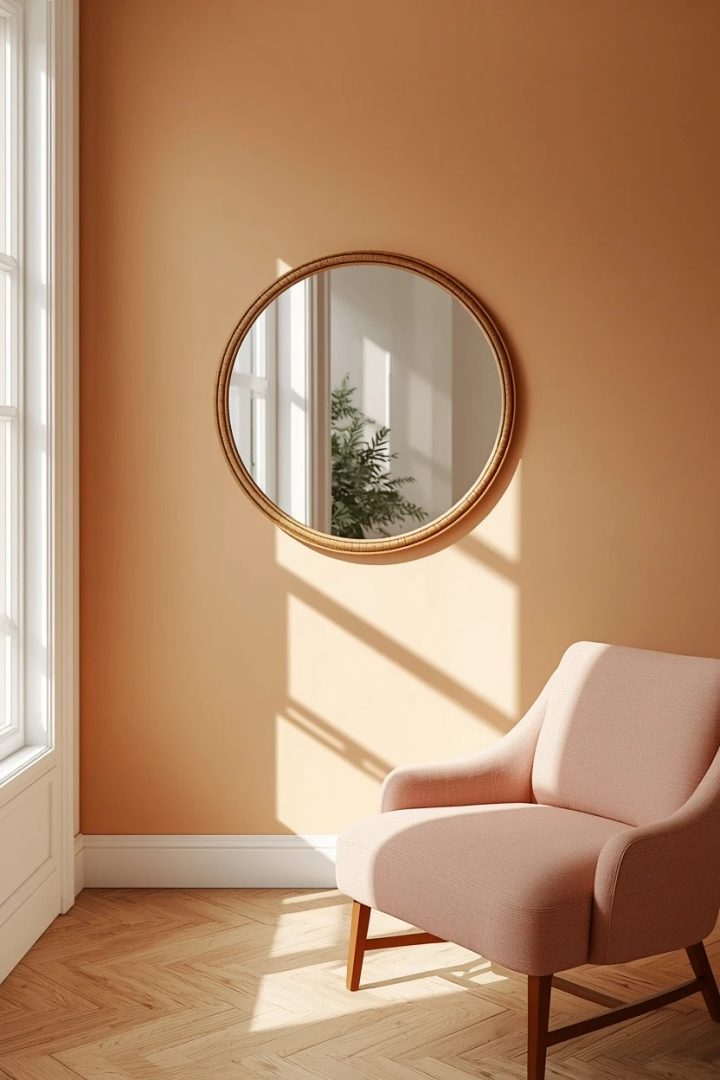
A round mirror in a woven rattan frame does two things at once. It adds a curve to a room full of straight sofa-and-shelf lines, and it throws daylight back across the space so a dim wall brightens up.
Go for a frame around 28–36 inches across, hung opposite or adjacent to your main window so it actually catches the light rather than reflecting a blank wall. The natural rattan keeps the whole thing grounded against your blush and cream palette instead of going glam. A quick reality check before you drill: stand where you usually sit and make sure the mirror reflects something you want to see—a plant, a window—not the ceiling.
7. Frame pressed botanicals for slow, living detail
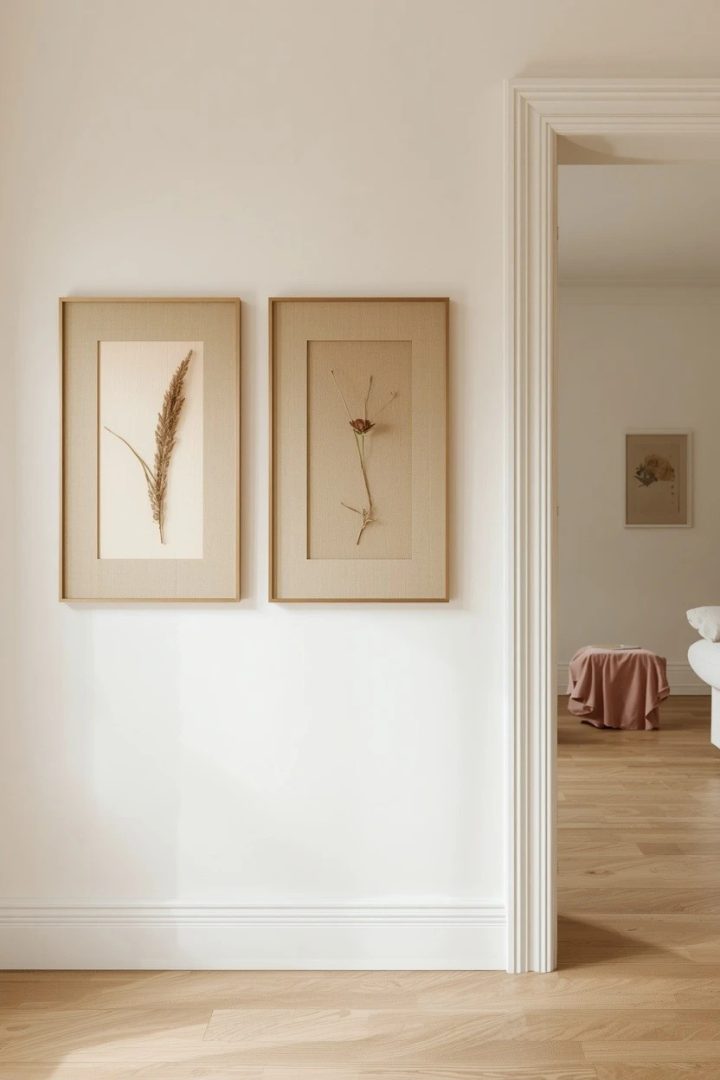
Dried and pressed flowers in simple frames bring the outdoors onto your wall without any upkeep. The natural shapes echo the soft, organic side of this palette.
Press a few stems—grasses, a single rose, some delicate filler—and mount them on a cream or oat backing in slim frames with plenty of mat space around each one. A trio hung in a tight vertical column reads more deliberate than one lonely frame. Keep the glass non-reflective if you can, so the detail stays readable from across the room rather than disappearing into glare.
8. Try removable blush wallpaper on a single wall
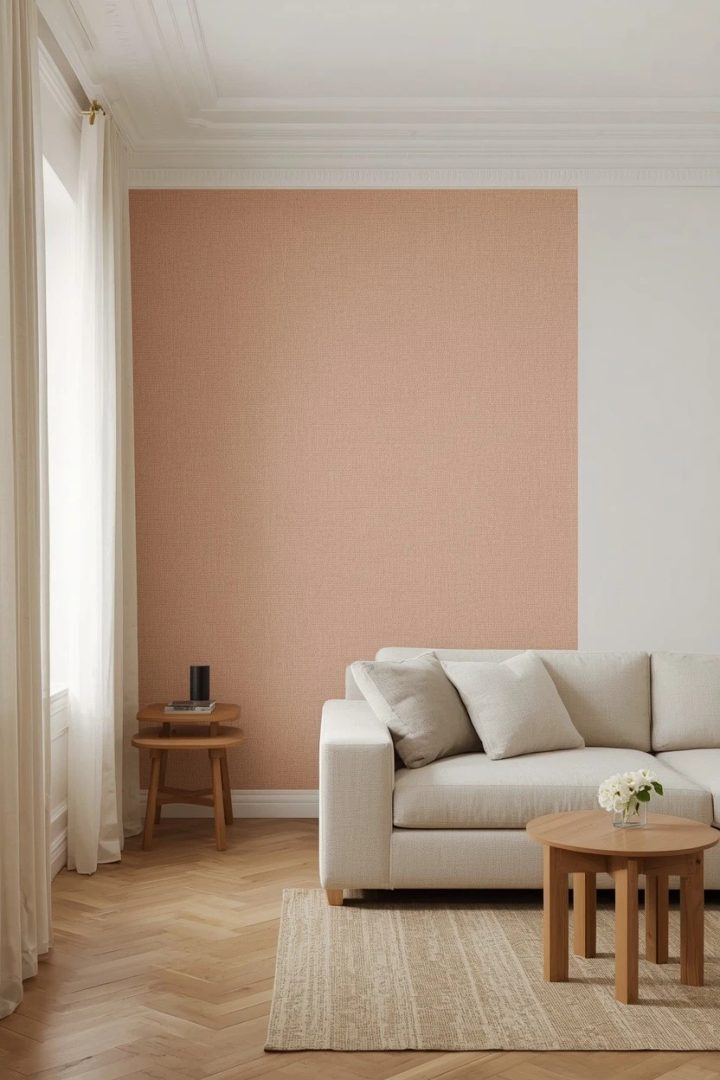
Renters, this one's for you. Peel-and-stick wallpaper in a soft blush—think a subtle tonal pattern like a faint arch, leaf, or grasscloth texture rather than a loud floral—covers one wall and peels off clean when you leave.
Pick a print where the blush is muted and greyed, not bright, so it stays calm in daylight and doesn't glow oddly under warm bulbs at night. Do the wall behind the sofa or behind a console. Smooth it on slowly from the top with a flat edge to push out bubbles, and overlap seams by a hair so no cream gaps show through. The texture-style grasscloth prints hide seams best.
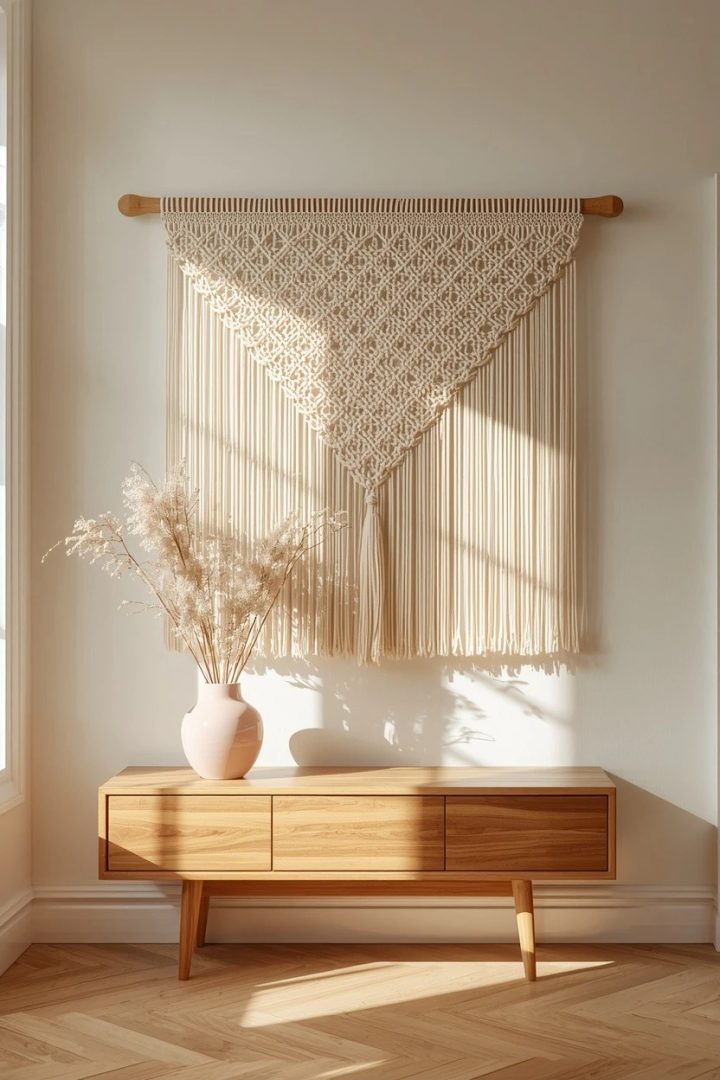
9. Add a cream macramé piece above a low console
Macramé is back for a reason—knotted cotton cord casts the kind of soft, irregular shadow that flat art never will, and it brings handmade warmth to a bare stretch above a console or sideboard.
Choose a piece in undyed cream cotton, wide and a little asymmetric, hung so its bottom edge stops 6–8 inches above whatever sits below it. That gap keeps it from looking cramped. The cotton softens sound a touch too, which matters in a room with hard floors and big windows. One honest note: pale cotton dust collects, so give it a gentle shake-out every few weeks.
10. Use a picture ledge and layer art you can swap
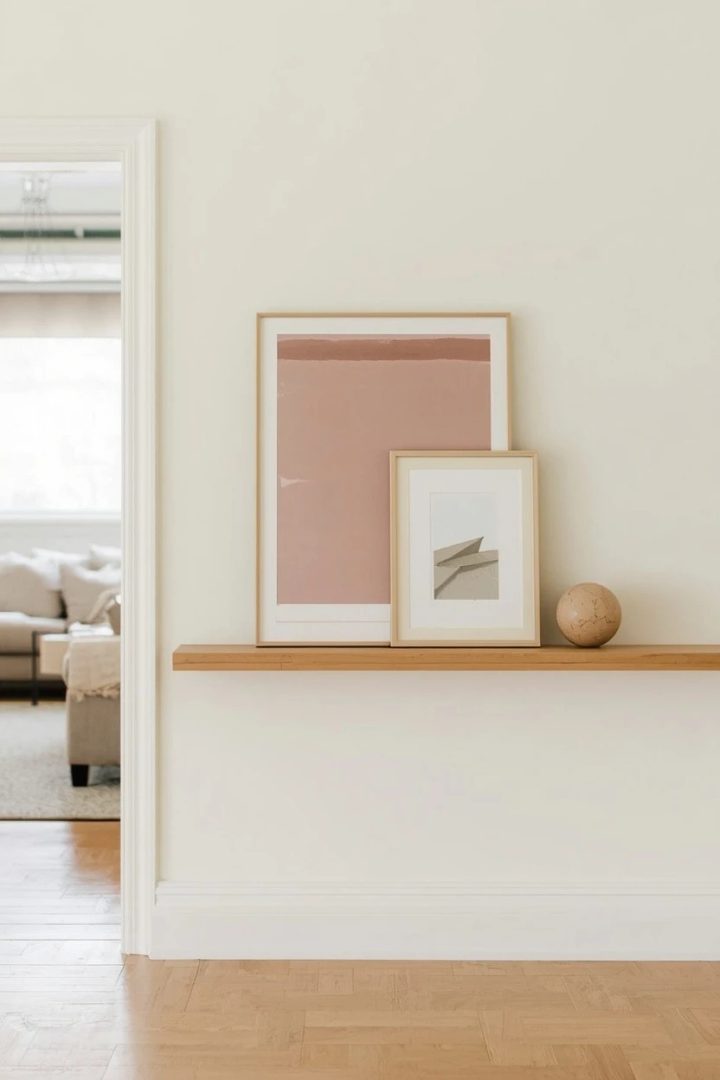
A picture ledge—a narrow shelf with a lip—lets you lean and layer art instead of committing to nails for each piece. It's the lazy decorator's secret, and I mean that as a compliment.
Mount one ledge about 60 inches up, then layer overlapping pieces: a larger blush abstract at the back, a smaller cream framed print overlapping its corner, a tiny object or pressed flower propped in front. The overlap is what makes it look collected over time rather than staged. Swap a piece out whenever the mood shifts—no patching holes.
11. Mount a carved wood relief for shadow and warmth
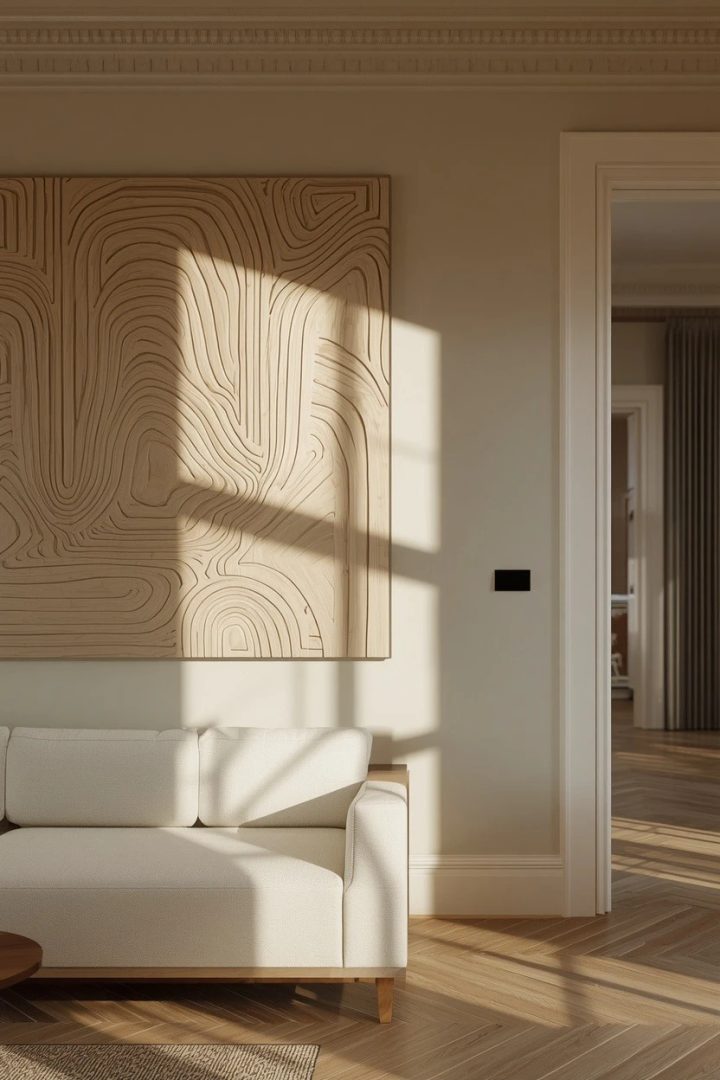
Most wall decor is flat. A carved wood relief panel is not, and that difference is the whole point. The grooves throw real shadows that shift as the daylight moves across the room.
Look for a panel in a pale, natural wood—oak, ash, or limed timber—with an organic carved pattern like ripples, ribs, or a soft arch. Against a cream wall the tonal match keeps it subtle; the texture is what you notice, not a clash of color. Hang it where morning or late-afternoon light rakes across it at an angle, because flat overhead light flattens the carving and wastes the effect.
12. Frame fabric for soft color you can't get from paper
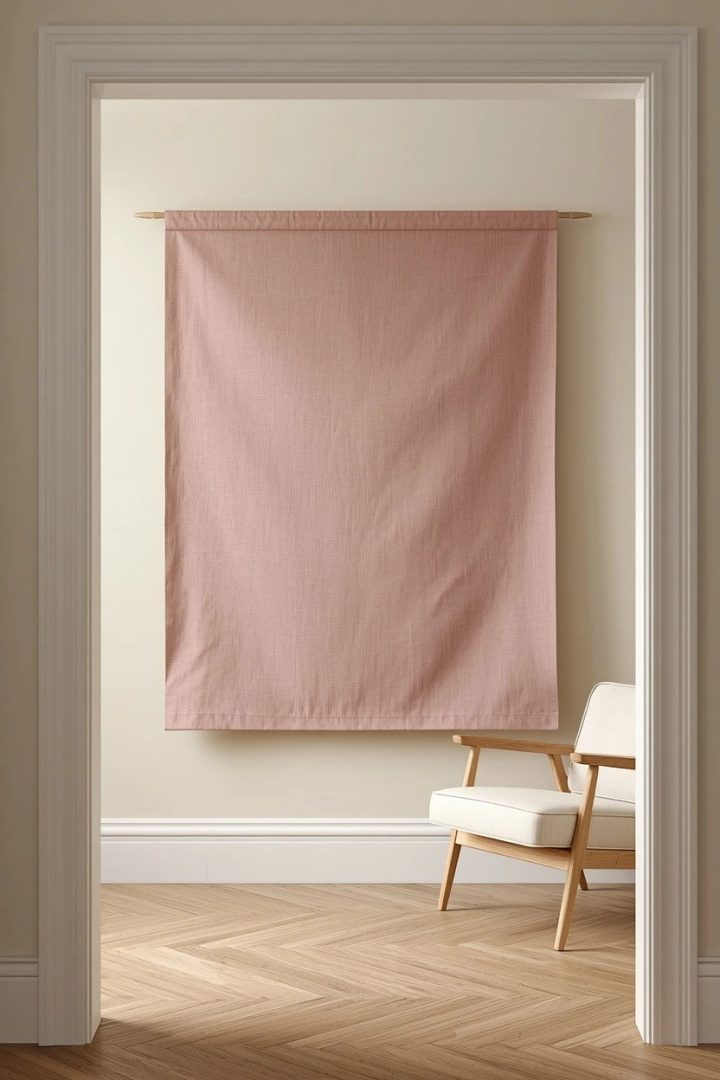
Stretch or frame a piece of textile—a square of blush brushed linen, a small woven panel, a vintage cloth in cream and rose—and you get wall color with a softness paper prints just can't match. Cloth absorbs light instead of bouncing it.
Stretch the fabric over a simple wooden frame, pulling it taut so there are no sags, or float it inside a slim frame with a cream mat. A single large square reads modern; a pair flanking a window looks deliberate. Slubby, irregular weaves bring more character than a flat printed cotton.
13. Flank your art with warm plug-in wall sconces
Lighting is wall decor—people forget that. A pair of sconces flanking a piece of art turns it into a focal point after dark and adds light at a third height, between your overhead fixture and your table lamps.
You don't need an electrician. Plug-in sconces with a cord you tuck behind the frame or run down to a baseboard outlet do the job. Use warm bulbs around 2700K so the light pools soft and amber rather than blue and clinical. Mount the pair symmetrically, roughly 6–8 inches out from each side of the art, with the shades at about eye level when you're seated.
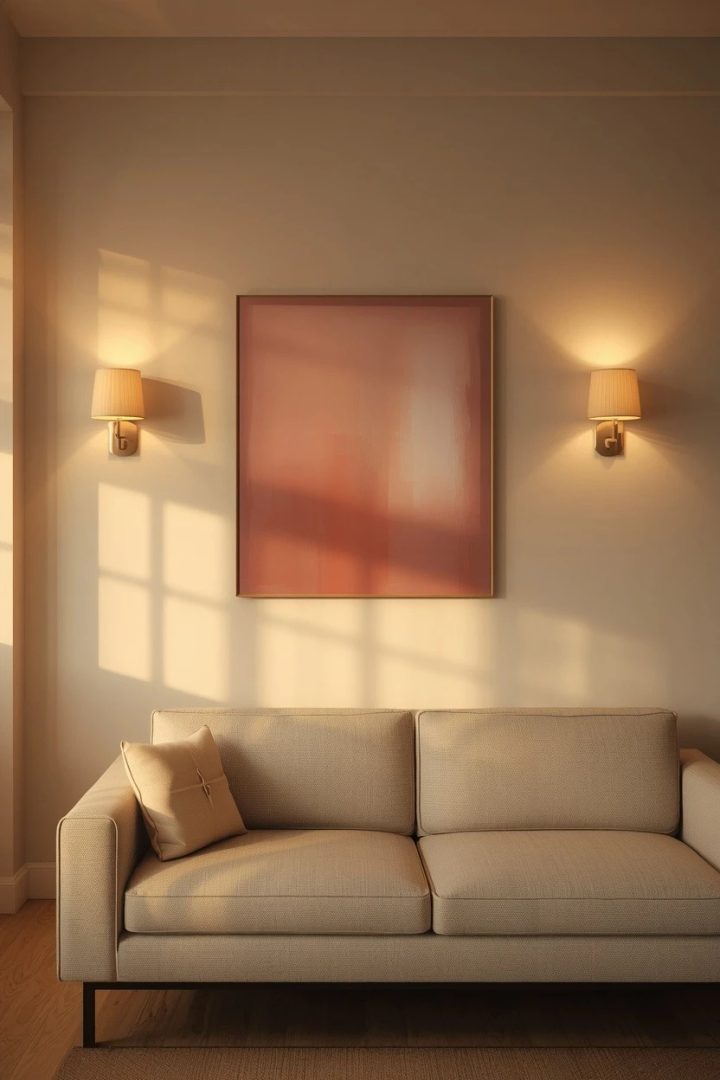
14. Hang an arched mirror to stretch a low wall taller
Short walls and low ceilings feel taller the moment you draw the eye upward, and an arched mirror does exactly that—the curve at the top pulls your gaze up the way a window or doorway would.
Choose a slim frame in pale wood or soft cream, tall and narrow rather than wide. Hang it a little higher than feels natural, leaving its base around 30 inches above the floor or whatever console sits beneath it. Like any mirror, point it at something worth reflecting. Against blush walls especially, an arched mirror bounces that soft pink glow around and makes the color read on more than one surface.
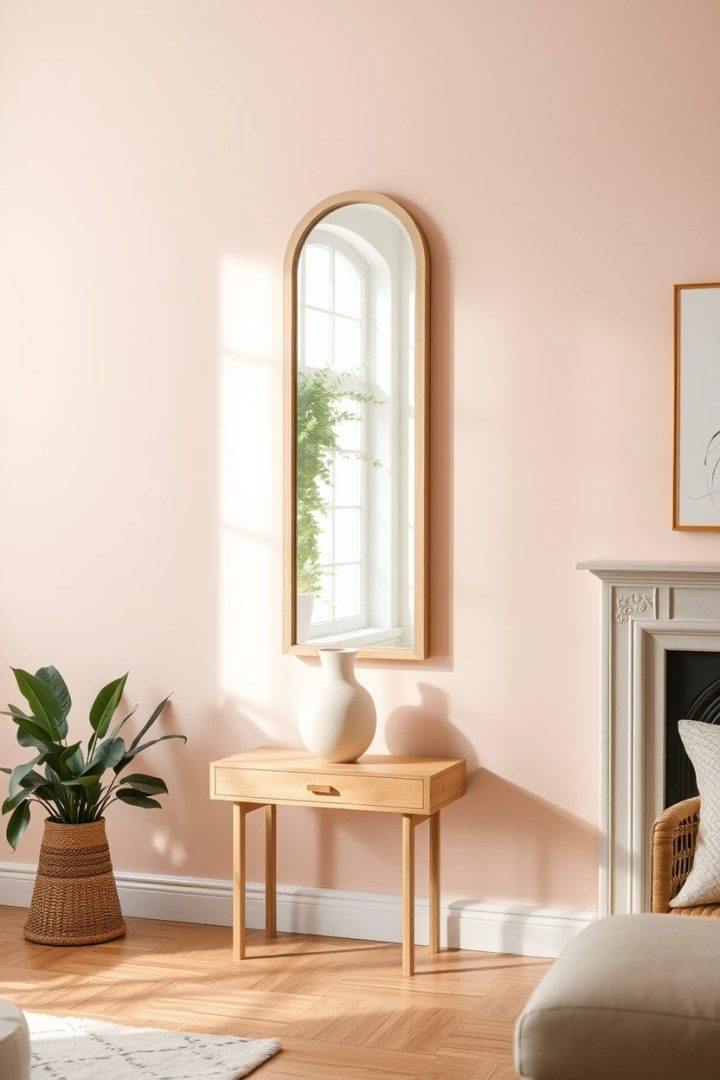
15. Cluster cream plaster discs for sculptural, no-color texture
Sometimes the wall needs shape, not more color. A cluster of cream plaster intaglios or round ceramic discs gives you sculptural relief in a tone that disappears into the wall and lets shadow do the work.
Group an odd number—five or seven—in a loose organic cluster rather than a tight grid, varying the sizes. Keep them all within one tone of cream so the eye reads texture, not pattern. This is a gentle backdrop piece, perfect over a reading chair or beside a window where side light catches the raised surfaces. It asks for nothing once it's up.
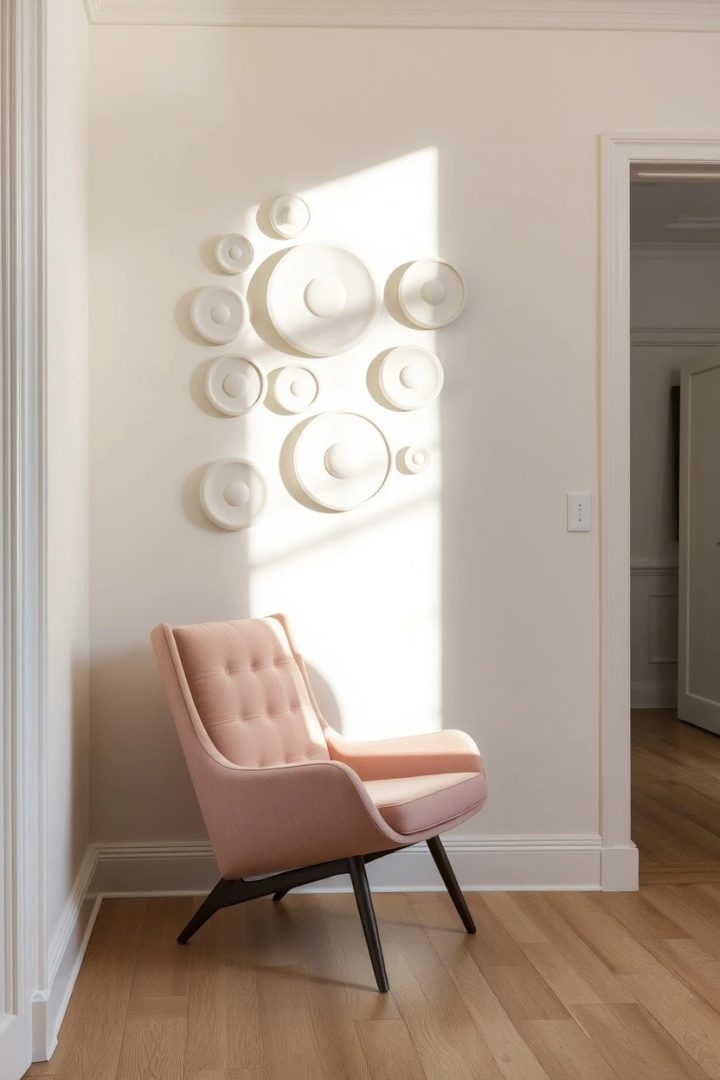
16. Turn woven baskets into a wall display
Flat woven baskets aren't just for shelves—hung in a cluster, they read as organic wall sculpture, all warm natural fiber and soft shadow. It's an old trick from coastal and farmhouse rooms, and it still earns its place.
Mix three or five shallow baskets in seagrass, rattan, and pale wicker, varying the diameters from small to large. Arrange them in a loose, slightly off-center cluster so it looks gathered rather than measured. The natural tones sit right between your blush and cream without adding a fourth color, and they bring real warmth to a wall that's gone too cool or too bare.
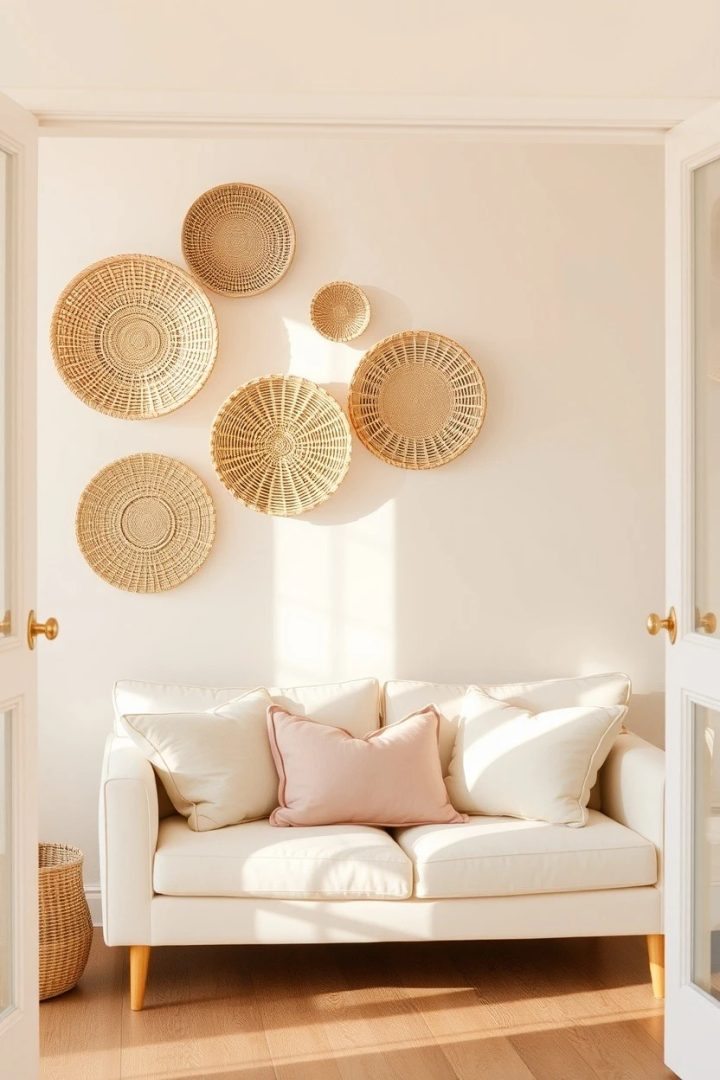
17. Mount dried pampas in a wall vessel for height and movement
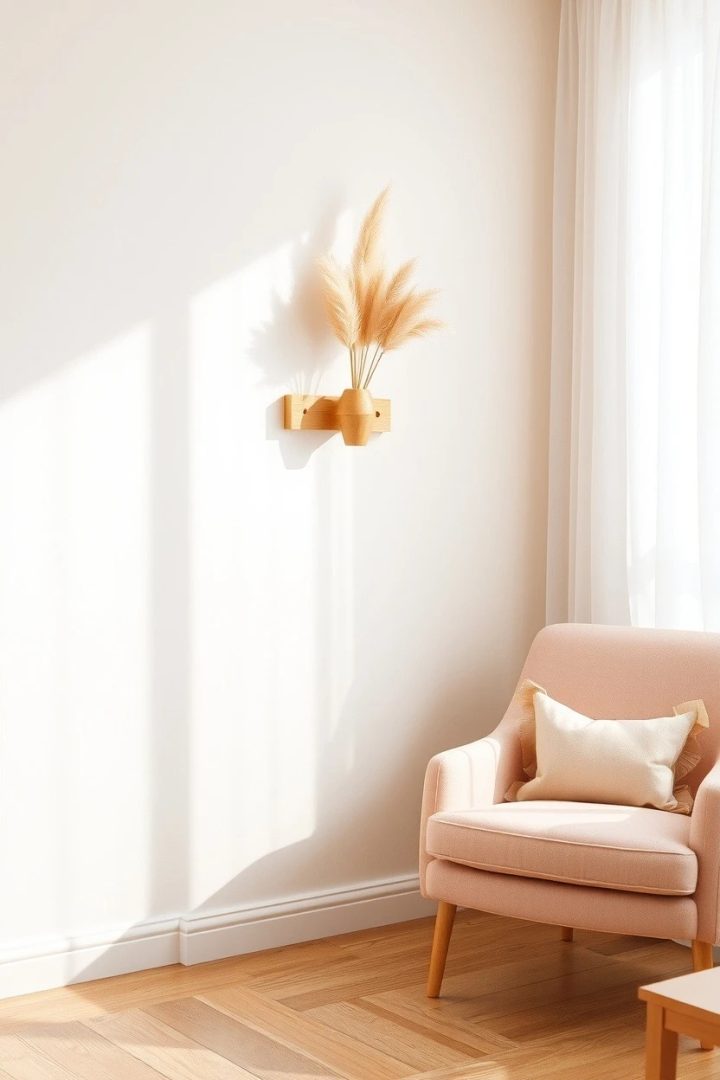
Dried stems on the wall add the one thing flat decor can't: a little movement when the air shifts. A wall-mounted vessel of pampas, bunny tails, or dried palm brings soft vertical lines and a feathery silhouette.
Pick a wall-hung vase or a simple wooden wall bracket holding a slim vessel, and fill it with dried grasses in natural cream and the palest blush. Let the stems rise tall and loose—at least a foot above the rim—so the shape stays airy. One caution worth knowing: pampas sheds, so skip it directly above where you eat or above a much-used seat, and give it a spot with a little breathing room.
18. Build a slatted pale-oak accent wall for quiet rhythm
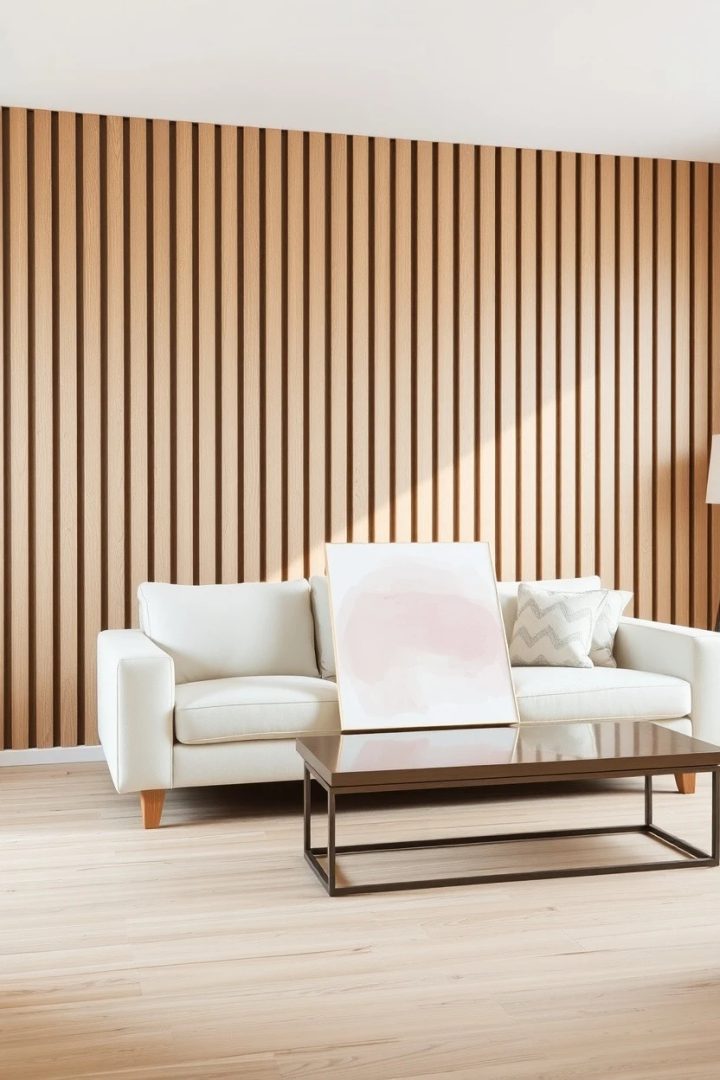
If you want one bigger project that changes the whole room, a slatted wood accent wall is it. Evenly spaced vertical slats in pale oak create a calm, repeating rhythm and add real warmth behind a sofa or TV.
Run thin slats—around 1.5 to 2 inches wide—vertically with a consistent gap of roughly the same width between each. Keep the wood in a pale, natural matte finish so it stays soft against your cream walls rather than going dark and heavy. The vertical lines pull the eye up and make the ceiling read higher. It's a weekend build, but it's the kind of backdrop that makes everything else on the wall look better. Renters can fake it with a removable slat panel that screws into a single board.
Where I'd start if I only did three things
If you gave me one afternoon and a small budget, I'd skip the big projects and do these in order. First, the oversized blush canvas above the sofa—one large piece anchors the whole room faster than anything else. Second, two floating oak shelves styled in threes, because they give you flexible decor you can restyle for free whenever you're bored. Third, a round rattan mirror across from your window to bounce light around and break up all the straight lines. Those three alone shift a flat room without any paint or a single power tool.
FAQ
Will blush pink and cream wall decor work in a small living room?
Yes, and small rooms are arguably where it shines. The pale, low-contrast palette keeps the walls receding instead of closing in, which makes a small space read larger. The one rule: stick to two or three larger pieces rather than lots of tiny ones. Small rooms look more cluttered with small decor, not less. A single big mirror earns more than five postcard frames here.
My living room faces north and the light is cool and grey—will the blush look washed out?
North light pulls warm colors cooler, so a blush with a grey undertone can flatten and read almost dirty in that light. Shift your blush a touch warmer—toward peach or rose rather than greyed-pink—and lean harder on the cream and natural wood. Then fix it after dark with 2700K warm bulbs, which throw the warmth back in that daylight steals.
How do I keep pale cream and natural-fiber decor from looking dingy over time?
Plan for upkeep from the start. Pale cotton macramé and woven hangings collect dust, so a monthly shake-out or a gentle vacuum on low with a brush head keeps them clean. Choose washed or slubby fabrics over flat smooth ones—they hide settling dust better. And keep the palest pieces away from a much-used doorway or a window you open often, where grime drifts in fastest.
What order should I hang everything in so I don't end up with a wall full of holes?
Always lay it out before you drill. Trace each piece onto kraft paper or newspaper, tape the cutouts to the wall, and live with the arrangement for a day. Start with your biggest anchor piece, set its center at 57–60 inches, then build smaller pieces around it. Only when the paper layout looks right do you pick up a level and a pencil. The paper trick has saved more walls than any tool.
Conclusion
The reason this palette reads fresh instead of fussy comes down to one swap: greyed blush over candy pink, warm cream over stark white, and natural texture carrying the rest. Pick the three ideas that match your wall and your weekend, get the proportions right, and the rest takes care of itself.