17 Coastal Living Room Ideas for a Bright Modern Seaside Look
July 24, 2026 · 14 min read
 By Khawar Iqbal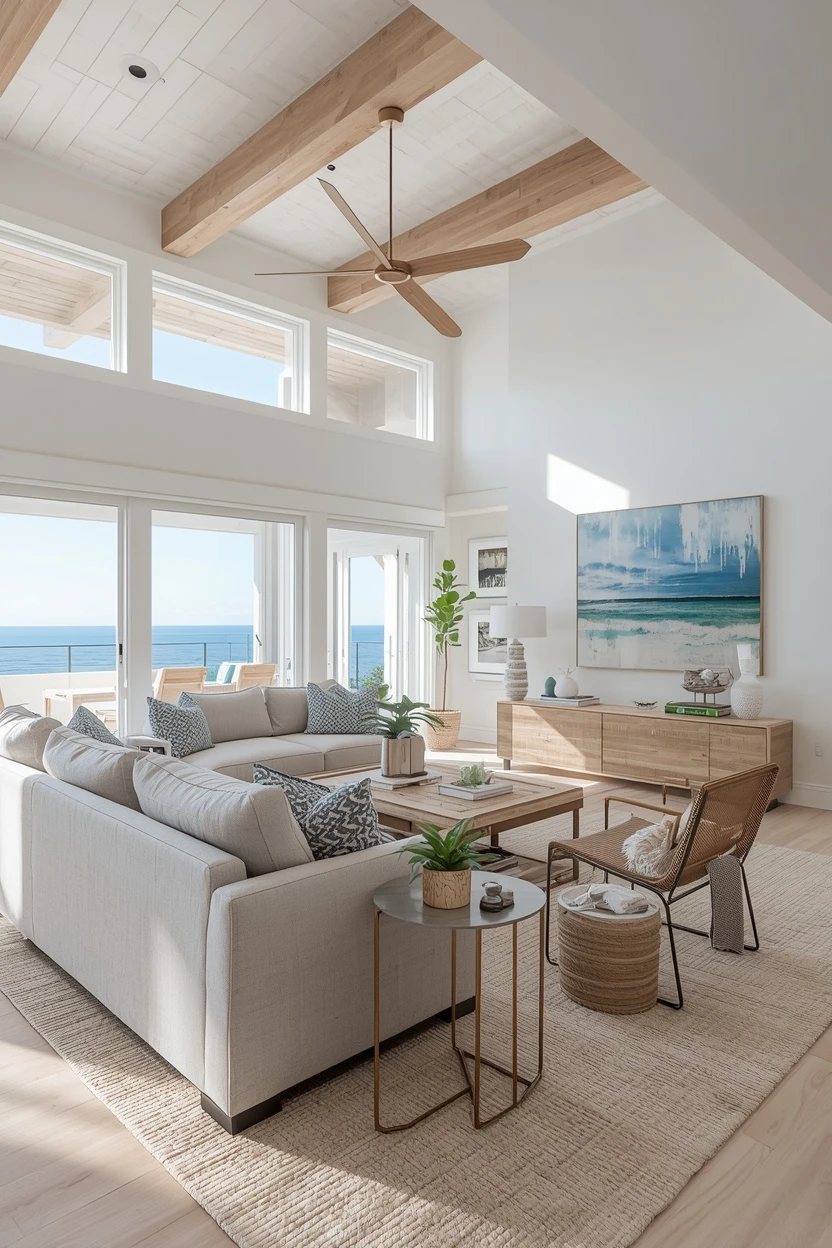
There's a reason the coastal look never goes out of style: it's light, calm, and effortlessly relaxed, bringing the airy feeling of the shoreline into everyday living. A modern coastal living room trades kitsch nautical clichés for soft blues, natural textures, linen upholstery, and abundant daylight, creating a space that feels breezy and serene without ever tipping into theme-park territory. These coastal living room ideas show how to build that bright, contemporary seaside look, from palettes and materials to layouts and lighting, for a room that feels like a deep breath of sea air every time you walk in.
Each idea below is a complete room look, with honest notes on keeping coastal modern rather than kitsch, layering texture so the palette doesn't fall flat, and adapting the style whether or not you can actually see the sea. Some lean crisp and bright; others are warm and sun-washed. Whether you're furnishing a genuine beach house or bringing shoreline calm to a suburban room, there's a direction here to create a beautiful modern coastal living room.
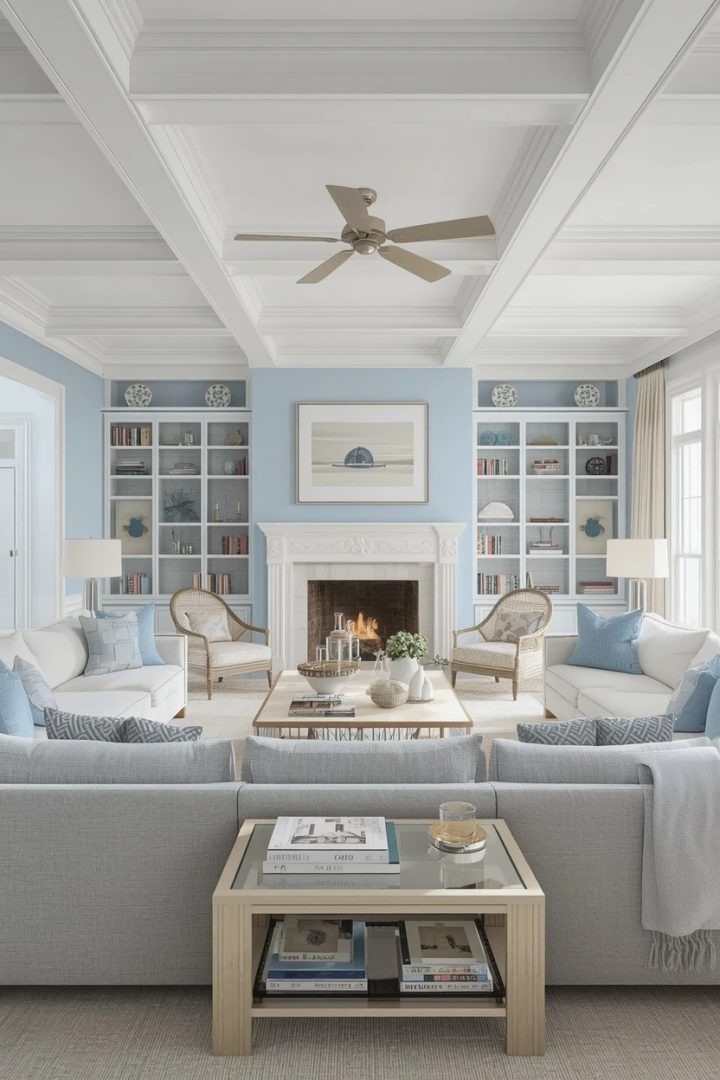
1. A Soft Blue and White Palette
The foundation of the look is a restrained palette drawn from sea and sky. Soft blues — from pale sky to muted denim — layered over warm whites and creams create a calm, breezy base that reads unmistakably coastal without a single anchor motif. Keep the blues soft and slightly greyed rather than bright primary tones, which is what separates modern coastal from nautical kitsch. A soft blue and white palette is the essential coastal living room idea, establishing the calm, airy foundation that gives the room its shoreline serenity while staying sophisticated, contemporary, and entirely liveable year round.
2. A Linen or Slipcovered Sofa
Relaxed upholstery is central to the coastal look and its casual, unfussy comfort. A linen, cotton, or slipcovered sofa in white, oatmeal, or soft blue brings a lived-in ease that suits a room meant for sandy feet and wet swimsuits, and the removable covers are genuinely practical.
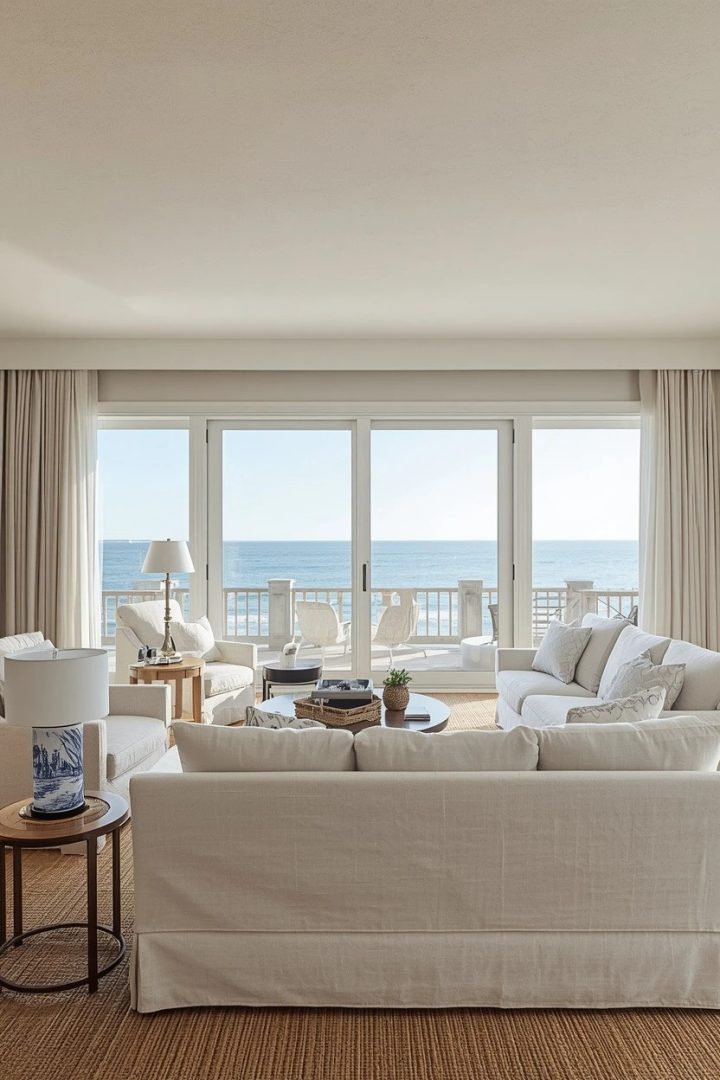
Choose a loose, slightly rumpled fit rather than tight tailoring. A linen or slipcovered sofa is one of the most defining coastal room ideas, anchoring the space with soft, casual upholstery that reads relaxed and beachy while offering the washable practicality a real seaside room needs.
3. Maximize Natural Light
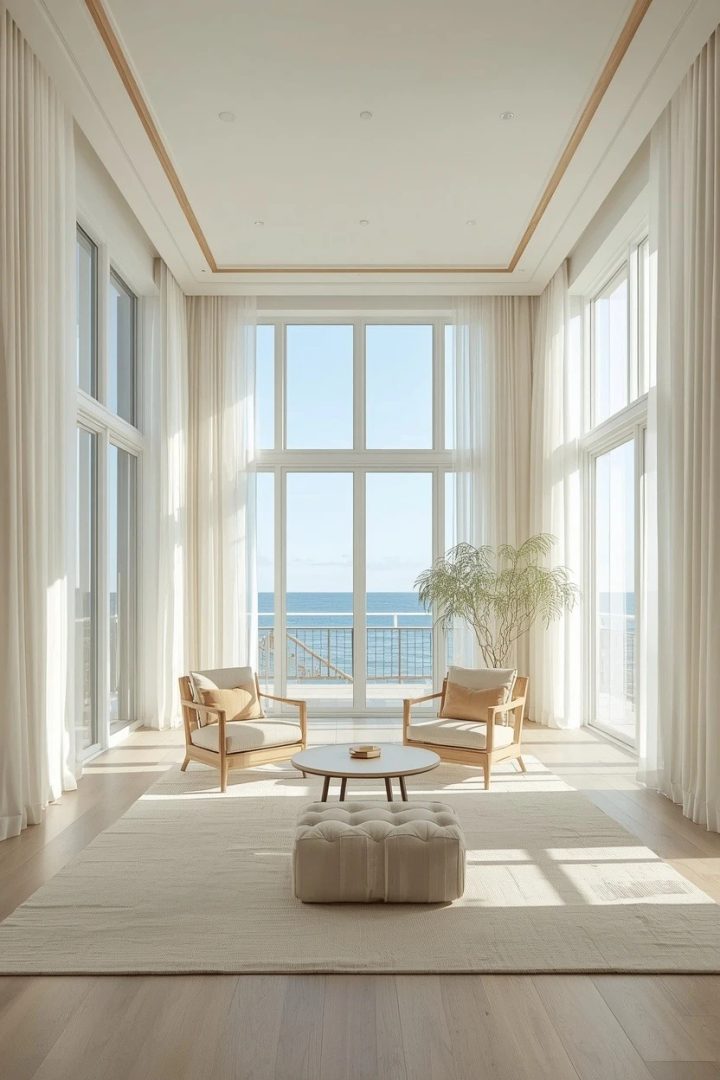
Light is the most important ingredient in a coastal room, so the windows should work as hard as possible. Keeping treatments sheer or minimal, hanging curtains high and wide, and leaving sills clear floods the space with daylight and makes it feel open and breezy. Sheer white linen curtains filter light beautifully while preserving privacy. Maximizing natural light is one of the most transformative the room ideas, letting daylight pour through the space so the whole room reads bright, airy, and connected to the outdoors, which is fundamentally what gives coastal style its uplifting quality.
4. Layer Natural Textures
Texture is what stops a pale coastal palette falling flat. Jute and sisal rugs, rattan and cane furniture, woven baskets, linen cushions, and rough ceramics build tactile depth and organic warmth against the soft colors. Layering several natural materials together gives the room richness without introducing strong color.
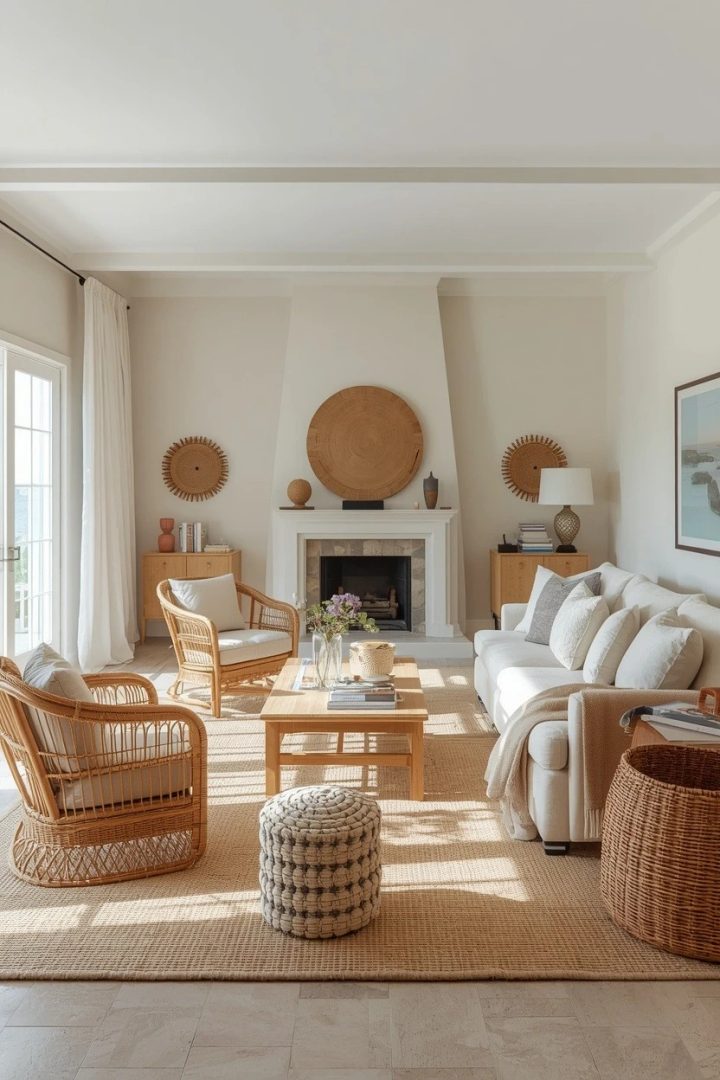
Layering natural textures is one of the most important seaside living room ideas, building tactile, organic depth through jute, rattan, linen, and woven materials so a light palette looks warm, interesting, and grounded rather than washed out and empty.
5. Light Wood and Driftwood Tones
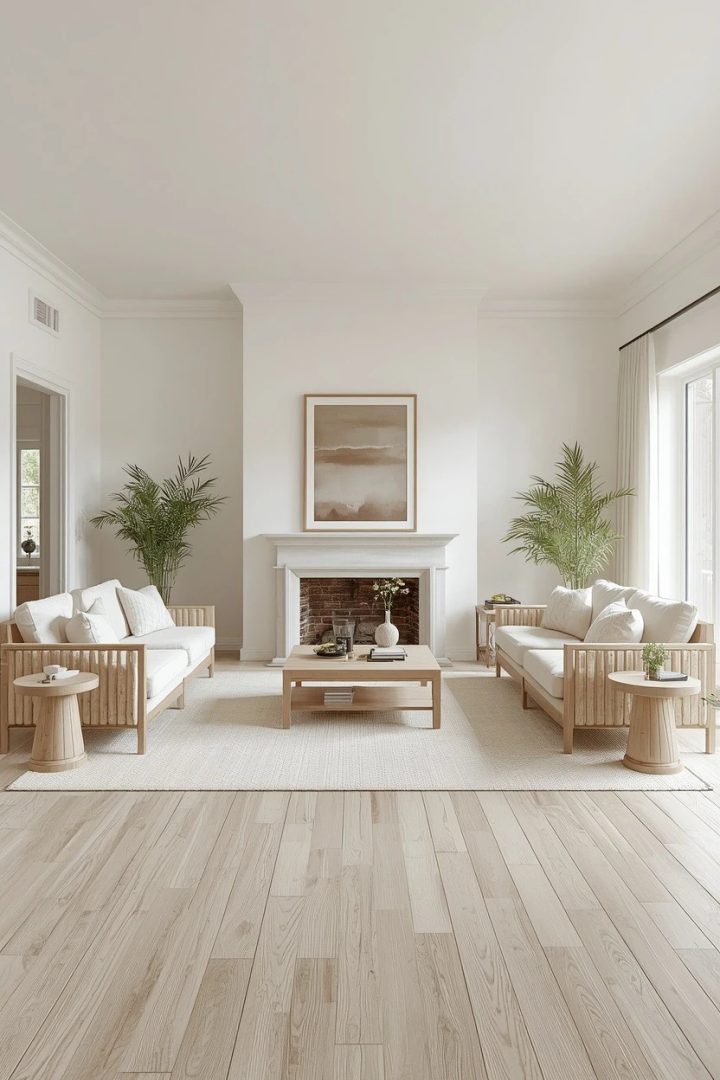
Pale, weathered woods reinforce the sun-bleached quality of a coastal room. Whitewashed oak, light ash, driftwood-toned furniture, and pale timber flooring keep the space bright and natural, echoing the silvered wood of piers and boardwalks. Avoid heavy dark woods, which weigh the palette down and pull the room away from the coastal appears. Light wood and driftwood tones are one of the most authentic modern coastal ideas, bringing sun-bleached, weathered timber into the space so the room reads naturally bright and organic, capturing the silvered, salt-washed quality of the shoreline.
6. Shiplap or Panelled Walls
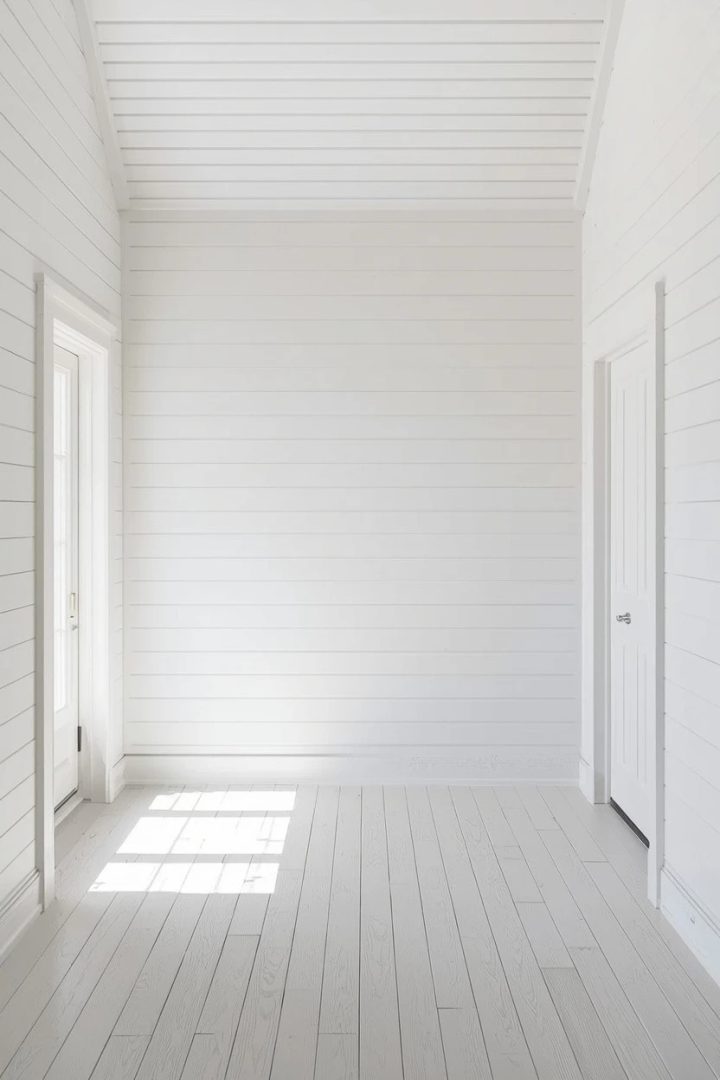
Horizontal panelling adds architectural character that reads instantly coastal. Shiplap, tongue-and-groove, or simple V-groove panelling painted in warm white or the softest blue brings texture and a relaxed beach-house quality to the walls without pattern or color. Run it horizontally to widen the room visually, or vertically to add height. Shiplap or panelled walls are one of the most characterful coastal design ideas, adding architectural texture and beach-house authenticity to the room's shell, giving a modern coastal space its relaxed structure while keeping the palette calm and pale.
7. An Open Airy Layout
Coastal rooms breathe, so the furniture arrangement should seems generous rather than packed. Floating the seating into a relaxed conversational grouping, keeping sightlines to the windows clear, and leaving generous walkways gives the room its open, easy quality. Fewer, well-chosen pieces beat a crowded arrangement every time in this style.
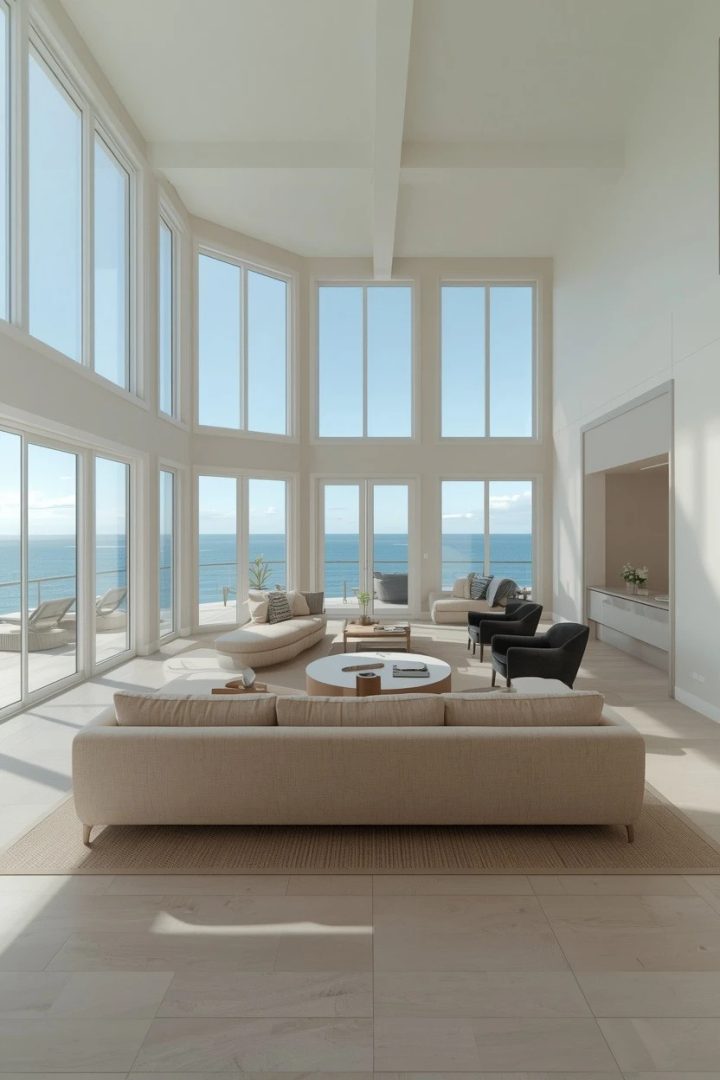
An open airy layout is one of the most essential seaside living room ideas, arranging furniture with generous space and clear sightlines to the light so the room reads breezy and uncluttered, which is central to the relaxed, spacious character of coastal design.
8. Rattan and Cane Accent Seating
Woven seating brings lightness and craft to the room. A pair of rattan or cane armchairs, a woven accent chair, or a cane-detailed sideboard adds natural texture and visual airiness, since open weaves let light through where a solid upholstered chair would block it.
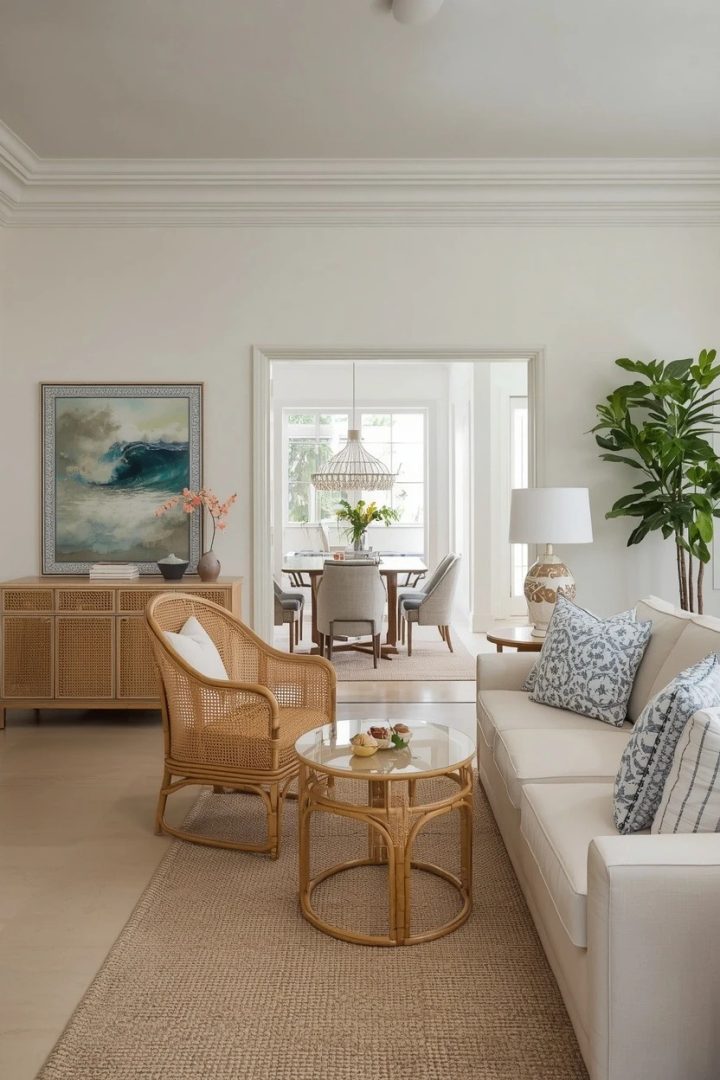
Choose warm, natural finishes over dark stains. Rattan and cane accent seating is one of the most characterful modern coastal ideas, adding light, woven furniture that brings natural craft and visual openness to the room, keeping the space feeling airy while reinforcing its organic, seaside character.
9. A Sun-Washed Neutral Scheme
For a warmer, more contemporary take, the palette can lean almost entirely neutral. Sand, oatmeal, warm white, and pale taupe with only the faintest wash of blue create a soft, sun-bleached scheme that reads coastal through texture and light rather than color. This version blends particularly well with modern architecture. A sun-washed neutral scheme is one of the most sophisticated coastal design ideas, delivering shoreline calm through warm sandy neutrals and natural texture rather than obvious blue, giving a modern, understated version of the look that looks serene and thoroughly current.
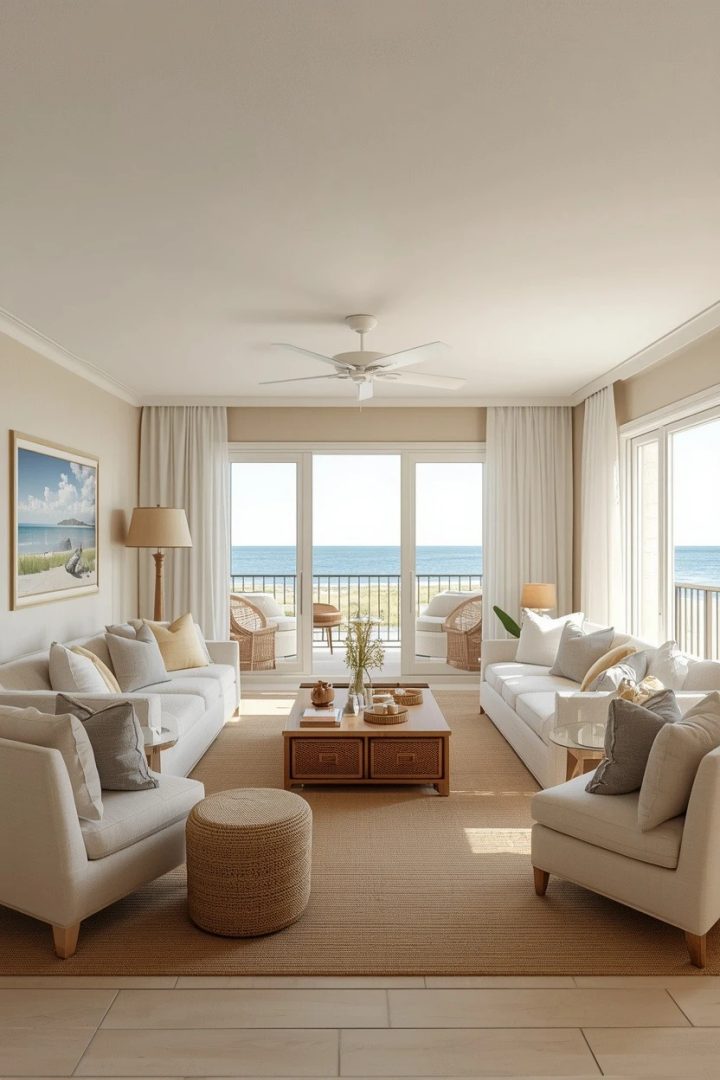
10. Subtle Ocean-Inspired Art
Artwork sets the tone without resorting to literal seaside motifs. Abstract seascapes, horizon-line paintings, soft blue washes, or black-and-white shoreline photography evoke the coast with restraint and give the walls a modern, gallery-like calm.
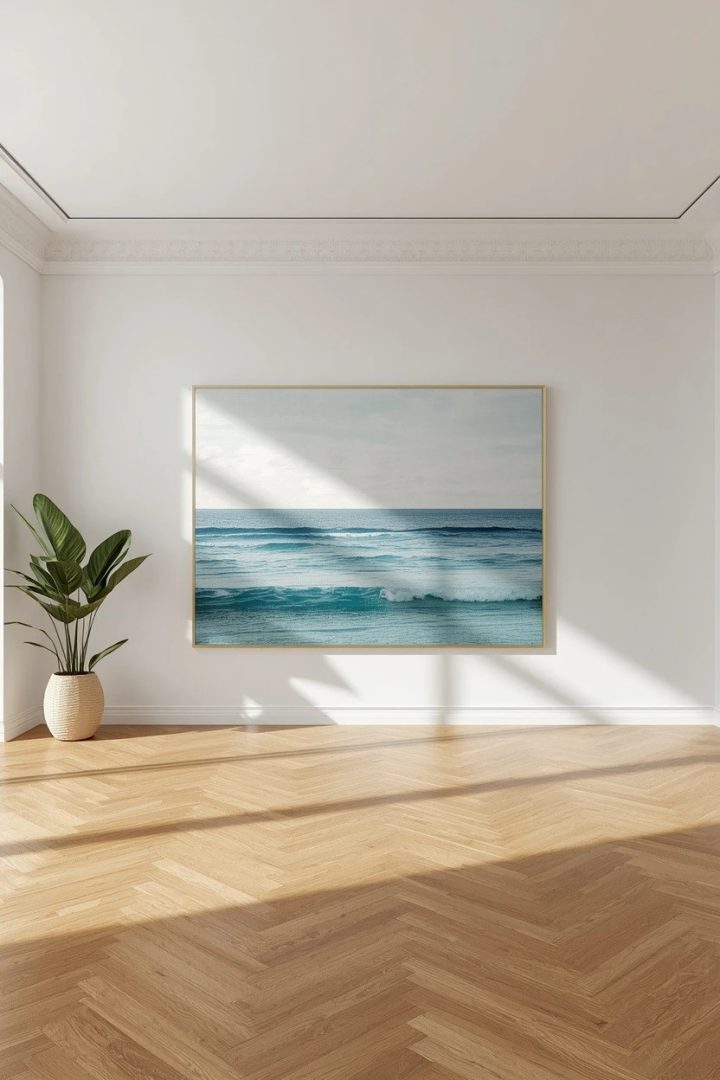
Avoid anchors, starfish, and lettering signs, which push the room toward kitsch. Subtle ocean-inspired art is one of the most refined seaside living room ideas, evoking the sea through abstract and atmospheric imagery rather than literal motifs, which keeps the room feeling contemporary and considered while reinforcing its shoreline mood.
11. Indoor Plants and Greenery
Greenery brings life and a touch of coastal landscape into the room. Palms, olive trees, monstera, and grasses in woven or ceramic pots add fresh organic color against the pale scheme and echo the planting of seaside gardens. Choose sculptural, light-loving varieties that suit a bright room. Indoor plants and greenery are one of the freshest modern coastal ideas, adding living, sculptural green that lifts a pale palette and connects the space to the outdoors, reinforcing the airy, natural quality at the heart of coastal style.
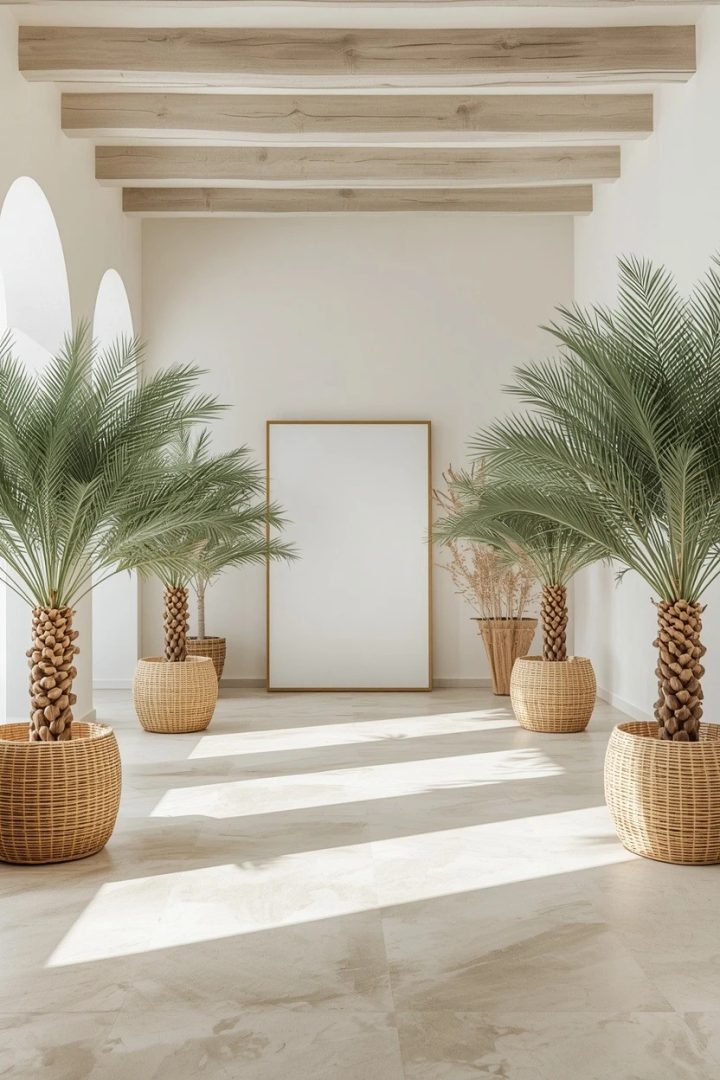
12. Layered Lighting With Woven Shades
Lighting should appears as natural as the rest of the scheme. Woven rattan pendants, linen-shaded lamps, and simple ceramic bases layer warm light through the room while adding more organic texture overhead and at eye level. A large woven pendant makes a beautiful sculptural focal point.
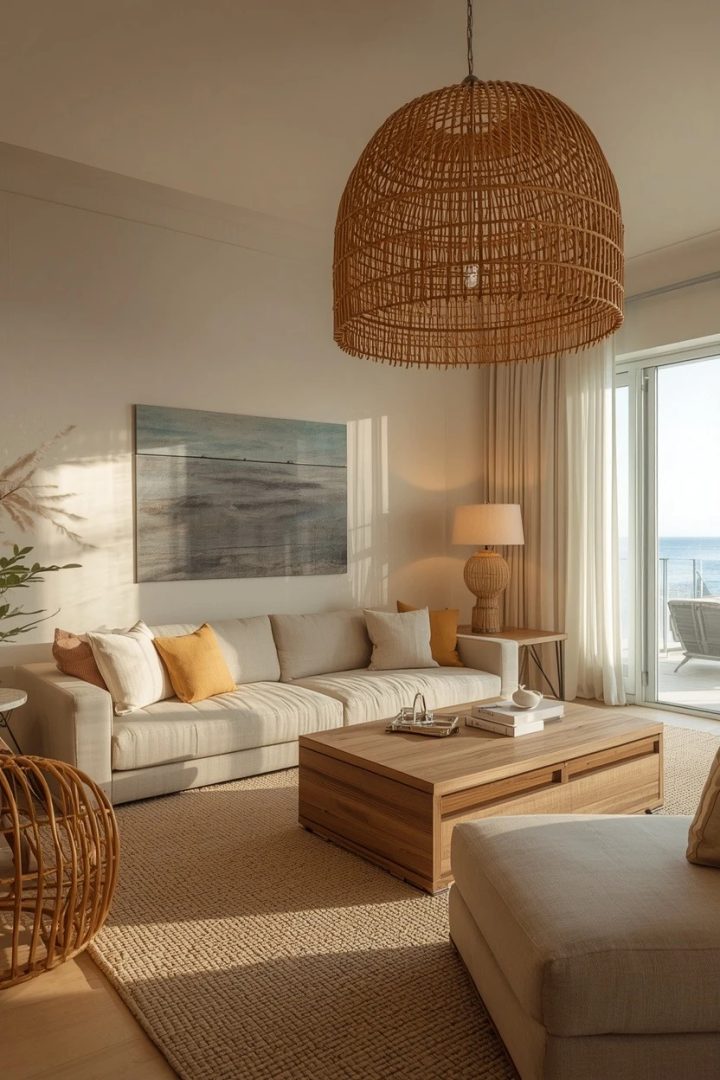
Layered lighting with woven shades is one of the most atmospheric coastal design ideas, combining natural-fibre pendants and soft linen shades to add warm, layered light and textural interest, keeping the room glowing and inviting once the daylight fades.
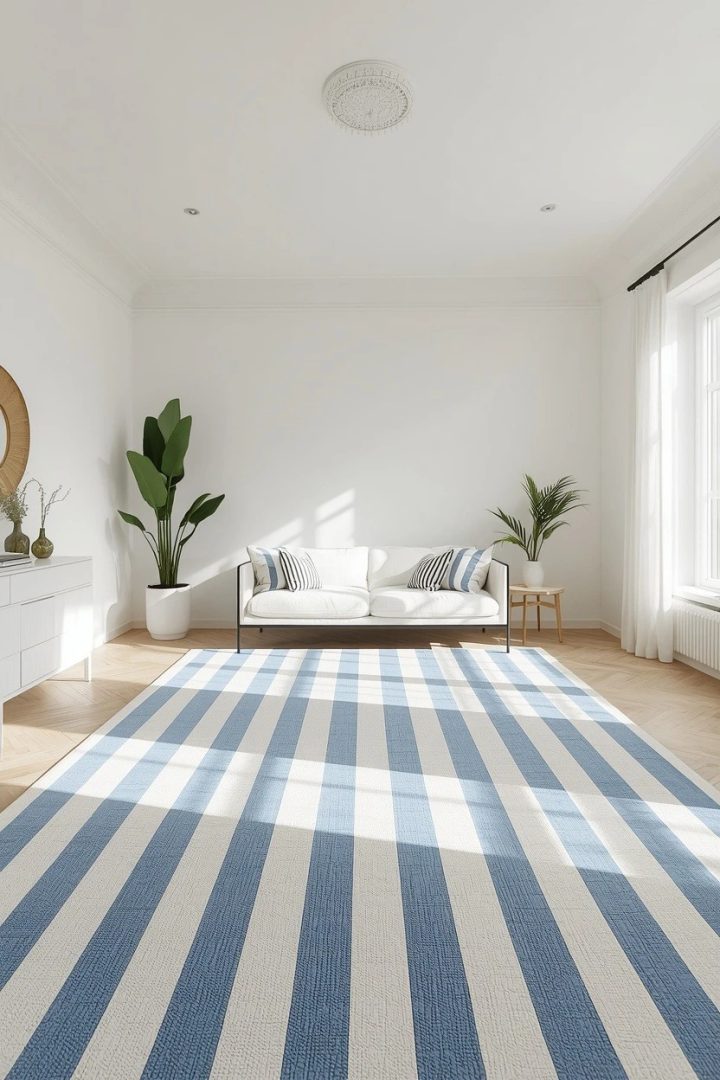
13. A Striped Accent
Stripes are the one pattern that reads coastal without becoming a cliché. A striped rug, cushions, or an upholstered ottoman in soft blue-and-white or sand-and-cream adds graphic rhythm and a nod to deckchairs and awnings while staying entirely modern. Keep the stripes generous and the colors muted for a contemporary look. A striped accent is one of the most classic seaside living room ideas, introducing gentle graphic pattern that signals the seaside with restraint, adding visual rhythm to a soft palette without tipping the room into obvious nautical territory.
14. A Deeper Blue Accent
A stronger blue adds depth and stops a pale coastal scheme feeling washed out. A navy or deep teal accent — on an armchair, ottoman, cushions, or a single painted alcove — grounds the room and gives the softer tones something to sit against.
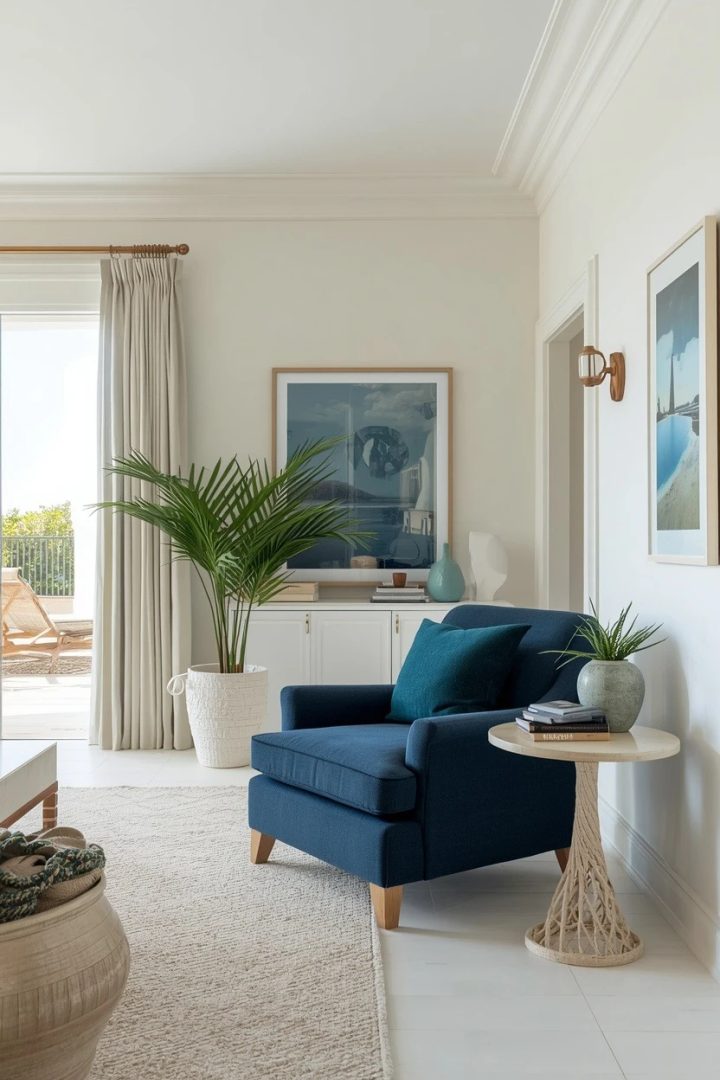
Use it sparingly as an accent rather than across the whole scheme. A deeper blue accent is one of the most balancing modern coastal ideas, adding a grounding note of navy or teal that gives the pale palette depth and definition, keeping the room feeling designed and anchored rather than uniformly light.
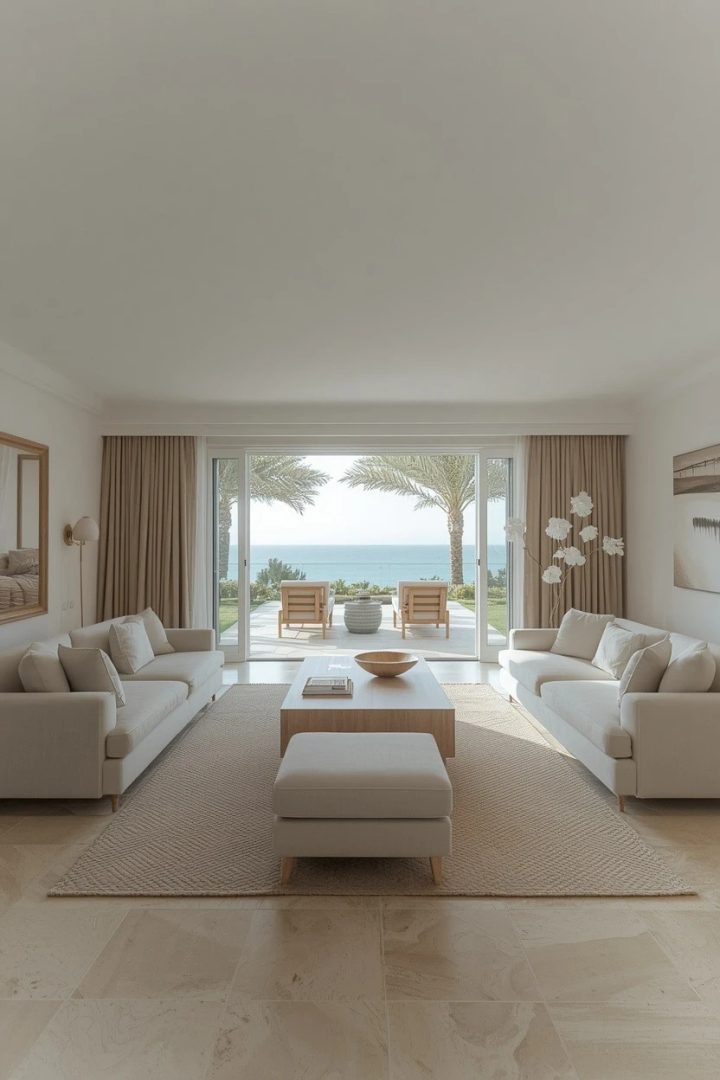
15. Connect the Room to Outdoors
Coastal living is fundamentally indoor-outdoor, so strengthening that link transforms the room. Orienting the seating toward a view or garden doors, using consistent flooring inside and out, and keeping the threshold clear makes the room look like part of the landscape beyond. Even without a sea view, facing the greenest outlook achieves much of the effect. Connecting the room to outdoors is one of the most impactful coastal design ideas, orienting the space toward light and landscape so it reads open and connected, which is central to the relaxed, breezy character of seaside living.
16. Relaxed Casual Styling
Coastal rooms should look lived in rather than staged. Casually stacked books, a throw tossed over the sofa arm, a bowl of found objects, and comfortable rumpled cushions keep the space feeling easy and unfussy, which is the essence of the style. Resist over-styling, as too much precision undermines the relaxed quality.
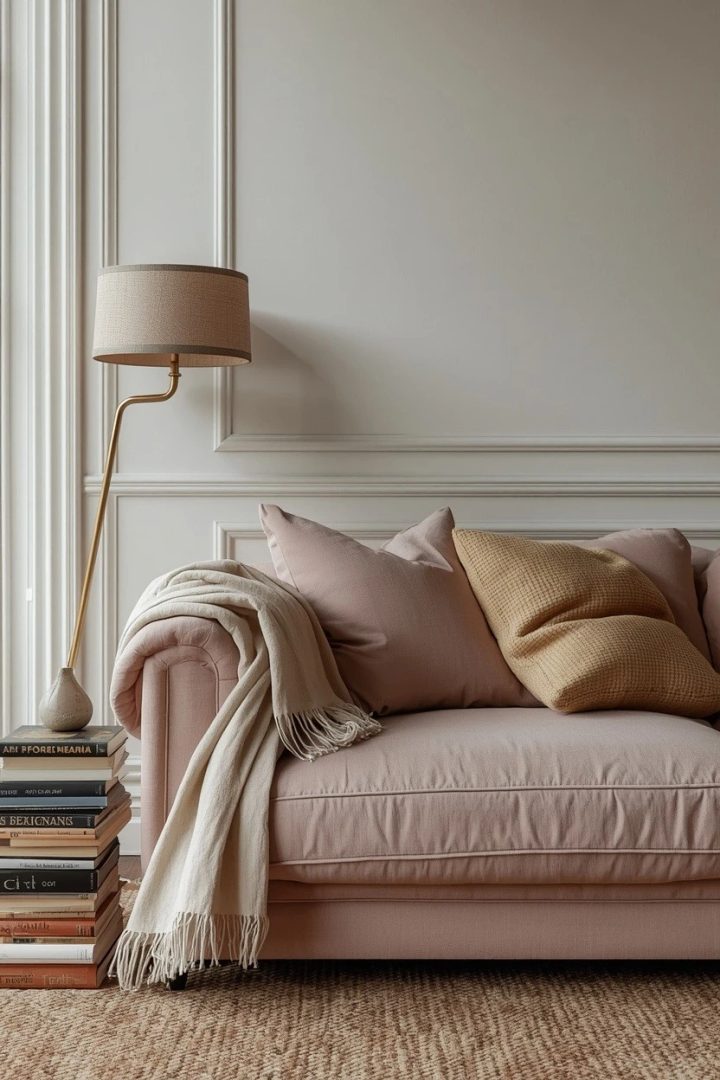
Relaxed casual styling is one of the most authentic seaside living room ideas, keeping the space easy, lived-in, and unfussy so it reads as a genuinely comfortable room, which is exactly what gives coastal design its welcoming, holiday-like appeal.
17. The Complete Modern Coastal room
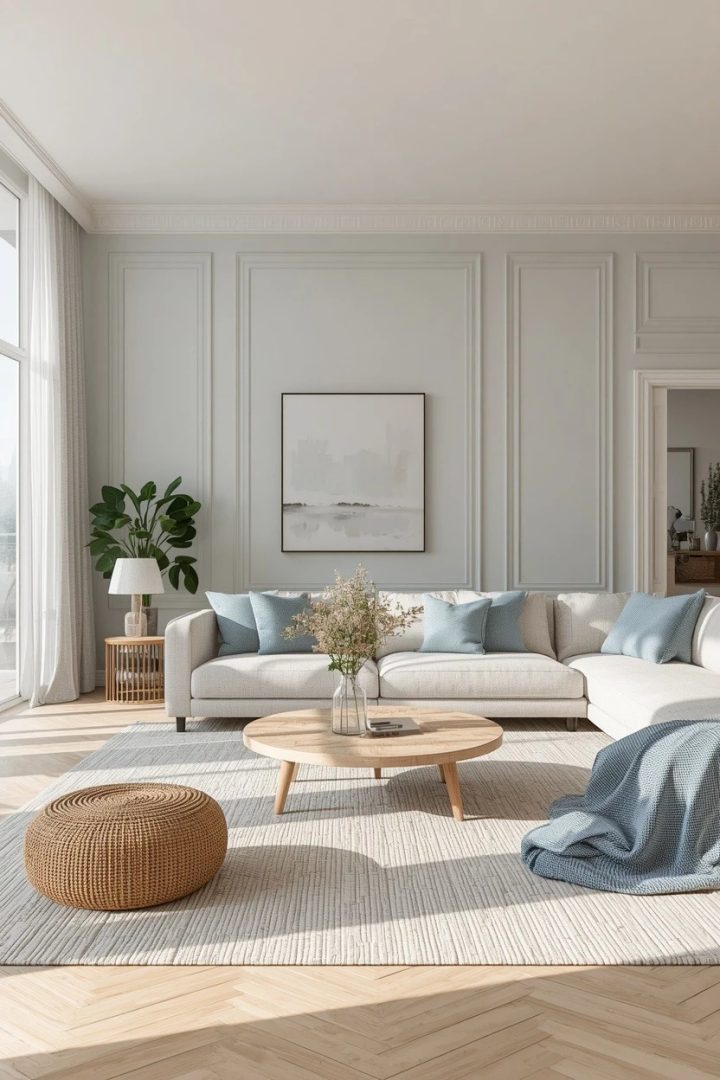
Brought together, the best version layers a soft blue-and-white or sun-washed neutral palette with linen upholstery, abundant daylight, natural textures, pale woods, and greenery, arranged in an open, airy layout. The principles that make it work are light, texture, and restraint: maximize daylight and keep the palette soft, layer natural materials generously so pale colors stay warm, choose relaxed casual furniture, and evoke the sea through abstraction rather than literal motifs. Combine the ideas that suit your space, and the result is a bright, calm, modern seaside living room that looks like the shoreline without ever looking like a gift shop.
Where I'd Start if I Only Did Three Things
If I only did three things to create this look, I'd start by maximizing daylight — sheer or minimal window treatments, curtains hung high and wide — since light is what gives the style its uplifting, airy quality. Next, I'd set a soft palette of blues and warm whites, or sun-washed neutrals, and put a relaxed linen or slipcovered sofa at its center. Third, I'd layer natural textures generously — a jute rug, rattan seating, woven baskets, linen cushions — because texture is what stops a pale scheme falling flat. Abundant light, a soft palette with casual upholstery, and layered natural texture do the most.
Frequently Asked Questions
How do I create a modern coastal living room?
A modern coastal living room is built on light, a soft palette, natural texture, and relaxed furniture. Start by maximizing daylight: keep window treatments sheer or minimal, hang curtains high and wide, and leave sightlines to the windows clear. Set the palette with soft, slightly greyed blues layered over warm whites and creams, or go sun-washed neutral with sand and oatmeal for a more contemporary version. Choose relaxed upholstery — a linen, cotton, or slipcovered sofa in white, oatmeal, or soft blue — as the anchor. Layer natural textures generously: jute or sisal rugs, rattan and cane seating, woven baskets, linen cushions, and rough ceramics, which give a pale scheme warmth and depth. Use light woods and driftwood tones rather than heavy dark timber, and consider shiplap or panelling for architectural character. Arrange furniture openly with generous walkways. Add greenery, woven pendant lighting, and abstract ocean-inspired art rather than literal nautical motifs. Light, soft color, layered natural texture, and casual comfort together create a genuinely modern coastal room.
What colors work in a coastal living room?
Coastal palettes draw from sea, sand, and sky, and the modern versions stay soft and slightly muted rather than bright. The core colors are warm whites, creams, and off-whites as the base; soft, greyed blues ranging from pale sky through seafoam to muted denim; and warm sandy neutrals like oatmeal, taupe, and greige. Natural material tones are part of the palette too — the pale silver of driftwood, the honey of rattan and jute, and the green of plants. For depth, a stronger accent reads well used sparingly: navy, deep teal, or a soft sage grounds the lighter tones and stops the scheme feeling washed out. The key distinction between modern coastal and dated nautical is saturation: soft, muted, slightly greyed blues read contemporary and calm, while bright primary blue and red combinations read theme-park. Keeping the overall palette light and warm, with texture doing much of the work, produces a coastal room that appears serene and thoroughly current.
How do I make a coastal living room look modern rather than kitsch?
The difference comes down to restraint and abstraction. Avoid literal motifs — anchors, starfish, ships' wheels, rope details, lettering signs, and shell-covered accessories are what push a room toward theme-park territory. Instead, evoke the sea through abstract art such as horizon-line paintings, soft blue washes, or black-and-white shoreline photography. Keep the blues soft and slightly greyed rather than bright primary tones, and let warm whites and sandy neutrals do most of the work. Rely on natural materials — linen, jute, rattan, cane, pale timber, and ceramics — for texture, since it's texture rather than motif that gives modern coastal its character. Choose clean-lined, relaxed furniture over heavily themed pieces. Use stripes sparingly as the one pattern that still reads contemporary. Add plenty of greenery and daylight. And keep the room feeling relaxed rather than staged. Abstract rather than literal, muted rather than bright, and texture rather than motif is the formula for a coastal room that looks designed rather than kitsch.
Can I do a coastal living room without a sea view?
Absolutely — coastal style is about light, calm, and natural materials rather than proximity to water, and it reads beautifully in suburban and inland homes. Focus on maximizing whatever natural light you have: sheer or minimal window treatments, curtains hung high and wide, pale walls and flooring to reflect light, and a large mirror positioned to bounce daylight further into the room. Orient the seating toward your best outlook, even if that's a garden rather than the sea, and strengthen the indoor-outdoor link where possible with garden doors or continuous flooring. Lean heavily on the palette and materials, since these carry the style: soft blues and warm whites or sun-washed neutrals, linen upholstery, jute and rattan, pale woods, and rough ceramics. Add plenty of greenery, which brings the natural, outdoor quality indoors. Use abstract ocean-inspired art for atmosphere. Because the look depends on light, soft color, natural texture, and a relaxed, uncluttered layout rather than the view itself, a coastal room translates convincingly to almost any home.
Final Thoughts
Coastal style endures because it delivers something genuinely valuable: a room that reads light, calm, and effortlessly relaxed. These coastal living room ideas span every element — soft blue and white palettes and sun-washed neutrals, linen and slipcovered sofas, maximized daylight and layered natural textures, driftwood tones and shiplap walls, open airy layouts and rattan seating, abstract ocean art and greenery, woven lighting and striped accents, deeper blue grounding notes, indoor-outdoor connection, and relaxed casual styling. The principles that tie them together are light, texture, and restraint: maximize daylight, keep the palette soft, layer natural materials so pale colors stay warm, choose relaxed furniture, and evoke the sea through abstraction rather than literal motifs. Choose the ideas that suit your space, and the result is a bright, calm, modern coastal living room that brings shoreline serenity home.