18 Small Living Room Ideas With a TV That Actually Work
July 24, 2026 · 15 min read
 By Khawar Iqbal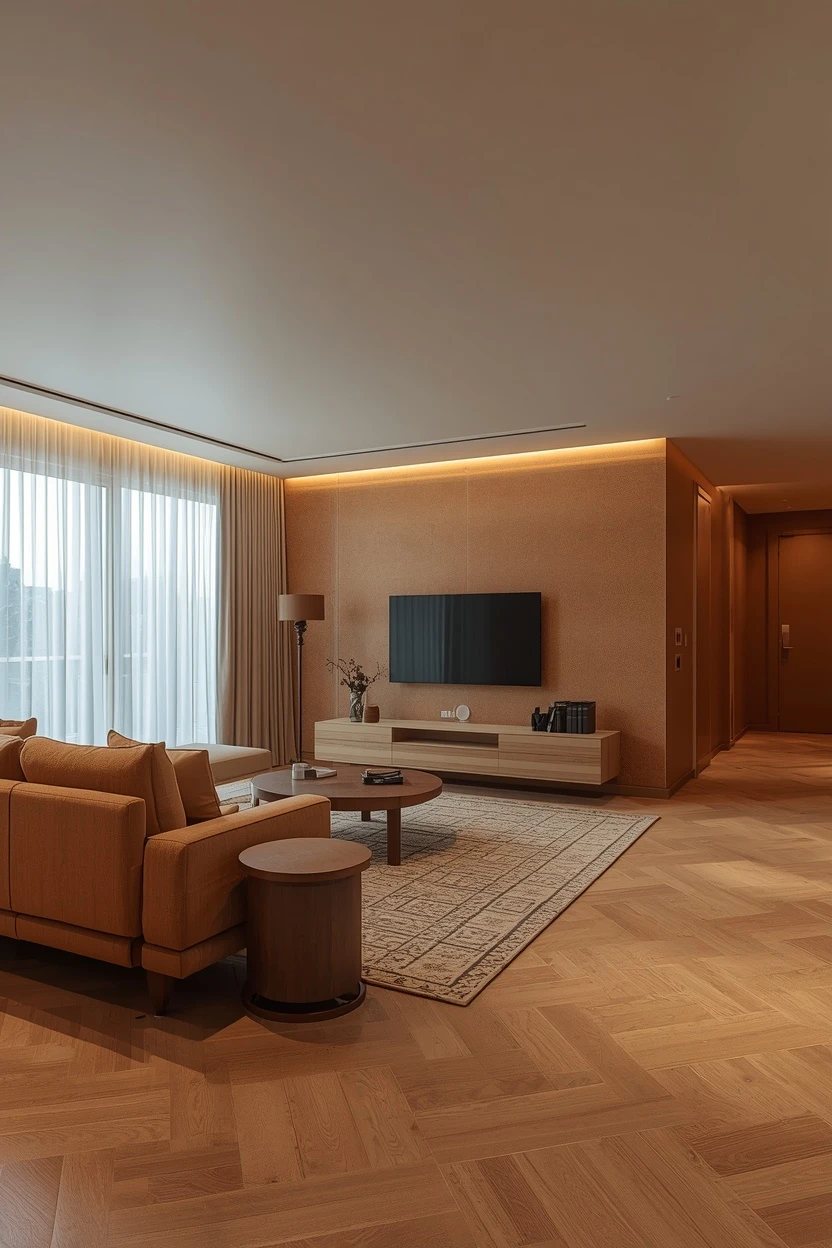
Fitting a television into a compact space without it dominating the room is one of the most common design challenges there is. But with the right layout, mounting, and furniture choices, a small living room with a TV can feel open, stylish, and entirely comfortable — and even accommodate a dining table too. These small living room ideas with a TV show how to arrange a compact space so the screen works with the room rather than against it, from wall-mounted setups and floating media units to corner placements, zoned living-dining layouts, and clever storage that keeps everything feeling spacious.
Each idea below is a complete room layout, with honest notes on viewing distance, traffic flow, and balancing the screen against the rest of the space. Some solve tight square rooms; others tackle narrow, awkward, or shared living-dining spaces. Whether your room is a snug nook or a multi-use studio, there's an arrangement here to make a small living room with a TV genuinely work.
1. Mount the TV on the Wall
Wall-mounting is the single most effective move in a small living room, freeing the entire floor beneath the screen. A slim wall-mounted TV removes the need for a bulky stand, keeps the floor visible, and makes the whole room read more open and less crowded.
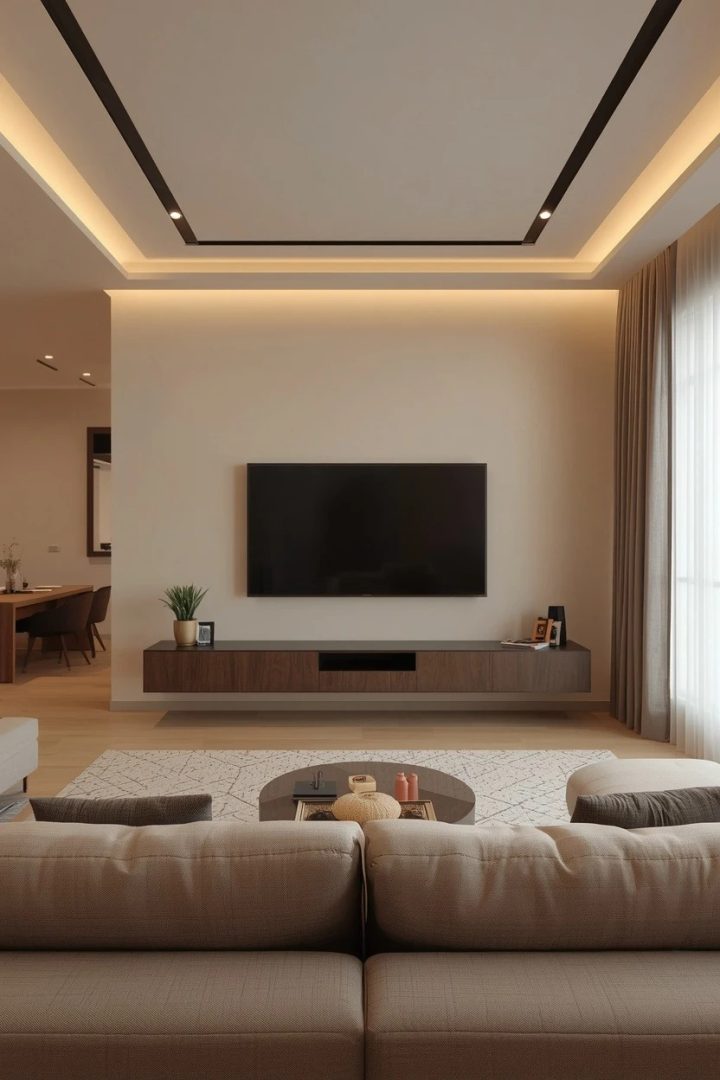
Mount it at seated eye level and run cables through the wall or a slim trunking channel for a clean look. Mounting the TV on the wall is the essential small living room with TV idea, reclaiming the floor space a stand would occupy and giving the room a streamlined, uncluttered look that makes a compact space feel noticeably larger and better organized.
2. A Floating Media Unit
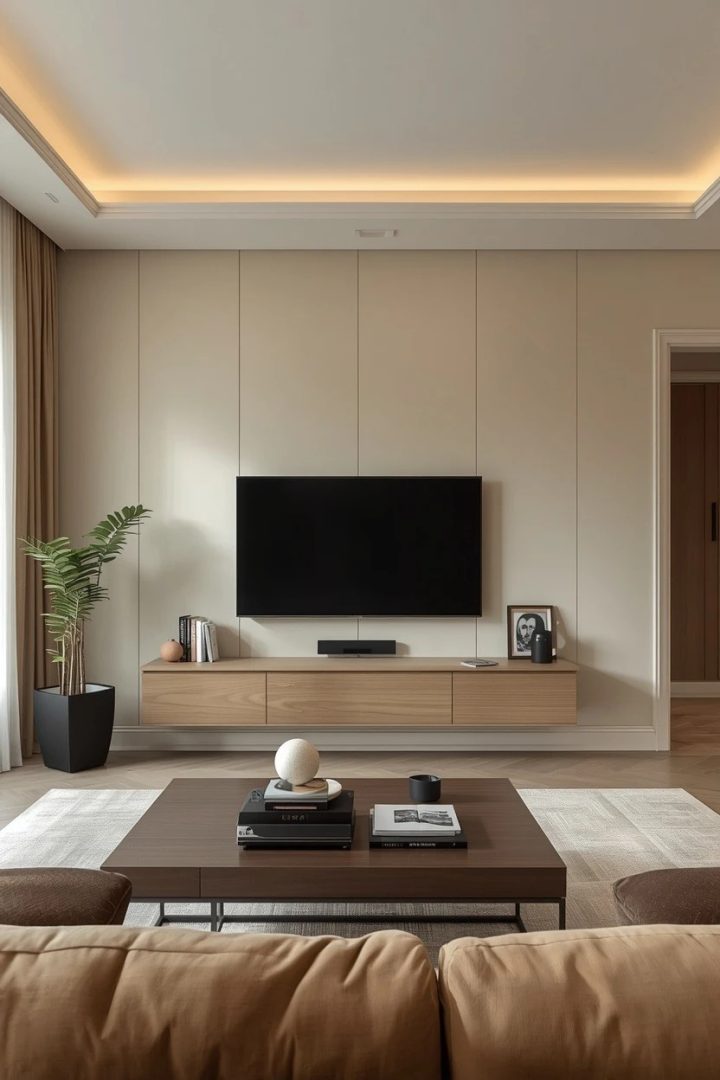
A wall-hung media console keeps storage without the visual bulk of a floor-standing cabinet. A slim floating unit beneath the mounted screen holds devices and clutter while revealing the floor underneath, which tricks the eye into reading more space. Keep it narrow and light-toned, and choose closed storage to hide cables and boxes. A floating media unit is one of the smartest small living room with TV ideas, providing essential storage beneath the screen while keeping the floor visible and the room airy, delivering function without the crowding that a bulky media cabinet would bring to a compact space.
3. A Corner TV Placement
Tucking the screen into a corner uses space that often goes to waste and frees up the main walls. A corner-mounted or corner-placed TV angles toward the seating while keeping the primary walls clear for a sofa, shelving, or a window, which suits awkward or very tight rooms. Use a swivel bracket so the angle can be adjusted.
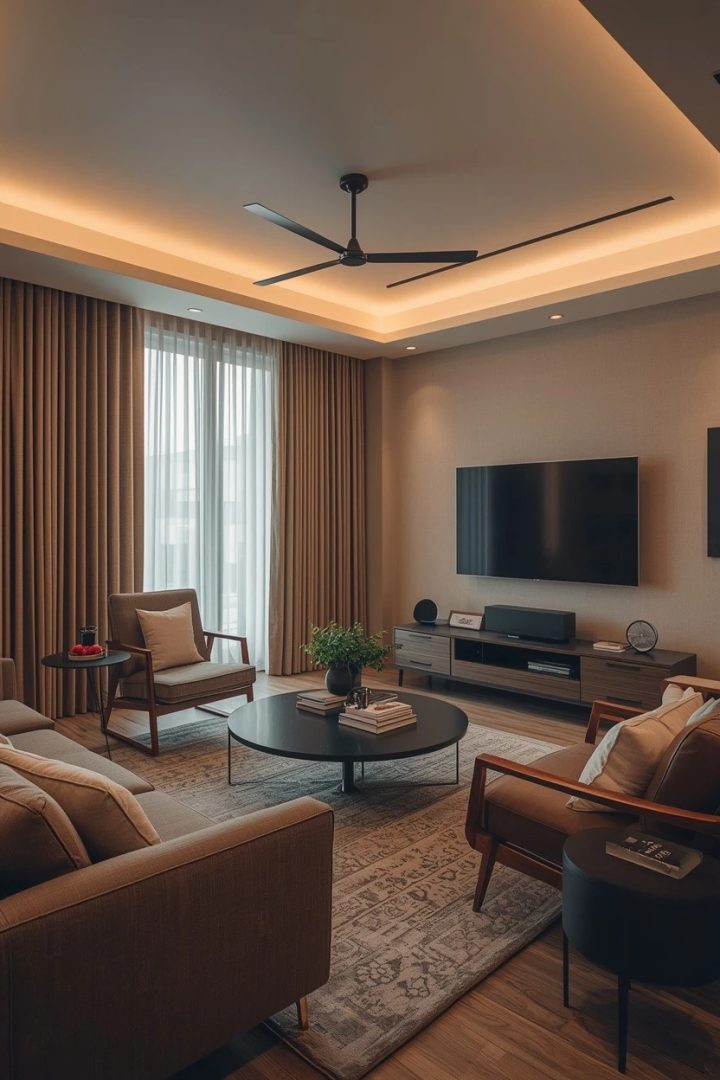
A corner TV placement is one of the most space-efficient small living room with TV ideas, using an otherwise-dead corner for the screen so the main walls stay free for seating and storage, making the most of every inch in a compact room.
4. Build the TV Into Shelving
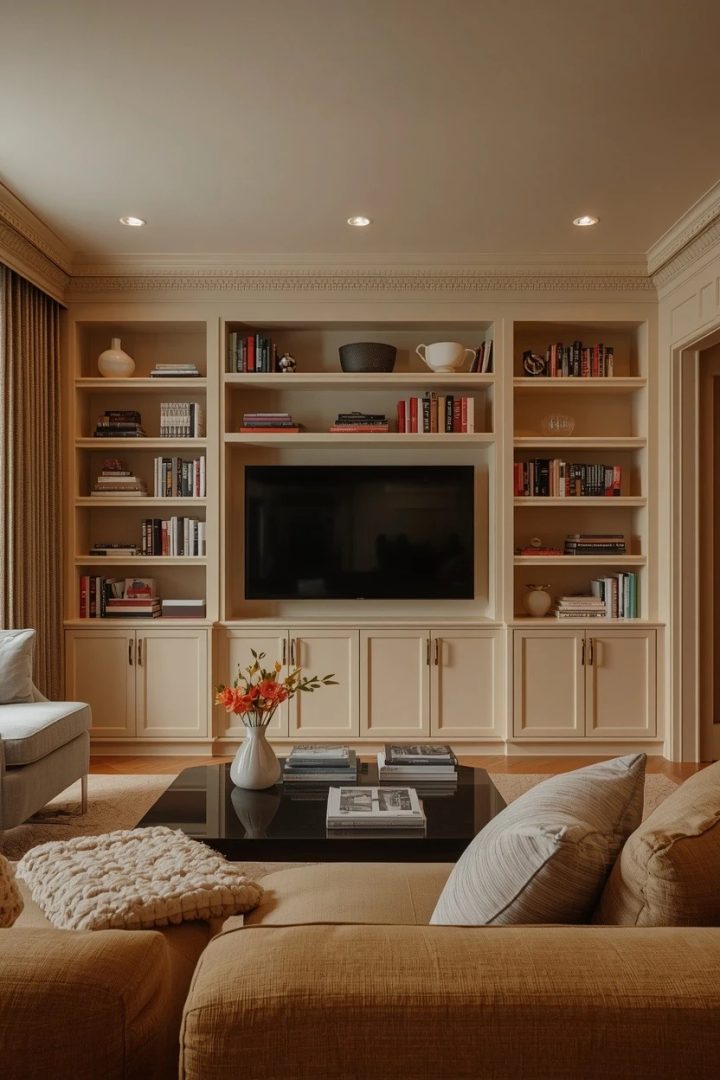
Integrating the screen into built-in shelving turns it into part of a considered wall rather than a black rectangle. A media wall with shelving or cabinetry around the TV provides generous storage, hides clutter, and makes the screen feel deliberate and built-in. Painting the joinery to match the wall keeps it visually quiet in a small room. Building the TV into shelving is one of the most polished small living room with TV ideas, absorbing the screen into a full storage wall that adds serious function while making the television read as an integrated design feature rather than an awkward focal point.
5. Zone a Living and Dining Layout
When a small room must hold both a TV and a dining table, zoning is the answer. Placing the dining table at one end — often nearest the kitchen or window — and the sofa-and-TV grouping at the other, each anchored by its own rug, gives both functions a clear place without competing.
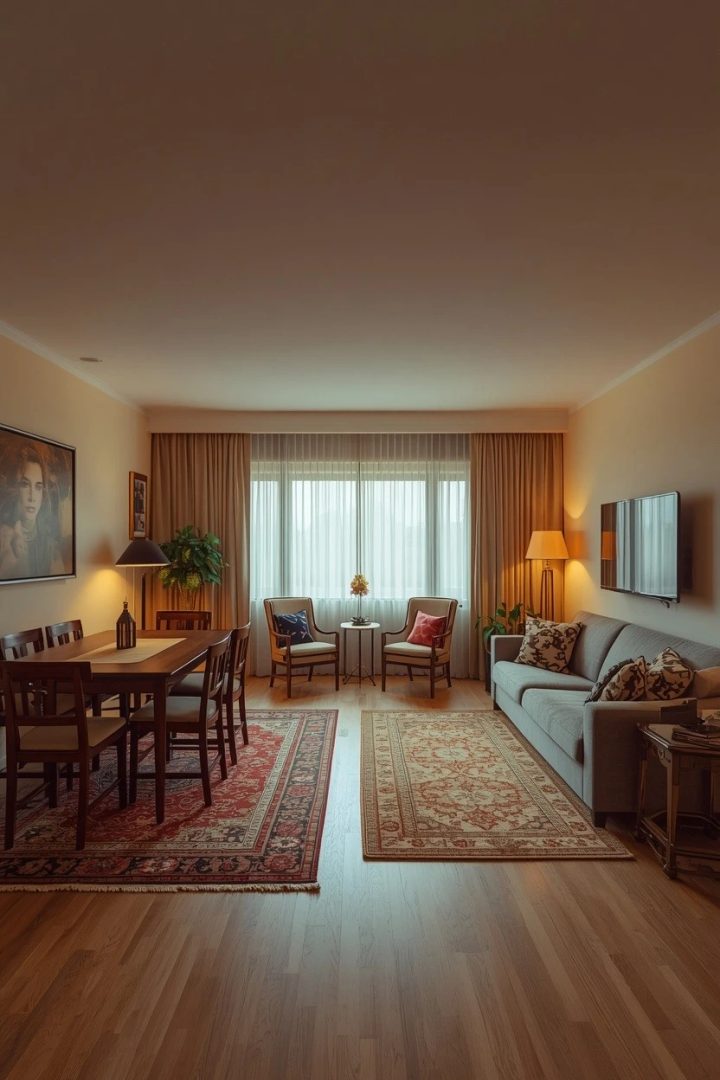
Keep a clear path between the zones. Zoning a living and dining layout is one of the most practical small living room with TV ideas, dividing a compact multi-use room into two purposeful areas so the seating, screen, and table each work properly without the space feeling crowded or confused.
6. Use a Slim Console Behind the Sofa
A narrow console behind a floated sofa adds surface and quietly divides a small living-dining room. A slim console table backing the sofa creates a subtle boundary between the seating zone and the dining or walkway area, while offering a spot for lamps and storage baskets. Choose a depth of around 30 to 35 centimeters so it doesn't intrude.
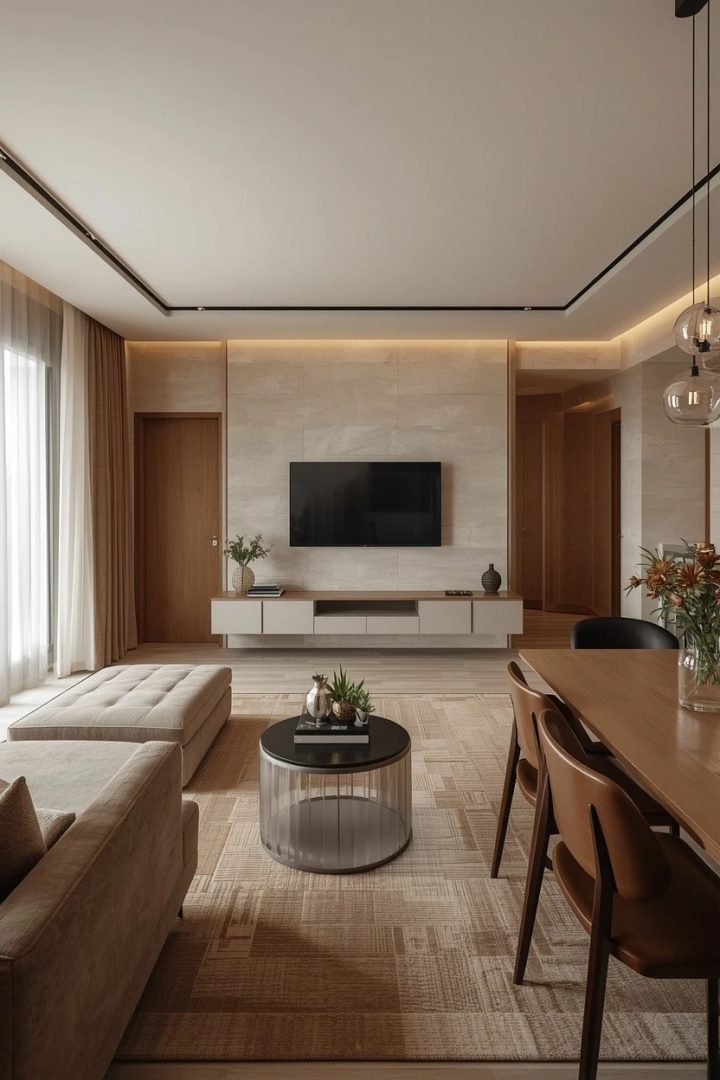
Using a slim console behind the sofa is one of the cleverest small living room with TV ideas, creating a soft division between viewing and dining zones while adding useful surface, all in a footprint slim enough not to crowd a compact room.
7. Choose a Compact Sofa or Loveseat
Right-sizing the seating transforms how a small living room functions around a TV. A two-seater sofa or loveseat with a slim profile and raised legs seats comfortably while leaving space to move and view, where an oversized sectional would block the room. Leggy furniture shows more floor, which reads as more space. Choosing a compact sofa or loveseat is one of the most fundamental small living room with TV ideas, matching seating scale to the room so there's comfortable viewing plus room to move, solving the crowding that oversized furniture causes in a tight space.
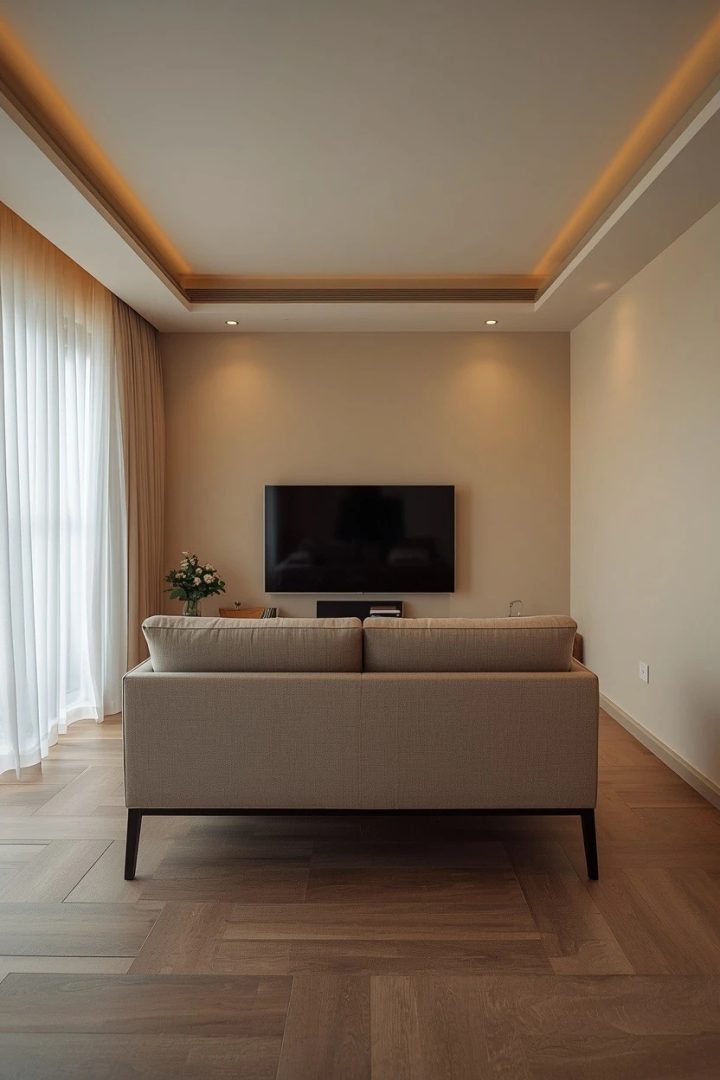
8. Match Wall Color to the Screen
Painting the media wall in a deeper shade makes the television visually disappear. A dark charcoal, deep green, or moody blue wall behind the screen absorbs the black rectangle so it stops dominating the room when switched off. This works especially well in a small room where the TV would otherwise be the loudest element. Matching wall color to the screen is one of the most effective small living room with TV ideas, using a deeper backdrop to blend the television into the wall so it recedes visually, letting the rest of a compact room's design take the attention instead.
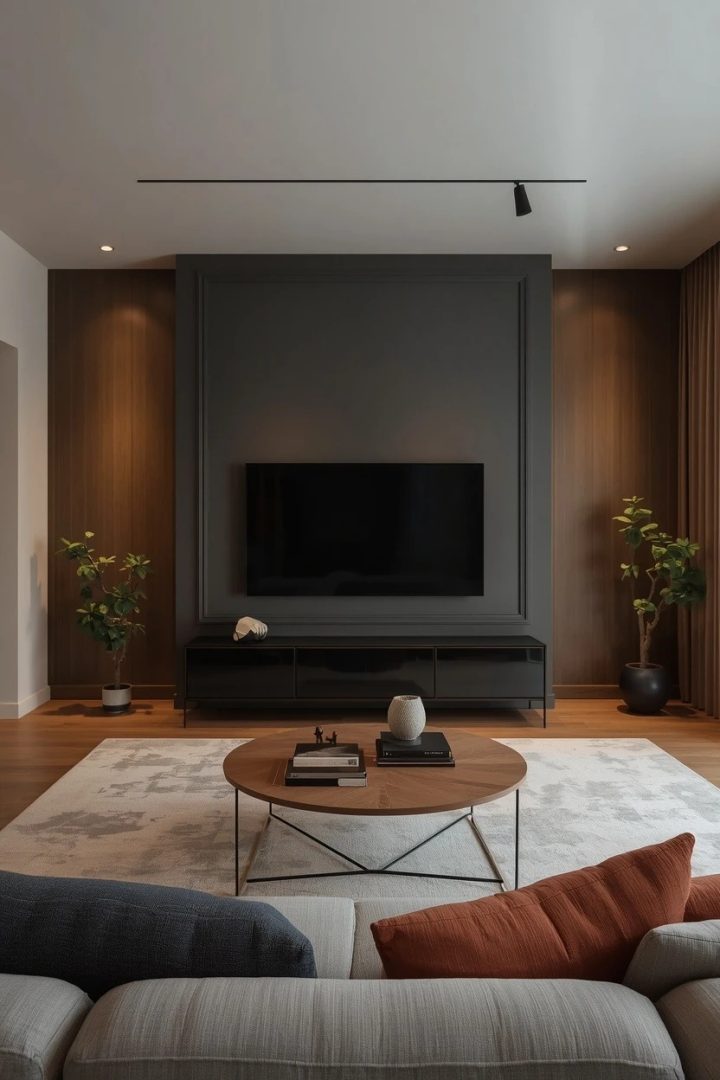
9. Position the TV Opposite the Sofa
The simplest arrangement is still often the best: screen directly facing the seating across the room's shorter span. Mounting the TV on the wall opposite the sofa gives comfortable, straight-on viewing and keeps the layout logical and uncluttered, which matters most in a small room. 5 times the screen width.
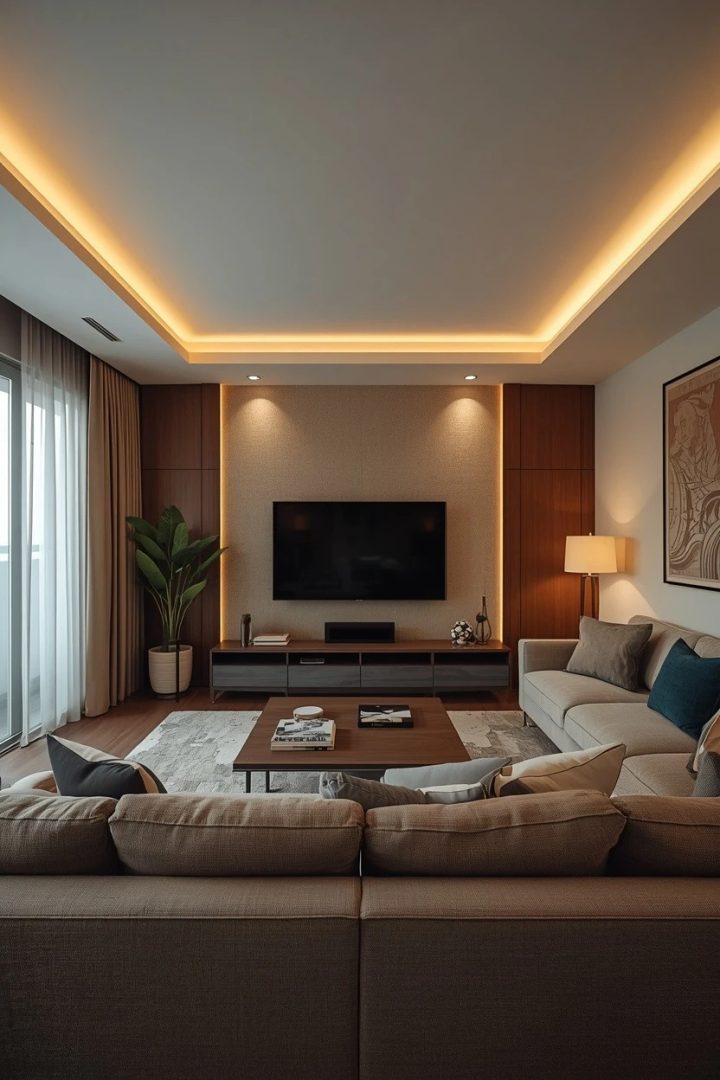
Positioning the TV opposite the sofa is one of the most reliable small-space TV ideas, creating a clear, comfortable viewing axis that keeps the layout simple and functional, which is exactly what a compact room needs to avoid feeling chaotic.
10. Add a Drop-Leaf or Extendable Table
For a small living room that also needs to dine, flexible table furniture is the key. A drop-leaf, extendable, or console-to-dining table stays compact day to day and opens out only when needed, so the room isn't permanently given over to dining.
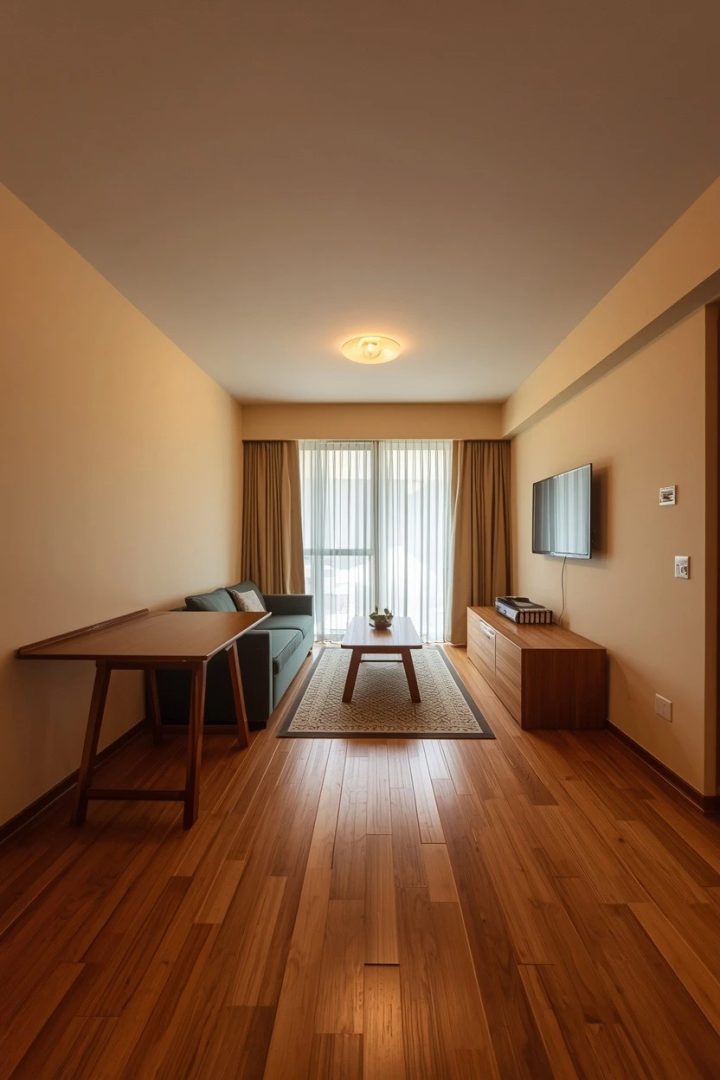
Fold it down against the wall to free the floor for viewing and lounging. Adding a drop-leaf or extendable table is one of the most flexible compact living room ideas, letting a compact room dine when required and revert to open living space afterward, solving the living-and-dining conflict without sacrificing either function.
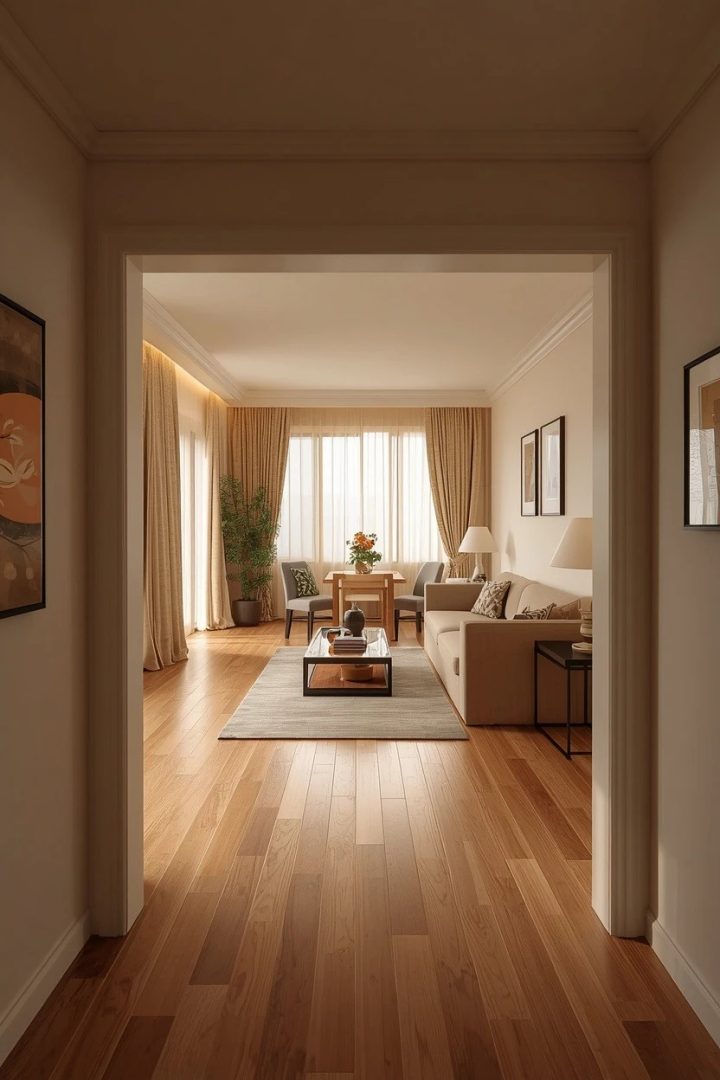
11. Keep a Clear Walkway
Traffic flow makes or breaks a small multi-use room. Arranging the sofa, table, and media wall so there's an obvious unobstructed path from the door through the room stops it feeling cramped and awkward, and keeps the dining zone reachable without squeezing past the seating. Aim for a comfortable path width between pieces. Keeping a clear walkway is one of the most important small-space TV ideas, planning the furniture around natural movement so a compact living-and-dining space flows logically, which does more for the feeling of roominess than almost any decorative change.
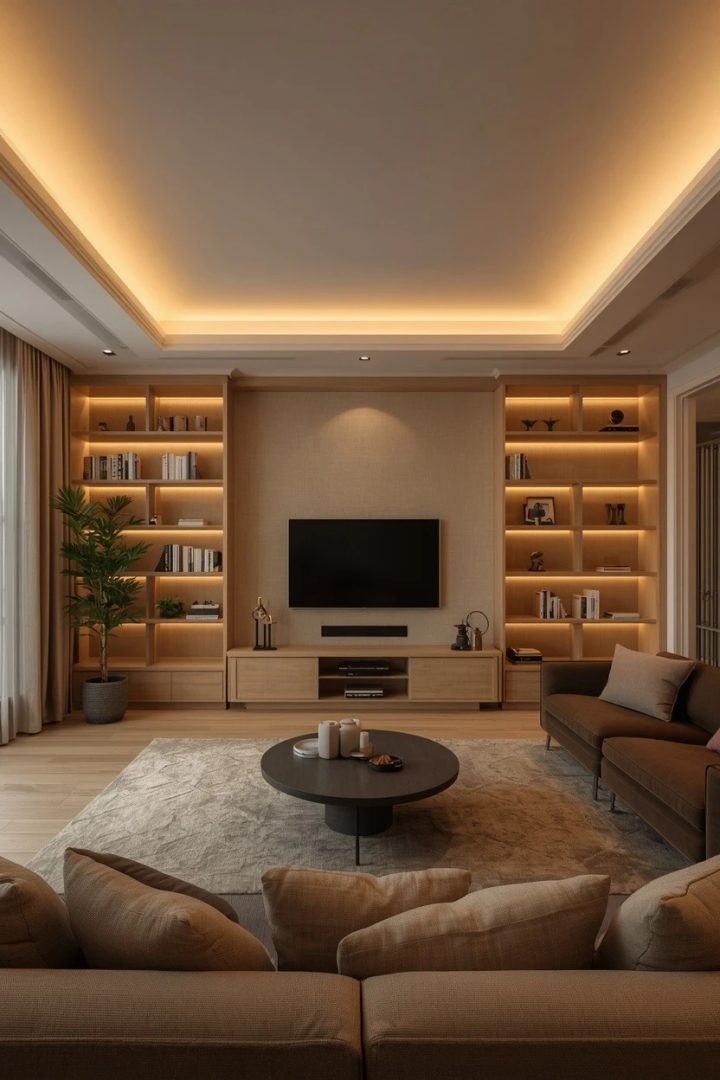
12. Use Vertical Storage Around the TV
Building storage upward around the screen captures space a small room can't spare on the floor. Tall shelving or cabinets flanking the mounted TV, running toward the ceiling, hold books, baskets, and clutter while drawing the eye up to make the room look taller. Keep the units light-toned so they blend into the wall. Using vertical storage around the TV is one of the most space-smart compact living room ideas, exploiting the room's full height for storage while framing the screen neatly, adding serious capacity without consuming any additional floor area.
13. Choose a Light and Bright Palette
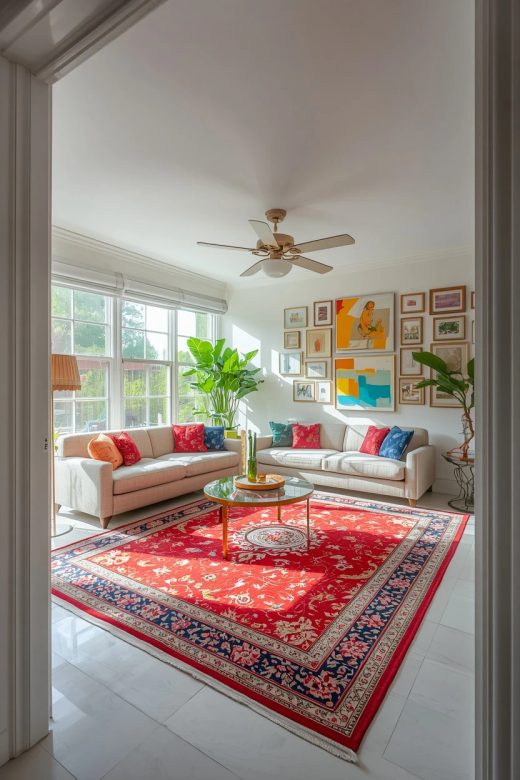
A pale, cohesive scheme makes a small living room looks considerably more open, which helps offset the visual weight of a television. Soft whites, warm neutrals, and light flooring reflect daylight and blur the room's edges, so the space reads airy even with a screen and dining table in it. Add warmth through texture rather than dark color on every wall.
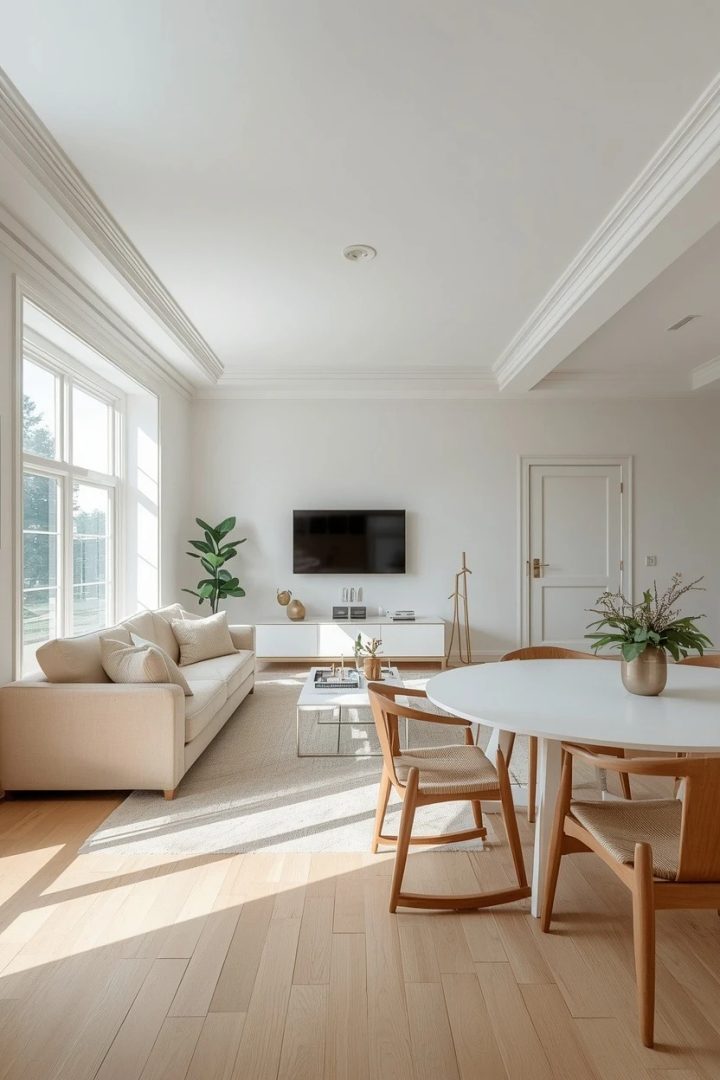
Choosing a light and bright palette is one of the most effective small-space TV ideas, using pale, reflective tones to visually expand a compact multi-use room so the furniture and screen sit comfortably without the space feeling closed in.
14. Add a Large Mirror
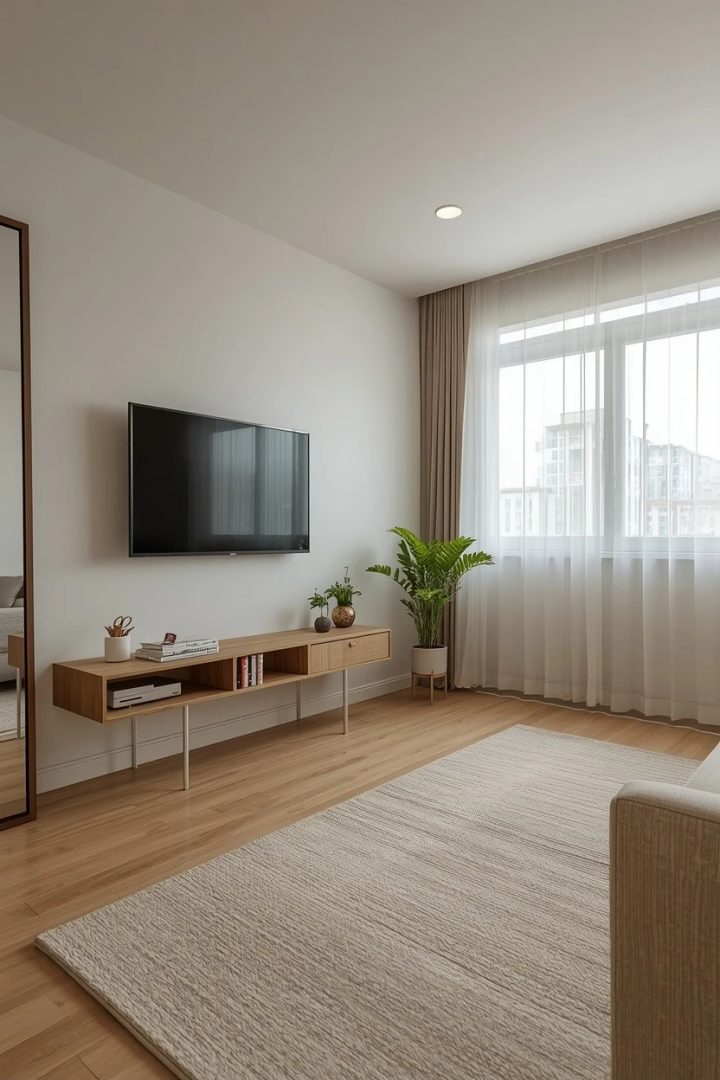
A big mirror bounces light and depth into a small living room, counterbalancing the dark expanse of a screen. Positioned on a side wall to reflect a window rather than directly opposite the TV, a large mirror brightens the room and visually doubles the space. Avoid placing it where it will catch screen glare during viewing. Adding a large mirror is one of the most powerful compact living room ideas, using reflection to add light and apparent size to a compact room, offsetting the visual heaviness of the television and making the whole space appears more open and generous.
15. Balance the TV With Art
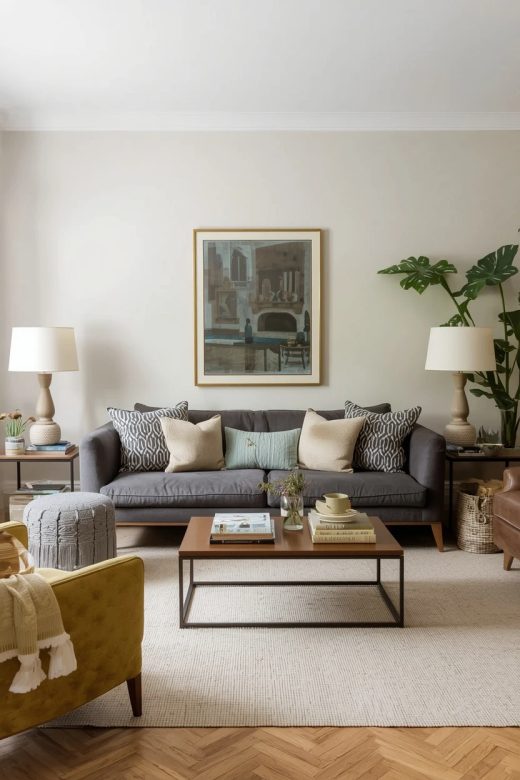
Framing the screen with artwork stops it from being the room's only visual anchor. Hanging art or a small gallery arrangement either side of the mounted TV, or choosing a frame-style screen that displays artwork when idle, integrates the television into a considered wall.
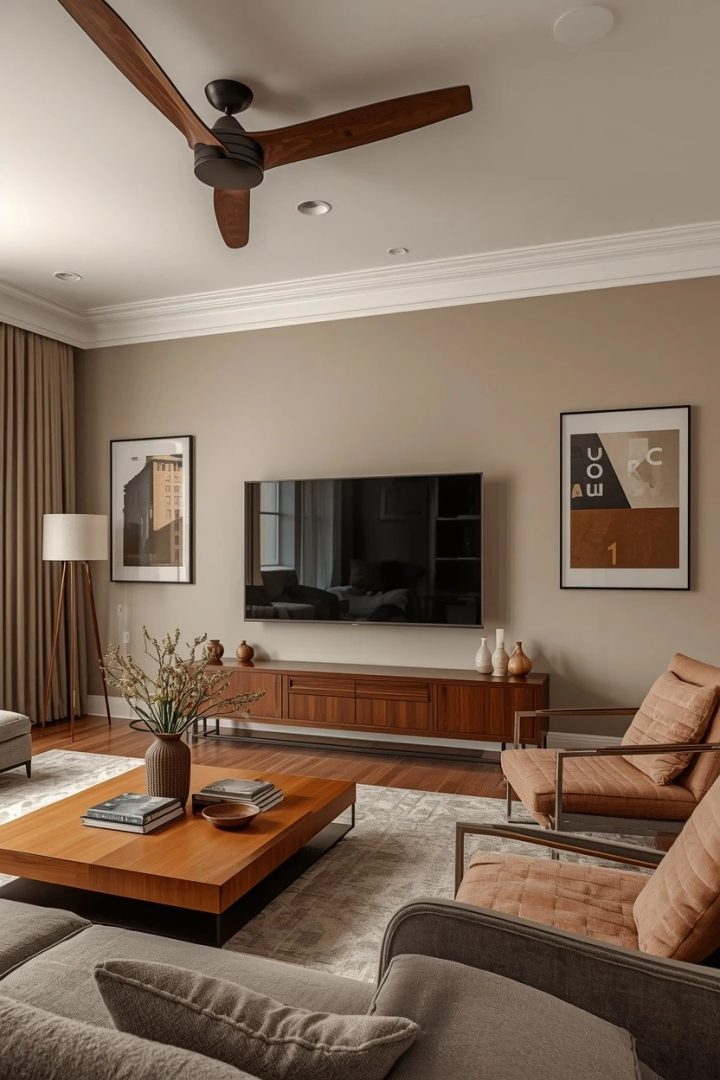
Keep the surrounding pieces tonal so the wall stays calm in a small room. Balancing the TV with art is one of the most stylish small-space TV ideas, integrating the screen into a curated wall so it reads as part of the design rather than an unavoidable black box dominating a compact space.
16. Fit Seating Along One Wall
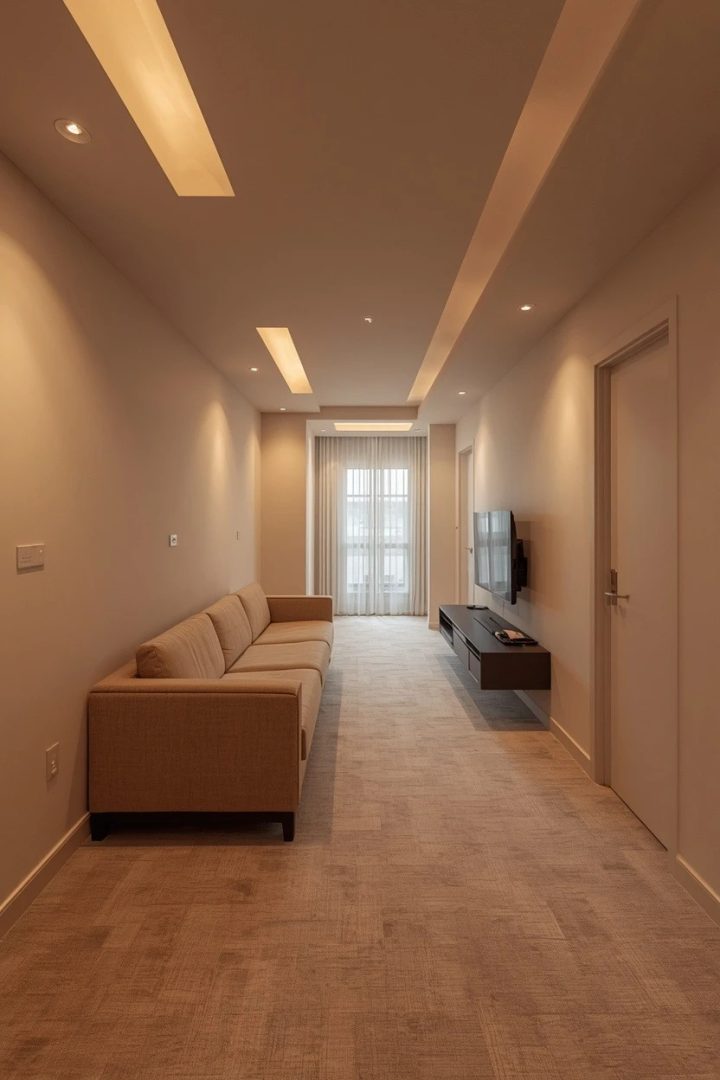
In a narrow small living room, running the seating down one long wall preserves circulation on the other side. A sofa against one wall facing a mounted TV opposite, with slim accent seating rather than bulky armchairs, keeps the room passable while still seating several people. Leave the opposite side clear as a walkway to the dining zone. Fitting seating along one wall is one of the most practical compact living room ideas, arranging the furniture down a single side so a narrow room stays open and walkable, solving the corridor problem that afflicts many compact living spaces.
17. Hide the TV When Not in Use
For those who'd rather not look at a screen all day, concealment options let a small room read as a proper living space. A cabinet with doors, a sliding panel, or artwork that covers the TV hides it entirely when it's off, so the room's design isn't dictated by the screen. Choose a solution that opens easily and doesn't project far into a tight space.

Hiding the TV when not in use is one of the most elegant small-space TV ideas, concealing the screen behind doors or art so a compact room presents as a considered living space rather than a viewing room.
18. The Complete Small Living Room With a TV
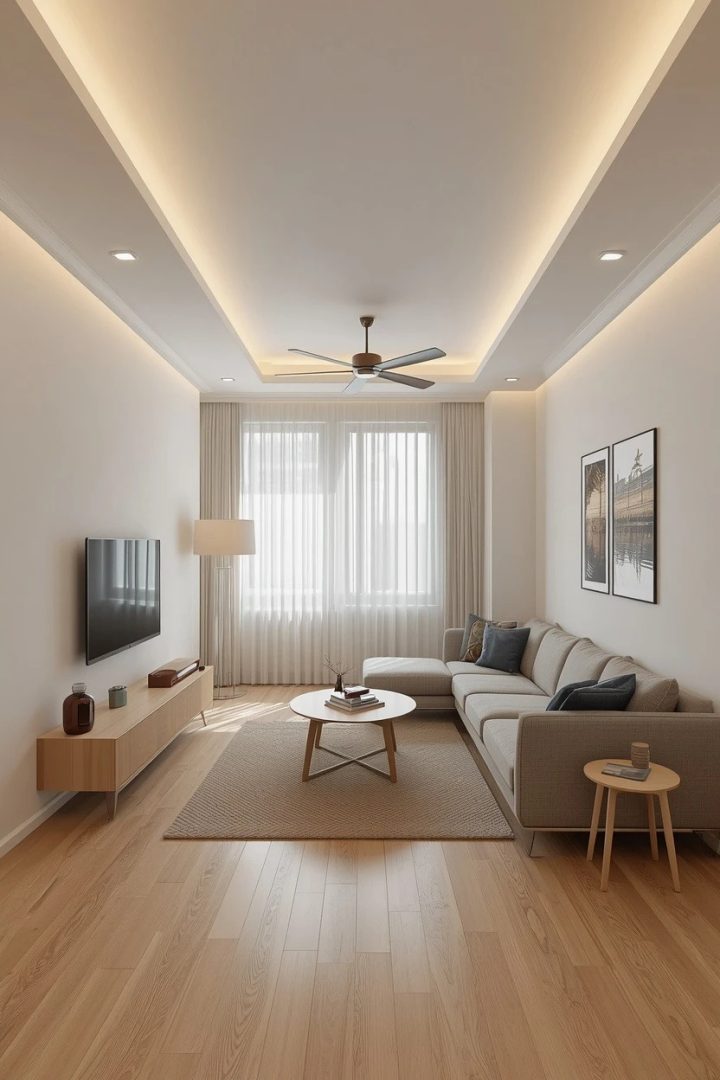
Brought together, the best compact setup mounts the screen on the wall above a floating unit, seats a right-sized sofa opposite, zones any dining area with its own rug, builds storage vertically, and keeps the palette light with a clear walkway throughout. The principles that make it work are floor space, flow, and visual weight: get furniture off the floor, size seating to the room, zone multiple functions clearly, build upward for storage, and use pale color, mirrors, and art to offset the screen. Combine the ideas that suit your room, and a small living room with a TV becomes an open, comfortable, genuinely workable space.
Where I'd Start if I Only Did Three Things
If I only did three things to make a compact room with a screen work, I'd start by wall-mounting the TV above a slim floating unit, since getting the media setup off the floor is the biggest single gain in a tight space. Next, I'd right-size the seating — a two-seater or loveseat on legs rather than an oversized sectional — and place it directly opposite the screen for a clear viewing axis. Third, I'd zone any dining area with its own rug and protect a clear walkway between the two. Wall-mounting, right-sized seating, and clear zoning with flow do the most.
Frequently Asked Questions
Where should I put the TV in a small living room?
The best TV position in a compact room depends on your layout, but a few placements work reliably. Mounting it on the wall directly opposite the sofa gives the most comfortable straight-on viewing and keeps the layout simple, which matters most when space is tight. If the main walls are needed for seating, windows, or storage, a corner placement on a swivel bracket uses otherwise-dead space and angles toward the seating. Building the screen into shelving or a media wall integrates it neatly and adds storage. Whichever you choose, mount rather than stand the TV wherever possible to free the floor, position it at roughly seated eye level, and aim for a viewing distance of about 1.5 to 2.5 times the screen width. Avoid placing it directly opposite a bright window, which causes glare, and avoid a position that forces seating to block a doorway or walkway. Keeping the viewing axis clear and the floor beneath the screen free is what makes the arrangement work.
How do I fit a TV and a dining table in a small living room?
Fitting both into one compact room comes down to zoning and flexible furniture. Divide the space into two clear areas: place the dining table at one end, usually nearest the kitchen or a window, and the sofa-and-TV grouping at the other, anchoring each with its own rug so they read as distinct zones. A slim console behind the sofa creates a subtle boundary between them while adding useful surface. Choose flexible table furniture — a drop-leaf, extendable, or console-style table — so the dining area stays compact day to day and only opens out when needed. Right-size everything: a two-seater sofa and slim-profile dining chairs leave far more room than bulky alternatives. Wall-mount the TV and use a floating media unit to keep the floor clear. Crucially, protect a clear walkway between the zones and to the door so the room flows and you're not squeezing past furniture. Zoning with rugs, flexible table furniture, right-sized pieces, and a protected walkway lets both functions coexist comfortably.
How can I make a TV less noticeable in a small room?
There are several effective ways to stop a screen dominating a compact space. Painting the wall behind it in a deeper shade — charcoal, deep green, or a moody blue — absorbs the black rectangle so it visually recedes when switched off. Building the TV into shelving or cabinetry painted to match the wall integrates it into a considered storage wall rather than leaving it as a standalone focal point. Hanging tonal artwork either side, or using a frame-style television that displays art when idle, balances the screen within a curated wall arrangement. Concealment options work well too: a cabinet with doors, a sliding panel, or art that covers the screen hides it entirely when it's off. Keeping the media unit floating and slim reduces the overall visual bulk, and mounting the screen at the correct height, rather than too high, helps it sit naturally within the room. Choosing a modestly-sized screen appropriate to the viewing distance also stops it overwhelming a small space.
What size TV is best for a small living room?
Screen size should be driven by viewing distance rather than by fitting the largest television possible. A useful guideline is a viewing distance of roughly 1.5 to 2.5 times the screen's width, so in a compact room where the sofa sits perhaps 2 to 2.5 metres from the wall, a screen somewhere in the 40 to 55 inch range is usually comfortable, with larger sizes suiting the longer end of that distance. Sitting too close to an oversized screen is uncomfortable to watch and makes the television dominate the room visually. Measure the actual distance from your seating to the intended wall before buying, and consider the wall's width too — the screen should sit comfortably within it with breathing room either side, especially if you're flanking it with shelving or art. A slightly smaller screen, well-positioned and integrated into the wall, almost always looks better in a small room than an oversized one that overwhelms the space.
Final Thoughts
A television doesn't have to compromise a compact space — with the right layout it can sit comfortably alongside seating, storage, and even a dining table. These small living room ideas with a TV span every solution — wall-mounting and floating media units, corner placements and built-in shelving, zoned living-dining layouts and slim consoles, compact seating and flexible tables, dark media walls and balancing art, vertical storage and light palettes, mirrors, clear walkways, and concealment options. The principles that tie them together are floor space, flow, and visual weight: get furniture off the floor, size seating to the room, zone multiple functions clearly, build storage upward, and offset the screen with pale color, reflection, and art. Choose the ideas that suit your room, and a small living room with a TV becomes an open, comfortable, and genuinely workable space.