14 Drapery Ideas for Living Room Spaces You’ll Love
July 8, 2026 · 12 min read
 By Khawar Iqbal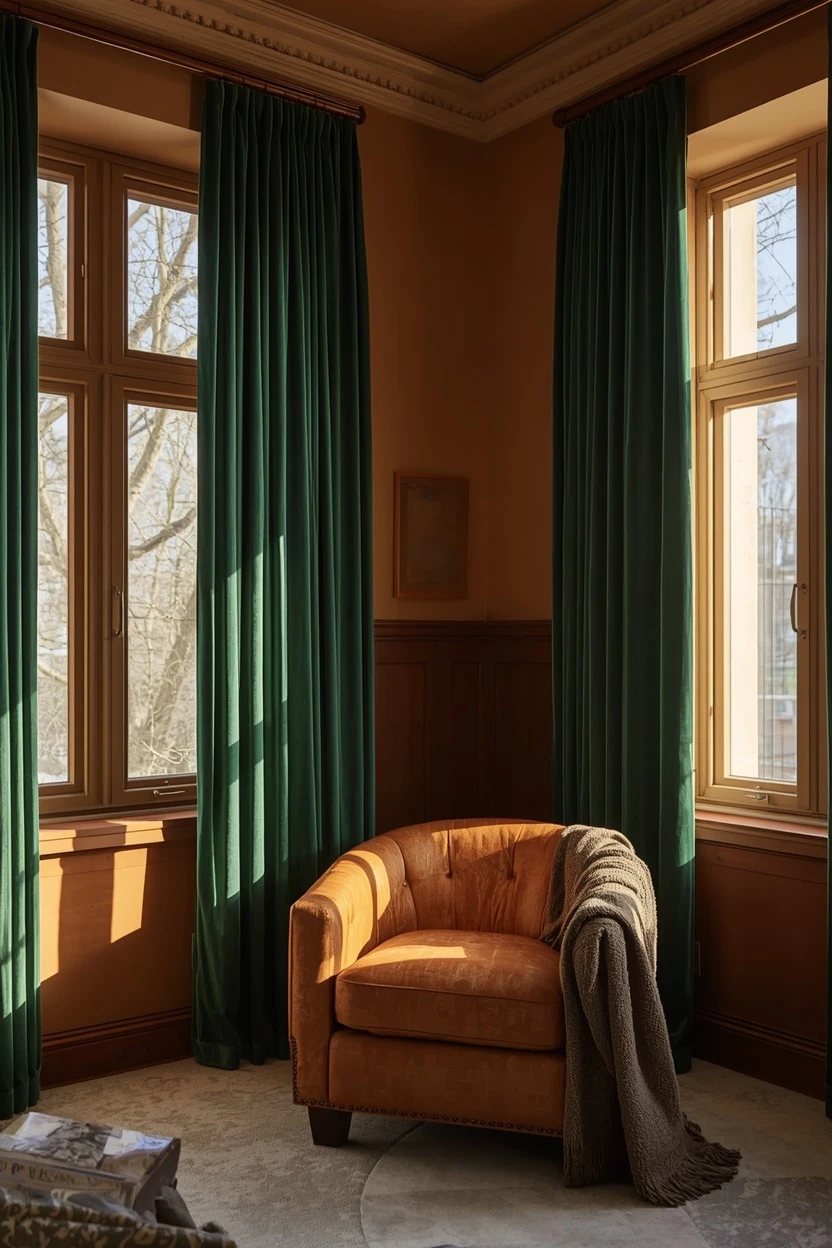
Here is a mistake worth avoiding: choosing drapes based on colour swatches alone and ignoring how the fabric actually moves and falls. A curtain that looks perfect on a sample card can hang like a bedsheet on the rod if the weight, weave, and heading type are wrong for your window proportions. These drapery ideas for living room spaces are built around how fabric behaves — the drape, the fold, the way light passes through or gets blocked — because that is what separates a room that looks styled from one that just has something hanging on the wall.
Below are fourteen distinct approaches to dressing your living room windows with fabric, covering everything from structured pinch pleats to relaxed puddle-length linen. Each idea includes the fabric type, heading style, and practical notes you need to make it work in a real home, not just a showroom.
1. Pinch-Pleat Linen in a Warm Stone Tone
Triple pinch pleats give linen the structure it needs to hang in even, disciplined folds rather than the shapeless droop that flat-top linen panels often develop after a few months. Use a medium-weight European linen in a warm stone or flax shade — something that reads neutral without going cold.
Line the panels with a cotton sateen interliner to add body and protect the linen from UV degradation, which is a real concern on south- and west-facing windows. Hang the pleats on pin hooks from a traverse rod or a decorative rod with rings so the spacing stays consistent.
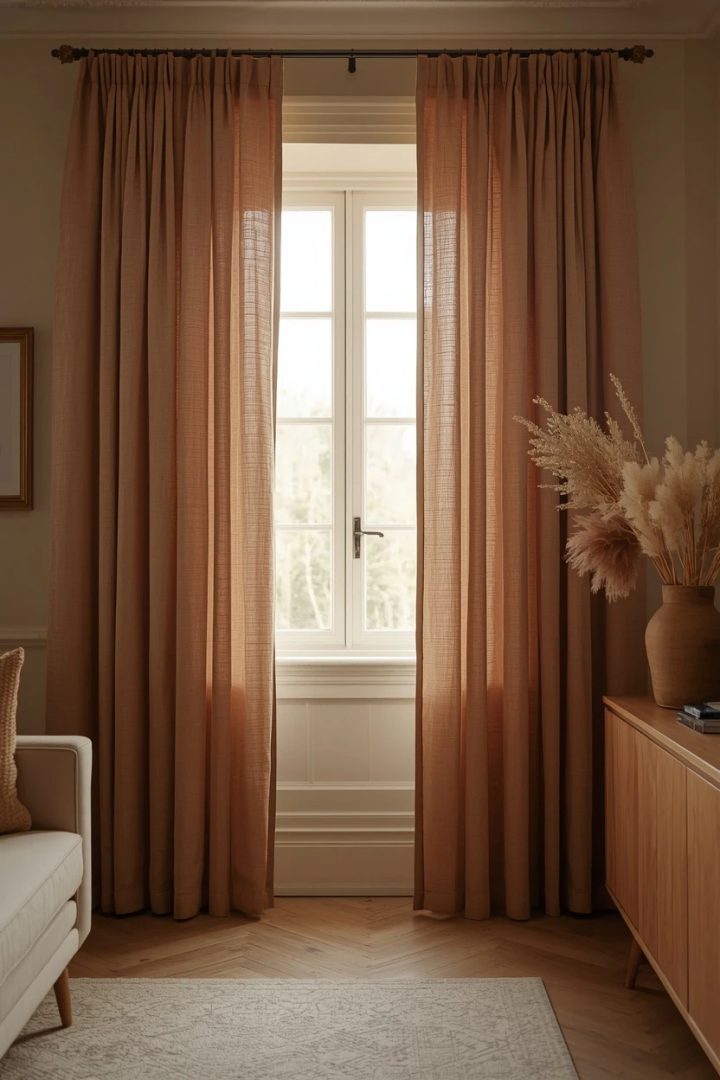
The result is a panel that looks tailored but still carries that relaxed, natural texture that makes a room inviting.
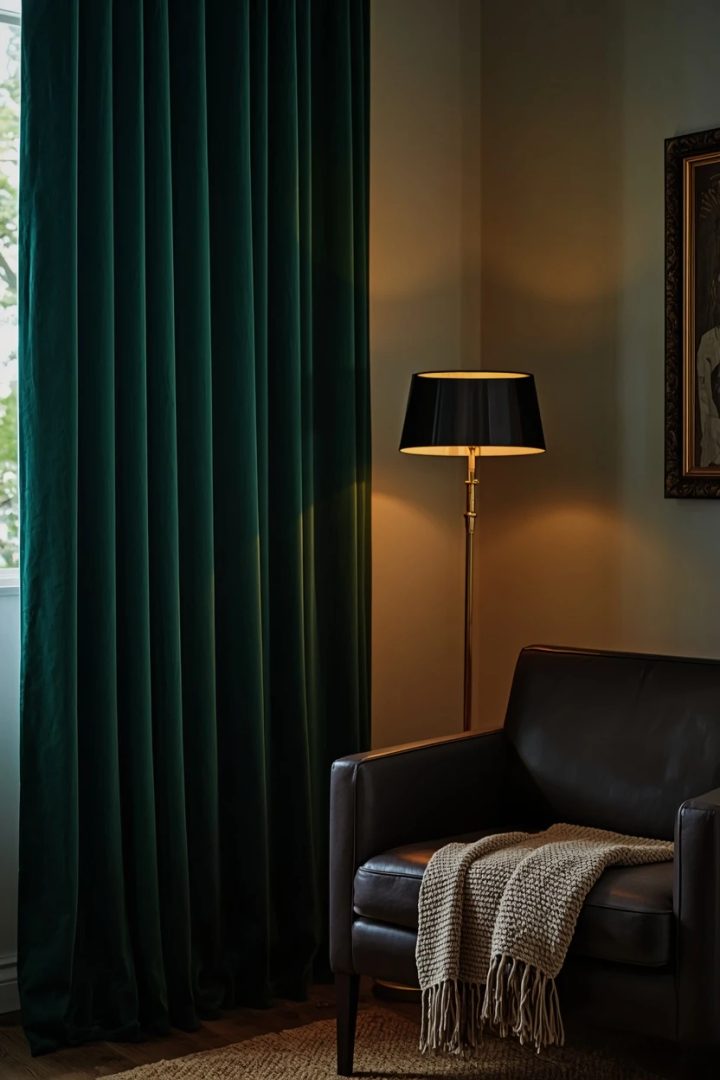
2. Heavyweight Velvet Drapes for Drapery Ideas for Living Room Drama
Velvet drapes in a saturated colour — deep forest green, rich navy, or warm burgundy — command the room in a way no other fabric can. Choose a cotton velvet with a short, dense pile rather than a synthetic crushed velvet, which looks cheap and traps static. The panels should be at least two-and-a-half times the width of your window to create full, generous folds when drawn. Use a sturdy rod rated for the weight — a hollow decorative rod will bow under heavy velvet. One practical note: velvet shows dust and pet hair immediately, so a lint roller pass every few weeks is non-negotiable if you share the house with animals.
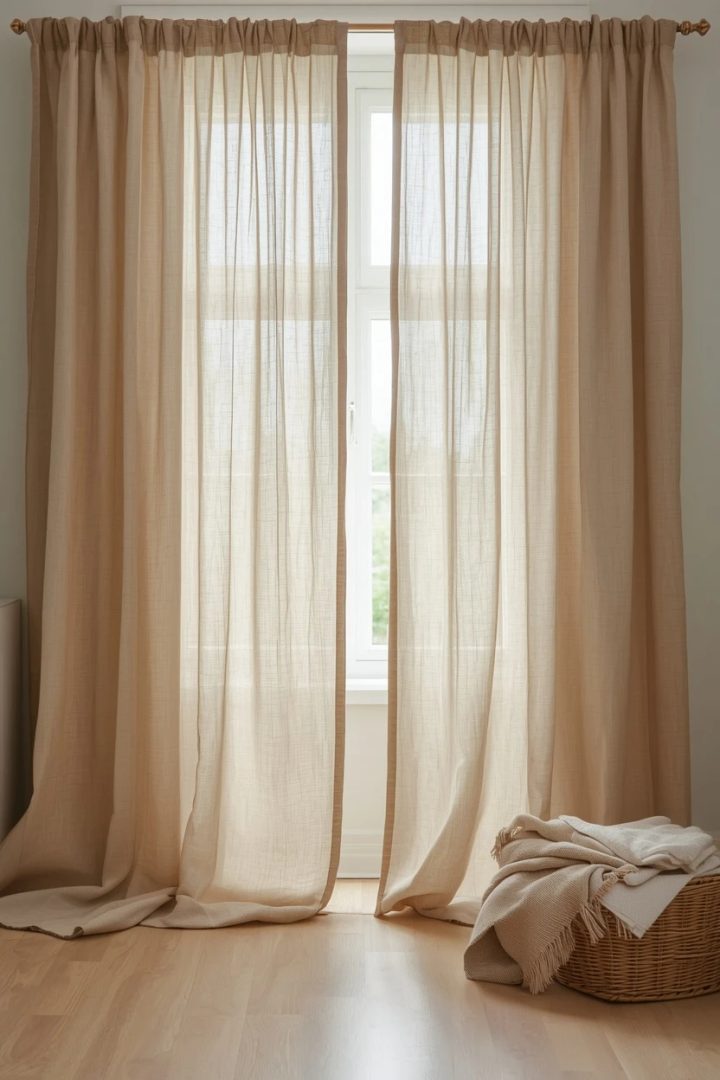
3. Relaxed Rod-Pocket Curtains With a Casual Puddle
Not every living room needs precision. A rod-pocket curtain in a soft washed cotton or gauze that puddles two to three inches on the floor gives the room a laid-back character that clip-ring panels cannot match. The rod pocket itself should be about three inches wide so it gathers gently along the rod without bunching too tightly. Skip the lining on these — the point is to let diffused light filter through and create a soft glow during the day.
Choose muted tones like sand, pale sage, or warm white so the relaxed shape does not compete with bold furniture. This approach suits coastal, bohemian, and Scandinavian-leaning rooms where the vibe matters more than crisp tailoring.
4. Colour-Blocked Panels With a Bold Horizontal Band
Adding a horizontal colour block band — usually at the lower third of the panel — turns a plain curtain into a custom piece. You can achieve this with a contrast fabric sewn as a border panel, or by ordering custom colour-blocked drapes from a workroom.
Keep the main body neutral and make the band bold: terracotta on white, navy on oat, or charcoal on blush. The band width should be between eight and fourteen inches depending on the panel length — too narrow and it reads like a mistake, too wide and it overtakes the curtain.
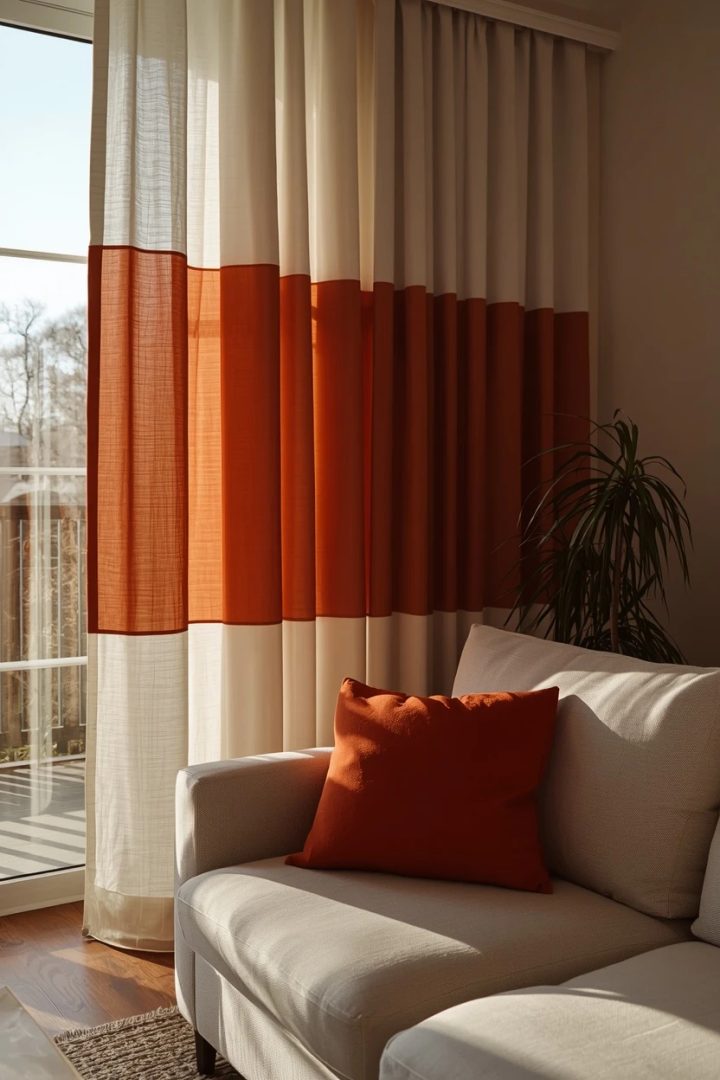
This detail is one of the smartest drapery ideas for living room spaces because it adds visual interest without pattern and plays well with solid-coloured furniture.
5. Sheer Voile Behind Opaque Panels for Layered Light
Layering a sheer voile curtain behind an opaque drape panel on a double rod gives you precise control over light and privacy throughout the day. During morning hours, close just the sheer to get soft diffused light. In the evening, draw the opaque panel for full blackout or a deep dimming effect. Use the sheer in a tone that matches the opaque panel so the layers look coordinated rather than mismatched when both are visible.
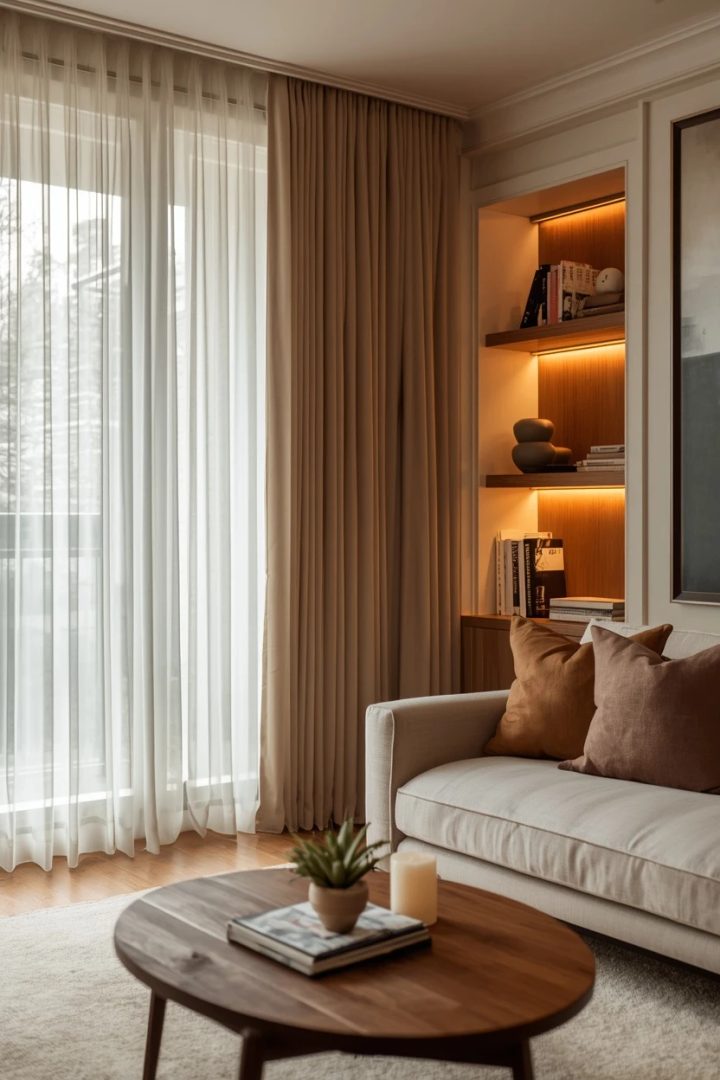
A double-bracket rod system with at least four inches of clearance between the two tracks prevents the fabrics from tangling. The investment in a double rod pays off in daily comfort, especially in living rooms that double as media spaces.
6. Goblet-Pleat Drapes for a Refined Look
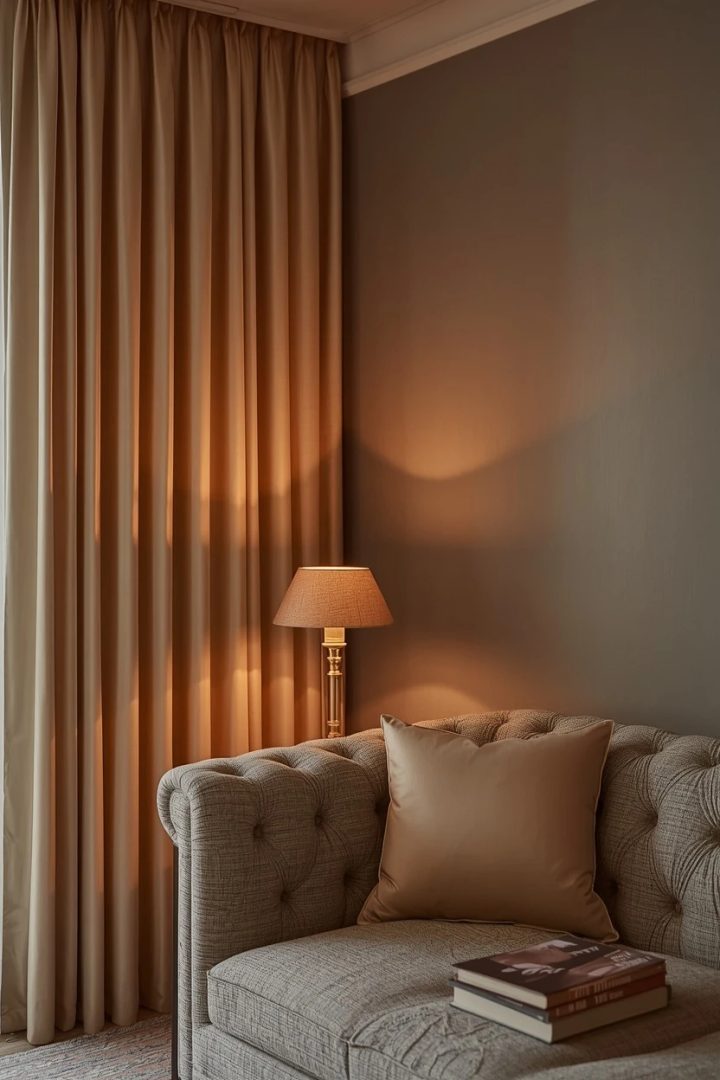
Goblet pleats create a chalice-shaped cup at the top of each fold, which is about as polished as a curtain heading gets. The cups are typically stuffed with a small roll of interfacing or tissue to hold their shape, and they hang from pin hooks on rings or a traverse rod. This heading demands a fabric with enough body to support the structure — a medium-weight silk dupioni, a cotton sateen, or a structured polyester blend all work. Goblet pleats read best in formal or transitional living rooms where the rest of the decor has a refined quality. The trade-off is cost: a goblet-pleat panel typically runs twenty to thirty percent more than a standard pinch pleat because of the additional handwork at the top.
7. Natural Linen With a Visible Selvedge Edge
Leaving the selvedge edge of a linen panel visible rather than hemming it adds a raw, artisanal character that suits modern rustic and wabi-sabi interiors. The selvedge — the tightly woven factory edge that runs along the length of the bolt — prevents fraying without any stitching, so it is both decorative and functional. Choose an undyed or oatmeal linen where the selvedge appears as a slightly denser stripe along the side.
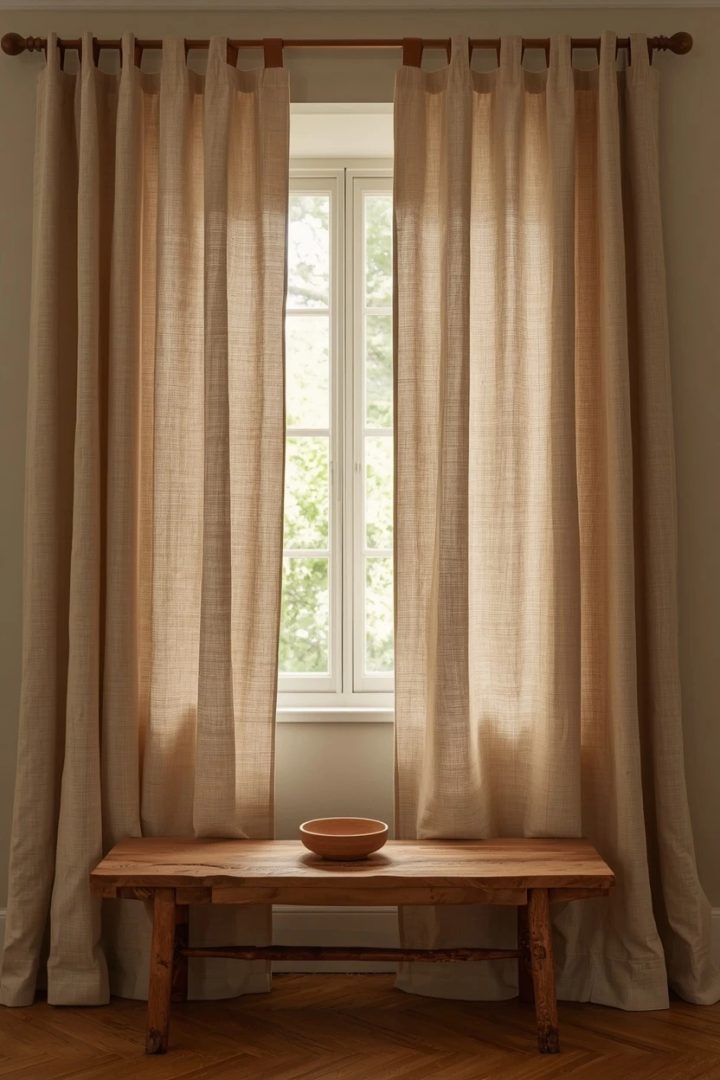
Pair it with a simple wooden rod and leather tab-tops or jute rope loops to keep the handmade vibe consistent from rod to floor. This is not a look for a formal living room, but in the right space it communicates a thoughtful, pared-back sensibility that polished drapes cannot replicate.
8. Bold Printed Drapes as the Drapery Ideas for Living Room Focal Point
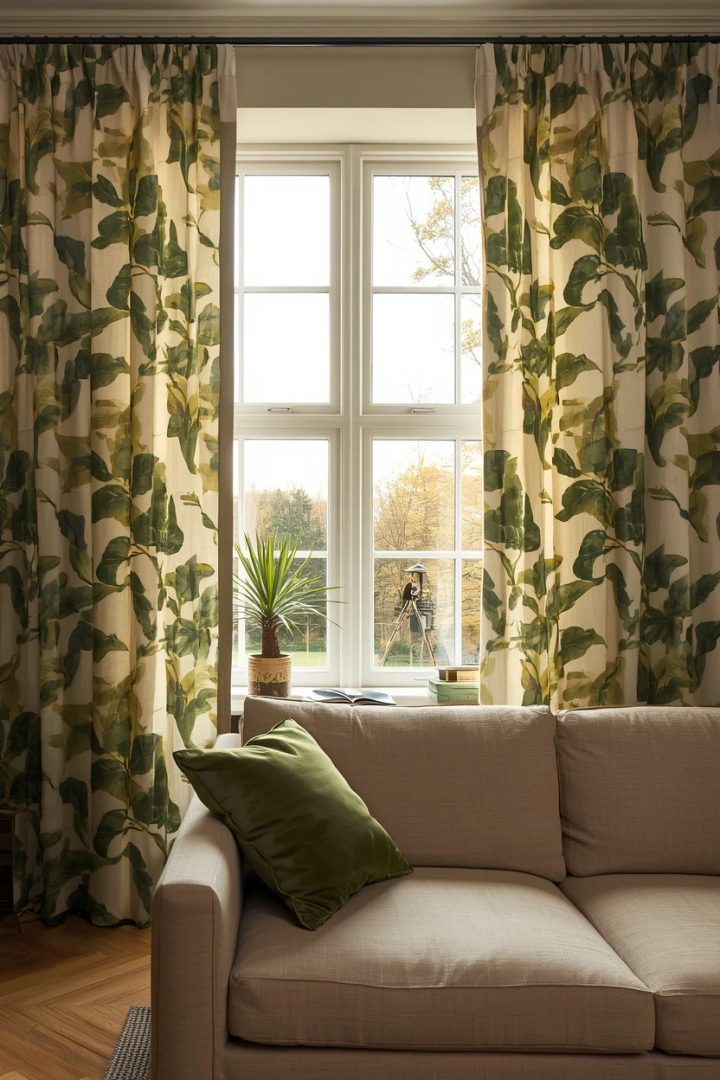
When the rest of the room is neutral, a boldly printed drape panel becomes the focal point without competing with artwork or furniture. Look for large-scale botanical, abstract, or geometric prints on a linen or cotton-linen ground so the pattern has movement and visual weight. Hang just two panels — one on each side of the window — and keep them stationary as decorative frames rather than functional draw curtains. Pull a secondary colour from the print into your cushion or rug selection to tie the room together.
The caution here is scale: a small repeat pattern at a distance reads as visual noise, so go large and confident with the print selection.
9. Grommet-Top Panels in a Structured Linen-Poly Blend
Grommet-top curtains create uniform, deep folds that alternate forward and backward along the rod, delivering a contemporary rhythm that pinch pleats do not share. The grommets should be at least one-and-a-half inches in diameter so they slide freely, and a matte finish in brushed nickel or black pairs better with a modern room than shiny chrome.
Choose a linen-polyester blend that holds the fold shape — pure linen tends to relax and lose the crispness grommets depend on. Space the grommets about six inches apart for a balanced wave.
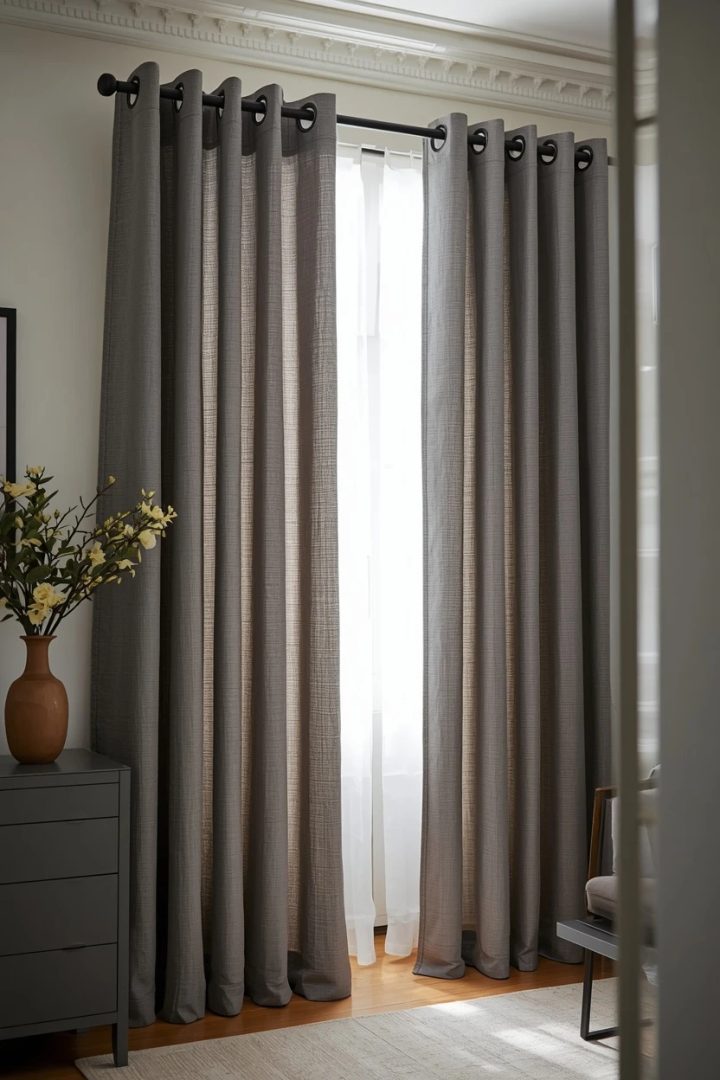
This style suits living rooms with clean-lined furniture and minimal ornamentation where the curtain should add texture, not fuss.
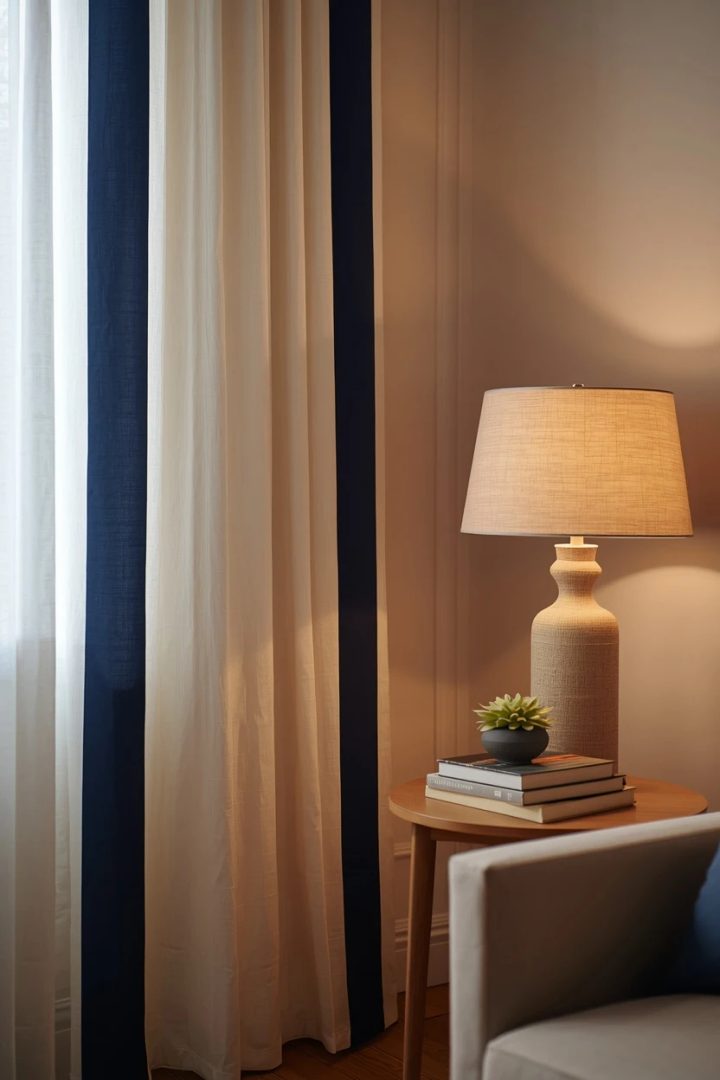
10. Two-Tone Drapes With a Vertical Contrast Border
A vertical contrast border — usually two to three inches wide along the leading edge and bottom of the panel — frames the curtain like a picture mat frames a photograph. This detail is common in high-end decorator showrooms but is surprisingly easy to replicate with a local seamstress. Keep the main panel in a light neutral and the border in a coordinating dark tone: ivory with charcoal, pale linen with navy, or soft blush with chocolate. The border draws a visible line that defines the curtain’s silhouette against the wall, creating a crisp, custom appearance that off-the-rack panels cannot match.
11. Blackout-Lined Silk for a Media-Ready Living Room
If your living room doubles as a movie space, blackout-lined silk drapes solve both the light-blocking and the aesthetic problem at once. The silk face gives the room a polished, luminous surface when the drapes are open, while the triple-pass blackout liner on the back eliminates glare on the screen when they are closed. Choose a silk with a subtle sheen rather than a high-gloss charmeuse, which can read as too formal.
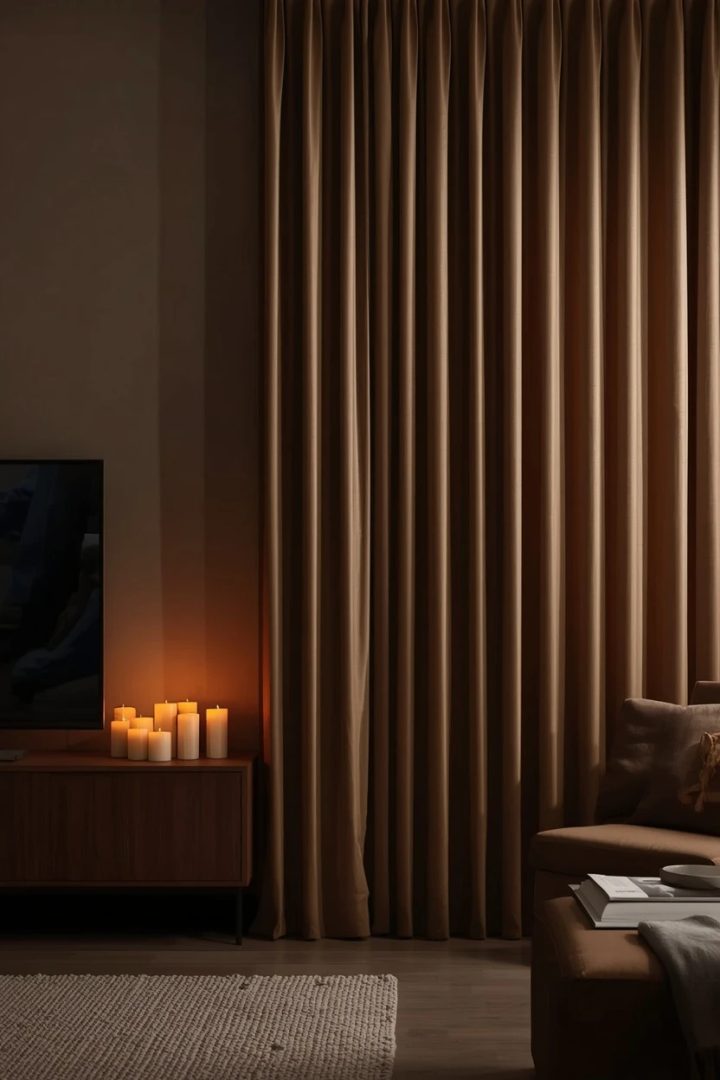
Interline the panels with a layer of bump cloth between the silk and the blackout liner — this adds volume to the folds and prevents the liner from showing through. The cost is higher, but the dual-purpose function makes it a practical investment.
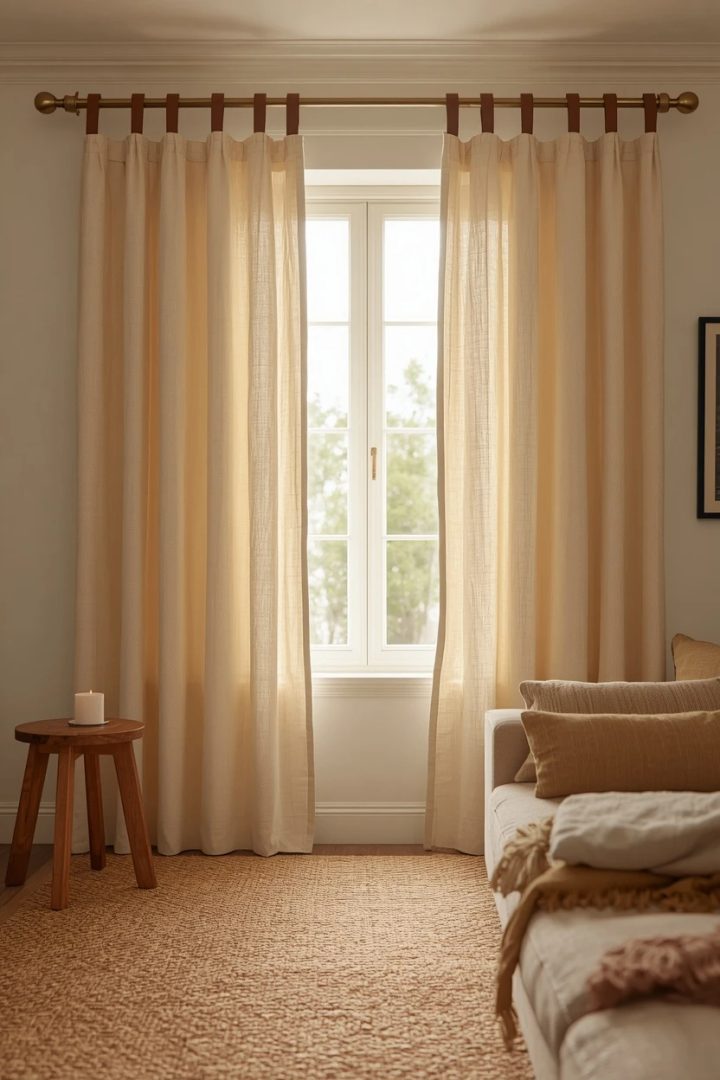
12. Tab-Top Curtains With Fabric Loop Detail
Tab-top curtains — where fabric loops sewn to the top of the panel slip over the rod — show more of the rod than any other heading style, which makes them a good pick when your rod is a design feature. Choose tabs in a contrasting colour or a different texture from the panel body: leather tabs on linen, velvet tabs on cotton, or striped tabs on a solid ground. Keep the tab width between one-and-a-half and two inches so the loops look proportional and the panel hangs at the right height.
The downside of tab-tops is that they do not slide as smoothly as rings or grommets, so they work best as stationary side panels rather than drapes you open and close daily.
13. Ombré-Dyed Panels for a Subtle Gradient
An ombré drape — where the colour fades from saturated at the top to nearly white at the hem, or vice versa — adds visual movement without the commitment of a full-colour panel. You can find ready-made ombré panels in linen or cotton blends, or commission a custom dip-dye from a textile artist for a one-of-a-kind result.
Position the darker end at the floor to ground the panel, or reverse it so the colour concentrates at the ceiling line for a dramatic header. This approach pairs well with minimalist rooms where a single decorative gesture carries more weight than layered accessories.
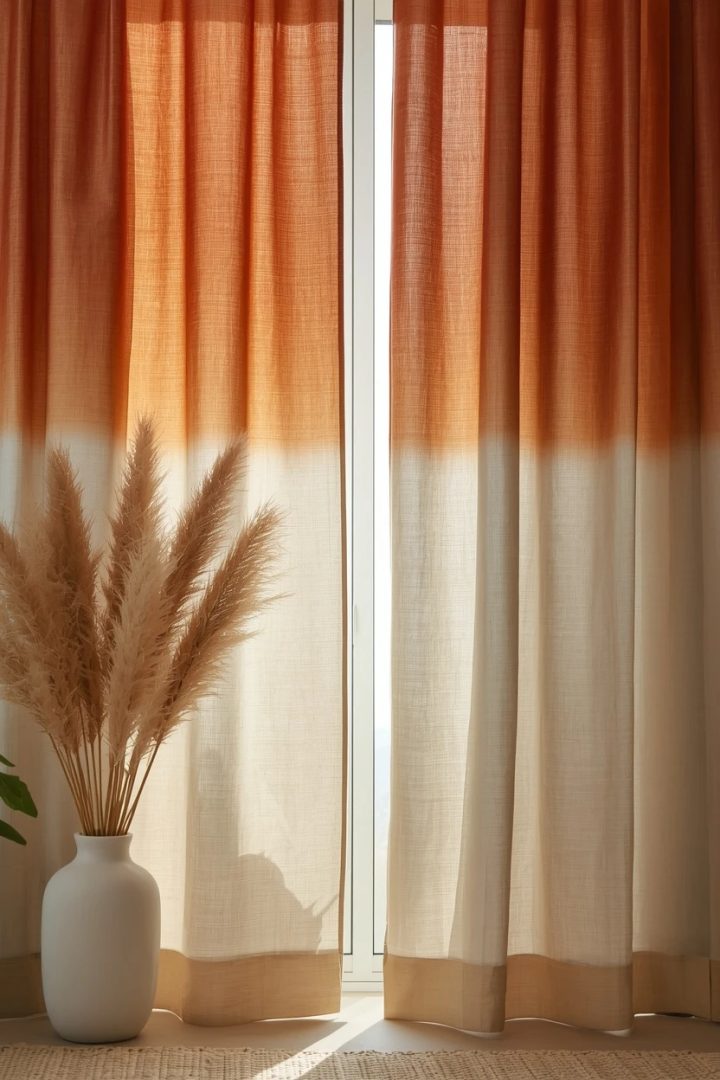
Stick to warm neutrals or muted earth tones to keep the gradient from reading as a craft project.
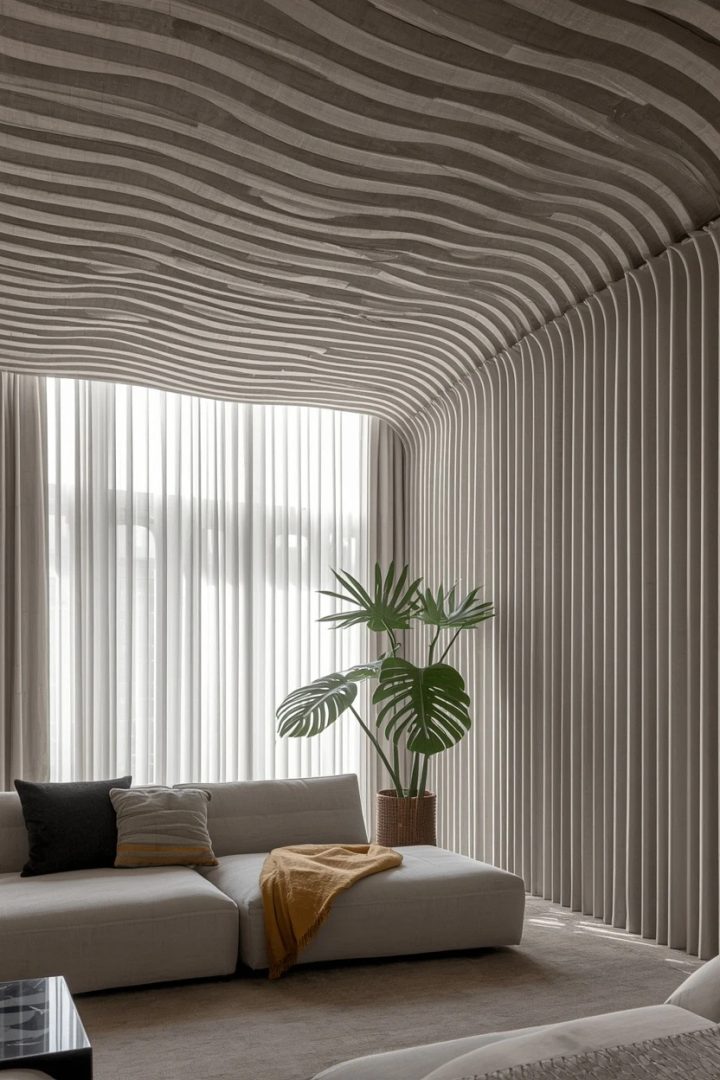
14. Ceiling-Mounted Ripple-Fold Panels for Clean Modern Drapery Ideas for Living Room
Ripple-fold drapes run on a ceiling-mounted track with evenly spaced carriers that create a continuous S-curve wave down the length of the panel. The effect is orderly and calm — no pleats, no grommets, just a smooth wave that glides open and closed with minimal effort. Use a structured polyester or a poly-linen blend that holds the wave shape without wilting, and specify a snap-in carrier tape so the fabric attaches directly to the track. This system covers wide window walls and sliding doors cleanly, without the sag that a long rod can develop at centre span. It is the most popular heading in contemporary interiors and hotel suites for good reason: it looks effortless, works smoothly, and never dates.
Where I’d Start if I Only Did Three Things
If I only did three things, I’d start by measuring my window width and tripling it for fabric fullness — that single ratio is the difference between drapes that look generous and ones that look like a shower curtain. Second, I’d invest in a quality rod that can bear the weight of the fabric I actually want, because a sagging rod ruins every other decision. Third, I’d line whatever panel I choose with at least a cotton sateen interliner, which adds drape body, protects the face fabric from sun damage, and improves insulation — three benefits from one hidden layer.
Frequently Asked Questions
What are the most popular drapery ideas for living room spaces right now?
Ripple-fold panels on ceiling-mounted tracks are leading in contemporary spaces, while pinch-pleat linen in warm earth tones dominates transitional rooms. Both styles prioritise clean lines and natural fabrics, which reflects the current shift away from heavy swags and ornate valances toward simpler, textural window treatments.
How much fabric fullness do I need for drapes to look right?
A fullness ratio of two-and-a-half to three times the window width is the standard for most heading styles. Anything less looks flat and skimpy when the panels are closed, while going above three times can make the stack-back too bulky when the drapes are open. Sheer panels can go even higher — up to three-and-a-half times — for a lush gathered appearance.
Should living room drapes touch the floor or hover above it?
For a clean tailored look, drapes should just kiss the floor or hover half an inch above it. For a relaxed style, let them puddle one to two inches. Avoid the in-between length where the panel clearly misses the floor by an inch or more — it reads as a measuring error rather than a style choice.
Can I mix different drape fabrics in the same room?
Yes, but keep them in the same colour family and vary the texture instead. A sheer voile on one window paired with an opaque linen on another can work if both share the same warm ivory tone. Mixing both colour and fabric type in the same room risks a disjointed look that fights for attention.
Final Thoughts
Good drapes do more than cover glass — they set the mood, control how light moves through the room, and reveal what kind of space you are trying to build. These drapery ideas for living room spaces give you the fabric knowledge and heading options to make a choice that holds up visually and practically over the long run. Pick the heading that suits your lifestyle, choose a fabric weight that matches your climate, and let the drape do what it does best: soften the architecture and pull the room together.