15 Small Bedroom Style Ideas to Make the Most of Every Inch
June 18, 2026 · 10 min read
 By Khawar Iqbal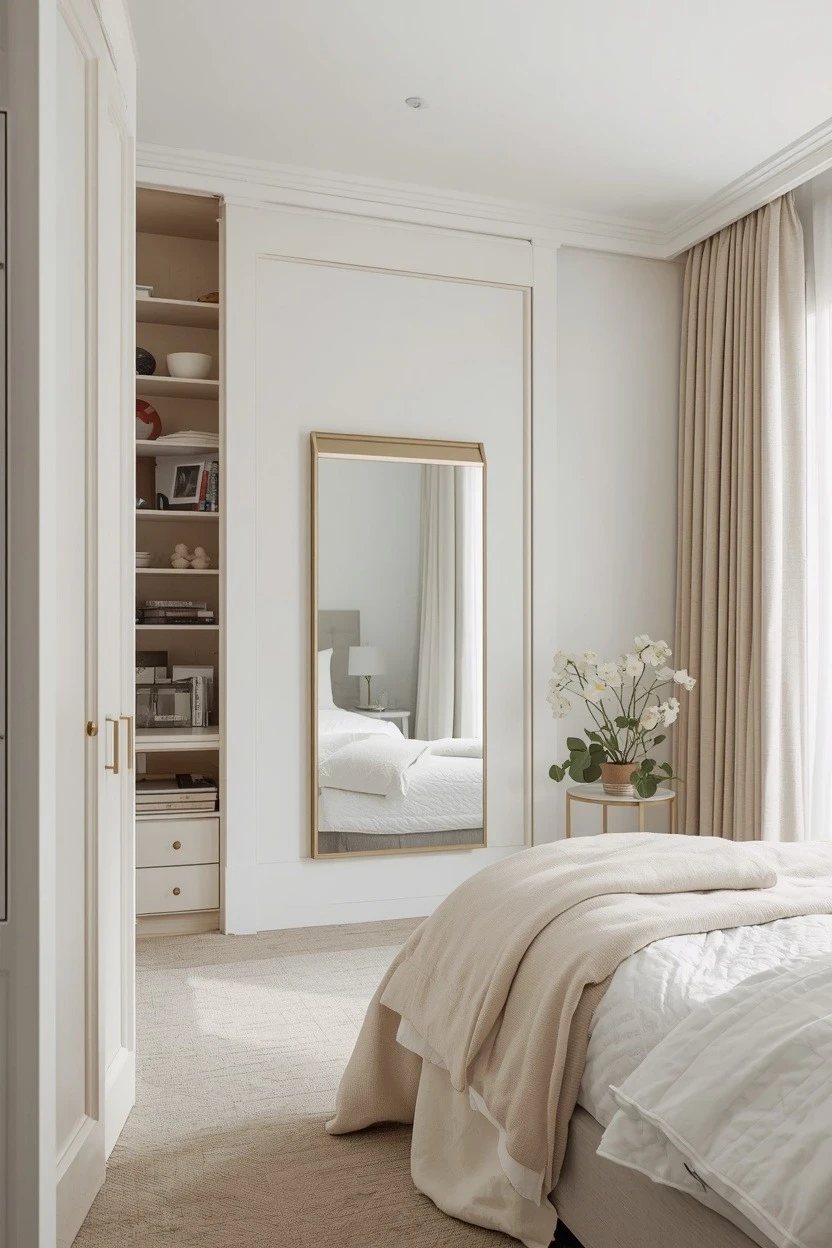
A small bedroom is not a design problem so much as a design discipline: when every inch counts, the most successful rooms come from a handful of decisions working together — a light palette, clever vertical storage, the right scale of furniture, and styling that keeps the floor and surfaces clear. Get those right and a box room reads calm, open, and far bigger than its footprint.
Each of these 15 small bedroom style ideas is a complete look you can recreate, a whole room designed around one clear approach to making a compact space work harder. Find the version that suits your room and how you want it to feel, and use it as a blueprint for a small bedroom that is genuinely restful, beautifully styled, and surprisingly roomy.
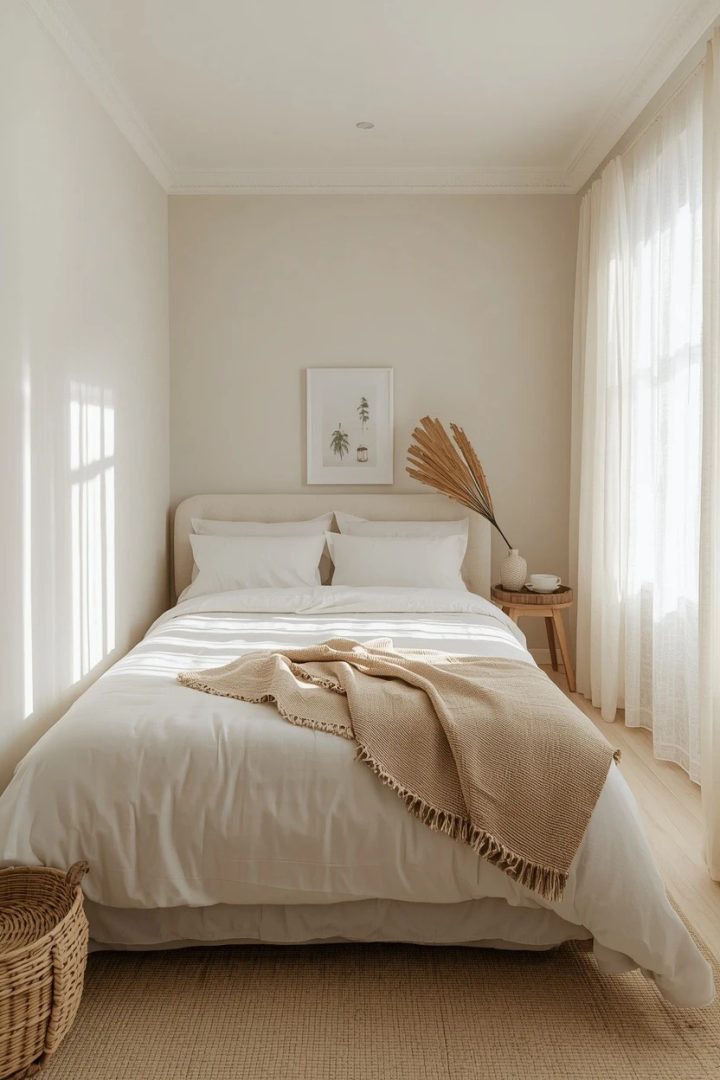
1. The Light and Bright Bedroom
A pale, cohesive palette — warm white walls, soft greige, and pale wood — reflects light and visually pushes the walls outward, the single most effective trick in a small room. Keep the scheme tonal so there are no harsh contrasts to chop up the space, and let texture rather than colour add interest. Crisp white bedding and sheer curtains keep it airy. It is the most forgiving small-room design and the easiest foundation to build any other style on top of.
2. The Vertical Storage Bedroom
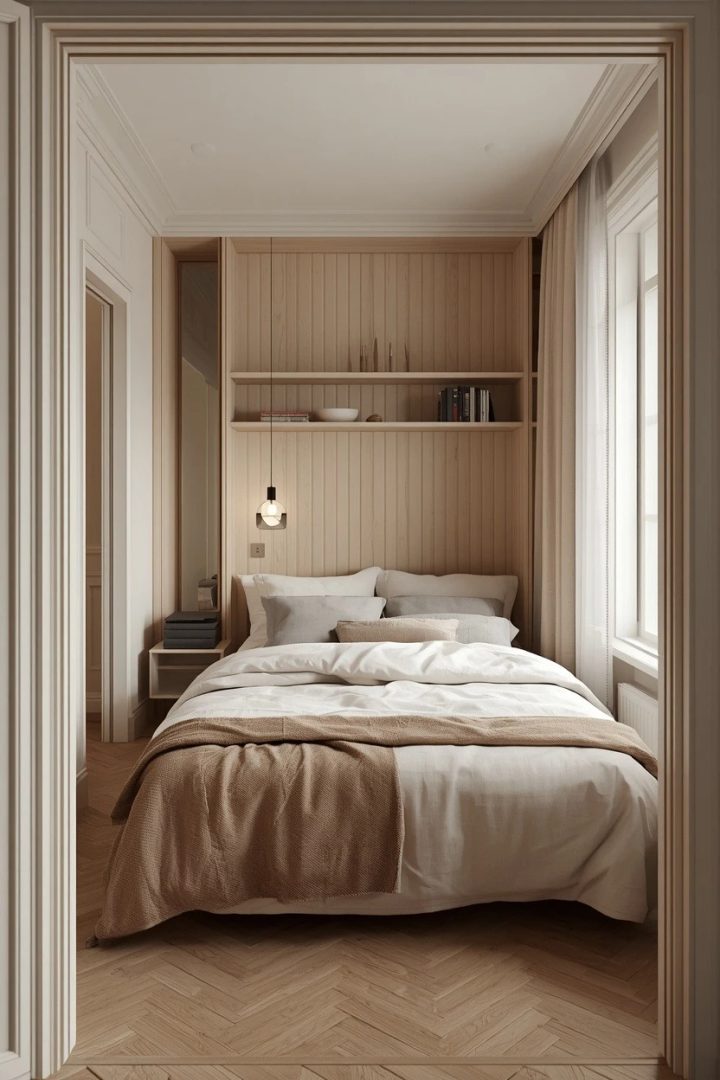
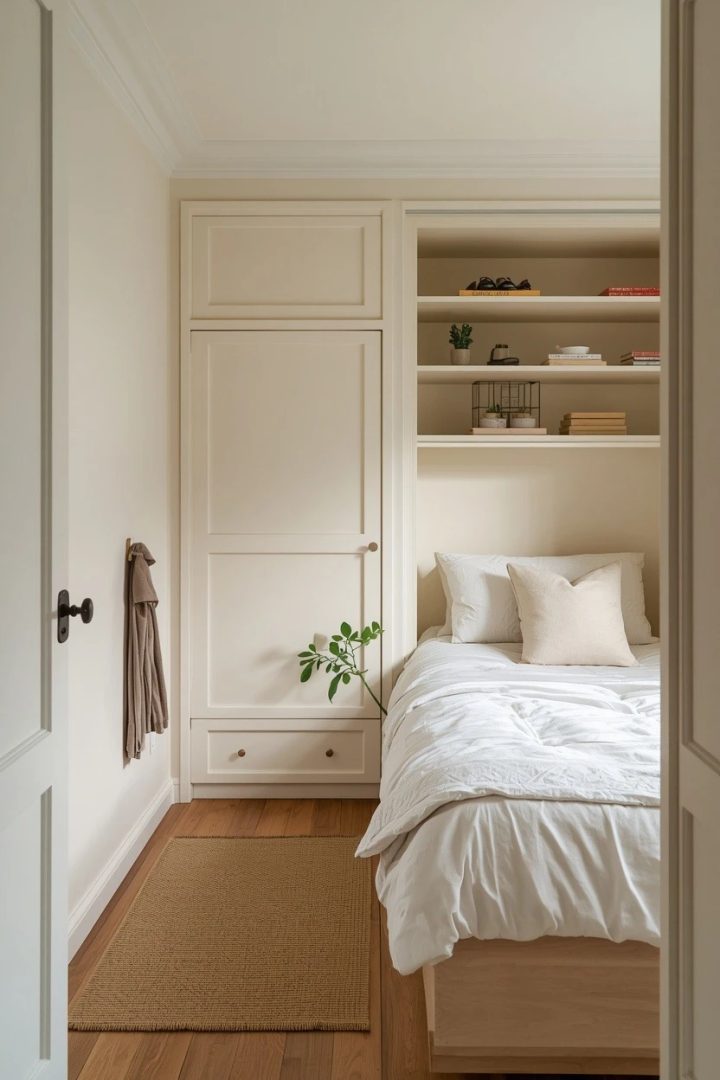
Drawing the eye upward with tall, slim storage — floor-to-ceiling shelves, a high wardrobe, and wall-mounted units — uses the one dimension a small room always has spare. Keep the units narrow and the colour close to the walls so they recede rather than loom. Storing things up high frees the precious floor and makes the ceiling feel taller. This design suits a room short on floor space and anyone willing to think upward, since vertical storage is where the real capacity hides.
3. The Storage Bed Bedroom
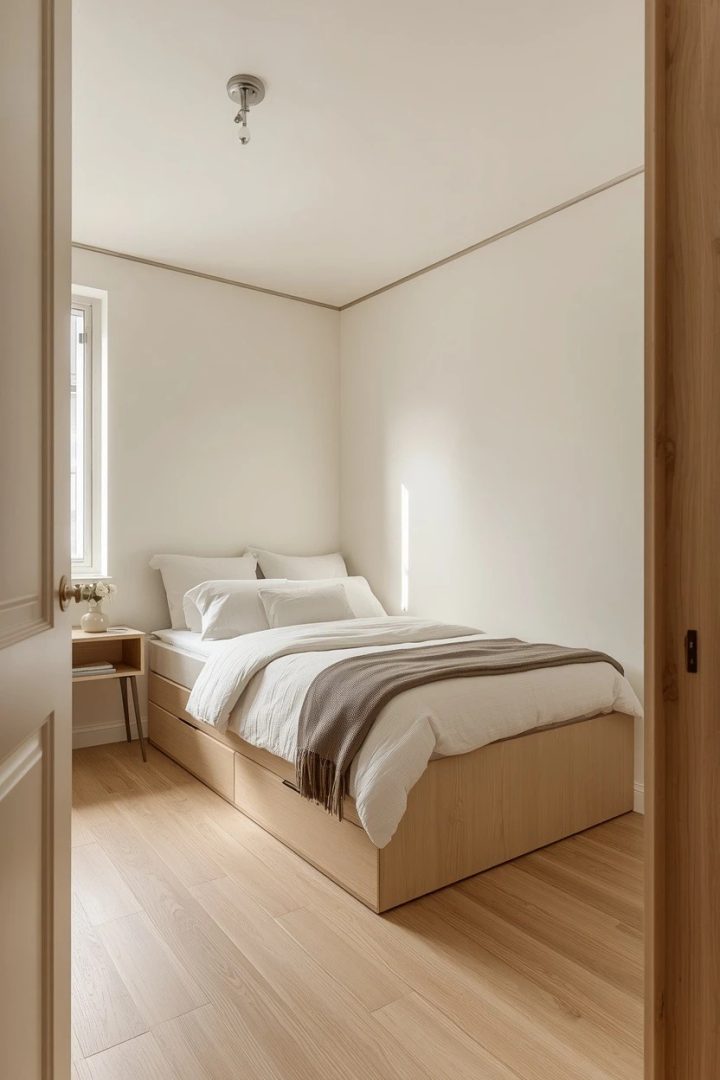
Choosing a bed with built-in drawers or a lift-up base reclaims the single largest stretch of dead space in any bedroom — the area under the mattress. It swallows bedding, clothes, and seasonal items without adding a single piece of furniture to the floor. Pair it with a calm palette so the bed reads streamlined rather than bulky. This is the highest-impact storage move in a small room, and it often removes the need for a chest of drawers entirely, clearing valuable floor space.
4. The Mirror-Magic Bedroom
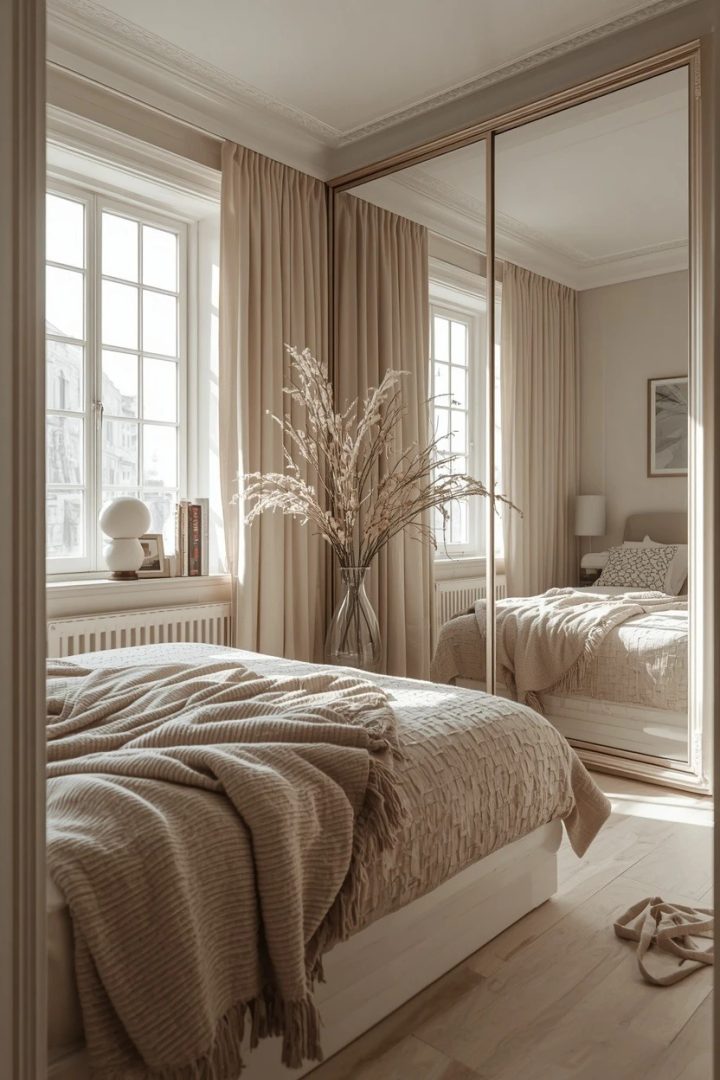
A large mirror — leaning against a wall or mounted opposite the window — bounces light around and visually doubles the sense of space, one of the oldest and best small-room tricks. Position it to reflect a window or a bright corner for maximum effect, and choose a frame that suits your palette. Mirrored or glass surfaces elsewhere add to the airy feel. It suits any small or dark room and delivers a dramatic sense of depth for very little money or effort.
5. The High-and-Wide Curtain Bedroom
Hanging curtains close to the ceiling and wider than the window frame makes both the window and the whole room read taller and grander. Choose light, floor-length fabric in a tone close to the wall so the eye travels uninterrupted from floor to ceiling. The illusion of a bigger window draws in more apparent light and height. It is a near-free styling change with an outsized effect, and it instantly makes a small room feel more considered and spacious.
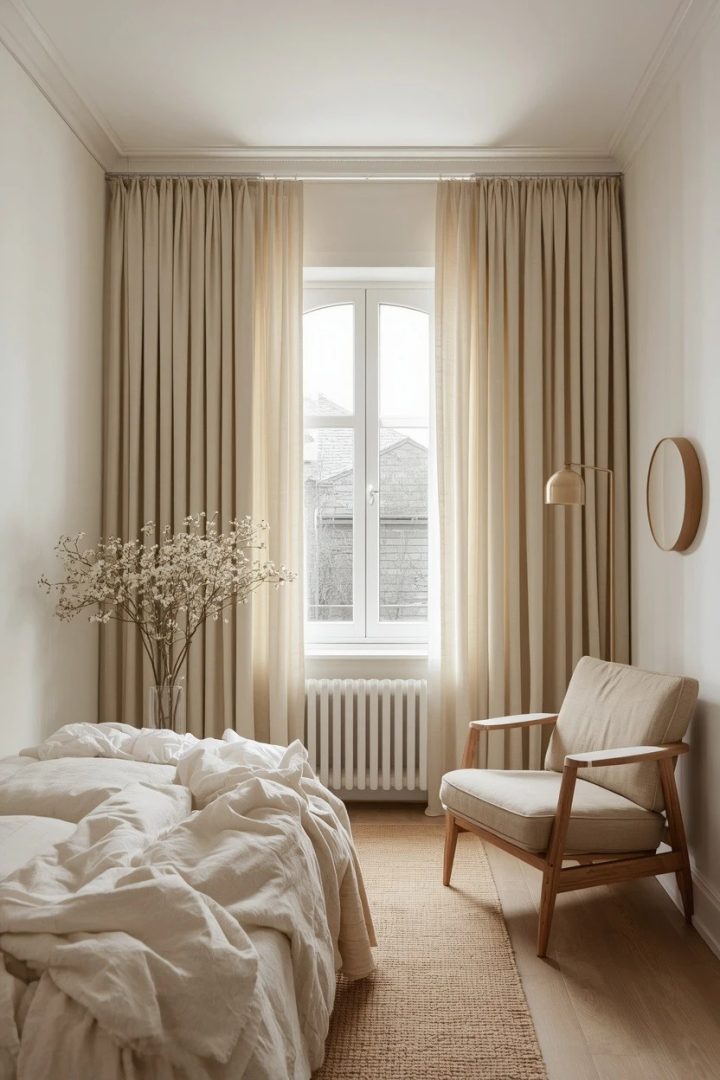
6. The Multi-Use Furniture Bedroom
In a small room every piece should earn its place by doing more than one job — a bedside table with drawers, a storage ottoman, a desk that doubles as a dressing table, a bench that hides shoes. Choosing hardworking, dual-purpose furniture cuts the total number of items and keeps the floor clear. Favour slim, leggy designs that let light pass underneath. This design suits anyone trying to fit a lot of function into a little room without it feeling crammed.
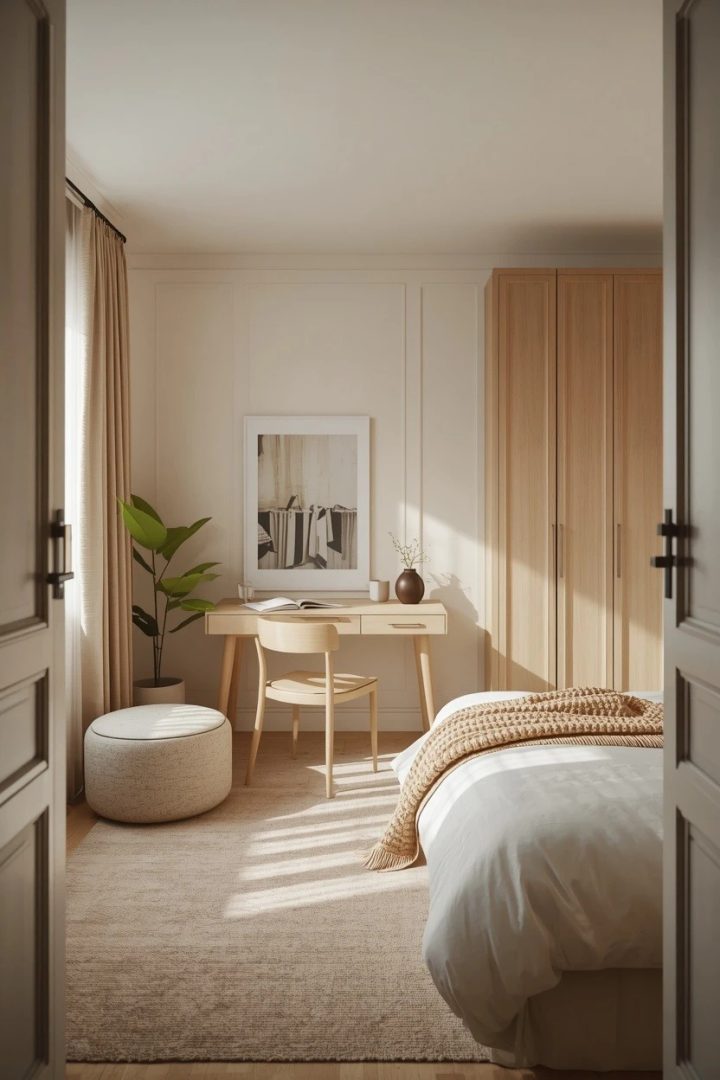
7. The Floating Nightstand Bedroom
Swapping bulky bedside tables for wall-mounted floating shelves or a small ledge frees up floor space and lets light flow beneath, making the room feel less crowded. Pair them with wall-mounted reading lights or sconces so no surface is lost to a lamp base. Keep the shelves slim and uncluttered. It suits a narrow room or a bed wedged into a corner, and the visible floor beneath the bed is a quiet but effective way to make the space breathe.
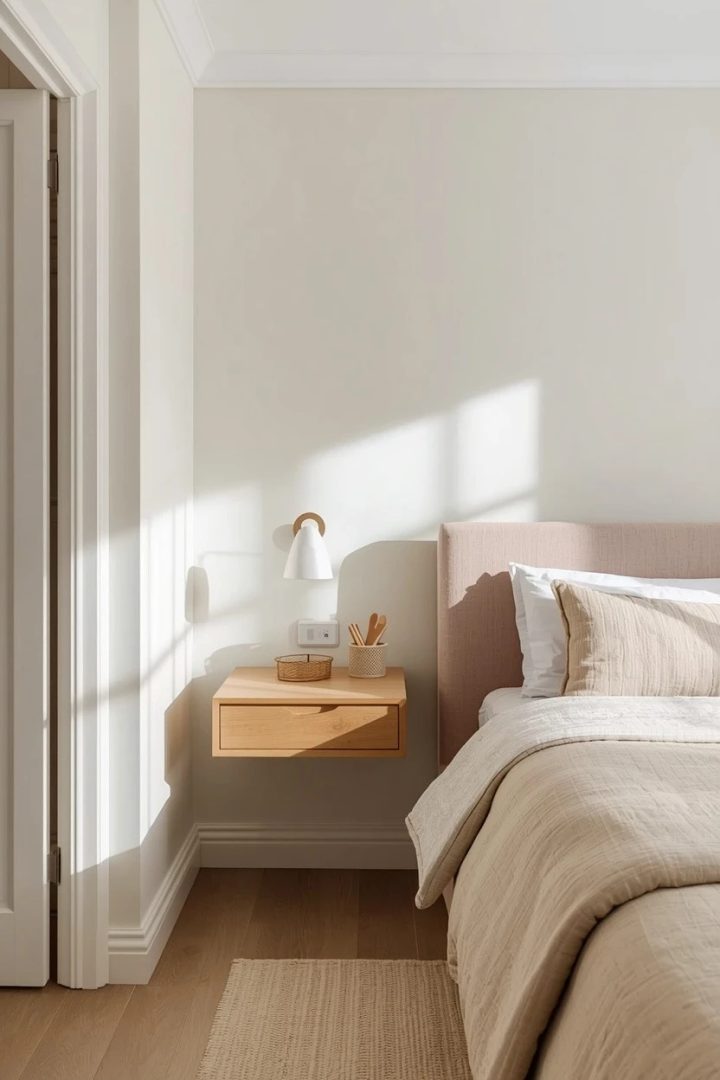
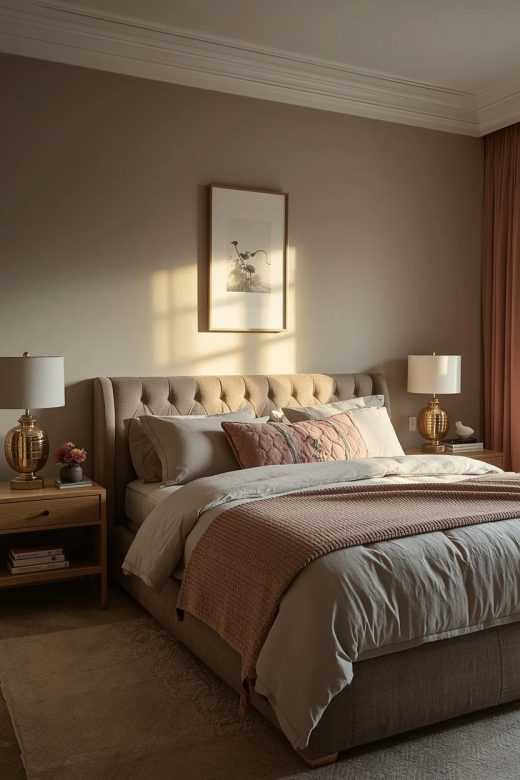
8. The Cosy Cocoon Bedroom
Rather than fighting the smallness, this look leans into it, embracing a snug, enveloping feel with a deeper warm tone, layered textures, and soft lighting for a room that reads intentional and intimate. The key is warmth and good lighting so it cocoons rather than closes in, with a few well-chosen pieces instead of clutter. A small room is the perfect candidate for a cosy scheme. It suits anyone who finds enclosed, den-like spaces the most relaxing to sleep in.
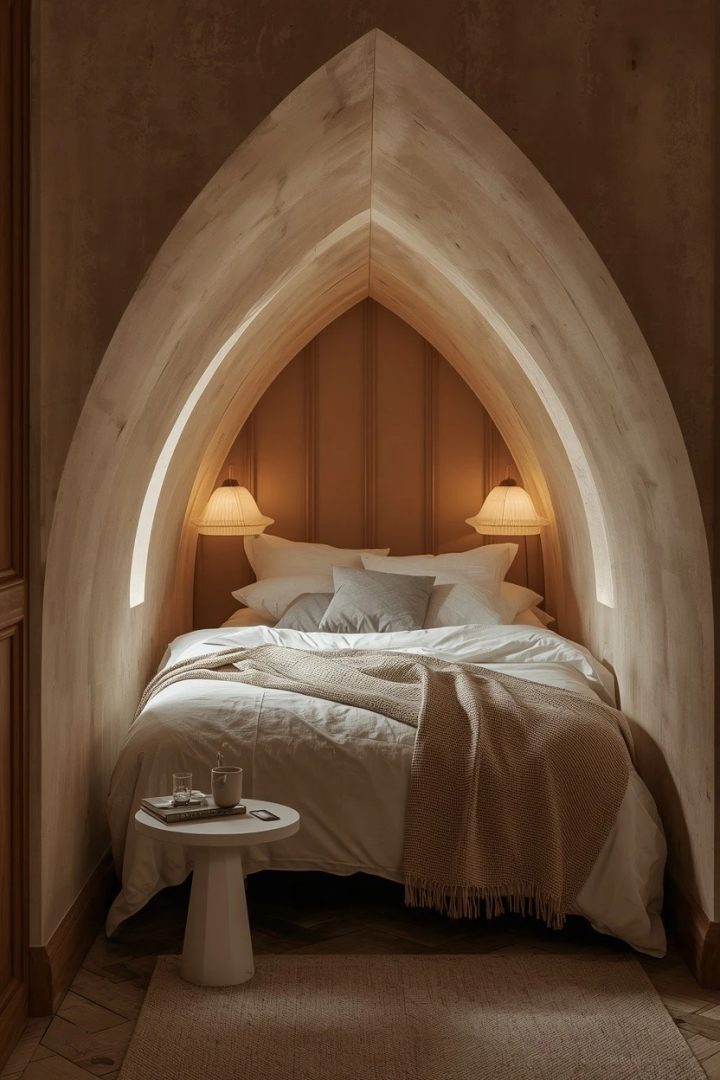
9. The Murphy Bed Bedroom
A fold-away wall bed transforms a small room into a flexible space, freeing the entire floor during the day for a desk, exercise, or living area. Modern designs fold up neatly and often include integrated shelving or a desk, so the room genuinely lives larger. Keep the surrounding scheme light and uncluttered to match. This is the design for a studio, a guest-cum-home-office, or any room that has to do two jobs, and it reclaims more floor than any other single move.
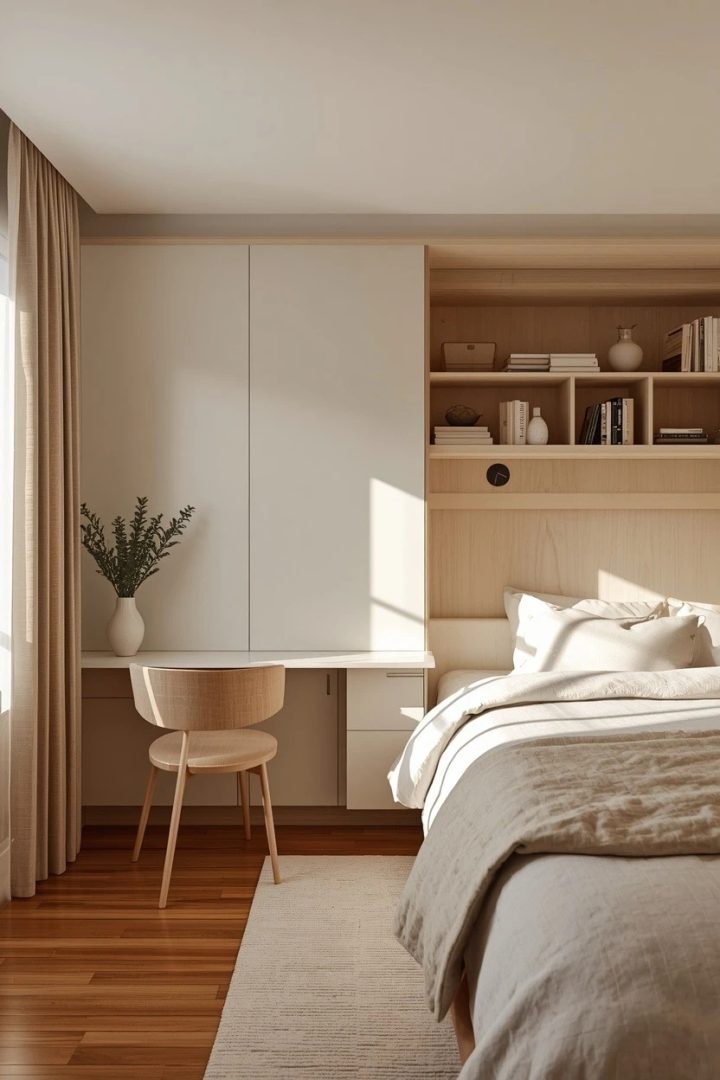
10. The Built-In Wardrobe Bedroom
Fitted, floor-to-ceiling wardrobes in a finish close to the wall colour make storage almost disappear while using every available inch, including the awkward space above head height. Built-ins around or over the bed turn dead corners into capacity and give the room a tailored, designed look. Keeping the doors handle-free and tonal helps them recede. This design suits anyone ready to invest in proper storage, and it is the most space-efficient way to clear clutter from a small bedroom for good.
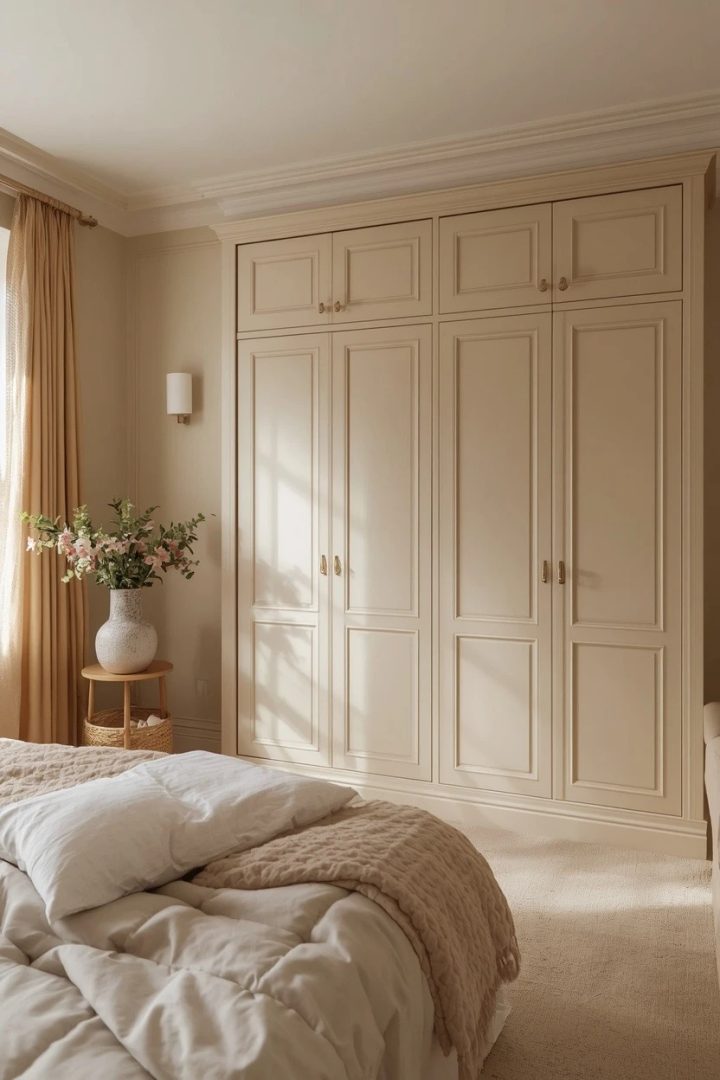
11. The Minimalist Small Bedroom
Paring everything back to a bed, one piece of storage, and a few essentials lets a small room breathe and read calm rather than cramped. The discipline is editing ruthlessly and keeping every surface clear so the limited space never feels busy. A tight palette and hidden storage keep the calm real, not staged. It suits anyone who finds a busy room hard to relax in, and in a small space minimalism is not just a style choice but the most practical way to feel spacious.
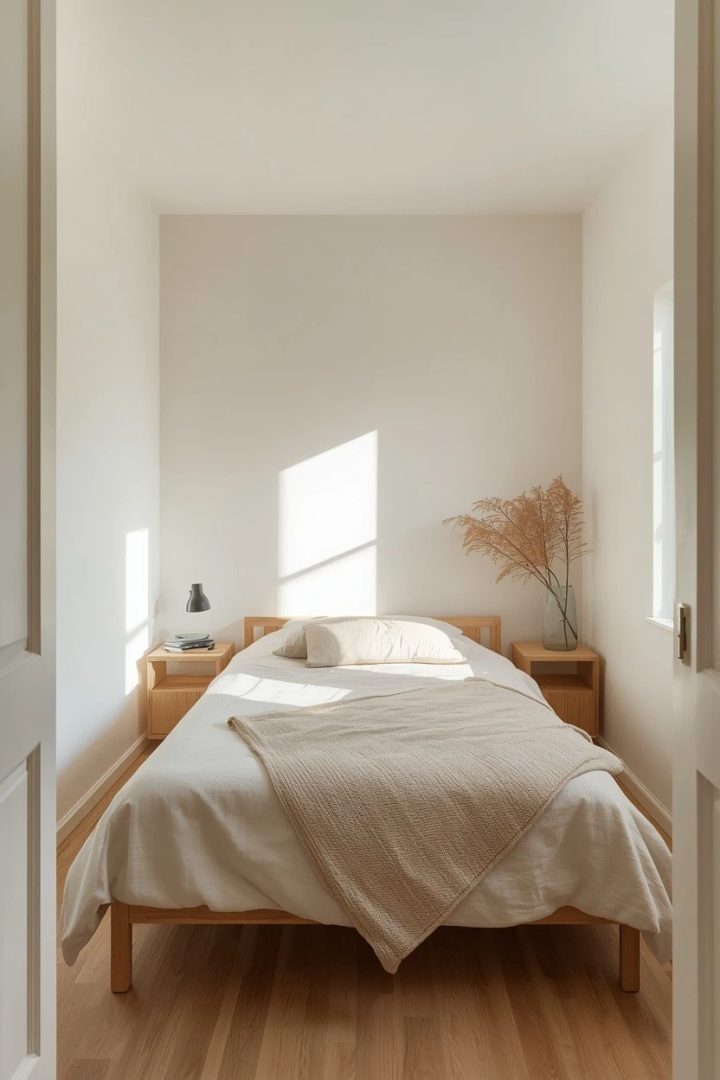
12. The Scaled-Down Furniture Bedroom
Choosing furniture in the right scale — a slim bed frame, a compact wardrobe, petite bedside tables — stops a small room from feeling stuffed, since one oversized piece can swallow a whole space. Measure carefully and leave clear walking room around the bed so the layout flows. Leggy, low-profile pieces read lighter than chunky ones. This design suits anyone who has tried to fit standard-size furniture into a small room and found it overwhelming; correct scale alone transforms how roomy it feels.
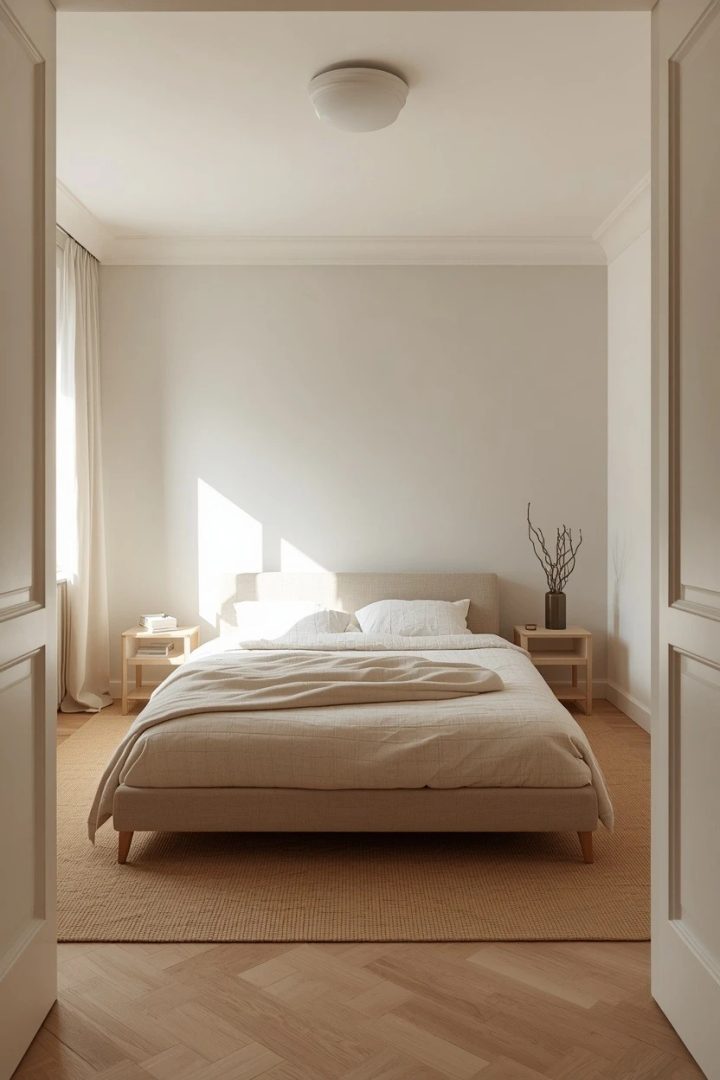
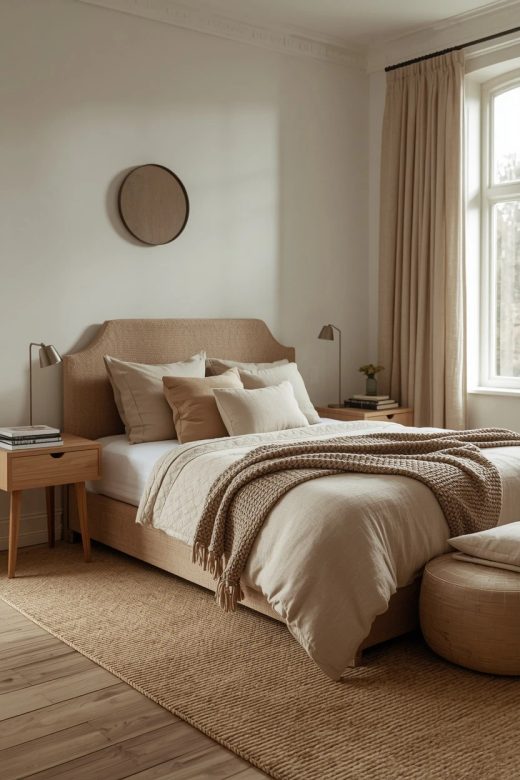
13. The Light-Wood Scandi Bedroom
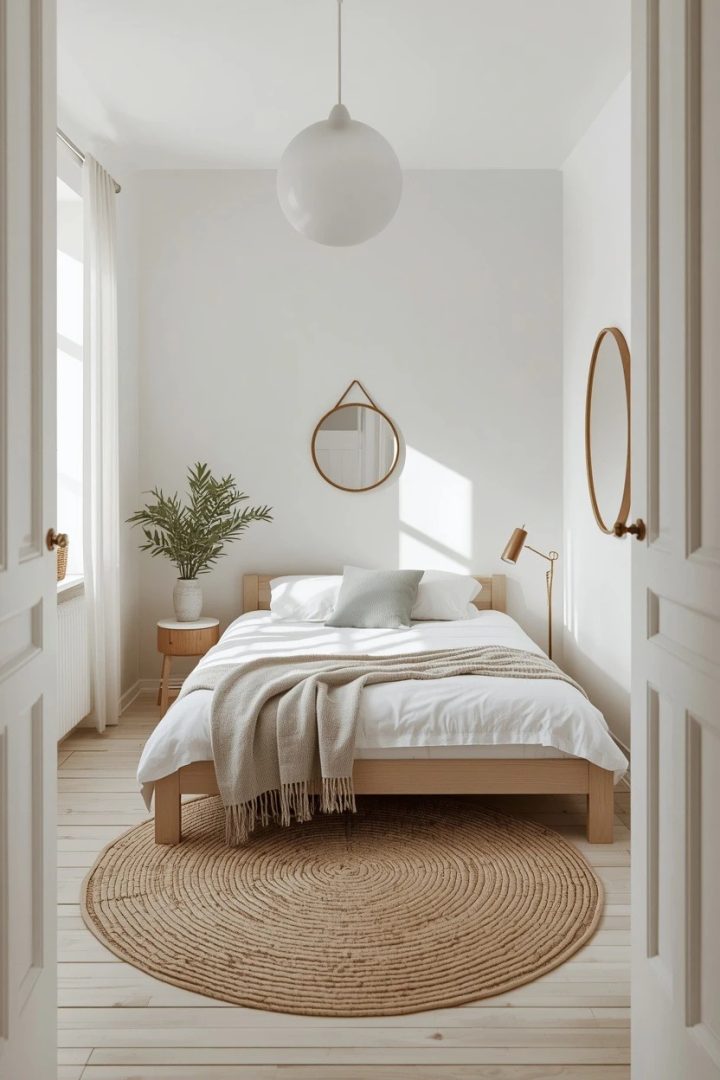
A Scandinavian-leaning scheme — pale wood, white walls, crisp bedding, and a few cosy textures — is tailor-made for small rooms, since its bright, uncluttered look makes a space read open and airy. Warmth comes from a knit throw, a soft rug, and natural light rather than from heavy colour or pattern. Greenery and a round mirror complete it. It suits smaller or darker rooms especially well and pairs the practical brightness of a light palette with genuine, liveable cosiness.
14. The Under-Bed and Over-Door Bedroom
Hunting out the overlooked spaces — under the bed, over the door, behind the door, and in corners — uncovers surprising storage in even the tightest room. Slim under-bed boxes, an over-door rack, corner shelves, and the back of the door for hooks all add capacity without taking floor space. Keep it tidy and concealed so the room stays calm. This design suits anyone who feels they have run out of room, since most small bedrooms have more hidden capacity than they realise.
15. The Complete Small Bedroom
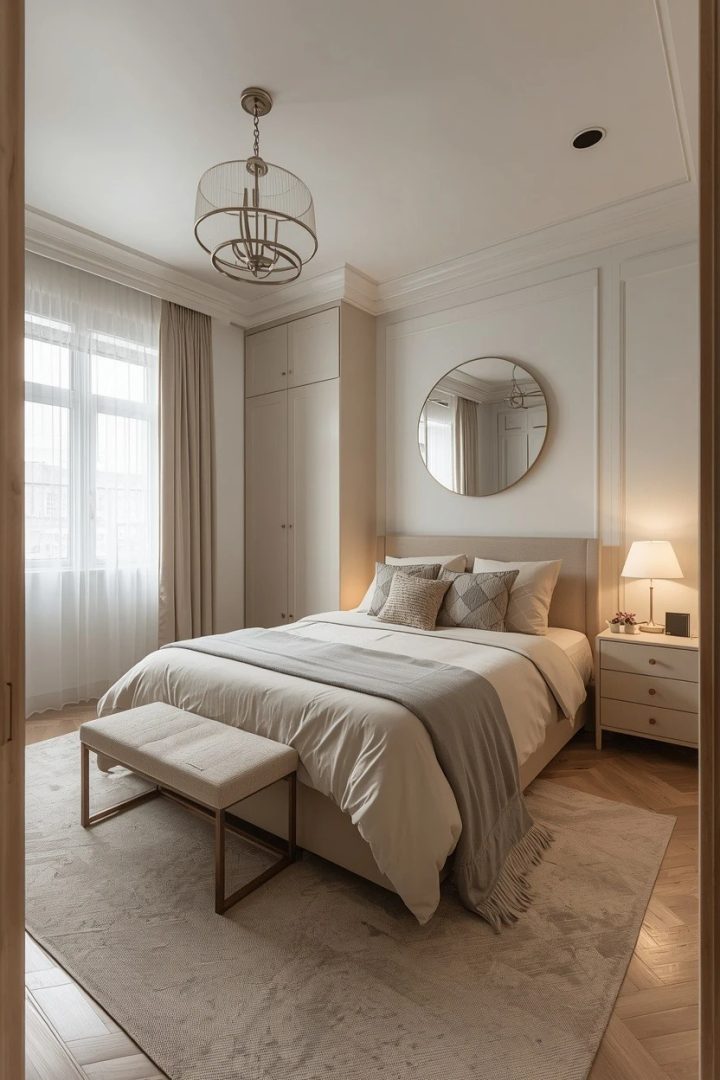
Bringing the principles together, a fully designed small room combines a light palette, a storage bed, vertical and built-in storage, high-hung curtains, a large mirror, and right-scaled furniture into one calm, roomy-feeling space. Each element pulls its weight: the palette opens it up, the storage clears the floor, the mirror and curtains add light and height. The discipline is restraint — clear surfaces and a tight scheme keep the small space reading open. The result is a bedroom that lives far larger than its footprint and stays genuinely restful.
Where I’d Start if I Only Did Three Things
If I were styling a small bedroom from scratch, I would start with the palette — a light, tonal scheme of two or three pale colours — because nothing makes a small room read bigger than a bright, uninterrupted backdrop. Next, I would solve storage, beginning with a storage bed and vertical or built-in units, since a clear floor is what truly makes a compact room feel spacious. Third, I would add light and height tricks — a large mirror and high, wide curtains — to bounce light and draw the eye up. A pale palette, hidden storage, and a few light-and-height tricks: that trio makes almost any small bedroom feel calm and surprisingly roomy.
FAQs
How do I make a small bedroom look bigger?
Lean on light and verticality. Choose a pale, cohesive palette that reflects light, hang curtains high and wide to draw the eye up and make the window read larger, and use a big mirror to bounce light and add depth. Swap bulky nightstands for slim floating shelves or wall-mounted lights, pick a bed with built-in storage to keep the floor clear, and keep surfaces decluttered. Pale colours, vertical storage, and a clear floor together make a small bedroom read open and calm rather than cramped.
What's the best storage for a small bedroom?
Start with the bed, since the space beneath it is the largest stretch of dead space in the room — a storage bed with drawers or a lift-up base reclaims it instantly. Then think vertical: tall slim shelves, built-in or floor-to-ceiling wardrobes, and over-door racks use height a small room always has spare. Multi-use furniture like a storage ottoman or a bench cuts the number of pieces, and the overlooked spots — under-bed boxes, corners, the backs of doors — add surprising capacity without touching the floor.
What colours work best in a small bedroom?
Light, warm, and tonal colours work best because they reflect light and avoid the harsh contrasts that visually chop up a small space. Warm whites, soft greige, pale taupe, and gentle pastels all open a room up, especially when walls, curtains, and bedding stay within a close tonal range. If you want depth, a single soft accent or a cocooning deeper tone can work beautifully, but keep the overall scheme cohesive. Texture rather than bold colour is the safest way to add interest without shrinking the room.
Should furniture be small in a small bedroom?
Mostly yes — scale matters enormously, and one oversized piece can swallow a small room. Choose a slim bed frame, a compact wardrobe, and petite bedside pieces, and favour leggy, low-profile designs that let light pass underneath and read lighter than chunky ones. That said, it is better to have fewer right-sized, hardworking pieces than many tiny ones, so prioritise multi-use furniture and leave clear walking space around the bed. Correct scale and a clear floor do more for a sense of roominess than the absolute size of any single item.
Final Thoughts
A well-styled small bedroom is less about square footage and more about a few decisions working in harmony — a light palette, smart vertical and under-bed storage, right-scaled furniture, and the light-and-height tricks of mirrors and high-hung curtains. Whether you lean Scandi-bright, cosy and cocooning, or strictly minimalist, the same principles turn a compact room into a space that feels calm, open, and far bigger than it is. Choose the complete look that matches how you want your room to feel, build it on a pale palette and clever storage, and you will have a small bedroom that is genuinely restful and makes the most of every single inch.