15 Living Room Drapes and Curtains Ideas for a Layered Polished Look
July 30, 2026 · 12 min read
 By Khawar Iqbal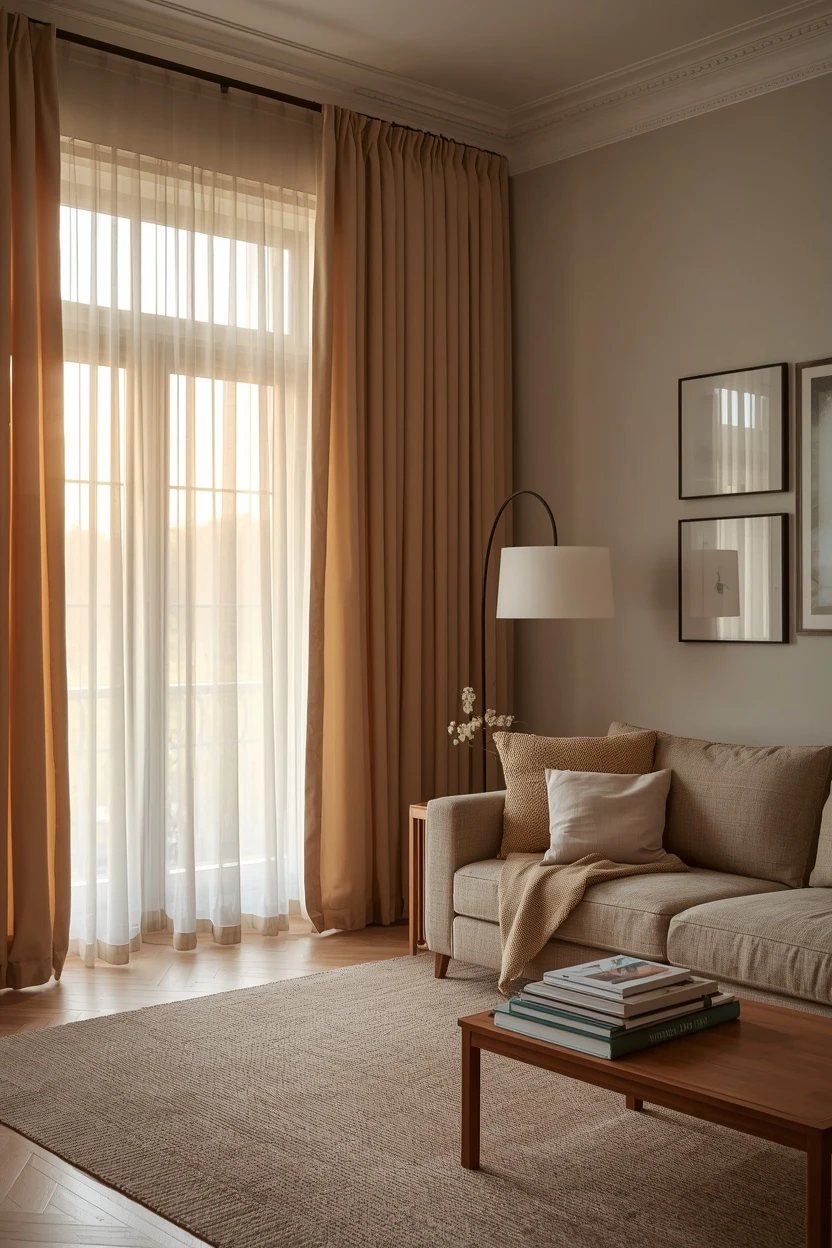
The most useful living room drapes and curtains ideas all rely on one principle — two layers do what one never can. A sheer softens and filters daylight while a heavier drape behind it adds privacy, warmth, and the option of proper darkness, and together they give a window depth that a single flat panel simply can't reach.
The fifteen designs below each pair drapes with curtains in a different way, from barely-there voile under linen to full velvet over sheers for real drama. Every one is a complete living room you can recreate, with the double-rod setups, linings, and proportions that make layered windows read polished rather than heavy. If your room has felt slightly flat, layering the window is often the missing move.
1. Two-Layer Dressing: Living Room Drapes and Curtains Ideas for Real Drama
The classic layered window pairs floor-length drapes with sheers behind them, and it remains the most versatile setup there is. Fit a double rod, hang white voile against the glass for daytime softness, and add heavier greige drapes on the outer track for evening privacy and warmth.
Build a calm room around it — linen sofa, wool rug, oak furniture — so the layered window becomes the quiet centrepiece. By day you draw only the sheers; by night the drapes close for cocooning.
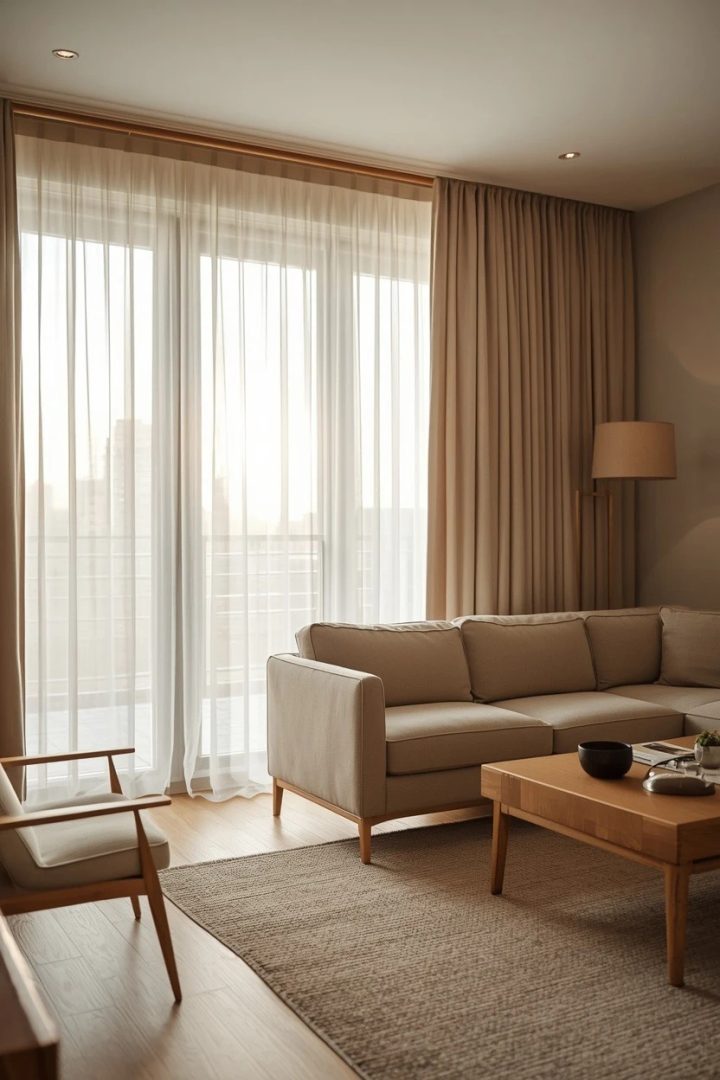
This flexibility is the whole point: one window that adapts from bright and airy to dark and snug, which no single curtain can manage on its own.
2. Velvet Drapes Over Linen Sheers for a Rich Evening Room
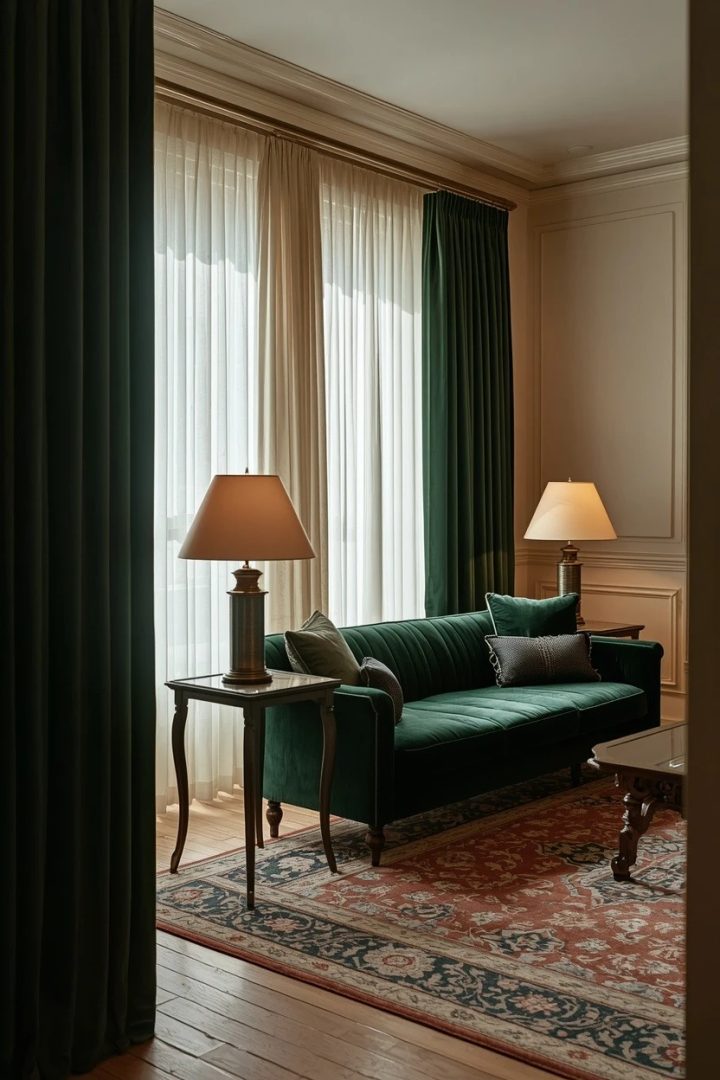
For a living room that comes alive at night, deep velvet drapes layered over soft linen sheers deliver serious warmth. Hang bottle-green or navy velvet on the outer rod, a loose ivory linen sheer within, and let the velvet puddle very slightly at the floor for a luxurious fall. Pair with a classic sofa, patterned rug, and antique-brass lamps for a heritage mood. The velvet blocks draughts and light beautifully once closed.
Velvet is heavy, so use a sturdy double rod rated for the weight and fix it into solid ground; the payoff is a window that reads as the richest surface in the room, glowing softly under lamplight while the sheers keep it from feeling too dark by day.
3. Sheer-and-Neutral Layering for a Soft, Bright Scheme
When you want light and privacy without darkness, layer two soft neutrals rather than a heavy drape. Hang a fine white voile against the glass and a loosely woven oatmeal linen over it, both floor-length, so the window stays luminous while the outer panel adds a gentle veil of privacy. A cream sofa, jute rug, and pale wood keep the whole room airy.
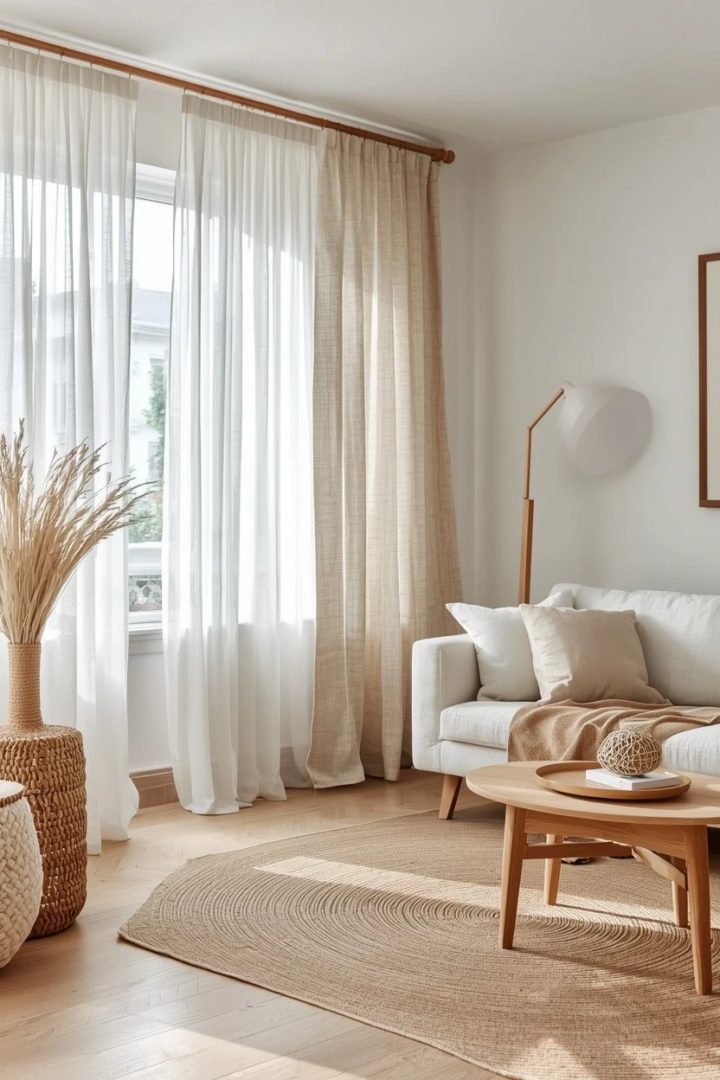
Neither layer fully blocks light, which suits a bright daytime living space. The beauty of this pairing is subtlety — two barely-different neutrals give the window quiet depth and movement, reading far more considered than a single panel while keeping every bit of the room's brightness.
4. Blackout-Lined Drapes and Sheers for a Media-Friendly Room
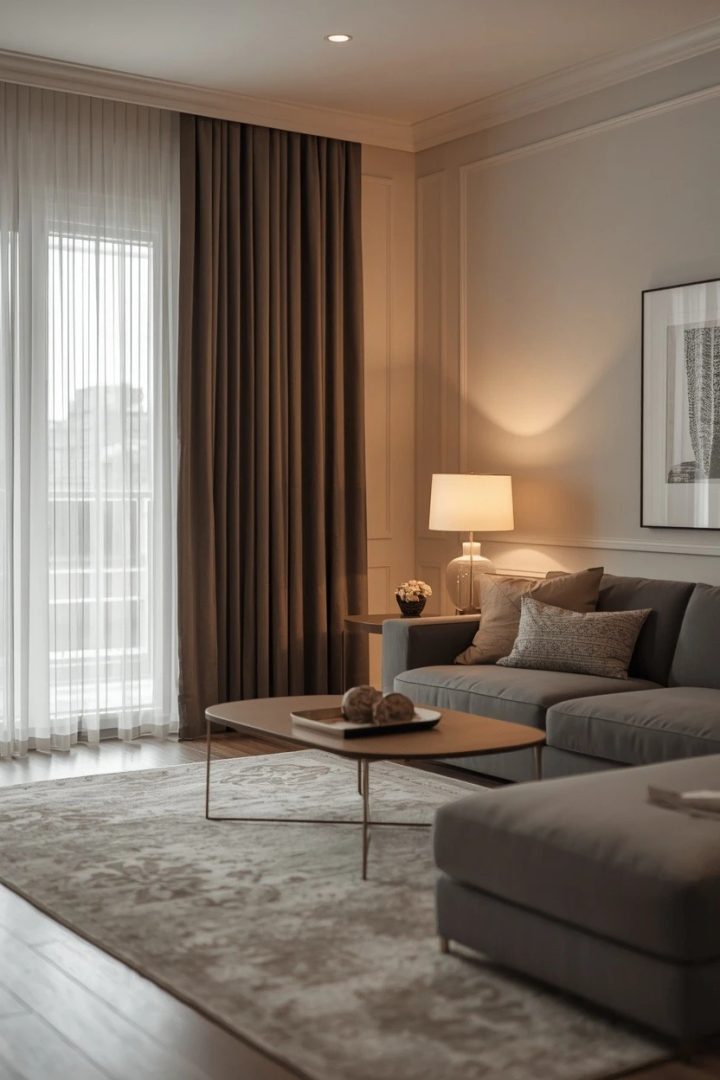
A living room used for films needs proper darkness on demand, which layering delivers without looking like a home cinema. Hang blackout-lined drapes in a soft charcoal on the outer rod for true light control, and a white sheer within for daytime use, so the room reads normal by day and blacks out by night. A deep sectional, a large rug, and warm lamps complete a comfortable viewing room. The blackout lining is the practical hero. Choose a drape wide enough to overlap the wall each side and long enough to skim the floor, because light leaks around the edges far more than through good fabric — sealing the gaps is what actually darkens the room.
5. A Soft Valance Top Over Layered Sheers and Drapes
A soft fabric valance or a gathered pelmet finishes a layered window and hides the hardware for a more traditional, tailored top. Fit sheers and drapes on a double rod, then add a simple soft valance across the top in the drape fabric so the double heading reads as one neat, upholstered whole.
Pair with a rolled-arm sofa, a classic rug, and warm wood for a timeless sitting room. The valance also disguises where two rods meet.
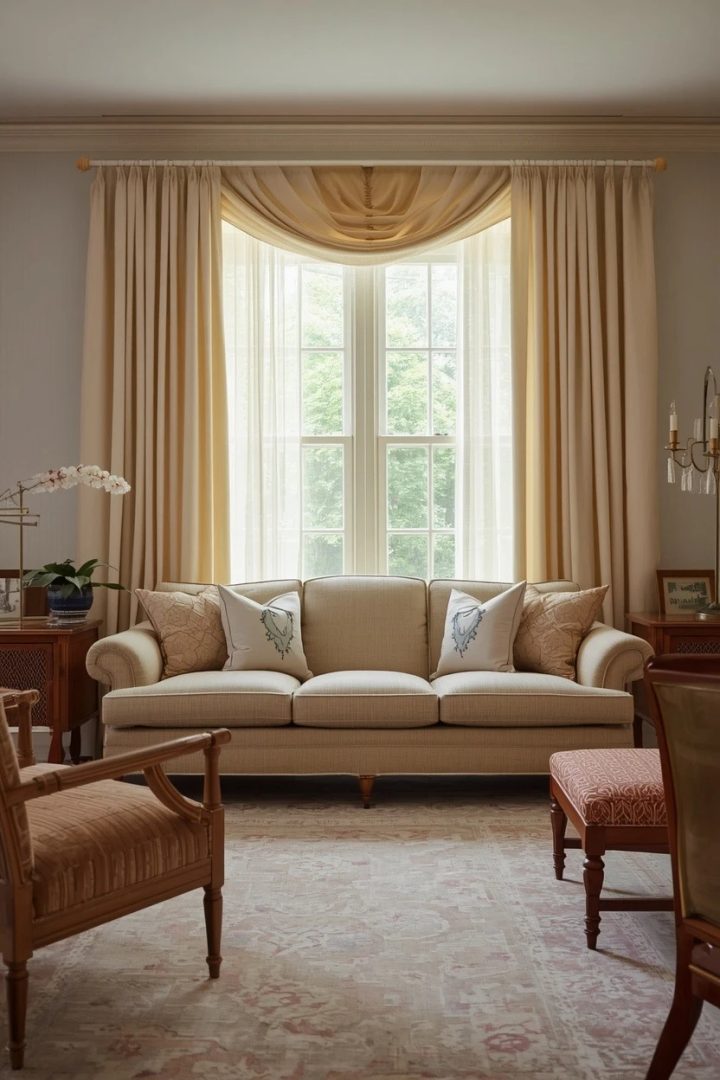
Keep the valance shallow — roughly a sixth of the window height — so it frames the top without cutting into the light, since a deep, heavy pelmet drops the whole window and undoes the height the layering worked to create.
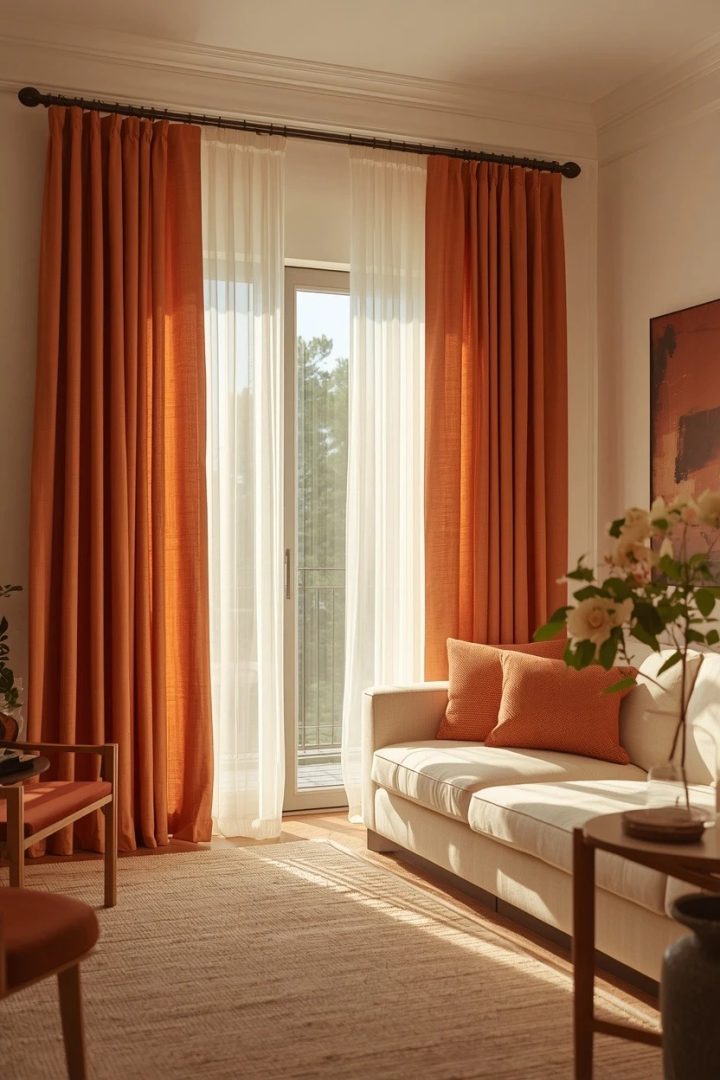
6. Terracotta Drapes Over Cream Sheers for a Warm Layered Room
Layering lets you introduce a strong colour on the outer drape while keeping daytime light soft. Hang warm terracotta linen drapes over cream voile sheers, so the room glows warm when the drapes are closed and stays bright and neutral when only the sheers show. A cream sofa, natural rug, and wood furniture ground the scheme. Pull the terracotta into a cushion or two for cohesion.
The layering earns its keep here by giving you two moods from one window — a warm, colour-rich evening room and a light, neutral daytime one — which a single terracotta panel could never offer, since it would darken and colour the room even at midday.
7. Pinch-Pleat Drapes and Sheers for a Tailored Formal Room
For a formal living room, pinch-pleat headings on both layers give the crispest, most tailored fall. Have the sheers and the drapes both made with pinch pleats so each hangs in even, structured folds, and hang them from a discreet double track for a clean top line. A refined palette of dove grey, cream, and soft blue with a classic sofa and a large rug completes the look.
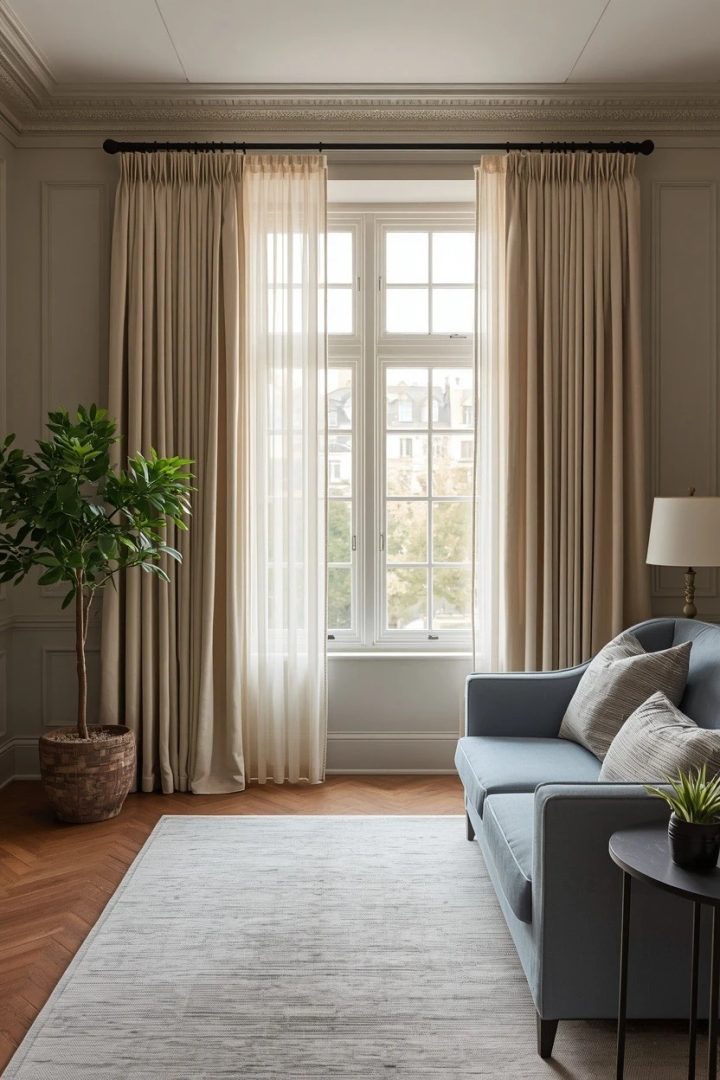
The double pleated layers read as bespoke. This is the most polished of these layered schemes and the most fabric-hungry, so budget for generous fullness on both layers — the tailored effect depends entirely on the pleats being full and even, not flat and sparse.
8. Living Room Drapes and Curtains Ideas for Floor-to-Ceiling Windows
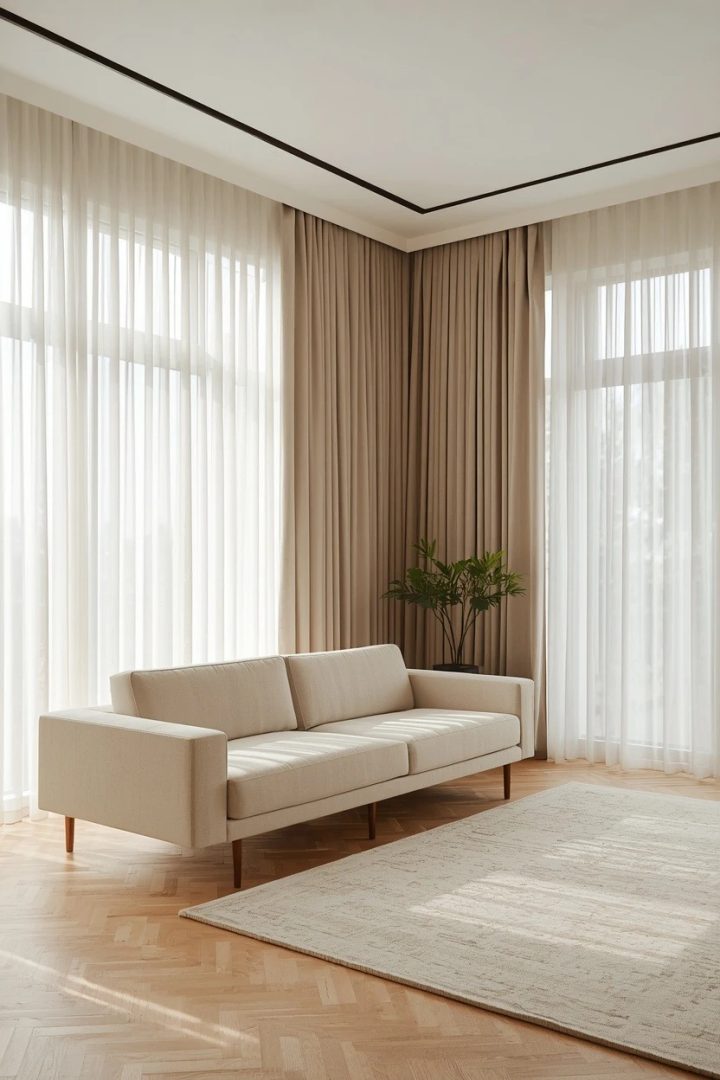
Tall floor-to-ceiling windows are made for layering, and the extra height rewards a generous two-layer scheme. Run a full-height sheer against the glass for softness and glare control, and hang heavier neutral drapes on a ceiling-fixed track so both layers fall in one uninterrupted sheet from ceiling to floor. A low modern sofa and a large rug suit the scale. The sheer tames harsh midday light while the drapes add evening privacy. On very tall windows, weight the hems of both layers so they hang straight rather than billowing, and choose a track that carries the fabric right to the floor — any gap at the bottom of a tall window looks stark and undoes the elegance.
9. Puddle-Hem Drapes Over Sheers for a Romantic Traditional Room
A slight puddle at the hem gives layered drapes a soft, romantic fall that suits a period room. Hang cream or champagne drapes long enough to pool an inch or two on the floor, with a fine sheer behind for daytime light, so the window reads gentle and luxurious.
Pair with a curved sofa, a soft traditional rug, and warm brass lighting. The puddle softens the whole line of the window.
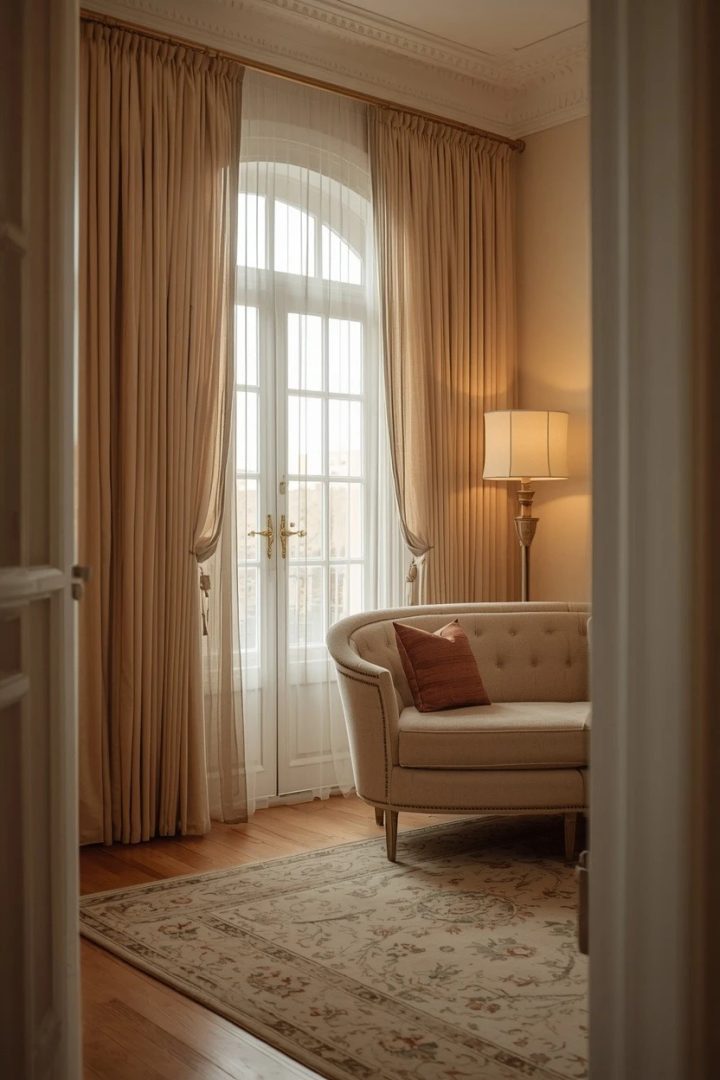
Keep the puddle modest — a small, deliberate pool rather than a heap — and be honest that puddled hems gather dust and don't suit homes with pets or busy families, so save this romantic treatment for a formal sitting room rather than a everyday space.
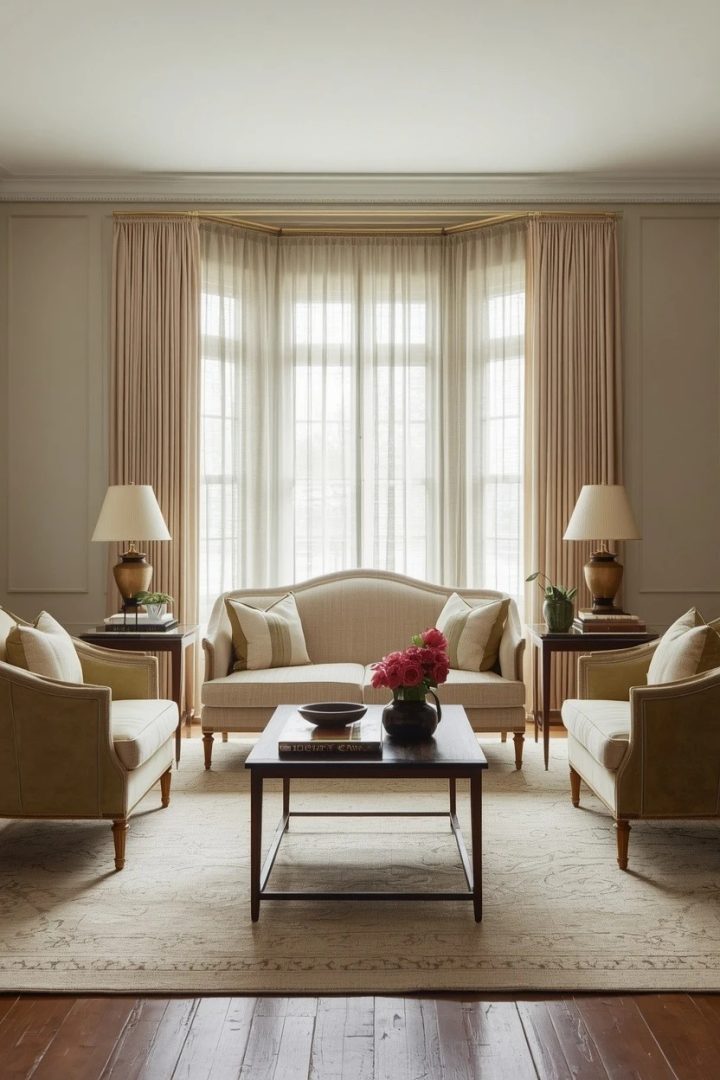
10. Tieback Drapes and Sheers for a Classic Symmetrical Room
Holding layered drapes back with tiebacks gives a classic, symmetrical shape that frames the view. Hang sheers against the glass and heavier drapes over them, then gather the drapes to each side with fabric or braided tiebacks so the sheer shows softly in the centre. A symmetrical room — matching lamps, a centred sofa, a balanced rug — suits this formal treatment. The tiebacks create a graceful hourglass line.
Fit the tieback hooks about two-thirds of the way down the window rather than at the middle, which gives the most flattering drape; set too high, the curtains look pinched, and too low they lose the elegant sweep that makes tiebacks worth using.
11. Grey Drapes and White Sheers for a Cool Contemporary Room
A crisp grey-and-white layered scheme suits a cool, contemporary living room. Hang bright white sheers against the glass and mid-grey drapes over them for a clean, graphic pairing, and build a modern monochrome room around them with a low grey sofa, a geometric rug, and black metal accents. The white sheer keeps the grey from reading heavy.
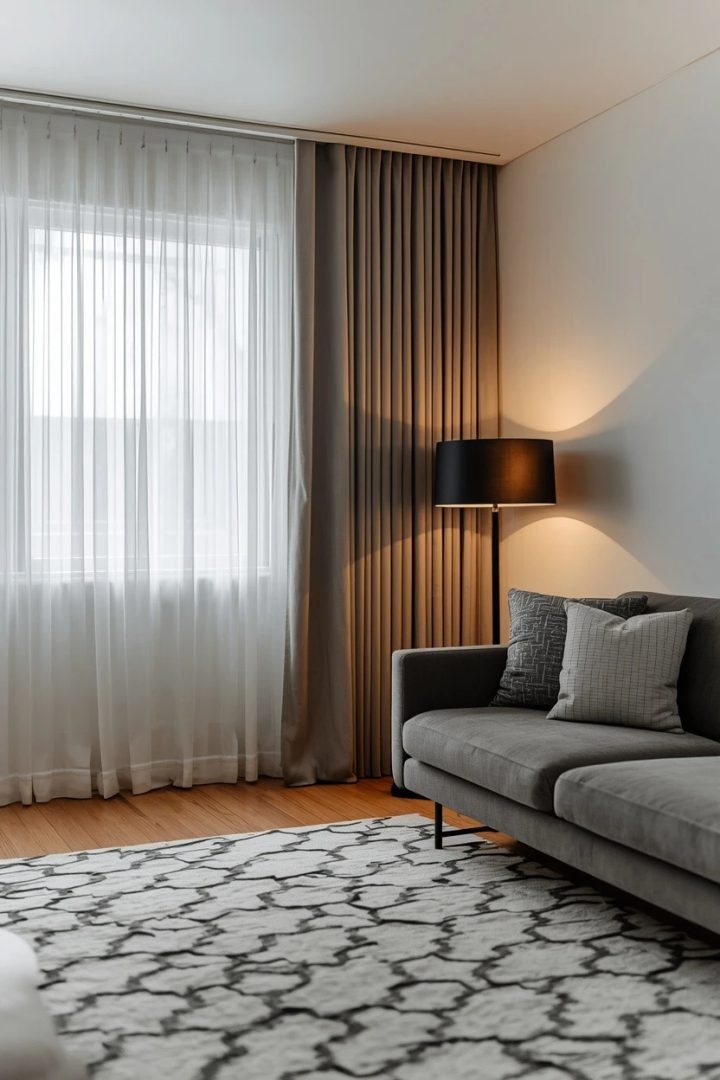
This is the most modern of these layered looks. Warm the scheme with wood or brass somewhere and keep every bulb at 2700K, because a grey-and-white layered window in cool light can tip clinical — a little warmth in the metals and the bulbs is what keeps this contemporary room from feeling like an office.
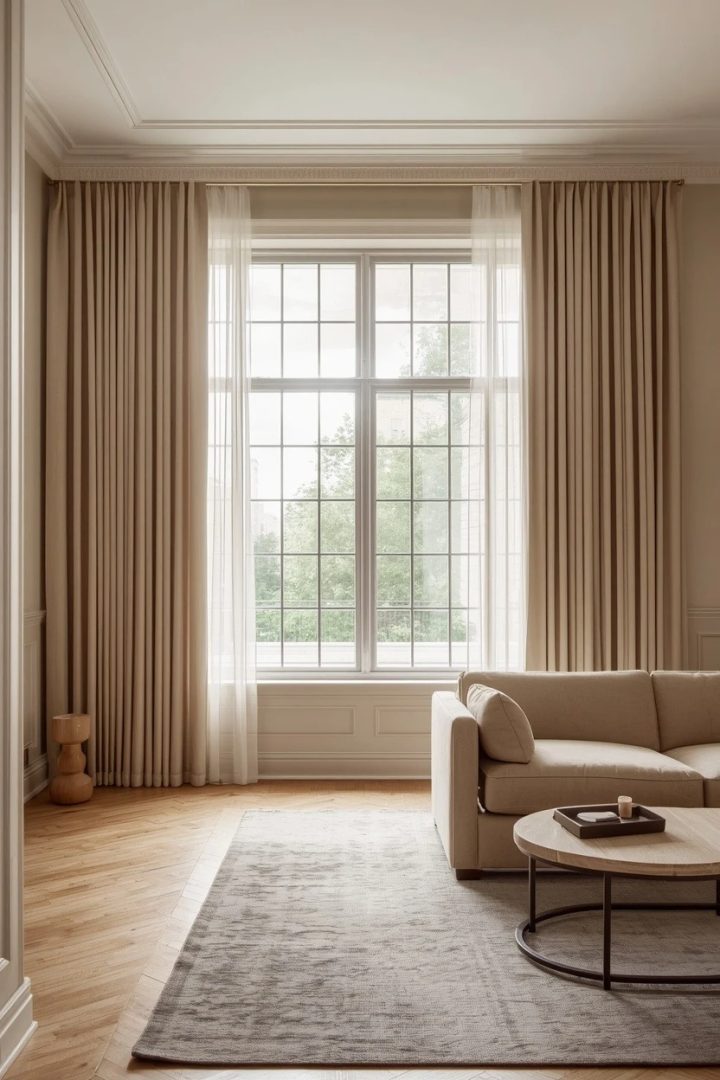
12. Layered Drapes for a Wide Picture Window
A wide picture window benefits from layering that keeps the glass clear by day and softens it by night. Run sheers across the full width against the glass, and hang wide neutral drapes that stack well past the frame on each side so the whole view is open when the drapes are drawn back. A sofa facing the window and a large rug make the most of the light. The sheers cut glare on the picture view. Size the drapes to stack entirely onto the wall beyond the glass, not over it, because the point of a picture window is the view — any drape fabric sitting over the glass by day wastes exactly what you're trying to show off.
13. Navy Drapes and Cream Sheers for a Smart Nautical-Neutral Room
Navy layered over cream reads smart and calm without going literal-nautical. Hang cream sheers against the glass and deep navy drapes over them, then build a fresh room with a pale sofa, natural-fibre rug, and warm wood so the navy grounds the scheme rather than darkening it.
Small brass details tie it together. The cream sheer keeps the navy from feeling heavy in daylight.
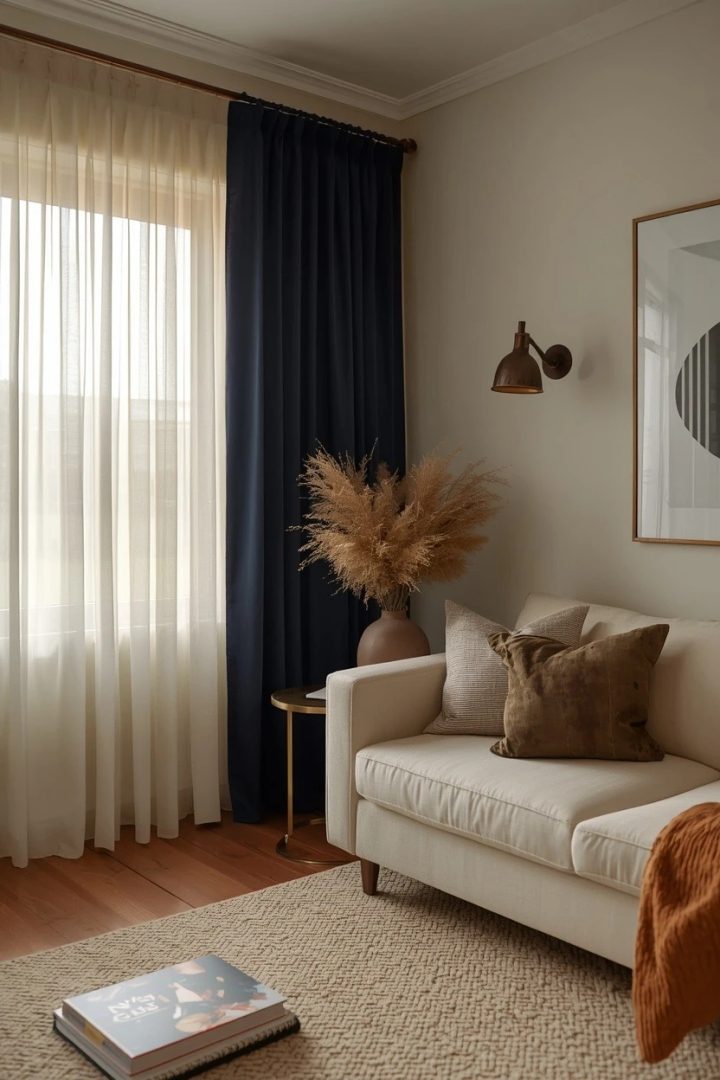
Choose a warm, slightly greyed navy rather than a bright royal blue, and repeat it in one or two accessories — a warm-toned navy behaves like a deep neutral in a living room, giving the layered window real depth while staying restful rather than bold.
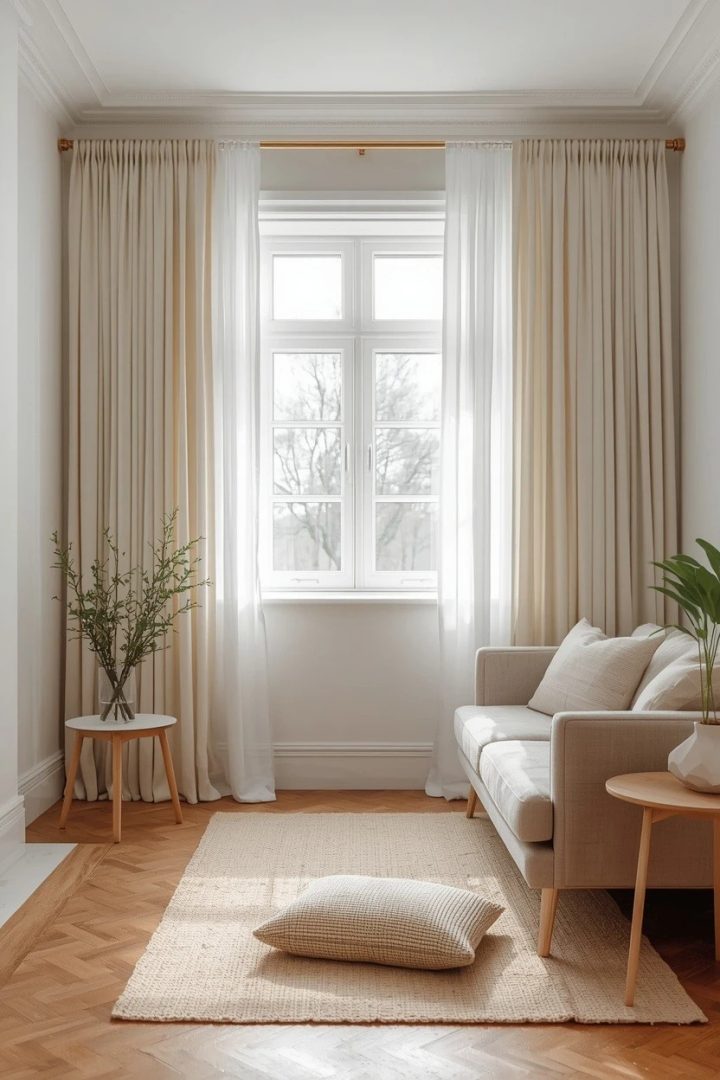
14. Living Room Drapes and Curtains Ideas for a Small Layered Window
Layering works in a small room too, provided you keep both layers light and hang them high. Choose fine white sheers and slim, light neutral drapes, mount the double rod near the ceiling and extend it well past the small window so both layers stack onto the wall and leave the glass clear. A pale, tonal room keeps everything expansive. The high, wide hanging makes the little window read far larger.
Skip heavy fabrics and dark colours here — in a small room the goal is to make the window feel generous, so light layers hung high and wide do that, while thick drapes crammed against a small frame only emphasise how little glass there is.
15. Textured Drapes Over Sheers for a Soft Organic Room
Layering two textures rather than two colours gives a calm, organic living room quiet depth. Hang a fine linen sheer against the glass and a nubby, slubby textured drape in a matching neutral over it, so the window reads tactile and soft without any pattern or strong colour. A boucle sofa, a wool rug, and rounded natural furniture continue the organic mood.
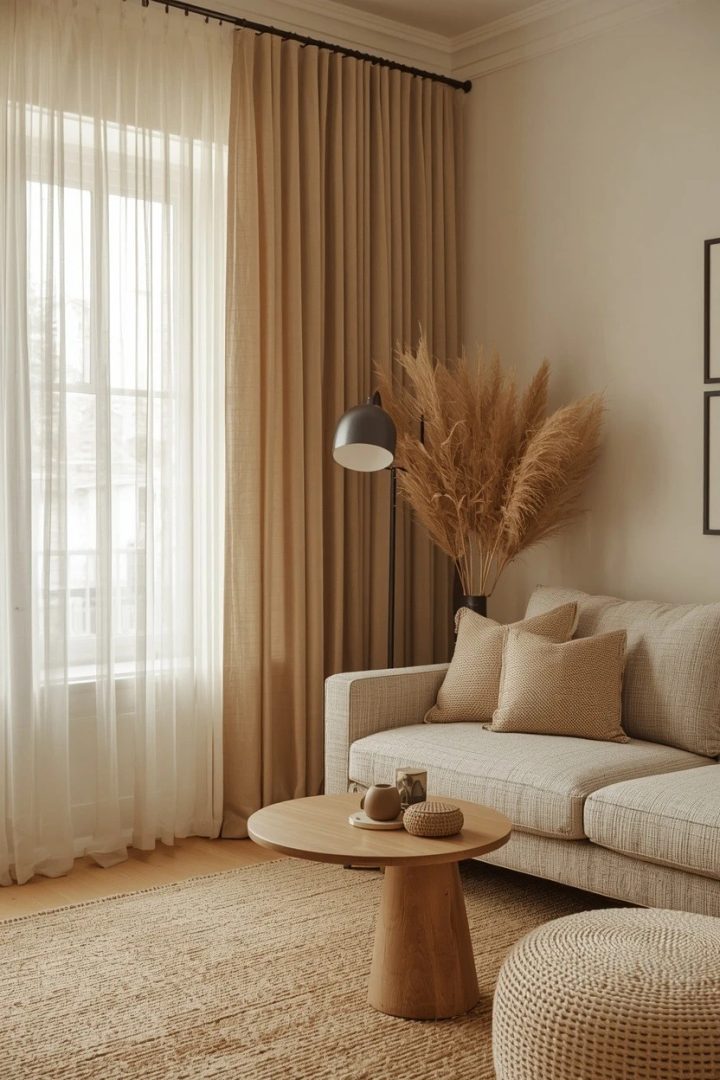
The two weaves catch light differently across the day. Keep both layers in the same warm neutral so the textures, not the colours, create the interest — this is the layered window for a modern organic room, where everything is soft, tonal, and pleasant to touch rather than bold.
Where I'd Start if I Only Did Three Things
If I only did three things, I'd start by fitting a double rod, because every one of these living room drapes and curtains ideas depends on being able to hang two layers — a sheer against the glass and a heavier drape behind. Next I'd add a plain white or ivory sheer for daytime softness, which alone transforms how light enters the room. Then I'd choose a lined outer drape in a colour I love, since that layer sets the evening mood and gives me proper privacy and warmth when it's drawn.
Frequently Asked Questions
What are the best living room drapes and curtains ideas for combining privacy and light?
Layer a sheer against the glass with a heavier drape behind it on a double rod. By day you close only the sheer, keeping the room bright while gaining privacy; by night you draw the drape for full privacy and warmth. This two-layer setup is the most flexible solution there is, giving one window several moods that no single curtain can match.
What is the difference between drapes and curtains?
In general use, curtains are lighter, often unlined panels, while drapes are heavier, usually lined, and hang floor-length for a more formal, insulating effect. Layering the two — a light sheer curtain with a heavier lined drape — is exactly what gives a window its depth. The terms overlap a lot, but thinking of one as the soft daytime layer and the other as the substantial evening layer helps you plan a proper layered scheme.
Do I need a special rod to hang drapes and curtains together?
Yes — a double rod or a double track lets you hang the sheer on the inner rail and the heavier drape on the outer, so each moves independently. Make sure the bracket projects far enough for the outer drape to clear the sheer, and that it's rated for the weight of a lined or velvet drape. Fixing into solid ground rather than plasterboard alone is essential for heavier fabrics.
How do I stop layered curtains from looking heavy or fussy?
Keep the sheer very light, hang both layers high and wide so they stack onto the wall rather than crowding the glass, and choose a shallow valance or none at all. Match the two layers in tone or texture rather than fighting colours, and let the drapes fall clean to the floor. Heaviness usually comes from hanging too low, skimping on width, or adding a deep pelmet — fix those and layering reads polished rather than fussy.
Final Thoughts
The best living room drapes and curtains ideas all come back to layering: a soft sheer for daytime light and a heavier drape for evening privacy and warmth, hung high and wide on a proper double rod. That one move gives a window depth, flexibility, and a polished look that a single flat panel can never achieve — so fit the double rod first, and the rest is simply choosing the two layers you'll enjoy living with.