Ideas Living Room Curtains: 14 Complete Looks That Frame the Whole Room
July 30, 2026 · 11 min read
 By Khawar Iqbal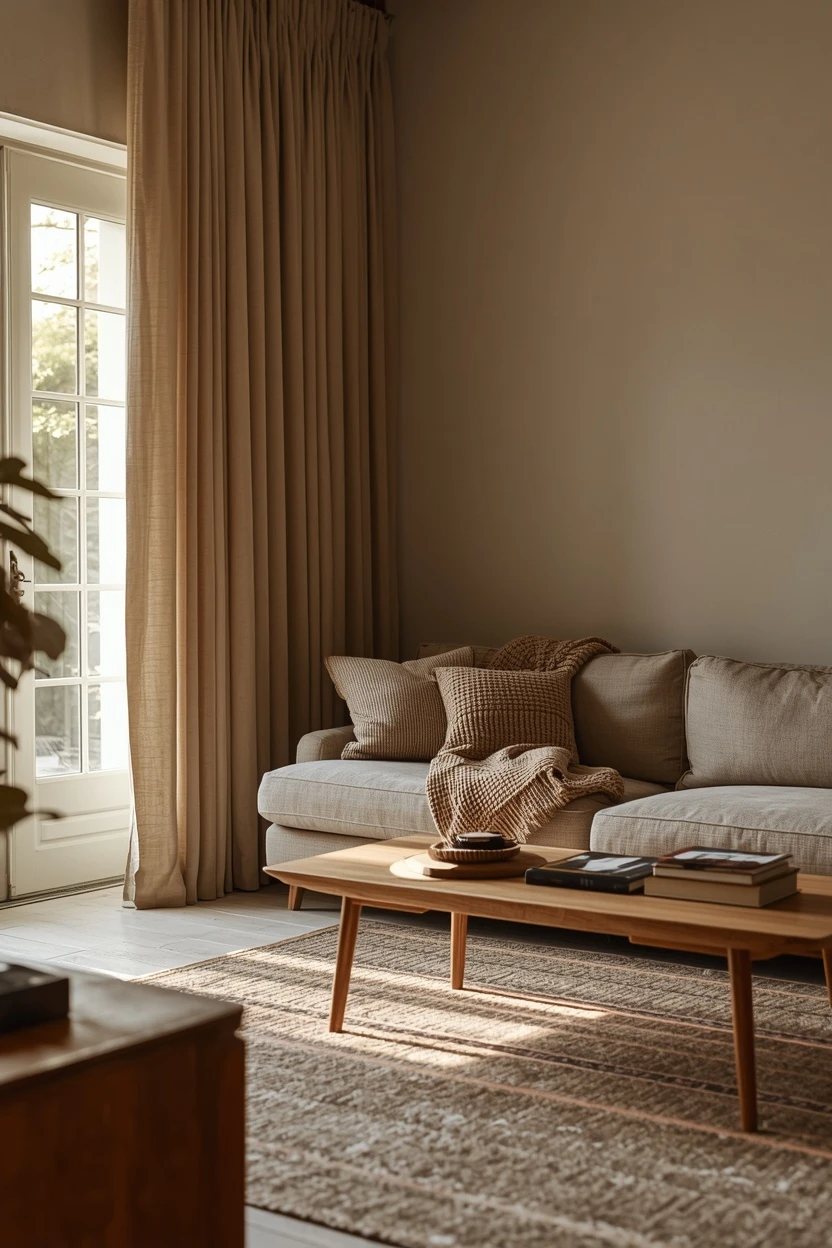
The best ideas living room curtains owners reach for all share one habit: the curtains are hung to flatter the room, not just the window. The single most common mistake is a rod screwed tight to the frame with panels that stop above the skirting — it drops the ceiling, shrinks the window, and makes an otherwise good room look unfinished.
So the fourteen designs below treat curtains as architecture, showing the fabric, colour, hanging height, and pairing that make a whole room read taller and calmer. Each is a complete living room you can recreate, with the measurements and materials that separate curtains that look considered from curtains that look like an afterthought. Get these right and you rarely need to change anything else.
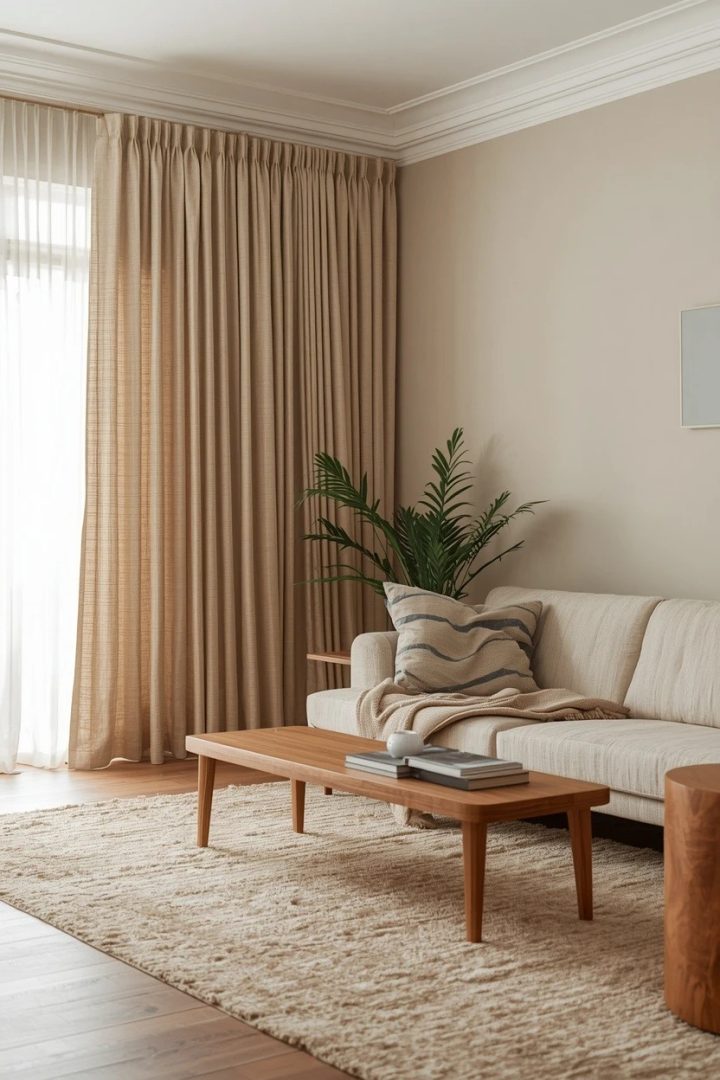
1. Floor-Sweeping Linen Living Room Curtains for a Bright Open Look
Nothing lifts a living room faster than tall, floor-length linen panels hung high and wide. Mount the rod halfway between the frame and the ceiling and extend it eight to twelve inches past the window each side, so the open panels stack against wall rather than glass and daylight floods in. Choose a soft oatmeal linen that breaks by an inch at the floor, and pair it with a linen sofa, a large wool rug, and warm oak furniture for an airy, calm scheme. Warm greige walls keep the whole room soft. The height is doing the heavy lifting here: the same window looks twice as grand simply because the eye is led upward before it reaches the glass.
2. Deep Charcoal Panels for a Cocooning Evening Room
When a living room is used mostly at night, dark curtains turn it into a proper snug. Hang heavyweight charcoal panels floor to ceiling across a whole wall, even where the window is narrower than the run, so the fabric reads as a soft dark backdrop rather than a small covering. A deep-toned sofa, warm brass floor lamp, and a patterned rug complete the enveloping scheme.
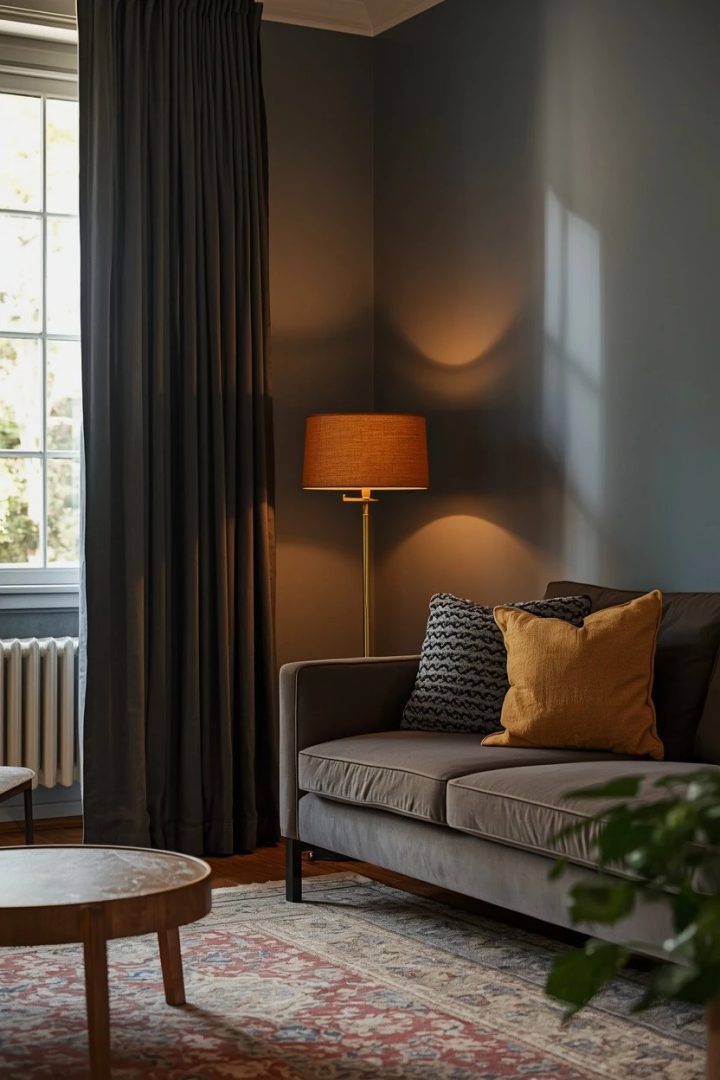
Lined panels block draughts and light, which matters in an evening room. The trick that makes this work is covering the full wall width, not just the window — a dark curtain marooned in the middle of a pale wall looks mean, while a full wall of it reads deliberate and luxurious.
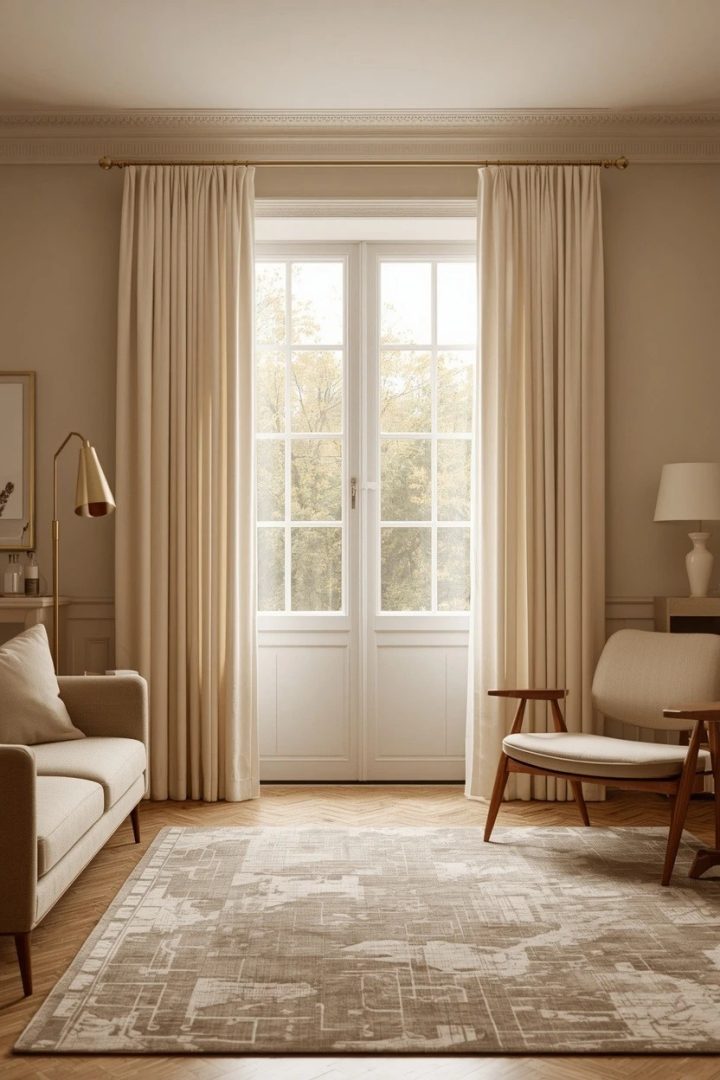
3. Ideas Living Room Curtains Owners Love: Pinch-Pleat Panels in a Neutral Scheme
For a tailored, grown-up look, pinch-pleat headings give curtains crisp, even folds that hang far better than gathered tape. Choose a mid-weight cream or greige fabric, have the pleats made so the panels are two to two-and-a-half times the window width for proper fullness, and hang them from a slim brass rod. Pair with a neutral sofa, a tonal rug, and simple oak furniture for a refined, uncluttered room. The structured heading is what elevates the whole scheme.
Skimping on fabric width is the usual regret — flat, under-gathered curtains always look cheap, so err generous on the fullness even if it means a plainer fabric to stay in budget.
4. Warm Terracotta Curtains as the Room's Main Colour
Curtains can be the boldest colour in the room when the rest stays quiet. Hang full-length panels in a warm terracotta or rust linen against soft white walls, and let them supply nearly all the colour while the sofa, rug, and furniture stay neutral.
Repeat the terracotta in one or two small accents — a cushion, a ceramic — so the curtains read as a deliberate scheme rather than a lone splash. Natural wood and cream textiles keep it grounded.
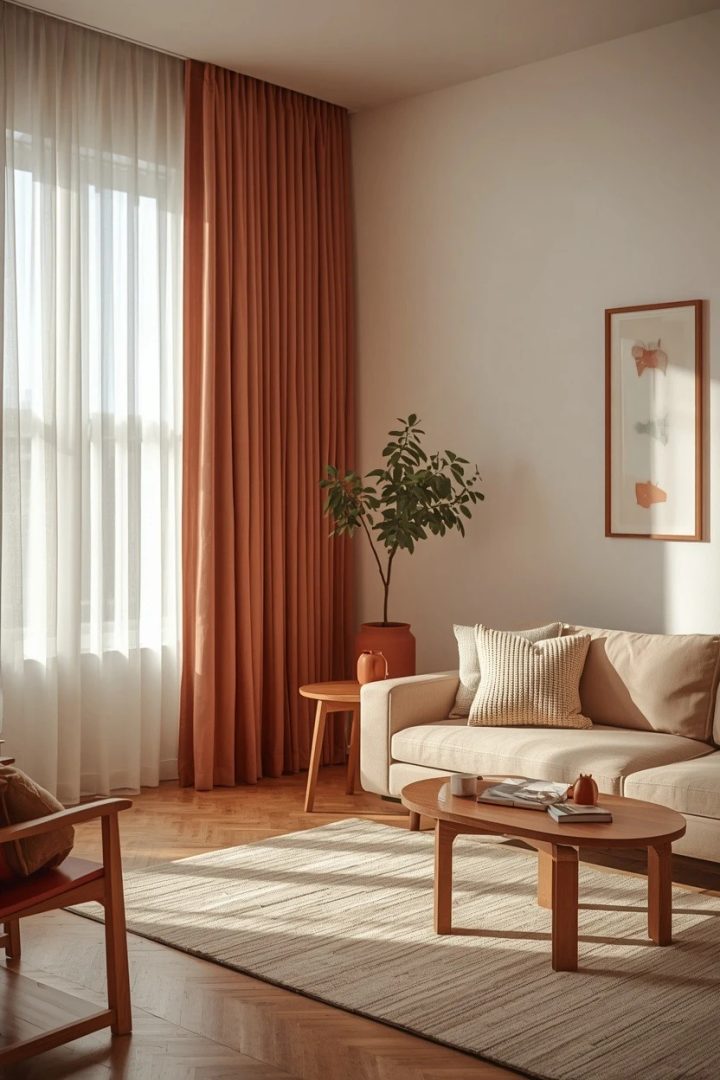
Because the panels are large and constant, they set the room's warmth far more reliably than a cushion ever could; choose a tone you'll still love in two years, since recovering or replacing full-length curtains is a bigger commitment than swapping a throw.
5. Breezy Sheer Panels for a Soft, Light-Filled Room
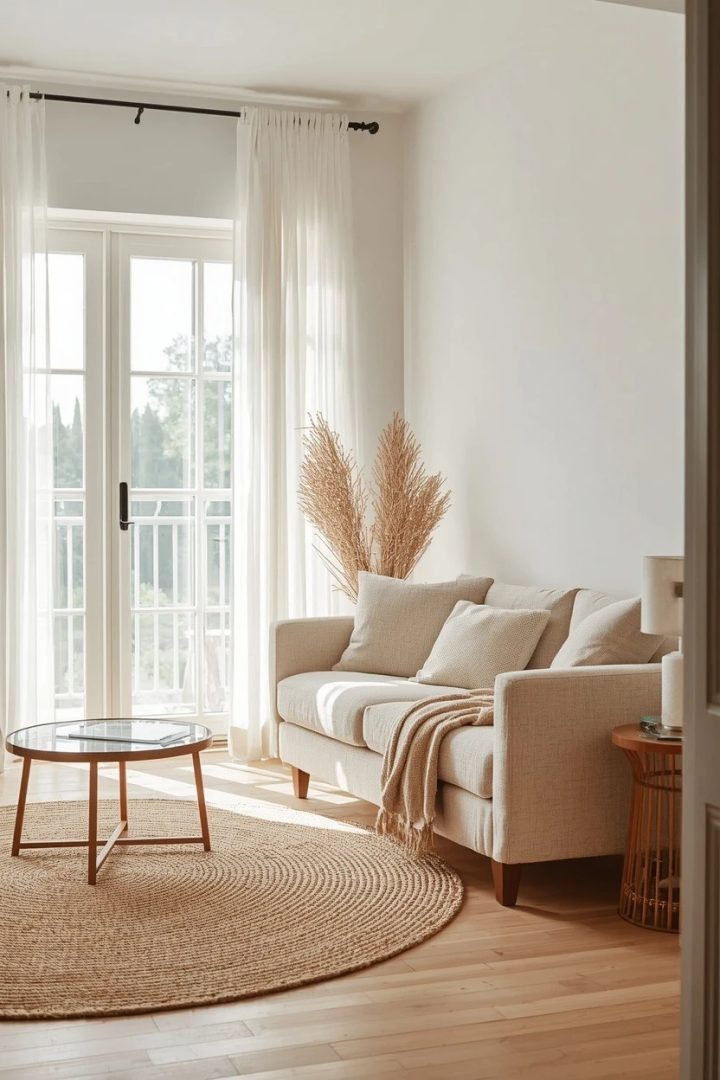
In a bright room where privacy is less of an issue, single sheer panels keep the space soft and luminous all day. Hang floor-length voile or loose-weave linen in white or ivory so daylight diffuses gently across a pale, relaxed scheme of cream sofa, jute rug, and rattan accents. The sheers billow slightly with a breeze and blur harsh light without darkening the room. This is the lightest, airiest curtain option there is. The honest limitation is that sheers alone give little privacy after dark and no light blocking, so they suit daytime living spaces or rooms not overlooked — pair or line them if the window faces the street.
6. A Patterned Statement Panel That Acts Like Art
A patterned curtain can act like art across a whole wall when the rest of the room holds back. Choose a large-scale botanical or soft geometric in muted tones, hang it floor to ceiling, and keep walls, sofa, and rug plain so the pattern has room to breathe. Pull two colours from the fabric into small accessories to tie the scheme together.
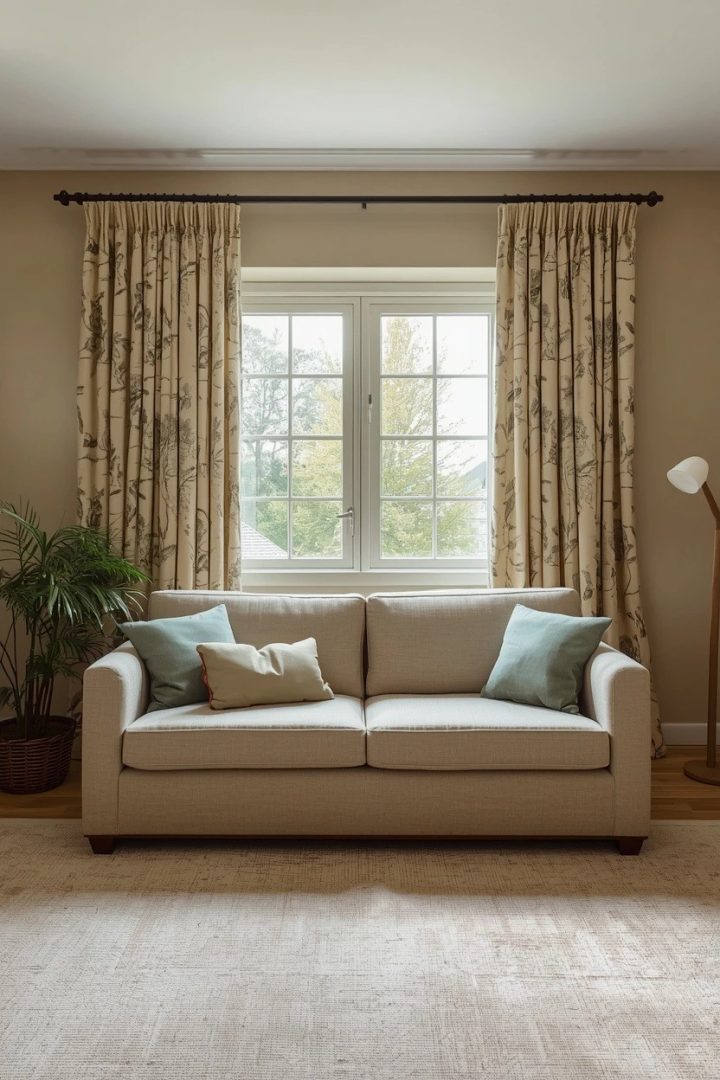
This is the boldest of these living room curtains and the one that most rewards restraint elsewhere. Order a fabric sample and pin it up before committing, because large-scale patterns read completely differently at window size than they do on a swatch, and the repeat can overwhelm a small room.
7. Two-Tone Eyelet Curtains for a Relaxed Modern Room
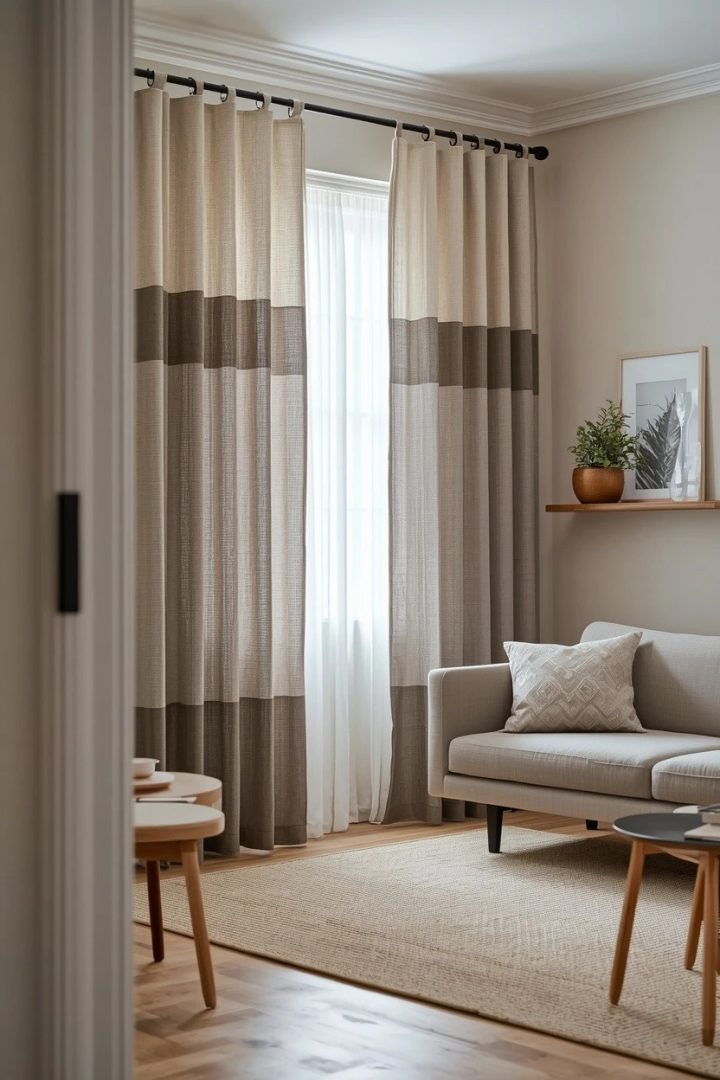
Eyelet curtains give a clean, casual drape that suits an easy modern living room. Choose a two-tone woven fabric — say oatmeal shot with soft grey — so the panels have subtle depth without pattern, and hang them from a simple matt-black or wood pole. Pair with a low grey sofa, a flat-weave rug, and pale wood for an unfussy, contemporary scheme. Eyelets slide easily and stack neatly, which suits curtains you open and close daily.
Space the eyelets evenly and iron in the folds when new so the panels hang in regular waves rather than random bunches, since neat, consistent folds are what make eyelet curtains read as tailored rather than sloppy.
8. Deep Green Velvet Curtains for a Rich Traditional Room
For a living room with character, deep velvet curtains bring instant heritage warmth. Hang full-length panels in a forest or bottle green velvet from a traditional pole with finials, letting the fabric puddle very slightly at the floor for a soft, luxurious drape.
Pair with a classic sofa, a patterned rug, and antique-brass lighting for a room that reads timeless and snug. Velvet has real weight, so it hangs beautifully but needs sturdy fixings.
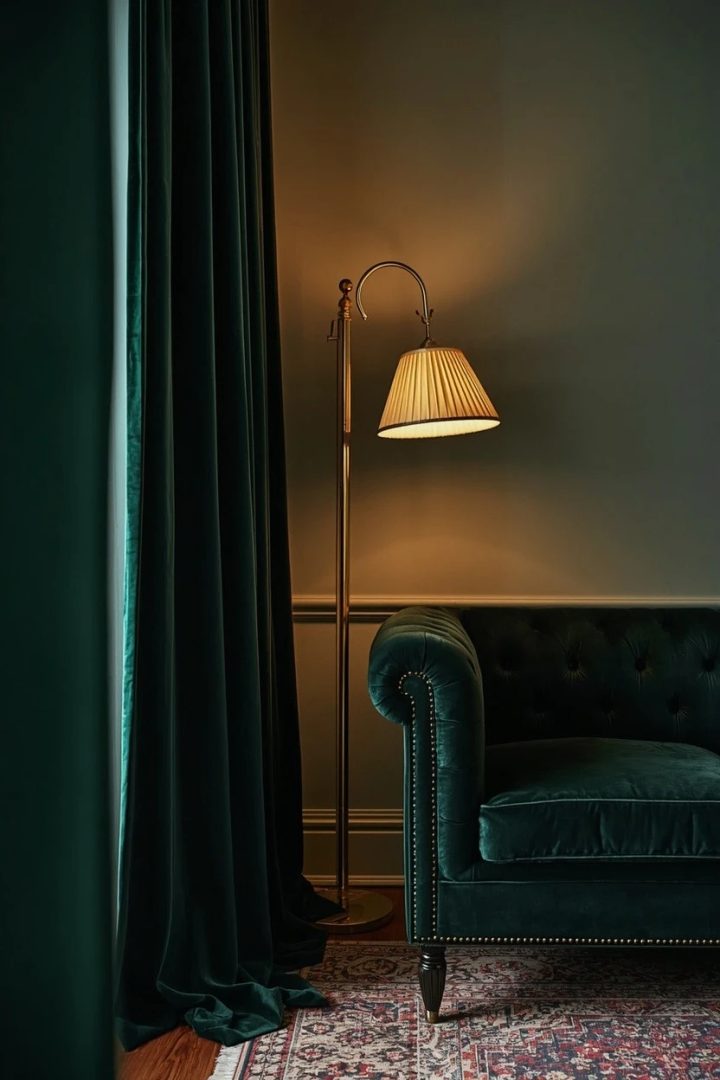
Check the rod bracket is rated for heavy fabric and screwed into solid ground, not plasterboard alone — full-length velvet is surprisingly heavy, and a pole that sags or pulls loose ruins the whole refined effect.
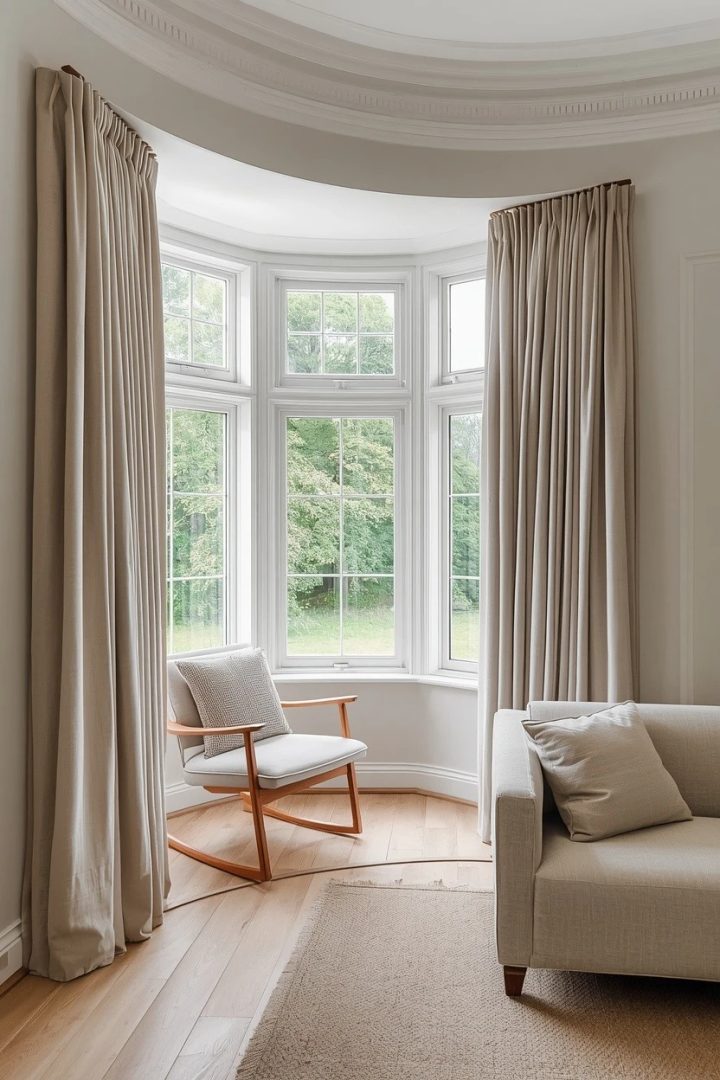
9. Layered Living Room Curtains Over a Deep-Set Bay
A bay window is the trickiest to dress and the most rewarding when it works. Fit a bendable bay pole and hang floor-length panels that follow the curve, so each section of the bay gets its own soft fall of fabric rather than one flat covering. Choose a mid-weight neutral linen, and set a reading chair or a bench within the bay to make the most of the light. A calm scheme of pale sofa and wool rug lets the window shine. Measure the bay's angles carefully and buy a pole designed to bend to them; a straight rod cutting across a bay wastes the recess entirely and leaves the prettiest part of the room ungraced by the curtains.
10. Soft Blush Curtains for a Warm, Gentle Scheme
A dusty blush curtain warms a living room without shouting, sitting somewhere between neutral and colour. Hang floor-length panels in a muted, greyed-off pink linen against soft white or greige walls, and pair with a cream sofa, warm wood, and brass accents for a gentle, refined room. Keep the blush the only real colour and let texture carry the rest.
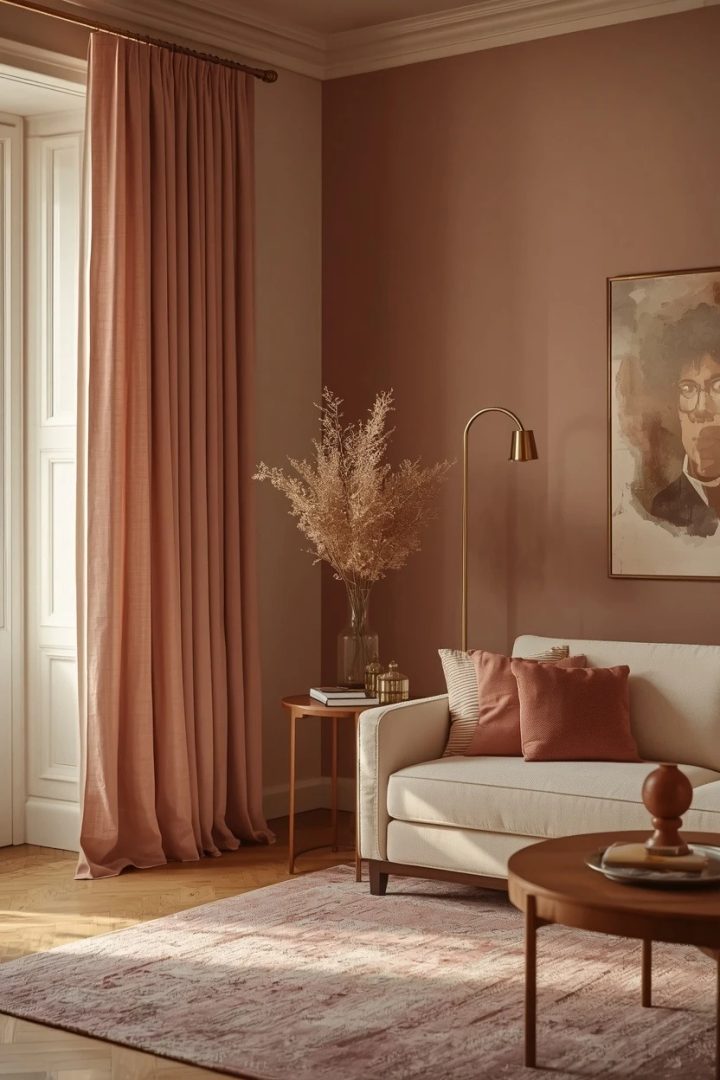
The key is choosing a dusty, sophisticated pink rather than a bright or candy one — a greyed blush reads as a warm neutral in most light and grows up far better than a saturated pink, which can tip a living room toward looking like a child's room.
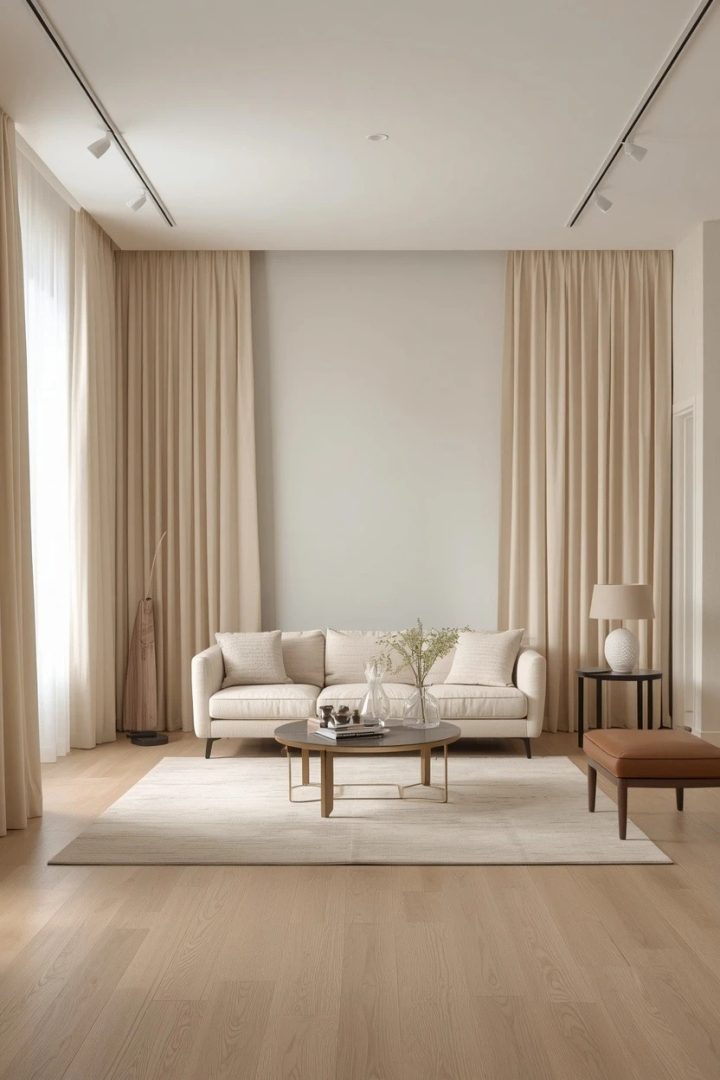
11. Ceiling-Track Curtains for a Seamless Modern Wall
For the most streamlined look, a recessed ceiling track lets curtains fall in one clean sheet from ceiling to floor with no visible pole. Run the track the full width of the wall and hang plain, ripple-fold panels in a soft neutral so the fabric reads as a continuous soft surface. Pair with a low modern sofa, a large rug, and minimal furniture for an architectural, gallery-calm room. The ceiling-height drop makes even a standard room feel lofty.
This suits new-build or renovated rooms where the track can be recessed during works; retrofitting is possible with a surface-mounted track, though it reads slightly less seamless than a truly recessed channel.
12. Striped Curtains for a Fresh Coastal Living Room
A soft stripe brings easy, breezy character to a relaxed living room. Choose floor-length panels in a fine cream-and-blue or cream-and-sage stripe, hang them high and wide, and build a light coastal scheme around them with a slipcovered sofa, a natural-fibre rug, and driftwood-toned wood.
The stripe adds gentle rhythm without the commitment of a big pattern. Run the stripe vertically, which the panels do naturally, to add height.
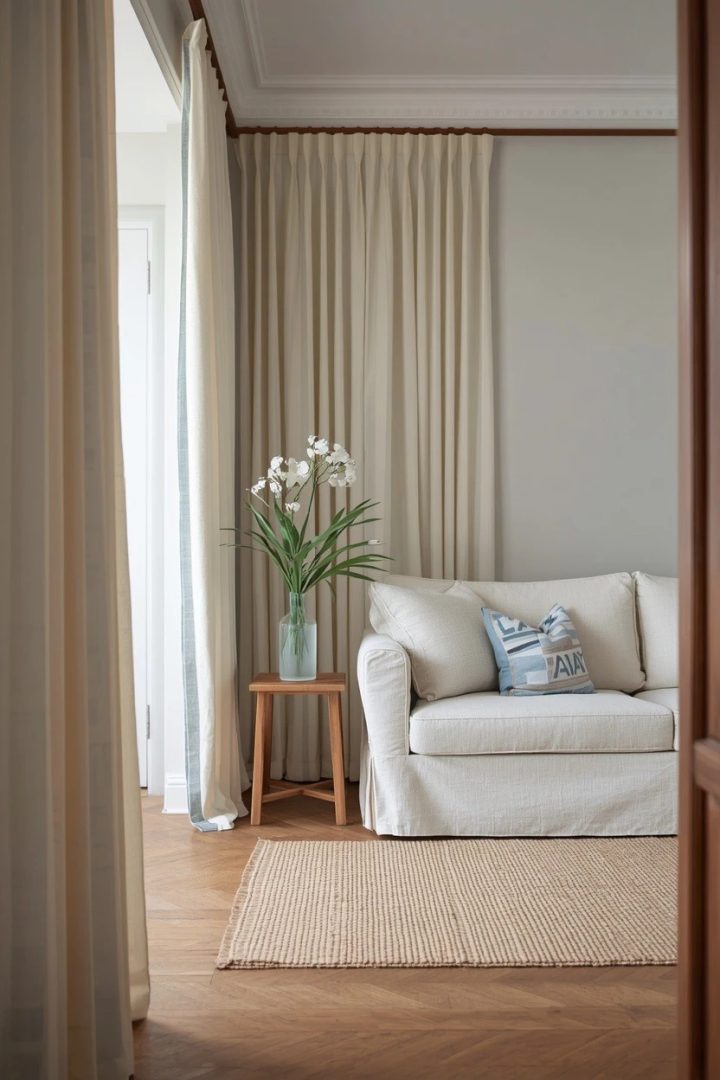
Keep the stripe fine and the colours soft rather than bold and nautical — a subtle stripe reads as a relaxed grown-up coastal room, while a heavy primary stripe can veer toward a seaside-cottage cliché.
13. Wide Panels That Frame a Corner Window Run
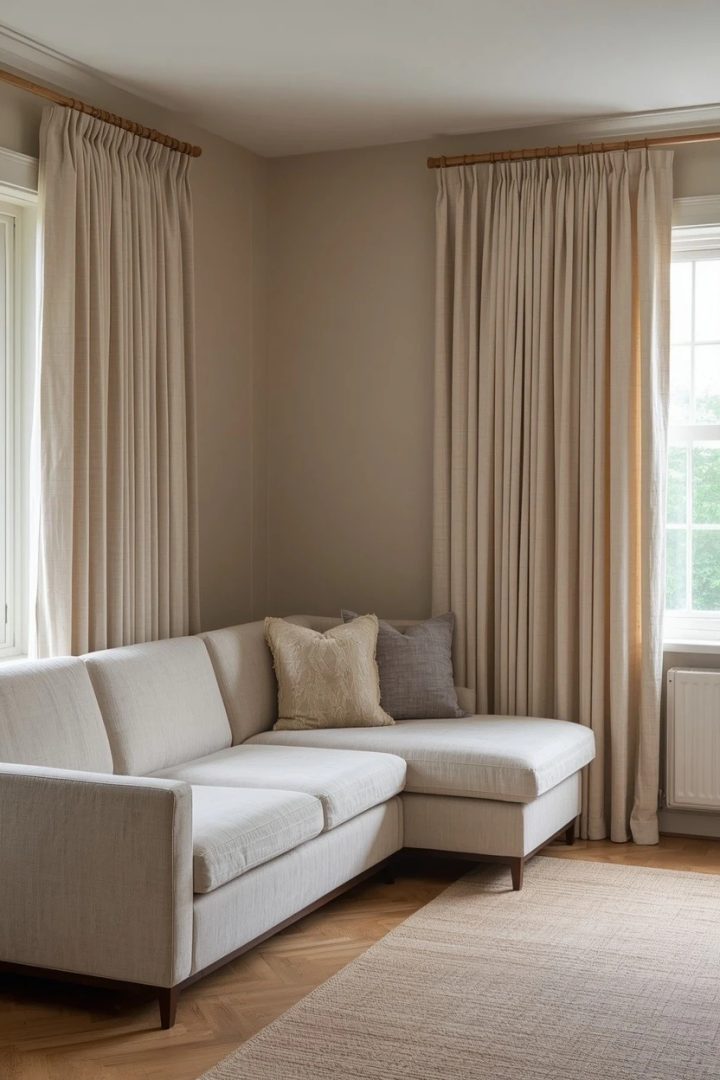
A run of windows across a corner needs curtains that treat the whole corner as one, not each window separately. Hang continuous panels along both walls of the corner from a single high line, stacking the fabric at the outer ends so the glass stays clear and the corner reads as a wall of soft light. A neutral linen keeps it calm, and a sofa angled into the corner makes the most of the double aspect. Plan where the panels stack so they don't block either window when open; the goal is to frame a bright corner, so all the fabric should sit at the outer edges, leaving the meeting point of the two windows completely unobstructed.
14. Two-Colour Curtains for a Subtly Layered Look
Hanging two toning colours of curtain side by side gives depth without pattern and suits a wide window with two tracks. Alternate a cream and a soft sage panel, or a greige and a warm taupe, so the window reads layered and considered while staying quiet. Build a tonal room around them with a linen sofa, wool rug, and oak furniture in the same family.
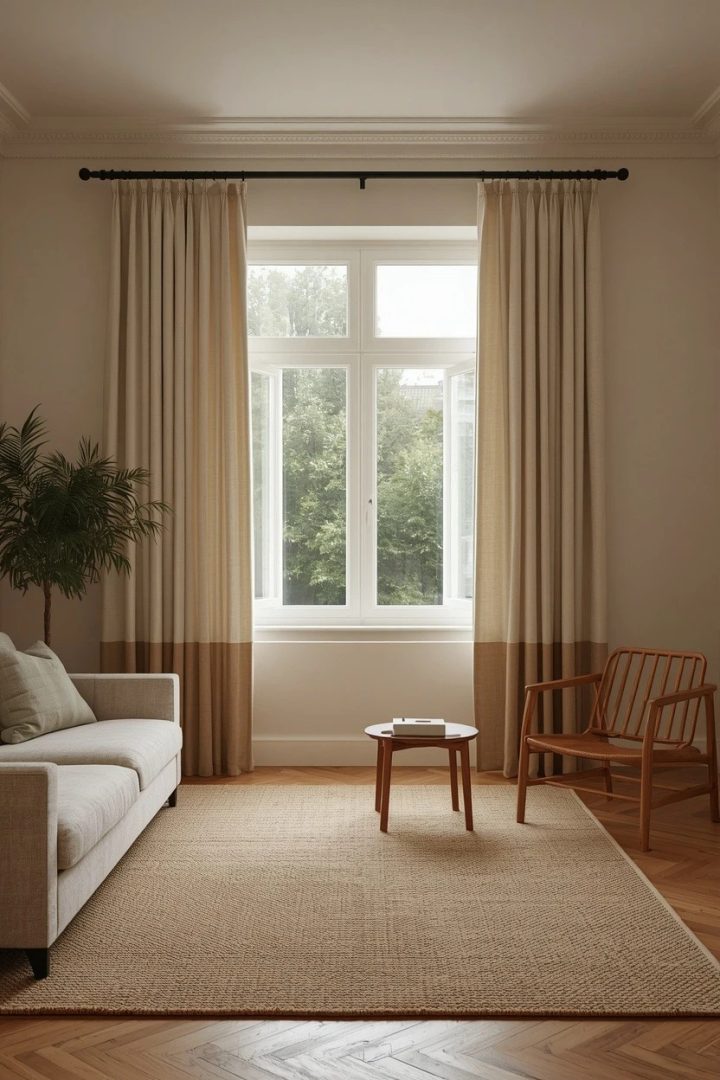
This is a designer trick that costs no more than plain panels. Keep the two colours close in tone rather than high-contrast, so the effect is a gentle gradation rather than a hard block — the aim is subtle richness, not a curtain that looks like it came in mismatched halves.
Where I'd Start if I Only Did Three Things
If I only did three things, I'd start by raising the rod, because most ideas living room curtains only work once you hang them high and wide — mount it near the ceiling and well past the frame each side, and the whole room grows taller and brighter. Next I'd go floor-length, letting the panels break by an inch at the floor rather than stopping short, which instantly reads as tailored. Then I'd choose generous fabric, at least double the window width, since under-gathered curtains are the single tell that always makes a room look cheap.
Frequently Asked Questions
What are the best ideas living room curtains for making a room look bigger?
Hang floor-length panels high and wide — rod near the ceiling and extended eight to twelve inches past the frame on each side — so the eye is led upward and the window reads larger. Choose a colour close to your wall tone for a seamless, expansive look, and let the panels stack against wall rather than glass when open. This single approach makes almost any living room feel taller and brighter without changing anything else.
How high should I hang living room curtains?
Mount the rod four to six inches above the window frame, or higher still — halfway to the ceiling — if you have the height. Panels should reach the floor and either kiss it or break by about an inch. Curtains hung tight to the frame and stopping above the skirting are the most common mistake and make the ceiling look lower than it is.
What curtain colour works best in a neutral living room?
For a calm, expansive look, match the curtains closely to the wall so they recede; for a warmer scheme, a dusty blush, soft sage, or terracotta panel adds colour while the rest stays neutral. Whatever you choose, keep the undertone warm to suit most living rooms. A curtain a shade or two off the wall reads intentional, while a random contrasting colour can chop the room up.
How much fabric width do I need for good curtains?
Aim for panels totalling at least two to two-and-a-half times the width of the window or track, so the curtains gather into full, soft folds rather than hanging flat. Under-gathered curtains are the clearest sign of a skimped job and instantly cheapen a room. If budget is tight, choose a plainer fabric but keep the fullness generous — width matters more than the fabric itself.
Final Thoughts
The strongest ideas living room curtains have almost nothing to do with the fabric and everything to do with how they're hung: high, wide, floor-length, and generously full. Get those four right and even inexpensive linen reads as tailored, while the best fabric in the world looks cheap hung tight to the frame and stopping short — so start with the hanging, and let the colour and texture be the enjoyable finishing choice.