16 Living Room Window Treatment Ideas for Every Style and Window
July 31, 2026 · 13 min read
 By Khawar Iqbal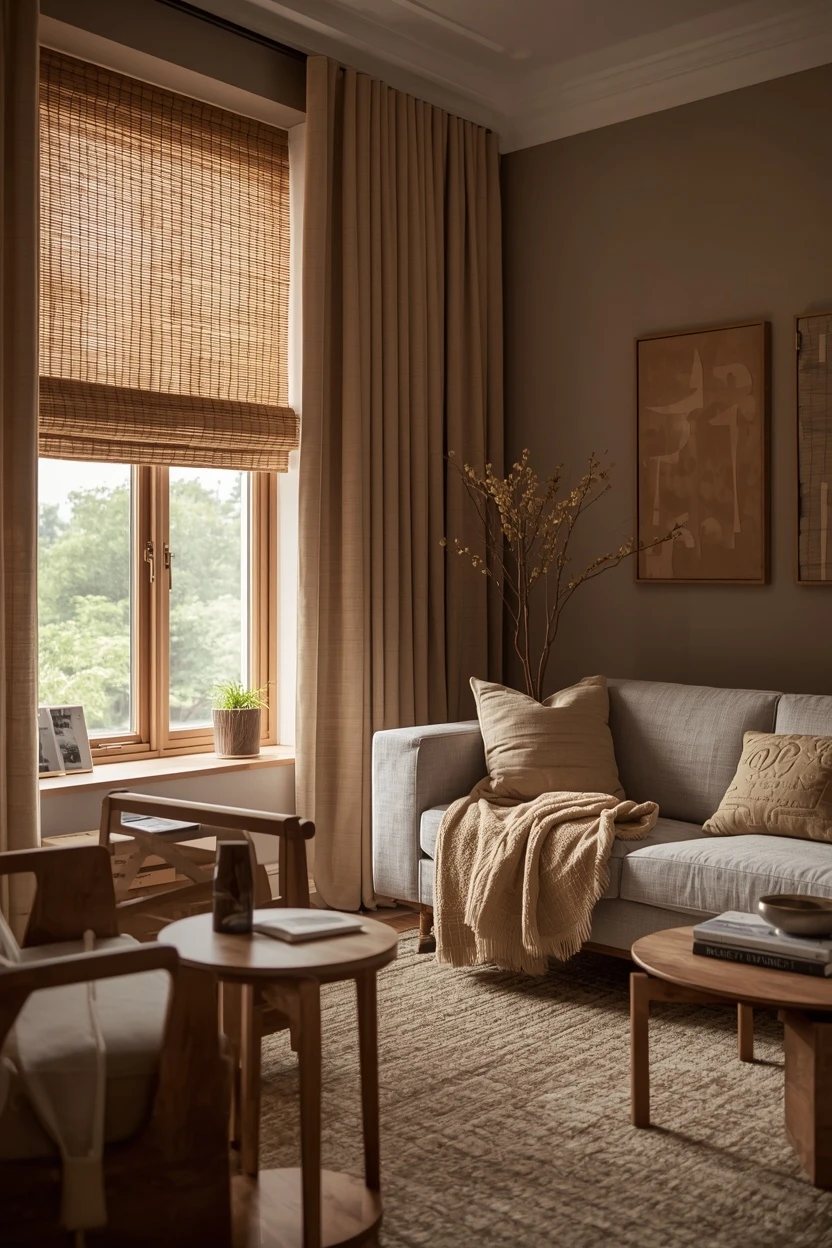
Good living room window treatment ideas go well beyond curtains — blinds, shutters, shades, and café styles each solve a different problem, and the right one depends on your light, your privacy, and how the window is shaped. The usual mistake is defaulting to a single pair of curtains for every window in the house, when a Roman blind or a plantation shutter would suit some rooms far better.
The sixteen designs below cover the full spectrum, from soft Roman blinds to crisp shutters to layered combinations, so you can match the treatment to the window rather than the other way round. Each is a complete living room you can recreate, with the fit, materials, and light control that make each option work. Think of it as a menu for dressing any window in the house, whatever its quirks.
1. Roman Blinds and Panels: Living Room Window Treatment Ideas for Layered Light
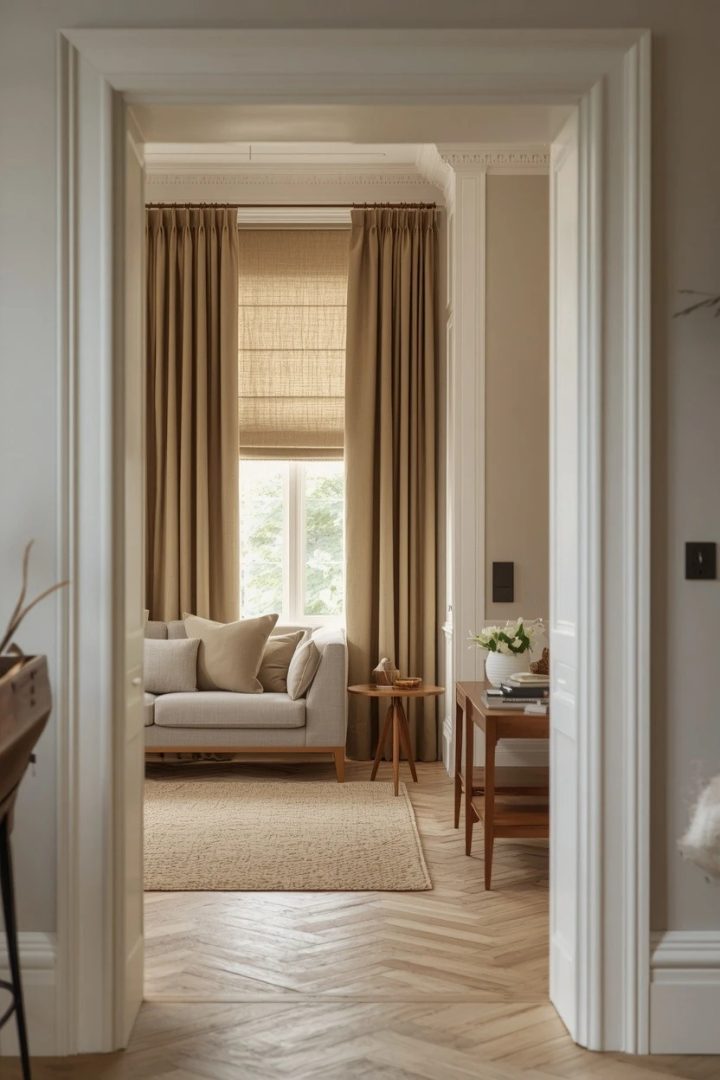
A soft Roman blind paired with static side panels is the most versatile treatment for a standard living room window. Fit a linen Roman blind inside the recess for adjustable light and privacy, then hang floor-length linen panels either side purely for softness and height, keeping them permanently open. Build a calm room around it — linen sofa, wool rug, oak furniture — so the layered window reads warm and considered. The blind does the work while the panels do the styling.
Mount the panels high and wide so they frame the window without ever covering the glass, and match the blind and panel fabrics in tone so the two elements read as one deliberate treatment.
2. Plantation Shutters for a Crisp, Timeless Room
Plantation shutters give a living room clean architecture and precise light control that fabric can't match. Fit full-height shutters in a warm white across the window, and build a fresh, classic room with a slipcovered sofa, natural rug, and warm wood so the crisp louvres read timeless rather than cold.
Tilt the louvres to filter light or angle them down for privacy while keeping the room bright. Shutters suit street-facing rooms especially well.
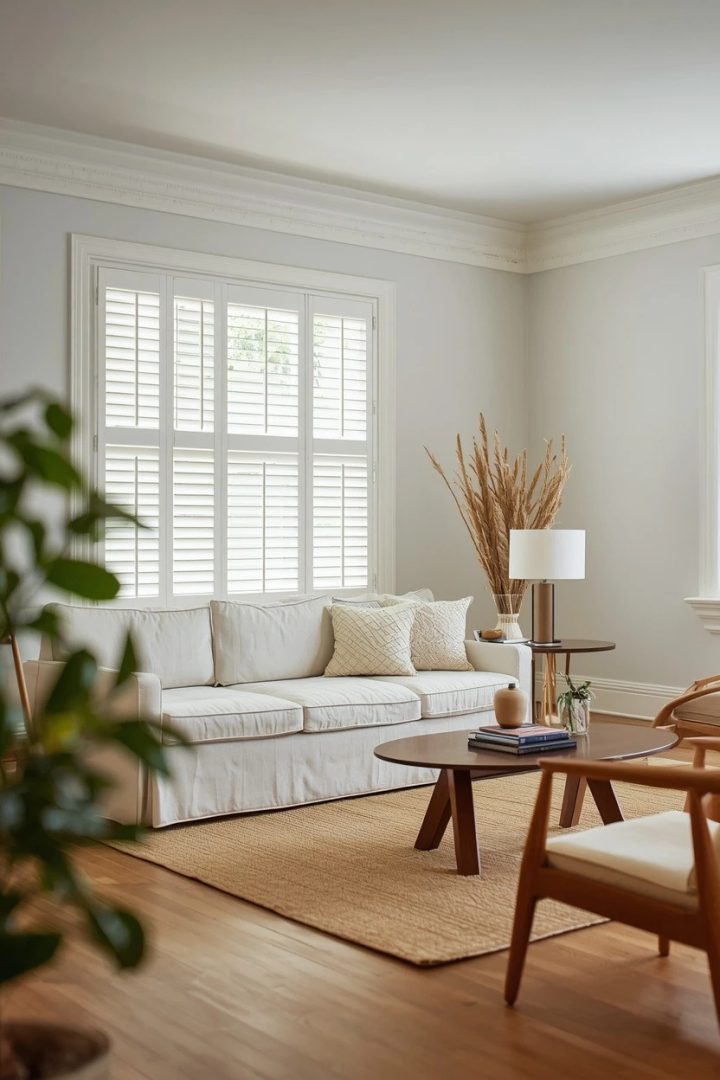
They're a bigger upfront investment than blinds, but they last for decades and add value, so measure carefully or have them fitted professionally — shutters that bind or leave gaps at the frame undo the whole crisp, tailored effect they're chosen for.
3. Woven Wood Blinds for a Warm Natural Room
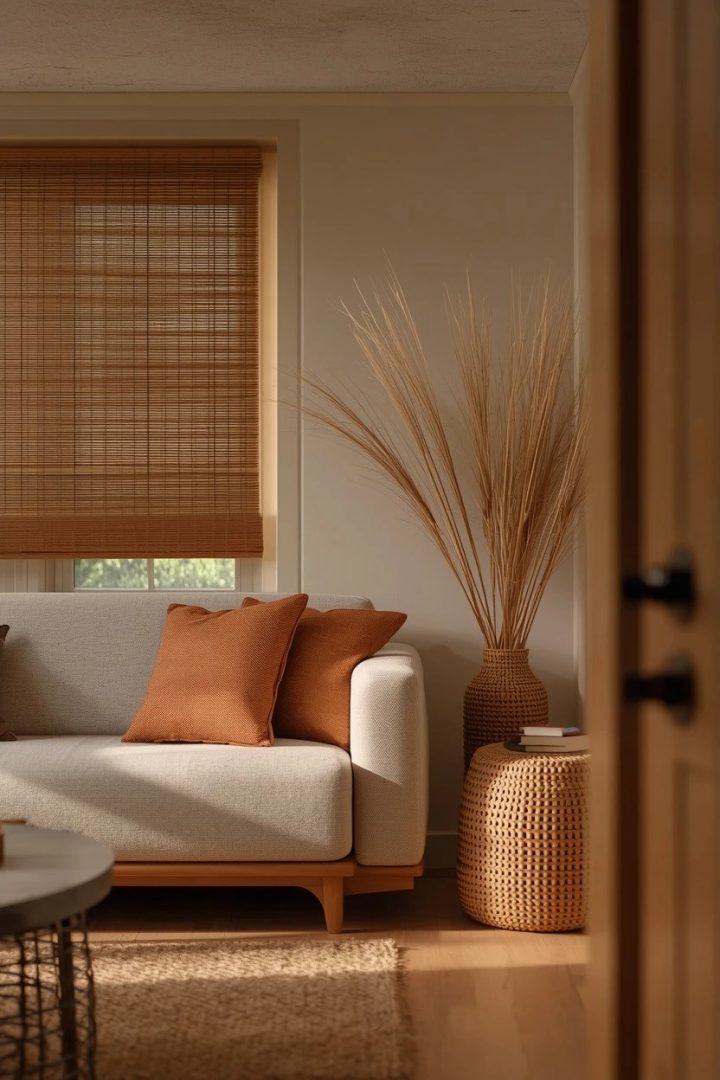
Woven wood or bamboo blinds bring instant texture and warmth to a living room and filter light with a lovely honeyed glow. Fit them inside the recess in a mid-toned natural weave, and pair with a relaxed organic scheme — a boucle sofa, jute rug, rattan accents, and warm wood — for a calm, textural room. The weave lets soft light through by day while the blind lowers fully for privacy. Add a linen side panel if you want the option of full darkness. Choose a blind with a privacy or blackout lining if the room faces the street, because unlined woven blinds glow beautifully but let shadows through after dark, which matters more in a living room than people expect.
4. Roller Shades for a Clean Minimalist Room
For a pared-back modern room, a simple roller shade is the cleanest of all these window treatments. Fit a plain roller in a soft neutral or a light-filtering fabric, mounted inside the recess so it disappears when raised and reads as a clean panel when down. Build a minimalist room around it — a low sofa, a large tonal rug, clean-lined furniture — so nothing competes with the calm.
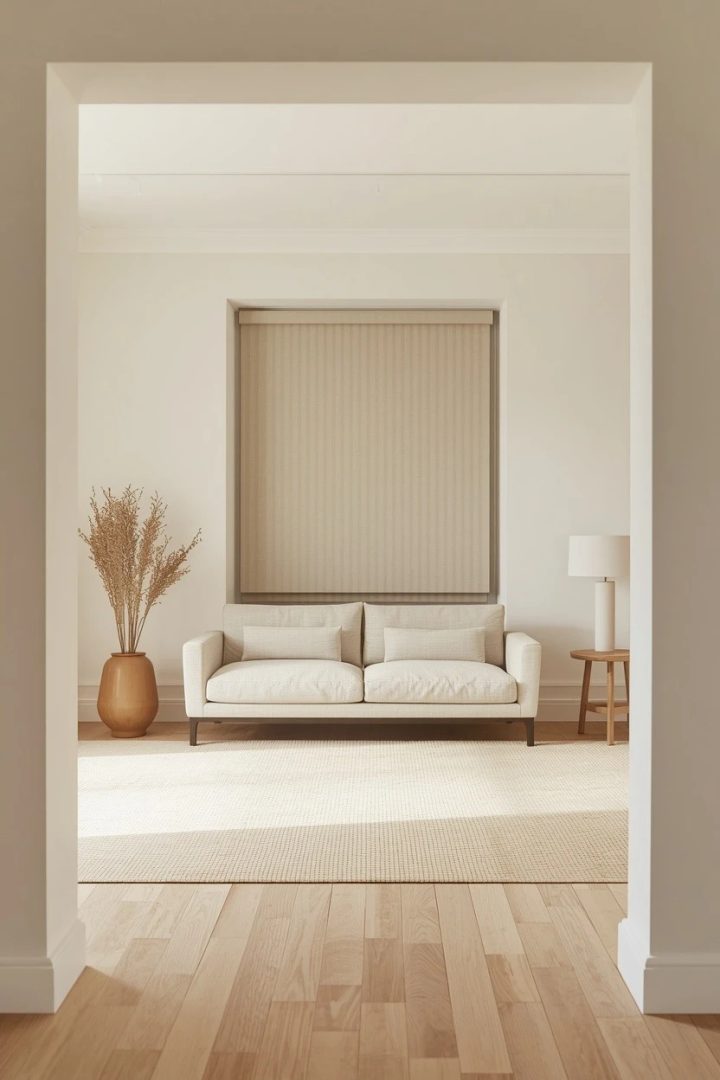
Roller shades suit small or awkward windows especially well. Choose the fabric weight to match the room's needs: a light-filtering roller keeps a bright room soft, while a blackout roller suits a media room, and a dual roller with both on one bracket gives you the choice without any curtains at all.
5. Café-Style Half Shutters for Privacy Without Gloom
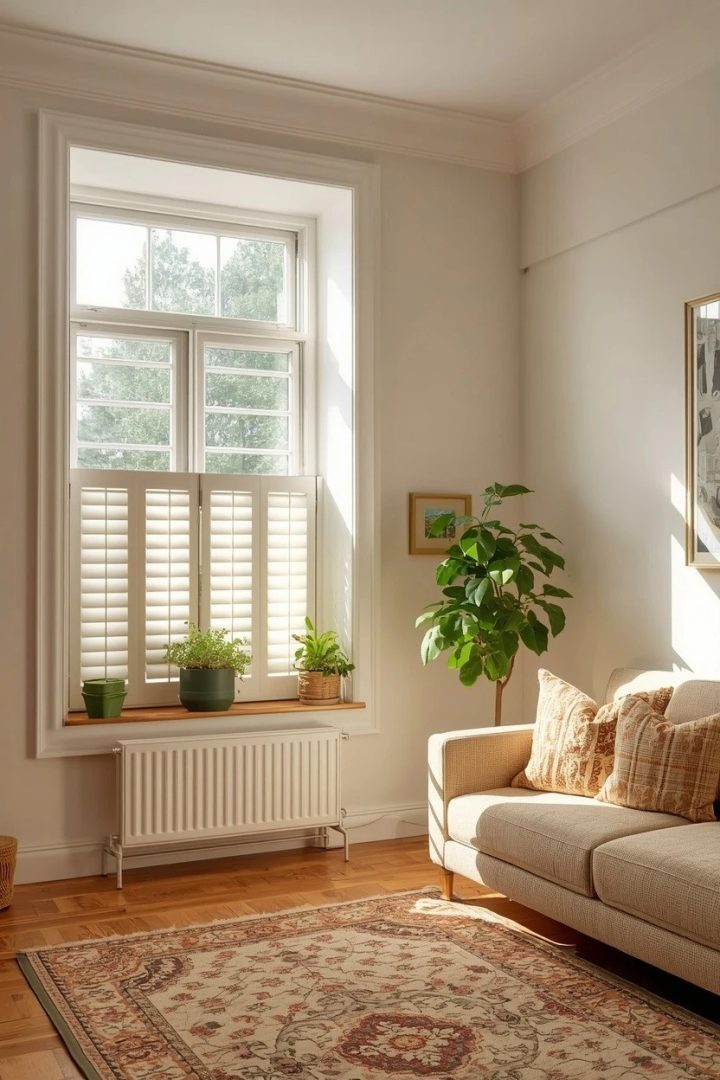
Café-style shutters cover only the lower half of the window, giving street-level privacy while letting daylight pour in above. Fit warm white café shutters across the bottom of a front-facing window, and pair with a bright, characterful room — a patterned rug, a comfortable sofa, and plenty of plants on the sill above. The upper glass stays clear for maximum light. This is the perfect answer for a ground-floor room overlooked from the pavement.
Add a simple Roman blind or a panel above if you occasionally want to close the top too, but for many rooms the half-shutter alone solves the privacy problem while keeping the space far brighter than a full covering would.
6. Cellular Shades for an Energy-Smart Cosy Room
Cellular or honeycomb shades trap air in their folds, adding real insulation to a living room while looking clean and soft. Fit them inside the recess in a warm cream, and build a snug room with a deep sofa, a plush rug, and warm lighting so the practical shade sits within a comfortable scheme.
The honeycomb structure cuts draughts and heat loss at the window, which matters in older homes. They raise from the bottom or lower from the top for flexible light and privacy.
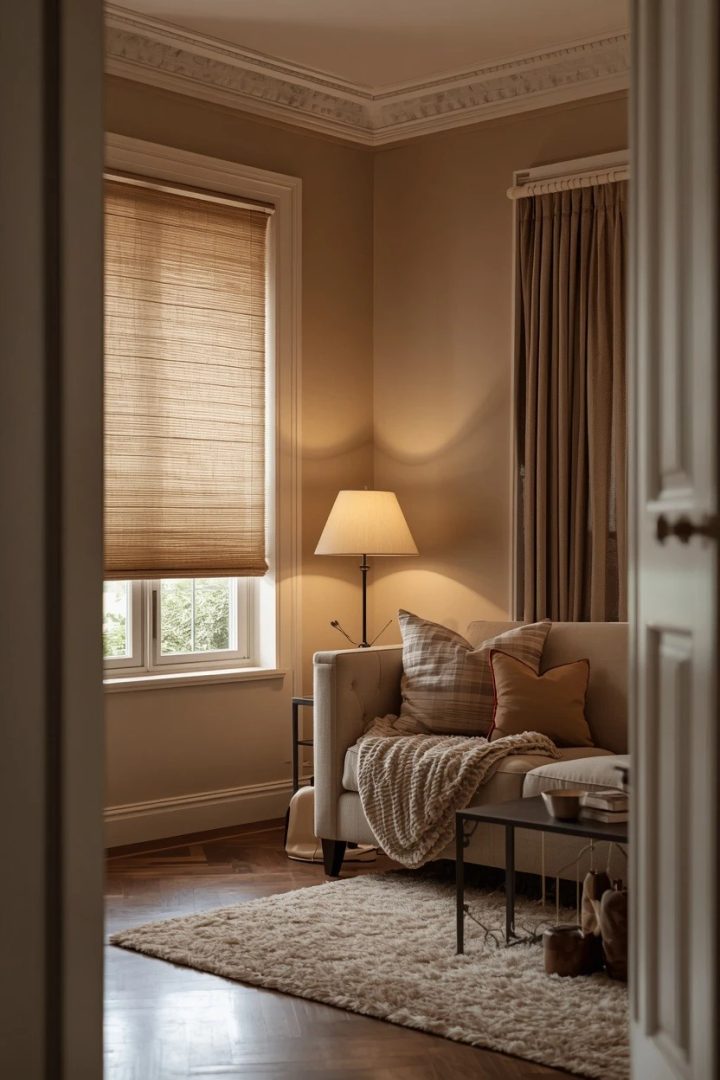
Choose a room-darkening cell for a cooler, cosier room or a light-filtering one to keep things bright — the insulation benefit is the same, and it's a quietly practical choice for a north-facing or draughty living room.
7. Café-Style Living Room Window Treatment for a Bright Characterful Room
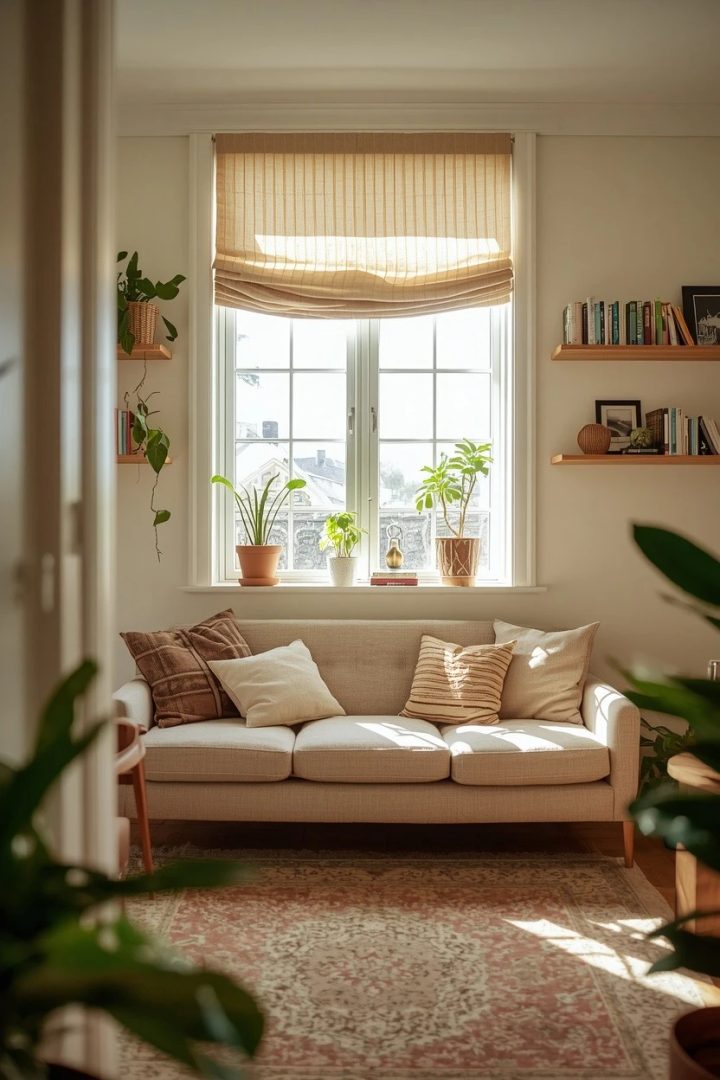
Beyond shutters, a café curtain hung across the middle of the window on a slim rod gives soft, cottage-style privacy while keeping the top light open. Hang a short panel of light linen or a fine print halfway up a front window, leaving the upper glass clear, and build a warm, characterful room with a comfy sofa, a vintage rug, and shelves of books and plants. The half-height curtain filters the view without darkening the room. This suits a cosy, informal living space beautifully. Keep the café panel light in both colour and weight so it reads as a soft veil rather than a heavy band across the window, and it will add charm without stealing any of the daylight.
8. Layered Blind-and-Curtain Combination for Full Control
Combining a blind with full curtains gives a living room every option — soft light, full privacy, and complete darkness. Fit a neutral Roman or roller blind inside the recess and hang floor-length curtains over it, so you can use the blind alone by day and add the curtains for warmth and blackout at night. A calm neutral room lets the layered treatment sit quietly.
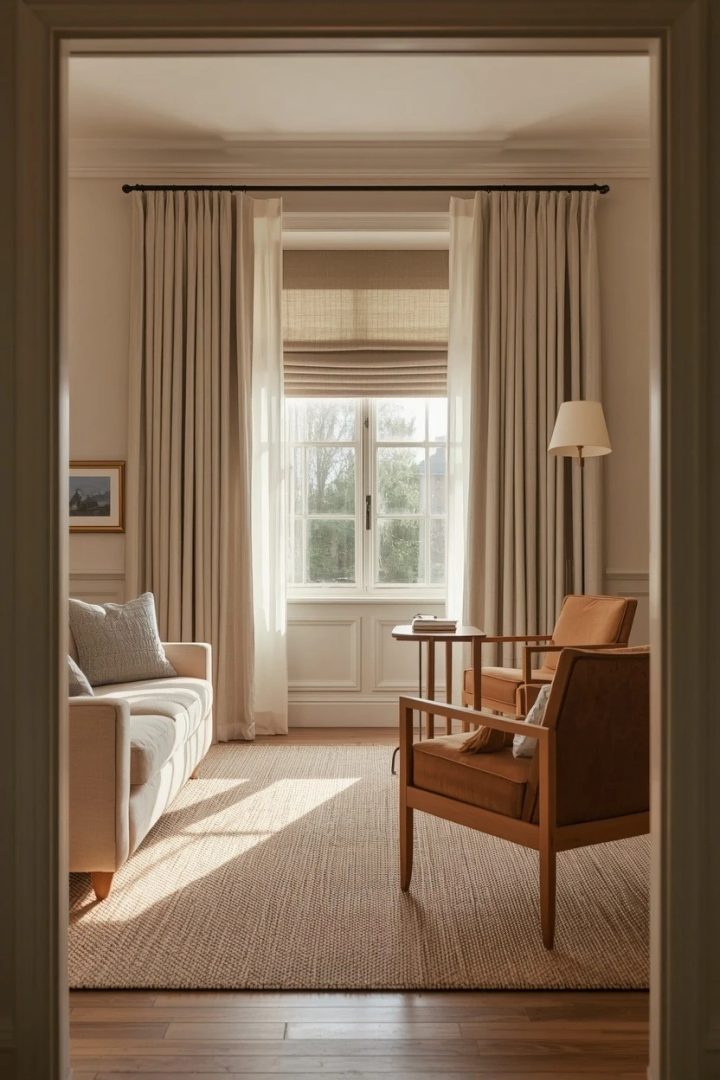
This is the most flexible setup for a main living space. Keep the blind and curtains in the same tonal family so the combination reads as one considered treatment rather than two competing ones, and mount the curtains high and wide so they frame the window while the blind does the practical light control.
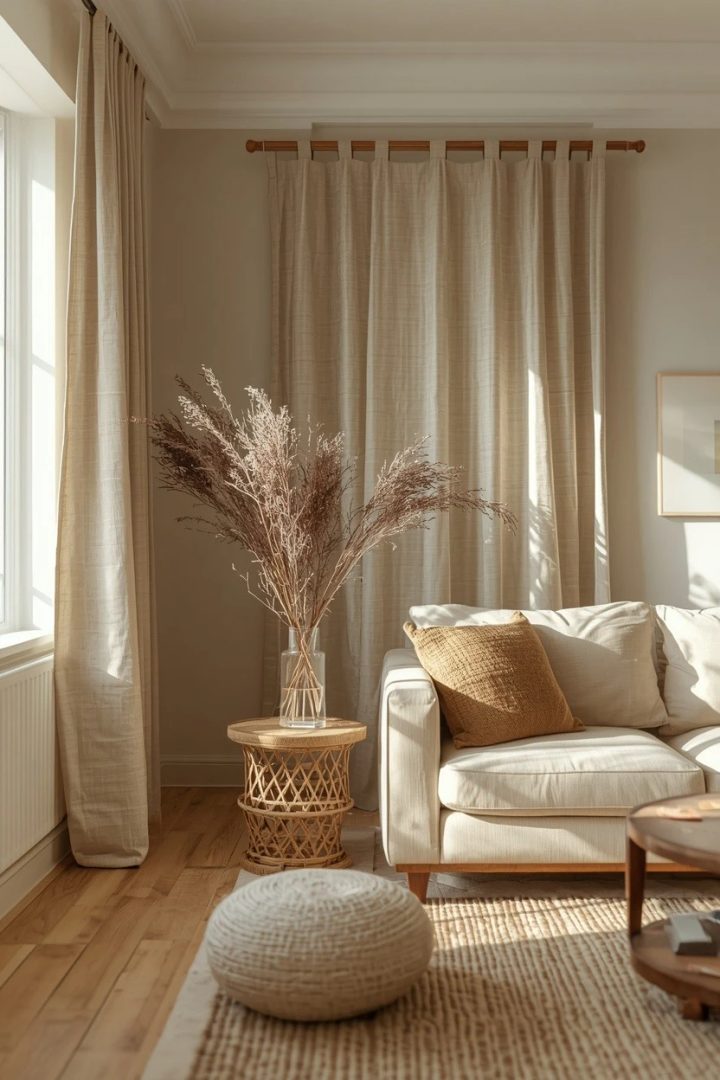
9. Tab-Top Linen Panels for a Relaxed Casual Room
Tab-top or tie-top linen panels give a soft, informal window treatment that suits a laid-back living room. Hang loose natural linen panels from a simple wooden pole, letting them fall in easy folds for an unfussy, lived look, and build a relaxed room with a slipcovered sofa, a natural rug, and plenty of texture. The casual heading reads warm and unpretentious. These panels move easily and suit a room you actually use.
Choose a linen with a bit of weight so the tabs hang straight rather than gaping, and accept that tab-tops don't fully close as neatly as a track — they suit rooms where you rarely need total privacy and want softness over precision.
10. Dark Roman Blinds for a Moody Snug Living Room
A deep-toned Roman blind turns a small living room into an intimate snug. Fit a lined Roman blind in a rich navy, forest green, or charcoal inside the recess, and build a cocooning room with a deep sofa, warm brass lighting, and a patterned rug so the dark blind anchors a moody scheme.
The lining gives good light control for evening use. Keep the walls warm and the lighting layered so the room stays snug rather than dim.
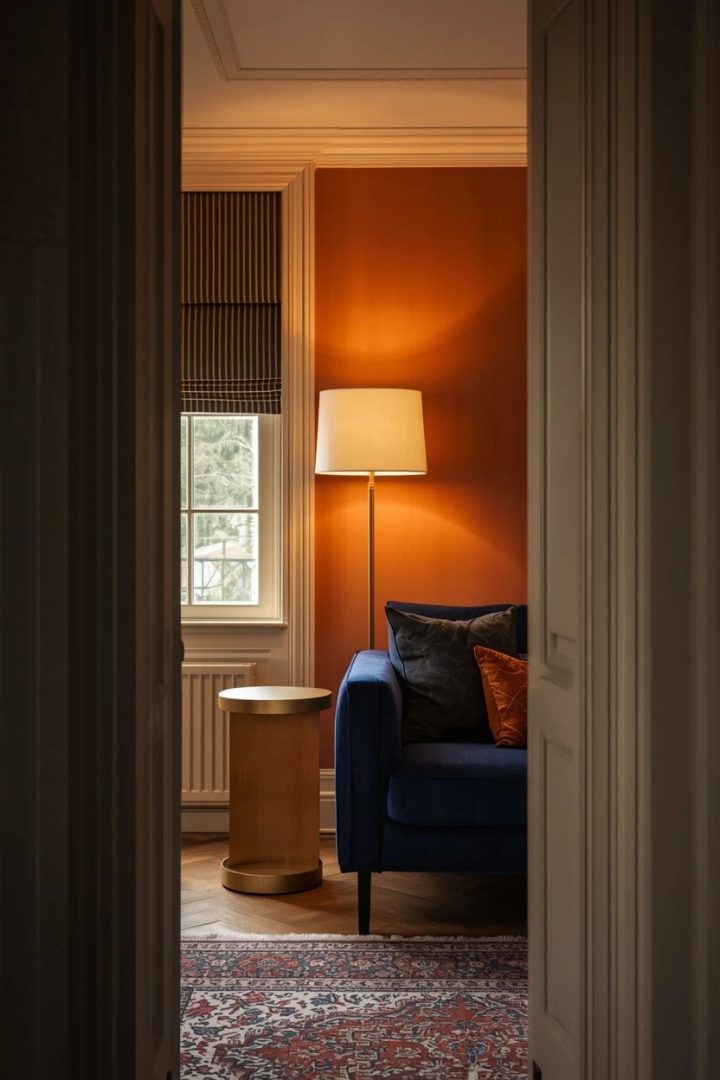
A dark blind works best in a room you use mostly at night, and pairing it with two or three warm light sources rather than a single overhead is what keeps the moody scheme inviting instead of gloomy after dark.
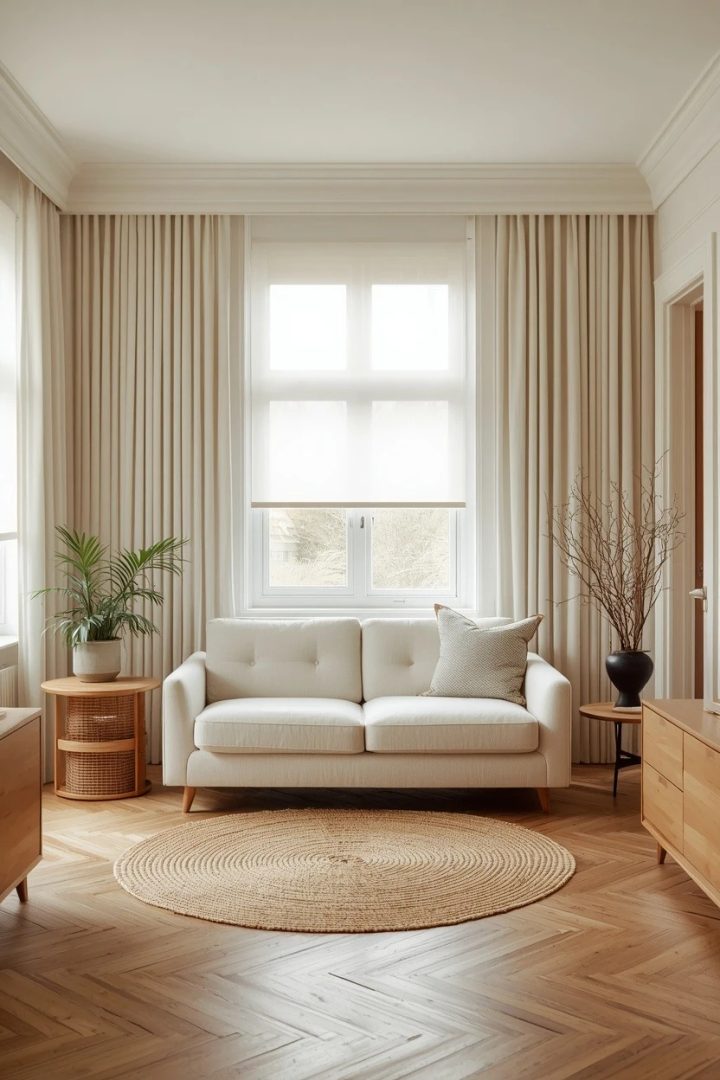
11. Sheer Roller and Curtain Combo for a Soft Bright Room
A sheer roller shade behind curtains gives softness and daytime privacy without heavy layering. Fit a translucent sheer roller inside the recess to diffuse light and blur the view, then hang light neutral curtains either side for framing and evening cover. Build an airy room with a pale sofa, a jute rug, and plenty of light wood. The sheer roller keeps the room bright while softening glare and passers-by. This is a lighter alternative to double curtains and suits a bright daytime living space. Raise the sheer roller fully when you want the clear view and lower it to soften harsh midday sun, using the side curtains only in the evening for privacy and warmth.
12. Full-Height Shutters for a Wide Bay Window
A bay window suits shutters beautifully, since each section can be fitted and angled independently. Fit full-height shutters across every pane of the bay in a warm white, so you control light and privacy in each part of the curve, and set a window seat or a pair of chairs within the bay to enjoy the light. A calm neutral room lets the crisp shutters lead.
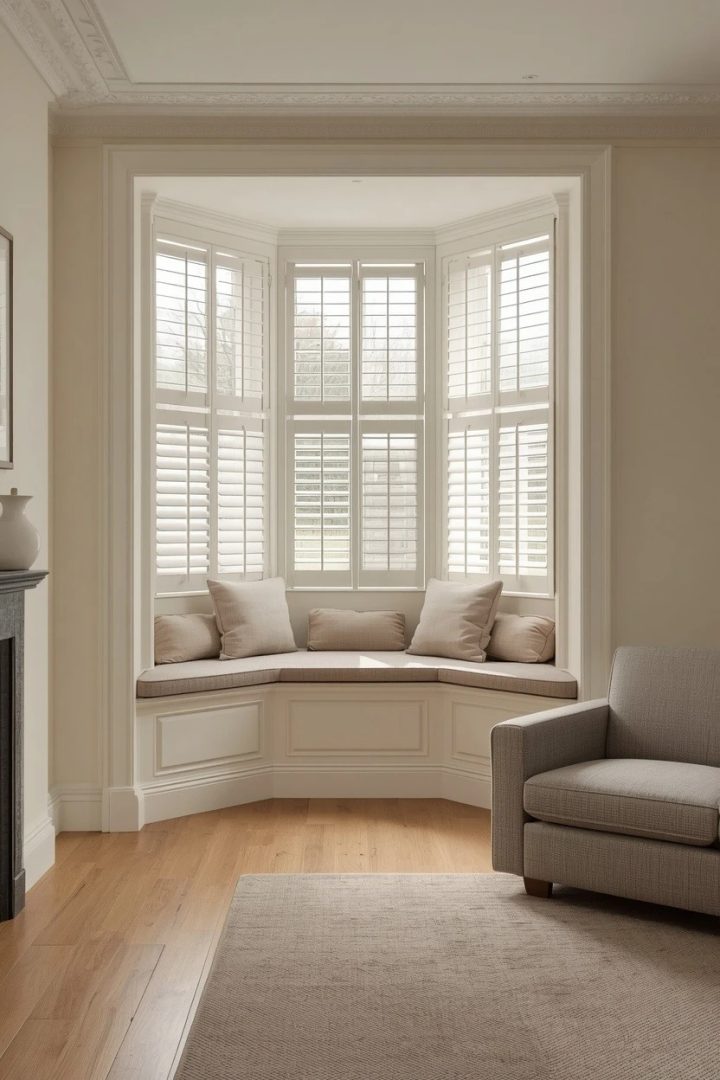
The independent panels handle the bay's angles far better than a single curtain track. Have bay shutters templated and fitted professionally, because the angled sections need precise measurement to close cleanly — a well-fitted bay of shutters is a showpiece, while a poorly measured one gaps at every join.
13. Roman Blind With a Soft Pelmet for a Traditional Room
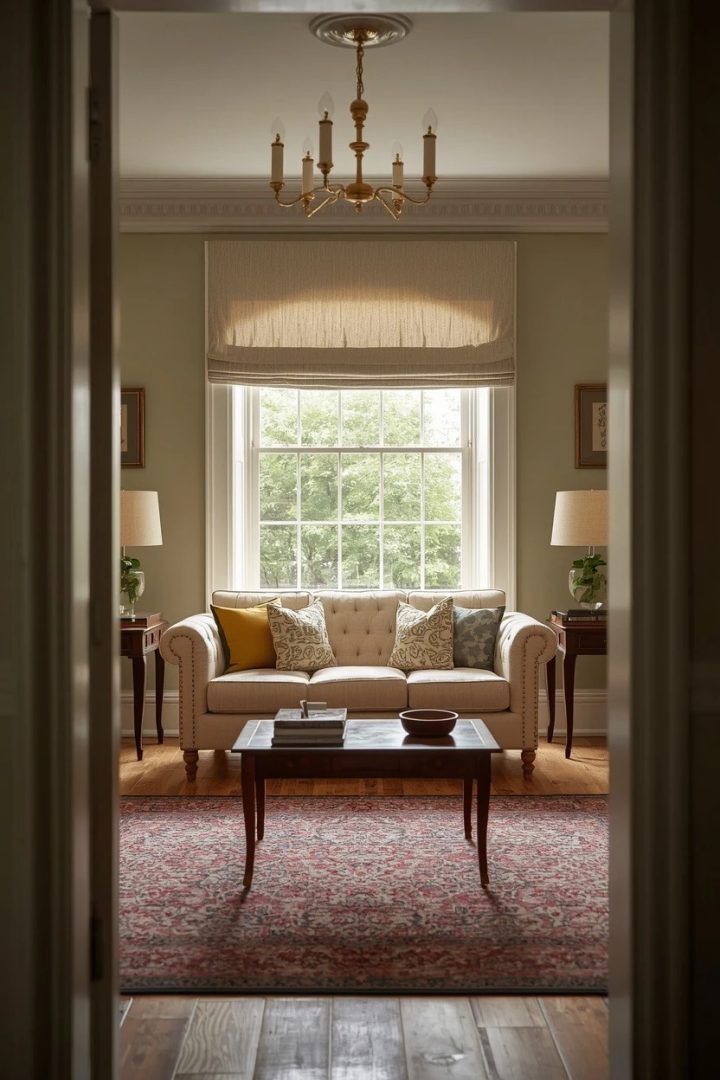
Topping a Roman blind with a soft upholstered pelmet gives a traditional living room a tailored, finished top. Fit a patterned or plain Roman blind and add a shallow padded pelmet across the top in a coordinating fabric, so the hardware is hidden and the window reads as one upholstered whole. Pair with a classic sofa, a traditional rug, and warm wood for a timeless room. The pelmet adds a soft, dressmaker touch.
Keep the pelmet shallow so it frames rather than shortens the window, and choose a fabric that either matches the blind or picks up one colour from the room, so the treatment reads coordinated rather than like two separate patterns stacked together.
14. Matchstick Blinds for a Breezy Coastal Room
Light matchstick or split-bamboo blinds suit a breezy, coastal-leaning living room where you want texture and easy light. Fit pale matchstick blinds inside the recess and pair with a fresh scheme of a slipcovered sofa, a sisal rug, driftwood tones, and soft blue accents.
The fine slats filter a gentle, dappled light that suits a relaxed room. Add a white linen panel if you need occasional full cover.
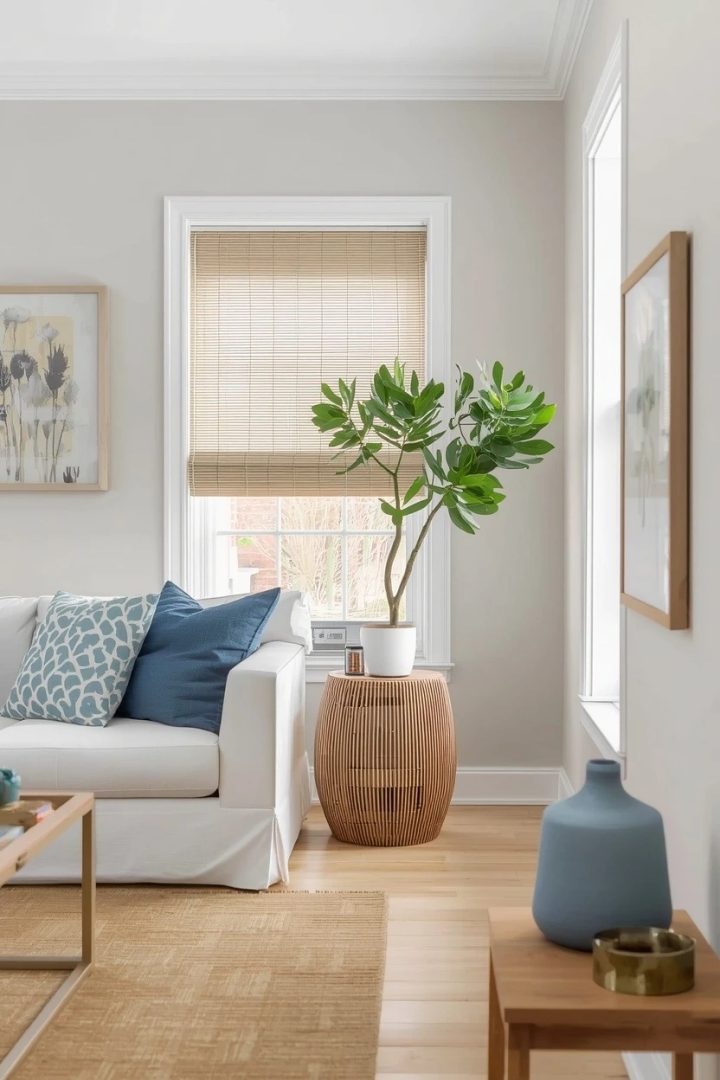
Matchstick blinds are inexpensive and full of character, but the slats let more light and view through than solid blinds, so they're best in rooms that aren't heavily overlooked, or paired with a simple liner or side panel where privacy matters more.
15. Living Room Window Treatment Ideas for Wide Picture Windows
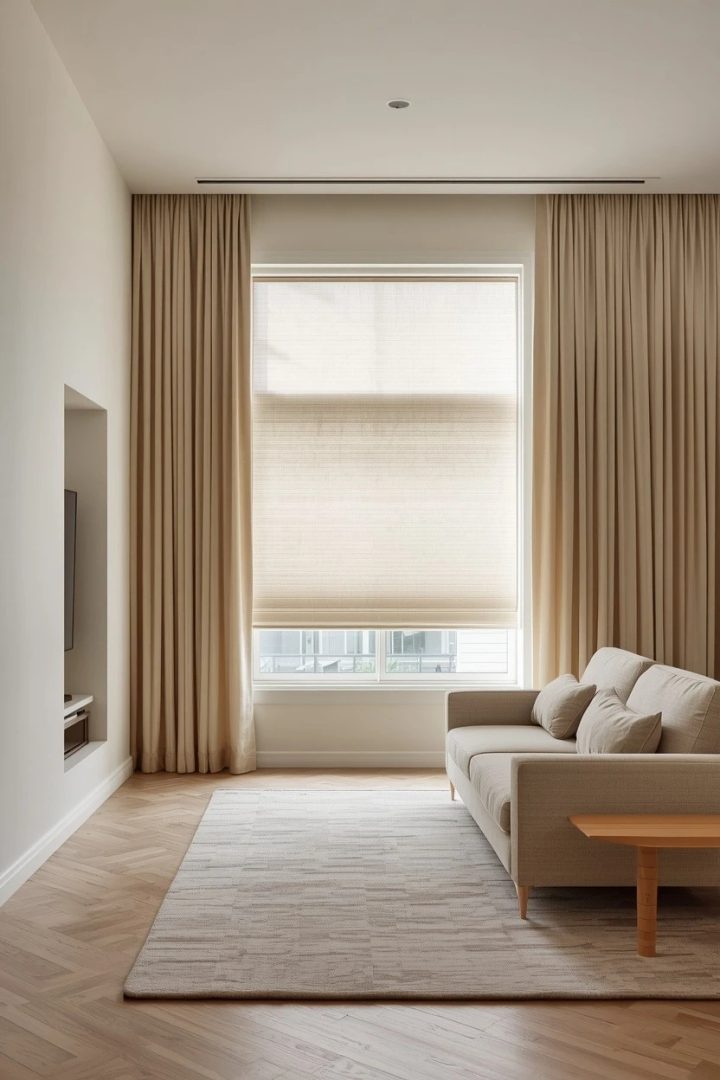
A wide picture window is about the view, so the treatment should frame it and control glare without hiding it. Fit a slim recessed roller or a sheer shade that disappears completely when raised, and add wide side panels that stack fully onto the wall beyond the glass, so the whole view is open by day. Face the sofa toward the window and keep the room calm and neutral. The treatment tames harsh light and adds evening privacy while keeping the picture window as the star. Size everything to clear the glass entirely when open — on a picture window, any blind or fabric left sitting over the view by day defeats the entire reason you have that window.
16. Shutters and Curtains Together for a Layered Classic Room
Combining shutters with soft curtains gives a classic living room both crisp architecture and gentle softness. Fit warm white shutters for precise light and privacy control, then hang floor-length curtains either side purely for warmth and to soften the hard louvred lines, keeping them mostly open. Build a refined room with a classic sofa, a large rug, and warm brass lighting.
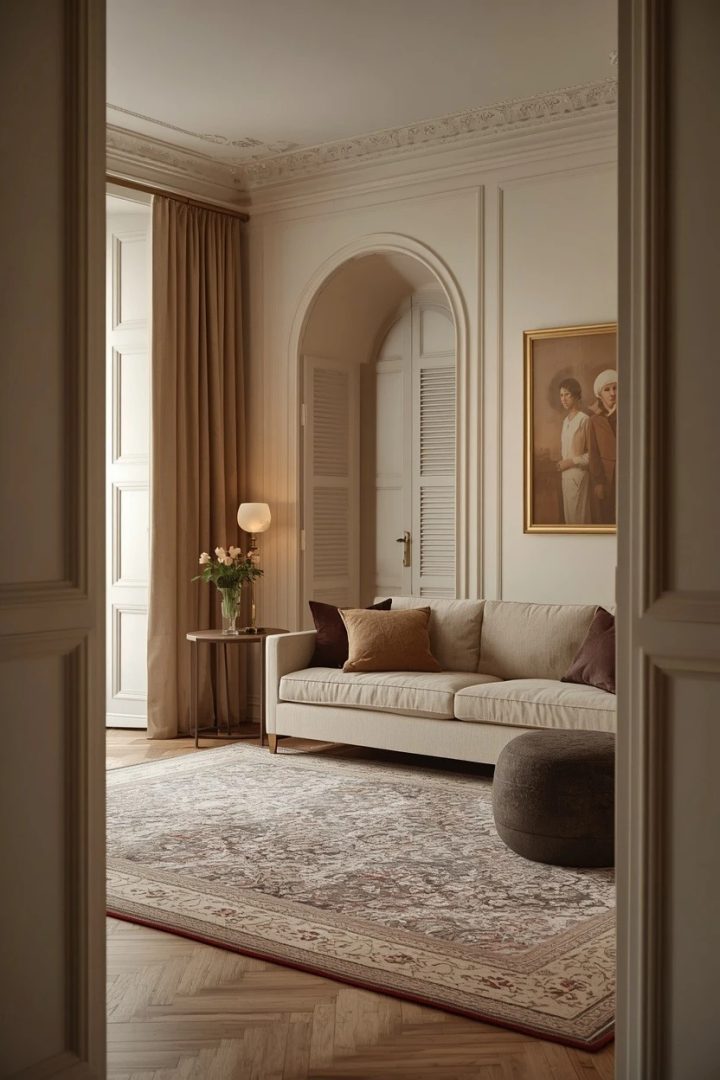
The shutters do the practical work while the curtains add the soft frame. Keep the curtains a warm neutral that complements the white shutters, and hang them high and wide so they never cover the shutters — the two treatments should read as a deliberate pairing, hard and soft together, rather than one hiding the other.
Where I'd Start if I Only Did Three Things
If I only did three things, I'd start by matching the treatment to the window rather than defaulting to curtains, since the best living room window treatment ideas fit the light and privacy of each room — a Roman blind here, a shutter there. Next I'd add a static side panel to any blind or shutter, because a soft floor-length panel frames the window and adds the height that hard treatments lack. Then I'd sort light control honestly, choosing a lined blind or blackout layer wherever the room faces the street or gets used at night.
Frequently Asked Questions
What are the best living room window treatment ideas for a lot of privacy?
Plantation shutters and café-style half shutters give excellent privacy while still letting light in, since you can angle the louvres or cover just the lower half of the window. A lined Roman blind or a blackout roller is also effective for full evening privacy. For the most flexibility, layer a blind with curtains so you can keep the room bright by day and fully private at night.
Are blinds or curtains better for a living room?
It depends on the window and the room's use. Blinds and shutters give precise light control and suit small, awkward, or street-facing windows; curtains add softness, warmth, and height. Many rooms look best with both — a blind or shutter for practical control and side curtains for framing and softness. Match the treatment to the window rather than using the same thing everywhere.
What window treatment makes a living room look bigger?
Recessed blinds or shutters that sit neatly within the frame keep the walls clean and uncluttered, while side curtains hung high and wide draw the eye up and out. Keeping the treatment close to the wall colour helps it recede. Avoid heavy, dark, fussy treatments in a small room; clean lines and light, high-hung fabric make a living room read taller and more open.
How do I choose a window treatment for an odd-shaped window?
For bays, shutters or a bendable curtain track that follows the angles work best; for tall or picture windows, a recessed roller or sheer with wide side panels keeps the view open; for small or awkward windows, a simple roller or Roman blind inside the recess is cleanest. The rule is to fit the treatment to the window's shape and use, and to have tricky windows like bays templated and fitted professionally.
Final Thoughts
The best living room window treatment ideas come from matching the treatment to the window rather than reaching for curtains every time — a shutter for a street-facing room, a woven blind for texture, a layered blind-and-curtain combination for full control. Choose for the light and privacy each window needs, add a soft side panel for height, and be honest about light control, and every window in the room will read as considered rather than an afterthought.