16 Living Room Window Ideas That Transform Any Space
July 8, 2026 · 12 min read
 By Khawar Iqbal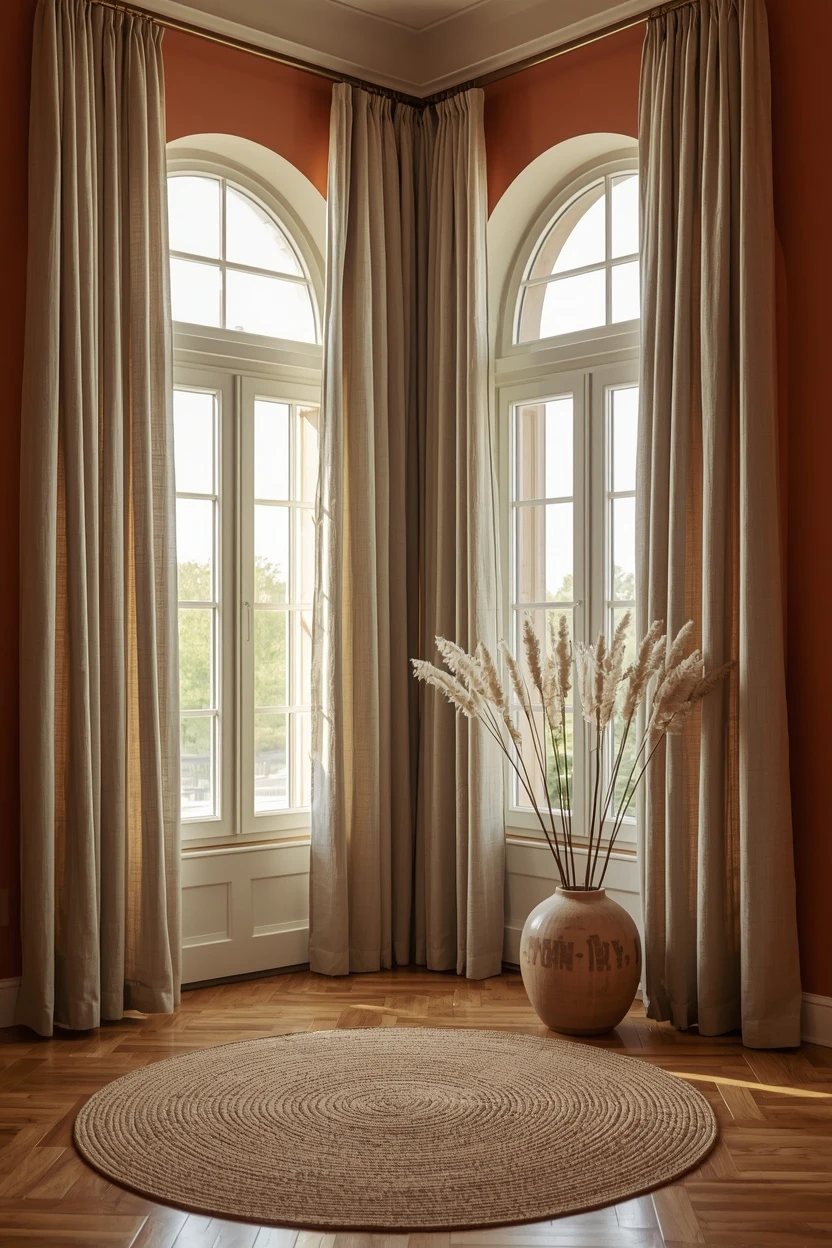
Most people pick curtains based on colour alone and call it done, which is exactly why so many living rooms look like catalogue copies of each other. The window is one of the largest visual surfaces in any sitting area, and when you treat it as a design opportunity rather than an afterthought, the entire room shifts. These living room window ideas go well beyond a simple panel swap — they cover framing, glass choices, hardware, layering, and valance work that turns a flat rectangle into an architectural feature.
Whether you are working with a single narrow pane or a wide bay, the goal is the same: let the window do more for the room than just bring in daylight. Below you will find sixteen approaches that range from minimal hardware upgrades to full treatment overhauls, each one a complete look you can adapt to your own proportions and palette.
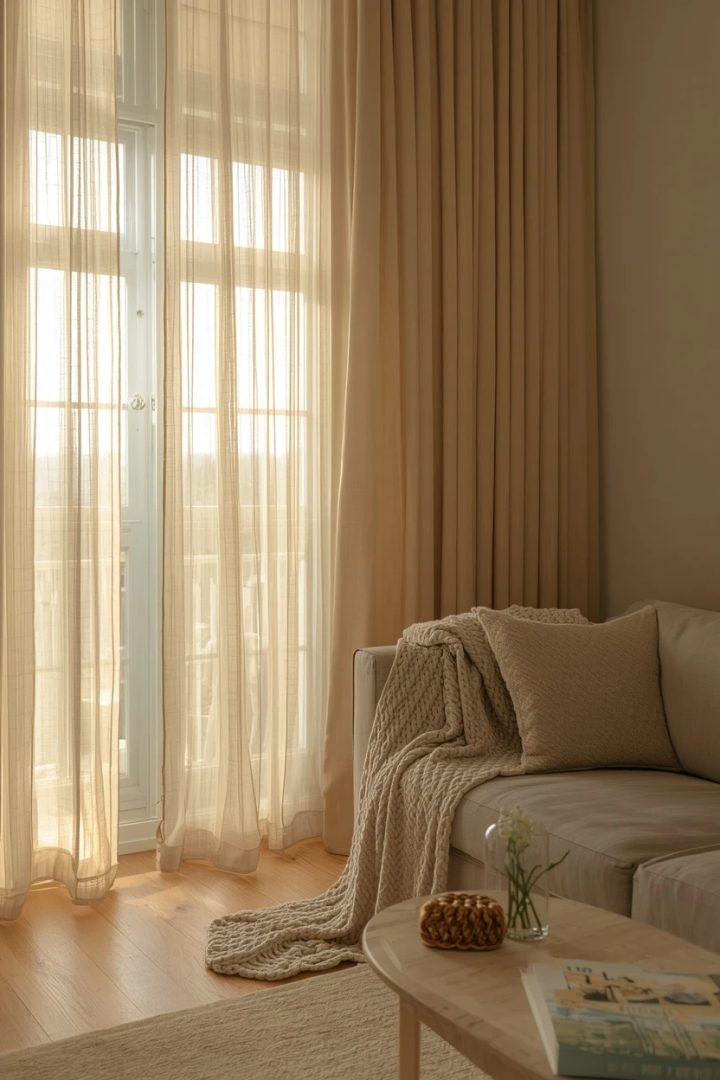
1. Floor-to-Ceiling Sheer Linen Panels
Mounting your curtain rod tight against the ceiling line and letting sheer linen panels pool an inch on the floor is the fastest way to add height without construction. Choose a rod that extends four to six inches beyond each side of the frame so the fabric stacks off the glass when drawn open, giving you full light during the day. A warm ivory or oat linen reads softer than pure white and picks up warm tones from wood flooring. Keep the header a simple rod pocket or clip ring — pinch pleats look too formal for this relaxed approach. The pooling at the base adds a lived-in quality that photographs beautifully and makes even a seven-foot ceiling appear taller.
2. Arched Window Frame Overlay
If your living room has standard rectangular windows, an arched trim overlay transforms them into something that looks original to the house. You can order prefabricated arch moulding kits online or have a carpenter build a custom surround from MDF. Paint the arch the same colour as your wall for a subtle sculptural effect, or go two shades darker to create contrast.
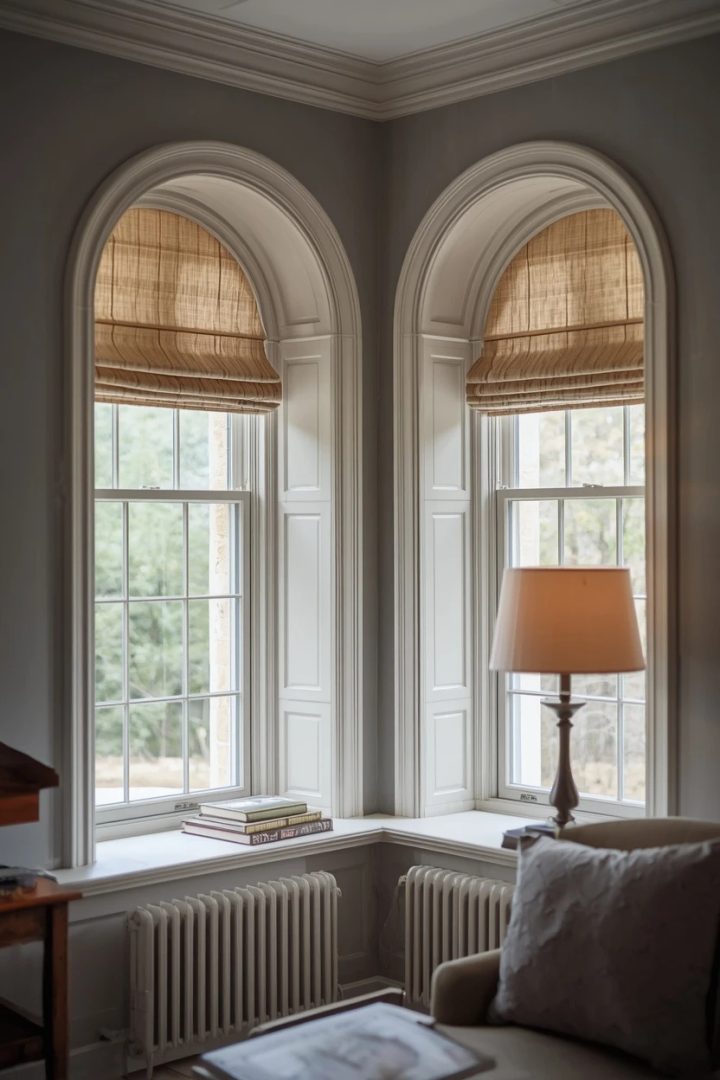
This treatment pairs well with simple Roman shades mounted inside the arch rather than curtains that would hide the shape. The arch draws the eye upward and adds a European quality to builder-grade construction — a detail that looks expensive but typically costs under three hundred dollars per window.
3. Tailored Box Valance in Living Room Window Ideas
A box valance — sometimes called a pelmet — gives your window a structured crown that hides curtain hardware and adds a custom look. Build the frame from lightweight plywood, wrap it in upholstery fabric, and mount it with L-brackets above the window casing. The ideal depth is about five inches to clear the curtain rod behind it, and the drop should be roughly one-sixth of the total window height. Choose a fabric that contrasts with your curtain panels: a bold geometric over solid linen, or a rich velvet over a cotton blend.
This is one of the strongest living room valance ideas for adding a designer layer without a designer budget.
4. Black Iron Hardware With Neutral Drapes
Swapping builder-grade brushed nickel rods for matte black iron hardware instantly grounds your window treatment. Look for rods with a one-and-a-quarter-inch diameter — anything thinner looks flimsy at wide spans.
Pair the dark hardware with neutral linen or cotton drapes in stone, flax, or mushroom tones so the rod becomes a deliberate accent line across the top of the wall. Use matching black iron holdbacks or simple leather tie-backs to keep the look cohesive.
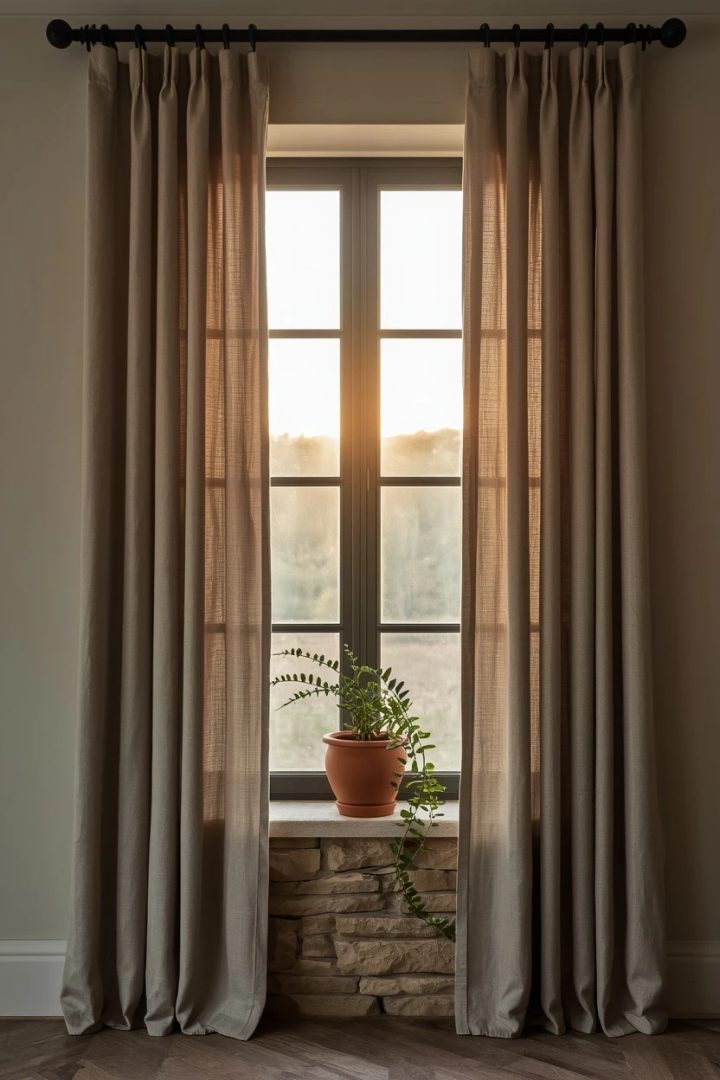
The contrast between dark metal and soft fabric creates a grounded, considered composition that prevents the window from blending into the wall.
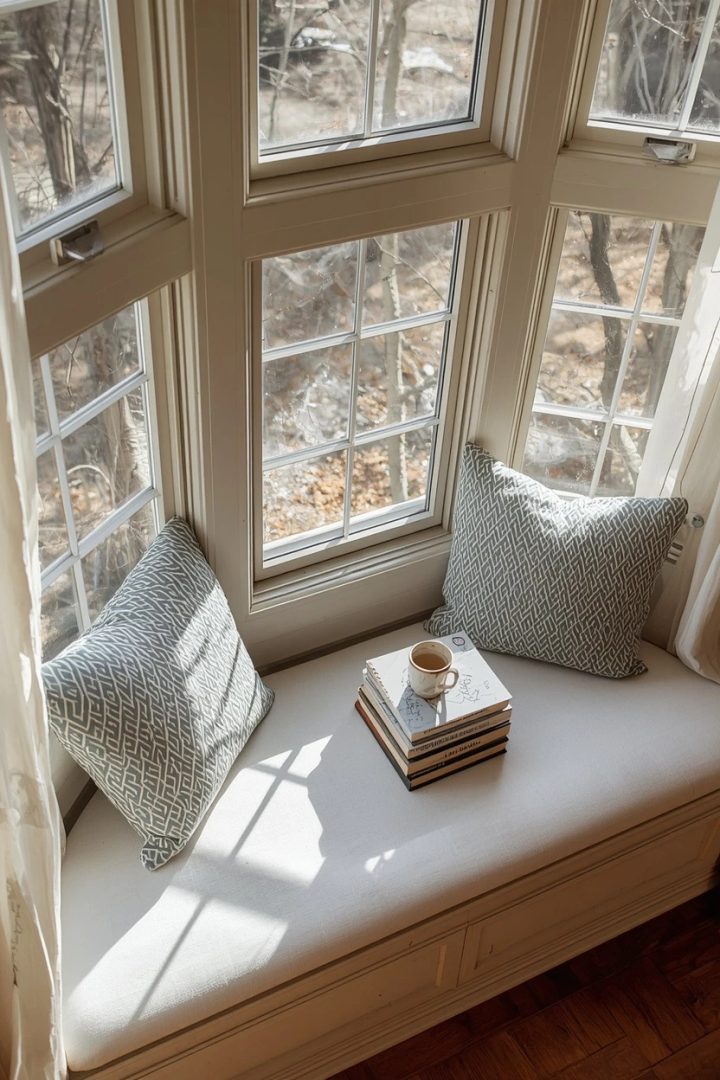
5. Bay Window Bench With Integrated Storage
A bay window is wasted if you just hang curtains and move on. Building a bench seat that spans the bay turns dead space into the most used spot in the room, and adding hinged lids gives you hidden storage for throws, board games, or seasonal cushions. Use three-quarter-inch plywood for the seat platform and ask your carpenter to match the base moulding to what already runs along your walls. Top it with a custom cushion in a durable indoor-outdoor fabric — Sunbrella is worth the upcharge because it resists fading and spills. Scatter two or three lumbar pillows in complementary prints to tie the bench into your living room palette.
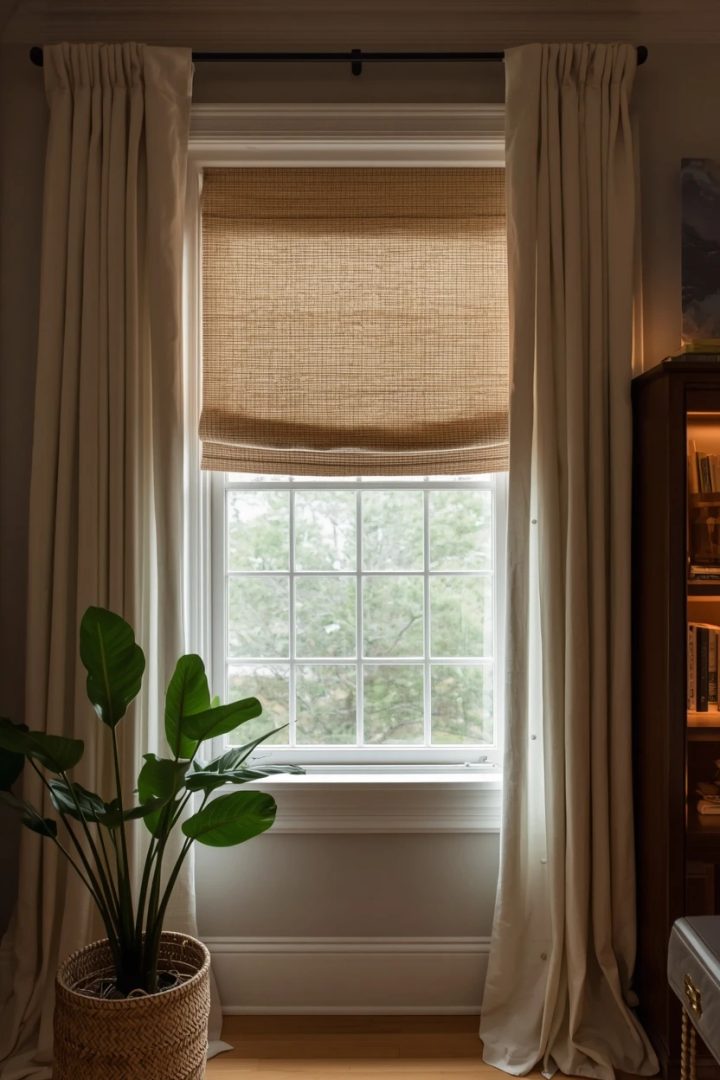
6. Layered Roman Shade and Curtain Combo
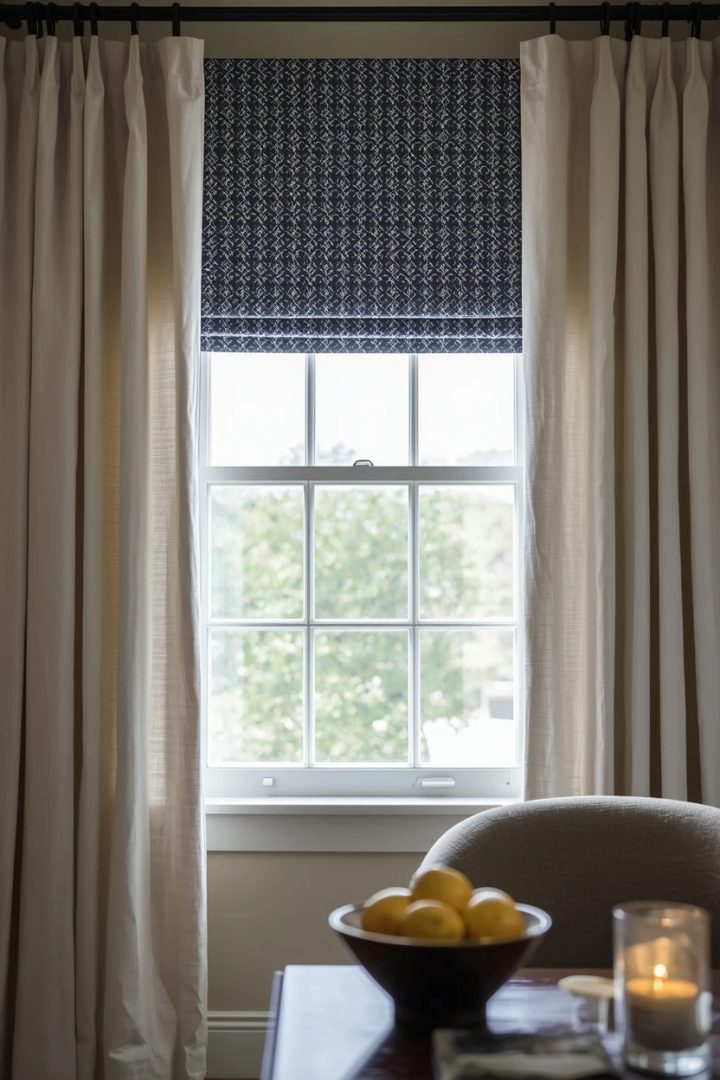
Layering a flat Roman shade behind a set of side curtain panels gives you the best of both worlds: privacy control from the shade and softness from the drapes. Mount the shade inside the window casing and the curtain rod on the wall above it. Pick the shade in a pattern or textured weave and keep the curtains solid, or reverse the combo — just avoid doubling patterns at the same scale. When the shade is raised, it tucks into a neat stack that stays hidden behind the valance line of the curtain header.
This layered approach also improves insulation, which matters if you have older single-pane glass.
7. Stained Glass Accent Panel for Character
You do not need a full stained glass window to get the effect. A single accent panel hung from a suction-cup bracket or a small chain in front of an existing pane adds colour and craftsmanship without permanent modification.
Look for vintage panels at architectural salvage shops — they come in sizes that fit neatly inside standard casings. Position the panel in the upper third of the window so it catches the most direct light and casts coloured shadows into the room during the afternoon.
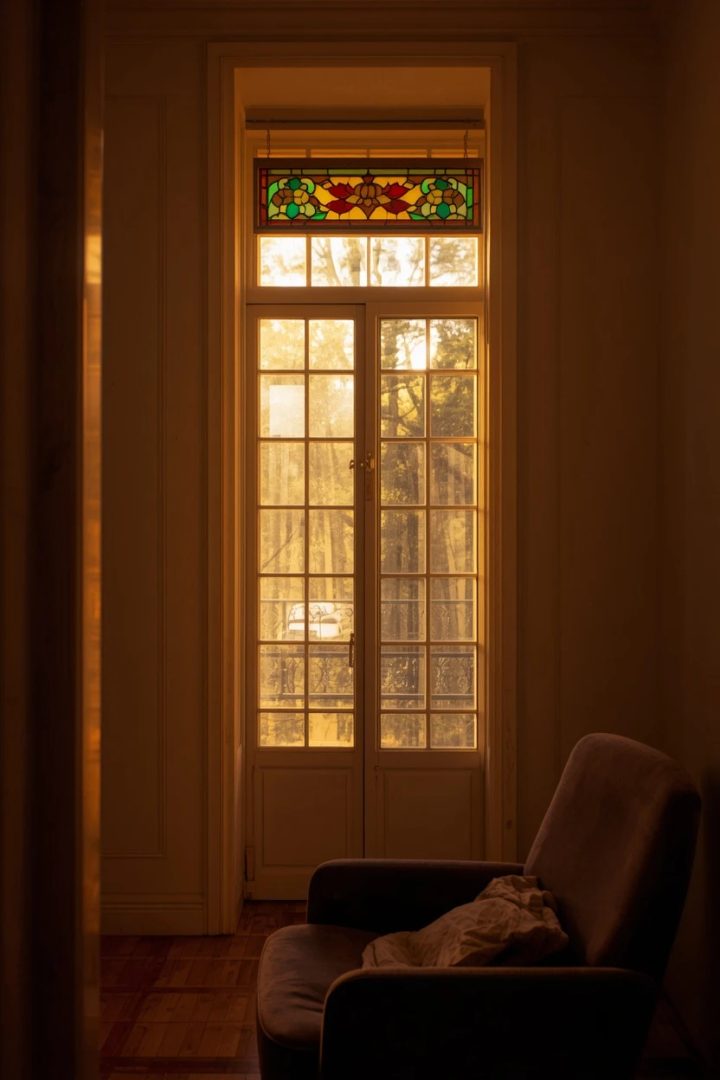
Watch out for south-facing windows in hot climates, as the coloured glass can amplify heat gain in the summer months.
8. Woven Wood Shades for Organic Warmth
Woven wood shades — made from bamboo, rattan, or jute — bring texture that fabric alone cannot deliver. They sit inside the casing for a clean line or mount outside for a wider appearance. Choose a privacy liner if the room faces a street, but skip the liner on upper-floor windows to let filtered light create a pattern on the floor.
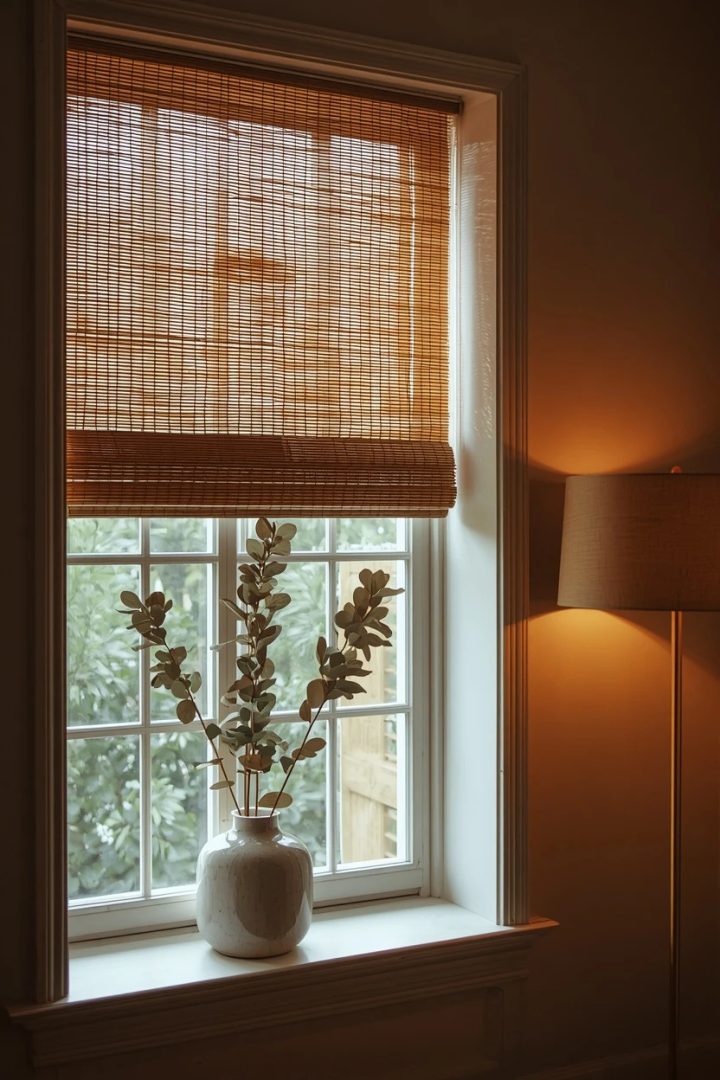
The natural material reads warm without heavy colour, making it a smart neutral layer under heavier drapes for winter. Be aware that woven shades attract dust in the weave, so a monthly pass with a soft brush attachment on your vacuum keeps them looking fresh.
9. Dramatic Dark Curtains on Light Walls
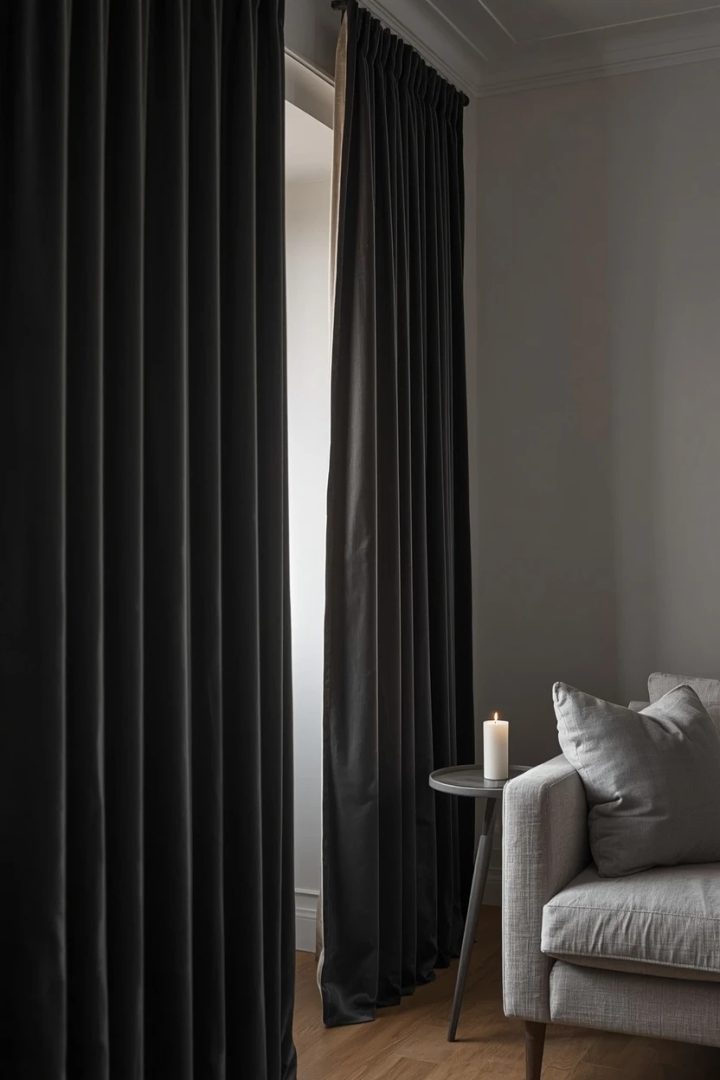
Charcoal, deep olive, or midnight navy curtains against pale walls create a framing effect that makes the window the focal point of the room. Use a fabric with enough weight to hang in clean vertical folds — a cotton-linen blend or a medium-weight velvet both drape well without looking stiff. Line them with a standard white liner to protect the colour from UV fading and to keep the exterior look uniform from outside. This high-contrast approach demands restraint with the rest of the room: keep throw pillows and rugs in softer tones so the dark curtains anchor the space without overwhelming it. The payoff is a room that reads polished and deliberate rather than predictable.
10. Scalloped Valance With Contrast Trim for Living Room Window Ideas
A scalloped valance brings a tailored softness that straight pelmets miss. The curves soften the hard lines of the window frame while the contrast trim — a grosgrain ribbon or a coordinating stripe — adds a graphic edge that keeps it from looking dated. Standard scallop depth is about eight to ten inches at the deepest point, which is enough to hide a roller shade behind it.
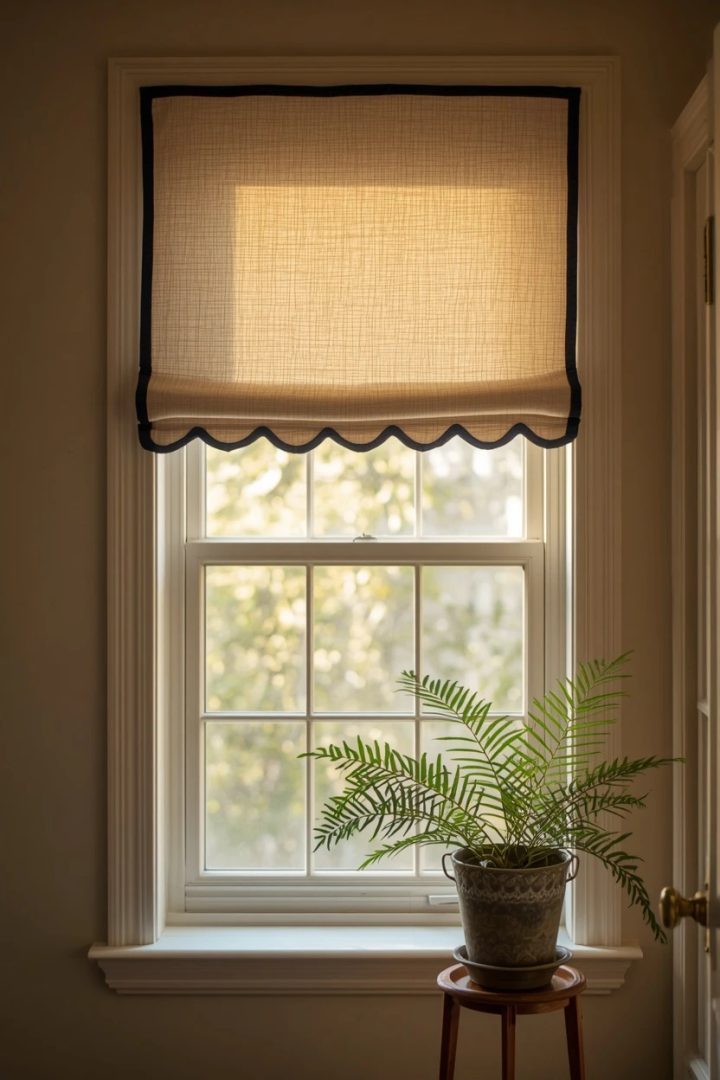
Choose a mid-weight cotton or a linen blend that holds the scallop shape without sagging. This is a strong option for rooms that need a polished, complete window treatment without the weight of full-length panels dragging on the floor.
11. Window Seat Reading Nook With Overhead Pendant
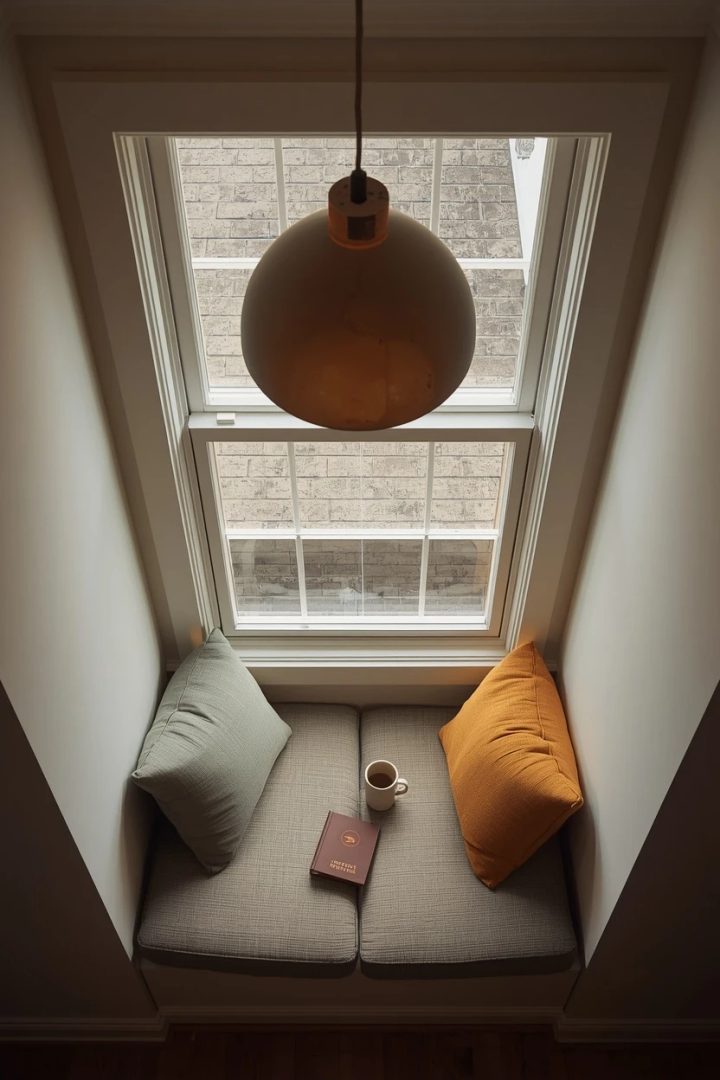
Turning a deep-sill window into a reading nook anchored by a pendant light gives the space its own identity within the larger room. Build or buy a cushioned bench that fits the sill width, then mount a plug-in pendant or a hardwired fixture directly above the seat at about six feet from the floor. The overhead light creates a warm pool that separates the nook from the rest of the room in the evening. Add a narrow floating shelf on one side for a mug and a book, and use a patterned cushion that picks up accent colours from your larger living room scheme.
The caveat: if the window gets strong afternoon sun, the seat can overheat in summer, so a cellular shade behind the nook helps regulate temperature.
12. Frosted Glass Film for Privacy Without Curtains
In street-facing living rooms where privacy matters but curtains block too much light, frosted window film is a practical alternative that many people overlook. You can apply it yourself in under twenty minutes with a spray bottle and a squeegee — the adhesive-free static-cling version repositions easily if you do not get it straight on the first try.
Apply the film to the lower two-thirds of the pane and leave the top third clear for unobstructed daylight. Frosted film comes in geometric, botanical, and simple matte patterns, so you can add a decorative layer even in a minimalist room.
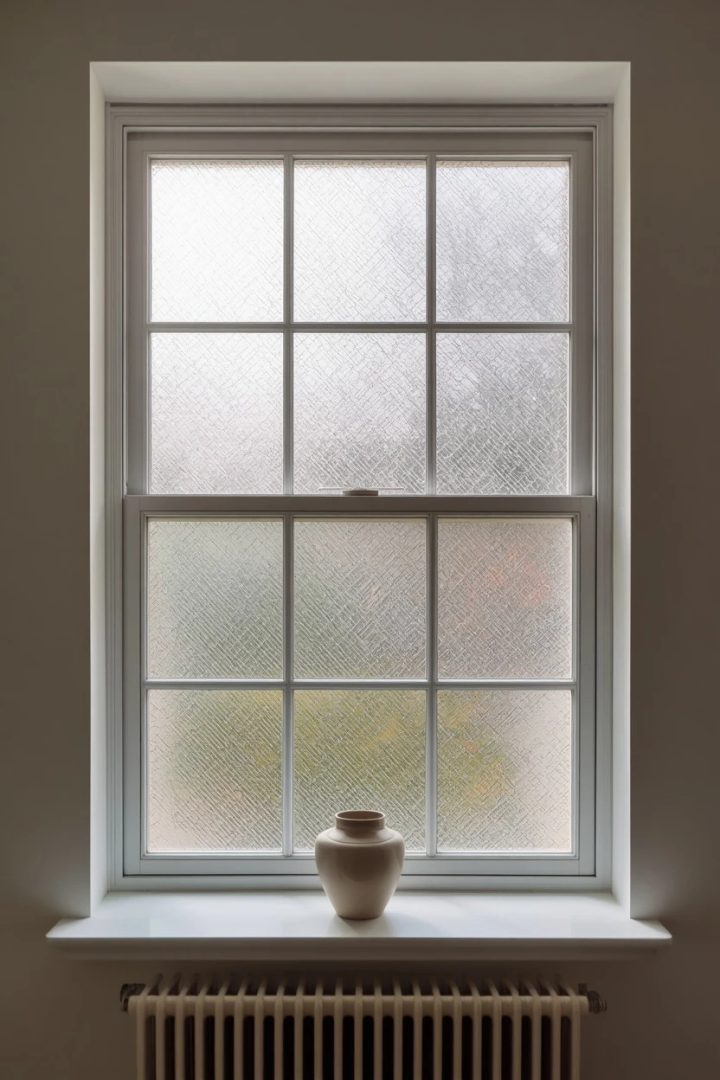
The downside is that the film mutes your view, so skip this approach on windows that look out onto a garden or scenic landscape.
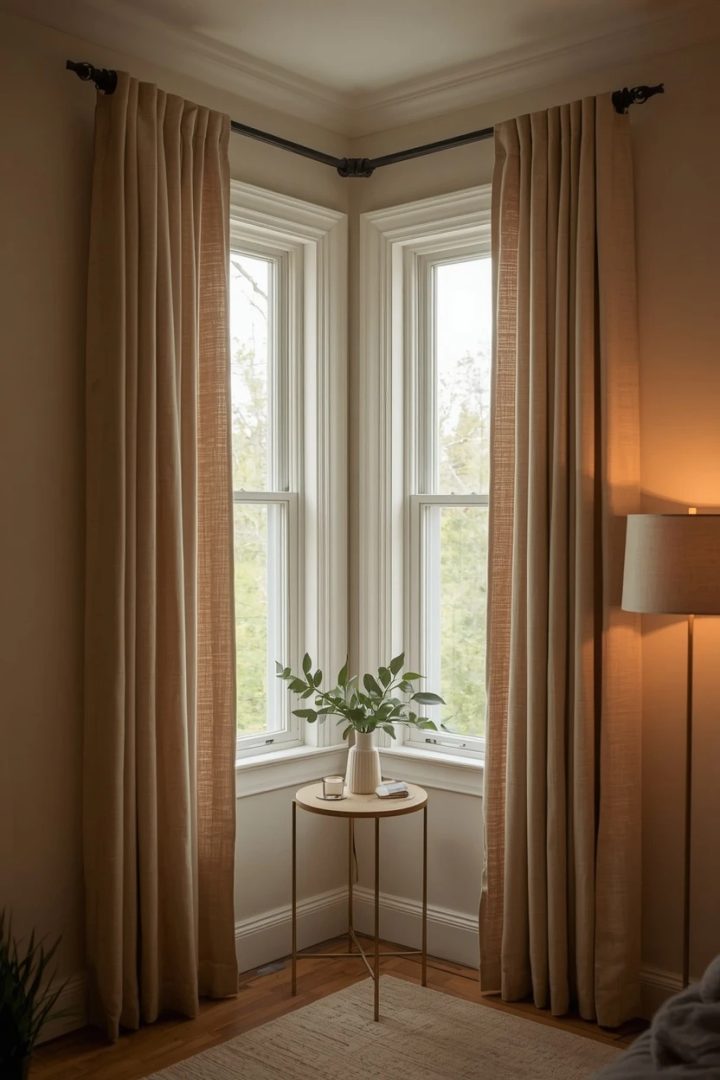
13. Corner Window Wrap-Around Curtain Rod
Corner windows are tricky because a standard rod stops at the wall, leaving an awkward gap in the corner. A wrap-around curtain rod with a flexible corner connector lets your curtain panels flow continuously across both panes, unifying the two windows into a single design statement. Use a rod with a one-inch diameter for smooth glide, and choose curtain rings rather than a rod pocket so the fabric slides freely around the bend. This treatment is especially effective with light-filtering linen that softens the corner rather than boxing it in. Measure carefully — the corner connector typically adds about three inches of rod length, and you need panels wide enough to cover both sides generously when closed.
14. Plantation Shutters for Timeless Living Room Window Ideas
Plantation shutters remain one of the most durable window treatments you can install. The wide louvers — three-and-a-half or four-and-a-half inches — tilt to control light precisely, and the solid frame adds architectural weight to flat walls. Real wood shutters in basswood or poplar run between two hundred and four hundred dollars per window, while composite alternatives cost about thirty percent less and resist moisture better in humid climates.
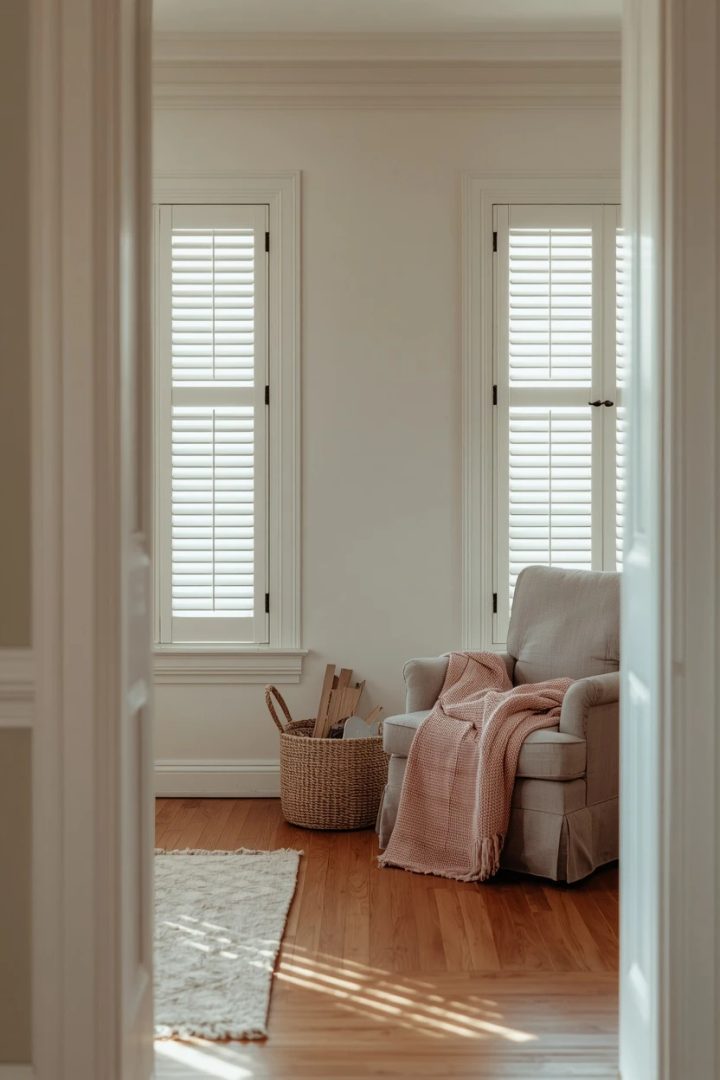
White is the classic choice, but staining the shutters to match your floor or trim creates a warmer, more integrated appearance. One thing to know: shutters project about three inches into the room when open, so they may interfere with furniture placed tight against the wall.
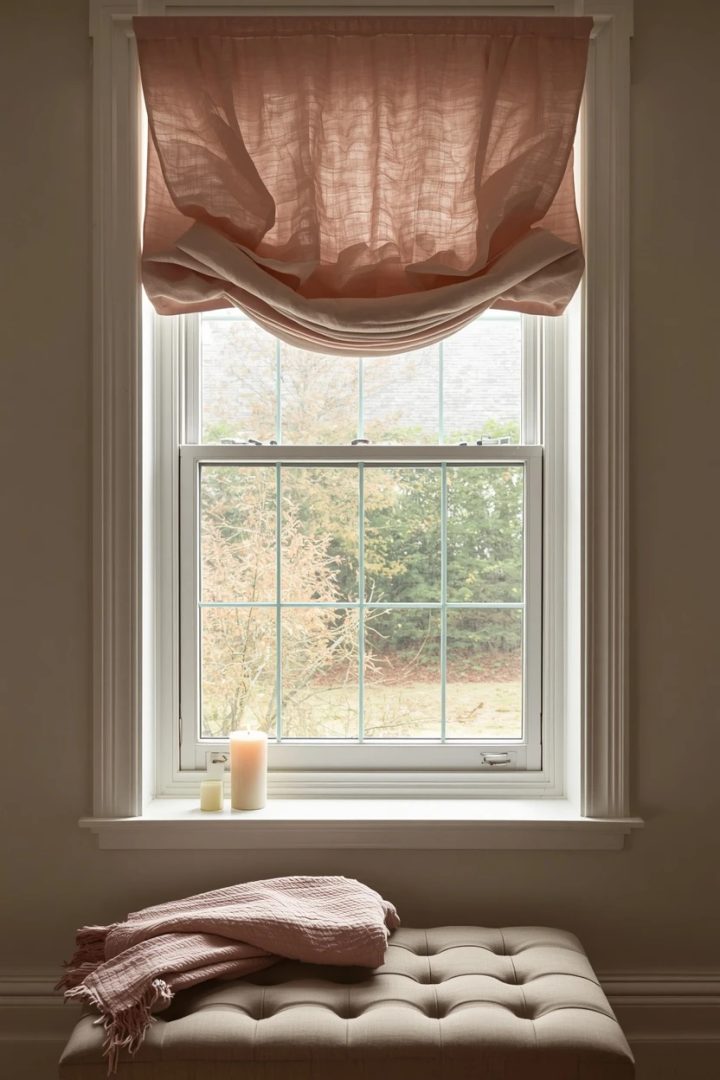
15. Gathered Balloon Valance for Soft Volume
A balloon valance creates billowy pouf shapes along the bottom edge that add romantic volume without a full curtain drop. This is a strong living room valance ideas pick for rooms that want softness at the window line but cannot accommodate floor-length panels — maybe furniture sits too close or a radiator runs beneath the sill. Use a lightweight silk, cotton voile, or sheer linen so the gathers look airy rather than heavy. The valance should hang about twelve to fourteen inches from the rod to get at least two visible pouf sections.
Pair it with a simple roller shade behind for light control, and skip heavy patterns — a solid or tone-on-tone texture keeps the shape as the star.
16. Minimalist Track System With Hidden Hardware
For a clean modern look, a ceiling-mounted curtain track removes all visible hardware and lets the fabric appear to float. Recessed tracks install inside a ceiling channel so only the curtain is visible, while surface-mount tracks sit flush against the ceiling with a profile as slim as half an inch.
Use a ripple-fold heading for even, wave-like pleats that glide smoothly along the track. White or light grey panels in a structured linen or polyester blend hold the ripple shape best.
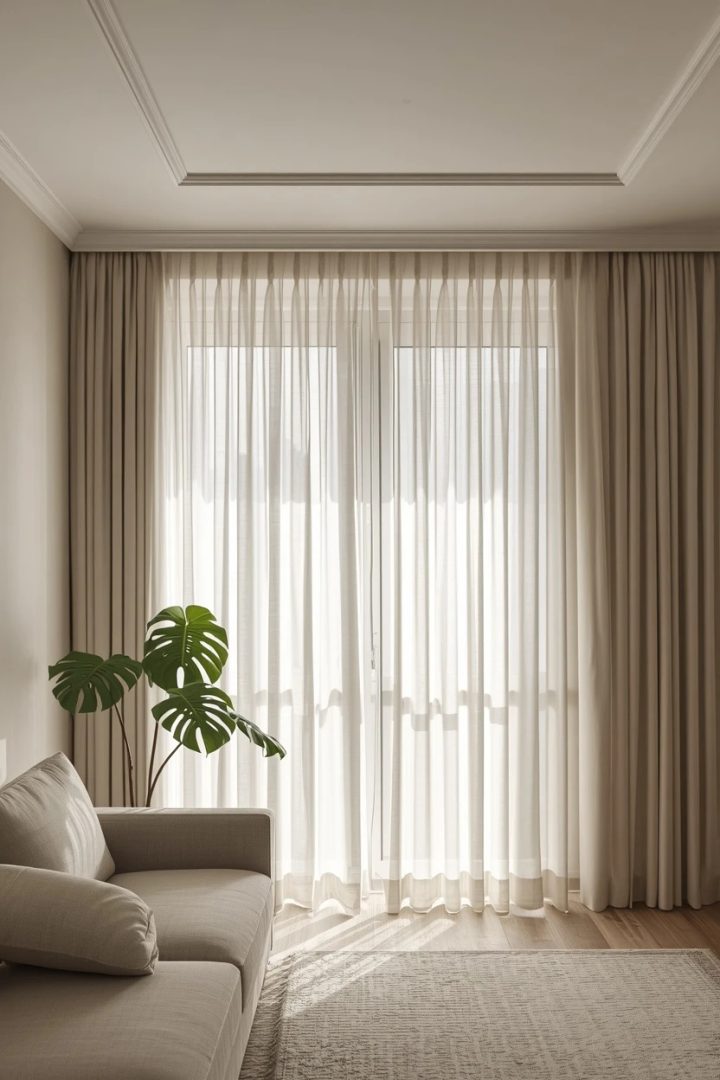
This system is ideal for wide window walls or sliding glass doors where traditional rods would sag under the span, and the quiet glide mechanism means you can open and close panels without rattling hardware.
Where I’d Start if I Only Did Three Things
If I only did three things, I’d start by swapping the curtain rod for a matte black iron rod mounted at the ceiling line — that single move adds height and grounds the whole window. Next, I’d layer in a flat Roman shade inside the casing for privacy control, choosing a woven texture like jute or bamboo to add depth. And third, I’d pick curtain panels in a warm neutral one shade deeper than the wall colour, because that subtle contrast is what separates a considered room from a default one.
Frequently Asked Questions
What are the best living room window ideas for small rooms?
Sheer floor-to-ceiling panels in a warm neutral mounted at the ceiling line make a small room appear taller and wider by drawing the eye upward and letting maximum daylight through. Avoid heavy fabrics or dark colours that visually shrink the space, and keep hardware slim and light-toned so it disappears against the wall.
How do I choose between curtains and blinds for my living room?
Curtains add softness, texture, and can be layered for a richer look, while blinds and shutters offer cleaner lines and precise light control. If you want warmth and movement, lean toward curtains or a layered combo. If you value a minimal profile and easy cleaning, blinds or plantation shutters are the practical pick.
Can I combine a valance with curtains without it looking outdated?
Yes — the key is choosing a structured box valance or a simple gathered style in a modern fabric rather than a fussy swag. Keep the colour palette tight, use a contrasting trim to add a graphic edge, and make sure the valance proportions are right: about one-sixth of the total window height.
How high above the window should I mount a curtain rod?
Mount the rod two to four inches below the ceiling or crown moulding, or at minimum six inches above the top of the window frame. Hanging the rod higher than the frame creates the illusion of taller windows and a more generous ceiling height, which is especially useful in rooms with eight-foot ceilings.
Final Thoughts
The right window treatment does more than control light — it sets the tone for the entire living room. Every one of these living room window ideas can be adapted to your space, whether you are working with a tight budget or ready for a full overhaul. Start with the change that will make the biggest visual difference in your room, layer in texture and hardware as you go, and let the window earn its place as a true design feature rather than just an opening in the wall.