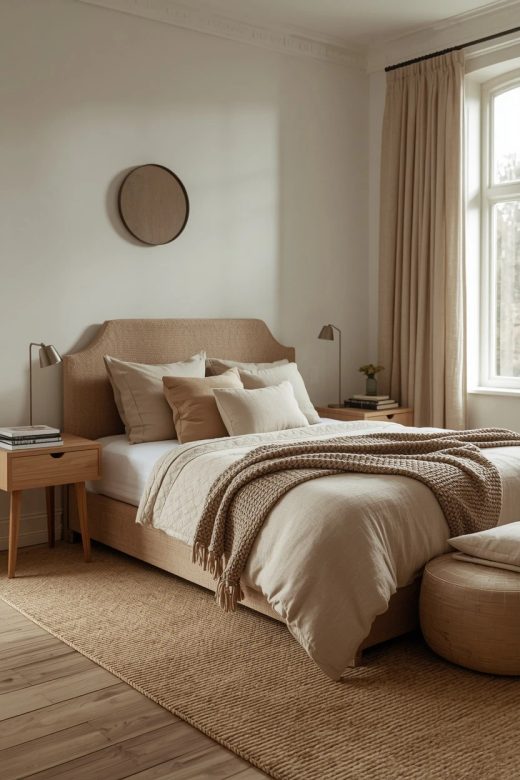
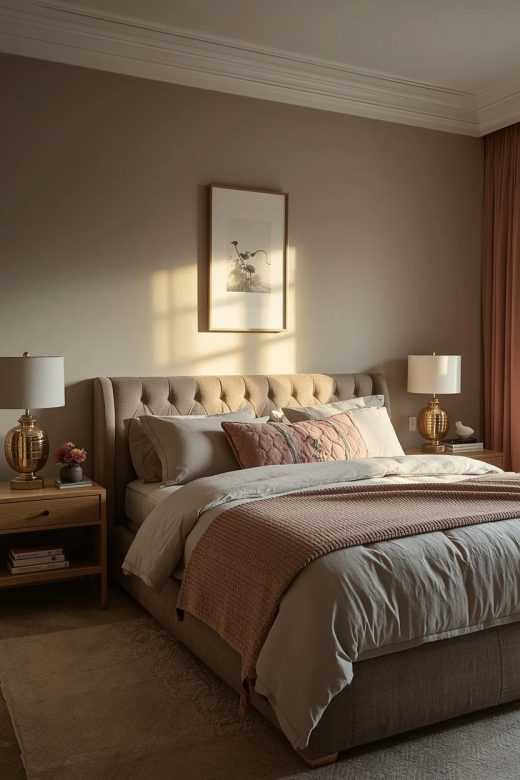
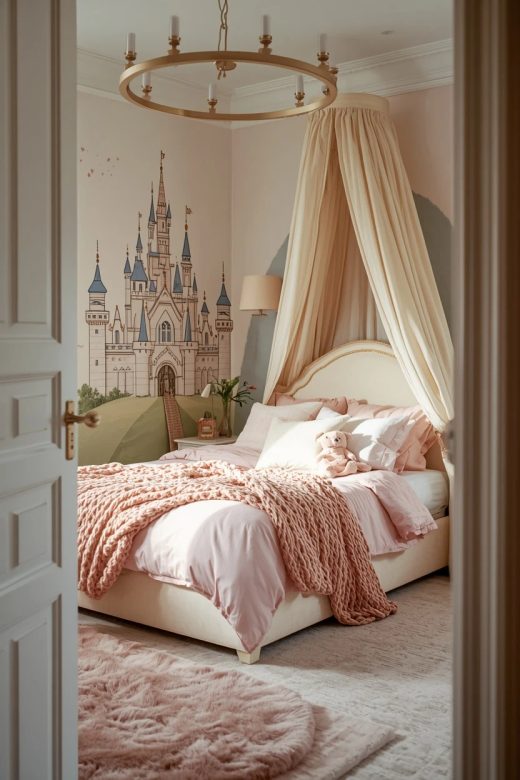
19 Bedroom Curtain Ideas to Frame Your Windows Beautifully
June 19, 2026 · 12 min read
 By Khawar Iqbal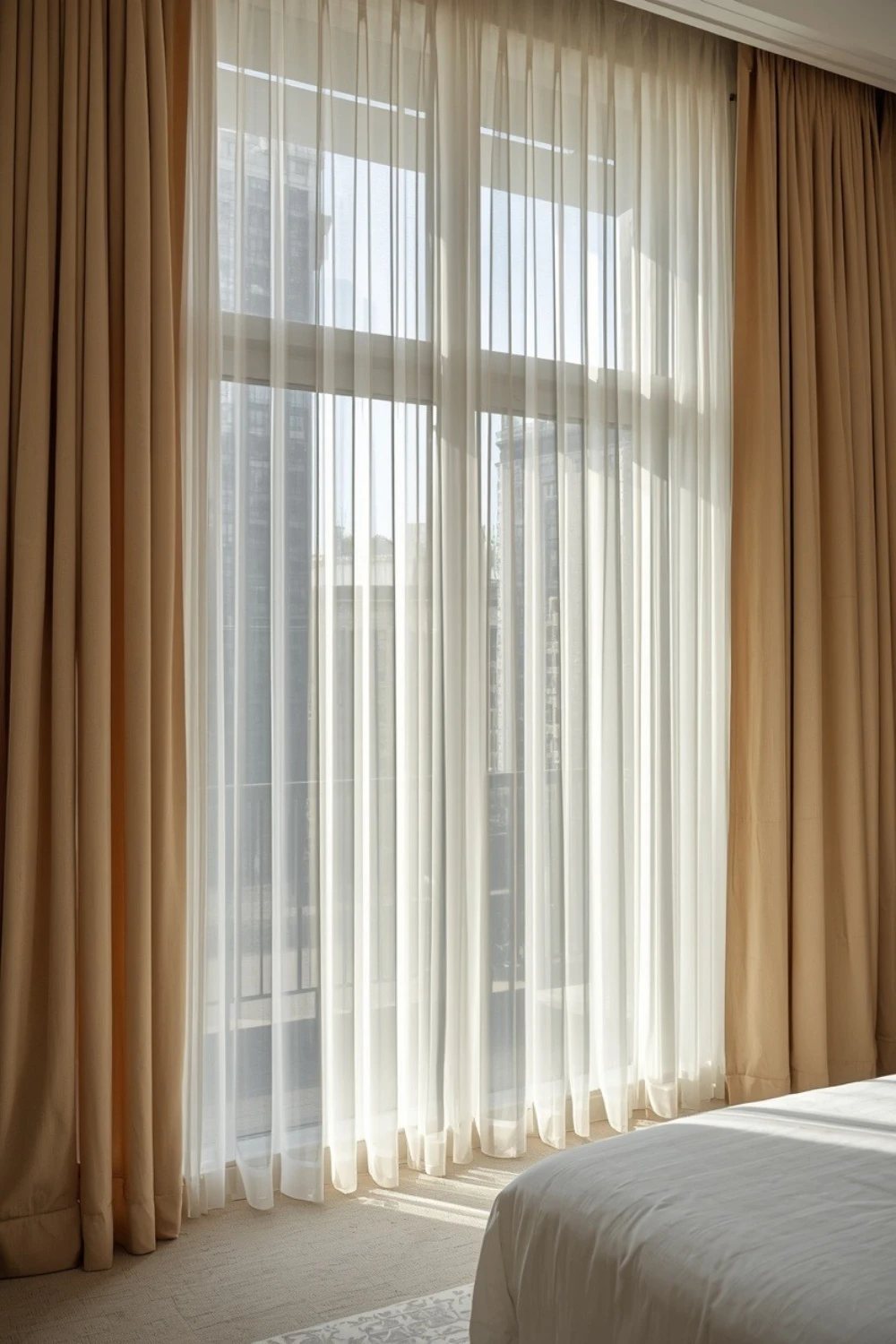
Curtains are one of the most transformative — and most overlooked — decisions in a bedroom, shaping the light, the privacy, the warmth, and the whole feel of the room. The difference between a space that looks unfinished and one that looks properly dressed often comes down to the fabric you choose, the colour, and crucially how you hang them.
Each of these 19 bedroom curtain ideas is a complete look you can recreate, a focused approach to dressing your windows beautifully rather than a single product. Find the version that suits your room, your light, and the mood you want, and use it as a blueprint for window treatments that frame the space, soften the lines, and pull the whole bedroom together into something calm, polished, and restful.
1. The Floor-to-Ceiling Drape
Hanging curtains close to the ceiling and letting them fall all the way to the floor is the single most effective trick for making a room feel taller, grander, and more considered. Mount the rod well above the window frame and choose floor-length panels that just kiss or gently pool on the floor. The unbroken line of fabric draws the eye up. It suits almost any bedroom and is the foundational move that instantly makes window treatments — and the whole room — look intentional and elegant.
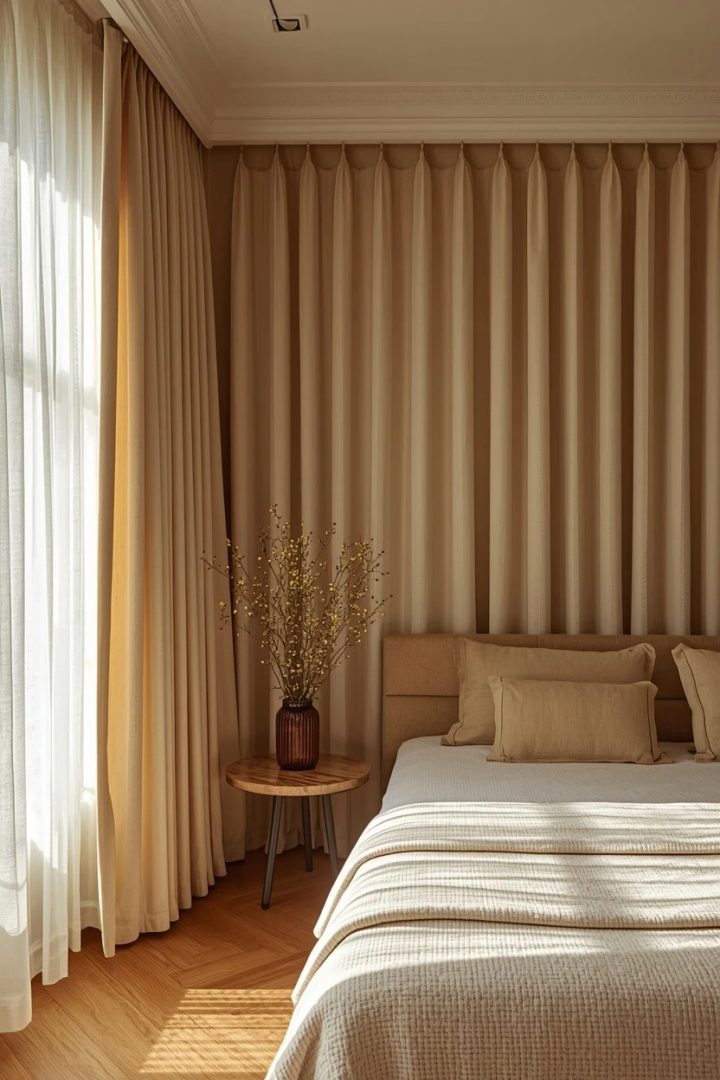
2. The Layered Sheer and Drape
Pairing sheer curtains with heavier drapes gives you the best of both worlds — soft, filtered daylight when the sheers are drawn, and full privacy and darkness when the drapes close. Hang them on a double rod and keep both layers within a cohesive palette so the look stays calm. It is endlessly flexible through the day. It suits anyone who wants both light control and a layered, finished look, and the combination is what professional rooms use to manage light beautifully at every hour.
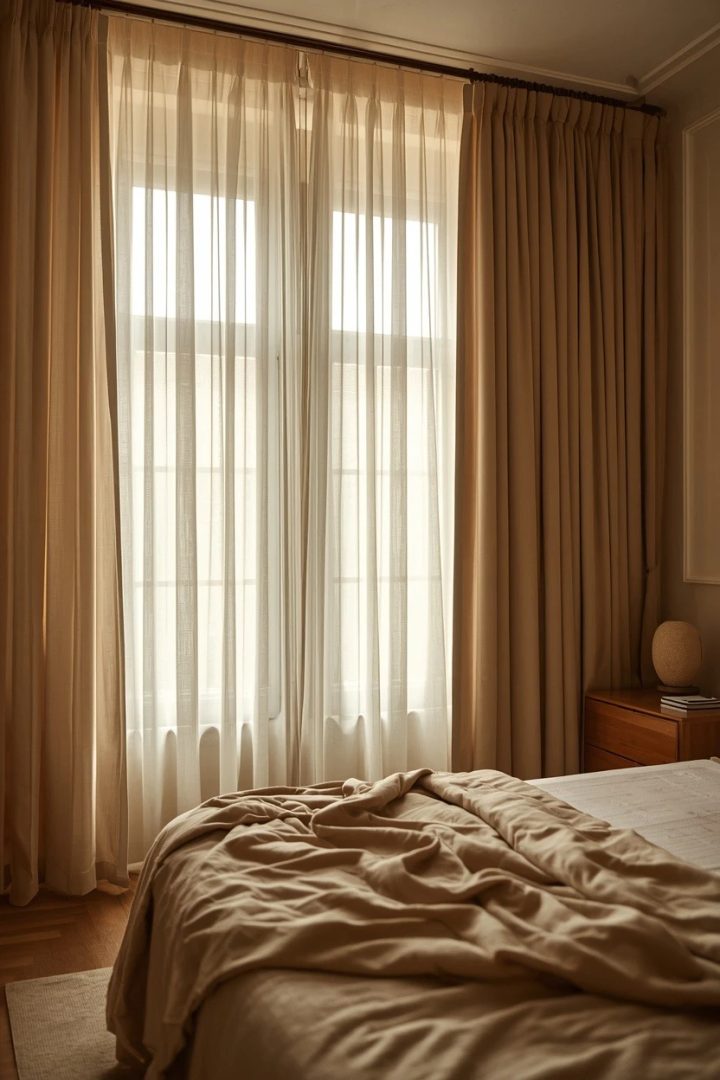
3. The Blackout Curtain Bedroom
For genuinely restful sleep, blackout curtains — or a blackout lining behind decorative panels — block light and help the room stay dark, cool, and quiet. Choose a heavier fabric or a hidden lining so the room still looks soft and stylish rather than purely functional. They are especially valuable for light sleepers, shift workers, and children. It suits any bedroom where quality sleep matters most, and the right blackout treatment can look just as beautiful as it is practical, with no compromise on style.
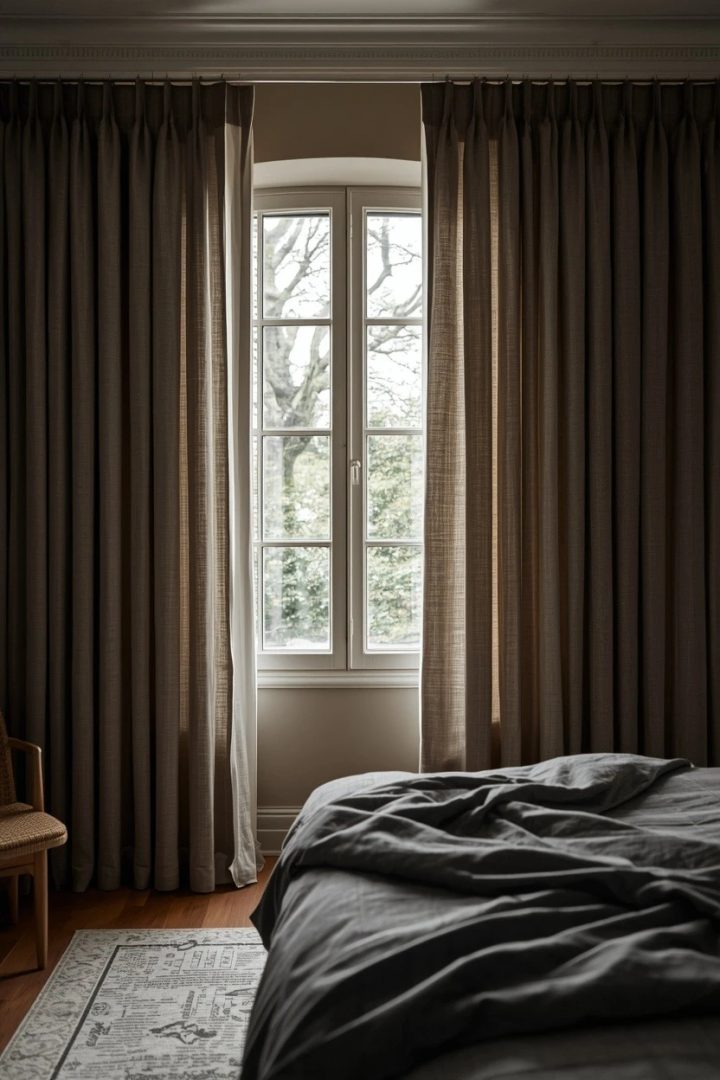
4. The Sheer and Airy Bedroom
Light, sheer curtains alone create a soft, dreamy, airy feel, filtering daylight into a gentle glow while keeping the room bright and open. They suit a room where privacy is less of a concern and you want to maximise natural light and a breezy, romantic atmosphere. Choose a flowing fabric like linen or voile in a soft tone. It suits sunny rooms and anyone who loves a light, ethereal look, though pairing with a blind underneath adds privacy and darkness for sleep when needed.
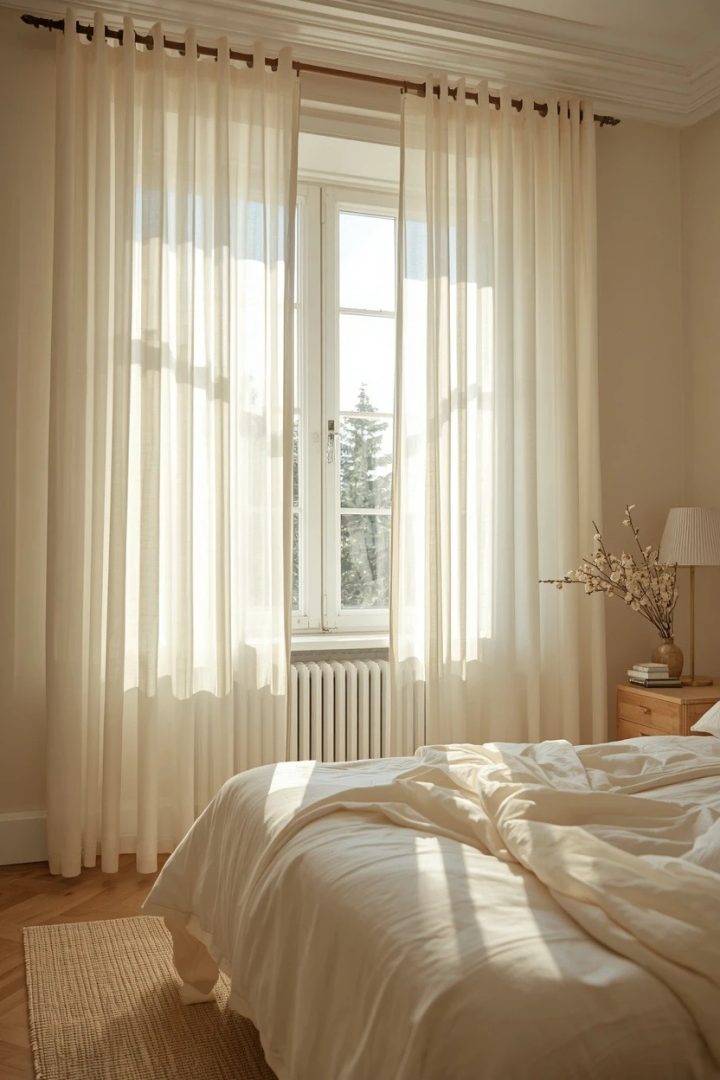
5. The Linen Curtain Bedroom
Natural linen curtains bring a relaxed, organic elegance to a bedroom, with a soft drape and a gentle, lived-in texture that suits everything from boho to modern schemes. The slightly imperfect, breezy quality of linen is the point, so embrace the natural creasing rather than fighting it. Choose a warm neutral or soft tone for timeless appeal. It suits anyone who loves a relaxed, natural aesthetic and wants curtains that feel effortless and high-end at once, ageing beautifully and pairing with almost any palette.
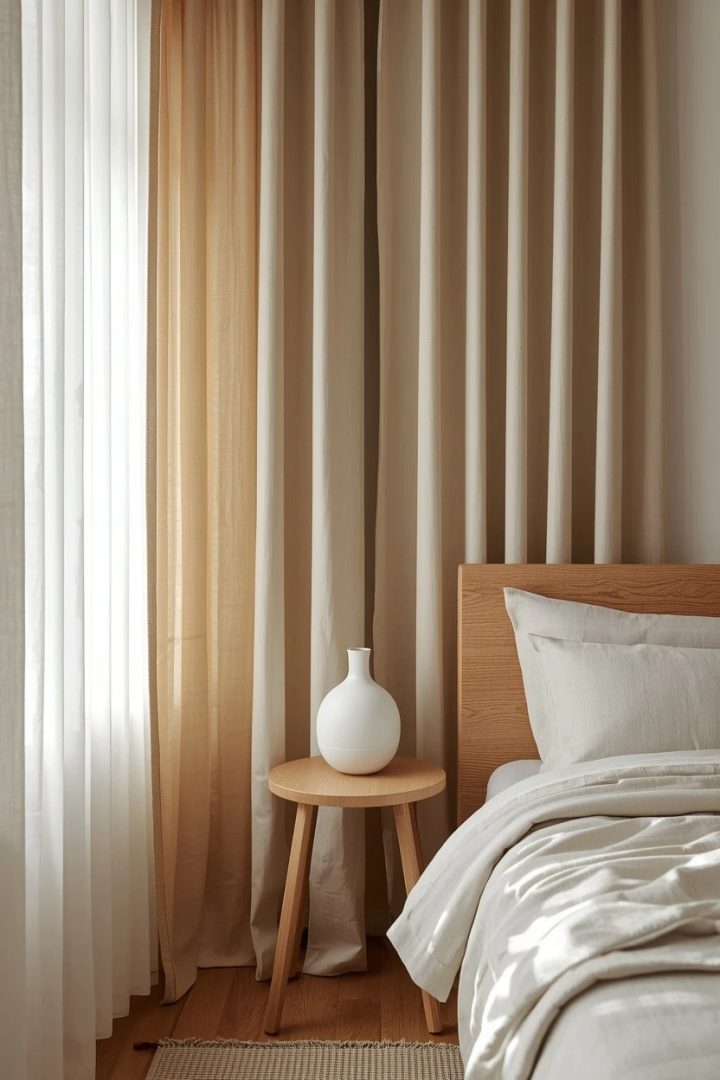
6. The Floor-Pooling Curtain
Letting curtains break and pool generously on the floor creates a romantic, luxurious, slightly undone elegance that feels soft and indulgent. Add a few extra inches of length so the fabric gathers at the base, and choose a flowing material that drapes well. The puddled hem reads relaxed and expensive at once. It suits a romantic or soft-luxe room and anyone who loves a decadent, layered look, though it works best in lower-traffic bedrooms where the pooling fabric will not be constantly disturbed.
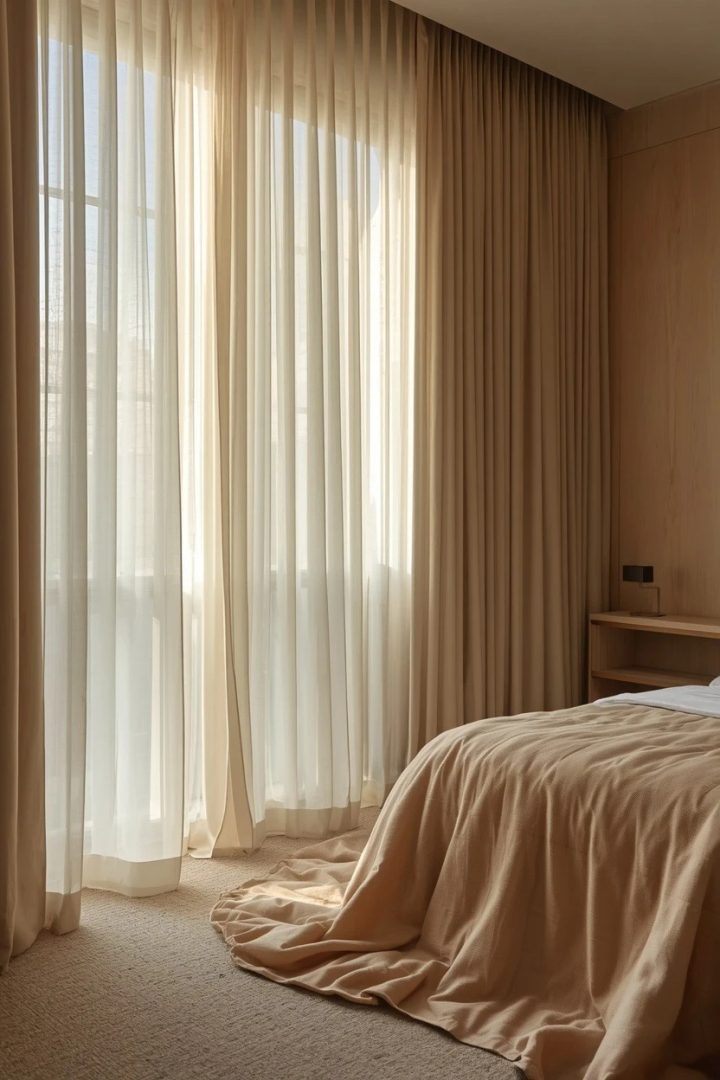
7. The Bold Colour Curtain
Treating curtains as a statement — a deep teal, a warm terracotta, a rich navy, or a moody green — adds a strong dose of colour and personality, framing the window like a piece of art. Anchor the bold panels with a calmer surrounding palette so they read intentional, and echo the colour subtly elsewhere. They become a focal point. It suits anyone who wants to inject character through a single, easily-changed element, since curtains deliver big colour impact without committing the walls or furniture.
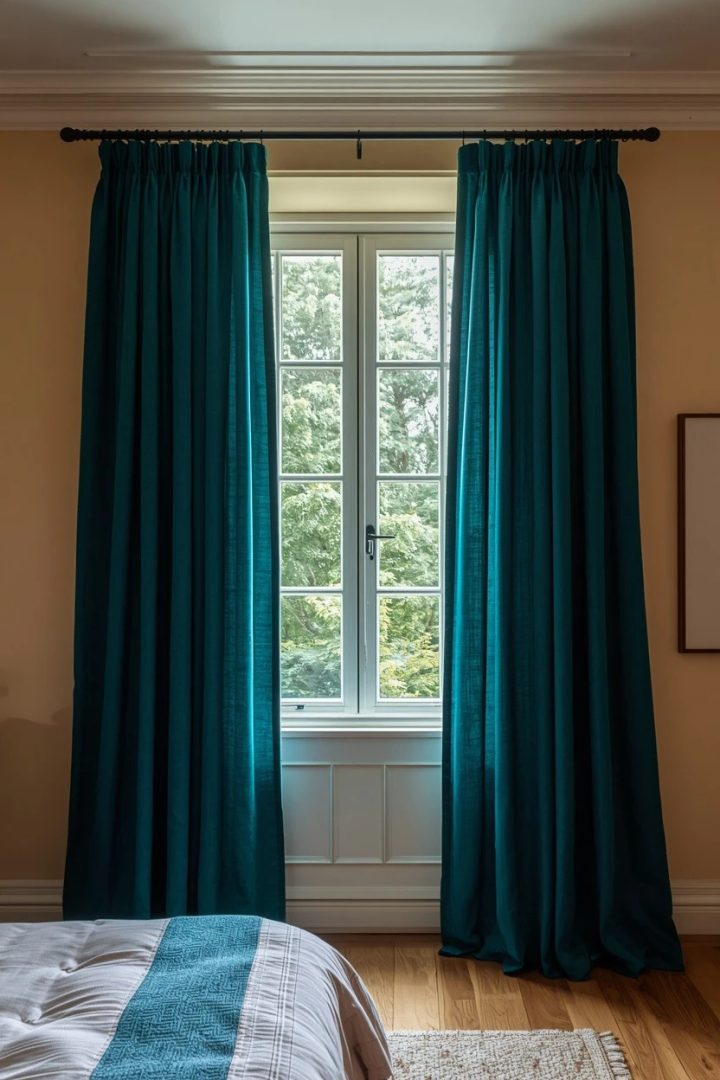
8. The Patterned Curtain Bedroom
A patterned curtain — florals, stripes, geometrics, or a subtle botanical — brings personality and visual interest, and can act as the starting point for the room's whole palette. Keep the rest of the room calmer so the pattern stays the star, and choose a scale of print that suits the window size. It adds character without papering the walls. It suits anyone who wants pattern in the room but prefers to keep it to one changeable element, and the curtains can quietly tie the whole scheme together.
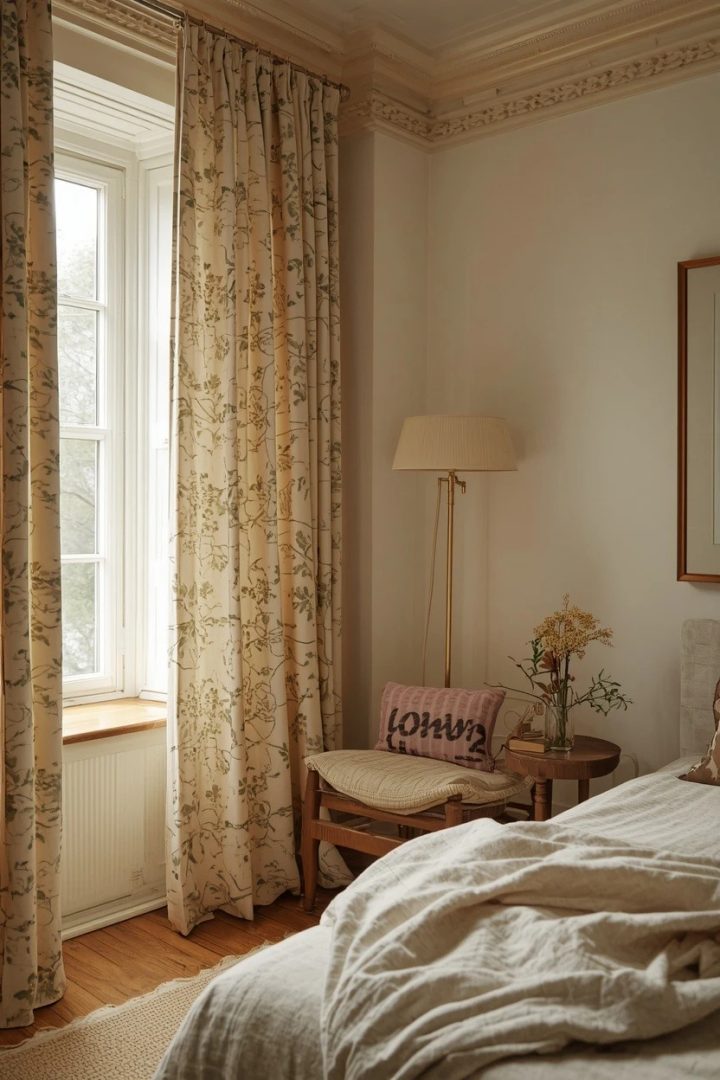
9. The Neutral Curtain Bedroom
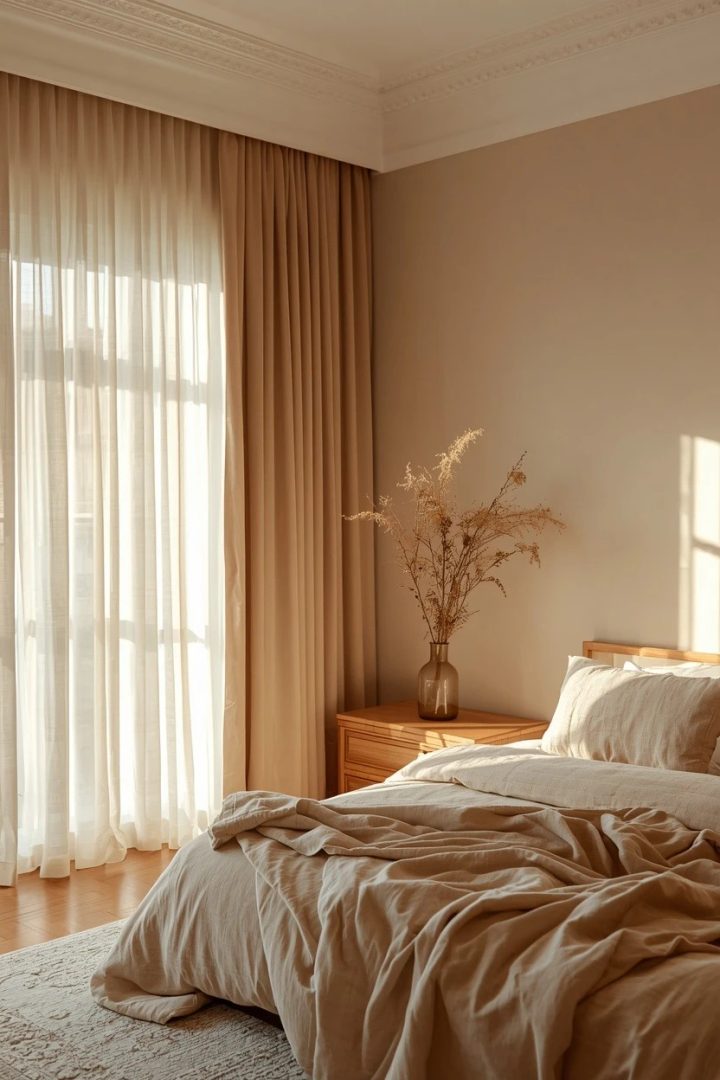
Soft, neutral curtains in cream, greige, oatmeal, or warm white blend seamlessly into the room, adding softness and warmth without competing for attention. Matching the curtains closely to the wall colour makes the window recede and the room feel calm and cohesive, with texture rather than colour adding interest. It is the most versatile, timeless choice. It suits anyone who wants curtains to quietly do their job — softening, warming, and finishing the room — while letting other elements like the bed or art take the lead.
10. The Velvet Curtain Bedroom
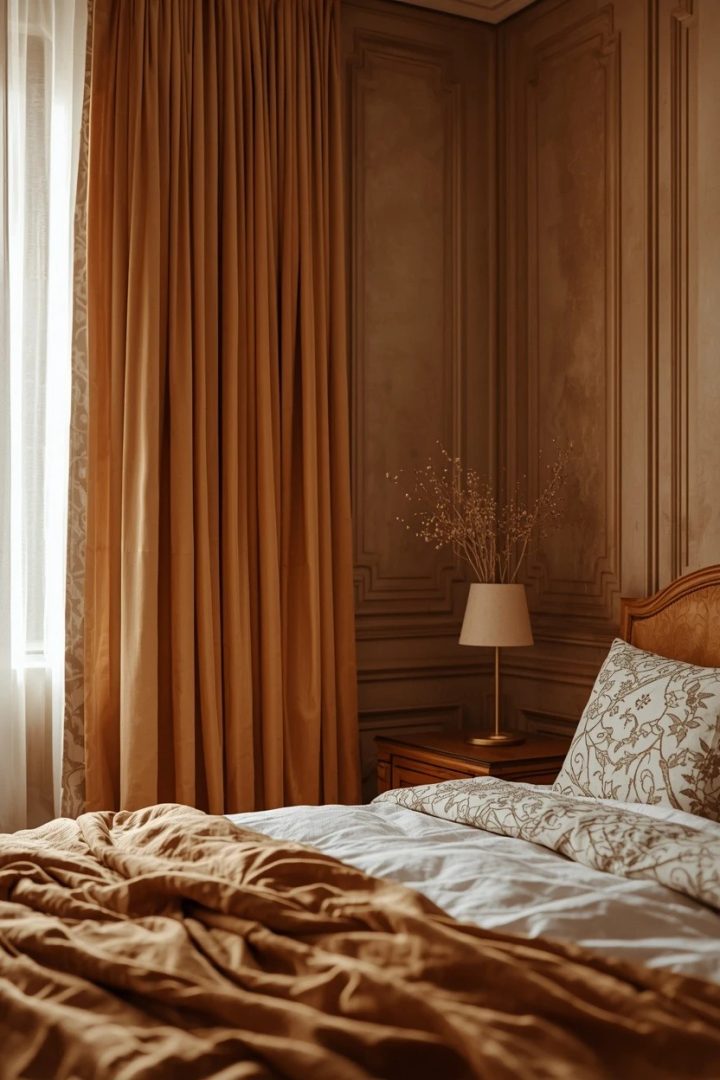
Rich velvet curtains add instant warmth, depth, and a touch of luxury, with a soft sheen and a heavy drape that makes a room feel cozy and refined. The weight also helps with insulation and light-blocking, so they are as practical as they are plush. Choose a deep, warm tone for a cocooning effect. It suits a moody, luxe, or cooler-climate bedroom and anyone who wants curtains that feel indulgent and substantial, adding both physical and visual warmth to the whole space.
11. The Wide-Hung Curtain
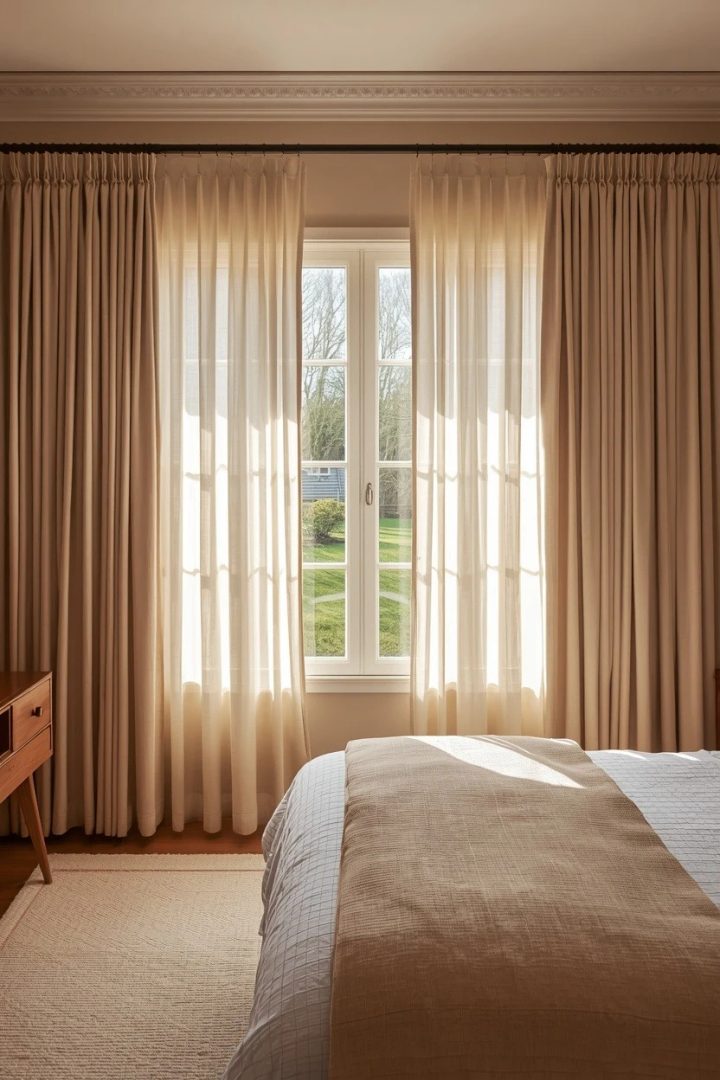
Mounting the curtain rod wider than the window — extending it well beyond each side — lets the panels sit against the wall rather than the glass when open, making the window appear larger and letting in more light. It is a simple hanging trick with an outsized effect on how grand and bright the room feels. The window reads bigger than it is. It suits any room, especially one with smaller or narrower windows, and costs nothing extra beyond a slightly longer rod and correctly placed brackets.
12. The Curtain and Blind Combo
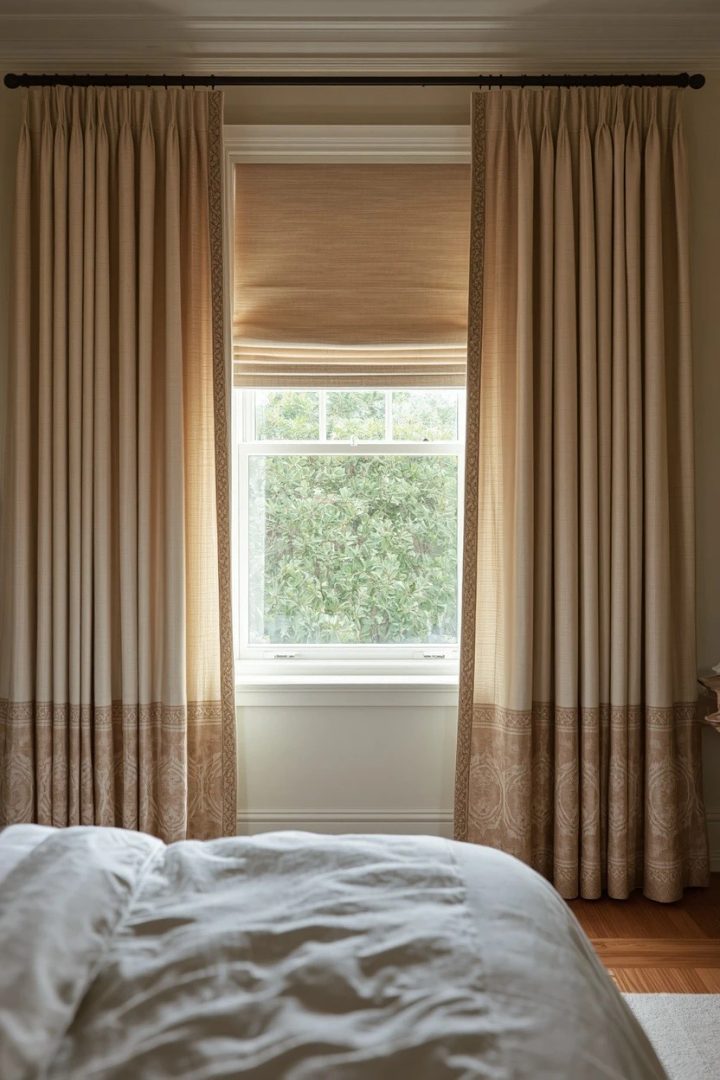
Combining a practical blind — roman, roller, or wooden — with decorative curtains gives you precise light control plus a soft, finished look. The blind handles privacy and darkness at the window while the curtains add warmth, colour, and the framing softness that blinds alone lack. Together they are both functional and beautiful. It suits anyone who wants the practicality of a blind without the bare, hard look of one on its own, and the layered combination reads polished and considered.
13. The Café-Style Curtain
Café curtains, which cover only the lower half of the window, offer privacy at eye level while letting daylight pour in through the top — a charming, cottage-style solution for a softer look. They suit a room where you want light and a relaxed, informal feel without full-length drapes. Pair with a simple rod and a soft, light fabric. It suits a cottage, farmhouse, or casual bedroom and anyone who wants privacy and brightness at once, offering a sweet, unfussy alternative to full-height curtains.
14. The Tab-Top and Casual Curtain
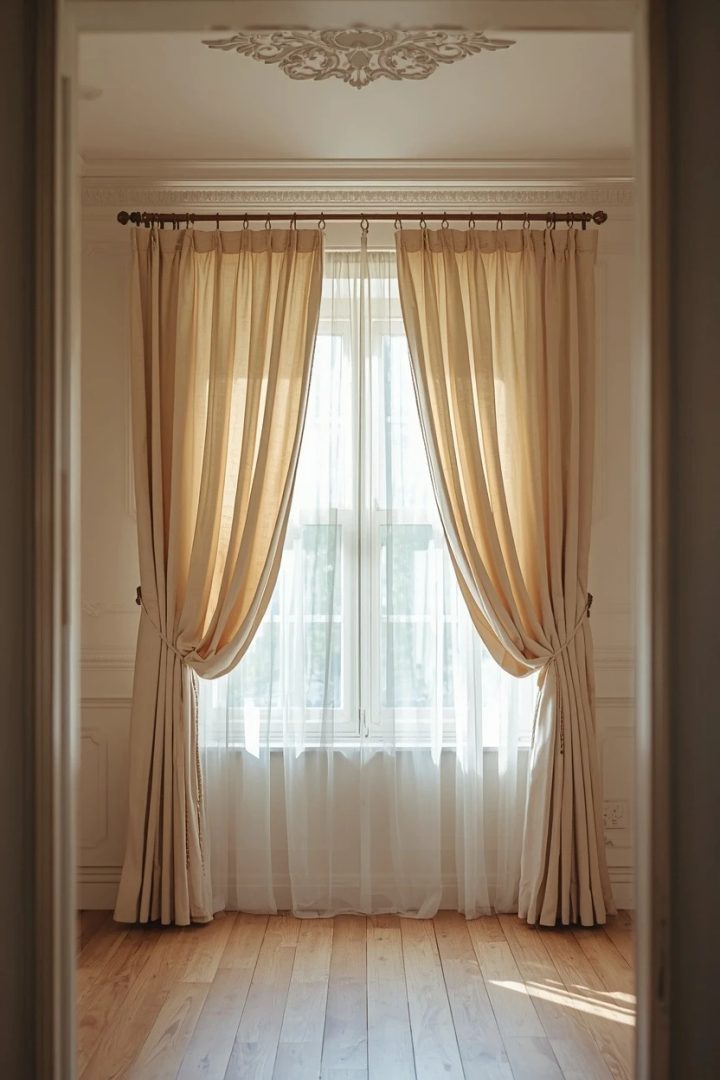
Relaxed heading styles — tab-top, tie-top, or a simple rod pocket — give curtains a casual, unfussy character that suits boho, coastal, and farmhouse rooms. The soft, informal gathering reads laid-back rather than formal, and works beautifully with natural fabrics like cotton and linen. It is an easy, budget-friendly hanging style. It suits anyone after a relaxed, lived-in look and a simpler installation, since these headings slide straight onto a rod without the need for hooks, tracks, or elaborate pleating.

15. The Pinch-Pleat Tailored Curtain
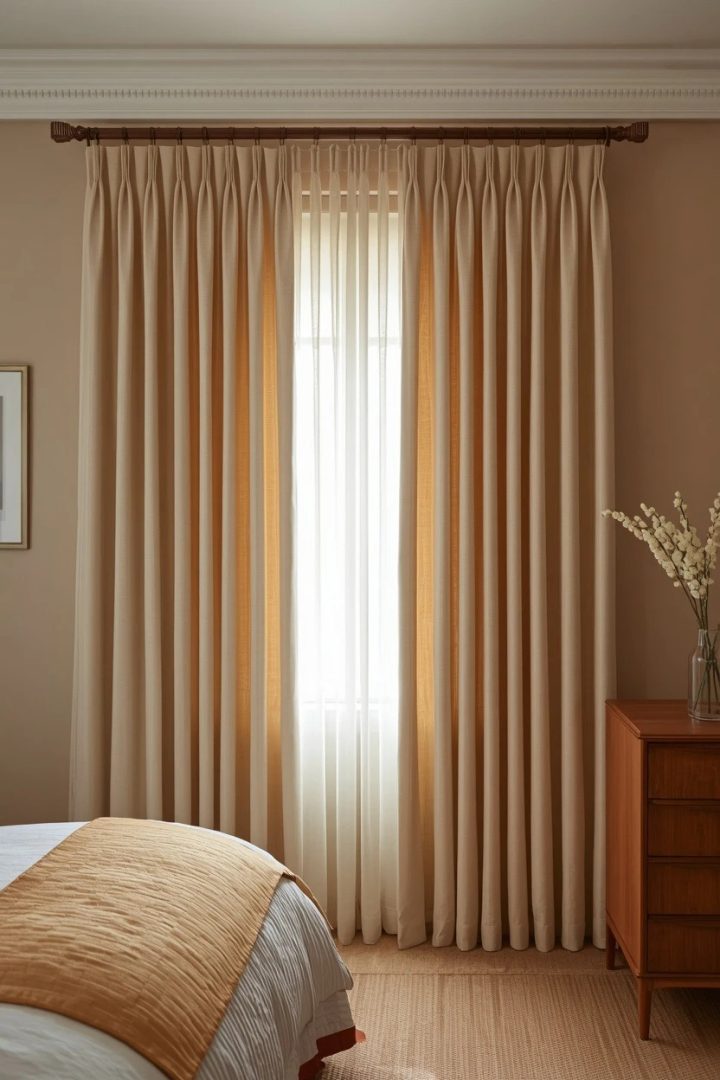
For a more formal, tailored finish, pinch-pleat curtains create neat, evenly spaced folds that hang crisply and read elegant and considered. The structured heading suits classic, refined, and luxe bedrooms, giving the fabric a polished, made-to-measure quality. Pair with a quality fabric so the pleats hold beautifully. It suits anyone who wants a sophisticated, hotel-like finish and is happy to invest a little more in the heading style, since the tailored pleats elevate even a simple fabric into something that looks bespoke.
16. The Two-Tone Layered Curtain
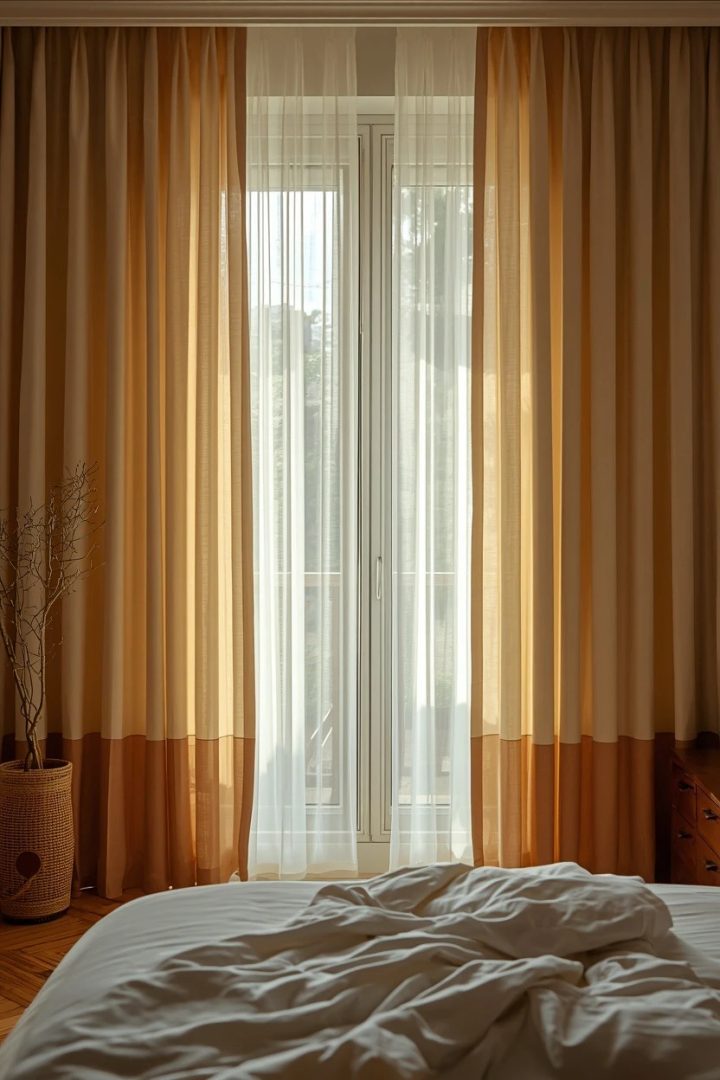
Layering two complementary colours or textures of curtain adds depth and a designed, considered look — perhaps a sheer in one tone beneath a drape in another. The combination lets you play with contrast or subtle tonal shifts while keeping full function. It reads rich and intentional. It suits anyone who wants their window treatment to feel like a deliberate design feature rather than an afterthought, and the layering is an easy way to add the kind of depth that makes a room look professionally styled.
17. The Warm Layered-Light Curtain
Choosing curtains with cosiness in mind — a heavier, warm-toned fabric that softens the light and adds insulation — turns the window into part of a snug, restful scheme. Floor-length panels in a warm hue frame the room and trap warmth, while a lining improves both darkness and comfort. The fabric weight changes how the room feels. It suits anyone building a cozy bedroom, since well-chosen warm curtains are a finishing layer that makes the whole space feel properly dressed and enveloping.
18. The Statement Hardware Curtain
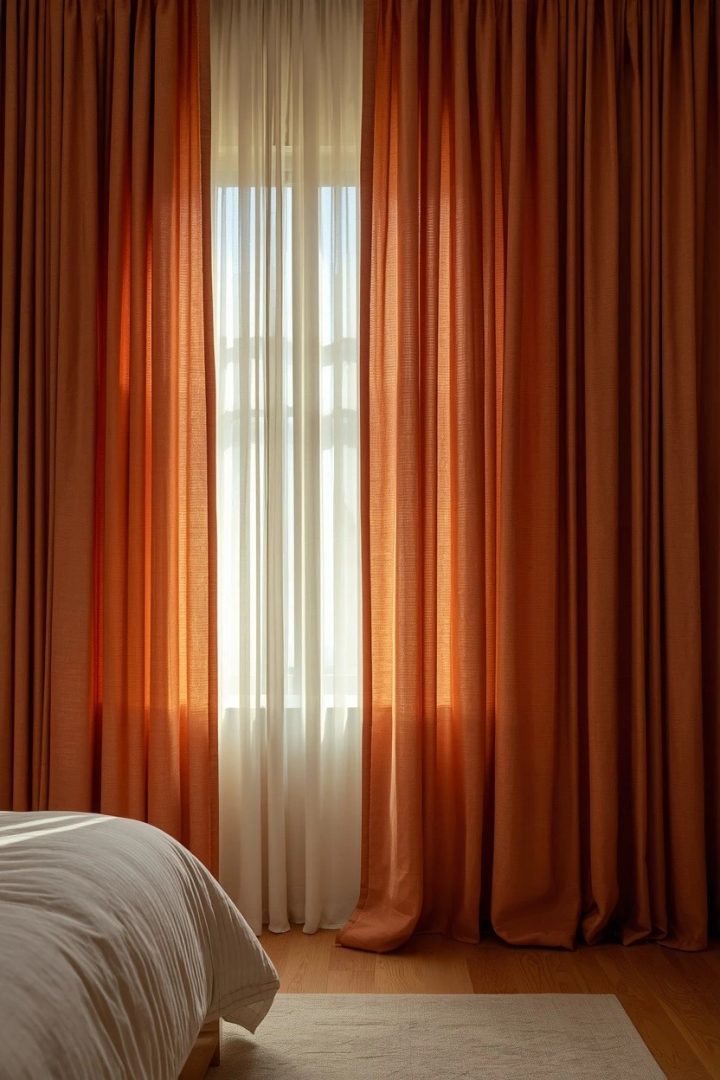
Treating the rod, finials, and rings as a design detail — matte black, brushed brass, or warm wood — adds a refined, finished edge to even simple curtains. Choose hardware that complements the room's metals and other finishes, and scale the rod generously so it frames the window well. The right hardware reads as intentional design. It suits anyone who wants to elevate their window treatment with a small, affordable detail, since beautiful hardware can make plain curtains look considered and complete.
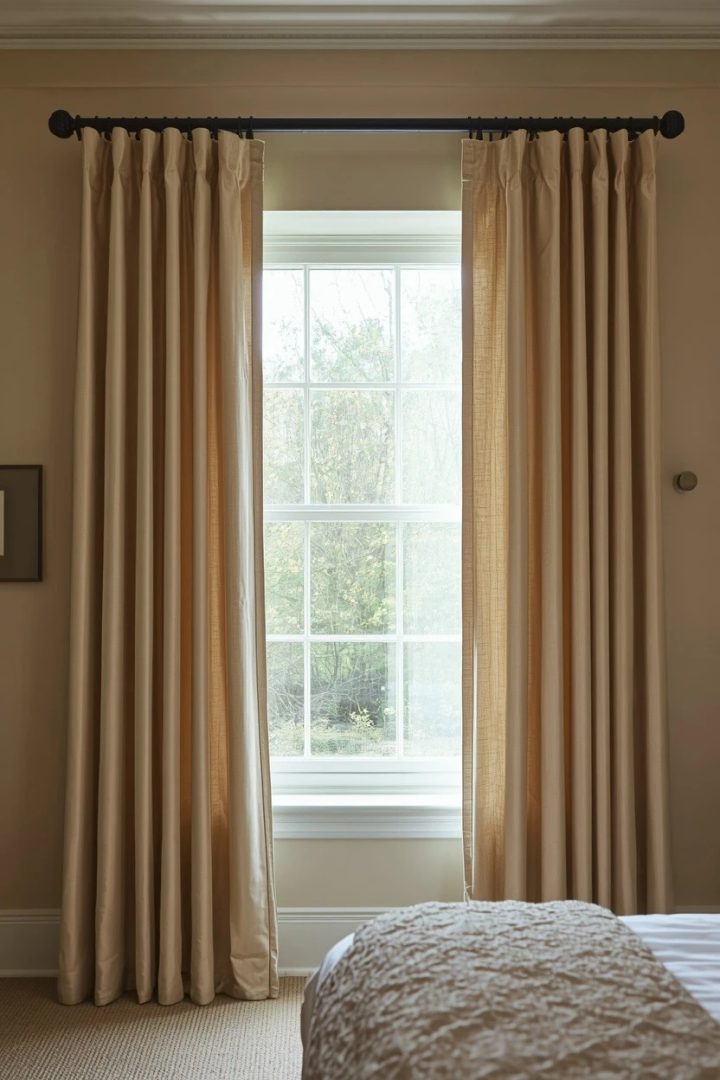
19. The Complete Curtain Look
Bringing the principles together, a fully realised curtain treatment combines the right fabric for the mood, a cohesive colour, generous floor-length panels hung high and wide, the function of a blackout or layered approach, and considered hardware into one polished window. Each decision pulls its weight: the fabric sets the feel, the hanging adds height and light, the lining controls darkness, the hardware finishes it. The discipline is choosing curtains that suit the room's palette and purpose rather than treating them as an afterthought. The result is a window that frames the room beautifully and pulls the whole scheme together.
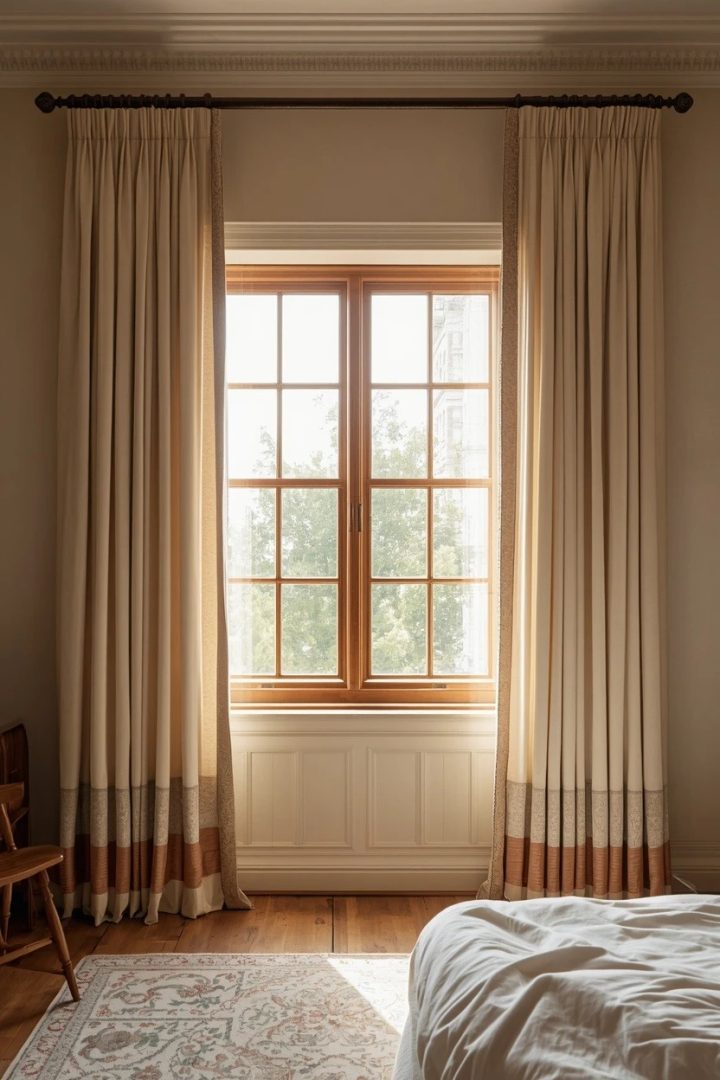
Where I’d Start if I Only Did Three Things
If I were dressing a bedroom window from scratch, I would start with the hanging — mounting the rod high above the frame and wider than the window, with floor-length panels — because how you hang curtains matters even more than the curtains themselves, instantly making the room feel taller, brighter, and more considered. Next, I would sort the function with a layered or blackout approach, pairing a light-controlling layer with a soft decorative one, since good sleep depends on managing the light. Third, I would choose the fabric and colour to suit the mood, leaning neutral and textured for calm or bold for personality. Hang them high and wide, control the light, and pick the right fabric: that trio turns ordinary curtains into a window treatment that frames the whole room beautifully.
Frequently Asked Questions
How high should I hang bedroom curtains?
Higher than you think. Mounting the rod close to the ceiling — or at least well above the window frame — and letting the panels fall all the way to the floor draws the eye upward and makes the room feel taller and grander. Hanging the rod wider than the window, so the open panels sit against the wall rather than the glass, makes the window appear larger and lets in more light. This single hanging trick costs almost nothing and does more for how polished a room looks than the curtains themselves.
What are the best curtains for blocking light in a bedroom?
Blackout curtains, or decorative panels with a blackout lining, are the most effective for a dark, restful room, and they matter most for light sleepers, shift workers, and children. Heavier fabrics like velvet also help block light and add insulation. If you love a lighter look, layer sheer curtains over a blackout blind, or hang decorative drapes with a hidden lining so the room still looks soft and stylish while staying dark. The goal is to manage light without making the room look purely functional, which the right lining easily achieves.
Should bedroom curtains match the wall colour?
It depends on the effect you want. Matching the curtains closely to the wall colour makes the window recede and the room feel calm, cohesive, and larger — a great choice for a restful, pulled-together look. Choosing a contrasting or bold colour instead turns the curtains into a statement that frames the window like art and injects personality. Neither is wrong; tonal and matching schemes read serene, while a bold curtain adds energy. Just keep the rest of the room calmer if the curtains are doing the talking, so the look stays intentional.
What length should bedroom curtains be?
Floor-length almost always looks best in a bedroom. Aim for panels that just kiss the floor or break very slightly for a crisp, tailored look, or add a few extra inches to pool generously for a soft, romantic, luxe effect. Curtains that stop short of the floor — hovering above it or ending at the sill — tend to look unfinished unless you are using a deliberate café-style or short treatment. As a rule, the longer and fuller the panels, the more elegant and considered the window reads, so err toward the floor rather than above it.
Final Thoughts
Curtains are far more than a finishing touch — they shape the light, warmth, privacy, and whole feel of a bedroom, and getting them right can transform a room more than almost any other single change. Whether you choose airy sheers, cocooning velvet, a bold statement colour, or a practical blackout layer, the same principles apply: hang them high and wide, manage the light with a layered or lined approach, and choose a fabric and colour that suit the room's mood. Treat your curtains as a real design decision rather than an afterthought, and you will have windows that frame the space beautifully and pull the entire bedroom together into something calm, polished, and restful.