22 Bedroom Color Ideas and Paint Schemes for a Restful Room
June 21, 2026 · 14 min read
 By Khawar Iqbal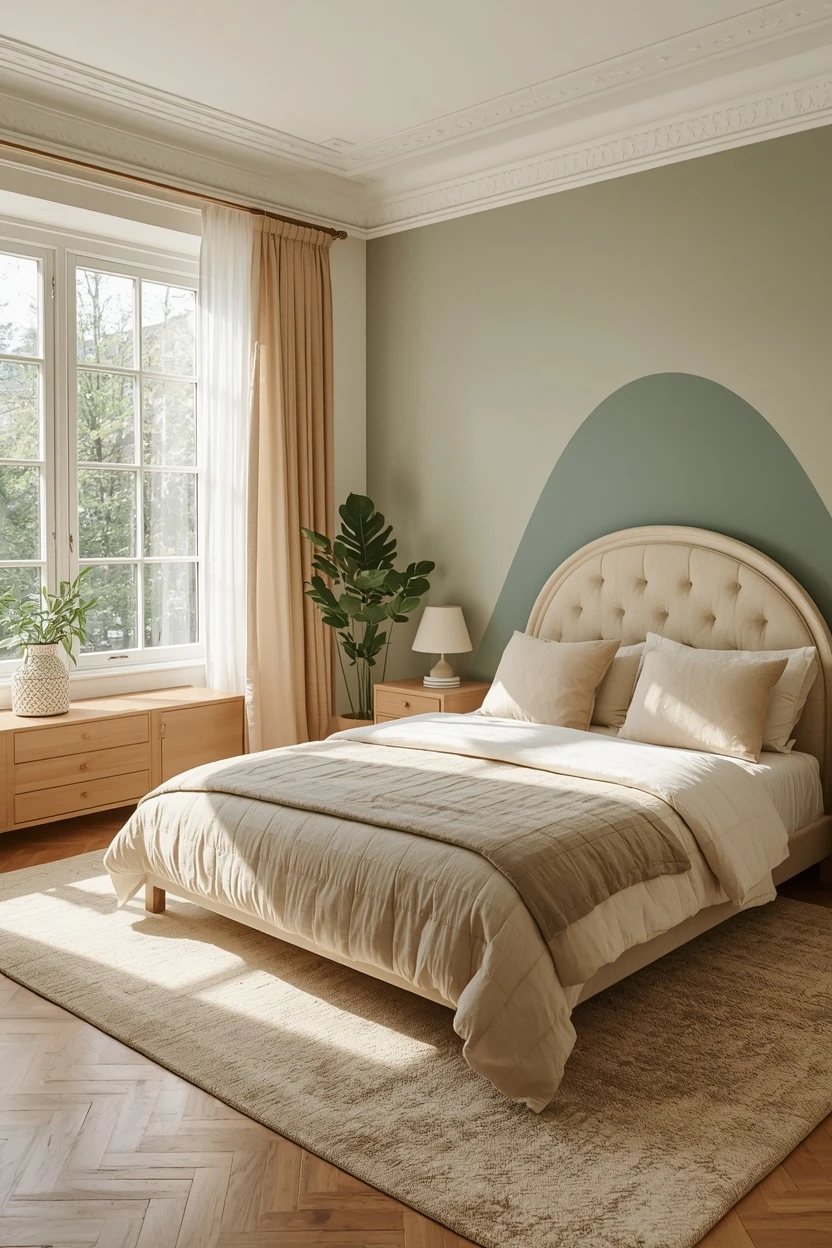
Colour does more to set the mood of a bedroom than almost anything else, which is why choosing a scheme is worth slowing down for. The right palette can make a room feel restful, warm, airy, or cocooning, while the wrong undertone can leave even an expensive room feeling cold or flat.
Each of these 22 bedroom colour schemes is a complete palette you can build a room around, with a note on the mood it creates and how to use it well. One genuinely useful habit before you commit to any of them: paint a large swatch on more than one wall and live with it for a few days, because a colour shifts noticeably between a north-facing room's cool light and a south-facing room's warm light, and undertones only reveal themselves over time.
1. Sage Green and Cream
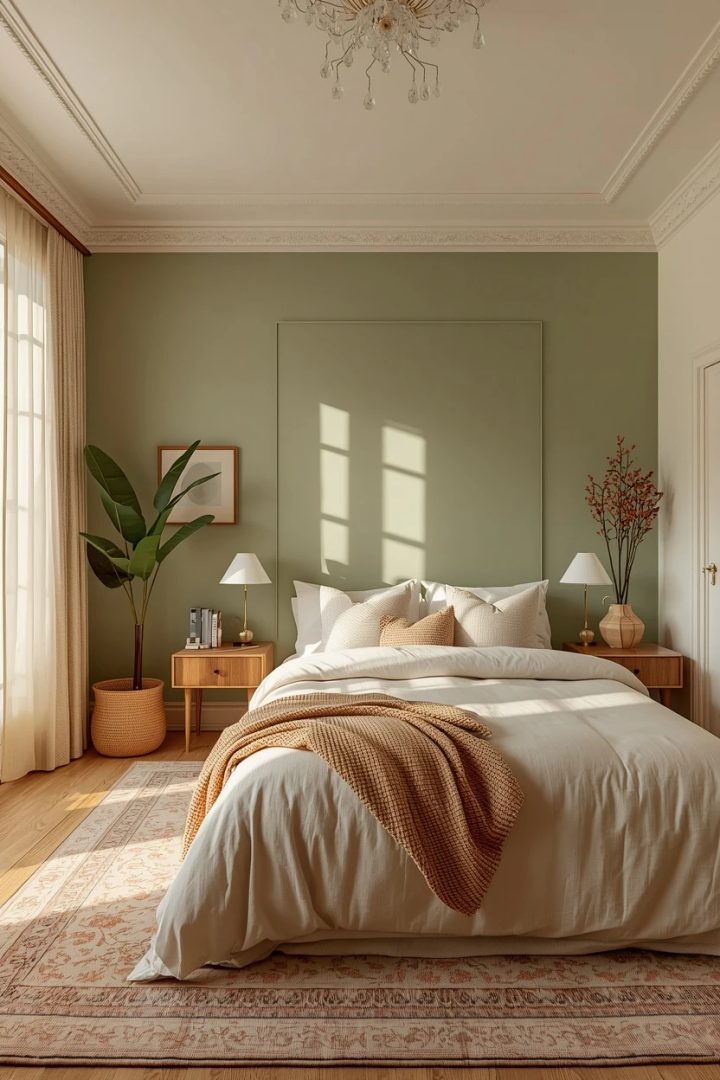
Soft sage green paired with cream is one of the most reliably calming bedroom schemes, bringing a gentle, nature-led restfulness without the chill of a cooler grey-green. Use the sage on the walls or a single accent wall and keep bedding and trim cream so the room stays light, then ground it with warm wood and a few plants. A soft, greyed sage such as Sherwin-Williams Evergreen Fog reads earthy and warm rather than minty. It suits almost any room and pairs wonderfully with wood, brass, and linen for a serene, timeless space.
2. Warm Greige and White
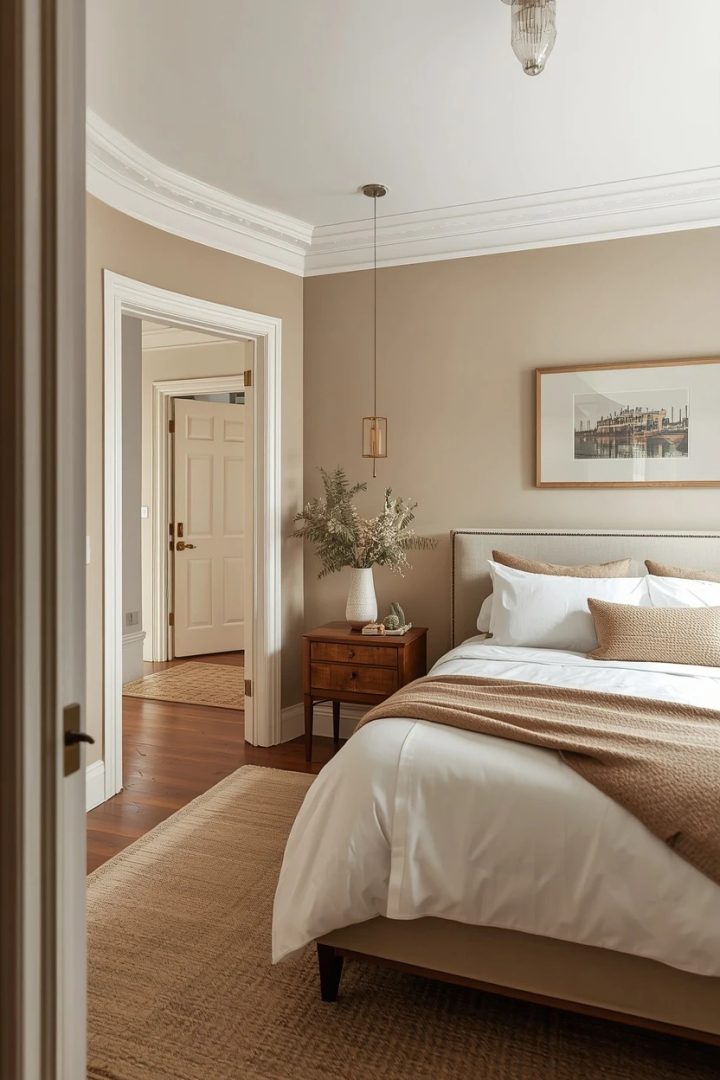
Greige — the warm marriage of grey and beige — with crisp white trim is a quietly sophisticated, endlessly flexible bedroom scheme that flatters almost any furniture and never dates. It reads warmer and cosier than a cool grey while staying just as calm and neutral, and it works as a soft backdrop for both modern and traditional rooms. Layer in linen, wood, and a touch of black or brass for definition. It is the safe-but-stylish choice for anyone who wants a restful, light room they will not tire of.
3. Soft Blue and White
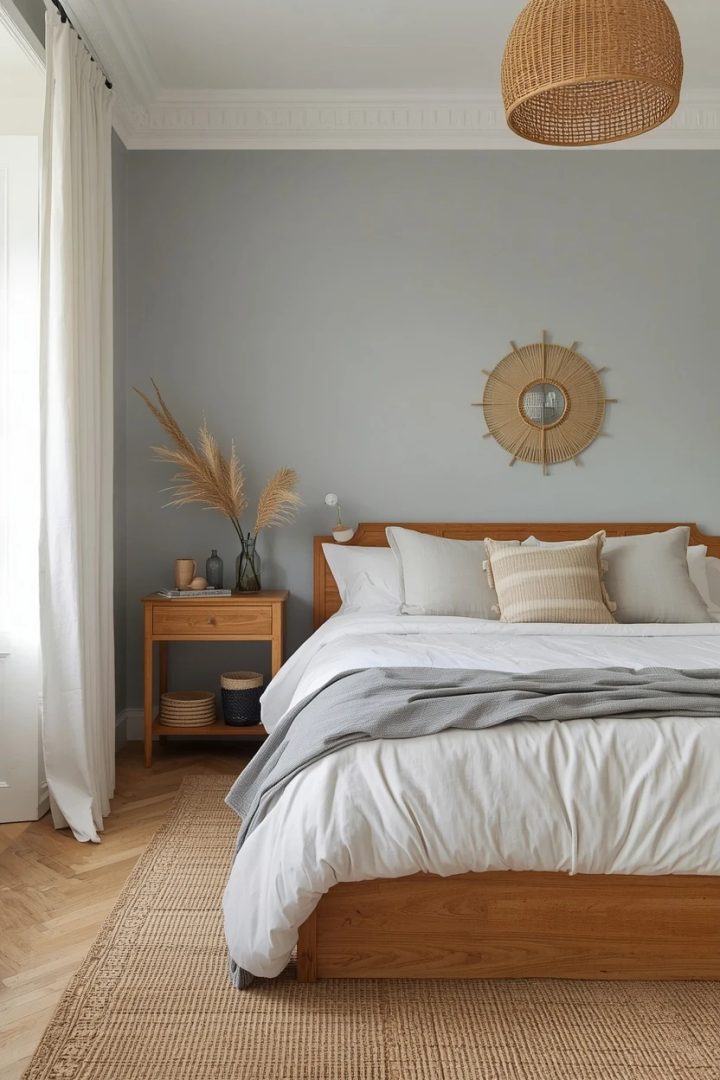
Soft, slightly greyed blue with white is fresh, airy, and genuinely restful, borrowing the calm of sky and water without feeling cold if you choose a warm-leaning shade. Keep the blue gentle rather than bright, pair it with white bedding and trim, and add warm wood and rattan so the scheme stays inviting. A soft blue with a grey undertone reads serene rather than nursery-like. It suits bright rooms especially well and is a classic, soothing choice for a bedroom you want to wake up in feeling fresh.
4. Blush Pink and Taupe
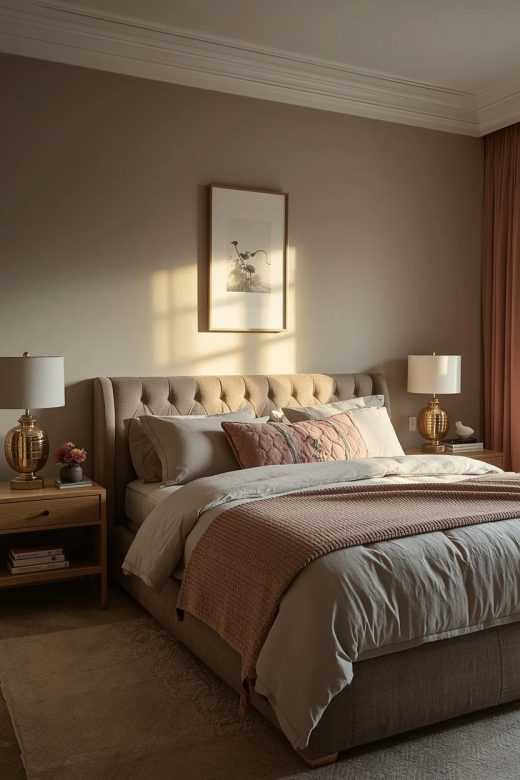
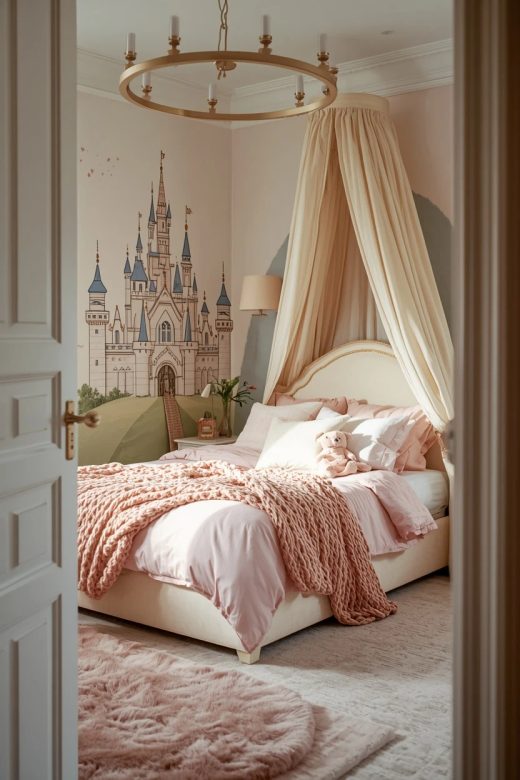
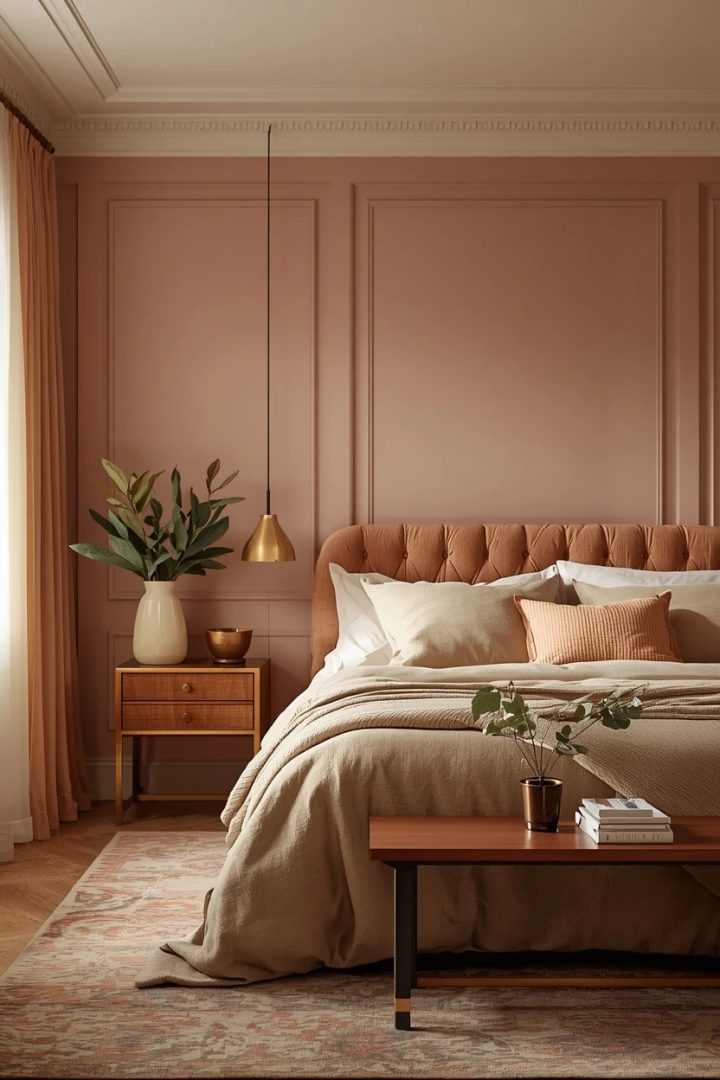
Blush pink grounded with warm taupe is a soft, grown-up take on pink that reads romantic and calming rather than sweet or childish. The taupe anchors the blush so it reads sophisticated, and keeping both tones muted and dusty is what keeps the scheme refined. Layer in cream, warm wood, and a touch of brass for warmth. It suits anyone who loves a soft, feminine room but wants it to read refined and restful, and it photographs as a gentle, welcoming retreat.
5. Charcoal and Warm Wood
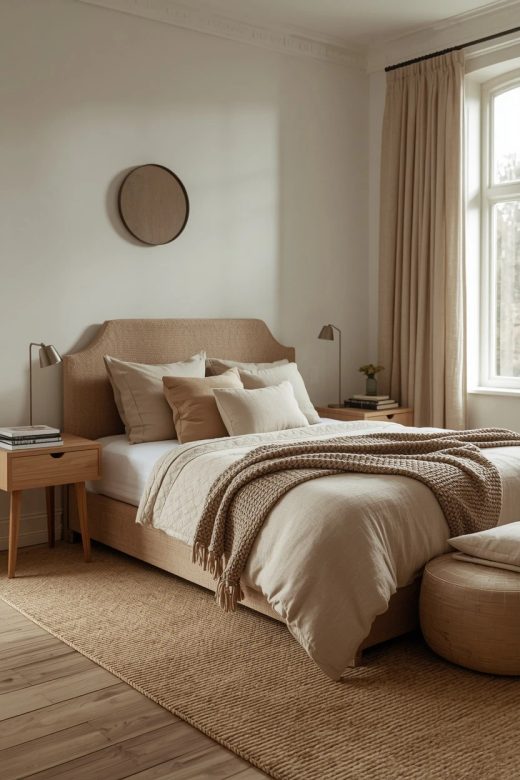
Deep charcoal walls paired with warm wood create a cocooning, dramatic bedroom that is far more restful for sleep than people expect. The warmth of the wood and a few brass or aged-gold accents stop the dark walls from feeling cold, and layered lamplight keeps the room glowing rather than gloomy. Use lighter bedding to lift the scheme and keep balance. This works best in a larger or well-lit room and suits anyone who finds dark, enveloping spaces the most relaxing to wind down in at night.
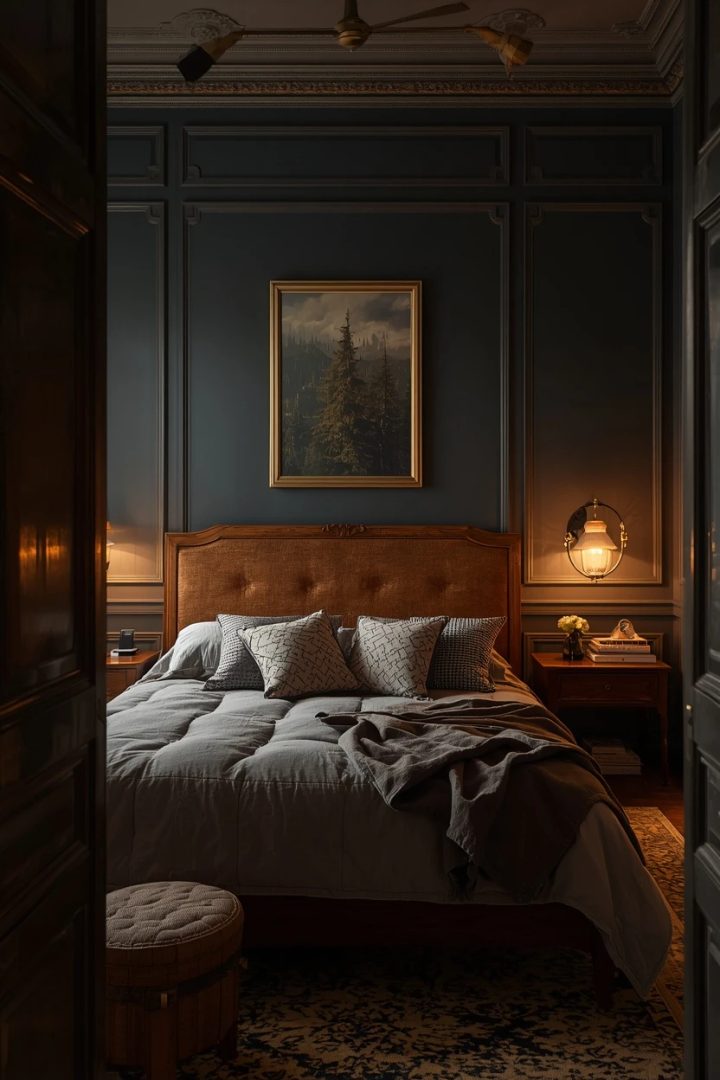
6. Navy and Cream
Navy with cream is a classic, confident pairing that brings depth and a smart, timeless quality to a bedroom without the full commitment of a dark room. Use navy on an accent wall or the lower half of the walls and keep cream as the dominant light, balancing the two with warm wood and brass. The contrast reads crisp and elegant while staying restful. It suits a room that wants a little drama and a tailored, enduring look, and it flatters both traditional and contemporary furniture.
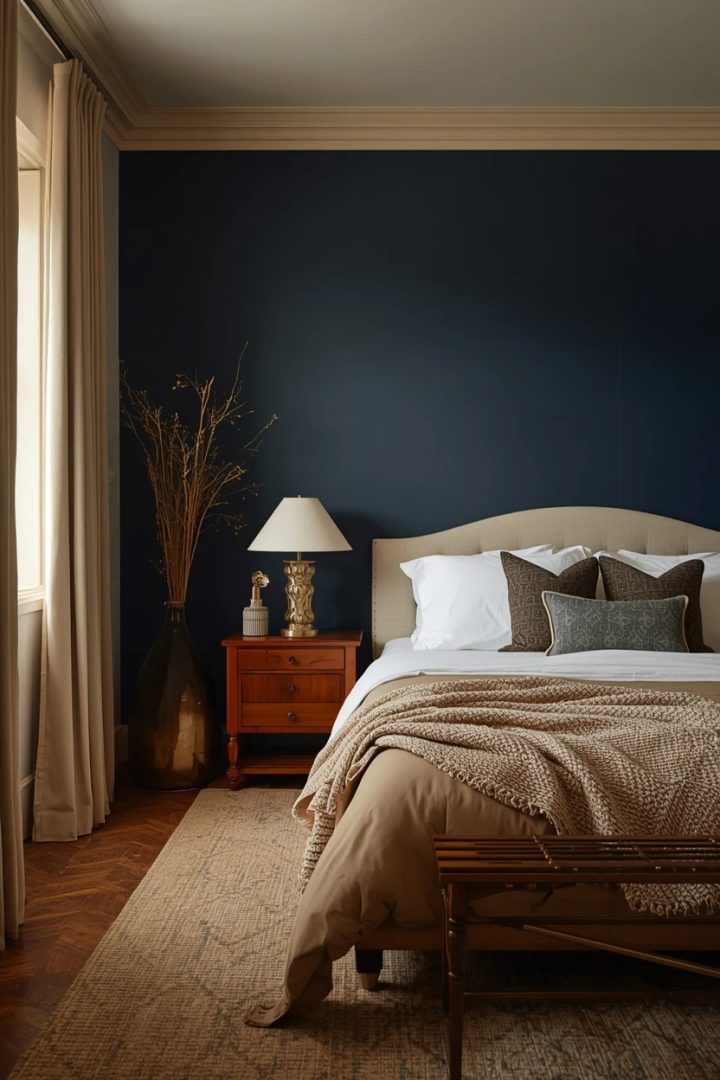
7. Terracotta and Cream
Warm terracotta with cream brings a sun-baked, earthy warmth to a bedroom that reads welcoming and grounded, especially in rooms that get good light. Use the terracotta as an accent — a wall, bedding, or textiles — against a cream base so the warm colour reads rich rather than overwhelming, and layer in natural wood and woven textures. The scheme has a relaxed, Mediterranean ease. It suits anyone drawn to warm, earthy palettes who wants a bedroom that reads cosy and full of natural warmth.
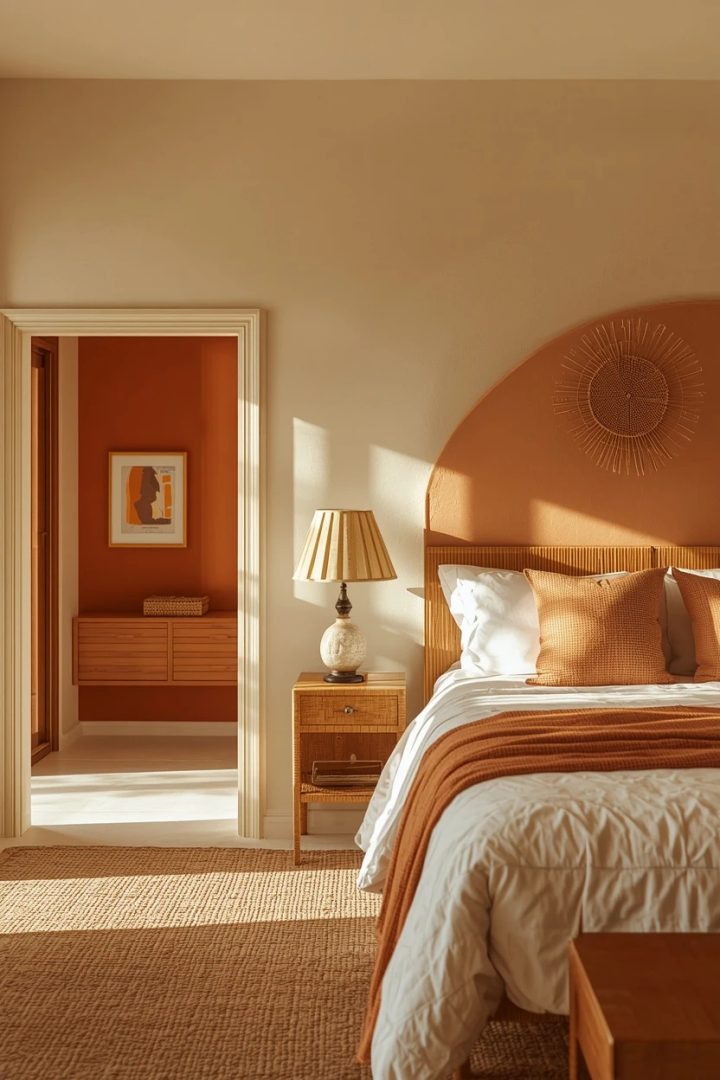
8. Olive Green and Tan
Olive green with warm tan is a grounded, earthy scheme that reads calm and quietly sophisticated, the muted green and warm neutral balancing each other beautifully. Use olive on the walls or an accent and tan through bedding and textiles, keeping both soft and warm-leaning so the room stays inviting. Natural wood and a few plants reinforce the organic mood. It suits anyone who finds nature-led, earthy palettes the most soothing and wants a bedroom that feels warm, restful, and a little unexpected.
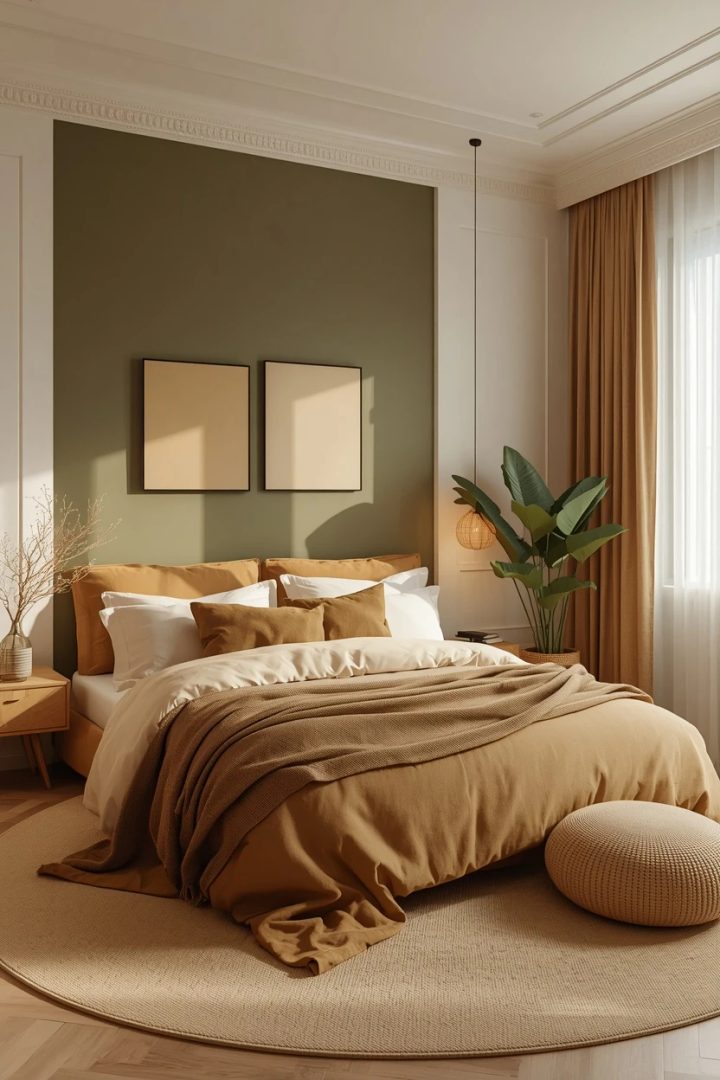
9. Lavender and Soft Grey
Soft lavender with a warm grey is a gentle, soothing scheme long associated with calm and restful sleep, ideal for a bedroom focused on winding down. Keep the lavender muted and dusty rather than bright, pair it with a warm-leaning grey and plenty of white, and add wood for warmth so it never reads cold. The palette is delicate without being twee. It suits anyone who wants a serene, slightly romantic room, and the soft purple tones are widely considered some of the most relaxing colours for sleep.
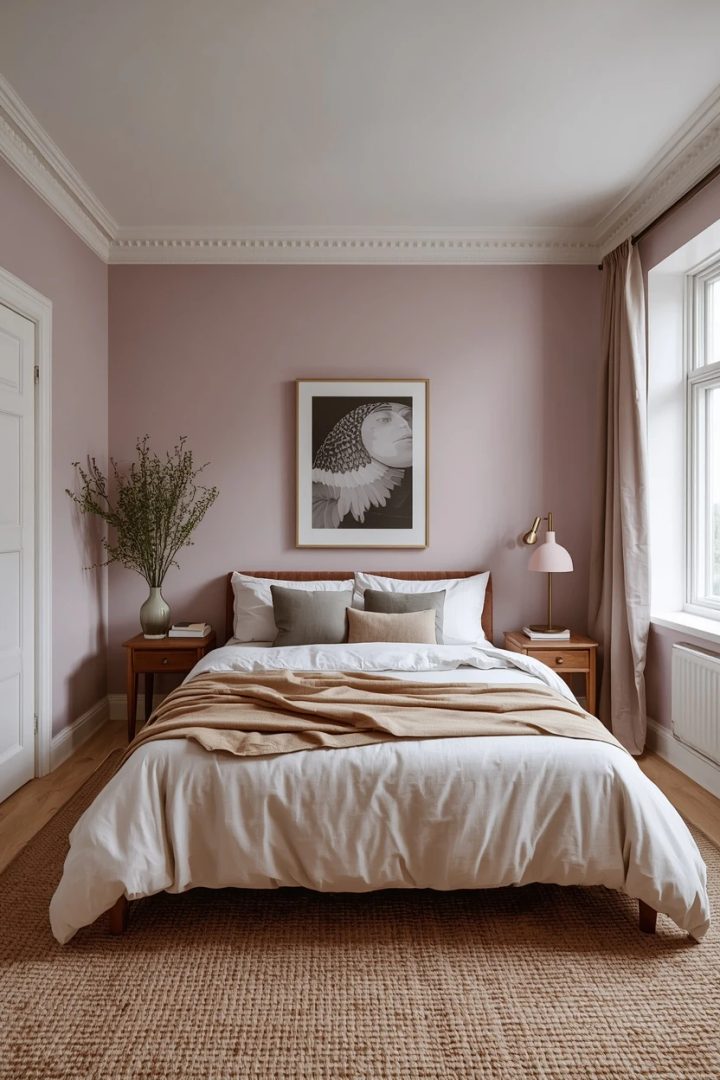
10. Warm White Monochrome
A warm white monochrome scheme — layering several soft whites, creams, and off-whites — creates a serene, light-filled bedroom where texture rather than colour carries all the interest. Mix linen, knit, boucle, and wood so the tonal palette stays rich and never sterile, and lean warm with your whites to avoid a clinical look. The look is calm, timeless, and endlessly adaptable. It suits bright and dark rooms alike, makes small spaces read larger, and gives you a blank, restful canvas that is easy to accent later.
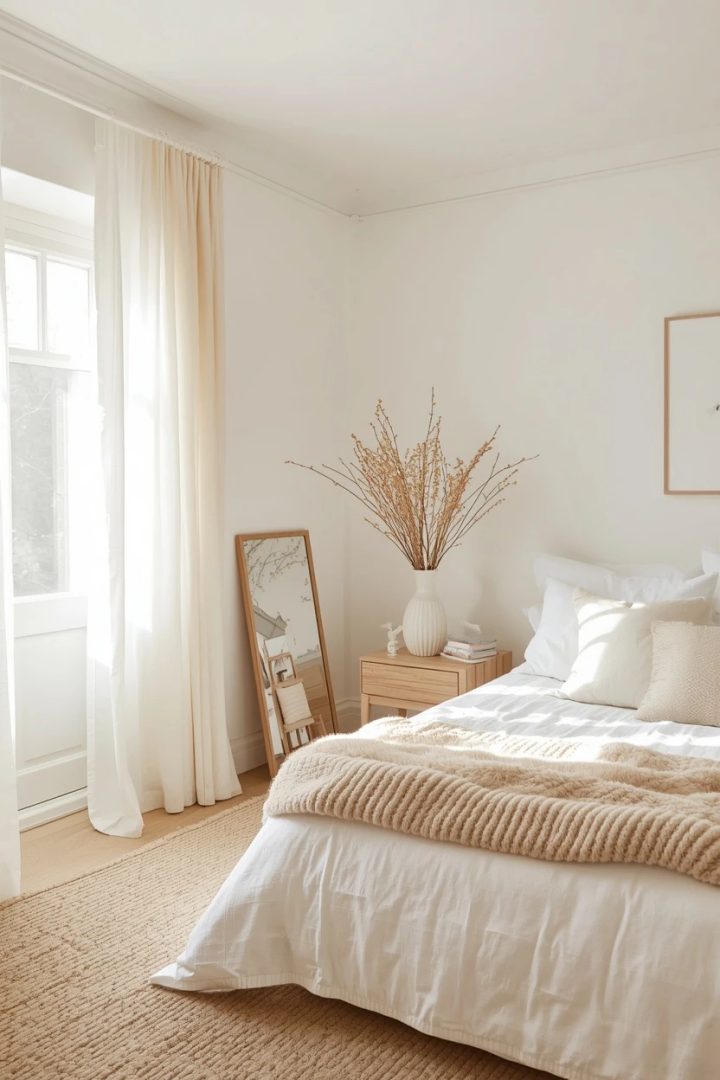
11. Mustard and Warm Grey
Mustard yellow used as an accent against warm grey walls brings a cheerful, retro-leaning warmth to a bedroom without overwhelming it. Keep the mustard to cushions, a throw, or a single piece of art so the colour energises rather than dominates a room meant for rest, and let the warm grey provide a calm, grounding base. Wood and cream soften the scheme further. It suits anyone who wants a hint of happy colour and a mid-century-modern edge while keeping the overall room calm and restful.
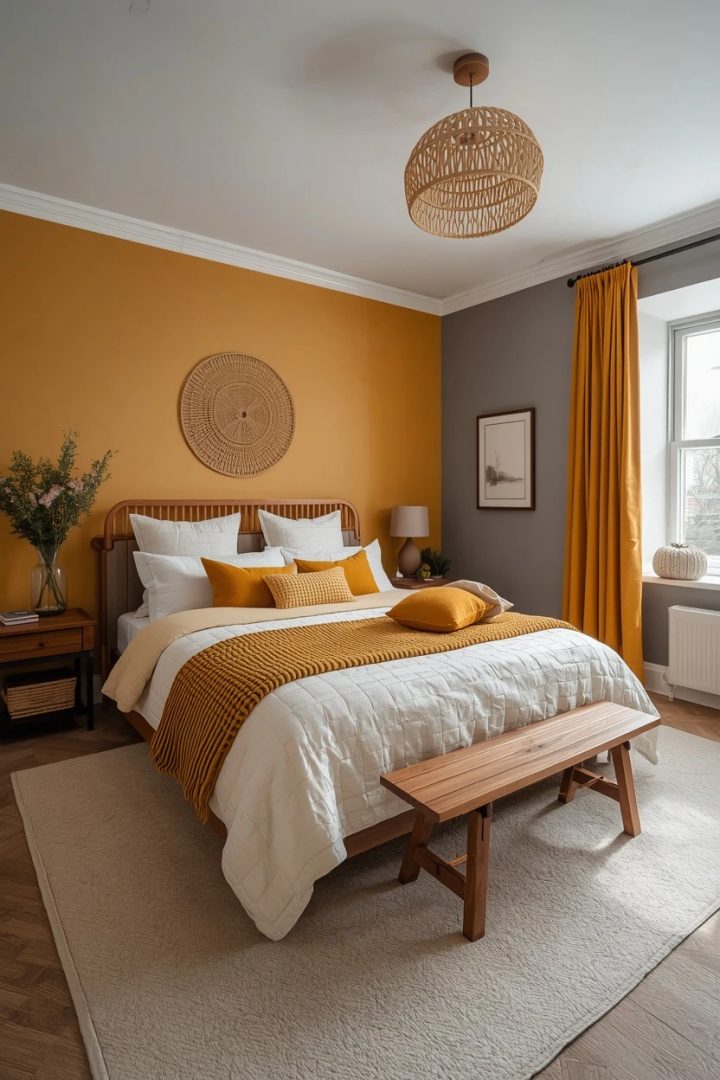
12. Dusty Rose and Sage
Dusty rose with soft sage green is an unexpected but harmonious pairing, the muted pink and gentle green balancing warm and cool for a romantic yet grounded bedroom. Keep both tones soft and dusty so the scheme reads sophisticated rather than sweet, and tie them together with cream and warm wood. The combination has a vintage, garden-inspired charm. It suits anyone who wants a gentle, characterful room with a little colour, and the two muted tones together create a calm, pretty, and slightly nostalgic mood.
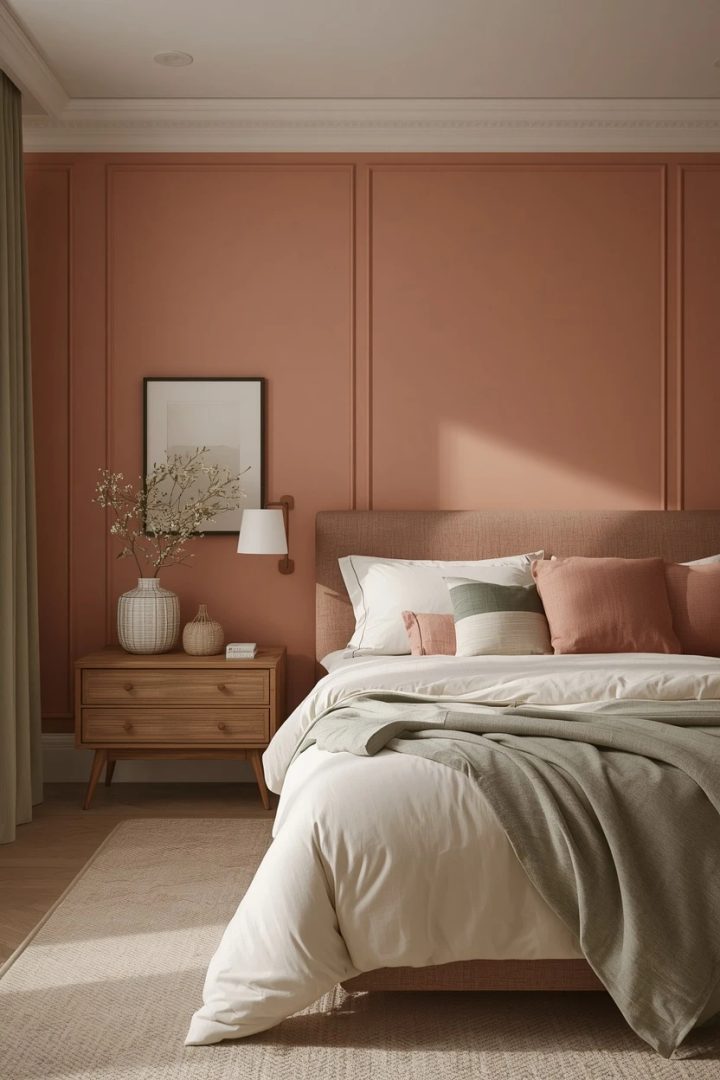
13. Emerald Green and Brass
Deep emerald green paired with brass is a rich, luxurious scheme that turns a bedroom into a jewel-toned retreat. Use the emerald on an accent wall or in velvet textiles against a calmer base, and let warm brass accents lift the deep green so it glows. Lighter bedding keeps the dark colour from feeling heavy. The scheme reads opulent and dramatic, so it suits a larger or well-lit room and anyone who wants a bold, cocooning bedroom with a sense of glamour and a genuinely restful, enveloping atmosphere.
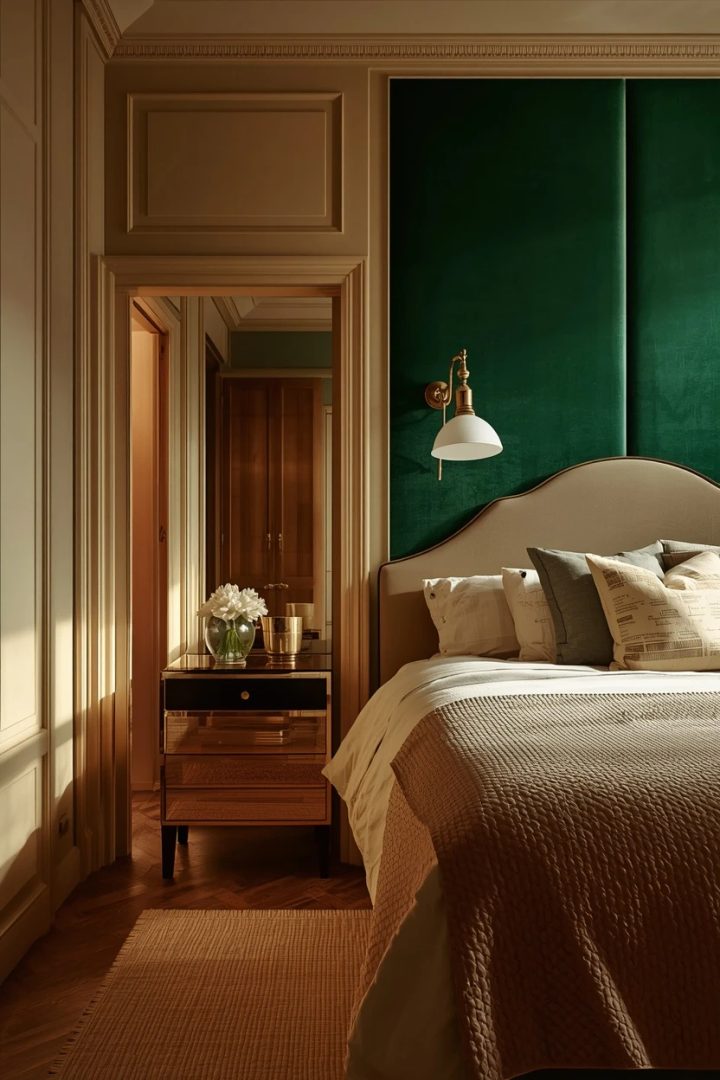
14. Beige and Brown Tonal
A tonal scheme of layered beige and warm brown creates a deeply restful, earthy bedroom built entirely from warm neutrals of different depths. Range from pale beige walls through caramel and chocolate textiles, letting the variation in tone and texture provide the interest in place of contrast. Natural wood, linen, and leather suit the palette perfectly. It suits anyone who finds warm, earthy rooms the most soothing and wants an enveloping, grounded space that reads rich and calm without relying on any bright colour at all.
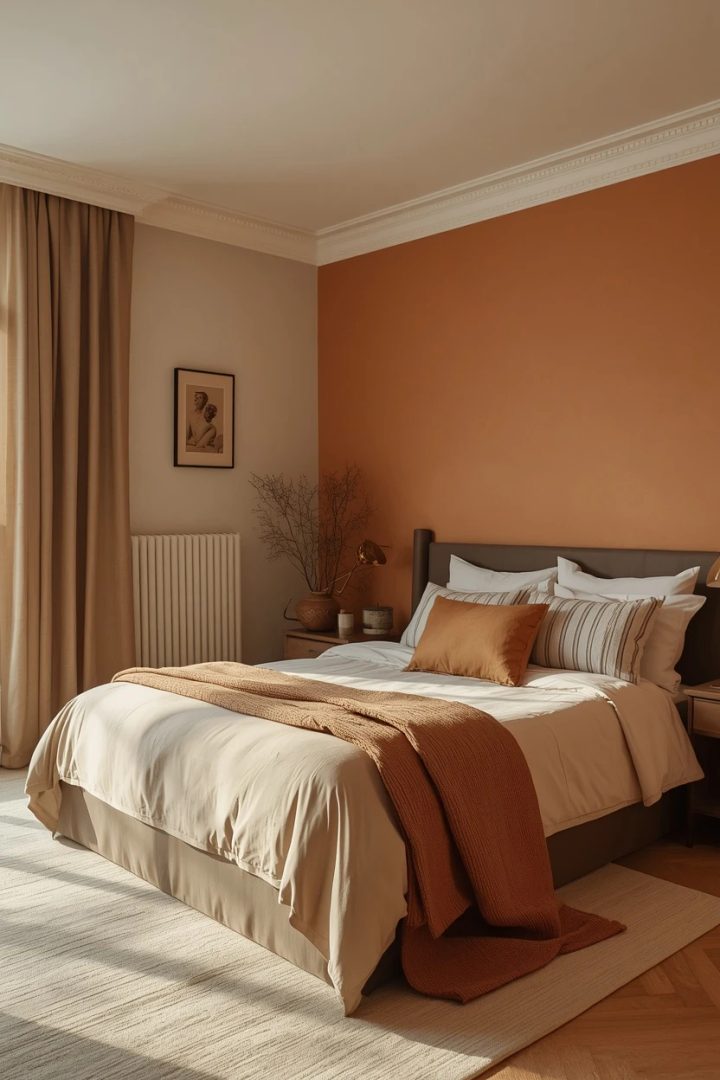
15. Pale Yellow and White
Soft, buttery pale yellow with white brings a gentle, sunny cheerfulness to a bedroom, especially welcome in a room that lacks natural light. Keep the yellow muted and warm rather than bright so it reads soft and restful, and pair it with white trim and bedding to keep the scheme fresh and light. Natural wood adds warmth. It suits north-facing or darker rooms that need lifting, and anyone who wants a happy, optimistic palette that still stays calm and easy to relax in.
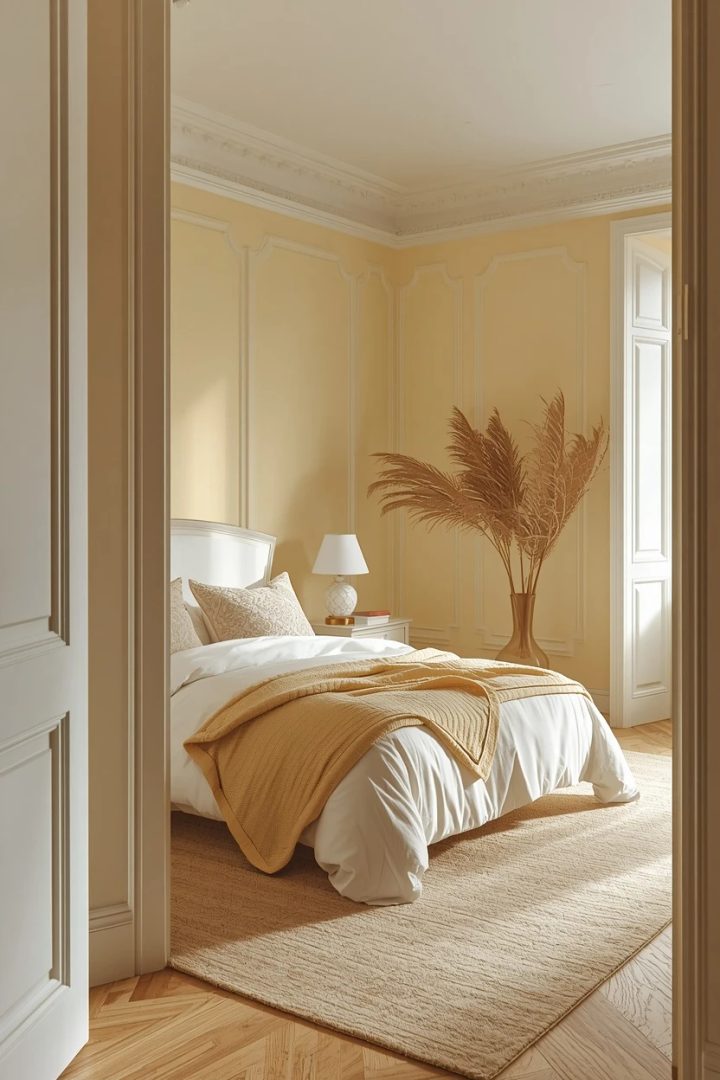
16. Black, White and Wood
A modern scheme of black and white grounded with warm wood is graphic, crisp, and timeless, the high contrast kept from feeling cold by the warmth of natural timber. Use black sparingly — a feature wall, a bed frame, window frames, or art — against a largely white room, and let wood soften the whole. The result reads contemporary and confident. It suits anyone who loves clean, modern design and wants a sharp, uncluttered bedroom, with the wood ensuring the monochrome stays warm and inviting rather than stark.
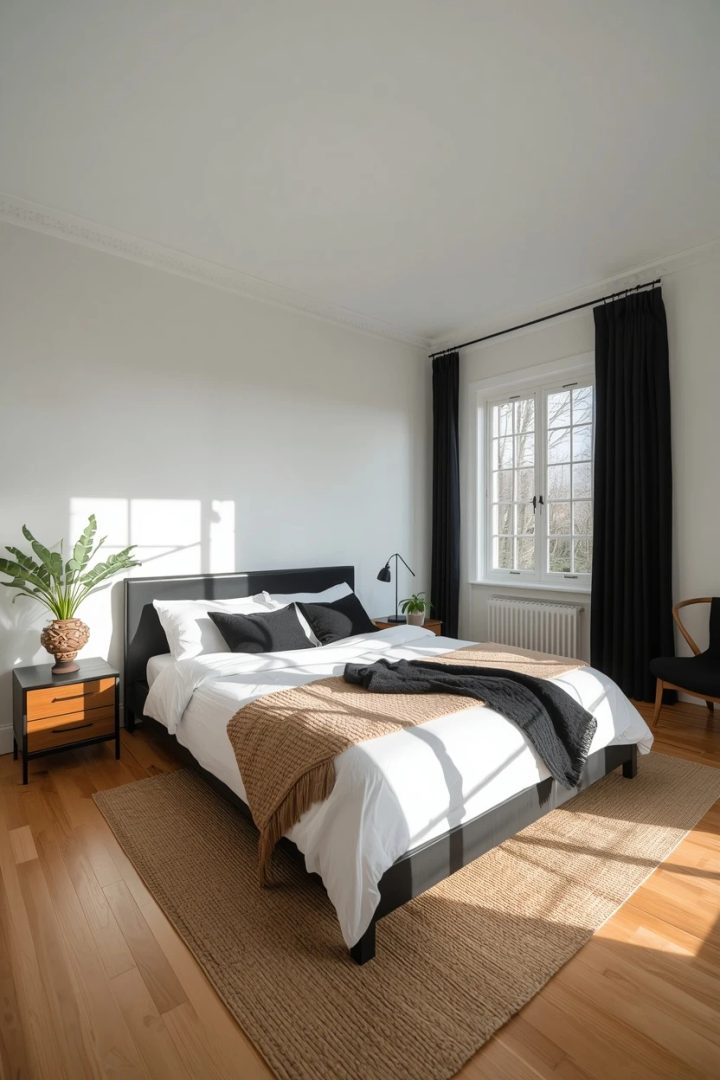
17. Mauve and Cream
Mauve — a soft, dusky purple-grey — with cream is a gentle, slightly moody scheme that reads sophisticated and calming, more grown-up than a clear lilac. Use the mauve on the walls or bedding against a cream base, keeping it muted so it stays restful, and warm it with wood and soft lighting. The dusky tone has a quiet elegance. It suits anyone who wants a soft colour with a little depth and mood, and the muted purple-grey is both restful for sleep and quietly distinctive.
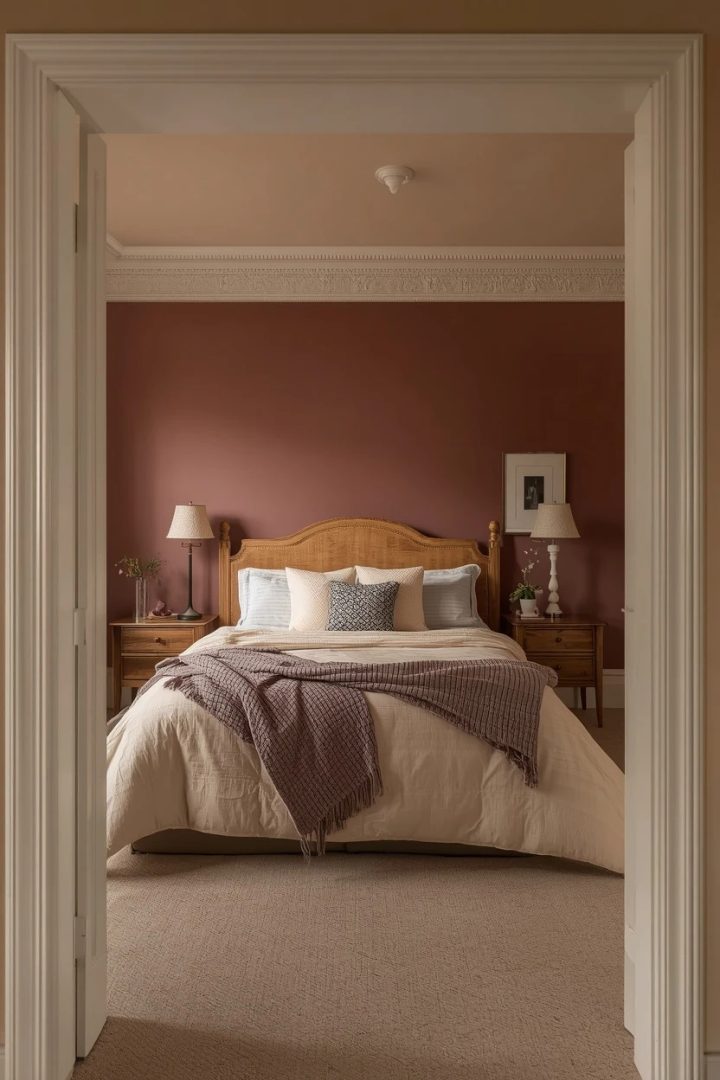
18. Teal and Warm Neutral
A deep teal paired with warm neutrals brings a rich, restful colour to a bedroom that sits between blue and green and flatters a wide range of skin tones and furniture. Use the teal on an accent wall or in textiles against a warm beige or greige base, and add brass and wood to keep it warm. The depth reads calming and a little luxurious. It suits anyone who wants real colour without going dark all over, and teal's blend of blue and green is among the more soothing, versatile bedroom tones.
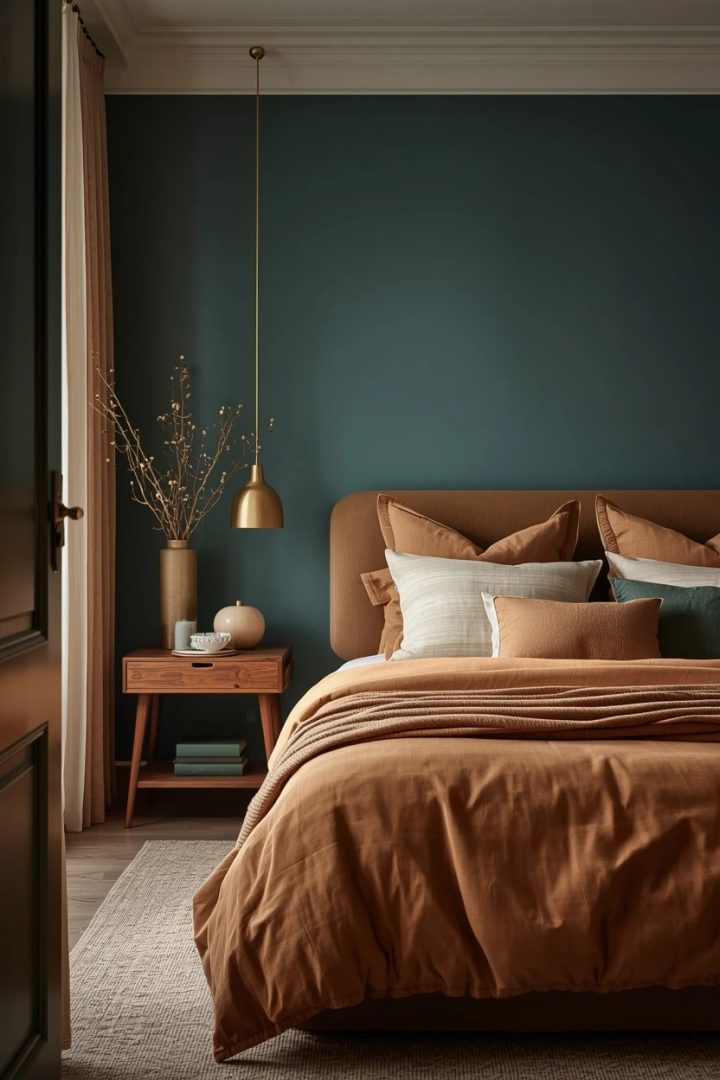
19. Soft Peach and Cream
Soft peach with cream is a warm, gentle scheme that brings a flattering, glowing quality to a bedroom, since peach tones are kind to the complexion in morning light. Keep the peach muted and warm rather than bright, pair it with cream bedding and trim, and add wood and a little brass for grounding. The palette is soft and welcoming without being sweet. It suits anyone who wants a warm, optimistic room with a gentle blush of colour that stays calm, cheerful, and easy to live with.
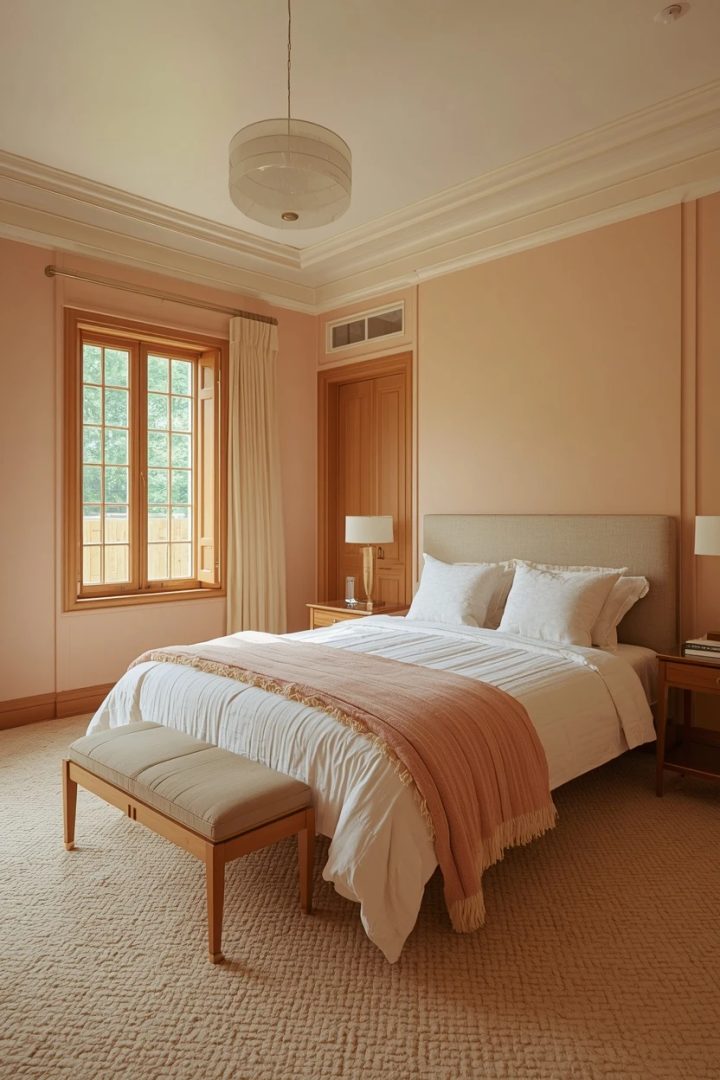
20. The Color-Drenched Single Tone
Colour-drenching — painting the walls, trim, ceiling, and sometimes built-ins all in one soft tone — creates an enveloping, seamless bedroom that reads calm and quietly dramatic. A muted sage, soft blue, or warm clay suits it well, since blurring the edges with a single colour wraps the room and makes it read considered and cocooning. Keep bedding and a few accents slightly lighter or tonal for balance. It suits anyone who wants a confident, immersive scheme, and the all-over single tone is one of the most current, high-impact ways to use colour.
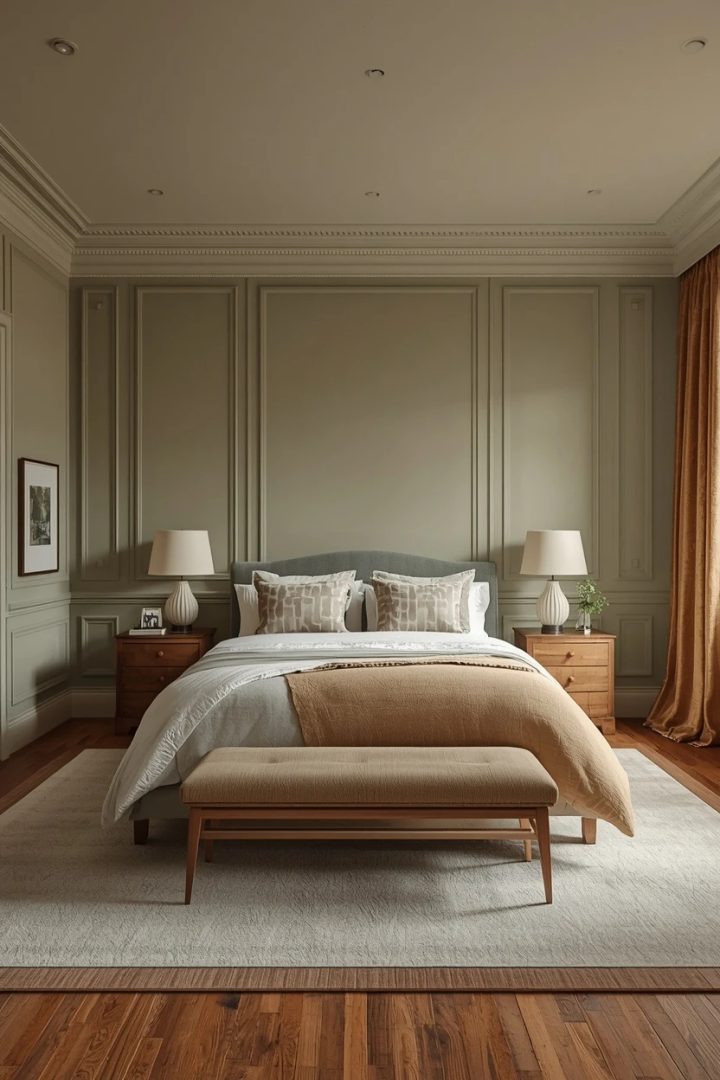
21. Warm Clay and Olive Earthy Mix
Combining warm clay and soft olive green builds a deeply earthy, grounded bedroom from two natural tones that sit together effortlessly. Use the clay and olive across walls, bedding, and textiles in layered, tonal amounts, and let natural wood, linen, and a few plants complete the organic mood. The slightly imperfect, nature-led quality is the charm. It suits anyone drawn to earthy, organic palettes who wants a warm, restful room that reads connected to nature and reads rich and soothing without any bright or cool colour.
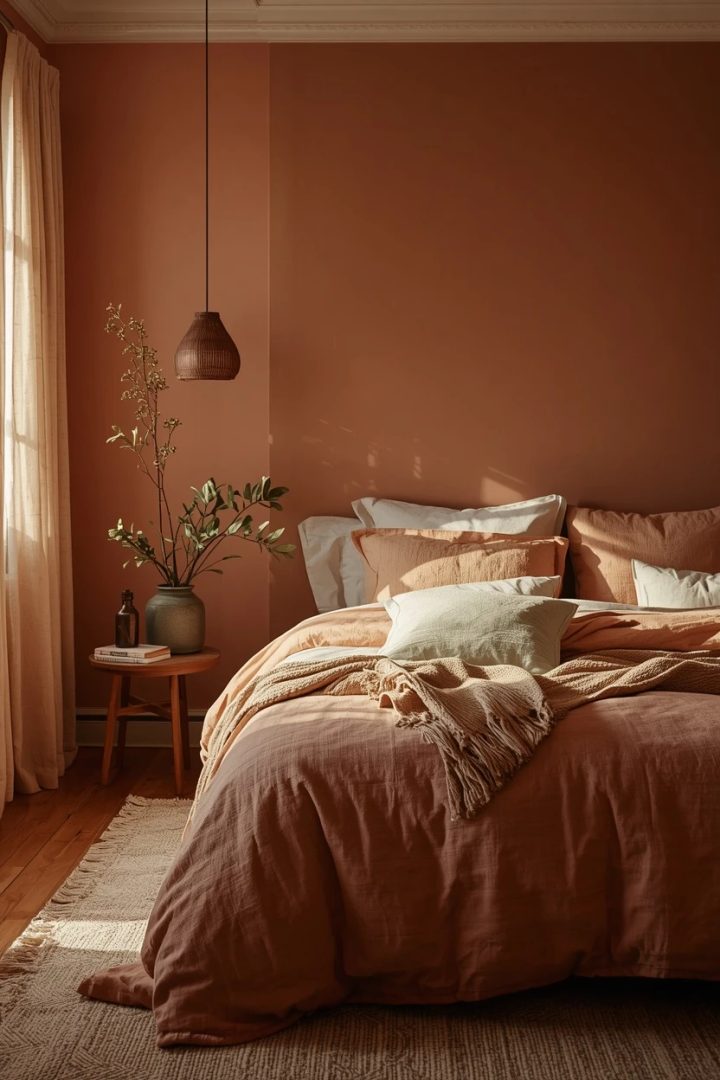
22. Choosing and Testing Your Bedroom Palette
The final, most important idea is less a single scheme and more the method that makes any of the above work: choose a palette around the mood you want, then test it properly before committing. Decide whether you want airy and light, warm and cosy, or deep and cocooning, then narrow to two or three coordinating tones. Paint large swatches on more than one wall and watch them across a full day, since a north-facing room's cool light and a south-facing room's warm light change a colour dramatically, and undertones — pink, green, or grey hiding in a beige, for example — only show themselves over time. Testing first is what separates a bedroom colour scheme you love from one you regret.
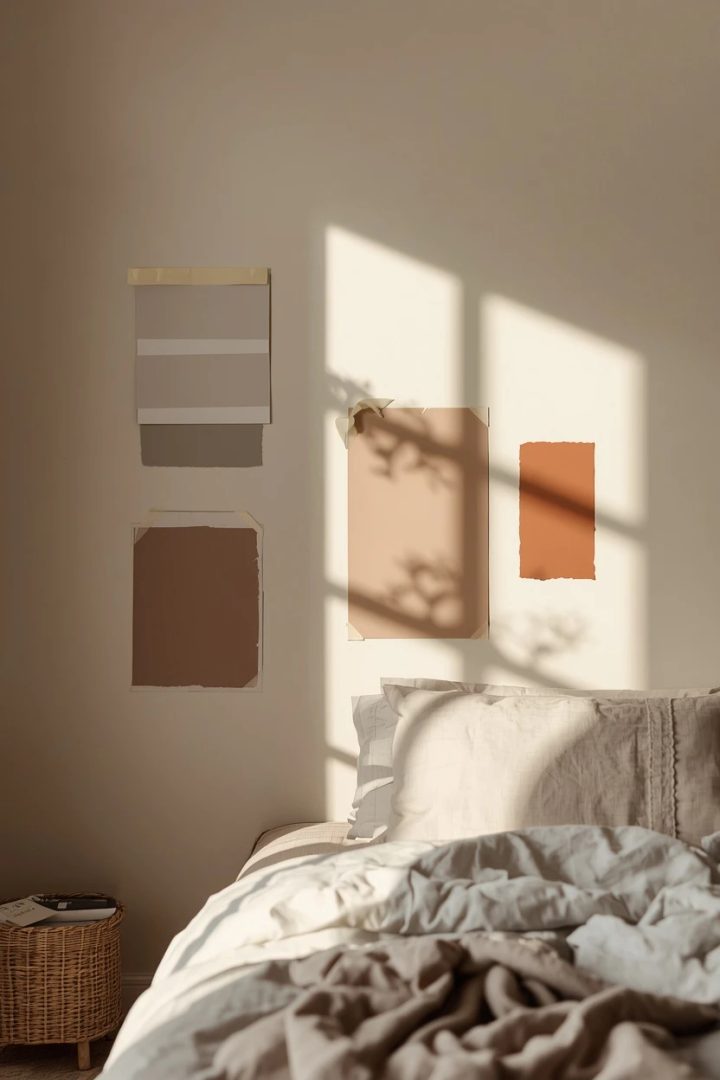
Where I'd Start if I Only Did Three Things
If I were choosing a bedroom colour scheme, I would start by deciding the mood I wanted — airy and light, warm and cosy, or deep and cocooning — because that single decision rules whole groups of palettes in or out before I get lost in swatches. Next, I would narrow to two or three coordinating tones and lean warm, since warm-leaning colours read more restful and inviting in a room meant for sleep. Third, I would test large swatches on more than one wall and live with them for a few days, watching how they shift in the room's actual light. Decide the mood, pick two or three warm tones, and test before committing: that approach gives you a scheme you will genuinely love.
FAQs
What are the most calming colours for a bedroom?
Soft, muted, warm-leaning tones are generally the most restful. Gentle greens like sage, soothing blues, soft lavender and mauve, and warm neutrals such as greige, cream, and taupe all read calm and are widely recommended for sleep. Deeper colours like charcoal, navy, and emerald can also be very restful when balanced with warm lighting and lighter bedding, since they create a cocooning effect. The common thread is keeping the tone muted rather than bright, and leaning warm so the room reads inviting rather than cold.
How do I pick a paint colour that won't look different on the wall?
Test before you commit. Paint a large swatch — ideally a couple of feet square — on more than one wall, including one that gets less light, and live with it for several days. Colours shift dramatically with the light: a north-facing room casts cooler light that can make warm colours read muddy and cool ones icy, while a south-facing room warms everything. Undertones also only reveal themselves over time, so watching the swatch morning, noon, and night under your own lighting is the only reliable way to avoid a surprise.
Should the whole bedroom be one colour or should I use an accent wall?
Both work; it depends on the effect you want. A single colour across all walls, or even colour-drenching the trim and ceiling too, creates a calm, enveloping, cohesive room and is very current. An accent wall behind the bed lets you introduce a deeper or bolder colour as a focal point while keeping the room light and is more budget-friendly. As a rule, lighter rooms can take an all-over colour, while smaller or darker rooms often do better with one accent wall and lighter surrounding walls.
How many colours should a bedroom colour scheme have?
A good rule of thumb is two or three main colours plus a neutral, kept in a tight, coordinating palette. Choose a dominant colour for the walls or largest areas, a secondary colour for bedding and textiles, and a small accent colour for cushions, art, or details, with a neutral like cream or wood tying it together. Limiting yourself to a few coordinating tones is what keeps a bedroom feeling calm and cohesive rather than busy, which matters more in a room meant for rest than anywhere else in the home.
Final Thoughts
Colour sets the entire mood of a bedroom, so it is worth choosing slowly and testing properly — a soft sage or greige for timeless calm, a deep charcoal or emerald for a cocooning retreat, a blush or peach for gentle warmth, all read very differently in your room's particular light. Decide first whether you want the space to feel airy, warm, or enveloping, narrow to two or three coordinating warm-leaning tones, and paint large swatches you live with for a few days before committing. Choose the scheme that matches the mood you are after, test it in your own light, and you will end up with a bedroom colour palette that looks beautiful and genuinely helps you rest.