14 Home Coffee Bar Ideas to Brew Like a Barista
July 9, 2026 · 12 min read
 By Khawar Iqbal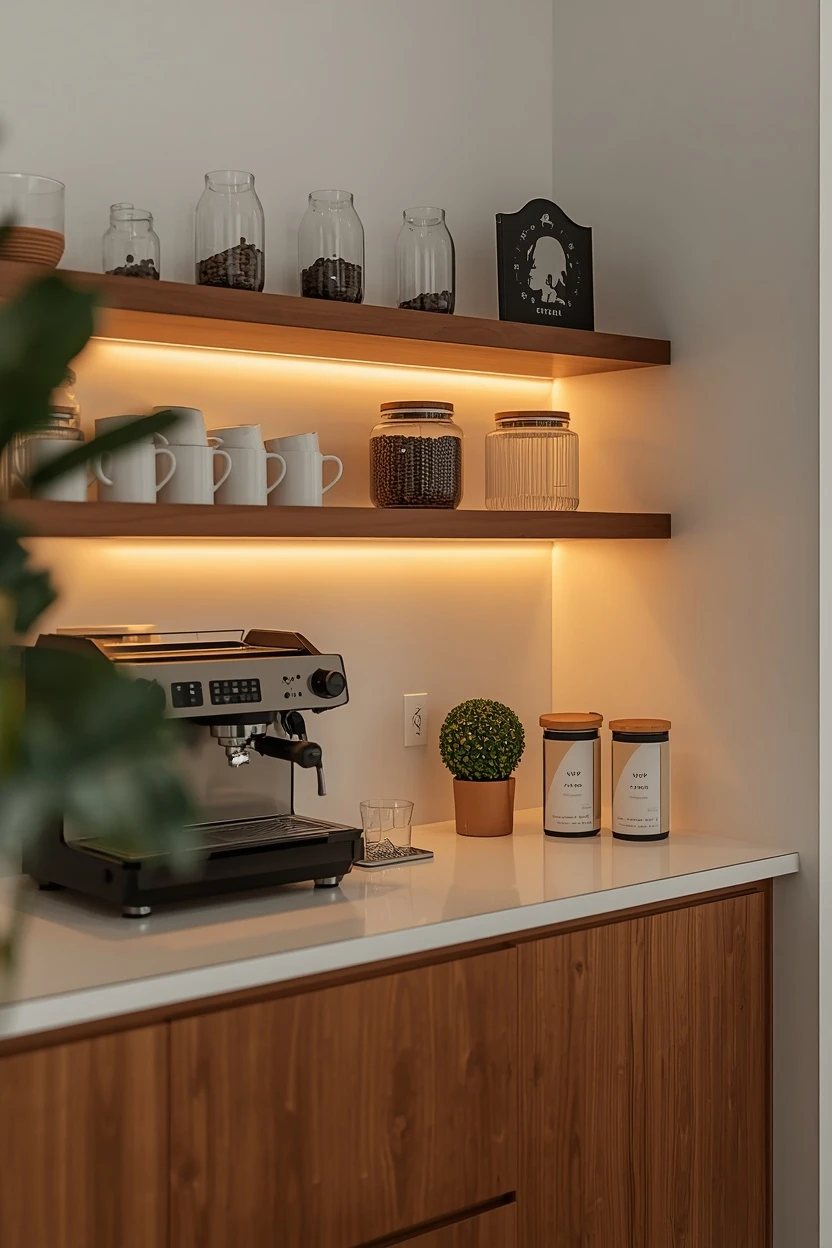
There is a particular pleasure in making a proper coffee at home without queuing or paying cafe prices, and a dedicated coffee bar turns that daily ritual into something special. The best home coffee bar ideas carve out a spot — whether a whole cabinet, a stretch of countertop, or a compact cart — where the machine, the mugs, the beans, and the accessories all live together, ready to brew. Beyond the practicality, a well-styled coffee bar is a genuinely charming feature in any kitchen or living space.
Each idea below is a distinct way to create a coffee station at home, with honest notes on space, storage, and styling for setups large and small. Some are full built-in stations; others are compact solutions for a corner or a rented kitchen. Whatever your space and budget, there is a direction here to bring the cafe experience home and make your morning coffee a daily highlight.
1. A Dedicated Coffee Cart
The most flexible option is a rolling coffee cart, which creates a complete mobile coffee station that needs no fixed installation and can move wherever it is wanted. A three-tier cart holds the machine on top, mugs and beans on the middle shelf, and bulk supplies below, putting everything within reach in a compact footprint.
It suits renters and small kitchens especially well, since it requires no building work and can be wheeled aside when needed.
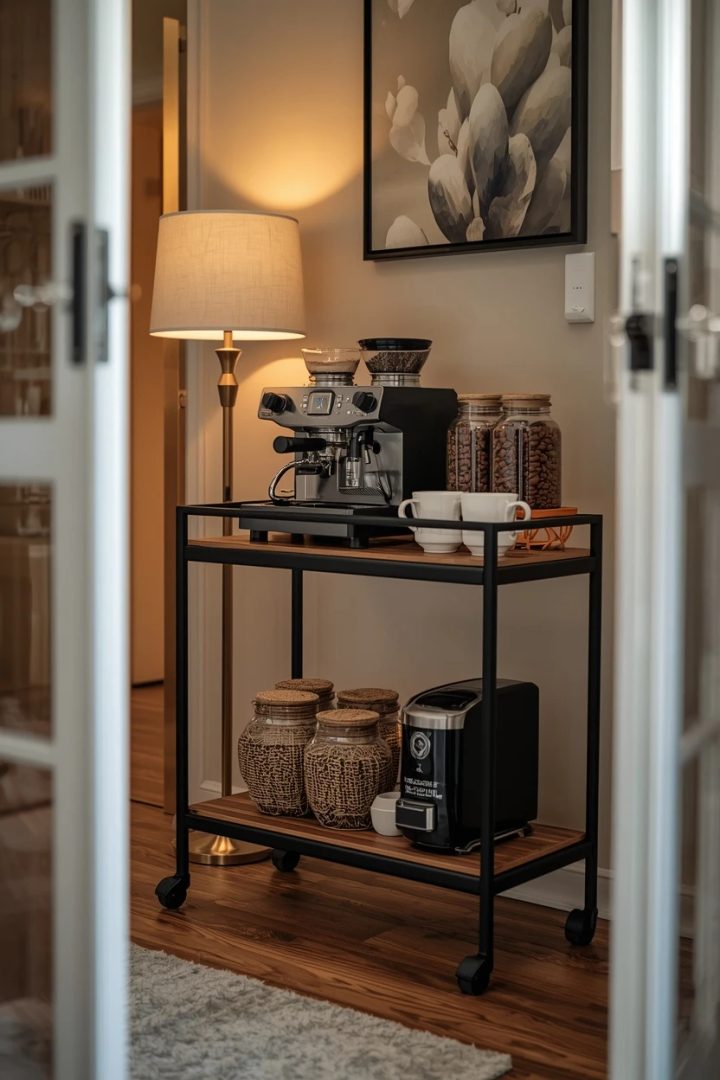
Choose a cart with a finish that suits the room and style it with jars, a plant, and mugs, and it becomes a charming, self-contained coffee bar on wheels.
2. A Countertop Coffee Station
The simplest coffee bar is a dedicated stretch of kitchen countertop given over entirely to coffee, with the machine, a mug tree, a jar of beans, and the daily essentials all grouped in one spot. Devoting even a small run of counter to coffee keeps everything together and turns the morning routine into a smooth, one-stop ritual. Add a tray to define the zone and contain the drips, floating shelves above for mugs, and a small plant for warmth. A countertop station is the most accessible way to create a coffee bar, using space you already have with no building work required.
3. Floating Shelves for Mugs and Beans
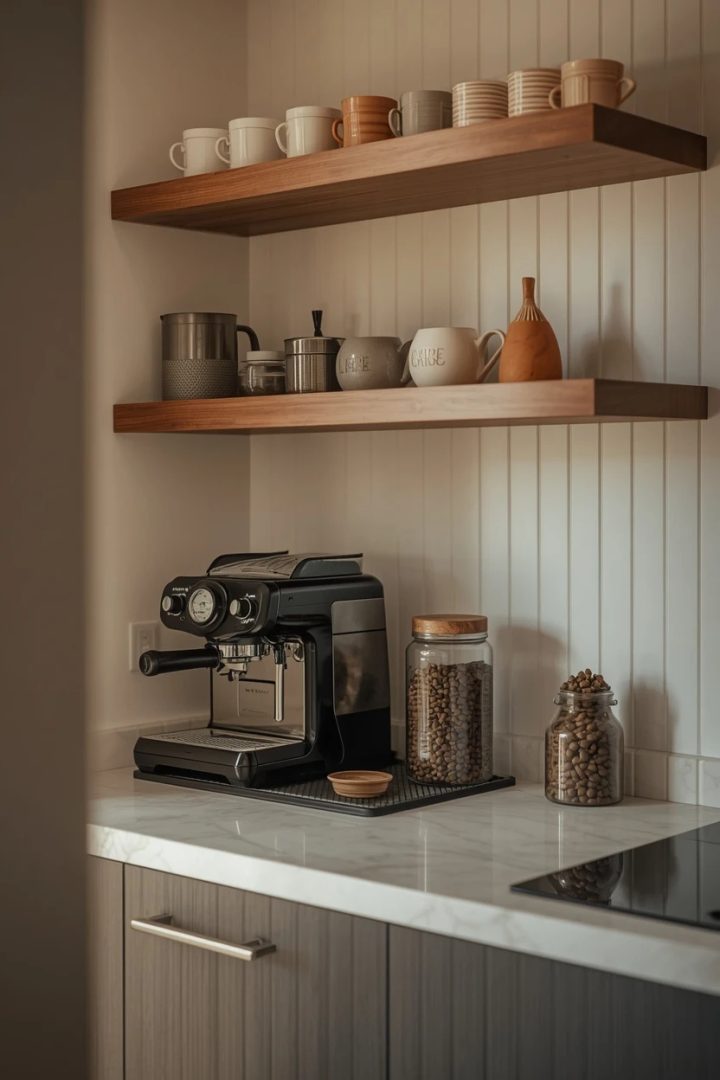
Floating shelves above a coffee station turn the wall into attractive, accessible storage for mugs, glasses, jars of beans, and accessories, keeping the countertop clear for the machine and the making. Open shelves put a favourite mug collection on display and keep everything within easy reach. Style them with a mix of mugs, a couple of glass jars of beans, a small plant, and a framed print for a curated cafe look.
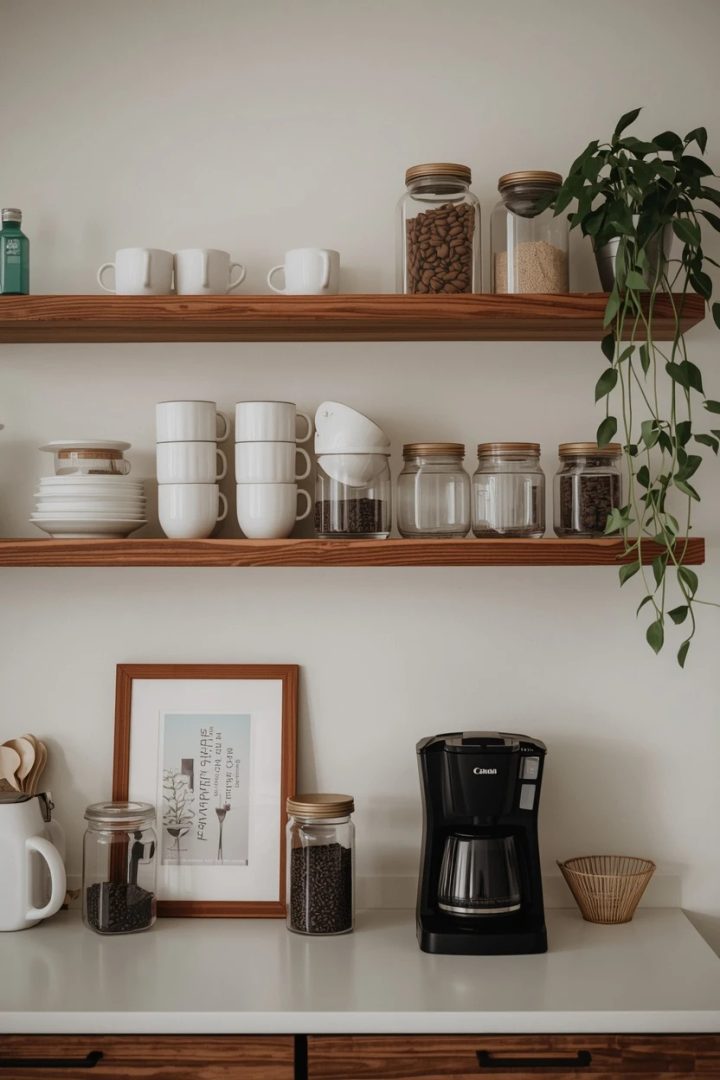
Fix the shelves securely, since loaded mug shelves carry real weight. Floating shelves are one of the most effective ways to add both storage and cafe-style character to a coffee bar.
4. A Coffee Bar Cabinet or Hutch
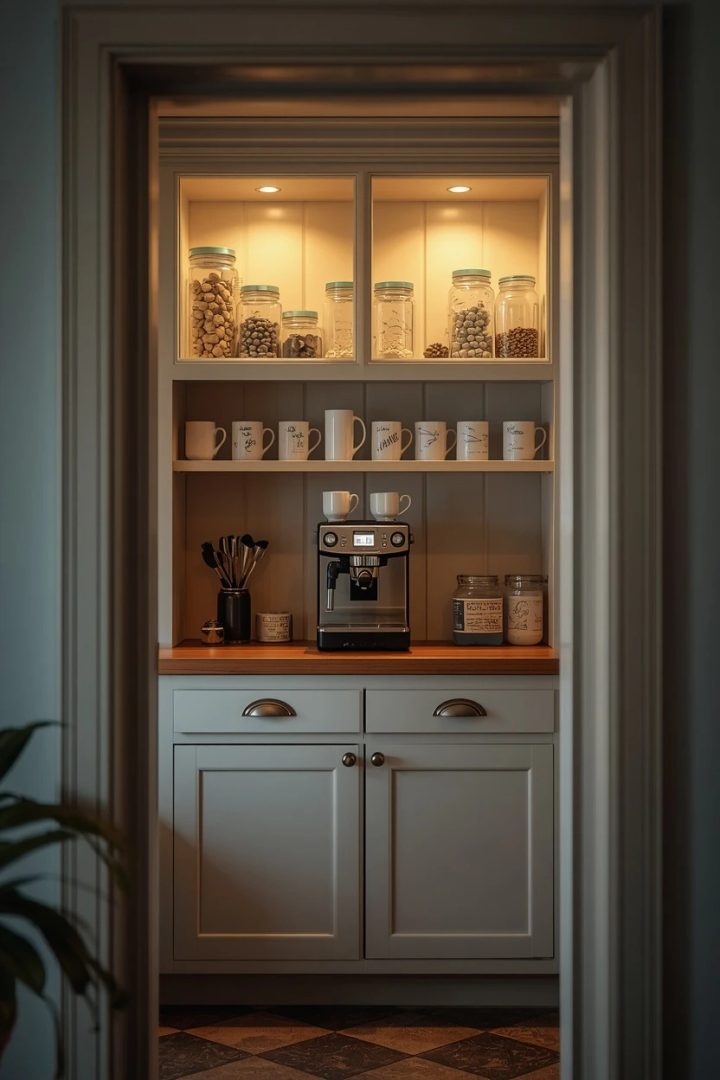
A dedicated cabinet, hutch, or sideboard given over to coffee creates a self-contained coffee bar with generous storage above and below, and doors to hide the clutter when the coffee is made. The counter surface holds the machine and the making zone, upper cabinets or shelves store mugs and supplies, and lower cupboards hide the bulk stock and bits. A hutch with an open middle section and closed storage top and bottom is the classic coffee bar form.
Positioned in the kitchen, dining room, or a hallway, a coffee cabinet is a charming, characterful piece that keeps the whole coffee operation in one handsome unit.
5. A Built-In Coffee Nook
Building a coffee nook into a run of kitchen cabinetry — a recessed section of counter with the machine, a shelf or two, and often a dedicated tap or a nearby water source — integrates the coffee bar seamlessly into the kitchen. Recessing it into an alcove or a dedicated cabinet run gives it its own defined zone within the kitchen without cluttering the main worktop.
Add a power supply, storage above and below, and accent lighting to make it a feature.
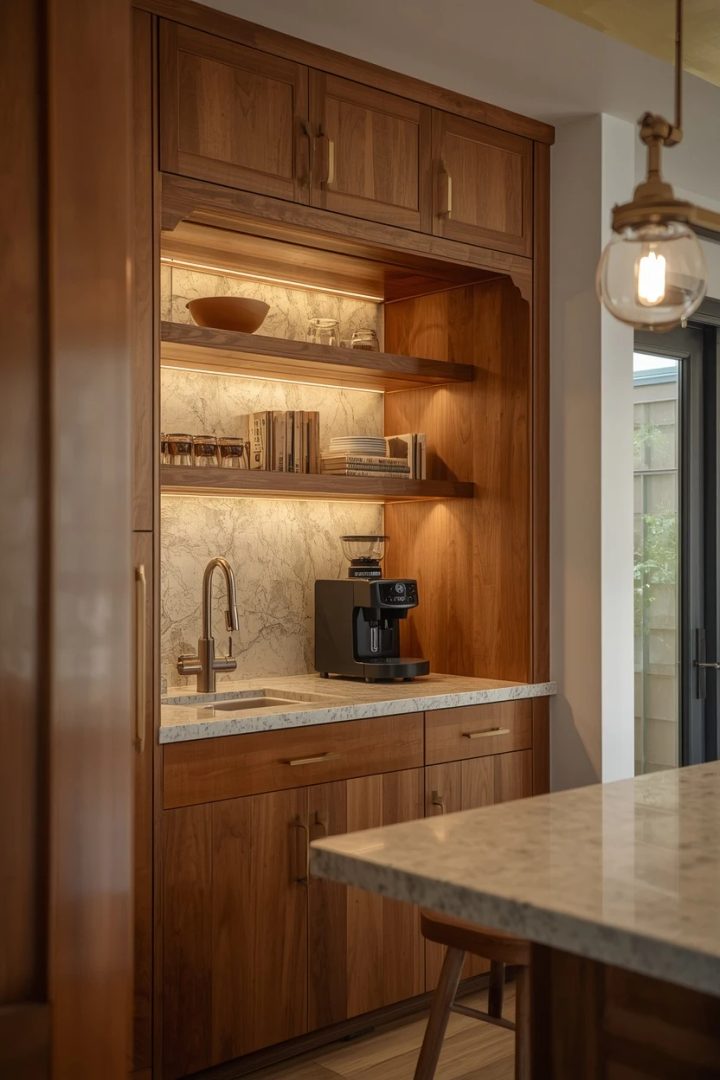
A built-in coffee nook is the most integrated, permanent solution, reading like a considered part of a well-planned kitchen rather than an add-on.
6. Open Shelving with Glass Jars
Storing coffee beans, sugar, and supplies in matching glass jars on open shelving is both practical and beautiful, letting you see stock at a glance while creating a calm, cafe-like display that reads far tidier than a jumble of branded packaging. A row of matching clear jars filled with beans, ground coffee, sugar, and cocoa reads considered and spa-like. Label them discreetly if you like.
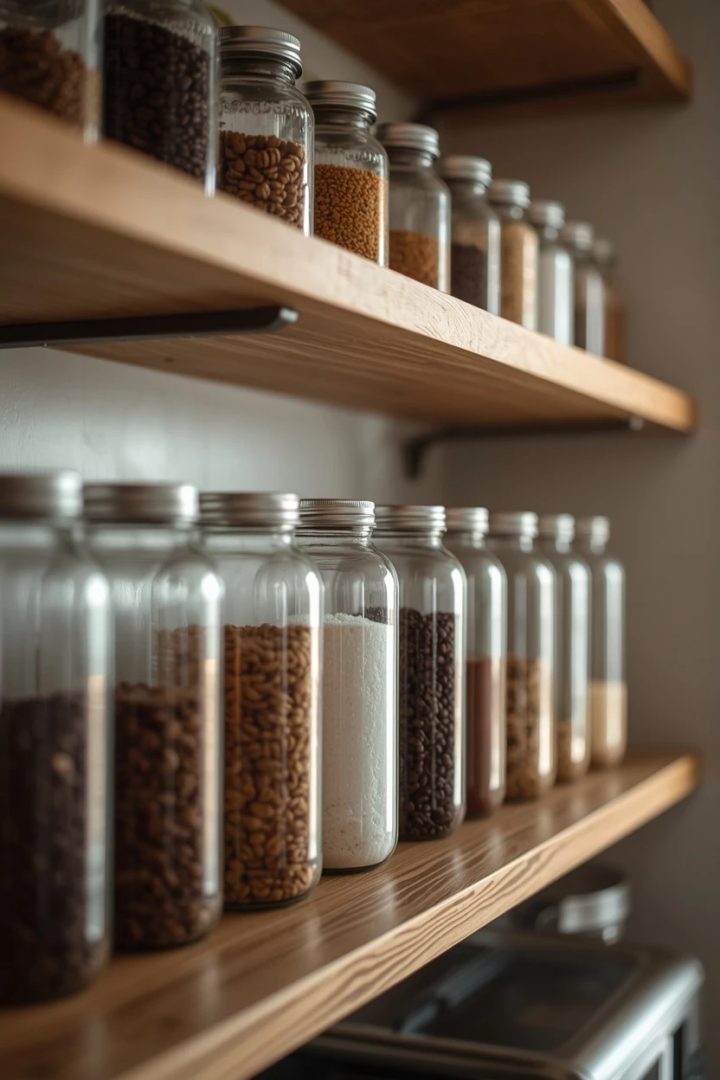
Decanting out of commercial packaging is the trick that most transforms how a coffee bar reads. Combined with open shelving, matching glass jars turn everyday supplies into part of the coffee bar's styled, considered look.
7. A Coffee Bar Built into the Pantry
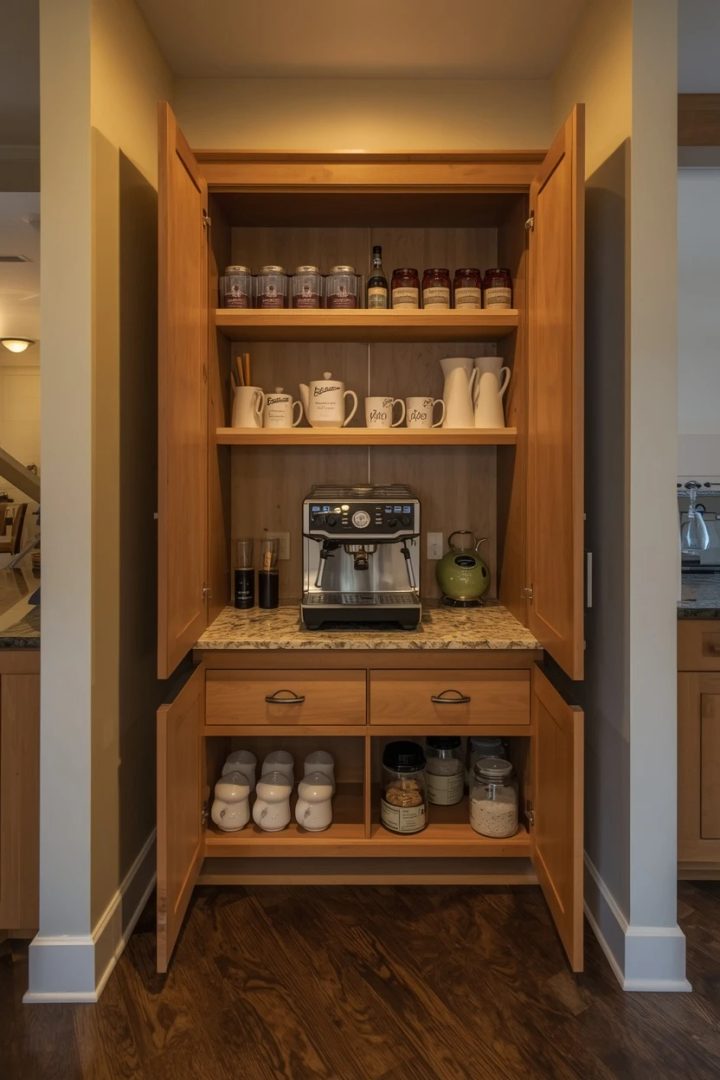
One of the smartest moves for a busy kitchen is to build the coffee station inside a pantry or a cabinet with a lift-up or bi-fold door, so the whole setup can be hidden away when not in use. This appliance-garage approach keeps the machine, mugs, and supplies concealed behind a door, so the kitchen worktop stays clear and clutter-free, then opens to a complete coffee bar when needed. Fit a power supply inside the cupboard and shelves for everything. A hidden pantry coffee bar suits those who want the function without the permanent visual presence, keeping a streamlined kitchen while still brewing like a barista.
8. An Under-Cabinet Coffee Station
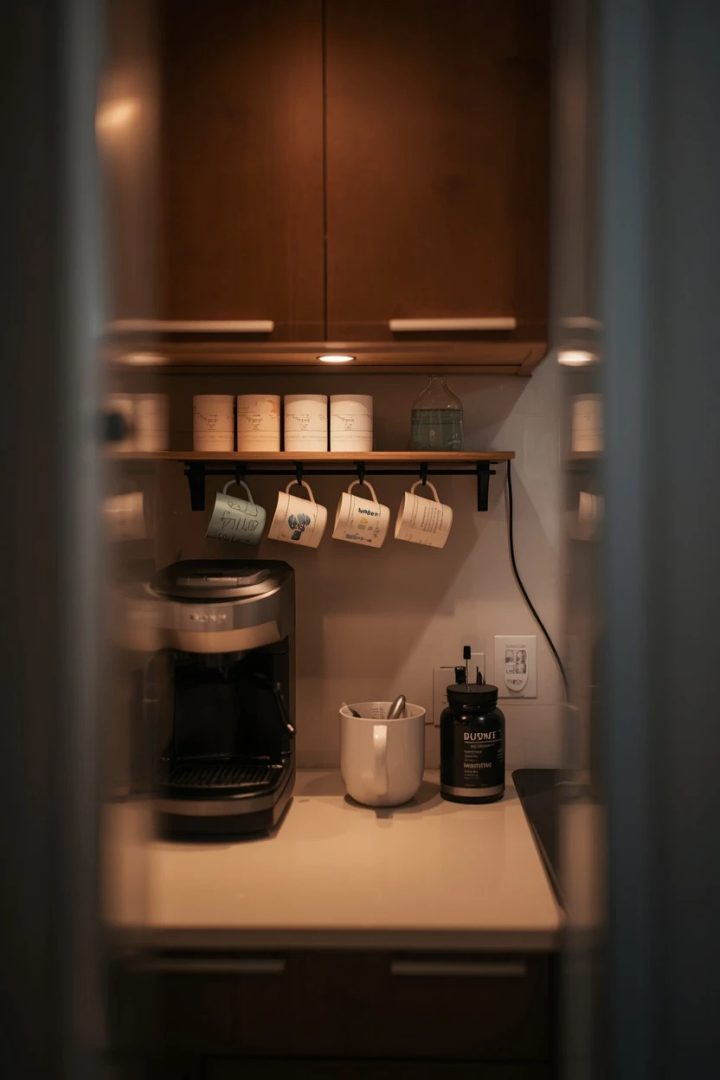
Where counter space is tight, tucking the coffee station beneath the upper cabinets and using the wall and under-cabinet area for storage frees the worktop while keeping everything to hand. Under-cabinet mug hooks, a slim shelf, and a wall-mounted rack for accessories use the vertical space between counter and cabinet that usually sits empty. Position the machine below and hang the mugs and tools above it.
This compact approach makes the most of a small kitchen, creating a functional coffee bar in a tight spot by building upward into the under-cabinet zone rather than spreading across precious counter space.
9. A Rustic Farmhouse Coffee Bar
A farmhouse-style coffee bar leans into warm timber, vintage touches, and cosy character, using a reclaimed wood counter or cart, open wooden shelves, enamel or stoneware mugs, and rustic accessories for a homely cafe feel. Warm wood tones, a chalkboard sign, galvanised or enamel containers, and a few plants create the relaxed, welcoming farmhouse look. Vintage crates or a distressed cabinet add character and storage.
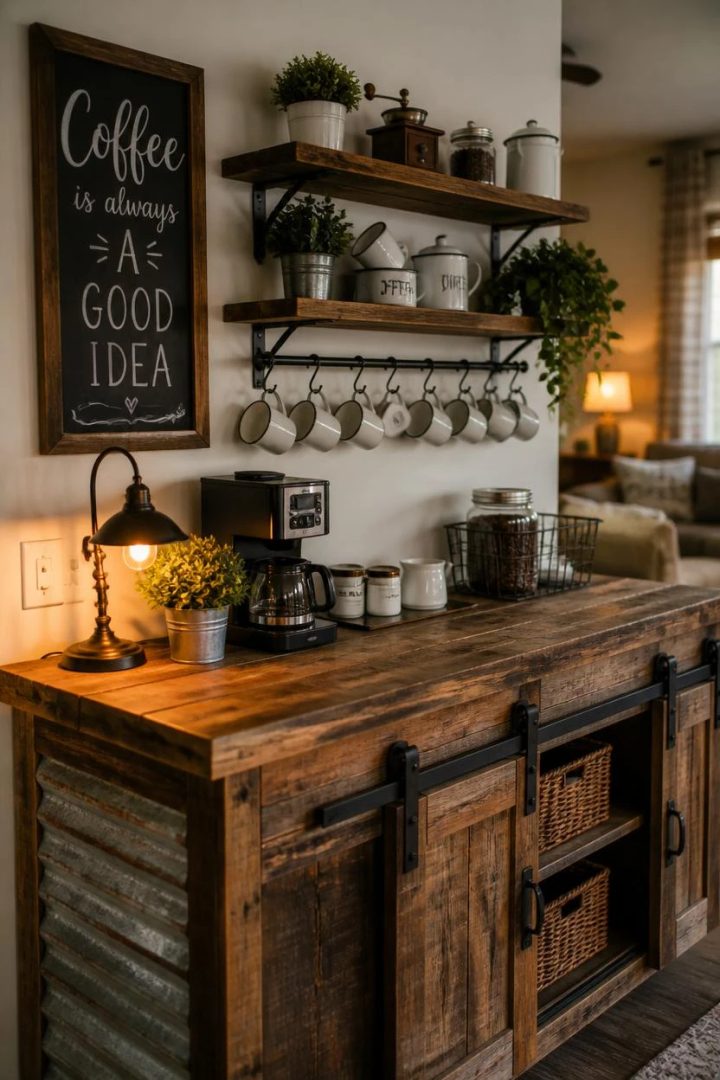
The farmhouse coffee bar reads warm and lived-in rather than sleek and minimal, suiting a country kitchen or anyone who wants their coffee corner to feel cosy, characterful, and genuinely inviting first thing in the morning.
10. A Minimalist Modern Coffee Bar
At the other end of the spectrum, a minimalist modern coffee bar keeps things sleek and pared-back, with clean lines, a monochrome or neutral palette, a quality machine as the hero, and only the essentials on display. A streamlined station in matte black, white, or warm neutral, with concealed storage and a single considered arrangement of machine, grinder, and a few matching mugs, reads calm and sophisticated.
Hide the clutter and keep the surfaces clear so the quality of the machine and the restraint of the styling lead.
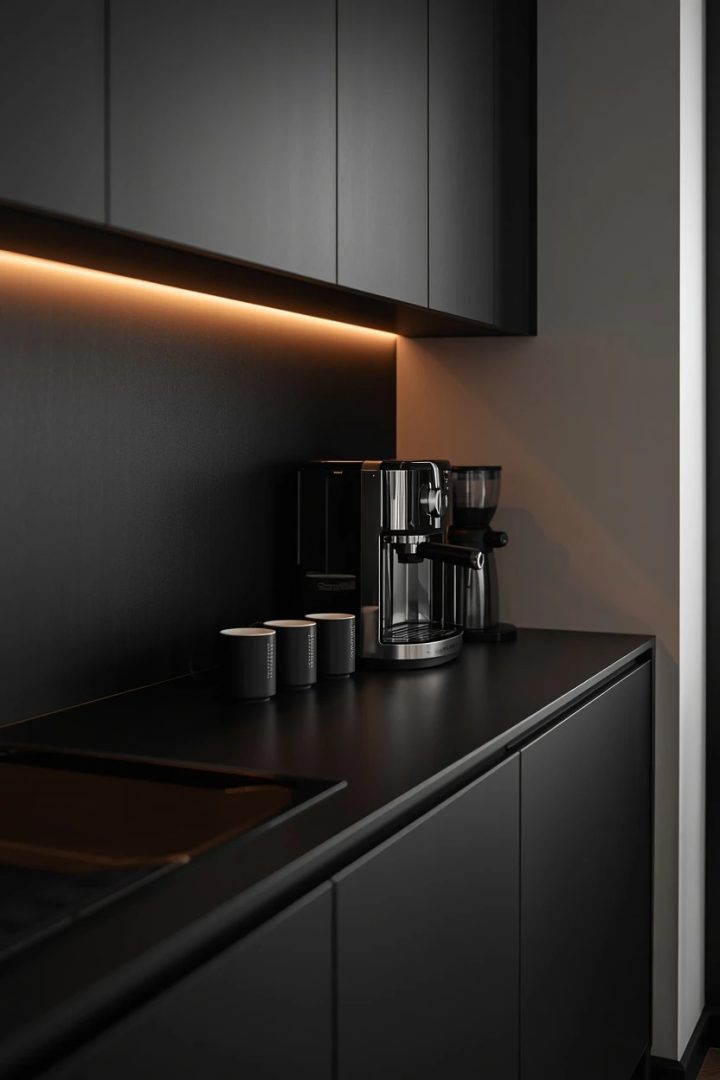
A minimalist coffee bar suits a modern kitchen and anyone who prefers understated, uncluttered calm.
11. Accent Lighting for the Coffee Bar
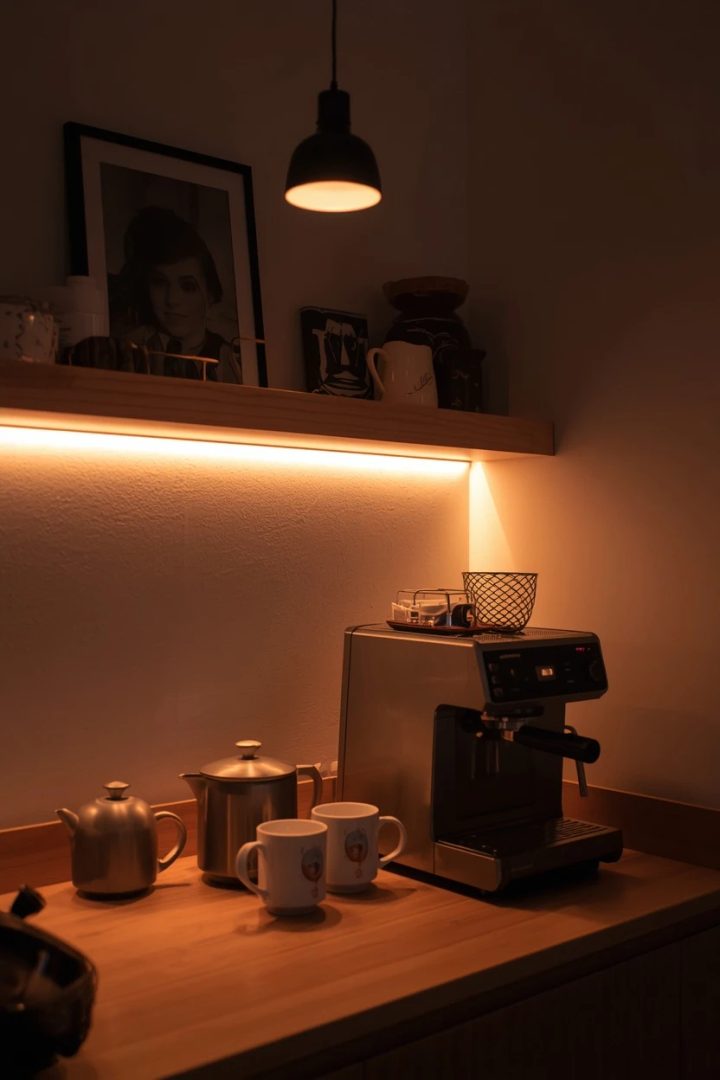
Lighting turns a functional coffee station into a genuine feature, and adding dedicated accent light — an under-shelf LED strip, a small pendant, or a pair of picture lights over the bar — makes the coffee corner glow, especially in the early-morning dark. A warm LED strip beneath a floating shelf grazes the counter and the jars with soft light, while a small pendant above a coffee cabinet reads charming and cafe-like. Use warm 2700K light for an inviting tone. Good lighting is the detail that lifts a coffee bar from a practical arrangement to a warm, welcoming spot you look forward to visiting each morning.
12. A Beverage Fridge Addition
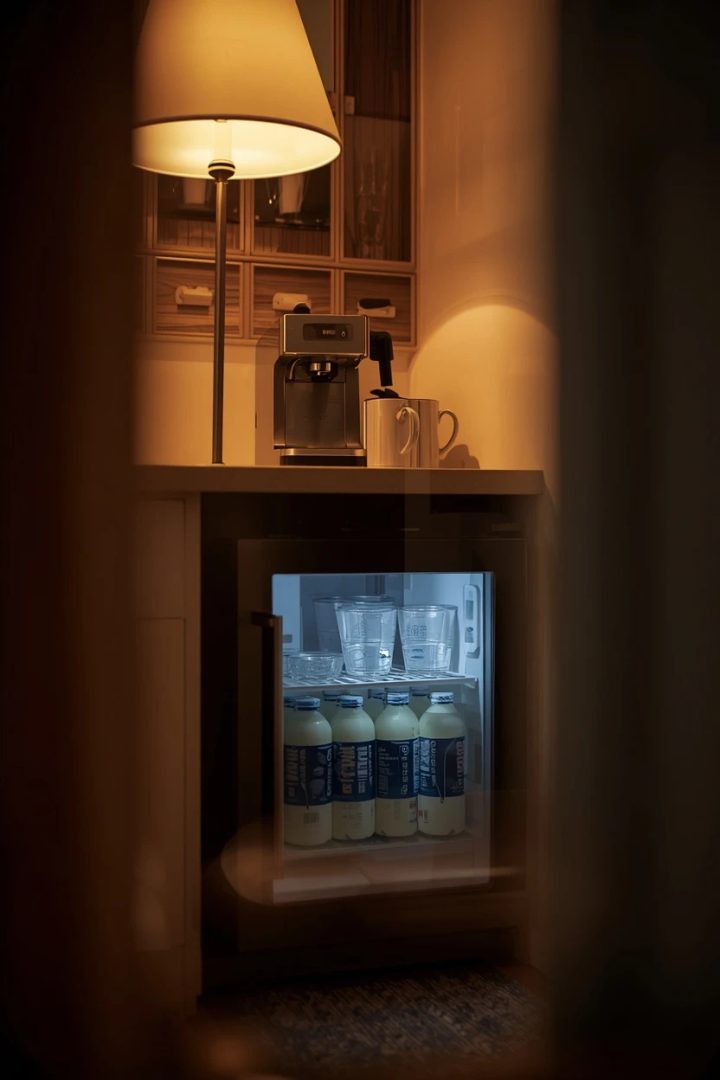
Adding a small beverage fridge to the coffee bar takes it beyond hot drinks, keeping milk, oat and other plant milks, cold brew, and cold drinks right where they are needed rather than trekking to the main fridge. A compact under-counter or freestanding beverage fridge tucked into or beside the coffee station makes the setup fully self-contained, which matters most for anyone who makes iced coffee, lattes, or cold brew regularly. Choose one sized to the space and the setup.
A beverage fridge is the upgrade that turns a simple coffee bar into a complete drinks station, ready for hot and cold alike at any time of day.
13. Styling and Decor Touches
The details are what turn a functional coffee station into a charming, personal coffee bar, and a few considered styling touches make all the difference. A framed print or a neon-style sign, a small plant or fresh flowers, a stack of quality mugs, a wooden tray to group the essentials, and a jar of biscotti or treats add warmth and personality.
Keep the styling edited so it reads curated rather than cluttered.
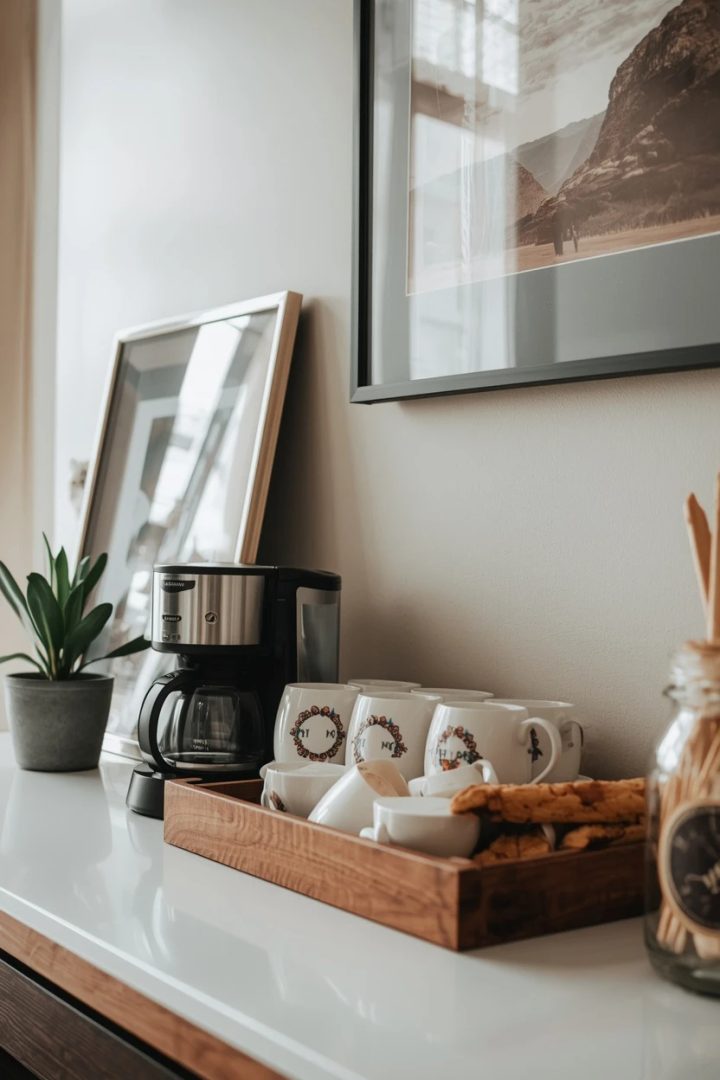
These decorative touches cost little but give the coffee bar its cafe-like character and personal charm, making it a spot that reads considered and inviting rather than purely practical.
14. The Complete Home Coffee Bar
Brought together, the best coffee bars group everything the ritual needs — the machine, the grinder, the mugs, the beans in matching jars, and the accessories — in one dedicated spot, whether a cart, a countertop, a cabinet, or a built-in nook, finished with open shelving, warm accent lighting, and a few styling touches for cafe-like charm. The guiding principle is to keep everything together and within reach so the morning routine flows, then style it so it reads as a warm, characterful feature rather than a cluttered corner. Scale it to your space and your setup, and a home coffee bar turns a daily necessity into a genuine daily pleasure.
Where I'd Start if I Only Did Three Things
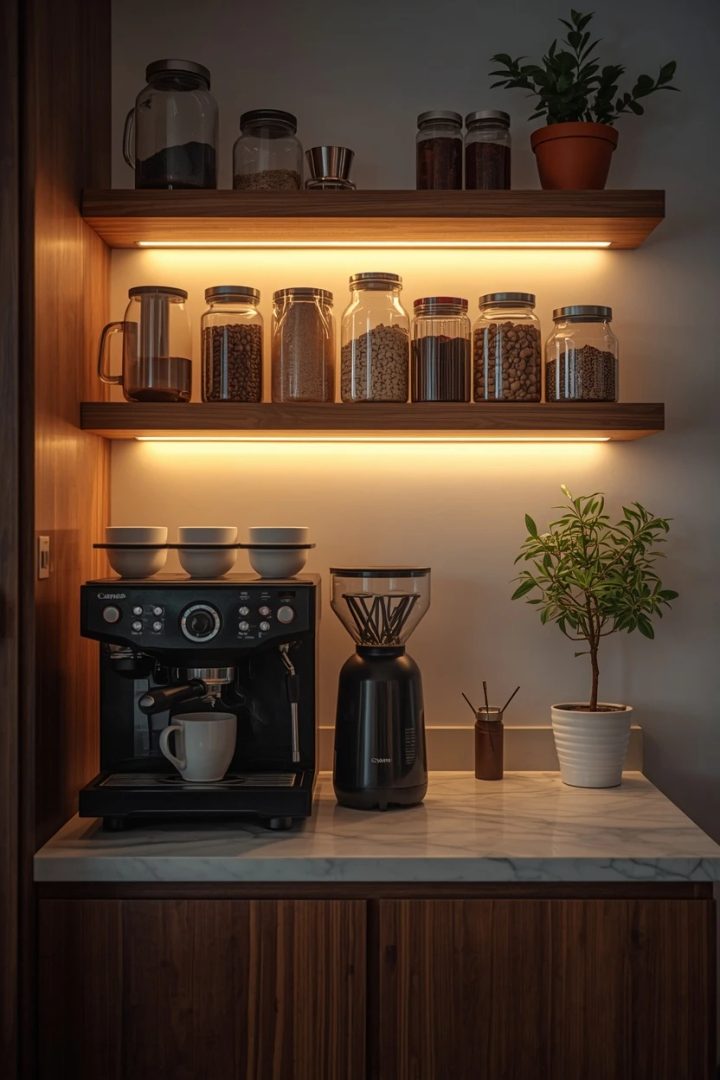
If I only did three things to create a home coffee bar, I'd start by choosing one dedicated spot — a cart, a stretch of counter, or a cabinet — and grouping everything the ritual needs there, because keeping the machine, mugs, and beans together is what makes the morning flow. Next, I'd add floating shelves above for mugs and decant the beans and supplies into matching glass jars, which instantly reads tidy and cafe-like. Third, I'd add warm accent lighting so the corner glows in the early-morning dark. One dedicated spot, open shelves with matching jars, and warm light turn a coffee corner into a genuine coffee bar.
Frequently Asked Questions
What are the best home coffee bar ideas for a small space?
The best coffee bar setups for a small space keep everything together without needing much room. A rolling coffee cart creates a complete mobile station with no building work and tucks away when needed, ideal for renters and tiny kitchens. A compact countertop station on a tray, with floating shelves above for mugs, uses space you already have. An under-cabinet setup builds upward into the vertical space between counter and cabinet. A coffee bar hidden inside a pantry cabinet keeps the worktop clear. The key in a small space is to go vertical with shelves, choose a compact or mobile setup, and decant supplies into matching jars so it reads tidy rather than cramped.
How do I set up a coffee bar at home?
To set up a coffee bar at home, start by choosing one dedicated spot — a cart, a stretch of counter, a cabinet, or a built-in nook — near a power supply and ideally a water source. Group everything the ritual needs there: the machine, grinder, mugs, beans, and accessories. Add floating shelves or a cabinet for mug and supply storage, and decant beans and supplies into matching glass jars for a tidy, cafe-like look. Include a tray to define the zone and contain drips, warm accent lighting to make it glow, and a few styling touches like a plant and a framed print. The goal is everything together, within reach, and styled so the morning routine flows.
Where should you put a coffee bar in your home?
A coffee bar works best near a power supply and, ideally, close to a water source and the fridge, so the kitchen is the most common and practical location — a stretch of counter, a cabinet run, or a built-in nook. Beyond the kitchen, a coffee bar also suits a dining room on a sideboard or hutch, in a hallway or a home office on a cart or console, or in a butler's pantry. Consider the daily flow: place it where you naturally go first thing in the morning and where it will not clog the main kitchen work zone. A rolling cart gives flexibility to position it wherever suits and move it as needed.
What do you need for a home coffee bar?
A home coffee bar needs the essentials of the coffee ritual grouped in one spot: a coffee machine or brewer suited to how you drink coffee, a grinder if you use fresh beans, and your mugs and glasses. Add storage — shelves, a cabinet, or a cart — for the mugs and supplies, and matching glass jars to decant beans, ground coffee, sugar, and cocoa. A tray defines the zone and catches drips. Beyond the basics, a beverage fridge for milk and cold drinks, warm accent lighting, and styling touches like a plant, a framed print, and quality mugs turn a functional station into a charming, cafe-like coffee bar. Scale it to your space and how you brew.
Final Thoughts
A home coffee bar turns a daily necessity into a genuine daily pleasure, giving the coffee ritual a dedicated, well-styled home of its own. These home coffee bar ideas span every space and style — a mobile cart for renters, a countertop station or built-in nook for the kitchen, a hutch or hidden pantry setup, and farmhouse or minimalist looks to suit your taste. The guiding principle is to group everything the ritual needs in one spot within easy reach, store the supplies in matching jars and open shelves for a cafe-like look, and complete it with warm lighting and a few styling touches. Do that, and your morning coffee becomes a highlight worth getting up for.