16 Mudroom Ideas to Keep Your Entryway Organized and Stylish
July 9, 2026 · 13 min read
 By Khawar Iqbal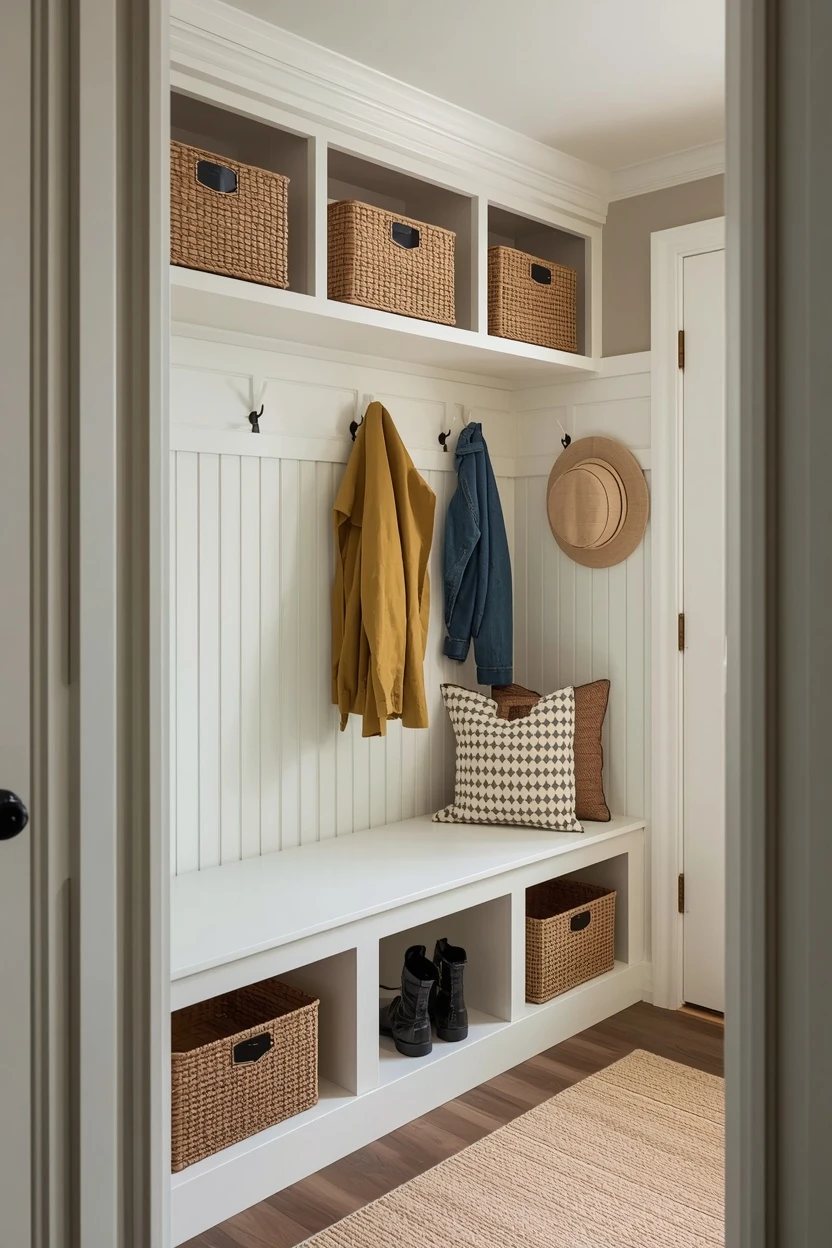
The mudroom is the hardest-working room in the house and the one most often overlooked, quietly absorbing the coats, boots, bags, and daily clutter that would otherwise sprawl across the rest of the home. The best mudroom designs turn this transitional space into an organized, stylish buffer zone that catches the mess at the door — whether it is a dedicated room, a corner of the utility, or a narrow strip by the back door.
Each idea below is a distinct, practical solution, with honest notes on what works for busy families and small spaces alike. Some are full built-in installations; others are simple additions that bring order to a chaotic entry. Together they show how to design a mudroom that keeps the whole house tidier and greets you with calm rather than clutter every time you walk through the door.
1. A Built-In Bench with Storage
The anchor of nearly every good mudroom is a built-in bench, which gives a place to sit and pull off boots while hiding storage beneath. A bench with cubbies, drawers, or baskets underneath keeps shoes, bags, and seasonal kit contained and off the floor. Build it to a comfortable seat height of around 45cm and make it deep enough to sit on properly.
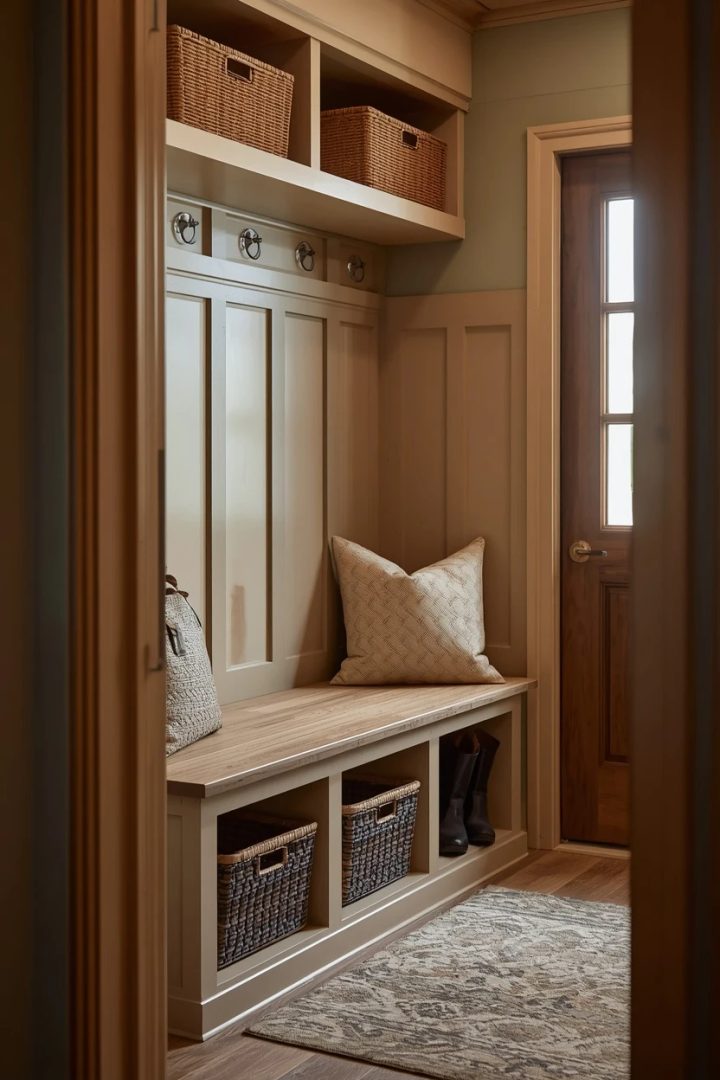
Topped with a wipeable cushion, it becomes both a functional perch and a soft touch in a hard-working room. A storage bench is the single most useful mudroom essential, combining seating and hidden storage in one built-in piece.
2. Wall Hooks and a Coat Rail
Nothing keeps an entryway tidier than giving every coat and bag a hook, and a row of sturdy wall hooks or a coat rail above the bench is the simplest, most effective mudroom essential. Mount hooks at two heights — higher for adults, lower for children — so everyone can hang their own things, and choose robust hooks screwed into solid backing or a mounted rail, since a coat-laden hook pulling out of plasterboard is a common failure. Double or triple hooks maximise capacity in a narrow space. A generous run of hooks is what stops coats ending up draped over chairs throughout the house.
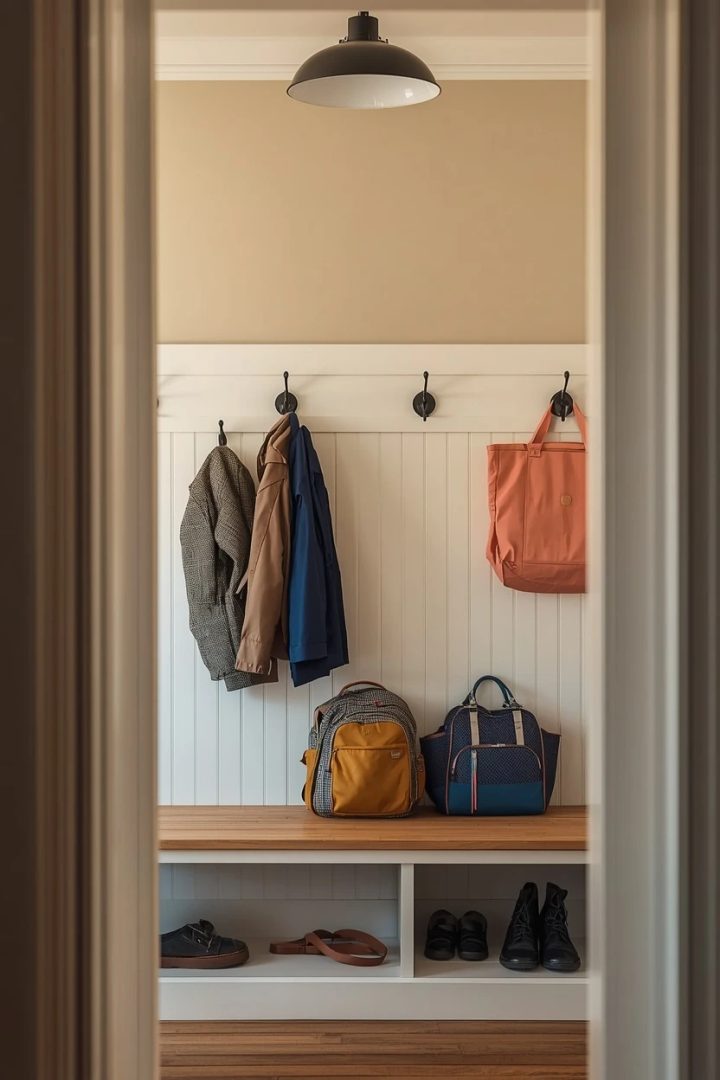
3. Cubbies for Each Family Member
Assigning each family member their own cubby, locker, or section brings genuine order to a busy household mudroom, giving everyone a dedicated spot for their coat, shoes, bag, and daily bits. A row of open lockers or cubbies — one per person — means there is no confusion about whose things go where, which is what keeps the system working day to day.
Add a hook, a shelf, and a basket or drawer within each section. Label them if it helps the children stick to it.
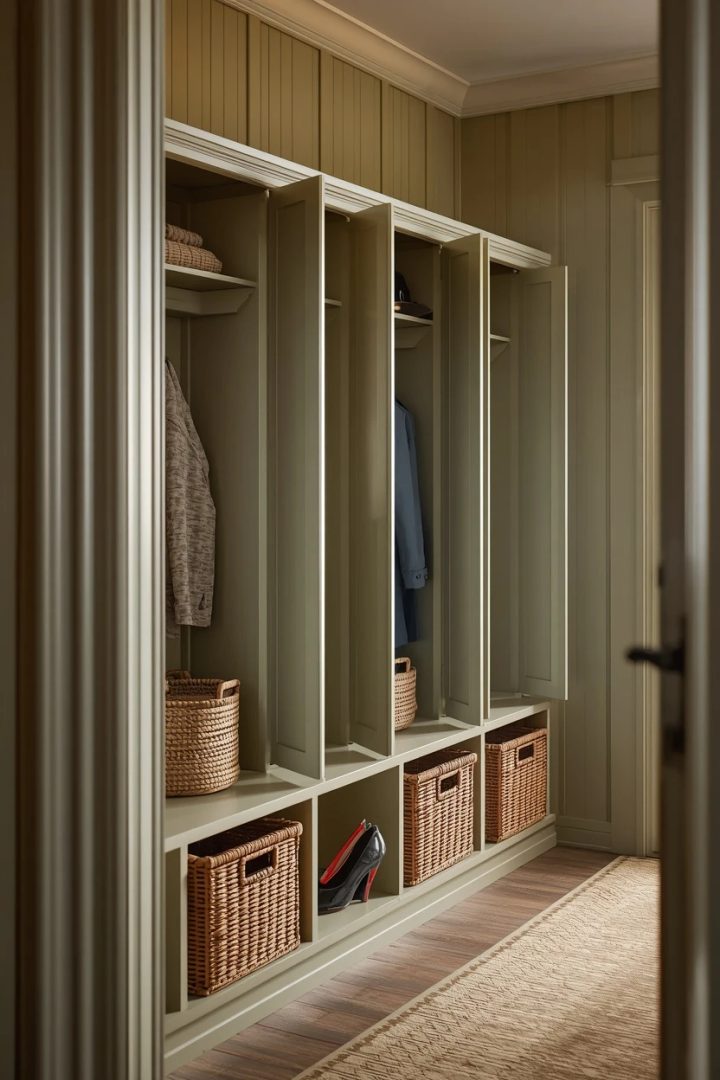
Personal cubbies are one of the most effective family solutions for stopping the daily pile-up at the door.
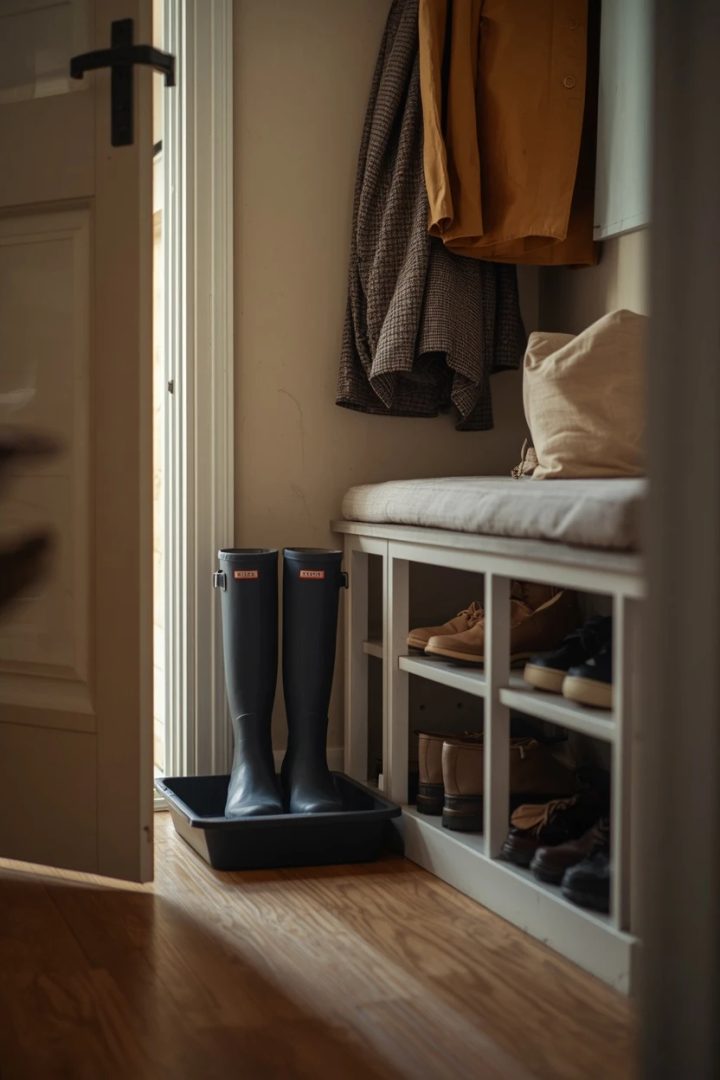
4. A Boot Tray and Shoe Storage
Wet, muddy boots are the whole reason a mudroom exists, so dedicated boot and shoe storage is essential. A waterproof boot tray by the door catches the drips and mud from wet footwear, while a shoe rack, cubbies, or a bench with shoe storage beneath keeps the rest of the family's footwear organized and off the floor. Choose a boot tray with a raised lip and a drainage design so water does not pool, and position it right at the entry point where boots come off.
Good shoe storage is what stops a mudroom floor disappearing under a scattered pile of footwear.
5. Durable, Wipeable Flooring
A mudroom floor takes a genuine beating from mud, water, grit, and paws, so it needs a hardwearing, water-resistant, easy-clean surface that shrugs it all off. Porcelain tile, luxury vinyl, and sealed stone are all excellent choices — durable, waterproof, and quick to mop. A patterned tile also hides the everyday dirt between cleans, which is a practical bonus in a room that gets grubby fast.
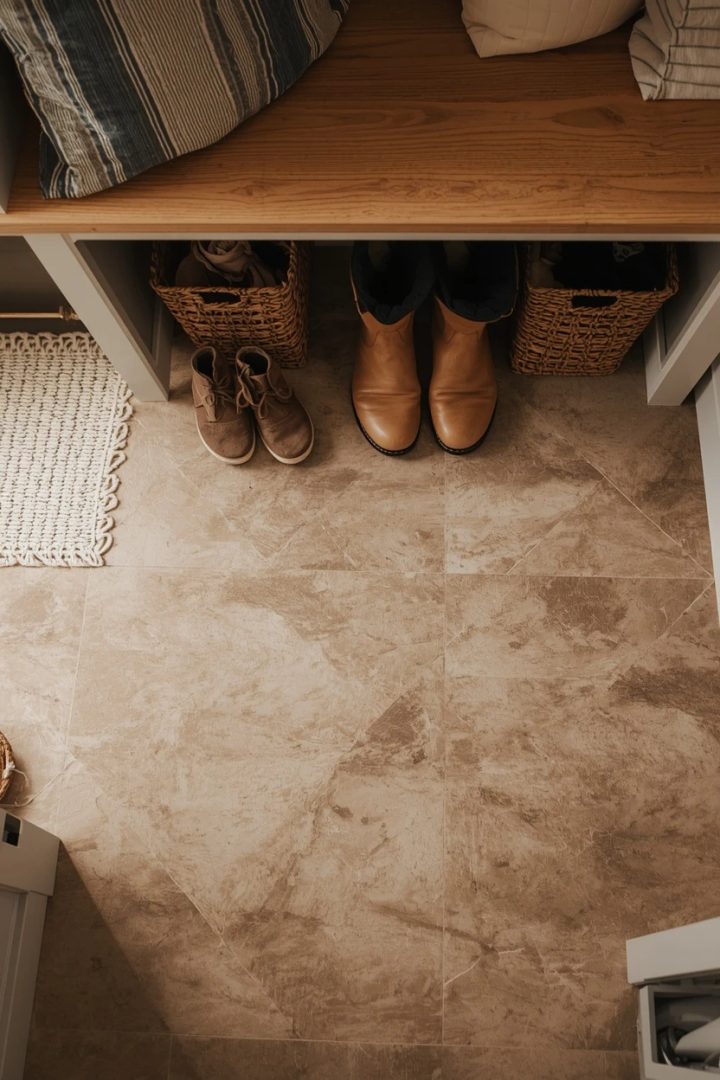
Avoid timber and carpet, which suffer badly with the constant wet and grit. Choosing the right floor is one of the least glamorous but most important choices, since it is the surface that copes with everything the outdoors drags in.
6. Overhead Cabinets for Seasonal Items
The wall space above the hooks and bench is valuable storage that is easy to forget, and closed overhead cabinets there keep seasonal and occasional items — winter hats, summer sun hats, spare gloves, sports kit — out of sight and out of the way. Closed cabinets hide the clutter that open shelves put on display, keeping the mudroom reading calm.
Store the everyday items within easy reach at bench and hook level, and reserve the overhead cabinets for things used less often.
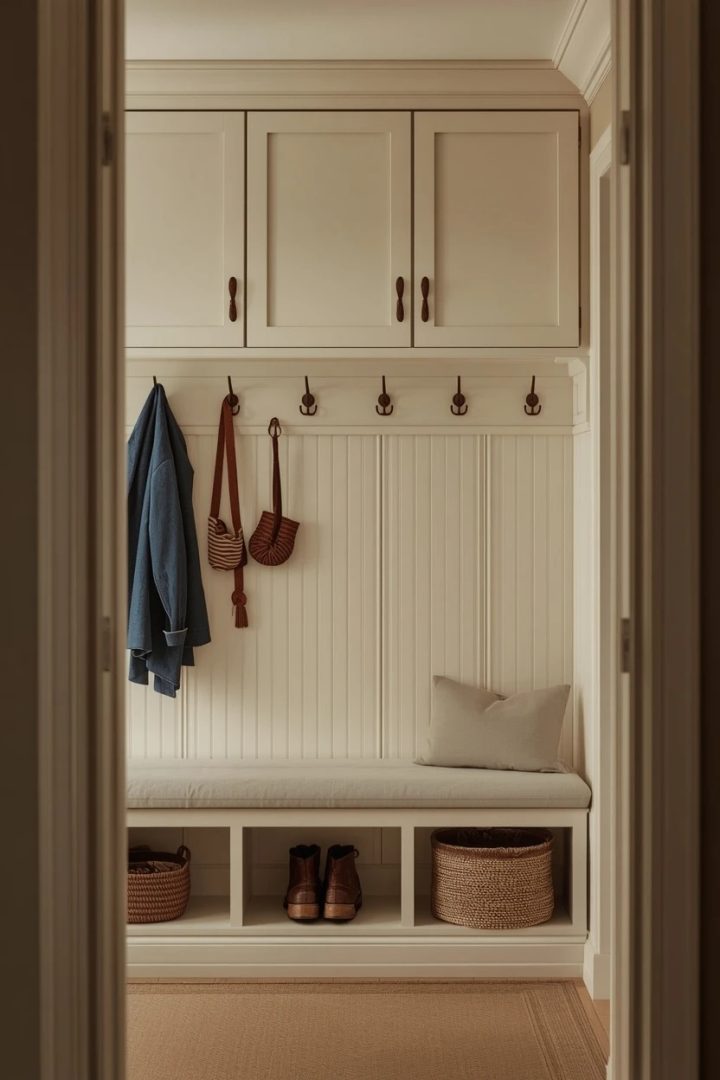
Using the full height of the wall is what lets even a small mudroom hold a household's worth of seasonal gear.
7. A Drop Zone for Keys and Mail
The small daily items — keys, mail, sunglasses, chargers, the dog lead — are what create the most clutter, and a dedicated drop zone gives them all a home right at the door. A small shelf or a section of counter with a tray for keys, a wall pocket or rack for mail, a charging spot, and a few hooks corrals the daily bits in one deliberate place. Position it right where you enter so dropping things there becomes automatic. A well-planned drop zone is the detail that most directly stops keys and post migrating across every surface in the house.
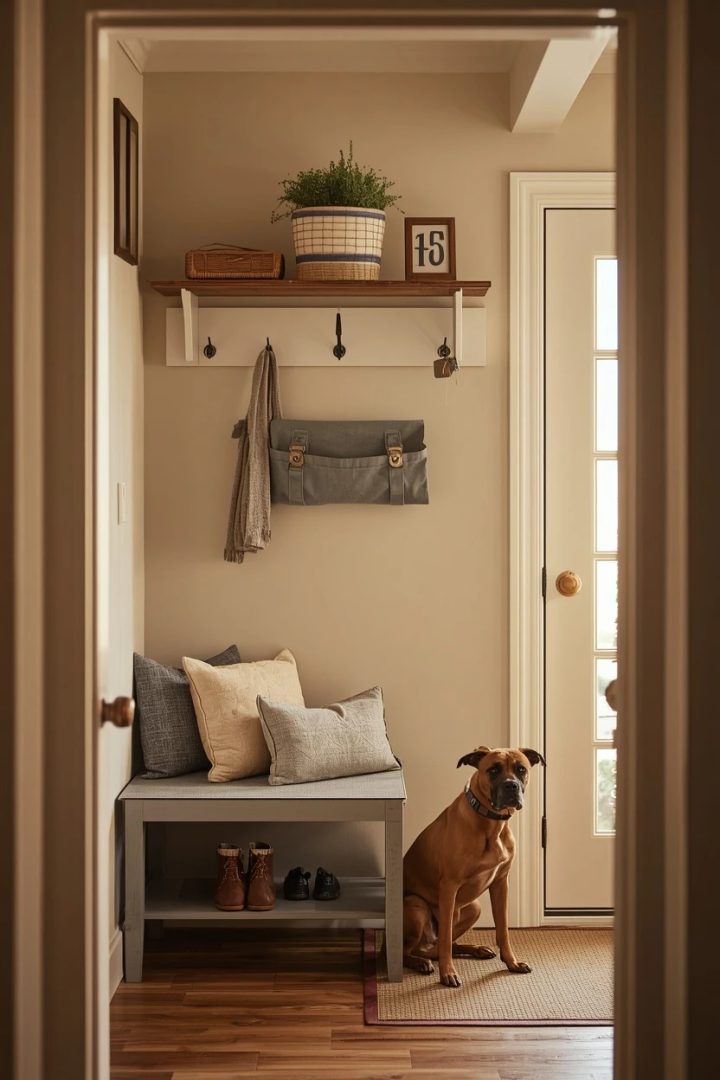
8. Baskets and Bins for Easy Mudroom Organization
Baskets and bins are a mudroom organizer's best friend, corralling the loose, awkward items — scarves, gloves, sports gear, pet toys — that would otherwise scatter across the floor and shelves. A row of matching baskets in the cubbies or under the bench, each assigned to a person or a category, keeps everything contained and easy to grab. Woven baskets add natural texture and warmth; ventilated bins suit damp sports kit. Label them so the household knows what goes where.
Baskets are the flexible, affordable layer that turns a mudroom's built-in storage into a system that actually stays organized.
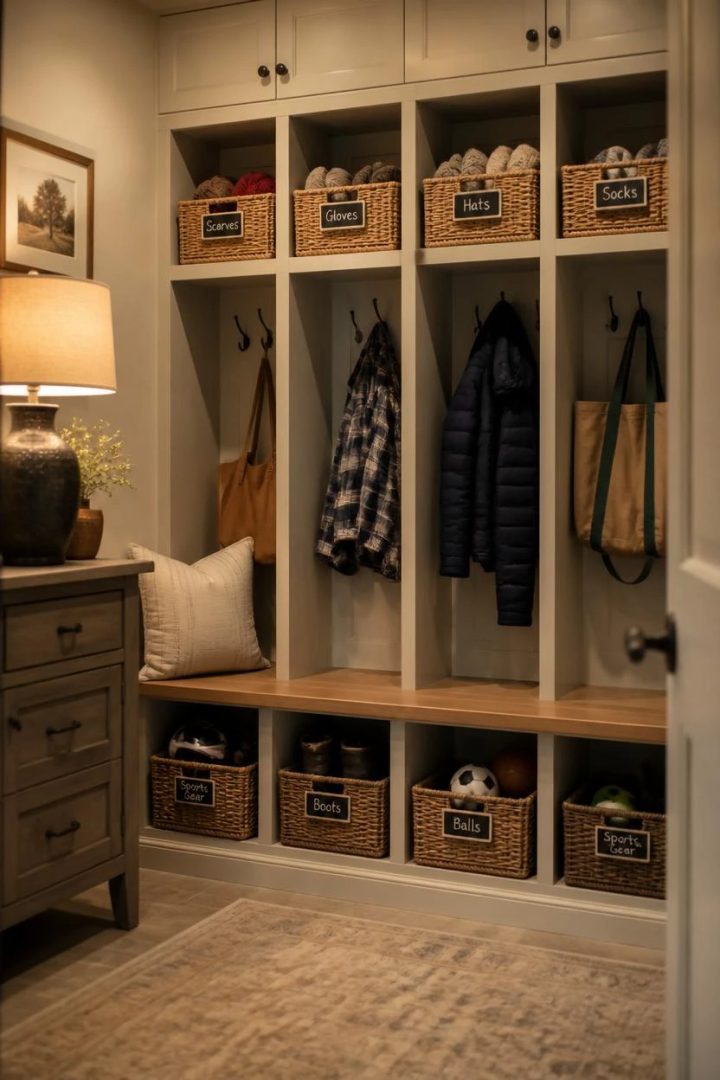
9. A Pet Station
For pet owners, building a dedicated pet station into the mudroom keeps all the animal kit in one organized spot right by the door where it is needed. A hook for the lead, a basket for toys, a drawer for treats and poo bags, a feeding station with bowls, and even a built-in dog bed or a dog-washing area turn the mudroom into command central for the family pet.
Position the feeding and washing zone on the wipeable floor near a water source if possible.
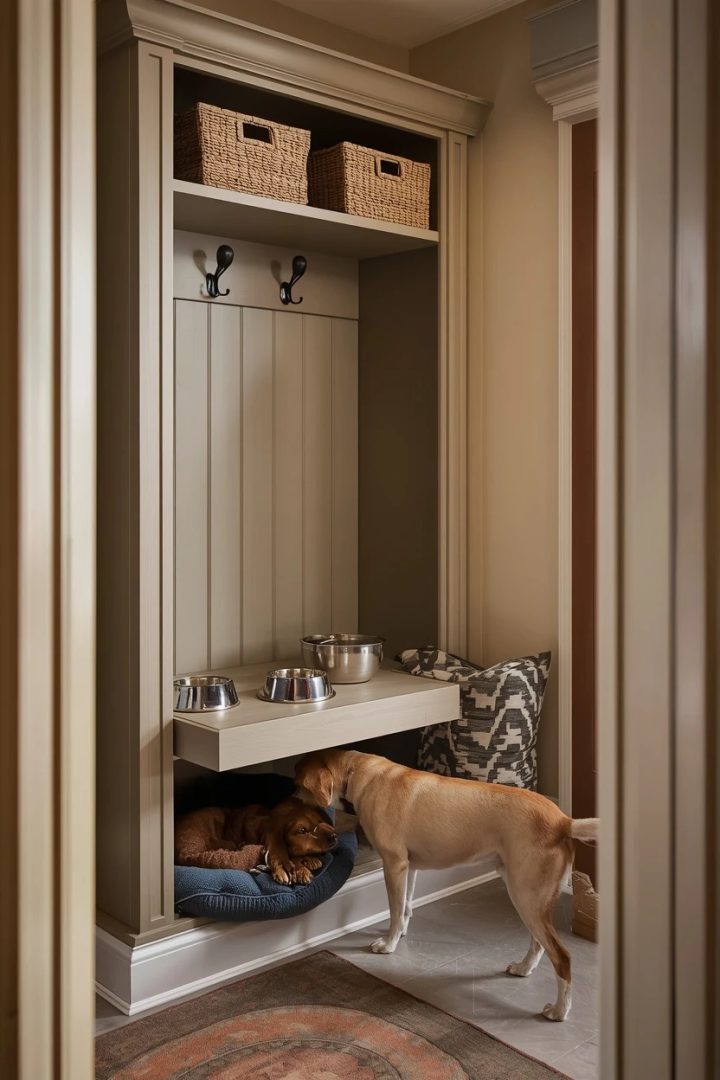
A pet station keeps the leads, food, and muddy-paw cleanup contained in the one room designed to handle mess.
10. Board and Batten Wall Panelling
Board and batten panelling is the classic mudroom wall treatment, and for good reason: it adds architectural character while protecting the walls from the scuffs, knocks, and grubby hands a busy entry inevitably brings. The panelling reads charming and considered, and painted in a hardwearing eggshell it wipes clean easily. It also provides solid backing for mounting hooks securely.
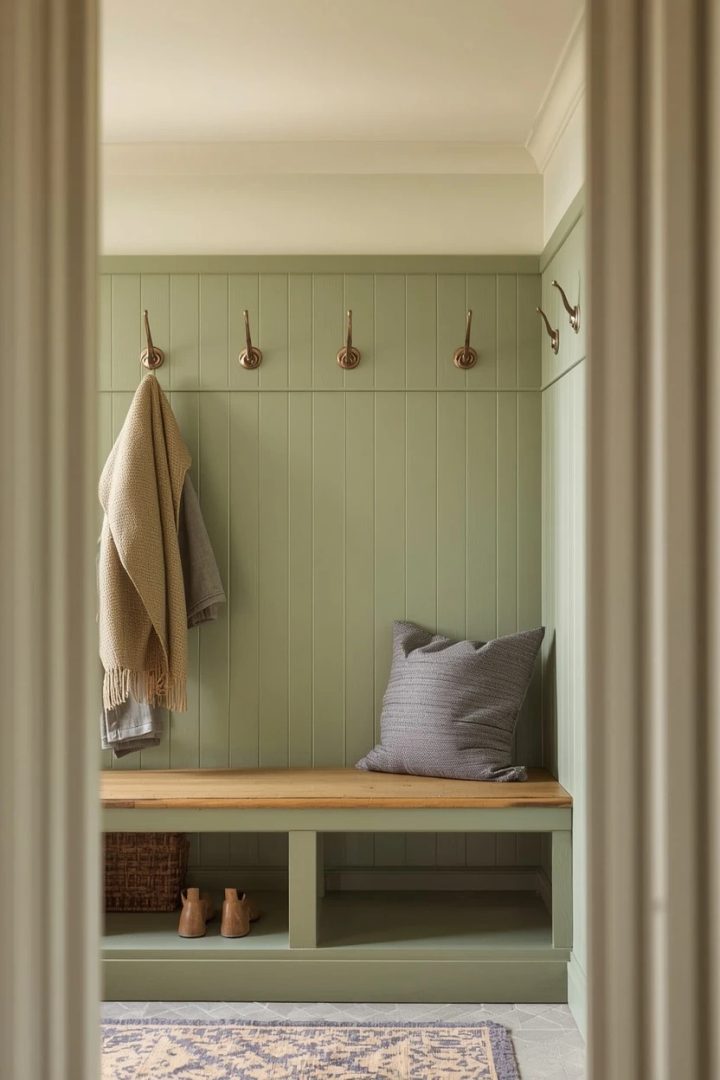
Run it to a practical height — to the top of the hooks or a dado line — and paint it in a warm neutral, a sage, or a moody blue for character. Panelling is the detail that lifts a mudroom from purely functional to genuinely stylish.
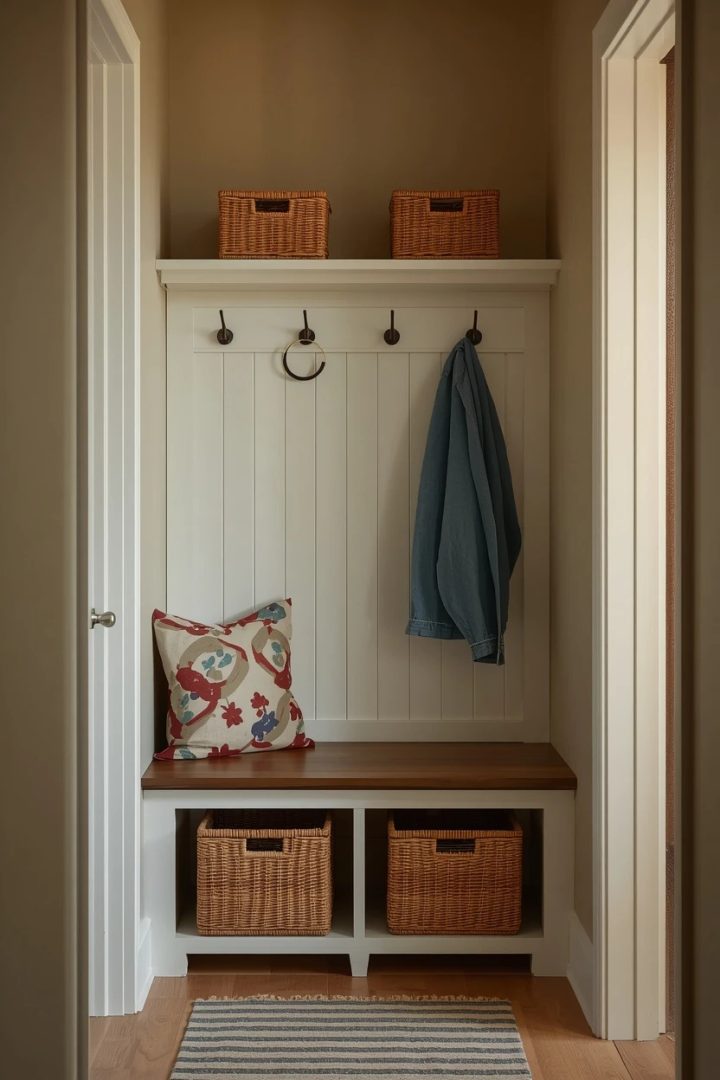
11. A Mudroom Nook in a Hallway
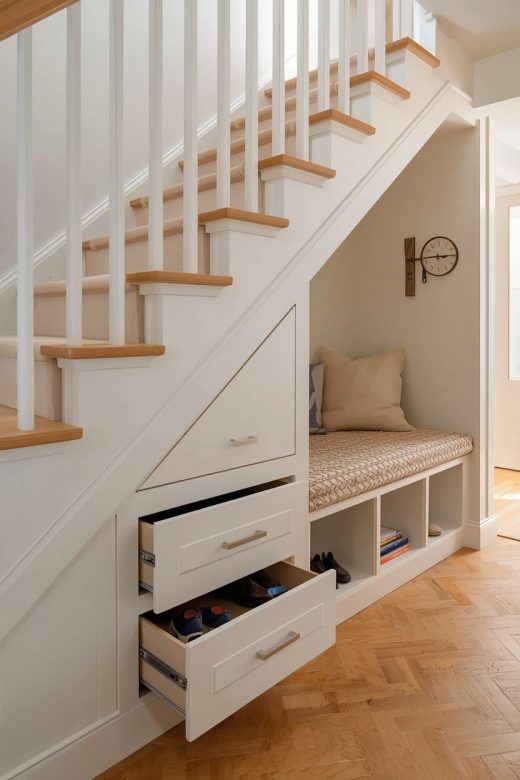
You do not need a dedicated room to have a mudroom — a well-designed nook in a hallway, under the stairs, or by the back door delivers the same function in a fraction of the space. A slim bench, a run of hooks, a shoe rack, and a couple of baskets tucked into a corner or an alcove create a compact drop zone that catches the mess at the door. The key is to use the vertical space with hooks and shelves rather than sprawling across the floor. A mudroom nook proves that even homes without a spare room can have an organized, functional entry.
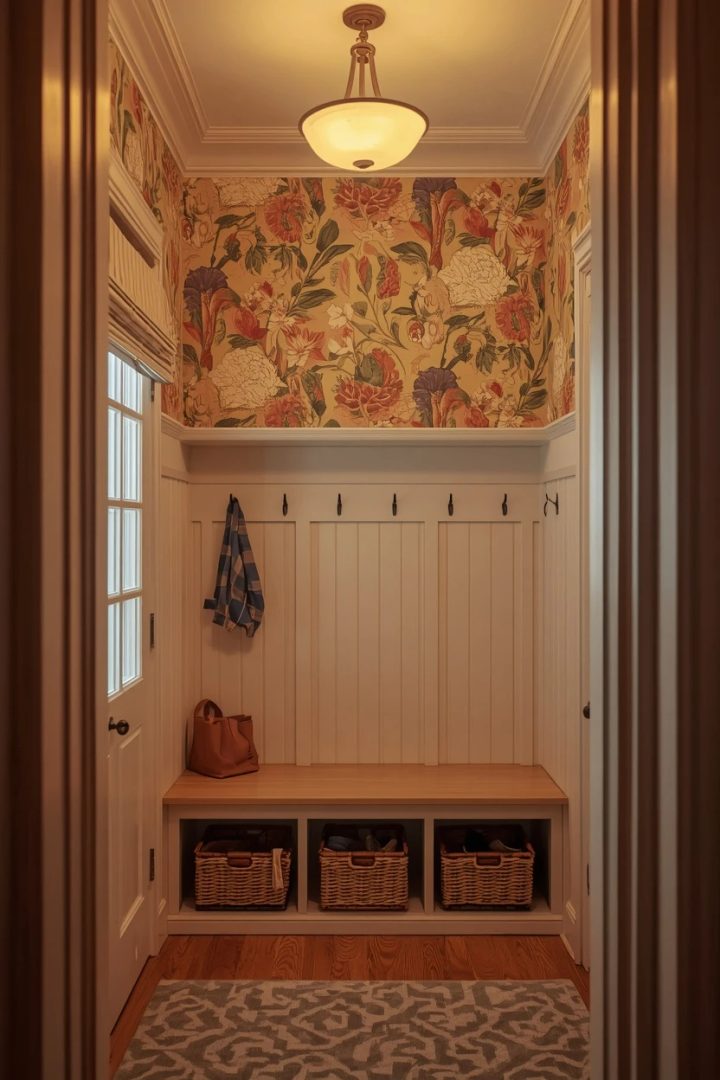
12. Bold Wallpaper or Paint
Because it is a small, self-contained, transitional space, the mudroom is the perfect place to be bold with colour or pattern that might feel like too much in a larger room. A bold wallpaper, a moody dark paint, or a bright cheerful colour on the walls or the built-ins turns a purely functional room into a characterful moment that lifts the spirits as you come and go. Since you pass through quickly rather than lingering, you can take a risk you might not elsewhere.
Choose a hardwearing, wipeable finish, and let the mudroom be the place your home shows a little personality.
13. Adequate, Practical Lighting
A mudroom is often tucked at the back of the house with little natural light, so good practical lighting matters more than people expect — you need to see to find matching shoes, sort the mail, and check yourself before heading out. A bright ceiling source combined with a wall light or under-cabinet strip banishes the gloom, and a mirror near the door reflects what light there is.
Warm 2700K bulbs keep the space inviting rather than clinical. A motion sensor is a genuine convenience in a room you pass through with full arms.
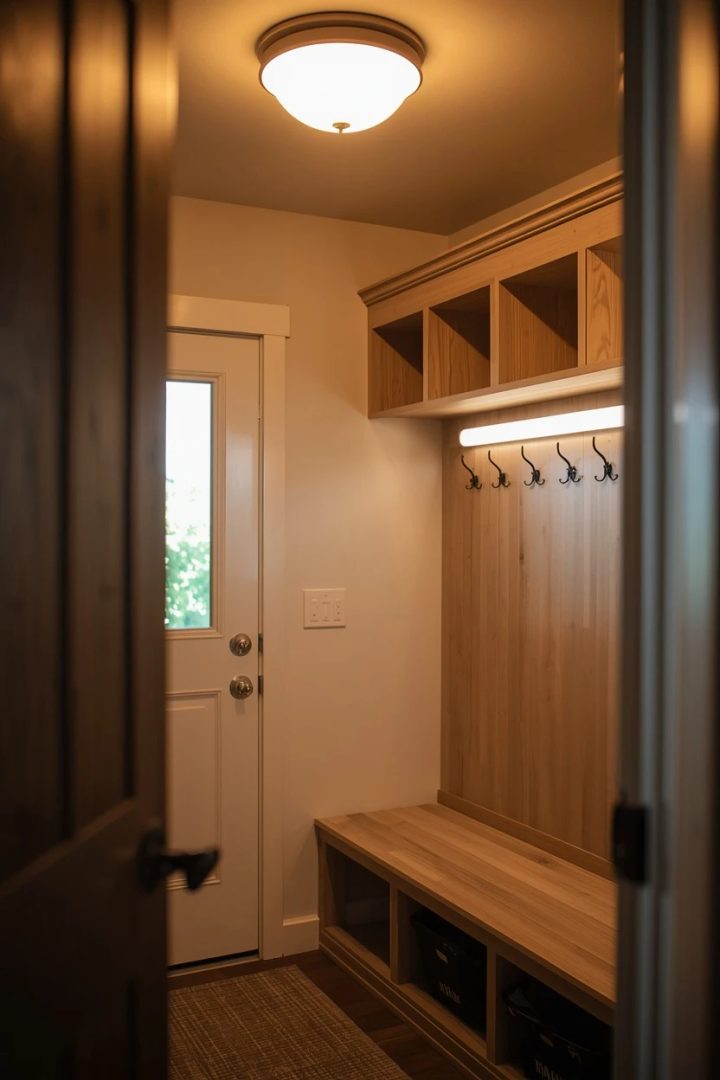
Good lighting makes the mudroom both more functional and more welcoming.
14. A Cushioned Bench and Soft Textiles
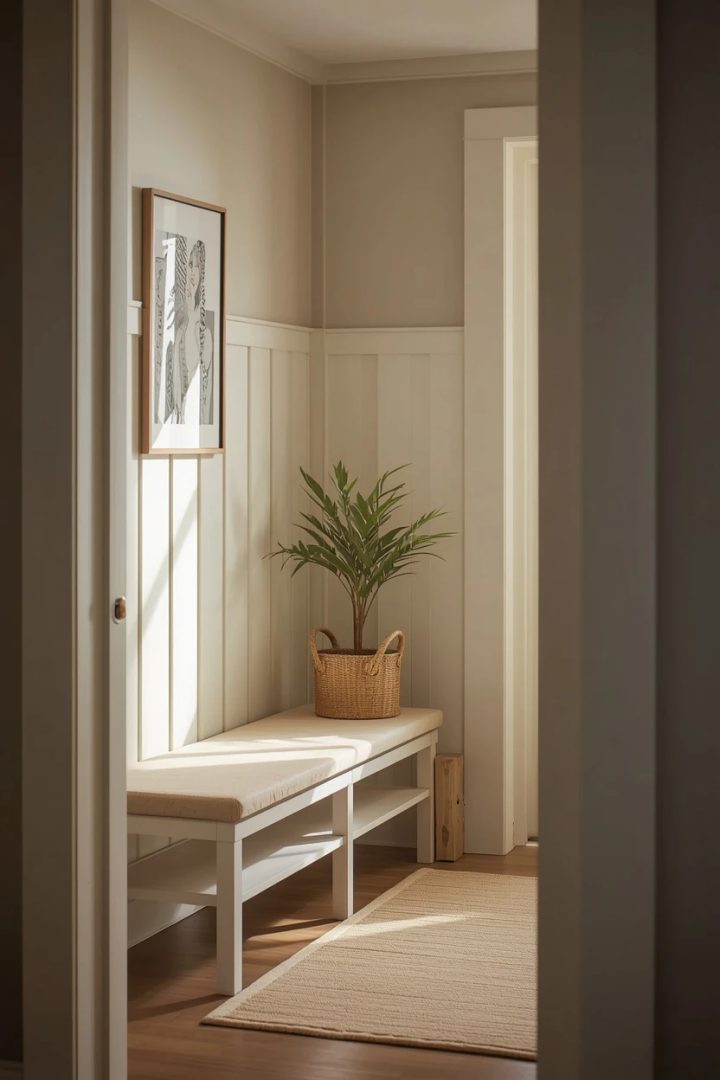
A few soft touches stop a mudroom reading purely utilitarian and make it a genuinely pleasant space to pause in. A wipeable cushion on the bench gives a comfortable seat for pulling off boots, a small washable runner adds warmth and colour underfoot, and a couple of considered accessories — a plant, a framed print, a woven basket — bring personality. Choose durable, washable, hardwearing fabrics that cope with the room's realities. These soft touches are the difference between a mudroom that feels like a functional afterthought and one that feels like a considered, welcoming part of the home.
15. Closed Cabinets to Hide the Clutter
For those who prefer a calm, streamlined look over open displays, closed cabinetry hides the entire contents of the mudroom behind clean doors, so the room reads tidy even when the storage behind is full. Full-height cabinets or a run of closed lockers conceal coats, shoes, bags, and clutter completely, presenting a smooth, uncluttered face to anyone arriving. This suits an entry that is on show or open to a living space.
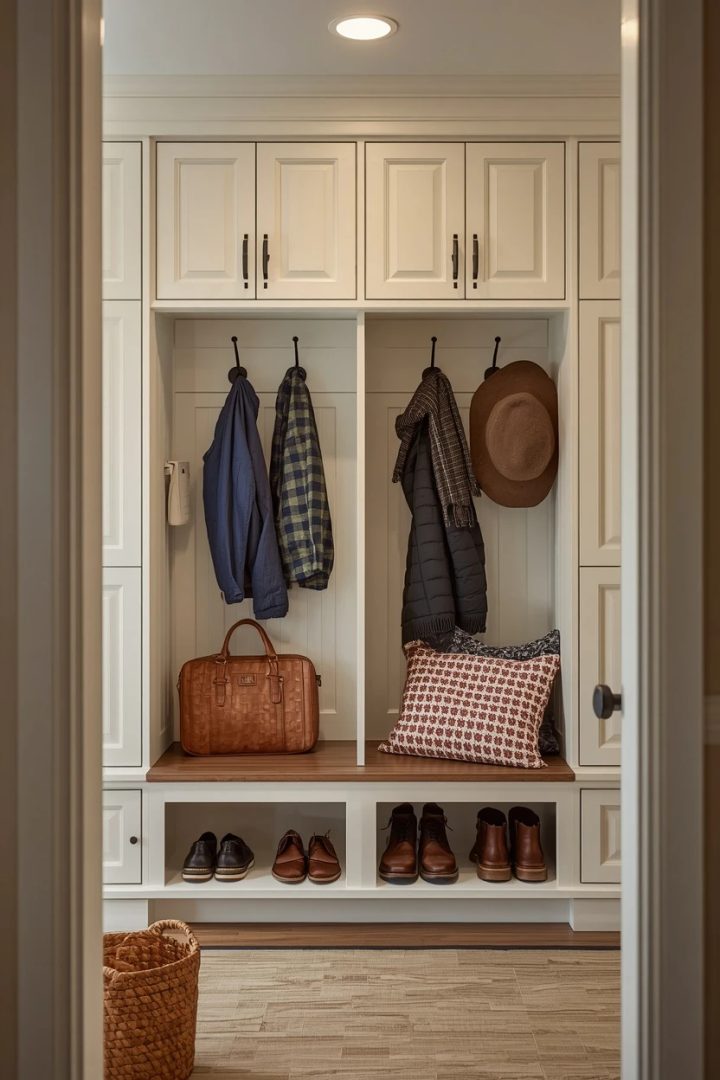
Mix in a few open elements — a bench, a couple of hooks for daily coats — for practicality, and let the closed cabinets hide everything else. It is the tidiest of all mudroom approaches.
16. The Complete Mudroom
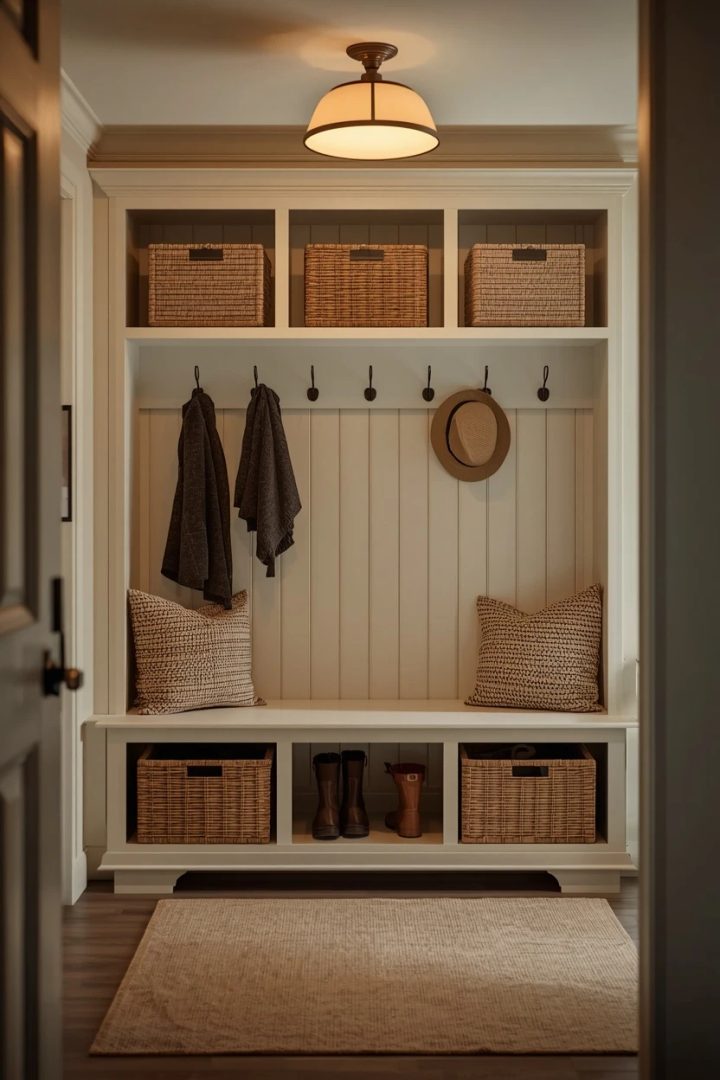
Brought together, the best mudroom ideas layer a built-in storage bench with a generous run of hooks above, personal cubbies or lockers for each family member, dedicated boot and shoe storage, a drop zone for keys and mail, durable wipeable flooring, and baskets to corral the loose items — all completed with panelling, colour, and good lighting to make it stylish as well as functional. The guiding principle is to give everything a home at the door so the mess never travels further into the house.
Plan it around how your household actually comes and goes, and the mudroom becomes the hardworking buffer that keeps the whole home calmer and tidier.
Where I'd Start if I Only Did Three Things
If I only did three things to create a mudroom, I'd start with a storage bench and a generous run of hooks above it, because a place to sit, hidden storage below, and a hook for every coat solve the bulk of entryway chaos in one built-in move. Next, I'd add a boot tray and dedicated shoe storage right at the door, since wet, muddy footwear is the whole reason a mudroom exists. Third, I'd set up a small drop zone for keys and mail so the daily bits stop migrating into the house. A bench with hooks, boot storage, and a drop zone deliver the biggest order for the effort.
Frequently Asked Questions
What are the best mudroom ideas for a small space?
The best approach for a small space uses the vertical wall rather than the floor. Even a compact nook in a hallway, under the stairs, or by the back door works with a slim bench, a run of hooks at two heights, a shoe rack, and a couple of baskets. Add wall-mounted cubbies or lockers to give each person a spot, a boot tray for wet footwear, and a small drop zone for keys and mail. Closed cabinets hide clutter in an entry that is on show. The key is to build upward with hooks and shelves, keep the floor clear, and give everything a home so the mess stops at the door.
What should every mudroom have?
Every functional mudroom needs a few essentials: a bench or a place to sit and remove shoes, ideally with storage beneath; a generous run of sturdy hooks for coats and bags; dedicated shoe and boot storage with a waterproof boot tray for wet footwear; durable, wipeable, water-resistant flooring; and baskets or bins to corral loose items. Beyond those, a drop zone for keys and mail, personal cubbies for each family member, and good lighting take it from functional to genuinely organized. The guiding principle is that everything the family brings in and out should have a designated home right at the door, so the clutter never travels further into the house.
What flooring is best for a mudroom?
The best mudroom flooring is hardwearing, water-resistant, and easy to clean, since the room takes constant mud, water, grit, and paws. Porcelain tile is the top choice — durable, fully waterproof, and quick to mop — and a patterned tile hides everyday dirt between cleans. Luxury vinyl is a warmer, softer, quieter alternative that is also water-resistant and hardwearing. Sealed natural stone performs well too. Avoid timber and carpet, which suffer badly with the constant wet and grit a mudroom brings in. Whatever you choose, prioritise slip resistance for safety when the floor is wet, and pick a finish that hides dirt to reduce how often you need to clean it.
How do I organize a mudroom for a busy family?
For a busy family, the key to mudroom organization is giving each person their own dedicated space. Assign every family member a cubby, locker, or section with their own hook, shelf, and basket, so there is no confusion about whose things go where — this is what keeps the system working day to day. Add labelled baskets for categories like gloves, hats, and sports gear, a boot tray for wet footwear, and a drop zone for keys and mail. Store everyday items at reachable height and seasonal gear in overhead cabinets. Involve the children by keeping their hooks and cubbies low, and the whole family can maintain the system themselves.
Final Thoughts
The mudroom is the unsung hero of an organized home, catching the coats, boots, bags, and daily clutter at the door before they spread through the house. These mudroom ideas show how to design one that is as stylish as it is functional — a storage bench with hooks above, personal cubbies, dedicated boot storage, a drop zone, durable flooring, and the panelling, colour, and lighting that give it real character. Whether you have a dedicated room or just a nook by the back door, the principle is the same: give everything a home at the entry, plan it around how your household actually comes and goes, and the whole home stays calmer and tidier for it.