14 Warm Gray and Walnut Rug Ideas for a Calm Room
June 9, 2026 · 9 min read
 By Khawar Iqbal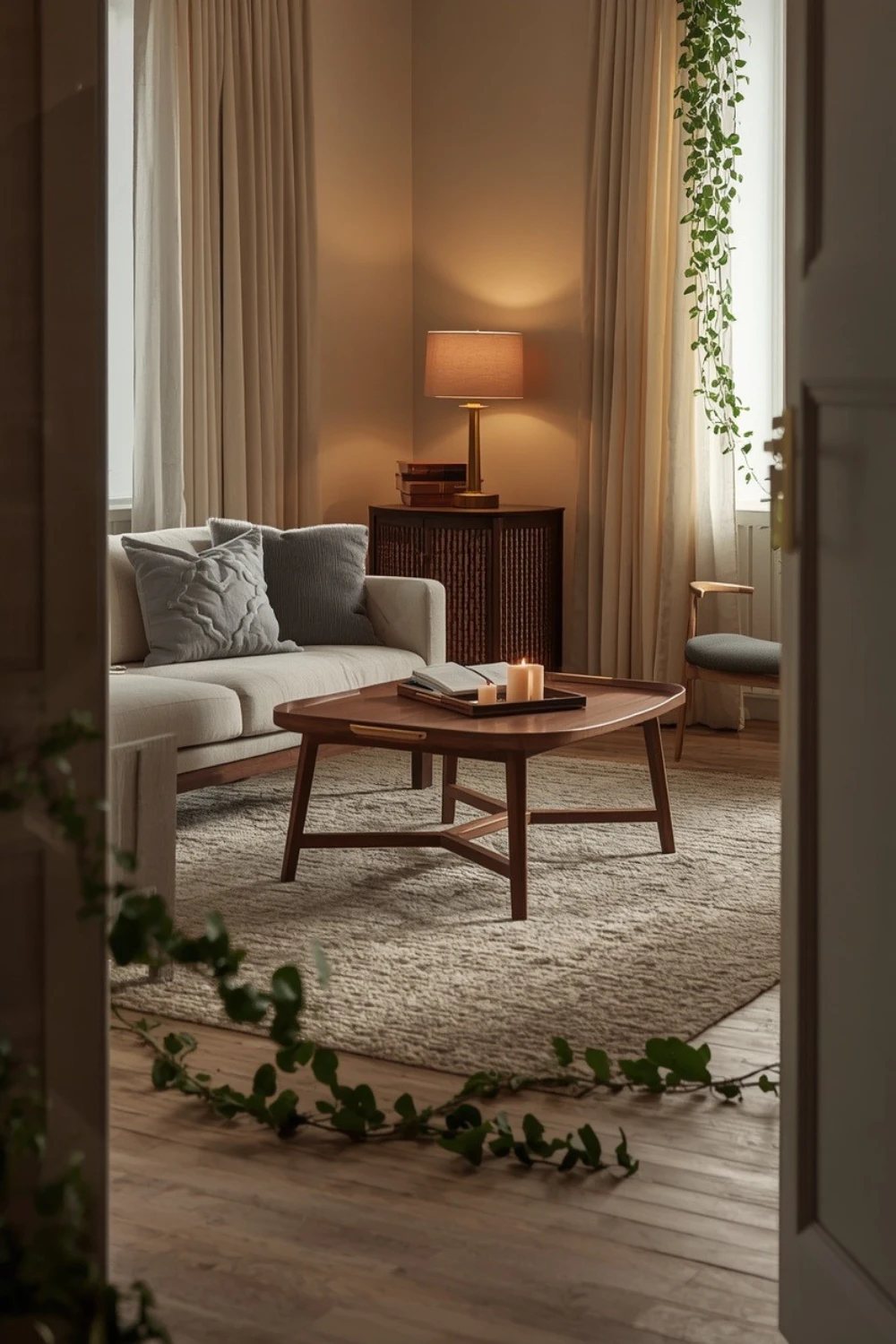
Warm gray and walnut is the quietly sophisticated pairing that never goes out of style. The gray brings calm and softness, the walnut adds rich warmth and depth, and a rug is where the two meet on the floor — grounding the whole room and tying the wood tones to everything above.
These 14 warm gray and walnut rug ideas show how to layer, match, and style rugs so the palette reads calm and collected rather than flat. Whether you want one perfect rug or a layered look, take the ideas that suit your room and your walnut pieces.
1. Layer a Smaller Rug Over a Larger One
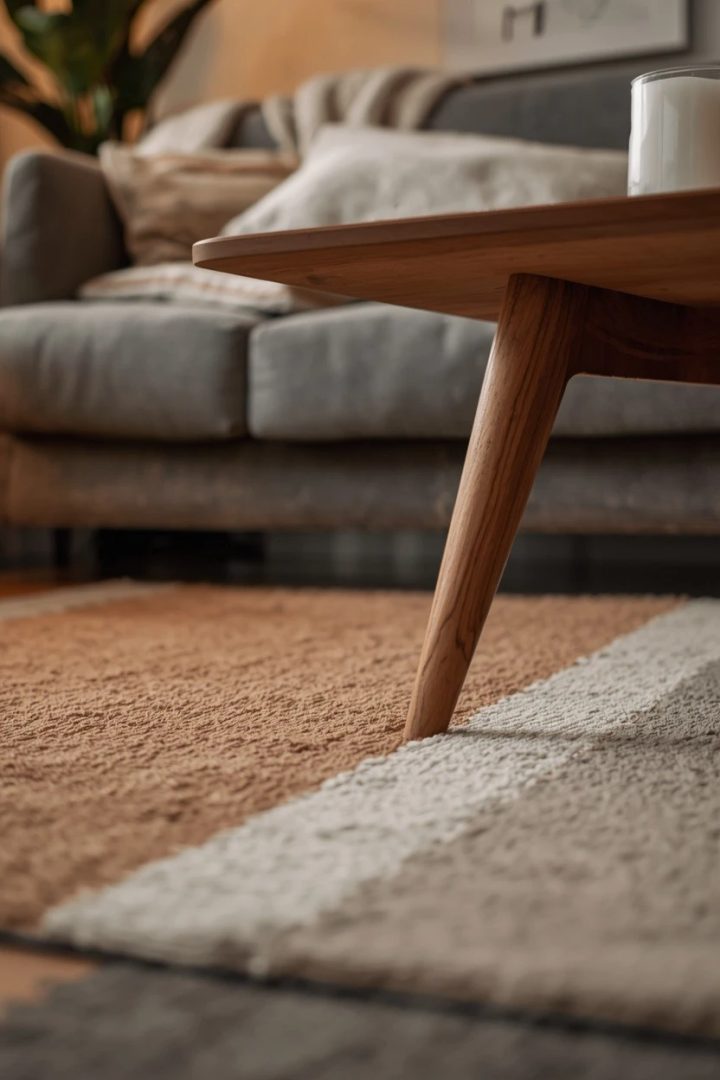
Layering is what gives a floor depth and that collected, designer look. Set a smaller warm gray rug — patterned or textured — over a larger, plainer base like jute or a flat neutral, and the floor gains dimension instantly.
Angle the top rug slightly or center it under the coffee table. The contrast in size, texture, and tone is what makes layered rugs read deliberate rather than like an accident.
How to layer rugs well
• Use a larger, plainer rug as the base and a smaller, more textured or patterned one on top.
• Keep both within the warm gray and walnut palette so the layers read calm, not busy.
• Contrast the textures — a flat jute base under a soft wool or shag top — for depth.
• Anchor the top rug under the furniture so the layering looks deliberate.

2. Start With a Warm Gray Wool Rug
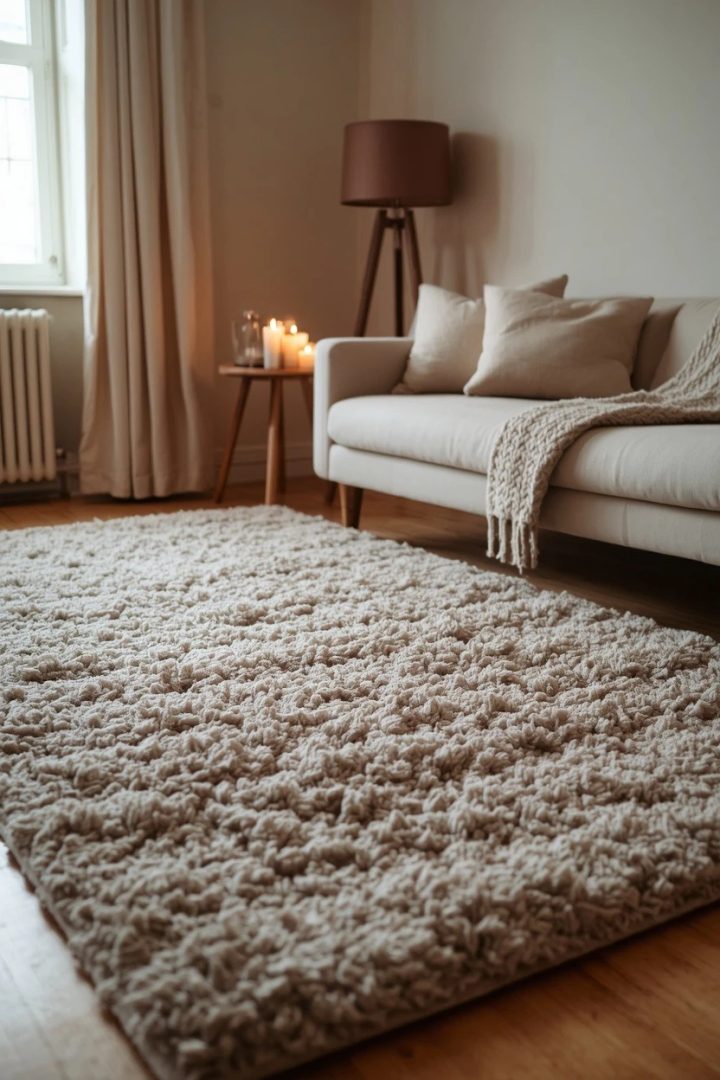
A warm gray wool rug is the foundation the whole scheme rests on. Wool is soft, durable, and holds a warm gray tone beautifully — not the cold, flat gray of cheap synthetics, but a gray with a gentle greige warmth.
Choose one with a subtle variation in tone so it reads rich rather than uniform. Sized generously so the furniture sits on it, a warm gray wool rug grounds the walnut pieces and softens the whole room.
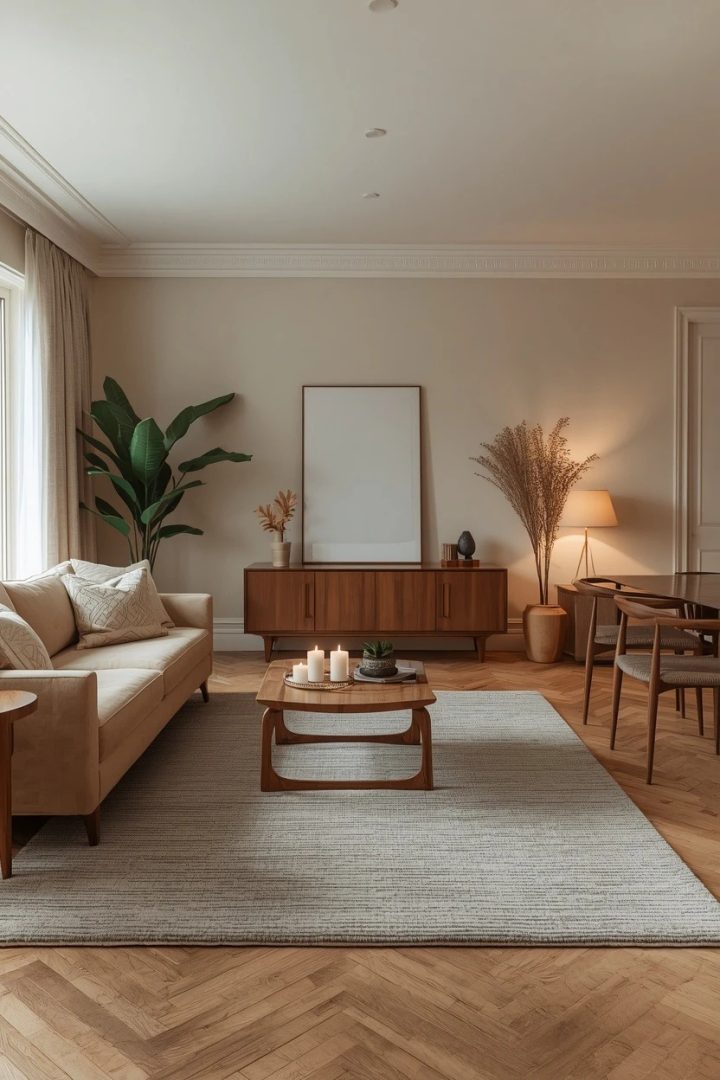
3. Pair It Directly With Walnut Furniture
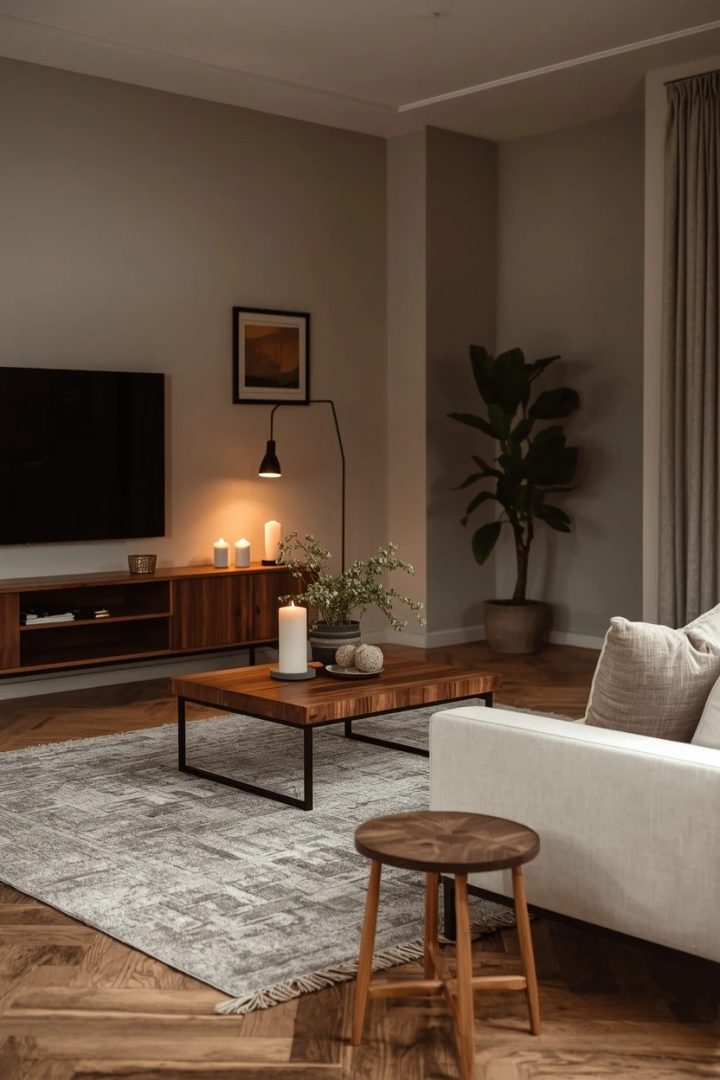
The heart of this look is the contrast between cool-leaning gray and warm walnut. A gray rug beneath walnut furniture lets the rich wood grain glow against the calm gray ground, and each makes the other look better.
Keep the gray warm rather than blue so it harmonises with the walnut's warmth instead of fighting it. The pairing reads sophisticated and balanced — calm underfoot, warm at eye level.
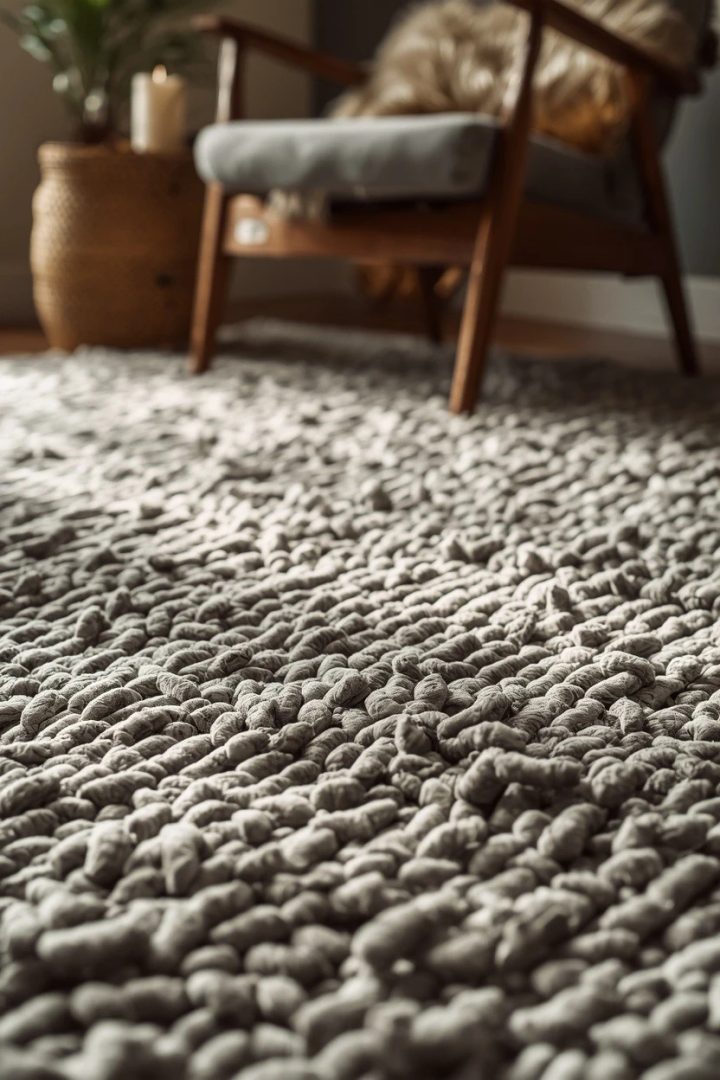
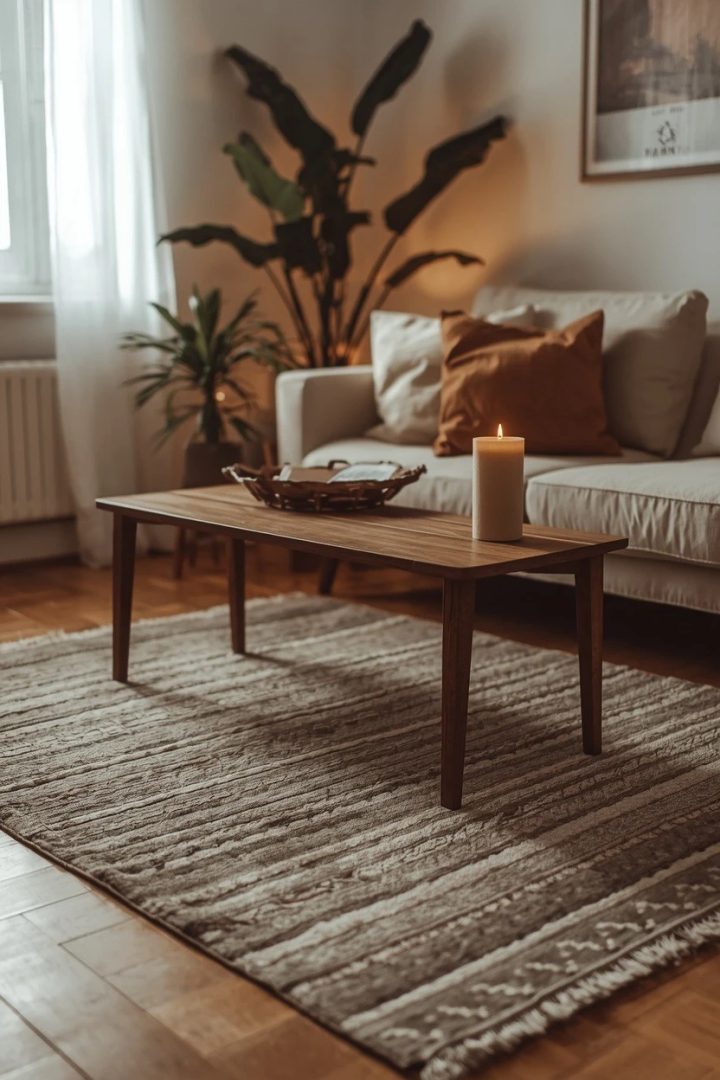
4. Choose a High-Low Textured Pile
A single-colour rug doesn't have to be flat. A high-low or carved-pile gray rug has raised and recessed areas that catch light differently, creating subtle pattern and shadow within one calm tone.
The texture adds the visual interest a plain rug lacks while keeping the palette quiet. Run your hand or eye across it and the surface shifts — that movement is what keeps a neutral rug from reading boring.
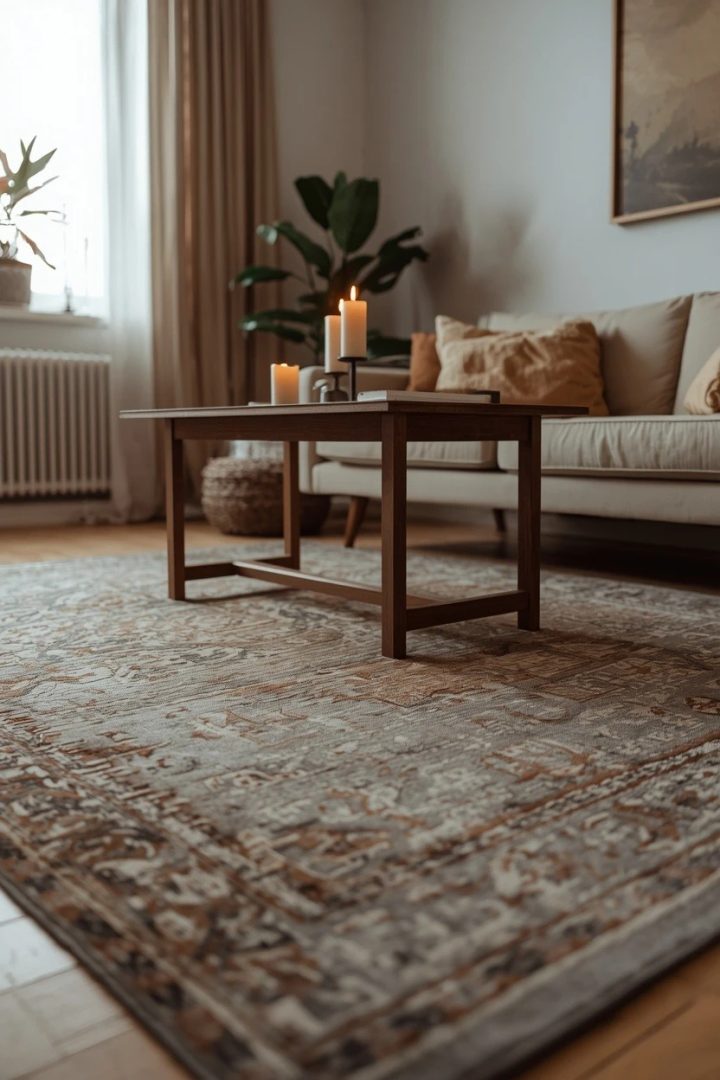
5. Find a Faded Vintage-Style Rug
A faded vintage or vintage-style rug brings character a brand-new one can't fake. Soft, washed-out grays and warm browns with a subtle traditional pattern add history and warmth that suits walnut's richness.
The muted, faded tones keep it calm despite the pattern. A worn-in look also hides everyday wear, making it as practical as it is full of character in a busy room.
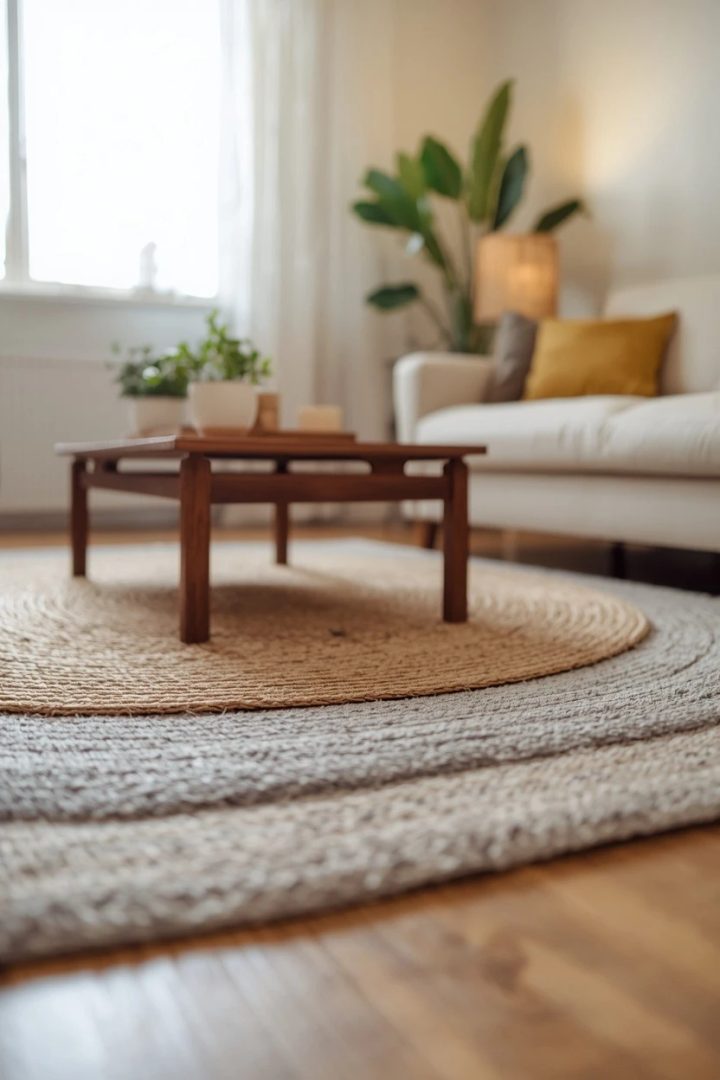
6. Layer a Gray Rug Over a Jute Base
Jute is the perfect base for layering because its natural warm tone bridges gray and walnut. A soft warm gray rug layered over a larger jute base adds the woven texture of natural fibre beneath the softness on top.
The jute's warm, organic colour echoes the walnut while its rough weave contrasts the smooth gray. It's a layering combination that reads relaxed and grounded at once.
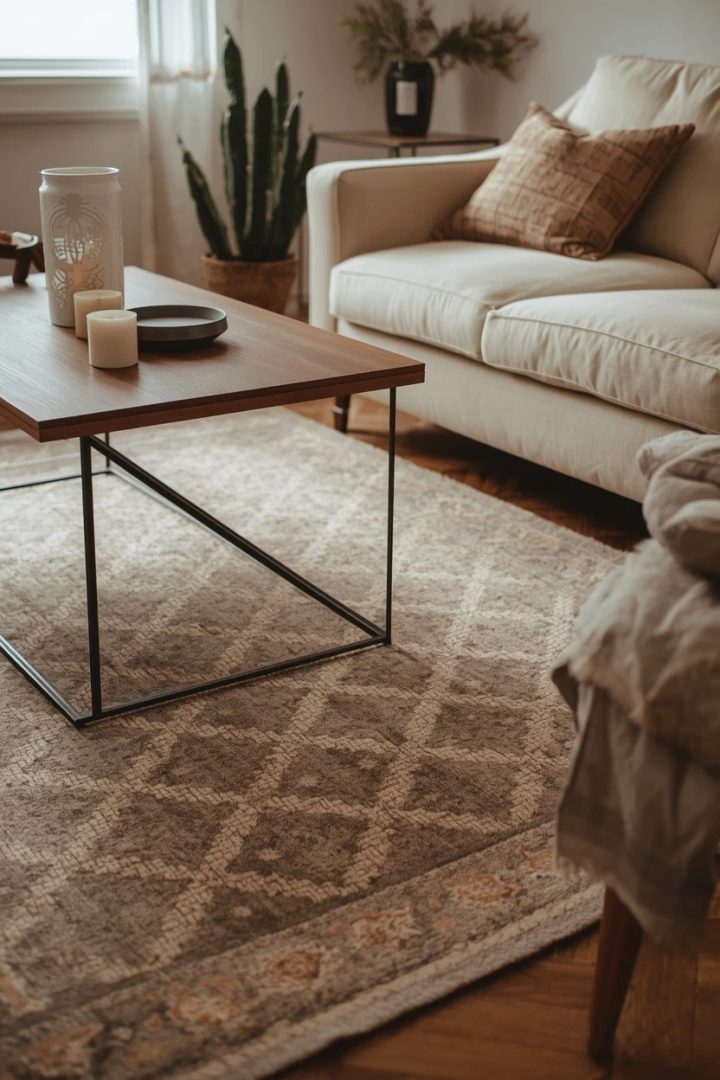
7. Add a Subtle Geometric Pattern
A subtle pattern adds quiet interest without breaking the calm. A tonal diamond, a soft geometric, or a faint Moroccan trellis in shades of gray gives the floor a little movement while staying neutral.
Keep the pattern low-contrast — gray on gray, or gray with a warm taupe — so it reads textured rather than busy. The understated pattern is what keeps a calm room from feeling empty.
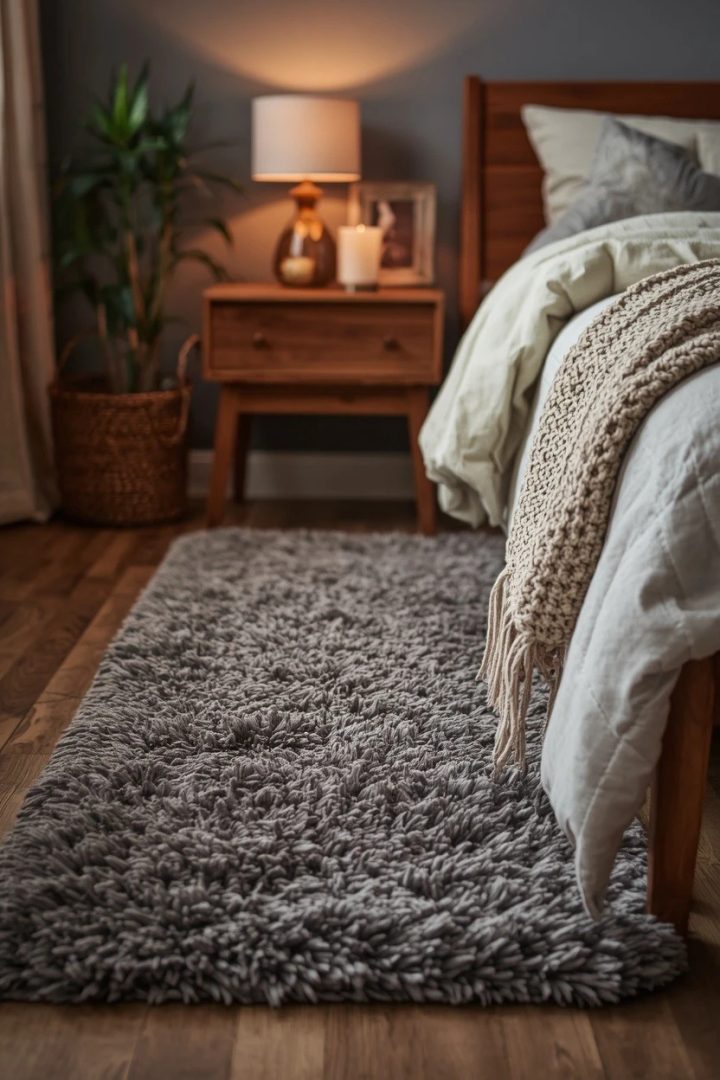
8. Sink Into a Plush Shag
For pure softness underfoot, a plush gray shag is hard to beat. The deep pile feels wonderful on bare feet and adds a layer of warmth and comfort, especially beside a bed or in a lounging corner.
A warm gray shag against walnut wood reads soft and inviting rather than cold. Keep it where you'll feel it — by the bed, under a reading chair — and the room gains a quiet, comforting luxury.
9. Try a Flatweave or Kilim
A flatweave or kilim in warm gray and brown tones brings a handcrafted, textural quality and a low profile that suits high-traffic rooms. The flat surface shows subtle pattern without the depth of pile.
Kilims often blend gray with warm browns and creams that echo walnut naturally. They're durable, reversible, and easy to clean, which makes them as practical as they are characterful.
10. Define Zones With More Than One Rug
In an open-plan space, rugs draw the invisible lines between areas. Two coordinating warm gray rugs — one under the seating, one under the dining table — define each zone while keeping the palette unified.
Vary the rugs slightly in pattern or texture so the zones read as distinct but related. Anchoring each area on its own rug brings order and calm to a large, open room.
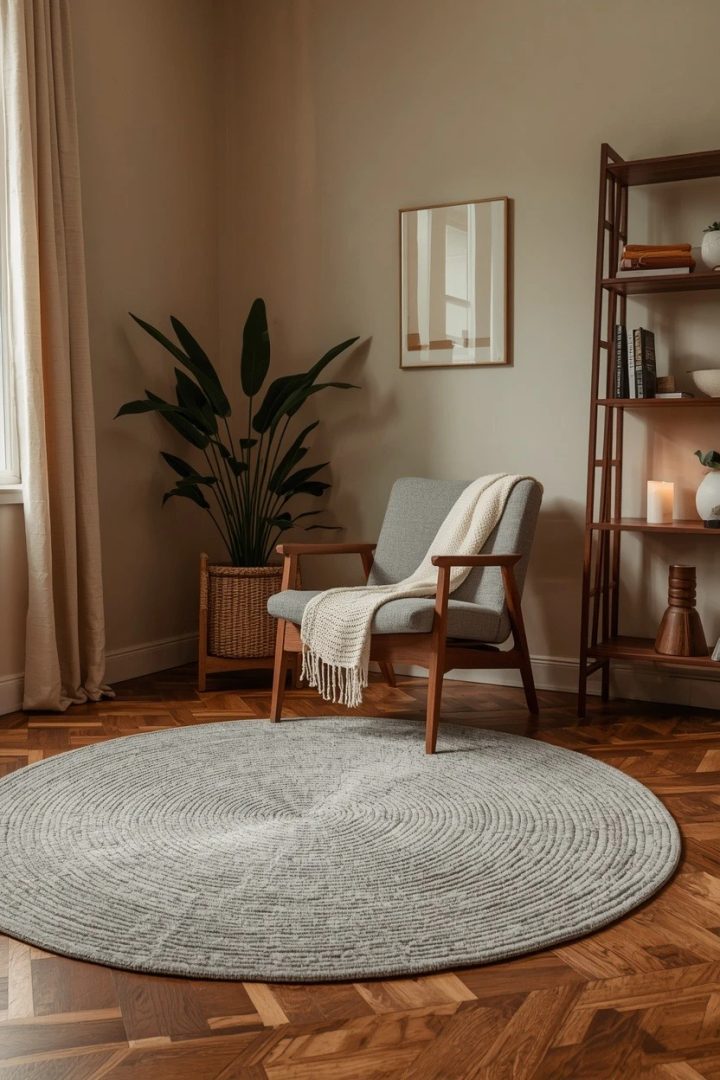
11. Soften a Walnut-Heavy Room With a Round Rug
A room heavy on walnut's straight lines and rectangles can feel rigid. A round gray rug introduces a soft curve that breaks up all the angles and adds a gentle, calming counterpoint.
Use it in a reading corner, under a round table, or to anchor a chair. The circular shape draws the eye and softens a walnut-dominant room without adding any new colour.
12. Run a Warm Gray Runner Through Narrow Spaces
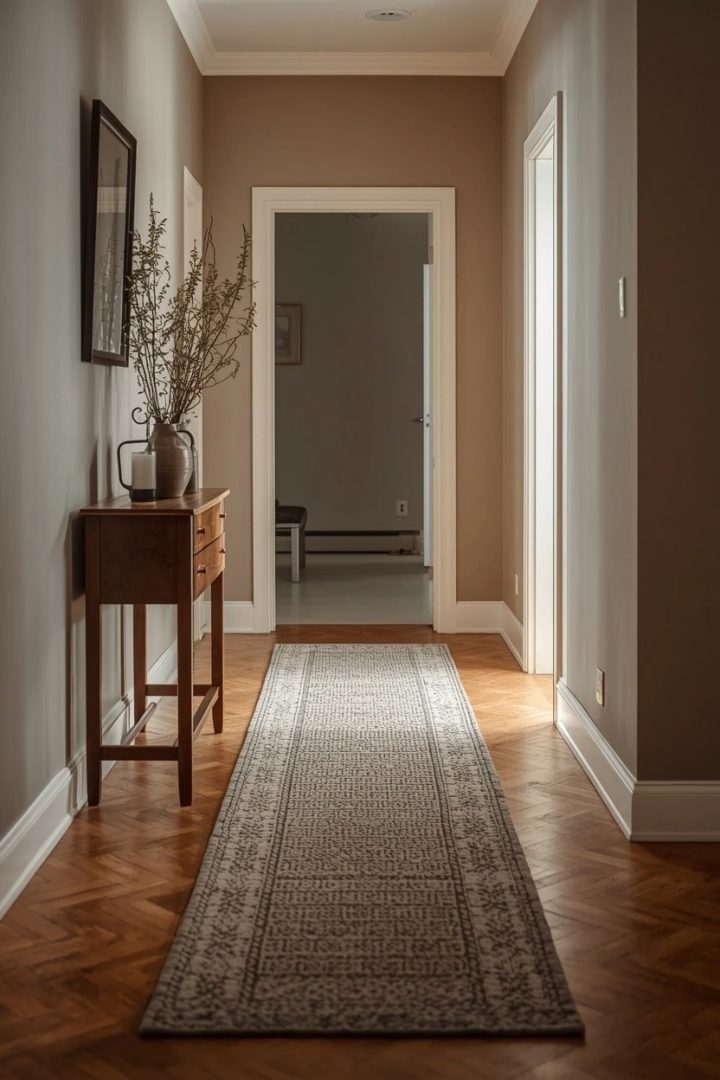
Hallways and narrow spaces benefit from a runner as much as any room. A long warm gray runner over walnut-toned floors softens footsteps, warms the space, and leads the eye down the length of the hall.
Choose a low-pile, durable weave for a high-traffic path, and leave a little floor showing on each side. The runner carries the gray-and-walnut palette into the spaces between rooms so the scheme flows throughout.
13. Match the Rug's Undertone to Your Walnut
The single thing that makes or breaks this palette is undertone. Walnut leans warm — red, brown, sometimes a little purple — so the gray rug needs a warm, greige base rather than a cool blue one, or the two will clash.
Hold a rug sample beside your walnut in daylight and again under lamplight before committing. When the undertones agree, the gray and walnut read as one calm, harmonious scheme; when they fight, the room never quite settles. Carrying that warm gray onto the walls behind completes the look.
Getting the undertones right
• Identify your walnut's undertone first — most walnut leans warm red-brown, so match it with a warm gray.
• Avoid cool, blue-based grays, which clash with walnut's warmth and read cold.
• Test samples in both daylight and evening lamplight, since gray shifts dramatically between the two.
• Echo the warm gray on the walls behind the rug so the floor and walls read as one calm scheme.
Paint Picks
• Walls behind: “Edgecomb Gray” (Benjamin Moore HC-173) — a warm greige that completes the gray-and-walnut scheme and lets both the rug and wood glow
• Trim and ceiling: “White Dove” (Benjamin Moore OC-17) — a soft warm white that keeps the trim gentle against the warm gray walls
14. Style the Room Around the Rug
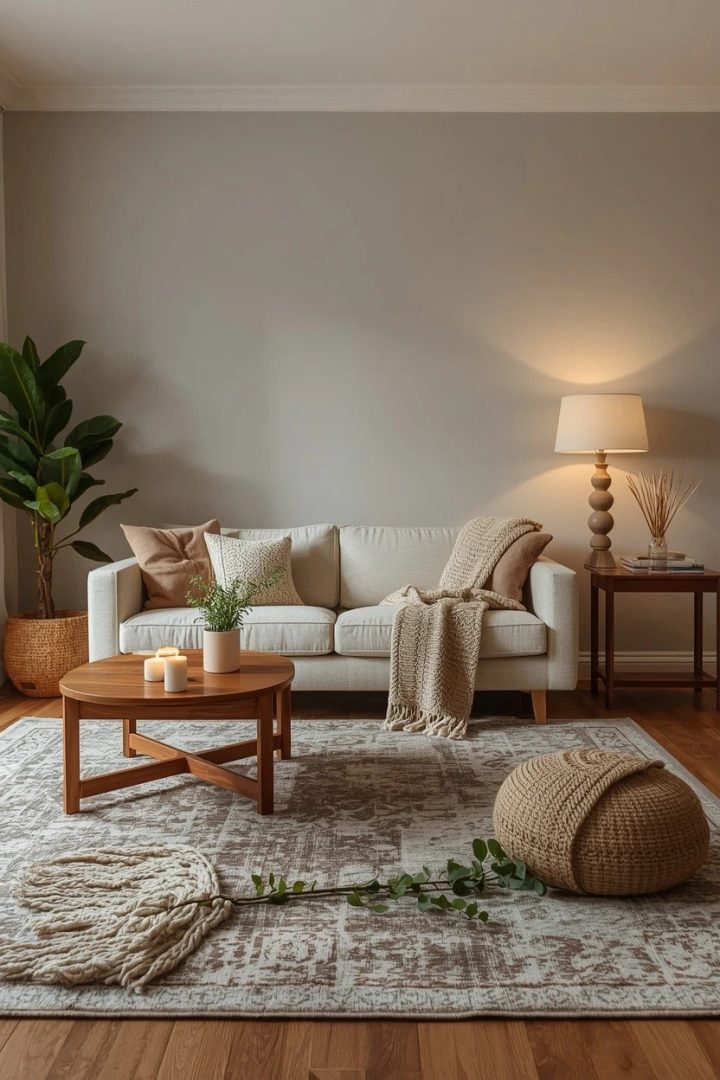
Once the rug is down, let it lead the styling. Pull its gray and warm tones into the cushions, throws, and art, repeat the walnut in a few wood pieces, and keep everything else soft and neutral so the palette stays calm.
Add warm lamplight, a couple of plants, and a knit throw to layer in warmth and life. Styling the room around the rug — rather than dropping it into a finished room — is what makes the whole space read cohesive and intentional.
Where I'd Start if I Only Did Three Things
If I were building this look from scratch, I'd start with the foundation rug — a generously sized warm gray wool rug with a greige base that harmonises with walnut. Next, I'd get the undertones right by testing samples against my actual walnut in daylight and lamplight, since that single check makes or breaks the palette. Third, I'd layer a smaller textured rug on top for depth and pull the gray and walnut tones into the cushions and throws. Foundation rug, matched undertones, a layered top rug — that order builds the calm, collected look reliably.
FAQ
What gray works best with walnut furniture?
A warm gray with a greige or taupe base, not a cool blue-gray. Walnut leans warm — red-brown, sometimes faintly purple — so a gray that shares that warmth harmonises, while a cool gray clashes and reads cold against the wood. Always test a sample beside your actual walnut in both daylight and lamplight before buying.
How do I layer rugs without it looking messy?
Use a larger, plainer rug as the base and a smaller, more textured or patterned one on top, both within the warm gray palette. Contrast the textures — a flat jute or wool base under a softer or patterned top — and anchor the top rug under your furniture so the layering reads deliberate rather than accidental.
Is wool worth it, or will a synthetic rug do?
Wool holds warm gray tones with a depth and softness synthetics rarely match, resists crushing, and lasts for years, so it's worth it for a main rug you'll keep. Synthetics make sense for high-traffic or budget situations and have improved a lot, but for the calm, layered look, a wool or wool-blend foundation rug pays off.
What if my floors are already walnut — do I still need a gray rug?
Yes, and it makes the room better. A warm gray rug over walnut floors softens the wood, defines the seating area, and adds comfort and texture underfoot, while the gray-and-walnut contrast still reads beautifully. Just leave a border of the walnut floor showing around the rug so both get to shine.
Conclusion
Warm gray and walnut is a pairing that always reads calm and quietly sophisticated, and the rug is where it all comes together on the floor. Get the undertones right so the gray and walnut harmonise, layer for depth, choose texture over loud pattern, and style the room around the rug. Start with one well-matched foundation rug, build from there, and the room settles into the kind of calm, collected space you never want to leave.