17 Small Living Room Layout Ideas That Make the Most of Every Centimetre
June 30, 2026 · 16 min read
 By Khawar Iqbal
A small living room is not a problem to be solved. It's a spatial constraint that demands more thoughtful decisions — and that rewards those decisions with rooms that feel genuinely considered rather than merely adequate.
The difference between a small living room that works and one that doesn't is almost never about the square footage. It's about five or six specific choices — about furniture scale, arrangement, visual tricks, and the use of vertical space — that either open the room up or close it down.
These 17 ideas cover every dimension of the small living room layout and arrangement challenge, from the foundational furniture decisions to the styling details that make a compact room feel generous.
The Non-Negotiable Small Living Room Rules
Before any specific ideas, these rules determine whether a small living room reads as 'cozy and considered' or 'cramped and compromised.'
Rule 1 — No furniture against every wall: Pushing all furniture to the walls leaves a large empty space in the middle and makes the room feel like a waiting room. Float at least the sofa away from the wall.
Rule 2 — One large rug beats several small ones: A single large rug that grounds all the main furniture reads as one cohesive zone. Multiple small rugs fragment the already-limited floor space visually.
Rule 3 — Furniture legs matter: Pieces with legs (no floor-skirts) allow the eye to see floor beneath them, making the room read as larger. Skirted-to-the-floor sofas and cabinets visually cut the room at floor level.
Rule 4 — Vertical space is free: In a small room, the floor is limited. The wall height above 150cm is often completely unused. Every item of storage, display, or decoration placed above 150cm uses space that costs nothing extra.
Idea 1: Float the Sofa — The Most Counterintuitive Fix
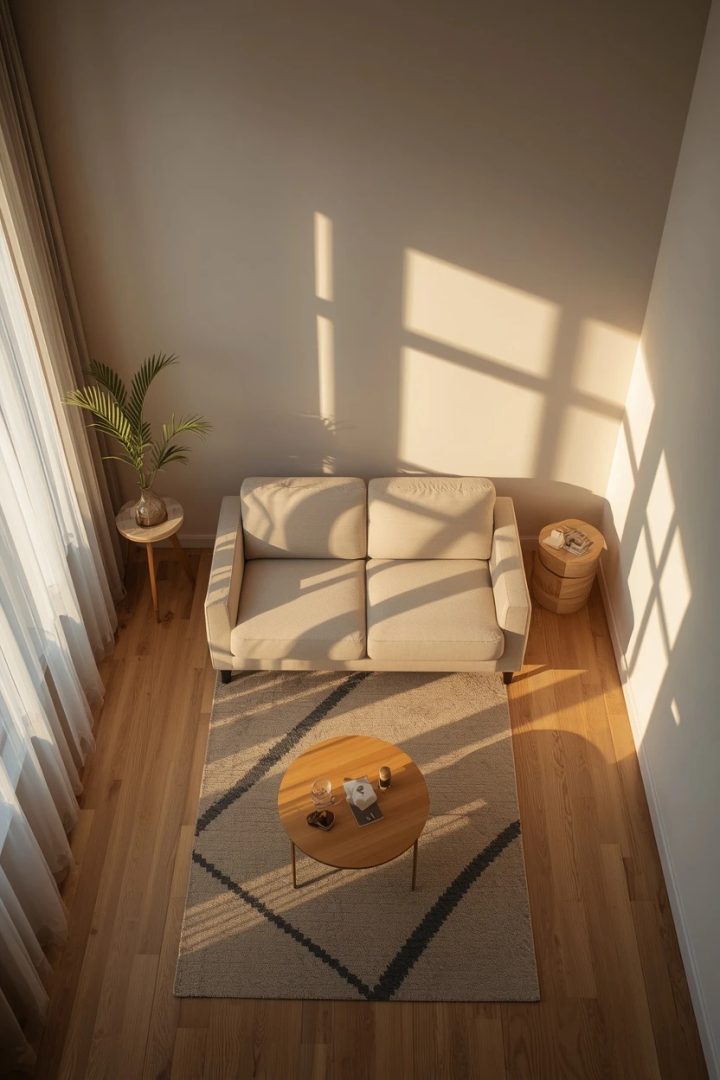
The single most impactful small living room arrangement change: move the sofa away from the wall by 20–40cm.
Why it works: When the sofa is against the wall, the eye reads the room as 'furniture at the edge, empty space in the middle.' When the sofa floats, the eye reads the room as 'a defined seating zone with space around it' — which reads as much larger.
The gap behind: The 20–40cm between the sofa back and the wall creates a natural traffic route and prevents the claustrophobic feeling of furniture touching walls on every side. It also provides a narrow console table position behind the sofa for lamps and accessories.
The objection: 'But it will take up more space.' It takes the same space. It just uses it differently — and more visually effectively.
Idea 2: The One-Sofa Plus One-Chair Arrangement
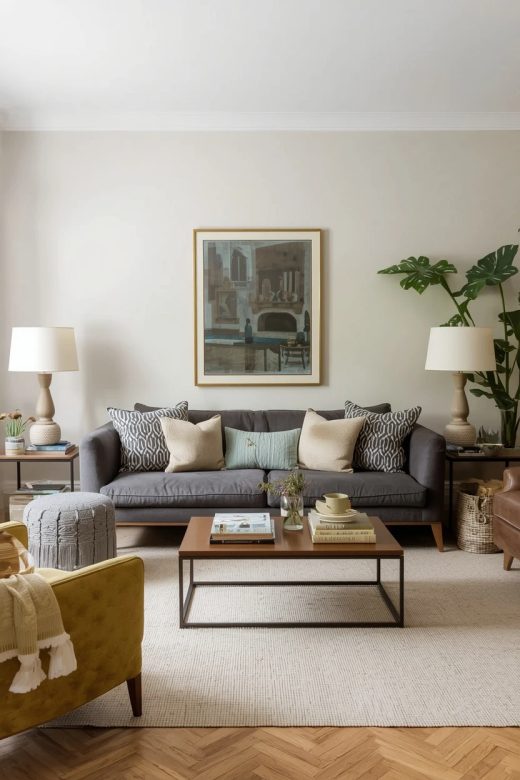
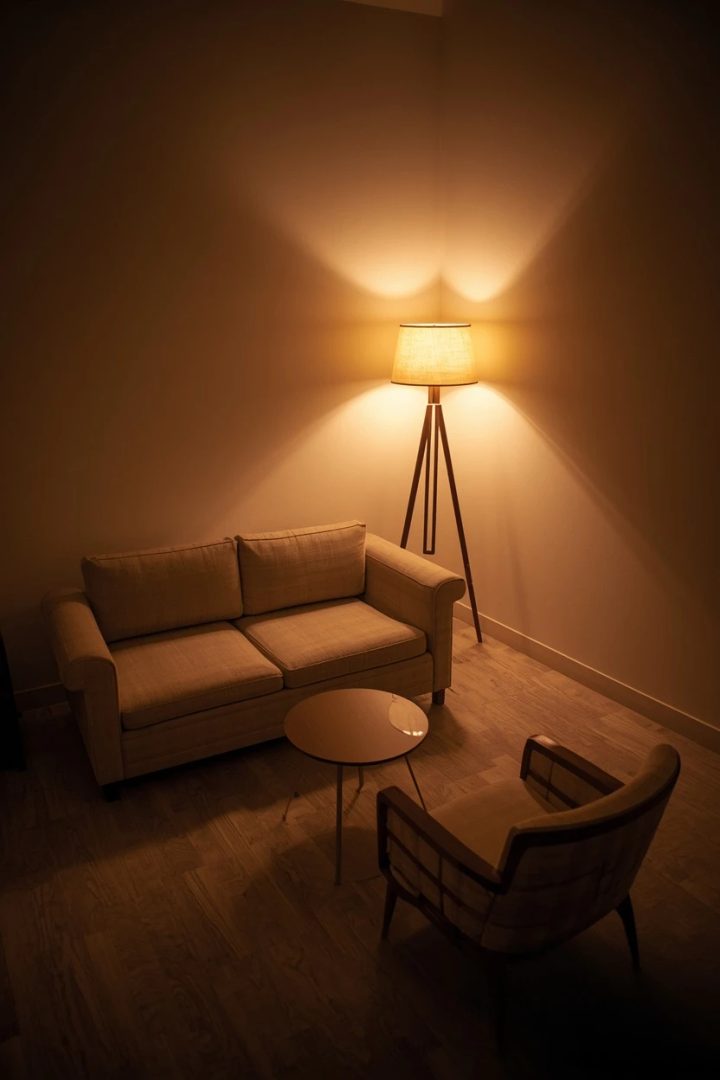
In a small living room, the standard two-sofa or sofa-plus-loveseat arrangement is almost always wrong. One two-seat or compact three-seat sofa plus one armchair is the most spatially efficient seating arrangement available.
Why: Two sofas in a small room leave no clear floor space for circulation. One sofa plus one chair gives seating for three to four people while maintaining a clear central floor area and a visible traffic route.
Chair position: At 45 degrees to the sofa, not parallel to it. A chair angled inward creates a conversation zone without the rigidity of a face-to-face arrangement and uses the corner space more efficiently.
⭐ Pro Tip
Before buying any furniture for a small living room, tape the exact footprint of each piece on the floor and live with the arrangement for three days.
A sofa that looks right in a showroom can feel completely wrong in the actual room once the tape is down.
Tape costs nothing. Returning a sofa that won't fit costs time, effort, and sometimes a restocking fee.
This 30-minute exercise prevents the most common and most expensive small living room mistake: buying furniture at the wrong scale.
Idea 3: The Corner Sofa — When It Works and When It Doesn't
A corner sofa (L-shaped sectional) in a small living room is commonly considered a space-saver. It's actually the opposite — it occupies two walls simultaneously and leaves the fewest options for the rest of the room.
When a corner sofa works in a small room: When the room is specifically L-shaped and the corner sofa fills the L efficiently. Or when the sofa will also function as a bed (sleeper sofa) and maximum seating is more important than spatial flexibility.
When to avoid it: In a square or rectangular room under 15 sqm, an L-shaped sofa almost always leaves a cramped remaining space that cannot function well for any other purpose.
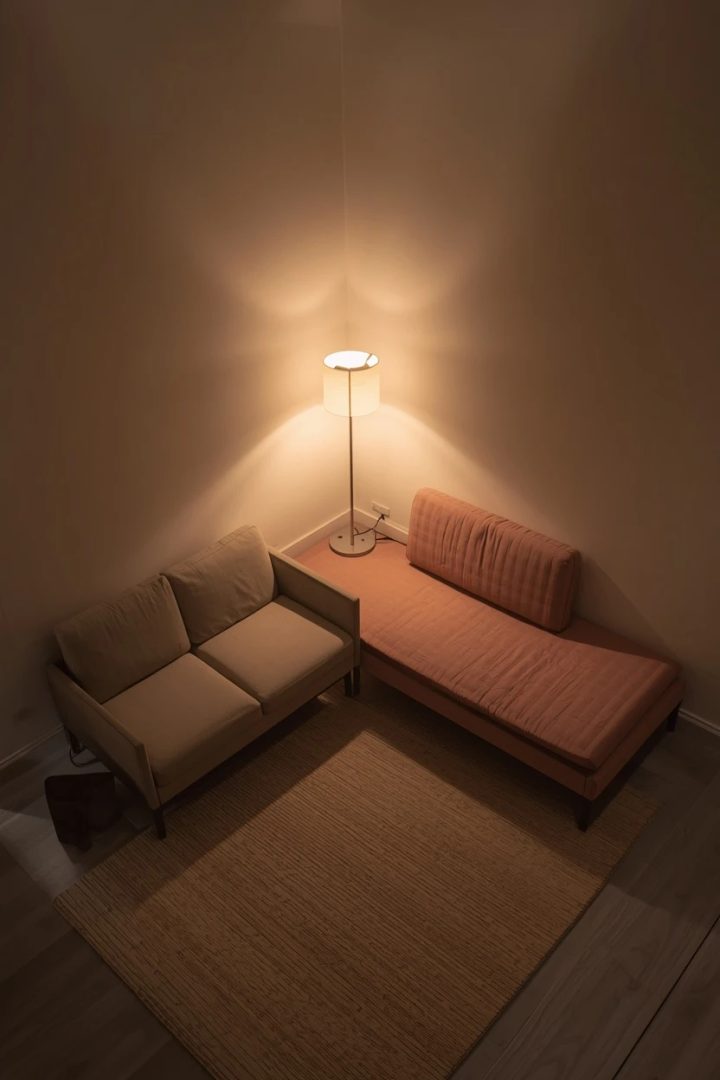
Alternative: A two-seat sofa plus a daybed or chaise positioned perpendicular to the sofa along the adjacent wall — this provides the L-seating arrangement with individual pieces that are repositionable.
Idea 4: Multi-Function Furniture
Every piece of furniture in a small living room should perform at least two functions. A single-function piece is a luxury small living rooms cannot afford.
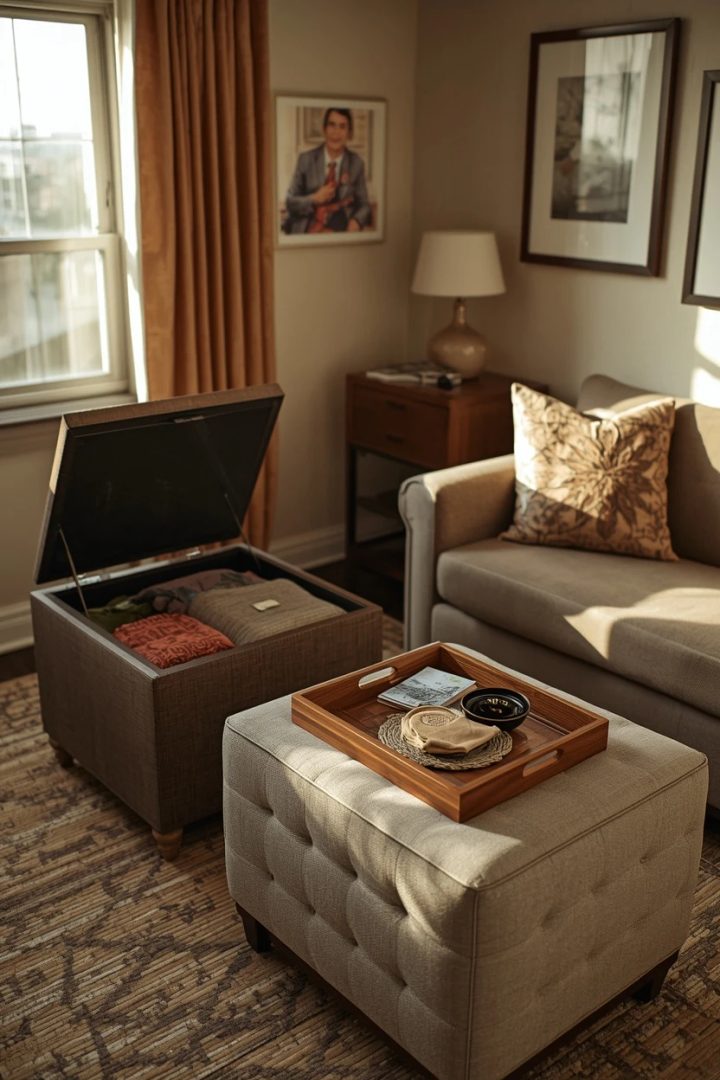
The coffee table as storage: A coffee table with lift-top storage, or a large ottoman with a tray on top that becomes the coffee table surface, stores blankets, board games, and seasonal accessories invisibly.
The sofa as occasional bed: A quality sleeper sofa in a small living room that also serves as a guest room eliminates the need for a separate guest bedroom.
The console behind the sofa as a desk: A narrow console table (30–35cm deep) positioned behind a floating sofa serves as both a sofa table for lamps and as a standing-or-seated work surface.
The footstool as extra seating: A large upholstered cube footstool beside the sofa provides an additional seat for a guest while functioning as a footrest and coffee table surface daily.
Idea 5: The Vertical Wall — Maximising Height
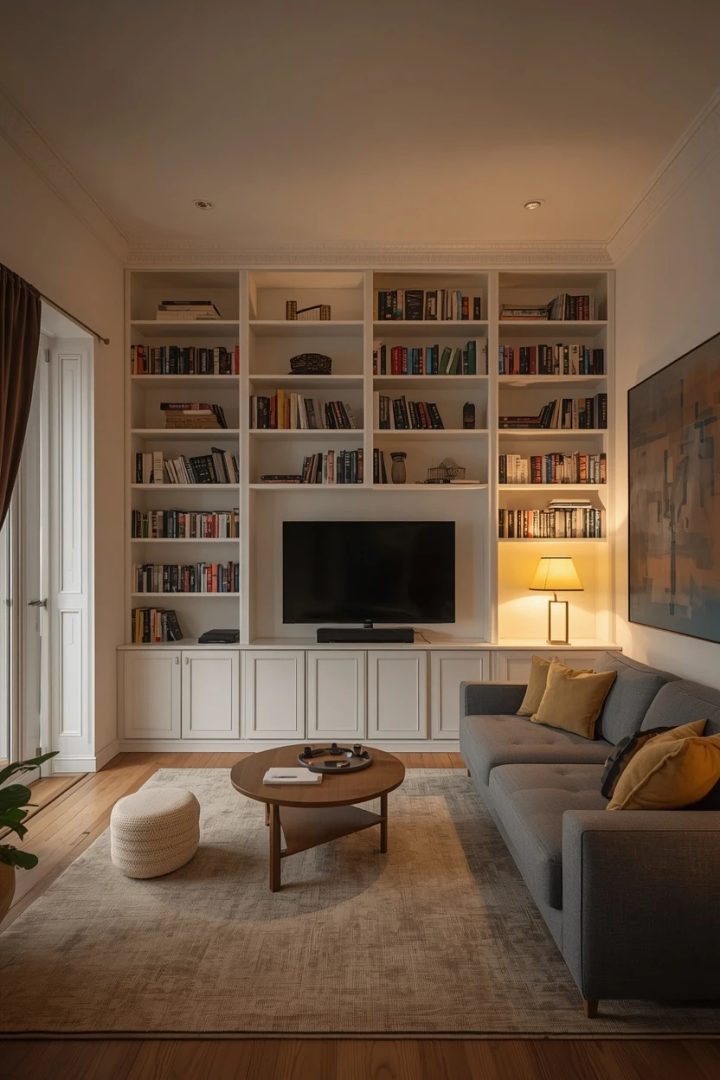
In a small living room, the floor space is limited. The wall height from 150cm to the ceiling is free. Using this vertical zone for storage, display, and visual interest is the most space-efficient strategy available.
Floor-to-ceiling shelving: A single floor-to-ceiling bookshelf unit — in one corner or along one full wall — provides significantly more storage than a standard bookcase while using only 30–40cm of floor depth.
Wall-mounted TV: Mounting the television on the wall (rather than on a stand) removes the TV unit entirely from the floor plan. The freed floor area is significant even at 40–50cm deep.
High shelving: A single floating shelf at 180–200cm height, running the length of a wall, displays objects and books without using any of the lower wall zone where furniture sits.
Idea 6: The Mirror Strategy
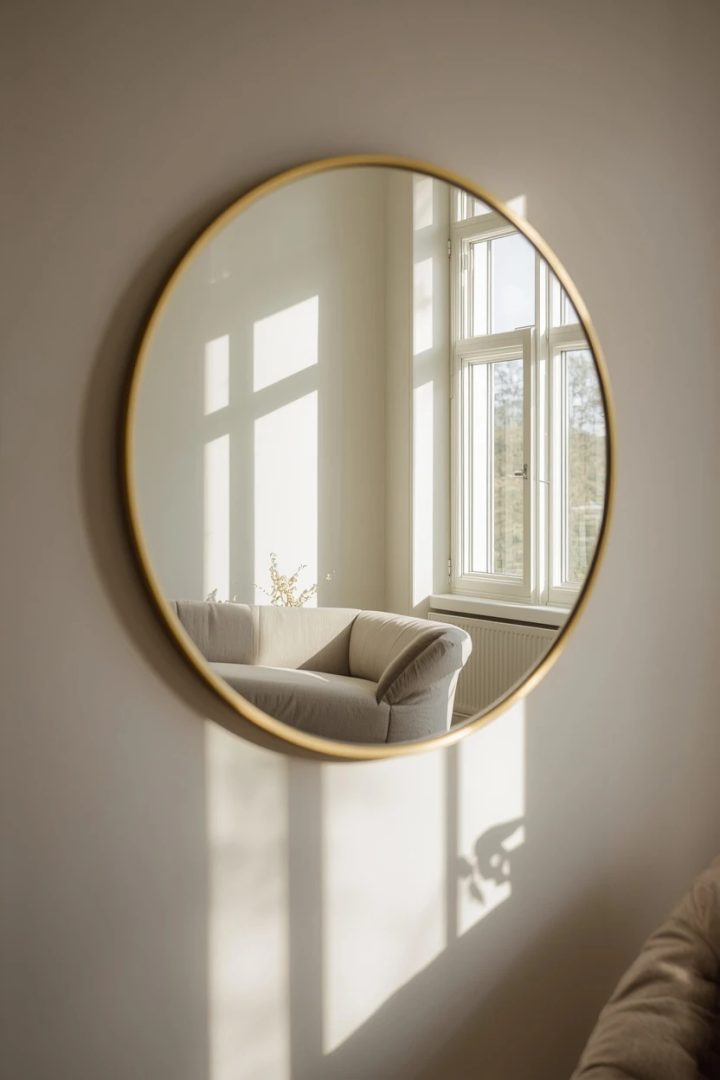
A large mirror — in the right position — is the closest thing to adding a window to a small living room without any construction.
Position rule: Opposite or at 90 degrees to the largest window. This reflects natural light deepest into the room and creates the impression of a second light source.
Size rule: The mirror should be at least 80cm in its smallest dimension. Small mirrors in large positions read as decorative accessories, not as spatial tools.
Shape: A round mirror (80–100cm diameter) on the wall opposite the window. Or a large leaning mirror (180cm tall) propped against the wall — which also adds perceived height.
Idea 7: Light Colours — But Not Just White
Light walls make a small room feel larger. This is well-known but often applied as 'paint everything white' — which produces a clean but cold and characterless small room.
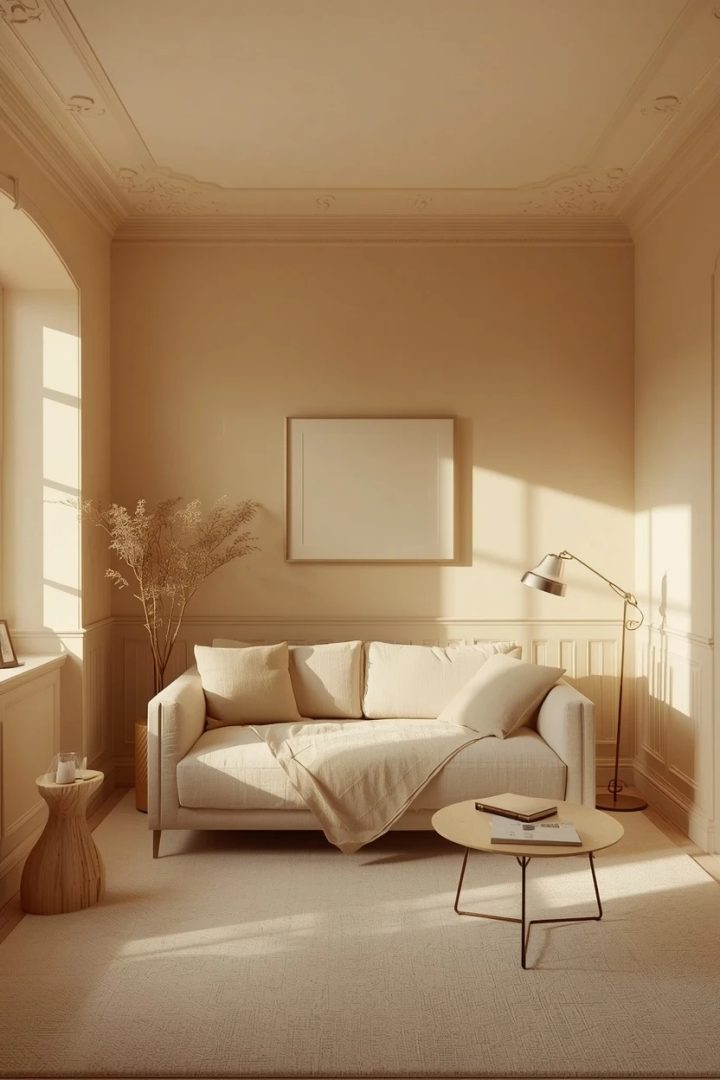
The nuance: Warm light colours work better in small living rooms than cool ones. Warm cream, warm white with an ochre undertone, very pale sage, and very pale greige all reflect lamplight warmly and make the room feel larger without the clinical quality of cool white.
The ceiling: Paint the ceiling the same colour as the walls in a small living room — or one to two shades lighter. A white ceiling above coloured walls draws attention to the ceiling height difference and makes the room feel more box-like.
The skirting: Paint skirting boards the same colour as the walls in a small room. White skirtings against coloured walls create a strong horizontal line at floor level that visually lowers the ceiling.
Idea 8: The Apartment Sofa — Scale Is Everything
Most sofas sold in mainstream furniture retailers are designed for average-sized living rooms. In a small living room, a standard 220cm three-seat sofa is too wide. The solution is an 'apartment sofa' — typically 160–185cm wide with a shallower seat depth of 75–85cm.
What the scale difference achieves: 30–40cm less width on the sofa gives back 30–40cm of floor space in the room. At the scale of a small living room (3x4m, for example), that 30–40cm is the difference between a room that functions and one that feels permanently blocked.
Seat depth: Standard sofas are 90–100cm deep. An apartment sofa at 75–80cm deep occupies significantly less floor depth — the difference is meaningful in rooms where every centimetre counts.
⚠️ Important Warning
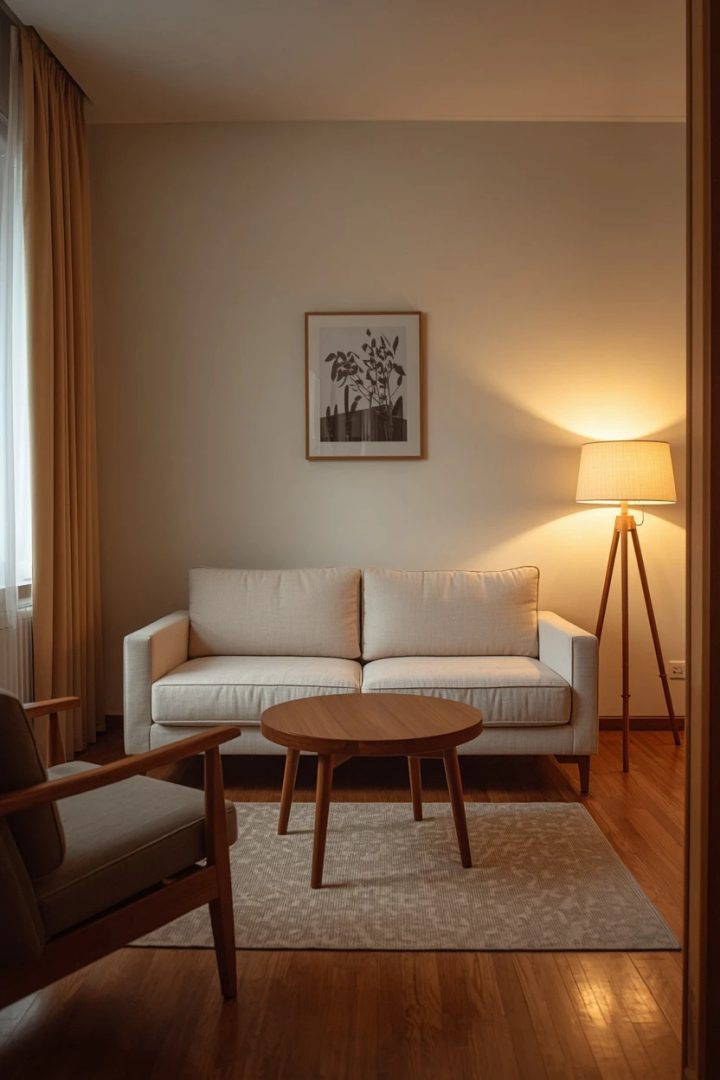
Never choose a sofa for a small living room from an online listing without checking the actual measurements.
The photographs on furniture websites are taken in large, open studio spaces that make every sofa look smaller than it is.
Always measure your room, mark the sofa footprint with tape, and live with the tape for three days before ordering any sofa.
The tape test is especially critical for small living rooms — a sofa that is even 15cm wider than optimal in a small room blocks circulation and makes the room feel permanently cramped.
Idea 9: The Dining-Living Combo Arrangement
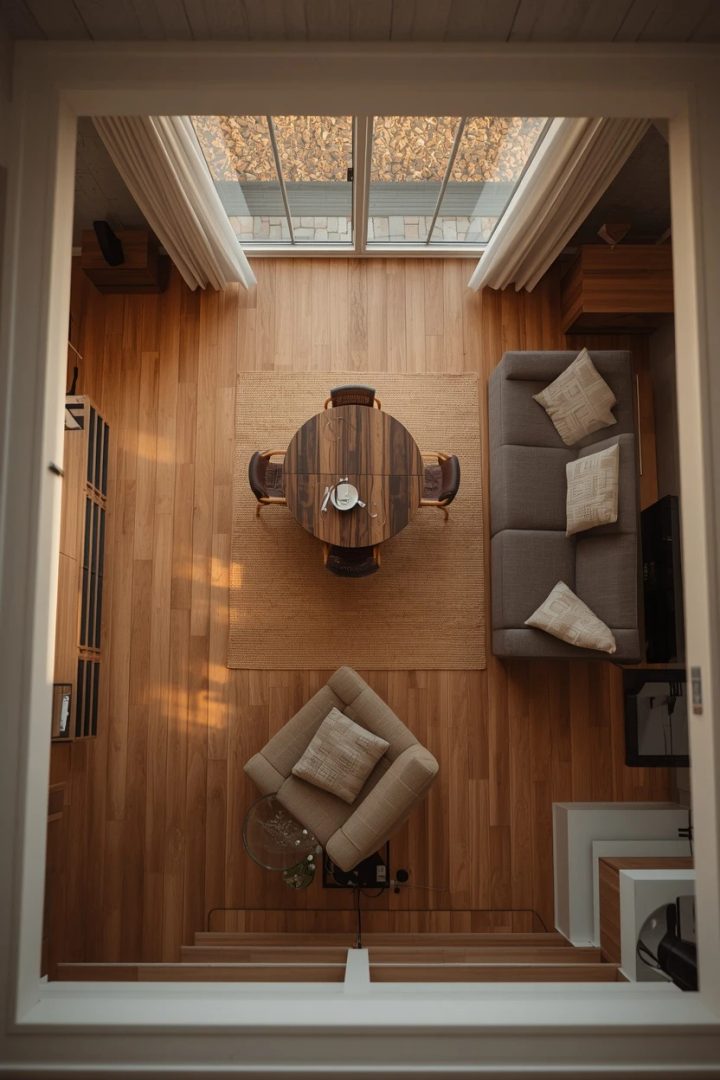
In a small home where the living room must also accommodate dining, the arrangement that preserves both functions while feeling cohesive requires specific decisions.
The zoning approach: Define the dining zone with a rug under the table (separate from the living room rug). Position the dining table so it functions as a room divider between the entry/kitchen and the living seating zone. Use chairs that double as occasional extra seating in the living zone.
Furniture choice: A round dining table (seats more people per square metre than rectangular). Folding chairs for the extra dining seats that store flat. A bench on one side of the table that slides under when not in use.
Idea 10: Wall-Mounted TV — Freeing the Floor Plan
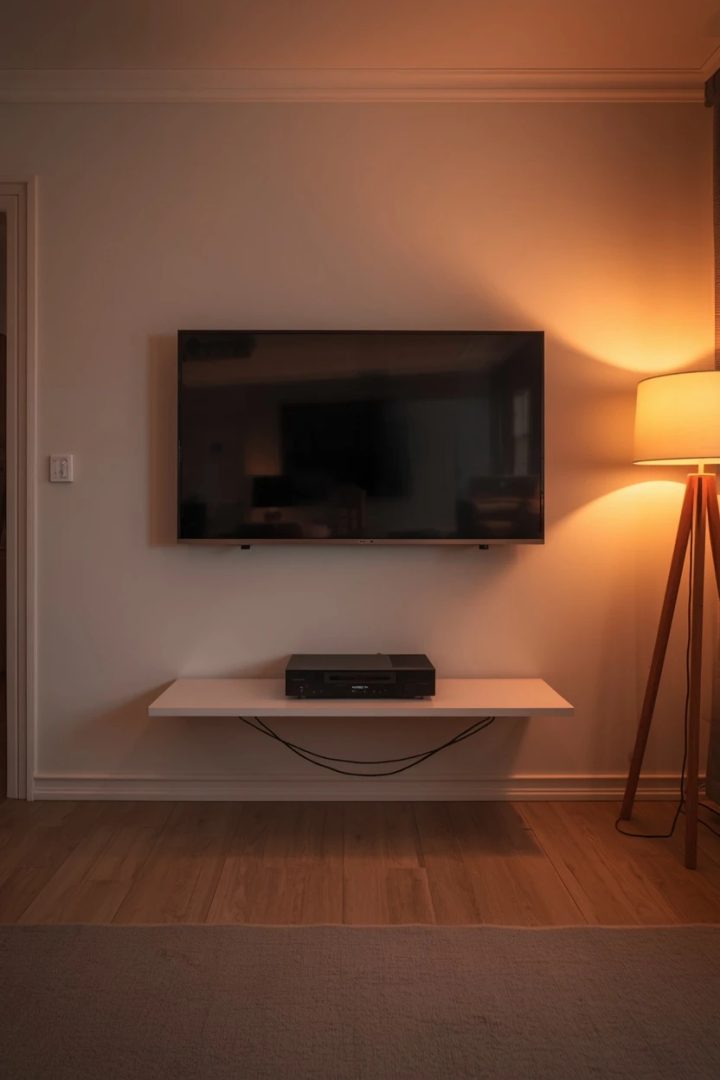
Mounting the television on the wall eliminates the TV unit entirely and can free 40–60cm of room depth that was previously occupied by the stand or cabinet.
Cable management: A wall-mounted TV without managed cables is a visual problem that undermines the spatial gain. Run cables inside the wall to a socket at TV height. Or use a cable management channel in the same colour as the wall.
Below the TV: The wall below the TV is now available for a much slimmer alternative — a narrow floating shelf (20cm deep) for the set-top box and remote, rather than a full TV unit. This frees floor space while maintaining the functional needs.
Idea 11: Floor Lamps Instead of Table Lamps
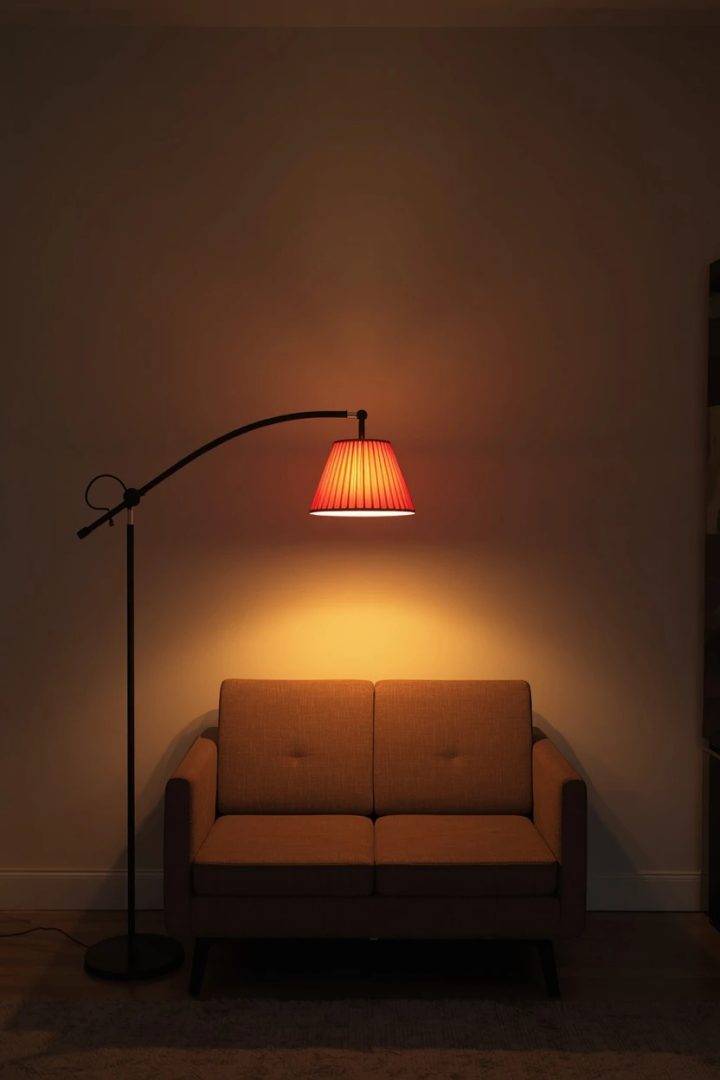
In a small living room where the side table surface is already at a premium, a floor lamp positioned beside the sofa provides the same warm lamplight without occupying any of the flat surface area.
The floor lamp advantage: A slim floor lamp (tripod or single column) beside the sofa takes a footprint of approximately 20cm diameter — far less than a side table plus lamp combination. This matters in rooms where every available surface and every square centimetre is spoken for.
Arc lamp above the sofa: An arc lamp with a horizontal arm that extends over the sofa provides overhead-adjacent light without any ceiling fixture — the perfect solution for a small living room where ceiling tracks or pendants aren't possible.
Idea 12: The Curtain That Adds Height
In a small living room, floor-to-ceiling curtains hung from the highest possible point on the wall — even if the window is small — are the quickest visual expansion available for the room.
The visual mechanics: A curtain that runs from ceiling to floor draws the eye from the highest point in the room to the lowest. The eye interprets this vertical movement as the full height of the room being used — making it feel taller.
The window trick: Even a window that is only 120cm wide should have curtains that span 200–220cm when open — covering the wall on both sides of the window and stacking fully clear of the glass. This makes the window read as significantly wider than it is.

Idea 13: The Round Coffee Table Advantage
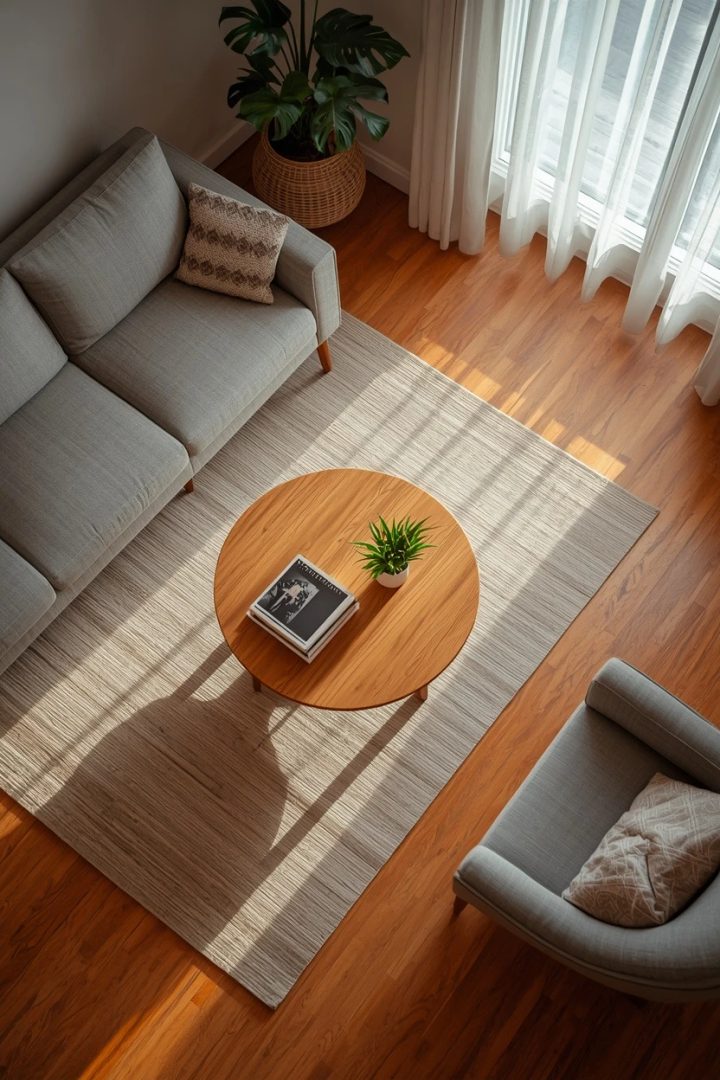
A round coffee table is more space-efficient than a rectangular one in a small living room because it has no corners to navigate around and allows traffic to flow in any direction.
The corners problem: A rectangular coffee table with sharp corners in a small room creates navigation hazards and visual blockages from multiple angles. A round or oval table with no corners allows the eye and the body to move around it more freely.
Size: A round table of 70–90cm diameter is appropriate for most small living room arrangements. Larger round tables (100cm+) begin to dominate the space in rooms under 15 sqm.
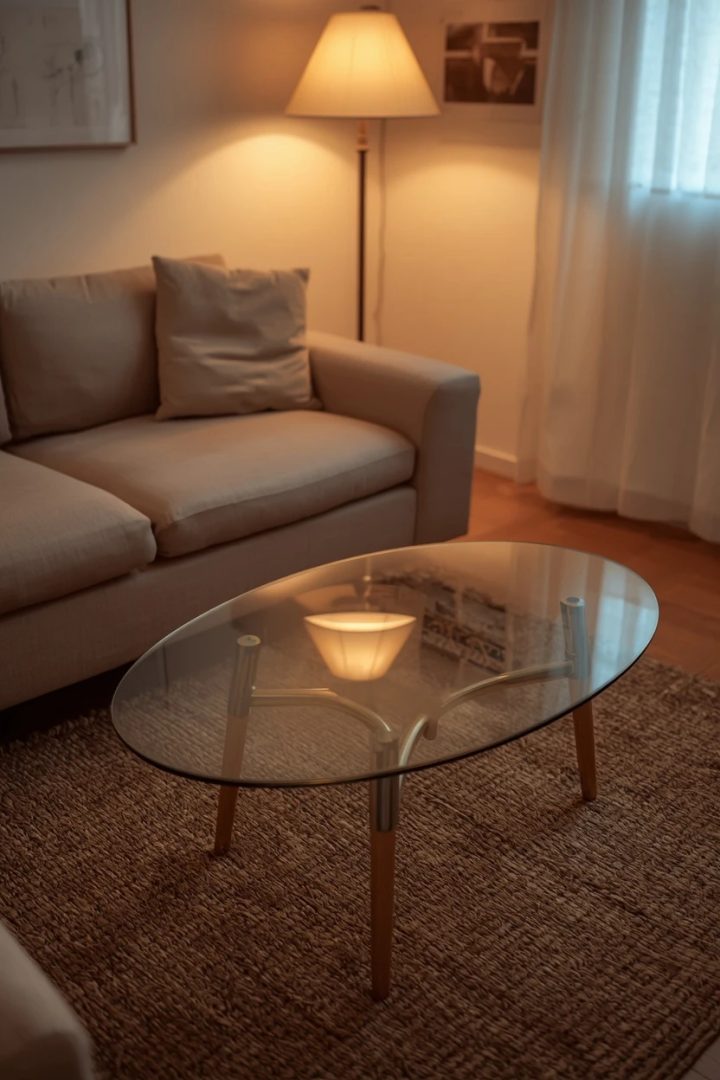
Idea 14: Transparent and Glass Furniture
Clear acrylic or glass furniture pieces — a glass side table, an acrylic coffee table, a ghost chair — take up physical space but not visual space. The eye passes through them rather than stopping at their surface.
Best uses in a small living room: A glass or acrylic coffee table instead of a solid timber one — the room reads as having 50% more visible floor space in the central zone. Clear acrylic nesting tables beside the sofa that disappear visually when not in use. A ghost chair as the accent seating option.
What to pair them with: Transparent pieces work best surrounded by warm, textural elements (a linen sofa, a jute rug, warm timber accessories). Fully transparent rooms can read as cold and unlived-in.
Idea 15: Storage Behind the Sofa
The gap between the back of a floating sofa and the wall — typically 20–40cm — is wasted space in most small living rooms. A slim console table or a narrow bookshelf in this gap converts it from unused to highly functional.
The console behind the sofa: A console table at sofa-back height (85–90cm) positioned in the gap serves as a sofa table for lamps and accessories, a small display surface for plants and objects, and additional storage below if it has a shelf.
Depth requirement: The console or shelf should be no more than 25–30cm deep to fit comfortably in the gap without pushing the sofa further into the room.
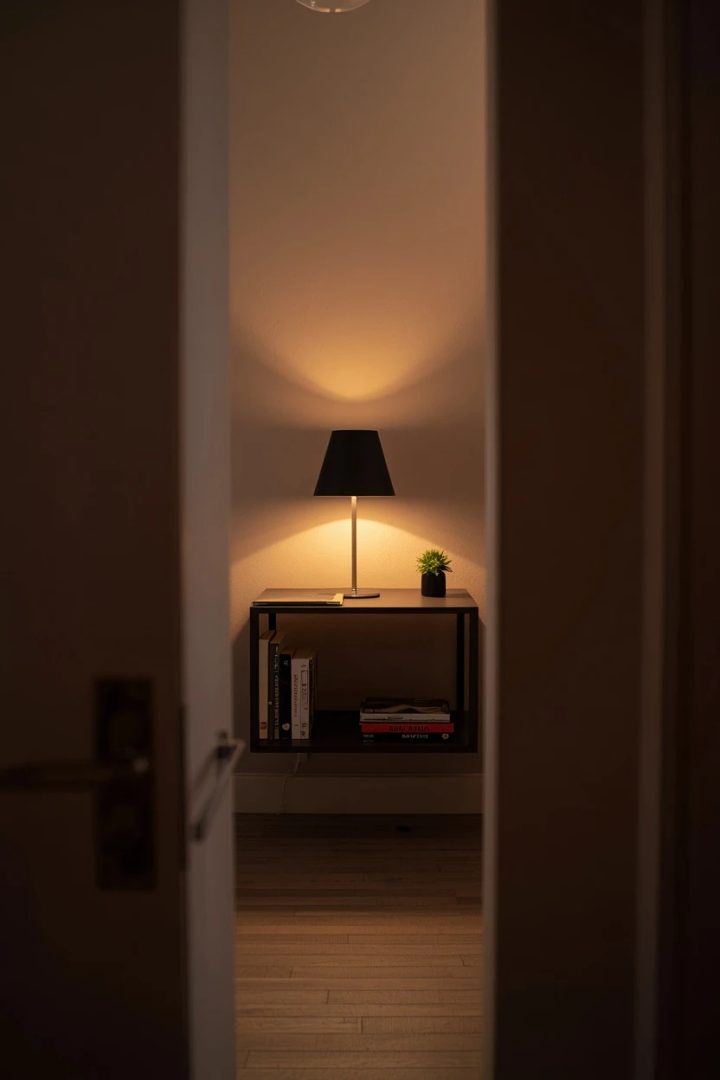
Idea 16: The Monochrome Palette — Boundaries That Disappear
In a small living room, a highly varied colour palette creates multiple visual stopping points that break the eye's movement across the room — making it feel more divided and smaller.
The monochrome solution: A single warm neutral — cream, warm greige, or warm sage — applied to walls, ceiling, skirting, curtains, and furniture upholstery in slightly varying tones creates a room where the boundaries between surfaces are minimised. The eye reads one unified space rather than multiple smaller zones.
The accent: One or two accent colours in the cushions, the rug pattern, or the plants provide the colour interest that prevents a monochrome room from reading as sterile.
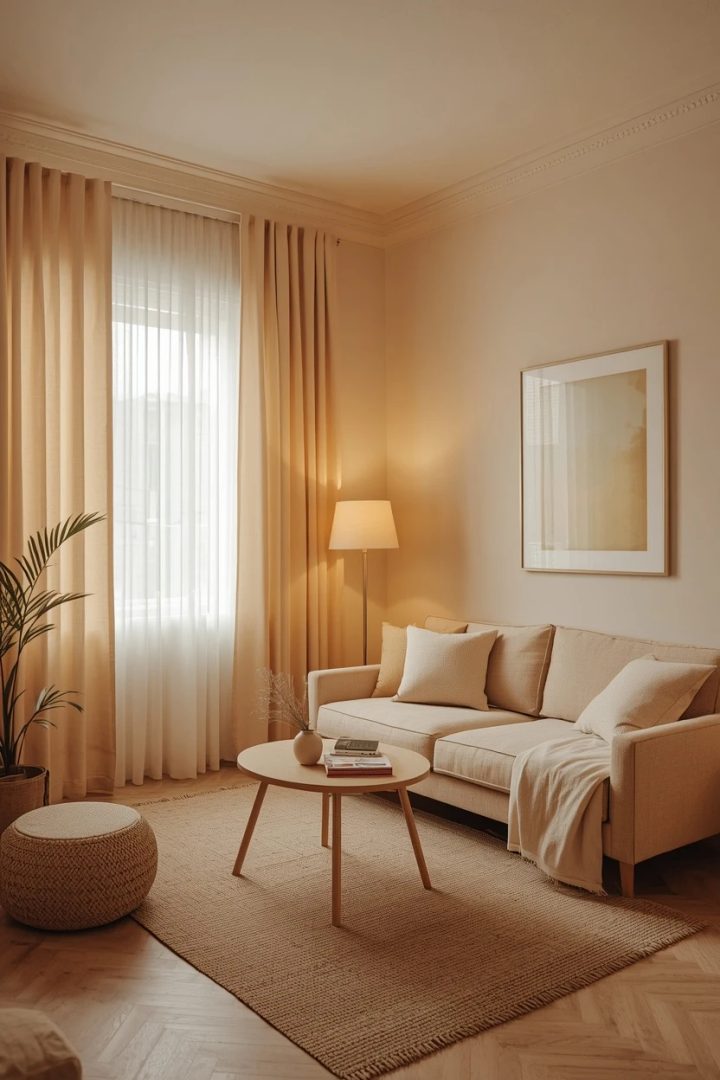
Idea 17: The Defined Zone Trick — One Statement Rug
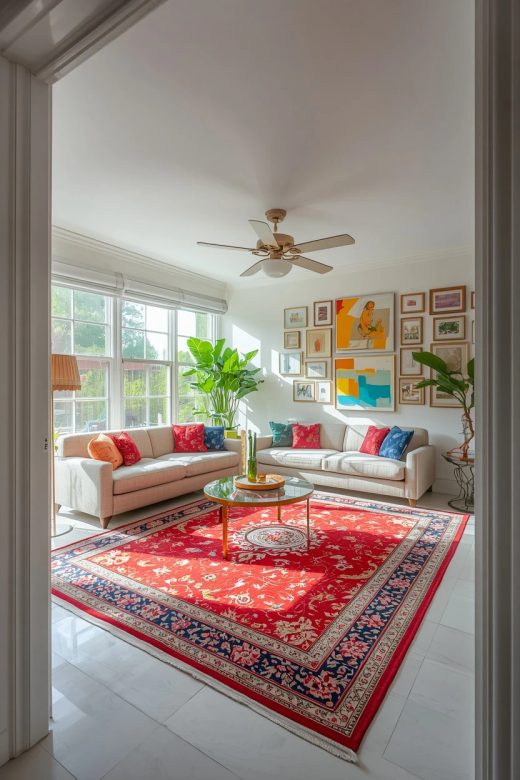
A single large rug that grounds all the main furniture creates a clearly defined living zone within the room — which paradoxically makes the total room feel larger by establishing clear spatial intention.
Why definition creates the sense of more space: An undefined room (furniture on bare floor with no rug, or multiple small rugs) reads as one undifferentiated space without clear zones. A defined zone (sofa, chairs, and coffee table all on a large rug) creates a seating destination that visually organises the room and makes the boundaries of each zone read clearly.
The overlap rule: In a very small living room, the rug can be smaller than the standard 'all legs on rug' rule suggests — as long as all front legs are on the rug. The rug defines the zone; even front-leg coverage achieves this.
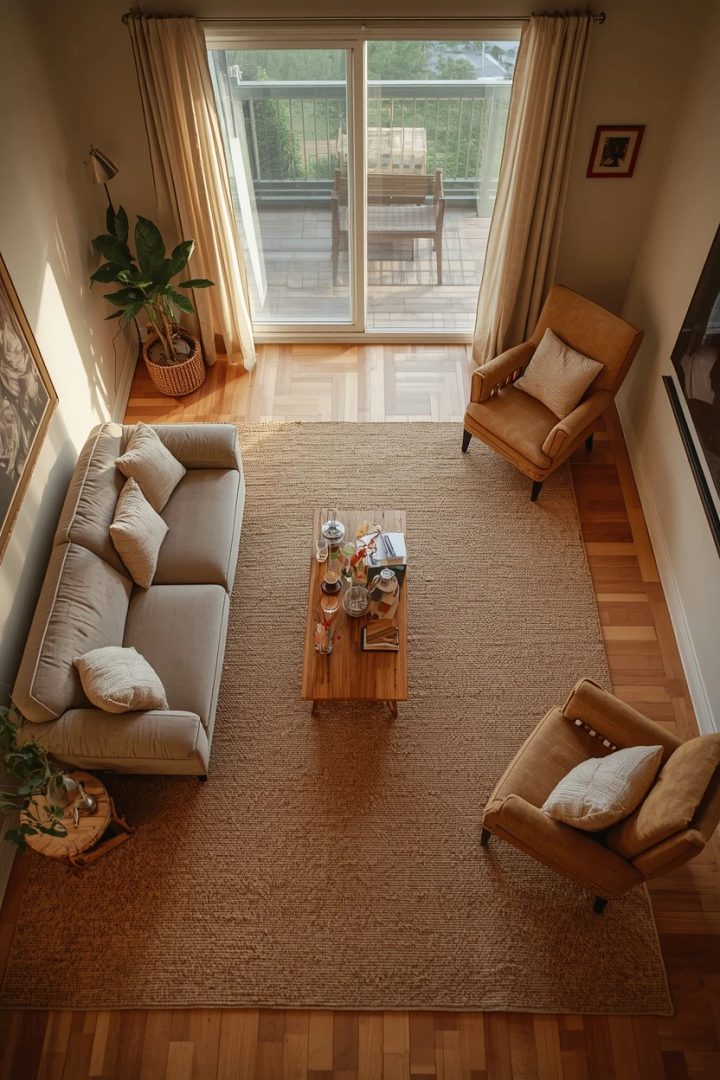
📌 Important Note
The most reliably effective small living room makeover involves no purchasing at all.
Move the sofa 30cm from the wall. Clear every surface to a maximum of three items. Remove one piece of furniture that doesn't earn its place.
These three actions cost nothing and consistently make small living rooms feel 20–30% larger.
Only after completing these steps should you consider what, if anything, to purchase.
The rooms that feel most spacious are almost always the most edited, not the most furnished.
Small Living Room Layout Checklist
• Tape all furniture footprints on the floor before purchasing anything
• Float the sofa 20–30cm from the wall as the first arrangement change
• Choose an apartment-scale sofa (160–185cm) for rooms under 20 sqm
• Use a single large rug rather than multiple small ones
• Mount the TV on the wall to eliminate the TV unit footprint
• Add a floor lamp or arc lamp instead of side table lamps where surface space is limited
• Hang curtains from ceiling height, 20cm wider than the window on each side
• Choose round coffee table over rectangular for easier circulation
• Use one warm neutral palette across walls, ceiling, curtains, and upholstery
• Install one large mirror opposite the main window
Frequently Asked Questions
What is the best sofa arrangement for a small living room?
One compact two-seat or small three-seat sofa (160–185cm wide) floated 20–30cm from the rear wall, with one armchair angled at 45 degrees beside it. A round coffee table between them. This arrangement seats three to four people while maintaining visible floor space and clear circulation routes.
How do I make a small living room look bigger?
Float all furniture from the walls. Use one large rug. Mount the TV on the wall. Add a large mirror opposite the window. Use floor-to-ceiling curtains hung from ceiling height. Keep the colour palette warm and monochromatic. Use furniture with legs visible.
Should you put a corner sofa in a small living room?
Generally no. A corner sofa occupies two walls simultaneously and leaves very limited space for any other furniture or circulation. An apartment sofa (160–185cm) plus one armchair gives comparable seating for less floor space and more layout flexibility.
What size rug for a small living room?
150x200cm absolute minimum. 180x250cm or larger is recommended even for small living rooms. An undersized rug fragments the room visually and makes it feel smaller, not more manageable. The rug should have at least the front legs of all main seating on it.
What colour makes a small living room look bigger?
Warm neutral tones — warm cream, warm greige, very pale sage — applied consistently to walls, ceiling, and skirting in the same or very similar tones. The absence of strong colour boundaries between surfaces is what creates the sense of space, not any specific colour.
Final Thoughts
A small living room done well is one of the most satisfying interior design challenges. The constraints force better decisions — more considered furniture choices, more intentional arrangements, and more deliberate editing.
Start by moving the furniture. Test arrangements before spending. Add the light. Edit the surfaces.
The small living room that feels generous is almost always the one that has been thought about most carefully — not the one that has been filled most completely.