20 Kitchen Makeover and Remodeling Ideas That Transform Every Kitchen
 By zarcoyt2025
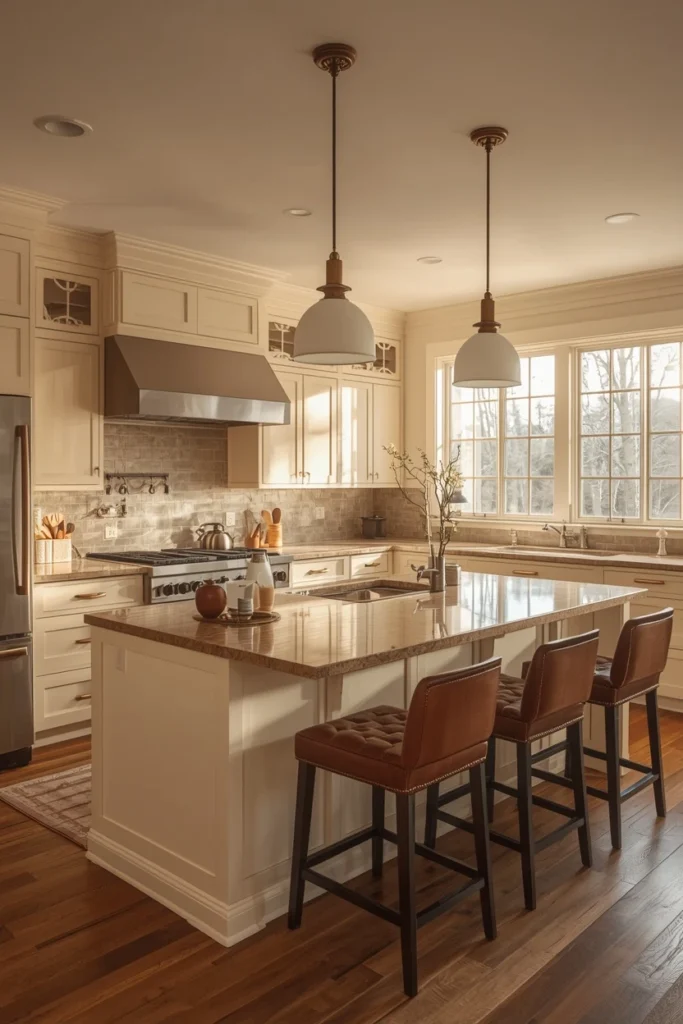
Table of Contents
- Idea 1: Paint the Cabinet Doors
- Idea 2: New Cabinet Hardware
- Idea 3: New Countertops — The Kitchen’s Most Visible Horizontal Surface
- Idea 4: The Kitchen Island Addition
- Idea 5: New Lighting — The Kitchen Redesign Nobody Thinks Of
- Idea 6: Open Shelving — Replace Upper Cabinets
- Idea 7: New Backsplash Tile
- Idea 8: The Kitchen Layout Redesign
- Idea 9: Sage Green Kitchen — The Complete Colour Makeover
- Idea 10: Replacing the Kitchen Sink and Tap
- Idea 11: Extend Into the Garden — The Kitchen Extension
- Idea 12: The Concealed Appliance Kitchen
- Idea 13: The Kitchen Makeover That Costs Under £500
- Idea 14: The Dark Kitchen — Navy or Charcoal
- Idea 15: Replace Just the Cabinet Fronts — Not the Full Kitchen
- Idea 16: Adding a Pantry — The Kitchen Organisation Solution
- Idea 17: New Splashback in a Day
- Idea 18: The Decluttered Counter
- Idea 19: New Flooring — The Kitchen Foundation
- Idea 20: The Complete Kitchen Redesign
- Kitchen Remodel Checklist
- FAQs
- What is the most impactful kitchen makeover?
- How can I update my kitchen without replacing the cabinets?
- How much does a kitchen remodel cost?
- What kitchen redesign adds the most property value?
- How long does a kitchen makeover take?
- Final Thoughts
A kitchen makeover can be a single weekend project or a six-month renovation. What matters is understanding which changes have the most impact for the investment — and which ones require professional help versus which you can do yourself.
These 20 kitchen remodeling ideas cover the full spectrum — from painting the cabinets in an afternoon to a complete kitchen redesign with a new layout. Each idea is evaluated for impact, cost, and what’s actually involved.
Idea 1: Paint the Cabinet Doors
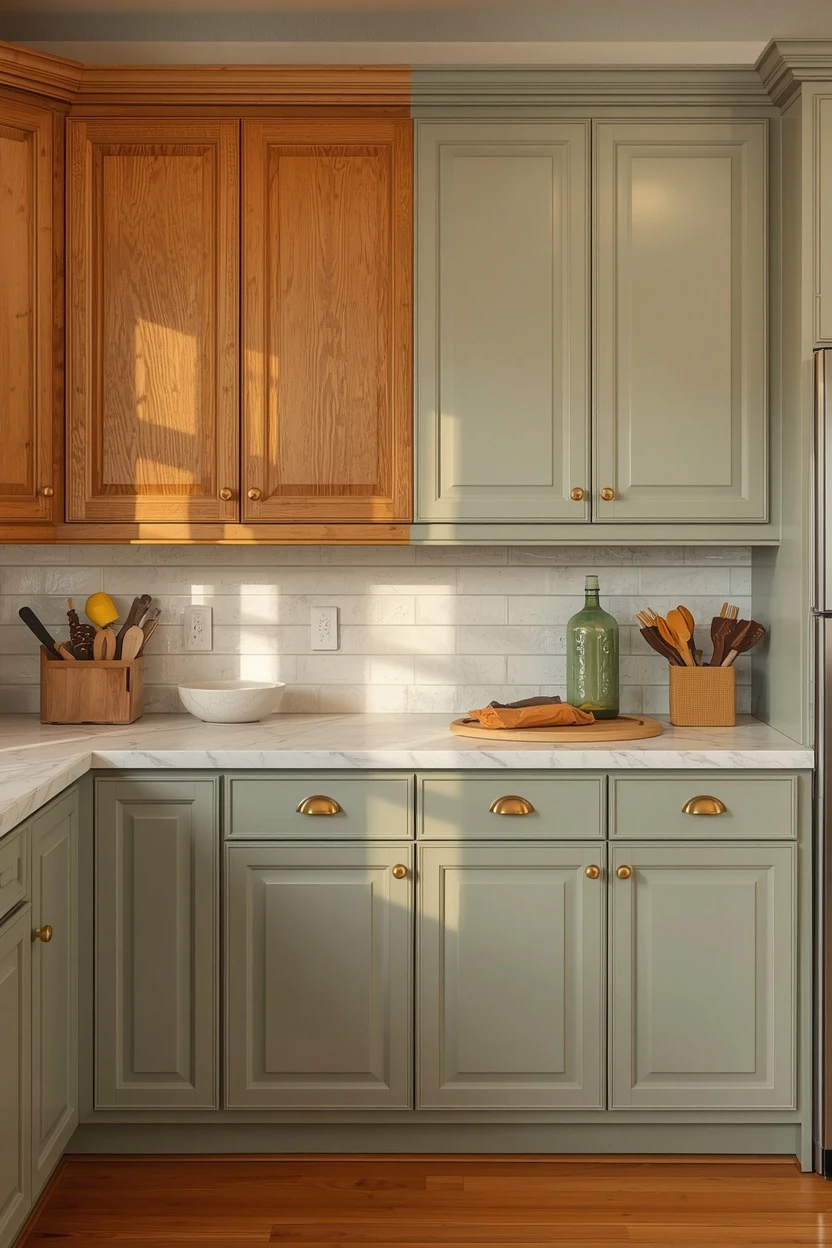
Painting existing kitchen cabinet doors is the highest-impact kitchen makeover available for the lowest cost. A kitchen with dated oak or laminate cabinet doors becomes a completely different room in a weekend.
The correct process: Sand doors lightly (180 grit). Clean with a degreaser. Prime with a shellac-based primer or dedicated cabinet primer. Apply two to three coats of kitchen-specific furniture paint or spray paint. This is not a ‘slap it on’ job — the preparation determines the finish quality entirely.
2026 cabinet colours: Sage green (the dominant kitchen colour of 2026). Warm cream or off-white. Warm navy. Deep forest green. Warm charcoal. All replacing the grey and white of the previous decade.
Cost: Kitchen paint and primer: £80–£150. Spray painting service (for a professional spray finish on removed doors): £300–£600. Full professional repaint including cabinets in situ: £500–£1,500.
Idea 2: New Cabinet Hardware
Replacing cabinet handles and knobs with quality alternatives is the quickest kitchen makeover at the smallest cost — and it changes the tone of the kitchen’s character immediately.
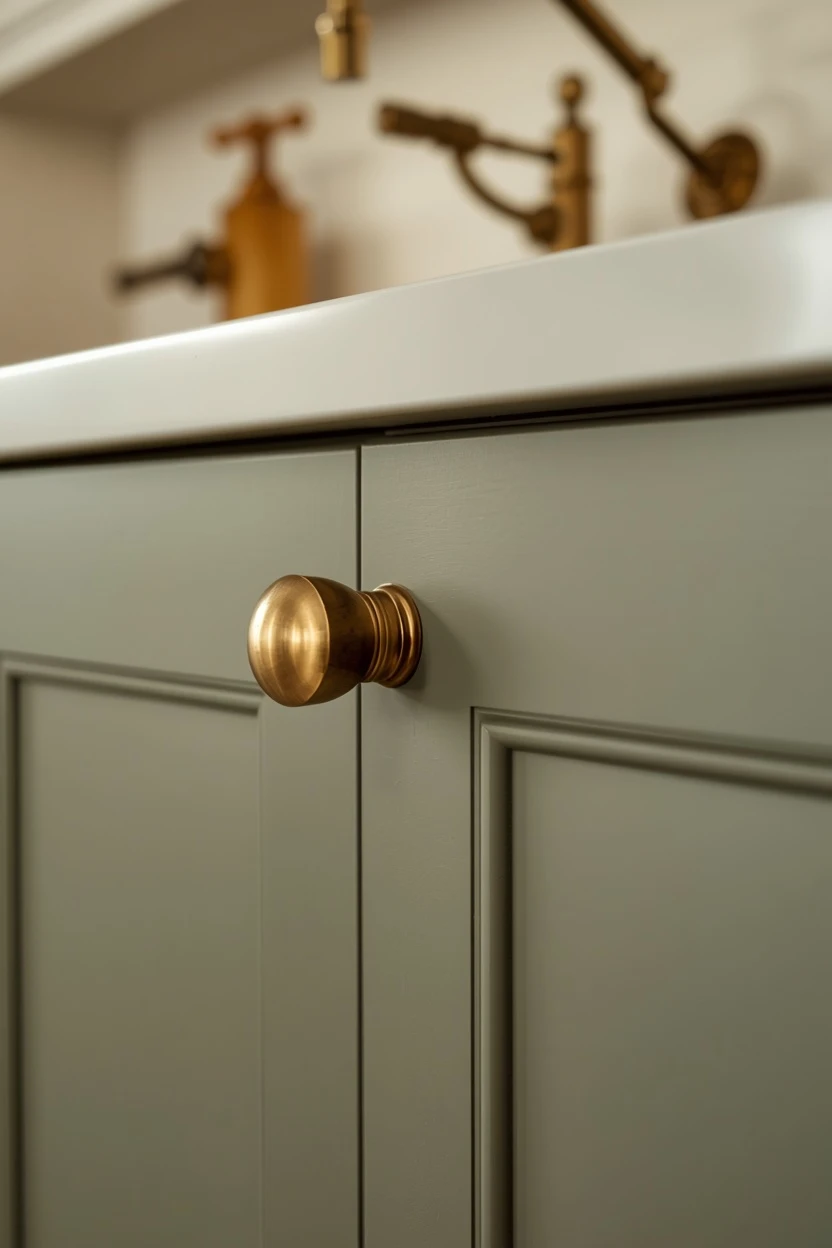
Hardware direction in 2026: Aged brass cup pulls (the most popular). Matte black bar handles. Antique bronze knobs for a traditional kitchen. Unlacquered brass (which develops a natural patina) for an artisanal kitchen.
What new hardware does: It signals the intended style of the kitchen. Aged brass on white cabinets signals contemporary warmth. Matte black on sage cabinets signals modern sophistication. The hardware finish and the cabinet colour are read together.
Cost: Quality handles: £3–£15 per unit. A typical kitchen of 20 doors and drawers: £60–£300 total. The most affordable high-impact kitchen upgrade available.
⭐ Pro Tip
When painting kitchen cabinets, always remove the doors from the hinges before painting.
Painting kitchen doors in situ produces a finish that always shows brush marks at the edges and drips at the inside corners.
Painting doors flat, laid on sawhorses, produces a significantly better finish.
Label each door with its position before removing (a piece of painter’s tape on the back with a number) so reinstallation is straightforward.
Idea 3: New Countertops — The Kitchen’s Most Visible Horizontal Surface
Replacing the kitchen countertop — while keeping the existing cabinets — delivers the highest visual impact per pound of any structural kitchen change. The countertop is at eye level, touched constantly, and immediately determines whether a kitchen reads as dated or contemporary.
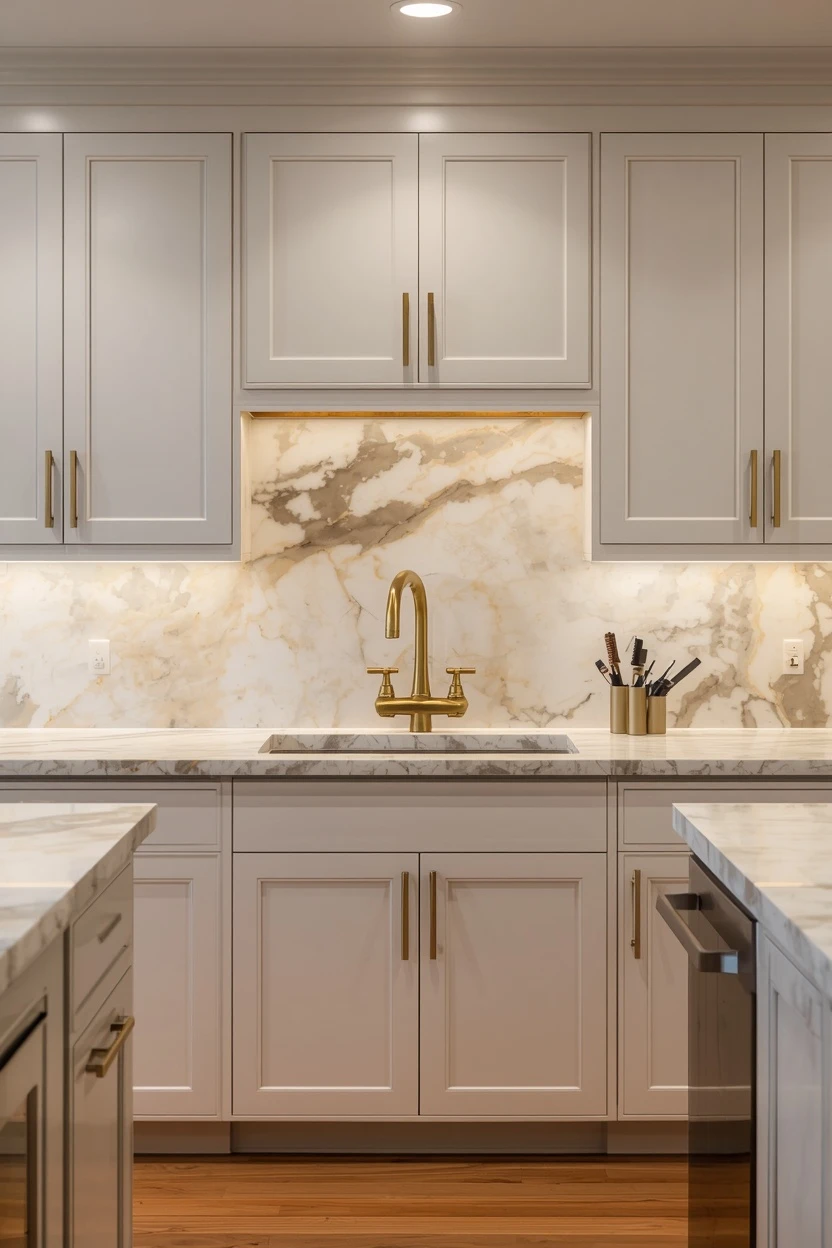
2026 countertop directions: Warm Calacatta Oro quartz (white with warm gold veining). Warm honed Carrara marble for less-used kitchens. Butcher block timber (particularly for island sections). Warm grey concrete-effect porcelain slabs. Unlacquered brass countertop for a statement bar or island section.
Cabinet keeping: In many kitchens, the existing cabinet carcasses and even the doors can be retained and the countertop changed for a fraction of a full kitchen renovation cost.
Cost: Laminate countertop replacement: £500–£1,500 fitted. Quartz stone countertop: £1,500–£5,000 fitted. Natural marble: £2,000–£8,000+ fitted depending on marble grade.
Idea 4: The Kitchen Island Addition
Adding a kitchen island — whether a freestanding piece, a built-in addition, or a repurposed furniture piece — is the most transformative kitchen remodel that doesn’t require changing the existing cabinet layout.
Freestanding islands: A butcher block topped island on casters, or a repurposed console table or dresser, can be added to any kitchen with adequate floor space. Requires a minimum 90–100cm of clear circulation space on all sides.
Built-in island: A purpose-built kitchen island with its own base cabinets and integrated countertop extends the kitchen’s storage and workspace while adding seating for casual dining.
The seating island: The specific addition that most transforms a kitchen from a working room to a social one. Three bar stools at one end of an island with a cantilevered countertop overhang (minimum 30cm for comfortable seating) create the casual kitchen dining that most homeowners want but fewer plan correctly.
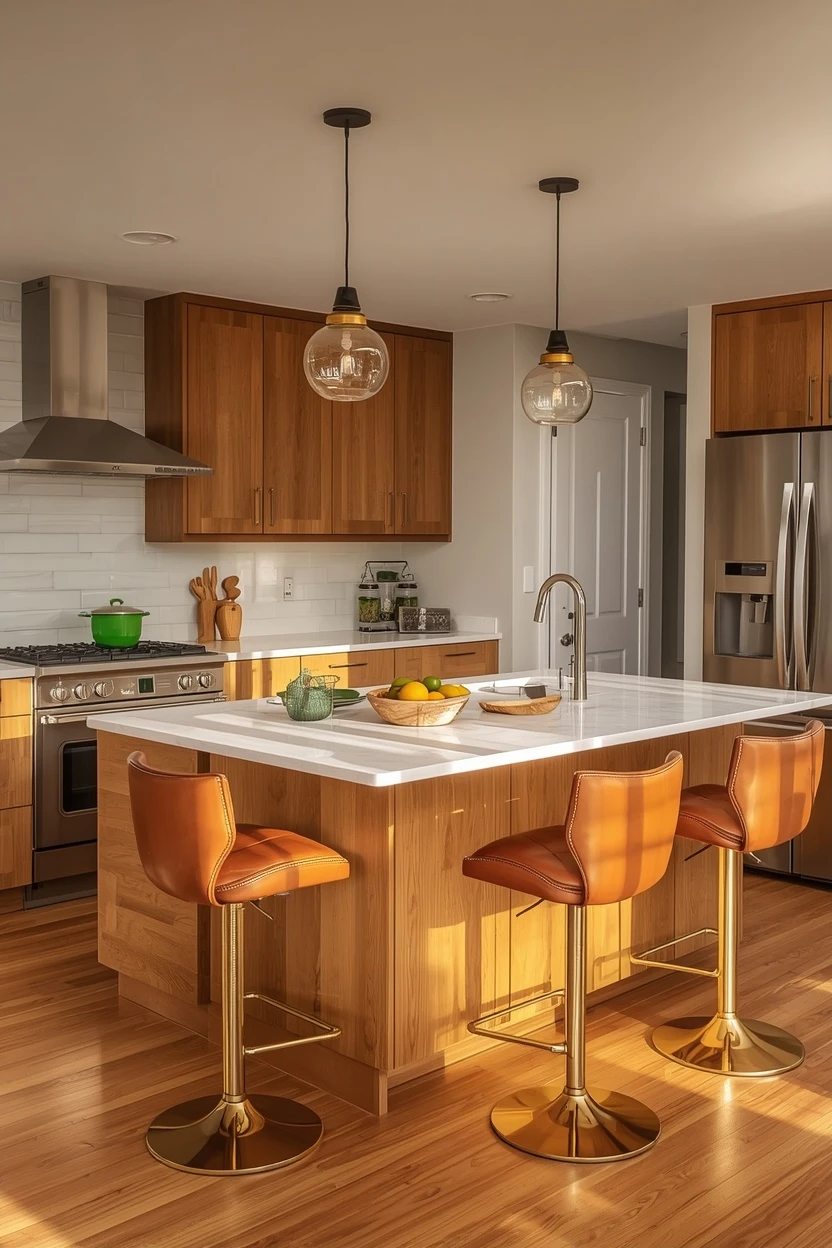
Idea 5: New Lighting — The Kitchen Redesign Nobody Thinks Of
Most kitchens are lit by a single ceiling pendant or a grid of recessed downlights that provide good functional overhead light but no warmth, no atmosphere, and no task lighting over the specific zones where it’s needed.
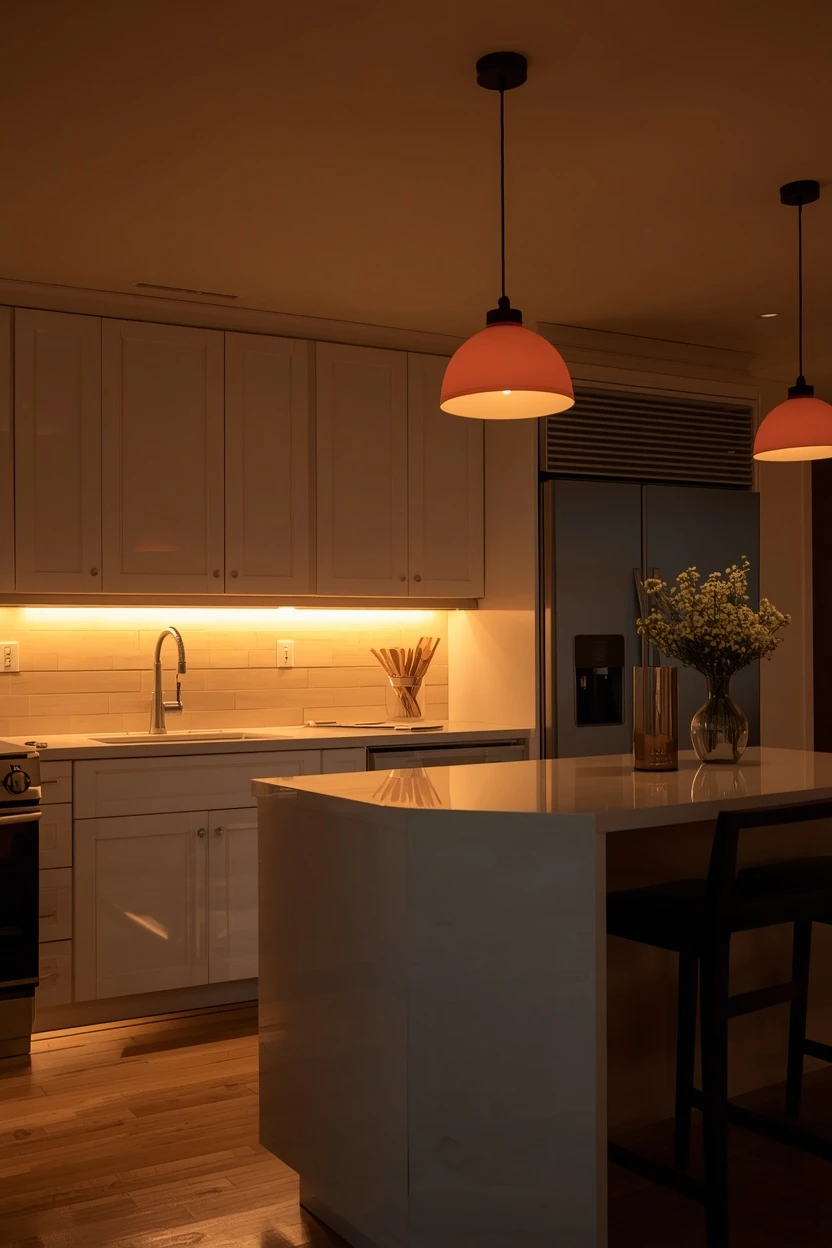
The kitchen lighting redesign: Under-cabinet LED strips over the countertop (eliminating the shadow of the upper cabinets). Pendant lights above the island (2700K, on a separate dimmer). A focal pendant or chandelier above the dining end. Downlights on a dimmer for ambient fill.
Impact: Layered kitchen lighting at 2700K transforms the kitchen from a clinical workspace into an inviting room that works for cooking, dining, and socialising simultaneously.
Idea 6: Open Shelving — Replace Upper Cabinets
Replacing some or all of the upper kitchen cabinets with open shelving creates the most dramatic and most immediately warm kitchen makeover — the kitchen becomes personal and lived-in rather than closed and corporate.
What to put on open kitchen shelves: Everyday dishes and glasses you actually use. Plants — pothos, herbs, or a small trailing plant. Ceramics that are beautiful enough to display. Cookbooks. Occasional items.
What not to put on open kitchen shelves: Everything that was in the closed cabinets. Random packaging. Rarely-used items. Open shelves only look good when they’re edited — they look worse than closed cabinets when overloaded.
Hybrid approach: Replace the upper cabinets on one wall with open shelving while retaining closed cabinets on the other walls. This gives the warmth and display opportunity of open shelving without committing the full kitchen to it.
Idea 7: New Backsplash Tile
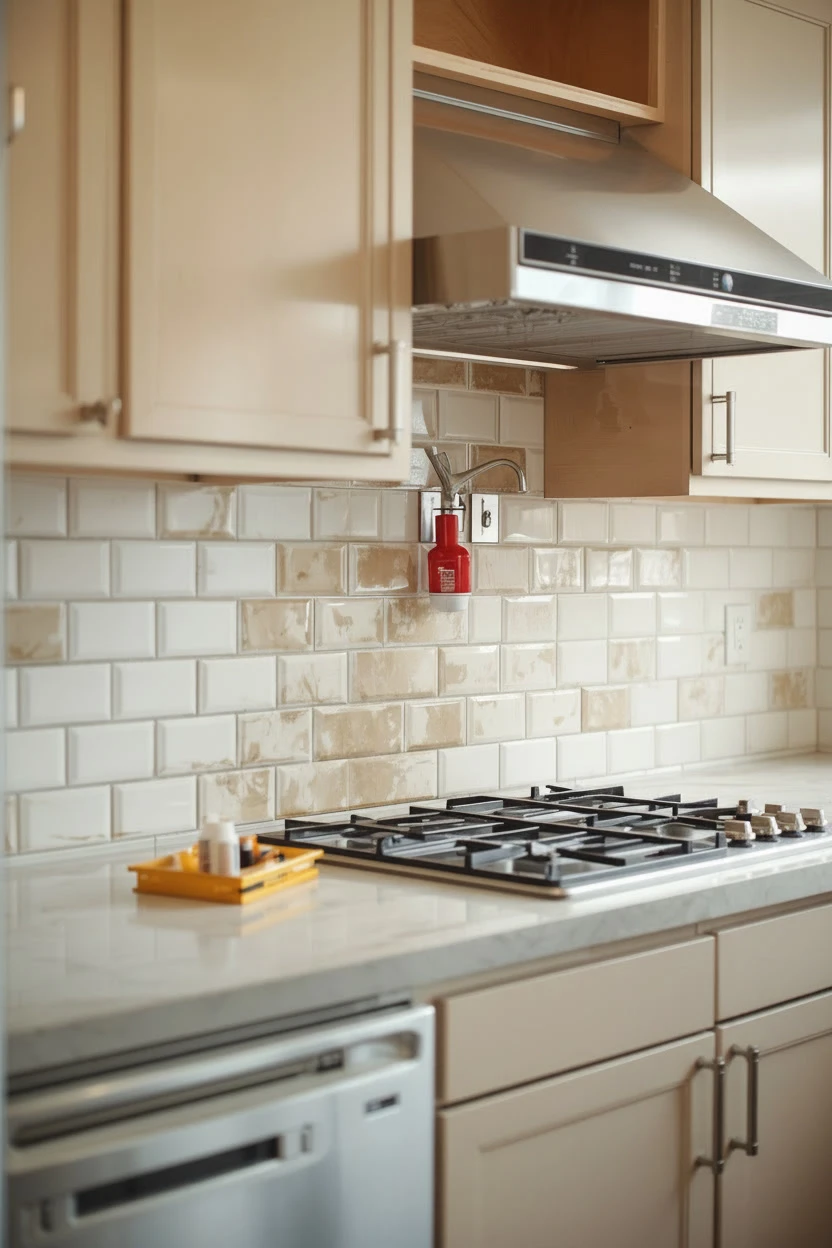
A new kitchen backsplash tile is the quickest professional trade change that most changes the kitchen’s visual character. A skilled tiler can complete a standard kitchen backsplash in one to two days.
What the backsplash does for the kitchen: It defines the style tone. White metro reads as classic and versatile. Zellige reads as artisan and warm. Encaustic cement reads as bold and personality-driven. The tile choice signals the kitchen’s whole aesthetic direction.
Removal of the old tile: In most cases, the old backsplash tile can be tiled over (if fully adhered, no hollow sections). This saves significant time and cost compared to removing the old tile and replastering.
⚠️ Important Warning
Plumbing work required for any kitchen remodel — moving a sink, adding a dishwasher point, or relocating the boiler — must be carried out by a qualified plumber.
Gas work — moving or replacing a gas hob, gas oven, or gas boiler — must be carried out by a Gas Safe registered engineer (UK) or equivalent certified professional.
Never attempt to disconnect, reconnect, or modify gas appliances yourself.
Any kitchen remodel involving gas or plumbing changes requires the relevant certifications on completion, which are essential for building insurance and future property sales.
Idea 8: The Kitchen Layout Redesign
A layout redesign — moving the sink, changing the position of the hob, or expanding the kitchen footprint — is the most disruptive and most transformative kitchen remodeling available. It addresses the fundamental spatial problems that no surface change can fix.
The work triangle principle: An efficient kitchen layout places the sink, the refrigerator, and the hob at three points of a triangle with combined sides of no more than 7.5m and no less than 4m. Layouts that violate this create kitchens that are exhausting to cook in regardless of their aesthetics.
Common layout changes: Moving the sink from a dark interior wall to the window wall (dramatic improvement in the cooking experience). Adding a run of cabinetry along a previously bare wall. Removing a peninsula that blocks natural flow in favour of an open island.
Cost: A kitchen layout redesign requiring plumbing relocation: £8,000–£25,000+. This budget includes new cabinetry, countertop, tile, plumbing, electrical, and plastering.
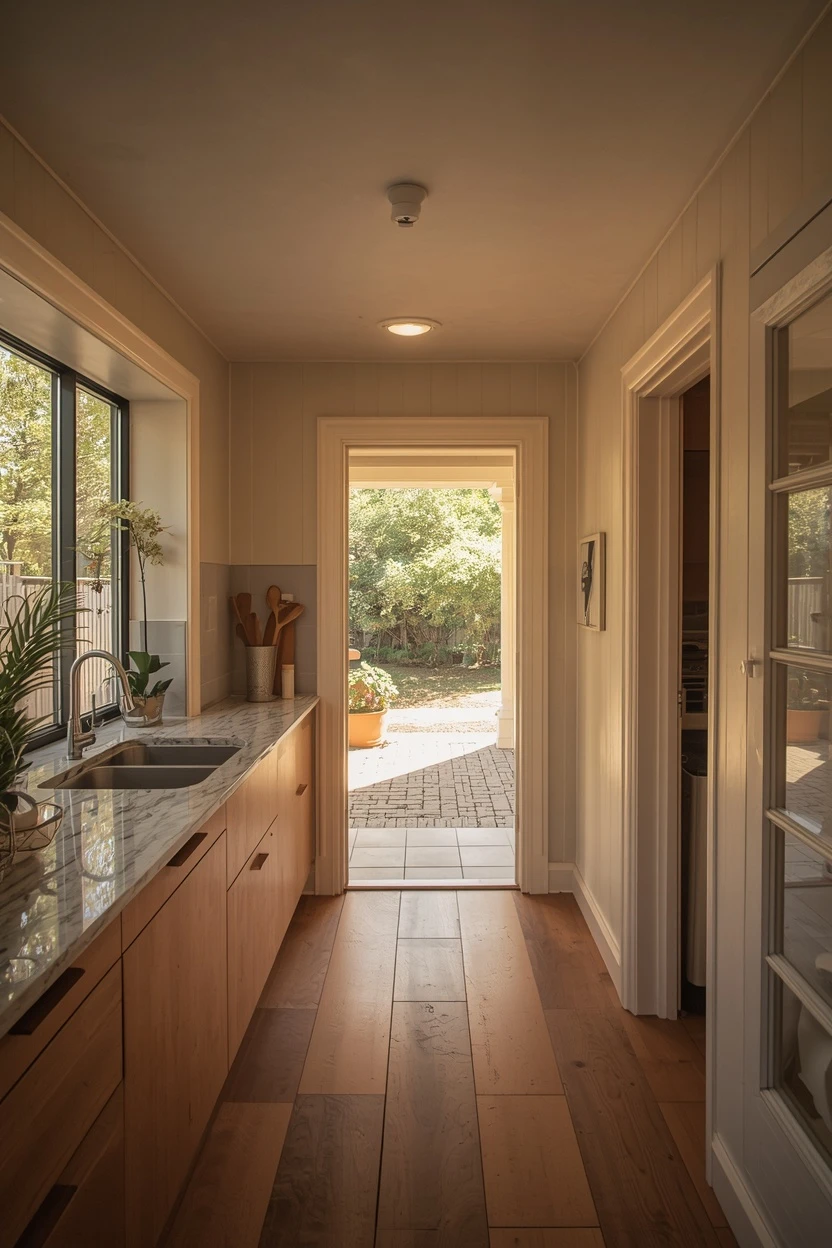
Idea 9: Sage Green Kitchen — The Complete Colour Makeover
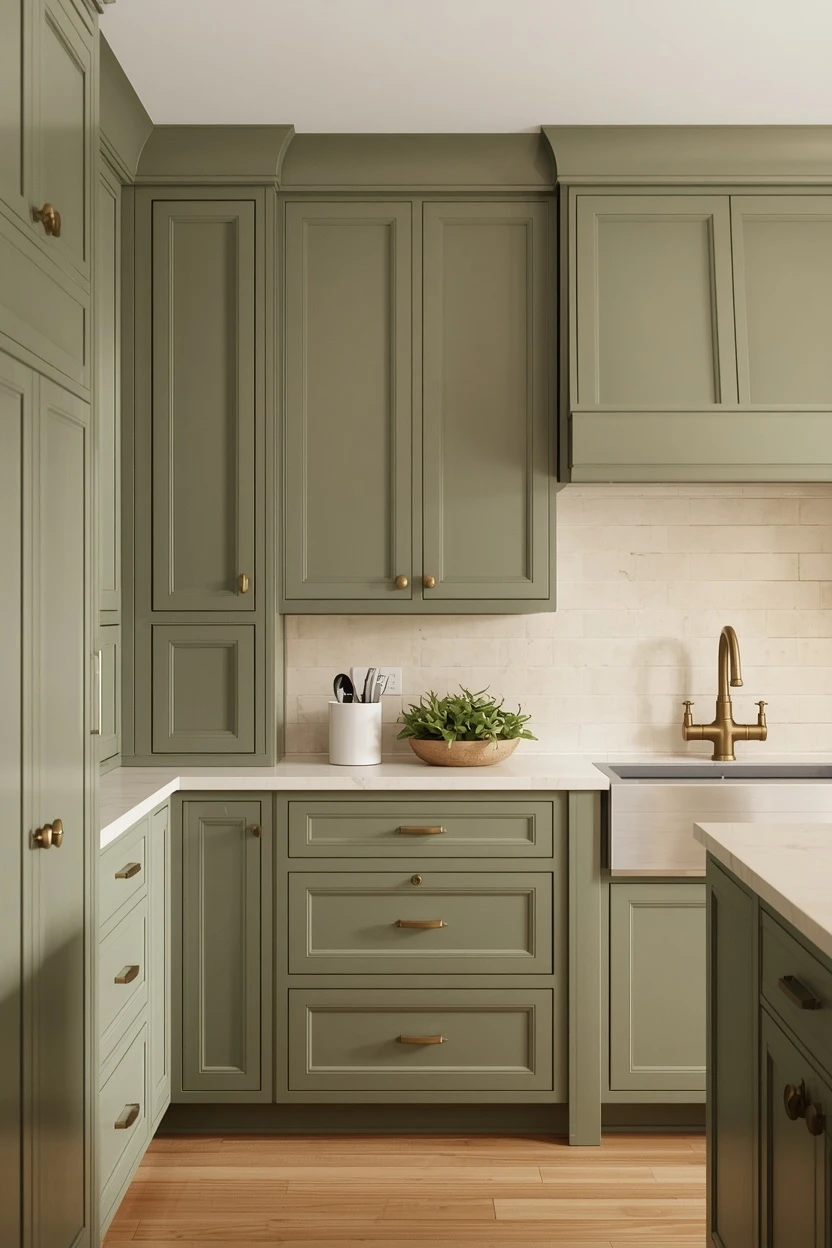
Repainting an entire existing kitchen in sage green — cabinets, walls above the tile in a coordinating tone, and new brass hardware — is the 2026 kitchen makeover that transforms a dated neutral kitchen into a modern, personality-driven space.
The complete sage kitchen: Sage green shaker cabinet doors (painted or new). Warm brass cup pull hardware. Warm white countertop (quartz or laminate). A simple warm-toned backsplash (cream metro or warm ivory zellige). Warm white walls. Warm 2700K lighting.
Why sage works: It’s warm enough to avoid reading as cold. It’s sophisticated enough to avoid reading as a trend. It pairs beautifully with brass, timber, and white — the three most timeless kitchen material companions.
Idea 10: Replacing the Kitchen Sink and Tap
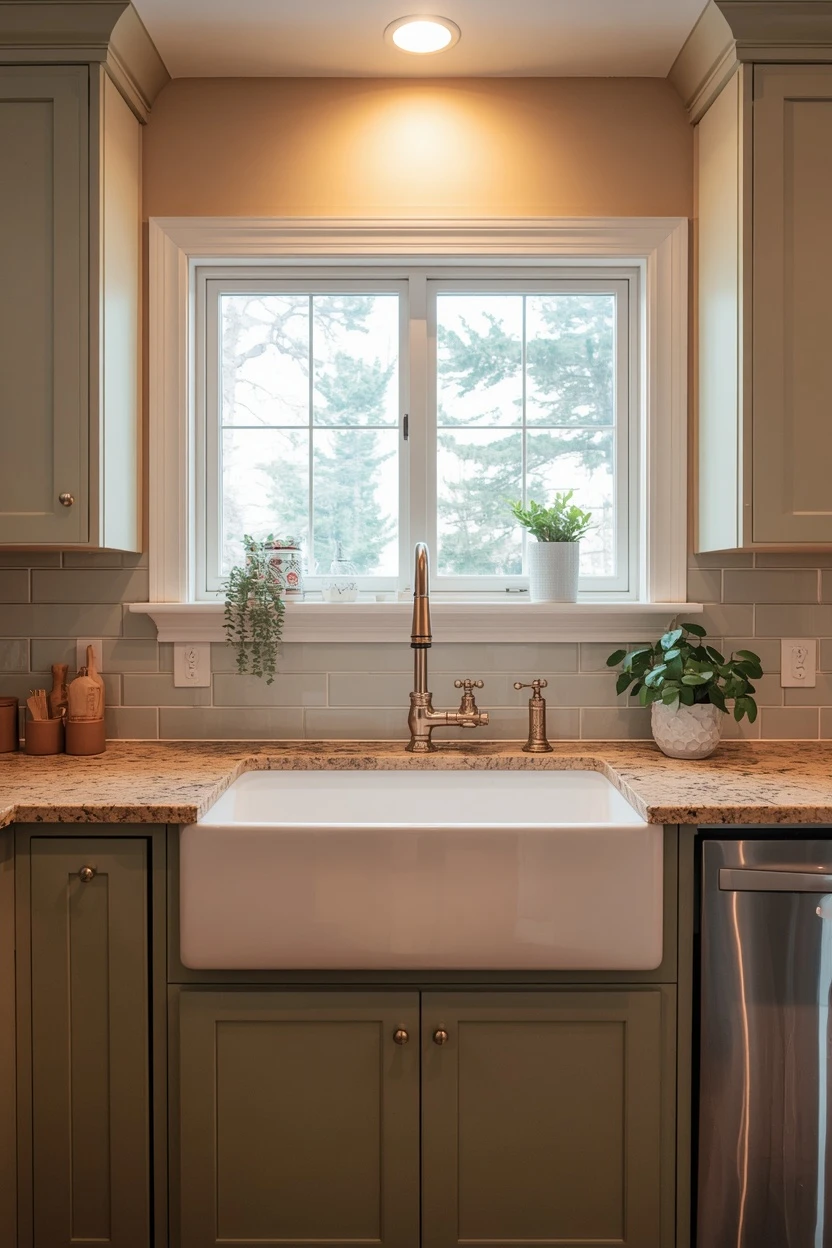
Replacing a dated stainless sink and chrome tap with a more considered alternative — a white ceramic butler’s sink with a warm brass bridge tap, or a large black composite sink with a matte black tap — transforms the kitchen’s character at relatively modest cost.
The butler’s sink effect: A white ceramic butler’s (farmhouse) sink is the kitchen element that most signals a warm, personality-driven kitchen rather than a generic fitted one. It pairs beautifully with sage, navy, and cream cabinet colours.
Cost: Butler’s sink supply: £300–£800. Chrome mixer tap to brass bridge tap replacement: £100–£400. Plumber installation: £200–£400. Total: £600–£1,600 for a transformation that is immediately visible.
Idea 11: Extend Into the Garden — The Kitchen Extension
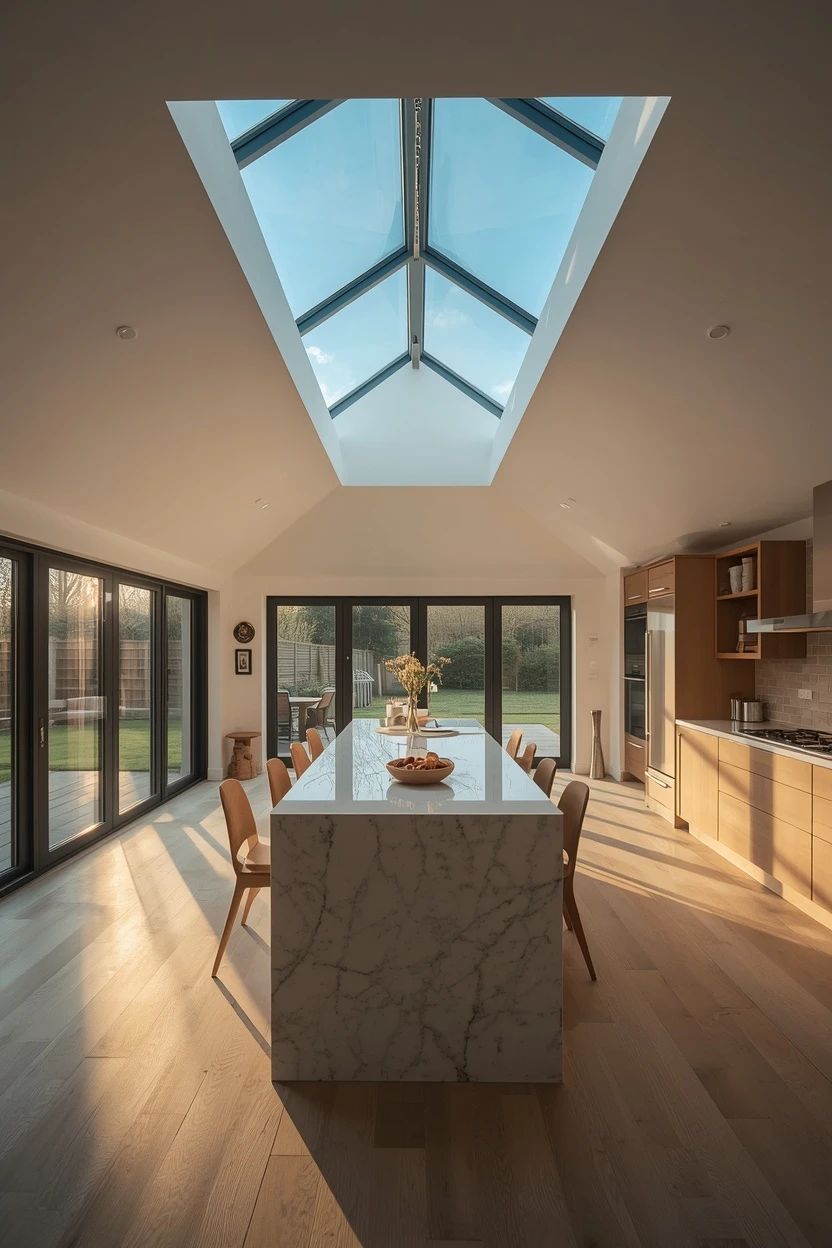
Extending the kitchen into garden space — either as a full extension or as a conservatory-style glazed addition — is the most significant kitchen remodel available and one of the renovations with the highest return on investment in the UK and Australian property markets.
Single-storey rear extension: The most common kitchen remodel in urban terrace houses. Extending the kitchen 3–6m into the garden creates a kitchen-diner or kitchen-living space of genuinely generous proportions. Cost: £40,000–£120,000 depending on size, specification, and location.
Glazed infill extension: A fully glazed rear extension (structural glass or glazed steel frame) creates the brightest possible kitchen addition while maintaining a garden connection.
Idea 12: The Concealed Appliance Kitchen
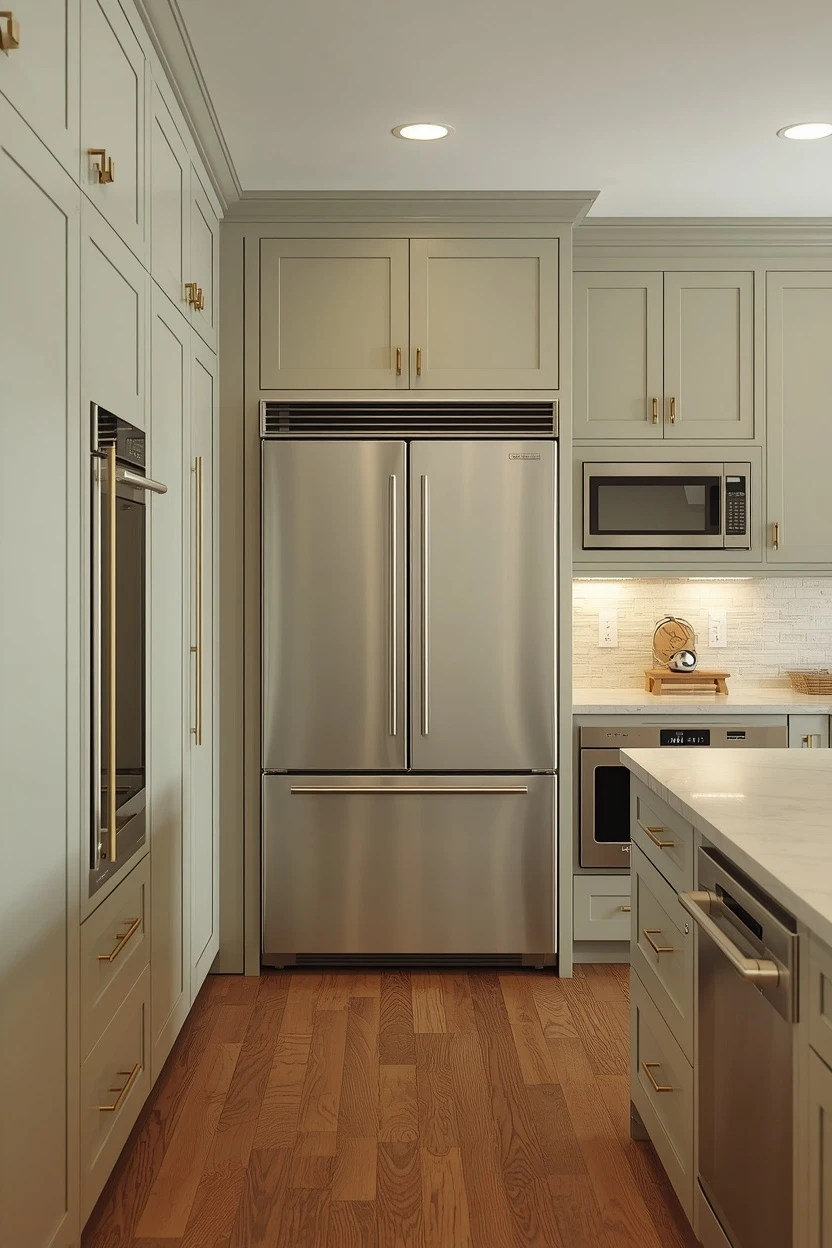
Concealing the refrigerator, dishwasher, and microwave behind cabinet doors — integrated into the kitchen cabinetry rather than freestanding — creates the cleanest and most architecturally resolved kitchen aesthetic.
What concealment achieves: The kitchen reads as a single, unified cabinetry composition rather than a collection of appliances with cabinetry around them. It is also more flexible — the appliance brand and size can change without affecting the kitchen’s visual coherence.
The integrated fridge: A fridge behind a full-height cabinet door with a matching panel is the single most effective integrated appliance for visual impact. An integrated fridge makes a kitchen look significantly more designed.
Idea 13: The Kitchen Makeover That Costs Under £500
A complete kitchen visual transformation for under £500 is achievable with the right sequence of priorities.
Step 1 (£60–£150): New cabinet hardware — replace all handles with aged brass cup pulls.
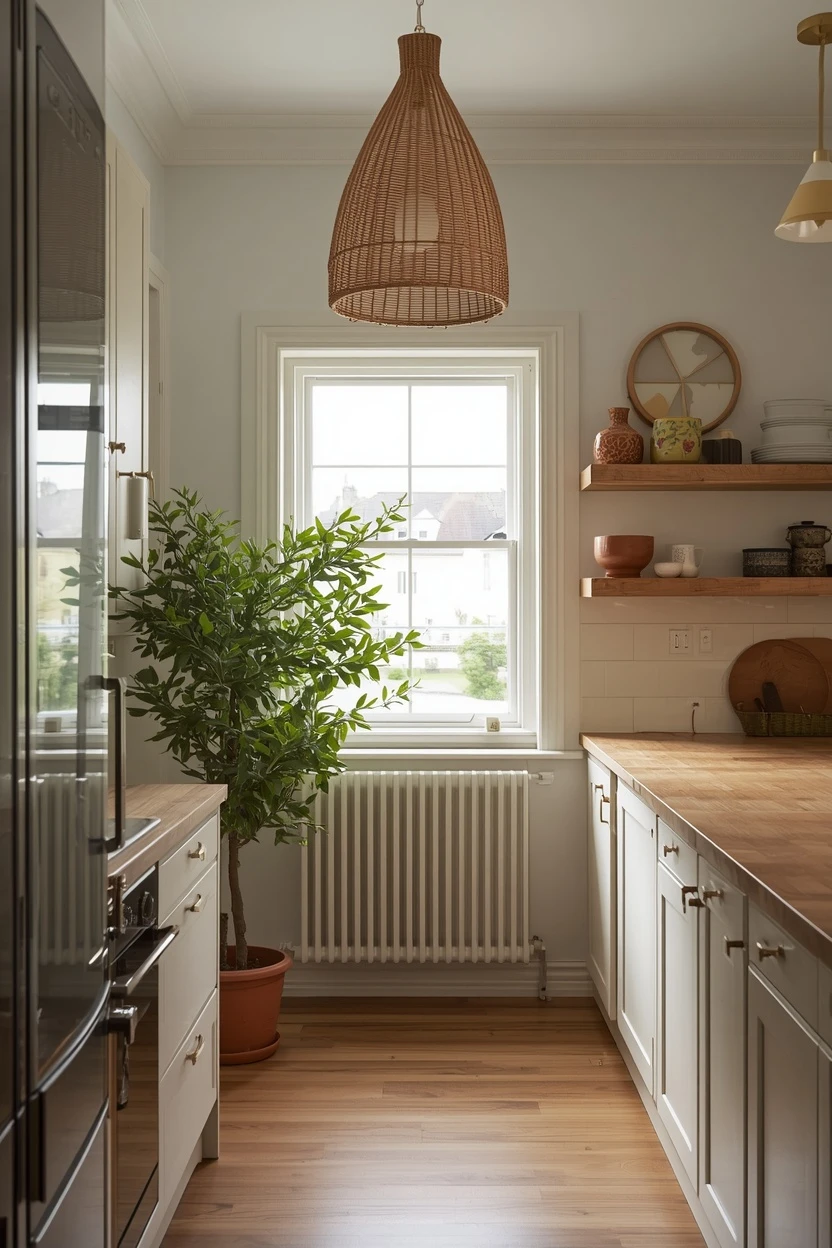
Step 2 (£80–£150): New pendant light above the dining zone or island — a warm rattan or warm brass shade with a 2700K bulb.
Step 3 (£50–£100): Replace plastic switch plates with brushed brass or black metal equivalents.
Step 4 (£50–£100): A large plant — a fiddle leaf fig or lemon tree in a terracotta pot in the kitchen corner.
Step 5 (£50–£100): New tea towels, a wooden bread board, and two ceramic canisters for the counter — coordinated in the same natural material palette.
Total: Under £500. Visual impact: significant and immediate.
Idea 14: The Dark Kitchen — Navy or Charcoal
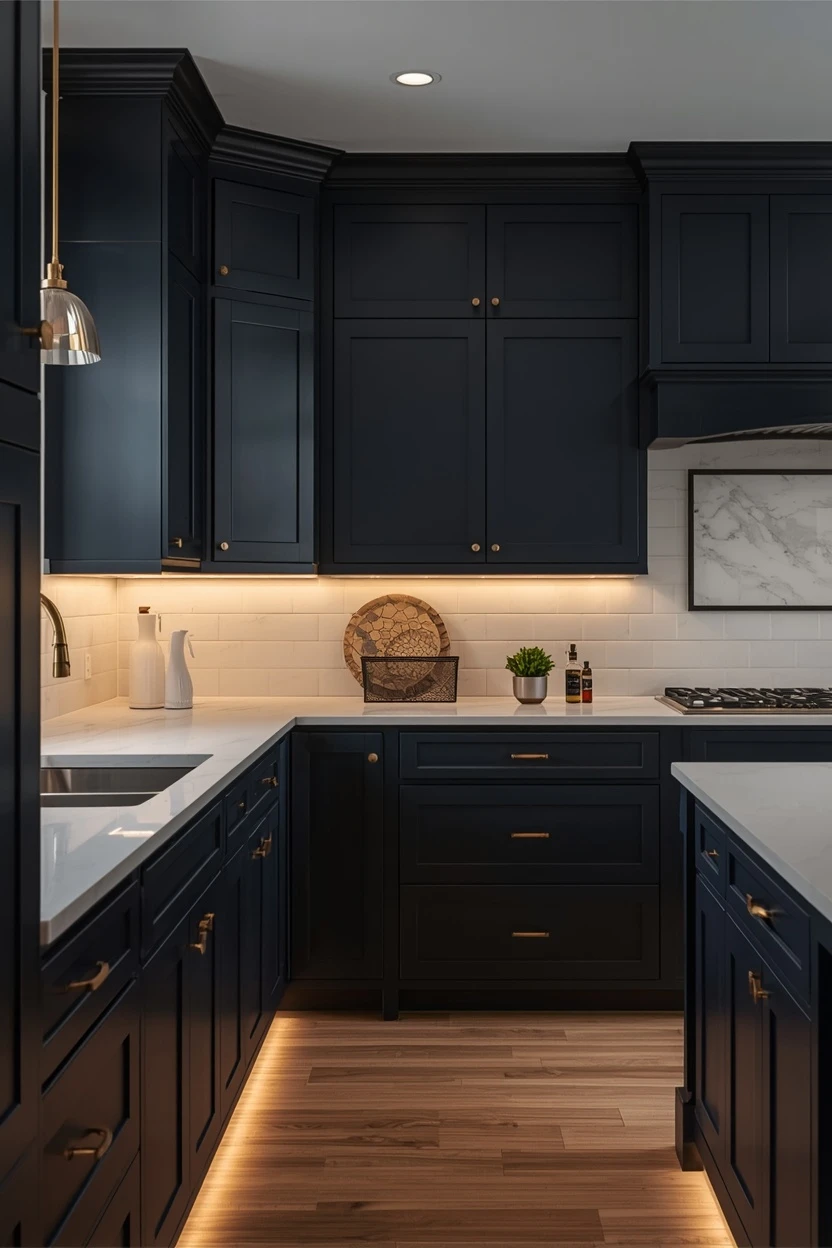
A dark kitchen — in deep navy, forest green, or charcoal cabinets — with brass or gold hardware and a light countertop is one of the most sophisticated kitchen aesthetics and one that photographs extremely well.
Why dark kitchens work: Dark cabinets recede visually, making the kitchen feel enveloping and cozy rather than clinical. They also hide marks and wear better than light cabinets. The contrast between dark cabinets and a light countertop creates the visual drama that makes the kitchen feel designed.
Lighting is critical: A dark kitchen needs more artificial lighting than a light kitchen. Under-cabinet LEDs, a statement pendant, and warm downlights on a dimmer are the minimum lighting requirement for a dark kitchen that feels inviting rather than oppressive.
Idea 15: Replace Just the Cabinet Fronts — Not the Full Kitchen
Replacing the cabinet doors and drawer fronts while keeping the existing cabinet carcasses (the boxes) is the most cost-effective route to a genuinely new-looking kitchen — costing typically 30–50% of a full new kitchen.
How it works: A kitchen installer removes the existing doors and drawer fronts, supplies and fits new door fronts in the desired style and colour, and replaces the hinges and hardware. The carcasses, countertop, and appliances remain.
Suppliers: Multiple specialist companies offer replacement kitchen door fronts to standard cabinet sizes. Shaker, handleless, and J-pull profiles in any colour are available with a two to four week lead time.
Limitation: The layout and carcass positions remain unchanged. If the layout has fundamental problems, new doors don’t fix them.
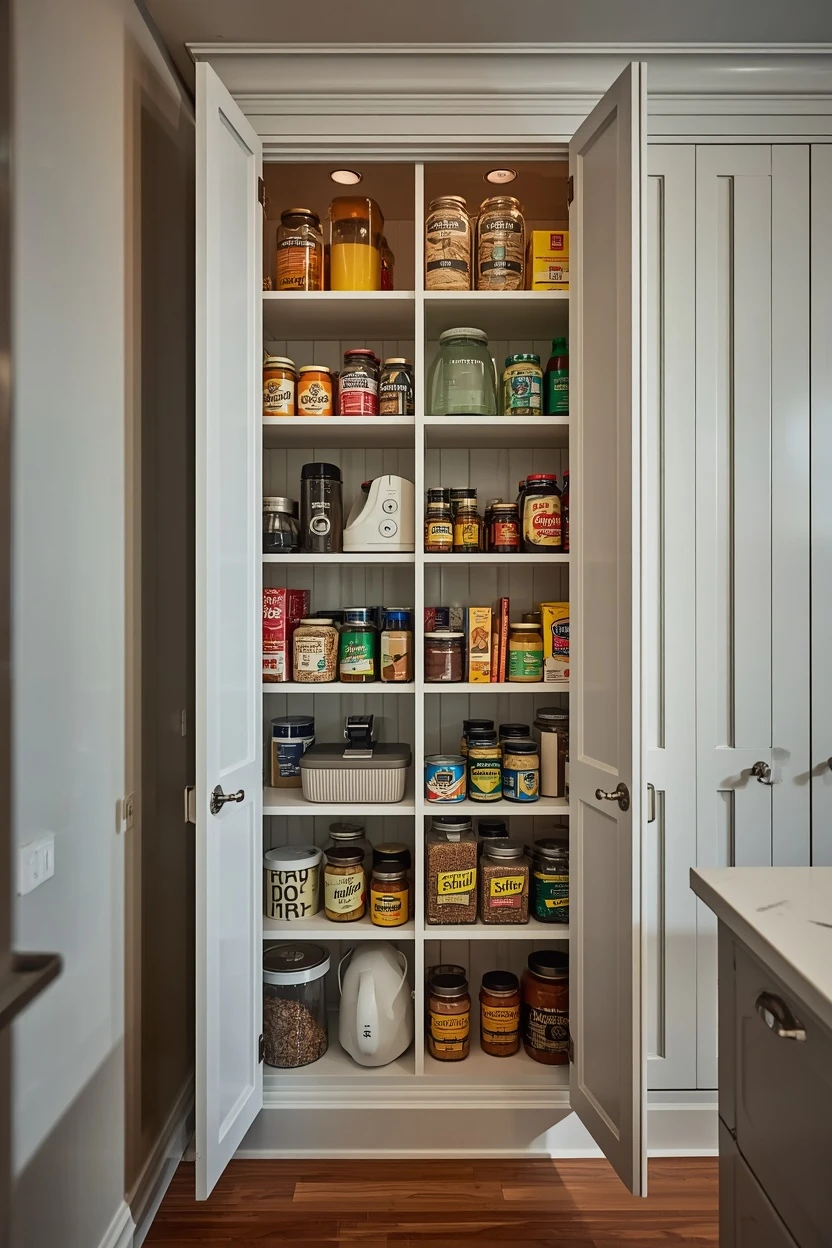
Idea 16: Adding a Pantry — The Kitchen Organisation Solution
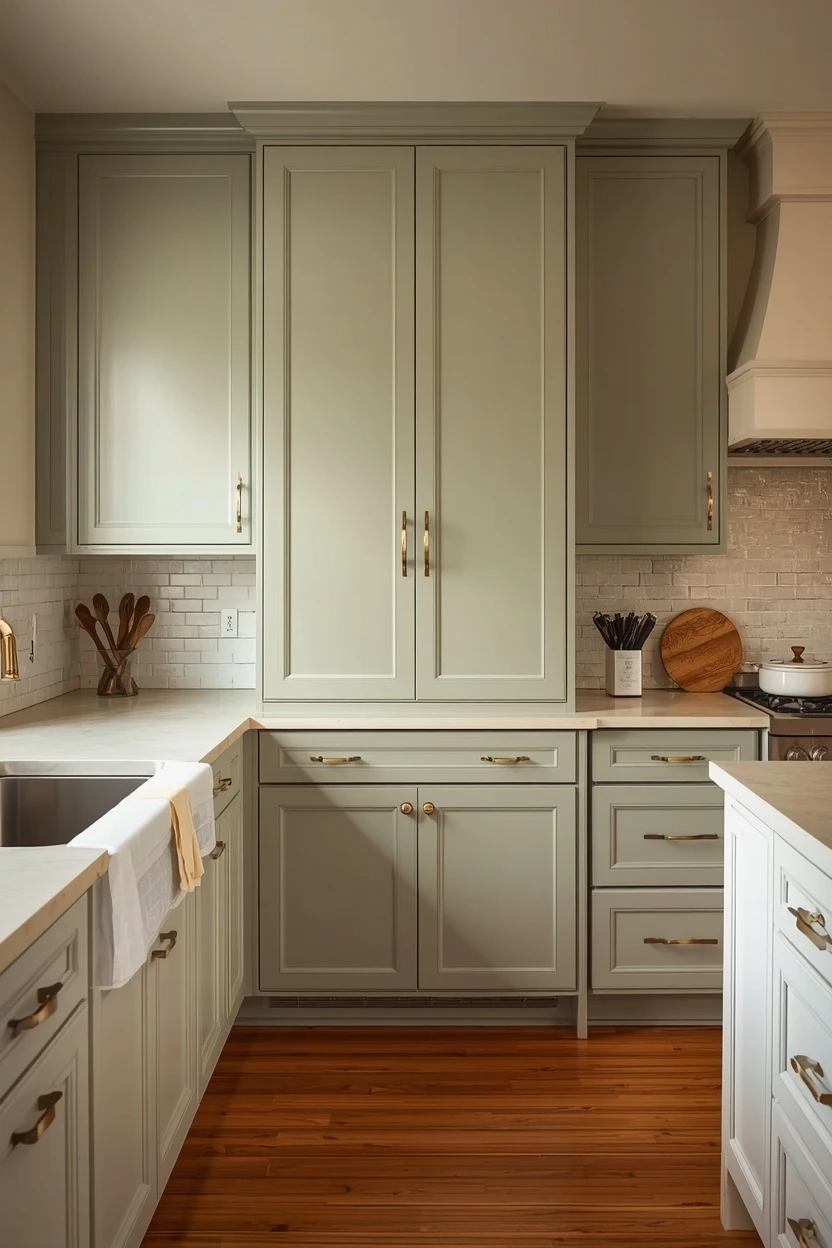
Converting an adjacent cupboard, alcove, or small room into a dedicated pantry — or adding a pantry cabinet to the kitchen run — creates the most valuable functional addition to any kitchen.
Why pantry space is transformative: A kitchen with a dedicated pantry stores all dry goods, small appliances, cleaning supplies, and baking equipment out of the main kitchen — leaving the primary kitchen cabinetry clear for everyday cooking items only. The main kitchen immediately feels less cluttered and more functional.
Larder cabinet version: A single floor-to-ceiling larder cabinet (typically 60cm wide, full height) fitted within the existing kitchen layout provides significant additional storage without requiring a separate room.
Idea 17: New Splashback in a Day
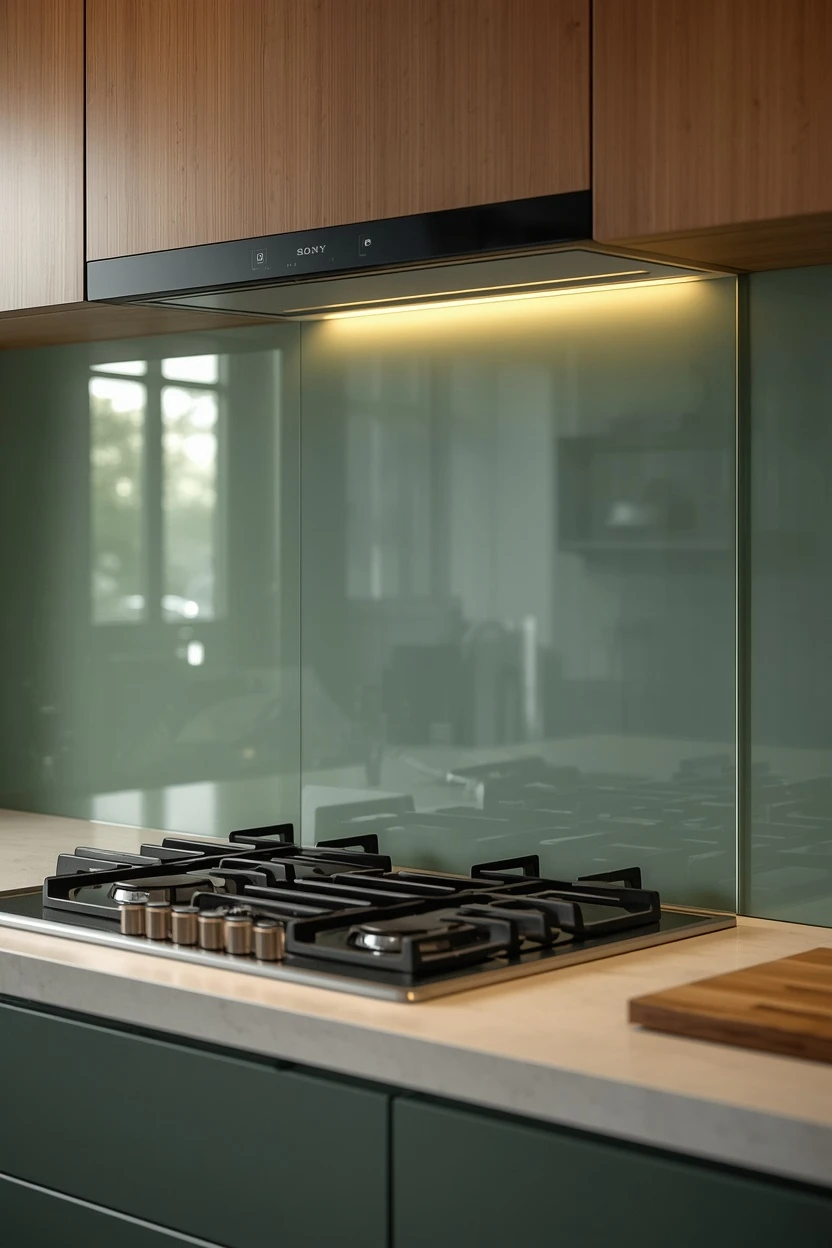
A glass splashback — a single piece of tempered glass in a chosen colour, cut to fit the backsplash area — is the quickest professional backsplash installation available: one panel, no grout, fitted in hours.
Advantages: No grout joints to clean. Completely flat, wipe-clean surface. Can be made in any RAL colour to match or complement the cabinets exactly. Resistant to heat, moisture, and staining.
Best applications: Behind the hob as a heat-resistant, easy-clean surface. In a rental property where tile installation is not permitted. In a kitchen where a seamless look is prioritised over a textural one.
Idea 18: The Decluttered Counter
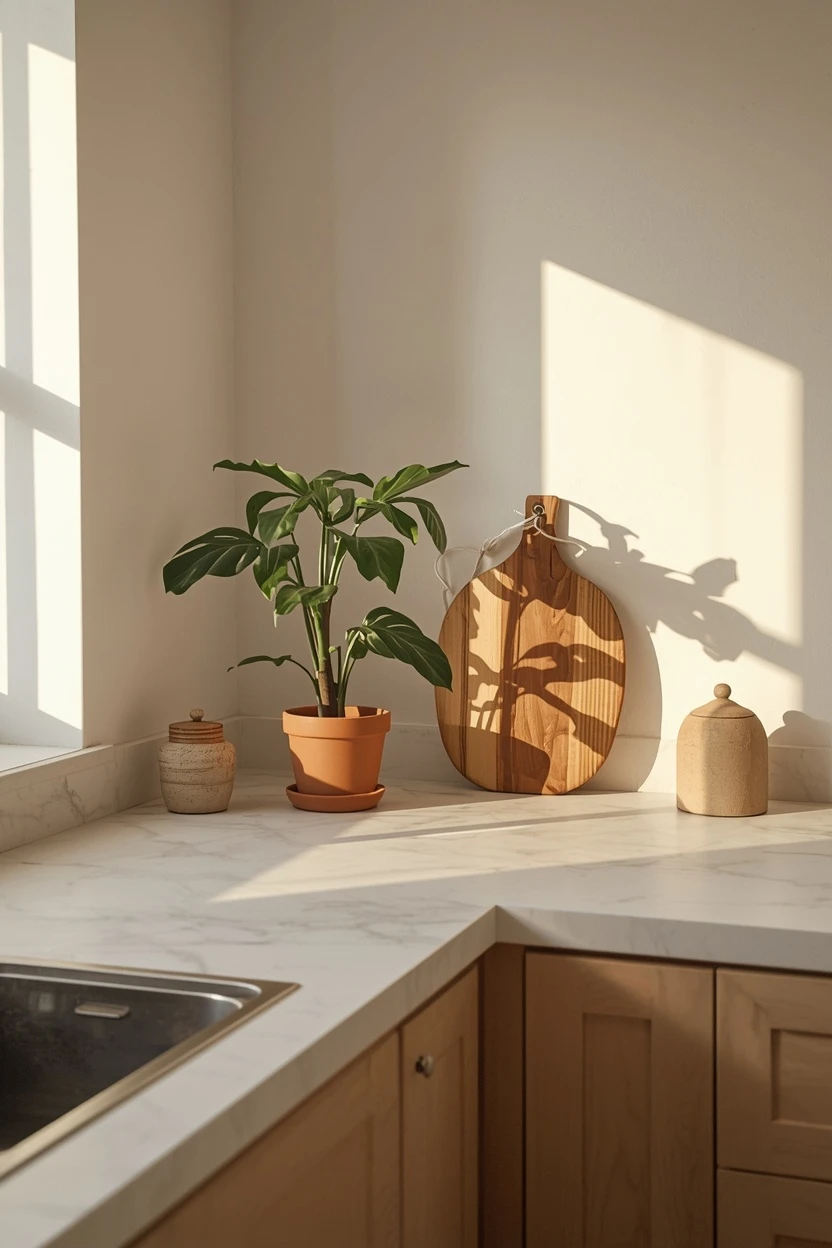
Clearing the kitchen countertops of all non-essential items — every small appliance, every stack of papers, every random accumulated object — and keeping them clear is the kitchen redesign that costs nothing and delivers an immediate transformation.
The countertop rule: Only the items used every single day belong on the counter. The kettle. The coffee machine. One wooden chopping board. One ceramic canister set. A small plant. Everything else lives in a cupboard.
The visual effect: A kitchen with clear countertops reads as larger, more expensive, and better designed than the same kitchen with full countertops — even if the full-counter kitchen has nicer individual items.
Idea 19: New Flooring — The Kitchen Foundation
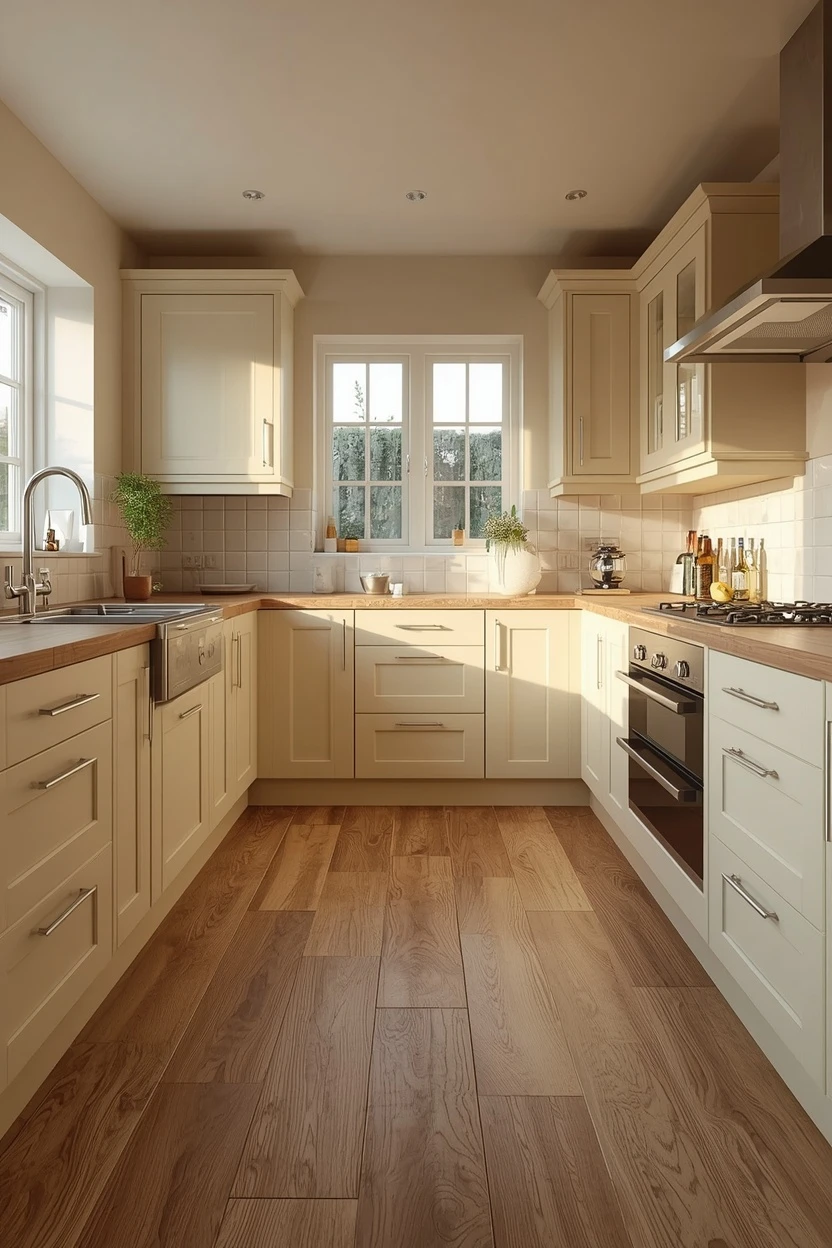
New kitchen flooring is the renovation that changes the room’s character from the ground up. In a kitchen where the cabinets are being retained, new flooring provides the fresh base that makes the existing cabinets look updated even without being replaced.
2026 kitchen floor directions: Warm honey oak-effect porcelain planks (replacing the grey wood-effect). Large format warm travertine-effect porcelain (60x60cm or 60x120cm). Warm terracotta handmade tiles for a farmhouse kitchen. Black and white encaustic cement for a bold pattern statement.
Cost: Laminate or vinyl plank kitchen flooring: £15–£40 per sqm. Porcelain tile: £30–£80 per sqm installed. Natural stone or terracotta: £50–£120 per sqm installed.
Idea 20: The Complete Kitchen Redesign
A complete kitchen redesign — new layout, new cabinets, new countertop, new backsplash, new flooring, new lighting, new appliances — is a major renovation with a significant budget but produces a transformation that no other kitchen change can match.
The planning sequence: Establish the budget with a 20% contingency. Design the layout around the work triangle. Choose the cabinet style and colour. Then countertop, then backsplash, then floor, then lighting. In that sequence.
Biggest mistakes in full kitchen redesigns: Choosing aesthetics before function. Not planning enough storage. Underbudgeting for electrical and plumbing changes. Choosing appliances last when they should be chosen first (they affect the cabinet configuration).
Timeline: A full kitchen redesign from first trade (demolition) to final fit-out typically takes four to eight weeks. Plan for six weeks without a kitchen — including temporary cooking arrangements and eating out.
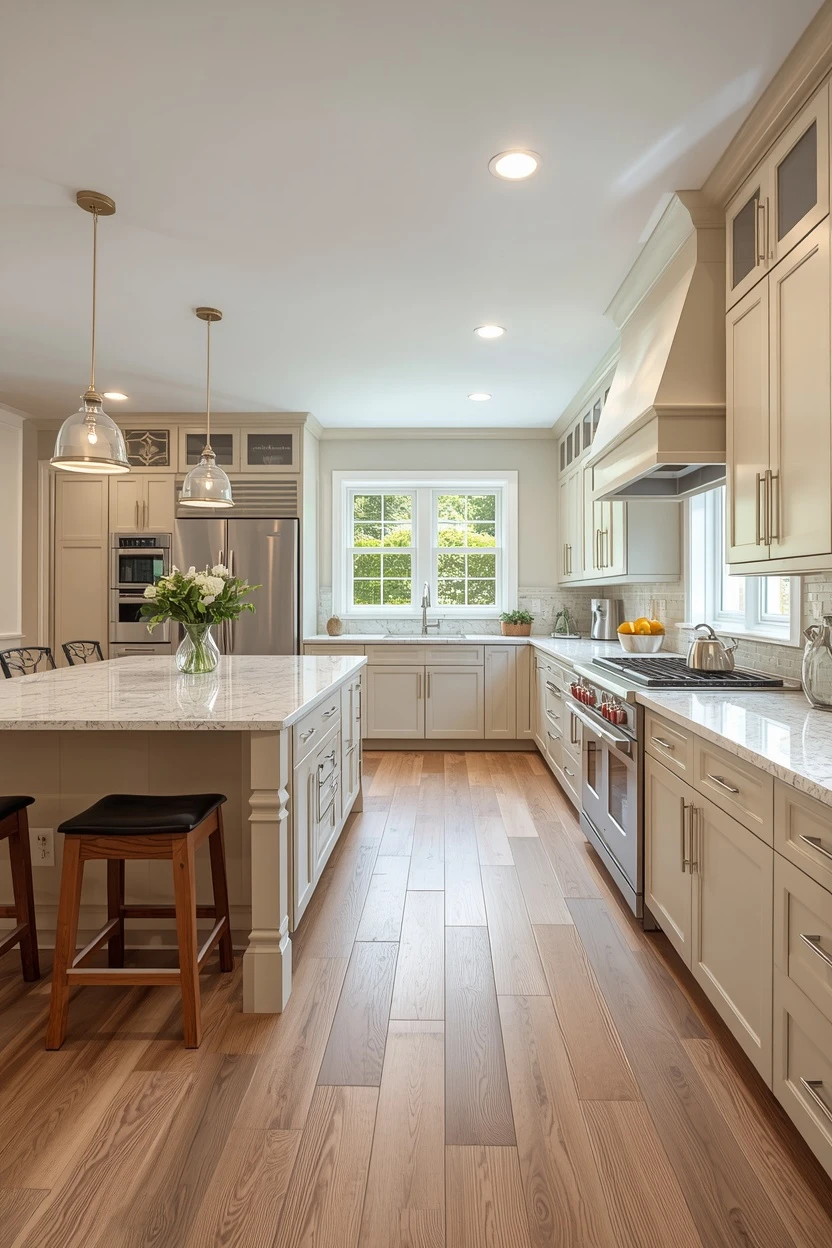
📌 Important Note
The most important question to answer before any kitchen redesign is: how do you actually cook?
A kitchen designed for someone who batch cooks weekly needs different storage and workflow to a kitchen designed for someone who mostly reheats and orders in.
A kitchen designed for an avid baker needs different counter space and equipment storage to a kitchen for a daily cook.
The kitchen redesign that performs brilliantly is always the one designed around the actual behaviour of the people who will use it — not the kitchen from the magazine that inspired the project.
Kitchen Remodel Checklist
• Write a brief: what specifically isn’t working about the current kitchen?
• Establish the budget with a 20% contingency before approaching any supplier
• Design the layout and confirm appliance positions before choosing cabinet style
• Appoint a Gas Safe or equivalent certified engineer for any gas appliance changes
• Appoint a qualified plumber for any sink or dishwasher relocation
• Book an electrician for new circuits, under-cabinet lighting, and any relocated sockets
• Order tile, hardware, and tap samples and test them together in the actual kitchen
• Plan for four to eight weeks without a kitchen — arrange temporary cooking early
FAQs
What is the most impactful kitchen makeover?
Painting the cabinet doors in a warm, personality-driven colour (sage green or navy) and replacing the hardware with aged brass delivers the highest visual transformation per pound spent. New countertops deliver the highest material impact if the budget is larger.
How can I update my kitchen without replacing the cabinets?
Paint the doors. Replace all hardware. Install new backsplash tile. Replace the countertop. Add a new sink and tap. Replace the flooring. These six changes update every visible surface of the kitchen without changing the cabinet carcasses.
How much does a kitchen remodel cost?
Cosmetic makeover (paint, hardware, accessories): £200–£1,500. Mid-range renovation (new doors, countertop, backsplash, lighting): £3,000–£10,000. Full renovation with new kitchen and layout change: £12,000–£40,000+.
What kitchen redesign adds the most property value?
A full kitchen renovation in a mid-range to quality specification consistently delivers the highest return of any single room renovation in UK and Australian property markets. Estate agents cite a new kitchen as a top factor in achieving asking price.
How long does a kitchen makeover take?
Hardware replacement: one afternoon. Painting cabinets: one to two weekends. New backsplash: one to two days trade work. New countertop: one day. Full kitchen renovation: four to eight weeks from demolition to completion.
Final Thoughts
The kitchen is the room that most directly affects the daily quality of life in any home. The renovation that improves the kitchen improves every day that follows it.
Start with the function — the workflow, the storage, the lighting. Then make the aesthetic choices.
A kitchen that works brilliantly and looks considered is always better than one that looks impressive but frustrates the cook.

zarcoyt2025
Khawar Iqbal is the founder and editor of Cozy Homes Hub. He writes about cozy, livable home decor — from small-apartment layouts to room-by-room styling guides — with a focus on warm palettes, layered lighting, and budget-friendly ideas that actually work in real homes.
Related Articles
14 Kitchen Track Lighting Ideas for a Modern Upgrade
The biggest mistake people make with kitchen track lighting is treating it as a cheap workaround for missing recessed cans. That outdated…
Read more →
16 Kitchen Light Fixture Ideas That Transform Any Space
Walk into any well-designed kitchen and the first thing that pulls your eye upward is the light fixture. It anchors the entire…
Read more →
15 Kitchen Layout Ideas That Improve How You Cook
Most kitchen layout ideas start with a shape — L, U, galley — and then try to squeeze your life into that…
Read more →