Curvy Cream and Caramel Kitchen Cabinet Ideas for a Warm Designer Look
 By zarcoyt2025
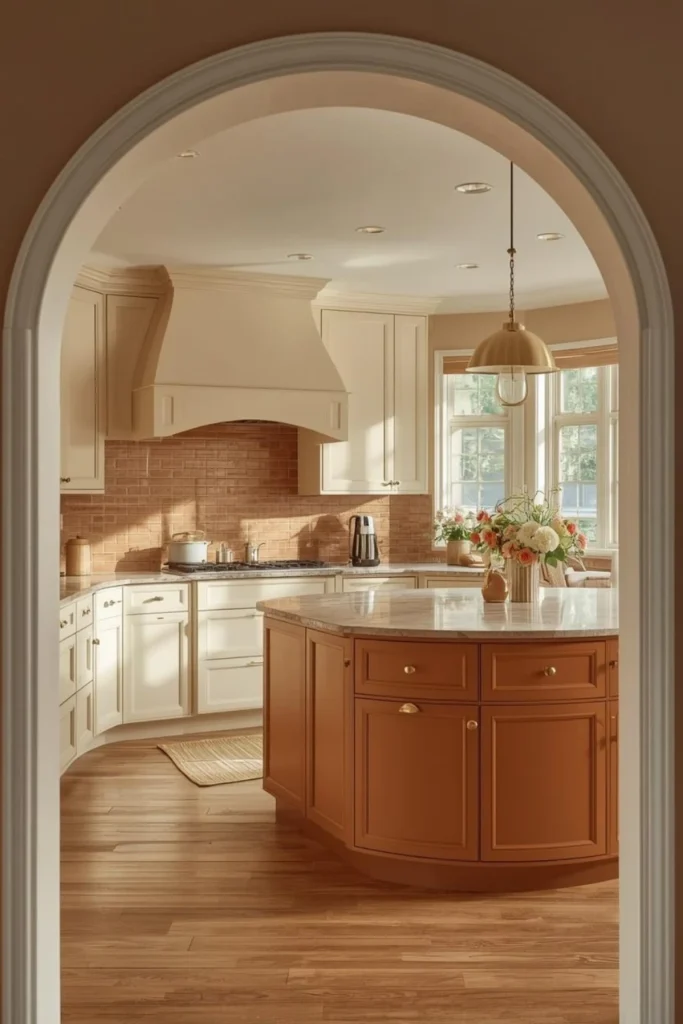
Table of Contents
- 1. Curved Cream Base Cabinets With Caramel Countertops
- 2. Arched Caramel Upper Cabinet Doors
- 3. A Curvy Cream Island With Caramel Paneling
- 4. Rounded-Edge Cream Cabinets With Caramel Pulls
- 5. Caramel Fluted Island Panels With a Cream Stone Top
- 6. S-Curve Cream Cabinets With Caramel Open Shelving
- 7. Arched Glass-Front Caramel Display Cabinets
- 8. Cream Scalloped Backsplash With Curved Cabinets
- 9. A Rounded Cream Pantry Cabinet With a Caramel Interior
- 10. Caramel Wood and Cream Two-Tone Curved Island
- 11. Cream Cabinets With Curved Corner Units
- 12. Arched Cream Range Hood With Caramel Surround
- 13. Curved Caramel Floating Shelves Over Cream Cabinets
- 14. Cream Cabinets With Rounded Brass and Caramel Hardware
- 15. A Curvy Caramel Breakfast Bar Extending From the Island
- 16. Cream Shaker Cabinets With Rounded Caramel Trim Molding
- 17. Full-Height Curved Cream Pantry With Caramel Interior
- 18. Curved Open-End Shelving in Caramel Connecting to Cream Cabinets
- Where I’d Start if I Only Did Three Things
- FAQ
- Can I get the curved look without replacing all my cabinets?
- Will cream cabinets yellow or stain near the stove, and how do I keep them clean?
- What floor color keeps this palette warm without tipping it heavy?
- Will curved, colored cabinets hurt resale?
- Conclusion
Sharp corners are quietly bossy. They catch your hip when you turn, dictate where you stand, and make a kitchen read like a showroom instead of a room you cook in. Curves do the opposite — and in cream and caramel, they soften a space without dragging it heavy or dark.
Here are 18 ways to bring rounded shapes and warm tone into your cabinets, from a barely-there eased edge to a full arched door. The palette is the simple part: a warm cream with a yellow-beige base and a toasty caramel that share the same undertone. The curves are where the character lives.
1. Curved Cream Base Cabinets With Caramel Countertops
Start at the bottom. Cream base cabinets with gently rounded end panels, instead of hard 90-degree corners, change how you move through the room before you notice why — your body just stops bracing for the edges.
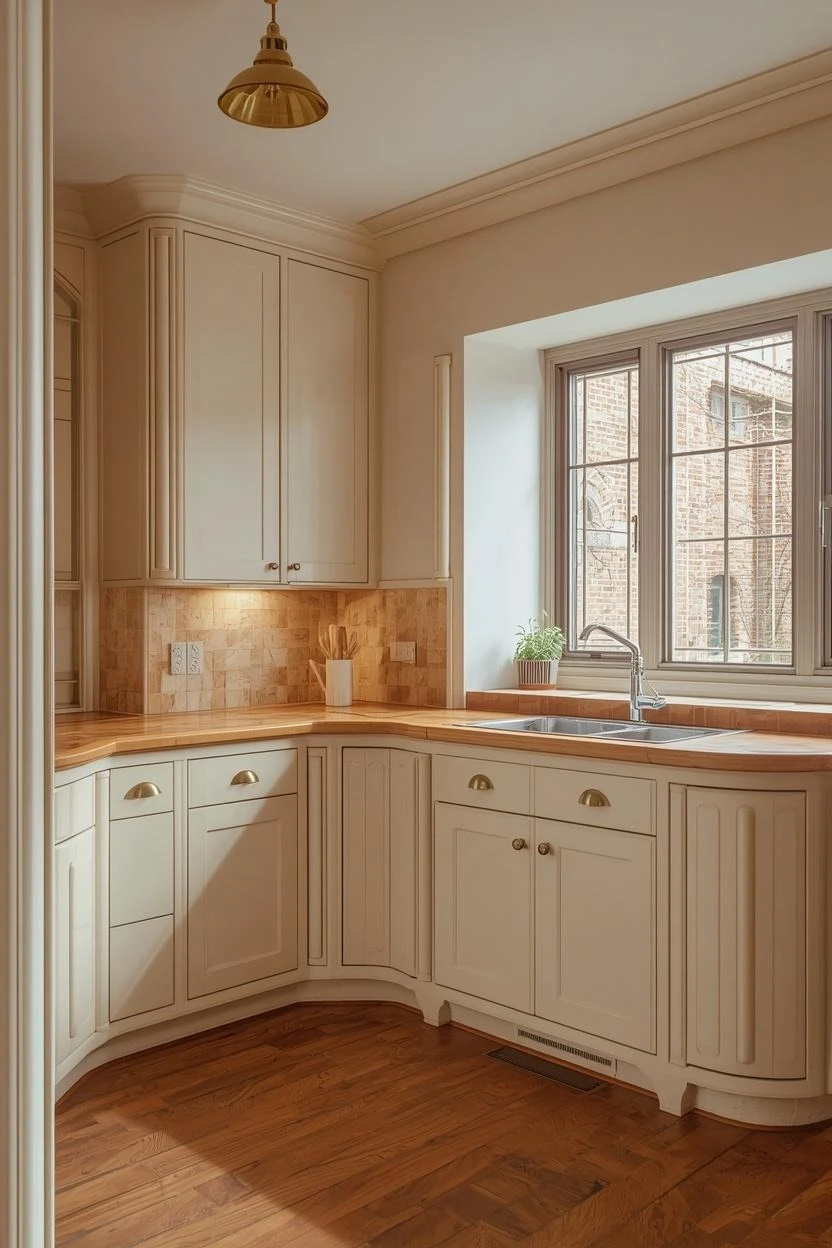
Top them with a thick caramel-toned counter: butcher block for warmth you can chop on, honed quartz for a softer sheen than polished, or a marble with warm caramel veining. Carry the counter edge around the curve so the line never breaks. A rounded end is usually a straightforward addition for a cabinetmaker working on standard boxes.
2. Arched Caramel Upper Cabinet Doors
Swap square upper doors for a gentle arch in a caramel wood tone and the kitchen suddenly reads handmade and a little European. The repeated curve at eye level keeps drawing your gaze up, which makes a standard ceiling read taller than it is.
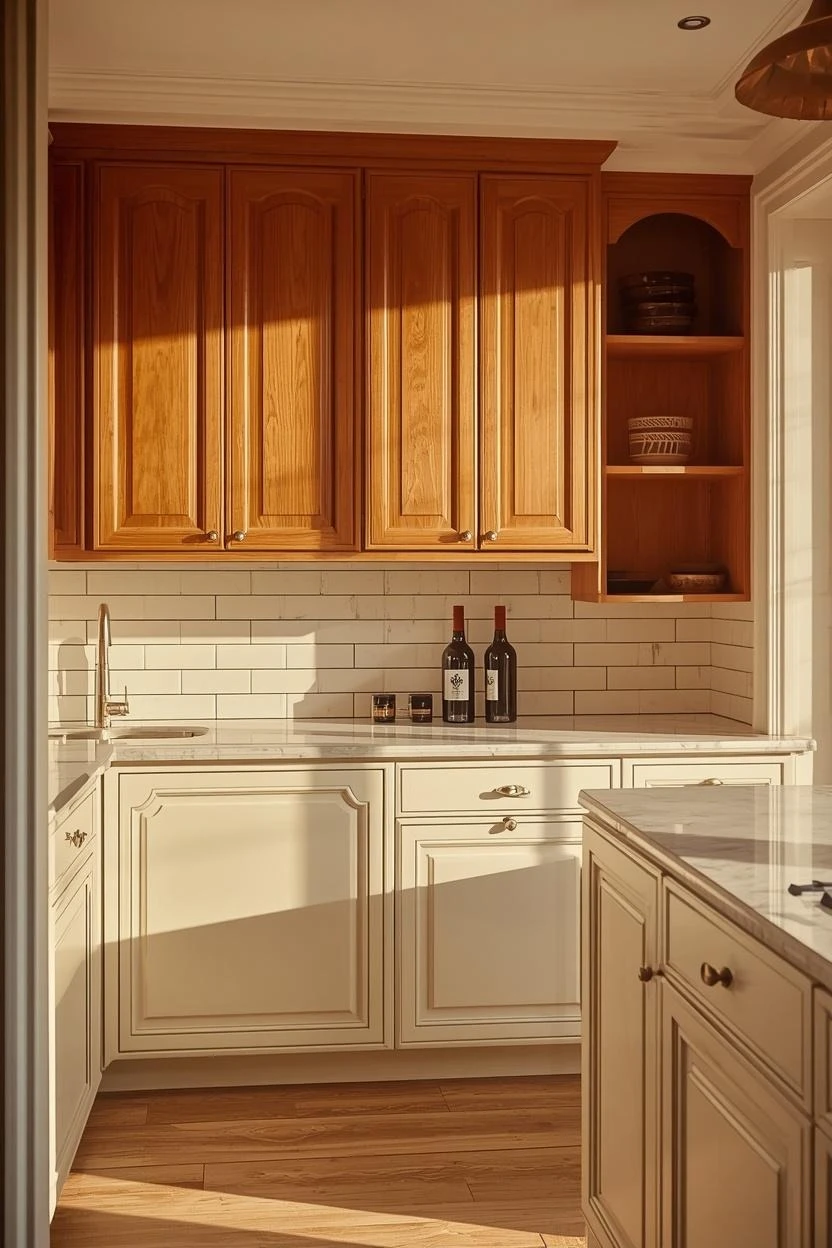
Keep every arch the same radius so the row scans as rhythm, not a string of accidents. A few glass-fronted arched doors break up solid wood and let you show your better dishes. Caramel here should stay a toasty golden-brown — the moment it tips orange, the whole run looks dated.
3. A Curvy Cream Island With Caramel Paneling
The island is where a curve pays off most. A rounded-end island in warm cream, fronted with caramel wood paneling, is easier to walk around, friendlier to sit at, and far better-looking from across the room than a straight-sided block.
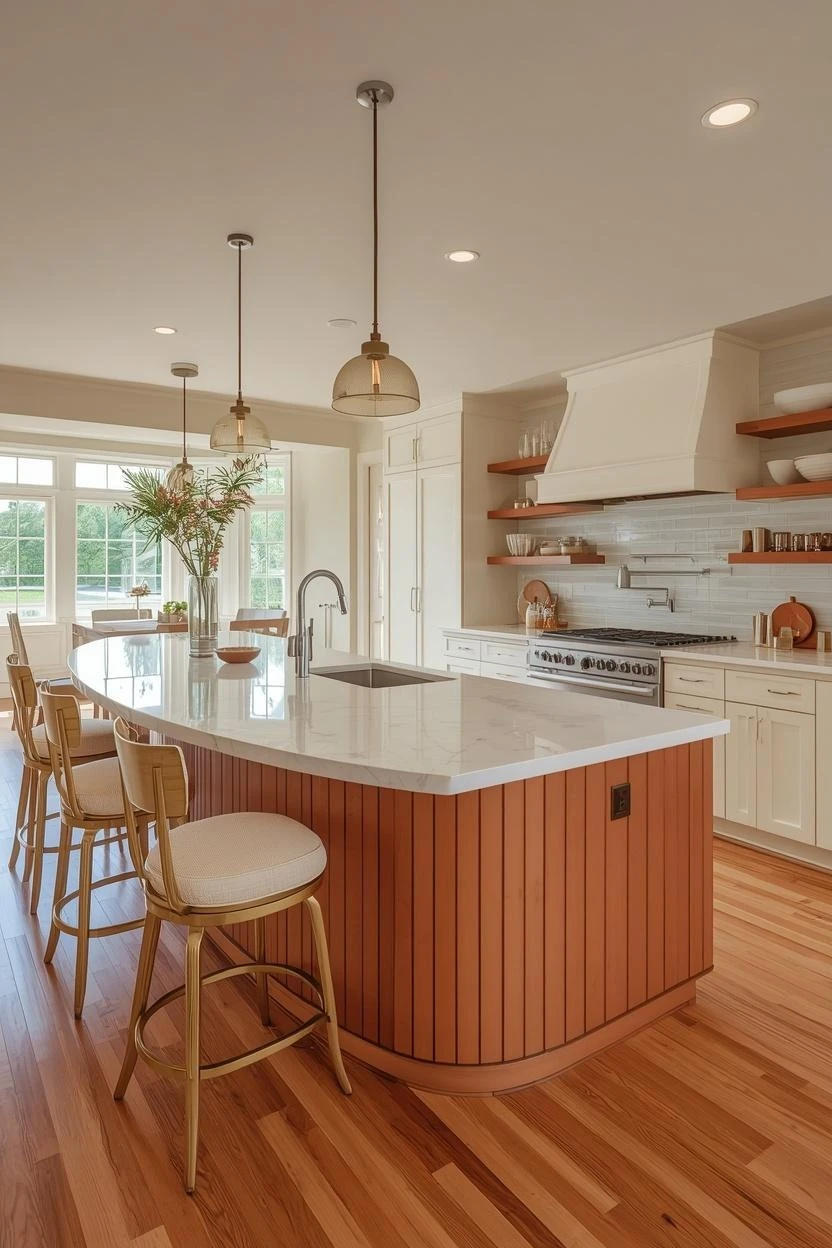
Reeded or fluted caramel paneling on the front throws soft vertical shadow lines that shift as the light moves through the day. If you want the showpiece version, run a waterfall edge down the curved end so the counter stone wraps to the floor in one unbroken sweep.
4. Rounded-Edge Cream Cabinets With Caramel Pulls
Here’s what nobody tells you: you don’t need fully curved doors to get the soft quality. Just easing the edges and corners of standard cream shaker fronts gives you that touchable, rounded character at a fraction of the cost.
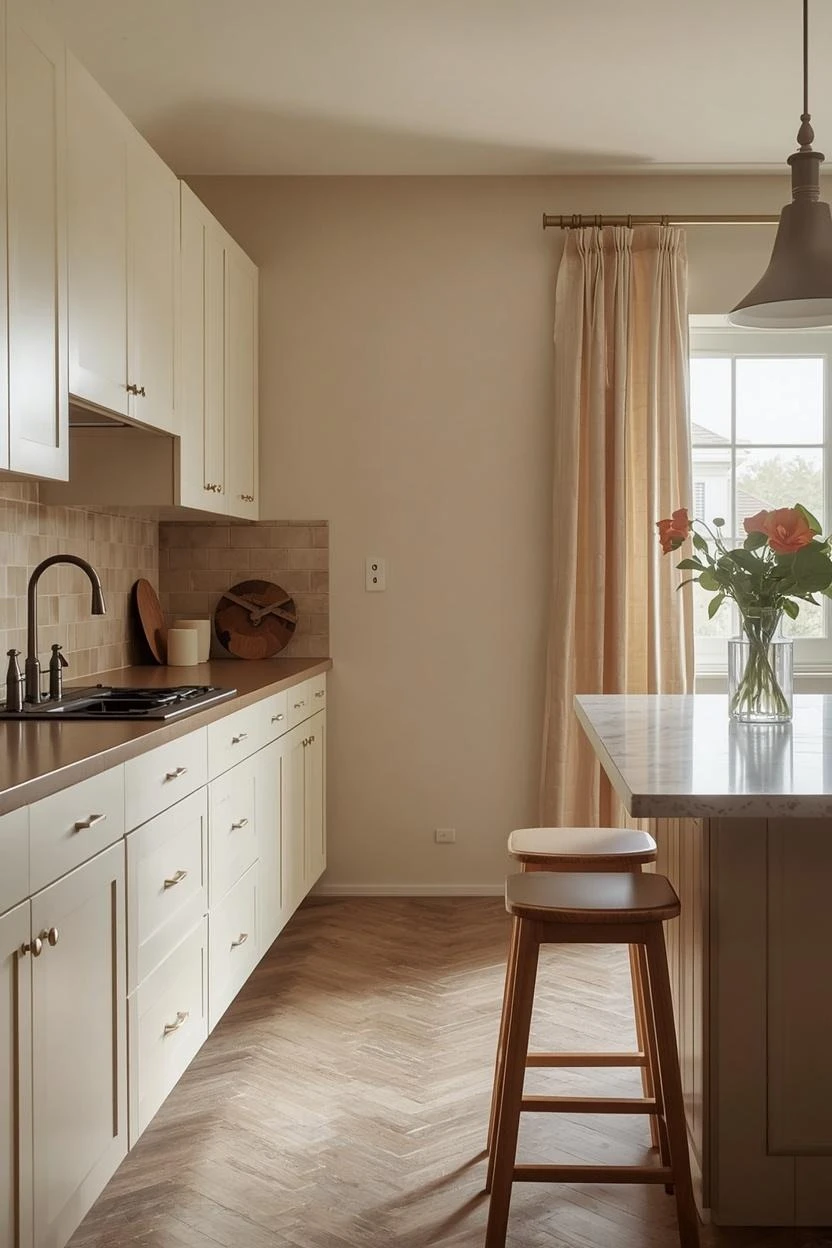
Pair them with caramel leather or wood pulls so the first thing your hand meets is warm, not cold metal. Leather straps darken with use into a patina all their own. Keep the pull’s caramel close to your counter tone so the room reads coordinated without everything matching exactly.
5. Caramel Fluted Island Panels With a Cream Stone Top
Fluting earns its keep on an island. Vertical caramel-wood flutes on the island sides catch light along every ridge and add architecture where a flat panel would just sit there.
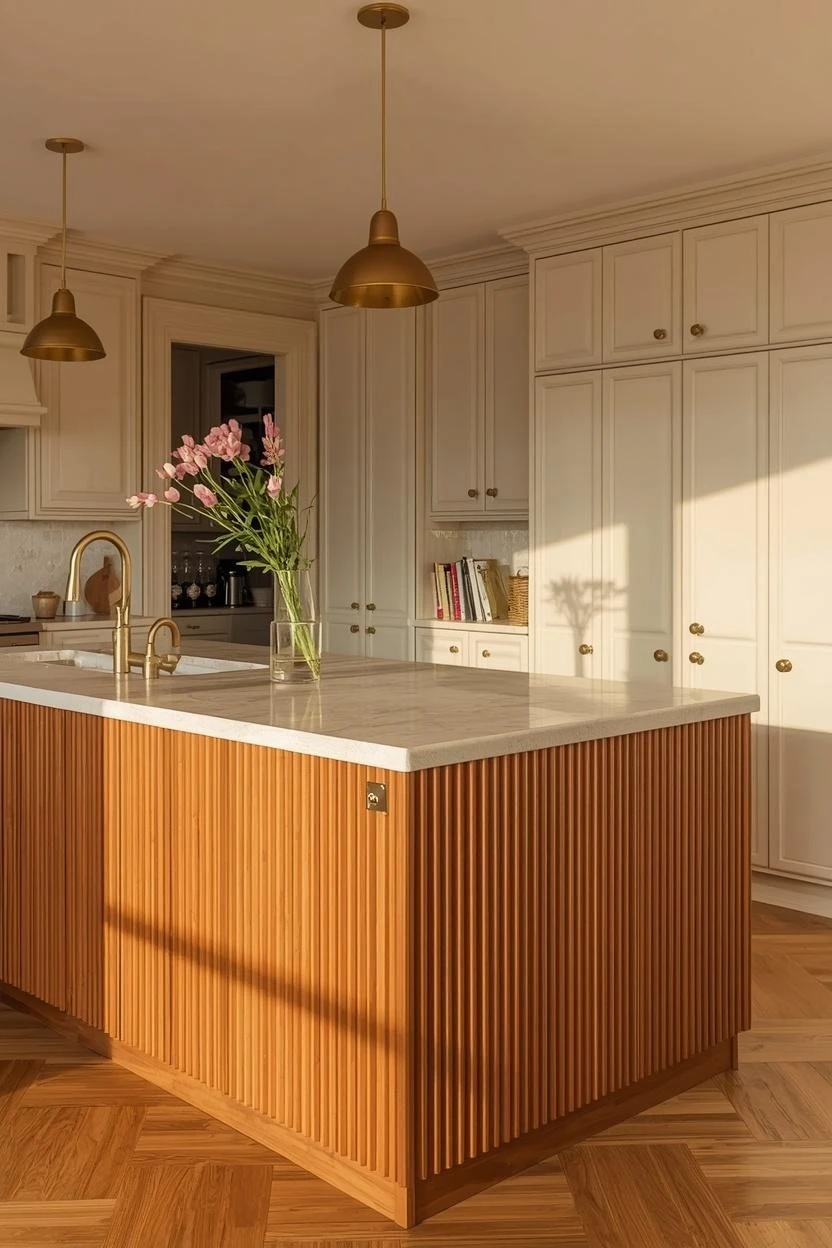
Set a thick cream stone top above and let the contrast talk — warm textured wood below, cool smooth stone above. Run the flutes all the way to the floor so the island reads as a built piece of furniture rather than a boxed-in cabinet.
6. S-Curve Cream Cabinets With Caramel Open Shelving
Picture a run of cabinets that bows gently along the wall instead of marching straight across it. An S-curve or serpentine line of cream cabinets reads like furniture, not fitted boxes, and it softens a long wall that would otherwise feel like a barricade.
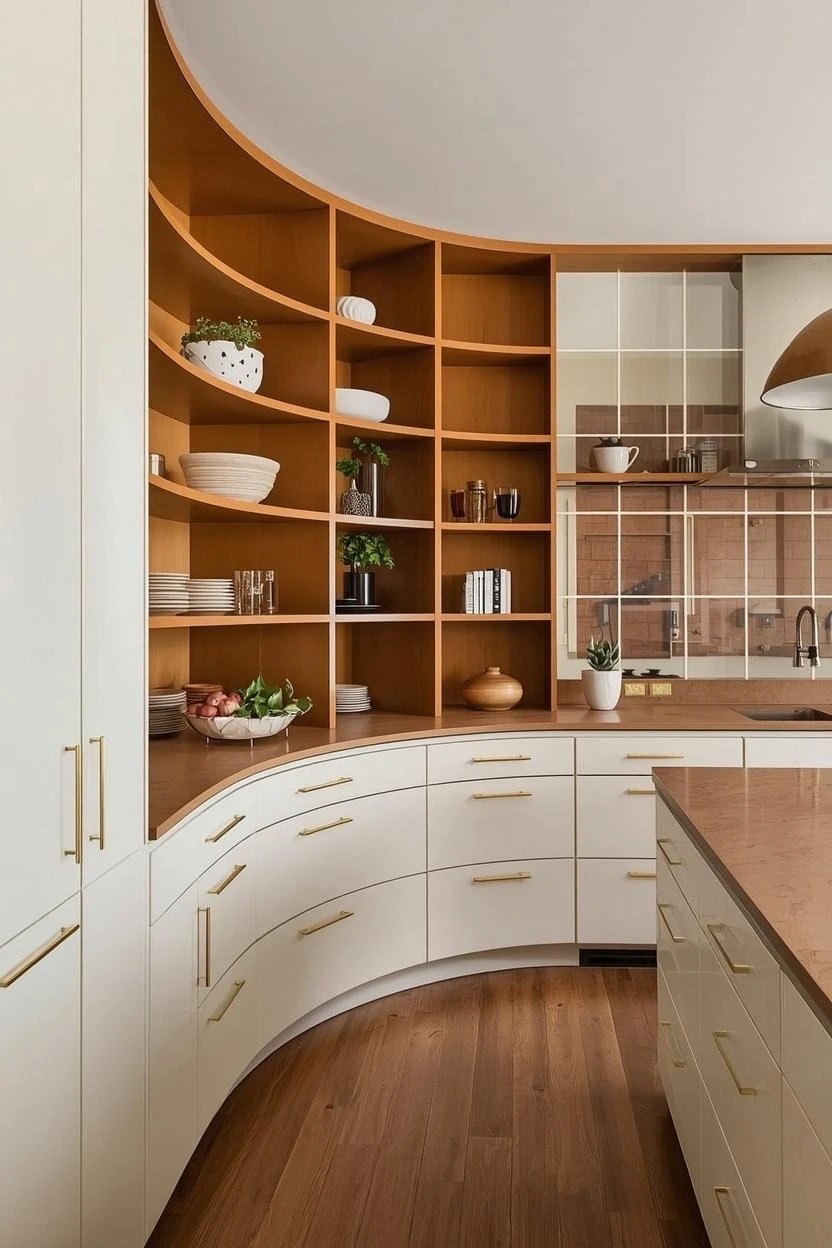
Break the run with a section or two of caramel open shelving for breathing room and a place to show your best pieces. Style those shelves with a mix of things you use and things you like looking at — all function reads cold, all decoration reads staged.
7. Arched Glass-Front Caramel Display Cabinets
A matched pair of tall arched, glass-front cabinets in caramel wood — flanking a window or the range — gives you symmetry and a little old-world charm in one move.
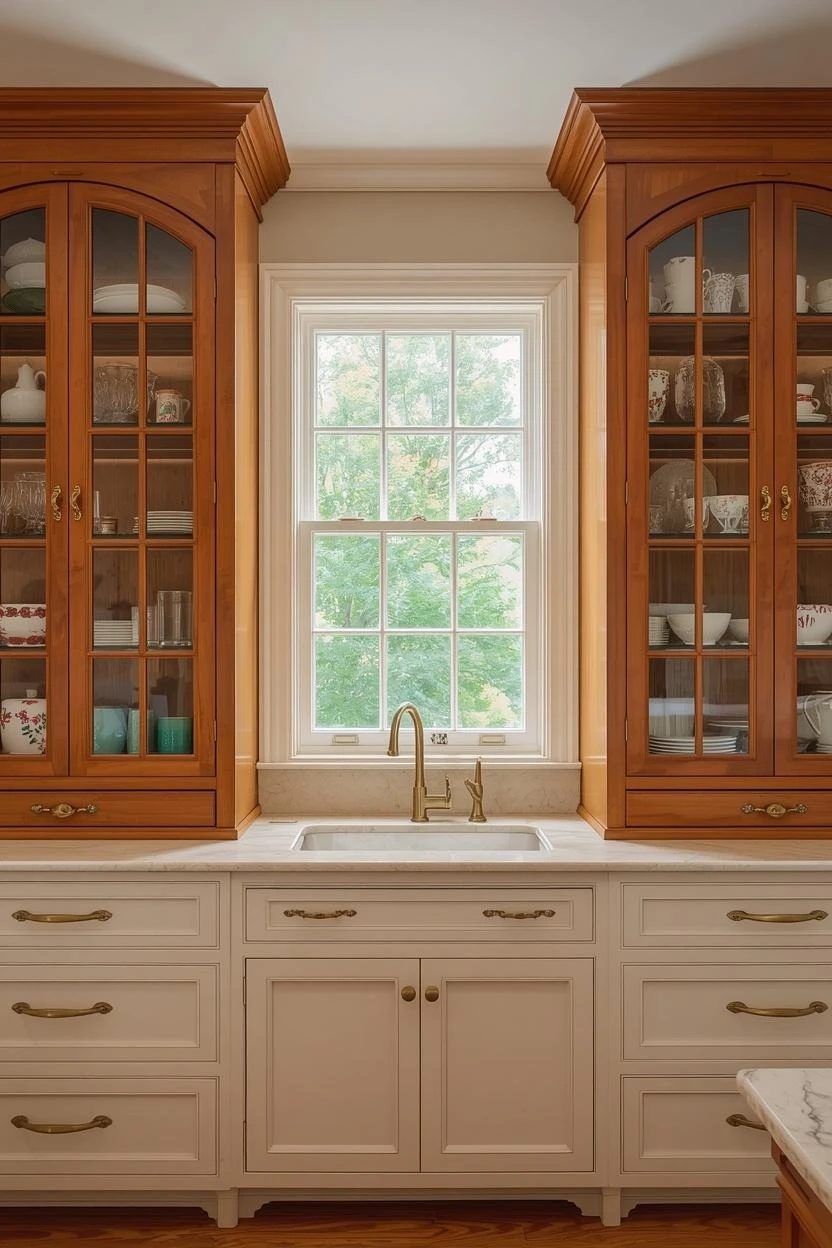
Light the insides with a warm 2700K strip and the glass fronts glow softly after dark, like a lit cabinet in an old pantry. Keep what’s inside edited and a touch loose; a glass door over jam-packed shelves just frames the clutter.
8. Cream Scalloped Backsplash With Curved Cabinets
Curves want company. A scalloped or fish-scale tile backsplash in cream echoes the rounded cabinet lines, so the whole room speaks one shape instead of two.
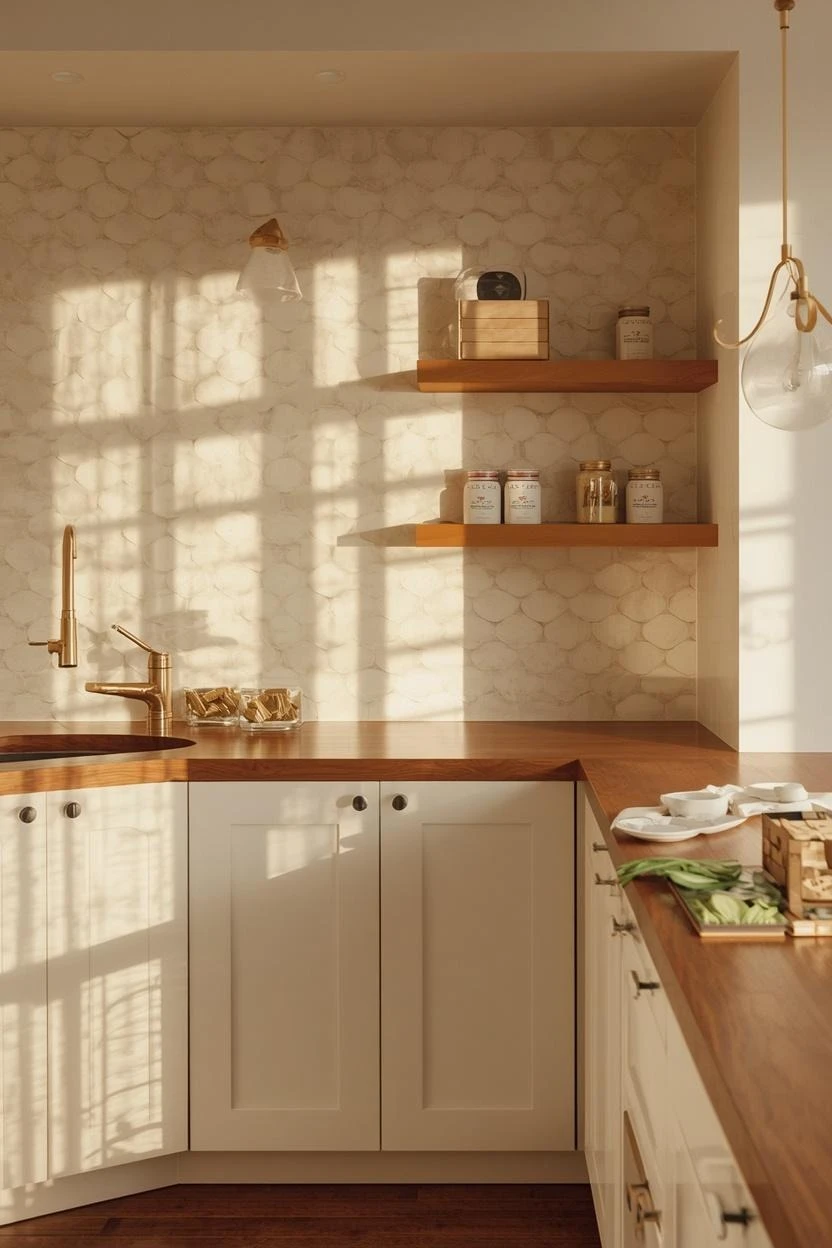
Each scallop catches light at a slightly different angle, giving a cream-on-cream wall a faint shimmer flat tile never manages. Keep it tonal — cream tile, cream-ish grout — so the texture reads as quiet detail rather than a busy feature fighting the cabinets.
9. A Rounded Cream Pantry Cabinet With a Caramel Interior
Some of the best kitchen moments are hidden. A tall pantry with a curved cream door front looks clean and soft when shut; open it and warm caramel-stained shelving spills out like a secret.
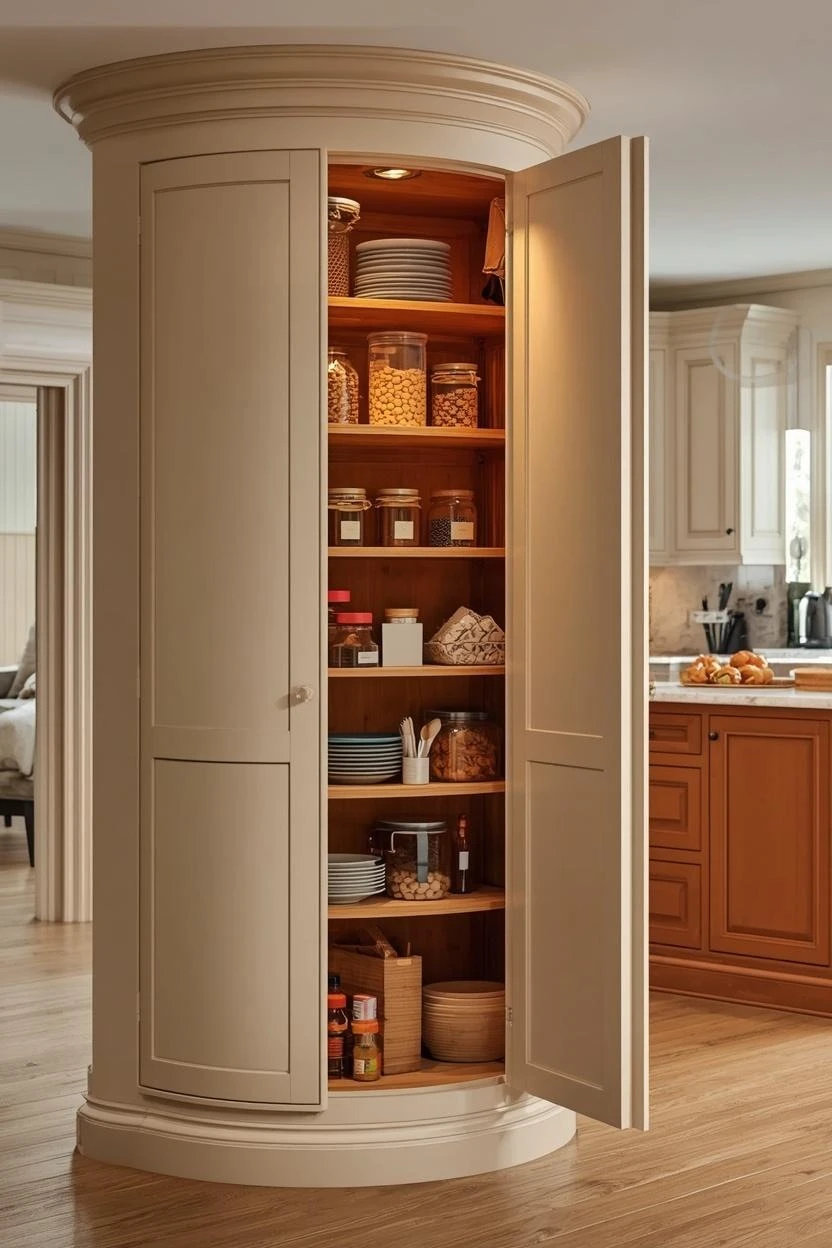
That contrast between calm exterior and warm interior turns an ordinary cabinet into a small reveal every time you reach for the flour. Put adjustable shelves inside so the heights flex as what you store changes over the years.
10. Caramel Wood and Cream Two-Tone Curved Island
Let the island do two jobs in two tones: cream on the working side, caramel wood on the seating side. The split quietly marks where prep ends and people gather, while keeping the whole palette warm.
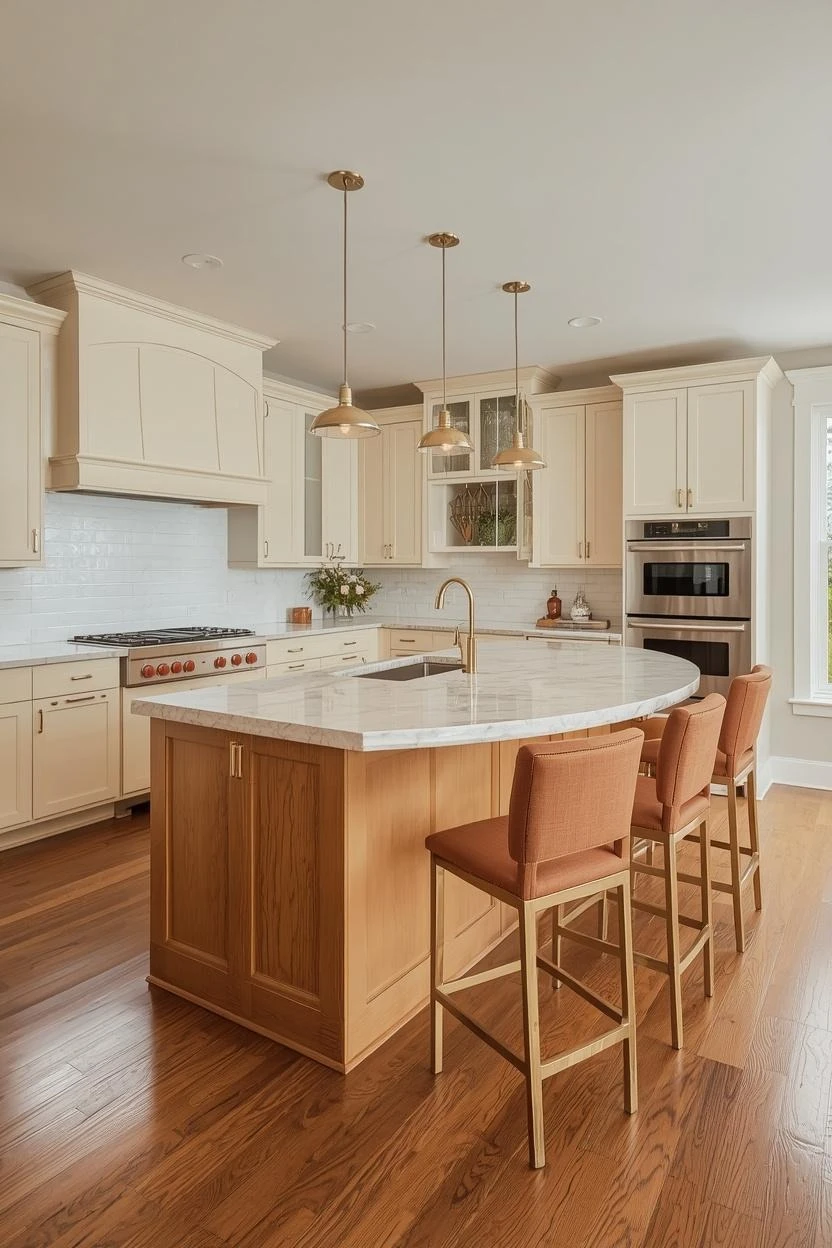
A curved seating end lets stools tuck in at a slight angle, which is far more comfortable for talking than a flat bar where everyone faces the wall. Keep both tones in the same warm family so they read as partners, not a clash.
11. Cream Cabinets With Curved Corner Units
Corner cabinets are where storage goes to die — awkward, dark, half-reachable. A curved corner unit with a bowed door front fixes it, opening the corner up and erasing the dead space a lazy Susan only half-solves.
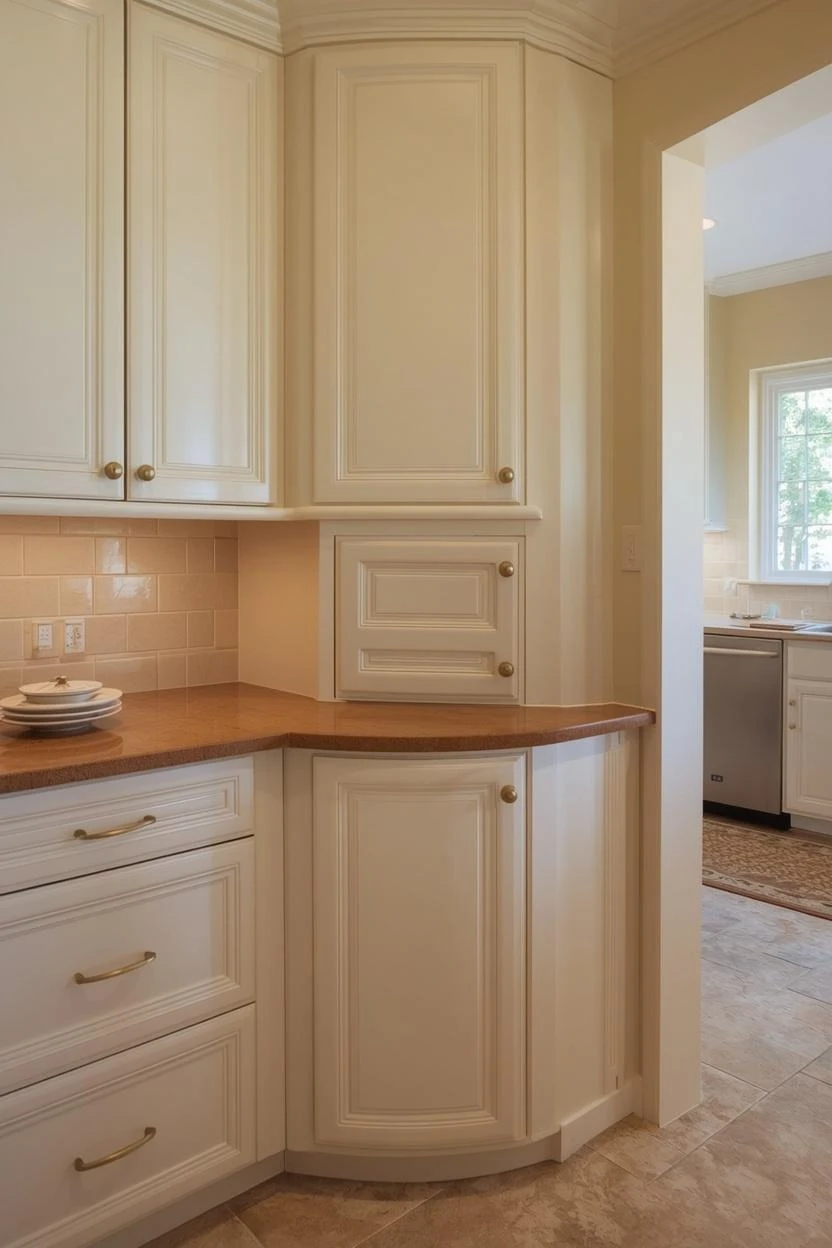
They cost a little more than a standard corner, but the daily usability is worth it, and the smooth outward curve spares your hips the bruise that sharp corner cabinets are famous for. It also keeps the curved language running right around the bend.
12. Arched Cream Range Hood With Caramel Surround
Above the stove is prime real estate for a curve. An arched range hood in cream plaster or painted wood, trimmed with a caramel surround, becomes the kitchen’s centerpiece and links any arched doors below into one story.
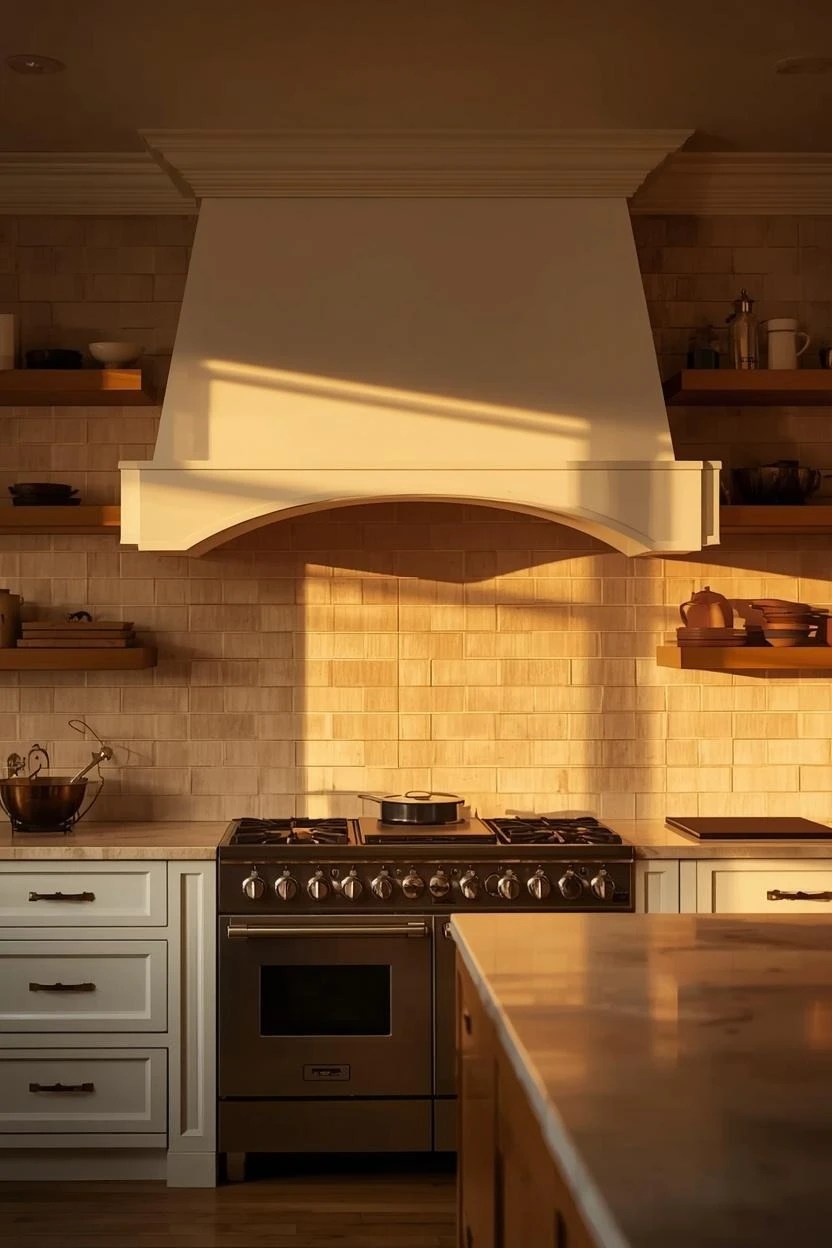
A hand-troweled plaster or lime-wash surface adds the faint texture and imperfection that make a hood read built-by-hand rather than ordered from a catalog. Match its arch to your upper-cabinet arches so the shapes agree instead of arguing.
13. Curved Caramel Floating Shelves Over Cream Cabinets
Trade a section of upper cabinets for curved-end caramel floating shelves and the wall instantly breathes. The rounded ends keep the curve theme going while the warm wood lifts the cream base.
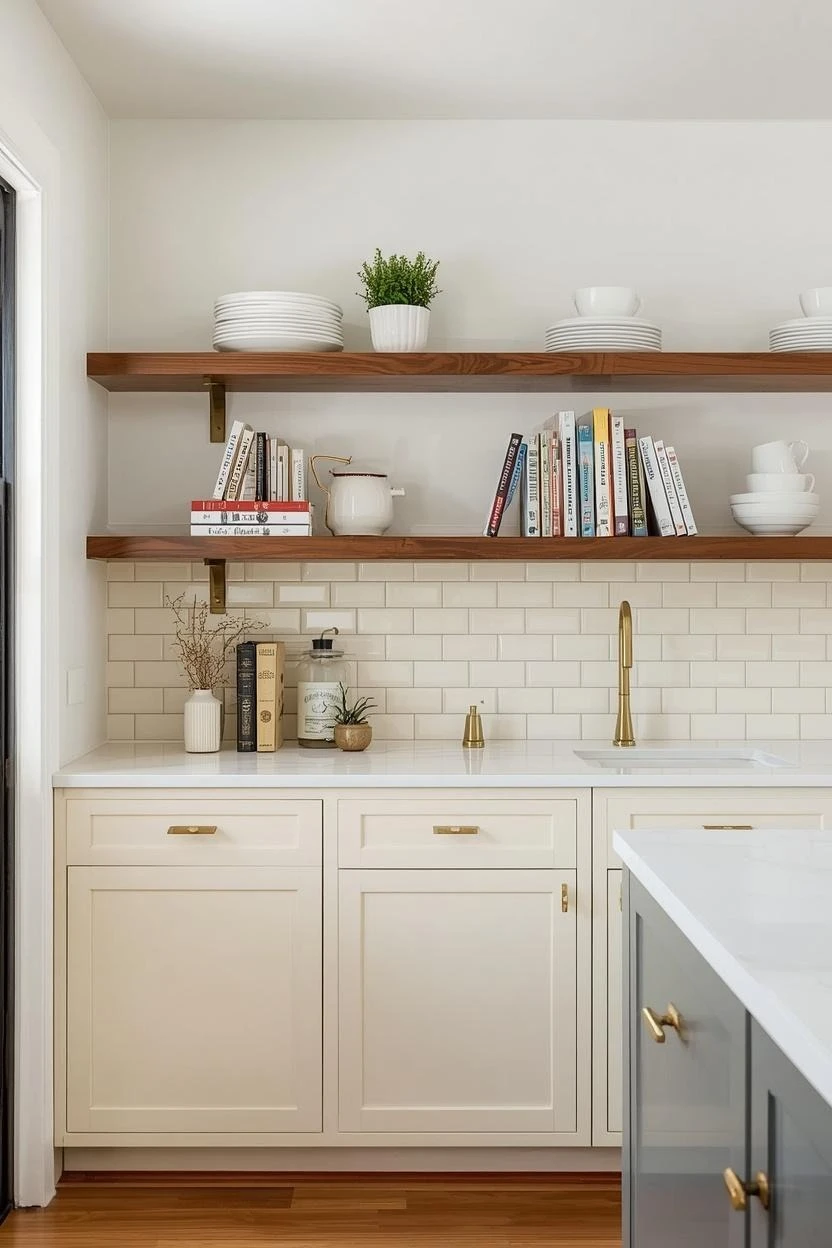
Three shelves at graduated depths — deepest at the bottom, shallowest up top — stay balanced and keep the highest one from looking heavy. Brass brackets with a rounded profile quietly link the shelves to your cabinet hardware below.
14. Cream Cabinets With Rounded Brass and Caramel Hardware
Sometimes the curve lives entirely in the details. Rounded brass knobs and caramel cup pulls put a soft shape at every place your hand lands — you register the warmth before you consciously see it.
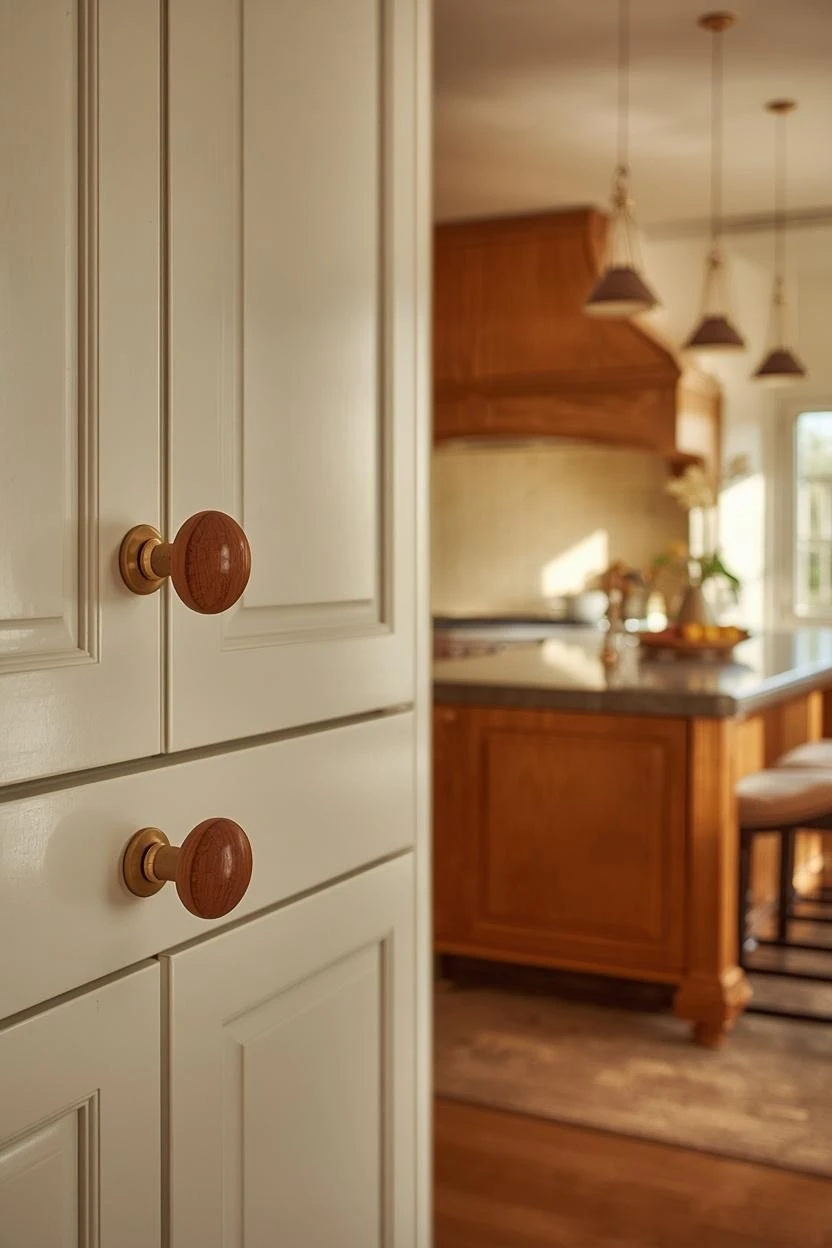
Mix round knobs on doors with cup pulls on drawers so two complementary shapes do two jobs. Keep the brass in one metal family throughout; a satin aged brass reads warmer against caramel than a bright polished gold.
15. A Curvy Caramel Breakfast Bar Extending From the Island
A caramel-wood breakfast bar that curves out from the end of the island turns the kitchen social. The arc wraps around two or three stools so people half-face each other instead of lining up at a wall.
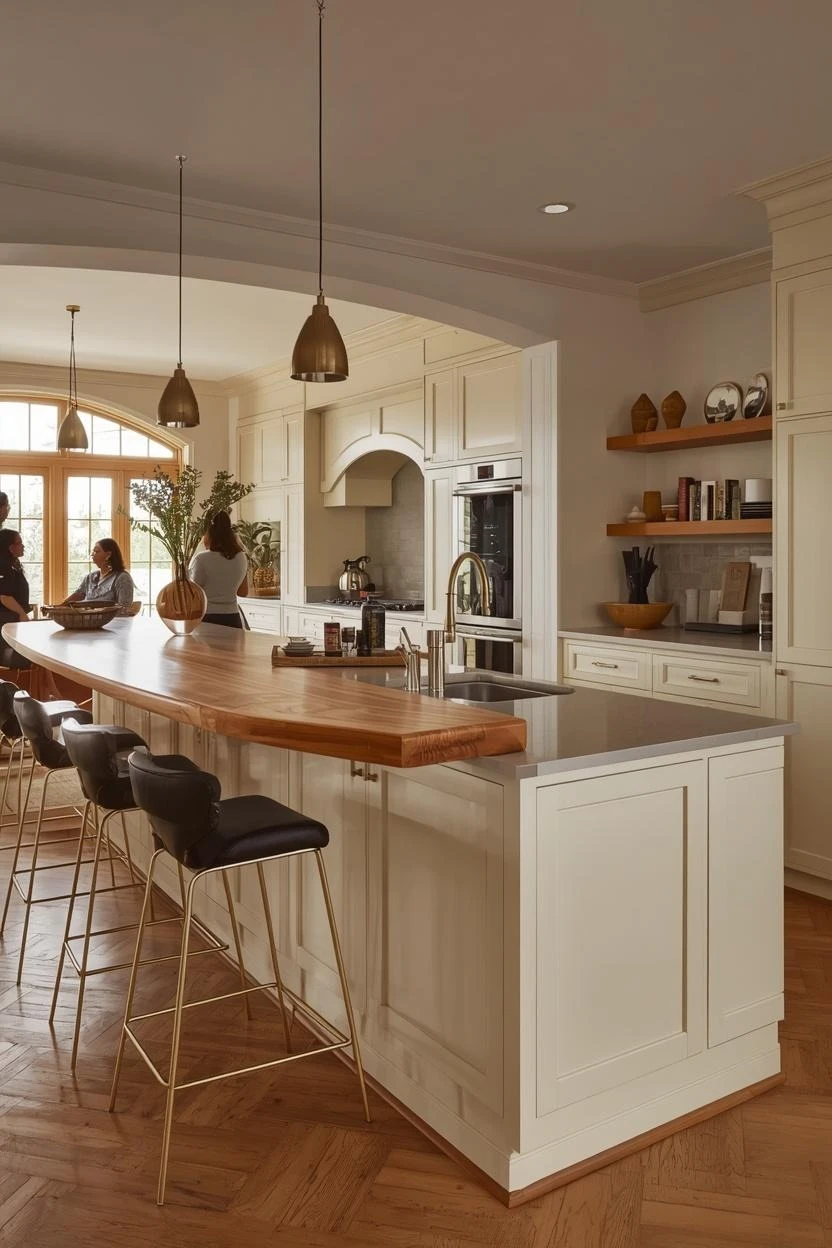
Give it at least a 12-inch overhang so knees fit comfortably underneath — anything shallower and the stools can’t tuck in. A waterfall edge on the bar keeps the line modern and seamless if that’s your leaning.
16. Cream Shaker Cabinets With Rounded Caramel Trim Molding
Trim is the cheap seat with the good view. Crown and edge molding in caramel-stained wood, cut to a rounded bullnose profile, softens the tops of plain cream shaker cabinets and drops a warm wood line in at ceiling level.
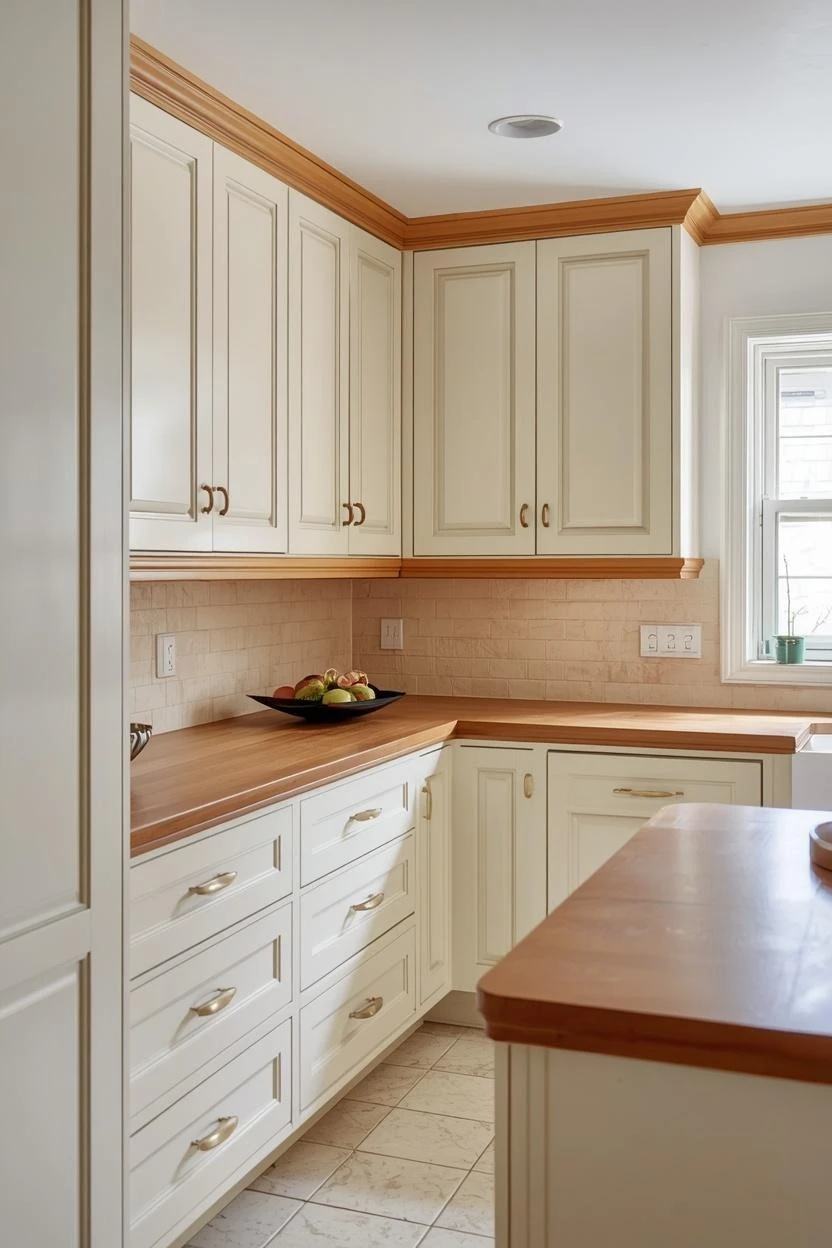
Carry that caramel trim along every connected run so the line stays unbroken and the room reads custom. A rounded profile feels softer and more current than a fussy, ornate traditional crown.
17. Full-Height Curved Cream Pantry With Caramel Interior
For real impact, flank the fridge or range with a pair of full-height curved cream pantry towers. They read as built-in furniture and frame the hardest-working part of the kitchen with soft, vertical mass.
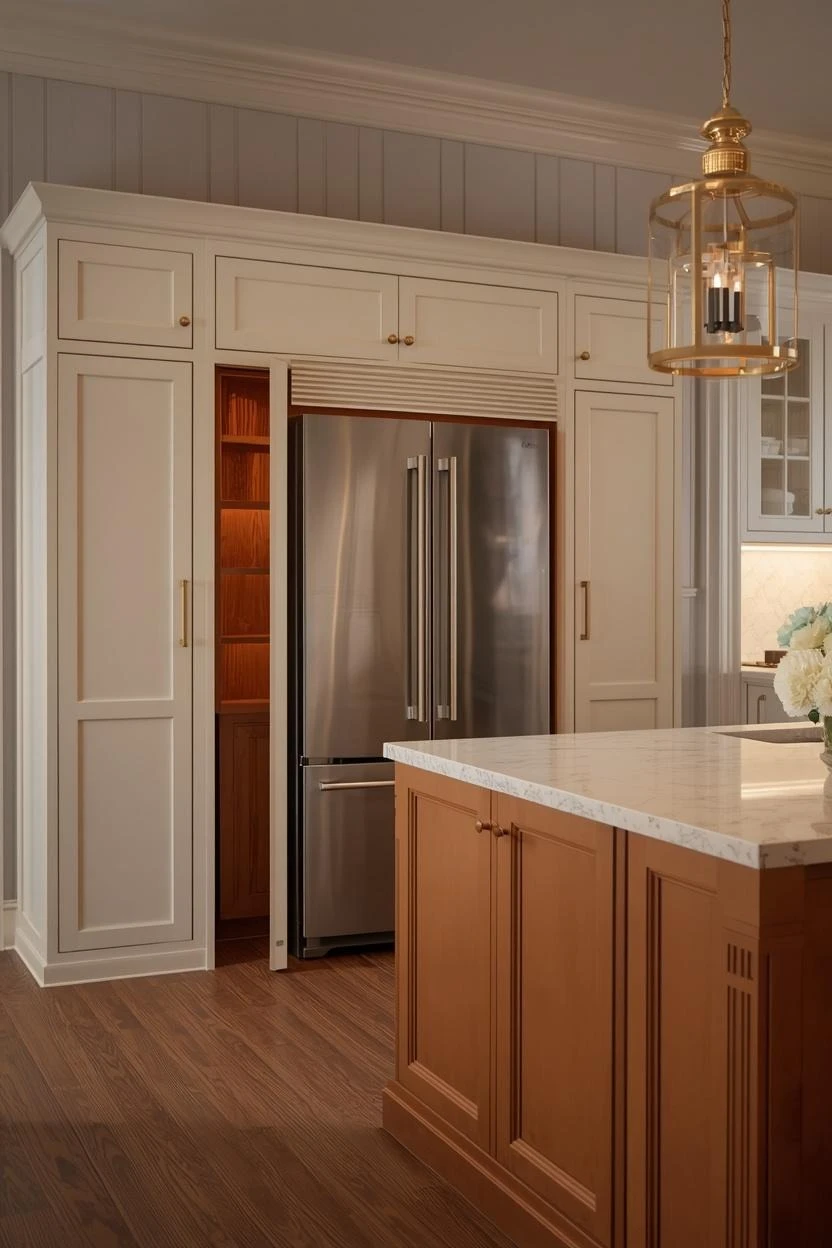
Full-height units pull the eye up and make the ceiling read higher. A warm 2700K LED strip inside makes finding things easy and gives off a soft glow when the curved doors swing open. Keep the curve gentle so tall doors still close flush and quiet.
18. Curved Open-End Shelving in Caramel Connecting to Cream Cabinets
End a run of cream cabinets with a curved open shelf unit in caramel wood instead of a flat panel. It softens the visual full-stop and gives you a landing spot for the things that come and go — keys, a fruit bowl, the day’s mail.
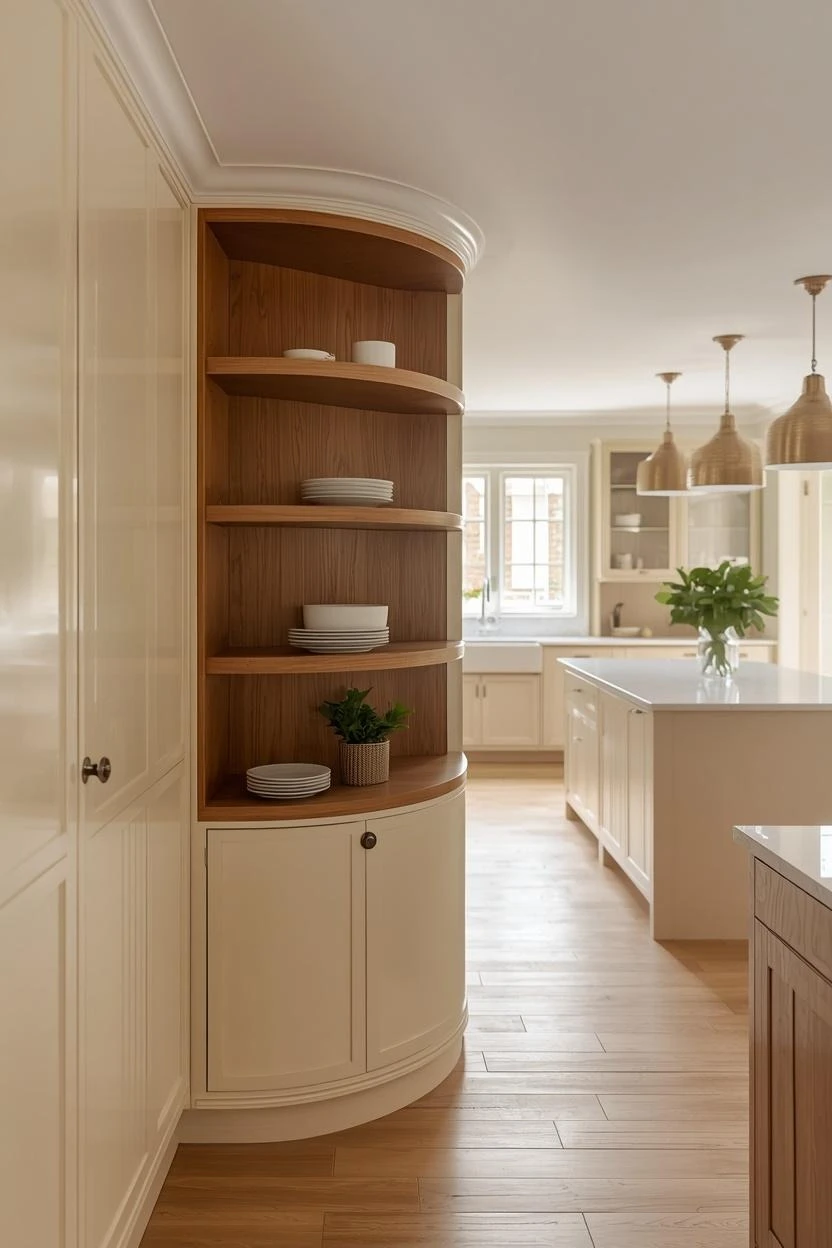
Show a few good pieces on the open end and keep the everyday clutter behind the closed doors beside it. A curved end also spares the doorway corner that otherwise snags bags and elbows every time you pass.
Where I’d Start if I Only Did Three Things
With a whole kitchen to rethink and a limited budget, I’d put the curve where it shows. The island end first, rounded and ideally with a waterfall edge, because it changes how you move and how the room photographs in one stroke. Second, an arched range hood to give the eye a soft focal point above the stove. Third — the cheap, high-impact one — ease the edges of your existing cream doors and switch to caramel leather pulls. One sculptural curve, one focal curve, one tactile detail, and the room already reads designed.
FAQ
Can I get the curved look without replacing all my cabinets?
Yes, and it’s the smart way to start. Add rounded end panels to the cabinets you already have, swap square doors for arched ones on just the uppers or the island, and round the edges of existing doors with replacement fronts. Curving only the island end and the range hood gives most of the effect for a fraction of a full re-fit.
Will cream cabinets yellow or stain near the stove, and how do I keep them clean?
Grease is the enemy of pale paint, and a warm cream shows it less than a stark white but still needs care. Wipe the fronts nearest the range weekly with a soft cloth and a little dish soap, skip anything abrasive, and run your hood every time you cook. A durable satin or semi-gloss cabinet paint cleans up far better than a flat one, which holds onto oils.
What floor color keeps this palette warm without tipping it heavy?
Stay in the warm family but lighter than the caramel. A medium oak or a warm-toned wood-look tile grounds cream and caramel without darkening the room. The trap is a cool grey floor — it fights both colors and drains the warmth right out of the kitchen, no matter how nice the cabinets are.
Will curved, colored cabinets hurt resale?
Cream is about as safe a cabinet color as exists, and caramel wood is a warm neutral, so the palette itself is an easy sell. Curves read as quality custom work rather than a fad. The one thing to keep flexible is anything trend-forward and cheap to change — hardware, the odd painted accent — so a future buyer can tweak the look without touching the bones.
Conclusion
A kitchen full of soft curves in cream and caramel doesn’t just look warmer — it changes how you move through the room, slowing you down and inviting your hand to the surfaces. Pick two or three of these, keep both tones in the same warm undertone, and repeat your chosen curve in a few spots so it reads as a decision. The result is a kitchen that reads built for you, not bought off a shelf.

zarcoyt2025
Khawar Iqbal is the founder and editor of Cozy Homes Hub. He writes about cozy, livable home decor — from small-apartment layouts to room-by-room styling guides — with a focus on warm palettes, layered lighting, and budget-friendly ideas that actually work in real homes.
Related Articles
14 Kitchen Track Lighting Ideas for a Modern Upgrade
The biggest mistake people make with kitchen track lighting is treating it as a cheap workaround for missing recessed cans. That outdated…
Read more →
16 Kitchen Light Fixture Ideas That Transform Any Space
Walk into any well-designed kitchen and the first thing that pulls your eye upward is the light fixture. It anchors the entire…
Read more →
15 Kitchen Layout Ideas That Improve How You Cook
Most kitchen layout ideas start with a shape — L, U, galley — and then try to squeeze your life into that…
Read more →