14 Kitchen Track Lighting Ideas for a Modern Upgrade
 By zarcoyt2025
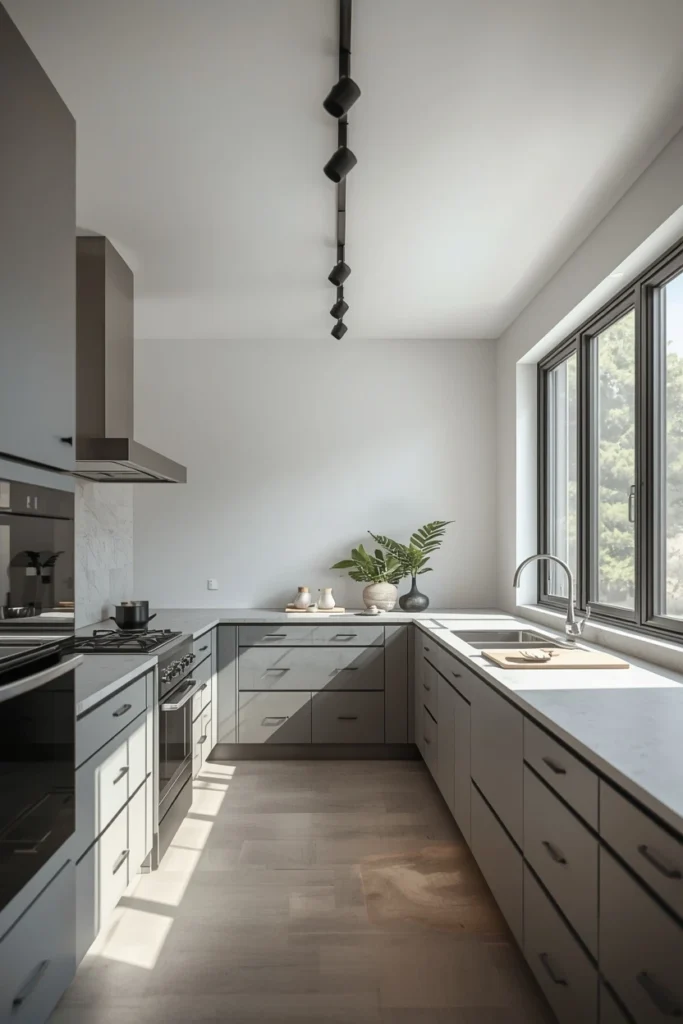
Table of Contents
- 1. Monorail Track with Adjustable Spotlights Over the Counter
- 2. H-Style Track System for an Open-Concept Space
- 3. Curved Flex Track Following the Island Perimeter
- 4. Cable-Suspended Track with Small Pendant Attachments
- 5. Matte Black Track Lighting for Bold Modern Contrast
- 6. Recessed-Look Track Heads for a Clean Ceiling Line
- 7. Brass Track Rail with Directional Cone Heads
- 8. Two-Circuit Track System for Layered Brightness Control
- 9. Industrial Exposed Track with Vintage-Style Bulbs
- 10. Slim Profile Track Lighting Along a Galley Ceiling
- 11. Track-Mounted Spotlights Aimed at Open Shelving
- 12. White-on-White Track for a Scandinavian Cooking Space
- 13. Ceiling Track Combined with Under-Cabinet LED Strips
- 14. Angled Track Layout Designed for an L-Shaped Kitchen
- Where I’d Start if I Only Did Three Things
- Frequently Asked Questions
- Final Thoughts
The biggest mistake people make with kitchen track lighting is treating it as a cheap workaround for missing recessed cans. That outdated mindset misses the reality that modern track systems offer adjustable directional control, swappable head styles, and layout flexibility that fixed fixtures cannot touch. Kitchen track lighting ideas deserve serious consideration whether you are retrofitting a rental, upgrading a galley, or layering light in a high-end open-plan space. The technology and design have changed dramatically in the last decade, and today’s track fixtures look nothing like the dated brass rails from the 1990s.
What makes track lighting genuinely useful in a kitchen is the ability to aim individual heads exactly where you need them — onto a cutting board, across an open shelf display, or down a long counter — and then readjust them when you rearrange. No other ceiling-mounted system gives you that kind of flexibility after installation. The ideas below cover different track formats, mounting styles, and kitchen shapes so you can find the configuration that fits your specific space.
1. Monorail Track with Adjustable Spotlights Over the Counter
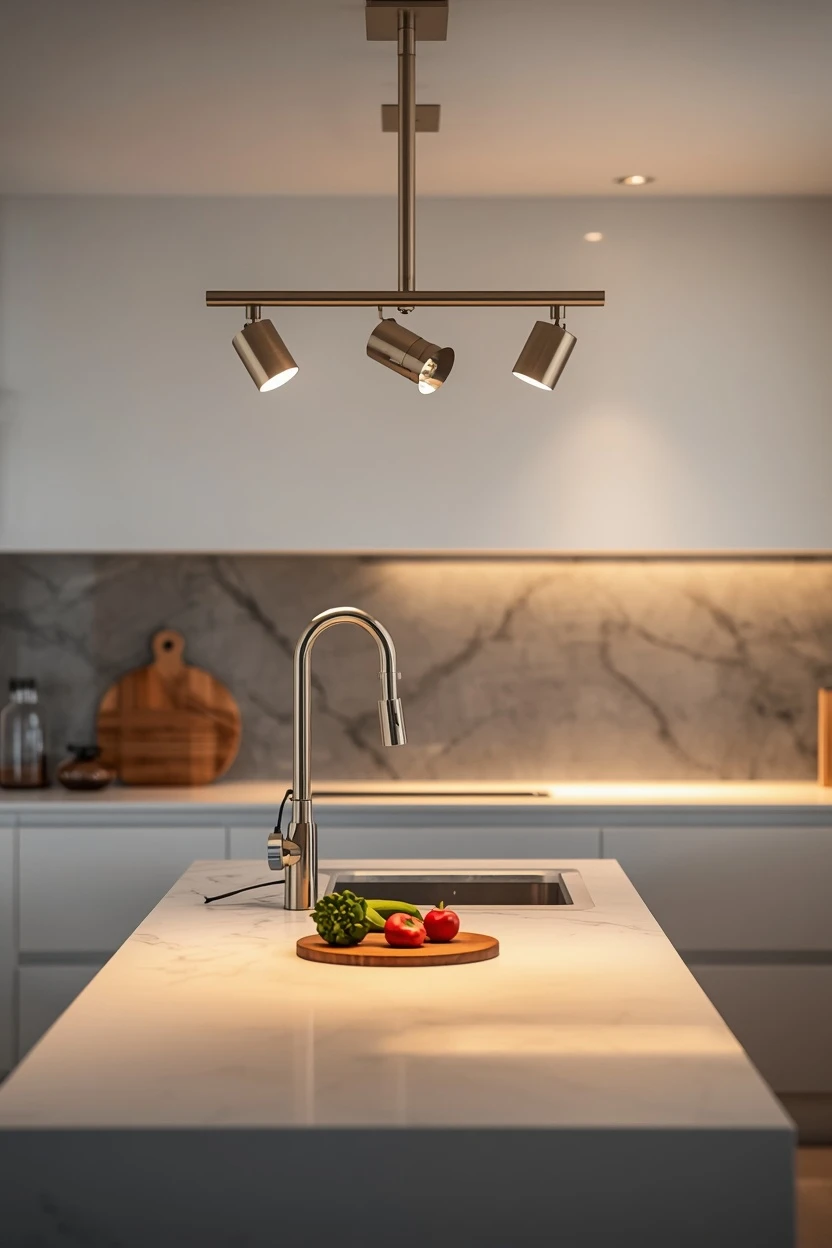
A single monorail track running the length of your main counter puts adjustable spotlights exactly where task light matters most. Monorail systems use a low-voltage transformer and a slim curved or straight rail that mounts directly to the ceiling with standoffs, keeping the profile tight against the surface. Space the heads roughly 24 inches apart and aim alternating lights toward the counter edge and the backsplash to eliminate shadows when you are working. Satin nickel or matte black heads disappear against a white ceiling while still providing 500 to 800 lumens per head — enough for detailed prep work.
The main advantage over recessed cans is that you can slide the heads along the rail later if your workflow changes or you add a new appliance station.
2. H-Style Track System for an Open-Concept Space
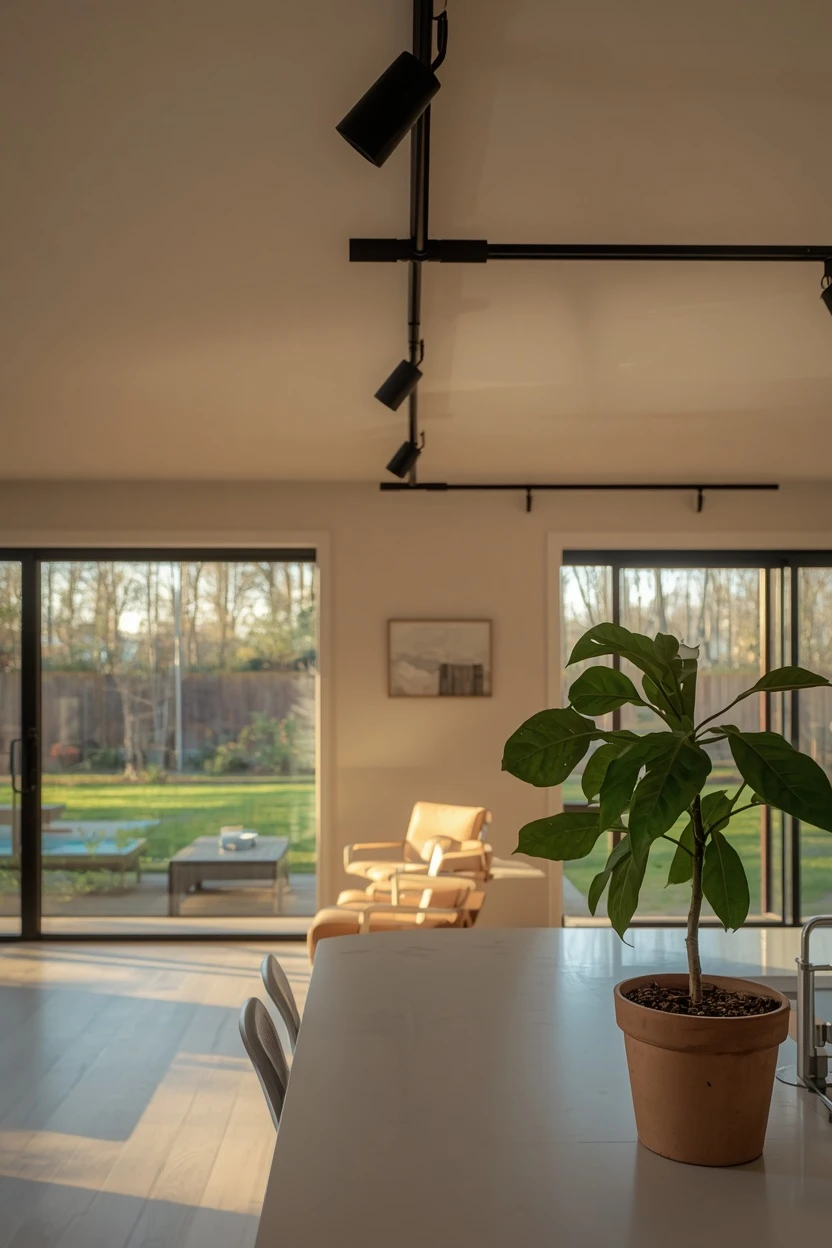
An H-track layout — two parallel rails connected by one or two cross bars — covers a wide rectangular kitchen with even light distribution from a single junction box. This setup is ideal for open-concept spaces where the kitchen flows into a dining or living zone, because you can aim the heads inward toward the counters and outward toward the transition area. Standard H-track kits come in four-foot and eight-foot lengths, and most brands let you cut the rail to custom lengths on site with a hacksaw. Budget roughly one head per 18 to 24 inches of rail for adequate brightness. The visual trick here is choosing a rail color that matches the ceiling so the hardware fades and only the light cones draw attention.
3. Curved Flex Track Following the Island Perimeter
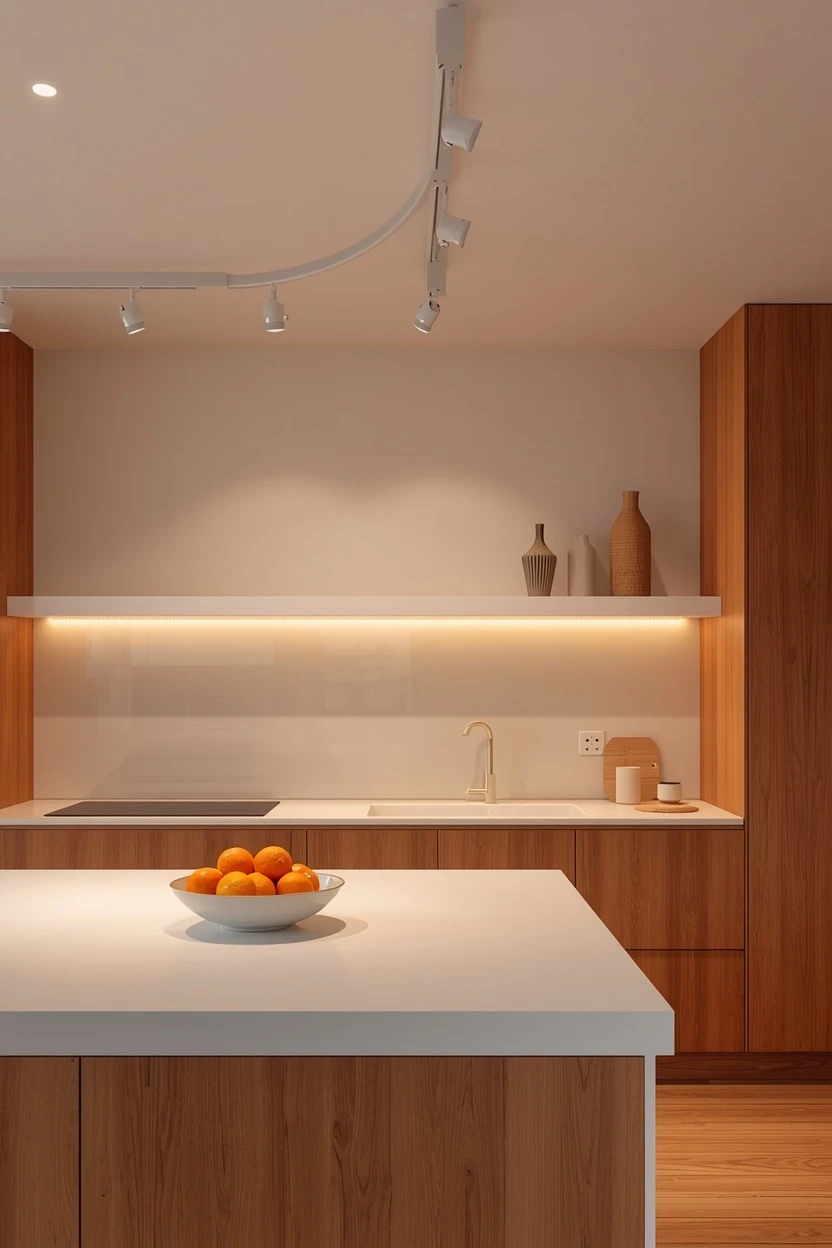
Flex track — a bendable rail that holds its shape once curved — lets you run lighting along a curved island, an arched counter edge, or any non-linear ceiling path. You bend it by hand to match the shape, then mount it with ceiling clips every 12 to 16 inches to keep the curve stable.
This is one of the more striking kitchen track lighting ideas because the track itself becomes a design element rather than disappearing into the ceiling. Pair it with compact gimbal heads that pivot 360 degrees so you can direct each light independently despite the curved rail path.
The trade-off is installation time: bending, clipping, and wiring a flex track takes two to three times longer than a straight rail, so factor that in if you are hiring an electrician.
4. Cable-Suspended Track with Small Pendant Attachments
Cable track systems suspend two thin tensioned wires between wall anchors, and small pendant heads clip onto the cables rather than sitting on a rigid rail. The result is a lighter, more minimal profile than any conventional track — almost like the lights are floating across the ceiling. You can attach both spotlight heads and small pendant shades to the same cable run, mixing directed task light with softer ambient glow in one system.
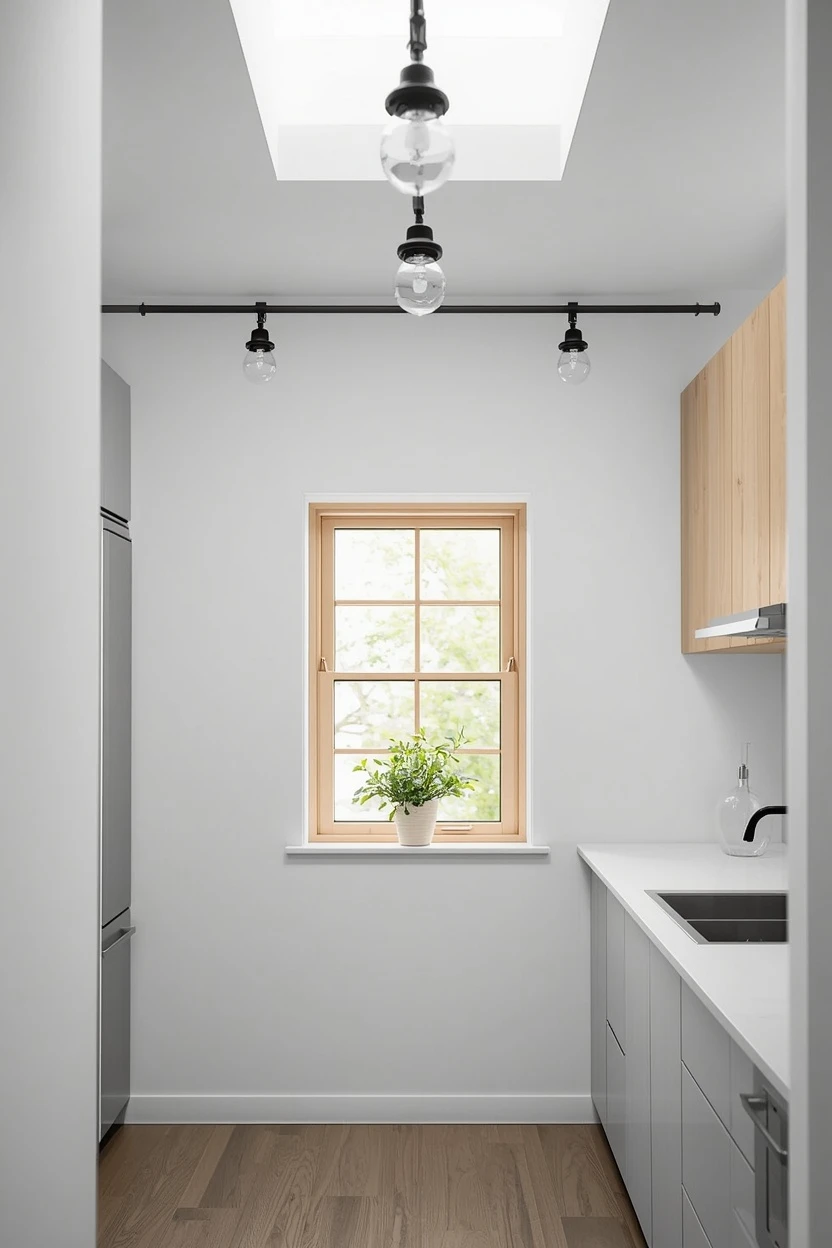
This dual-purpose capability makes cable track one of the most versatile approaches for kitchens that need to switch between bright work mode and relaxed evening ambiance. Keep the cable tension tight and check it every six months; loose cables sag visibly and throw off the alignment of the heads.
5. Matte Black Track Lighting for Bold Modern Contrast
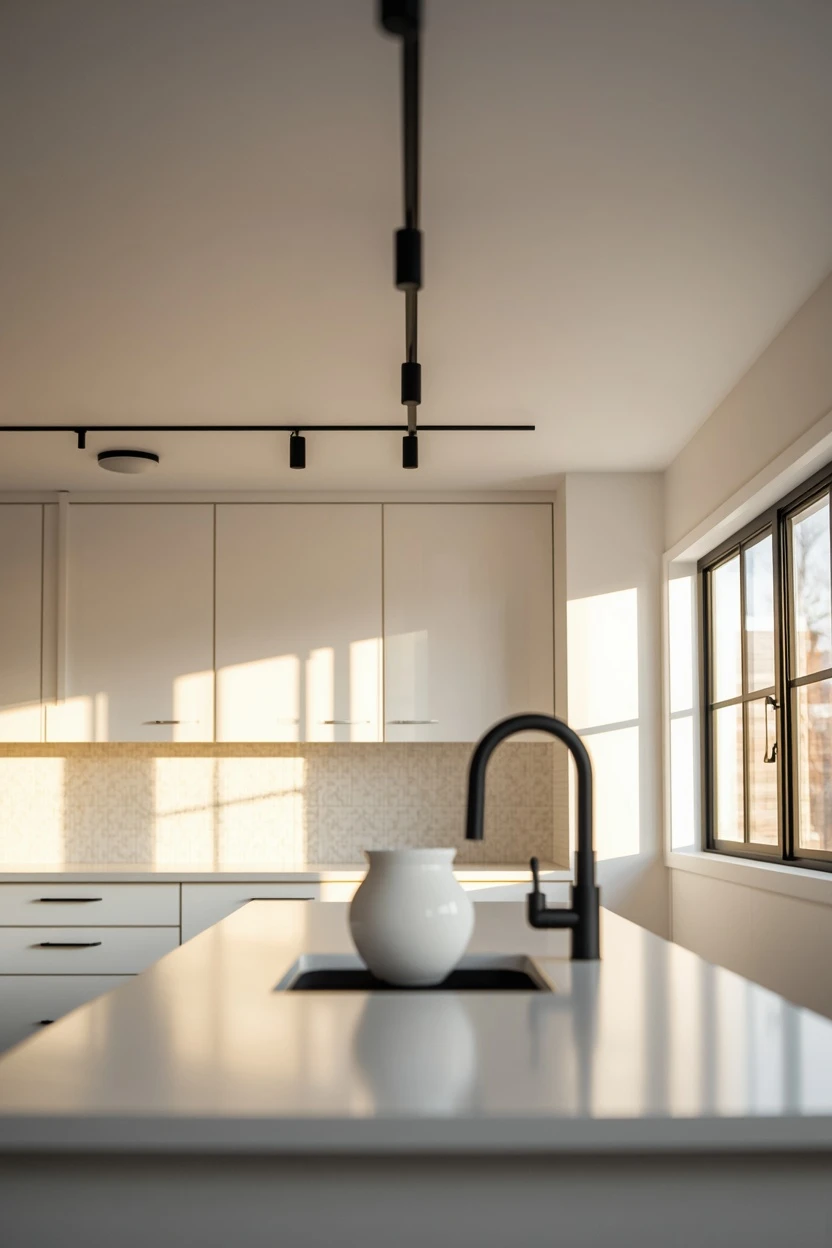
In a predominantly white or light-toned kitchen, matte black track hardware creates a deliberate graphic contrast that turns the ceiling into part of the design rather than an afterthought. Black rails paired with black cone-shaped heads read sharp and contemporary, and they coordinate naturally with black cabinet pulls, faucet finishes, and range hood trims. The key is committing fully to the contrast — a partial approach with mismatched metal tones dilutes the impact. Choose LED heads in the 3000K range for this setup so the warm light temperature softens the overall black-and-white palette and prevents the room from reading sterile.
Run the track parallel to the longest wall to emphasize the room’s length and maintain a clean visual line.
6. Recessed-Look Track Heads for a Clean Ceiling Line
Some track heads are designed with a deep cylinder that mimics the look of recessed can lighting while still attaching to a surface-mounted rail. These recessed-profile heads sit flush against the track connector and aim straight down, giving you the even downlighting of recessed cans without the cost and mess of cutting into the ceiling.
They work especially well in rental kitchens or older homes where cutting recessed holes is not practical or not permitted. Opt for heads with a 40-degree beam angle for general ambient coverage or a 25-degree spot angle for tighter task lighting over specific zones.
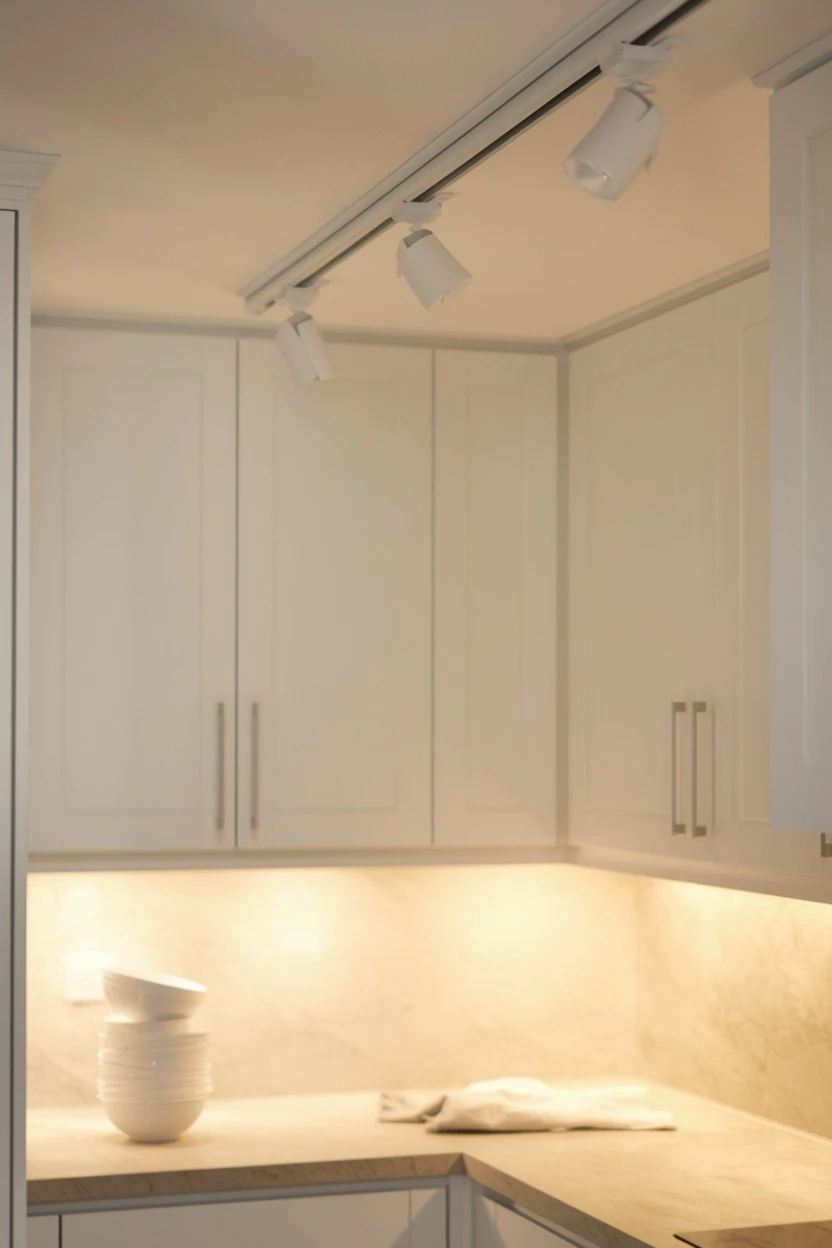
The only visual giveaway is the rail itself, which you can paint to match the ceiling color for near-invisible hardware.
7. Brass Track Rail with Directional Cone Heads
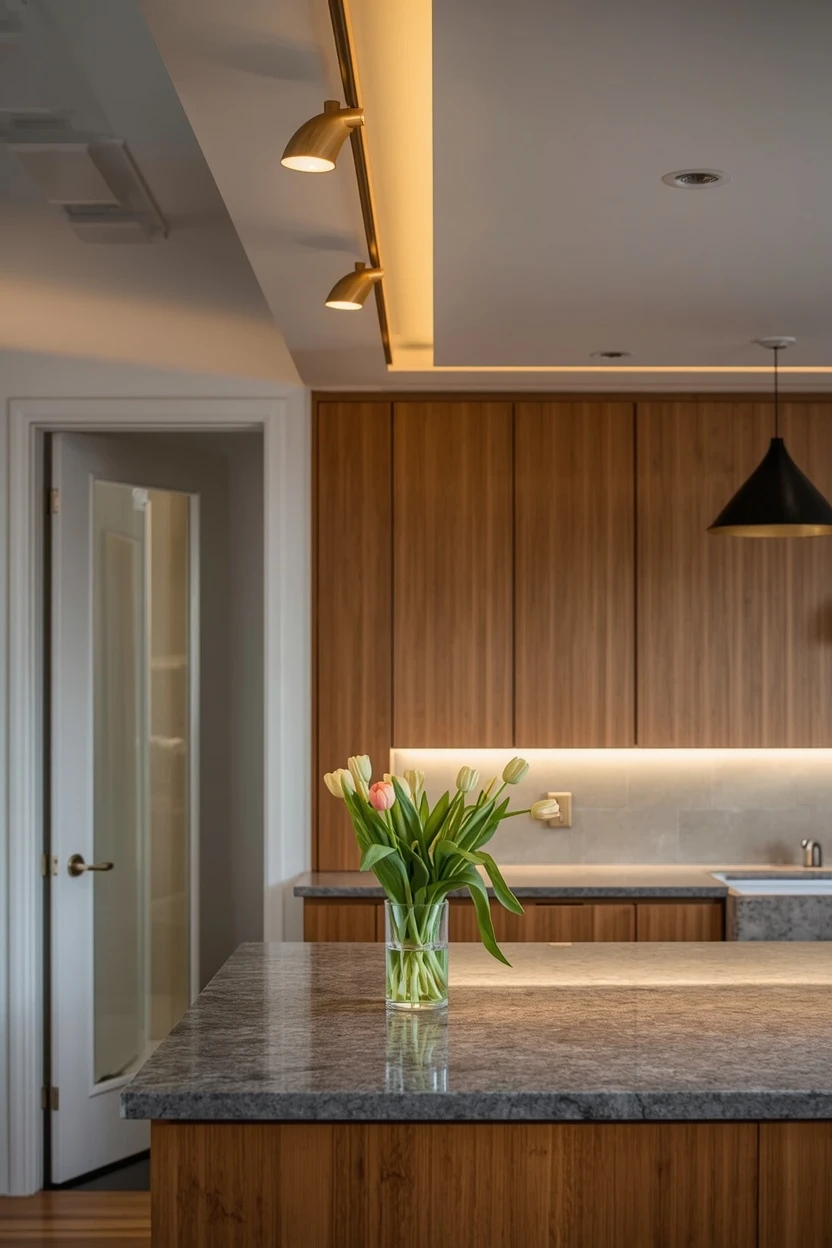
Brass or brushed gold track systems challenge the notion that track lighting belongs only in modern or industrial kitchens. A warm brass rail with matching cone-shaped directional heads sits comfortably in transitional, mid-century, and even Art Deco-influenced spaces. The brass tone warms up cool countertop materials like grey quartz or honed marble and complements warm wood cabinetry without competing. Look for solid brass or brass-plated steel rails — the plated versions cost less but may show wear at the connector joints over time. Aim the cones in alternating directions so some wash light across the backsplash while others illuminate the countertop surface, creating visual depth across the room.
8. Two-Circuit Track System for Layered Brightness Control
A two-circuit track carries two separate electrical circuits within a single rail, which means you can wire half the heads to one dimmer switch and the other half to a second switch. This gives you independent brightness control for different zones — bright task light over the prep counter and a dimmer ambient glow over the dining side — from one piece of ceiling hardware. The dual-circuit capability is the closest track lighting gets to the flexibility of a full smart lighting system without the app complexity.
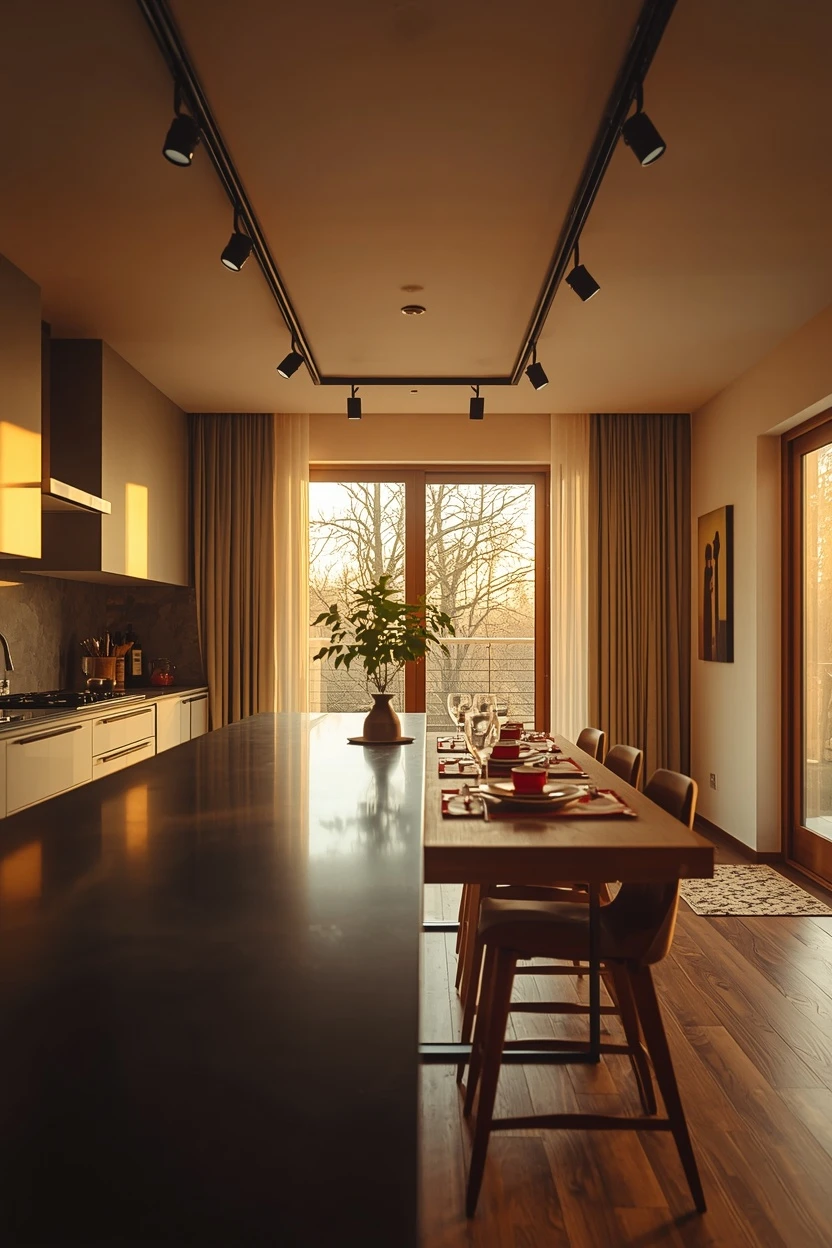
Installation is slightly more involved because you need two separate dimmer switches wired back to the same rail, but any licensed electrician can handle it in under an hour. Use this layout when your kitchen spans two distinct activity zones that need different light levels at different times of day.
9. Industrial Exposed Track with Vintage-Style Bulbs
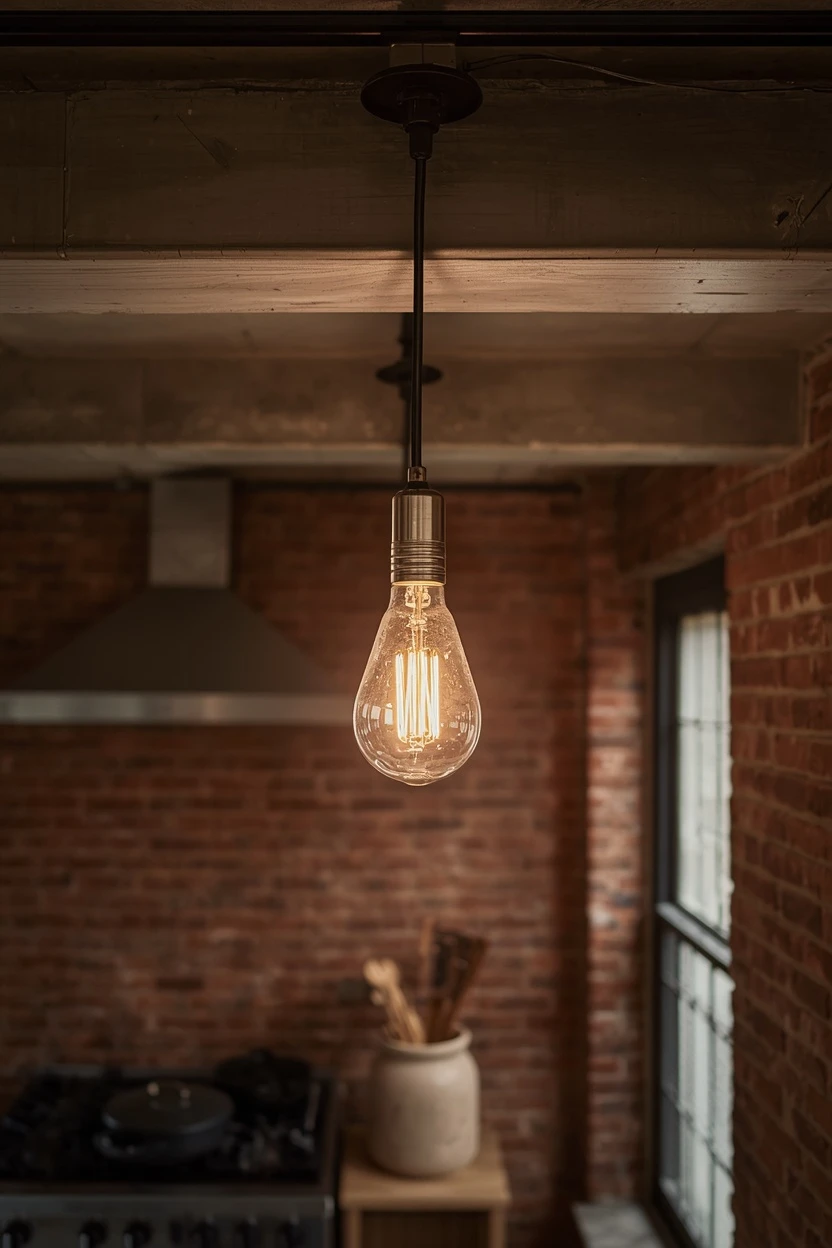
For loft kitchens and warehouse-conversion spaces, an exposed conduit-style track with oversized vintage Edison bulbs delivers the raw utilitarian aesthetic that polished track systems intentionally avoid. The track itself is thicker — often 1.5 to 2 inches in diameter — and mounts to the ceiling on visible brackets that become part of the decor. Pair it with ST64 or G25 LED filament bulbs in the 2200K range for that deep amber tone that suits exposed brick, concrete floors, and blackened steel shelving. This is not the most efficient lighting approach — the lumens per head are lower and the beam spread is wider and less controlled — so supplement with under-cabinet LED strips for genuine task coverage.
The style impact, though, is hard to replicate with any other track format.
10. Slim Profile Track Lighting Along a Galley Ceiling
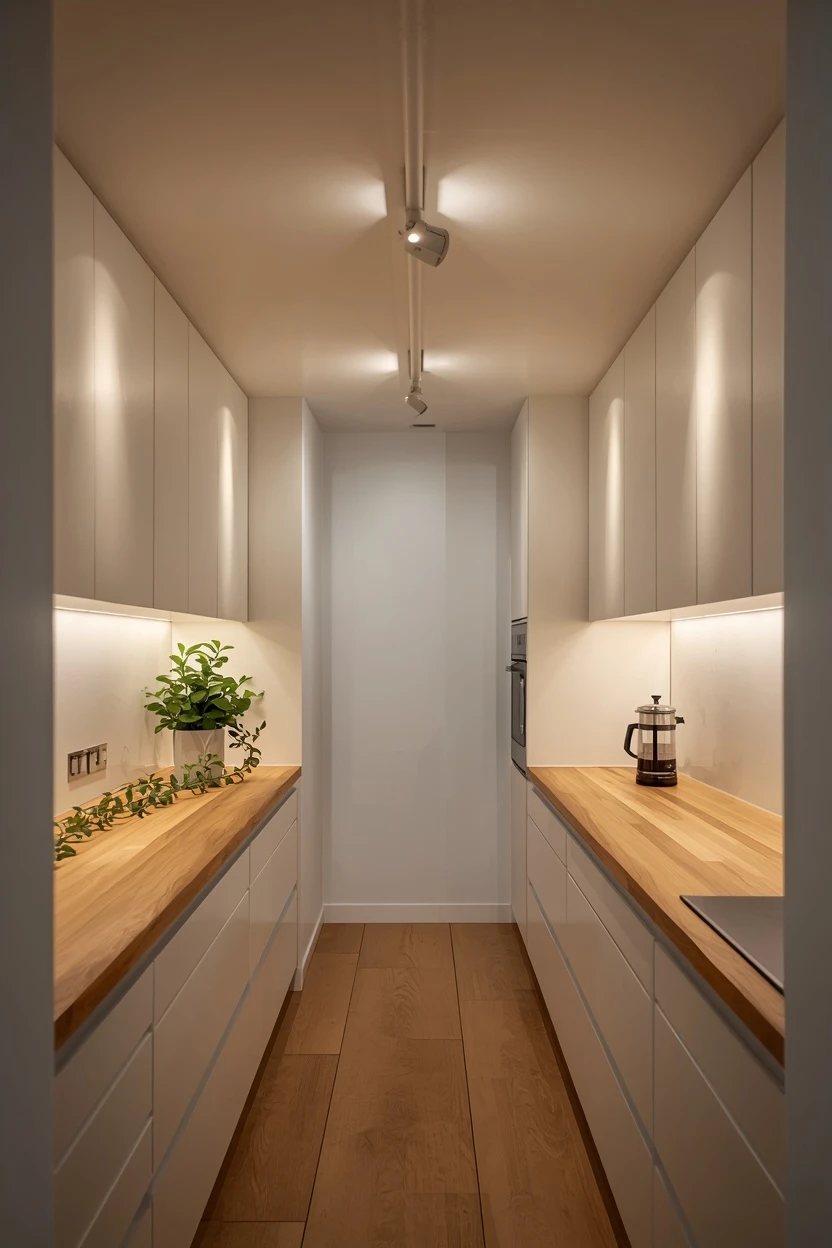
Galley kitchens have narrow ceilings where anything bulky looks crowded, so a slim-profile track running dead center along the length of the room is the most spatially honest solution. Look for micro-track systems with rail profiles under one inch deep and head diameters around two inches — they deliver focused light without adding visual weight overhead. Run the track the full length of the galley and position heads to alternate between the two counter sides so each wall gets even coverage. This layout also draws the eye along the ceiling in a single clean line, which makes a short galley read longer than it is. Pair the track with a warm white LED temperature around 2700K to keep the tight corridor from reading clinical under overhead light.
11. Track-Mounted Spotlights Aimed at Open Shelving
Open shelving looks best when it is lit from above rather than relying on ambient room light, and track-mounted spotlights give you precise aim control that dedicated shelf lights cannot match. Position the track 12 to 18 inches out from the wall and angle each spotlight at roughly 30 degrees toward the shelf face so the light grazes the objects without creating harsh shadows behind them.
Use narrow 15-to-25-degree beam angles to keep each cone of light on its target shelf rather than spilling across the ceiling. This museum-style approach turns your everyday dishes, cookbooks, and display pieces into a curated visual feature.
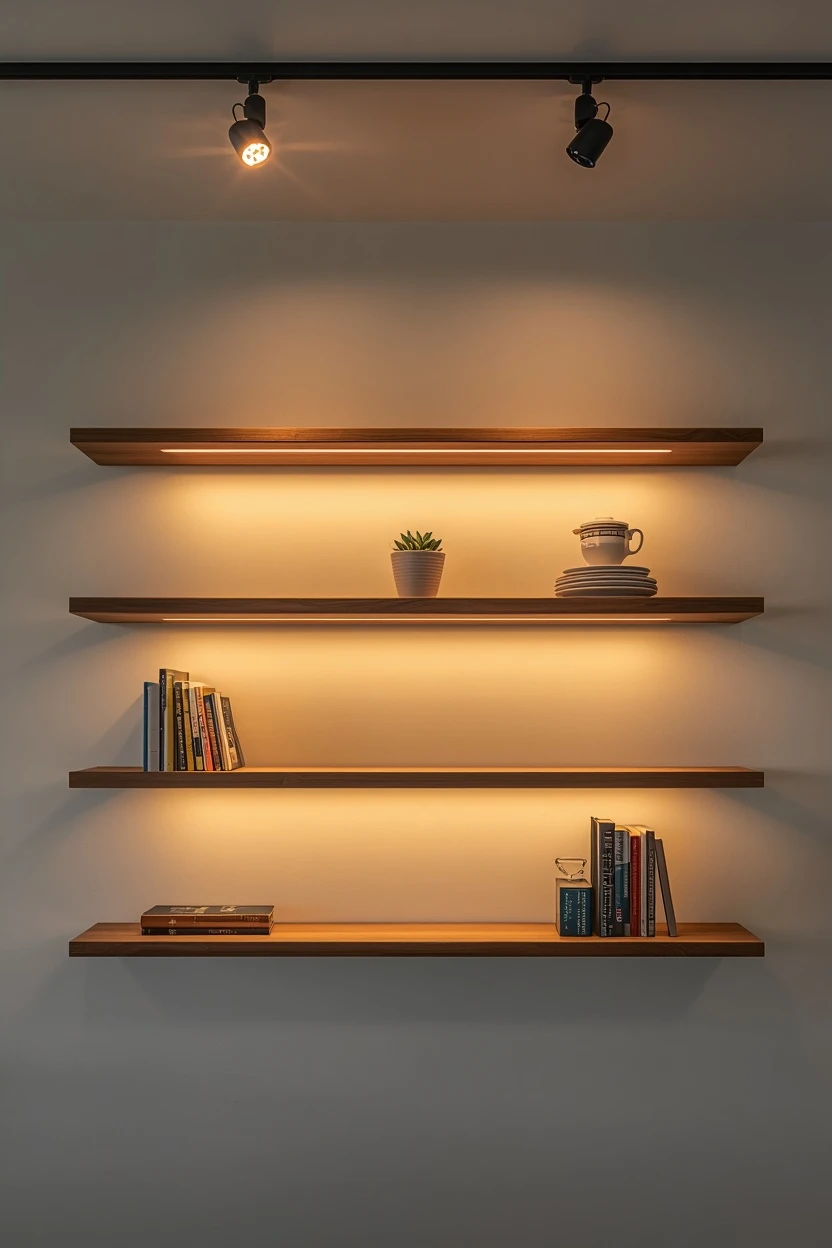
The practical benefit is that you can readjust the aim whenever you restyle the shelves — no rewiring, no new holes, just a twist of the head.
12. White-on-White Track for a Scandinavian Cooking Space
Painting the track rail white and choosing white track heads creates a nearly invisible lighting system against a white ceiling — the hallmark of Scandinavian kitchen design where the fixtures serve the room without drawing attention to themselves. The light itself does the work, casting clean pools of illumination across pale wood counters, white tile backsplashes, and light grey flooring. This is the most self-effacing kitchen track lighting setup on this list, and that is exactly the point.
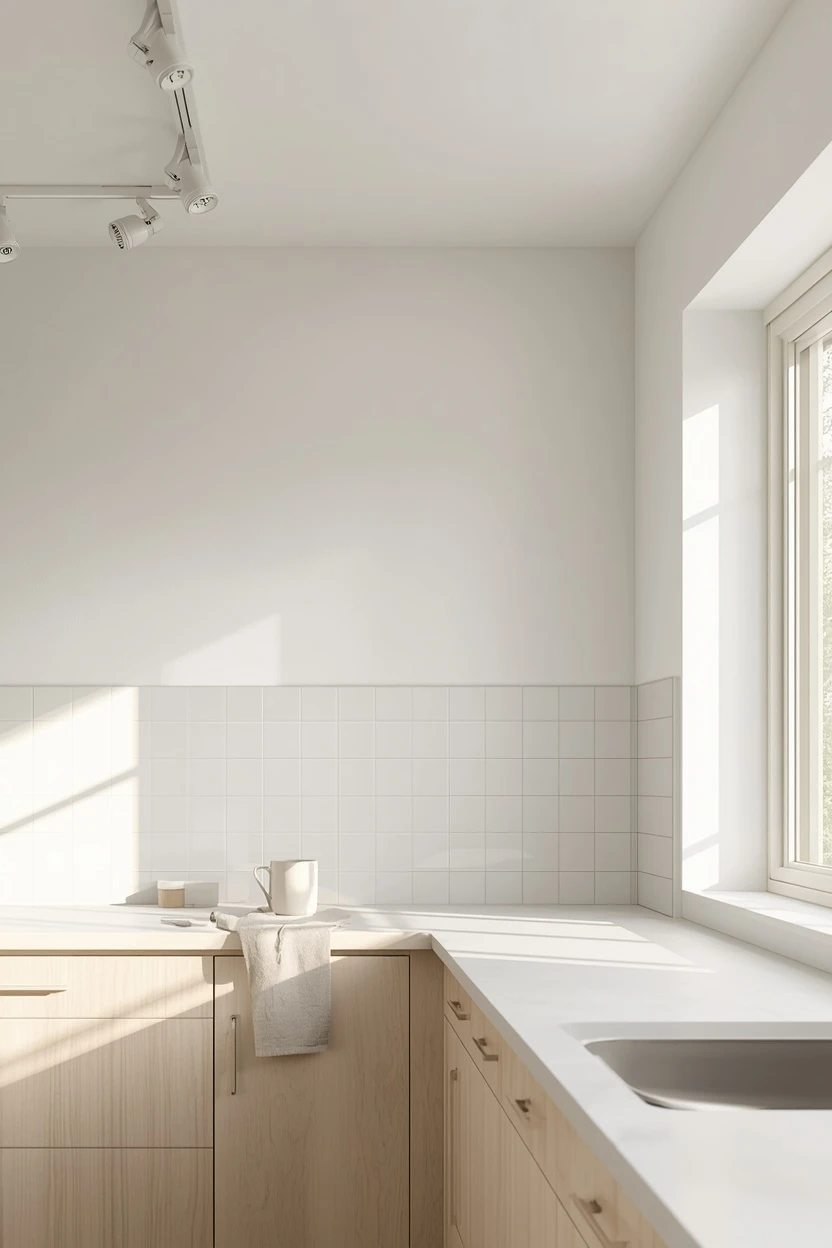
Select heads with a high CRI rating above 93 so the subtle material textures in a Scandi palette — linen, birch, matte ceramic — render with depth rather than washing out under flat overhead light. Add a single matte black or brass pendant elsewhere in the room for a deliberate contrast point.
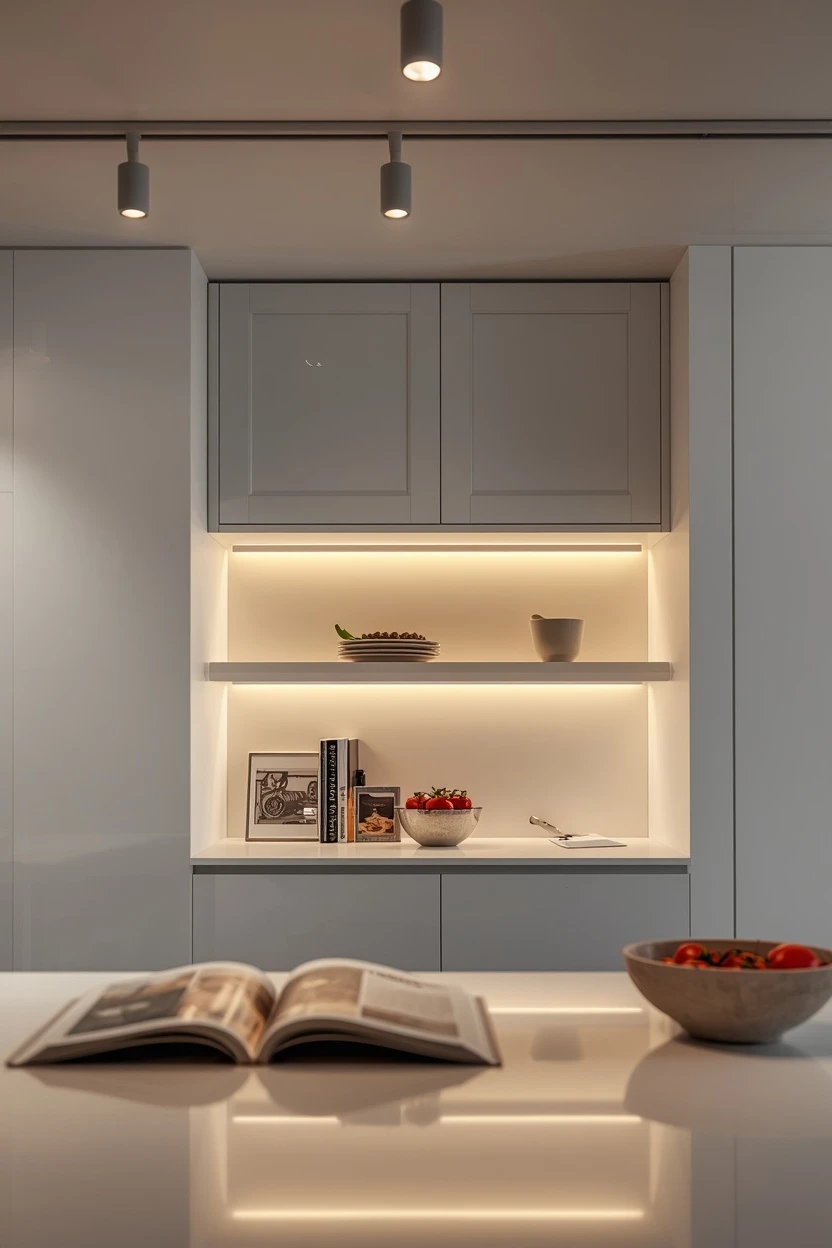
13. Ceiling Track Combined with Under-Cabinet LED Strips
Pairing ceiling track lighting with under-cabinet LED strips gives a kitchen two independent light layers that together eliminate every shadow a single source would miss. The track handles overhead ambient and accent duties while the LED strips deliver bright, close-range task light directly onto the counter surface where you actually cut, measure, and read recipes. Wire them on separate switches so you can run the strips at full brightness during meal prep and dial the track down to a low glow, or reverse the setup for evening ambiance. Warm white LEDs at 2700K under the cabinets keep the countertop light from clashing with the overhead track temperature.
This dual-layer approach is the closest thing to a professional kitchen lighting plan you can achieve without hiring a lighting designer.
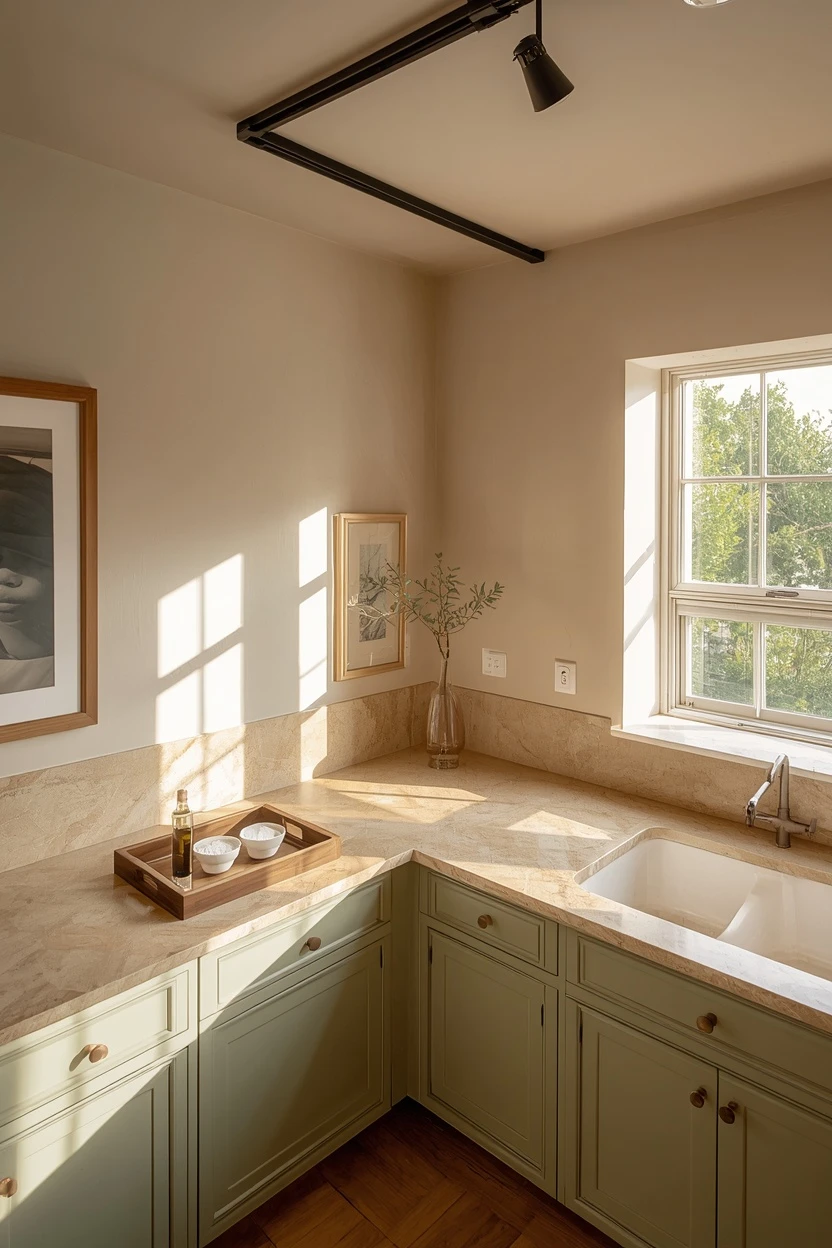
14. Angled Track Layout Designed for an L-Shaped Kitchen
An L-shaped kitchen benefits from an L-shaped track layout that follows the two counter runs and places a head at the inside corner where the counters meet — the spot that every other ceiling light misses. Most track brands sell 90-degree L-connectors and T-connectors that join two straight rail sections into a custom angle without visible gaps. This cornered layout means every section of counter gets its own dedicated light head rather than relying on a single fixture to reach across the bend. Use five to seven heads total for a standard L-shaped kitchen and aim the corner head directly downward onto the intersection counter, which is usually the primary prep zone. The angled track also creates a visual frame on the ceiling that echoes the room shape, tying the lighting plan to the architecture.
Where I’d Start if I Only Did Three Things
If I only did three things, I would start by mapping my kitchen counter layout onto the ceiling with painter’s tape to see exactly where the track rail should run — this five-minute exercise prevents most placement regrets. Second, I would buy a track system with swappable heads so I could start with all spotlights for task coverage and add a pendant attachment later when I want more ambient character. Third, I would install a dimmer switch on the track circuit from day one, because the difference between track lighting at full blast and track lighting at 50 percent is the difference between a bright workspace and a room you actually want to sit in after dinner.
Frequently Asked Questions
What are the best kitchen track lighting ideas for small kitchens?
Slim-profile micro-track systems with compact heads suit small kitchens best because they add minimal visual bulk to the ceiling. A single straight rail running the length of the room with four to six small directional heads covers most galley or one-wall layouts. White-on-white track that matches the ceiling color disappears visually and prevents a small space from looking cluttered overhead.
How far apart should track lighting heads be spaced?
A good starting point is 18 to 24 inches between heads for general kitchen coverage. Tighter spacing around 12 to 16 inches suits task-heavy zones like the main prep counter, while wider spacing of 24 to 30 inches is fine for ambient background light in dining or transition areas. Always test the spacing by moving the heads along the rail after installation and adjusting before locking them in place.
Is track lighting outdated for modern kitchens?
Not at all. The thin-profile rails, architectural finishes, and LED-compatible heads available now look nothing like the chunky brass track systems from decades ago. Contemporary track lighting in matte black, brushed brass, or minimalist white is specified regularly in high-end kitchen renovations because no other ceiling system offers the same combination of adjustability and clean design lines.
Can I install track lighting without hardwiring?
Plug-in track kits are available and mount to the ceiling with screws while drawing power from a standard wall outlet through a cord and plug. They are ideal for renters who cannot modify electrical wiring. The cord is usually five to eight feet long and can be painted or run along the ceiling-wall junction to minimize visibility, though it will never look as clean as a hardwired installation.
Final Thoughts
The right kitchen track lighting ideas solve a problem that fixed fixtures cannot — putting directional, adjustable light exactly where your counters, shelves, and work zones need it. Whether you go with a minimal monorail, a bold matte-black contrast rail, or a flexible cable system with pendant attachments, the principles stay the same: match the track shape to your kitchen footprint, space the heads based on where you actually stand and work, and pair the overhead track with a dimmer and under-cabinet strips for a layered lighting plan that handles both daytime cooking and evening ambiance.

zarcoyt2025
Khawar Iqbal is the founder and editor of Cozy Homes Hub. He writes about cozy, livable home decor — from small-apartment layouts to room-by-room styling guides — with a focus on warm palettes, layered lighting, and budget-friendly ideas that actually work in real homes.
Related Articles
16 Kitchen Light Fixture Ideas That Transform Any Space
Walk into any well-designed kitchen and the first thing that pulls your eye upward is the light fixture. It anchors the entire…
Read more →
15 Kitchen Layout Ideas That Improve How You Cook
Most kitchen layout ideas start with a shape — L, U, galley — and then try to squeeze your life into that…
Read more →
12 Kitchen Configuration Ideas for Smarter Everyday Use
The reason a kitchen configuration matters more than its shape is that two kitchens with the exact same L-shape floor plan can…
Read more →