Sage Green Bedroom Ideas: 12 Calming Looks for a Restful 2026 Retreat
July 2, 2026 · 12 min read
 By Khawar Iqbal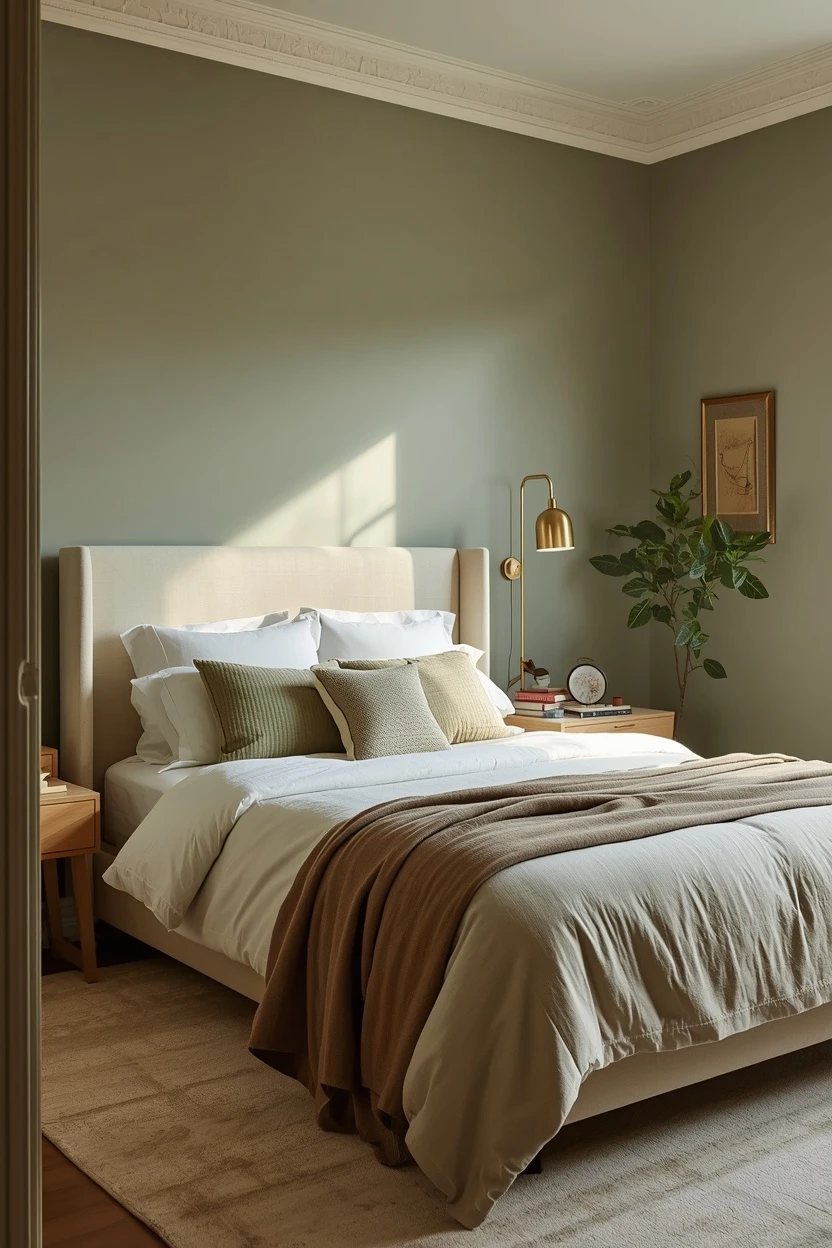
Sage green has quietly become the most requested bedroom colour of the decade, and it is easy to see why. It sits in the soft, dusty middle ground between grey, green, and beige, which makes it endlessly easy to live with.
Unlike a bold emerald or a cool mint, sage reads as calm rather than loud. It lowers the visual temperature of a room, which is exactly what you want in the one space designed for sleep.
In this guide you will find 12 sage green bedroom ideas you can actually use, complete with specific paint shades, pairing palettes, lighting temperatures, and small-space fixes. Every idea is built to help you create a restful retreat that still feels current in 2026.
1. Start With the Right Sage Green Paint
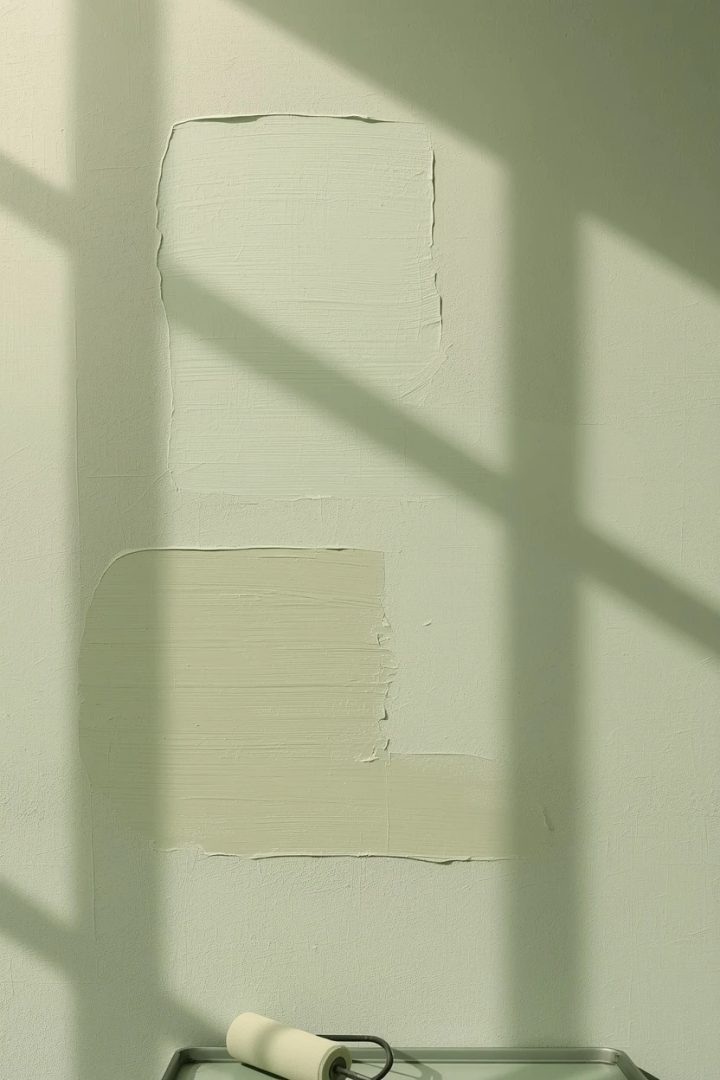
Not all sage is the same, and the shade you choose changes the entire mood of the room. The trick is to read the Light Reflectance Value, or LRV, which tells you how much light a colour bounces back on a 0 to 100 scale.
For a bright, airy feel, choose a sage with an LRV in the high 30s to high 40s. Benjamin Moore October Mist 1495 (LRV around 48) and Sherwin-Williams Evergreen Fog SW 9130 (LRV around 30) are two of the most reliable bedroom sages on the market.
If your bedroom faces north or gets little direct sun, lean toward a warmer, higher-LRV sage so the room never turns flat or grey. South-facing rooms can handle a deeper, more saturated sage without feeling dark.
Always test a sample on at least two walls and live with it for 48 hours. Sage shifts noticeably between morning daylight and warm evening lamplight, and you want a shade you love at both ends of the day.
2. Make a Sage Green Accent Wall Behind the Bed
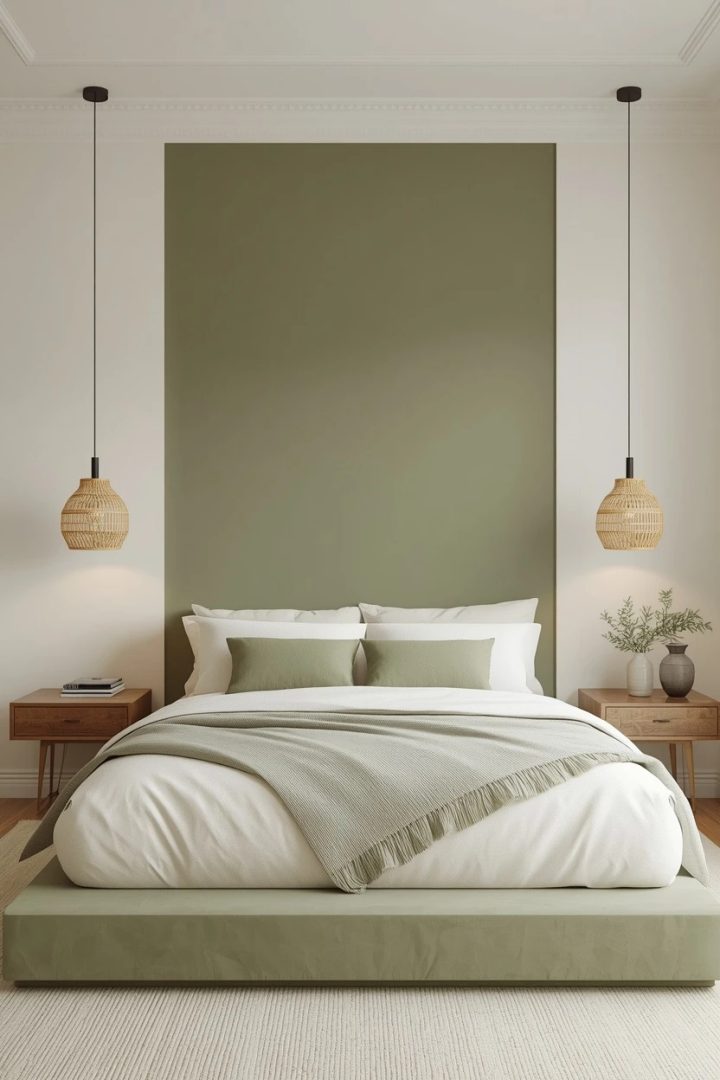
If you are not ready to commit to a fully sage room, a single accent wall behind the headboard delivers the colour exactly where the eye lands. It frames the bed and instantly anchors the space.
Keep the other three walls in a soft, warm white such as Benjamin Moore White Dove OC-17. The contrast lets the sage feel intentional rather than accidental, and it keeps the room feeling open.
For the most balanced look, run the sage wall floor to ceiling rather than stopping at a chair rail. A full-height block of colour reads as architectural and modern, while a half wall can feel dated.
This is also the most landlord-friendly idea on the list. One wall is quick to paint, cheap to change, and easy to return to neutral when you move out.
3. Try Two-Tone Sage and Cream Walls
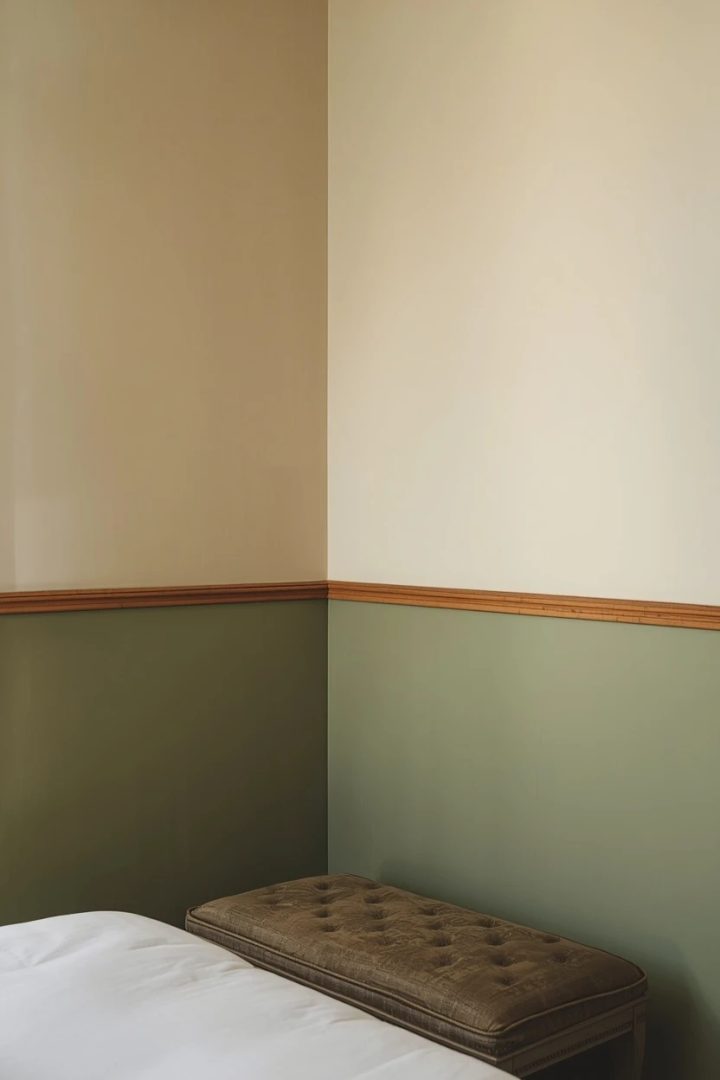
Two-tone walls bring quiet architecture to a plain box of a room. Painting the lower portion sage and the upper portion cream draws the eye down and makes ceilings feel taller.
The classic ratio is roughly two-thirds colour on the bottom and one-third lighter shade on top, with the break landing about 60 inches from the floor. A slim wooden picture rail or a painted line keeps the transition crisp.
This approach works beautifully in older homes with picture rails already in place, but it suits new builds too. Just use painter's tape and a level to keep the dividing line dead straight.
Reverse the layout in rooms with low ceilings: lighter on the bottom, sage on top, to avoid a heavy, closed-in feeling.
4. Layer Sage Green Bedding for Depth

You do not have to touch a paint can to bring sage into the bedroom. Bedding is the fastest, lowest-commitment way to test the colour and build instant softness.
The secret is layering tones rather than matching them. Combine a pale sage duvet, a mid-tone sage lumbar pillow, and a deeper olive throw so the bed reads as rich and considered, not flat.
Stick to natural fibres where you can. Washed linen and brushed cotton in sage have a matte, dusty finish that flatters the colour, while shiny polyester can make sage look cheap and cold.
Add one or two cream or oatmeal pieces to break up the green. A neutral anchor keeps the bed from feeling like a single block of colour.
5. Pair Sage Green With Warm Wood Tones
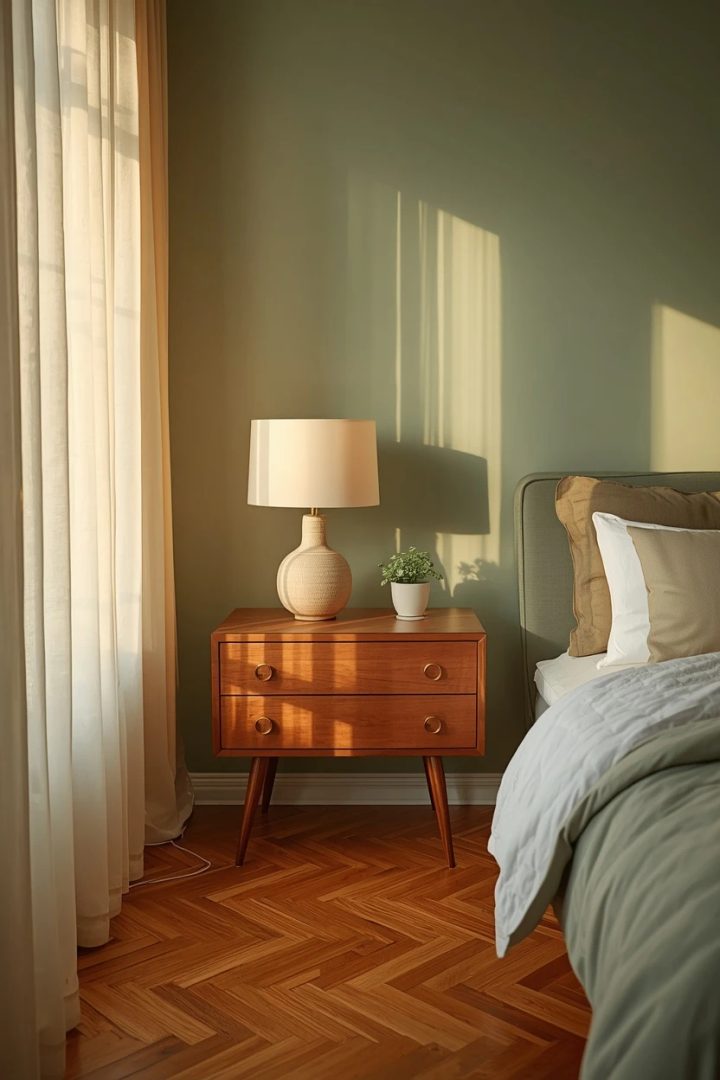
Sage and wood are a natural partnership because they share an earthy, organic origin. The warmth of timber stops sage from drifting too cool or clinical.
Mid-tone woods like walnut, oak, and teak are the easiest match. They pick up the warm undertones in sage and create a grounded, biophilic feel that suits a restful bedroom.
If your existing furniture is a cooler grey-washed wood, warm it up with woven baskets, a jute rug, or a rattan light shade. These small additions reintroduce the warmth sage needs to glow.
For contrast, a single piece in dark espresso wood, such as a bed frame or dresser, adds depth and keeps the palette from feeling washed out.
⚠️ Important Warning
Avoid pairing sage green with cool, blue-grey undertones throughout the room.
When sage sits next to grey with blue in it, both colours can read as dull, damp, and lifeless.
Sage almost always has a warm or yellow base, so it wants warm neutrals: cream, greige, oatmeal, and tan.
Before you buy paint or bedding, hold samples together in your actual bedroom light to confirm the undertones agree.
6. Add Brass and Gold Accents to Sage Green
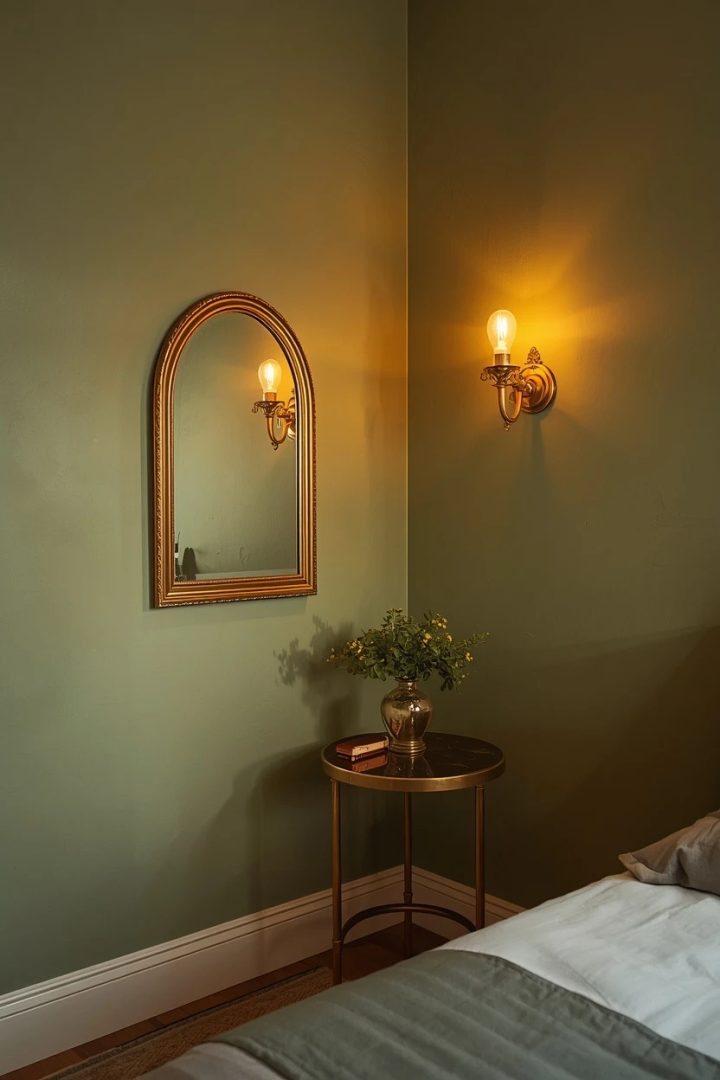
If sage is the calm base note, brass is the spark that makes the room feel finished. Warm metals flatter sage in a way that chrome and nickel never quite manage.
Use brass or aged gold on the details that already exist in the room: drawer pulls, a picture light, a mirror frame, curtain rods, and lamp bases. You do not need much for it to register.
Aim for an unlacquered or brushed brass rather than a bright, shiny gold. The softer finish reads as timeless and pairs more gracefully with the muted quality of sage.
Keep your metals consistent. Mixing two warm metals is fine, but adding cool chrome to the mix will fight the sage and break the calm mood.
7. Bring in Botanical and Biophilic Touches
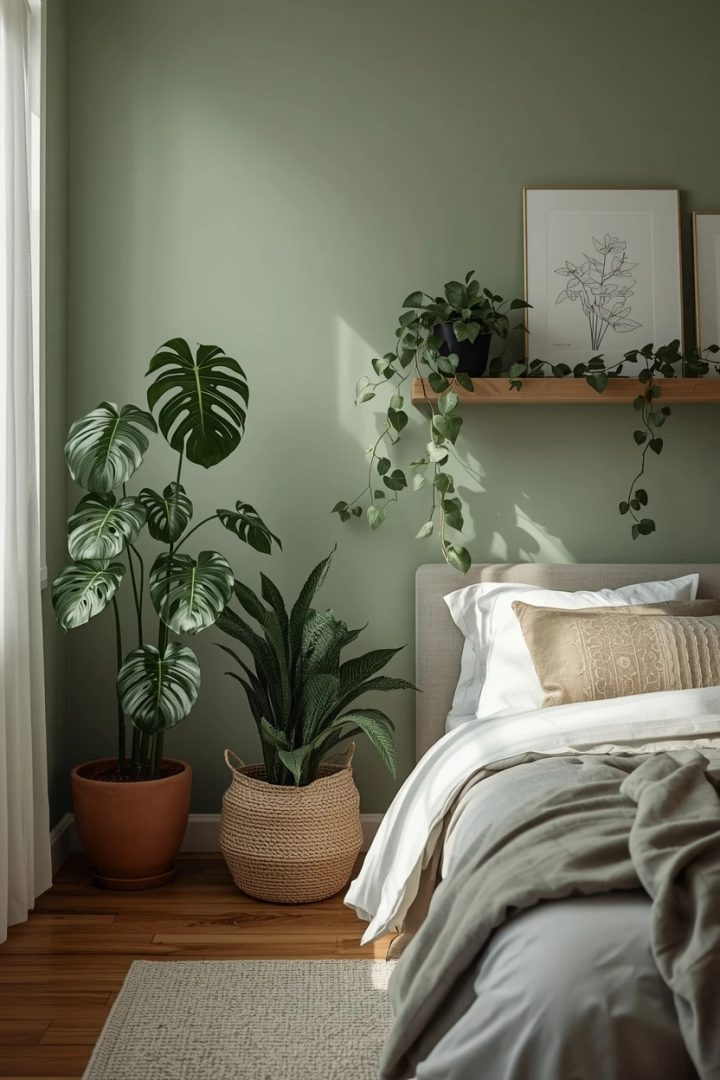
Sage is borrowed straight from nature, so leaning into a biophilic theme feels effortless. Living plants extend the colour story and improve the sense of calm a bedroom is meant to deliver.
Choose low-light, low-maintenance species for the bedroom: snake plant, pothos, ZZ plant, and heartleaf philodendron all thrive away from strong sun. They keep the green palette alive without daily fuss.
Echo the theme with botanical art, a leaf-print cushion, or a eucalyptus stem in a vase. Repeating the motif in a few places makes the scheme feel deliberate and layered.
Terracotta and stoneware planters add an earthy warmth that complements sage beautifully, reinforcing the natural, grounded feel of the whole room.
8. Choose a Sage Green Upholstered Headboard
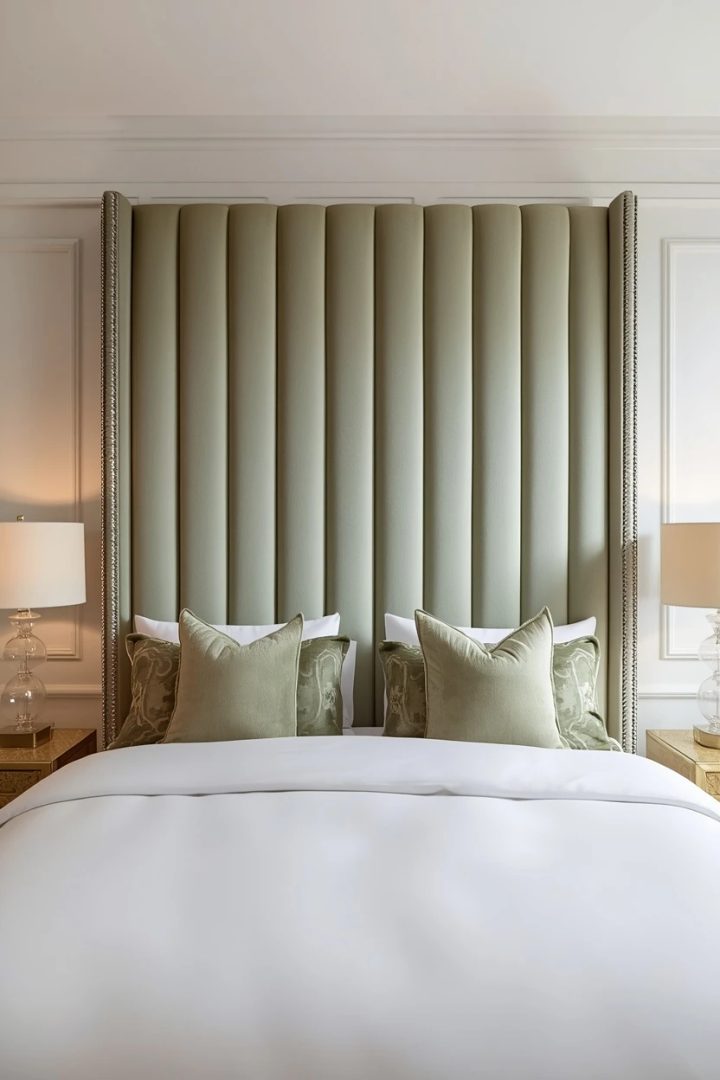
A sage upholstered headboard delivers the colour at exactly the right height and softens the whole sleeping area. It is the perfect middle path between a painted wall and coloured bedding.
Velvet in a muted sage adds subtle depth because the pile catches light differently across its surface, shifting from pale to rich as you move around the room. For a calmer, more matte look, choose a sage linen or boucle instead.
A tall headboard, roughly 48 to 58 inches high, makes a small room feel more luxurious and gives the bed real presence. Channel tufting or a simple arched silhouette both suit the soft sage palette.
Keep surrounding walls neutral so the headboard stays the hero. White or warm greige walls let a sage headboard read as a considered design choice rather than an accident.
9. Use Sage Green to Open Up a Small Bedroom
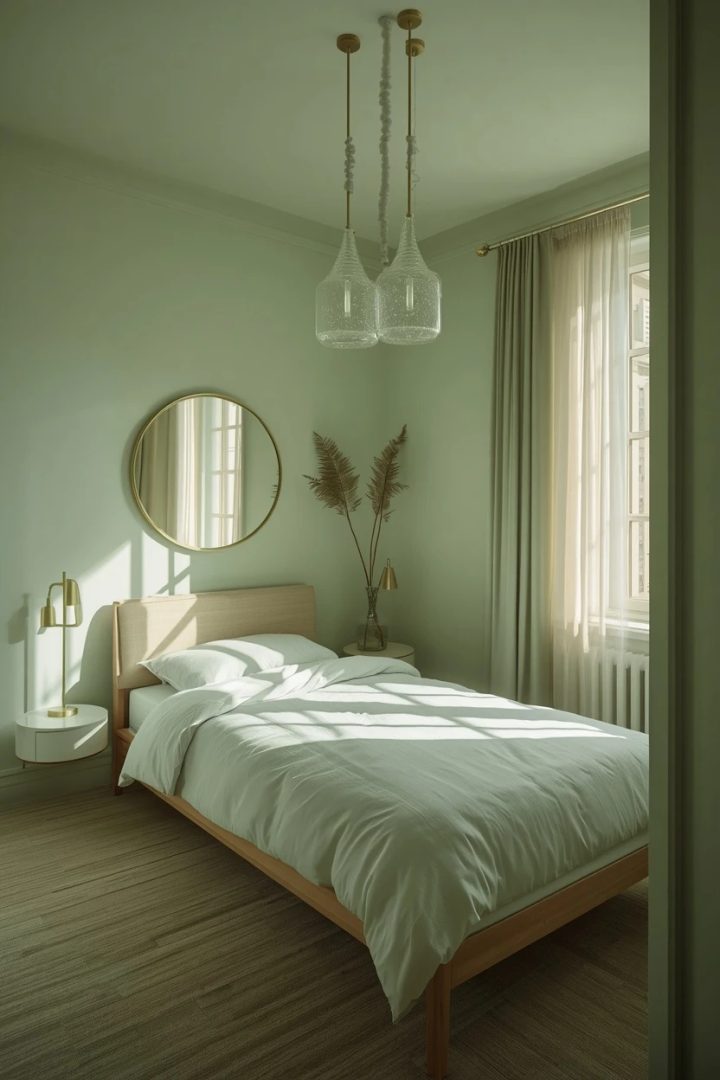
Small bedrooms are often kept stark white out of fear that colour will shrink them. A soft, high-LRV sage actually does the opposite, wrapping the room in a gentle, enveloping calm.
In a tight space, paint the walls, ceiling, and trim in the same pale sage. This colour-drenching technique erases the visual lines where walls meet, which tricks the eye into reading the room as larger.
Keep furniture low and leggy so light flows underneath, and add a large mirror opposite the window to bounce daylight around. Both moves make a small sage room feel open and bright.
Stick to a high-LRV sage, ideally above 40, in any small or low-light bedroom. Deeper sages can feel cozy but will close a tiny room in.
10. Combine Sage Green With Earthy Greige Neutrals
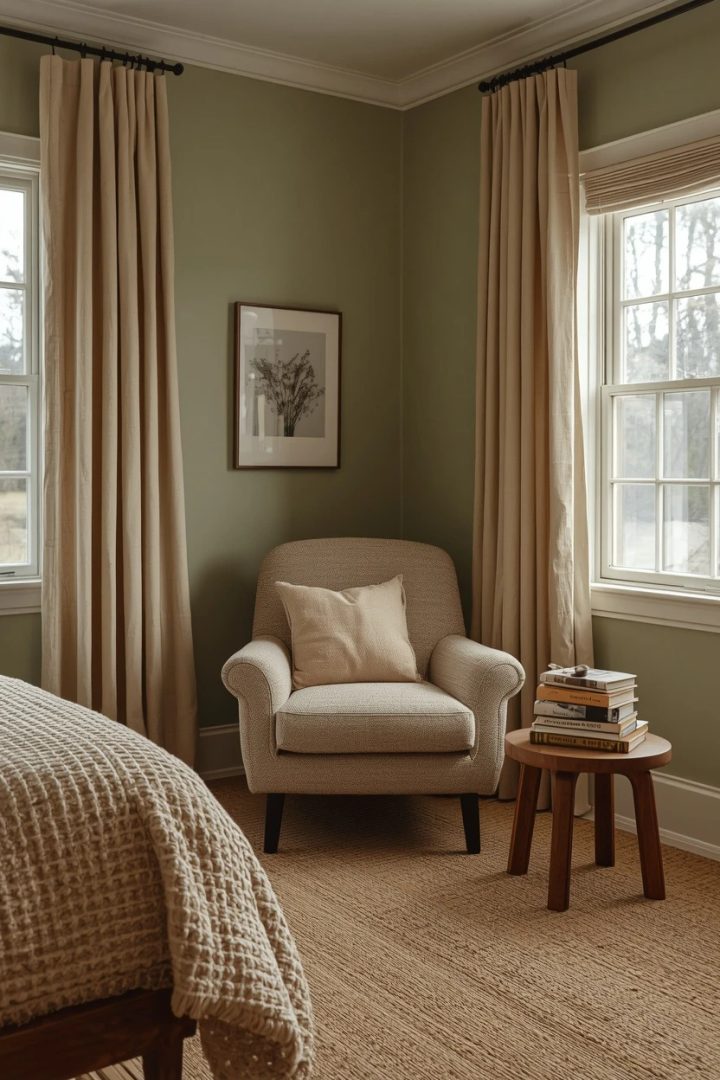
Greige, the soft blend of grey and beige, is sage green's most dependable neutral partner. It shares sage's warm undertone, so the two never clash.
Build the room in layers: sage on the walls, greige on larger soft furnishings, and tan or oatmeal on smaller accents. This graduated palette feels rich and collected rather than matchy.
Texture does the heavy lifting in a tonal scheme like this. A boucle chair, a chunky knit throw, a jute rug, and linen curtains keep a quiet palette from ever feeling boring.
This combination is also genuinely timeless. Earthy neutrals and sage have staying power, so the room will still feel right years after trend-led colours have faded.
11. Go Moody With Dark Sage and Forest Green
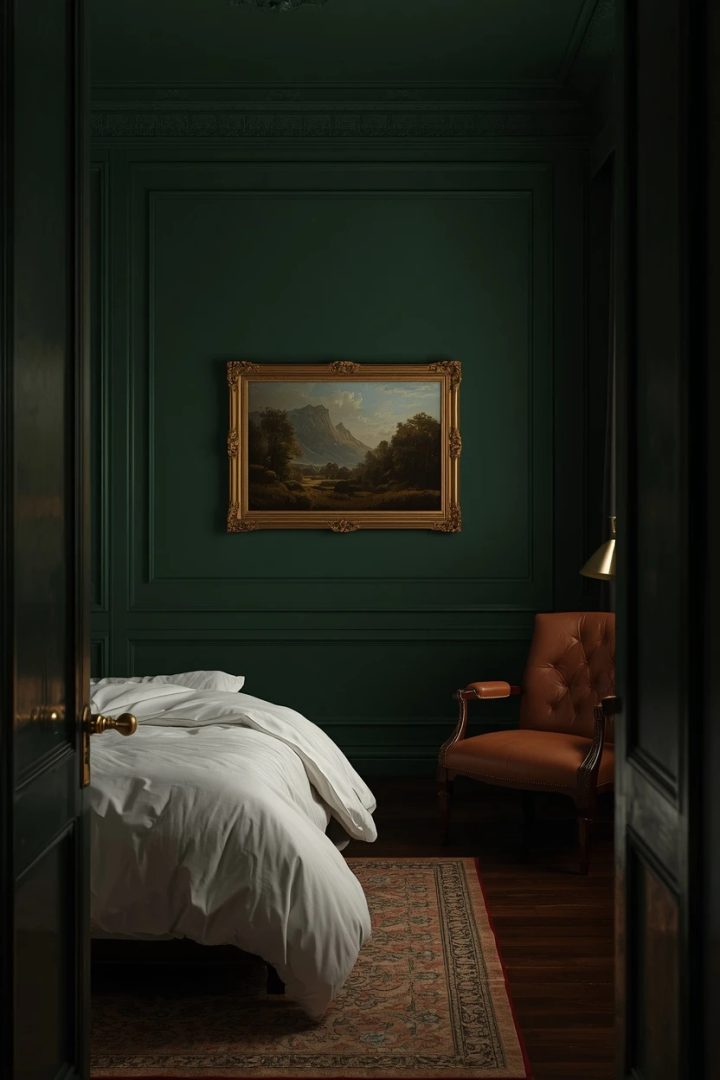
If your bedroom gets plenty of light, or you simply love a cocooning mood, a deeper sage or forest green creates a rich, hotel-like retreat. Farrow & Ball Card Room Green and Sherwin-Williams Pewter Green are go-to choices.
Dark green walls actually flatter sleep because the colour recedes and feels enveloping in low light. Balance the depth with crisp white bedding and a few brass accents so the room never feels heavy.
Use warm 2700K bulbs and layered lamplight rather than a single harsh overhead. Soft pools of light let a dark sage room glow instead of going gloomy after sunset.
This look thrives on contrast. One light element, whether white linen, a pale rug, or a natural wood floor, stops the deep green from swallowing the whole room.
12. Get the Lighting and Colour Temperature Right
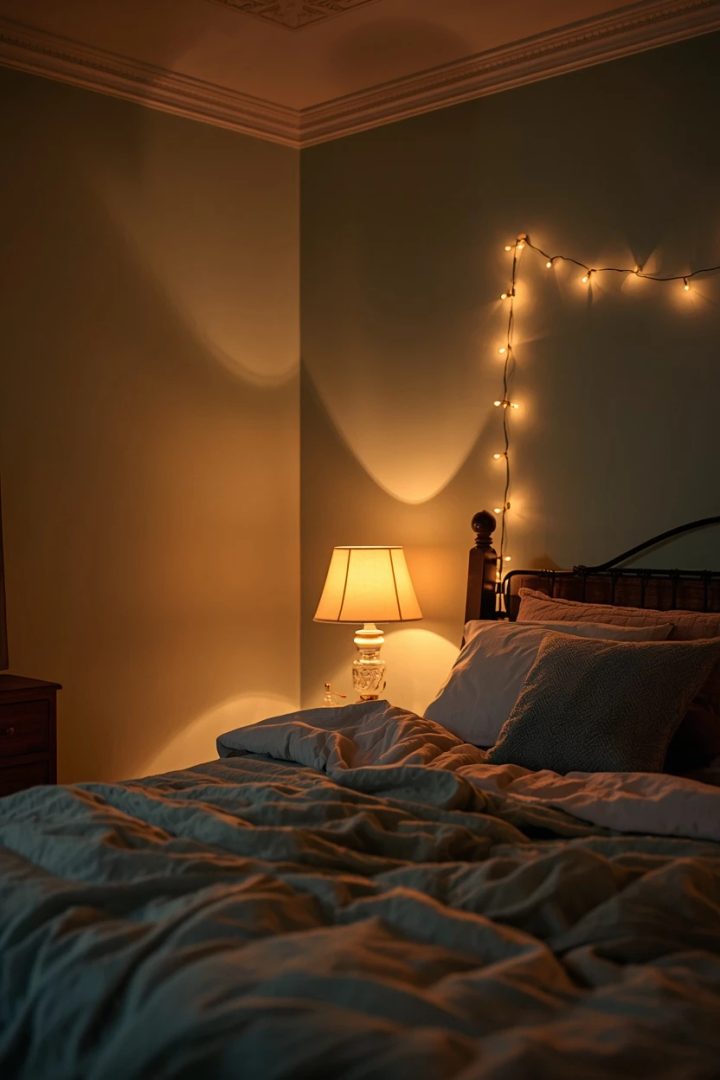
Sage is unusually sensitive to light, so getting your bulbs right is as important as choosing the paint. The wrong colour temperature can turn a beautiful sage grey, yellow, or even slightly blue.
For a bedroom, choose bulbs rated at 2700K, which gives a soft, warm white that flatters sage and signals rest to the body. Avoid 4000K and above, as cool daylight bulbs strip the warmth out of the colour.
Look for a Colour Rendering Index, or CRI, of 90 or higher. A high CRI bulb shows sage as its true, full-bodied self rather than a muddy approximation.
Finally, build your lighting in layers: an overhead source for function, bedside lamps for reading, and a low accent light for atmosphere. Layered warm light is what makes a sage bedroom feel like a genuine retreat.
⭐ Pro Tip
Buy peel-and-stick paint samples or paint a large piece of poster board instead of painting straight onto the wall.
Move the board around the room over a full day, near the window, beside the bed, and into the darkest corner.
Sage can look completely different in each spot, and this quick test saves you from a costly repaint.
Always view your final shortlist at night under the exact bulbs you plan to use.
📌 Important Note
Sage green is widely considered one of the most calming colours for sleep because it sits low on the visual energy scale.
Soft, muted greens are linked with feelings of balance, nature, and quiet, which is why they suit bedrooms so well.
If you struggle to switch off at night, a softer, lower-saturation sage tends to feel more soothing than a bright or vivid green.
Your Sage Green Bedroom Checklist
Use this quick checklist before you commit, so your sage bedroom feels intentional from day one:
• Test 2 to 3 sage shades on poster board in morning and evening light before buying.
• Match your sage LRV to the room: above 40 for small or dark rooms, lower for bright spaces.
• Choose warm partners only: cream, greige, tan, wood, and brass.
• Layer at least two sage tones in bedding rather than matching everything.
• Add one or two real plants to extend the natural palette.
• Use 2700K bulbs with a CRI of 90 or higher throughout the room.
• Include one neutral or light element in deeper sage schemes for contrast.
Frequently Asked Questions
Is sage green a good colour for a bedroom?
Yes. Sage green is one of the best bedroom colours because it is soft, muted, and calming, which supports rest. Its warm undertone makes it easy to pair with neutrals and natural materials, so it works in almost any bedroom style.
What colours go best with sage green in a bedroom?
Sage green pairs best with warm neutrals such as cream, oatmeal, greige, and tan, plus natural wood and brass accents. Avoid cool blue-grey tones, which can make both colours look dull and flat.
Does sage green make a small bedroom look bigger?
A soft, high-LRV sage can make a small bedroom feel larger, especially when you colour-drench the walls, ceiling, and trim in the same shade. Keeping furniture low and adding a large mirror amplifies the effect.
Is sage green still on trend in 2026?
Yes. Sage green remains a leading interior colour in 2026 thanks to the ongoing demand for calming, nature-inspired spaces. Its versatility and timeless feel mean it has moved beyond a passing trend into a lasting neutral.
What light bulbs are best for a sage green bedroom?
Choose warm white bulbs rated at 2700K with a CRI of 90 or higher. This combination keeps sage looking soft and true, while cooler daylight bulbs can drain the warmth and make the colour look grey.
Final Thoughts
Sage green earns its place as a bedroom favourite because it asks so little and gives so much. It calms the eye, flatters natural materials, and slips effortlessly between modern, traditional, and rustic styles.
Whether you commit to fully drenched walls, a single accent behind the bed, or simply a few layers of sage bedding, the colour rewards a careful eye for undertone and light. Match it with warm neutrals, light it with soft 2700K bulbs, and let texture do the rest.
Start with one idea from this list, test your shade properly, and build from there. The result will be a restful, grounded retreat that still feels fresh long after the latest trends have moved on.