Traditional Lounge Decorating Ideas: 12 Timeless Living Room Looks
July 2, 2026 · 11 min read
 By Khawar Iqbal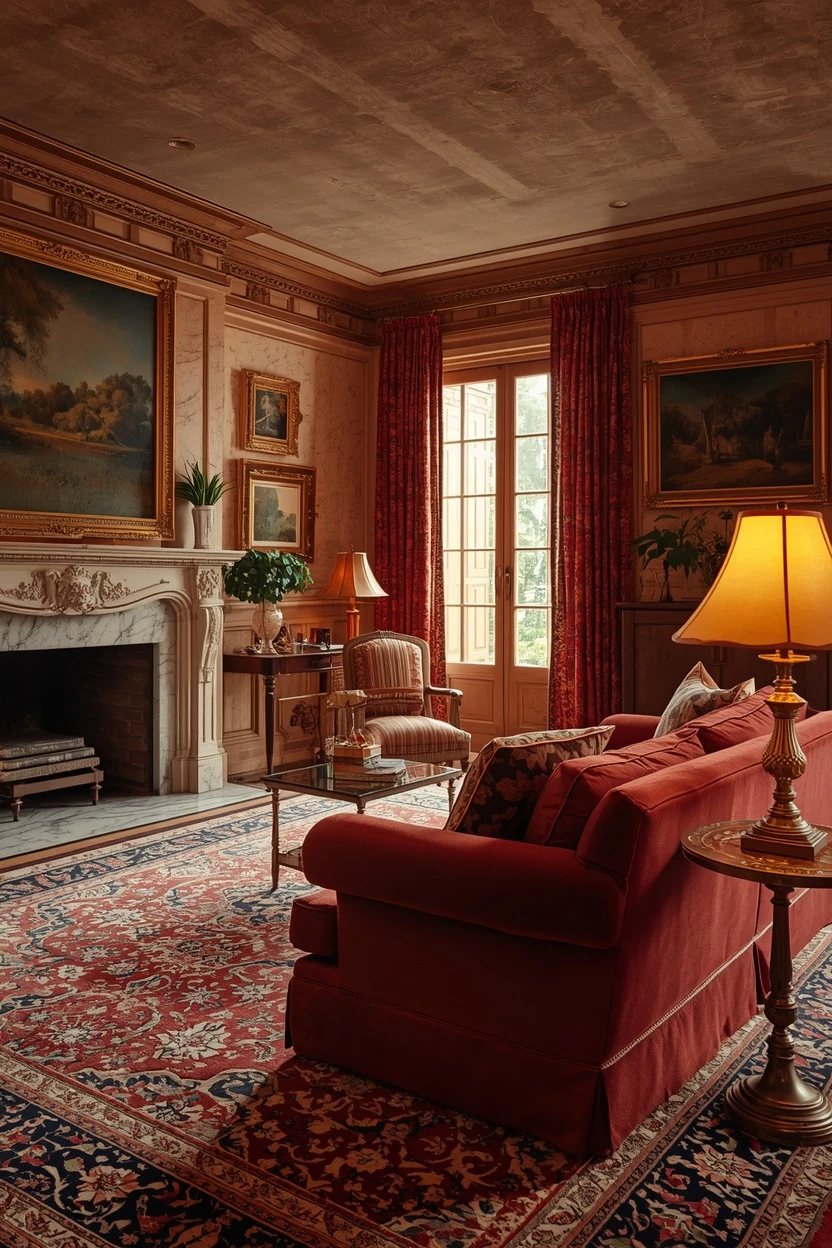
Traditional decorating never really goes out of style, because it is built on the things that make a room feel settled: symmetry, quality materials, and a sense of history. A traditional lounge is the room you sink into, not the one you simply pass through.
The look draws on classic European and early American interiors, with rich colours, layered textiles, and furniture that has weight and presence. Done well, it feels collected over decades rather than bought in a single weekend.
These 12 traditional lounge decorating ideas cover the layout, furniture, colour, and finishing touches that define the style. Each one includes the practical measurements and rules of thumb you need to get the proportions right the first time.
1. Start With a Symmetrical, Balanced Layout
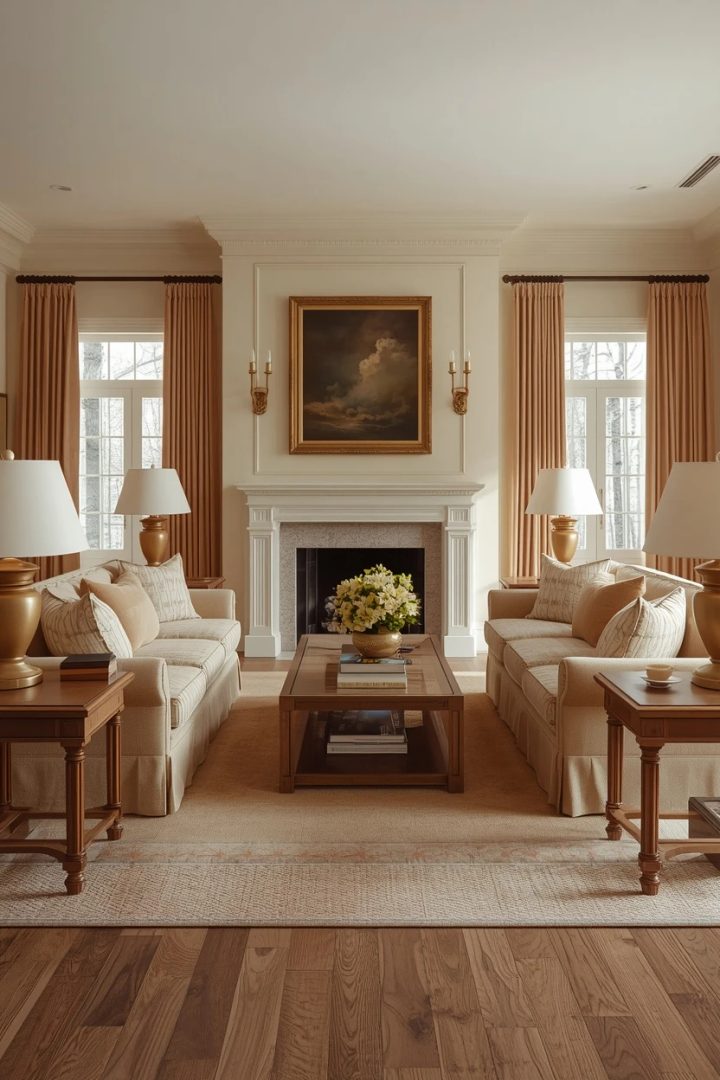
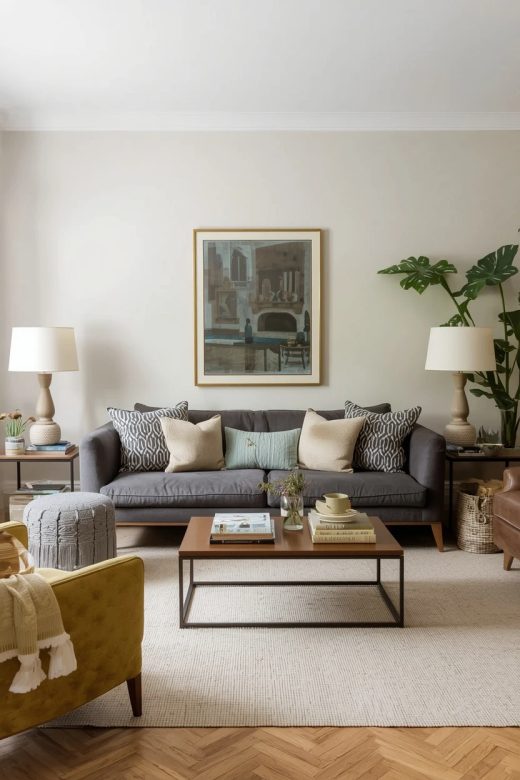
Symmetry is the backbone of traditional design. Where modern rooms often play with asymmetry, a traditional lounge feels calm and ordered because pairs of objects mirror each other across a central axis.
Anchor the room on a focal point, usually a fireplace or a large window, then balance the furniture around it. Two matching sofas facing each other, or a sofa flanked by two identical armchairs, instantly reads as traditional.
Carry the symmetry into the details: a pair of table lamps, matching side tables, and two framed prints of equal size. These repeated pairs are what give the room its composed, intentional feel.
Leave roughly 30 to 36 inches of walkway between major pieces so the room feels generous rather than cramped. Traditional rooms breathe; they are never overstuffed.
2. Choose a Rich, Warm Colour Palette
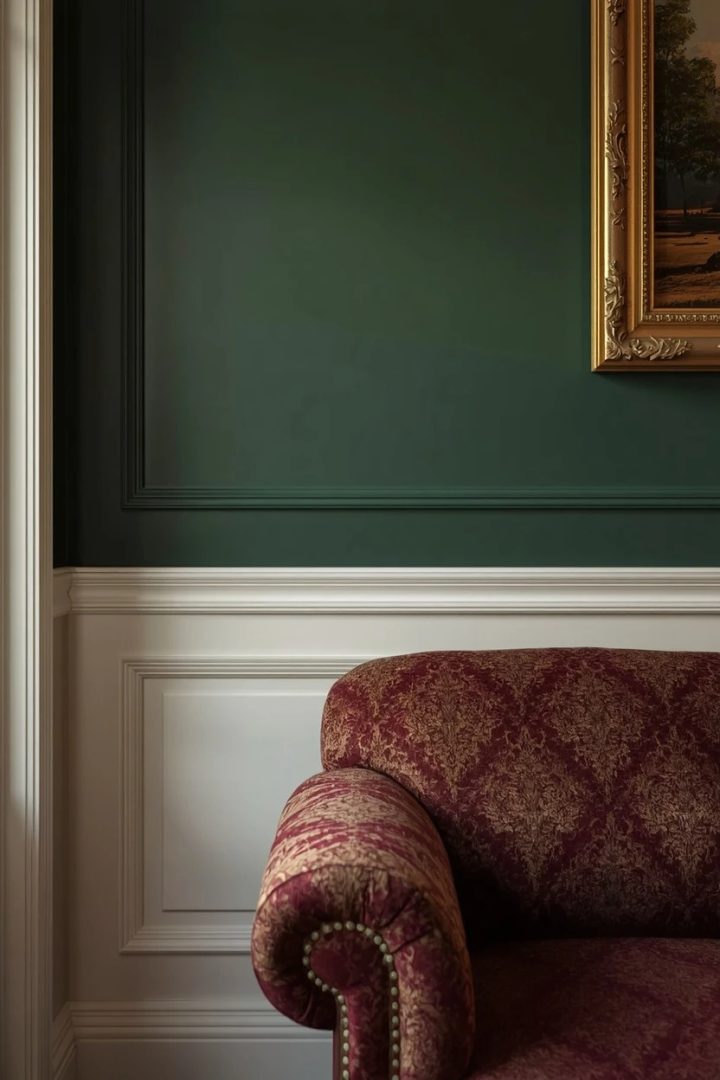
Traditional interiors lean into warm, saturated colour rather than cool minimalist neutrals. Deep greens, burgundy, navy, ochre, and warm taupe all sit comfortably in the style.
Use the classic three-part wall treatment: a richer colour above a chair rail, crisp white wainscoting below, and a soft neutral ceiling. This vertical division is a signature of formal traditional rooms.
If a fully coloured room feels like too much, keep the walls in a warm greige or soft cream and bring the deep tones in through upholstery, drapes, and rugs. The warmth still reads as traditional.
Whatever palette you pick, keep undertones warm and consistent. Traditional rooms glow under lamplight precisely because every colour shares the same warm base.
3. Invest in a Classic Rolled-Arm or Chesterfield Sofa
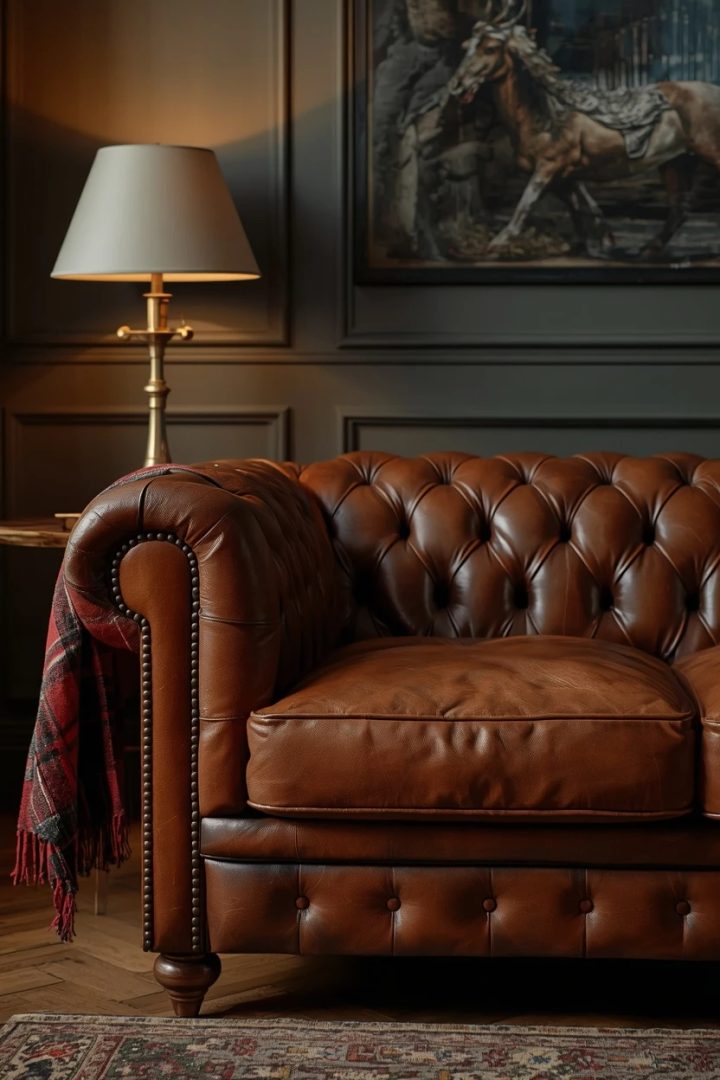
The sofa sets the tone for the whole lounge, and in traditional design it should have real presence. A Chesterfield with deep button tufting or a classic rolled-arm sofa are the two most recognisable shapes.
Leather in cognac or oxblood ages beautifully and suits the style, while a damask, velvet, or floral upholstery brings softness and pattern. Both routes are firmly traditional, so choose based on how formal you want the room to feel.
Pay attention to scale. A standard three-seat sofa runs about 84 inches wide, and it should sit comfortably within the room without crowding the walkways. Float it slightly off the wall for a more gracious layout.
Look for hardwood frames, eight-way hand-tied springs, and turned or carved wooden legs. These quality markers are what separate a true traditional piece from a flat-pack imitation.
4. Add Architectural Detail With Moulding and Wainscoting
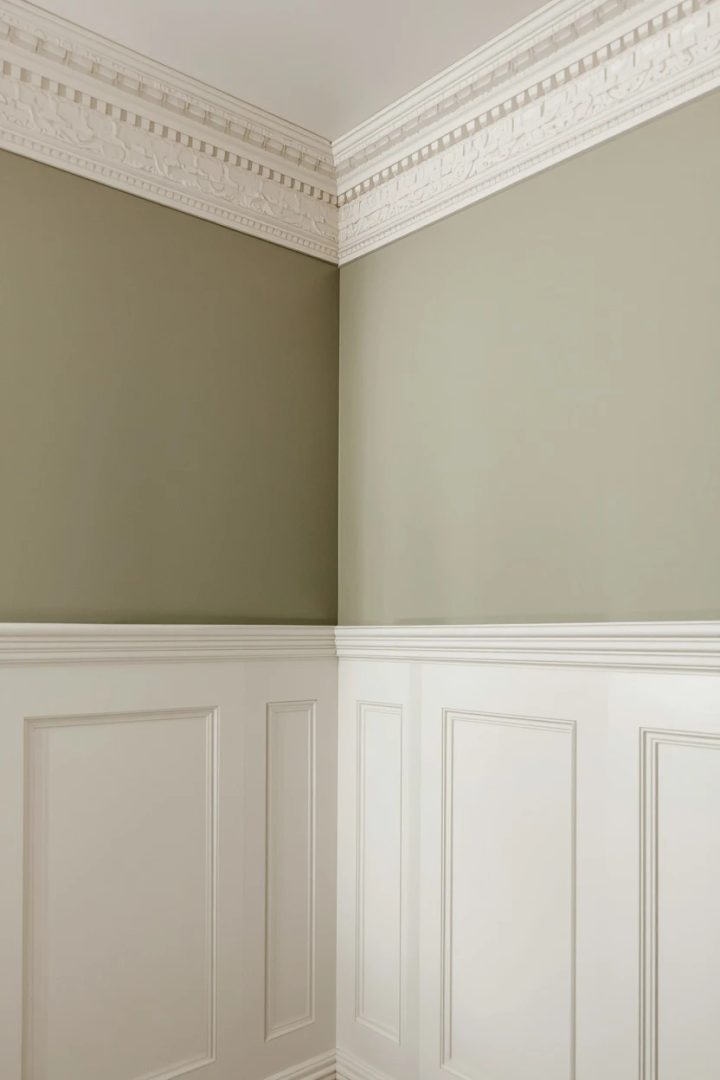
Architectural millwork is what makes a plain box of a room feel like a proper traditional lounge. Crown moulding, wainscoting, and picture-frame moulding add depth, shadow, and a sense of permanence.
Crown moulding bridges the wall and ceiling and instantly raises the level of finish. As a guide, taller rooms can carry deeper moulding, while standard eight-foot ceilings suit a profile around 4 to 6 inches.
Wainscoting or panelling on the lower third of the wall protects against scuffs and adds the classic two-tone look. The standard chair-rail height sits about 32 to 36 inches off the floor.
If you rent or want a lower-cost route, applied picture-frame moulding kits and peel-and-stick panel mouldings recreate much of the effect without major construction.
5. Layer Patterned Textiles for Depth
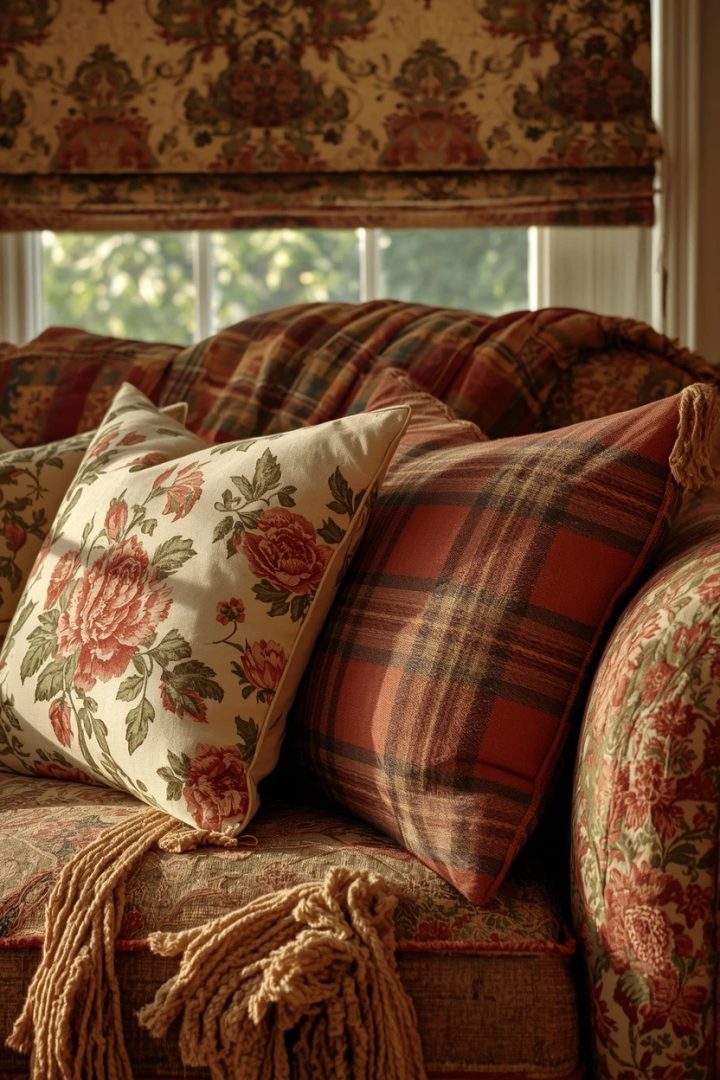
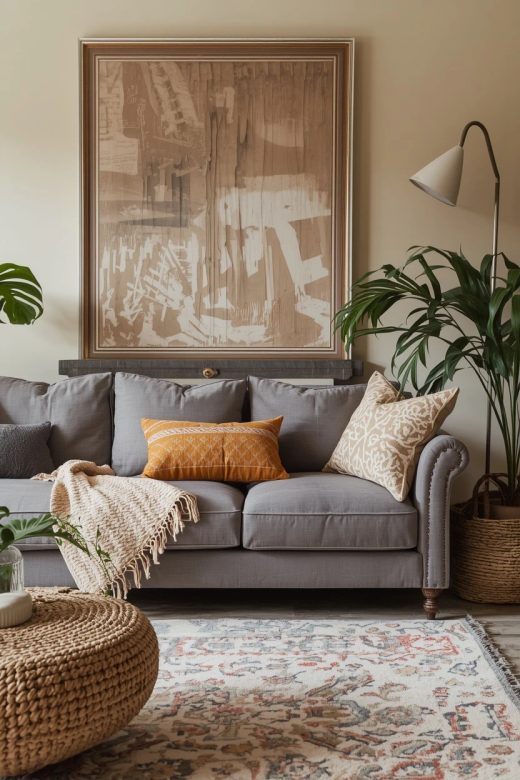
Pattern is central to traditional style, and the magic is in mixing several patterns that share a colour story. Florals, plaids, stripes, and damask can all live together when they pull from the same palette.
Vary the scale to keep the mix balanced. Pair one large-scale floral with a medium plaid and a small geometric or stripe, so the patterns complement rather than compete.
Cushions, throws, and curtains are the easiest places to introduce pattern. Fringe, piping, and tassels on these pieces add the kind of tailored detail traditional rooms are known for.
Ground a busy pattern mix with a few solid pieces, such as a plain velvet cushion or a solid drape, so the eye has somewhere to rest.
⚠️ Important Warning
Resist the urge to fill every surface and wall in the name of a cozy traditional look.
Traditional and cluttered are not the same thing, and an overcrowded room quickly feels heavy and dated rather than elegant.
Edit your accessories down, group them in odd numbers, and leave breathing room around your best pieces.
A few well-chosen antiques will always look more refined than dozens of small trinkets competing for attention.
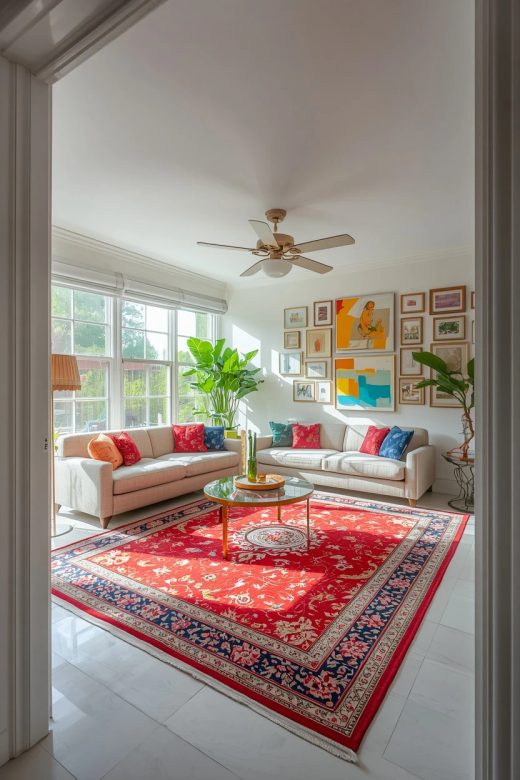
6. Anchor the Room With a Persian or Oriental Rug
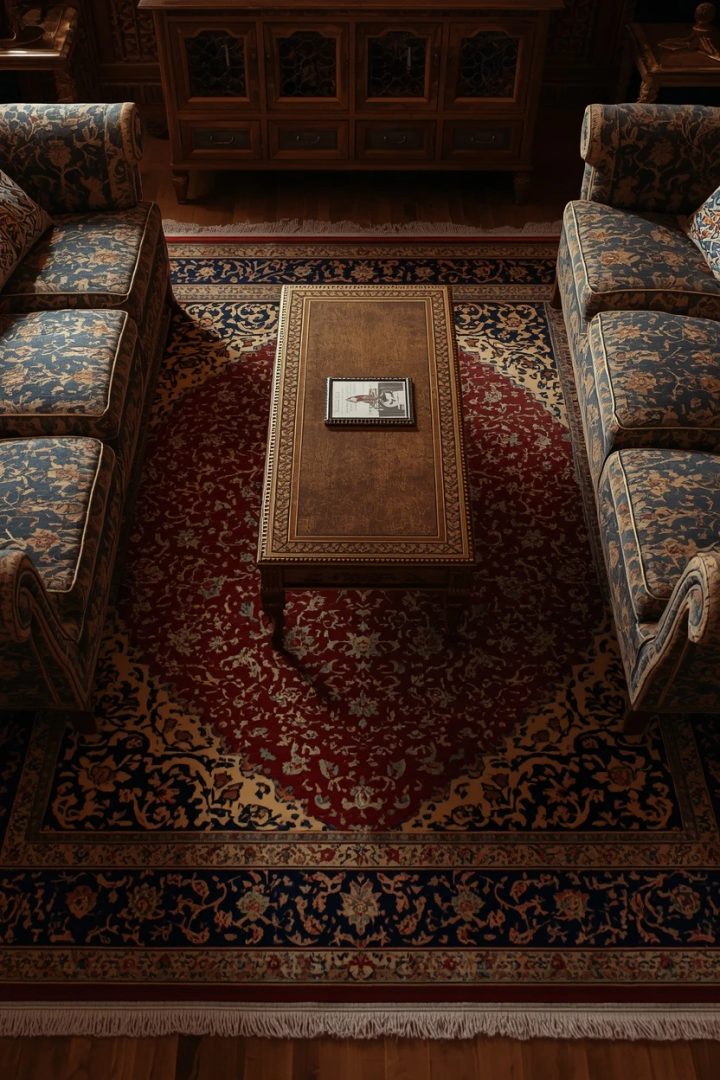
A patterned rug is often the single most defining element of a traditional lounge. A Persian or Oriental rug brings colour, age, and intricate detail that ties the whole scheme together.
Size it generously. The rug should be large enough that at least the front legs of every major seating piece rest on it, which visually connects the furniture into one grouping.
As a sizing rule, leave a consistent 8 to 18 inches of bare floor between the edge of the rug and the walls. A rug that is too small floats awkwardly and shrinks the whole room.
Antique and vintage rugs suit the style best, but a high-quality wool reproduction offers the same look with more durability and a friendlier price. Wool also wears beautifully over decades of use.
7. Build a Statement Fireplace and Mantel
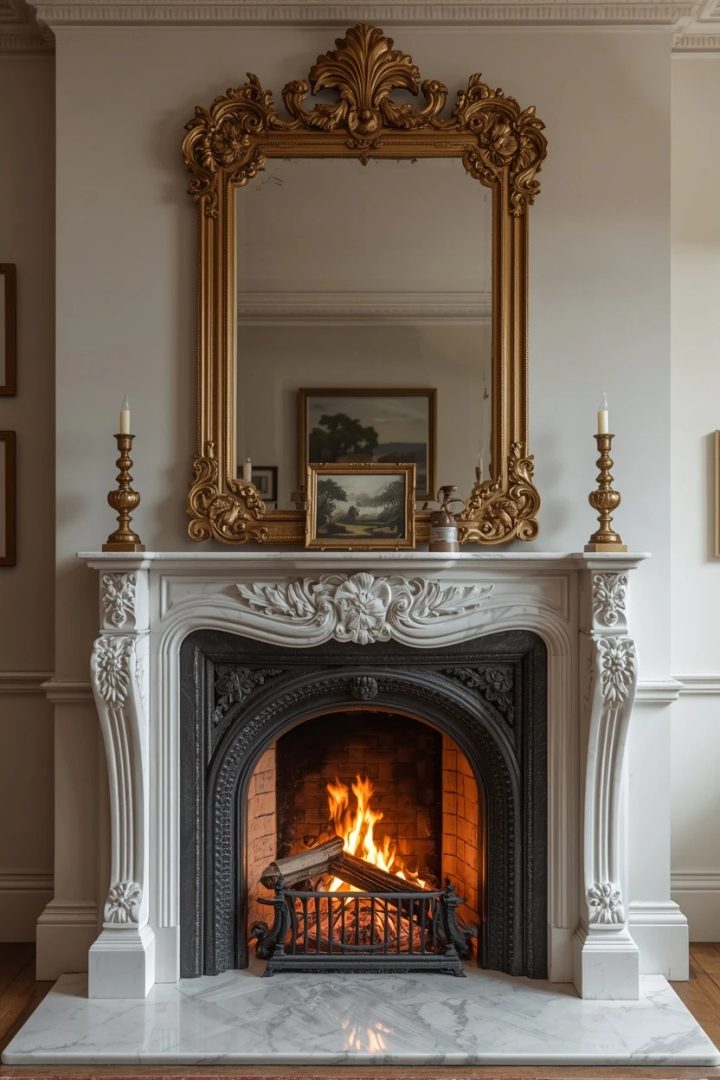
In a traditional lounge, the fireplace is the natural heart of the room. Even where there is no working fire, a well-dressed mantel gives the space a clear focal point to arrange the furniture around.
Choose a surround with character: carved marble, moulded timber, or classic brick all suit the style. A deeper, more ornate mantel reads as more formal, while a simpler profile feels relaxed and country-traditional.
Style the mantel with symmetry in mind. A large mirror or framed artwork centred above, flanked by matching candlesticks, vases, or lamps, creates the balanced look the style depends on.
Hang the mirror or art so its centre sits roughly 4 to 8 inches above the mantel shelf. Too high and the arrangement feels disconnected from the fireplace below.
8. Hang a Gallery of Framed Art and Mirrors
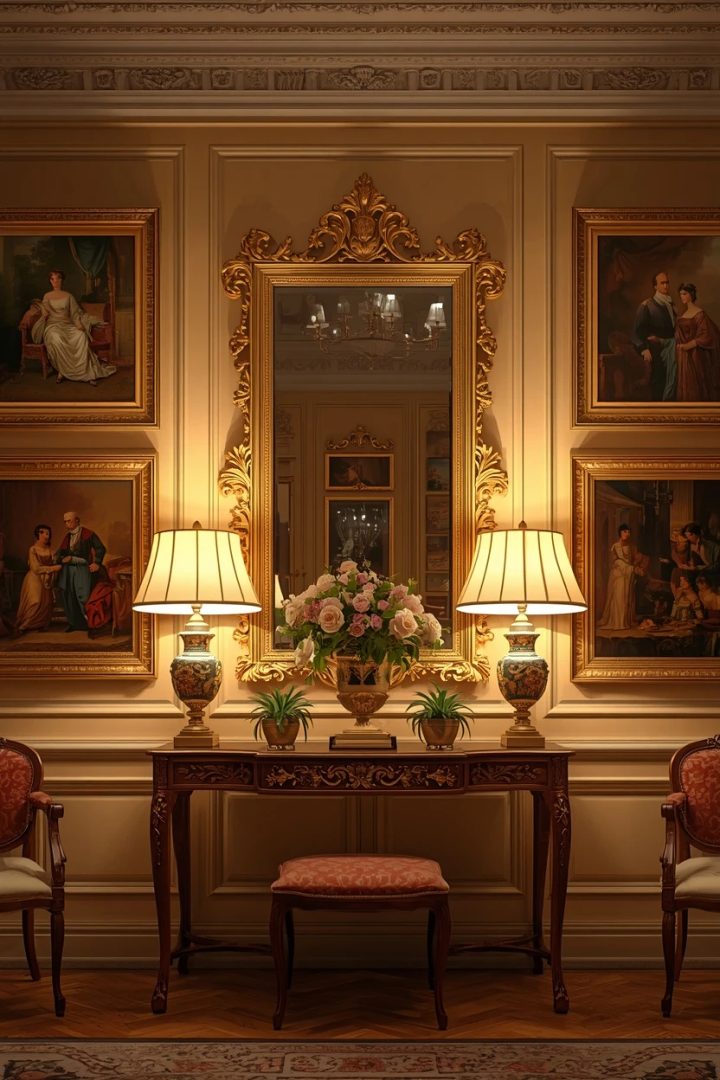
Walls in a traditional lounge are rarely left bare. Framed oil paintings, botanical prints, portraits, and antique mirrors give the room depth and a sense of accumulated history.
Ornate gilt and dark wood frames are the traditional default, and using them consistently pulls a varied collection together. The art inside can vary in subject as long as the frames feel related.
For a balanced wall, hang art so the centre of the arrangement sits at roughly 57 to 60 inches from the floor, which is standard gallery eye level. Symmetrical grids feel more formal than scattered clusters.
An antique mirror earns its place twice over: it adds period character and bounces lamplight around, making a richly coloured room feel brighter and larger.
9. Layer Traditional Lighting From Chandelier to Table Lamp
Lighting in a traditional lounge is layered and warm, never a single flat overhead. The combination of ambient, task, and accent light is what gives the room its inviting glow after dark.
A central chandelier or lantern sets the formal tone. To size it, add the room's length and width in feet, and use that sum in inches as a rough guide for the fixture's diameter.
Add table lamps with pleated or silk shades on side tables and a console, plus a floor lamp beside a reading chair. Lamps at different heights create the pools of warm light traditional rooms rely on.
Fit warm 2700K bulbs throughout and put the main lights on dimmers. Soft, adjustable light flatters rich colours and lets the room shift from bright and social to low and cozy.
10. Dress the Windows With Floor-Length Drapes
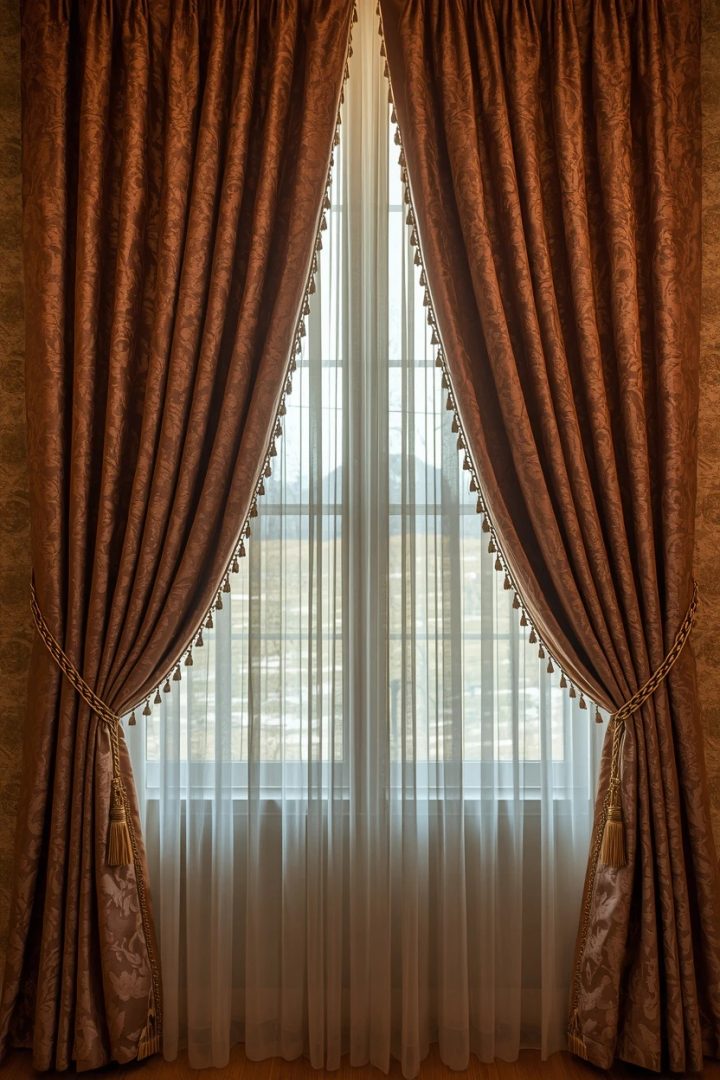
Window treatments make or break the formality of a traditional lounge. Floor-length drapes in a substantial fabric add softness, warmth, and a sense of grandeur that blinds alone cannot match.
Hang the rod high and wide: roughly 4 to 6 inches above the window frame, or higher toward the ceiling, and extend it 6 to 10 inches beyond each side. This makes windows look taller and larger.
For a polished finish, drapes should just kiss the floor or break slightly, never float above it. Pinch-pleat or goblet-pleat headings are the most traditional and hang in elegant, even folds.
Layer heavier drapes over a sheer or a roman blind to control light and privacy. Tasselled tie-backs and a decorative pole add the finishing period detail.
11. Add Antique and Heirloom Accents
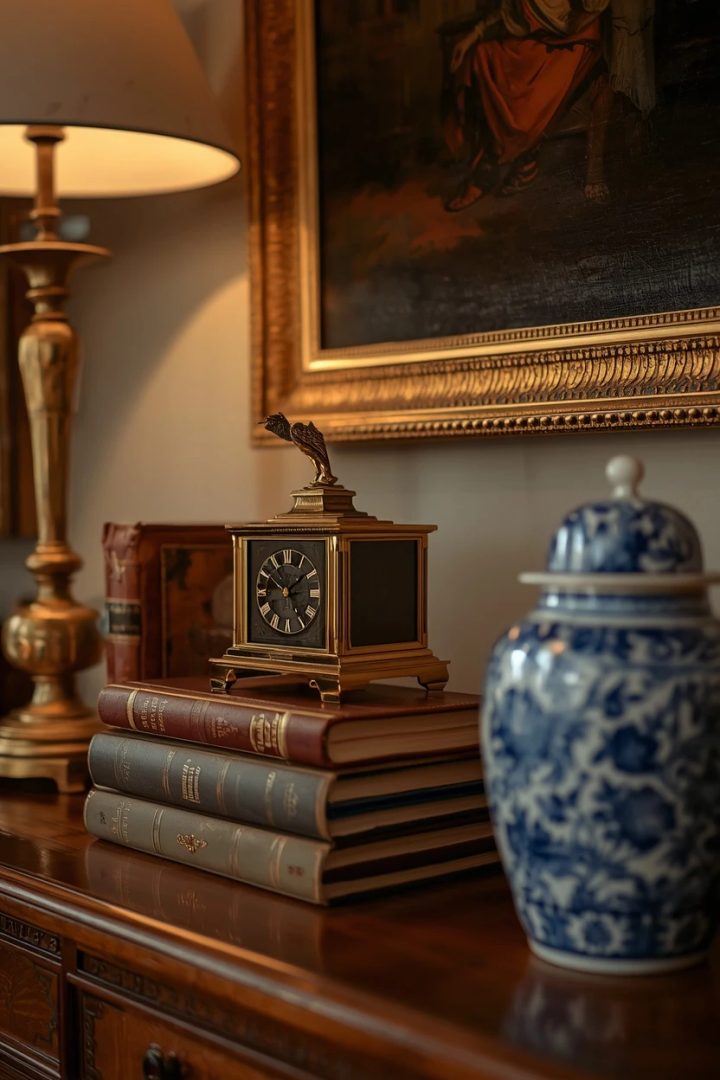
The soul of a traditional lounge comes from pieces with a story. Antiques, heirlooms, and characterful vintage finds give the room a layered, collected-over-time quality that new furniture cannot fake.
Look for classic traditional accents: brass candlesticks, a carriage clock, leather-bound books, blue and white porcelain, and ornate picture frames. Even one or two genuine antiques lift the whole room.
Mixing old and new keeps the style from feeling like a museum. Pair an antique side table with a contemporary lamp, or set a modern sofa against a wall of vintage art.
Hunt for these pieces at estate sales, antique fairs, and second-hand shops. The patina and imperfections of older items are exactly what give a traditional room its warmth and authenticity.
12. Style the Coffee Table and Bookcases With Care
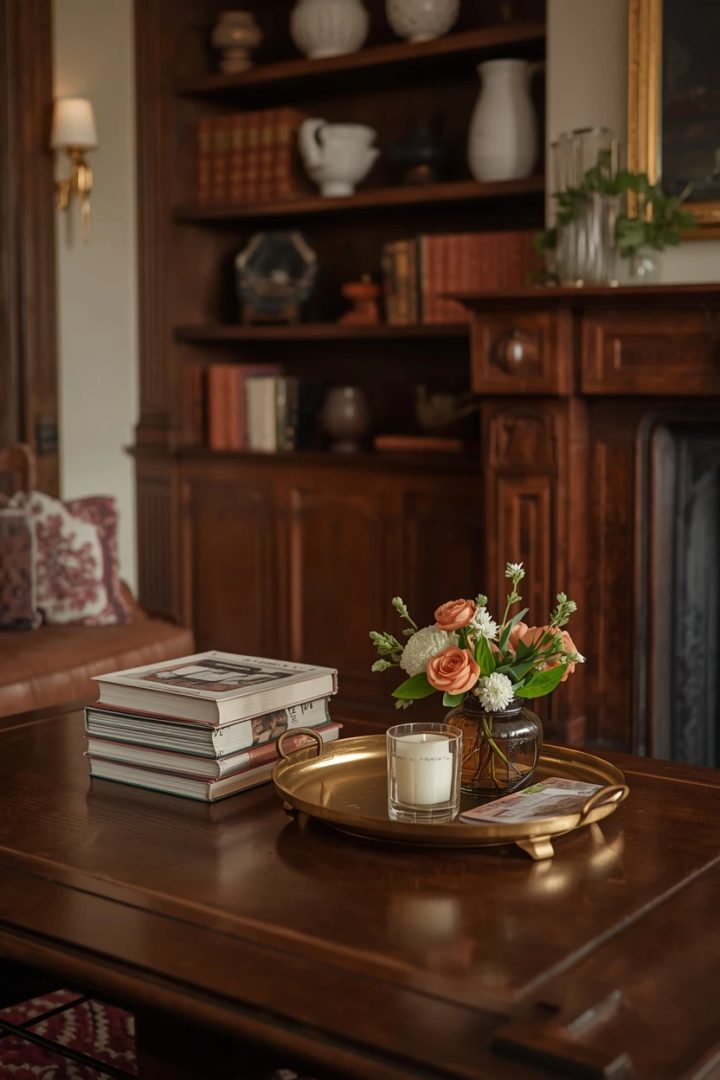
The finishing layer of a traditional lounge is in how you style the surfaces. A thoughtfully arranged coffee table and a well-edited bookcase pull the whole look together.
On the coffee table, work in groups of three: a stack of hardback books, a tray to corral smaller objects, and something living such as fresh flowers or a trailing plant. Vary the heights for interest.
Built-in bookcases are a traditional dream. Mix books stacked vertically and horizontally, and break the rows with ceramics, framed photos, and small sculptures so the shelves feel curated.
Leave some negative space on the shelves rather than packing them full. A little breathing room is what makes styled shelves look intentional rather than cluttered.
⭐ Pro Tip
When mixing patterns, choose one fabric you love first, then pull your other patterns from the colours inside it.
This single source fabric keeps florals, plaids, and stripes in the same family so the room feels coordinated.
Vary the scale: one large pattern, one medium, and one small, so the mix has rhythm instead of chaos.
Always include a few solids to give the eye a place to rest.
📌 Important Note
Traditional style is sometimes confused with old-fashioned, but the two are not the same.
A traditional room can feel fresh and current when you balance classic bones with a lighter, edited hand.
Keep the symmetry, quality, and warm palette, then leave out the heavy swags and excess clutter for a look that suits 2026.
Your Traditional Living Room Checklist
Run through this checklist to keep your traditional lounge balanced, warm, and timeless:
• Anchor the layout on a focal point and arrange furniture symmetrically around it.
• Choose a warm, saturated palette and keep undertones consistent.
• Invest in one quality statement sofa with a classic shape and frame.
• Add architectural interest with moulding, wainscoting, or panelling.
• Size your rug so front legs of the seating sit on it, with even borders to the walls.
• Layer warm 2700K lighting from a chandelier down to table lamps.
• Hang floor-length drapes high and wide for height and grandeur.
• Mix in a few genuine antiques and edit accessories down to your best pieces.
Frequently Asked Questions
What defines a traditional living room?
A traditional living room is defined by symmetry, warm and rich colours, classic furniture shapes, layered patterns, and architectural details like moulding. It feels formal, comfortable, and collected over time rather than minimal or trend-led.
How do I make a traditional lounge feel less dated?
Keep the classic bones such as symmetry, quality furniture, and a warm palette, but edit out heavy clutter and dark, fussy details. Mixing in a few modern pieces, lighter wall colours, and cleaner accessories keeps the look current.
What colours work best in a traditional living room?
Warm, saturated colours work best, including deep green, navy, burgundy, gold, and warm neutrals like greige and taupe. Pair a richer wall colour with crisp white trim and natural wood tones for a classic effect.
What size rug should I use in a traditional living room?
Choose a rug large enough that at least the front legs of every major seating piece rest on it, and leave roughly 8 to 18 inches of bare floor to the walls. In most living rooms this means an 8 by 10 foot rug or larger.
How should I light a traditional living room?
Use layered lighting: a central chandelier or lantern, table lamps with fabric shades, and a floor lamp by a reading chair. Fit warm 2700K bulbs throughout and add dimmers so you can move from bright to cozy.
Final Thoughts
A traditional lounge succeeds because it is built on enduring principles rather than passing trends. Symmetry, quality, warm colour, and layered comfort never really fall out of fashion.
Start with the bones: a balanced layout, a focal point, and one excellent sofa. From there, build outward with rugs, drapes, moulding, and lighting, adding antiques and pattern until the room feels rich and settled.
The goal is a space that feels gracious and lived-in, the kind of room you want to linger in on a quiet evening. Get the proportions right and a traditional living room will reward you for decades.