Lounge Dining Room Decorating Ideas: 12 Ways to Design a Living and Dining Space
July 2, 2026 · 11 min read
 By Khawar Iqbal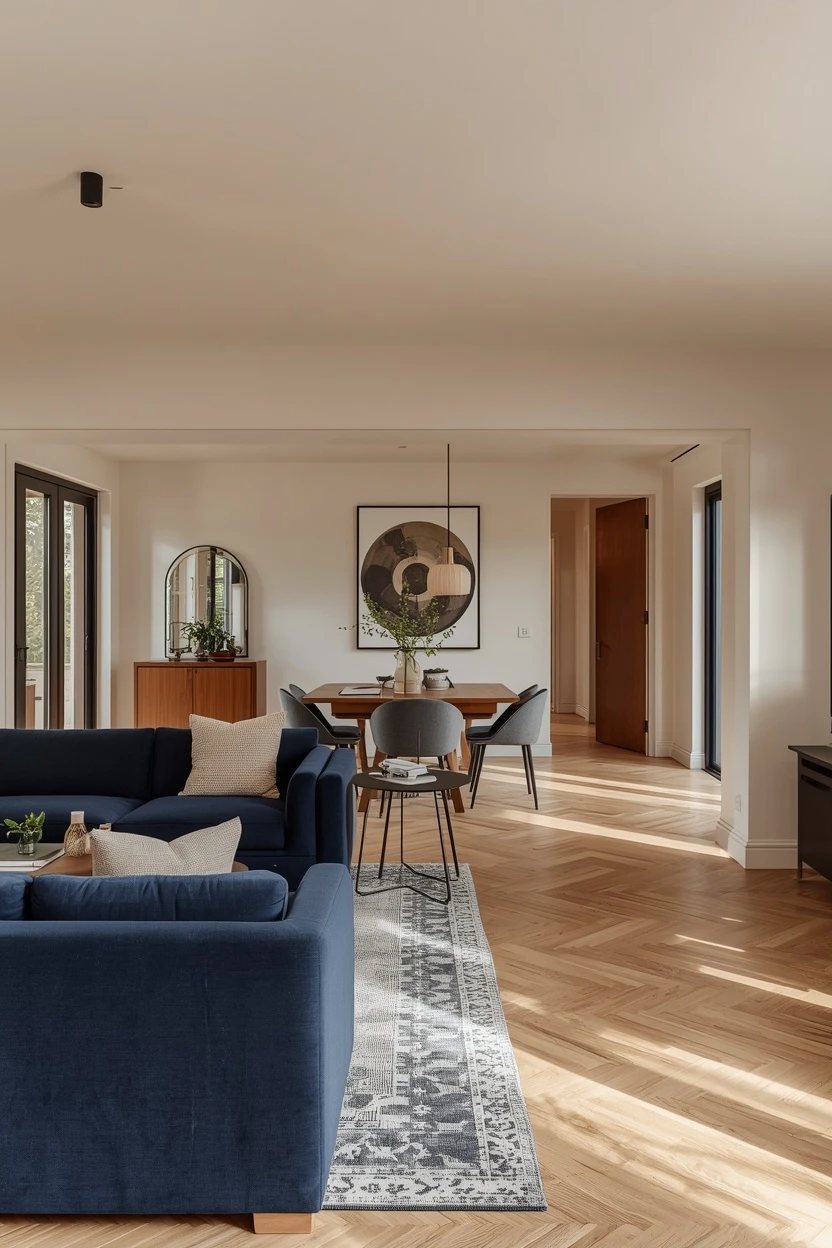
Combining a lounge and dining room into one space is one of the most common layout challenges in modern homes. Get it right and you gain a sociable, flexible space; get it wrong and it feels like two rooms fighting over the same floor.
The secret is to treat the room as one connected scheme with two clearly defined zones. Cohesion holds the space together, while smart zoning gives each function its own identity.
These 12 lounge dining room decorating ideas cover layout, rugs, lighting, and flow, with the exact clearances and sizing rules that make a combined living and dining space feel intentional rather than improvised.
1. Define Two Distinct Zones in One Space

The first job in any combined living and dining room is to give each function its own clearly defined zone. Without this, furniture drifts and the space reads as cluttered and confused.
Mentally divide the room before you place a single piece. Decide where the lounge ends and the dining area begins, usually with the dining set nearest the kitchen and the seating nearest the window or fireplace.
Use rugs, furniture placement, and lighting to draw the invisible line between the two. Each zone should feel complete on its own while still belonging to the same overall scheme.
Think about how you move between the zones too. There should be an obvious, unobstructed path connecting them so the room flows naturally from sitting to dining.
2. Choose One Cohesive Colour Palette

Because you can see both zones at once, a single cohesive colour palette is essential. Two clashing schemes in one open space instantly make the room feel smaller and more chaotic.
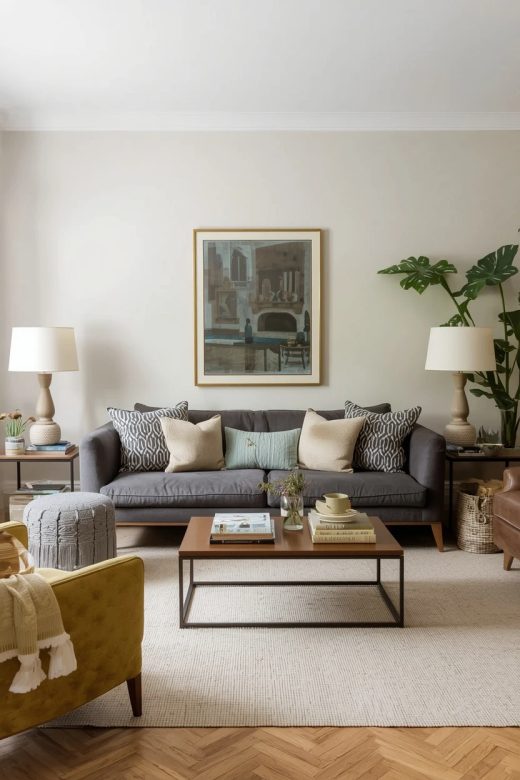
Choose a palette of two or three core colours plus a neutral, and use it across both areas. A navy sofa might be echoed by navy dining chairs, with oak repeated in the coffee table and the dining table.
You do not need everything to match exactly. Varying the proportion of each colour between zones keeps them distinct while the shared palette holds the whole room together.
Carry the palette into smaller details, such as cushions, art, and table accessories. These repeated touches are what make a combined space feel designed as one room rather than two.
3. Anchor Each Zone With Its Own Rug
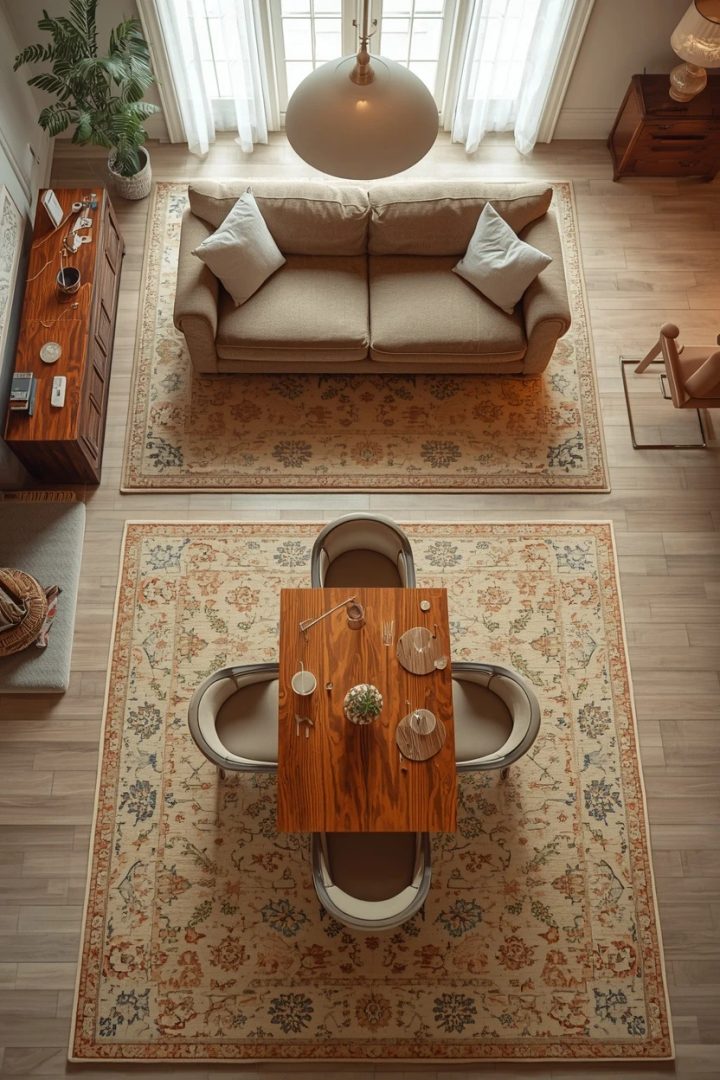
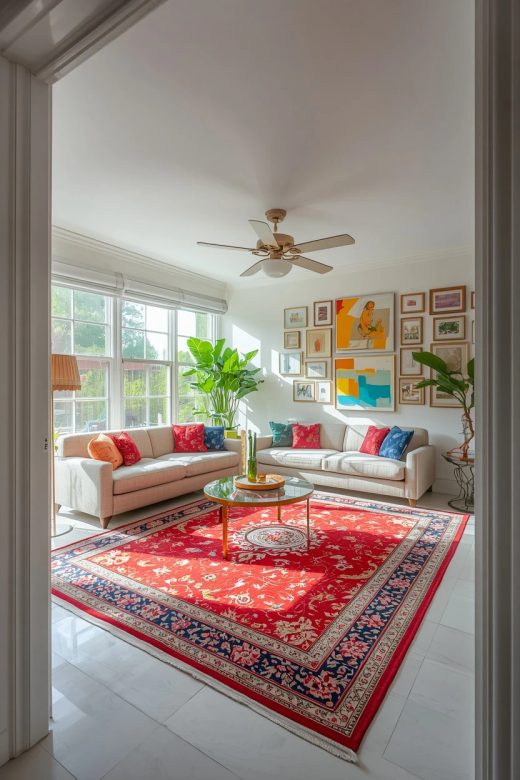
Rugs are the most effective tool for zoning an open living and dining room. A rug under each grouping draws a clear visual boundary and gives each zone a defined footprint.
In the lounge, size the rug so at least the front legs of the sofa and chairs sit on it, tying the seating into one group. A rug that is too small makes the whole arrangement feel disconnected.
Under the dining table, the rug must be larger than the table itself. Aim for at least 24 to 36 inches of rug beyond every edge so chairs stay on the rug even when pulled out.
Coordinate the two rugs without matching them exactly. Pick rugs that share a colour or tone so they read as a pair, which keeps the zones distinct yet clearly related.
4. Use the Sofa as a Natural Room Divider
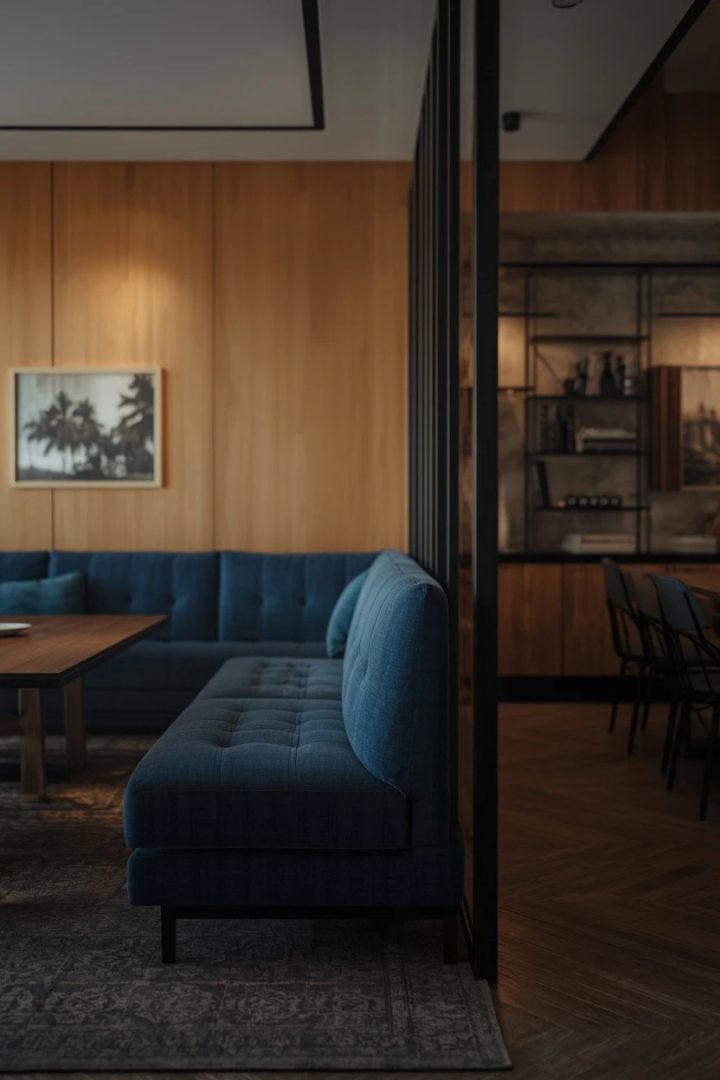
Floating the sofa with its back toward the dining area is one of the smartest ways to split an open room. It creates an instant divider without building a single wall.
Position the sofa to face the lounge focal point, whether that is a window, a fireplace, or a television. Its back then forms the boundary that signals where the dining zone begins.
Soften and disguise the back of the sofa with a slim console table behind it. This adds useful surface space, a spot for lamps, and a finished look from the dining side.
Leave a clear walkway of at least 36 inches between the back of the sofa or console and the dining table, so people can move and pull out chairs comfortably.
5. Add a Console or Sideboard Between the Zones
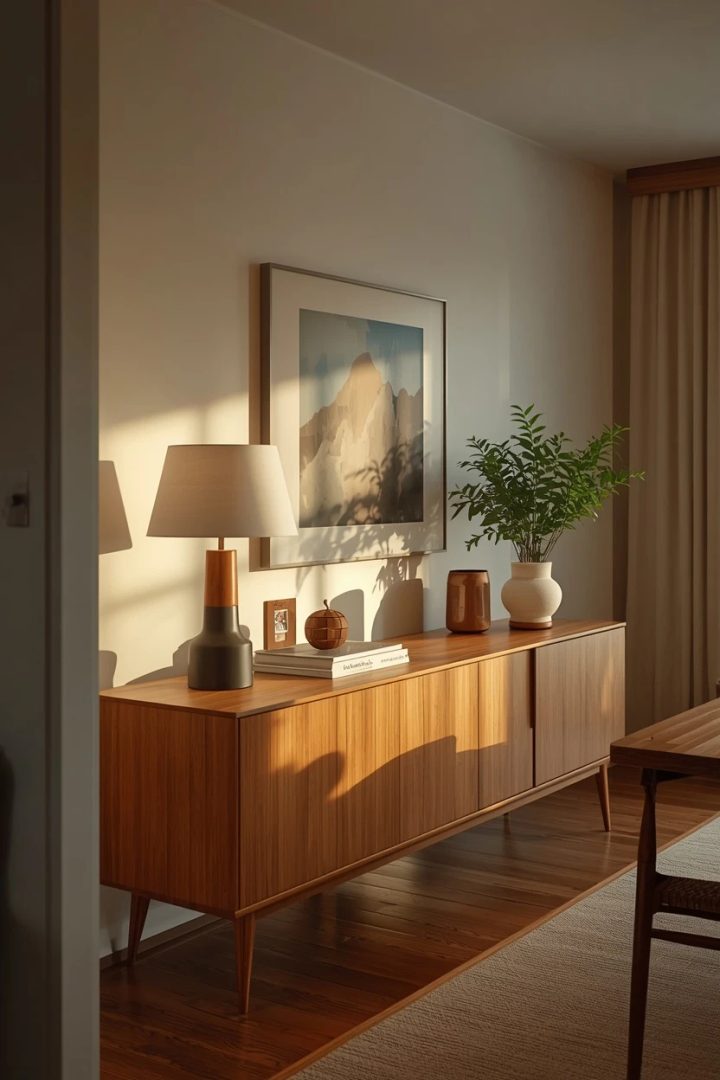
A console or sideboard placed on the boundary between zones does double duty: it divides the space and adds valuable storage. In a combined room where surfaces are limited, that storage is gold.
A sideboard near the dining area is perfect for tableware, linens, and serving pieces, while a console behind the sofa suits books, lamps, and decorative objects. Either way, the piece marks the transition between functions.
Choose a height that suits its position. A piece around 32 to 36 inches high works well behind a standard sofa, keeping lamps at a comfortable level without towering over the seat back.
Style the top to tie both zones together, repeating colours and materials found elsewhere in the room. A console is a natural spot to reinforce your shared palette.
⚠️ Important Warning
Do not push every piece of furniture against the walls in an attempt to create open space.
In a combined living and dining room, wall-hugging furniture leaves an awkward empty middle and blurs the boundary between zones.
Floating the sofa, anchoring groupings on rugs, and keeping clear walkways will make the room feel both larger and better organised.
Always protect the main routes through the space, especially the path between the kitchen, the dining table, and the door.
6. Light Each Zone for Its Function
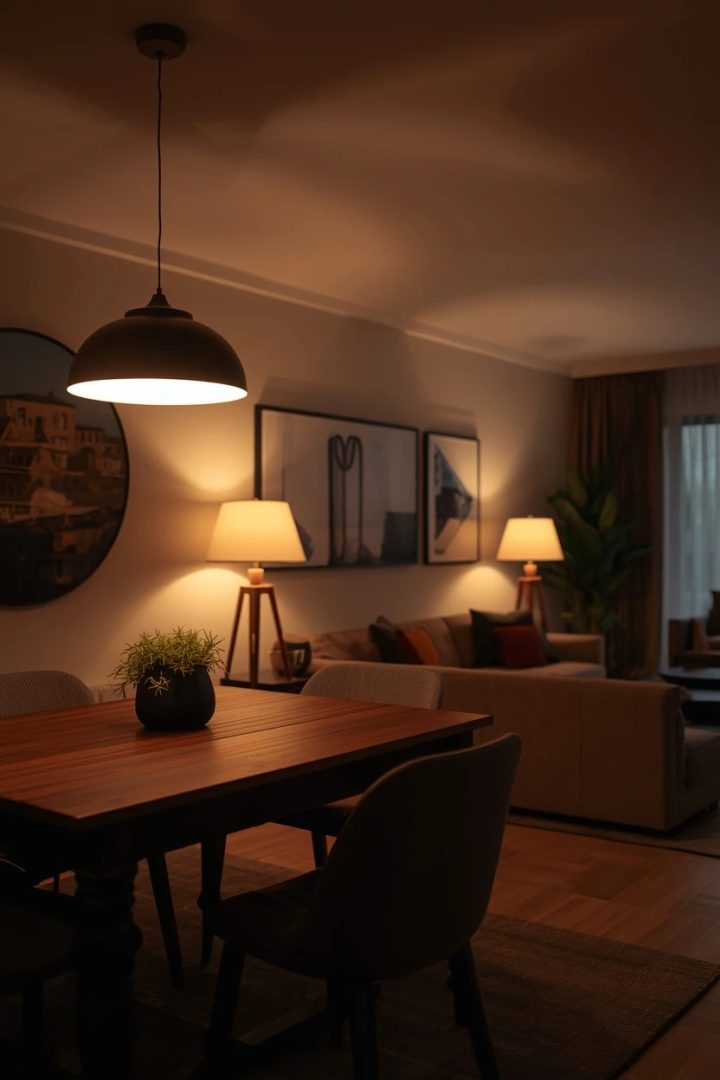
Lighting is one of the clearest ways to signal that two zones serve different purposes. Each area needs lighting suited to its function, while sharing a warm, consistent tone.
Over the dining table, hang a statement pendant or a linear fixture to define the zone and provide focused light for meals. Position the bottom of the fixture roughly 30 to 36 inches above the tabletop.
In the lounge, favour softer, layered lighting: table lamps, a floor lamp, and perhaps wall lights for a relaxed, ambient mood. This contrast in lighting style reinforces the difference between the zones.
Keep every bulb at the same warm temperature, around 2700K, and add dimmers across the room. Consistent warmth ties the zones together while dimmers let each area shift to suit the moment.
7. Scale Furniture to Suit the Whole Room
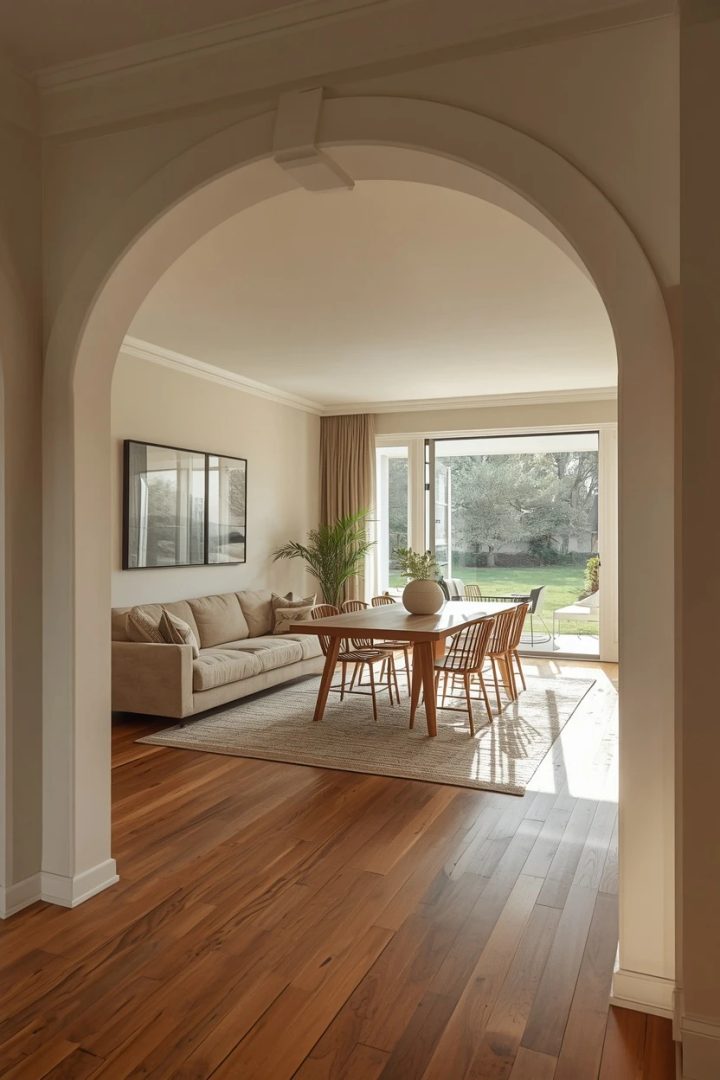
In a shared space, furniture proportion matters more than usual because both sets of pieces must coexist. Oversized furniture in either zone quickly overwhelms the room and chokes the walkways.
Measure your space and map the layout before buying. A round or oval dining table often suits a combined room better than a large rectangular one, as soft edges ease the flow and seat people more flexibly.
Balance the visual weight between zones so neither dominates. A bulky sectional paired with a flimsy dining set, or vice versa, makes the room feel lopsided and unresolved.
Leave generous clearances, especially the 36 inches behind dining chairs needed to pull out and sit. Breathing room is what makes a busy dual-purpose space feel calm and usable.
8. Repeat Materials and Finishes for Flow
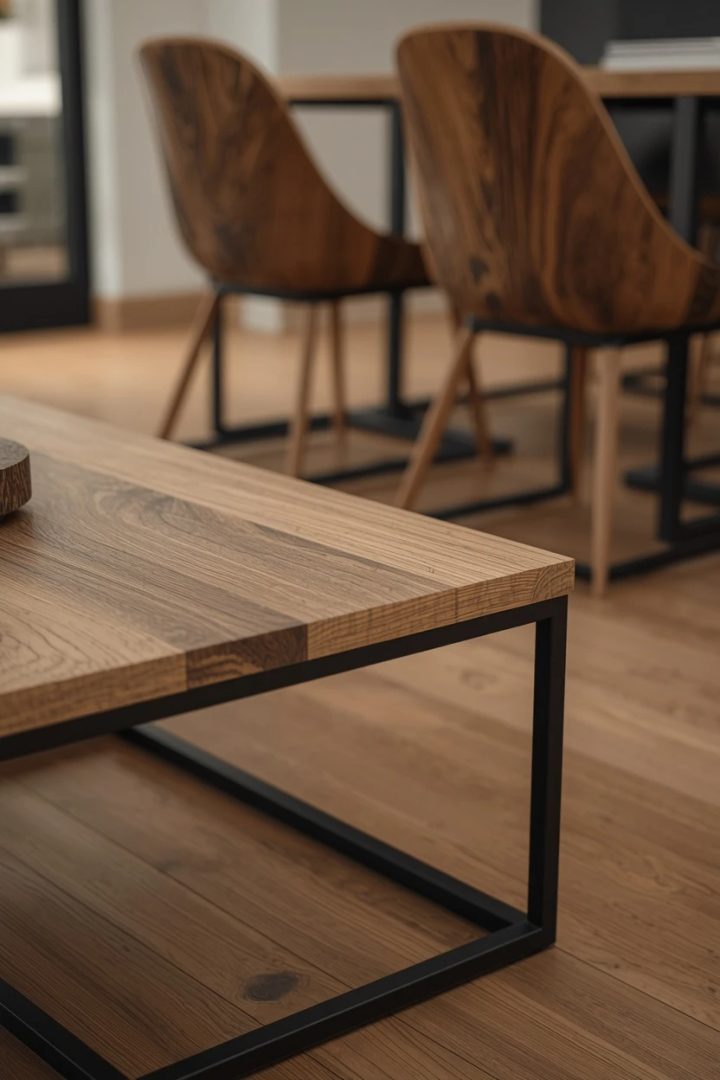
Repeating materials and finishes across both zones creates a sense of flow that ties the whole room together. The eye reads the repetition as a deliberate design thread.
Pick a couple of key materials and echo them in each area. The same oak in the coffee table and dining table, or matte black metal on both the lounge shelving and the dining chairs, instantly links the two spaces.
Texture can do the same work as colour here. A consistent use of linen, rattan, or brushed metal across both zones makes a combined room feel layered and cohesive.
Avoid introducing too many competing finishes. Three or four repeated materials are plenty to create harmony; beyond that, the room starts to feel busy and disjointed.
9. Maximise a Small Combined Space
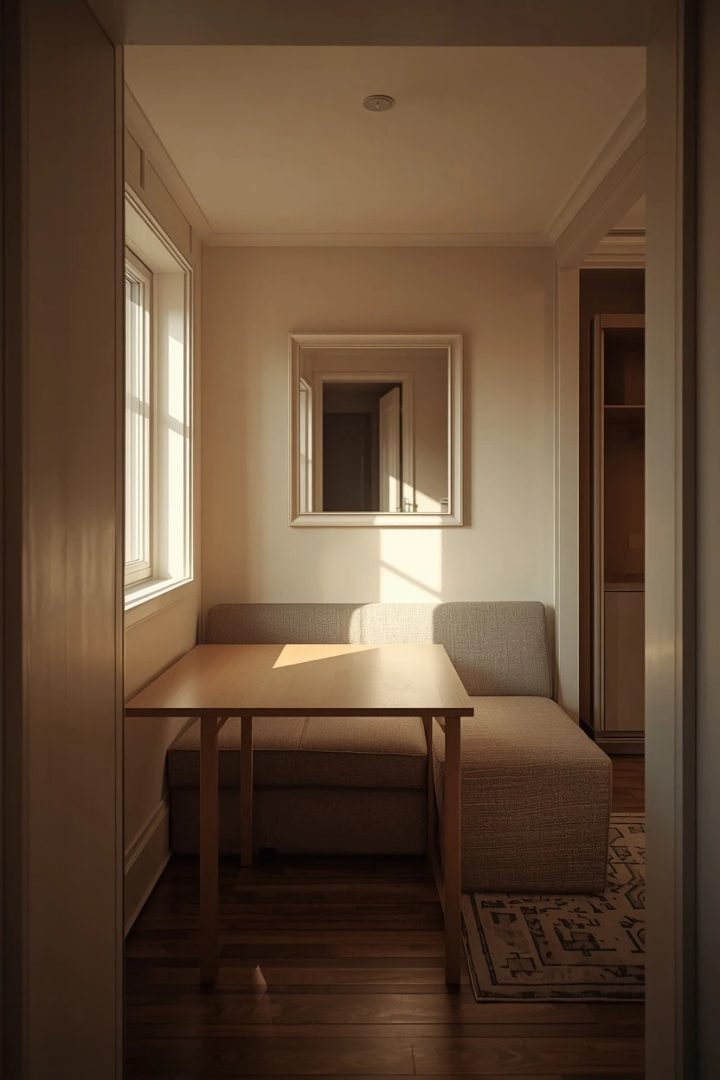
When a lounge and dining room share a small footprint, every piece has to earn its place. Multi-functional and space-saving furniture is the key to making it work.
Choose an extendable or drop-leaf dining table that stays compact day to day and opens up for guests. Nesting tables, a storage ottoman, and a slim console all add function without eating into the floor.
Keep sightlines open by selecting furniture with legs rather than heavy, floor-to-ground bases. A large mirror and light, airy pieces help a small combined room feel bigger than it is.
Use the vertical space too. Tall shelving and wall-mounted storage free up the floor, which is the scarcest resource in a compact dual-purpose room.
10. Try an Open Shelf or Half-Wall Divider
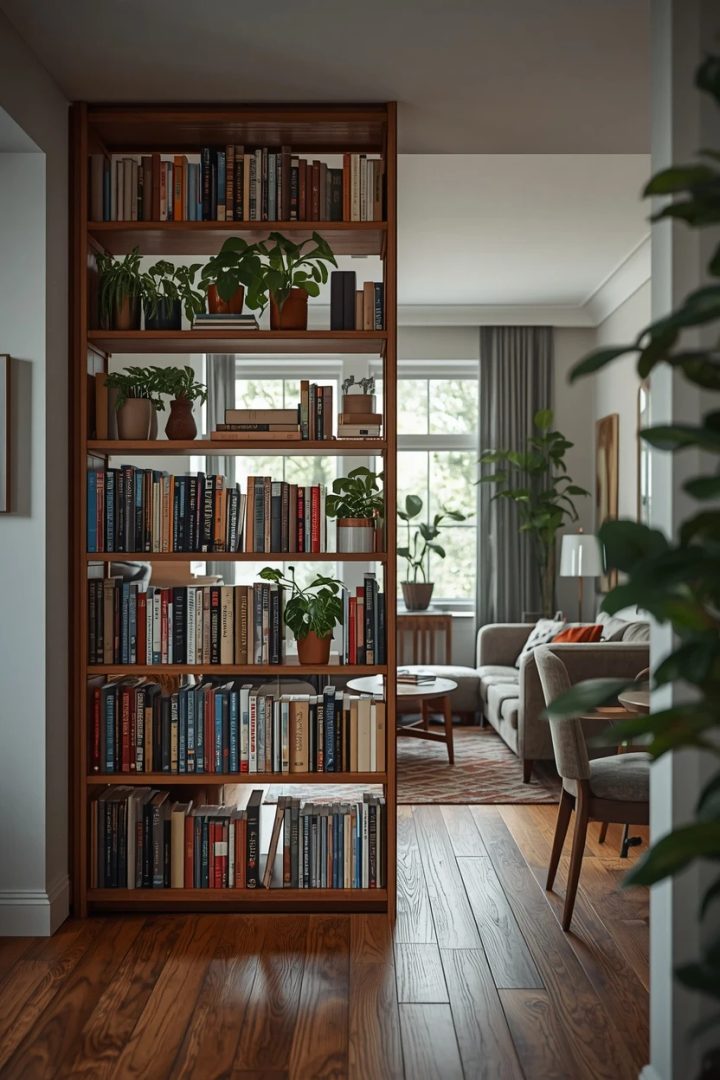
When you want a stronger separation than furniture alone, an open shelf or half-wall divider gives definition without closing the room off. Both split the zones while keeping the open, airy feel intact.
An open-backed bookshelf is ideal because light and sightlines pass straight through. Style it from both sides with books, plants, and objects so it looks intentional from the lounge and the dining area alike.
A half-height wall or a low cabinet run offers a more architectural divide while still preserving the connection between zones. It can double as a serving ledge or extra storage.
Keep any divider in proportion to the room. In a smaller space, a slim or partially open unit prevents the room from feeling chopped up and cramped.
11. Protect the Traffic Flow and Walkways
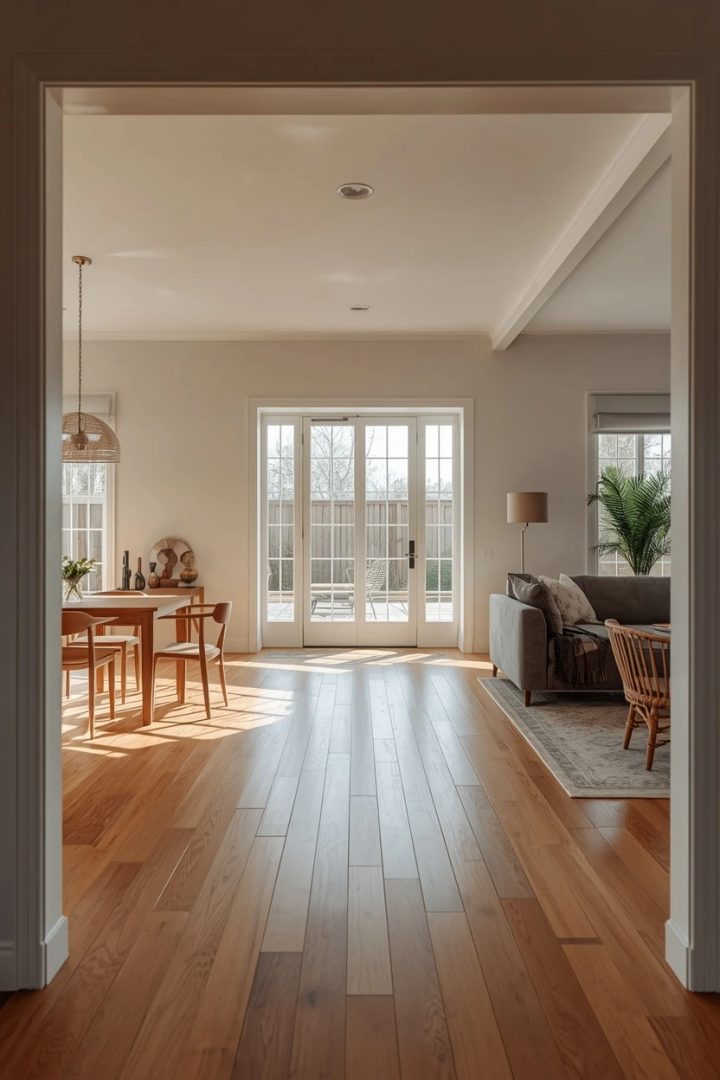
A combined room only works if people can move through it easily. Protecting the traffic flow is as important as how the room looks, and it is often where dual-purpose spaces go wrong.
Identify the main routes first: the paths between the door, the kitchen, the dining table, and the seating. Keep these clear of furniture so movement is never blocked or awkward.
Honour the key clearances: at least 36 inches for main walkways and 36 inches behind dining chairs so they can be pulled out. Crowding these makes the whole room feel tight and stressful to use.
Test the layout by walking it before committing. If you find yourself sidestepping a chair or squeezing past the sofa, adjust the plan until every route feels natural.
12. Tie It Together With Consistent Accents
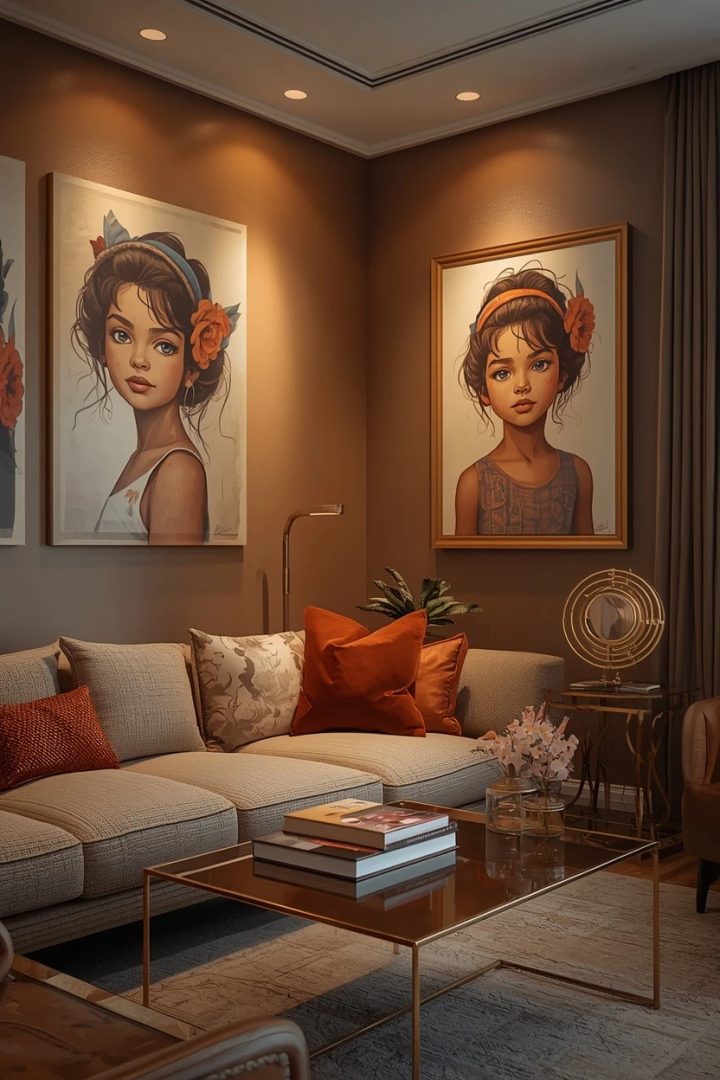
The finishing layer that makes a combined room feel like one space is consistent accessorising. Repeated accents stitch the two zones into a single, intentional scheme.
Choose a consistent style of artwork, frame, or print across both areas, and echo your palette in cushions, table linens, and decorative objects. These repeated cues guide the eye smoothly from lounge to dining.
Plants are a wonderfully easy unifier. A few of the same species, or a shared planter style, dotted through both zones add life and a natural sense of connection.
Resist the urge to over-decorate either zone. In a space you see all at once, restraint reads as polished, while clutter quickly makes a dual-purpose room feel busy and small.
⭐ Pro Tip
Plan a combined living and dining room on paper or with a free room-planner app before you buy anything.
Draw the room to scale, mark the doors, windows, and main walkways, then place furniture and check every clearance.
Confirm you have 36 inches behind dining chairs and 36 inches for the main routes through the space.
Catching a tight squeeze on paper is far cheaper than discovering it after the furniture arrives.
📌 Important Note
A combined living and dining room is a genuine advantage, not a compromise.
Open dual-purpose spaces are sociable and flexible, letting you cook, dine, and relax while staying connected to family and guests.
Lean into that strength by keeping the scheme cohesive and the flow open, rather than trying to wall the functions off from each other.
Your Living-Dining Room Checklist
Use this checklist to keep your combined lounge and dining room cohesive, functional, and easy to move through:
• Define two clear zones before placing any furniture.
• Use one cohesive palette of two or three colours across both areas.
• Anchor each zone with its own coordinating rug, sized correctly.
• Float the sofa and add a console to divide the space naturally.
• Light each zone for its function while keeping bulbs warm at 2700K.
• Scale furniture to leave 36-inch walkways and chair clearances.
• Repeat a few key materials and finishes for visual flow.
• Tie everything together with consistent art, textiles, and accents.
Frequently Asked Questions
How do I divide a living room and dining room in one space?
Use a combination of rugs, furniture placement, and lighting rather than solid walls. Floating the sofa, adding a console or open shelf between the zones, and giving each area its own rug and light fixture creates clear definition while keeping the space open.
Should a living room and dining room match?
They should coordinate rather than match exactly. Share one cohesive colour palette and repeat a few key materials across both zones, but vary the proportions and accents so each area still feels distinct.
What size rug should go under a dining table in a combined room?
The rug should extend at least 24 to 36 inches beyond every edge of the table, so chairs remain on the rug even when pulled out. In the lounge zone, choose a rug large enough that the front legs of the seating rest on it.
How much space do I need around a dining table?
Allow at least 36 inches behind the chairs so people can pull them out and sit comfortably, and keep main walkways at 36 inches or more. These clearances are what stop a combined room from feeling cramped.
How do I make a small living-dining room feel bigger?
Choose multi-functional, leggy furniture, use an extendable dining table, and keep a single light palette throughout. Mirrors, open shelving, and clear sightlines all help a small combined space feel more open and airy.
Final Thoughts
A combined lounge and dining room rewards a bit of planning with a sociable, flexible space that suits the way most of us live now. The trick is to balance cohesion with clear zoning.
Hold the room together with one palette and a few repeated materials, then separate the functions with rugs, lighting, and a well-placed sofa or console. Protect your walkways and the room will work as hard as it looks good.
Start by mapping the layout and the key clearances, then build the two zones outward from there. With the proportions right, your living and dining space will feel like one considered room rather than two competing for the floor.