30 Kitchen Ideas for Small Spaces in 2026
June 9, 2026 · 15 min read
 By Khawar Iqbal
A small kitchen forces honesty: every cabinet, every inch of counter, every fixture has to earn its place. The good news is that the same constraint that makes a tiny kitchen frustrating also makes it the most rewarding room to get right — one smart change shows immediately, and a handful of them transform how the whole space cooks and looks.
These 30 kitchen ideas for small spaces pull together what's actually working in 2026: storage that climbs the walls, light that stretches the room, warm colours and textures replacing the sterile all-white look, and layout tricks borrowed from boats and tiny homes. Take the ones that fit your kitchen and your budget — even three or four of them will change how the room works.
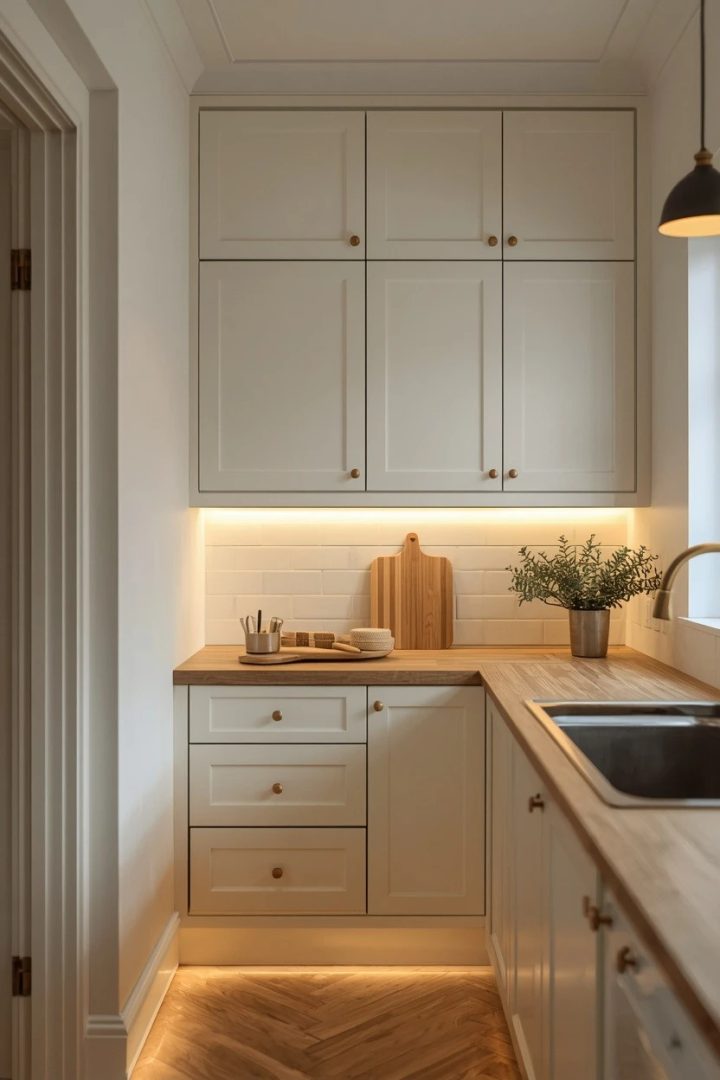
1. Take Cabinets All the Way to the Ceiling
The gap above standard cabinets collects grease and wastes the most valuable storage in a small kitchen. Running cabinets to the ceiling adds a whole extra row for the things you use a few times a year — platters, the stand mixer, holiday dishes.
Full-height cabinetry also draws the eye up, which makes a low ceiling read taller. If replacing cabinets isn't in budget, a row of matching boxes or baskets on top of the existing ones captures the same space for less.
2. Choose a Warm Colour Instead of Stark White
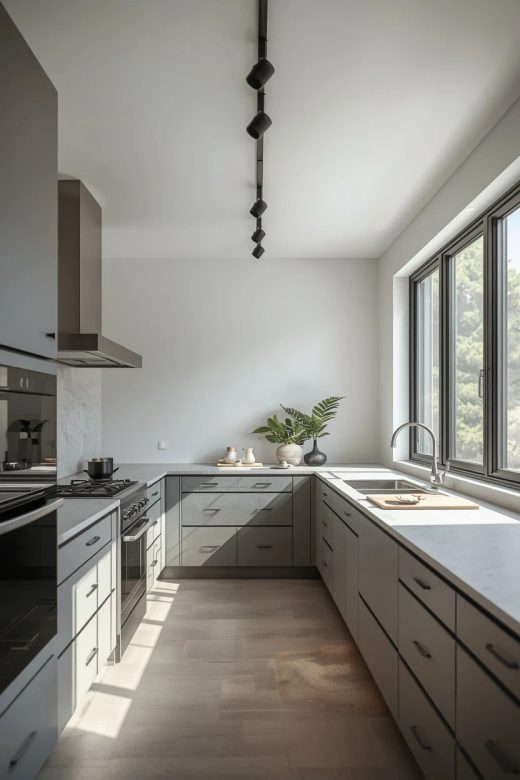
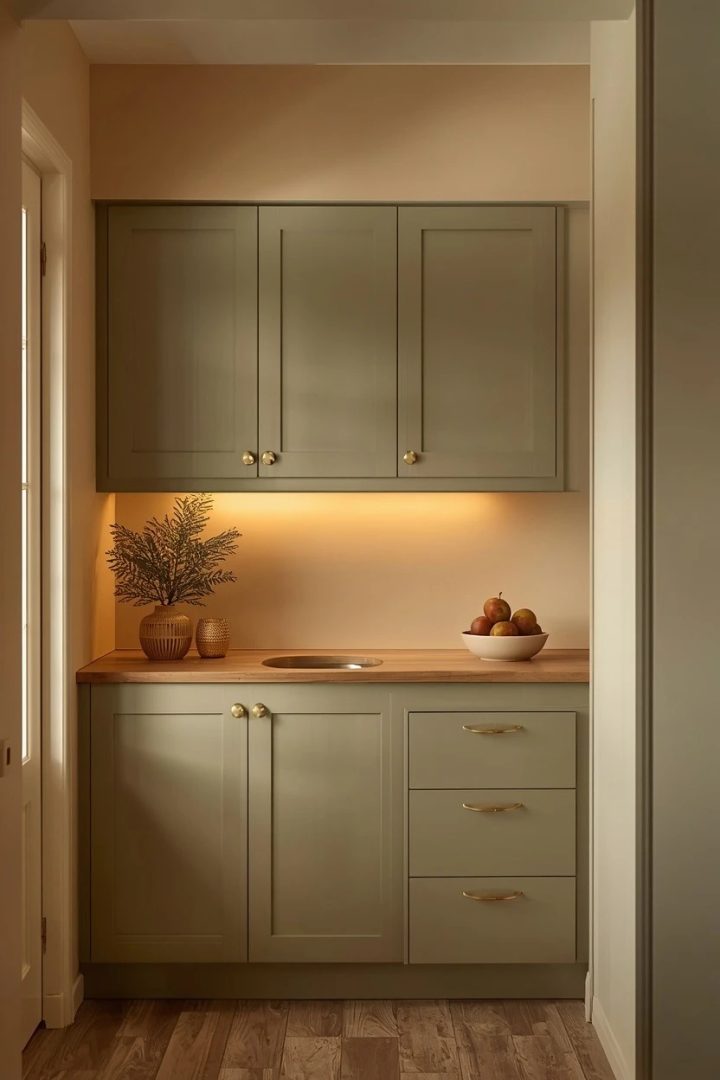
The all-white kitchen had a long run, but 2026 has moved somewhere warmer. Soft sage, warm cream, muted clay, and gentle greige make a small kitchen inviting without sacrificing the light a tiny room needs.
A small kitchen actually handles colour better than people expect — there's less of it, so a sage cabinet run reads as a considered accent rather than a sea of green. Keep walls and counters light so the colour stays grounded.
Getting the balance right
• Choose a muted, grey-based version of your colour so it stays calm in a compact space.
• Put the colour on the lower cabinets and keep uppers or walls light to hold onto brightness.
• Match the undertone to your counter — warm colours with warm stone or wood, not stark white.
• Repeat the colour once or twice in small items, like a tea towel or a pot, so it reads planned.
Paint Picks
• Cabinets: “Saybrook Sage” (Benjamin Moore HC-114) — a soft grey-green that warms a small kitchen without darkening it
• Walls: “Swiss Coffee” (Behr PPU7-12) — a warm creamy white that keeps the room bright and lets the cabinet colour lead
3. Hang Open Shelves Where Uppers Crowd
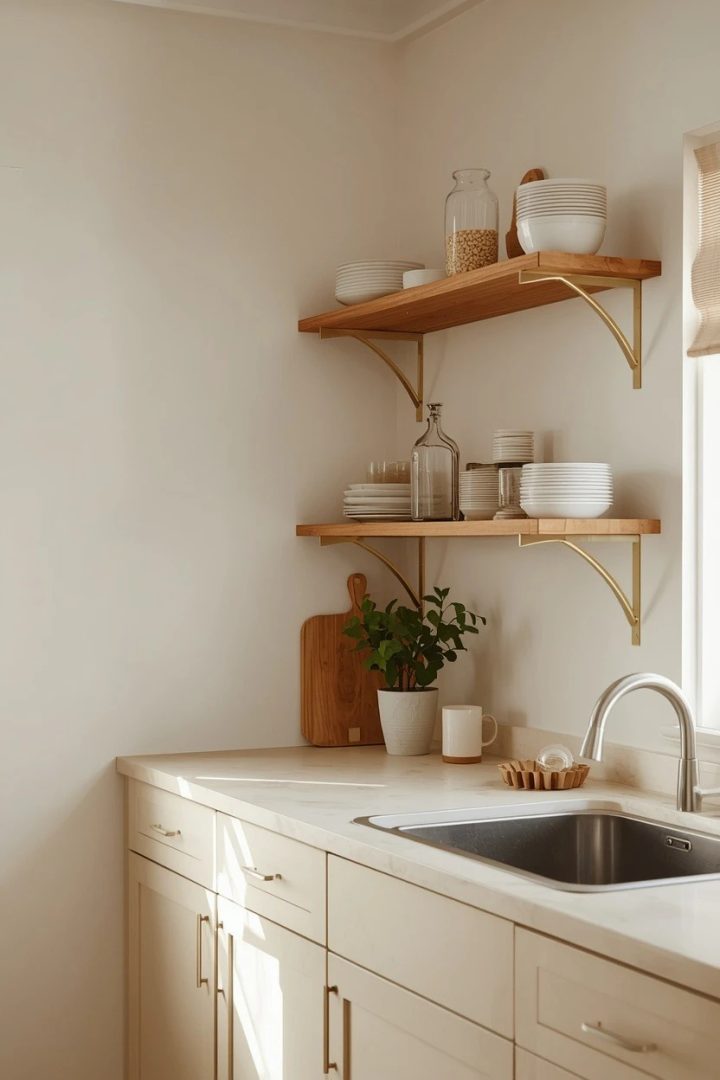
Upper cabinets can loom over a narrow kitchen and make it read boxed in. Swapping one run for open oak shelves opens the wall, bounces more light around, and puts everyday dishes within easy reach.
The honest trade-off: open shelves show everything, so they suit the things you use and wash daily — plates, glasses, mugs — and they need an occasional wipe-down for dust. Keep one wall of closed cabinets for the rest.
4. Light the Counters With Under-Cabinet LEDs
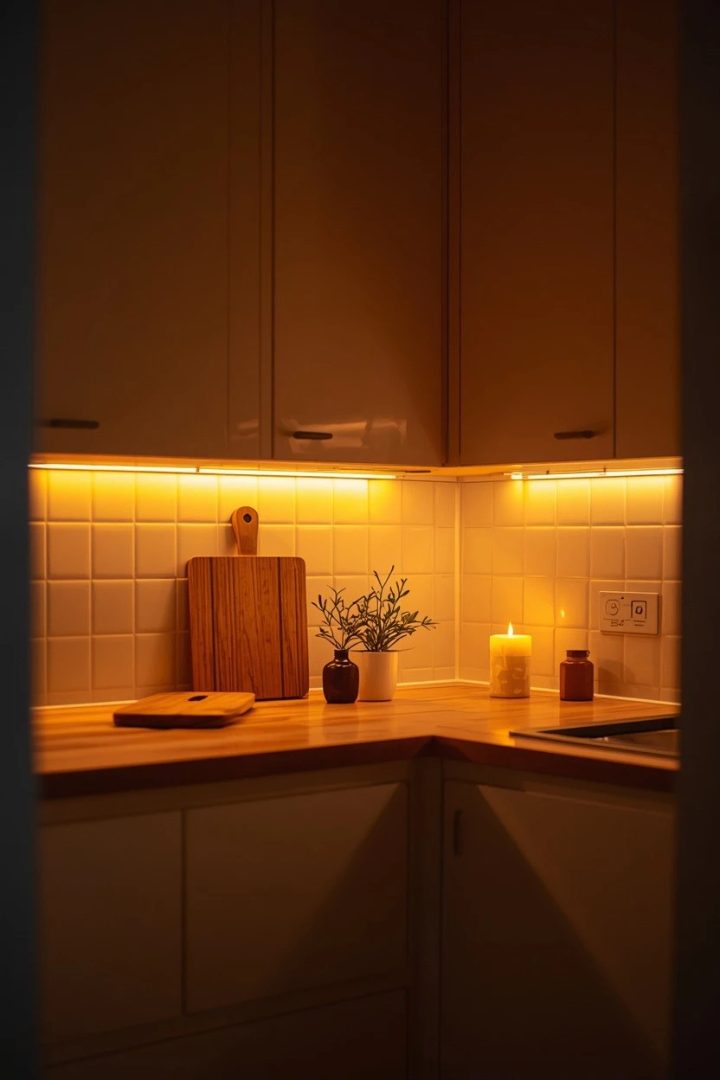
A single ceiling light leaves you cooking in your own shadow. Warm LED strips under the upper cabinets light the counters exactly where you work and add a soft evening glow that flatters the whole room.
Stick-on, rechargeable strips install in minutes with no electrician, and hardwired versions are a small job during any other kitchen work. Choose 2700K warm white so the light reads golden rather than clinical.
5. Add a Slim Rolling Island or Butcher Block Cart
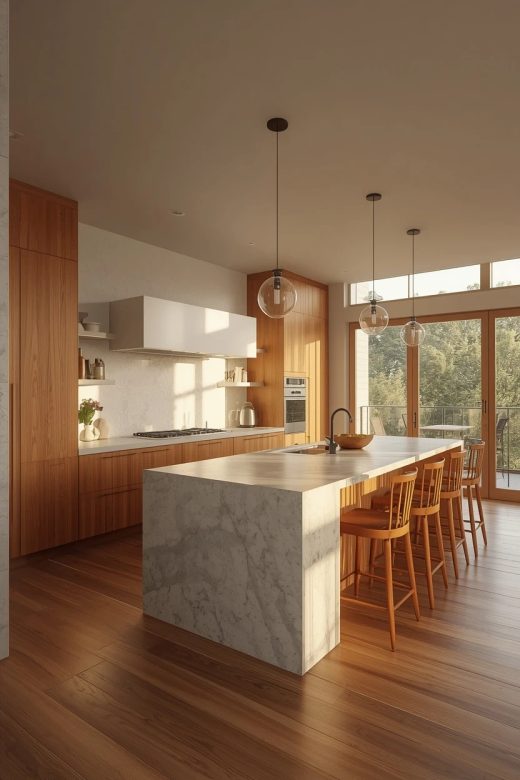
A full island won't fit, but a slim rolling cart with a butcher-block top often will. It adds prep space, a shelf or two of storage, and rolls against the wall — or out of the room — when you need the floor back.
Measure your walkways first: you want at least about 36 inches of clearance to move comfortably. A cart with a drop leaf or towel bar earns even more of its footprint.
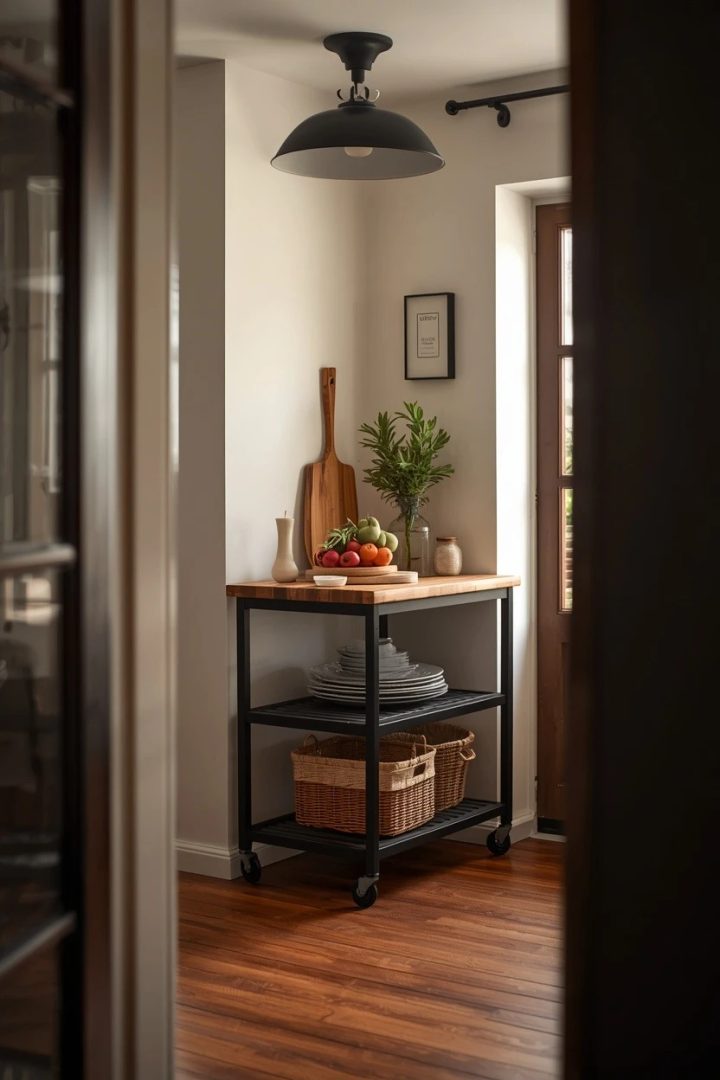
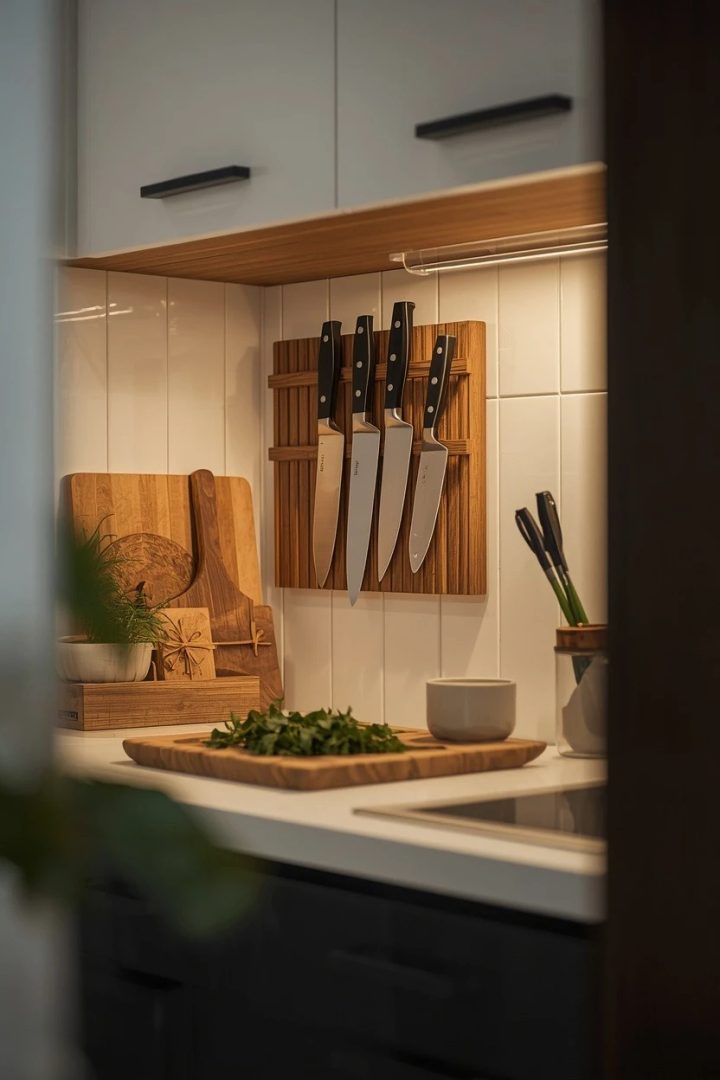
6. Use a Wall-Mounted Magnetic Knife Strip
A knife block eats a chunk of counter a small kitchen can't spare. A magnetic strip on the wall holds the knives in less space, keeps blades drier and sharper than a drawer, and puts them exactly where you prep.
A wood-faced strip looks warmer than bare steel. Mount it away from the stove's grease zone and at a height that's easy to reach but above little hands if children are around.
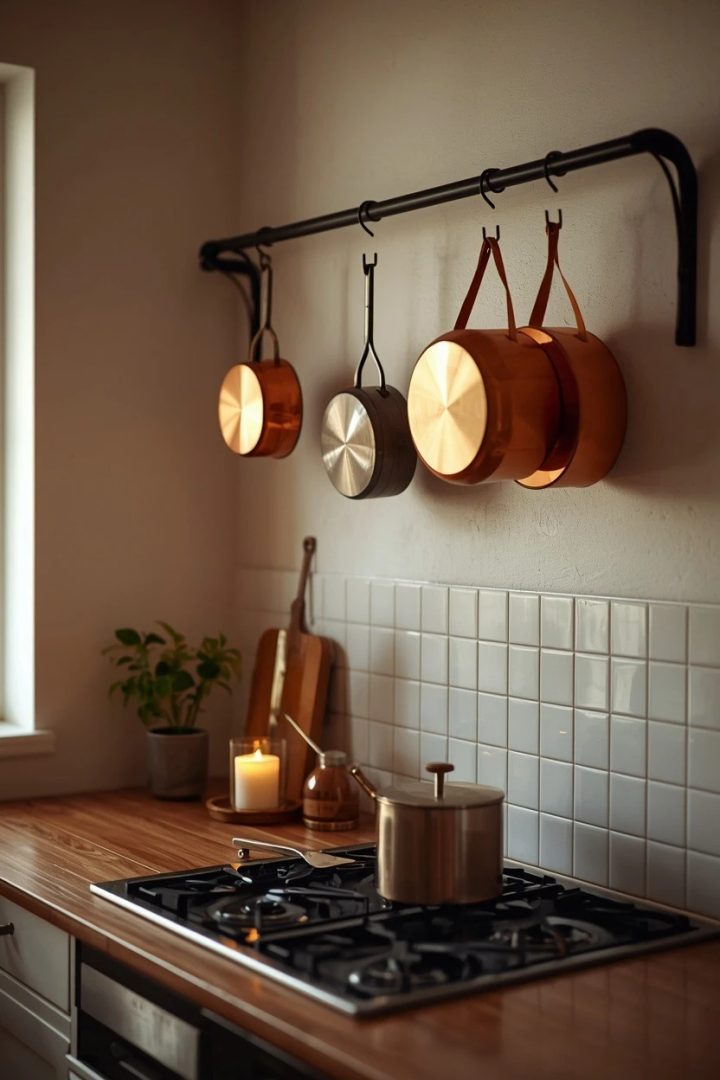
7. Hang Pots From a Rail or Ceiling Rack
Pots and pans are the bulkiest things in a kitchen, and stacking them in a cabinet means wrestling the whole pile for the one at the bottom. A wall rail with S-hooks or a small ceiling rack hangs them in reach and frees a whole cabinet.
A few good-looking pans on display read warm and lived-in, especially copper or carbon steel. Keep the everyday two or three on hooks and store the rest, so the wall stays useful rather than cluttered.
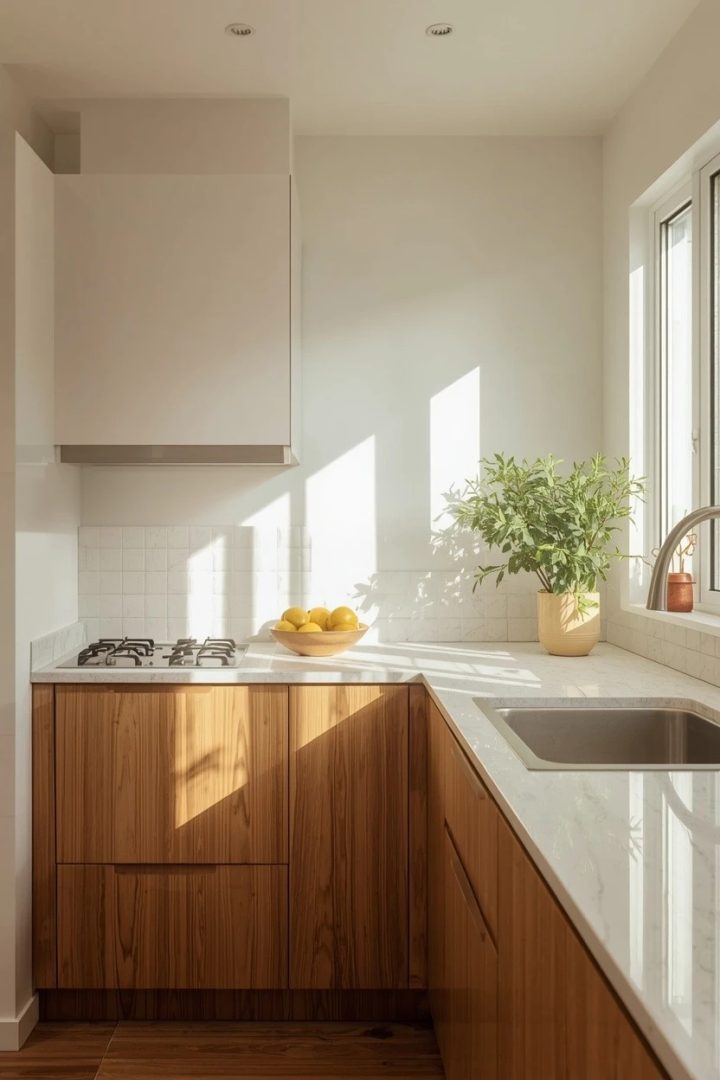
8. Choose Light, Reflective Counters
Dark counters absorb light a small kitchen can't afford to lose. A light quartz, a pale stone, or a warm white laminate with a soft sheen bounces daylight around and visually widens the work surfaces.
Light counters also blur the boundary between counter and wall, which makes the whole run read longer. A subtle warm vein or speckle hides crumbs and marks better than pure white.
9. Run the Backsplash Tile to the Ceiling
Stopping the backsplash at the upper cabinets chops the wall in half. Running tile from counter to ceiling — especially a glossy, handmade-look tile that catches light — stretches the wall upward and adds quiet luxury.
Glossy zellige-style or subway tile reflects light around a dim kitchen. It's a relatively small area in a compact kitchen, so even a nicer tile stays affordable.
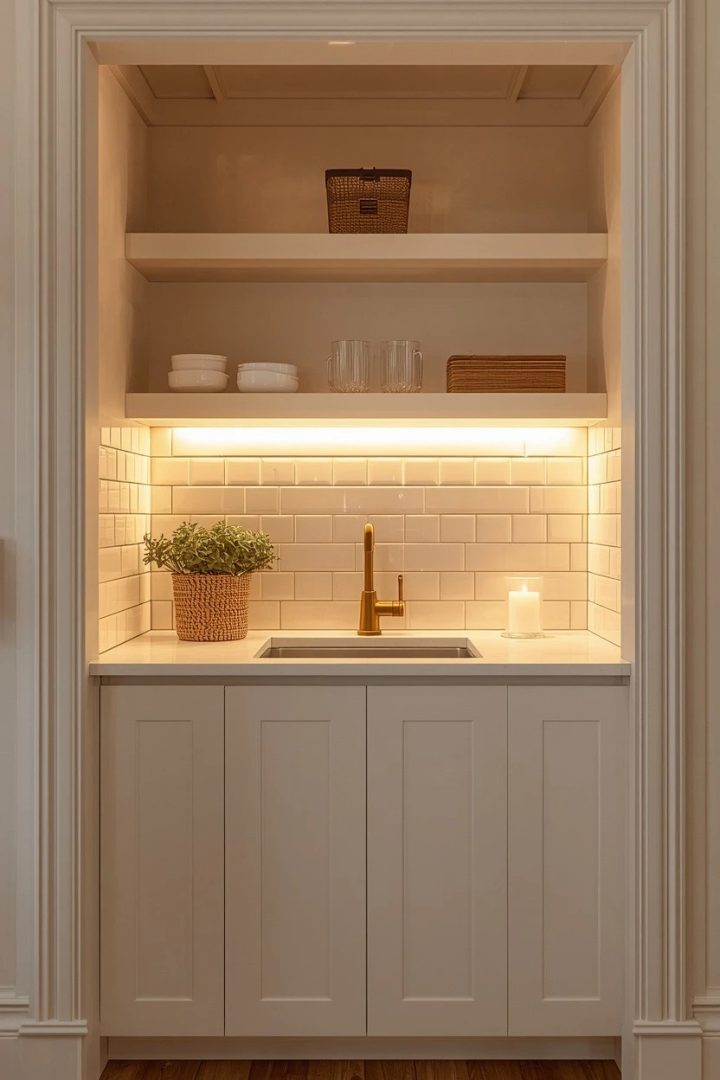
10. Fit Pull-Out Pantry Storage in Narrow Gaps
The skinny gap beside the fridge or stove looks useless, but a slim pull-out pantry rack turns it into rows of jars, bottles, and cans — all visible and reachable the moment you slide it out.
Ready-made rolling units fit gaps as narrow as about 6 inches, or a carpenter can build one into a renovation. It's the classic small-kitchen move because it creates storage out of literal thin air.
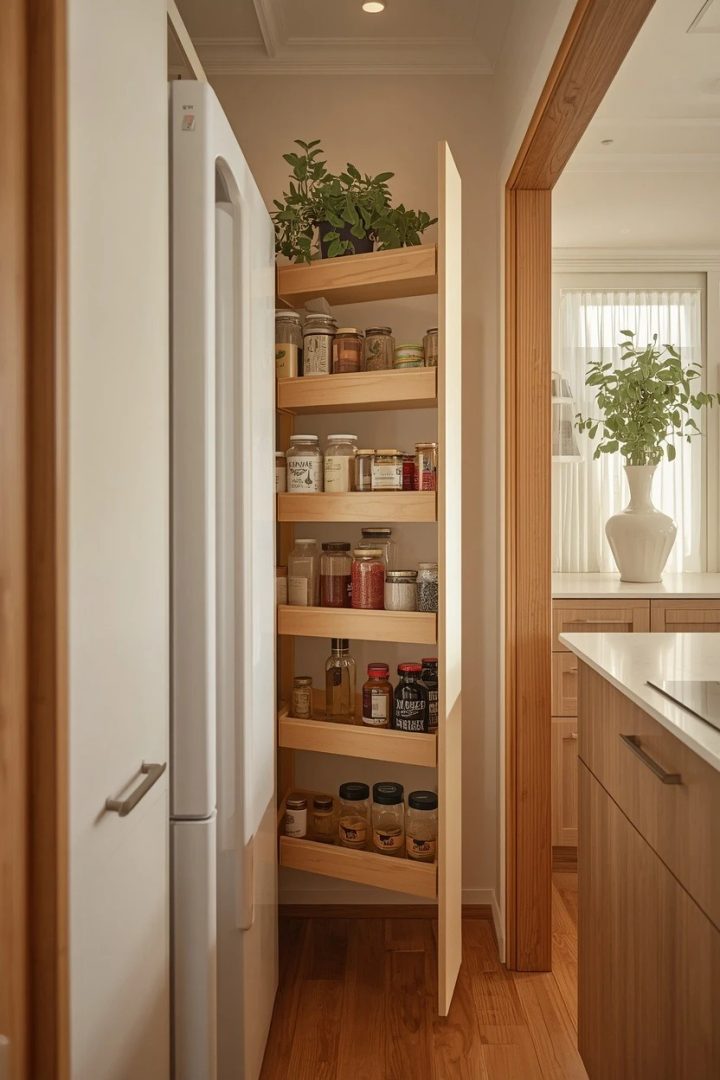
11. Maximise the Sink Zone With Over-Sink Accessories
In a tiny kitchen the sink is often the biggest single chunk of counter run. An over-sink cutting board and a roll-up drying rack reclaim it — prep on top of the sink, dry dishes over it, and roll everything away after.
These accessories cost little and add the equivalent of a couple of square feet of workspace. A workstation-style sink with built-in ledges does the same job in a renovation.
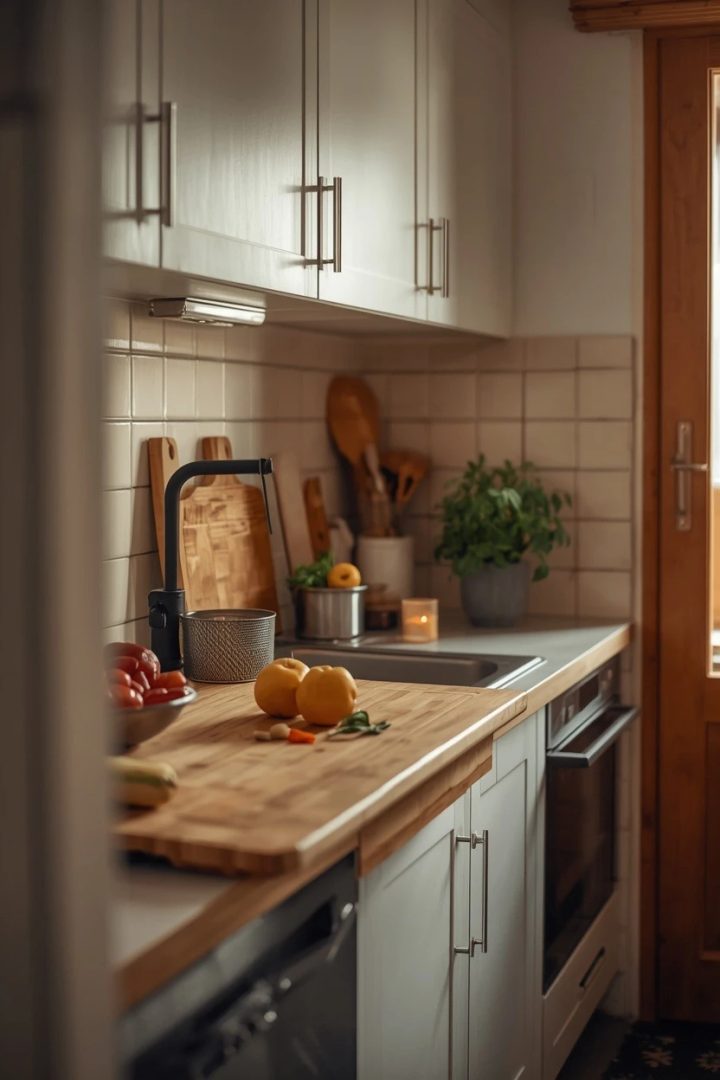
12. Pick Slim, Counter-Depth Appliances
A full-depth fridge jutting into a narrow kitchen steals walkway you don't have. Counter-depth fridges, slim 18-inch dishwashers, and compact ovens sit flush with the cabinetry and give the room its lines back.
You trade a little capacity for a lot of space, and for most households the slim versions hold plenty. Measure clearances for doors and drawers before buying — an appliance that can't open fully is worse than a smaller one.
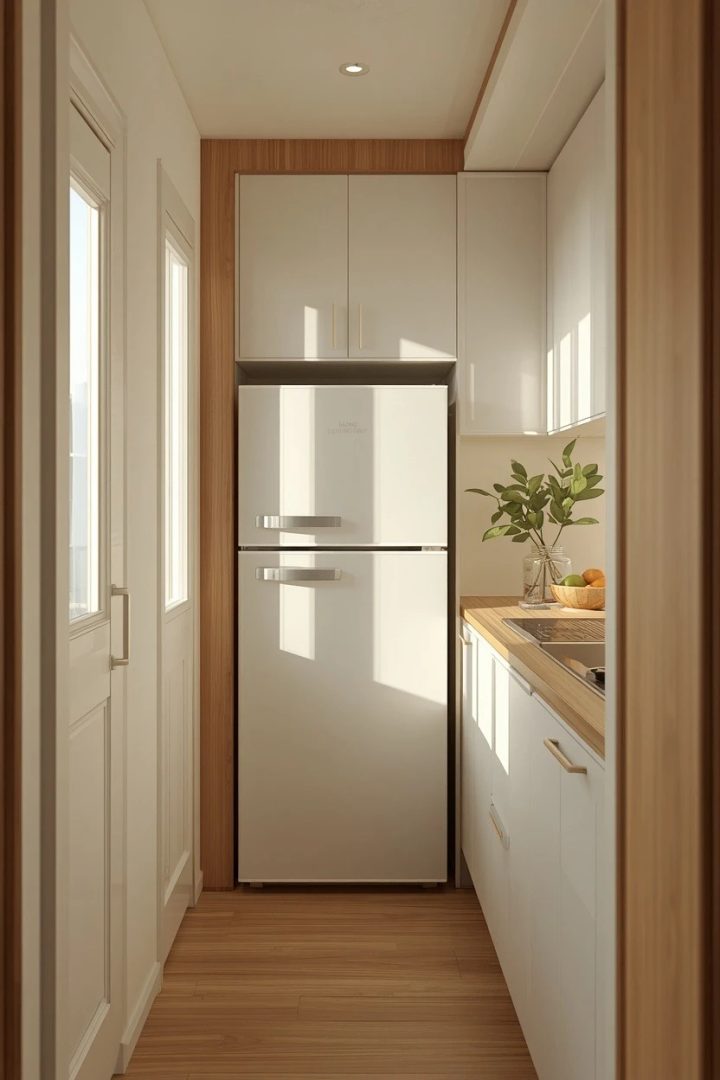
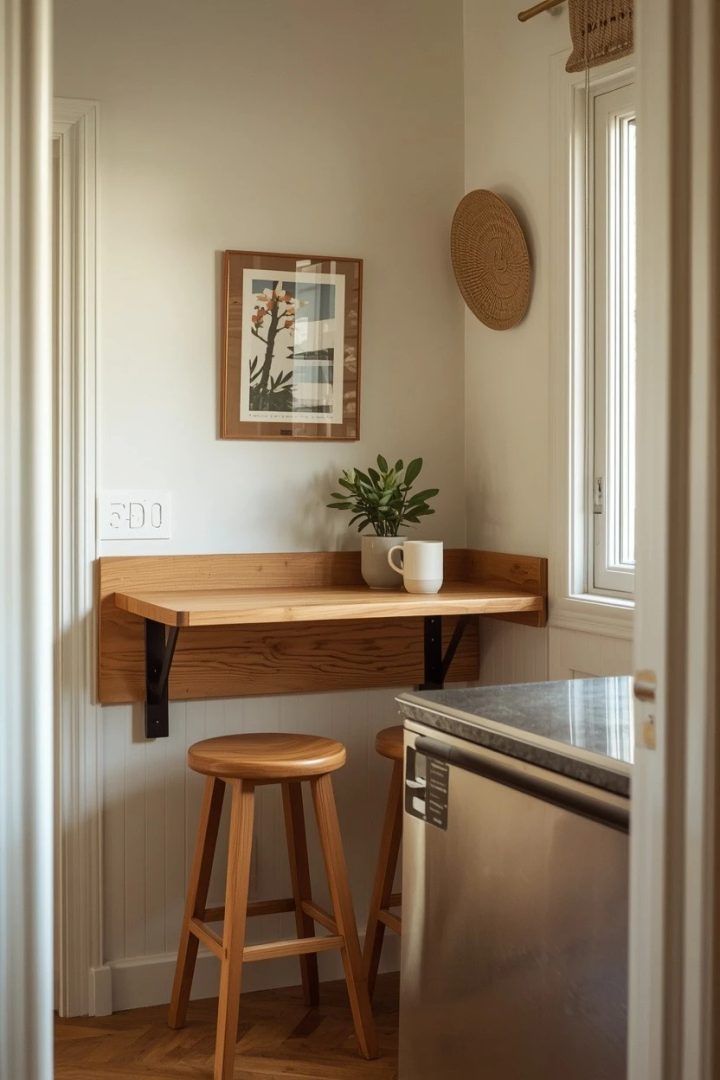
13. Add a Fold-Down Table or Breakfast Bar
A dining table rarely fits a small kitchen, but a wall-mounted fold-down table or a slim counter-height bar along a wall gives you a spot for coffee, a quick meal, or a laptop — then folds flat when you need the floor.
Pair it with stools that tuck fully underneath. Even a 12-inch-deep ledge along a window wall works as a breakfast bar and steals almost no space.
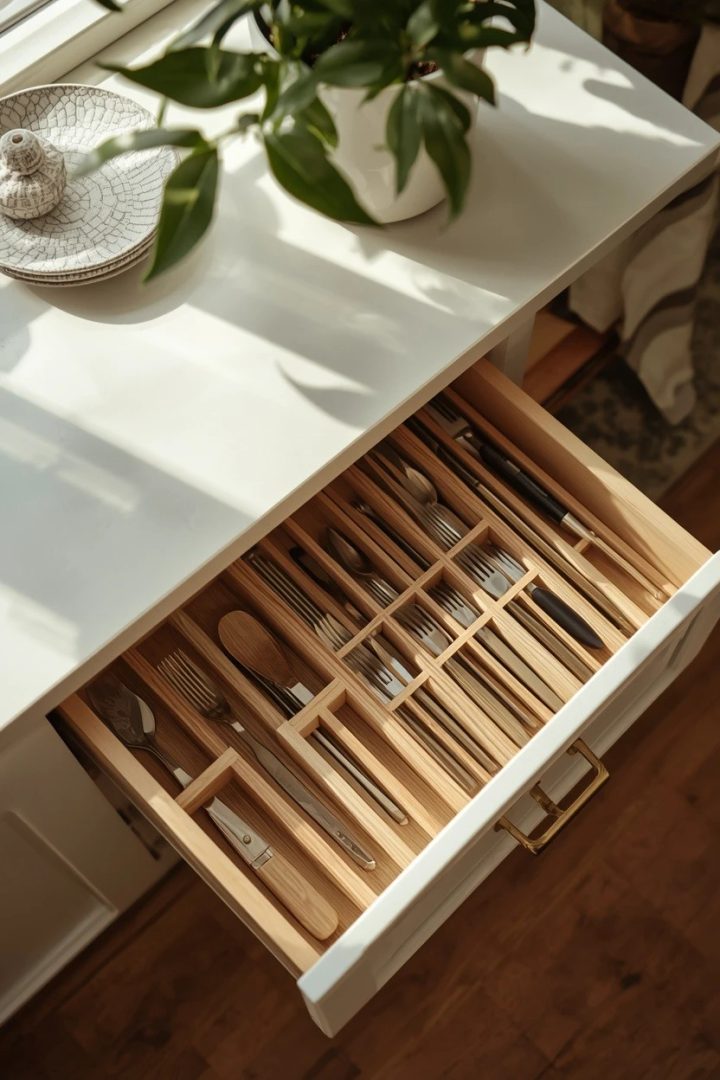
14. Organise Drawers With Custom Dividers
Small-kitchen drawers have to work harder, and a jumble wastes half their space. Wood or bamboo dividers — bought adjustable or cut to fit — give every utensil a slot and make the full depth of the drawer usable.
Deep drawers with peg dividers store plates and bowls below counter height, which is often easier in a small kitchen than reaching into uppers. Organised drawers are invisible from outside but change how the kitchen cooks.
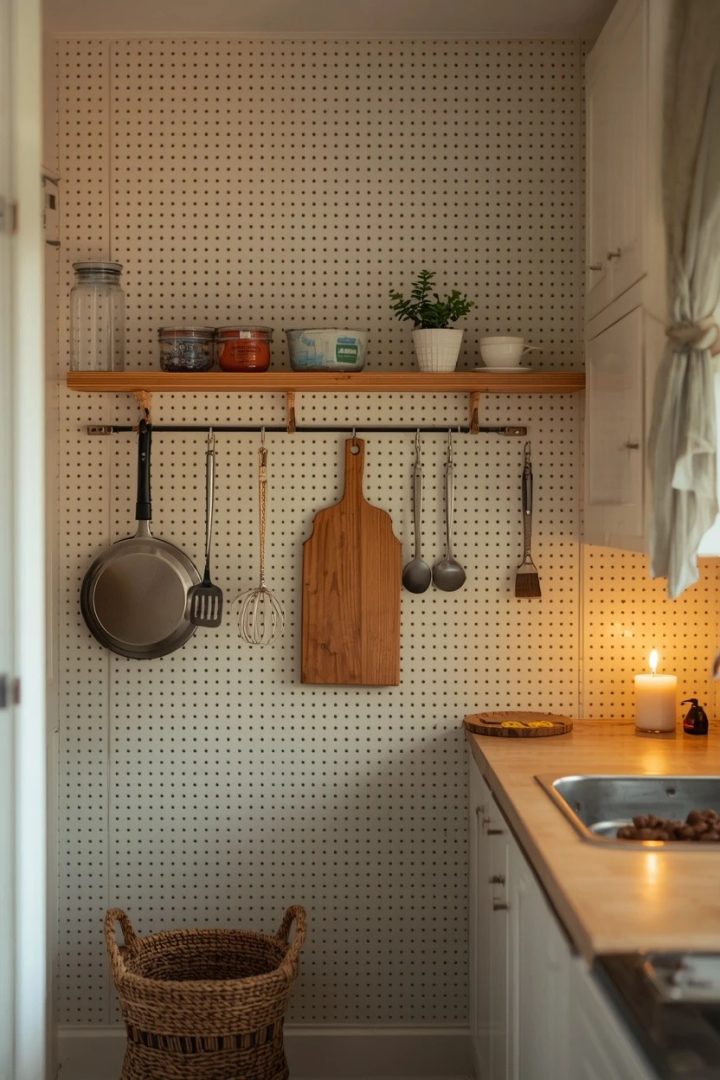
15. Mount a Pegboard Wall for Flexible Storage
A pegboard turns a blank wall into adjustable storage you can rearrange any time. Hooks for utensils, a small shelf for jars, a rail for towels — the layout changes as your needs do, without new holes in the wall.
Paint it a soft colour and frame it so it reads as a design feature, not a workshop wall. It's a renter-friendly favourite because one set of fixings supports endless arrangements.
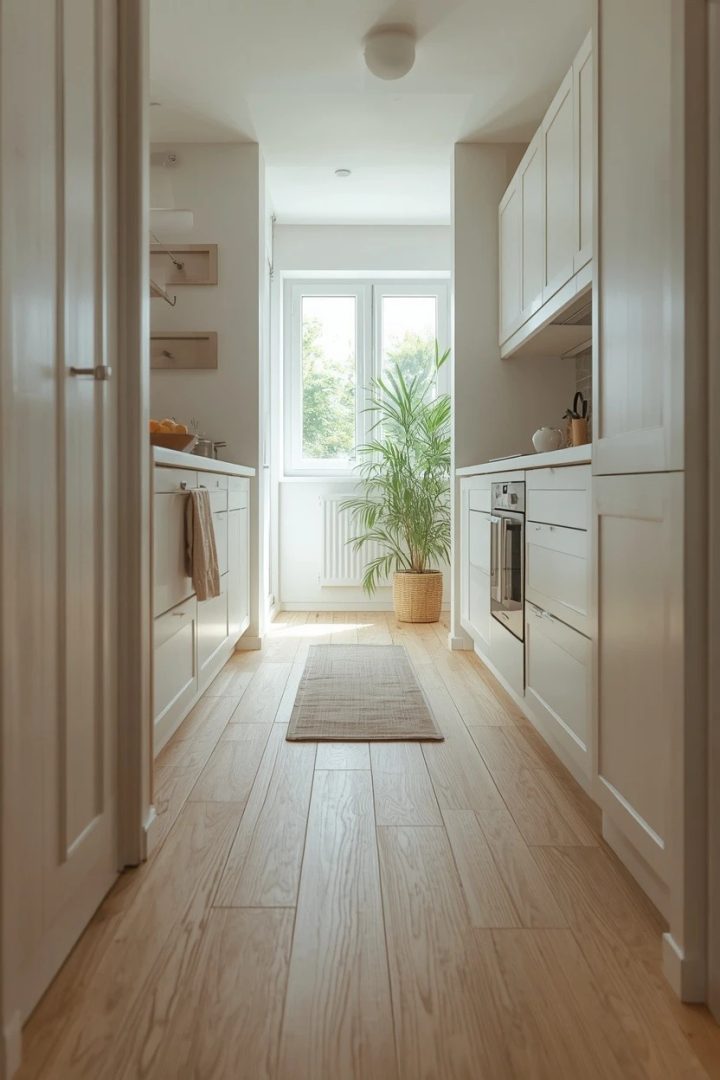
16. Stretch the Room With a Large-Format Light Floor
Floors do quiet work in a small kitchen. Pale, wide planks or large-format tiles with few seams make the floor read as one continuous surface, which stretches the room in every direction.
Run planks lengthwise down a narrow kitchen to lead the eye along its longest line. A warm pale oak or a soft greige tile keeps the floor light without going stark.
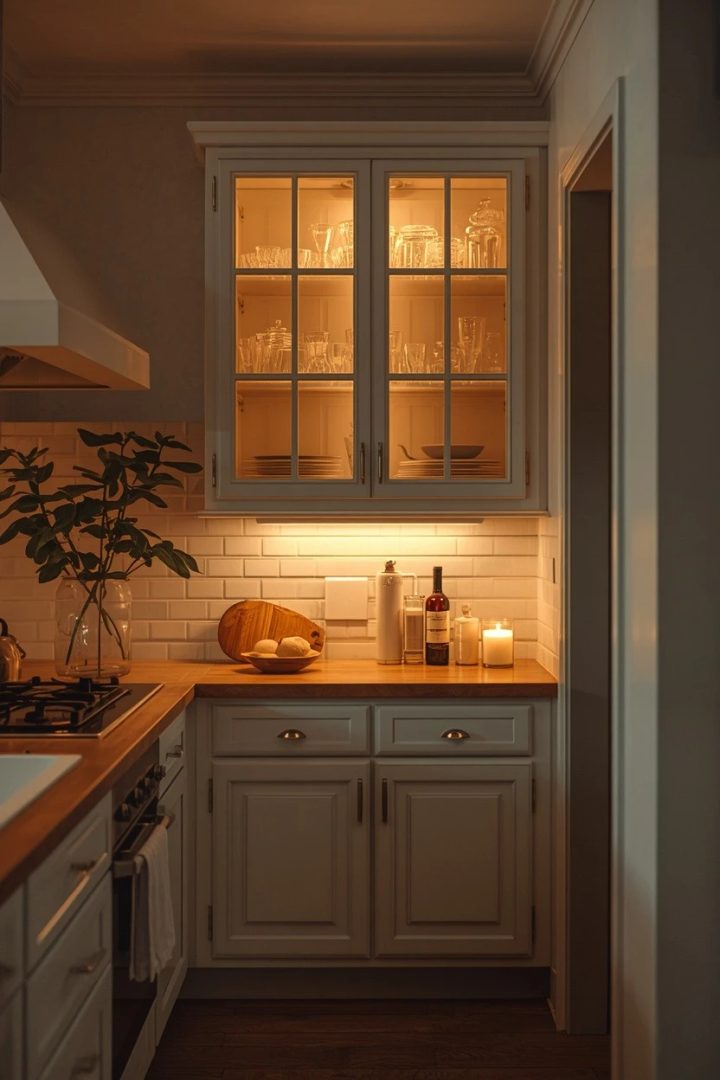
17. Choose Glass-Front or Lit Display Cabinets
A solid wall of cabinet doors can read heavy in a compact room. Swapping one or two doors for glass fronts — ideally with a warm light inside — adds depth, breaks up the mass, and gives the kitchen a little glow at night.
Keep what's behind the glass simple and tidy: glasses, white dishes, a few jars. The see-through panel tricks the eye into reading the wall as deeper than it is.
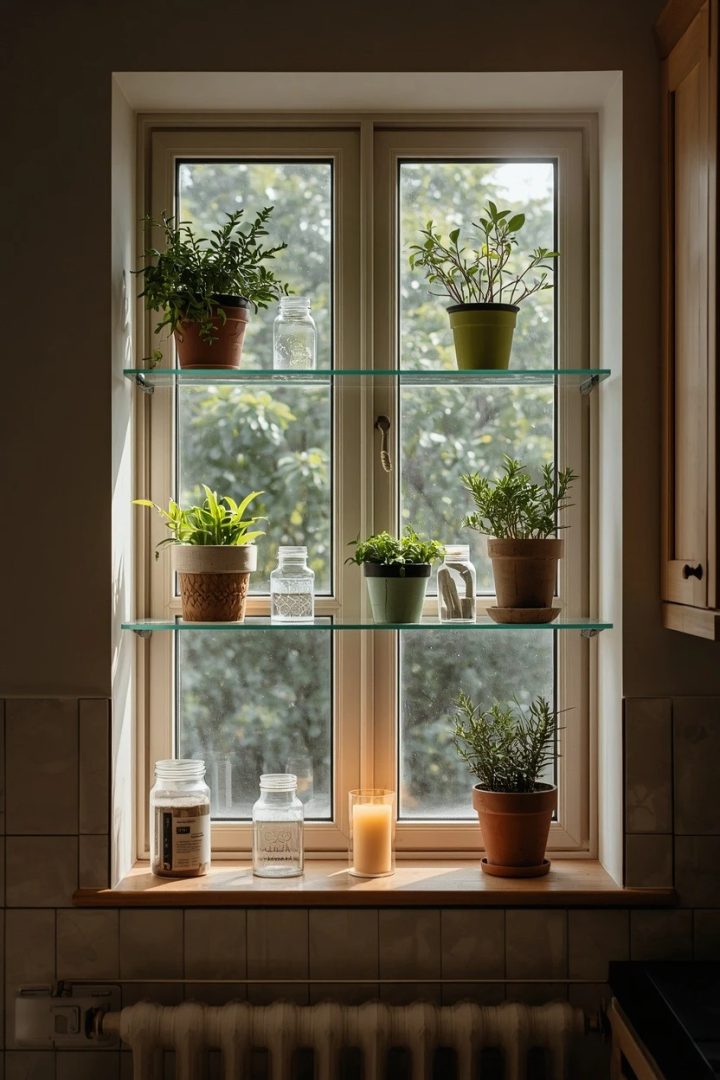
18. Use the Window as Storage and Display
The window is wall space too. A slim glass or wood shelf mounted across it holds herb pots, glass jars, and small plants without blocking meaningful light — the sun streams through the greenery instead.
Fresh herbs on a sunny kitchen window are storage, decor, and groceries in one. Keep the shelf high or split so the view and the light still come through.
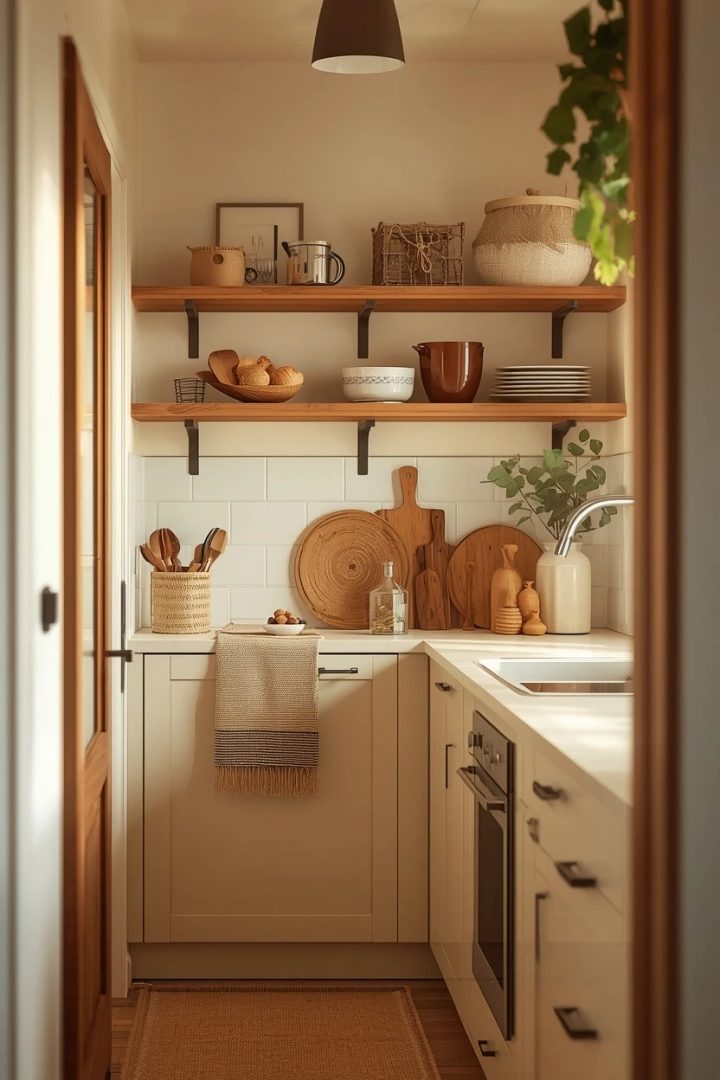
19. Warm It Up With Wood and Texture
Small kitchens built entirely of hard, shiny surfaces read cold and a little clinical. Wood boards leaning against the backsplash, a jute runner, open oak shelving, and a linen towel layer in the warmth 2026 kitchens lean toward.
Texture matters more than colour for warmth here — a cream kitchen with wood and weave reads rich, while the same cream in pure gloss reads sparse. A few natural materials do the work.
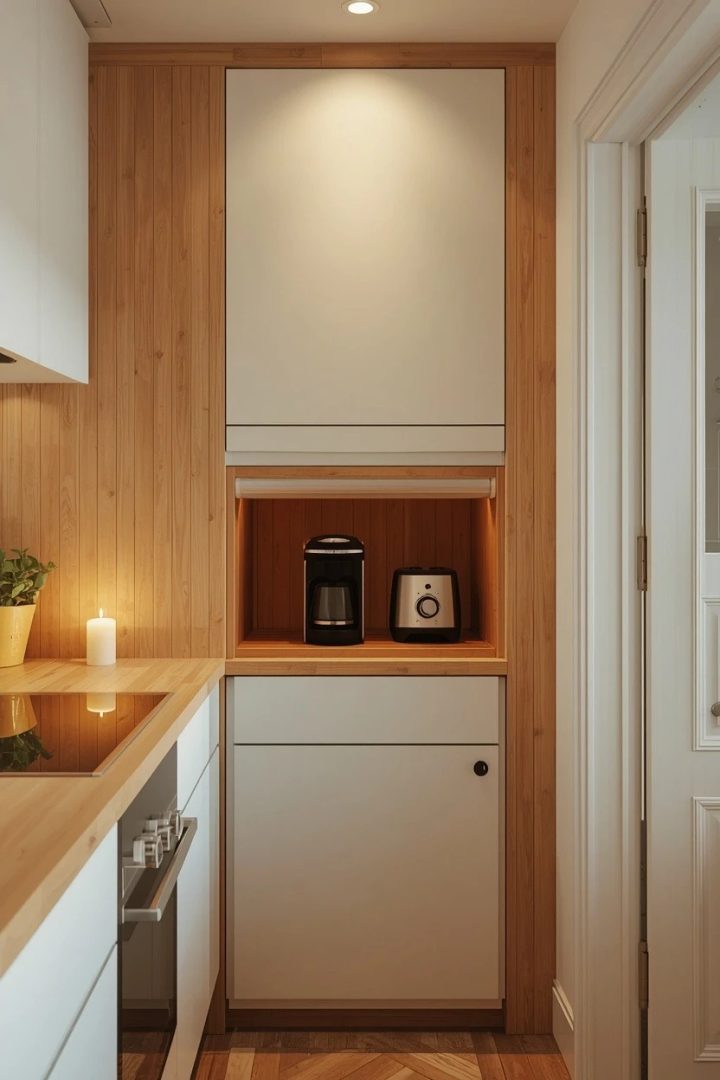
20. Hide Small Appliances in an Appliance Garage
The toaster, kettle, and coffee machine eat a third of the counter in many small kitchens. An appliance garage — a counter-level cabinet with a tambour or lift-up door — keeps them plugged in, used daily, and invisible when not.
It's a renovation-level feature, but a simple corner cabinet with an outlet inside achieves the same on a budget. Clear counters are the single biggest visual win in a tiny kitchen.
21. Brighten the Walls With a Soft Warm White
Wall colour is the cheapest light multiplier a small kitchen has. A soft, warm white — not a stark blue-white — bounces daylight and lamplight around the room while staying warm under evening bulbs.
In a kitchen, choose a wipeable satin or eggshell sheen for the inevitable splashes. The warm white base also lets a coloured cabinet or a wood shelf stand out cleanly.
Getting the balance right
• Pick a white with a warm, creamy base so the kitchen glows rather than going grey under bulbs.
• Use a satin or eggshell sheen that wipes clean near cooking zones.
• Keep the ceiling the same white to blur the room's edges and lift the height.
• Test a large sample by the window and by the stove — kitchen light varies corner to corner.
Paint Picks
• Walls and ceiling: “White Dove” (Benjamin Moore OC-17) — a soft warm white that maximises light in a small kitchen without reading cold
• Trim: “Alabaster” (Sherwin-Williams SW 7008) — a creamy companion white for trim and frames that keeps the contrast gentle
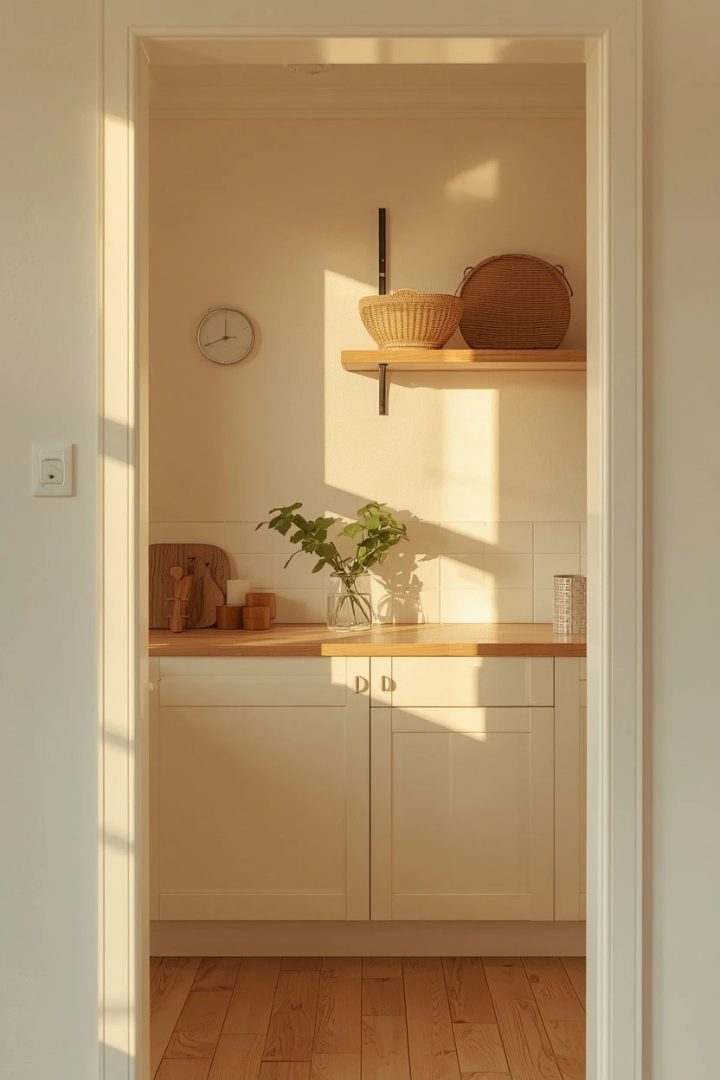
22. Float a Narrow Shelf as a Coffee Station
A dedicated coffee corner makes a small kitchen seem generous. A narrow shelf with mugs on hooks beneath, the machine on the counter below, and a jar of beans turns one tight corner into a little ritual spot.
Hooks under the shelf store the mugs in air instead of a cabinet. Zoning even a tiny kitchen — coffee here, prep there — makes the space cook calmer than one undifferentiated counter.
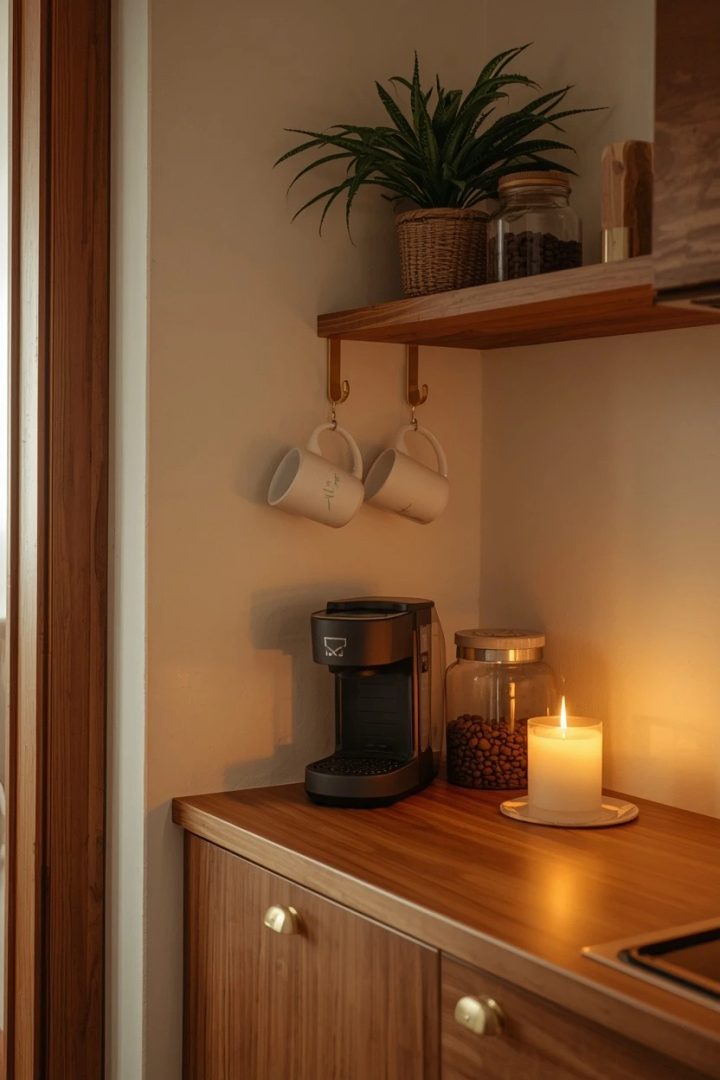
23. Pick a Statement Pendant Over the Sink or Bar
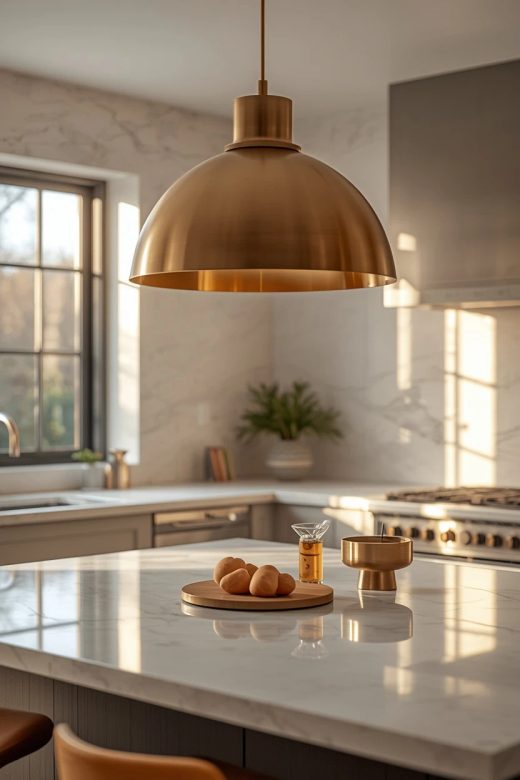
One good pendant does double duty in a small kitchen: task light where you need it and a piece of jewellery for the room. A brass or rattan pendant over the sink or breakfast ledge adds warmth and a focal point.
Scale it to the space — one well-sized pendant beats a row of small ones in a compact room. A warm 2700K bulb keeps the evening kitchen golden.
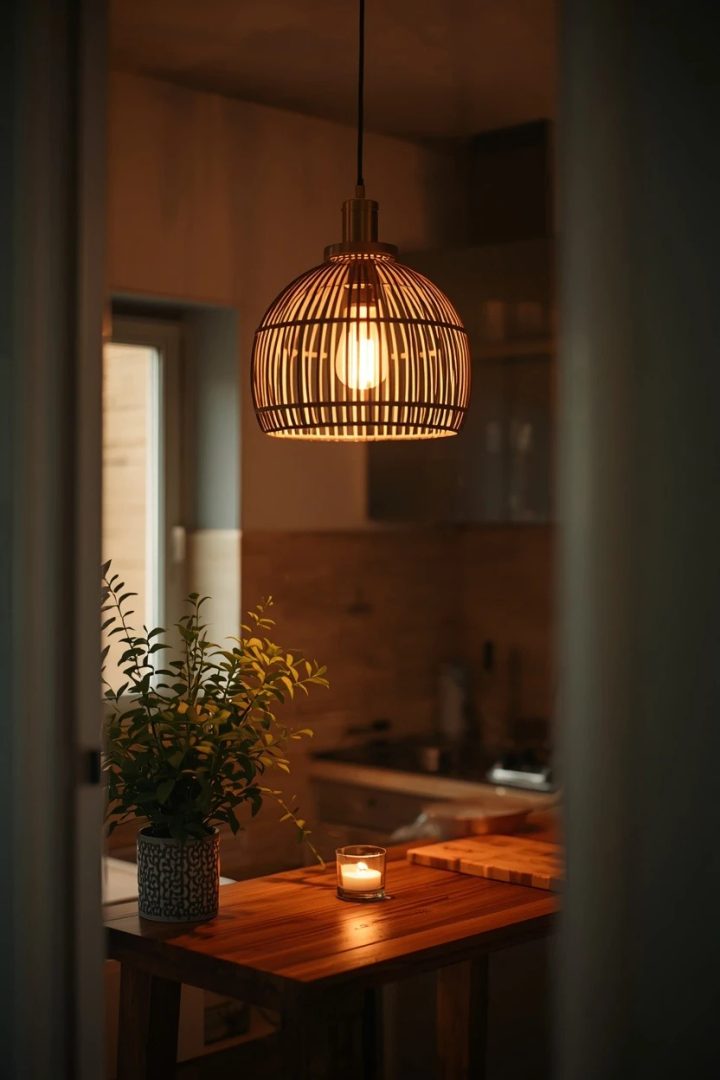
24. Use Corner Carousels and Blind-Corner Pull-Outs
Corner cabinets are where things go to be forgotten. A rotating carousel or a blind-corner pull-out swings the contents out to you, making the deepest, darkest storage in the kitchen fully usable.
Retrofit kits fit most existing corner cabinets. In a kitchen with only a handful of cabinets, reclaiming the corner is like gaining a whole extra cupboard.
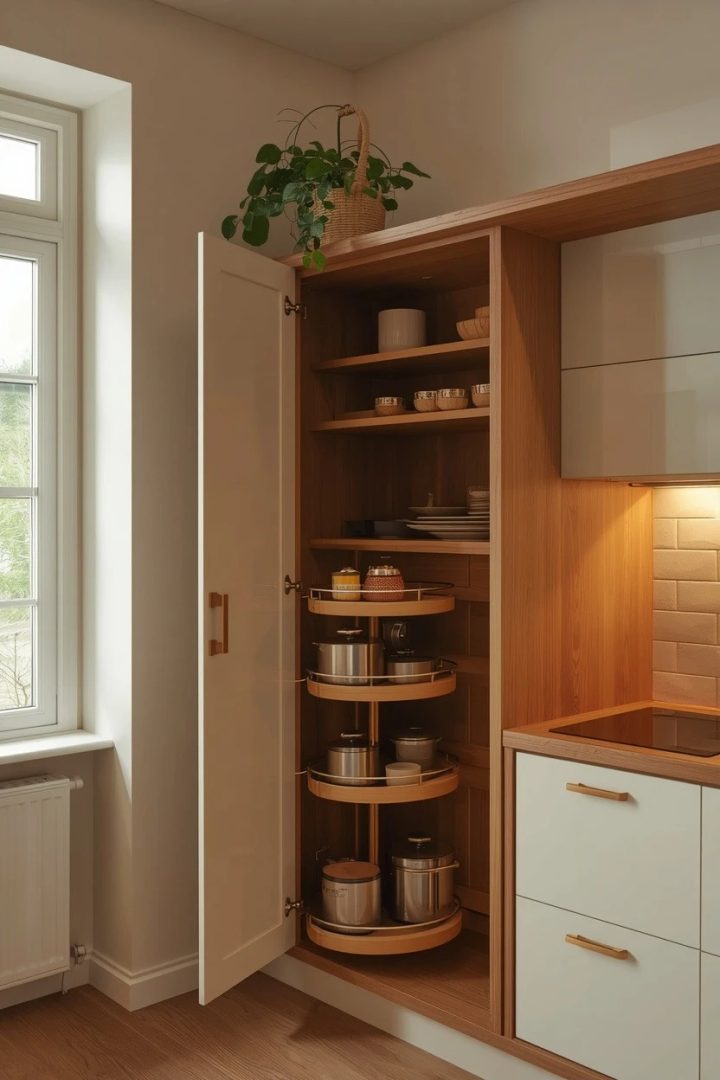
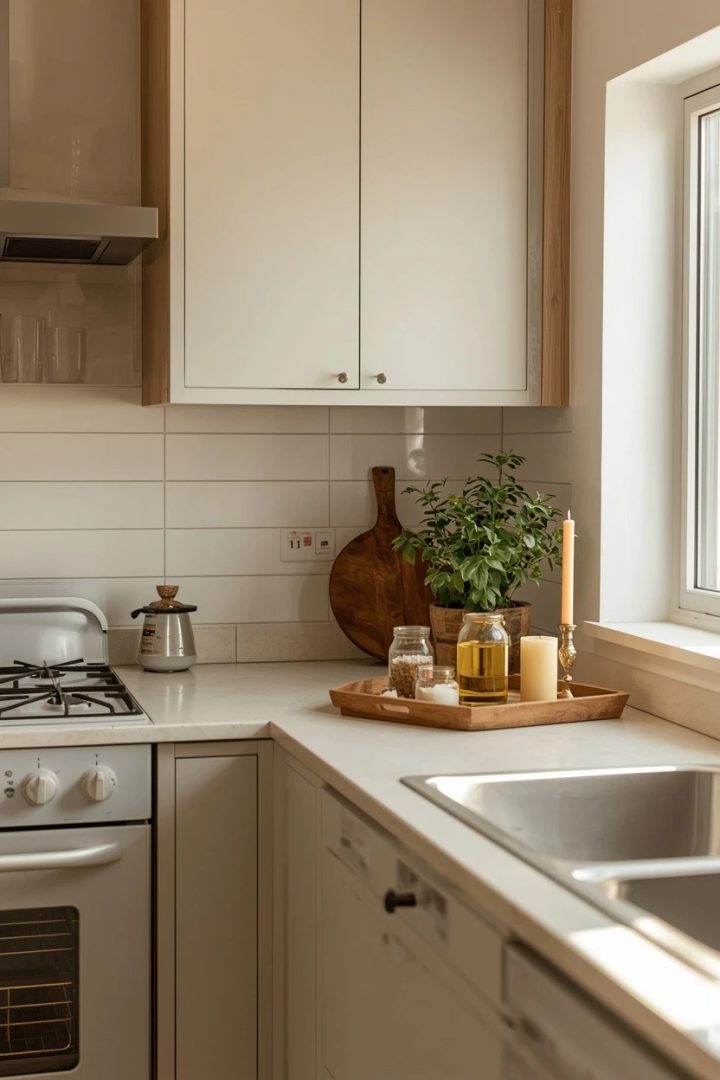
25. Keep Counters Clear With a One-Tray Rule
Clutter shrinks a kitchen faster than any wall. The one-tray rule keeps it in check: everything that lives on the counter must fit on one tray — oil, salt, the pepper mill — and the rest gets a home in a drawer or cabinet.
A tray also lifts and wipes in one move, which keeps cleaning quick. Clear counters make a small kitchen look bigger, photograph better, and genuinely cook easier.
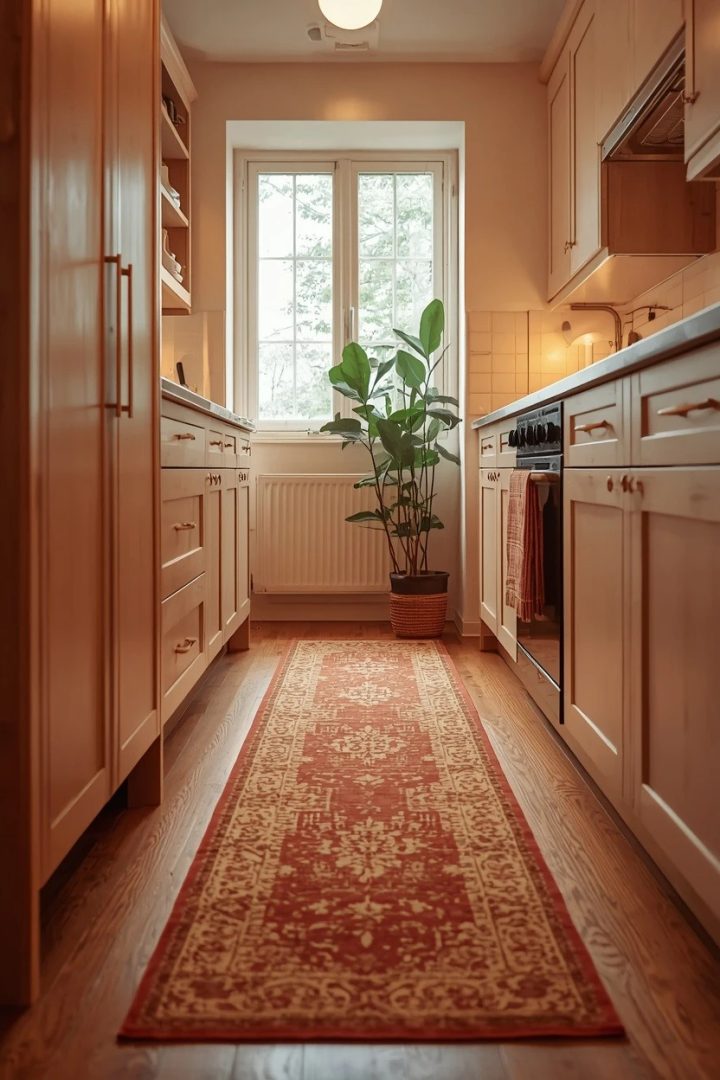
26. Add a Slim Runner for Warmth and Colour
A slim runner between the cabinet runs softens all the hard surfaces, adds a band of colour and pattern, and is kinder underfoot during long cooking sessions.
Choose a flatweave or washable runner that handles spills, in a faded pattern that hides crumbs between sweeps. It's the fastest way to make a galley kitchen read warm and finished.
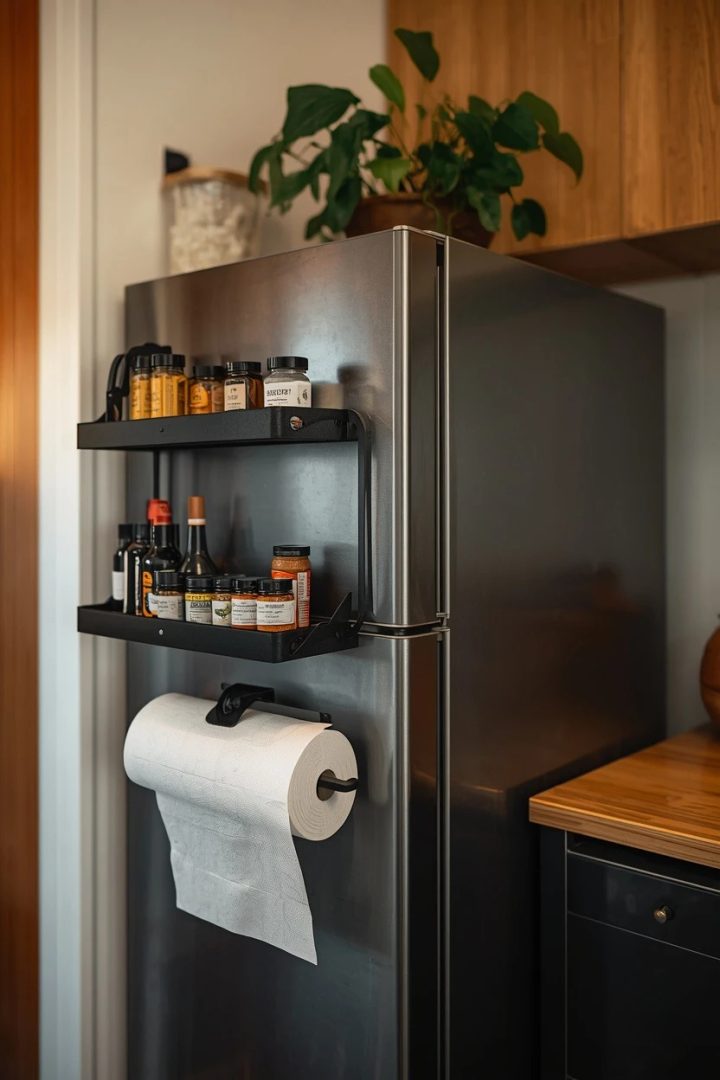
27. Make the Most of the Fridge Surface
The side of the fridge is vertical storage nobody uses. Slim magnetic shelves, a magnetic spice rack, or a paper-towel holder turn that blank metal panel into a working surface without a single screw.
Keep it to one tidy column so it reads organised rather than cluttered. In the tightest kitchens, the fridge side can hold the entire spice collection.
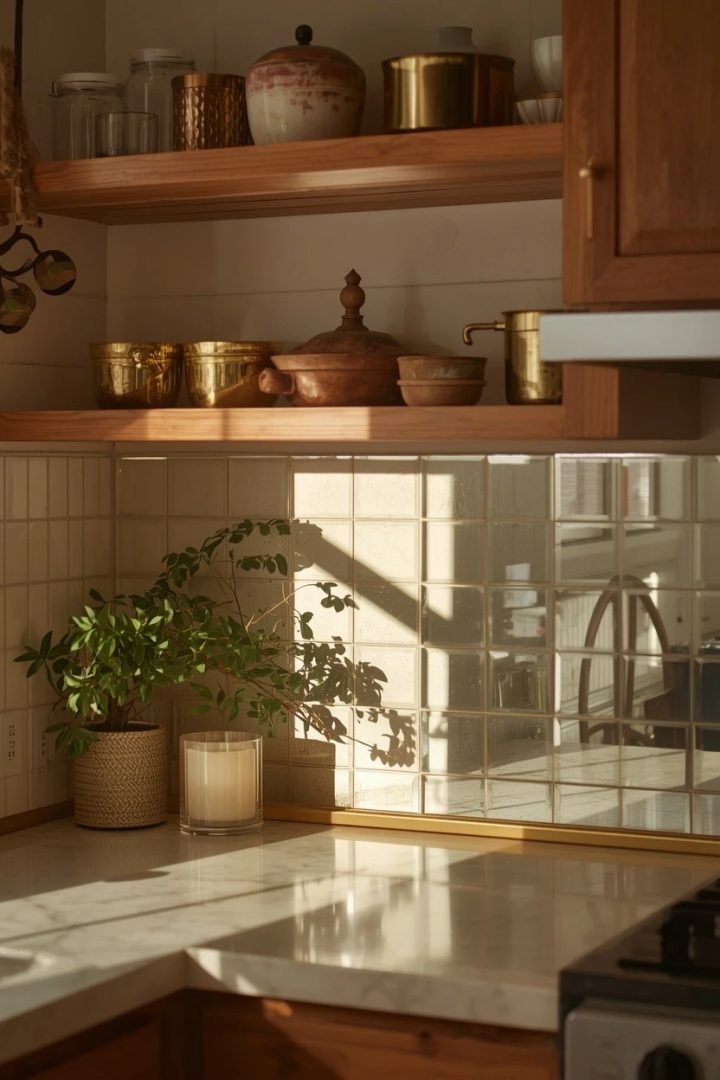
28. Borrow Light With a Mirror or Glossy Surface
Kitchens rarely think of mirrors, but a mirrored or antiqued-glass backsplash panel bounces window light into the dim back of a small room and visually doubles the depth of the wall.
An antiqued finish hides smudges far better than a plain mirror and adds a soft, aged glamour. Even a glossy tile or a polished counter does a gentler version of the same light-borrowing trick.
29. Plan Smart, Hidden Tech
The 2026 kitchen hides its technology. Pop-up counter outlets, a charging shelf tucked under a cabinet, dimmable warm LEDs on a smart switch — the conveniences run quietly without a single visible gadget.
In a small kitchen this matters double, because every visible device adds clutter. If you're renovating, plan outlets inside cabinets and an appliance garage; if not, a slim under-shelf charging strip tidies the daily devices.
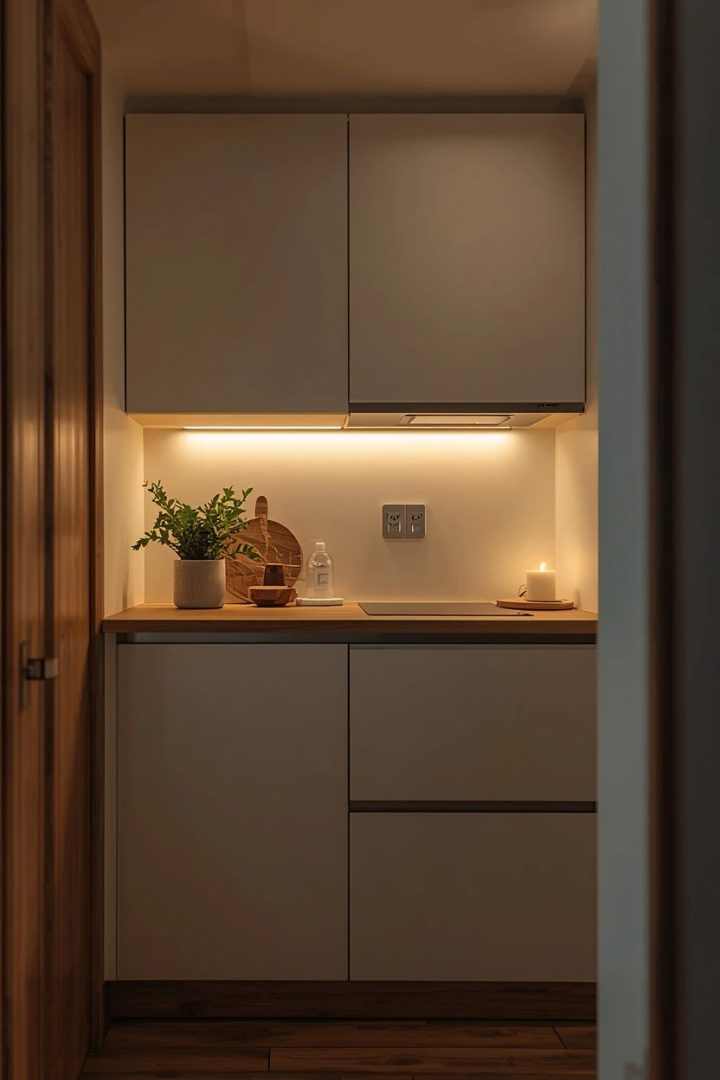
30. Edit Ruthlessly and Style Lightly
The final small-kitchen skill is editing. Every duplicate tool, never-used gadget, and aspirational appliance you remove gives back storage and calm — and what remains gets easier to find, use, and put away.
Style what's left lightly: a bowl of fruit, one plant, a couple of good boards. A small kitchen that's been edited and gently styled doesn't read small — it reads considered, and that's the look that lasts beyond any single year's trends.
Where I'd Start if I Only Did Three Things
If I were improving a small kitchen this weekend, I'd start by clearing the counters with the one-tray rule and a ruthless edit — it costs nothing and instantly makes the room look and cook bigger. Next, I'd add warm under-cabinet LED strips, because lighting the work surfaces transforms both function and atmosphere for very little. Third, I'd claim the vertical space: a shelf to the ceiling, a rail for pans, or a pull-out for the fridge gap. Clear counters, warm task lighting, vertical storage — that trio improves almost any small kitchen before you spend on anything structural.
FAQ
What colours make a small kitchen look bigger in 2026?
Light, warm tones still win — soft warm whites, creams, pale sage, and gentle greige reflect light and blur the room's edges. The shift this year is away from stark, cold white toward warmer versions of light colours, often with one muted colour on the lower cabinets. Keep counters and walls light, and add depth through wood and texture rather than dark paint.
How do I add storage to a small kitchen without renovating?
Work the walls and the gaps. A pegboard, open shelves, a pot rail, magnetic strips and fridge-side shelves use vertical space; a slim rolling cart and a pull-out rack use the gaps; risers, dividers, and a lazy Susan double what your existing cabinets hold. None of these need more than a drill, and several need no tools at all.
Is an all-white kitchen out of style now?
White kitchens aren't gone — they're warming up. The crisp, clinical all-white look has given way to creamier whites layered with wood, texture, and often a soft colour on an island or lower cabinets. If you love white, choose a warm one and add natural materials; the effect stays bright but feels far more inviting.
What's the biggest mistake people make in small kitchens?
Cluttered counters. Small appliances, utensil crocks, and piles of everyday stuff shrink the workspace and the look of the room more than any layout flaw. Give the daily items hidden homes — an appliance garage, hooks, drawer organisers — and keep what stays out to a single tray. A clear counter is the cheapest renovation there is.
Are open shelves practical in a real, used kitchen?
Yes, with honest expectations. Open shelves suit the dishes you use and wash daily, which never sit long enough to gather dust; they don't suit rarely-used items or kitchens right beside a greasy cooking zone. Most small kitchens do best with a mix — one open run for the everyday pieces, closed cabinets for the rest.
Conclusion
A small kitchen rewards smart decisions more than square footage ever could. Clear the counters, light the work surfaces warmly, send storage up the walls and into the gaps, and choose the warm, textured finishes that make 2026's kitchens feel like rooms rather than workstations. Start with the free changes — editing and organising — then layer in the upgrades that fit your budget, and the smallest room in the house becomes the one that works the hardest and welcomes you the most.